Japanese Prime Minister Yoshihide Suga soon to decide on disposal of Fukushima’s nuclear waste water
Reuters 21st Oct 2020, Japanese Prime Minister Yoshihide Suga said on Wednesday that he is aiming
to make a speedy decision on the disposal of contaminated water at the
tsunami-crippled Fukushima nuclear plant.
Restart of Japan’s tsunami-hit Onagawa nuclear reactor to be OK’d
October 14, 2020
Sendai – A nuclear reactor in northeastern Japan damaged by the 2011 earthquake-tsunami disaster is all but certain to resume operations as the governor of the prefecture hosting the facility has decided to give consent, local officials said Wednesday.
For the No. 2 unit of the Onagawa nuclear plant in Miyagi Prefecture to restart, winning consent from local government leaders is the last remaining step needed after it cleared a national safety screening in February.

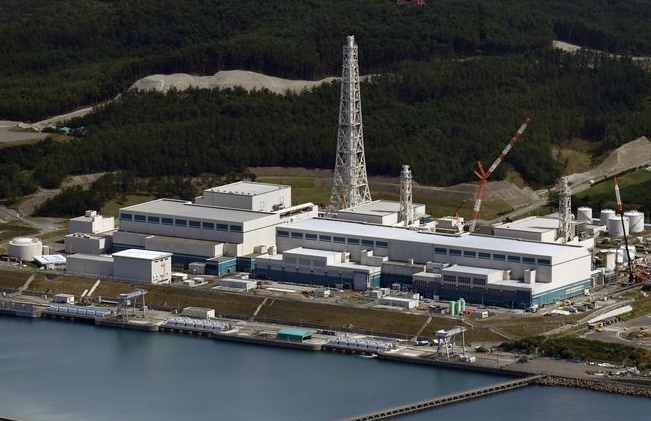
Tohoku Electric Power Co.’s Onagawa nuclear plant, as pictured in August 2020
Miyagi Gov. Yoshihiro Murai will formally announce his consent by the end of the year, according to the officials, who spoke on condition of anonymity.
By doing so, he would be the first governor of a disaster-hit prefecture to give the green light to the restart of a nuclear reactor.
The other heads of local governments whose consent is essential are the mayors of the city of Ishinomaki and the town of Onagawa where the plant operated by Tohoku Electric Power Co. straddles.
Of them, Ishinomaki Mayor Hiroshi Kameyama has already expressed his willingness to give the nod, and such a move is backed by the two municipalities’ assemblies.
After the quake triggered one of the world’s worst nuclear crises in neighboring Fukushima Prefecture and caused all of Japan’s 54 reactors to halt at one point, nine units at five plants in the country have restarted following regulatory and local approval.
Murai has come to believe residents will support his stance after the prefectural assembly adopted a plea seeking his consent at a panel meeting Tuesday and is set to approve it at a plenary session next week, the officials said.
“When the plenary session shows its stance, I will make a decision upon hearing the opinions of mayors of cities, towns and villages within the prefecture,” Murai said.
The 825,000-kilowatt reactor won the approval of the Nuclear Regulation Authority in February, becoming the second disaster-damaged reactor to pass stricter safety standards after the Fukushima nuclear disaster — the worst since the 1986 Chernobyl accident.
At the Onagawa complex, all three reactors — the same boiling water reactors as in Fukushima — shut down when a massive quake and a 13-meter tsunami hit northeastern Japan on March 11, 2011, flooding the underground floors of the No. 2 unit.
However, the plant’s emergency cooling system did not fail and there was no meltdown of the type that occurred at three of the six reactors at the Fukushima Daiichi plant of Tokyo Electric Power Company Holdings Inc.
Tohoku Electric Power Co. aims to restart the Onagawa No. 2 reactor in 2022 at the earliest, after completing anti-disaster work such as the construction of an 800-meter-long seawall at the plant. It has already decided to scrap the No. 1 unit.
Other boiling water reactors at TEPCO’s Kashiwazaki-Kariwa plant in Niigata Prefecture and the Tokai No. 2 plant of Japan Atomic Power Co. in Ibaraki Prefecture have also won the regulator’s approval to resume operations but have yet to obtain local consent.
Mansion without a toilet: Towns in Japan seek to house, store nuclear waste out of necessity

Oct 12, 2020
Two remote towns in northern Japan struggling with rapidly graying and shrinking populations signed up Friday to possibly host a high-level radioactive waste storage site as a means of economic survival.
Japanese utilities have about 16,000 tons of highly radioactive spent fuel rods stored in cooling pools or other interim sites, and there is no final repository for them in Japan — a situation called “a mansion without a toilet.”
Japan is in a dire situation following the virtual failure of an ambitious nuclear fuel recycling plan, in which plutonium extracted from spent fuel was to be used in still-unbuilt fast breeder reactors. The problem of accumulating nuclear waste came to the fore after the 2011 Fukushima nuclear power plant disaster. Finding a community willing to host a radioactive dump site is difficult, even with a raft of financial enticements.
On Friday, Haruo Kataoka, the mayor of Suttsu town on the northwestern coast of Hokkaido, applied in Tokyo for preliminary government research on whether its land would be suitable for highly radioactive waste storage for thousands of years.
Later Friday in Kamoenai just north of Kamoenai, village chief Masayuki Takahashi announced his decision to also apply for an initial feasibility study.
Suttsu, with a population of 2,900, and Kamoenai, with about 800 people, have received annual government subsidies as hosts of the Tomari nuclear power plant. But they are struggling financially because of a declining fishing industry and their aging and shrinking populations.
The preliminary research is the first of three steps in selecting a permanent disposal site, with the whole process estimated to take about two decades. Municipalities can receive up to 2 billion yen ($19 million) in government subsidies for two years by participating in the first stage. Moving on to the next stage would bring in more subsidies.
“I have tried to tackle the problems of declining population, low birth rates and social welfare, but hardly made progress,” Takahashi told reporters. “I hope that accepting research (into the waste storage) can help the village’s development.”
It is unknown whether either place will qualify as a disposal site. Opposition from people across Hokkaido could also hinder the process. A gasoline bomb was thrown into the Suttsu mayor’s home early Thursday, possibly by an opponent of the plan, causing slight damage.
Hokkaido Gov. Naomichi Suzuki and local fisheries groups are opposed to hosting such a facility.
One mayor in southwestern Japan expressed interest in 2007, but faced massive opposition and the plan was spiked.
High-level radioactive waste must be stored in thick concrete structures at least 300 meters (yards) underground so it won’t affect humans and the environment.
A 2017 land survey map released by the government indicated parts of Suttsu and Kamoenai could be suitable for a final repository.
So far, Finland and Sweden are the only countries that have selected final disposal sites
Japan’s government is appealing the landmark ruling about its responsibility for Fukushima nuclear accident
Landmark Court Ruling In Japan Holds Government Accountable For 2011 Nuclear Meltdown https://www.npr.org/2020/10/15/924150284/landmark-court-ruling-in-japan-holds-government-accountable-for-2011-nuclear-mel
 Heard on All Things Considered, ANTHONY KUHN, 15 Oct 20, Japan’s government is appealing a landmark court ruling that holds it responsible for failing to prevent the worst nuclear accident in the country’s history and orders it to pay damages to victims. Heard on All Things Considered, ANTHONY KUHN, 15 Oct 20, Japan’s government is appealing a landmark court ruling that holds it responsible for failing to prevent the worst nuclear accident in the country’s history and orders it to pay damages to victims.AILSA CHANG, HOST: The Japanese government and a nuclear power plant operator have appealed a landmark court ruling. The ruling holds them responsible for the country’s worst ever nuclear accident. The 2011 Fukushima meltdown was triggered by a huge earthquake and tsunami. But as NPR’s Anthony Kuhn reports from Seoul, plaintiffs are concerned that justice is being delayed once again. (CHEERING) ANTHONY KUHN, BYLINE: Cheering broke out outside the high court in the city of Sendai, about 60 miles north of the crippled Fukushima nuclear plant last month. To many people’s surprise, the court’s ruling held the central government and the Tokyo Electric Power Company – or TEPCO, which runs the plant – equally responsible for the accident. Plaintiffs argued that scientists had warned the government in 2002 that a major tsunami could hit the area. The court said in its scathing verdict that the government failed to take action. TAKASHI NAKAJIMA: (Speaking Japanese).KUHN: “The government, despite its position as regulator, just let TEPCO do as it pleased and let it put off safety measures. It was gross negligence, and it was an attitude unbefitting a regulatory agency.” That was Takashi Nakajima paraphrasing the court’s verdict. He’s a leader among the nearly 3,600 plaintiffs in the case. The Sendai court ordered the government and TEPCO to pay them $9.6 million in compensation, double what a lower court had ruled three years ago. Many people in Nakajima’s community near Fukushima fled their homes. He says he filed the lawsuit basically just to say, give me back my former life. NAKAJIMA: (Speaking Japanese). KUHN: “Imagine how you would feel,” he says, “if suddenly you get into a situation where you can never go back to your hometown because there’s a risk of radiation.” Nakajima runs a supermarket, but he says that fears about radiation in waters near Fukushima make it impossible to sell the local fish in which he used to take such pride. NAKAJIMA: (Speaking Japanese). KUHN: “The fishermen eat them because they’ve been eating them for a long time,” he says, “and they’re tasty. But their sons and daughters-in-law tell them that their grandchildren should not eat them. This is a situation which divides many families.” Judges in the Sendai verdict appear to have been especially sympathetic to such hardships. Eri Osaka, a law professor at Toyo University in Tokyo, explains. ERI OSAKA: (Through translator) The Sendai High Court judges actually visited the area at issue in the trial before the decision was made. It’s very unusual that judges truly understand what hardships the victims are experiencing. KUHN: Some plaintiffs in similar lawsuits have not been as fortunate as Nakajima and have lost. Professor Masafumi Yokemoto, a professor of environmental policy at Osaka City University, says the Sendai verdict could change that. MASAFUMI YOKEMOTO: (Speaking Japanese). KUHN: “This is the first time a decision recognizing the government’s full responsibility has been made at the high court level,” he says, “although it was partly recognized by a lower court. It’s very significant, and it’ll clearly influence future decisions.” That’s why many observers were not surprised when the government and TEPCO appealed the verdict on Tuesday. Plaintiff Takashi Nakajima hopes that the Sendai court ruling will eventually pave the way for the shutdown of all dangerous nuclear power plants in Japan. But whether or not the ruling stands will now be up to Japan’s Supreme Court to decide. Anthony Kuhn, NPR News, Seoul. |
|
Japan’s government planning to dump into the sea, the radioactive water from Fukushima No. 1 nuclear reactor
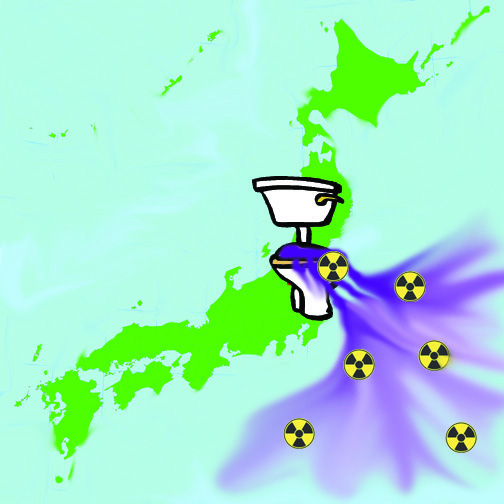 Fukushima No. 1 nuclear plant wastewater looks headed for ocean, THE ASAHI SHIMBUN, October 16, 2020 The government is moving toward the controversial disposal method for contaminated water at the crippled Fukushima No. 1 nuclear power plant of dumping it into the ocean.
Fishermen have fiercely opposed this disposal method at the plant, which experienced a triple meltdown in March 2011 following a magnitude-9.0 earthquake and tsunami, over fears of resulting negative publicity hurting their industry.
The central government is likely to hold a meeting of relevant Cabinet ministers before the end of October to make a formal decision on the dumping, sources said.
Before being dumped into the ocean, the stored water would be processed a second time and diluted with seawater to lower levels of radioactive materials below legally established standards.
It is expected to take about two years to prepare for the dumping process.
Water contaminated with radioactive materials continues to be produced at the Fukushima No. 1 plant at a daily rate of about 140 tons. Water used to cool melted spent nuclear fuel mixes in with groundwater that leaks into the reactor building.
Tokyo Electric Power Co., the operator of the plant, treats the contaminated water using equipment called advanced liquid processing systems, or ALPS, before storing the water in tanks on the plant grounds.
But about 1.2 million tons of processed water is being stored in tanks and TEPCO has estimated that tank capacity will be reached by the summer of 2022 even under the current plan to build more tanks.
Because about two years is needed to construct the necessary equipment to dispose of the contaminated water and to pass screening by the Nuclear Regulation Authority, a decision on disposal of the water was expected by this summer.
A subcommittee of experts set up by the economy ministry compiled a proposal in February that said the two realistic alternatives were to dump the water into the ocean or release it into the atmosphere. The panel added that dumping the water into the ocean was the method that could be implemented with certainty.
Since April, the government has conducted seven hearings involving local government officials, farming and fisheries organizations and business groups on the issue……… http://www.asahi.com/ajw/articles/13831640
Japan’s government ignores U.N. nuclear ban treaty, puts out feeble anti-nuclear weapons resolution
Japan submits anti-nuclear resolution with no mention of ban pact, https://www.japantimes.co.jp/news/2020/10/16/national/japan-un-nuke-resolution-ban-pact/ NEW YORK – Japan submitted an anti-nuclear resolution to a panel at the United Nations on Thursday, but the text made no direct reference to a U.N.-adopted nuclear ban treaty likely to go into effect early next year.
Opting not to mention the Treaty on the Prohibition of Nuclear Weapons, which is expected to cross the needed threshold of ratification soon and take effect 90 days later, apparently reflects Japan’s ties with the United States, its key security ally which opposes the pact and provides security assurances to Japan under its so-called nuclear umbrella.
Tokyo’s stance on the matter appears to have remained unaltered after the first change to the country’s leadership in nearly eight years, with Prime Minister Yoshihide Suga replacing former Prime Minister Shinzo Abe last month.
As the only country in the world to have suffered atomic bombings, Japan has submitted an anti-nuclear resolution to the United Nations every year since 1994. But versions of the annual resolution submitted since the nuclear ban pact was adopted in 2017 make no mention of it.
So far, 47 countries and regions have completed ratification procedures for the nuclear ban treaty, with a total of 50 ratifications needed for it to take effect.
Japan opposed the nuclear ban pact along with the five permanent members of the U.N. Security Council, which are all nuclear powers.
The nation’s latest resolution preserves phrasing from last year about the devastating humanitarian impacts of nuclear weapons, which was worded less strongly than previous versions that until 2018 expressed deep concern on the matter.
Japan’s resolution is likely to pass the U.N. General Assembly’s First Committee on disarmament issues by early November before being adopted at the General Assembly by the end of the year.
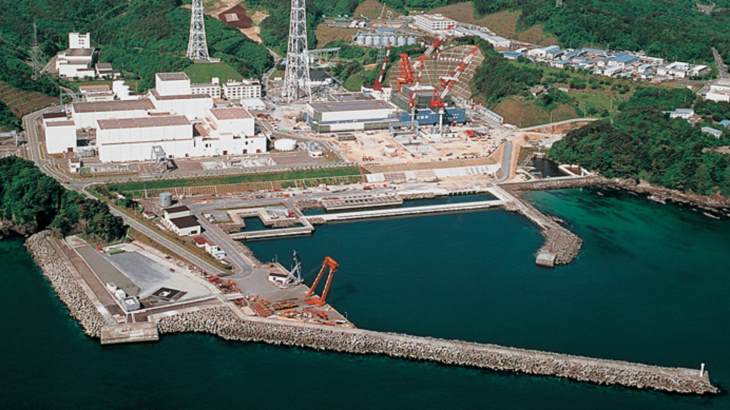
800-meter-long seawall being constructed, as Japan plans to reopen damaged Onagawa nuclear complex
|
Japan’s damaged nuclear reactor set to reopen https://www.aa.com.tr/en/asia-pacific/japan-s-damaged-nuclear-reactor-set-to-reopen/2005798, Quake-hit Onagawa nuclear complex awaits final approval by Miyagi provincial officials, Riyaz ul Khaliq |14.10.2020 ANKARAJapan’s nuclear reactor hit by a 2011 earthquake in the northeastern Miyagi province will resume operations by the end of this year, according to officials, the local media reported on Wednesday.
Miyagi Governor Yoshihiro Murai will formally announce his consent to restart the nuclear reactors at Onagawa complex by the end of the year, the Kyodo News agency said. Early this year, the 825,000-kilowatt reactor, operated by Tohoku Electric Power Company, won the approval of the country’s Nuclear Regulation Authority. All the three reactors were shut down when the massive quake and a 13-meter tsunami hit northeastern Japan on March 11, 2011, flooding the underground floors of the No. 2 unit. Nearly 10,000 people lost their lives while over 4,000 others are still missing. Onagawa nuclear reactor is the second such disaster-ravaged complex, after the Fukushima nuclear disaster, to pass stricter nuclear safety standards. The world has witnessed the worst nuclear disaster in 1986 at Chernobyl in today’s Ukraine. Unlike the Fukushima Daiichi plant of Tokyo Electric Power Company, the Onagawa plant’s emergency cooling system did not fail and underwent no meltdown after hit by the earthquake and tsunami. To restart the Onagawa nuclear reactors, the consent of local government leaders is the last remaining step needed after it cleared a national safety screening in February. Tohoku aims to restart the No. 2 unit of Onagawa nuclear complex in 2022 at the earliest. Currently, a 800-meter-long seawall at the plant is under construction. The operator has already decided to scrap unit No. 1. Murai would be the first governor of a disaster-hit province to allow resumption of a damaged nuclear reactor’s operations. The 2011 earthquake and tsunami triggered one of the world’s worst nuclear crises in Japan’s Fukushima province which caused all of Japan’s 54 reactors to halt. However, since then, nine units at five plants of the country have restarted following regulatory and local approvals. “When the plenary session [of the local assembly] shows its stance, I will make a decision upon hearing the opinions of mayors of cities, towns, and villages within the prefecture,” Murai said. |
Struggling Japanese towns look to nuclear waste storing and the money associated
|
MANSION WITHOUT A TOILET: TOWNS IN JAPAN SEEK TO HOUSE, STORE NUCLEAR WASTE OUT OF NECESSITY, https://www.firstpost.com/tech/science/mansion-without-a-toilet-towns-in-japan-seek-to-house-store-nuclear-waste-out-of-necessity-8904851.html Radioactive waste needs to be stored away for a few centuries in thick concrete structures underground so it won’t affect humans and the environment.
Two remote towns in northern Japan struggling with rapidly graying and shrinking populations signed up Friday to possibly host a high-level radioactive waste storage site as a means of economic survival.
Japanese utilities have about 16,000 tons of highly radioactive spent fuel rods stored in cooling pools or other interim sites, and there is no final repository for them in Japan — a situation called “a mansion without a toilet.”
Japan is in a dire situation following the virtual failure of an ambitious nuclear fuel recycling plan, in which plutonium extracted from spent fuel was to be used in still-unbuilt fast breeder reactors. The problem of accumulating nuclear waste came to the fore after the 2011 Fukushima nuclear power plant disaster. Finding a community willing to host a radioactive dump site is difficult, even with a raft of financial enticements.
On Friday, Haruo Kataoka, the mayor of Suttsu town on the northwestern coast of Hokkaido, applied in Tokyo for preliminary government research on whether its land would be suitable for highly radioactive waste storage for thousands of years. Later Friday in Kamoenai just north of Kamoenai, village chief Masayuki Takahashi announced his decision to also apply for an initial feasibility study. Suttsu, with a population of 2,900, and Kamoenai, with about 800 people, have received annual government subsidies as hosts of the Tomari nuclear power plant. But they are struggling financially because of a declining fishing industry and their aging and shrinking populations. The preliminary research is the first of three steps in selecting a permanent disposal site, with the whole process estimated to take about two decades. Municipalities can receive up to 2 billion yen ($19 million) in government subsidies for two years by participating in the first stage. Moving on to the next stage would bring in more subsidies. “I have tried to tackle the problems of declining population, low birth rates and social welfare, but hardly made progress,” Takahashi told reporters. “I hope that accepting research (into the waste storage) can help the village’s development.” It is unknown whether either place will qualify as a disposal site. Opposition from people across Hokkaido could also hinder the process. A gasoline bomb was thrown into the Suttsu mayor’s home early Thursday, possibly by an opponent of the plan, causing slight damage. Hokkaido Gov. Naomichi Suzuki and local fisheries groups are opposed to hosting such a facility. One mayor in southwestern Japan expressed interest in 2007, but faced massive opposition and the plan was spiked. High-level radioactive waste must be stored in thick concrete structures at least 300 meters (yards) underground so it won’t affect humans and the environment. A 2017 land survey map released by the government indicated parts of Suttsu and Kamoenai could be suitable for a final repository. So far, Finland and Sweden are the only countries that have selected final disposal sites |
|
Ikata nuclear reactor to be shut down – 40 year decommissioning process
Regulator approves Ikata 2 decommissioning plan
Japan’s Nuclear Regulation Authority (NRA) today approved Shikoku Electric Power Company’s decommissioning plan for unit 2 of its Ikata nuclear power plant in Ehime prefecture. Decommissioning of the unit is expected to be completed by 2059.

07 October 2020
Ikata 2 is a 538 MWe pressurised water reactor that began operating in March 1988. It was taken offline in January 2012 for periodic inspections. Shikoku announced in March 2018 that it did not plan to restart the reactor. It said the cost and scale of modifications required to upgrade the 40-year-old unit to meet the country’s revised safety standards made it uneconomical to restart it.
The utility submitted an outline of its plans for decommissioning the unit to the NRA on 10 October, 2018. Shikoku also submitted requests to Ehime prefecture and the municipality of Ikata, as specified under nuclear safety agreements concluded with those authorities.
Following a review, which included a total of seven public meetings, the NRA has today approved the decommissioning plan for Ikata 2.
According to the plan, decommissioning of the unit will take about 40 years and will be carried out in four stages. The first stage, lasting about 10 years, will involve preparing the reactor for dismantling (including the removal of all fuel and surveying radioactive contamination), while the second, lasting 15 years, will be to dismantle peripheral equipment from the reactor and other major equipment. The third stage, taking about eight years, will involve the demolition of the reactor itself, while the fourth stage, taking about seven years, will see the demolition of all remaining buildings and the release of land for other uses.
During the first stage, all fuel is to be removed from the unit. This includes 316 used fuel assemblies that will be sent for reprocessing and 102 fresh fuel assemblies that will be returned to the fuel fabricator.
“In the future, we will obtain the consent of Ikata Town and Ehime Prefecture, based on the safety agreement,” Shikoku said.
Shikoku decided in March 2016 to decommission unit 1 of the Ikata plant, also a 538 MWe PWR, which began commercial operation in September 1977. That unit had been taken offline in September 2011 for periodic inspections. Upgrades costing more than JPY170 billion (USD1.5 billion) would have been needed at the unit in order for it to operate beyond 40 years. The NRA approved Shikoku’s decommissioning plan for Ikata 1 in June 2017. That plan also sees the unit being decommissioned in four stages over a 40-year period.
The utility said, “As with unit 1, we will steadily proceed with the decommissioning of unit 2 with the highest priority given to ensuring safety.”
https://www.world-nuclear-news.org/Articles/Regulator-approves-Ikata-2-decommissioning-plan
Fishing industry chief opposes releasing Fukushima No. 1 water into sea
Fishing industry chief opposes releasing Fukushima No. 1 water into sea, https://www.japantimes.co.jp/news/2020/10/09/national/zengyoren-fukushima-water-sea/ 9 Oct 20, The head of the National Federation of Fisheries Cooperative Associations, or Zengyoren, has voiced strong opposition against releasing treated water containing radioactive tritium from the disaster-stricken Fukushima No. 1 nuclear plant into the sea.
“We are absolutely against ocean release” as a way to dispose of tainted water at Tokyo Electric Power Company Holdings Inc.’s nuclear plant in Fukushima Prefecture, Hiroshi Kishi, head of Zengyoren, said Thursday at a government hearing in Tokyo.
Kishi said that fishermen who are operating along the coast of Fukushima have been suffering from problems caused by the radioactive fallout from the 2011 meltdowns at the plant, such as fishing restrictions, as well as malicious rumors about the safety of farm and marine products there.
If the government chooses to release radioactive water into the sea, a leading option to get rid of accumulating low-level radioactive water at the plant, it will trash all efforts fishermen have so far made to sweep away such rumors and consequently “will have a devastating impact on the future of Japan’s fishing industry,” Kishi stressed.
Toshihito Ono, head of the prefecture’s fishery product processors association, who joined the hearing via a video call, warned that Fukushima’s processed marine products, including products that use ingredients from other prefectures, will become targets of harmful rumors.
In a report released in February, a government panel pointed out that a realistic option would be releasing the tainted water into the ocean after dilution or into the air through evaporation.
Many people fear that both methods will add to the reputational damage suffered by Fukushima products. But treated water storage at the power plant is expected to reach full capacity as early as autumn 2022.
After the hearing, state industry minister Kiyoshi Ejima told reporters, “We find it unadvisable to put off a decision on how to dispose of the water because not much room is left at the plant for tanks containing the water.”
This was probably the last hearing on the water issue, people familiar with the matter said.
Ageing community in Hokkaido town – mayor agrees to survey for nuclear waste dump
|
Graying Hokkaido town applies for nuclear waste dump survey, Japan Times, 9 Oct 20, A small Hokkaido town struggling with depopulation signed up Friday for preliminary research into its land to gauge its suitability for hosting a disposal site deep underground for high-level radioactive nuclear waste, the first municipality to do so in Japan since 2007.Suttsu Mayor Haruo Kataoka submitted the documents for the survey at the quasi-governmental Nuclear Waste Management Organization (NUMO) in Tokyo. Municipalities that undergo the preliminary research, the first of a three-stage process requiring some 20 years in total to select a permanent disposal site, can receive up to ¥2 billion in state subsidies over two years. Prior to Suttsu, the only municipality to apply for a preliminary survey was Toyo in Kochi Prefecture, which submitted documents in 2007. However, the town later withdrew before the research was ever conducted following strong protests by local residents. ……… Meanwhile, government officials are expected later Friday to request Kamoenai village in Hokkaido, which is about 40 kilometers north of Suttsu, to accept research into its land a day after its assembly adopted a petition to host the survey. Suttsu and Kamoenai, with populations of about 2,900 and 820, respectively, have been struggling financially due to a decline in the fishing industry and the aging of their residents. It remains uncertain whether the process of becoming a final disposal site will go smoothly, as Hokkaido Gov. Naomichi Suzuki and members of the fishing industry in the area are opposed to the idea of hosting such a facility……. During its research, NUMO will examine the area to see if it is suited to the disposal of highly radioactive waste, paying attention to volcanoes and fault lines. High-level radioactive waste, produced as a result of extracting uranium and plutonium from spent fuel, must be stored in concrete structures at least 300 meters underground so as not to impact human lives or the environment. Locations near volcanoes and active faults are deemed unfavorable…….https://www.japantimes.co.jp/news/2020/10/09/national/hokkaido-nuclear-waste-dump-survey/ |
|
Ikata nuclear reactor to be shut down – 40 year decommissioning process
Regulator approves Ikata 2 decommissioning plan, WNN, 07 October 2020 Japan’s Nuclear Regulation Authority (NRA) today approved Shikoku Electric Power Company’s decommissioning plan for unit 2 of its Ikata nuclear power plant in Ehime prefecture. Decommissioning of the unit is expected to be completed by 2059.
Ikata 2 is a 538 MWe pressurised water reactor that began operating in March 1988. It was taken offline in January 2012 for periodic inspections. Shikoku announced in March 2018 that it did not plan to restart the reactor. It said the cost and scale of modifications required to upgrade the 40-year-old unit to meet the country’s revised safety standards made it uneconomical to restart it. ……….
According to the plan, decommissioning of the unit will take about 40 years and will be carried out in four stages. The first stage, lasting about 10 years, will involve preparing the reactor for dismantling (including the removal of all fuel and surveying radioactive contamination), while the second, lasting 15 years, will be to dismantle peripheral equipment from the reactor and other major equipment. The third stage, taking about eight years, will involve the demolition of the reactor itself, while the fourth stage, taking about seven years, will see the demolition of all remaining buildings and the release of land for other uses……. https://www.world-nuclear-news.org/Articles/Regulator-approves-Ikata-2-decommissioning-plan
Tokyo Olympic torch relay to start on March 25, 2021 in Fukushima
Same time same place next year …The relay will start from the J-Village soccer training center and last for 121 days while traversing all of Japan’s 47 prefectures. The previous schedule for each region was maintained aside from a one-day adjustment to fit next year’s calendar.

September 28, 2020
The Tokyo Olympic torch relay will start on March 25 in Fukushima Prefecture, Tokyo Games organizers said Monday, in keeping with the plan that was developed prior to the games’ one-year postponement due to the coronavirus pandemic.
The relay will start from the J-Village soccer training center and last for 121 days while traversing all of Japan’s 47 prefectures. The previous schedule for each region was maintained aside from a one-day adjustment to fit next year’s calendar.
The Olympics are slated to open on July 23 next summer followed by the Paralympics on Aug. 24.
Approximately 10,000 runners who had already been selected will be given priority for the nationwide relay. Organizers said they will stick with the local routes and events that were already planned in principle but may make future adjustments according to the status of each region.
The Paralympic torch relay will be held in August.
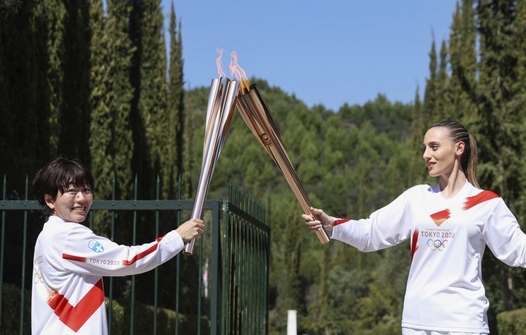
Athens Olympics women’s marathon gold medalist Mizuki Noguchi (L) receives the Tokyo Olympics flame from first runner Anna Korakaki, the 2016 Rio Games shooting gold medalist, in the torch relay in Olympia, Greece, on March 12, 2020.
Organizers had been seeking to shorten the torch relay schedule in order to reduce swelling costs caused by the games’ delay but abandoned the idea after receiving strong disapproval from local governments already banking on the event.
As a result, only reducing the size of the vehicle convoys, staff and pageantry of some of the events connected to the relay are under review as potential areas for cost cutting and streamlining the games.
The Olympic flame was lit earlier this year at the site of ancient Olympia in Greece and arrived in Japan four days before the games were postponed on March 24.
The flame has remained in the host country since and is currently on public display at the Japan Olympic Museum near the main stadium for the games in central Tokyo until Nov. 1.
Fukushima and freedom of expression
September 23, 2020
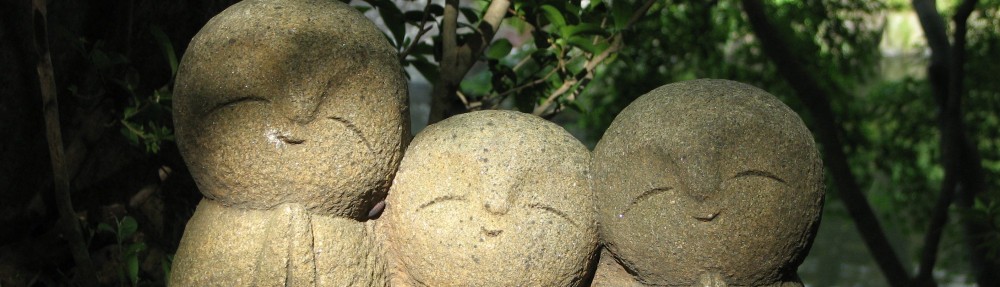
According to Asahi, guides welcoming visitors to the disaster museum, which opened on September 20 in Futaba, have no right to criticize either TEPCo or the government. The 29 guides are victims of the disaster or trained people. Each guided tour lasts one hour and is paid 3,500 yen.
During the trainings that took place this summer, the distributed manual stated that one should avoid “criticizing or defaming certain organizations, people or other facilities”. And if a visitor asks the guide about their feelings about TEPCo’s responsibility, the answer should be evasive and the visitor referred to museum staff. Each guide must also put his words in writing and submit it to the museum management who corrects it. And if they ever criticize an organization, their presentation will be immediately stopped and they will never be able to be a guide in that museum again.
Some guides took offense: as victims, they should be able to criticize TEPCo and the government, which are responsible for the nuclear disaster. Another guide saw their script corrected after mentioning this responsibility. Yet official investigative reports pointed to the responsibility of TEPCo and the government. Not being able to mention it in a museum dedicated to the nuclear disaster is scandalous.
Ironically, Le Canard Enchaîné published an article that same day on the dismissal of an IRSN researcher who was working on the consequences of the Fukushima disaster and who did not agree to have her work censored by his hierarchy. In response, ACRO left the Research Orientation Committee (COR) of this Institute. The resignation letter is on the association’s website and reproduced below.
According to Le Canard Enchaîné, the direct superior of Christine Fassert, the licensed researcher, “wanted to impose changes, even censor words and sentences [of] an article,” in order to “avoid criticism of post-management. accident of the Japanese government, and the civilian nuclear sector in general “, and” to minimize and relativize the risk related to radiation exposure “.
This event is very disturbing because it shows that IRSN is unwilling to accept research results that challenge its prejudices. And when you’re in charge of nuclear safety, it’s particularly serious. He is not the only person to have suffered the rigidity of this institute, but it is the first time that it has led to a dismissal, which is scandalous.
We have already emphasized, twice, in July 2018 and March 2019, the originality of the work of Christine Fassert, socio-anthropologist, risk specialist at IRSN, who worked on trust, as part of the Shinrai project. in partnership with Sciences Po and Tôkyô Tech University. In Japan, as in France, she went, with her Japanese colleagues, to meet all the protagonists and interviewed both officials and independent experts, as can be seen in this presentation (copy).
At IRSN, we prefer to focus on people who show that it is possible to live in contaminated areas. And the dominant paradigm is that we must avoid evacuating and bringing evacuees back as quickly as possible, bypassing the UN directives on internally displaced persons which guarantee them protection, the right to choose between return and resettlement, as well as their full participation in decisions (see our 2016 report: Fukushima, return to abnormal?). It is also obvious in the European research programs in which IRSN participates, where the reduction of uncertainties in the modeling of radioactive fallout should make it possible to avoid unnecessary evacuation of populations (see page 58 of this presentation, for example) , while the faults in the modeling in Fukushima also led to not evacuating people who should have been! This is the case for the contaminated territories which extend up to forty kilometers to the Northwest. The evacuation order did not arrive until April 22, 2011, when the disaster began on March 11, 2011.
In practice, IRSN did not hesitate to work on and highlight an unscrupulous researcher, as we reported in January 2019, but who said what the institute wanted to hear. This is also the object of the Fukushima “dialogues” supported by IRSN shown in the web documentary “Kotoba” (which means “word” and not “dialogue”): no radioactive waste, no sick, no residents who don’t want to come in… Just a few small worries, but in twelve “dialogues”, everything is settled! The results of these dialogues by IRSN are a distressing list of banalities. This is worrying for post-accident management in the event of an accident in France.
Christine Fassert, for her part, also went to meet people who have left and who do not want to return, giving visibility to a category of populations that everyone wants to ignore, although it is the most numerous. The project also examined the pitfalls of an essentially “reassuring” communication on radiological risk, the difficulty of the role of radiation protection experts in direct contact with the public, the tension between a government policy of evacuations and returns devised by Tokoite elites and the implementation of these directives by the mayors in the region of Fukushima… Only subjects which did not fall within the narrow framework of what was expected. So, it was the frame or her!
Resignation message sent on September 18, 2020 to COR members:
Madame President,
Following the dismissal of an IRSN researcher, I would like to resign from COR. If the IRSN is not able to accept unique voices internally, it cannot open up to society.
In its opinion on the post-accident, the COR stressed, for the “populations and governance” section: “The WG thinks that it would be important to conduct research on this subject taking into account the opinions of all categories. population. Self-evacuees escape official monitoring in Japan and most of the studies and research in which IRSN participates. The experience feedback cannot be limited to the population who wish to remain in place or return, which is not very representative of all the populations affected by a serious nuclear accident. IRSN would benefit from broadening the scope of its studies and research or from moving closer to other programs involving all the people affected by the disaster, including those who do not wish to stay or return. “
In the event of a nuclear accident in France, IRSN will not be able to choose from among the affected populations. The participation of all stakeholders will be necessary. The licensed researcher is precisely the only person at the institute who was interested in all categories of the population, the “dialogues” program having selected only people in agreement with the dominant paradigm at IRSN.
I have already had the opportunity several times, within the COR, to question and alert IRSN researchers on the freedom to publish and communicate, to no avail. The COR has never agreed to discuss it.
Since the beginning of COR, I have worked for more openness and to take into account the demands of society. I have participated in almost all GTs and chaired two of them. But I fear that all this work has been in vain and that IRSN is not ready to open up sincerely. Under these conditions, I see no other solution than to resign from COR.
Yours truly,
David Boilley
TEPCO’s fitness to operate nuke reactors still open to question
From left, the No. 5 to No. 7 reactors of the Kashiwazaki-Kariwa nuclear power plant in Niigata Prefecture
September 24, 2020
The Nuclear Regulation Authority has effectively endorsed Tokyo Electric Power Co.’s fitness to operate nuclear reactors in its safety screening of the utility’s plans to restart the No. 6 and No. 7 reactors at the Kashiwazaki-Kariwa nuclear power plant in Niigata Prefecture.
The nuclear watchdog’s endorsement, based on new legally binding safety rules the utility drafted and pledged to follow, has opened the door for the operator of the crippled Fukushima No. 1 nuclear power plant to start running reactors again.
But TEPCO’s actions concerning safety, the decommissioning of the destroyed Fukushima reactors and compensation for victims of the catastrophic accident have created a deep sense of distrust that is hard to brush off. The NRA’s decision is open to question.
Three years ago, when it cleared the No. 6 and No. 7 reactors under the tougher new reactor safety standards established in response to the Fukushima disaster, the NRA placed great importance on TEPCO’s “fitness” to run reactors.
This has led the utility to incorporate seven new principles into its safety code. They include the company’s commitment to carry through the decommissioning of the Fukushima No. 1 nuclear plant and hold its president responsible for reactor safety as well as its pledge not to put economic efficiency before safety.
The safety code is legally binding, with a violation potentially provoking an order to suspend operations.
This time, the NRA has examined TEPCO’s seven commitments and acknowledged that they are specific enough to allow the watchdog to identify and punish any violations.
But the seven principles still contain vague elements. It is difficult not to wonder whether they will effectively enable the NRA to monitor and check TEPCO’s operations for violations.
TEPCO, for example, has promised to follow through with the payment of compensation to victims of the Fukushima calamity. In fact, however, the company has rejected many proposed compensation agreements with local residents.
As for decommissioning the stricken plant, the company has left entirely to the government the vital challenge of disposing of radiation-contaminated water being generated by the plant.
These actions of the firm appear to be at odds with the safety code. What does the NRA think about them?
The real question is whether TEPCO’s basic attitude has really changed.
Asahi Shimbun editorials have questioned the company’s reliability to operate nuclear plants safely because it has failed to demonstrate the safety awareness and commitment required for the operator of a nuclear power plant.
TEPCO, for example, failed to report accurately the fact that an important facility at the Kashiwazaki-Kariwa plant does not have sufficient earthquake resistance.
It also avoided publishing voluntarily the fact that contaminated water from the Fukushima plant contains various radioactive materials whose levels are well above the safety standards after treatment. All these facts raised doubts about the firm’s ethical integrity.
Unless the utility changes its culture and behavior, it will be unable to win local support for its plans to restart the reactors.
TEPCO, as the operator of the Fukushima plant, has the responsibility to put the priority on decommissioning the reactors and paying compensation to people who have suffered from the accident.
It is doubtful whether the company will be able to operate reactors safely while grappling with the colossal challenge of decommissioning the plant, a process that will continue for decades.
There are legitimate concerns that the company could be unable to secure sufficient human and other resources for its efforts to ensure the safety of the Kashiwazaki-Kariwa plant.
Instead of sticking to its business strategy, which is focused on restoring its financial health by restarting the reactors at the plant in Niigata Prefecture so that it can bear the huge cost of decommissioning and compensation payments, TEPCO should start exploring carving out a viable future without nuclear power generation for itself.
As the utility’s virtual leading shareholder, the government should urge the firm to reconsider its business strategy.
1 This Month
Chernobyl: The Lost Tapes – A good documentary on Chernobyl on SBS available On Demand for the next 3 weeks– https://www.sbs.com.au/ondemand/tv-program/chernobyl-the-lost-tapes/2352741955560

of the week–London Campaign for Nuclear Disarmament

Tell the Ukrainian Government to Drop Prosecution of Peace Activist Yurii Sheliazhenko
To see nuclear-related stories in greater depth and intensity – go to https://nuclearinformation.wordpress.com
-
Archives
- April 2026 (126)
- March 2026 (251)
- February 2026 (268)
- January 2026 (308)
- December 2025 (358)
- November 2025 (359)
- October 2025 (376)
- September 2025 (257)
- August 2025 (319)
- July 2025 (230)
- June 2025 (348)
- May 2025 (261)
-
Categories
- 1
- 1 NUCLEAR ISSUES
- business and costs
- climate change
- culture and arts
- ENERGY
- environment
- health
- history
- indigenous issues
- Legal
- marketing of nuclear
- media
- opposition to nuclear
- PERSONAL STORIES
- politics
- politics international
- Religion and ethics
- safety
- secrets,lies and civil liberties
- spinbuster
- technology
- Uranium
- wastes
- weapons and war
- Women
- 2 WORLD
- ACTION
- AFRICA
- Atrocities
- AUSTRALIA
- Christina's notes
- Christina's themes
- culture and arts
- Events
- Fuk 2022
- Fuk 2023
- Fukushima 2017
- Fukushima 2018
- fukushima 2019
- Fukushima 2020
- Fukushima 2021
- general
- global warming
- Humour (God we need it)
- Nuclear
- RARE EARTHS
- Reference
- resources – print
- Resources -audiovicual
- Weekly Newsletter
- World
- World Nuclear
- YouTube
-
RSS
Entries RSS
Comments RSS
 nuclear-news