Fukushima – the irradiation of a nation
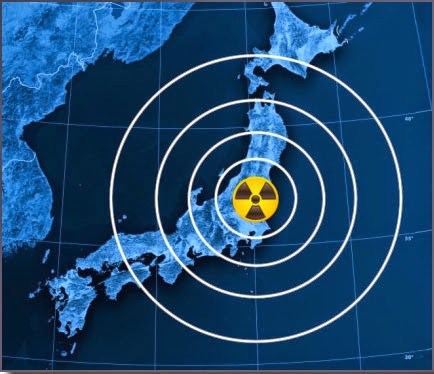 Top Official: Over 60 million Japanese irradiated by Fukushima — Nuclear Expert: 50,000 sq. miles of Japan highly contaminated… Many millions need to be evacuated… Gov’t has decided to sacrifice them, it’s a serious crime — TV: More than 70% of country contaminated by radiation (VIDEOS) http://enenews.com/top-official-60-million-japanese-irradiated-fukushima-nuclear-expert-50000-square-miles-country-highly-contaminated-many-millions-be-evacuated-govt-decided-sacrifice-serious-crime-professor-70-l?utm_source=feedburner&utm_medium=email&utm_campaign=Feed%3A+ENENews+%28Energy+News%29
Interview with nuclear engineer Hiroaki Koide (translation by Prof. Robert Stolz, transcription by Akiko Anson), published Mar 8, 2016 (emphasis added): [Radioactive] material has been dispersed, contaminating Tohoku, Kanto [Tokyo area], and western Japan… [The law says] that absolutely nothing may be removed from a radioactive management area in which the levels exceed 40,000 Becquerels per square meter… [H]ow much area has been contaminated beyond 40,000 Bq/m2… that answer is 140,000 km^2 [54,054 square miles]… Indeed, while centered on Fukushima, parts of Chiba and Tokyo have also been contaminated. The number of people living in what must be called a radiation-controlled area is in the millions, and could exceed ten million… I believe the government has the responsibility to evacuate these entire communities… the government decided to leave them exposed to the real danger of radiation. In my view, Fukushima should be declared inhabitable… but if that were to be done, it would likely bankrupt the country… They’ve decided to sacrifice people… In my view, this is a serious crime committed by Japan’s ruling elite… [F]undamentally, people must not be forced to live in contaminated areas… First must come complete evacuation… [W]hen it comes to radiation… “removal of contaminants” is impossible… This stuff contaminates everything.
Naoto Kan, former Prime Minister of Japan, Apr 11, 2016 (at 2:15 in): The molten material broke through the pressure vessel and accumulated low down in the containment. Now what would have happened if this molten material had escaped from the containment?… A radius of 250 kilometers — which includes the city of Tokyo — anyone living in this area, if you count them up it comes to 50 million or 40% of the Japanese population, and they would all have had to be evacuated. As we know from Chernobyl, not just a couple of weeks, but 30 years or 40 years — it would have virtually meant the end of Japan. [Note: Many nuclear experts believe the molten fuel did in fact escape from the containment] Half the population was subject to radiation [Japan Population: 127 million]. That’s something that could just be imagined, for instance the event of losing a major war.
Arirang (Gov’t-funded Korean TV network), ‘Fukushima and Its Aftermath’, Mar 16, 2016 (at 6:45 in) —Prof. Kim Ik-Jung, Medical College at Dongguk Univ.: “When you look at the contamination map, about 70% of Japan is contaminated by radiation. That means that 70% of Japan’s agricultural and marine products are contaminated.”… According to PNAS, one of the five major scientific journals, over 70% of the land in Japan is contaminated by radiation.
Fukushima ice wall a very costly failure
Amid rampant waste, Fukushima’s frozen wall up in smoke http://america.aljazeera.com/blogs/scrutineer/2015/3/24/rampant-waste-fukushima-frozen-wall-up-in-smoke.html
Japan’s Board of Audit reported that TEPCO, the company nominally in charge of the crippled facility, along with other construction and utility giants, had operated an insular and insufficiently transparent process that resulted in a lengthy list of massive expenditures on untested tactics and shoddy equipment.
The biggest ticket failure was apparently a $270 million water decontamination system from French nuclear behemoth Areva. Designed to remove radioactive cesium from water gushing from Fukushima Daiichi’s three destroyed reactors, the machine was never fully operational, functioned only three months and processed only 77,000 tons of liquid — in total — a minute fraction of the 300,000 tons of contaminated water flowing from the site (and into the sea) each day.
An attempt to contain at least some of that water, a series of pipes and trenches filled with coolant that was to form an “ice wall,” turned out to be another of the cleanup’s dramatically costly and utterly ineffective schemes.
As detailed last summer, the freezing technique was borrowed from tunnel excavation, but had never been tried under such circumstances or on such a large scale. After a year of planning and months of construction, authorities couldn’t get even the small first stage of the project to freeze. Even after adding ten tons of ice and a ton of dry ice on top of the piped coolant every day, TEPCO could not get within 10 degrees (F) of the temperature needed to form a barrier.
By late 2014, 400 tons of ice and somewhere between $840,000 (audited waste) and $300 million (projected cost) later, TEPCO conceded failure.
Other attempts to contain the radioactive water have also come at immense cost. TEPCO spent $134 million on rubber-gasketed tanks that quickly began leaking into the surrounding ground and ocean. And $18 million was spent to build large underground pools that failed within weeks.
Another costly boondoggle detailed in the audit is the $150 million blown on desalination equipment that was supposed to purify the seawater poured over the overheating reactor cores. (All of Fukushima’s cooling systems failed during the 2011 earthquake and tsunami, resulting in reactor meltdowns, melt-throughs, hydrogen explosions and containment breaches.) One machine worked for just five days; the best of them survived only six weeks.
Fukushima’s disaster mitigation is four years into what is projected, by the very best estimates, to be a 30- to 40-year cleanup — and even then, there will be many long-term logistical, safety and health concerns. No serious models forecast the project can be accomplished with just the $1.6 billion (190 billion yen) currently allocated, but by that math, waste alone will outstrip the budget three- or four-times over before cleanup is “complete.”
TEPCO official knew standard for meltdown at Fukushima
Yuichi Okamura, the senior director of nuclear power generation knew. In a recent press conference he said that it was his personal knowledge as to what was the meltdown standard. Mr. Okamura has worked in the industry for 20 years. He did not elaborate about TEPCO’s manuals or the knowledge of others. At the time of the disaster he was tasked with dealing with the spent fuel pool at unit 4.
A Tokyo Electric Power Co. senior official has admitted to knowing the criteria to assess reactor meltdowns during the onset of the 2011 Fukushima nuclear accident.
However, it took the company two months to make the declaration and another five years to “discover” its operational manual, which would have allowed it to declare a meltdown.
Until February this year, TEPCO had justified the delay in that it did not have the “basis to determine” such an occurrence. It announced Feb. 24 that it discovered a guideline in its operational manual.
TEPCO admitted that meltdowns had occurred in May 2011, two months after the disaster.
Yuichi Okamura, a senior director on nuclear power generation, said in a news conference on April 11 that he knew of the standard, although emphasizing it was only his “personal knowledge.” He did not elaborate on whether he knew the existence of the operational manual, or whether he shared his “personal knowledge” with other staff members.
“I, in fact, knew it (the criteria),” said Okamura. “I learned it while working in the field of nuclear technology with the company for over 20 years.”
According to Okamura, at the time of the accident at the Fukushima No. 1 nuclear power plant, he was directing the pumping of water into the cooling pool of spent nuclear fuel rods of the No. 4 reactor. He said he was not in a position to make a declaration whether a meltdown had occurred.
He made the admission in response to a question asking his personal understanding of the situation at the onset of the crisis.
Okamura declined to comment on whether he is being questioned by a third-party panel investigating the accident.
In February, TEPCO revealed that it did not realize for the past five years that there was a clear guideline in the operational manual to assess that a meltdown in a reactor had occurred. The standard requires the company to declare a meltdown when damage to a reactor core exceeds 5 percent.
TEPCO took two months to declare the triple meltdowns at the Fukushima plant, triggered by the Great East Japan Earthquake and tsunami on March 11, 2011. It had initially maintained that the reactors suffered “core damage” rather than meltdowns.
Fukushima Five Years After: Health Researchers Turn Blind Eye to Casualties
Last month made five years since the nuclear plant at Fukushima, Japan suffered meltdowns. The release of highly toxic radiation from the reactors was enormous, on the level of the Chernobyl disaster a generation earlier. But Fukushima is arguably worse than Chernobyl. There were four reactors that melted down, vs. just one at Chernobyl. And the Chernobyl reactor was buried in a matter of weeks, while Fukushima is still not controlled, and radioactive contaminants continue to leak into the Pacific. In time, this may prove to be the worst environmental catastrophe ever.
Japan, which had 54 reactors in operation, closed them all to improve safety features. But the nation’s people, who had suffered from the two atomic bombs at Hiroshima and Nagasaki, are adamantly against nuclear power. As a result, despite strong efforts of government and industry, only three (3) reactors have been brought back on line.
While the people struggle against leaders to determine the nuclear future of Japan, many questions remain. The most crucial question is, without doubt, how many casualties occurred from the 2011 disaster?
Public health leaders have addressed the topic with ignorance and deception. A search of the medical literature shows only two studies in Japan that review actual changes in disease and death rates. One showed that 127 Fukushima-area children have developed thyroid cancer since the meltdown; a typical number of cases for a similar sized population of children would be about 5-10. The other study showed a number of ectopic intrathyroidal problems in local children – a disorder that is extremely rare. No other studies looking at changes in infant deaths, premature births, child cancers, or other radiation-sensitive diseases are available.
But the literature also shows that researchers have been pouring out articles on mental health and psychological impacts on local residents. Journals from Japan and other nations have printed research on stress, behavioral changes, fears, and even changes in average blood pressure (blaming it on concerns about the meltdown). At least 51 of these articles are listed on the National Library of Medicine web site.
The same pattern occurred after prior meltdowns. The 1979 meltdown at the Three Mile Island nuclear plant in Pennsylvania was followed by a total denial that anyone had been harmed. The first journal article on changes in cancer cases didn’t appear until nearly 12 years after the meltdown; it showed a 64% rise in cancer cases within 10 miles of the plant during the first five years after the accident. The authors, from Columbia University, blamed this increase on stress and psychological reactions to the disaster.
After Chernobyl, the same corruption of scientific investigation occurred. The 31 emergency workers who helped bury the red-hot reactor and died from high exposures became almost a mantra (“Chernobyl caused only 31 deaths”) despite the massive amount of fallout it dispersed across the globe. A 2009 compendium of 5,000 articles, published by the New York Academy of Sciences, estimated about 1 million deaths from the meltdown occurred in the following 20 years. Unfortunately, nuclear supporters have made the assumption that nobody died from Fukushima, while churning out study after study on how a meltdown affects mental status – and no other part of the body.
But the truth is that Fukushima radiation, a mix of over 100 chemicals found only in atomic reactors and bombs, has caused considerable harm. University of South Carolina biology professor Timothy Mousseau has made multiple trips to Japan, collecting specimens of plants and animals. He and colleagues have published numerous journal articles showing DNA damage and actual disease near the plant. So if plants and animals are affected, it is logical that humans are as well.
And while the damage is worst in Japan, the harm spread for long distances. Right after the meltdown, prevailing winds drove Fukushima fallout across the Pacific, reaching the U.S. West Coast in 5 days, and moving through the air across the nation. EPA data showed that the West Coast, had the highest levels of fallout in the weeks following the accident, up to 200 times normal. In the years since, the slower-moving radiation in the Pacific has moved steadily eastward, reaching the U.S. West Coast, and contaminating fish and aquatic plant life along the way.
We published three journal articles showing that babies born in the West Coast in the nine months after Fukushima had a 16% jump in defective thyroids, compared to little change in the rest of the country. It’s time that health researchers stop its corrupt approach to Fukushima, and produce some actual statistics on changes in disease and death rates among affected populations – in Japan and in other countries. Not coming to grips with the truth will only raise the chance of another catastrophic meltdown in the future, raising the already-enormous number of casualties from nuclear power.
Fukushima Five Years After: Health Researchers Turn Blind Eye to Casualties
Fukushima’s evacuees have radiation-caused illnesses, but this is covered up in Japan
 Nuclear Expert in Fukushima: People’s feet turned black for years because radiation so high — Every time I turned around I saw someone who had radiation damage — Hair falling out, caughing up blood, bodies covered with boils… Officials keeping doctors from telling truth… Public being brainwashed (VIDEO) http://enenews.com/nuclear-expert-fukushima-peoples-feet-turned-black-years-because-radiation-levels-high-every-time-turned-around-radiation-damage-hair-fell-bloody-noses-bodies-covered-boils-officials-covering-pu?utm_source=feedburner&utm_medium=email&utm_campaign=Feed%3A+ENENews+%28Energy+News%29
CCTV, Apr 5, 2016 (emphasis added) — Nuclear engineer Arnie Gundersen: [During my recent trip to Japan] I met in one of the resettlement areas… The unofficial mayor of this group – a real dynamo of a woman – she experienced hair loss, bloody nose, speckles on her skin and the doctors told her it was stress and not to worry about it. That’s not stress. It was radiation damage. But again, that’s this inhumanity that I was experiencing… Every time I turned around, I saw people that definitely experienced radiation damage. We had one woman who ran from her house to evacuate carrying her dog. About a day after the accident, they realized that she needed to be evacuated. And so she runs barefoot to her car, gets in her car, drives to the resettlement community. She’s highly radioactive. They make her – especially her feet – they make her take her socks off and take showers, wash her down before they let her in. And her feet were black for three years from radiation damage. And that’s not being spoken about in any of the medical journals… [The government wants] to get these other nuclear plants up and running. And if the population is getting ill from radiation effects, it’s a lot harder. So they have… banded together with the medical community.
We had numerous doctors say that they were going to lose hospital privileges and things like that. And the people that are keeping track of deaths in Fukushima Prefecture aren’t publishing the data. So the entire government infrastructure, from the people in Tokyo to the underlings in the Prefecture, are all singing the same song: that this is stress, there’s no radiation. And it sure isn’t what I found, I’ll tell you… Were it not for the internet, they would have won. And I think the difference between the disaster at Fukushima and the disaster at Chernobyl and TMI is that now we have the internet. It still is an unlevel playing field. There’s still so much money on the other side of it that people are being brainwashed. Oh, that bloody nose you’ve had for the last 3 weeks is stress. So they are being brainwashed.
Fairewinds Japan Speaking Tour Series No. 3, Feb 24, 2016 – Nuclear engineer Arnie Gundersen: Today I went to a resettlement community… their unofficial mayor, the woman who sort of runs all the groups… she told us that after the disaster at Fukushima, her hair fell out, she got a bloody nose and her body was speckled with hives and boils and the doctor told her it was stress and she believes him. It was absolutely amazing.
Fairewinds Japan Speaking Tour Series No. 4, Mar 3, 2016 — Nuclear engineer Arnie Gundersen: The Japanese government’s position is when your hair falls out and your nose starts to bleed and you’re hacking up blood, that that’s all stress related… We had a woman back my first week that was there, the radiation levels were so high, her feet turned black for four years. And I was at the Hiroshima Museum and I saw the same thing. I saw pictures of the Hiroshima victims with their feet blackened from radiation. The government has done a very successful job of covering this up.
The Guardian, Apr 11, 2016: At first they thought it was just a fire, then the chickens started to turn black… Soviet authorities neglected to tell the people the extent of the danger they were in [from Chernobyl], for fear of causing mass panic, tell-tale symptoms soon followed. Dark marks appeared on the skin. The wattles of the local chickens turned from crimson to black.
Japan Prepares for Release of Tritium From Fukushima Plant
Tritium may not penetrate plastic but goes everywhere H20 goes in the body. It can cross the blood brain barrier, the placental barrier, and is a known carcinogen. Just because they don’t know what to do with it doesn’t mean it’s ok to just release it. Something the nuclear industry is perfectly aware of.
Japan Prepares for Release of Tritium From Fukushima Plant
TOKYO — To dump or not to dump a little-discussed substance is the question brewing in Japan as it grapples with the aftermath of the nuclear catastrophe in Fukushima five years ago. The substance is tritium.
The radioactive material is nearly impossible to remove from the huge quantities of water used to cool melted-down reactors at the Fukushima Dai-ichi plant, which was wrecked by the massive tsunami in northeastern Japan in March 2011.
The water is still accumulating since 300 tons are needed every day to keep the reactors chilled. Some is leaking into the ocean.
Huge tanks lined up around the plant, at last count 1,000 of them, each hold hundreds of tons of water that have been cleansed of radioactive cesium and strontium but not of tritium.
Ridding water of tritium has been carried out in laboratories. But it’s an effort that would be extremely costly at the scale required for the Fukushima plant, which sits on the Pacific coast. Many scientists argue it isn’t worth it and say the risks of dumping the tritium-laced water into the sea are minimal.
Their calls to simply release the water into the Pacific Ocean are alarming many in Japan and elsewhere.
Rosa Yang, a nuclear expert at the Electric Power Research Institute, based in Palo Alto, California, who advises Japan on decommissioning reactors, believes the public angst is uncalled for. She says a Japanese government official should simply get up in public and drink water from one of the tanks to convince people it’s safe.
But the line between safe and unsafe radiation is murky, and children are more susceptible to radiation-linked illness. Tritium goes directly into soft tissues and organs of the human body, potentially increasing the risks of cancer and other sicknesses.
“Any exposure to tritium radiation could pose some health risk. This risk increases with prolonged exposure, and health risks include increased occurrence of cancer,” said Robert Daguillard, a spokesman for the U.S. Environmental Protection Agency.
The agency is trying to minimize the tritium from U.S. nuclear facilities that escapes into drinking water.
Right after the March 2011 disaster, many in Japan panicked, some even moving overseas although they lived hundreds of miles (kilometers) away from the Fukushima no-go zone. By now, concern has settled to the extent that some worry the lessons from the disaster are being forgotten.
Tritium may be the least of Japan’s worries. Much hazardous work remains to keep the plant stabilized, and new technology is needed for decommissioning the plant’s reactors and containing massive radioactive contamination.
The ranks of Japan’s anti-nuclear activists have been growing since the March 2011 accident, and many oppose releasing water with tritium into the sea. They argue that even if tritium’s radiation is weaker than strontium or cesium, it should be removed, and that good methods should be devised to do that.
Japan’s fisheries organization has repeatedly expressed concerns over the issue. News of a release of the water could devastate local fisheries just as communities in northeastern Japan struggle to recover from the 2011 disasters.
An isotope of hydrogen, or radioactive hydrogen, tritium exists in water form, and so like water can evaporate, although it is not known how much tritium escaped into the atmosphere from Fukushima as gas from explosions.
The amount of tritium in the contaminated water stored at Fukushima Dai-ichi is estimated at 3.4 peta becquerels, or 34 with a mind-boggling 14 zeros after it.
But theoretically collected in one place, it would amount to just 57 milliliters, or about the amount of liquid in a couple of espresso cups — a minuscule quantity in the overall masses of water.
To illustrate that point, Shunichi Tanaka, chairman of the Nuclear Regulation Authority, showed reporters a small bottle half-filled with blue water that was the equivalent of 57 milliliters.
Public distrust is running so high after the Fukushima accident that Tokyo Electric Power Co., or TEPCO, the utility that operates the Fukushima plant and oversees its decommissioning, has mostly kept quiet about the tritium, pending a political decision on releasing the water.
Privately, they say it will have to be released, but they can’t say that outright.
What will be released from Fukushima will be well below the global standard allowed for tritium in the water, say Tanaka and others favoring its release, which is likely to come gradually later this year, not all at once.
Proponents of releasing the tritium water argue that tritium already is in the natural environment, coming from the sun and from water containing tritium that is routinely released at nuclear plants around the world.
“Tritium is so weak in its radioactivity it won’t penetrate plastic wrapping,” said Tanaka.
90Sr in teeth of cattle abandoned in evacuation zone: Record of pollution from the Fukushima-Daiichi Nuclear Power Plant accident
Here we determined the 90Sr concentrations in the teeth of cattle abandoned in the evacuation area of the Fukushima-Daiichi Nuclear Power Plant (FNPP) accident. 90Sr activity concentrations in the teeth varied from 6–831 mBq (g Ca)−1 and exhibited a positive relationship with the degree of radioactive contamination that the cattle experienced. Even within an individual animal, the specific activity of 90Sr (Bq (g Sr)−1) varied depending on the development stage of the teeth during the FNPP accident: teeth that were early in development exhibited high 90Sr specific activities, while teeth that were late in development exhibited low specific activities. These findings demonstrate that 90Sr is incorporated into the teeth during tooth development; thus, tooth 90Sr activity concentrations reflect environmental 90Sr levels during tooth formation. Assessment of 90Sr in teeth could provide useful information about internal exposure to 90Sr radiation and allow for the measurement of time-course changes in the degree of environmental 90Sr pollution.
Introduction
The Fukushima-Daiichi Nuclear Power Plant (FNPP) accident released a substantial amount of radioactive nuclides into the atmosphere and caused extensive contamination of the environment1,2,3,4,5. The radioactivity of the typical fission products was estimated to be 8.2 PBq for 137Cs, 9.8 PBq for 134Cs, and 0.14 PBq for 90Sr2,6. In June 2011, the Japan Ministry of Education, Culture, Sports, Science, and Technology (MEXT) reported that 0.1−6 kBq m−2 of 90Sr and 0.3−17 kBq m−2 of 89Sr were detected in the soil of areas within a 20-km radius from the FNPP (i.e., the former Fukushima evacuation zone)7. As 89Sr has a relatively short half-life of 50.5 days, its presence suggests that these radionuclides did not originate from global fallout due to nuclear weapons testing, but from the FNPP accident.
The long half-life (28.8 y) and bone-seeking properties of 90Sr make it a concerning artificial radionuclide among the fission products found near FNPP. Although radioiodine and caesium are more noticeable in quantity, 90Sr can persist in bone with a retention half-life of over 10 years, depending on bone type8,9,10,11. Moreover, its daughter nuclide, 90Y, emits β-rays (2.28 MeV) that may have adverse effects on the bone marrow. Thus, some attention has been paid to the determination of 90Sr content in bone and particularly in teeth. Sr is incorporated into the tooth during calcification. Once incorporated, it remains in enamel and dentine until the tooth falls out or is extracted12. Therefore, 90Sr activity concentration in a given tooth is a reflection of environmental 90Sr contamination levels when the tooth was formed.
Several studies have taken advantage of this phenomenon to understand the long-term effects of nuclear activity on humans. For example, 90Sr incorporation into human teeth has been observed after the Techa River region was contaminated by the release of liquid radioactive waste into the river during the early 1950s8,13,14,15. Similarly, the deciduous teeth of Swiss children born between 1952 and 2002 exhibited 90Sr activity concentrations that correlated with atmospheric rises in 90Sr levels, which resulted from nuclear weapons testing during that period11. Increases in tooth 90Sr activity concentrations following the 1986 Chernobyl accident have also been reported11,16,17. These observations indicate that 90Sr activity concentration in teeth is an effective indicator of 90Sr contamination levels in the environment. However, while studies have examined 90Sr contamination in soil, vegetation, the nearby seawater and fish after the FNPP accident18,19,20,21,22,23,24, no studies to date have reported on 90Sr activity concentrations in teeth or bones. We thus have little direct data on how much FNPP-related contamination affected animals, which is essential for fully understanding the extent of environmental pollution in the area.
In the aftermath of the FNPP accident, thousands of cattle were abandoned in the evacuation zone. These cattle subsisted on natural food and water in the contaminated environment. Previously, we investigated the activities of 134Cs, 137Cs, 110mAg, and 129mTe in cattle within a 20-km radius around the FNPP, and demonstrated that radioactive Cs concentrations in organs and plasma were dependent on the feeding conditions and the geographic location of the cattle25. We also separately examined the effect of radioactive Cs on cattle testes after the FNPP accident26. We now expand on these studies by examining 90Sr concentrations in cattle teeth and relating them to other measures of environmental pollution.
Results
Activity concentration of 90Sr in the soil of cattle residence areas
Figure 1 details the locations of cattle residence after the FNPP accident. Areas H and L are situated in the government-delineated evacuation zone, and their 90Sr activity concentrations in soil are 94–1500 Bq m−2 (average: 738 Bq m−2) and 39–380 Bq m−2 (average: 195 Bq m−2), respectively7. We chose area C in Iwate Prefecture as the control region because it is approximately 250 km north of the nuclear plant and is considered free from FNPP-related 90Sr pollution. The activity concentration of 90Sr in soil in area C is 95–99 Bq m−2 (average: 96 Bq m−2)27.

FNPP: The Fukushima-Daiichi Nuclear Power Plant. H: High-contamination area (10–30 μSv h−1), 5 km west of FNPP. L: Low-contamination area (0.8–1.2 μSv h−1), 16 km south-west of FNPP. Areas H and L were in the evacuation zone. C: Control area in Iwate Prefecture, 250 km north of FNPP. The maps were modified from open-access base maps freely available for public and academic use (source: http://maps.gsi.go.jp, from the Geographic Information Authority of Japan).
adioactivity of 90Sr in cattle teeth
- 90Sr activity concentration
Figure 2 summarizes the 90Sr activity concentrations (90Sr activity/amount of Ca) in various teeth (deciduous molars, premolars, and molars (Supplementary Table S1)).
We detected 90Sr in all examined teeth. Activity concentrations varied significantly with area (p = 0.0000, Kruskal-Wallis test): high 90Sr concentrations (61–831 mBq (g Ca)−1) were observed in area H, mid-range concentrations (22–311 mBq (g Ca)−1 were observed in area L, and the lowest concentrations (6–35 mBq (g Ca)−1) were observed in control area C. These 90Sr activity concentrations in teeth were significantly correlated with 90Sr concentrations in the soil of areas H, L, and C (ρ = 0.8441, p < 0.01, Spearman’s rank-order correlation analysis).
- Specific activity of 90Sr
Figure 3 shows the specific activities of 90Sr (90Sr radioactivity/amount of stable Sr) in teeth (Supplementary Table S2). 90Sr specific activities were similar to the 90Sr activity concentration trends: higher (214–1351 Bq (g Sr)−1) and lower (60–641 Bq (g Sr)−1) activity were observed for areas H and L, respectively. The lowest specific activity (13–78 Bq (g Sr)−1) was observed in teeth from control area C. The specific activity differed significantly across areas H, L, and C (p = 0.0000, Kruskal-Wallis test). Moreover, specific activity was significantly correlated with 90Sr concentrations in the soil of areas H, L, and C (ρ = 0.8507, p < 0.01, Spearman’s rank-order correlation analysis).
- Activity concentrations and specific activities of 90Sr in teeth at different developmental stages.
The four young cattle examined in this study (H-young-1, H-young-2, L-young-1, and L-young-2) were 8 months old when the FNPP accident occurred (Table 1) and their molars ranged across developmental stages: development of the deciduous molars (DM1, DM2, and DM3) were either complete or in the late stage, the molars (M1, M2, and M3) were actively developing, and the premolars (P1, P2, and P3) were still early in development28 (Fig. 4a). 90Sr activity concentrations and specific activities were low in deciduous molars, higher in molars, and highest in premolars for each individual (p = 0.0006 and 0.0004 for 90Sr activity concentration and 90Sr specific activity, respectively; Kruskal-Wallis test; Figs 2 and 3).
We also determined the activity concentrations and specific activity of 90Sr in the teeth of two adult cattle (L-adult-1 and L-adult-2) from area L, that were 22 and 51 months old, respectively, during the FNPP accident. Based on their age, we assumed that development of permanent molars and premolars were complete at that point (Fig. 4b). We found low levels of 90Sr activity concentrations (22–91 mBq (g Ca)−1) and specific activities (60–166 Bq (g Sr)−1) in all adult teeth, but in contrast to young cattle (L-young-1 and L-young-2), no significant differences existed across adult molars and premolars in both 90Sr activity concentration and specific activity (p = 0.6310 and 0.3367, respectively; Kruskal-Wallis test).
Concentration of stable Sr in cattle teeth
We compared stable Sr concentrations in teeth formed before and after the accident (Table 2).

We found that Sr concentrations in the teeth of young cattle in area H and L differed across the deciduous molars, molars, and premolars. The deciduous molars, fully developed before the accident, exhibited low Sr concentrations, while the premolars that developed post-accident exhibited high concentrations. Molars undergoing active development when the accident occurred exhibited mid-range values. The variation in Sr concentrations across teeth was statistically significant in young cattle from areas H and L (p = 0.0211, Kruskal-Wallis test). In contrast, the dentition of adult cattle from area L (molars and premolars; most deciduous molars had fallen out by the time of sampling, see Table 2) was already fully developed when the accident occurred and exhibited no differences in stable Sr concentration (p = 1.0000, Kruskal-Wallis test). We also found no differences among the deciduous molars, molars, and premolars of the young control cattle (p = 0.7488, Kruskal-Wallis test).
Discussion
The results of our study demonstrated that activity concentrations and specific activities of 90Sr in cattle teeth varied in accordance with the degree of 90Sr pollution in the cattle residence areas. After the FNPP accident, the cattle were released to the field and subsisted on grasses, leaves, and river or swamp water in the polluted environment. The contamination of natural food and water consumed by the cattle likely contributed to 90Sr activity differences we observed in the H-area teeth versus L-area teeth.
Patterns corroborating our results have been reported in cow teeth from 16 contaminated areas in the Mayak region of the former Soviet Union29. The study using imaging plates showed that 90Sr activity concentrations in the teeth were 0.09–2.96 kBq (g tissue)−1 on average and were positively correlated with soil contamination levels (<3.7–185 kBq m−2). Although the degree of 90Sr contamination in our study areas was much lower than contamination in the Mayak region, we note the similar relationship between environmental 90Sr and tooth 90Sr activity concentration: 90Sr in the teeth faithfully reflects the degree of 90Sr pollution in the environment when the tooth was formed.
Small amounts of 90Sr were detected in the teeth of control cattle. Similarly, low levels of 90Sr have been found elsewhere in Japan even before the accident occurred. For example, 90Sr activity concentrations in cattle bones from Hokkaido (located on the northern edge of Japan and relatively far from the FNPP) were approximately 72 mBq (g Ca)−1 in 199630 and 26 mBq (g Ca)−1 in 200831. Both concentrations are higher than the 90Sr activity concentrations in the control teeth (14 ± 7 mBq (g Ca)−1) of this study. Possible sources for pre-FNPP radioactivity in Hokkaido are either the Chernobyl accident or nuclear weapons testing. Although 90Sr fallout from Chernobyl had been detected in Japan previously, the amount was far less than fallout from nuclear weapons testing32. Moreover, increases to 90Sr activity concentrations in Hokkaido cattle bones were not observed at the time of the Chernobyl accident30. Therefore, the low levels of 90Sr activity measured in our controls probably stemmed from the atmospheric nuclear weapons testing conducted during the 1950s–1970s.
In this study, we took advantage of cattle tooth development to examine pre- and post-accident levels of 90Sr. Tooth development follows a fixed trajectory that varies across species. In cattle, deciduous molars first form during the prenatal period, followed by molars. Premolars then form during the early postnatal period, with the first premolars (P1) forming in the last stage of dentition, beginning from 12–18 months and completing at 18–24 months28. Therefore, cattle younger than 24 months old possess teeth across all dentition developmental stages. Moreover, teeth at early developmental stages during the accident would primarily form under a polluted environment, incorporating large amounts of 90Sr. In contrast, the formation of teeth at late developmental stages would be mostly complete during the accident, resulting in the incorporation of less 90Sr. Furthermore, 90Sr activities in the teeth of adult cattle were low (Fig. 2c) and nearly constant, although the adults had resided in area L, the same location as two of the young cattle.

DM: Deciduous molars (first, second, and third deciduous molar); M: Molars (first, second, and third molar); P: Premolars (first, second, and third premolar). Along the x-axis, the teeth are arranged according to the chronological order of tooth development (DM, M, P). Error bars represent the standard deviation.
We observed 90Sr activity even in teeth that had fully developed before the accident (i.e., deciduous molars of young cattle in areas H and L, as well as deciduous molars, molars, and premolars of adult cattle in area L). These levels were occasionally higher than levels in control cattle (compare Fig. 2c to Fig. 2d, and Fig. 3c to 3d), although essential incorporation of 90Sr was not expected during tooth development. These higher than expected concentrations may have been due to non-specific 90Sr adsorption on the tooth surface via contaminated food or water. Alternatively, they could have resulted from the deposition of dental calculus on the tooth surface after the FNPP accident. Furthermore, as described by Tolstykh et al.8,14, ion exchange between the dentine tubule and pulp surfaces with the secondary dentine formation in the pulp could proceed even after complete tooth development. These interactions may also contribute to the higher 90Sr activities in adult teeth from area L compared with control teeth.

DM: Deciduous molars (first, second, and third deciduous molar); M: Molars (first, second, and third molar); P: Premolars (first, second, and third premolar). Along the x-axis, the teeth are arranged according to the chronological order of tooth development (DM, M, P). Error bars represent the standard deviation.
Data on the stable Sr concentrations in teeth formed pre- and post-accident (Table 2) accorded with the radioactivity data. Specifically, in young cattle of both areas H and L, teeth formed before the accident contained less stable Sr than teeth formed after the accident. The teeth of adult cattle and control cattle, however, did not exhibit a pre- and post-accident difference in stable Sr. Again, similar to our findings for 90Sr specific activity, these patterns in the experimental young cattle are likely the result of differences between pre-accident farm feed and the post-accident natural resources that the cattle ingested. Although we did not measure Sr contents in the diets of our subject cattle, our data on stable Sr suggest that the natural grasses, leaves, and water ingested by the cattle likely contain more Sr than their former farm feed. These data suggest that stable Sr concentrations could be also used in conjunction with 90Sr specific activity as a metric for environmental Sr levels. We have shown that 90Sr incorporation into teeth is cumulative during tooth development, reflecting the degree of environmental 90Sr contamination in that time. Unlike bone, the tooth has essentially no metabolism. Therefore, the 90Sr in tooth is a potentially useful indicator for estimating the internal radiation exposure of individuals affected by nuclear activity during their tooth formation periods. Furthermore, by measuring 90Sr activities in different teeth, we can take advantage of the various developmental trajectories of animal (including human) dentition and use the known chronologies of individual tooth growth to track time-course changes in the degree of environmental contamination. This study is one of the national projects associated with the Great East Japan Earthquake that occurred on March 11, 2011. All protocols were approved by the Tohoku University (No.2014KDO037). All methods detailed below were carried out in accordance with these guidelines. On May 12, 2011, the Japanese Ministry of Agriculture Forestry and Fisheries (MAFF) ordered euthanasia of cattle abandoned in the evacuation zone to prevent radio-contaminated beef from entering consumer products25. Euthanasia was carried out by veterinarians belonging to the Livestock Hygiene Service Center (LHSC) of Fukushima Prefecture, in accordance with the Ethical Regulations for Animal Experiments and Related Activities at MAFF. These regulations are based on the June 2007 euthanasia guidelines issued by the American Veterinary Medical Association. The cattle were anesthetized with an intramuscular injection of xylazine hydrochloride (0.2 mg kg−1). They were then euthanized via an overdose of intravenous sodium pentobarbital (20 mg kg−1), followed by intravenous suxamethonium hydrochloride (2 mg kg−1). Before performing euthanasia, veterinarians obtained informed consent from the livestock owners, who were identified from the cattle ear tags. We collected organs and tissues, including mandibular bones, from euthanized cattle with the help of LHSC veterinarians. We selected six cattle (H-young-1, H-young-2, L-young-1, L-young-2, L-adult-1, and L-adult-2) residing in the two FNPP evacuation areas (H and L; Fig. 1) for the current study. Two other cattle (control-1 and control-2) from the uncontaminated area C (Fig. 1) were chosen as controls. The mandibular bones of control cattle, including teeth, were supplied by the Iwate Chikusan Ryutsu Center Co., Ltd. in Iwate Prefecture. The characteristics of the study subjects are summarized in Table 2. Mandibular bones were dissected from the cattle skulls and radiographs were taken with X-ray equipment (Panoramic Radiograph, Auto-IIIE, Asahi Roentgen Ind. Co., Ltd.) to classify the developmental stages of molar dentition. The deciduous molars, molars, and premolars were then dissected from the mandible and kept in 70% ethanol until needed. We air-dried teeth in a desiccator after removing any surface debris with toothbrushes and dental scalars. The tooth was then crushed with a hammer and powdered using a tissue lyser (TissueLyser II, Qiagen Co., Ltd.). The powdered teeth (1.5 g) were then incinerated in a muffle furnace at 450 °C for 12 h and used for 90Sr, stable Sr, and Ca measurements, as described in the following subsection. In this study, we used the entire tooth for analysis, without separating enamel and dentine. The cattle molar is classified as a hypsodont tooth (drycodont), morphologically characterized by extremely high and long crowns that occupy more than 4/5th of the whole tooth33. The crown elongates parallel to the growing axis and consists of both enamel and dentine. The latter is metabolically inert, like the enamel, and therefore accumulates Sr in the same way. Additionally, Sr concentration in dentine is slightly higher than in enamel, but the difference is small (70–620 in dentine versus 25–600 μg g−1 in enamel34). Because both tissues develop almost simultaneously during crown formation, and because the hypsodont tooth primarily consists of the crown, we thought that the relationship between molar development and 90Sr accumulation could be properly assessed even without separating enamel and dentine. Further, using the whole tooth allows us to track changes in 90Sr deposition over a longer period, because complete tooth formation takes over 2 years, whereas separate parts of the tooth take less time to develop. Many methods have been developed for the separation of Sr from large amounts of Ca, including co-precipitation, liquid-to-liquid extraction, ion-exchange or extraction chromatography, and combinations of these techniques24,35,36. For this study, we chose the fuming nitric acid method. Although newer methods are less demanding and occasionally result in higher yields, the use of fuming nitric acid remains reliable and robust under conditions of large sample amounts and extremely high quantities of co-existing Ca35, which was the case here. We dissolved 1 g of the incinerated sample in 10 mL of 60% HNO3 (analytical grade, Kanto Chemical Co., Inc.), and added 20 mg of Sr2+ carrier to the solution. We then added 10 mL of fuming nitric acid (analytical grade, Kanto Chemical Co., Inc.) to precipitate Sr(NO3)2. We removed the remaining Ca by dissolving the precipitate in 10 mL of distilled water, and again adding 10 mL of fuming nitric acid. The resultant supernatant was discarded. By repeating this procedure two to three times, the Sr within each sample was successfully separated from Ca as Sr (NO3)2. Sr (NO3)2 was dissolved in 10 mL of distilled water to form Solution A, which was subjected to further chemical separation from Ra and Pb. Trace amounts of natural 226Ra (half-life: 1600 y), 228Ra (half-life: 5.75 y) and 210Pb (half-life: 22.3 y) are present in teeth35. These radionuclides interfere with accurate β-ray measurement of 90Sr. Therefore, these radionuclides were removed via co-precipitation with BaCrO4 using the following procedure. First, 2 mL of acetate buffer solution was added to Solution A. Then, 10 mg of Ba2+ was added, followed by dilution with distilled water to a volume of 20 mL. Ra and Pb were scavenged with BaCrO4 precipitate, formed by adding 0.1 mL of 1.5 M Na2CrO4 solution. After centrifugation, the supernatant containing Sr was separated. To the supernatant, 1 mL of concentrated NH4OH and 2 mL of saturated (NH4)2CO3 solution were added to precipitate SrCO3. Lastly, the precipitate was dissolved in 10 mL of 1 M HNO3 (Solution B). To distinguish the growth curve of 90Y from 90Sr during β-ray measurement, 90Y was removed by co-precipitation with Fe (OH)3. Fe3+ (2 mg) was added to 10 mL of Solution B. Concentrated NH4OH was then added until Solution B’s pH was 8–9. This step precipitated Fe(OH)3, which was used to scavenge 90Y. The supernatant was filtered from the precipitate using a glass microfiber filter (Whatman GF/F 25 mm, GE Healthcare Life Science Co.). Finally, Sr in the supernatant was precipitated as SrCO3 by adding 3 mL of saturated (NH4)2CO3 solution. The precipitate was filtrated with a membrane filter (JAWP02500, 25 mm diameter, Merck Millipore Co.), and stored in a stainless-steel sample dish (E0802001, 25 mm, 6 mm height, Chiyoda Technology Co.). The dish was covered with polyimide film (7.5 μm thick) to avoid further contamination and submitted for β-ray measurement. Chemical yields of Sr, or the recovery of Sr carrier added to the sample solution at the beginning of the separation procedure, were 70% on average, with a range of 50–96% for 114 determinations. The β-rays emitted from 90Sr and its daughter 90Y were measured with a low background gas flow counter (LBC-4201B, Hitachi-Aloka Medical, Ltd.) for 3–12 h. Following chemical separation of Sr, we monitored the growth of 90Y from 90Sr in SrCO3 precipitate. We measured β-rays 5 to 6 times within a fortnight of the separation. Using these measurements of radioactivity, we created a time-course plot to check whether the increase in β-ray counts fits the theoretical growth curve of 90Y. 90Y growth typically reached secular equilibrium with 90Sr 2 weeks after Sr separation, upon which we measured total radioactivity from 90Y and 90Sr. To correct for the self-absorption of β-rays by the measured sample, we used an absorption coefficient that was experimentally obtained with β-rays from known amounts of 90Sr and 90Y against the thickness of SrCO3 precipitate. The background level of the gas-flow counter used in this study was 0.155 ± 0.015 cpm (3σ: 0.044 cpm) per 12 hr. Measurement efficiency was 0.339 ± 0.001 when the 90Sr standard sample was 88.4 Bq with a thickness of 24 mg cm−2. Assuming that the recovery of chemical separation of Sr is 70%, the detection limit of 90Sr in 1 g of incinerated sample is 4.94 mBq (g Ca)−1. All values obtained in this study were above this detection limit. 90Sr activity due to decay was corrected to March 11, 2011 (the day of the FNPP accident). We determined Ca and Sr content in teeth using the inductively coupled plasma atomic emission spectrometer (ICP-AES; ICPE-9000, Shimadzu Co., Ltd.) at the Research and Analytical Center for Giant Molecules, Graduate School of Science, Tohoku University. Incinerated teeth samples were dissolved in 60% HNO3, and a portion of the solution was diluted 10,000 times for the measurements. Sr was determined using a standard addition method with a wavelength of 407.771 nm, and Ca was determined using a calibration-curve correction method with a wavelength of 317.933 nm. Each measurement was performed in triplicate and the resultant values were averaged. (A) H-young-2: Deciduous molars were fully developed. Of the molars, the root of the third molar was under active development. The premolars under the deciduous molars were in the early developmental stage. (A) L-adult-2: Both molars and premolars were fully developed. Permanent dentition was complete. DM1: First deciduous molar; DM2: Second deciduous molar; DM3: Third deciduous molar; M1: First molar; M2: Second molar; M3: Third molar; P1: First premolar; P2: Second premolar; P3: Third premolar.Materials and Methods
Ethics
Collection of tooth samples
Chemical separation of 90Sr in the teeth
β-ray measurement
Determination of stable Ca and Sr in the teeth

Statistical analysis
Because the data were non-parametric, we chose Kruskal-Wallis tests for our analyses, with significance set at p < 0.05. Tests were one-tailed. Data on DM1, DM2, and DM3 were grouped together as deciduous molars (N = 16); data on M1, M2 and M3 were grouped as molars (N = 24); and data on P1, P2, and P3 were grouped as premolars (N = 21). Independent variables used in the test were area (H, L, C) and type of tooth (deciduous molars, molars, premolars). Dependent variables were 90Sr activity concentrations, 90Sr specific activity, and stable Sr concentrations. We used Spearman’s rank-order correlation analysis to look for significant correlations between 90Sr radioactivity in the soil and in the teeth. All analyses were performed in STATISTICA (Ver. 06J, StatSoft Co., Ltd.).
Source: Koarai, K. et al.90Sr in teeth of cattle abandoned in evacuation zone: Record of pollution from the Fukushima-Daiichi Nuclear Power Plant accident. Sci. Rep. 6, 24077; doi: 10.1038/srep24077 (2016).
http://www.nature.com/articles/srep24077
333 of 522 children diagnosed worse than A2 in Kashiwa city Chiba
For those of you not familiar with Japan’s geography, these children were diagnosed in Kashiwa city, Chiba Prefecture.
Chiba Prefecture is far from Fukushima Prefecture. From Fukushima Daiichi in Fukushima Prefecture to Kashiwa city, Chiba prefecture, at the door of Tokyo, there is 221.05 km, 137.35 miles.
Just one more proof that Tokyo and its surroundings has been also well plumed.
This is the test result from 7/1/2015 to 2/29/2016. 306 children were categorized as A2 (cyst (smaller than 5.1 mm) or nodule (smaller than 20.1 mm) was found), 11 were categorized as B (cyst (larger than 5.1 mm) or nodule (larger than 20.1 mm) was found), and 16 were categorized as C (Follow-up test is required).


On 3/23/2016, Kashiwa city government of Chiba announced 333 of 522 children were diagnosed as A2 ~ C in their thyroid test.
This is the test result from 7/1/2015 to 2/29/2016. 306 children were categorized as A2 (cyst (smaller than 5.1 mm) or nodule (smaller than 20.1 mm) was found), 11 were categorized as B (cyst (larger than 5.1 mm) or nodule (larger than 20.1 mm) was found), and 16 were categorized as C (Follow-up test is required).
The local government states and testees are required to admit the test is not to evaluate the radiation effect on health after 311. Also, children who already have medical care for their thyroid problem were eliminated.

http://www.city.kashiwa.lg.jp/houshasenkanren/3327/3330/p0150603_d/fil/kashiwakojosen.pdf
http://www.city.kashiwa.lg.jp/houshasenkanren/3327/3330/p0150603.html
http://www.city.kashiwa.lg.jp/houshasenkanren/3327/3330/p034081.html
333 of 522 children diagnosed worse than A2 in Kashiwa city Chiba
Radioactive wild boars rampaging around Fukushima nuclear site

Radioactive boars are running wild and breeding uncontrollably in the northern region of Japan contaminated by the Fukushima nuclear disaster.
The animals have been devastating local agriculture and eating toxic, nuclear-contaminated food from around the accident site.
Mass graves and incinerators have been unable to cope with the quantity of boar corpses, shot by local hunters.
A quarantine zone near the Fukushima Daiichi nuclear plant where a 2011 meltdown leaked radioactive material into the surrounding countryside has been uninhabited by humans since the disaster.
However, boars remained in the area, unchecked by humans. Their precise number is unknown, but since 2014, the number of boars hunted has increased from 3,000 to 13,000, The Times reported.
The damage to local farms beyond the quarantine zone caused by the boars has correspondingly increased, amounting to ¥98 million (£620,000) since the accident.
The animals are now being killed faster than they can be buried.
Three mass graves, big enough for 600 boars each, are almost full in the city of Nihonmatsu, 35 miles from the nuclear plant. There is no more public land on which further mass graves can be dug.
Hunters have buried the carcasses – often weighing 100kg – in their gardens, but they are often dug up by wild dogs.
“Sooner or later, we’re going to have to ask local people to give us their land to use,” said Tsuneo Saito, a local hunter. “The city doesn’t own land which isn’t occupied by houses.”
In desperation, the authorities are resorting to using incinerators to get rid of the corpses, although it has been difficult to find the workers to chop up the remains into pieces small enough to feed into the furnaces.
In the city of Soma, a purpose-built incinerator has been developed, complete with filters to absorb any radioactive material released by its cremations. However, even this £1million operation can only dispose of three boars a day.
The animals were considered a local delicacy, but the nuclear contaminated boars are unfit for human consumption. Tests have shown the contaminated area remains dangerous, with levels of radiation 300 times the safe limit for humans.
The radiation levels are expected to remain toxic for at least another 30 years.
Despite evidence of mutations to local plant and insect life, there has been nothing yet to suggest the boars suffer any ill effects from the radiation.
The illness caused to humans by the Fukushima disaster has been relatively limited.
Despite all the misery, nuclear facility vital part of people’s lives Part 2

A former fisherman who ended up working full-time at the Fukushima No. 1 nuclear power plant harbors mixed feelings about his job choice.
Editor’s note: This is the second installment of a three-part series on conditions that contract workers face at the crippled Fukushima No. 1 nuclear power plant.
* * *
For those living in coastal areas of Fukushima Prefecture, the Fukushima No. 1 nuclear power plant is a bit like the proverbial elephant in the living room, in that it looms large in their lives.
Although the plant unleashed untold havoc five years ago, many people find it unsettling to badmouth the site to which they have owed their economic well-being–even after the disaster.
Tokyo Electric Power Co.’s sprawling nuclear complex provided them with coveted employment that made the difference between making do and doing without in an otherwise depressed local economy.
One local resident, a onetime fisherman, summed up the thoughts of people in the area by saying: “You cannot deny having a sense of gratitude if you have lived in this coastal region. It is not a question of like or dislike.”
Born in a community close to the crash of waves, the man aspired from an early age to become a fisherman.
He loved the sea so much that he even stopped attending high school for several months to work on a boat trawling for Pacific saury.
He eventually quit high school to make his living by fishing full-time.
Local fishermen can be away from home for months at a time, traveling to distant parts of the globe and danger. The longest time the man had been away was 10 months.
He recalled fishing for squid off Argentina shortly after the Falkland War ended in 1982 and witnessing a ship coming under fire and sinking because the vessel had intruded into the country’s territorial waters.
He began a stint at the Fukushima plant in around 1972, about a year after the plant opened. Although he was a full-time fisherman, the man sought to supplement his income when it was off-season for fishing.
As prices for fish continued to stagnate, he eventually quit fishing altogether in 1989 to become a full-time worker at the Fukushima plant.
Ever since, his life revolved around his work at the site–until the disaster triggered by the Great East Japan Earthquake and tsunami on March 11, 2011.
After a break of a couple of months in the aftermath of the triple meltdown, the man returned to the plant to work on ventilation equipment at a reactor building.
He was hired by a construction company based near the crippled facility.
Back in the 1970s, the man recalled that subcontractors were lax about the handling of radioactive materials.
“Workers did not follow the set rules as strictly as today,” he said.
They occasionally disposed of pipes and other radioactive waste generated at reactor buildings manually, although they were expected to use a machine for the task.
His responsibility also involved checking pipes for cracks.
To detect a flaw in piping, it was a standard procedure then, as it is now, to conduct a liquid penetrant test.
Workers paint pipes with a red solution and wipe them after a while.
The penetrant remains inside the damaged parts. Workers then coat the pipes with “developing fluid,” which is a mixture of highly volatile liquid such as thinner and some sort of white powder.
Red stains left in the flawed sections emerge in the process so that workers can identify parts that need to be repaired.
However, they would skip making needed repairs when they feared they would not be able to meet the deadline for the work they had been assigned to do.
“We deliberately did not paint red penetrant to the parts that we knew were damaged,” he recalled.
The man said his crew had no choice.
“The contractor told us to make out a report for all the mistakes we made, but we knew we would be better off not doing so because we would be certainly slapped with a penalty for the errors we would have reported,” he said. “As long as the nature of relations between a contractor and a subcontractor remained that of a higher and lower rung of a pyramid, attempts to cover up oversight were bound to continue.”
When the magnitude-9.0 earthquake struck, the man was in the basement of a reactor building.
An inspection was under way at the time to check whether the replacement of parts he had just finished was done properly.
The man heard metallic clanks from a floor above as if two huge objects had collided with each other.
He was desperate to flee right away, but could not. The stairs were shaking so violently that he was unable to climb them. The man was only able to climb ladders and reach safety after the vibrations had subsided.
Ensuing tsunami swept into the compound, but did not reach the office where he took refuge.
He managed to return home that night.
Later, he learned that the last people to leave the plant were engineers who handled valves.
These were the men who knew exactly which direction water will flow when a particular pipe valve was opened.
“All of us hired by a contractor and subcontractors remained on-site after the other workers had left,” a valve engineer told him.
The man returned to work at the plant around May 2011.
The company initially stated that the men would not have to work at the plant. But one day, the president of the company summoned them to a canteen and apologetically told them they had to.
“It is far from my intention to accept work at the Fukushima No. 1 nuclear plant, but I would be out of a job if we refused,” he said. “I am sorry to have to say this, but I registered you as reserve workers for the plant.”
The president said executives of a contractor had assembled the presidents of subcontractors to ask them to secure manpower for the plant.
One of the presidents demanded an extra allowance for the radiation risks in return.
“The current terms and conditions are unacceptable,” the president said. “We request you provide more hazard pay.”
Then one of the executives of the contractor declared: “We will not partner with a subcontractor that puts money first.”
Some subcontractors went along with the contractor, including the man’s company, while others refused.
When he was a full-time fisherman, the man and his peers were opposed to the plant.
“We believed that warm, discharged water from the plant would cause a change in the ecosystem in waters nearby,” he said.
Still, it was the nuclear power plant that provided him with a job to make a living over nearly four decades.
“Subcontractors have heavily relied on work at the plant as a source of their revenues before and even after the accident,” he said. “Thanks to the contracts with the plant, some companies grew into larger ones and others succeeded in improving their technological skills.”
Braving danger and radiation for chance to earn 11,000 yen a day Part 1

A one-year contract signed by a man from Nagano Prefecture and a subcontractor for the Fukushima No. 1 nuclear power plant. Part of the image was modified for privacy reasons.
Editor’s note: An army of workers, 6,000 or so, battles daily on the front line of the stricken Fukushima No. 1 nuclear power plant to get the site ready for the decades-long process of decommissioning the reactors.
An overwhelming majority of the men are hired by subcontractors and endure low pay, fragile job security and hazardous working conditions. Radiation exposure is a constant risk.
This three-part series is intended to shed light on conditions at the plant and how the people working there feel about their jobs.
***
It is winter and still dark when the man awakes at 3:30 a.m. to start his working day. He begins by putting on five layers of clothing under his protective gear, and dons two pairs of gloves and socks, the insides of which are stuffed with disposable hand warmers.
But even then, the 36-year-old native of Iwaki, Fukushima Prefecture, is cold.
Thirty minutes later, a cutting breeze blows from the ocean as the man climbs into a car ordered by his employer to take him to the J-Village facility, where the workers board buses to transport them to the crippled Fukushima No. 1 nuclear power plant 20 kilometers away. The man’s job is to lay pipes containing contaminated water at the complex. He works for a fourth-tier subcontractor with Tokyo Electric Power Co., operator of the plant.
Five years after the triple meltdown, the plant premises are much tidier than in the immediate aftermath of the disaster. Today, the ground is covered with steel sheets.
However, the steel frames of the reactor buildings still stand exposed because the concrete walls were blown out in hydrogen explosions triggered by the overheating of reactor cores.
Inevitably, jobs near the reactor buildings pose radiation risks.
“The closer you get to the reactor buildings, the higher the radiation readings,” the man said. He is required to carry a dosimeter whenever he is on-site.
Each time the man’s dose climbs by 0.16 millisievert, an alarm sounds. If the alarm goes off three times in a single shift, he must stop what he is doing, no matter what work remains to be done.
With a full-face mask and protective gear, working in summer months can be more grueling–and even life-threatening.
He packs ice cubes under his clothes to keep cool, but they melt within 30 minutes.
One summer day, he saw a middle-aged man lying on the floor of a lounge where the workers congregate during their break.
The man had collapsed after the end of his shift. Although the individual was airlifted to a hospital by helicopter, he apparently died of heatstroke.
When the magnitude-9.0 Great East Japan Earthquake struck, the Iwaki man was working inside the No. 1 reactor building. The power went out and in the darkness he heard a loud crashing noise, as if a piece of equipment had suddenly ground to a halt.
He fled the building as fast as he could.
Fissures dotted the concrete surface of the ground and shards of glass were everywhere.
The man took refuge in a structure in the compound known as the “company building.”
A roll call was taken to check that everybody was safe, and then he and his colleagues were dismissed in the evening.
The Iwaki man did not recall seeing the effects of the tsunami on his way home, which he reached at 8 p.m. By that time, he was running a fever and itched all over his body, probably the result of a stressful and nerve-racking day.
A hydrogen explosion rocked the No. 1 reactor building the following day, March 12.
Several days later, the man and his family evacuated to Nagoya, where he has relatives.
But around May, the president of the company he had worked for called and asked him to consider returning to the plant.
After giving the matter some thought, the Iwaki man accepted. His daughter had just turned 1 year old. He had a family to raise. Leaving his family behind, the man returned to Fukushima for a job that pays 11,000 yen ($97) a day.
ANOTHER MAN’S STORY
A 44-year-old man from Nagano Prefecture landed a short-term position at the plant in 2012 after scouring job ads online.
“I wanted to help contain the spread of radioactive contamination,” said the man, who previously worked in a local car dealership.
Shortly after replying to the ad, he was contacted by a subcontractor.
“We have a job to measure workers’ radiation levels,” the man was told. “It does not entail exposure to high levels of radiation.”
Relieved, the man headed to Iwaki and signed a one-year contract with a company that called itself a fourth-tier subcontractor.
But when he attended a briefing held by a first-tier subcontractor several days later, he learned that the initial job description was far different from what he had just been told.
“As you know, you will be working in an area where radiation levels are high. That’s because the mixers for contaminated water are there,” the official said. “You will be able to stay in the area for five to 10 minutes, no longer.”
The official added that the men would not be involved in replacing the mixers themselves as that is done by veteran workers.
What he and the others were required to do was lay rubber mats on the floor to lower those workers’ radiation exposure to enable them to stay longer.
He was also told that workers have to carry breathing apparatus on their backs.
The Nagano man, upset by what he had just learned about the job, protested to the president of the fourth-tier subcontractor afterward.
“It would be impossible for me to continue with this job as long as for a year if I had such a high level of radiation dose,” he said. “This is not what I signed up for.”
The president tried to appease him.
“Even if you had a reading of 1 millisievert a day, it would halve in a week,” the president said. “If you quit at this stage, the company’s reputation would be jeopardized.”
As it happened, the assignment involving high radiation risks was canceled at the last minute.
Instead, the workers were required to clear the glass shards in the compound.
During a break on the first day of his job, in June 2012, he struck up a conversation with a regular employee of a first-tier subcontractor.
“Would you allow your son to work in a job that gives out several millisieverts of exposure a day?” he asked the middle-aged man.
The employee replied: “It will not be a problem legally, but I would not (send my son to do that kind of work).”
On his way back to his lodgings, the president of the fourth-tier subcontractor called him. He was told to stop by at the office of a third-tier subcontractor.
When he showed up, he was met by someone he didn’t know.
“What you said at the work site gave us problems,” the stranger said. “You do not need to come to work anymore.”
After arguing with the official, the man returned to Nagano Prefecture three days later.
Later, he noticed his bank account had been credited to the tune of 24,000 yen, reflecting what was left over from several days of wages after accommodation costs had been deducted.
The man said he still has no idea at what point the original assignment to measure radiation doses was switched to one that was, without question, dangerous.
http://www.asahi.com/ajw/articles/AJ201604050034.html

Cheated every step of the way: a raw deal from subcontractors Part 3

Two types of monthly paychecks a man in Iwaki, Fukushima Prefecture, received. The payslip issued by a waterworks company in January 2015, right, stated the company paid him 236,828 yen. A cleaning company’s hand-written pay details mention the sum of 204,328 yen. Parts of the images were modified for privacy reasons.
Editor’s note: This is the last installment of a three-part series on conditions that contract workers face at the crippled Fukushima No. 1 nuclear power plant.
* * *
It’s a dirty job, but somebody’s gotta do it.
And that sums up what contract workers are facing, having signed up for jobs to clean up the wrecked Fukushima No. 1 nuclear power plant.
These men are positioned near the bottom of a pyramid of a multilayered hiring system, and get shunted off to dangerous work on the ground–often without due compensation.
One man who quit working at the plant last October was simply fed up with being shortchanged, especially as the work he did was potentially hazardous to his health.
“My pay was doubly skimmed off,” said the 27-year-old, who is from Iwaki in the prefecture.
The man’s case seems to be anything but exceptional because of a hiring system at the plant in which layers of subcontractors often skim off their shares as they assign work to companies below them.
The man signed on with a cleaning company in late 2012 to do decontamination work in Naraha, a stricken town near the plant. There was no written contract for his employment, just a verbal arrangement.
Then in March 2014, the cleaning company referred him to a “better-paying job” at the plant and asked him to sign a contract with a local waterworks company for the assignment.
His written contract with the waterworks company stated that his daily wage would be 15,500 yen ($137).
But the cleaning company, from which the man received his pay for work performed on behalf of the waterworks firm, told him that he would actually get 2,500 yen less than promised. It cited “miscellaneous expenses.”
“Our company cannot continue to operate without funds,” said an official with the cleaning company by way of explaining the discrepancy.
The cleaning company took possession of the man’s bank passbook and seal, and withdrew all the money the waterworks company paid into his bank account.
The cleaning company handed him a monthly salary in cash that was calculated on the basis of 13,000 yen per day.
He was also given two payslips: one stating a salary based on a daily wage of 15,500 yen and the other for 13,000 yen.
After working at the plant for 18 months or so, the man learned that he was being gypped more than he had realized. What the waterworks company actually paid to the cleaning company as his monthly salary was computed on the basis of a daily wage of 20,000 yen.
When he confronted the cleaning company, an official was evasive.
“It was a referral fee,” the official said of the gap. “We will raise your salary.”
Growing distrustful, the man quit the cleaning company in October.
In an interview with The Asahi Shimbun, a female representative at the cleaning company said it had never engaged in fraudulent activities.
“It is true that we kept his bank passbook,” she said. “We did it to withdraw money on his behalf since he could not go to the bank on pay day due to work.”
Plant operator Tokyo Electric Power Co. announced it was doubling hazard pay to 20,000 yen a day in November 2013 to help bolster morale among workers and secure manpower.
The problem is that TEPCO pays the contractors directly, so whether the money actually trickles down to subcontractors–and contract workers they employ–is a separate issue.
In the case of the Iwaki man, his payslip prepared by the waterworks company showed 7,000 yen in hazard pay out of the daily wage of 15,500 yen.
The hand-written slip created by the cleaning company, however, did not have an entry for danger allowance.
Still, the man was involved in work that carried radiation risks, and, in his opinion, with less than adequate protection.
His job at the plant was to install fire hydrants. Radiation readings on the dosimeters that workers were required to carry climbed as his work progressed because the water pipes for hydrants are extended toward the reactor buildings.
Although technicians working near the reactor buildings donned lead vests to shield themselves from radiation, the man had to make do with only protective suits.
On one occasion, his dosimeter started beeping loudly as he approached a reactor building. “Flee!” his boss shouted.
“My work was dangerous,” said the man. “I find it totally unacceptable that my pay was comparable to the money paid for a cleanup assignment.”
Tsuguo Hirota, a lawyer from Fukushima Prefecture who has been involved in lawsuits over back pay of hazard and other allowances for contract workers, said the multitiered hiring system at the plant is at the heart of the problem.
“If the system to repeatedly outsource work to subcontractors were not altered, the practice of skimming off (workers’ salaries) would still be continuing,” he said.
In one case, he said a leading construction company paid a daily wage of 43,000 yen per employee. But all a worker at a third-tier subcontractor ended up with was 11,500 yen.
On the other hand, the skimming of salaries is no longer a widespread practice in the cleanup operation commissioned by the Environment Ministry, although it was the case in the immediate aftermath of the 2011 triple meltdown.
When the ministry places an order with a contractor, its deal includes a clause requiring that designated hazard pay must be paid to workers hired by subcontractors.
But no similar arrangements have been made at the Fukushima No. 1 nuclear power plant.
Other problems inherent in a multilayered hiring system center on ultimate responsibility for ensuring the safety of contract workers at the plant and tracking their accumulative radiation exposure over a long period.
When the Iwaki man worked at the plant, he received instructions from the waterworks company, a third-tier subcontractor, on how to perform his tasks. But a second-tier subcontractor and the cleaning company also told him how to do his job, which could have been unlawful.
According to a TEPCO survey last autumn, 14.2 percent of respondents, or 465 workers, said the company that pays their wages is different from the one that gives direction on how to do the job.
Takeshi Katsura, a staff member of the Fukushima nuclear power plant workers’ consultation center, a private group in Iwaki, urged subcontractors to have a greater sense of responsibility for their workers.
“Even five years after the accident, some are working on a mere verbal arrangement,” he said. “A company that concluded a contract with workers should responsibly oversee their wages, safety, social security programs and other work-related matters.”
Japanese People Shun Fukushima Survivors While Doctors Refuse Them Care
From 2/26/2016

Those who do not fit the norm, for whatever reason no matter how abusive, are outcasts.
In retrospect, societal norms throughout history have sometimes become fatally irresponsible. When it comes to popular movements and health trends, humanity has had its share of shameful events stamped forever into the history books. While working in Vienna General Hospital’s first obstetrical clinic, where doctors’ wards had three times the mortality of midwives’ wards, Hungarian physician Ignaz Semmelweis proposed the novel idea of hand washing in 1847. Despite various publications of results where hand washing reduced mortality from 35% to below 1%, Semmelweis’s observations conflicted with the established scientific and medical opinions of the time and his ideas were rejected. After his discovery, Semmelweis was committed to an insane asylum and promptly beaten to death by guards. As horrific as these visions and events can sometimes be, they continue to be played out in today’s society partially due to public ignorance, corruption, conflicts of interest and imbedded norms.
The world is rapidly approaching the five year anniversary of the worst nuclear disaster in human history. The triple meltdown at the Fukushima daiichi nuclear power plant has seen shameful omissions by global leaders and officials at every level. To compound matters, Japanese survivors are forced to submit to a complicit medical community bordering on anti-human. While the solutions to the widespread nuclear contamination are few, media blackouts, government directives and purposefully omitted medical reporting has made things exponentially worse. Over the last five years, the situation on the ground in Japan had deteriorated to shocking levels as abuse and trauma towards the survivors has become intolerable.
Even before the nuclear disaster in Fukushima, Japan endured another nuclear disaster as a testing ground for the US military’s new nuclear arsenal on the cities of Hiroshima and Nagasaki in 1945. The numbers of Japanese civilians killed were estimated at around 226,000, roughly half of the deaths occurred on the first day. After the initial detonation of the two nuclear bombs, both Japanese cities endured a legacy of radiation damage and human suffering for decades after. Tomiko Matsumoto, a resident of Hiroshima and survivor of the bombing described the abuse and trauma she endured by her society:
“I was shocked because I was discriminated against by Hiroshima people. We lived together in the same place and Hiroshima people know what happened but they discriminated against each other. ..I was shocked.”
“There were so many different kinds of discrimination. People said that girls who survived the bomb shouldn’t get married. Also they refused to hire the survivors, not only because of the scars, but because they were so weak. Survivors did not have 100 percent energy.”
“There was a survivor’s certificate and medical treatment was free. But the other people were jealous. Jealous people, mentally discriminated. So, I didn’t want to show the health book sometimes, so I paid. Some of the people, even though they had the health book, were afraid of discrimination, so they didn’t even apply for the health book. They thought discrimination was worse than paying for health care.”
A similar scene is playing out today in Japan as residents of the Fukushima prefecture, who survived triple nuclear meltdowns, are forced to endure similar conditions over half a century later. Fairewinds Energy Education director and former nuclear executive Arnie Gundersen is currently embarked on a speaking tour of Japan as their population continues to search for the truth about nuclear risks and the reality of life in affected areas of Japan after the 2011 disaster. Many Fukushima prefecture residents are still displaced and living in resettlement communities as their city sits as a radioactive ghost town. Visiting one such resettlement community, Gundersen had this to say:
“Today I went to a resettlement community. There were 22 women who met us, out of 66 families who live in this resettlement community. They stood up and said my name is…and I’m in 6A…my name is…and I’m in 11B and that’s how they define themselves by the little cubicle they live in — it’s very sad.”
Speaking with the unofficial, interim mayor of the resettlement community, she told Gundersen
“After the disaster at Fukushima, her hair fell out, she got a bloody nose and her body was speckled with hives and boils and the doctor told her it was stress…and she believes him. It was absolutely amazing. We explained to her that those area all symptoms of radiation [poisoning] and she should have that looked into. She really felt her doctor had her best interests at heart and she was not going to pursue it.”
Speaking about how Japanese officials handled this resettlement community’s (and others?) health education after the disaster, Gundersen reported:
“They [the 22 women who met with Gunderson] told us that we were the first people in five years to come to them and talk to them about radiation. They had nobody in five years of their exile had ever talked to them about radiation before…Which was another terribly sad moment.”
When asked if the women felt isolated from the rest of Japan they described to Gundersen the following:
“Some of them had changed their license plates so that they’re not in Fukushima anymore — so their license plates show they’re from another location. When they drive back into Fukushima, people realize that they’re natives and deliberately scratch their cars…deliberately scratch their cars because they are traitors. Then we had the opposite hold true that the people that didn’t change their plates and when they left Fukushima and went to other areas, people deliberately scratched their cars because they were from Fukushima.”
Gundersen summed up the information he received by saying, “The pubic’s animosity is directed toward the people of Fukushima Prefecture as if they somehow caused the nuclear disaster.”
When it comes to health decisions, the medical community and political class has polarized the conversation into an “either-or” “us vs. them” mentality. Reckless lawmaking and biased reported has only driven the Japanese public further down this slippery slope. In many countries, the public watched as medical dogma and ideology captured healthcare, which in turn began to direct policy and law. Many societies beyond Japan are now facing difficult choices as the free expression of health preservation and medical choice has fallen into a dangerous grey area. Oscillating between authoritative legal action, medical discrimination and public abuse, society’s norms appear to be rapidly heading down the wrong road. Untold damage and traumas are unfolding as governments hide information and quietly omit vital data further fueling the fire. Alternative media and the work of those in medicine with true integrity and compassion have herculean tasks awaiting them as they work to change a historically dangerous narrative attempting to root.
Autoradiograph: radioactivity after the 3/11 quake
By Masamichi Kagaya (Photographer) and Dr. Satoshi Mori (University of Tokyo)
As a consequence of the Great East Japan Earthquake and ensuing tsunami on March 11, 2011, the cores of the first to third nuclear reactors at the Fukushima Daiichi Nuclear Plant underwent meltdowns as external power for the cooling pumps was lost. As a result, a huge amount of radioactive particles was released into the air. These particles were carried by southeasterly winds to Iitate Village, Fukushima City, and Nakadori, a central region of Fukushima Prefecture, leaving high levels of radioactive contamination in their wake. The particles were further carried along multiple routes creating radioactively contaminated areas in regions from Ibaraki to Tokyo and Kanagawa Prefecture, as well as in Northern Kanto and the Tohoku Region (Northeastern Japan).
Whether we are in Tokyo, Fukushima, or even in front of the damaged nuclear reactor buildings, we are exposed to radiation that we are unaware of. It is too small to see, it cannot be heard and it is odorless. Therefore, despite living in a region contaminated with radioactive particles, to this day, we are not consciously aware of the radiation. NaI (TI) scintillation detectors and germanium semiconductor detectors are used to measure the amount of radioactive contamination in soil, food, and water in units called Becquerels (Bq). Radioactivity is further measured in Sieverts (Sv), which is an index of the effects of radioactive levels in the air, doses of exposure, and so on. Nevertheless, from such values, it is impossible to know how the radioactive particles are distributed or where they are concentrating in our cities, lakes, forests, and in living creatures. These values do not enable us to “see” the radioactivity. Thus, radioactive contamination has to be perceived visibly, something that can be done with the cooperation of Satoshi Mori, Professor emeritus at Tokyo University. Professor Mori is using autoradiography to make radioactive contamination visible.
Today, dozens of radiographic images of plants created by Professor emeritus Mori since 2011 are on display together with radiographic images of everyday items and animals. This collection of radiographic images (autoradiographs) is the first in history to be created for objects exposed to radiation resulting from a nuclear accident. I hope that visitors will come away with a sense of the extent of contamination in all regions subject to the fallout — not just those in and around Fukushima. At the same time, I hope that this exhibition will remind visitors of the large region extending from the Fukushima Daiichi Nuclear Power Plant to Namie Town, Iitate Village and the dense forests of the Abukuma Mountain Area that, to this day, remain restricted areas. The radiation affects animals that continue to live in these areas and be exposed to heavy radiation, as well as the 140,000 people that had to evacuate and who lost personal assets (homes, property, work, interpersonal relationships). These people are in addition to the victims who directly breathed in the radioactive materials, subjecting them to internal exposure — victims that include anyone from the residents near the plant to people in Tokyo and the Kanto Region.
Although what can be done is limited, new progress has made it possible to record the otherwise invisible radioactivity and make it visible. The history of needless nuclear accidents occurring in the United States, the Soviet Union (Russia) and Japan over the last several decades may still potentially be repeated elsewhere in the world, but hopefully future generations will see the cycle be broken. Through exhibitions and other means of disseminating knowledge about radioactivity, future generations may learn to leave behind dependence on nuclear power and be free from the dangers of nuclear accidents and nuclear waste.
http://www.chinapost.com.tw/asia/japan/2016/04/10/463030/Autoradiograph-radioactivity.htm
Tell World Leaders: No Fukushima 2020 Olympics
ON BECQUEREL AWARENESS DAY, SUNDAY, APRIL 10, 2016, FUKUSHIMA FALLOUT AWARENESS NETWORK (FFAN) LAUNCHES ITS PETITION/CAMPAIGN TO URGE WORLD LEADERS TO SAY NO TO HOSTING THE 2020 JAPAN OLYMPICS/PARALYMPICS IN FUKUSHIMA PREFECTURE!
Children are now in training to compete at the 2020 Japan Olympics in close proximity to the most devastating and ongoing nuclear and industrial disaster in world history. Our children are our most beloved and cherished gift; and as such, we know they are the most vulnerable to the generational damaging effects of man-made radiation in air, soil, food and water. On March 11, 2016, on the occasion of fifth anniversary of the Fukushima triple nuclear meltdowns, Japan’s 2020 Olympic Minister, Toshiaki Endo, stated to the Associated Press that preliminary softball, baseball and possibly other games like soccer, would very possibly be moved from the host city of Tokyo to Fukushima Prefecture!
FACTS:
1) The International Commission on Radiological Protection (ICRP) guideline for the public is 1mSV/year compared to Japan’s at 20mSv/year due to the disaster. By hosting the 2020 Olympics, Japan is willing to expose not only their own citizens but also children, their families and coaches worldwide to higher than publicly acceptable levels of radiation per the ICRP.
2) There is no safe dose. The Biological Effects of Ionizing Radiation 7 (BEIR 7) Report unequivocally states that there is no threshold of exposure below which solid cancers are not induced.
3) Even after thirty years, the 30km area around Chernobyl remains an exclusion zone. This fact makes holding the 2020 Olympics in Fukushima even more shocking. There is no possible way to return Japan to normal in 2020 after the triple nuclear meltdowns, as explosions and ongoing ensuing leaks and incineration of radioactive waste are still happening in the wake of Fukushima Daiichi.
FFAN stands in solidarity with the children and families of Japan and is committed to educating the public about the dangers of man-made radiation. In our effort to raise awareness worldwide, FFAN is asking people everywhere to SIGN and SHARE this PETITION to Japanese Ambassador Caroline Kennedy, the State Department, UNICEF and other world leaders HERE: http://chn.ge/22j0Xko
Holding the Olympics and Paralympics in Fukushima, or in fact anywhere in Japan, will not make the problems of radioactive contamination go away. To the contrary, it will only spread cancer and other diseases farther afield worldwide. Let them know the whole world is watching this most dangerous game.
(Please RSVP here and join us on our EVENT PAGE: https://www.facebook.com/events

1 This Month



26 September – International Day for the Total Elimination of Nuclear Weapons


PLEASE OPPOSE HR 8255 AND S.3639 – bills would accelerate satellite deployment, with no environmental review or safeguards – https://ncstd5li.quorum.us/campaign/169331/
To see nuclear-related stories in greater depth and intensity – go to https://nuclearinformation.wordpress.com
-
Archives
- September 2026 (219)
- August 2026 (330)
- July 2026 (355)
- June 2026 (287)
- May 2026 (306)
- April 2026 (356)
- March 2026 (251)
- February 2026 (267)
- January 2026 (308)
- December 2025 (358)
- November 2025 (359)
- October 2025 (375)
-
Categories
- 1
- 1 NUCLEAR ISSUES
- business and costs
- climate change
- culture and arts
- ENERGY
- environment
- health
- history
- indigenous issues
- Legal
- marketing of nuclear
- media
- opposition to nuclear
- PERSONAL STORIES
- politics
- politics international
- Religion and ethics
- safety
- secrets,lies and civil liberties
- spinbuster
- technology
- Uranium
- wastes
- weapons and war
- Women
- 2 WORLD
- ACTION
- AFRICA
- Atrocities
- AUSTRALIA
- Christina's notes
- Christina's themes
- culture and arts
- Events
- Fuk 2022
- Fuk 2023
- Fukushima 2017
- Fukushima 2018
- fukushima 2019
- Fukushima 2020
- Fukushima 2021
- general
- global warming
- Humour (God we need it)
- Nuclear
- RARE EARTHS
- Reference
- resources – print
- Resources -audiovicual
- Weekly Newsletter
- World
- World Nuclear
- YouTube
-
RSS
Entries RSS
Comments RSS
 nuclear-news