Fukushima Daiichi Urged To Prepare For Future Tsunamis; No Sarcophagus For Meltdowns
TEPCO urged to cut risk of radioactive water leak
Japan’s nuclear regulator has urged the operator of the crippled Fukushima Daiichi nuclear power plant to reduce the risk of leaking of highly radioactive water from the facility into the sea, in case of another tsunami.
About 60,000 tons of such water is believed to have pooled in reactor buildings at the plant. The operator, Tokyo Electric Power Company, or TEPCO, is injecting water into the buildings to cool melted nuclear fuel, and groundwater is flowing into their basements.
The Nuclear Regulation Authority instructed TEPCO at a meeting on Tuesday to urgently study measures to lower the amount and radiation levels of the water.
The authority proposed 2 measures to TEPCO. One is building more tanks to store the water, even though the plant has about one thousand tanks. The other is treating the water using a system designed to filter out radioactive material, and circulating the water in a cooling system.
NRA member Toyoshi Fuketa said the utility cannot keep the water in the buildings forever. He said TEPCO should handle the water problem either along with that of other radioactive water or first of all.
Following the NRA’s instruction, TEPCO is to report the results of its study at a meeting next month or later.
State minister rules out sarcophagus option
Japan’s state minister for industry has ruled out the option of sealing off disabled reactors at the Fukushima Daiichi nuclear plant with a Chernobyl-style sarcophagus.
Fukushima Renewable Future Fund Established to Build Brighter Future
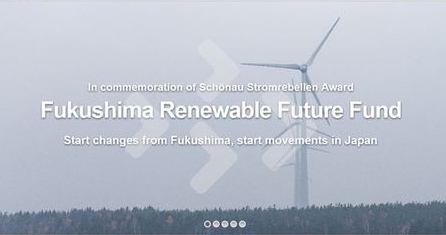
The Fukushima Renewable Future Fund was established on February 4, 2016, to serve as a repository for donations from both inside and outside Japan to support reconstruction efforts in Fukushima, which was severely affected by the Great East Japan Earthquake (which occurred on March 11, 2011) and the accident at the Fukushima Daiichi Nuclear Power Plant that accompanied the quake. The Fund aims to support initiatives in the fields of renewable energy, regional revitalization, and education and welfare, and is led by residents of Fukushima Prefecture trying to help the region recover from the disaster.
The Fund is engaged in two projects. One is a community-based project focusing on reconstruction efforts and future development in Fukushima. This project aims to discover voluntary reconstruction initiatives led by local residents, and to provide them with financial assistance using donations from Japan and abroad.
The other project records and archives memories of the Fukushima nuclear disaster. The project aims to build and operate a memorial hall that will preserve records and memories of the accident. The hall will welcome visitors from Japan and abroad and help to pass on lessons learned from the disaster to future generations.
Three months after the accident, Fukushima residents declared they would create a scenario for the future in which they will pursue sustainable development without depending on nuclear power plants. Originally, Fukushima was a place where residents lived lives emphasizing local history and traditions, showing their gratitude for the abundant blessings of nature, and maintaining warm-hearted ties among people. The Fund aims to revitalize Fukushima in the future while taking pride in the prefecture, as well as to disseminate lessons learned from the Fukushima disaster to the world in an attempt to prevent the tragedy of nuclear accidents from ever happening again here on this earth.
Pokemon Will No Longer Appear in Japan’s Nuclear Disaster Site
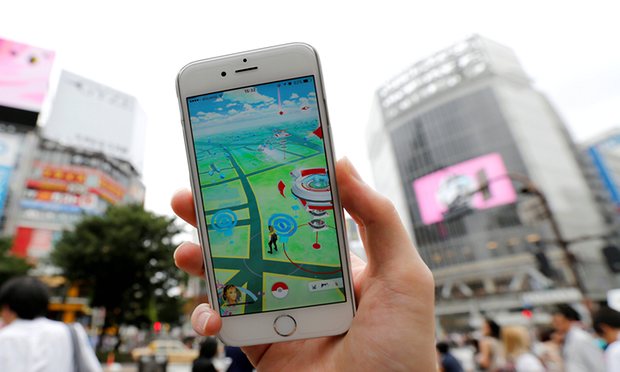
Tepco warns Pokémon Go players to avoid nuclear power plants and evacuation errors in pursuit of virtual monsters.
Japan is asking for the Fukushima nuclear exclusion zone to be classified as a no-go area for Pokémon after the discovery of at least one of the game’s characters on a power station’s site.
Tokyo Electric Power Company Holdings (Tepco) has requested that Pokémon Go developer Niantic and the Pokémon Company prevent Pokémon appearing in and around areas affected by the nuclear reactor meltdown in Fukushima to help prevent encouraging players to enter dangerous areas.
Tepco said it has tested the Fukushima Daiichi plant, which was partially destroyed by the March 2011 disaster, the nearby Fukushima Daini plant and the Kashiwazaki-Kariwa plant in Niigata Prefecture and found Pokémon on-site.
Japan’s nuclear regulator sent out a warning to national energy providers telling them to tighten security after the incursion of three teenagers into a nuclear power plant in Ohio in the US. Tepco has banned employees from playing Pokémon Go on site.
The Fukushima governor, Masao Uchibori, said that it was not good that people might enter nuclear plants or evacuation zones designated after the nuclear disaster on the hunt for Pokémon and that “the prefectural government will consider how to draw attention to this”.
The city government of Nagasaki has already requested that Niantic remove Pokémon from Nagasaki Peace Park, which is maintained as a memorial to victims of the atomic bombing of the city in 1945. The city has also asked visitors to refrain from playing the game saying that “the Peace Park is a place for prayer”.
Niantic said it would modify the game if the company discovered problems.
Japan, the home of Pokémon, had to wait for weeks after the Pokémon Go’s original launch in Australia, owing to worries about overloaded servers and the commercial agreement with McDonald’s for sponsored Pokéstops.
Since the game’s launch in Japan, reports of minor traffic incidents including that of a Pokémon Go-playing male high school student and a 30-year-old man colliding on a street in Tokyo’s Adachi Ward while riding bicycles.
The Pokémon Go global craze has led South Koreans to flock to a remote region, holocaust museums having to discourage players, naive New Zealanders led to Hell’s Angels clubs and police stations filled with players. It has also caused car accidents, impromptu flash-mobs in the middle of New York streets and people to walk into the sea in pursuit of some of the more rare creatures.
Hiroshi Hase, Japanese minister of education, culture, sports, science and technology, said that global frenzy involving content created in Japan was “gratifying,” but that it’s location-based nature could put gamers and others at risk in certain situations and urged caution.
FUKUSHIMA TOXIC SOIL CLEAN UP
CNN’s Paula Hancocks reports from the affected area, and gives a very short and nuanced report from within the exclusion zone in Fukushima prefecture.
The cleanup at Fukushima, the removal of the toxic soil and plants near the meltdown site is a huge task.
Contaminated Bamboo, Iitate, Fukushima
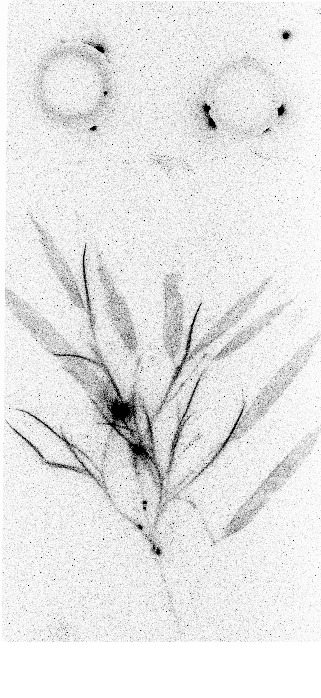
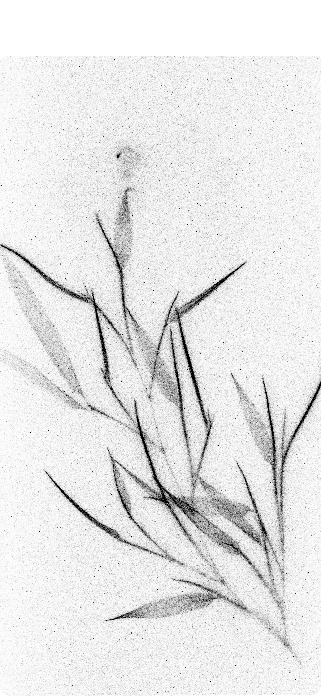
Bamboo was found to be contaminated by radioactive Cesium in the Komiya marsh of the Iitate village, Fukushima Prefecture.
About 500 ㏃ / kg of cesium but the Cesium concentrating more in the new leaves.
Incidentally, the soil has 43,000 ~ 77,000 ㏃ / kg of Cesium
https://www.facebook.com/nobuyoshi.itou/posts/1015326065230713
Fukushima banks hope to lure nuclear evacuees back by reopening branches
FUKUSHIMA – Regional banks in Fukushima Prefecture are reopening outlets in radiation-contaminated areas to help lure residents back more than five years after the triple core meltdown at the Fukushima No. 1 power plant laid waste to the region in March 2011.
Residents have been slow to return despite the phased lifting of evacuation orders in cleaned-up areas, so regional banks are eager to play a trailblazing role by allowing residents to use their branches as places to socialize.
Abukuma Shinkin Bank, based in Minamisoma, reopened its Odaka branch there in March 2013 and the branch in the town of Namie on July 12.
The evacuation order for the central part of Namie is expected to be lifted by the end of next March, but there are still structures that collapsed from the March 11, 2011, Great East Japan Earthquake.
“We’ll put the light on in the town where people do not live,” said Yoshihiro Ota, president of Abukuma Shinkin, stressing the significance of reopening the Namie branch.
Abukuma Shinkin became the first financial institution to reopen a branch in Namie, which sits next to the town of Futaba, one of the two municipalities that host the crippled Fukushima No. 1 plant, which lost all power after being swamped by tsunami spawned by the temblor. The plant is run by Tokyo Electric Power Co. Holdings Inc.
“We hope our branch, where local people can stop by freely and enjoy chatting, will become a place that can console them,” said Takahiro Abe, chief of the Namie branch.
“Being the first to reopen a branch in the town will hopefully allow us to attract people and see rises in deposits and loans,” Abe added.
In April, Toho Bank, based in the city of Fukushima, restarted its branch in Naraha, another town close to the Fukushima No. 1 plant.
Although the evacuation order for Naraha was lifted last September, only 8.1 percent of its residents had returned as of July 4.
“Financial institutions are indispensable regional infrastructure,” said Hiroshi Yamaka, chief of Toho Bank’s Naraha branch. “Regional banks have a major role to play in helping residents return home.”
But it is not easy to achieve industrial revival in contaminated areas neglected by the long evacuation.
A male business owner who visited Abukuma Shinkin’s Namie branch on the day it reopened said, “The bank told me that they will lend me money, but I can’t decide on new investment because I’m old and there’s no one I can hand over my business to.”
960 Bq/kg of Cs-134/137 detected from wild boar in Fukushima
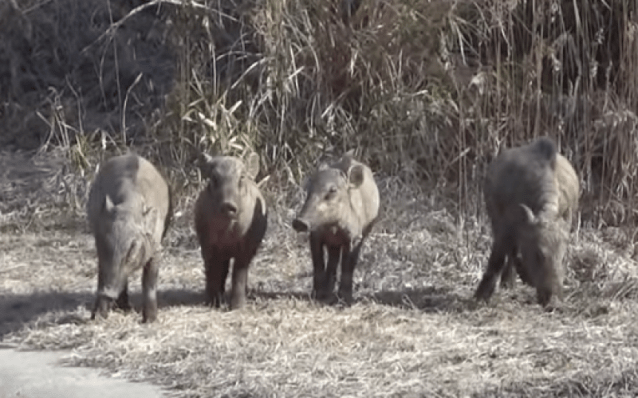
According to MHLW (Ministry of Health, Labour and Welfare), 960 Bq/Kg of Cesium-134/137 was measured from the meat of wild boar in Fukushima.
The sampling date was 6/11/2016. This reading is over 9 times much as food safety limit.
Cs-134 density was 154 Bq/Kg to prove it is contaminated from Fukushima accident.
From this report MHLW released on 7/19/2016, significant density of Cs-134/137 was detected from all of 33 wild boar samples and it exceeded the food safety limit (100 Bq/Kg) in 2/3 samples.
MHLW reports none of these wild boar meat was distributed for sale.
http://www.mhlw.go.jp/file/04-Houdouhappyou-11135000-Shokuhinanzenbu-Kanshianzenka/0000123667_18.pdf
http://fukushima-diary.com/2016/07/960-bqkg-of-cs-134137-detected-from-wild-boar-in-fukushima/
There’s no end to Fukushima crisis while melted fuel remains
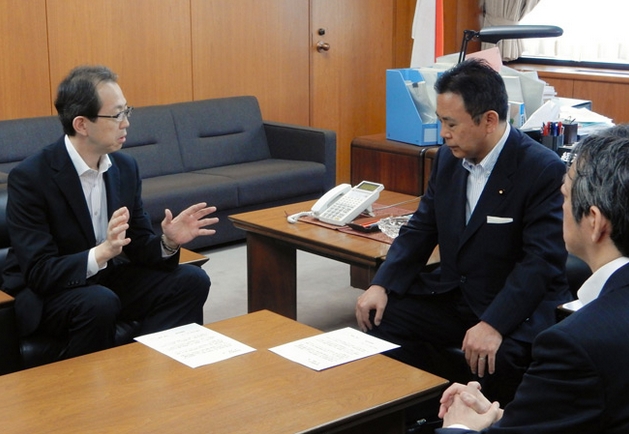
Fukushima Governor Masao Uchibori, left, speaks with Vice Industry Minister Yosuke Takagi
A massive concrete structure encases the wrecked No. 4 reactor at the Chernobyl nuclear power plant, site of the catastrophic 1986 accident.
Dubbed the “sarcophagus,” it was erected to contain the fuel that could not be extracted from the crippled reactor.
I never expected this word (“sekkan” in Japanese) to crop up in connection with the 2011 Fukushima nuclear crisis.
Local governments raised objections to the use of this word in a report compiled by a government organ that supports the decommissioning of the Fukushima No. 1 nuclear power plant.
While the report discusses the extraction of melted fuel as a requirement, it is written in such a way as to suggest that the construction of a sarcophagus is an option that should not be dismissed out of hand.
This outraged the governor of Fukushima, Masao Uchibori, who lashed out, “Containing (the melted fuel) in a sarcophagus spells giving up hope for post-disaster reconstruction and for returning home.”
The government organ has since deleted the word from the report, admitting that it was misleading and that constructing a sarcophagus is not under consideration.
The report lacked any consideration for the feelings of local citizens. But more to the point, just deleting the word does not settle this case.
Even though five years have passed since the disaster, nothing has been decided yet on how to extract the melted fuel. How, then, can anyone guarantee that the fuel will never be “entombed”?
I am reminded anew of the sheer difficulty of decommissioning nuclear reactors. The Fukushima edition of The Asahi Shimbun runs a weekly report on the work being done at the Fukushima No. 1 plant.
The report portrays the harsh realities at the site, such as leaks of contaminated water and accidents involving workers. Efforts to decommission the crippled reactors continue day after day, but the task is expected to take several decades.
Elsewhere in Japan, the rule that requires nuclear reactors to be decommissioned after 40 years is becoming toothless, and preparations are proceeding steadily for restarting reactors that have remained offline.
“Normalcy” appears to be returning, but there is a huge gap between that and the unending hardships in the disaster-affected areas.
7.7 tons of Chiba’s Fukushima waste won’t be deemed radioactive anymore, clearing way for general disposal
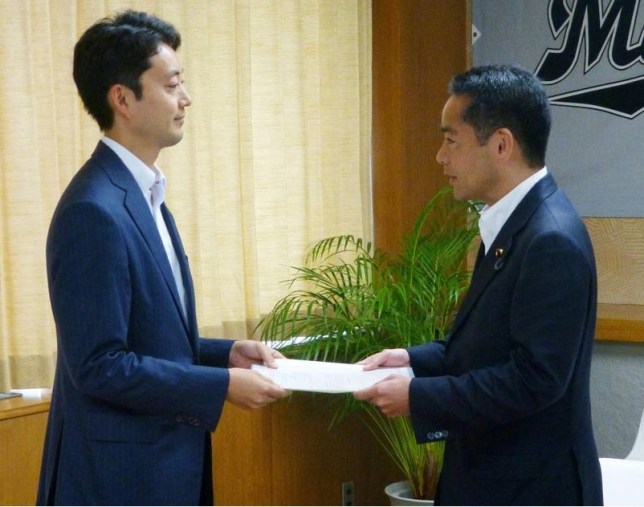
Chiba Mayor Toshihito Kumagai (left) receives a notice from State Minister of the Environment Shinji Inoue at City Hall on Friday stating that tainted waste stored there from the Fukushima disaster won’t be deemed radioactive anymore.
CHIBA – The government on Friday informed the city of Chiba that the radioactive designation for 7.7 tons of Fukushima-tainted waste stored in the city will be lifted on Saturday, allowing it to be treated as general garbage.
State Minister of the Environment Shinji Inoue conveyed the decision to Chiba Mayor Toshihito Kumagai during a meeting at City Hall in Chiba Prefecture’s capital.
The decision came after it was found that the radioactive activity of cesium in the waste had fallen below the state-set limit of 8,000 becquerels per kilogram.
It will be the first time for such a designation to be lifted for such waste.
The waste was part of the aftermath of the massive earthquake and subsequent tsunami of March 2011, which triggered a triple core meltdown at the Fukushima No. 1 power plant. The defunct plant is owned by Tokyo Electric Power Holdings Inc.
Some 3,700 tons of designated radioactive waste created by the man-made meltdowns, including incineration ash, is stored in Chiba. The 7.7 tons in question is sitting in a garbage disposal facility in Mihama Ward in Chiba.
The lifting of the designation will allow the city to dispose of the waste in the same way as general waste. But Kumagai has expressed his intention to keep it in storage for the time being.
As of the end of March, 172,899 tons of such designated waste was being stored in Chiba, Tokyo and 10 other prefectures in eastern Japan.
TEPCO admits that ice wall will not stop groundwater from entering crippled Fukushima Daiichi reactor buildings
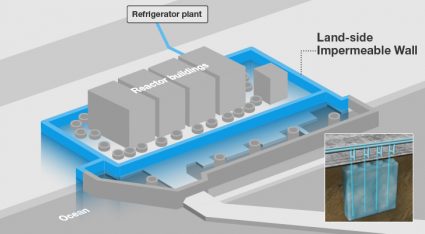
This week TEPCO officials at a meeting with officials from the Nuclear Regulation Authority in Japan admitted that the ice wall they promoted as an impermeable barrier to prevent groundwater from entering the crippled reactor buildings and mixing with highly radioactive water has failed to work as billed and is technically incapable of blocking off groundwater.
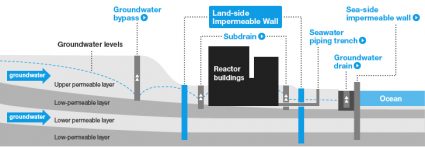
The Fukushima Daiichi nuclear power plant continues to be overwhelmed by enormous amounts of contaminated groundwater that is generated every day as it mixes and interacts with contaminated water in the basement of the reactor buildings. Currently 400 tons of groundwater flows into the damaged reactor buildings every day and mixes with the highly radioactive water in the basements.

TEPCO had developed the ice wall and installed subdrain wells around the reactor buildings to pump up the contaminated groundwater, treat it, and discharge it into the Pacific Ocean, in the hopes that it would reduce the amounts of contaminated water generated every day. The wall consists of a series of underground refrigeration pipes that freeze the soil around them.
Before installation of the wall, TEPCO described the project to the public, saying, “We will create an impermeable barrier by freezing the soil itself all the way down to the bedrock that exists below the plant. When groundwater flowing downhill reaches this frozen barrier it will flow around the reactor buildings, reaching the sea just as it always has, but without contacting the contaminated water within the reactor buildings.”
The ice wall began operating in March of this year, but has not yet made a meaningful impact on reducing the amount of groundwater that enters the reactor buildings.
Experts are concerned that the increasing levels of highly radioactive water in the reactor buildings could escape into the local environment in the event of heavy rainfall or a tsunami.
Radiation levels in seabed off Fukushima ‘100s of times’ higher than prior to disaster – Greenpeace
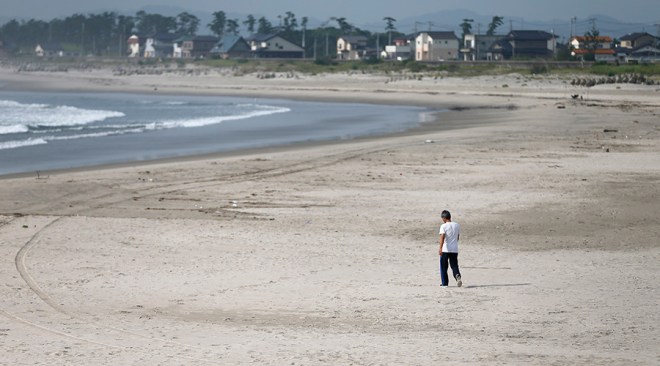
A man walks at the empty Yotsukura municipal beach in Iwaki, about 40 km (25 miles) south of the tsunami-crippled Fukushima Daiichi nuclear power plant, Fukushima
The amount of radioactive substances in seabed off Fukushima is hundreds of times higher than before the disaster, a report issued by Greenpeace reveals. The figures mean that there is absolutely “no return to normal after nuclear catastrophe” in the area.
On Thursday, the environmental group released a report addressing the results of the study during which scientists analyzed radioactivity levels along Fukushima’s rivers and in the Pacific seabed off the coast.
“These river samples were taken in areas where the [Prime Minister Shinzo] Abe government is stating it is safe for people to live. But the results show there is no return to normal after this nuclear catastrophe,”said Ai Kashiwagi, Energy Campaigner at Greenpeace Japan.
The report showed there is hundreds of times more radioactive substances in the seabed off Fukushima coast than there was prior to 2011. It also stated that the level of hazardous materials along local rivers is 200 times higher compared to the Pacific Ocean seabed.
“The extremely high levels of radioactivity we found along the river systems highlights the enormity and longevity of both the environmental contamination and the public health risks resulting from the Fukushima disaster,” Kashiwagi said.
The vast territories including contaminated forests and freshwater systems “will remain a perennial source of radioactivity for the foreseeable future,” scientists warned in the press release.
They analyzed the level of radioactive materials, such as Cesium-134 and Cesium-137 (Cs-137), noting a colossal increase in the figures.
While the amount of Cs-137 in seabed near the Fukushima plant was only 0.26 Bq/kg prior to the nuclear disaster, the current number stands at 120 Bq/kg, the report showed. On the whole, the data showed that Cs will pose a threat to human health for hundreds of years to come.
“The radiation levels in the sediment off the coast of Fukushima are low compared to land contamination, which is what we expected and consistent with other research,” said Kendra Ulrich, senior global energy campaigner at Greenpeace Japan.
The current site of the destroyed plant “remains one of the greatest nuclear threats” to Fukushima communities and the Pacific Ocean, the group said.
“The hundreds of thousands of tonnes of highly-contaminated water, the apparent failure of the ice wall to reduce groundwater contamination, and the unprecedented challenge of three molten reactor cores all add up to a nuclear crisis that is far from over,” said Ulrich.
Greenpeace also warned against the government’s decision to lift a number of evacuation orders around the Fukushima plant by March 2017.
The Fukushima Daiichi nuclear disaster, the largest since the 1986 Chernobyl disaster, took place in March 2011 and resulted in three nuclear meltdowns and a leak of radioactive materials. The accident prompted a nationwide shutdown of all nuclear power plants in Japan with Sendai being the first to start working again, in August 2015.
https://www.rt.com/news/352628-fukushima-radiation-seabed-greenpeace/
7.7 tons of Chiba’s Fukushima waste ‘not radioactive’ anymore
7.7 tons of Chiba’s Fukushima waste won’t be deemed radioactive anymore, clearing way for general disposal, Japan Times , 22 July 16 JIJI CHIBA – The government on Friday informed the city of Chiba that the radioactive designation for 7.7 tons of Fukushima-tainted waste stored in the city will be lifted on Saturday, allowing it to be treated as general garbage.
State Minister of the Environment Shinji Inoue conveyed the decision to Chiba Mayor Toshihito Kumagai during a meeting at City Hall in Chiba Prefecture’s capital. The decision came after it was found that the radioactive activity of cesium in the waste had fallen below the state-set limit of 8,000 becquerels per kilogram.
It will be the first time for such a designation to be lifted for such waste……. http://www.japantimes.co.jp/news/2016/07/22/national/7-7-tons-of-chibas-fukushima-waste-wont-be-deemed-radioactive-anymore-clearing-way-for-general-disposal/?utm_source=feedburner&utm_medium=feed&utm_campaign=Feed%3A+japantimes+%28The+Japan+Times%3A+All+Stories%29#.V5LmfdJ97Gj
Radiation along Fukushima rivers up to 200 times higher than Pacific Ocean seabed – Greenpeace
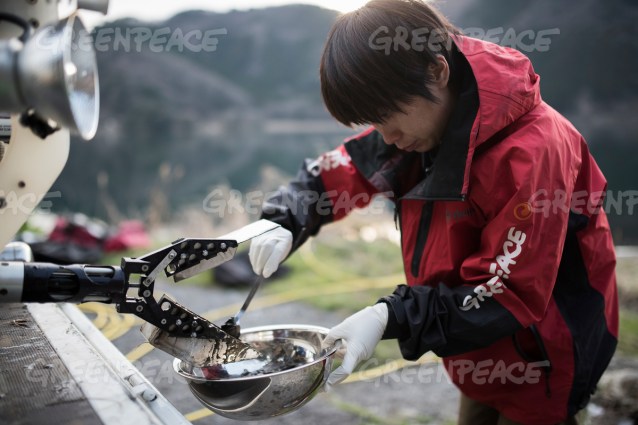
Sediment Sampling at Lake Biwa in Japan: Mai Suzuki from Greenpeace Japan, removes sediment samples from the ROV grabber (Remote Operated Vehicle), at Lake Biwa. Greenpeace has been surveying lake Biwa to conduct baseline sampling. The lake is located as close as 30 km from the Takahama nuclear plant owned by Kansai Electric. In the event of a severe accident Lake Biwa would be at risk of major radioactive contamination. The lake provides the drinking water for 14,5 million people in Shiga Prefecture, the city of Kyoto and the wider Kansai region. The citizens of Shiga recently won a historic legal action that forced the immediate shutdown of Takahama reactor #3, Kansai electric is determined to overturn the legal action on appeal and restart both Takahama 3 and 4 reactor.
Tokyo, 21 July 2016 – Radioactive contamination in the seabed off the Fukushima coast is hundreds of times above pre-2011 levels, while contamination in local rivers is up to 200 times higher than ocean sediment, according to results from Greenpeace Japan survey work released today.
“The extremely high levels of radioactivity we found along the river systems highlights the enormity and longevity of both the environmental contamination and the public health risks resulting from the Fukushima disaster,” said Ai Kashiwagi, Energy Campaigner at Greenpeace Japan.
“These river samples were taken in areas where the Abe government is stating it is safe for people to live. But the results show there is no return to normal after this nuclear catastrophe,” said Kashiwagi.
Riverbank sediment samples taken along the Niida River in Minami Soma, measured as high as 29,800 Bq/kg for radiocaesium (Cs-134 and 137). The Niida samples were taken where there are no restrictions on people living, as were other river samples. At the estuary of the Abukuma River in Miyagi prefecture, which lies more than 90km north of the Fukushima Daiichi plant, levels measured in sediment samples were as high as 6,500 Bq/kg.
The lifting of evacuation orders in March 2017 for areas that remain highly contaminated is a looming human rights crisis and cannot be permitted to stand. The vast expanses of contaminated forests and freshwater systems will remain a perennial source of radioactivity for the foreseeable future, as these ecosystems cannot simply be decontaminated.
Caesium-137 has a half life of 30 years, and will continue to pose a risks to the the environment and human health for hundreds of years. Cs-137 contamination in seabed samples near the Fukushima plant was measured at up to 120 Bq/kg – compared to levels pre-2011 of 0.26 Bq/kg. Further, the levels of contamination found 60km south of the Fukushima Daiichi nuclear plant were comparable with those found within 4km of the plant. Numerous marine science investigations, have concluded that these higher levels are one explanation for some marine species still showing higher cesium levels than the background levels in seawater.
“The radiation levels in the sediment off the coast of Fukushima are low compared to land contamination, which is what we expected and consistent with other research,” said Kendra Ulrich, Senior Global Energy Campaigner at Greenpeace Japan. “The sheer size of the Pacific Ocean combined with powerful complex currents means the largest single release of radioactivity into the marine environment has led to the widespread dispersal of contamination.”
Most of the radioactivity in Fukushima Daiichi reactor units 1-3 core fuel in March 2011 remains at the site.
“The scientific community must receive all necessary support to continue their research into the impacts of this disaster,” said Ulrich.
“In addition to the ongoing contamination from forests and rivers, the vast amount of radioactivity onsite at the destroyed nuclear plant remains one of the greatest nuclear threats to Fukushima coastal communities and the Pacific Ocean. The hundreds of thousands of tonnes of highly contaminated water, the apparent failure of the ice wall to reduce groundwater contamination, and the unprecedented challenge of three molten reactor cores all add up to a nuclear crisis that is far from over,” said Ulrich.
A radiation survey team onboard the research vessel Asakaze, supported by the Greenpeace flagship Rainbow Warrior, conducted underwater survey work along the Fukushima coastline from 21 February to 11 March this year, as well collecting samples in river systems. The samples were measured at an independent laboratory in Tokyo.
Link to the report, Atomic Depths, can be found here http://www.greenpeace.org/japan/Global/japan/pdf/20160721_AtomicDepths_ENG.pdf
http://www.greenpeace.org/japan/ja/news/press/2016/pr201607211/
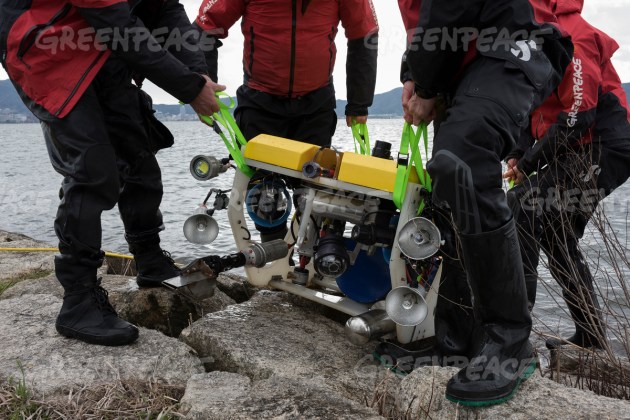
Greenpeace Japan members carry out ROV (Remote Operated Vehicle) operations at Lake Biwa, Shiga Prefecture in Japan. Greenpeace has been surveying lake Biwa to conduct baseline sampling.
Greenpeace reports jump in radioactive contamination in Fukushima waterways
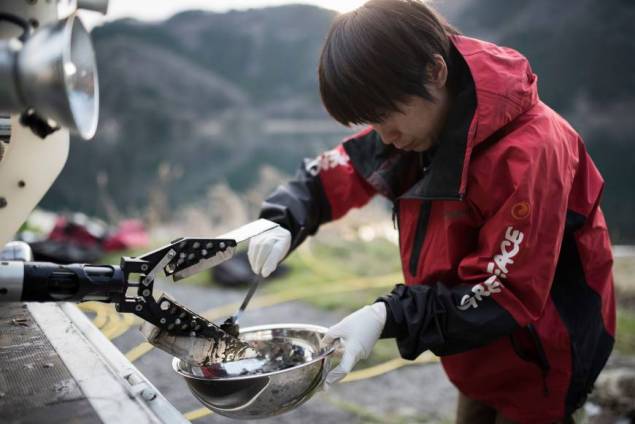
Greenpeace Japan member Mai Suzuki removes sediment samples from a remotely operated grabber at Lake Biwa in Shiga Prefecture on March 22.
OSAKA – Greenpeace Japan on Thursday said it has discovered radioactive contamination in Fukushima’s riverbanks, estuaries and coastal waters at a scale hundreds of times higher than pre-2011 levels.
One sample of sediment taken along the Niida River, less than 30 km northwest of the crippled Fukushima No. 1 power plant, revealed the presence of cesium-134 and cesium-137 at levels of 29,800 becquerels per kilogram.
That was just one of 19 samples of dried sediment and soil the environmental activist group took and analyzed from the banks of the Abukuma, Niida, and Ota rivers. The samples were collected by Greenpeace in February and March.
All of the samples but one exhibited more than 1,000 Bq/kg of radioactive material. The lowest level, 309 Bq/kg, was logged at a spot along the Abukuma River.
Cesium-134 has a half-life of about two years, but cesium-137 has a half-life of 30 years and is considered particularly hazardous. The standard limits set for radioactive cesium in Japan are 100 Bq/kg for general foods and 10 Bq/kg for drinking water.
“The radiological impacts of the Fukushima nuclear disaster on the marine environment, with consequences for both human and nonhuman health, are not only the first years. They are both ongoing and future threats, principally the continued releases from the Fukushima No. 1 plant itself and translocation of land-based contamination throughout Fukushima Prefecture, including upland forests, rivers, lakes and coastal estuaries,” the report said.
Greenpeace Japan also published the results of tests on dried marine sediment samples collected at 25 points off the Fukushima coastal area, including three river estuaries, during this same period, at depths of between 7.4 and 30.6 meters. The results showed that the highest level of cesium was 144 Bq/kg taken from a sample collected off the coast from the Fukushima power plant, while the lowest total cesium figure was 6.5 Bq/kg off Nakanosaku, well to the south of the plant.
In addition to Fukushima, Greenpeace Japan took dried sediment samples from Lake Biwa at three locations near the shore. The results showed cesium levels to be between 7.1 Bq/kg and 13 Bq/kg at two locations, and negligible at the other two.
The safety of Lake Biwa, which provides drinking water for about 14 million people in the Kansai region, has become a major bone of contention between Kansai Electric Power Co., which wants to restart reactors in neighboring Fukui Prefecture, and residents in and around Lake Biwa who are fighting to keep them shut down.
Glass Encapsulated Insoluble Cesium Particles Lodged in the Fukushima Workers Lungs
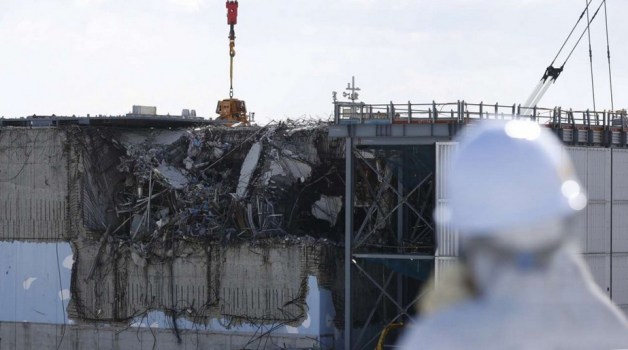
A study published in March of 2016 found insoluble cesium lodged in the lungs of some of the highly exposed Fukushima disaster response workers. After doing additional scans they found most of that persistent cesium contamination resided in the workers lungs.
Direct measurements of seven highly exposed workers at the Tokyo Electric Power Company Fukushima Daiichi Nuclear Power Station accident have been performed continuously since June2011.
Caesium clearance in the monitored workers is in agreement with the biokinetic models proposed by the International Commission on Radiological Protection. After 500 days from the initial measurement, however, the caesium clearance slowed.
It was thought to be unlikely that additional Cs intake had occurred after the initial intake, as activity in foods was kept low. And, the contribution from the detector over the chest was enhanced with time. This indicates that insoluble Cs particles were inhaled and along metabolic rate showed.
The study concludes that insoluble cesium particles lodged in the workers lungs, preventing them from leaving the body through normal processes.
“The subjects seem to have inhaled insoluble caesium particles, even though it was only a small amount. At present, it is more plausible that the retention curves reported here were due to inhalation of a mixture of type F caesium (soluble particle) and type S caesium (insoluble particle).”
This finding is significant as it shows how the various kinds of insoluble radioactive cesium materials discovered after the initial disaster, both black substances and the glass spheres could contaminate the human body.
Read more:
http://rpd.oxfordjournals.org/content/early/2016/03/14/rpd.ncw036
http://rpd.oxfordjournals.org/content/early/2016/03/14/rpd.ncw036.full.pdf+html
http://www.fukuleaks.org/web/?p=15616
1 This Month
10 March A LIVE WEBINAR THE REAL EFFECTS OF NUCLEAR POWER
What the Industry Isn’t Telling Us
1:00 PM Mountain, 2 pm Central, 3 pm Eastern. Live on the Keepers of the Water Facebook page



18 March Webinar @ 1 PM EST: An Assessment of SMR Projects: The Case of Canada
register for the zoom:
https://us02web.zoom.us/webinar/register/WN_o8BIIOUvQ2ONJR1nta65DQ#/registration


of the week – STOP SMALL MODULAR REACTORS IN CANADA
To see nuclear-related stories in greater depth and intensity – go to https://nuclearinformation.wordpress.com
-
Archives
- March 2026 (119)
- February 2026 (268)
- January 2026 (308)
- December 2025 (358)
- November 2025 (359)
- October 2025 (376)
- September 2025 (258)
- August 2025 (319)
- July 2025 (230)
- June 2025 (348)
- May 2025 (261)
- April 2025 (305)
-
Categories
- 1
- 1 NUCLEAR ISSUES
- business and costs
- climate change
- culture and arts
- ENERGY
- environment
- health
- history
- indigenous issues
- Legal
- marketing of nuclear
- media
- opposition to nuclear
- PERSONAL STORIES
- politics
- politics international
- Religion and ethics
- safety
- secrets,lies and civil liberties
- spinbuster
- technology
- Uranium
- wastes
- weapons and war
- Women
- 2 WORLD
- ACTION
- AFRICA
- Atrocities
- AUSTRALIA
- Christina's notes
- Christina's themes
- culture and arts
- Events
- Fuk 2022
- Fuk 2023
- Fukushima 2017
- Fukushima 2018
- fukushima 2019
- Fukushima 2020
- Fukushima 2021
- general
- global warming
- Humour (God we need it)
- Nuclear
- RARE EARTHS
- Reference
- resources – print
- Resources -audiovicual
- Weekly Newsletter
- World
- World Nuclear
- YouTube
-
RSS
Entries RSS
Comments RSS
 nuclear-news