Sweden generates 99% of electricity from clean sources. So why is wind power under attack?
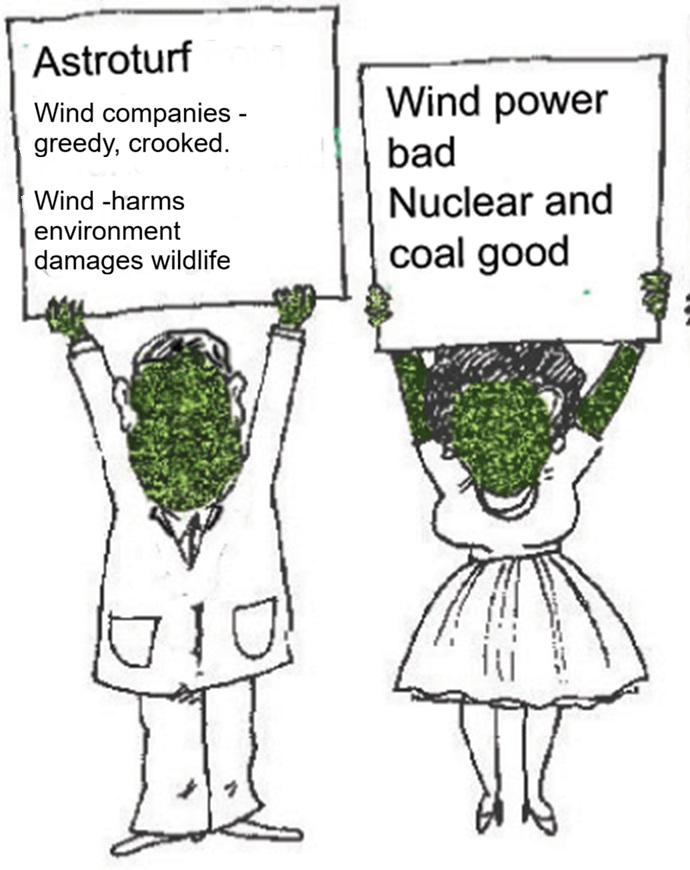
Sweden generates 99% of electricity from clean sources. So why is wind
power under attack? Thousands of anti-wind social media posts have been
analysed, as researchers warn that Europe’s energy security could be
threatened. Sweden has been hit the hardest by a coordinated attack on wind
power, according to a new analysis.
Euro News 6th May 2026, https://www.euronews.com/2026/05/06/sweden-generates-99-of-electricity-from-clean-sources-so-why-is-wind-power-under-attack
Trump claims his mass murder in the Caribbean saved a million American lives…real number 0

Walt Zlotow West Suburban Peace Coalition Glen Ellyn IL, 6 May 26
President Trump sure loves committing mass murder worldwide. Gaza, Iran, Somalia, Niger, Iraq, Yemen, Venezuela are among nations he’s victimized with violent murder. Add in countries like Cuba where he’s essentially murdering innocents with life suffocating sanctions, he’s racked up tens if not over a hundred thousand deaths in 6 years exercising his presidential License To Kill.
While bombing innocents worldwide was practiced by all presidents since at least Bill Clinton, Trump is unique in ordering mass murder bombing of small boats in the Caribbean. He ghoulishly lunched Operation Southern Spear in the Caribbean last September. In the past 8 months Trump, playing Long John Silver instead of a decent world leader, has blasted 54 little boats to smithereens, sending 185 innocents to Davy Jones Locker.
His justification? ‘Oh they’re certainly running fentanyl and cocaine to the Homeland killing millions of Americans.’ Trump claims the boats were all part of 24 narco terrorist cartels but couldn’t name a single one. When a couple of Trump’s targets survived the bombing, Trump’s military polished them off with another murderous salvo. ‘Can’t let these stinkin’ narco terrorists floating around gathering up the drug packages floating nearby’ was the justification for instant execution.
Trump lies shamelessly about everything. But his Whoppers about the bombings dwarf anything Burger King could cook up. Trump claims “Drugs entering our country by sea are down 97 percent.” More absurd, Trump calculates each boat he obliterates saves 25,000 American lives. Both figures are so preposterous one must ponder where he pulls them from.
Funny, if drugs arrivals are down 97%, one might conclude that border drug seizures would be similarly down. Yet, Customs and Border Protection note that seizures at U.S. borders and along coasts have increased from 38,000 lbs. to 44,000 lbs. (16%) in the 7 months following Trump’s mass murder spree compared to the 7 months before it began. In drug crazed America, usage is up, prices are stable and supply is plentiful.
But with Trump steering the Ship of State, state sponsored murder is up, prices of everything legal are escalating, and display of decency, morality and common sense nowhere to be found.
The UK Descends Into Confected Antisemitism Hysteria
Nate Bear, Do Not Panic May 05, 2026
The UK has descended into confected hysteria over antisemitism to protect Keir Starmer and Labour from being wiped out by the Greens in local elections this week.
The British establishment is well-practiced in manufacturing antisemitism hysteria, of course, having used it to destroy Jeremy Corbyn’s Labour Party when it got too close to power.
Now the UK’s political and media establishment is trying to pull the same trick, but this time on the Green Party and its Jewish leader, Zack Polanski.
This fresh round of hysteria really ramped up after a man with a history of mental illness (and of stabbings) stabbed two Jews in north London last week. Neither died and both will live. Omitted from almost all state-corporate media coverage was the fact that he also stabbed a third man, a Muslim. Also omitted was his history of stabbings (he previously stabbed his own dog, a Somali man, and two police officers), and his history of psychotic breaks.
Despite the circumstances clearly pointing to random attacks by a person suffering an acute mental episode, the police treated it not just as a planned antisemitic attack, but as terrorism.
The terrorism threat level in the UK was raised to severe.
I remember when terrorism used to mean car bombs, political goals, manifestos and scores of dead people, not a mentally disabled man with a butter knife scratching a few people.
But the attack was perfect fodder for the British media and political establishment, who blamed support for Palestine and opposition to genocide for enabling antisemitism, and instantly began demanding pro-Palestine protests were fully outlawed.
The environment of hysteria that ensued is hard to describe if you don’t follow British media or politics closely, but it has been extraordinary.
Keir Starmer gave a primetime televised address to the nation.
His speech was a complete misrepresentation of the facts of the case, completely omitting the Muslim victim, completely omitting the man’s history of illness and random stabbing attacks. But they were deliberate lies of omission critical to constructing an antisemitism narrative.
And it worked.
Every headline, every news broadcast for a week led with the story about ‘the antisemitism crisis in Britain.’
I remember when terrorism used to mean something. I also remember when antisemitism used to mean something. And implying all Jews support the actions of Israel used to be considered antisemitic.
But now that’s all anyone with political or media power does.
Starmer said that anti-genocide, pro-Palestine protests have created the environment for antisemitic attacks. The Green Party’s opposition to Israel’s genocide, the media said, has fuelled antisemitism. The Guardian had a story on the Green Party’s ‘struggle against antisemitism,’ a story which presumably included how just eight months ago the entire Green Party membership antisemitically elected a Jewish leader.
And when you deconstruct the logical conclusions behind the implication that Jews are being attacked because of what Israel has done, it will break your brain.
Firstly the implication that Jews are attacked because of Israel, not because of their religion, means Israel represents all Jewish sentiment……………………………….
We’ve reached the point where everything is antisemitism apart from the thing that is actually antisemitism.
And this is because the Zionists have lost the propaganda war. Genocide is not going back in the bottle. Everyone sees what Israel has done. Everyone can now see what Israel is: a genocidal settler-colony apartheid state run by ethno-supremacists.
The deliberate conflation of antisemitism and anti-Zionism then is intended to silence criticism of Israel, and erase the truth about what Israel is and has done.
It’s also intended to stop the Green Party inflicting a humiliating defeat on Keir Starmer and his Labour Party in local elections this week.
The establishment calculation is that if you can establish in the mind of progressives the idea that a vote for the Greens is actually a vote for hate, not a vote against genocide or apartheid, you can stop Labour bleeding leftist votes to the Greens.
If the Zionist establishment can reestablish that black is white, they think they have a chance.
But it goes even deeper than that.
The UK establishment aren’t just using the attack for rhetorical purposes, they are using it to actually get Green Party election candidates arrested.
Andrew Gilligan, a former adviser to Boris Johnson and Rishi Sunak, and now a right-wing journalist, wrote a story about two Green Party candidates Saiqa Ali and Sabine Mairey who he said had made ‘antisemitic’ posts. Last week, he gloated that following his stories, they’d both been arrested…………………………………………………
Three people are stabbed every day in London. Over one thousand people a year, of all religions and none.
None of these ever warrant a national prime ministerial TV address.
Twenty-seven mosques in the UK were attacked between July and October last year.
No extra security funding (Starmer has promised an extra £25 million for Jewish areas). No discourse about Islamophobia. Just tumbleweed.
But a random attack on two Jews gets the full national psychodrama treatment because it can be so usefully weaponised to serve the interests of Zionism.
Are people going to fall for this?
I don’t think so.
Is Zack Polanski going to fall for this after seeing what happened to Corbyn?
Hopefully not.
We have more than enough evidence by now to know that you can never appease Zionists.
There is no middle-ground, no strategy of accommodation.
Any concession is interpreted as a sign of weakness. As Corbyn showed us, once they’ve drawn blood, they’ll bleed you dry.
The only anti-Zionist strategy that makes any sense is one of full confrontation.
The only route to victory is their full defeat. https://www.donotpanic.news/p/the-uk-descends-into-confected-antisemitism
Dissecting An “Antisemitism” Psyop
Caitlin Johnstone, May 03, 2026, https://www.caitlinjohnst.one/p/dissecting-an-antisemitism-psyop?utm_source=post-email-title&publication_id=82124&post_id=196309636&utm_campaign=email-post-title&isFreemail=true&r=1ise1&triedRedirect=true&utm_medium=email
I recently watched a Sky News segment on the need to ban pro-Palestine marches which nicely illustrates the way the mass media have been working to manipulate the public into believing these demonstrations are causing antisemitic attacks.
Reporting on British prime minister Keir Starmer’s recent assertion that the “repeat nature” and “cumulative effect” of pro-Palestine marches may necessitate a ban on some protests following the Golders Green stabbing, reporter Mollie Malone repeatedly told the audience of Sky News that the marches are happening in the “context” of antisemitic incidents and “against the backdrop” of attacks on Jewish people.
There is no evidence whatsoever for the claim that pro-Palestine marches have anything at all to do with antisemitic attacks. But watch how this Sky News propagandist marries the two in the minds of her viewers by repeatedly mentioning them in the same breath and connecting them with words like “context” and “backdrop”.
“The prime minister has gone somewhat further than he has previously in discussing and commenting on how to approach and manage these protests which we’ve seen for a long time now, but clearly they now come against the backdrop of increased attacks on our Jewish communities, most recently of course on Wednesday where two Jewish men were stabbed in Golders Green,” Malone said.
Malone made the obligatory appeal to emotion by talking about the feelings of British Jews by saying that antisemitic attacks are “adding to fears among Jewish people,” and then said “it’s in that context that these pro-Palestine marches are being discussed.”
I could make the exact same type of argument to suggest that the faint humming sound from my refrigerator is causing the pain in my ankle. I could say I’m experiencing ankle soreness and the soreness is making my feelings feel very upset, and it is in this context and against this backdrop that the buzzing from the refrigerator is happening. At no point am I actually presenting evidence that the soreness in my ankle has anything to do with the faint buzzing sound; I’m just using fallacious associations and appeals to emotion to get you to think of them as having a causal relationship.
Malone uncritically quoted the UK’s Independent Reviewer of Terrorism Legislation Jonathan Hall asserting on no basis whatsoever that pro-Palestine marches “incubate antisemitism,” then repeated the bogus hasbara talking point that the phrase “globalise the intifada” is “seen to incite violence towards Jewish people.”
“The context here is everything,” Malone concluded after a few moments of pro-Palestine activist rebuttals to provide the illusion of impartiality.
As the British political/media class have been doing for days when discussing the Golders Green stabbings, Malone neglects to mention that a third man who was not Jewish was also attacked in the same incident, and that the assailant had recently emerged from the care of a psychiatric hospital. You might think the perpetrator’s extensive history of mental health struggles combined with the fact that he did not solely target Jewish people would dissuade serious news reporters from framing this as an act motivated by hateful ideology, but British news media employees are not serious news reporters. They are propagandists.
This frenzied propaganda push to stomp out pro-Palestine protests across the western world has nothing to do with protecting Jewish people from antisemitic attacks. It’s about protecting the interests of Israel and the murderous western governments with whom it is aligned, and nothing else.
The West’s bubble of illusion about Israel – and about itself – is finally being burst
The anti-racist left are demonised as Jew-hating bigots for trying to burst the West’s long-established bubble of illusion by noisily flagging both the atrocities committed by Israel, supposedly in the name of Jews, and the complicity of their own governments in those atrocities.
Jonathan Cook, May 2026, https://www.middleeasteye.net/opinion/west-bubble-illusion-israel-about-itself-finally-being-burst
The genocide in Gaza and ethnic cleansing in Lebanon exhausted the West’s moral legitimacy. Now Iran is slowly exhausting the West’s military primacy
or decades, two irreconciliable narratives about Israel and its motivations have existed in parallel.
On the one side, an official western narrative portrays a plucky, besieged “Jewish” state of Israel, desperate to make peace with its hostile Arab neighbours. Even to this day, that story dominates the political, media and academic landscape.
Time and again, or so we are told, Israel has held out an olive branch to “the Arabs”, seeking acceptance, but is always rebuffed.
A largely unspoken subtext suggests that supposedly irrational, bloodthirsty, Jew-hating regimes across the region would have completed the Nazis’ exterminationist agenda but for the West’s humane protection of a vulnerable minority.
A Palestinian counter-narrative, accepted across much of the rest of the world, is choked into silence in the West as an antisemitic “blood libel”.
It presents Israel as an ethnic supremacist, highly militaristic state – armed by the US and Europe – bent on expansion, mass expulsions and land theft.
On this view, the West implanted Israel as a colonial military outpost, there to subdue the native Palestinian population, and terrorise neighbouring states into submission through relentless and overwhelming displays of force.
Palestinians cannot make peace, or reach any kind of accommodation, because Israel pursues only conquest, domination and erasure. No middle ground is possible.
The proof, note Palestinians, is Israel’s long-standing refusal to define its borders. As its military power has grown decade after decade, ever more extreme political agendas have surfaced, demanding not just Israel’s takeover of the last remnants of the Palestinian territories it illegally occupies but expansion into neighbouring states like Lebanon and Syria.
Drunk on power
Here are two conflicting narratives in which each side presents itself as the victim of the other.
Two and a half years into a series of Israeli wars against the peoples of Gaza, Iran and Lebanon, how are these two perspectives holding up?
Does Israel look like the frustrated peacemaker facing off with barbaric opponents, or a rogue state whose decades-long aggression has provoked the very retaliatory violence exploited to excuse its constant war-making?
Is Israel a small, reluctant fortress state defending itself, or a western military client so drunk on its own power that it can no more limit its territorial ambitions than a great white shark can stop swimming?
The truth is that the past 30 months have graphically exposed not only what Israel always was but, by extension, what our own western states aspired to achieve through their most favoured Middle East client.
In a moment of imprudence last month, Christian Turner, Peter Mandelson’s replacement as British ambassador to the US, said the quiet part out loud. Washington, the West’s imperial hub, he said, had no deep loyalty to its allies – apart from one.
Unaware his words were being recorded, he told a group of visiting students: “I think there is probably one country that has a special relationship with the United States, and that is probably Israel.”
That special relationship requires the political and media class in Washington’s other client states, such as Britain, to shield the West’s Sparta in the Middle East from critical scrutiny.
So glaring have Israel’s atrocities become that the British government announced last month that it was shuttering its Foreign Office unit tracking war crimes – citing the need for cuts – rather than face further exposure of its collusion in those crimes.
If the British government refuses to monitor Israel’s war crimes, don’t expect more from the establishment media.
For months, Israel has been blowing up village after village in south Lebanon, driving millions of inhabitants from lands lived on for millennia by their ancestors, and it barely registers with our politicians and media.
Israel is destroying Gaza’s water supplies, as it earlier did the tiny enclave’s hospitals and health system, ensuring the further spread of disease, and our politicians and media have barely a word to say about it.
Israel kills journalists and emergency crews in Gaza and Lebanon week after week, month after month, and it raises barely an eyebrow from the political and media class.
Israel declares “yellow lines” in Gaza and Lebanon, demarcating expanded borders that formalise its theft of other peoples’ lands, and this instantly becomes the new normal.
Israel continuously violates ceasefires in Gaza and Lebanon, spreading misery and inflaming yet more anger and bitterness, and once again, our politicians and media turn a blind eye.
Which western media outlets are pointing out a starkly revealing fact: that Israel now occupies more of Lebanon than Russia does of Ukraine?
Media bias
An analysis by the Newscord media monitoring group last month confirmed earlier research: that the British media studiously avoid naming ethnic cleansing and genocide when it is Israel – rather than Russia – carrying them out.
Comparing the coverage of the most “serious” establishment British news outlets – the BBC, the Guardian and Sky – with that of Al Jazeera, the study found that UK media consistently choose to obscure Israel’s responsibility for its crimes.
Israel was identified as conducting attacks in Gaza in only around half of British news reports, in contrast to nearly 90 percent of Al Jazeera’s. As Newscord noted: “Half the time, BBC readers aren’t told who killed the person in the story.”
That was graphically illustrated in a notorious BBC headline: “Hind Rajab, 6, found dead in Gaza days after phone calls for help”.
In fact, an Israeli tank had sprayed a stationary car with gunfire even though the Israeli military had known for hours that it contained a Palestinian girl – the sole survivor of an earlier attack – who emergency crews were desperately trying to reach. Israel killed the rescue team, too.
In another revealing finding, Newscord notes that four out of every five BBC reports on casualties caused by Israel’s attacks used the convoluted passive – rather than active – voice, clearly with the intent to downplay Israel’s culpability and savagery.
The British media also actively undermined the enormity of the Palestinian death toll in Gaza by regularly attributing the figures to a “Hamas-affiliated” health ministry – even though the numbers, currently at well over 70,000 Palestinians, are almost certainly a massive undercount, given Israel’s early destruction of the enclave’s government and its capacity to count the dead.
The fact that the United Nations has found the Gaza figures to be credible was mentioned in only 0.6 percent of reports.
Genocidal intent
Similarly, the BBC and the Guardian made the decision to humanise Israeli captives of Hamas twice as often as they did Palestinian captives of the Israeli state.
The inappropriateness of that double standard is underscored by continuing insinuations from politicians and the media that Hamas “beheaded babies” and carried out systematic rapes on 7 October 2023 – more than two years after those claims were utterly discredited.
Contrast that with the media’s effective burial of Euro Med Monitor’s report last month on the sickening practice by the Israeli military of raping Palestinian prisoners with dogs trained for that very purpose.
There has been a flood of accounts from Palestinians held captive by Israel of their systematic rape and sexual abuse, confirmed by human rights groups and by the testimonies of whistleblowing Israeli soldiers and medics. Little of this is making headway in the western media.
Newscord points to a further, veiled problem that skews western coverage: the omission of established but inconvenient facts that would present Israel in a depraved – that is, an accurate – light.
For example, observes Newscord, the BBC has entirely failed to report all but one of the hundreds of clearly genocidal statements made by Israeli officials, from Prime Minister Benjamin Netanyahu down.
It is easy to understand why. Legal authorities usually struggle to make a conclusive determination of genocide because, crucially, it depends on divining intent, which is typically hidden by those committing atrocities.
Starkly, in Israel’s case, not only do its actions in Gaza look like genocide, but its leaders have been crystal clear that those actions are intended to be genocidal. That is behaviour only seen in those intoxicated by a sense of their own impunity.
Once again, the British media have obligingly taken it upon themselves to shield Israel from any legal jeopardy – all in the interests of objective reporting, you understand.
An old story
This is nothing new. It has been the same story since before Israel’s violent creation on the Palestinians’ homeland in 1948, when 80 percent of the native population were ethnically cleansed by Israel from the new, self-declared “Jewish” state. Or when, in the continuing language of deceit employed by western political, media and academic elites, some 750,000 Palestinians “fled”.
The aim has been to manufacture and maintain a bubble of illusion for western publics, one where our own crimes – and those of our allies – remain invisible to us.
Note in this regard the UK government’s determined exclusion of Israel from a recent “independent” inquiry, under former Whitehall bureaucrat Philip Rycroft, into malign foreignfinancial influence on British politics. It was, of course, Russia that was put chiefly under the spotlight.
Predictably, Keir Starmer’s government rejected in April a petition signed by more than 114,000 people calling for a similar public inquiry into the influence of the powerful Israel lobby.
That came as no surprise, given that any such investigation would have risked foregrounding the many hundreds of thousands of pounds known to have been received by Starmer and his ministers from pro-Israel lobbyists.
The same British political and media class so averse to investigating the malign influence of the pro-Israel lobby is also ignoring Israel’s current, systematic destruction of villages and infrastructure across south Lebanon – in flagrant violation of a supposed ceasefire.
Israeli soldiers have told local media that their job is to target all structures indiscriminately, whether civilian or “terrorist”, with the goal of preventing the Lebanese inhabitants from returning to their villages.
That fits with Israel’s announcement that it does not intend to withdraw after the fighting ends, and widespread plans to colonise the occupied lands in Lebanon with Jewish settlers.
Were it not for videos of Israel blowing up Lebanese communities breaking through on social media, despite algorithmic suppression, we might not know about Israel’s wholesale efforts to ethnically cleanse south Lebanon.
Responding to these videos with a rare “mainstream” report on the campaign of destruction, the Guardian sugar-coated the horror faced by Lebanese families discovering their homes gone, along with priceless memories and heirlooms. This experience was described – absurdly – by the paper as “bittersweet”.
Critics note a consistent pattern. Israel is not only levelling south Lebanon; over the past 30 months, it has levelled almost every building in Gaza, too.
But the template for both is of much earlier origin, as every Palestinian learns from a tender age.
Having expelled most Palestinians from their homes in 1948, Israel spent years blowing up some 500 villages one after another – even as Israeli leaders publicly claimed to be begging the refugees to return and western leaders were extolling Israel as the “only democracy” in the Middle East.
Expulsions that the West still pretends did not take place eight decades ago are now being livestreamed. This time, they are impossible to deny, as well as the colonial, supremacist agenda behind them.
Vilify the messenger
If the message inhering in Israel’s atrocities can no longer be disappeared, laundered or normalised – as it was in an age before 24-hour rolling news and social media – then a different strategy is required: villify the messenger.
This is the political task of our times.
The anti-racist left are demonised as Jew-hating bigots for trying to burst the West’s long-established bubble of illusion by noisily flagging both the atrocities committed by Israel, supposedly in the name of Jews, and the complicity of their own governments in those atrocities.
Last month, Starmer’s government forced through the Commons a law allowing the police to outlaw protests causing “cumulative disruption” – that is, repeat protests like those against Israel’s genocide in Gaza. The media barely blinked.
This week’s attack on two Jewish men in Golders Green, allegedly by a mentally ill man with a long history of violence, is being quickly exploited by the main parties to prepare for even tighter restrictions on the right to protest.
Britons who try to stop Israeli war crimes, whether by targeting Israel’s factories of death located in the UK or by holding placards in support of this kind of direct action, continue to be treated as “terrorists”, even after a court ruling that the proscription of Palestine Action is unlawful.
With juries often proving reluctant to convict, the British state is openly trying to sway verdicts in its favour. Juries are blocked from learning about the reasons for the targeting of Israeli weapons factories – the accused’s main defence. Judges instruct juries to convict.
Members of the public who silently hold signs outside court are arrested for reminding juries of a long-established right in law to defy such instructions, follow their consciences and acquit – a police abuse contravening hundreds of years of legal precedent, and one the courts appear increasingly ready to condone.
There are gags, being dutifully obeyed by the media, on other secret malpractices designed to help the British government secure the verdicts it needs to stop activism against the genocide. We only know because Your Party MP Zarah Sultana has used parliamentary privilege to draw attention to them.
It was telling this week that, in the current repeat trial of six Palestine Action defendants, five of them dispensed with their barristers for the closing speeches. They noted, darkly, that their legal representatives could not properly represent them due to “decisions made by the court”.
Meanwhile, the Starmer government is pressing ahead with plans to finally rid itself of troublesome juries and let more reliable judges decide these political show trials alone.
Welcome to the rapid unravelling of Britain’s most cherished constitutional rights – needed chiefly, it seems, to protect a far-off country that, according to the International Court of Justice, commits the crime of apartheid against Palestinians and may plausibly be committing genocide in Gaza.
Painful lesson
But, of course, the British government – like the US, German and French governments – isn’t hollowing out its liberal democracy just to protect Israel. It is being forced to such extremes out of desperation.
The West can no longer sustain the bubble of illusion – about its moral or civilisational superiority – in a world of diminishing resources, a world where western elites are willing to cause planetary immolation to protect the fossil-fuel profits on which they have grown obese.
The agenda of the Epstein class is ever more transparent at home, and ever more under challenge abroad. The genocide in Gaza, and the ethnic cleansing in Lebanon, have exhausted the West’s moral legitimacy. Now Iran is slowly exhausting the West’s military primacy.
It is no surprise that a US empire on its last legs – an empire built on the control of fossil fuels – has chosen as the hill to die on the Strait of Hormuz, the world’s largest oil spigot.
Israel was, indeed, implanted in the region eight decades ago as a highly militarised client state whose primary job was to project western – that is, US – power into the oil-rich Middle East.
The US shielded Israel from scrutiny over its oppression of the Palestinians and the theft of their homeland.
In return, “plucky” Israel helped the US construct a self-serving narrative that required the containment and overthrow of secular nationalist governments in the Middle East while protecting backward-looking monarchies that cosplayed opposition to Israel as they secretly colluded with it.
The region’s resulting states, embattled and divided, were ripe for control. They lacked the kind of accountable governments that would need to be responsive to their publics and might ally to protect the region’s interests from western colonial interference.
Now, Iran is stress-testing this decades-old system to destruction. It is forcing the Gulf states to choose: will they continue to serve the US, even though it has shown it cannot protect them, or ally with Iran as it emerges as a new great power, levying fees to pass through the strait?
The West is quickly learning that cheap drones can elude even its most sophisticated detection systems, and that a few mines and gunboats can choke off much of the fuel the global economy depends on.
The bubble of illusion has finally burst. The West is getting its long-overdue comeuppance. The lesson will be painful indeed.
“The myths of ‘Russian aggression.’”
RAND was as Cold War-ish as any think tank serving the U.S. government was bound to be during those decades, and this makes its conclusions here all the weightier. The Russians are not coming, to turn the title of the old Alan Arkin comedy upside down. They pose no military threat either to Europe or the United States and do not intend to do so. As history shows, it is essentially reactive and acts defensively. We have had this from RAND for six years.
A RAND study explodes the West’s ‘Irrussianality.’
29 APRIL—’Arte, ‘the’ Franco–German television channel, broadcast a documentary earlier this month titled L’Europe dans la main de Poutine? “Europe in Putin’s grip?” opens with a scene in the Kremlin on 18 March 2014, when President Putin announced the formal annexation of Crimea after a referendum concluded two days earlier. This film is available simultaneously with a two-part doc’y entitled “Putin’s Secret Weapons,” which purports to review the Russian Federation’s “state-directed terror,” its routine theft of Western technology, its “opaque network of spies,” its stockpiles of hypersonic missiles, and so on. “The country could strike Europe within minutes,” the film advises viewers.
Russophobic paranoia of this sort is nothing new, of course. You can go back to Czarist Russia’s 19th century modernizations and find evidence of it, and then on to the British defeat in Crimea (1853–56), the Red Scare that followed the Bolshevik Revolution, the second Red Scare of the Cold War decades. I trace the current wave to Putin’s 2007 speech at the Munich Security Conference, where he assailed the United States’ pretensions to global preeminence. Then came the cynically manipulated Russophobia Donald Trump provoked when, as he rose to political prominence in 2016, he advocated a new détente with Moscow.
What we have seen since the Biden regime intentionally provoked Russia’s February 2022 intervention in Ukraine ranks with any of these previous occasions as measured by the fear-mongering, the war-mongering, and the manufactured delusions that are now woven into daily life, as the just-noted documentaries suggest. This is especially evident in Europe, where unimaginative “centrists”—incompetent to a one, in my view—have been as deer in headlights since Trump II stepped back from Washington’s profligate support of the bottomlessly corrupt regime in Kiev during the Biden years.
French, Belgian, and British troops are just now completing three-months of “war-gaming” in the field—ground forces, armored vehicles, paratroops, underwater divers—in the most extensive such exercises since the Cold War. The three Baltic states are provocatively permitting the Ukrainians to launch drone attacks from their territory into northern Russia. Johann Wadephul has made the certainty of a Russian attack within five years—four at this point—a standard warning in his public pronouncements since Chancellor Merz named him foreign minister last year. Berlin and Paris are in talks to extend France’s nuclear deterrent to the rest of Europe. With the Merz regime in the lead, the Continent has begun dismantling its once-admirable welfare systems in favor of a cross-border military-industrial complex of its own.
Anyone paying attention can discern without much effort that the threat of “Russian aggression” in Europe is a construction with no basis whatsoever in fact. Christian Müller, a Swiss journalist with a long record as an editor and commentator, has chosen this moment to push this reality into the faces of those—including every “centrist” now in power across Europe—who cynically conjure a threat from the East that simply does not exist.
Müller now publishes and edits Global Bridge, an online journal with many distinguished contributors. (Distinguished or otherwise, I am among them.) This week he republished a piece that first appeared in 2021. It is based on a RAND Corporation study that had recently appeared under the title Russia’s Military Interventions: Patterns, Drivers, and Signposts. The full, 186–page research report is here. It is replete with graphs and tables that put Moscow’s security policies in an historical context that goes back to 1946, when the Soviets were rebuilding after the extensive sacrifices the defeat of the Reich required of them. It analyzes all the interventions with which readers may be familiar: There is Afghanistan in the 1980s, Georgia in 2008, Syria in 2015. (The Ukraine intervention, of course, was still to come.)
RAND was as Cold War-ish as any think tank serving the U.S. government was bound to be during those decades, and this makes its conclusions here all the weightier. The Russians are not coming, to turn the title of the old Alan Arkin comedy upside down. They pose no military threat either to Europe or the United States and do not intend to do so. As history shows, it is essentially reactive and acts defensively. We have had this from RAND for six years.
In the RAND report’s language:
Russia engaged in combat only when it felt the necessity to respond to a development on the ground that posed a pressing threat. Moscow sought to achieve its objectives using coercive measures short of military intervention: It undertook combat missions, judging from the two case studies, only when it felt forced by circumstances…. In short, although Russia generally seems more reactive in its decision-making about combat interventions unless its vital interests are directly threatened, Moscow might decide to be proactive in special circumstances (particularly relating to events in its neighborhood).
Given the mounting intensity of the purposely, dangerously cultivated Russophobia now spreading across Europe, Christian Müller could scarcely have chosen a more propitious moment to call our attention once again to the RAND study. Not only does the research discredit all suggestions of “Russian aggression.” The analysis also explodes the notion of “Putin’s Russia”—an egregious trope in the press coverage for many years now—as sheer (please excuse us) bullshit.
The Floutist is pleased to join Global Bridge in republishing this important piece. We are also pleased to feature the acute observations of Paul Robinson, a noted Russianist at the University of Ottawa. The piece first appeared on 6 October 2021—three months before Moscow sent draft treaties to Washington and NATO headquarters in Brussels as the proposed basis of negotiations, four months before Russian forces entered Ukraine on precisely the basis the RAND report describes.
Christian Müller.
The RAND Corporation, a world-renowned U.S. research and consulting firm, boasts 1,800 employees in more than 50 countries, who collectively conduct research and communicate in more than 75 languages, and of whom over a thousand—more than half—hold doctorates or even multiple doctorates. RAND is therefore not simply one of countless so-called think tanks. And what is particularly important to note: RAND’s largest clients are the U.S. State Department and the U.S. military: the U.S. Army, the U.S. Air Force, and the U.S. Department of Homeland Security. These government clients account for more than half of all RAND revenue.
RAND, this truly gigantic research and consulting firm, has now examined the military behavior of the Soviet Union and Russia since World War II, and especially since the end of the Cold War in 1991. The result is remarkable. RAND demonstrates that Russia’s military interventions are now marginal compared with those of the Soviet Union, and, above all, that these interventions were always linked to an imminent loss and never aimed at gaining additional territory or influence—that is, they were always used to defend the status quo.
RAND’s comparison between the Soviet Union and Russia: The military operations of present-day Russia (red) are no longer comparable to those of the Soviet Union before 1991 (blue) – Figure 3.2 on original
Paul Robinson, a professor at the University of Ottawa specializing in geopolitical relations and well-known in Canada and the U.S., has closely studied the 186-page RAND report on the Russian military and reviewed and commented on its content on his web portal, Irrussianality. A few of his findings are quoted below as a summary:
A few years ago, I discussed the potential relevance of prospect theory to Russia’s annexation of Crimea. Prospect theory states that people are more willing to take risks to avoid loss than to gain. This corresponds to the well-known psychological tendency toward loss aversion. Losing something bothers us much more than not gaining something. In the world of international relations, this means that states are more likely to use military force when threatened with loss than when seeking to acquire something they do not yet possess. It is therefore interesting to see this confirmed in a new study by the RAND Corporation entitled Russia’s Military Interventions: Patterns, Drivers, and Signposts, which analyzes instances of Russian military intervention in the post–Soviet era. The conclusion: One of the main motivations is the prevention of loss.
Elsewhere in Robinson’s work: “In any case, according to the study, it is wrong to see Putin as primarily responsible for Russian military interventions.”
As quoted by Robinson from the RAND study:
If we examine all of Russia’s interventions that meet the threshold described in this report, it becomes clear that most took place before (!) Putin came to power…. Most importantly, there is now a broad consensus among Russian elites on foreign policy issues. There is little firsthand evidence to suggest that Putin’s personal preferences are a major driving force behind Russia’s interventions.
Paul Robinson:
Russia intervenes when it feels threatened by a loss of status, stability, or security in its immediate neighborhood. It does not intervene to pursue “aggressive” or “imperialist” goals or to distract from domestic problems. And it is not a question of Vladimir Putin. Russia will have the same interests and preferences regardless of who is in power.
And once again, Paul Robinson:
In short, all claims that Russia wants to export its authoritarian ideology, destabilize democracy, support the “Putin regime,” or that Russia’s military interventions are driven solely by Putin’s aggressive personality are false.
This graphic from the RAND study shows that military interventions were even more numerous during the time of Putin’s predecessor Boris Yeltsin (1991-1999) than since under Vladimir Putin’s presidency. (As a reminder, Yeltsin’s second term was only possible thanks to financial support from the US under Bill Clinton .)
Paul Robinson’s final paragraph:
The RAND report ends with a short series of recommendations for U.S. policy. Primarily, the U.S. should avoid putting Moscow in a position where it feels it is about to suffer a major loss in its near abroad. As a think tank report, this is a remarkably sober and sensible recommendation,… which I don’t have much to criticize. Essentially, it boils down to not cornering the bear. In this case, it’s clear. The RAND report contradicts the currently prevailing narrative that Russia is bent on aggression and must be reined in by any means necessary, including incursions into its near abroad. If this RAND report is correct, then the [current NATO incursion to Russia’s borders] is just about the worst thing you can do. But I doubt anyone is listening.
Is nobody listening?
Anyone closely observing current events in the EU, and especially in Germany, must conclude that it seems no one among current or future top politicians is actually listening…. A new project has just been announced: The E.U. intends to provide additional training for Ukrainian officers. Training for military deployment against which adversary? Against Russia, of course. To paraphrase Paul Robinson: Everyone—the U.S., NATO, the E.U., and Germany—is trying to corner the Russian bear, knowing that this is precisely when it will begin to fight back. And this cornering is always justified by the same argument: Russia is aggressive, Putin is an aggressor.
Let’s see if at least RAND’s best clients, the U.S. State Department and the U.S. military, read RAND’s latest comprehensive study—and perhaps even take it to heart.
Nuclear in New Mexico conference in Bernalillo continued the myth that nuclear power is clean and safe.

Remembering Chornobyl at 40; The Harm Continues
Last week’s Nuclear in New Mexico conference in Bernalillo continued the myth that expansion of the nuclear cycle in New Mexico would be welcomed here. Activities such as expanded uranium mining and milling, generating plutonium-contaminated waste at Los Alamos National Laboratory for disposal at the Waste Isolation Pilot Plant (WIPP), and transporting that waste through our communities would be good.
While New Mexico does not have a nuclear power plant, the Public Service Company of New Mexico, or PNM, is invested in and receives energy from the second largest nuclear power plant in the United States – the Palo Verde Generating Station, located west of Phoenix, Arizona. https://en.wikipedia.org/wiki/Palo_Verde_Nuclear_Generating_Station
On the 40th anniversary of the Chornobyl nuclear reactor accident, Linda Pentz Gunter, Executive Director of Beyond Nuclear and an author of No To Nuclear. Why Nuclear Power Destroys Lives, Derails Climate Progress And Provokes War, wrote an article about Remembering Chornobyl. The entire article is available at https://beyondnuclearinternational.org/2026/04/19/remembering-chornobyl/. 40 years on we are still asking the wrong questions and getting a lot of wrong answers, writes Linda Pentz Gunter.
Greg Jackson brands new nuclear a ‘fantasy future’
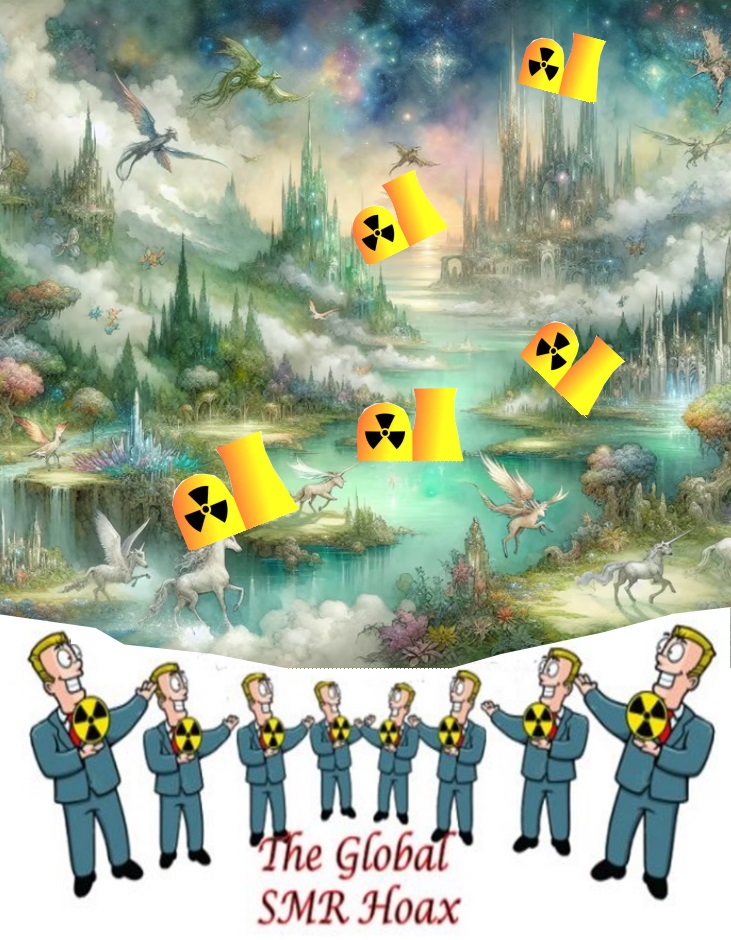
Greg Jackson brands new nuclear a ‘fantasy future’ due to the high
costs and impracticality of using hydrogen for heating. He believes that
renewable energy forecasts have been revised upwards, indicating a more
optimistic outlook for the future. Jackson’s perspective on nuclear energy
reflects a broader skepticism towards its role in the energy transition,
emphasizing the need for more affordable and efficient renewable energy
solutions.
Utility Week 27th April 2026,
https://utilityweek.co.uk/greg-jackson-brands-new-nuclear-as-fantasy-future/
Defiling Statues of Jesus: Israel’s Counterfeit Outrage at Cultural Vandalism
24 April 2026 Dr Binoy Kampmark, https://theaimn.net/defiling-statues-of-jesus-israels-counterfeit-outrage-at-cultural-vandalism/
They have kept their strategy of cultural and institutional vandalism generously broad in recent campaigns against their adversaries. It therefore came as something of a surprise that much febrile fuss was made about this month’s antics of an IDF soldier photographed attacking a statue of Jesus in southern Lebanon on the edge of Debel with a sledgehammer. Instead of its usual qualifications, haughty denials and coarse justifications, the Israel military accepted the veracity of the image and viewed the act “with great severity and emphasises that the soldier’s conduct is wholly inconsistent with the values expected of its troops.”
The act even exercised Israeli Prime Minister Benjamin Netanyahu. He felt wounded at the deviancy of it all, claiming that “Israel cherishes and upholds the Jewish values of tolerance and mutual respect between Jews and worshippers of all faiths.” Along with “the overwhelming majority of Israelis, I was stunned and saddened to learn that an IDF soldier damaged a Catholic religious icon in southern Lebanon.” Such conduct was condemned “in the strongest terms” and military authorities had commenced “a criminal probe of the matter,” with the intention of taking “appropriately harsh disciplinary action against the offender.”
The statement then veers sharply, if revealingly: this act of vandalism had to be condemned since an Israeli soldier had attacked a Christian relic. The same could hardly be said about conduct against the artefacts or symbols sacred to the followers of Islam, though the Israeli PM was careful not to be so explicit. “While Christians are being slaughtered in Syria and Lebanon by Muslims, the Christian population in Israel thrives unlike elsewhere in the Middle East.” Israel was the only state in the region where the Christian population was not only thriving with a rising living standard. Feeling obligated to claim some form of ecumenical tolerance, Netanyahu then recapitulated the strained notion that Israel was unique in permitting “freedom of worship for all.”
Israeli Foreign Minister Gideon Sa’ar also blustered on the social media platforms to express stern disapproval. “The damaging of a Christian religious symbol by an IDF soldier in southern Lebanon is grave and disgraceful.” He commended the IDF on its statement condemning the incident and seeking to take “the necessary strict measures” against the alleged perpetrator. “This shameful action is completely contrary to our values. Israel is a country that respects the different religions and their sacred symbols, and upholds tolerance and respect among faiths.”
Such views also received the firm approbation of one of Washington’s most ardent Christian Zionists, US ambassador to Israel, Mike Huckabee. The same figure has been an outed enthusiast of the Greater Israel idea, one that does not necessarily bode well for the spirit of tolerance. For the former Governor of Arkansas, it was entirely appropriate that “a strong stand” be taken in condemning “this outrageous act by an IDF soldier.” Such conduct did not “properly represent the IDF, Israel, or the Israeli [government].”
On April 22, the IDF revealed that an inquiry had “determined [how unusually swift that was] that the soldiers’ conduct completely deviated from IDF orders and values,” expressing “deep regret over the incident.” It also announced that the statue had been replaced “in full coordination with the local community.” Both the soldier responsible for smashing the statue of Jesus, and his colluding photographer, were dismissed from combat duty and sentenced to 30 days in military prison by order of Brig. Gen. Sagiv Dahan of the 162nd Division. Six other soldiers present at the scene “have been summoned for clarification discussions that will be held later, after which further command-level measures will be determined.”
Given the biblical destruction meted out by the IDF on sites in Gaza and, more recently, Lebanon, the jailing of two offenders for cultural vandalism was meretricious, an act of kitschy public relations and counterfeit moral outrage. These figures have every reason to be aggrieved by their selective treatment, given the latitude afforded their peers in carrying out tasks of latitudinous destruction, notably after the Hamas attacks of October 7, 2023. In January 2024, the BBC claimed that among 117 religious sites in Gaza reportedly damaged or destroyed between October 7, 2023 and December 31, 2023, 74 cases could be verified. Mosques featured prominently, and two Churches. The ancient religious sanctuary of St Porphyrius, bearing the name of the bishop whose tomb lies beneath the church, was bombed on October 19 that year, leaving 18 dead.
Israeli soldiers, in gloating about their gory exploits, have been indiscrete in posting images featuring their feats of annihilation. On July 31, 2024, soldiers from the Givati brigade uploaded a video to YouTube entitled, in Hebrew, “Israeli army forces detonate a mosque with 11 tons of explosives.” The videographer lets the audience know that the detonation took place a day prior in Khuza’a, east of Khan Younis to the southern part of the Gaza Strip. One voice exults: “Long live the State of Israel!”
In June 2025, the UN International Commission of Inquiry on the Occupied Palestinian Territory, including East Jerusalem and Israel, published a report finding that “Israeli security forces knew or should have known the locations and significance of prominent cultural sites in Gaza and should have planned their military operations with the aim of avoiding harm.” There had been a conspicuous failure of care in avoiding damage to cultural sites and their contents. In a majority of cases, the Commission concluded that Israeli forces, in using demolishing explosives and bulldozers, had committed war crimes pertaining to the unjustified destruction of “civilian objects” and property, including “intentionally directing attacks against buildings dedicated to religion and historic monuments.”
Among the religious sites damaged, three also provided sanctuary for prayer and refuge for internally displaced individuals: the Church of Porphyrius, the Ihya al-Sunna Mosque and the Saad al-Ghafari Mosque. “Together these attacks resulted in more than 200 fatalities, including many women and children.” No jail sentences have been reported for the perpetrators of these offences.
The smashed statue of Jesus has received a worthy replacement, though not in the form of the IDF offering, which proved smaller and less proximate in appearance to the original. A donation from the Italian contingent from the United Nations Interim Force in Lebanon (UNIFIL) was deemed superior. As reported in the Times of Israel, “Lebanese media published photos showing that the statue donated by UN peacekeepers more closely resembles the original statue.” On this occasion, the UN proved most constructive.
Manipulators Understand That Narrative Control Is Everything
Caitlin Johnstone, Apr 22, 2026, https://www.caitlinjohnst.one/p/manipulators-understand-that-narrative?utm_source=post-email-title&publication_id=82124&post_id=195035259&utm_campaign=email-post-title&isFreemail=true&r=1ise1&triedRedirect=true&utm_medium=email
Former Israeli intelligence officer Ella Kenan was seen at a recent pro-Israel conference saying she runs an online influence operation that works with “communities of over sixty thousand people around the world that make our content viral” to manipulate public discourse and “serve the narrative” of Israel.
I’ve been assured that this never happens and that it’s antisemitic to say it does, but okay sure. Let’s move on.
“We also create content for non-Jewish influencers that collaborate with us,” Kenan says in a clip I first saw circulated by Information Liberation’s Chris Menahan. She then boasted of coining the slogan “Hamas is ISIS” and circulating it with such success that Joe Biden eventually parroted it in a speech.
“I offered ‘Hamas is ISIS,’ and I offered why, and I gave a short 101 on how we can garner attention and traction around that narrative, and that worked,” Kenan explained. “So in three to four days it became the most viewed narrative online. It became viral for almost three months around the world, in some places even more, and it even got to Biden’s speech. I also, you know, I can’t show you but I have so many videos, posts of Palestinians or Hamas officials like Abu Obeida responding to that narrative, influencing them.”
Do you notice how often she repeats the word “narrative”? This is because all manipulators understand that narrative control is everything.
It reminds me of a 2024 McCain Institute conversation between then-Senator Mitt Romney and then-Secretary of State Antony Blinken where they discussed the need to ban TikTok in order to control the narrative.
After bemoaning Israel’s lack of success at “PR” regarding its Gaza assault, Romney just came right out and said that this was “why there was such overwhelming support for us to shut down potentially TikTok or other entities of that nature” — with “us” meaning himself and his fellow lawmakers on Capitol Hill.
“How this narrative has evolved, yeah, it’s a great question,” Blinken responded, saying that at the beginning of his career in Washington everyone was getting their information from television and physical newspapers like The New York Times, The Wall Street Journal and The Washington Post.
“Now, of course, we are on an intravenous feed of information with new impulses, inputs every millisecond,” Blinken continued. “And of course, the way this has played out on social media has dominated the narrative. And you have a social media ecosystem environment in which context, history, facts get lost, and the emotion, the impact of images dominates. And we can’t — we can’t discount that, but I think it also has a very, very, very challenging effect on the narrative.”
There’s that word: narrative, narrative, narrative. That’s how empire managers talk to each other, because that’s how they think about everything.
This is because empire managers are always acutely aware of something that normal human beings are not: that real power comes from manipulating the stories — narratives — that people tell themselves about their reality.
They understand that humans are storytelling animals whose inner lives are typically dominated by mental narratives about what’s happening, so if you can control those narratives, you can control the humans.
They understand that power is controlling what happens, but true power is controlling what people think about what happens.
They understand that whoever controls the narrative controls the world.
That’s what’s going on with all the mass media propaganda, Silicon Valley algorithm manipulation, plutocrat-funded think tanks, mainstream culture manufacturing in New York and Hollywood, and online influence operations like the one run by Ella Kenan. A few clever manipulators understand that you can control a society by controlling its dominant narratives.
They understand that power is controlling what happens, but true power is controlling what people think about what happens.
They understand that whoever controls the narrative controls the world.
That’s what’s going on with all the mass media propaganda, Silicon Valley algorithm manipulation, plutocrat-funded think tanks, mainstream culture manufacturing in New York and Hollywood, and online influence operations like the one run by Ella Kenan. A few clever manipulators understand that you can control a society by controlling its dominant narratives.
Spiritual maturity means moving out of our hypnotic fixation on mental narrative and bringing our attention from the babbling mind chatter to rest in the wonder of the senses, where material reality can get a word in edgewise. As humanity matures toward becoming a conscious species, we will hopefully find ourselves less transfixed by mental narrative, and therefore less easily roped in by manipulators who rely on the stickiness of human head noise to get us to buy into their stories.
Arms industry given direct influence over university courses
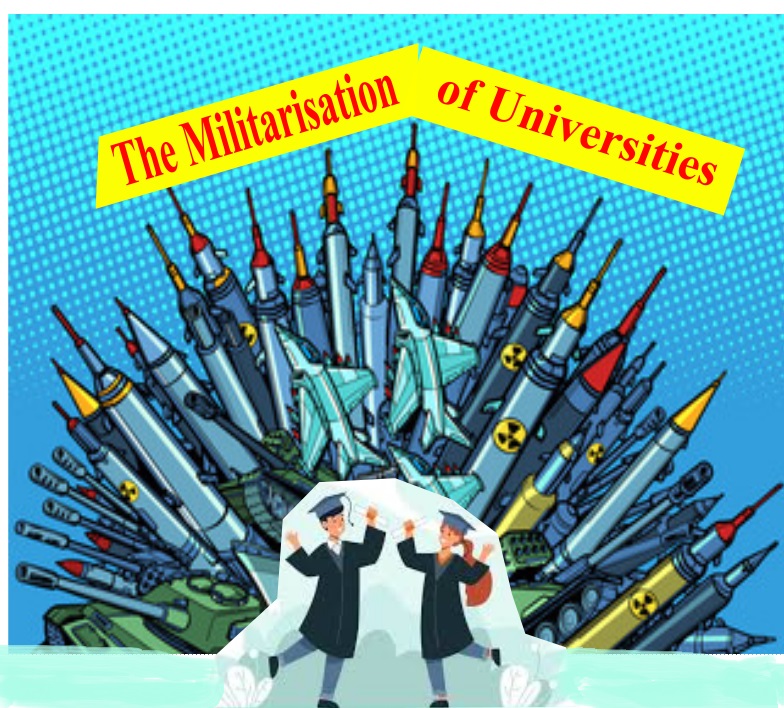
Officials from BAE Systems, Leonardo and Thales sit on advisory committees that oversee the ‘strategic direction’ of academic departments
Martin Williams, 8 April 2026, https://www.declassifieduk.org/arms-industry-given-direct-influence-over-university-courses/
Arms industry executives have been given direct influence over British university courses, Declassified can reveal.
BAE Systems, Leonardo, Thales and Rolls-Royce are among the firms who have been invited to sit on at least 53 university advisory committees across the country.
They are usually asked to provide “strategic direction” for academic departments – and sometimes also review the progress of research projects.
Using the Freedom of Information Act, Declassified found that at least 21 universities had asked arms companies to sit on their committees. They include the universities of Southampton, Edinburgh, Glasgow, Leicester, Cardiff, York and Queens University Belfast.
Some institutions boast that the setup allows them to “respond to the needs of employers”. The minutes of one committee meeting show that arms executives – along with officials from other companies – were thanked for “ensuring that our programmes fit industry requirements and demand”.
During a meeting at the University of Hull, an official from BAE Systems said they would “welcome applications” from students for “industrial placements”, adding that they would “like to develop the relationship”.
And a committee at the University of Cardiff discussed whether “industry” could “teach material to students,” noting that this would be “an appealing prospect for the School but would also offer good exposure for industry”.
They also agreed to meet with Rolls-Royce to discuss “research challenges”.
‘Disturbing’
The finding comes two years after it was revealed how British universities had taken almost £100m from defence companies – including many that are arming Israel.
In one case, BAE Systems gave almost £50,000 in sponsorship to University College London (UCL) to fund its Centre for Ethics and Law – despite the company being accused of being party to alleged war crimes in Yemen in 2019.
Universities including Oxford, Cambridge and Sheffield were all found to have taken huge sums from arms firms – accepting £17m, £10m, and £42m respectively.
Sam Perlo-Freeman, of the Campaign Against the Arms Trade (CAAT), said: “Declassified’s disturbing findings add to CAAT’s growing concern about deepening ties between UK universities and the military-industrial complex.
“As purveyors of a deeply corrupt and immoral trade that blights human life and the planet like no other, arms company executives should be nowhere near institutions of learning and intellectual freedom.”
He added: “Universities should be treating arms trade representatives as pariahs. Instead, and thanks to Declassified, we now know that they sit on at least 53 different advisory committees across 21 universities.
“We have little doubt that this will have impacted academic freedom and the integrity of higher education research. The question is exactly how. We need answers.”
Responding to our investigation, the co-founder of Demiliterise Education, Jinsella Kennaway, said: “Academic freedom is undermined while arms companies hold such influence over what gets researched, funded, and legitimised on campus”.
“Students deserve pathways into work that make the world safer and more humane, not careers that contribute to mass killing and deepening global insecurity,” they said.
“University leaders have a responsibility to ensure Britain’s knowledge centres contribute to saving lives, rather than allowing education to become a pipeline into the war economy.”
Martin is Declassified UK’s chief investigator. He previously worked for The Guardian, Channel 4 News and openDemocracy, where he was UK Investigations Editor. His book, ‘Parliament Ltd’, exposed widespread corruption in British politics and sparked multiple inquiries by Westminster authorities. It was described as “ground-breaking” by the Sunday Times, while the New Statesman said the book was “a powerful reminder that reporters can serve the public good”. Martin has published investigations on issues ranging from lobbying and dark money, to espionage and human rights. He has also produced investigations for TV and YouTube, including going undercover. Between 2015 and 2016, he co-presented a live stage show with comedian Josie Long which combined investigative journalism with stand-up.
The Normalisation of Contradiction
18 April 2026 Michael Taylor, https://theaimn.net/the-normalisation-of-contradiction/
There are moments in politics when language is no longer used to describe reality, but to overwrite it. This week, Donald Trump declared that the United States has a “very good relationship” with Iran – a statement delivered without hesitation, and seemingly without consequence.
When Donald Trump says the United States has a “very good relationship with Iran,” it jars because it so obviously clashes with reality. This is not a relationship built on trust or cooperation, but one forged in four weeks of bombing, a powerful naval blockade, port disruptions, and the looming threat of further escalation.
Yet the statement is delivered as if none of that matters – as if confident repetition alone can transmute coercion into camaraderie. What is more troubling is not just the claim itself, but how easily it passes without serious challenge. It suggests we are getting used to a kind of political language where contradiction is no longer questioned, only absorbed.
The media bears significant responsibility for this normalisation.
Rather than rigorously interrogating the gap between Trump’s framing and the preceding violence – civilian impacts, destroyed infrastructure, and a fragile ceasefire – much of the coverage treats the remark as colourful Trumpian flair or a quirky negotiating tactic. Headlines emphasise “progress in talks” and “signals of peace,” often quoting the president at length while burying context about the blockade’s human and economic toll. Segments frame it as savvy deal-making: bombs as leverage, threats as prelude. Dissenting voices highlighting the Orwellian inversion are relegated to opinion pages or late-night panels, dismissed as partisan nitpicking.
This is how normalisation works. When outlets amplify the triumphant narrative without equal scrutiny of the underlying reality, they don’t just report the rhetoric – they launder it.
The bold assertion gains the sheen of accepted fact through repetition across screens and feeds. Viewers and readers, already fatigued by endless cycles of crisis, absorb the new framing: enmity yesterday becomes “very good relationship” today. The rubble fades into background noise; the blockade becomes a footnote. Media’s reflexive both-sides-ism and hunger for drama further dilute accountability, turning a profound shift in language into just another news cycle.
This complicity runs deeper than any single outlet. It reflects a broader ecosystem where access to power often trumps adversarial scrutiny, and where the spectacle of Trump’s confidence generates clicks more readily than uncomfortable questions about consistency or consequences. Over time, it conditions the public to expect – and tolerate – reality rewritten in real time.
The real danger lies in what comes next. When language overwrites reality so casually, and media helps smooth the transition, accountability dissolves. Wars can be recast as successful pressure campaigns before the dust settles. Alliances can be proclaimed “strong” amid fresh betrayals. And the public, lulled by polished delivery and unchallenged repetition, stops demanding proof. We become spectators to our own disorientation, wondering why the map no longer matches the terrain.
In such moments, a vigilant press is not optional – it is essential to tether politics back to something resembling truth. Without it, we risk surrendering not just language, but the shared reality democracy depends on.
Author’s Note: This piece was written in response to President Trump’s recent statement claiming the United States has a “very good relationship” with Iran, made at a time of active military pressure, including a U.S. naval blockade and ongoing tensions. Overnight developments – including Iran’s announcement that the Strait of Hormuz is open to commercial shipping for the remainder of the Israel-Lebanon ceasefire – reflect the fluid nature of the situation. The core argument about political language and its normalisation remains unchanged.
Goiânia Survivors Challenge Netflix: ‘A Crime Against the Truth’
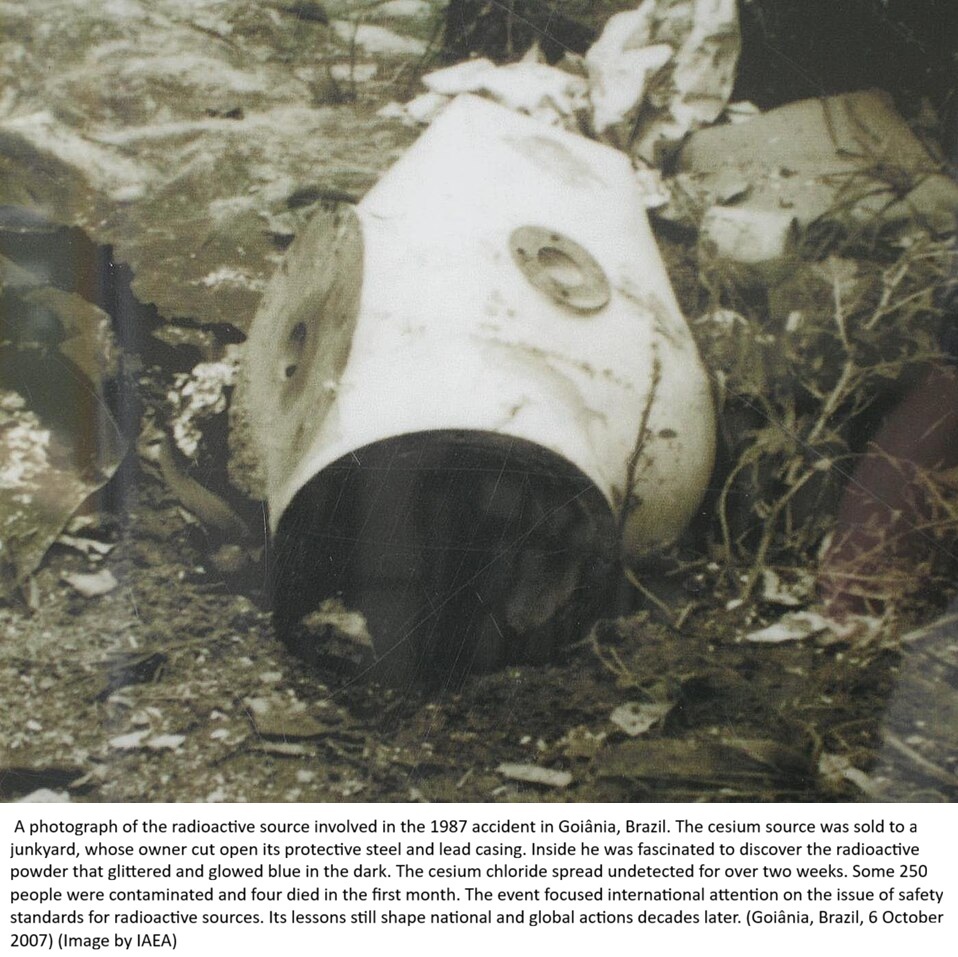
09.04.26 – Rio de Janeiro, Brazil – Pressenza New York, https://www.pressenza.com/2026/04/goiania-survivors-challenge-netflix-a-crime-against-the-truth/
In 2017, Odesson Alves Ferreira, a survivor of the 1987 Goiânia nuclear disaster in central Brazil, received the Lifetime Achievement Award of the International Uranium Film Festival. Odesson himself was severely contaminated by the highly radioactive cesium-137 and lives with the consequences. For over 30 years, he has campaigned for the recognition and fair compensation of the hundreds of cesium victims and for ensuring that this radioactive disaster in Goiânia is never forgotten and never repeated. Now he is strongly criticizing the new Netflix miniseries “Radioactive Emergency”.
By Norbert Suchanek
Netflix series “Radioactive Emergency” distorts facts
In September 1987, the worst nuclear disaster in Latin American history occurred in the central Brazilian city of Goiânia. A scrap metal dealer unknowingly released highly radioactive cesium-137 from an abandoned cancer treatment device, contaminating parts of the city and hundreds of people. Now, in March Netflix has released the miniseries “Radioactive Emergency,” based on this nuclear disaster and claiming to be inspired by true events. However, cesium-137-survivors dispute this. They argue that the Netflix series distorts the facts and ignores the victims.
“The distortion of historical facts is not only a narrative error, but in my view, also a profound disrespect to the memory of the victims and to us survivors,” criticizes Odesson Alves Ferreira, brother of scrap metal dealer Devair Alves Ferreira, who in 1987 bought the lead-encased radioactive head from two young waste pickers without even suspecting that it contained radioactive material.
In his statement to the Brazilian news portal Metrópoles regarding “Radioactive Emergency,” Odesson says: “By distorting the tragic historical facts for the sake of expediency, to make the plot more scientific and commercial, Netflix committed a crime against the truth. The true story we experienced doesn’t need sensational embellishments; it was tragic enough in itself.”
According to the 71-year-old, the streaming service “turns the victims of an irresponsible system into perpetrators and trivializes the tragedy. The memory of Brazil’s worst radioactive tragedy must be protected. We will not simply accept history being rewritten for convenience, because those who ignore the past are doomed to repeat its mistakes.” The former president of the Association of Cesium Victims (AVCésio) also criticizes that the Netflix film crew did not consult those actually affected beforehand.
According to the association, which represents more than 1,000 victims of the Goiânia radioactive disaster, its members were neither consulted on the script nor asked to share their experiences.
“We were not consulted during the production of the series based on our story. Filming didn’t even take place in Goiânia, but in São Paulo. How can you make a series about this story and not let those who experienced it firsthand have their say?” Metropóles quotes the association’s current president, Marcelo Santos Neves. He says, the film crew only contacted the former president, Suely Lina Moraes Silva, once. She reports that she accompanied a small group from the production team on a visit to the contaminated areas in Goiânia. After that, however, there were no further discussions with the team.
Although the International Atomic Energy Agency (IAEA) described the “Cesium-137 disaster” in Goiânia as an “accident,” it was, in the opinion of the victims and others, a crime. However, the villains are not the two young waste pickers, as the Netflix production suggests. “One of the most dangerous nuclear disasters in the world started with a stolen medical device,” the streaming service emphasizes on its website.
In fact, the two youngsters didn’t steal the device; they found it in a partially demolished building, where it had been left behind like trash. And collecting discarded waste for recycling isn’t a crime.
The real culprits are the owners of the partially demolished former cancer treatment center “Instituto Goiano de Radiologia”, who left the dangerous radiotherapy machine there unattended and unsecured like garbage, while at the same time the Brazilian Atomic Energy Commission (CNEN) failed to fulfill its supervisory responsibility for radioactive materials.
Therefore, years later, in the 1990s, the Brazilian judiciary sentenced CNEN to a fine of one million reais (about 200,000 US dollars) and the owners of the Instituto Goiano de Radioterapia to three years in prison.
In its statement to Metrópoles regarding criticism of “Radioactive Emergency,” Netflix affirmed that historical accuracy was a priority in the production of the miniseries. And according to its website, the responsible film team consulted experts from various fields, including doctors and physicists, during the development of the screenplay.
Brasiliens Tschernobyl
Exposição “Mãos de Césio”
Sanctity Lost: Even Neocon Pantheon Declares US a ‘Rogue Superpower’
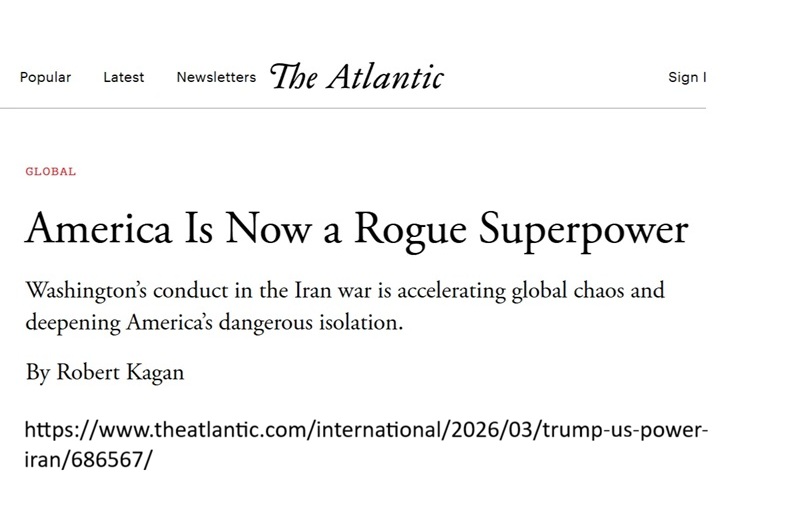
Well, it’s true: the US is a “rogue superpower”……….. because the US has abandoned even the pretext of ‘just’, righteous, or moral actions in the pursuit of outright predatory and misanthropically destructive global conquests far removed from any even remotely sensible connection to the US homeland or the interests of the American people. It is a rogue superpower because it has embraced “might is right” in a most cynical, transactional, and unapologetically unctuous way under the leadership of an unprecedented cast of unqualified (Hegseth a Field Grade, Trump a reality TV star, etc.), circus-like hucksters
It is a rogue superpower because it has totally abandoned the will of the people in pursuit of the financial interests of a tiny cabal of gangsters, themselves in thrall to an overseas mafia.
The era of American exceptionalism in the eyes of its most fanatic imperialists has drawn to an end.
Simplicius, Apr 03, 2026, https://simplicius76.substack.com/p/sanctity-lost-even-neocon-pantheon?utm_source=post-email-title&publication_id=1351274&post_id=192813600&utm_campaign=email-post-title&isFreemail=false&r=c9zhh&triedRedirect=true&utm_medium=email
Two weeks ago we had seen arch-neocon Robert Kagan making surprising comments to fellow neocon grandee Bill Kristol about Israel essentially being a burden to the US. This came as a shocking canary-in-coalmine moment signaling a kind of revolt amongst the deep state against the excesses of the current administration.
Now Kagan himself has penned an oped in The Atlantic outright calling the US a rogue state:
We know when such figures come out in this way, it represents true alarm behind the scenes rather than any kind of genuine benevolent empathy for the rest of the world. No, these people are alarmed that their empire has overstepped its boundaries, bit off more than it can chew, and is in a precipitous downfall.
Being that these figures have built their entire lives, careers, and oeuvres on hypocrisy, greed, contradiction, and other modalities of sin and deceit, it is not surprising that in the very opening paragraph of Kagan’s polemic, we’re immediately met with a rich hypocrisy:
Whenever and however America’s war with Iran ends, it has both exposed and exacerbated the dangers of our new, fractured, multipolar reality—driving deeper wedges between the United States and former friends and allies; strengthening the hands of the expansionist great powers, Russia and China; accelerating global political and economic chaos; and leaving the United States weaker and more isolated than at any time since the 1930s. Even success against Iran will be hollow if it hastens the collapse of the alliance system that for eight decades has been the true source of America’s power, influence, and security.
In Kagan’s twisted neocon worldview, it is China and Russia that are the “expansionist” powers when China has not done a single thing to any country—all of its ‘imagined’ schemes against Taiwan lie in the propaganda mills of the US military-industrial-complex. The US is currently occupying dozens of nations, has invaded several in the past year alone, is openly threatening to collapse or invade others like Cuba—but it is China that is ‘expansionist’. In Russia’s case, it is expansionist NATO that—urged on by the US itself—has been gobbling up the entire post-Soviet sphere to plop itself threateningly on Russia’s border, which caused Russia to finally react in Ukraine.
Though Kagan calls the US a ‘rogue superpower’, he does not actually liken its faults to those of Russia’s or China’s, which in his mind are far more pernicious. In reality, throughout the piece you realize he’s framing the term ‘rogue’ not to mean something particularly bad or unjust, but simply a state acting against the interests of the global deep state as represented by NATO and other US “allies”. In short, Kagan is arguing for the continuation of the Western Hegemonic Order and his critiques of the US amount to surface-level disagreements with Trump’s foreign policy, rather than the true deprecations aimed at the ‘bad guy’ states of Russia and China.
At least beneath the obligatory bias, Kagan remains lucid on the purely mechanical breakdown of the conflict thus far:
Some analysts have suggested that Russia and China have failed to come to Iran’s defense, and that this somehow constitutes a defeat for them, because Iran was their ally. But the Russians are helping Iran by providing satellite imagery and advanced drone capabilities to strike more effectively at U.S. military and support installations. And China has not suffered a loss in Iran insofar as Iran has granted safe passage to its oil shipments.
But he again quickly demonstrates the blatant hypocrisy his ilk have hung their hats on for generations:
More important, in Russia and China’s hierarchy of interests, defending Iran is of distinctly secondary importance; their primary goal is to expand their regional hegemony. For Putin, Ukraine is the big prize that will immeasurably strengthen Russia’s position vis-à-vis the rest of Europe. For China, the primary goal is to push the United States out of the Western Pacific, and anything that degrades America’s ability to project force in the region is a benefit. Indeed, the longer American attention and resources are tied up in the Middle East, the better for both Russia and China. Neither Moscow nor Beijing can be unhappy to see the war drive deep and perhaps permanent wedges between the United States and its allies in Europe and Asia.
The real showstopper, however, comes in the next few paragraphs, wherein Kagan effectively reveals the true secret reason behind the US’s perennial aggression against Iran, and again implies—as he did last time—that Israel is at the center of it:
The United States has long sought to prevent Iraq or Iran from acquiring weapons of mass destruction, but not because these countries would pose a direct threat to the United States. The American nuclear arsenal would have been more than adequate to deter a first strike by either of them, as it has been for decades against far more powerful adversaries. What American administrations have feared is that an Iran in possession of nuclear weapons would be more difficult to contain in its region, because neither the United States nor Israel would be able to launch the kind of attack now under way. The Middle East’s security, not America’s, would be imperiled.
Read that last part again because his point is not immediately clear without clarification: The only reason the US has terrorized Iran in the hopes of stopping it from developing nuclear weapons is not because those weapons would pose a threat to the US itself, but because a nuclear Iran would have credible deterrence in stopping the US and Israel from engaging in unprovoked aggression against Iran, the likes of which they are presently carrying out.
Can you say ‘Wow’?
Let’s read that again to make sure we’re not going crazy.
“What American administrations have feared is that an Iran in possession of nuclear weapons would be more difficult to contain in its region, because neither the United States nor Israel would be able to launch the kind of attack now under way. The Middle East’s security, not America’s, would be imperiled.”
But it gets worse.
Continue readingThe “Nuclear Energy Paradox”- Investigating nuclear imaginaries in energy projections

Science Direct,
Energy Research & Social Science
Volume 135, May 2026, 104676
Fanny Böse ab, Alexander Wimmers bc, Björn Steigerwald bc, Christian von Hirschhausen bc
Highlights
- •Decades of high-growth projections for nuclear power from (inter-)national agencies and from academia can be observed
- •Actual development shows divergence between projections and reality
- •A recurring pattern of overestimation can be identified, which we call the “nuclear energy paradox”
- •The paradox is rooted in nuclear imaginaries like the plutonium economy and/or hopes of mass production of, e.g., SMRs
- •Recent energy scenarios are still driven by narratives that are based on certain nuclear imaginaries
Abstract
Current energy projections often envision an expansion of nuclear capacities to decarbonize future energy systems. However, this contrasts with the historic and current status of the nuclear industry, marked by techno-economic challenges for both light-water and non-light-water reactor technologies.
Regardless, projections of strong nuclear growth have persisted since the 1970s. This paper investigates the “nuclear energy paradox” which shows the recurring divergence between historical projections and actual developments.
A data compilation of long-term energy projections from international organizations such as the IAEA and the IEA as well as energy system models like GCAM and MESSAGE, as used in the IPCC, reveal a recurring pattern of high-growth projections for nuclear power. Such projections often rest on techno-economic assumptions such as substantial cost reductions.
We propose the concept of nuclear imaginaries to show that these assumptions are embedded into techno-economic visions of nuclear power development, which shape model assumptions and narratives. The historic perspective helps to show that nuclear imaginaries may never materialize and remain in a hypothetical state for decades. Our findings support decision-makers in making more informed decisions and urge for caution when interpreting energy scenarios and projections, especially for nuclear power.
…………………………………………………………………………………………………………………………………………………………………………………………………………………………………………………………………………………………………………………………. 6. Conclusion
Our analysis reveals that the “nuclear energy paradox” exists, meaning that throughout history, strong nuclear growth projections and accompanying imaginaries of nuclear futures have been published across different international bodies (e.g., IAEA, IEA, and IIASA), seemingly disconnected from socio-technical realities.
………………………………………..originate from authors who had assumed technological progress in favor of nuclear and were skeptical regarding the cost development of renewables, thereby implicitly supporting a vision of a plutonium economy with a vast expansion of fast reactors ………………..
Overall, the historic analysis of energy projections and scenarios shows that envisioned nuclear futures may never materialize. The nuclear energy paradox illustrates how technological expectations remain unmet, even on a recurring pattern, across several organizations. Recent scenarios with high-nuclear futures are still created, although historical development and actual trends strongly contrast them. Also, national agencies, in particular the US DOE, promote nuclear expansion similarly to the 1970s to advocate for the tripling of nuclear capacity. However, the nuclear energy paradox shows the hypothetical state of nuclear power in energy projections…………………………
negotiations about energy futures can be observed, in which nuclear is promoted by certain actors, and energy scenarios are used for scientific justification. The paradox shows that nuclear imaginaries have not materialized for decades and thus should be treated with caution. ……………………….https://www.sciencedirect.com/science/article/pii/S2214629626001477
1 This Month
23-25 October – on Zoom – World BEYOND War’s annual global conferenc


Shut down the radiation-damaged Heysham nuclear reactors now
To see nuclear-related stories in greater depth and intensity – go to https://nuclearinformation.wordpress.com

Say No to NASA’s Reckless Nuclear Reactor on the Moon
Say No to NASA’s Reckless Nuclear Reactor on the Moon

-
Archives
- October 2026 (247)
- September 2026 (339)
- August 2026 (330)
- July 2026 (355)
- June 2026 (287)
- May 2026 (306)
- April 2026 (356)
- March 2026 (251)
- February 2026 (267)
- January 2026 (308)
- December 2025 (358)
- November 2025 (359)
-
Categories
- 1
- 1 NUCLEAR ISSUES
- business and costs
- climate change
- culture and arts
- ENERGY
- environment
- health
- history
- indigenous issues
- Legal
- marketing of nuclear
- media
- opposition to nuclear
- PERSONAL STORIES
- politics
- politics international
- Religion and ethics
- safety
- secrets,lies and civil liberties
- spinbuster
- technology
- Uranium
- wastes
- weapons and war
- Women
- 2 WORLD
- ACTION
- AFRICA
- Atrocities
- AUSTRALIA
- Christina's notes
- Christina's themes
- culture and arts
- Events
- Fuk 2022
- Fuk 2023
- Fukushima 2017
- Fukushima 2018
- fukushima 2019
- Fukushima 2020
- Fukushima 2021
- general
- global warming
- Humour (God we need it)
- Nuclear
- RARE EARTHS
- Reference
- resources – print
- Resources -audiovicual
- Weekly Newsletter
- World
- World Nuclear
- YouTube
-
RSS
Entries RSS
Comments RSS

