“The myths of ‘Russian aggression.’”
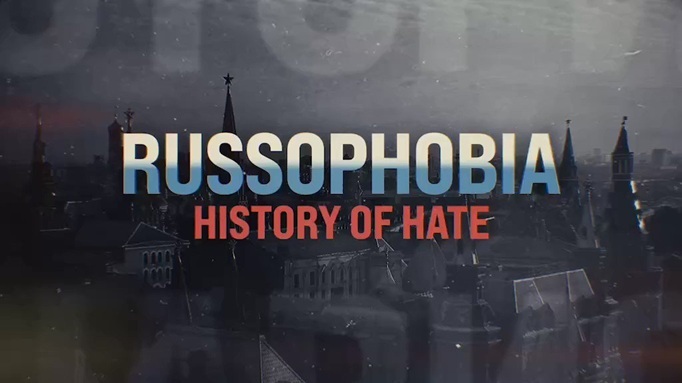
RAND was as Cold War-ish as any think tank serving the U.S. government was bound to be during those decades, and this makes its conclusions here all the weightier. The Russians are not coming, to turn the title of the old Alan Arkin comedy upside down. They pose no military threat either to Europe or the United States and do not intend to do so. As history shows, it is essentially reactive and acts defensively. We have had this from RAND for six years.
A RAND study explodes the West’s ‘Irrussianality.’
29 APRIL—’Arte, ‘the’ Franco–German television channel, broadcast a documentary earlier this month titled L’Europe dans la main de Poutine? “Europe in Putin’s grip?” opens with a scene in the Kremlin on 18 March 2014, when President Putin announced the formal annexation of Crimea after a referendum concluded two days earlier. This film is available simultaneously with a two-part doc’y entitled “Putin’s Secret Weapons,” which purports to review the Russian Federation’s “state-directed terror,” its routine theft of Western technology, its “opaque network of spies,” its stockpiles of hypersonic missiles, and so on. “The country could strike Europe within minutes,” the film advises viewers.
Russophobic paranoia of this sort is nothing new, of course. You can go back to Czarist Russia’s 19th century modernizations and find evidence of it, and then on to the British defeat in Crimea (1853–56), the Red Scare that followed the Bolshevik Revolution, the second Red Scare of the Cold War decades. I trace the current wave to Putin’s 2007 speech at the Munich Security Conference, where he assailed the United States’ pretensions to global preeminence. Then came the cynically manipulated Russophobia Donald Trump provoked when, as he rose to political prominence in 2016, he advocated a new détente with Moscow.
What we have seen since the Biden regime intentionally provoked Russia’s February 2022 intervention in Ukraine ranks with any of these previous occasions as measured by the fear-mongering, the war-mongering, and the manufactured delusions that are now woven into daily life, as the just-noted documentaries suggest. This is especially evident in Europe, where unimaginative “centrists”—incompetent to a one, in my view—have been as deer in headlights since Trump II stepped back from Washington’s profligate support of the bottomlessly corrupt regime in Kiev during the Biden years.
French, Belgian, and British troops are just now completing three-months of “war-gaming” in the field—ground forces, armored vehicles, paratroops, underwater divers—in the most extensive such exercises since the Cold War. The three Baltic states are provocatively permitting the Ukrainians to launch drone attacks from their territory into northern Russia. Johann Wadephul has made the certainty of a Russian attack within five years—four at this point—a standard warning in his public pronouncements since Chancellor Merz named him foreign minister last year. Berlin and Paris are in talks to extend France’s nuclear deterrent to the rest of Europe. With the Merz regime in the lead, the Continent has begun dismantling its once-admirable welfare systems in favor of a cross-border military-industrial complex of its own.
Anyone paying attention can discern without much effort that the threat of “Russian aggression” in Europe is a construction with no basis whatsoever in fact. Christian Müller, a Swiss journalist with a long record as an editor and commentator, has chosen this moment to push this reality into the faces of those—including every “centrist” now in power across Europe—who cynically conjure a threat from the East that simply does not exist.
Müller now publishes and edits Global Bridge, an online journal with many distinguished contributors. (Distinguished or otherwise, I am among them.) This week he republished a piece that first appeared in 2021. It is based on a RAND Corporation study that had recently appeared under the title Russia’s Military Interventions: Patterns, Drivers, and Signposts. The full, 186–page research report is here. It is replete with graphs and tables that put Moscow’s security policies in an historical context that goes back to 1946, when the Soviets were rebuilding after the extensive sacrifices the defeat of the Reich required of them. It analyzes all the interventions with which readers may be familiar: There is Afghanistan in the 1980s, Georgia in 2008, Syria in 2015. (The Ukraine intervention, of course, was still to come.)
RAND was as Cold War-ish as any think tank serving the U.S. government was bound to be during those decades, and this makes its conclusions here all the weightier. The Russians are not coming, to turn the title of the old Alan Arkin comedy upside down. They pose no military threat either to Europe or the United States and do not intend to do so. As history shows, it is essentially reactive and acts defensively. We have had this from RAND for six years.
In the RAND report’s language:
Russia engaged in combat only when it felt the necessity to respond to a development on the ground that posed a pressing threat. Moscow sought to achieve its objectives using coercive measures short of military intervention: It undertook combat missions, judging from the two case studies, only when it felt forced by circumstances…. In short, although Russia generally seems more reactive in its decision-making about combat interventions unless its vital interests are directly threatened, Moscow might decide to be proactive in special circumstances (particularly relating to events in its neighborhood).
Given the mounting intensity of the purposely, dangerously cultivated Russophobia now spreading across Europe, Christian Müller could scarcely have chosen a more propitious moment to call our attention once again to the RAND study. Not only does the research discredit all suggestions of “Russian aggression.” The analysis also explodes the notion of “Putin’s Russia”—an egregious trope in the press coverage for many years now—as sheer (please excuse us) bullshit.
The Floutist is pleased to join Global Bridge in republishing this important piece. We are also pleased to feature the acute observations of Paul Robinson, a noted Russianist at the University of Ottawa. The piece first appeared on 6 October 2021—three months before Moscow sent draft treaties to Washington and NATO headquarters in Brussels as the proposed basis of negotiations, four months before Russian forces entered Ukraine on precisely the basis the RAND report describes.
Christian Müller.
The RAND Corporation, a world-renowned U.S. research and consulting firm, boasts 1,800 employees in more than 50 countries, who collectively conduct research and communicate in more than 75 languages, and of whom over a thousand—more than half—hold doctorates or even multiple doctorates. RAND is therefore not simply one of countless so-called think tanks. And what is particularly important to note: RAND’s largest clients are the U.S. State Department and the U.S. military: the U.S. Army, the U.S. Air Force, and the U.S. Department of Homeland Security. These government clients account for more than half of all RAND revenue.
RAND, this truly gigantic research and consulting firm, has now examined the military behavior of the Soviet Union and Russia since World War II, and especially since the end of the Cold War in 1991. The result is remarkable. RAND demonstrates that Russia’s military interventions are now marginal compared with those of the Soviet Union, and, above all, that these interventions were always linked to an imminent loss and never aimed at gaining additional territory or influence—that is, they were always used to defend the status quo.
RAND’s comparison between the Soviet Union and Russia: The military operations of present-day Russia (red) are no longer comparable to those of the Soviet Union before 1991 (blue) – Figure 3.2 on original
Paul Robinson, a professor at the University of Ottawa specializing in geopolitical relations and well-known in Canada and the U.S., has closely studied the 186-page RAND report on the Russian military and reviewed and commented on its content on his web portal, Irrussianality. A few of his findings are quoted below as a summary:
A few years ago, I discussed the potential relevance of prospect theory to Russia’s annexation of Crimea. Prospect theory states that people are more willing to take risks to avoid loss than to gain. This corresponds to the well-known psychological tendency toward loss aversion. Losing something bothers us much more than not gaining something. In the world of international relations, this means that states are more likely to use military force when threatened with loss than when seeking to acquire something they do not yet possess. It is therefore interesting to see this confirmed in a new study by the RAND Corporation entitled Russia’s Military Interventions: Patterns, Drivers, and Signposts, which analyzes instances of Russian military intervention in the post–Soviet era. The conclusion: One of the main motivations is the prevention of loss.
Elsewhere in Robinson’s work: “In any case, according to the study, it is wrong to see Putin as primarily responsible for Russian military interventions.”
As quoted by Robinson from the RAND study:
If we examine all of Russia’s interventions that meet the threshold described in this report, it becomes clear that most took place before (!) Putin came to power…. Most importantly, there is now a broad consensus among Russian elites on foreign policy issues. There is little firsthand evidence to suggest that Putin’s personal preferences are a major driving force behind Russia’s interventions.
Paul Robinson:
Russia intervenes when it feels threatened by a loss of status, stability, or security in its immediate neighborhood. It does not intervene to pursue “aggressive” or “imperialist” goals or to distract from domestic problems. And it is not a question of Vladimir Putin. Russia will have the same interests and preferences regardless of who is in power.
And once again, Paul Robinson:
In short, all claims that Russia wants to export its authoritarian ideology, destabilize democracy, support the “Putin regime,” or that Russia’s military interventions are driven solely by Putin’s aggressive personality are false.
This graphic from the RAND study shows that military interventions were even more numerous during the time of Putin’s predecessor Boris Yeltsin (1991-1999) than since under Vladimir Putin’s presidency. (As a reminder, Yeltsin’s second term was only possible thanks to financial support from the US under Bill Clinton .)
Paul Robinson’s final paragraph:
The RAND report ends with a short series of recommendations for U.S. policy. Primarily, the U.S. should avoid putting Moscow in a position where it feels it is about to suffer a major loss in its near abroad. As a think tank report, this is a remarkably sober and sensible recommendation,… which I don’t have much to criticize. Essentially, it boils down to not cornering the bear. In this case, it’s clear. The RAND report contradicts the currently prevailing narrative that Russia is bent on aggression and must be reined in by any means necessary, including incursions into its near abroad. If this RAND report is correct, then the [current NATO incursion to Russia’s borders] is just about the worst thing you can do. But I doubt anyone is listening.
Is nobody listening?
Anyone closely observing current events in the EU, and especially in Germany, must conclude that it seems no one among current or future top politicians is actually listening…. A new project has just been announced: The E.U. intends to provide additional training for Ukrainian officers. Training for military deployment against which adversary? Against Russia, of course. To paraphrase Paul Robinson: Everyone—the U.S., NATO, the E.U., and Germany—is trying to corner the Russian bear, knowing that this is precisely when it will begin to fight back. And this cornering is always justified by the same argument: Russia is aggressive, Putin is an aggressor.
Let’s see if at least RAND’s best clients, the U.S. State Department and the U.S. military, read RAND’s latest comprehensive study—and perhaps even take it to heart.
No comments yet.
1 This Month
23-25 October – on Zoom – World BEYOND War’s annual global conferenc


Shut down the radiation-damaged Heysham nuclear reactors now
To see nuclear-related stories in greater depth and intensity – go to https://nuclearinformation.wordpress.com

Say No to NASA’s Reckless Nuclear Reactor on the Moon
Say No to NASA’s Reckless Nuclear Reactor on the Moon

-
Archives
- October 2026 (231)
- September 2026 (339)
- August 2026 (330)
- July 2026 (355)
- June 2026 (287)
- May 2026 (306)
- April 2026 (356)
- March 2026 (251)
- February 2026 (267)
- January 2026 (308)
- December 2025 (358)
- November 2025 (359)
-
Categories
- 1
- 1 NUCLEAR ISSUES
- business and costs
- climate change
- culture and arts
- ENERGY
- environment
- health
- history
- indigenous issues
- Legal
- marketing of nuclear
- media
- opposition to nuclear
- PERSONAL STORIES
- politics
- politics international
- Religion and ethics
- safety
- secrets,lies and civil liberties
- spinbuster
- technology
- Uranium
- wastes
- weapons and war
- Women
- 2 WORLD
- ACTION
- AFRICA
- Atrocities
- AUSTRALIA
- Christina's notes
- Christina's themes
- culture and arts
- Events
- Fuk 2022
- Fuk 2023
- Fukushima 2017
- Fukushima 2018
- fukushima 2019
- Fukushima 2020
- Fukushima 2021
- general
- global warming
- Humour (God we need it)
- Nuclear
- RARE EARTHS
- Reference
- resources – print
- Resources -audiovicual
- Weekly Newsletter
- World
- World Nuclear
- YouTube
-
RSS
Entries RSS
Comments RSS


Leave a Reply