America moves to silence Wikileaks
Washington moves to silence WikiLeaks, WSW, 19 October 2016
The cutting off of Internet access for Julian Assange, the founder of WikiLeaks, is one more ugly episode in a US presidential election campaign that has plumbed the depths of political degradation.
Effectively imprisoned in the Ecuadorian embassy in London for over four years, Assange now is faced with a further limitation on his contact with the outside world.
On Tuesday, the Foreign Ministry of Ecuador confirmed WikiLeaks’ charge that Ecuador itself had ordered the severing of Assange’s Internet connection under pressure from the US government. In a statement, the ministry said that WikiLeaks had “published a wealth of documents impacting on the US election campaign,” adding that the government of Ecuador “respects the principle of non-intervention in the internal affairs of other states” and “does not interfere in external electoral processes.” On that grounds, the statement claimed, the Ecuadorian government decided to “restrict access” to the communications network at its London embassy……
WikiLeaks cited reports that Secretary of State John Kerry had demanded that the government of Ecuador carry out the action “on the sidelines of the negotiations” surrounding the abortive Colombian peace accord last month in Bogota. The US government intervened to prevent any further exposures that could damage the campaign of Clinton, who has emerged as the clear favorite of the US military and intelligence complex as well as the Wall Street banks.
Whether the State Department was the only entity placing pressure on Ecuador on behalf of the Clinton campaign, or whether Wall Street also intervened directly, is unclear. The timing of the Internet cutoff, in the immediate aftermath of the release of Clinton’s Goldman Sachs speeches, may be more than coincidental…….http://www.wsws.org/en/articles/2016/10/19/pers-o19.html
UK suppresses freedom of speech, blocks RT bank accounts

 UK’s Attack on RT’s Accounts is a ‘Basic Crackdown on Freedom of Speech‘ https://sputniknews.com/world/201610171046421488-russia-britain-rt-bank-accounts/ The blocking of RT’s bank accounts is nothing but a crackdown on freedom of speech, Steve Topple, independent journalist and commentator, told Sputnik. n an interview with Sputnik, Steve Topple, independent journalist and commentator, lashed out at the blocking of the accounts of the RT broadcaster in the United Kingdom which he slammed as a crackdown on freedom of speech.
“This is a basic crackdown on freedom of speech. If RT UK incited terrorism or cultural violence, the blocking of its bank accounts could have been understandable,” he said. In this vein, he pointed to the UK’s current bad record of press freedom, saying that among such countries as Latvia, Ghana and Uruguay in terms of backsliding on human rights.
“It looks like another stage in a propaganda war between the two sides,” he pointed out. Meanwhile, Russian Foreign Ministry spokeswoman Maria Zakharova commented on the issue by saying that London has seemingly abandoned all of its freedom of speech obligations. According to RT UK, National Westminster Bank said its parent organization Royal Bank of Scotland Group would refuse to service the broadcaster and was “not prepared to enter into any discussion.” Earlier, a member of the Russian Lower House’s International Affairs Committee told Sputnik that Russian lawmakers will demand an explanation from UK authorities over the actions. “We will also demand that international organizations, including the United Nations and the Council of Europe, clarify their stance on the issue,” Sergey Zheleznyak said.
Following Simonyan’s statement on Twitter earlier in the day, RT UK said it had been informed by National Westminster Bank that it “will no longer provide” banking arrangements for the broadcaster. RT operates a number of cable and satellite television channels in a multiple languages and is directed at a foreign audience. The channels provide 24-hour news coverage, as well as airing documentaries, talk shows and debates.
The very real threat of Cyber-attacks Against Nuclear Plants
 Cyber-attacks Against Nuclear Plants: A Disconcerting Threat INFOSEC Institute, Pierluigi Paganini OCTOBER 14, 2016 A cyber-attack against critical infrastructure could cause the paralysis of critical operations with serious consequences for a country and its population.
In a worst case scenario, a cyber-attack could affect processes that in case of fault could cause serious damages and consequent losses of human lives.
Let’s think for example to a refinery or a nuclear plant, in both cases; a cyber-attack represents a threat to the infrastructure, its processes, and people that work within.
Nuclear plants are critical components of any countries; critical functions depend on their operations, and an incident could have dramatic effects on the population.
Is a cyber-attack against a nuclear plant a possible event?
Unfortunately, the response is affirmative. Nuclear plants are composed of an impressive number of components such as SCADA/ICS, sensors and legacy systems that could be hit by a hacker.
The most popular case of a cyber-attack against a nuclear plant is Stuxnet, which was launched more than five years ago. Stuxnet is the malware developed by experts from the US and Israel with the intent of destroying the Iranian nuclear program. Nation state hackers hit the plant of Natanz in Iran in 2010 interfering with the nuclear program of the Government of Teheran.
The Stuxnet targeted a grid of 984 converters, the same industrial equipment that international inspectors found out of order when visited the Natanz enrichment facility in late 2009.
The cyber-attack against the Cascade Protection System infects Siemens S7-417 controllers with a matching configuration. The S7-417 is a top-of-the-line industrial controller for big automation tasks. In Natanz, it is used to control the valves and pressure sensors of up to six cascades (or 984 centrifuges) that share common feed, product, and tails stations” states “A Technical Analysis of What Stuxnet’s Creators Tried to Achieve” written by the expert Ralph Langner.
Stuxnet was designed with a number of features that allowed to evade detection; its source code was digitally signed, and the malware uses a man-in-the-middle attack to fool the operators into thinking everything is normal.
Stuxnet is the demonstration that it is possible to use a malicious code to destroy operations at a nuclear plant.
In the last years, security experts and authorities confirmed at least three cases of cyber-attacks against Nuclear plants.
Who are the threat actors that could hit a nuclear plant?
There are many actors, such as cyber criminals, hacktivists, nation-state actors, cyber terrorists and script kiddies, that are threatening critical infrastructure worldwide
Let’s see which are the principal incidents that affected nuclear plants in the last years.
The incidents
According to the Director of the International Atomic Energy Agency (IAEA), Yukiya Amano, a nuclear power plant in Germany suffered a “disruptive” cyber-attack two to three years ago……..
This isn’t the first time that we receive the news of cyber-attacks on nuclear plants. There are three publicly known attacks against nuclear plants:
- Monju NPP (Japan 2014)
- Korea Hydro and Nuclear Power plant (S.Korea 2014)
- Gundremmingen NPP (Germany 2016).
It is likely that Amano was referring the cyber-attack against the Gundremmingen nuclear plant that occurred earlier this year. Security experts, in that case, discovered the presence of the Conficker and Ramnit malware in the target systems……
2014 – Malware based attack hit Japanese Monju Nuclear Power Plant
On January, 2nd 2014 one of the eight computers in the control room at Monju Nuclear Power Plant in Tsuruga, Japan, was compromised by a cyber-attack. The local IT staff discovered that the system in the reactor control room had been accessed over 30 times in a few days. The experts observed the intrusion started after an employee updated a free video playback application running on one of the computers in the plant…….
Cyber-attacks against the organizations operating in the Energy industry were already observed in the past, in 2012 the Japan Atomic Energy Agency was targeted by a cyber-attack that compromised a computer at the JAEA headquarters at Tokaimura by infecting it with malware.
2014 – Nuclear plant in South Korea hacked
In December 2014, the South Koran government revealed that a nuclear plant in the country was hacked. …..
2016 – A malware infected systems at the Gundremmingen nuclear plant in Germany
In April 2016, the German BR24 News Agency reported the news of a computer virus that was discovered at the Gundremmingen nuclear power plant in Germany……..The experts involved in the investigation discovered the presence of the Conficker and W32.Ramnit malware in unit B of the Gundremmingen. Conficker is worm with the ability of rapidly spreading through networks, while W32.Ramnit is a data stealer.
The RWE also added that malware had been found on 18 removable data drives, mainly USB sticks, in office computers maintained separately from the plant’s operating systems………
Conclusions
Cyber-attacks against nuclear power plants and industrial control systems are probably at the top of a long list of potential  disasters that can be caused by hackers.
Stuxnet, which targeted nuclear power plants in Iran, is still the most widely publicized threat against such systems.
Security experts are aware of the possibility that hackers could cause serious problems to these critical infrastructures worldwide, for this reason, several governments already launched internal assessments of their infrastructure.
This summer, the European Parliament has passed the new network and information security (NIS) directive that establishes minimum requirements for cyber-security on critical infrastructure operators. http://resources.infosecinstitute.com/cyber-attacks-against-nuclear-plants-a-disconcerting-threat/
Canadian nuclear safety official in bed with nuclear industry?
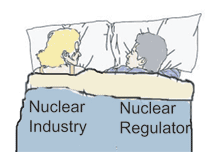
 Critics accuse nuclear safety official of acting as industry cheerleader http://www.theglobeandmail.com/news/politics/critics-accuse-nuclear-safety-official-acting-as-industry-cheerleader/article32341301/ GLORIA GALLOWAY OTTAWA — The Globe and Mail, Oct. 12, 2016 Opposition politicians and environmentalists are questioning the priorities of the man responsible for nuclear safety in Canada after a string of incidents in which he publicly defended the industry and was dismissive of concerns about potential hazards – a stance that runs contrary to his mandate at the Canadian Nuclear Safety Commission.
Something not quite right about South Africa’s plan for Eskom to finance nuclear build?

 Eskom will finance South Africa’s R1 trillion nuclear plans: minister, Business Tech October 11, 2016 Energy minister Tina Joemat-Pettersson has told Parliament that South Africa’s ambitious and controversial nuclear energy plans will be entirely funded by Eskom, with no money coming from National Treasury.
The minister was briefing Parliament’s energy oversight committee on Tuesday.
The process around South Africa’s nuclear plans, which will see 9,600MW of nuclear power added to the grid, has been a mysterious one, where the DoE has not revealed any of the details surrounding the project – including its cost.
Conservative estimates have put the build at R500 billion, while experts have noted – taking into consideration the country’s much-delayed Medupi and Kusile power station builds – that costs may balloon to well over R1 trillion.
 According to Joemat-Pettersson, Eskom will fund the entire build off its own balance sheet, and the funding process will be handled in the same way as the Medupi and Kusile projects.
No funds will come from Treasury or the fiscus, she said, with Eskom turning to global markets to raise money it needs.
Eskom’s handling of Medupi and Kusile have drawn much criticism as both projects have seen massive delays, labour issues and come in billions of rands over budget………
DA shadow minister of energy, Gordon Mackay, said that Pettersson’s announcement “is nothing short of an elaborate sleight of hand aimed at muddying the water and subverting effective parliamentary oversight over the R1 trillion nuclear deal”.
Mackay said that in designating Eskom as the procuring agent for the nuclear new build the following must be considered:
- The tender will be subject to Eskom’s board tender committee, the very same tender committee found to be corrupt by the Supreme Court of Appeal.
- The tender will be subject to internal Eskom processes, effectively shielding the nuclear deal from direct parliamentary oversight.
- A nuclear deal not directly subject to parliamentary oversight will cost more and be subject to greater levels of corruption, in the same way as Kusile and Medupi have been with regard to their association with Hitachi.
- While tax payers will not be directly liable for the build costs of the new build programme – like the costs of Kusile and Medupi – they will be passed onto consumers via higher electricity prices. Higher energy costs will kill economic growth and jobs.
“Far from providing much needed clarity and assurance, the Minister has created greater uncertainty and has all but ensured that Zuma and his cronies will enrich themselves at South Africa’s expense,” the DA’s energy lead said. http://businesstech.co.za/news/energy/139651/eskom-will-finance-south-africas-r1-trillion-nuclear-plans-minister/
Britain’s uneconomic Hinkley nuclear project really connected with its nuclear weapons aims
Britain’s Nuclear Cover-Up, NYT, OCT. 10, 2016“………If the Hinkley plan seems outrageous, that’s because it only makes sense if one considers its connection to Britain’s military projects — especially Trident, a roving fleet of armed nuclear submarines, which is outdated and needs upgrading. Hawks and conservatives, in particular, see the Trident program as vital to preserving Britain’s international clout.
A painstaking study of obscure British military policy documents, released last month by the Science Policy Research Unit at the University of Sussex, demonstrates that the government and some of its partners in the defense industry, like Rolls-Royce and BAE Systems, think a robust civilian nuclear industry is essential to revamping Britain’s nuclear submarine program.
For proponents of Trident, civilian nuclear projects are a way of “masking” the high costs of developing a new fleet of nuclear submarines, according to the report. Merging programs like research and development or skills training across civilian and military sectors helps cut back on military spending. It also helps maintain the talent pool for nuclear specialists. And given the long lead times and life spans of most nuclear projects, connections between civilian and military programs give companies more incentives to make the major investments required.
One might say that with the Hinkley Point project, the British government is using billions of Chinese money to build stealth submarines designed to deter China.
One can certainly say that the British government is using an ill-advised civilian nuclear energy project as a convoluted means of financing a submarine program.
The British government must be more transparent about its military spending, if only so that those expenditures can be measured against the needs of other public programs. According to the Science Policy Research Unit study, the government itself estimated in 2015 that renewing the Trident deterrent force will cost nearly $38.5 billion. In comparison, the deficit of the National Health Services for the fiscal year 2015-6, a record, was about $3 billion.
Hiding the true costs of a project like Trident by promoting a questionable and ruinous project like Hinkley Point C distorts the economics of both the defense and the civilian energy sectors. It also skews energy policy itself.
If Britain’s energy policy were solely about energy, rather than also about defense, the nuclear sector would be forced to stand on its own two feet. And the government would have to acknowledge the growing benefits of renewable energy and make hard-nosed comparisons about cost, implementation, environmental benefits and safety.
Kazakhstan’s unfinished, unfixed, problem of radioactivity at Semipalatinsk
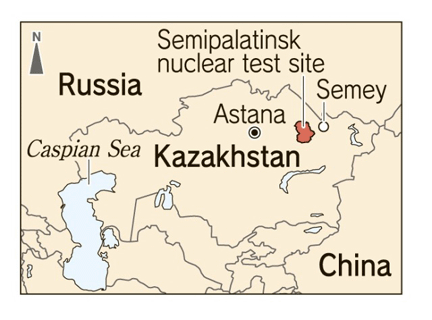 The continuing danger of Semipalatinsk http://thebulletin.org/continuing-danger-semipalatinsk9969 6 OCTOBER 2016 Magdalena Stawkowski During the Cold War, the Semipalatinsk Nuclear Test Site in Kazakhstan was the Soviet Union’s primary nuclear weapons testing ground. Between 1949 and 1989, more than 450 nuclear bombs were exploded above and below ground on its once secret, 7,000-square-mile territory. In the post-Soviet period,Kazakhstan has attracted much international praise for its “extraordinary leadership” and “courage” in closing Semipalatinsk, for giving up its nuclear weapons stockpile, and for helping to create a nuclear weapon free zone in Central Asia. Kazakhstan has also been celebrated for having an extraordinary record in advancing nuclear security and thus was judged to be perfectly suited to host an international fuel bank for low-enriched uranium. The Obama administration has described Kazakhstan’s president, Nursultan Nazarbayev, as “really one of the model leaders in the world” on non-proliferation and nuclear safety issues.
These commendations are perhaps overly enthusiastic. They exaggerate Kazakhstan’s commitment to nuclear safety; actually, Kazakhstan’s leadership has done little to address pressing humanitarian issues at Semipalatinsk, failing to provide adequate funding for environmental clean up and adequate security for the site itself. How can the world talk about nuclear safety in Kazakhstan when it is the only place on Earth where thousands of people still live in and around an atomic test site? How can there be safety, when residual radioactivity and environmental damage are a normal part of life for people who live there? Nuclear security should mean more than the physical protection of nuclear materials. Nuclear security must also mean the physical protection of individual citizens from radioactivity.
Today, most of the abandoned Semipalatinsk territory is accessible to anyone who wishes to enter. Except for a 37-mile area “exclusion zone” at the Degelen Mountain complex, guarded by drones and other surveillance equipment, few signs indicate radiation danger. For the thousands living nearby, it is no secret that the former nuclear testing area is poorly secured. I have been conducting anthropological fieldwork in the region since 2009, living in Koyan, a remote village on the nuclear test site’s border. I know first hand the ease with which people make use of the territory. (“Koyan” and “Tursynbek,” the name of an ethnographic interlocutor mentioned later in this article, are pseudonyms, used to protect village residents and the interlocutor following the convention of confidentiality spelled out in the American Anthropological Association Code of Ethics on professional responsibility).
Koyaners, like most everyone else living in and around Semipalatinsk, use the test site in a number of ways: They drive across the dusty steppe during warmer months to visit relatives in nearby villages. In July and August, men, women, and children come back from the site, buckets brimming with wild strawberries they have picked from its shallow valleys. Many graze their herds of sheep, goats, horses, and cows on the Semipalatinsk pastures, sometimes near craters formed by underground explosions. Many of these places are known to contain radioactive “hot spots,” but since the area around Koyan is mostly unmarked, no one in the village is certain where the hot spots are. Koyaners are not privy to this information, because no one in the government shares it with them.
On a hot, sunny day in July 2015, Tursynbek, a burly stockbreeder and miner in his mid-50s, decided we should go out and measure radiation on our own. As we got in the car, he complained that when he has had a chance to ask scientists, who occasionally do research in the area, if there is radiation, they dismiss his concerns by saying, “There is nothing here; no radiation.” I made sure to bring my Geiger counter on this trip, and a short car ride later I was looking down from the rim of a nuclear crater, trying to hear the Geiger counter readings Tursynbek was shouting. His camouflage jacket was barely visible on the steep pitch, among the tall grasses; a rather sizeable water hole was beyond, inside the crater. He scanned the ground for radioactivity, his white paper sanitary mask pulled down under his chin, rather than over his mouth. The sanitary mask was meant to protect against small particles of plutonium or other radioisotopes that are dangerous when inhaled but can be stopped by a sheet of paper. But Tursynbek was not afraid. Tursybek knows this area well; he was born in Koyan and has decades of experience raising livestock, sheep, goats, cows, and horses, which includes grazing them on the test site.
Still, he had never been here on this kind of mission. As he climbed out, he eagerly used the Geiger counter to check the wreckage of the atomic landscape: trenches, mangled barbed wire enclosures, scattered cement blocks with clusters of electrical cables jutting from them. The frantic clicking of the Geiger counter disturbed the otherwise calm summer afternoon. Not far from us, Kazakhstan’s Institute of Radiation Safety and Ecology (IRSE) wazik (van) carrying “geologists,” as the scientists are known to Koyaners, passed by. “They have never shared any of this information with us,” Tursynbek said motioning to the van and pointing at the .700 milliRem per hour reading displayed by the counter.
Normal background is between .008-.015 milliRem/hr. According to the US Nuclear Regulatory Commission (NRC), Americans receive an average radiation dose of about 620 milliRem per year. Half of this dose comes from naturally occurring radiation found in soil, rocks (uranium), and air (radon). The other half comes from man-made sources, like radiation therapy, x-rays, and nuclear power plants. At the crater, five weeks is enough time to receive the average yearly dose of radiation described by the NRC. In one year that dose is equal to 6,136 milliRem.
Looking around the abandoned test site, it is almost never obvious what went on here, except at a few key experimental locations, which have decaying cement structures and other visible points of interest. The once high levels of security have long since disappeared. Yet for 40 years various technical sites at Semipalatinsk were used to experiment with different types of nuclear explosions. At “Ground Zero” for example, 116 aboveground tests were conducted, as part of a full-scale experiment designed to record damage done to animals (sheep, goats, cows, and pigs), plants and soil, building construction, military equipment, and people living in settlements found near the site. At other technical areas, more than 300 underground nuclear explosions were used to test their peaceful applications. Several of these high-yield tests produced nuclear craters and contaminated much of the area nearby.
Near the nuclear crater Tursynbek and I visited, only a small and badly faded radiation warning sign clung to a mangled barbed wire enclosure that once provided some level of protection. The plight of people who suffered from radiation exposure during the Soviet-era is well known in the country and abroad, even if the level of radioactive pollution and its impact on human health are hotly disputed, in local and international peer-reviewed scientific journals.
In an August 2015 editorial for the Bulletin of Atomic Scientists, Kazakhstan’s ambassador to the United States, Kairat Umarov, highlighted the fate of 1.5 million Kazakh citizens whose lives continue to be affected by nuclear testing. He wrote with the optimism of a man hoping to promote a nuclear-weapons-free world. But Umarov ignored an obvious fact: The Nazarbayev government, lacking financial resources, has done very little to address the security problems at Semipalatinsk and has not spent a penny to clean up the area. Praise of the nation’s leadership for making Kazakhstan a non-nuclear state has come at a price: It has overshadowed and limited conversations about lack of oversight of Semipalatinsk and the toxic mess that the Soviet nuclear testing program left behind and continues to endanger thousands of citizens living in the area. Given this unresolved and underreported situation at Semipalatinsk, the international community should offer financial help and expertise for the cleanup of Semipalatinsk, or at the very least help with cordoning off the most contaminated areas of the site.
Irish Security Services leak truths to the UK Press. And nuclear-news and others are banned in Ireland #UNCHR
 Censored! This article is generally off topic for this blog but this article and nuclear-news.net post have been blocked from Google Search in Europe (and possibly further afield). Ireland based blogs and nuclear-news.net based in Australia are affected as far as I can ascertain. Also, Shannonwatch.org (An Irish peace group) have tried to get out a press release stating problems they are having in the Limerick area and this too has been banned! Could you share directly to any Irish people you know these banned articles.

Sellafield are having a meeting with Irish Stakeholders who have doubts as to the safety and transparency of the UK nuclear industry. This meeting is in the next week or so and it is vital that people are aware of alleged criminality to Parliament by Sellafield representatives. Many thanks for your support –
Evidence for the blocking and hacking over a few days can be found here;
https://www.facebook.com/profile.php?id=685379936
Shaun McGee aka Arclight
Sellafield – Contempt of Parliament – BBC News missed it.
Irish Security Services leak truths to the UK Press.
A recent article by The Sunday Times UK edition stated that the Irish Security Services (Likely the Irish Defense Force) have claimed that Gardai (Police ) in Athlone had been facilitating the distribution of heroin to local towns.

Picture Source http://www.justice.ie/en/JELR/Pages/wpoc-young-people
Due to Irish Laws the name of the whistle-blower has not been reported in Ireland but was on the Sunday Times UK edition on Sunday the 2nd of October 2016.
Why are the Irish “Security Services” leaking this fact to the UK Press? So, as to allow Irish readers the option of reading this article we will not name the brave whistle-blower who leaked the criminality in 2014 but it can be found on the Sunday Times article link ..
This is what the “Security Services were quoted as saying in the article;
“…Security sources say collusion between gardai and heroin dealers in the midlands town has been a significant factor in the area’s worsening drugs problem. The region has a growing population of heroin users and the town is now considered to be a pivotal point in the distribution of opiates to addicts in Longford, Westmeath, Offaly and Laois…..”
Earlier in the article the Times quotes also the “Security Sources” thus;
“…..According to security sources, the internal inquiry concluded that one Garda was in a relationship with a female heroin dealer in the town, which resulted in him compromising planned searches and raids. One witness told investigators he was present when this Garda alerted local criminals to a planned Gardai search the following day, ensuring they had time to dispose of incriminating evidence, including mobile phones. The witness refused to make a statement under caution or agree to testify, however…..”
It might be noted that a government report said that in 2014 the Irish Defense Force did not apply for any orders for surveillance on criminals. We here at Euroupeannewsweekly have been asking the question;
Who is doing surveillance now in Ireland? In 2014 a Gardai and Security Services operation against a dissident IRA group ended with a successful arrest of the whole group at a remote farmhouse, to name but one crime that was widely reported and would have required constant surveillance tactics.
Is there a connection between the ending of the use of the Security Services (or end any of transparency in Government reports) and the evidence that they were holding for the investigation?
We can not claim these last points to be fact, they are only questions posed because of the Irish Security Services leak to the UK. We can present the basic facts to you and let you make up your own minds though.
So what is at stake here? We know for a fact that the Irish Security Services are not happy and have released this information to the nearly 10 million Irish Diaspora in the UK but no publication has reported any of this in Ireland. Yet it is important for the real victims of this criminality that these facts become known and that some in the Government are not happy with this current situation. The security services were tapping all the phones and know all the connections of these criminal gangs and their enablers.
Here is a statement from a local ex Heroin user from Longford on the desperate situation that exists in this region and what funding opportunities for the proven victims of this criminality;
Chinese villagers intimidated by graphite plant owners in collusion with local authorities
 IN YOUR PHONE, IN THEIR AIR A TRACE OF GRAPHITE IS IN CONSUMER TECH. IN THESE CHINESE VILLAGES, IT’S EVERYWHERE. WASHINGTON POST, STORY BY PETER WHORISKEY PHOTOS BY MICHAEL ROBINSON CHAVEZ VIDEOS BY JORGE RIBAS OCTOBER 2, 2016 “…….BEING WATCHED
One of the main obstacles in clearing the pollution, villagers said, is the powerful alliance between local government officials and the owners of the graphite plants. The officials, the villagers said, protect the factories from environmental complaints.
At three of the five villages visited by Post journalists in May and June, a village official either tried to attend interviews or soon after inquired of the interviewees what had transpired in the interviews. Moreover, plant managers and party officials sometimes discouraged journalists from speaking with villagers.
After Post journalists visited the Haida Graphite plant in Pingdu, for example, a plant employee jumped in a car to follow their taxi off the property and through the village streets.
The taxi stopped twice in the village so The Post could interview more people. At each stop, the driver of the Haida car approached to within a few feet and blared the car horn continuously, making talking to villagers impossible. The driver relented only when The Post’s taxi left the area. Asked to comment later about the pollution complaints, a Haida official accused a Post reporter of “espionage” and refused to answer questions.
Similarly, after The Post visited a BTR graphite factory in Jixi, two cars with several men inside began following the reporters’ taxi. Three times, over several miles, the taxi pulled over to let them pass. Each time, the following cars pulled over and stopped behind the Post taxi. Confronted, the men in the cars told reporters that it was just a coincidence that they had stopped at the same time that the taxi did. The men said they were mapping out a bicycle race.
The intimidation has an effect on villagers.
Not far from the Hensen graphite plant in Laixi is a small factory that makes women’s underwear. Han Wenbing, 48, is the owner. A large man, proud of his workshop, he was eager to talk about the graphite pollution.
He readily invited reporters into his home, showing the dust quickly gathering on his kitchen table and showing how his well water, which had been fine for drinking, now is topped with a gray film.
But as he made his case against the graphite plant, his wife grew nervous — and then angry. To speak out would only cause trouble with the plant manager and village officials, she warned her husband.
“Yes, there is absolutely an impact [from the graphite], but we don’t want to be on TV,” she said. “This could offend the boss of the company, which could affect our lives. You [reporters] wash your hands and walk away, but we live here.”
Han nevertheless wanted to make his complaints known. Once his wife acquiesced, he offered to point out a field that showed some of the worst effects of the pollution. The field had been used by small farmers, he said, but industrial runoff had affected the soil so much that “not even the weeds can grow.”………Story by Peter Whoriskey. Photos by Michael Robinson Chavez. Videos by Jorge Ribas. Graphics by Lazaro Gamio andTim Meko. Design by Matt Callahan, Emily Chow and Chris Rukan. https://www.washingtonpost.com/graphics/business/batteries/graphite-mining-pollution-in-china/
Shadow Courts – The Secret Tribunals That Corporations Use to Sue Countries
 US trade negotiators are now working to include Investor-State Dispute Settlement (ISDS) in as many new treaties as possible, including both of the massive new free trade deals coming down the pike. The Trans-Pacific Partnership, which President Obama signed in February 2016 and which Congress will likely ratify before he leaves office, already includes ISDS.
The Secret Tribunals That Corporations Use to Sue Countries, Moyers and company
These ad hoc courts are a main reason why so many politicians and activists are against trade agreements like the TPP. BY HALEY EDWARDS | SEPTEMBER 19, 2016 THIS IS AN EXCERPT FROM THE NEWLY PUBLISHED BOOK SHADOW COURTS: THE TRIBUNALS THAT RULE GLOBAL TRADE BY HALEY EDWARDS.
The environmental activist Jane Kleeb was driving down Highway 281 near Lincoln, Nebraska, on a gray day in January 2016, when she got a call from a reporter.
At the time, Kleeb was still riding high off of her success organizing local farmers, ranchers and environmentalists in opposition to the Keystone XL Pipeline, which would have carried petroleum products from Canada’s tar sands across the Nebraska plains to the Gulf of Mexico. Thanks to her and other activists’ efforts, President Barack Obama had announced in November 2015 that his administration would deny the Canadian company TransCanada permission to move forward with the project, ending an eight-year-long effort to get the pipeline built.
The reporter was calling to ask Kleeb about a new twist in the saga. Earlier that day, TransCanada had announced it was suing the US government for $15 billion on the grounds that Obama’s decision to block the project violated the North American Free Trade Agreement. It was the first Kleeb had heard of the suit. “I’m an organizer, so my reaction was, ‘When are the hearings? Where is this happening? Who’s the judge?’” she said recently. If TransCanada was challenging the decision in court, she wanted to be there. Could she protest on the courthouse steps? Arrange for a rally in a nearby town?
But that, Kleeb learned, was not how this case would go down. TransCanada wasn’t suing the US in a US court, or in a Canadian court for that matter. Its argument would not be heard by a judge, and the merits of the case would not be considered under the auspices of either country’s legal system. There would be no protest on any courthouse steps. Instead, the case would be heard by a tribunal, manned by three private arbitrators, operating under a supranational legal system that Kleeb had never heard of. “It was totally strange,” she told me. “A foreign company can sue us in some secret tribunal? How is that even possible?”
Investor-state dispute settlement, or ISDS, first appeared in treaties in 1969. The idea behind the mechanism was straightforward: If a foreign investor believed that his host country — the nation where his company was operating had violated an international treaty by seizing or destroying his factories, oil fields or other assets, he could file an ISDS claim directly against that country. He could do that without involving his own government and without having to wait endlessly for a developing country’s corrupt or biased court system to dispense judgment……..
ISDS was supposed to be a cool, efficient and apolitical dispute resolution system that kept powerful nations from interfering in the affairs of weaker countries, and that offered an extra layer of protection for foreign investors operating in countries with unreliable courts. But in the last 20 years, the mechanism has quietly changed, evolving into something much more powerful — and very political indeed……..
That modern interpretation has only cropped up in the last 20 years, but it has opened up a vast new gray area. Where ISDS claims were once about seized oil fields and bulldozed factories, now they are about tax increases and environmental regulations. Where is the line between a government’s right to regulate in the public interest and a foreign corporation’s claim to its own property?
US trade negotiators are now working to include ISDS in as many new treaties as possible, including both of the massive new free trade deals coming down the pike. The Trans-Pacific Partnership, which President Obama signed in February 2016 and which Congress will likely ratify before he leaves office, already includes ISDS. Whether the mechanism will be inserted into the Transatlantic Trade and Investment Partnership, linking the US and Europe, is a subject of controversy…….http://billmoyers.com/story/shadow-courts-secret-tribunals-trade/
Climate change will expose top-secret US nuclear project in Greenland
Greenland’s receding icecap to expose top-secret US nuclear project Camp Century – part of Project Iceworm – is underground cold war network that had been thought buried forever, until climate change made that highly unlikely, Guardian, Jon Henley, 28 Sept, A top-secret US military project from the cold war and the toxic waste it conceals, thought to have been buried forever beneath the Greenland icecap, are likely to be uncovered by rising temperatures within decades, scientists have said.

The US army engineering corps excavated Camp Century in 1959 around 200km (124 miles) from the coast of Greenland, which was then a county of Denmark.
Powered, remarkably, by the world’s first mobile nuclear generator and known as “the city under the ice”, the camp’s three-kilometre network of tunnels, eight metres beneath the ice, housed laboratories, a shop, a hospital, a cinema, a chapel and accommodation for as many as 200 soldiers………
Project Iceworm, presented to the US chiefs of staff in 1960, aimed to use Camp Century’s frozen tunnels to test the feasibility of a huge launch site under the ice, close enough to fire nuclear missiles directly at the Soviet Union.
At the height of the cold war, as the US and the USSR were engaged in a terrifying standoff over the deployment of Soviet missiles in Cuba, the US army was considering the construction of a vast subterranean extension of Camp Century.
A system of about 4,000 kilometres of icy underground tunnels and chambers extending over an area around three times the size of Denmark were to have housed 600 ballistic missiles in clusters six kilometres apart, trained on Moscow and its satellites.
Eventually the engineers realised Iceworm would not work. The constantly moving ice was too unstable and would have deformed and perhaps even collapsed the tunnels.
From 1964 Camp Century was used only intermittently, and three years later it was abandoned altogether, the departing soldiers taking the reaction chamber of the nuclear generator with them.
They left the rest of the camp’s infrastructure – and its biological, chemical and radioactive waste – where it was, on the assumption it would be “preserved for eternity” by the perpetually accumulating snow and ice……..
Greenland’s temperatures broke new records this spring and summer, hitting 24C (75F) in the capital, Nuuk, in June – a figure that shocked meteorologists so much they had to recheck their measurements.
Between 2003 and 2010, the ice that covers much of the island melted twice as fast as during the whole of the 20th century. This year it began melting a month earlier than usual.
The researchers studied US army documents and drawings to work out how deep the camp and its waste – estimated to include 200,000 litres of diesel fuel, similar quantities of waste water and unknown amounts of radioactive coolant and toxic organic pollutants such as PCBs – were buried………
The Pentagon has said it “acknowledges the reality of climate change and the risk it poses” for Greenland, adding that the US government has pledged to “work with the Danish government and the Greenland authorities to settle questions of mutual security”. https://www.theguardian.com/world/2016/sep/27/receding-icecap-top-secret-us-nuclear-project-greenland-camp-century-project-iceworm
Widespread public mistrust f South African government’s nuclear power plans
 Fears mount over true motivations for SA’s planned nuclear deal, Mail and Guardian, Hartmut Winkler 27 Sep 2016 Nuclear energy in South Africa is a very contentious issue. The decision on whether to proceed with the construction of a fleet of nuclear power plants is destined to become the financially most far-reaching and consequential defining moment of the Jacob Zuma presidency.
There is widespread public mistrust of the nuclear expansion process. Its roots lie in the extraordinary announcement in 2014 that the Russian nuclear agency Rosatom had secured therights to build the new South African nuclear plants. The South African government played down the announcement, claiming that it was inaccurate.
But this precipitated a series of media investigations. These uncovered evidence that individuals close to the president and groups linked to the ruling ANC have significant financial interests in the matter.
Civil society organisations are taking government to court in an attempt to have the deal declared illegal. Their attempts to have details of the Russian agreement released are being resisted. This is likely to strengthen their case, and sway public opinion further.
It appears that those with a stake in the nuclear build are hoping to fast-track the process in the face of growing public opposition. This is evident from revelations that, bizarrely, contracts are being awarded, even though a formal process has not been set in motion by government.
The meaning of this is unclear. It has largely confirmed the fears that the nuclear build is being driven for the benefit of the politically connected rather than the national good.
Burning questions
The debate surrounding the nuclear project centres on three highly contested questions:
- Is the country’s future energy generating potential and demand such that an expensive nuclear power station build is effectively unavoidable?
- Can South Africa afford the associated costs and debt, especially in view of massive funding demands in other sectors such as education?
- If approved, would the nuclear build lead to massive overspends, corruption and beneficiation ofpolitically connected individuals?…….
it is difficult to understand why the renewable fraction is not being increased further, and why the national power utility Eskom, under the leadership of Brian Molefe, a nuclear disciple, now opposes new renewable energy developments.
The promotion of nuclear energy at the expense of renewables bucks global trends………
The ANC’s internal nuclear war
The often obscure processes and overhasty developments require an insight into the present machinations within the governing party.
Tensions within the ruling party have escalated to the point where calls for the president’s resignation are now made openly. And even party leaders acknowledge that factions in their ranks are thriving on corruption.
The organisational fracture is equally evident in attitudes towards the nuclear build. Tensions over the issue have been cited as the major reason for Zuma’s dismissal of the financially prudent former Finance Minister Nhlanhla Nene in December 2015.
The official position…….
the legitimacy of the procurement process has already been undermined.
Looking ahead, actual construction would need to be preceded by the closure of funding agreements, the settling of legal disputes and further public engagement. This takes time.
In the unlikely event that the nuclear build actually does come to fruition, it will not commence any time soon.
Hartmut Winkler, Professor of Physics, University of Johannesburg
This article was originally published on The Conversation. Read the original article. http://mg.co.za/article/2016-09-27-questions-mount-over-south-africas-planned-nuclear-power-deal
Investigation of spending by South Africa’s Nuclear Energy Corporation (Necsa)
September, 2016 The Nuclear Energy Corporation of SA (Necsa) incurred R128 million in irregular expenditure in its 2015 financial year because it failed to comply with the government’s preferential procurement regulations‚ the Auditor-General has found.The annual report of Necsa‚ which processes nuclear material and undertakes research and development in the nuclear field‚ was tabled one year late in Parliament on Tuesday.
Necsa management and its board are currently being investigated by a task team appointed by Energy Minister Tina Joemat-Pettersson. The investigation related to “serious mismanagement”‚ the auditor-general said in his report‚ included in the annual report.
The board has been wracked by division and court battles with CEO Phumzile Tshelane put on a suspended suspension last year. No mention of these post-budget developments were made in the annual report.
The auditor-general’s report‚ which was included in the annual report‚ said the full extent of the irregularities was only quantified by the end of March 2016. The Necsa board condoned the irregularities.
Despite the auditor-general’s reservations‚ Necsa received an unqualified audit opinion on its financial statements.
The auditor-general noted that management did not take effective steps to prevent irregular expenditure and fruitless and wasteful expenditure. Non-compliance could have been prevented had compliance been properly reviewed and monitored.
The auditor-general also cast doubt on the going-concern status of the state-funded entity‚ which made a R21m net loss in the 2015 financial year…….
The state funded Necsa to the tune of R580m in 2015 and R599m in the current year.
– TMG Digital/BDLive http://www.timeslive.co.za/local/2016/09/27/Nuclear-corporations-spending-comes-under-scrutiny-of-Auditor-General
Contradictory and confusing statements by climate science deniers
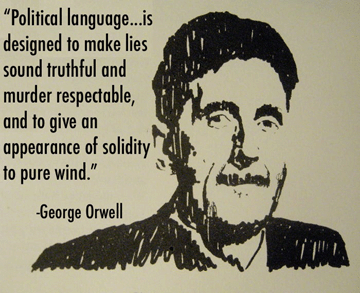 How climate science deniers can accept so many ‘impossible things’ all at once 23 September 2016 by Guest Author,
http://www.skepticalscience.com/how-deniers-accept-so-many-impossible-things-at-once.html Sometimes, climate science deniers will tell you that we can’t predict global temperatures in the future. Sometimes, they’ll say we’re heading for an ice age.
Occasionally, contrarians will say that no single weather event can prove human-caused global warming. But then they’ll point to somewhere that’s cold, claiming this disprovesclimate change.
Often, deniers will tell you that temperature records show that global warming stopped at some point around 1998. But also they’ll insist that those same temperature records can’t be relied on because Nasa and the Bureau of Meteorology are all communist corruption monkeys. Or something.
Black is also white. Round is also flat. Wrong is also right?
A new research paper published in the journal Synthese has looked at several of these contradictory arguments that get thrown around the blogosphere, the Australian Senate and the opinion pages of the (mostly) conservative media.
The paper comes with the fun and enticing title: “The Alice in Wonderland mechanics of the rejection of (climate) science: simulating coherence by conspiracism.”
Why Alice? Because, as the White Queen admitted: “Why, sometimes I’ve believed as many as six impossible things before breakfast.”
The three authors, including Dr John Cook, of the University of Queensland, look at both rhetorical and scientific arguments put by deniers.
One example is the popular theme that casts “sceptics” as “dissenting heroes” who bravely oppose “political persecution and fraud”. You know, like modern-day Galileos.
But the authors write that deniers will also try and convince the public that there is no consensus among scientists about the causes of climate change (there is and it’s us). They write:
Either there is a pervasive scientific consensus in which case contrarians are indeed dissenters, or there is no consensus in which case contrarian opinions should have broad support within the scientific community and no fearless opposition to an establishment is necessary.
The authors unleash similar jujitsu-style logic on other contradictory arguments and give examples of where the same individuals have apparently argued against themselves.
One of the authors’ examples of incoherent logic comes from the Australian geologist and mining industry figure Prof Ian Plimer and his 2009 book, Heaven and Earth – a book favourably cited by the likes of the former prime minister Tony Abbott and Cardinal George Pell.
On page 278, Plimer writes that “temperature and CO2 are not connected” but, on page 411, writes that “CO2 keeps our planet warm”.
According to the authors, their examples of “incoherence” only hold together in the minds of the deniers if you apply types of glue known as “conspiracist ideation” and “identity-protective cognition”.
So what’s that all about?
Conspiracist ideation, or conspiratorial thinking, is the tendency to entertain suggestions: for example that Nasa and the Bureau of Meteorology are conspiring to deliberately manipulate temperature data just to make global warming seem worse than it really is, rather than to correct for known issues.
An example of “identity-protective cognition” in this case, the authors explain, is where people who advocate for small governments and “free markets” face a dilemma.
Accepting the scientific consensus would likely see increased levels of regulation, which challenges their identity as free-market advocates. So instead, the authors argue, the only options open are to either deny the consensus or try and discredit it.
Because cutting GHG emissions requires interventions – such as regulation or increased taxation – that interfere with laissez-faire free-market economics, people whose identity and worldview centres around free markets are particularly challenged by the findings from climate science.
Lead author Prof Stephan Lewandowsky, an expert in cognitive psychology at the University of Bristol, has written several research papers finding links between the rejection of science, “conspiracist ideation” and the belief in free market economic principles.
One argument that deniers may try with this Synthese paper is that climate scientists also contradict each other and have offered several explanations for the supposed global warming “pause” or “slowdown” (this was never really a thing).
Lewandowsky told me:
Click here to read the rest from Graham Readfearn in the Guardian
South Africa’s nuclear programme will be a disaster.
The nuclear killer lurking in our midst, Pambazuka News Gerard Boyce Sep 22, 2016
South Africa’s nuclear programme will be a disaster. Besides the fallouts being witnessed in the jostling for gains by greedy politicians, the project is likely to gobble up huge amounts of public funds that will be difficult to account for as the government will cite national security concerns of nuclear power, thereby curtailing citizens’ right to accountability.
Nuclear power kills. If ever one had any doubts about the truthfulness of this statement, the past few months in South African politics have surely dispelled them. During this time, the government’s nuclear plans effectively killed the political career of former Finance Minister Nhlanhla Nene whilst indications are that the career of current Finance Minister Pravin Gordhan will soon suffer the same fate. It has slain any semblance of unity in the upper echelons of the ruling African National Congress. It is rumoured that the public spats in which members of various ruling party factions are engaged and that have come to hog national headlines each week are a result of ongoing palace intrigue that is caused by their jostling for position which will enable them to secure the maximum benefits from the potential bonanza that awaits when tenders for the construction of nuclear plants are awarded.
The open hostility exhibited by erstwhile comrades has exposed as a sham the image of a strong and united party and revealed a picture of an organisation riven by factionalism and bitter internal disputes. It is widely predicted that, if this deal is pushed through (as current indications are that it will), the country’s credit rating will be downgraded to junk status. A downgrade will likely plunge the economy into a coma and cause it to be put on life support………
it can become relatively easy for governments to be drawn into continuing to invest in their nuclear programmes even if they see little or no justification for doing so. One has only to observe the decades long (and seemingly never-ending) construction periods of many nuclear plants internationally for evidence thereof. Needless to say, this set of circumstances provides the ideal conditions in which graft and patronage networks are able to thrive and is likely to increase both the opportunity and propensity for certain individuals to engage in corrupt practices.
Secondly, given the destructive purposes to which nuclear technology can be put, a raft of laws and regulations have to be passed in order to prevent this technology falling into the wrong hands. Since each reactor is potentially a national calamity, policymakers justify these regulations as being necessary to protect the welfare and safety of citizens. These laws also serve to provide convenient cover behind which the less than savoury aspects of these deals can be hidden.

To shore up this cover, the global nuclear industry seems to have a built-in failsafe against closer public scrutiny and unwanted attention in that, once established, stakeholders in the industry can always appeal to the nebulous concept of the ‘national interest’ in an attempt to conceal their actions from the public. By elevating every investigation of their operations to a potential national security concern, they are able to shield their operations from investigation and thus to avoid criticism. Arguably, this has the effect of lowering the degree to which this industry feels accountable to the public since being open to investigation and subject to criticism (and thence learning) forms the basis of public accountability…….. Dr Gerard Boyce is a Senior Lecturer in the School of Built Environment and Development Studies at the University of KwaZulu-Natal. He writes in his personal capacity. http://www.pambazuka.org/human-security/nuclear-killer-lurking-our-midst?utm_campaign=shareaholic&utm_medium=twitter&utm_source=socialnetwork
1 This Month
To see nuclear-related stories in greater depth and intensity – go to https://nuclearinformation.wordpress.com/
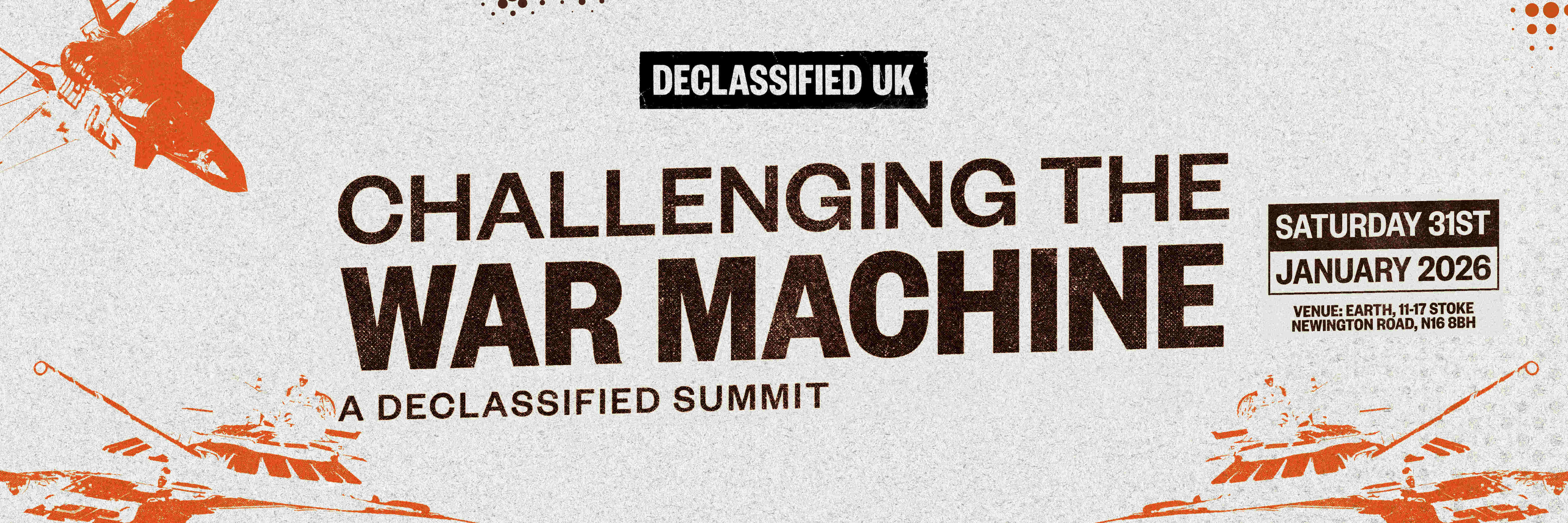
31st January – Challenging the War Machine – a DECLASSIFIED UK SUMMIT


Website of the Week
Now until to February 10, 2026 Radioactive waste storage in France: the debate is finally open! How to participate?
-
Archives
- January 2026 (306)
- December 2025 (358)
- November 2025 (359)
- October 2025 (376)
- September 2025 (258)
- August 2025 (319)
- July 2025 (230)
- June 2025 (348)
- May 2025 (261)
- April 2025 (305)
- March 2025 (319)
- February 2025 (234)
-
Categories
- 1
- 1 NUCLEAR ISSUES
- business and costs
- climate change
- culture and arts
- ENERGY
- environment
- health
- history
- indigenous issues
- Legal
- marketing of nuclear
- media
- opposition to nuclear
- PERSONAL STORIES
- politics
- politics international
- Religion and ethics
- safety
- secrets,lies and civil liberties
- spinbuster
- technology
- Uranium
- wastes
- weapons and war
- Women
- 2 WORLD
- ACTION
- AFRICA
- Atrocities
- AUSTRALIA
- Christina's notes
- Christina's themes
- culture and arts
- Events
- Fuk 2022
- Fuk 2023
- Fukushima 2017
- Fukushima 2018
- fukushima 2019
- Fukushima 2020
- Fukushima 2021
- general
- global warming
- Humour (God we need it)
- Nuclear
- RARE EARTHS
- Reference
- resources – print
- Resources -audiovicual
- Weekly Newsletter
- World
- World Nuclear
- YouTube
-
RSS
Entries RSS
Comments RSS
 nuclear-news