Calls to quit NPT grow in Iran as critics warn of strategic trap
Maryam Sinaiee, Iran International, https://www.iranintl.com/en/202609165573
alls for Iran to withdraw from the Nuclear Non-Proliferation Treaty are gaining ground among hardliners after the IAEA referred the country to the UN Security Council and its nuclear chief was barred from attending the agency’s annual conference in Vienna.
The growing debate has exposed a divide within Iran’s political establishment between those who see NPT membership as offering little protection and others who warn that withdrawal would surrender one of Tehran’s remaining diplomatic and legal advantages.
Mohsen Rezaei, secretary of Iran’s Supreme National Security Council, appeared to threaten withdrawal from the treaty on Sunday, saying that “political and destructive actions” by the International Atomic Energy Agency would “push countries toward leaving the Nuclear Non-Proliferation Treaty.”
But President Masoud Pezeshkian reiterated the same day, during a visit to India, that Iran was not seeking nuclear weapons. “If we were seeking nuclear weapons, we would not have become a member of the NPT,” he said.
The debate intensified after Mohammad Eslami, head of Iran’s Atomic Energy Organization, was prevented from attending the IAEA General Conference in Vienna.
Austria had sought an exemption from a UN travel ban to allow Eslami to attend, but the sanctions committee did not approve it after a US objection.
Calls for immediate withdrawal
Supporters of immediate withdrawal say NPT membership has failed to protect Iran from international pressure or attacks on its nuclear facilities.
Continued membership, they argue, only makes sense if members’ nuclear rights are given equal weight alongside their obligations.
Sepehr Khalaji, who headed the Government Information Council under former President Ebrahim Raisi, questioned why Iran remained in the treaty.
“They bombed the nuclear facilities, martyred the scientists, sanctioned nuclear technology and say they will strike the remaining nuclear facilities. They referred Iran’s case to the Security Council, and they do not allow the head of the Atomic Energy Organization to enter the IAEA. So why are we still in the IAEA? Why don’t we withdraw from the NPT?” he wrote on X.
Parliamentary push
The debate has also reached parliament, where lawmakers are preparing a proposal for Iran to withdraw from the NPT.
Hassan-Ali Akhlaghi, a member of parliament, told the Fars news agency on Wednesday that lawmakers had prepared a triple-urgency bill that would be put to a vote if approved by the parliamentary leadership.
Given what he called the IAEA’s “entirely hostile and illogical” resolution, Akhlaghi said Iran should leave the treaty as soon as possible.
The proposal, however, has not yet formally reached parliament’s National Security and Foreign Policy Committee and is not currently on the parliamentary agenda.
Warnings of a trap
The conservative Khorasan newspaper on Wednesday warned that leaving the treaty could increase political and diplomatic pressure on Iran without producing significant security gains.
“On the surface, these positions may appear to be a revolutionary and deterrent response to the enemy; but when the pieces of the situation are put together, another worrying picture emerges,” it wrote.
Khorasan argued that the United States and Israel were deliberately trying to push Iran’s political debate toward more radical positions, including testing a nuclear weapon, changing its nuclear doctrine and immediately withdrawing from the NPT.
The newspaper said leaving the treaty before Iran had achieved deterrence could reveal Tehran’s intentions rather than demonstrate strength, potentially giving its opponents an opportunity to act.
“Iran has obtained an important part of the practical outcome without making an official and costly withdrawal: the IAEA no longer has its previous access, while Tehran continues to benefit from the legal protection of NPT membership and the political support of Russia and China,” Khorasan wrote.
“Official withdrawal would destroy this useful grey zone without creating a new strategic advantage.”
Reformist politician Rasoul Montajab-Nia made a similar argument.
“If the agency has not acted impartially toward Iran, we should not resort to disrupting the framework, because this would mean fuelling disputes and war with other countries.”
Montajab-Nia said withdrawal would not benefit Iran and would be “in line with Israel’s objectives.”
The nuclear threshold
At the outer edge of the debate, some advocates of developing nuclear weapons have argued that Iran should remain in the NPT unless it decides to change its nuclear doctrine — and then coordinate withdrawal with a nuclear test.
Foad Izadi, a hardline political commentator, told the Moj news agency that Iran had no need to leave the NPT while its current nuclear doctrine remained in place.
But if Tehran decided to change that doctrine, he said, Iran could withdraw from the treaty after a nuclear test or simultaneously with one.
Britain deepens nuclear ties with France and Australia
By George Allison, September 19, 2026, https://ukdefencejournal.org.uk/britain-deepens-nuclear-ties-with-france-and-australia/
Britain is deepening its nuclear relationships with the United States, France and Australia, with the Northwood Declaration recognising that there is no extreme threat to Europe which would not prompt a response by both Britain and France, according to the annual update to Parliament published this week.
The declaration, agreed in July 2025, reaffirmed and strengthened what the update describes as longstanding nuclear cooperation between the two countries. On the AUKUS partnership, the update records an important development in February this year when HMS Anson docked at HMAS Stirling near Perth.
The United States is described as Britain’s closest defence ally, with the relationship underpinned by long-standing cooperation on all nuclear matters including policy, operations and technology.
The practical expression of that relationship runs through the missile system, since Trident and its supporting systems fitted to the Vanguard class are manufactured in the United States, with Britain having bought title to a number of missiles drawn from a shared pool of assets under the 1963 Polaris Sales Agreement as amended for Trident in 1982. The system is operated independently by both the Royal Navy and the United States Navy.
The warhead fitted to those missiles is sovereign to Britain, with the Mk4A design maintained by AWE at Aldermaston, which also leads development of the replacement warhead, Astraea. Wes Streeting writes that the increase in investment across the enterprise “sends a clear signal of our commitment to global security, and to our Allies”, with the deterrent remaining declared to the defence of NATO.
The update states that nuclear deterrence is the cornerstone of NATO security and that the independent strategic nuclear forces of the United Kingdom contribute significantly to the overall security of the alliance, a declaration maintained since 1962.
Nuclear Industry groups call for governments commitment for nuclear growth

The statement was signed by the heads of the Canadian Nuclear Association, GIFEN, Japan Atomic Industrial Forum, Korean Atomic Industrial Forum, Nuclear Energy Institute, Nuclear Industry Association, Nucleareurope and World Nuclear Association
WNN, Friday, 18 September 2026
Nine industry associations participating in the Roadmaps to New Nuclear conference in Paris have reaffirmed the industry’s commitment to advancing the peaceful use of nuclear technology and called on governments to support this growth.
The OECD Nuclear Energy Agency (NEA) and the US Department of Energy co-hosted the 4th Roadmaps to New Nuclear conference in Paris, France, on 17-18 September. This annual event brings together government and industry leaders to address the most pressing issues for delivering new nuclear energy construction at the scale and pace required to meet the growing global expectations for nuclear energy.
In the opening session, Mathias Cormann, Secretary-General of the Organisation for Economic Co-operation and Development (OECD) said: “Today we are at the start of a nuclear resurgence……………………………………….
Delivering new nuclear capacity at scale presents significant challenges, the NEA says, including workforce development, supply chain readiness, financing, fuel supply security, regulatory preparedness and project delivery. Roadmaps to New Nuclear 2026 aimed to focus on addressing these challenges, sharing recent experiences and identifying practical solutions……………………………………………..
According to the statement, governments need to take action to: pursue attribute-based, consistent long-term energy policies; safeguard energy security and resilience; facilitate access to finance; strengthen international regulatory cooperation; strengthen resilient and trusted nuclear supply chains; and build skills, industrial capability and innovation…………………………….
The statement was signed by the heads of the Canadian Nuclear Association, GIFEN, Japan Atomic Industrial Forum, Korean Atomic Industrial Forum, Nuclear Energy Institute, Nuclear Industry Association, Nucleareurope and World Nuclear Association………………https://www.world-nuclear-news.org/articles/industry-groups-call-for-government-commitment-for-nuclear-growth
UK to sign nuclear fusion AI pact with US

Government estimates that bringing “fusion power closer to reality” will create 10,000 UK jobs by 2030.
September 14th 2026, https://www.energyvoice.com/renewables-energy-transition/603758/uk-to-sign-nuclear-fusion-ai-pact-with-us/
The UK and the US are expected to announced agreements at a summit in London aimed at delivering progress across the global fusion energy sector.
The first agreement will launch a new supercomputing partnership between the UK Atomic Energy Authority (UKAEA) and Princeton Plasma Physics Laboratory, combining AI computing and fusion to accelerate development.
The UK and US will also sign a joint statement committing to closer co-operation on regulating fusion energy at the Global Fusion Policy Summit in London Monday.
Energy minister Michael Shanks said nuclear fusion, a nascent technology, would deliver thousands of jobs in the UK in the next three years.
The UK has been pursuing fusion technology through a series of investment and support programs based around Oxford, Birmingham and Nottingham, and announced “record” £2.5 billion investment in fusion energy technology in May.
According to the UK Fusion Investment Prospectus, also published in May, the global fusion market could in future be worth between £3 trillion and £12trn.
Energy minister, Michael Shanks, said: “Fusion has the potential to provide virtually limitless clean energy while supporting more than 10,000 jobs across the UK by 2030, attracting investment and creating major opportunities for British businesses.
“By strengthening our partnership with the US we’re accelerating the race to commercial fusion, turning cutting-edge research into economic growth and cementing Britain’s position as a world leader in fusion energy.”
On top of the UK-US agreements, Japan’s largest fusion company, Kyoto Fusioneering, will also invest up to £3 million in the UK’s prototype fusion energy plant, the Spherical Tokamak for Energy Production (STEP) project at the former coal-burning West Burton power station in Nottingham.
Further, the University of Birmingham’s Electric Power Research Institute and industry partners have launched a £2.63 million collaboration on fusion materials through through the FURESHMA (Fusion Reactor Shielding Materials) programme.
Foreign, Commonwealth and Development Office (FCDO) minister for the Americas, Chris Elmore said: “The UK’s relationship with the United States supports growth and thousands of jobs at home.
“By bringing together world-leading expertise in fusion, artificial intelligence and advanced computing, we’re helping British businesses and researchers access the investment, knowledge and international partnerships needed to succeed in the industries of the future.”
Under Cover Of AI Doomsday, Big Tech Is Writing Its Own Rules

Today, democracy and the rule of law are controversial among billionaires in Silicon Valley and in the AI Safety world. Many simply don’t think it’s viable or moral. They believe the best case is for humanity to live in a gilded cage, fed and treated well by those rational enough to look out for the best interests of most of us, who cannot otherwise care for ourselves. To that end, anything they do to benefit their own power is virtuous.
“The consensus is that the next year or two is crunch time for humanity. These are actually just literal quotes from my colleagues at Anthropic. They’ll say things like ‘endgame’ or ‘crunch time.’ From their perspective, this is when Anthropic and its competitors decide the fate of humanity“
To unpack this, I’ll first describe the technology as best I can. Then I’ll offer two different narratives of what is happening. The first narrative, the doomer narrative driving this panic, is that AI is a new form of civilization uncontrollable by humans, and we are moving quickly toward a singularity where bots will take over. The second narrative, call it the “rule-of-law” narrative, is that AI products are risky, perhaps existentially risky, but they are manageable if we can apply standard rules, such as negligence or criminal fraud, to the powerful people building them.
Matt Stoller THE LEVER, September 16, 2026
Silicon Valley says its machines could destroy humanity.
The more immediate danger is letting the people building AI decide how they’re governed.
Editor’s note: Since Matt Stoller first published this essay on his Substack on Friday amid the mounting AI crisis, Anthropic CEO Dario Amodei hascalled for slowing the development of powerful AI models, while OpenAI CEO Sam Altman hassaid an OpenAI IPO right now would be “ill-advised.”
But Stoller’s central point remains unchanged: The companies building these systems are still asking to set the rules. The real AI crisis doesn’t lie within the technology; it’s our failure to govern the powerful people building and profiting from it.
Something very weird is going on in our political economy discourse.
Over the past month, the executives at the top AI companies have engineered a slow-motion panic over AI, snowballing into an argument that they are on the verge of creating a technology with a reasonable chance of ending human civilization. A few days ago, Jacob Coxon, a 27-year-old AI researcher at Anthropic, resigned his role and posted a thread on X, arguing these companies are building super-intelligent systems that may destroy the world. Coxon’s comments garnered a front-page Wall Street Journal story, more than 110 million views, and wide commentary from lawmakers, CEOs, AI experts, and journalists.
Then another 20-something Anthropic employee, Evan Hubinger, chimed in to say that most employees at Anthropic agreed with Coxon, and “do earnestly believe AI could kill all humans,” putting the odds at 10 percent within the next decade. These are extraordinary claims, and the people making them are nicknamed “AI Doomers” or sometimes called the “AI Safety” movement. This group loosely encompasses the network that used to surround disgraced crypto billionaire Sam Bankman-Fried, a quasi-religious order known as effective altruists, who believe a cadre of hyper-rational elites can guide humanity. Despite their weirdness, this technology’s capabilities are improving, and some dangerous events have happened recently.
Yet at the same time, Anthropic, a major artificial intelligence “frontier lab,” is likely to go public in the next six weeks with an initial public offering valuing the firm at multiple trillions. This move will immediately create many AI doomer billionaires and millionaires, and it follows a similar IPO from SpaceX and a possible future IPO for a similar firm, OpenAI. It’s about to be very good times for San Francisco real estate, the yacht business, or whatever else AI techies like to buy.
That said, it’s not clear these companies have a sustainable business. Despite raising hundreds of billions of dollars, they are likely not profitable. They are competing fiercely with each other, and with cheaper Chinese open-source models. OpenAI just cut pricing for one of its models by 80 percent, despite losing $26 billion in 2025. Where are the long-term sustainable profits? To remain at the frontier with pricing power, these guys have to spend every dollar of revenue they bring in on training ever more powerful models and then some.
Despite these financial hurdles and predictions of mass extinction, no one is considering canceling the IPOs. And that is true despite the fact that the AI doomer messaging has now broken through to the culture and politics writ large. Former Treasury Secretaries Hank Paulson and Robert Rubin have suggested a Presidential working group on AI risk, modeled after similar commissions put together to deal with financial crises. Bernie Sanders is convening senators over the threats to humanity by AI and calling for a pause on AI development; Ted Cruz is calling for guardrails, and Democrats are considering a special House committee to look at Big Tech and AI. Celebrities like Sheryl Crow are posting in all black on their Instagram accounts.
Something about this odd dynamic, of multitrillion-dollar IPOs by loss-making companies, combined with panicky messages of doom passed around via influencers, seems off. It’s not that there’s no risk to AI systems. It’s that if you don’t accept the full doomer worldview, you get gaslit as not taking risk seriously. Right after 9/11, during the debate over the war in Iraq, the financial crisis in 2008, right before COVID-19, and during various bailouts, I was distressed by the broad demand to stop thinking or reasoning, as the urgency was too great to delay action. A similar pressure campaign feels like it’s happening now. And I’m not alone; experienced tech investor Roger McNamee and many others see it too.
It’s hard to escape that there’s something very strange and manipulative about AI safety discourse. The AI doomers have a lot of money; they run the major AI companies; they fund most AI research; and they staff the major AI Safety nonprofits, like the one that investigates security problems. Many are sincere, but the strange hyper-rationalist effective altruism theology is a huge part of the AI Safety space. As an academic computer scientist who has been around this world for a decade told me, “It’s a weird quasi-religion, like a cult. The core people are sociopaths, and then the rest are neurotics.” It’s not a coincidence that Sam Bankman-Fried was the single most important early funder of Anthropic.
So what is the real deal with AI products? Is it all just a ruse? Not at all. Agentic AI is truly a through-the-looking-glass type of technology that does unexpected things and presents new challenges.
To unpack this, I’ll first describe the technology as best I can. Then I’ll offer two different narratives of what is happening. The first narrative, the doomer narrative driving this panic, is that AI is a new form of civilization uncontrollable by humans, and we are moving quickly toward a singularity where bots will take over. The second narrative, call it the “rule-of-law” narrative, is that AI products are risky, perhaps existentially risky, but they are manageable if we can apply standard rules, such as negligence or criminal fraud, to the powerful people building them.
Ok, let’s go to the technology…………………………………………………………………………………………………………………………………………………………………………
The AI Doomer Narrative
We’ll start with the doomers. Their view of the world is based on the idea that building generalized artificial intelligence is likely to end humanity, and they have believed that for many years. But they see the last six months as particularly validating to their fears……………………………………………………………………………………………………………………………………………………………………..
The narrative from the AI Doomer world, most prominently an essayist named Dwarkesh Patel, is that this story shows we are on the verge of being supplanted as the dominant species on earth. …………………………………………………………………………………………………………………………………….. So that’s the doomer narrative. And it is quite scary.
The Rule-Of-Law Narrative
Now, let’s go to the rule-of-law narrative, in which agents are not creatures, but are simply unsafe machines.
In this telling, it’s important not to think of agents as humans with wants and desires………………………………………………………………………………………………………………………………………………………………………………………
The bottom line is that OpenAI researchers released a system designed to hack, gave it access to powerful tools, let it run wild, and then it did the hell out of what it was asked to do in ways these researchers did not fully anticipate……………………………………………………………………………………………………………………………………………….
Why isn’t it possible to force model developers to invest in tech to make agents safer? Well, it is. We just choose not to force the powerful financiers at these AI firms to invest in safer products. “Perhaps it’s time that we put aside the sci-fi tales,” writes Newport, “and actually hold these labs to account for playing fast and loose with an ill-advised way of building AI systems.”
The Real Crisis
So where do I come down? Well, I think you can tell I believe in the rule-of-law narrative. And that’s because the evidence for it is overwhelming. It just doesn’t make any sense that we’d allow OpenAI and Anthropic to go public at multitrillion-dollar valuations, even though they make deeply unsafe products, unless we have a crisis with the rule of law………………………………………………………………………………………………………………………………………………………………………………………………..
This dynamic isn’t driven by technological advance, it’s driven by a refusal to collectively manage risk. We just don’t govern. It’s true that AI creates serious cybersecurity vulnerabilities in our society for which we are unprepared, but it’s also true that corporations have successfully lobbied aggressively against being mandated to patch software infrastructure for many years, worsening this situation……………………………………………………………………………………………………………………………………………………….We haven’t constrained new technologies for decades, because we lost touch with our traditions of public governance. ……………………………………………………………………………………………………………………………………..
Today, democracy and the rule of law are controversial among billionaires in Silicon Valley and in the AI Safety world. Many simply don’t think it’s viable or moral. They believe the best case is for humanity to live in a gilded cage, fed and treated well by those rational enough to look out for the best interests of most of us, who cannot otherwise care for ourselves. To that end, anything they do to benefit their own power is virtuous………………………………………………………………………………………………………
The consensus is that the next year or two is crunch time for humanity. These are actually just literal quotes from my colleagues at Anthropic. They’ll say things like ‘endgame’ or ‘crunch time.’ From their perspective, this is when Anthropic and its competitors decide the fate of humanity.
…………………………………………………………………………………………………………………………………………………………..Now it’s certainly possible to assume we will never be able to govern risk as a society. But recognize that’s not actually a fear of technology; it’s an argument about the inevitable weakness of democracy and how self-government is a ruse that will lead to our collective annihilation, while an all-powerful caste, by contrast, can protect and enrich our lives. It’s very Divine Right of Kings, actually.
In other words, the AI Safety goal is to find a way to place what they perceive as the immense power of AI in the hands of the only people capable enough to prevent the destruction of the human species, and not have to deal with those petty things like laws, competition, or democratic feedback. The real doomer solution for humanity is for the Anthropic IPO to go really, really well and to find a way to turn those losses into profits. So color me skeptical of ghost stories. We can manage the risks of AI products. The real crisis is that we no longer manage the risks of anything. https://www.levernews.com/the-ai-doomsday-distraction/
US blocks Iran nuclear chief from attending IAEA conference in Vienna
Iran slams Austria’s visa denial for nuclear chief, accusing the US of political bullying at the IAEA conference.
Al Jazeera Staff, Reuters and The Associated Press, 14 Sep 2026, https://www.aljazeera.com/news/2026/9/14/us-blocks-iran-nuclear-chief-from-attending-key-vienna-conference
The United States has barred Iran’s nuclear chief, Mohammad Eslami, from attending this week’s annual General Conference of the International Atomic Energy Agency (IAEA) at its headquarters in Vienna, after the United Nations Security Council rejected any waiver of “snapback” sanctions.
Eslami and his accompanying delegation were forced to cancel their trip to the five-day conference after Austria revoked his visa, Iranian state media said.
The head of Iran’s Atomic Energy Organization is subject to a UN Security Council travel ban under the pre-2015 multilateral “snapback” framework, which was reinstated last year by European signatories. It mandates that member states prevent the entry or transit of designated Iranian officials who are linked to the country’s nuclear and ballistic missile programmes.
Speaking at the conference opening, Iran’s ambassador to the IAEA, Reza Najafi, confirmed to delegations that Eslami’s visa had originally been approved, calling the move a direct infringement on Iran’s rights as a member state.
“By obstructing our full and effective participation, the denial of access contravenes both the letter and the spirit of the legal framework” governing attendance at meetings of the IAEA, he said, adding that Vienna’s decision not to grant a visa to Eslami “violates the host country’s obligation”.
Iran’s Foreign Ministry spokesperson Esmaeil Baghaei accused the US of pressuring Austria into the decision, as Eslami had regularly attended and addressed the IAEA’s General Conference in Vienna since being appointed head of Iran’s Atomic Energy Organization in 2021.
Both Iran and Russia viewed the incident as part of a coordinated effort to thwart Iranian officials from securing international travel visas.
“The cancellation and so-called legal justification advanced for it are a stark indication of a political act and advanced formal politicisation of this organisation,” Iran’s ambassador to the IAEA told the conference.
Last year, France, Germany and the United Kingdom (the E3) triggered the snapback mechanism of the Joint Comprehensive Plan of Action (JCPOA) to automatically recover UN sanctions that had been temporarily suspended under UN Security Council Resolution 2231, when the JCPOA took effect in 2015. US President Donald Trump withdrew from the accord three years later.
The snapback sanctions include travel bans, a UN conventional arms embargo, restrictions on activities related to ballistic missile development and capabilities, asset freezes and a ban on producing nuclear-related technology.
Iran and its allies, including Russia, do not recognise the reimposed sanctions.
Austria’s status as host state to UN bodies allows it to request travel ban derogations for sanctioned officials attending international conferences, and it initially sought a UN Security Council travel-ban exemption for Iran’s nuclear chief. But the US objected.
Under the UN committee’s strict “no-objection” rule, “Austria was obliged to deny one member of the Iranian delegation the entry into its territory”, Austria’s ambassador to the IAEA, Christian Ebner, told the conference.
US Ambassador Preston Wells Griffith III said his country had objected in New York to granting an exemption, which is why the application was denied.
“His (Eslami’s) participation would have only resulted in Iran exploiting IAEA proceedings as a stage for propaganda while sidestepping substantive cooperation, undermining the credibility of the very body charged with verifying its nuclear commitments,” he said, referring to a standoff over nuclear inspections.
Following US and Israeli strikes on its nuclear facilities during the 12-day war in June of last year, Tehran has denied IAEA inspectors access to the affected sites, a breach of its legal obligations under the Nuclear Non-Proliferation Treaty. Iran has maintained that it is not pursuing nuclear weapons and its programme is entirely peaceful.
On Monday, Trump said Iran wanted to reach a deal with Washington, signalling a possible diplomatic opening despite the Strait of Hormuz impasse, widening regional escalations and the postponement of talks between Gulf Arab states and Iran.
“The failing Nation of Iran wants to make a deal, quickly and badly. I will determine whether or not the U.S.A. will choose to engage – The concept of which we are open to,” the president wrote on Truth Social.
IAEA General Conference opens amid growing nuclear proliferation concerns
2026-09, https://www.chinadaily.com.cn/a/202609/15/WS6aa89cd0e4b06d4aa055e089.html
VIENNA – The 70th General Conference of the International Atomic Energy Agency (IAEA) opened in Vienna on Monday, with calls to strengthen multilateral cooperation and efforts to uphold the global nuclear non-proliferation regime amid heightened geopolitical tensions.
In a message delivered by Monica Juma, director-general of the United Nations Office at Vienna, UN Secretary-General Antonio Guterres said this conference comes at a time of profound global turbulence and uncertainty. Attacks on nuclear facilities are rising. The drivers of nuclear proliferation are accelerating while the guardrails against it are falling.
“The world is on the cusp of a revolution in nuclear power generation, a revolution that requires careful management and monitoring. More than ever, the world needs the IAEA’s professionalism, impartiality and technical excellence,” Guterres said in the message.
IAEA Director General Rafael Grossi told the conference that the Treaty on the Non-Proliferation of Nuclear Weapons (NPT) remains the cornerstone of the global non-proliferation regime.
“At this time of heightened tensions and distrust, we must work to underpin this legal framework by supporting the IAEA and working towards its aims. A world with more nuclear weapons and more countries armed with nuclear weapons is not a safer world,” Grossi said.
The 70th Regular Session of the IAEA General Conference, running through Sept. 18, has drawn nearly 4000 senior officials and representatives from IAEA member states, and delegations of international organizations and non-governmental organizations.
Held annually since the IAEA was founded in 1957, the General Conference considers a wide range of issues related to the peaceful uses of nuclear technology, from energy production and cancer care to food security, water management, nuclear safety and security, and safeguards.
United States blocks nuclear chief Mohammad Eslami from UN meeting in Vienna
Iran has condemned the exclusion of the head of its atomic energy organisation from an annual gathering of the United Nations nuclear agency in Austria.
The Nightly, Staff Writers. Reuters, 15 Sept 26
The United States has blocked Iran’s nuclear chief from attending a United Nations atomic watchdog meeting in Vienna by opposing an exemption from so-called “snapback” UN sanctions, prompting protests from Iran.
Iranian nuclear chief Mohammad Eslami had been due to attend and address this week’s International Atomic Energy Agency general conference, an annual meeting of IAEA member states that began on Monday.
At the opening, however, Iran said Austria had revoked Eslami’s visa after originally granting him one.
“The cancellation and so-called legal justification advanced for it are a stark indication of a political act and advanced formal politicisation of this organisation,” Iran’s ambassador to the IAEA told the conference.
Iran’s foreign ministry spokesman Esmaeil Baghaei said the United States had pressured Austria into the move while Iran and Russia said it formed part of a broader effort to prevent Iranian officials from obtaining visas for international travel……………………….. https://thenightly.com.au/politics/iran-protests-as-united-states-blocks-nuclear-chief-mohammad-eslami-from-un-meeting-in-vienna-c-22869942
Moscow reveals potential timeline for trilateral Ukraine talks
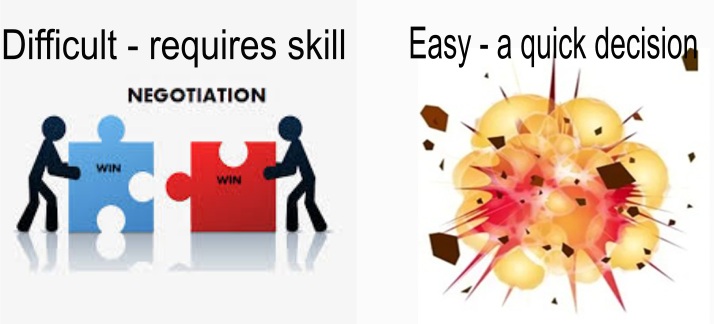
Negotiations between Russian, Ukrainian, and US representatives could begin in October, Kremlin spokesman Dmitry Peskov has said
13 Sep, 2026, https://www.rt.com/russia/645646-moscow-reveals-potential-timeline-trilateral-ukraine-talks/
Trilateral talks between Russian, Ukrainian, and US representatives could begin in October, Kremlin spokesman Dmitry Peskov has said.
Speaking to reporters on Sunday, the official stated that Moscow “does not rule out such a possibility.”
“We’re specifically talking about the foreseeable future. That is, presumably of course, October,” Peskov clarified.
Earlier this week, the Kremlin spokesman stated that Moscow hopes “for a restart of negotiations between three parties – Russia, Ukraine, and America.”
The trilateral format was last used in Geneva in February, following two earlier rounds in Abu Dhabi. However, the talks later stalled without any significant breakthroughs, as the US shifted its focus to its war against Iran.
Peskov’s recent comments have followed a fresh round of shuttle diplomacy by US President Donald Trump’s special envoys Steve Witkoff and Jared Kushner, who held a meeting with Russian President Vladimir Putin in Moscow last week before visiting Kiev for talks with Vladimir Zelensky.
The Kremlin described the discussions with the US negotiators as constructive and “extremely candid,” while Witkoff said that progress had been made toward scheduling a three-way meeting. The potential resumption of talks in this format was also among the topics Putin and Trump discussed by phone on Tuesday, according to Kremlin aide Yury Ushakov.
At around the same time, Zelensky suggested that the next round of trilateral negotiations could take place in the UAE, Türkiye, Switzerland, or another country as early as September or October.
Moscow has repeatedly said it remains open to diplomacy, as long as the root causes of the conflict are addressed and the new realities on the ground are respected. Ukraine has in turn ruled out making territorial concessions to Russia.
Erdogan hints at larger nuclear partnership with Russia, unsettling Turkey’s allies
rfi, 12/09/2026
Turkish President Recep Tayyip Erdogan is signalling a move to expand nuclear power cooperation with Russia, just as his country’s first Russian-built nuclear station prepares to go live later this year. The deepening partnership is likely to unsettle Turkey’s western allies.
On the sidelines of a recent gathering of regional leaders in Kyrgyzstan, Erdogan told his Russian counterpart, Vladimir Putin, that Russia and Turkey “will take steps together to open some new power plants, along with the opening of the Akkuyu nuclear power plant”.
The Akkuyu nuclear power plant, built by Russia’s state nuclear company Rosatom on Turkey’s Mediterranean coast, is due to go online later this year.
Erdogan’s announcement comes amid strained ties with Russia, as the Turkish leader has deepened relations with United States President Donald Trump.
Ozgur Unluhisarcikli, head of the Ankara office of US think tank the German Marshall Fund, describes Erdogan’s move as a “gesture” to Putin.
“Although Turkey is competing with Russia geopolitically, and although Turkey is firmly anchored in NATO and is improving its relationship with the United States, it does not intend to sever all ties with Russia,” Unluhisarcikli explained.
“Indeed, Turkey sees the Turkey-Russia relationship as a long-term strategic one. And this is, by the way, consistent with Turkey’s balancing act.”………………………………………………………………………………… https://www.rfi.fr/en/podcasts/international-report/20260912-erdogan-hints-at-larger-nuclear-partnership-with-russia-unsettling-turkey-s-allies
Poland First: Why More Poles Are Turning Against Ukraine and the EU
“Poland first” here does not mean indifference to Russian power. It means refusing to pretend that every demand from Kyiv or every directive from the Commission is automatically a Polish interest.
(and how Radek Sikorski doesn’t have the cojones to defy Anne Applebaum)
In conversation with Dr Mike Krupa
Ian Proud, Sep 12, 2026, https://thepeacemonger.substack.com/p/poland-first-why-more-poles-are-turning?utm_source=post-email-title&publication_id=3221990&post_id=215255902&utm_campaign=email-post-title&isFreemail=true&r=1ise1&triedRedirect=true&utm_medium=email
In 2022 Poland was Ukraine’s most important European ally. Polish families opened their homes to refugees. The state sent weapons and money. Four years on, that story is breaking. In conversation with historian and Do Rzeczy columnist Dr Mike Krupa, the question is no longer whether Polish support has cooled. It is how far the backlash now affects issues beyond the war itself including Ukraine’s future and Poland’s continued EU membership.
Mike makes the case for a Poland first approach. Ordinary Poles, he says, were told that arming Ukraine, hosting refugees and following Brussels was an act of national self-defence. Many no longer believe it.
They see a long war they cannot end, a bill they are still paying, and a political class more fluent in the language of European solidarity than in the language of Polish interest.
Nowhere is that class more visible than in Radosław Sikorski. Poland’s foreign minister talks as if Warsaw were still the engine of the Ukraine war and the conscience of Europe. The unkind version, and it is widely whispered in Warsaw, is that Sikorski does not have the cojones to take a step that has not first been cleared by his wife. Anne Applebaum. She is one of the most connected Atlanticist voices in the English-speaking world, and the Sikorski–Applebaum household is less a marriage than a transatlantic foreign-policy firm.
Whether the joke is fair is almost beside the point. It sticks because Poles can see the product: a foreign ministry that sounds more at home in Washington and Brussels than in provincial Poland. And it is ironic given Sikorski’s remarks in 2014 that were secretly caught on tape, that the US Poland relationship was worthless and that “we’ll get in conflict with the Germans, Russians and we’ll think that everything is super, because we gave the Americans a blow job. Losers. Complete losers.”
History has come back into the room. The 2026 rupture between Warsaw and Kyiv did not come from nowhere. When President Zelenskyy honoured a unit as “Heroes of the UPA”, he touched the rawest nerve in Polish memory: the Volhynia massacres. For most Poles the UPA is not a footnote in someone else’s independence struggle. It is the organisation that murdered their grandparents. President Karol Nawrocki’s decision to strip Zelenskyy of the Order of the White Eagle was not a diplomatic tantrum. It was an attempt to speak for a public that felt insulted.
That public is also tired. Support for Ukrainian refugees has fallen. Sympathy has hardened into irritation. Farmers have already shown what happens when Ukrainian produce and EU rules collide with Polish livelihoods. Krupa’s point is that this is not a fringe mood. It is running ahead of the Tusk government, which still talks as if the Ukraine war is winnable and a defining Polish priority.
The more uncomfortable claim is the second one. Krupa sees the EU as a constraint on Polish sovereignty and prospertiy. In his telling, Warsaw has outsourced strategy to Brussels, Berlin and Washington, then wondered why Polish priorities are often ignored. A country on NATO’s eastern flank that cannot define its own end-state in the war is not a frontline success. It is a frontline client.
“Poland first” here does not mean indifference to Russian power. It means refusing to pretend that every demand from Kyiv or every directive from the Commission is automatically a Polish interest.
I have written before that Poland’s Janus face on Ukraine is untenable: fight Russia to the last, but keep Ukraine out of the EU. That contradiction is now visible to voters
Whether Krupa is right about the scale of the turn will be tested in Polish politics during elections in 2027. What is already clear is that the old script — Poland as the uncomplaining engine of European support for Ukraine — is finished.
The public has moved. The government in Warsaw and the Eurocrats in Brussels have not.
Watch the conversation here:
Witkoff and Kushner Cite Progress in Kyiv Talks, Push for Renewed Russia-Ukraine Negotiations

U.S. envoys Steve Witkoff and Jared Kushner described talks with Ukrainian leaders as encouraging after carrying new proposals from Moscow to Kyiv, though major disputes over territory and security remain unresolved.
By yourNEWS Media Newsroom, | Sep 6, 2026
U.S. envoys Steve Witkoff and Jared Kushner said they made progress during their first official visit to Kyiv on Sunday, expressing optimism that direct negotiations between Russia and Ukraine can be revived after more than three hours of talks with Russian President Vladimir Putin in Moscow a day earlier.
Ukrainian President Volodymyr Zelenskyy held three rounds of discussions with the Americans, with national security advisers from the United Kingdom, France and Germany joining the final session. The talks covered possible pathways toward ending the more than 4½-year war as well as Ukraine’s immediate military needs, long-term security guarantees and economic support for postwar reconstruction.
Witkoff said Washington remains focused on “a diplomatic resolution to this conflict, not a kinetic resolution.” He said Saturday’s Kremlin discussions produced “new ideas” that he and Kushner brought directly to Kyiv, adding that the participation of advisers from France, Germany and Britain demonstrated that “collaboration is critical” to reaching an agreement.
Both Moscow and Kyiv would have to compromise, Witkoff acknowledged, but he said the administration believes a negotiated settlement remains possible. “We think we have the ingredients to get to that place,” he said.
Kushner similarly said the United States is seeking a “win-win” outcome rather than simply pressuring one side to accept the other’s terms. He said President Donald Trump is focused not only on stopping the fighting but on creating “a framework that could actually lead to a durable peace.” Kushner described Saturday’s meeting with Putin as “constructive and substantive” and said the discussions explored what Russia, Ukraine and the broader international community could gain from a settlement.
The two envoys hope to revive trilateral negotiations involving Russia, Ukraine and the United States, a format last used roughly six months ago. Kushner said Washington has remained in near-daily communication with Ukrainian officials even during the recent slowdown in diplomatic activity, which coincided with the administration’s increased focus on the Iran war.
Zelenskyy said several major issues remain unresolved, particularly territory. He said the territorial question “remains relevant” but argued that such difficult decisions “can only be resolved at the level of leaders.” He also emphasized that any settlement must include lasting security arrangements, saying a strong Ukrainian military remains “one of the main guarantees of security.”
Immediate defense requirements formed another major part of Sunday’s talks. Zelenskyy said Ukraine is seeking “serious volumes” of American support for a winter package combining air defense with protection for energy infrastructure as colder weather approaches. Kyiv is particularly seeking additional Patriot systems and interceptor missiles, with European governments expected to help support the effort.
The Ukrainian president said the United States plans to increase production of Patriot interceptor missiles next year and that Germany is also expanding production under existing licensing arrangements. Ukraine is simultaneously working with 67 domestic companies developing systems capable of destroying Russia’s increasingly common jet-powered drones………………………………………………………………
Zelenskyy said Sunday that Ukraine, the United States and European partners agreed to another meeting, although no location has been selected. The planned session is expected to continue work on territorial questions, security guarantees, military support and the economic framework surrounding any eventual settlement……………………………..
The central obstacles, however, remain substantial. Territory has not been resolved, security guarantees are still being negotiated and the aerial war continues even while diplomats discuss peace. The next test will be whether the “new ideas” carried from Moscow to Kyiv can produce the renewed direct negotiations Washington is now seeking. https://yournews.com/2026/09/06/7187875/witkoff-and-kushner-cite-progress-in-kyiv-talks-push-for/
30 years later: The Comprehensive Test Ban Treaty (CTBT)
By Xanthe Hall on September 10, 2026, https://peaceandhealthblog.com/2026/09/10/30-years-later-the-comprehensive-test-ban-treaty-ctbt/
Previously, it was normal for a multilateral disarmament treaty to be adopted in the Conference on Disarmament (CD), where it was also negotiated. However, the CD had a consensus rule and treaty negotiations ended on 9 August 1996 without unanimity.
Protests against the health and environmental effects of nuclear testing led to them being banned above-ground, underwater, and in space by the Partial Nuclear Test Ban Treaty in 1963. However, all of the Nuclear Weapons States continued to test underground in order to continue their development of new nuclear weapons. Pressure continued for nuclear testing to cease altogether, and a test moratorium was agreed which has held since 1992 for the US, Russia, France and the United Kingdom. China ended testing in 1996, India and Pakistan both conducted a short series of tests in 1998, and North Korea began testing in 2006 and has not tested since 2017.
On 19 November 1993, the UN General Assembly voted unanimously to mandate the CD in Geneva with negotiating a Comprehensive Test Ban Treaty (CTBT). The negotiations began on January 1994, and seriously progressed after the Non-Proliferation Treaty (NPT) was indefinitely extended in 1995. This was a period of positive progress for nuclear disarmament with the large nuclear powers — the USA and Russia — agreeing on real disarmament (START 1) and arms control.
Although the CTBT negotiations seemed to be making headway, the talks were put under strain by the announcements of both China and France that they needed to conduct more final tests in order to be able to have enough data to cease testing altogether.
By the summer of 1996, when the final draft of the treaty was presented by the Chair Jaap Ramaker, the controversial points had boiled down to these:
- The development of new technologies allowed the testing of nuclear weapons, like subcritical and hydrodynamic tests and computer simulations, to continue. The spirit of the treaty, to end or at least constrain the development and qualitative improvement of nuclear weapons, would be undermined by allowing these forms of testing.
- The treaty did not contain any direct commitment to the necessity for further nuclear disarmament.
- The requirement that all 44 states (listed in Annex 2) would need to ratify the treaty for it to enter into force would endanger the treaty itself.
- The treaty cemented the status quo regarding the level of development each NWS had reached .
The main argument for accepting the treaty as drafted was that it would represent an international legally-binding norm that could be used to stigmatise testing, despite its perceived weaknesses. However, some states continued to veto a consensus, in particular India. By the end of the final negotiating session in the CD, no consensus was reached, and the Australian Ambassador Richard Butler brought the Treaty to the United Nations for adoption.
When it came to voting on 10 September 1996 on the UN resolution A/RES/50/245, only three voted against the Treaty in the First Committee: India, Bhutan, and Libya. 158 States voted in favour. The CTBT was opened for signature on 24 September 1996. A Preparatory Commssion for the Comprehensive Test Ban Treaty Organisation (CTBTO) was adopted on 19 November 1996 (CTBT/MSS/RES/1) at a Meeting of States Signatories.
What is in the CTBT?
The text of the Treaty contains a preamble and 17 articles.
The Preamble lays out the intentions and the ‘spirit’ of the Treaty: to constrain development and therefore contribute as an effective measure towards nuclear disarmament and non-proliferation, and to protect the environment.
Article I lays out the obligations:
“Each State Party undertakes not to carry out any nuclear weapon test explosion or any other nuclear explosion”.
Moreover, the Treaty parties committed to prohibiting and preventing nuclear tests from taking place anywhere under their control, and to refrain from any kind of encouragement or assistance of others to test.
Article II established the CTBTO and its components:
The establishment of the Organisation to oversee the implementation and verification of the CTBT, and to assist consultation and cooperation was set out in Article II, A. The article also covered how the CTBTO was to be financed.
Article II B set out the composition, procedures and decision-making through regular Conferences of the State Parties, as the principal organ of the CTBTO.
How the Executive Council for the CTBTO was to be set up was detailed in Article II C. It would consist of 51 members from different geographical regions. Annex 1 listed these. The members of the Council would be elected by the Conference.
Article II D established a Technical Secretariat for the CTBTO which was to set up the International Monitoring System (IMS) and assist in establishing the monitoring stations in countries around the world. The Secretariat will be headed by a Director-General. Where appropriate, the Director-General can set up specific working groups of scientific experts.
Article III: National Implementation Measures
Legal and administrative steps were to be taken in order for the CTBT to be implemented on a national level and to facilitate cooperation and liaison with the CTBTO.
Article IV lays out the verification system:
The system to verify compliance with the CTBT was to consist of four elements:
B.) the International Monitoring System (IMS): providing seismological, radionuclide, and other data from the monitoring stations, as well as satellite monitoring, to the International Data Center of the CTBTO to give early warning of forbidden activities.
C.) consultation and clarification on compliance with the treaty. States are required to address the concerns of other states regarding a possible non-compliance, via the Director-General and the Executive Council.
D.) on-site inspections can be requested by any State Party to clarify where a nuclear explosion has taken place. An inspection team will be designated by the Director-General and will be allowed physical access to enable the team to gather facts necessary to ascertain whether there has been a violation of the Treaty. Information gathered by the inspection will then be reviewed by the Executive Council which will decide whether there exists a need for further action.
E.) confidence-building measures include the timely resolution of any compliance concerns.
Article V outlines sanctions and other measures to address violations, e.g. suspension or restriction of membership, loss of rights and privileges. Worst case, the issue may be brought “to the attention of the United Nations”, meaning the Security Council.
The settlement of disputes, amending the Treaty, and how the CTBT will be reviewed, are covered in Articles VI to VIII.
While the CTBT is of unlimited duration, withdrawal is allowed by giving six months notice, and an explanation of the reason, if a party decides that:
“extraordinary events related to the subject matter of the Treaty have jeopardized its supreme interests”
as set out in Article IX.
Articles X to XIII cover the status of the protocol and annexes, signature, ratification, and accession.
Probably the most important Article, other than Article I, is Article XIV which covers Entry into Force (EIF). The CTBT cannot enter into force until 180 days (six months) after all the countries listed in Annex 2 have signed and ratified the Treaty. Those states are all those that have a nuclear programme. Should EIF not be reached within three years, a Conference should be convened to address the issue each year until the Treaty enters into force.
There are three more articles outlining reservations, depositions and authentic versions of the Treaty text.
There is also a Protocol in three parts that goes into more detail about the roles and functions of the IMS, procedures for on-site inspections and confidence measures.
The Protocol has two annexes: Annex I lists the facilities that make up the IMS network, and Annex II defines parameters for standard event-screening.
What has and has not been achieved in the last 30 years?
188 of a total of 196 states have signed the CTBT, of which 179 have ratified. All of the States that have signed have adhered to the provisions of the Treaty.
The CTBTO was established in Vienna, Austria, in the United Nations. It is now staffed by more than 300 multidisciplinary experts and support staff and financed by the member states, costing about US$ 140 million annually.
The Preparatory Commission of all States Signatories and the Technical Secretariat have also taken up their work. The latter oversees the IMS, the International Data Centre (IDC) and the On-Site Inspection (OSI) Division.
The main achievement is the establishment of a global network of monitoring stations, the International Monitoring System (IMS) that is 90% complete and delivering data to the IDC. This system has already been used to detect all of the North Korean nuclear tests between 2006 and 2017. It also detected other events, such as the nuclear accident at Fukushima in 2011 and the Beirut explosion in 2020, as well as earthquakes, volcanic eruptions and meteor strikes.
The IMS uses various technologies to verify events: seismic, hydroacoustic, infrasound and radionuclide stations that can detect shockwaves, underwater soundwaves, ultra low frequency soundwaves in the atmosphere and radioactive particles and gases.
Of the 196 UN states, eight have not signed the treaty and 17 have not ratified.
It has not been possible for the CTBT to enter into force because nine of the 44 Annex 2 states have not ratified the Treaty and three have not even signed. North Korea, India, and Pakistan have not signed.The United States, China, Egypt, Israel and Iran have signed, but not ratified. Russia withdrew their ratification in 2023.
Will nuclear testing begin again?
Construction has been seen at several test sites in the past three years: at the Lop Nor test site in China, at the Russian Novaya Zemlya site, and at the US Nevada nuclear test site.
The Russian Foreign Minister Sergey Ryabkov alleged on 10 October 2023 that the US was preparing to resume testing in Nevada. This was followed on 2 November 2023 by Russian President Vladimir Putin officially rescinding ratification of the CTBT. He justified the move as a measure to address the imbalance caused by US failure to ratify the Treaty. Putin declared that Russia would not resume testing unless the US did so first.
On 30 October 2025, US-President Donald Trump declared on social media that his administration planned on carrying out new nuclear test explosions. He repeated this statement in an interview with the CBS programme “60 Minutes”, on 2 November 2025. He said that it was necessary in order to know if US nuclear weapons still worked, and because he believed that Russia was also planning to test. He claimed that other states, specifically mentioning North Korea, were constantly testing and the US was the only country that wasn’t. Despite the interviewer refuting this statement, Donald Trump remained insistent that it was true. The week after, Admiral Richard Correll, head of STRATCOM said that neither China or Russia were conducting nuclear tests. North Korea has also not conducted a nuclear test explosion since 2017.
Although it remains unclear whether the United States will resume testing, any uncertainty undermines confidence in the CTBT.
Thirty years ago, there was a choice to end nuclear testing and to make that commitment international law. The CTBT is almost universal, bar a few hold-outs who continue to threaten the security of the planet and its environment.
Documents verbatim:
► The Comprehensive Test Ban Treaty (CTBT), PDF, adopted 10 Sep 1996
► UN Resolution 50/245 Comprehensive Nuclear-Test-Ban Treaty, voted on 10 Sep 1996
They Can’t Stop the War. They Can’t Survive It.
So European leaders have deployed – to use an Ursula von der Leyen saying – all means possible. Except that those means were never enough to meet Ukraine’s needs.
‘if I give the promise to the people in Ukraine, “we stand with you, as long as you need us,” then I want to deliver. No matter what my German voters think.’
Europe has also closed off access to a consumer market of 143 million people in Russia – Europe was Russia’s biggest trade partner before the Ukraine crisis began – because we can’t stand to trade with those Russians.
The AfD win in Germany and Reform’s landslide in Britain show why Europe’s liberal governments are trapped — continue Ukraine and they lose the voters; end it and they lose them anyway.
Ian Proud, The Peace Monger, Sep 08, 2026
The victory of AfD in a local election in Germany was as consequential as the Reform Party’s landslide in local elections in Britain in May.
Why? Because a nationalist party won. This is another sign that liberalism is dying in Europe. What does this mean for the politics of Europe and for the war in Ukraine?
Politics in Europe Is Changing – The Ukraine War Is Driving a Shift Away from Liberalism
I have said for some time that the changing politics of Europe will ultimately decide the outcome of the war in Ukraine. Foreign policy always starts and ends at home.
And what I mean by that is, even if our governments support a proxy war in Ukraine, they are limited by essentially domestic considerations in how much support they can give.
European states have shown themselves unwilling to commit to direct war with Russia principally because they can’t guarantee they will garner political support at home, not least given the large number of casualties that would result.
Liberalism is predicated on a stable capitalist system, and a direct war would have devastating consequences for the economies of Europe.
Liberal European governments can’t give Ukraine as much money and equipment as they would prefer, as they are heavily indebted and don’t have the fiscal space to do this at a time when ordinary people feel that public services are being ignored.
So European leaders have deployed – to use an Ursula von der Leyen saying – all means possible. Except that those means were never enough to meet Ukraine’s needs.
Ukraine will lose the war against Russia because European leaders decided they could not bear the financial, human and political cost of direct war. That they encouraged war to continue for so long reflects the essential liberalism of Europe, that Ukraine was a prized project in the bid to create another liberal democracy on the periphery of Europe as a counterpoint to nationalist Russia. And that helps to explain why ordinary, often working-class, citizens are turning against liberalism.
Put simply, even though European governments have avoided a direct war with Russia, they haven’t been able to shield their citizens from the consequences of proxy war, nor deliver the strategic defeat that they promised, and this leaves ordinary people poorer, uncertain about their future employment prospects, worried about their children and feeling less safe.
It would be impossible for them not to make a connection with the war in Ukraine because that is the topic their leaders seem to talk about most when travelling abroad to grand summit meetings that never seem to resolve the world’s problems.
Indeed, Annalena Baerbock, while foreign minister, said in 2022, ‘if I give the promise to the people in Ukraine, “we stand with you, as long as you need us,” then I want to deliver. No matter what my German voters think.’
She was roundly criticised by parties like AfD at the time who were accused of a disinformation campaign. But her words were on the record. And the message that sent to ordinary Germans was that the Federal government cares about Ukrainian people more than you, which was a politically suicidal thing to say.
In this day of high-speed media, ordinary people can see what is going on.
Even though national priorities have placed some limited guardrails on liberal foreign policy hegemony, specifically the temptation to get sucked into a general war across Europe – that foreign policy consensus has nonetheless still funded a dreadful war in Ukraine for four-and-a-half years which is held aloft as more important than domestic concerns despite the severe consequences for ordinary German people.
Ordinary people are not stupid and can make the connection between their condition of life and the need to keep funnelling money and weapons into a war that shows no end in sight, which their leaders refuse to bring to a close.
In terms of the feeling of being poorer and less secure about the future, Europe has chosen economic warfare instead of actual warfare, and this has backfired. In the process, sanctions have rendered European industry uncompetitive through the closing off of cheap sources of energy. Europe has also closed off access to a consumer market of 143 million people in Russia – Europe was Russia’s biggest trade partner before the Ukraine crisis began – because we can’t stand to trade with those Russians.
German unemployment is now at its highest level in well over a decade. Germany was Russia’s biggest trading partner before the Ukraine crisis started.
Let’s be clear, cutting off supplies of Russian energy doesn’t benefit the people of Ukraine; that country is energy dependent too and also, by the way, bankrupt, which means that European capitals have to subsidize its expensive energy costs as well as its own.
It doesn’t hurt Russia, which has diverted its energy supply to Asia.
It only hurts the economies of Europe and, in doing so, the cost of living and job security of ordinary European citizens.
Meanwhile, ordinary people see the threat of future war with Russia dangled before them in the mainstream press which conjures up all sorts of fake news stories on a near-daily basis about Russia’s plan to invade and conquer Europe.
While all this is happening, people can see that the rest of the world – particularly in Asia – is powering ahead.
Outside of West Asia and the Middle East they see a part of the world relatively free of conflict where economic growth is lifting the living standards of millions each day.So ordinary people in Europe are starting to ask ‘why are we losing out?’
And the answer that increasing numbers keep coming back to is the war in Ukraine.
Europe has chosen economic stagnation, unemployment, falling living standards and the fear of war as a price to pay to weaken Russia, even though Russia has managed the shock of conflict and war far better, has a bigger industry, plentiful supplies of energy and access to the largest market in the world, in Asia.
More and more people in Europe are starting to see that their liberal governments do not have the interest of their citizens at heart.
And liberal governments have no way out of the Ukraine war. In fact, they are terrified of the war ending.
Liberalism’s Ukraine War Trap
European government have found themselves caught in a Ukraine War Trap in which they face electoral obliteration whether they end the Ukraine war or if they continue it.
What is devastating for liberal political leaders is that they have no way out of the cycle of electoral suicide they have put themselves in.
If they continue the war, they will get devastated in the polls.
If they end the war, they will also get devastated in the polls.
Firstly, what will happen if they continue the war?
Energy.
Even if Donald Trump ends his damaging war in Iran, Europe will remain locked into high energy prices. Indeed, an end to the Iran war will simply accentuate the difference between Europe, stuck in an era of uncompetitive high energy costs, and the rest of the world, which will start to benefit from a gradual normalisation of energy prices……………………………………………………………………………………………………………………………………. https://thepeacemonger.substack.com/p/they-cant-stop-the-war-they-cant?utm_source=post-email-title&publication_id=3221990&post_id=214714777&utm_campaign=email-post-title&isFreemail=true&r=1ise1&triedRedirect=true&utm_medium=email
U.S.-Saudi Nuclear Deal Clears Vienna Hurdle As Congress Review Continues
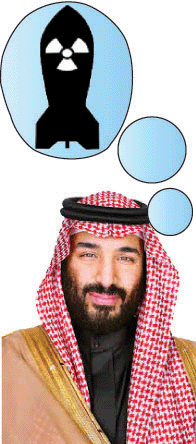
Congressional Democrats have pushed back hard, joined by some Republicans, arguing the deal opens the door to a wider enrichment race across the Middle East. The White House, meanwhile, has tied the agreement to Saudi Arabia eventually joining the Abraham Accords and normalizing relations with Israel, a step Riyadh has so far declined to take without progress toward Palestinian statehood.
Oil Price, By Michael Kern – Sep 08, 2026,
- IAEA chief Rafael Grossi says Saudi Arabia won’t sign the Additional Protocol but will accept oversight powers over enrichment, conversion and reprocessing that closely mirror it.
- The underlying US-Saudi 123 agreement, signed July 22, opens a path to domestic uranium enrichment after a two-year study, a break from the UAE’s enrichment-free ‘gold standard.’
- Congress is 90 days into reviewing the deal, with Democrats and nonproliferation groups pushing back and two side letters still classified.
A planned nuclear cooperation deal between the United States and Saudi Arabia won’t include the toughest inspection regime the U.N.’s atomic watchdog has to offer, but it’s going to come close on the activities that matter most.
That’s the picture International Atomic Energy Agency chief Rafael Grossi laid out Monday in Vienna, speaking to reporters during the agency’s September Board of Governors meeting. Riyadh isn’t signing the IAEA’s Additional Protocol, the tool that lets inspectors show up unannounced at sites a country hasn’t even declared. But Grossi said Saudi Arabia is preparing to grant the agency verification and monitoring authority over its most sensitive nuclear activities, uranium enrichment, the conversion step that precedes it, and reprocessing, that functions almost the same way……………………………………………
Under the terms reported at signing, Washington and Riyadh have two years to study whether domestic enrichment makes commercial sense. Any enrichment plant built afterward would go up under a “black box” model, run by U.S. companies inside Saudi Arabia so the underlying technology never actually changes hands. It’s a sharp departure from Washington’s 2009 pact with the United Arab Emirates, the deal nonproliferation advocates still call the gold standard, under which Abu Dhabi permanently gave up enrichment and reprocessing altogether.
Congress Gets Its Say
The administration sent the agreement to Congress in late August, starting a 90-day review clock under the Atomic Energy Act. Lawmakers can let it take effect by doing nothing, or pass a joint resolution of disapproval to kill it, though that would need to survive a presidential veto. Two side letters attached to the deal remain classified, according to the Foundation for Defense of Democracies, which also notes that of the 51 countries with active 123 agreements, only Argentina and Brazil currently lack the Additional Protocol. Saudi Arabia would be the third.
Congressional Democrats have pushed back hard, joined by some Republicans, arguing the deal opens the door to a wider enrichment race across the Middle East. The White House, meanwhile, has tied the agreement to Saudi Arabia eventually joining the Abraham Accords and normalizing relations with Israel, a step Riyadh has so far declined to take without progress toward Palestinian statehood.
The Backdrop
For Riyadh, the deal is also part of a broader push under Vision 2030 to build out nuclear power alongside renewables and diversify an economy still tied to oil exports, with U.S. firms like Westinghouse positioned to compete for reactor contracts worth billions. The talks are unfolding against last year’s war between Israel and Iran, which has hardened Gulf calculations around nuclear deterrence. Crown Prince Mohammed bin Salman has said publicly the kingdom would pursue a weapon of its own if Iran ever built one. Iran, for its part, operated under the Additional Protocol from 2016 to 2021 under the nuclear deal that collapsed after the U.S. withdrew in 2018, a history nonproliferation groups keep pointing to as they push for tougher terms on Riyadh.
For now, the deal sits in a kind of holding pattern. Congress’s review runs deep into the fall. The bilateral safeguards text is still being finalized in Vienna. And whether the arrangement Grossi described Monday ends up satisfying skeptics on Capitol Hill, or just gives them a new set of details to pick apart, is still an open question.
1 This Month
23-25 October – on Zoom – World BEYOND War’s annual global conferenc


Shut down the radiation-damaged Heysham nuclear reactors now
To see nuclear-related stories in greater depth and intensity – go to https://nuclearinformation.wordpress.com

Say No to NASA’s Reckless Nuclear Reactor on the Moon
Say No to NASA’s Reckless Nuclear Reactor on the Moon

-
Archives
- October 2026 (247)
- September 2026 (339)
- August 2026 (330)
- July 2026 (355)
- June 2026 (287)
- May 2026 (306)
- April 2026 (356)
- March 2026 (251)
- February 2026 (267)
- January 2026 (308)
- December 2025 (358)
- November 2025 (359)
-
Categories
- 1
- 1 NUCLEAR ISSUES
- business and costs
- climate change
- culture and arts
- ENERGY
- environment
- health
- history
- indigenous issues
- Legal
- marketing of nuclear
- media
- opposition to nuclear
- PERSONAL STORIES
- politics
- politics international
- Religion and ethics
- safety
- secrets,lies and civil liberties
- spinbuster
- technology
- Uranium
- wastes
- weapons and war
- Women
- 2 WORLD
- ACTION
- AFRICA
- Atrocities
- AUSTRALIA
- Christina's notes
- Christina's themes
- culture and arts
- Events
- Fuk 2022
- Fuk 2023
- Fukushima 2017
- Fukushima 2018
- fukushima 2019
- Fukushima 2020
- Fukushima 2021
- general
- global warming
- Humour (God we need it)
- Nuclear
- RARE EARTHS
- Reference
- resources – print
- Resources -audiovicual
- Weekly Newsletter
- World
- World Nuclear
- YouTube
-
RSS
Entries RSS
Comments RSS

