Pope Leo rejects claim he supports nuclear weapons after Trump tirade

Pontiff responds after US president accuses him of ‘endangering a lot of Catholics’ with stance on Iran war
Angela Giuffrida in Rome, 7 May 26
Pope Leo has said he has never supported nuclear weapons and that those who criticise him need to speak the truth, in response to Donald Trump’s latest tirade accusing him of “endangering a lot of Catholics” with his stance on the Iran war.
Speaking to journalists on Tuesday night after leaving the papal retreat in Castel Gandolfo, near Rome, the first US-born pontiff said: “The mission of the church is to preach the gospel, to preach peace.”
Leo, who is to meet the US secretary of state, Marco Rubio, in the Vatican on Thursday in an effort to ease tensions sparked by previous Trump broadsides, made a plea for honesty in political debate.
“If anyone wants to criticise me for proclaiming the gospel, let them do so with the truth: the church has spoken out against all nuclear weapons for years, there is no doubt about that,” the pope said. “I simply hope to be listened to because of the value of God’s word.”
Earlier in the day, Trump told Hugh Hewitt, a prominent conservative radio talkshow host: “The pope would rather talk about the fact that it’s OK for Iran to have a nuclear weapon, and I don’t think that’s very good.
“I think he’s endangering a lot of Catholics and a lot of people. But I guess if it’s up to the pope, he thinks it’s just fine for Iran to have a nuclear weapon.”
In the Vatican, the latest remarks were met with puzzlement. Asked on Wednesday how he evaluated the attacks, Pietro Parolin, the Vatican’s secretary of state, told reporters: “For me it seems a bit strange, to say the least.”…………………………………………………………………………………………………………………………………………….. https://www.theguardian.com/world/2026/may/06/pope-leo-rejects-claim-he-supports-nuclear-weapons-trump-tirade-iran-war
Sachs on U.S. Power in Freefall: “The Most Dangerous Country in the World”
May 4, 2026 , https://scheerpost.com/2026/05/04/sachs-on-u-s-power-in-freefall-the-most-dangerous-country-in-the-world/
The global economy is no longer wobbling — it’s splintering. In a sweeping, unsparing conversation, economist Jeffrey Sachs describes a world pushed to the edge by Washington’s wars with Iran and Russia, its economic confrontation with China, and its attempt to reassert dominance across the Western Hemisphere. The pillars that held the global system together for decades — stable trade routes, energy flows, technological exchange, and financial integration — are being weaponized or dismantled outright. Europe, Sachs argues, has “cut itself off from its main natural resource provider” and is now “completely adrift economically,” while Asia accelerates toward deeper integration and long‑term advantage. The United States, meanwhile, is “irrational, poorly led, and desperate to keep control over what it no longer controls,” creating a world that is both fragmented and profoundly unstable.
The global economy is entering a period of rupture, not turbulence. That is the central warning from economist Jeffrey Sachs, who argues that Washington’s simultaneous confrontations with Iran, Russia, and China — combined with its efforts to dominate the Western Hemisphere — have pushed the international system to a breaking point. What once looked like temporary disruptions now resemble structural fractures.
Sachs begins with the U.S.–China relationship, which he says is “never going to be what it was 10 years ago,” noting that the era of “dynamic… mutual investments in both directions” is over. The same is true for Europe’s ties to Russia, which he describes as “damaged perhaps to the point of no return in our generation.” These ruptures are not cyclical; they are foundational.
A Fragmented World Takes Shape
According to Sachs, the world is reorganizing into regional blocs because long‑distance trade has become too risky. Asia is deepening its internal economic ties, Africa is likely to follow, and Europe — having severed its energy lifeline to Russia — is “completely adrift economically.” The continent, he argues, is now dependent on an “unstable, nasty and disdainful United States,” a strategic position that leaves it weaker than at any point since the end of World War II.
These shifts are not abstract. They are already reshaping global markets, supply chains, and political alignments. And Sachs warns that the situation could deteriorate rapidly if the United States “resumes the war with Iran,” a scenario he puts at “50% or higher,” with “devastating” consequences for the global economy.
Washington’s New Economic Doctrine: Hegemony First
Sachs traces the current crisis to a profound shift in U.S. thinking. For decades, economics was understood as a tool for mutual benefit — a view rooted in classical ideas about open trade. But as China rose and the U.S. share of global output declined, Washington’s foreign‑policy establishment reframed economics as an instrument of geopolitical control.
He describes how “international relations people… view the world not as win‑win but as win‑lose,” and how economic policy has been reoriented toward “preserving American hegemony.” This shift, he argues, has produced a 20‑year campaign to weaponize trade, technology, and finance — from semiconductor restrictions to sanctions to the freezing of sovereign assets.
The result is a world in which the basic scaffolding of globalization is being dismantled. Sachs rejects the claim that globalization “failed,” insisting instead that it “provided the basis for worldwide economic progress,” especially in developing economies. What failed, he says, was Washington’s expectation that it could remain permanently dominant.
Europe’s Strategic Blindness
Europe, in Sachs’s view, is the biggest loser in this new order. He argues that the continent “played along completely with the U.S.” in severing ties with Russia, despite decades of American pressure to prevent closer German‑Russian integration.
The result is a self‑inflicted wound: shuttered industries, soaring energy costs, and a political class that “bought into a completely failed economic and geopolitical strategy.” Sachs sees no path to recovery until Europe produces new leadership capable of recognizing geographic and economic realities.
The Return of Blockades and Piracy
One of the most alarming trends Sachs identifies is the resurgence of maritime coercion. He notes that Trump recently boasted that the U.S. is “essentially pirates now,” a statement that aligns with years of tanker seizures, sanctions‑driven blockades, and naval pressure campaigns.
Sachs calls this “shocking,” pointing out that freedom of navigation has been a bedrock principle of international order. He warns that if Europe participates in efforts to “contain” Russian shipping, “there will be war between Europe and Russia and Europe will be devastated.”
The United States, he argues, lacks both the naval capacity and the geopolitical support to sustain blockades against major powers. China, in particular, now possesses a “formidable navy” and a rapidly advancing military that makes U.S. dominance in Asia increasingly untenable.
A Dangerous Gap Between Ambition and Reality
Sachs’s most sobering claim is that the United States has become “the most dangerous country in the world” — not because of its strength, but because of the widening gap between its ambitions and its actual capabilities.
He describes a political class that is “irrational, very poorly led, rather desperate to keep control over what it no longer controls,” and a public that overwhelmingly believes the country is on the wrong track.
The danger, he argues, lies in the attempt to enforce global dominance through military and economic coercion at a moment when the U.S. lacks the power to achieve those aims. This mismatch creates instability, escalation risks, and the potential for catastrophic miscalculation.
Asia Ascendant
In contrast, Sachs sees Asia — particularly China — as the likely long‑term winner of the global realignment. Regional integration is accelerating, technological capacity is expanding, and the U.S. has limited leverage to disrupt these trends. “The closer one gets to Asia,” he says, “the less relevant the United States becomes.”
A World in Transition
The picture Sachs paints is stark: a fragmented world, a declining West, and a United States whose pursuit of hegemony is destabilizing the very system it once built. Whether the coming years bring a managed transition or a series of crises may depend on whether Washington can accept a multipolar world — or whether it continues to fight a losing battle to preserve the unipolar moment.
Britain is creating a mountain of nuclear waste it doesn’t know what to do with.
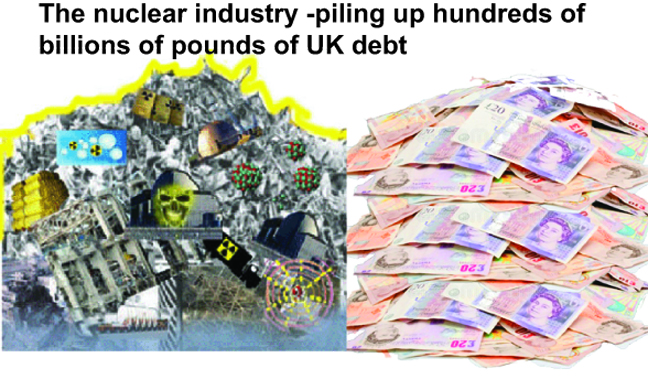
The UK is expected to accrue enough waste to fill four Wembley Stadiums
Jonathan Leake, Energy Editor. 03 May 2026
For Ed Miliband, these were the announcements he’d been wanting
to make for years. Britain was entering a new “golden age of nuclear”,
he said earlier this year. The Energy Secretary pledged to strip away
planning delays, committing to building a generation of small modular
reactors (SMRs).
The industry was delighted. Rolls-Royce was signed up by
Miliband to build the first mini nuclear reactor on Anglesey in Wales.
Rivals began planning their own SMRs across Britain.
But amid the “golden
age” branding and political hype, one major issue remains embarrassingly
unresolved. If all the planned new reactors get built, as well as the giant
ones under construction at Hinkley in Somerset and Sizewell in Suffolk, the
UK will have to work out what to do with a mountain of radioactive waste.
Some 137,000 cubic metres of waste across dozens of UK sites – including at
Sellafield, Britain’s main nuclear waste facility on the Cumbrian coast –
awaits a ministerial decision on how best to dispose of it. A significant
portion of that waste – enough to fill the Royal Albert Hall 1.5 times over
– has been sitting around since the 1960s.In the next few decades, the
level of waste is expected to swell to 4.5 million cubic metres, a 30-fold
increase, as current and past nuclear stations are decommissioned. That’s
enough to fill four Wembley Stadiums.
For the hottest waste – about 750,000
cubic metres worth – the plan is to bury it in a geological repository.
This will probably be tunnelled into the seabed off Cumbria. The Nuclear
Decommissioning Authority admits it is a job that will take until at least
2130 and cost a fortune.
SMRs and the planned advanced modular reactors may
generate more waste for a given power output, experts claim. The physics is
simple. Smaller reactors have a proportionately larger surface area – so
more of the internal radiation escapes. As it strikes surrounding equipment
and buildings, they too will become highly radioactive. A recent research
paper co-authored by Prof Alison Macfarlane, the former chairman of the US
Nuclear Regulatory Commission, included a warning that SMRs “will
increase the volume of nuclear waste in need of management and disposal by
factors of two to 30”.
Paul Dorfman, a Sussex University radiation expert
who advises the Ministry of Defence on dismantling nuclear submarines, says
this is not happening. He points out that the Department for Energy
Security and Net Zero (DESNZ)’s waste inventory omits waste that will arise
from the new Hinkley and Sizewell nuclear stations and from any SMRs that
are built.
Nuclear Waste Services, the government body charged with
building the repository, expects to start construction of a geological
disposal facility around 2040, beginning operations in the late 2050s and
operating through to 2200. Industry experts are sceptical of that
timetable. Insiders warn that this relies on Treasury approval for the
massive cost – which will always be a struggle. It is a cost that is only
likely to rise. In 2024, the Nuclear Decommissioning Authority estimated
Britain’s nuclear waste clean-up operation would cost £199bn. Last year, it
increased that to £216bn. However, the real cost – once a century of
inflation is added, along with waste from a new generation of reactors –
will be far beyond that.
Telegraph 3rd May 2026, https://www.telegraph.co.uk/business/2026/05/03/britain-creating-mountain-nuclear-waste-doesnt-know/
Rapid escalation

the immediate battlefield risks are only part of the problem. The deeper concern lies in the erosion of the international arms control architecture that has historically constrained nuclear competition.
At the same time, the normalization of military solutions to nuclear disputes is becoming more pronounced. Pre-emptive strikes, once viewed as extreme measures, are increasingly framed as legitimate tools of non-proliferation.
by beyondnuclearinternational, https://beyondnuclearinternational.org/2026/05/03/rapid-escalation/
With arms control agreements weakened and diplomatic safeguards fading, nuclear-armed conflicts are no longer an abstract possibility, warns Paul Saoke
The ongoing confrontation involving the United States, Israel, and Iran has created a moment of extraordinary danger for the international system. Public debate has largely focused on conventional escalation, missile strikes, drone warfare, and air campaigns. Yet beneath these visible dynamics lies a far more consequential risk: the steady erosion of the global nuclear restraint regime.
In today’s geopolitical environment, where arms control agreements have weakened and diplomatic safeguards are fading, nuclear escalation is no longer an abstract or distant possibility. It is becoming structurally conceivable.
Recent developments across the Middle East, including intensified exchanges and tensions around strategic chokepoints such as the Strait of Hormuz, illustrate how rapidly regional conflicts can acquire global significance. Military actions intended to degrade capabilities are increasingly entangled with broader strategic calculations, extending the scope and stakes of confrontation.
One immediate concern is the status of Iran’s enriched uranium stockpile. Estimates suggest that Iran retains significant quantities of highly enriched uranium, potentially sufficient for weaponization if further processed. Reports that external actors are considering operations to secure or neutralize these materials underscore a dangerous reality: when nuclear assets exist within active conflict zones, the margin for miscalculation narrows dramatically.
If a state perceives that its nuclear capabilities or infrastructure are at imminent risk of destruction, the incentive to escalate pre-emptively increases. In such environments, actions intended as defensive or preventive can be interpreted as existential threats, triggering unpredictable responses.
Yet the immediate battlefield risks are only part of the problem. The deeper concern lies in the erosion of the international arms control architecture that has historically constrained nuclear competition.
For decades, global nuclear stability depended on a network of agreements that limited arsenals, enhanced transparency, and reduced uncertainty between rival powers. Today, many of these frameworks are weakening or have collapsed altogether. The deterioration of arms control arrangements between major nuclear powers, including the United States and Russia, threatens to remove the remaining constraints on the world’s largest nuclear arsenals.
This breakdown has direct implications for the Middle East. In the absence of clear frameworks, states increasingly plan for worst-case scenarios. Nuclear modernization accelerates. Strategic distrust deepens. Channels for managing escalation become fragile or disappear entirely.
Equally concerning is the collapse of diplomatic mechanisms designed to prevent nuclear proliferation. The unraveling of the Joint Comprehensive Plan of Action removed a key constraint on Iran’s nuclear program. In its absence, military pressure has intensified, but so too has Iran’s perceived need for strategic deterrence.
This reveals a fundamental paradox: efforts to eliminate nuclear threats through force can inadvertently strengthen the incentive to acquire them.
The risk is not limited to deliberate nuclear war. It lies in miscalculation.
Wars involving nuclear-adjacent infrastructure introduce unique escalation dynamics. A strike on a nuclear facility may be intended as a tactical operation, but it can be interpreted as an attempt to eliminate a state’s long-term deterrent capability. Under such conditions, responses may escalate beyond initial intentions.
At the same time, the normalization of military solutions to nuclear disputes is becoming more pronounced. Pre-emptive strikes, once viewed as extreme measures, are increasingly framed as legitimate tools of non-proliferation. Yet such actions carry significant long-term risks, potentially accelerating proliferation rather than preventing it.
Political rhetoric has also shifted. Language emphasizing “all options on the table” has become routine, reflecting a broader change in how nuclear risk is conceptualized. Nuclear weapons are no longer confined to the realm of last-resort deterrence; they are increasingly embedded within strategic thinking about escalation, coercion, and dominance.
This shift is reinforced by broader trends. Nuclear modernization programs are expanding across major powers, including the China and others. Arms control treaties that once symbolized cooperation are giving way to competition. The institutional foundations of nuclear restraint are weakening at precisely the moment when they are most needed.
The danger, therefore, is cumulative.
It is not that a nuclear weapon will necessarily be used in the current conflict. Rather, it is that repeated crises without effective diplomatic resolution normalize brinkmanship. Each episode reinforces the perception that escalation can be managed and that nuclear thresholds remain stable.
History cautions against such assumptions. The Cuban Missile Crisis demonstrated how quickly miscalculation can bring nuclear powers to the edge of catastrophe. Today, the institutions that helped manage such risks are weaker, and the geopolitical environment is more fragmented.
What makes the present moment particularly dangerous is the convergence of three trends: regional conflicts involving nuclear-capable actors; the erosion of arms control frameworks; and the weakening of diplomatic mechanisms for managing escalation.
Individually, each of these factors increases risk. Together, they create a system in which nuclear catastrophe becomes more conceivable than at any point in recent decades. The lesson is clear.
Military escalation cannot resolve nuclear disputes. Long-term stability depends on rebuilding the architecture of restraint: renewing arms control agreements, strengthening verification mechanisms, and restoring sustained diplomatic engagement between rival powers.
Without such efforts, the world risks returning to a strategic environment in which nuclear weapons are central instruments of geopolitical competition.
The tragedy of nuclear weapons lies not only in their destructive power, but in the illusion of control they create. States may believe they can manage escalation, dominate conflict, or contain risk through superior capability. History repeatedly demonstrates that such confidence can be dangerously misplaced.
Today, the world stands at a similar moment. The greatest danger is not only the conflict unfolding in the Middle East. It is the quiet dismantling of the safeguards that once made nuclear catastrophe less likely.
If those safeguards are not rebuilt, the world may discover too late that it has been sleepwalking toward the unthinkable.
Paul Saoke, IPPNW Kenya, is the author of Africa’s Atomic Odyssey: A Continent’s Encounter with Nuclear Power.
Israeli Attack on Flotilla Violated the UN Convention on the Law of the Sea
James Marc Leas. May 02, 2026, https://cancelf35.substack.com/p/israeli-attack-on-flotilla-violated
On Thursday, April 29, Israeli military forces illegally attacked vessels of the Global Samud Flotilla (GSF) while they were sailing on the high seas. Israeli commandos unlawfully seized 21 boats and abducted 177 flotilla participants, according to Nicole Schellekens, a Belgian GSF land-support person.
On May 1, the BBC reported that Israel released all but two of the detained participants in Greece. Thiago Avila and Said Abu Keshek remain in Israeli custody, and Israel has stated that it is transporting them to its territory.
Schellekens passed on a report that 34 of the abductees were physically abused by Israeli commandos while protecting the two men. The 34 were hospitalized, and 4 of them remain in the hospital at Heraklion on the Island of Crete. See the video by Elly Van Reusel, a medical doctor on “Magic,” one of the 22 seized boats.
The GSF condemned Israel’s actions as an act of piracy and called for the immediate release those still held by Israel.
The flotilla was engaged in a legal and peaceful mission aimed at breaking the internationally condemned Israeli siege of Gaza—a siege that imposes collective punishment on Gaza’s civilian population. The mission seeks to end Israel’s illegal policy of starvation, a policy that stunts the physical and cognitive development of children.
The flotilla was necessary only because, after destroying farms and fishing boats, Israel restricted or closed all land routes for aid into Gaza, and governments worldwide have so far failed to use their legal and political powers to force an end to the illegal siege.
The U.S. government has gone further than any other nation in collaborating with Israel’s illegal assault on Gaza’s civilians—the US provides the funds, bombs, F-35 jets, and bulldozers, along with the diplomatic cover that grants the Israeli government impunity.
US states have done little. Rather than adopt human rights promoting purchasing and investment legislation, Vermont has gone so far as to train its Air National Guard with 115-decibel F-35 jets low over one of the state’s most densely populated cities, where political and military leaders knew the flights would cause suffering to working-class and ethnic minority children. This location was deliberately selected to prepare the unit to target civilians. It was foreseeable that the Trump Administration would call the Vermont F-35 unit up, first to bomb in Venezuela, and now poised to resume their bombing in Iran.
The Israeli Assault on the Flotilla Violated International Law
Although Israel is not a party to the United Nations Convention on the Law of the Sea (UNCLOS), the core provisions of the treaty are recognized as customary international law and are legally binding on all countries.
• Article 92 grants a vessel’s flag state exclusive jurisdiction, effectively making the vessel sovereign territory of that country. By boarding the flotilla’s vessels without permission, abducting passengers, and seizing the boats, Israeli commandos violated the sovereignty of each of the flag states.
• Article 87 guarantees freedom of navigation on the high seas. Freedom revoked by Israeli commandos.
• Article 110 specifically prohibits warship personnel from boarding a foreign ship on the high seas except under narrowly defined circumstances—none of which applied in this case.
• Article 88 reserves the high seas for peaceful purposes.
• Article 301 requires states to refrain from any threat or use of force against the territorial integrity or political independence of any state. Which includes the vessels of any state.
Israel violated all of these provisions.
nforcement of the UN Convention on the Law of the Sea
Previous violations of the law of the sea have led to enforcement actions, including:
• Ordering the prompt release of vessels
• Awarding compensation
• Banning the perpetrator from accessing ports
• Freezing the perpetrator’s assets
• Restricting trade with the perpetrator
• Banning the transfer of military goods to the perpetrator
• Establishing a tribunal to investigate and prosecute those responsible
Enforcement Action Is Needed Now
Similar enforcement actions must be taken in response to Israel’s gross violations of the Law of the Sea. If flag states fail to act, they effectively grant impunity to the Israeli perpetrators, invite further violations, and they encourage even more extreme illegal actions by Israel.
Demand that your government officials take enforcement action now.
Ukraine drone attacks hit nuclear power plant, Baltic port
President Volodymyr Zelenskyy hails ‘successful destruction’ of the port, as Russia warns of oil price rises.
By AFP and Reuters 3 May 20263 May 2026
Ukrainian drone attacks have targeted the Russian-held Zaporizhzhia nuclear power plant in southeastern Ukraine and a Russian Baltic Sea port, as Kyiv and Moscow accuse each other of killing civilians in overnight air raids.
The International Atomic Energy Agency (IAEA) said a drone had targeted the external radiation control laboratory, a part of the plant located outside the nuclear power plant’s perimeter, on Sunday. It said it was not yet clear if there had been injuries.
“IAEA team at the site has requested access to the lab,” agency chief Rafael Grossi said. He reiterated that attacks near nuclear sites pose nuclear safety risks – both sides have repeatedly targeted nuclear infrastructure
Earlier on Sunday, Ukrainian forces also launched an attack on the Russian Baltic Sea port of Primorsk, Russian and Ukrainian authorities said,
The attack on Primorsk, a major oil-exporting outlet, did not result in an oil spill but it caused a fire in the town that was extinguished, Leningrad Governor Alexander Drozdenko said.
More than 60 drones were downed overnight over the northwestern region, he added.
Ukraine confirmed the attack on the port, with Ukrainian President Volodymyr Zelenskyy claiming it as a “successful destruction of the facilities of the port of Primorsk”.“The missile ship ‘Karakurt’ was hit, as well as a patrol boat and another tanker of the shadow oil fleet,” the Ukrainian president said in a post on Telegram.
“Significant damage was also done to the infrastructure of the oil loading port,” Zelenskyy also claimed………………………………………………………………………………………. https://www.aljazeera.com/news/2026/5/3/ukraine-drone-attack-hits-russian-baltic-port-governor-says
|
Israel is making Palestinians disappear in more ways than one.
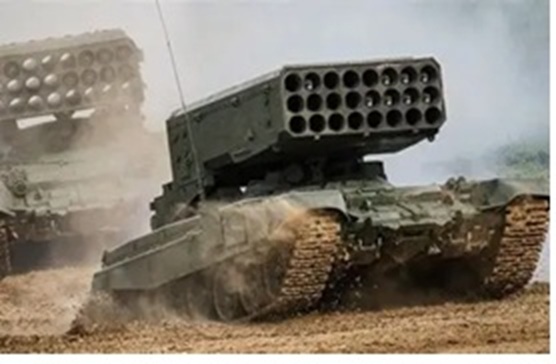
At least 2,842 Palestinians had ‘evaporated’ … [which] civil defence teams attribute to Israel’s use of thermal and thermobaric weapons, which effectively ‘vaporise’ human bodies
Belen Fernandez 4 May 2026 , https://www.middleeasteye.net/opinion/israel-making-palestinians-disappear-more-ways-one
Reports of missing children and ‘evaporated’ bodies reveal a widening pattern of erasure in Gaza, where entire families are killed, lost under rubble or reduced to biological traces
n 23 April, the Israeli newspaper Haaretz reported that “dozens of children go missing each week” in the Gaza Strip “against the backdrop of the postwar chaos” – a curious euphemism, no doubt, for the ongoing US-backed genocide in the Palestinian territory, which proceeds apace despite the ceasefire that was ostensibly implemented last year.
The article begins with four-year-old Mohammed Ghaban, who disappeared in early April in northern Gaza: “[H]e had been playing with his brother in front of his displaced family’s tent. He went inside, asked for a hug, put on his sandals and went out.” And then he was gone.
The author cites an estimate from the Palestinian Center for the Missing and Forcibly Disappeared that 2,900 children “disappeared during the war”, with 2,700 bodies thought to be trapped under the rubble and the remaining 200 simply missing.
Such statistics are in keeping with the modus operandi of the Israeli military, which, according to the official fatality count, has killed more than 72,500 Palestinians in Gaza since the launch of the genocide in 2023, with thousands more still missing and presumed dead under the rubble.
United Nations special rapporteur Francesca Albanese warned back in September that the true death toll might already have been more in the vicinity of 680,000.
Speaking of disappearances, an Al Jazeera Arabic investigation revealed in February that at least 2,842 Palestinians had “evaporated” in the Gaza Strip since the start of the war – a phenomenon Gaza’s civil defence teams attribute to Israel’s use of US-manufactured thermal and thermobaric weapons, which effectively “vaporise” human bodies.
The gruesome tally was quickly eclipsed by the deranged US-Israeli war on Iran and wider regional catastrophe, which has monopolised the news for the past two months. But the topic remains as sinisterly relevant as ever.
In remarks to Al Jazeera at the time, civil defence spokesperson Mahmoud Basal outlined the process for determining the number of vaporised victims at homes targeted by Israeli strikes: “If a family tells us there were five people inside, and we only recover three intact bodies, we treat the remaining two as ‘evaporated’ only after an exhaustive search yields nothing but biological traces – blood spray on walls or small fragments like scalps.”
Vaporised bodies
Upon publication of these macabre findings, the Israeli military got its panties into a genocidal bunch and issued a huffy communique to allegedly set the record straight.
Rejecting Al Jazeera’s “false claim of the evaporation of Gazan bodies”, the army insisted that it “uses only lawful munitions” and that it “strikes military targets and objectives in accordance with international law and takes all feasible measures to mitigate harm to civilians and civilian property to the extent possible.”
It’s not clear, of course, why a military that has been accused of potentially killing nearly 700,000 people – and that wipes out entire families and neighbourhoods without so much as batting an eye – took such particular offence at the whole “evaporation” matter.
Granted, disappearing bodies into thin air is a pretty good way of hiding the true extent of mass slaughter.
And while the vaporisation of Palestinian bodies may not fit the official legal definition of enforced disappearance, it is quite literally exactly that.
According to the website of the Office of the United Nations High Commissioner for Human Rights, “an enforced disappearance is considered to be the arrest, detention, abduction or any other form of deprivation of liberty by agents of the State or by persons or groups of persons acting with the authorization, support or acquiescence of the State, followed by a refusal to acknowledge the deprivation of liberty or by concealment of the fate or whereabouts of the disappeared person, which place such a person outside the protection of the law”.
In light of Israel’s explicit disappearing act in Gaza, however, a considerable expansion of that definition would seem to be in order.
And yet Israel is guilty of the traditional variety of enforced disappearance, as well. Last August, UN experts denounced reports that starving Palestinian civilians – including a child – were being forcibly disappeared from aid distribution sites run by the notorious Gaza Humanitarian Foundation.
Backed by Israel and the US, the foundation also specialised in massacring desperate folks who had gathered in search of food and other necessary items for survival.
Meanwhile, in both Gaza and the West Bank, Israel’s enforced disappearances of medical personnel, journalists and all manner of other humans have flourished since the onset of the genocide – not that this hasn’t always been par for the course.
Global pattern
For its part, the US has had a hand in enforced disappearances in a whole lot of places around the world, including by aiding and abetting bloodthirsty right-wing regimes throughout Latin America during the Cold War.
Tens of thousands were disappeared in Argentina, Guatemala and beyond as the US and its buddies nobly went about making the hemisphere safe for capitalism.
In Mexico, more than 130,000 persons have been disappeared, the vast majority of them following the launch in 2006 of the US-backed “war on drugs”, which would be more aptly characterised as a war on the poor.
But from Mexico to the Middle East, the number of disappeared hardly conveys the extent of victimisation. The families of the missing are victims, too, condemned as they are to indefinite psychological limbo in the absence of concrete information regarding the fate of their loved ones – without which it is impossible to commence the grieving process or obtain the emotional closure that is necessary to move on with one’s life.
In the case of Israel’s “evaporation” of Palestinians in Gaza, it’s hard to say whether the knowledge that your loved one has been vaporised is concrete enough to enable eventual closure. After all, there’s nothing very concrete about being forcibly vanished without a trace.
Indeed, Al Jazeera quotes Palestinian father Rafiq Badran on the almost inconceivable psychological torment that attends Israel’s sinister new spin on the theme of enforced disappearance: “Four of my children just evaporated,” Badran said, holding back tears. “I looked for them a million times. Not a piece was left. Where did they go?”
Now, with regional war raging as the arms industry rakes in big bucks, it has become even easier for global audiences to tune out the unique plight of the Palestinians – which means that the genocide is effectively being disappeared from the spotlight, as well.
In the end, of course, the Israeli goal is nothing less than to forcibly disappear the very idea of a Palestinian people. But unfortunately for Israel, its blood-drenched legacy will not be so easily concealed.
Not so quiet death – the US orders to kill the Iranian Navy’s Dena and its crew
The deliberate killing of survivors at sea represents one of the most clearly defined war crimes in international humanitarian law, with prohibitions stretching back more than a century and codified in multiple treaties and military manuals. The fundamental principle underlying these prohibitions is that individuals who are hors de combat � out of combat due to shipwreck, wounds, surrender, or other incapacitation � must not be made the object of attack. This principle applies universally in armed conflicts and represents a core tenet of the laws of war that balances military necessity with humanitarian considerations.
John Helmer, Dance with Bears, Sat, 02 May 2026 , https://www.sott.net/article/506075-Not-so-quiet-death-the-US-orders-to-kill-the-Iranian-Navys-Dena-and-its-crew
In the early morning of March 4, Sri Lanka time, the Islamic Republic of Iran Ship (IRIS) Dena was attacked by the US submarine USS Charlotte with two torpedoes.
The first destroyed the Dena’s propeller shaft and stopped her dead in the water. Her position was at coordinates 6.0073 degrees North, 79.8654 degrees East: that was nine nautical miles (nm) outside Sri Lanka’s territorial waters; 19 nm (35 km) west of the harbour of Galle, a port on the southwestern coast of the island.
At the 30-knot speed the Dena had been moving, she was 18 minutes from the safety of Sri Lankan territory. Immobilized, however, the Dena captain, Abuzar Zarri, gave the crew the order to assemble on the aft deck in full visibility of the Charlotte, and prepare to abandon ship. As the crew mustered, a second torpedo was fired by the Charlotte to sink the Dena and kill the crew.
The torpedo warhead explosion broke the keel; the Dena sank in less than five minutes.
Of the crew’s 180-man complement, 32 were rescued from the water by the Sri Lankan coast guard, including Zarri and the first officer; 87 bodies were recovered; 61 were lost. Altogether, 148 were killed.
On the Charlotte, submerged at a distance from the Dena of less than 10 nm (18 km), there was an interval of approximately ninety minutes between the first fire order and the second, the kill order. A close-range film of the second torpedo strike, recorded by the Charlotte, was released to the press by the Pentagon.
https://www.youtube.com/embed/DkUkQ5pzSlc?wmode=opaque
Four men participated in the chain of command through which these two strike orders were requested; decided; transmitted; executed.
They are CommanderThomas Futch (lead, left), commander of the USS Charlotte; CaptainJeffrey Fassbinder (second left), chief of the Submarine Squadron 7 of the US Pacific Fleet; AdmiralStephen Koehler (centre), Commander of the US Pacific Fleet; and Peter Hegseth (right), the US Secretary of War (Defense).
Hegseth announced in a Pentagon briefing on March 4 what he wanted the public to believe he had done. “Yesterday in the Indian Ocean, and we’ll play it on the screen there, an American submarine sunk [sic] an Iranian warship that thought it was safe in international waters. Instead, it was sunk by a torpedo, quiet death. The first sinking of an enemy ship by a torpedo since World War II.”
Hegseth was deceiving. He knew two torpedoes had been fired; it was the second which sank theDena. He knew theDenadid not “[think] it was safe in international waters”. This was because US intelligence had been reporting to the Pentagon and the US Navy’s Pacific Fleet command that the Iranian Navy had been requesting safe haven for theDenaand its two escorts,IRIS LavanandIRIS Bushehr, in Sri Lanka, then India, for more than seven days before the March 4 attack.
Admiral Koehler knew because he had met with Sri Lankan officials in Colombo between February 19 and 21 to deter them from taking Iran’s side. “We stand with Sri Lanka in facing shared security challenges — from maritime domain awareness to countering transnational threats”, the US Embassy announced. On March 4, the Sri Lankan newspaper Tamil Guardian editorialized: “Did Washington’s Sri Lanka visit precede a secret naval strike? Questions grow after Iranian frigate sunk.”
In the new article just published in the Tehran Times, the evidence of the Dena attack has been summarized and the political implications weighed – for the US and for the governments of Sri Lanka and India, which joined the US in the preliminaries, before the attack of March 4, and in the aftermath.
Click to read: https://www.tehrantimes.com/news/525994/IRIS-Dena-sinking-Survivors-testimony-diplomatic-delays-and
Comment: From the link:
What happened off the coast of Sri Lanka, Iranian officials argue, was not simply an attack on a warship. It was the deliberate destruction of a disarmed and disabled vessel and its evacuating crew prevented from reaching safety — and a test of who in the region chose neutrality, and who did not.
War on the high seas have strict rules. There are rules of engagement and even in French, there is the rule of being hors de combat (out of combat).
In the case of the Dena being torpedoed twice and her crew of 148 lost, there seems to be a Naval case to be made for when there are Orders to Kill Survivors at Sea:
The deliberate killing of survivors at sea represents one of the most clearly defined war crimes in international humanitarian law, with prohibitions stretching back more than a century and codified in multiple treaties and military manuals. The fundamental principle underlying these prohibitions is that individuals who are hors de combat � out of combat due to shipwreck, wounds, surrender, or other incapacitation � must not be made the object of attack. This principle applies universally in armed conflicts and represents a core tenet of the laws of war that balances military necessity with humanitarian considerations.
The codes of war come with Article 60 (and 71) that state:
Article 60 of the Lieber Code states unequivocally that “it is against the usage of modern war to resolve, in hatred and revenge, to give no quarter.” Article 71 went further, prescribing the death penalty for anyone who “intentionally inflicts additional wounds on an enemy already wholly disabled, or kills such an enemy.” These principles were subsequently incorporated into the 1899 Hague Regulations, which prohibited killing or wounding “an enemy who, having laid down arms, or having no longer means of defence, has surrendered at discretion.”
Does Peter Hegseth need to answer for this, and what of the Commander, Admiral and Captain?
Chernobyl at 40: Belarus took the brunt
April 28, 2026, https://beyondnuclear.org/chernobyl-at-40-belarus-took-the-brunt/
A report from Olga Karatch, Belarussian founder in exile of Our House:
On April 26, it marked 40 years since the largest nuclear technological disaster in history — the explosion at the Chernobyl nuclear power plant. Although the plant is geographically located in Ukraine, Belarus suffered the greatest damage due to weather conditions.
The Chernobyl disaster resulted in radioactive contamination of nearly 150,000 km², while around 5,000 km² became an exclusion zone with the strictest restrictions.
The distance from Chernobyl to the Belarusian border is only 11 km. To Minsk — about 330 km. To Vilnius, where the action took place — less than 490 km.
In 1986, an RBMK reactor exploded at the plant. This type of reactor used graphite rods to control the reaction, as well as water. At a certain point, water could interfere with the insertion of the graphite rods.
These rods function as the reactor’s brakes. When the brakes fail, disaster becomes inevitable — and it did.
Similar reactors were operating at other plants, including the Ignalina nuclear power plant in Lithuania.
According to the IAEA report INSAG-7, as early as 1983 a so-called positive feedback effect (positive scram effect) was identified — later becoming one of the key factors in the Chernobyl disaster.
The RBMK reactor itself was considered high-risk: incidents occurred at the Leningrad plant (1975), at Chernobyl (1982, 1984), and at Ignalina.
Nuclear power plants are often presented as environmentally friendly, but this is an oversimplification.
In the Soviet Union, the nuclear sector was part of a closed system, overseen by a separate ministry.
Nuclear power plants did not exist in isolation: they were part of a broader industry, one of whose end products was weapons-grade plutonium and uranium.
Information about radiation accidents was often concealed. Victims were misdiagnosed and forced to sign non-disclosure agreements. People died, and even doctors sometimes did not know the real causes — because of secrecy.
Today, safety standards have improved, but the risks have not disappeared.
Moreover, the economic efficiency of nuclear energy is increasingly questioned. In some cases, the cost of decommissioning a plant exceeds the profits generated during its operation.
Belarus continues to pursue nuclear projects while serious concerns remain regarding safety and transparency.
During the construction of the Belarusian NPP:
— a reactor vessel was dropped (2016)
— equipment was damaged during transportation
After launch, shutdowns, disconnections, and periods of downtime have been repeatedly reported.
The Lithuanian regulator (VATESI) has repeatedly pointed to recurring failures and a lack of transparency.
Conclusion
Due to the clear mismatch between high risks and questionable benefits, “Our House” advocates phasing out nuclear energy.
We will continue to participate in public actions and speak about these issues openly.
Dangers to the Fourth Estate: The 2026 World Press Freedom Index

5 May 2026 Dr Binoy Kampmark, https://theaimn.net/dangers-to-the-fourth-estate-the-2026-world-press-freedom-index/
Scribblers, scribes, authors and publishers – all of these are facing ever worsening conditions in pursuing their work in battling the goons of secrecy and impunity. The Reporters Without Borders (RSF) World Press Freedom Index has rotten news on that score. For the first time since the index came into being, RSF states that “over half of the world’s countries now fall into the ‘difficult’ or ‘very serious’ categories for press freedom. In 25 years, the average score of all 180 countries and territories surveyed in the Index has never been so low.”
In reaching its scores on press freedom, RSF uses five contextual indicators: political context, legal framework, economic context, sociocultural context and safety. The political context evaluates, among other things, the extent of support and respect for media autonomy regarding political pressure from the state or various political actors. Factors important to legal matters include the extent of censorship, judicial sanctions and restrictions on freedom of expression. The economic dimension takes account of such factors as the difficulties of establishing news media outlets, blighting corruption, the allocation of state subsidies, and the interest of media owners. The sociocultural context covers such issues as “denigration and attacks on the press based on such issues as gender, class, ethnicity and religion” and cultural restraints against reporting. Safety focuses on the ability of journalists to identify, gather and disseminate news without facing bodily harm, psychological or emotional distress, and professional harm
There are various reasons postulated by the group for the precipitous decline in press freedoms. Armed conflict plays its inevitable, corrosive role. Iraq (placed at 162), Sudan at one spot above, and Yemen at 164, are cases in point. The ongoing battle between Israel and the Palestinians has been disastrous for press freedom, not least because of the killing, since October 2023, of over 220 journalists in Gaza by the Israeli Defense Forces. 70 of the slain were killed while carrying out their work.
The authoritarian regimes have done little to move up the index. China remains confidently oppressive of reporters at 178, with North Korea stoutly taking the spot below. Eritrea completes the bottom at 180. Russia, at 172, continues to blot its copybook in targeting journalists (as of April 2026, 48 remain in prison), a situation not helped by its ongoing war in Ukraine. The Iranian regime (177) maintains its studied viciousness against journalists. Saudi Arabia, despite its gaudy, kitschy efforts at modernisation headed by the petulant princeling Mohammed bin Salman, has not softened on the issue of press freedom. On June 14 last year, the Saudi journalist Turki al-Jasser was executed after a seven-year spell of arbitrary imprisonment. Al-Jasser had been accused by the Saudi authorities of operating the X account named Kashkool, one inclined to post material linking the House of Saud with human right abuses and corruption.
Of all the states recorded, Niger, at 120, registered the most dramatic fall (down 37 spots). This, according to RSF, underscored “the wider decline in press freedom in the Sahel region seen in recent years as attacks by armed groups and ruling juntas have suppressed the right to balanced information from diverse sources.”
The organisation despairingly notes that the Index’s legal indicator has registered a sharp fall in 2026. “This score deteriorated in more than 60% of states – 110 out of 180 – between 2025 and 2026.” Journalism has been systematically criminalised, a practice “rooted in circumventing press law and misusing emergency legislation and common law.”
Resorting to national security laws and regulations is a favourite. Mention terrorism as a charge, as happened to the journalist Frenchie Mae Cumpio, and a prosecution, however baseless, becomes elementary and successful. (In Cumpio’s case, the shoddy charge was that of financing terrorism.) In Türkiye, the net on national security is drawn widely to include charges of “disinformation”, Article 299 of the country’s Penal Code covering insults of the President, and the charge of “denigrating state institutions.” States, in claiming to use the law appropriately, resort to strategic lawsuits against public participation (SLAPPs). RSF underlines Bulgaria (71) and Guatemala (128) as practitioners of the art. Not to be left out, political and business plutocrats make use of laws to curb exposure of their antics in the press. Indonesia (129), Singapore (123), and Thailand (92) are seen as experts in this regard.
Protections for journalists from legal or physical threats was also found to be woeful, with more than 80% of countries having “non-existent or ineffective” measures. Even the European Media Freedom Act (EMFA), seen as sound armour for the independence and sustainability of media outlets, has been weakened by domestic legislatures. Hungary (ranked 74), only recently rid of its long serving Prime Minister Viktor Orbán, excelled in this regard, though RSF also notes the programs of such countries as Slovakia (37) and Lithuania (15).
To round up the inglorious list are the United States (64), Argentina (98) and El Salvador (143). US President Donald Trump continues to hound and harry the Fourth Estate, with RSF taking particular issue with cuts to the US Agency for Global Media (USAGM) responsible for the drastic slimming of personnel at the Voice of America (VOA), Radio Free Europe/Radio Liberty (RFE/RL), and Radio Free Asia (RFA).
Rankings, in themselves, are cold measures. They can also prove vague. But there is nothing vague about the insatiable appetite towards persecution shown by states of all political persuasions when attacking reporters and publishers. The dictates of the national security state and its desperation in controlling narratives and holding the line on mendacity and the exposure of bad behaviour, remains that most threatening of diseases to the Fourth Estate.
NewsReal: Energy Wars on the High Seas – Trump Admits “US Navy Like Pirates!”
Sott.net Sun, 03 May 2026 https://www.sott.net/article/506082-NewsReal-Energy-Wars-on-the-High-Seas-Trump-Admits-US-Navy-Like-Pirates
Typically, the American president has blurted out ‘the plain truth’ about what his government is doing around the world – from the Caribbean to the Arctic to the Black Sea and Indian Ocean: behaving like pirates. This week we review, taking into account Richard Medhurst’s excellent dot-connecting in his documentary ‘The Petrogas-Dollar: The Secret US Strategy Behind the Iran War’, the string of US and Israeli government moves this year to effectively ‘ring-fence’ the global flow of oil and gas.
As we’ve been warning for over a decade, the US was never going to just roll over in the face of Russian defiance regarding Crimea, Iranian resistance against Israeli expansionism, and Chinese ‘win-win’ geoeconomic strategy towards a multipolar world. They hatched a ‘counter-attack’, and Trump is playing his part to ‘make America great again’, which is really just to do whatever the US can to forestall or prevent the end of its currency’s status as ‘global reserve currency’.
1 This Month





PLEASE OPPOSE HR 8255 AND S.3639 – bills would accelerate satellite deployment, with no environmental review or safeguards – https://ncstd5li.quorum.us/campaign/169331/
To see nuclear-related stories in greater depth and intensity – go to https://nuclearinformation.wordpress.com
-
Archives
- October 2026 (49)
- September 2026 (339)
- August 2026 (330)
- July 2026 (355)
- June 2026 (287)
- May 2026 (306)
- April 2026 (356)
- March 2026 (251)
- February 2026 (267)
- January 2026 (308)
- December 2025 (358)
- November 2025 (359)
-
Categories
- 1
- 1 NUCLEAR ISSUES
- business and costs
- climate change
- culture and arts
- ENERGY
- environment
- health
- history
- indigenous issues
- Legal
- marketing of nuclear
- media
- opposition to nuclear
- PERSONAL STORIES
- politics
- politics international
- Religion and ethics
- safety
- secrets,lies and civil liberties
- spinbuster
- technology
- Uranium
- wastes
- weapons and war
- Women
- 2 WORLD
- ACTION
- AFRICA
- Atrocities
- AUSTRALIA
- Christina's notes
- Christina's themes
- culture and arts
- Events
- Fuk 2022
- Fuk 2023
- Fukushima 2017
- Fukushima 2018
- fukushima 2019
- Fukushima 2020
- Fukushima 2021
- general
- global warming
- Humour (God we need it)
- Nuclear
- RARE EARTHS
- Reference
- resources – print
- Resources -audiovicual
- Weekly Newsletter
- World
- World Nuclear
- YouTube
-
RSS
Entries RSS
Comments RSS

