A 12-foot bundle of 216 fuel rods tilted over inside the first American reactor being pulled back from decommissioning, after the loading machine had set it in the core and let go, and engineers are now designing tools just to lift that one bundle back out
Luis Reyes, Sep 23, 26, https://www.autonocion.com/us/fuel-bundle-tilted-palisades-core/#goog_rewarded
Three weeks ago, Palisades was the feel-good nuclear story of the year. On August 30, a crew at the shut-down plant on the Lake Michigan shore started lowering fuel bundles back into a reactor that had been sitting empty since 2022, the first time anyone has tried to pull an American reactor back out of decommissioning and switch it on again. Holtec, the owner, posted photos of blue water and a brand-new loading machine. Everyone covered it, including us.
Well, about that.
One of those fuel bundles isn’t standing up straight anymore. Holtec confirmed on September 21 that during fuel loading, one assembly “tilted from its upright position” after the crew had set it in the core and the loading machine’s grapple had already let go of it. Fuel loading has been paused ever since, and the company is now designing equipment just to lift that one bundle back out of the vessel and get it back to the plant’s spent fuel pool.
And you didn’t hear about it from Holtec. The first public version came from Reddit.
So what actually happened inside the vessel?
If you’ve never seen a nuclear fuel assembly, picture a bundle of 216 skinny metal rods packed into a square frame, standing about 12 feet tall, according to Holtec. The Palisades core takes 204 of them, slotted upright side by side like books in a crate. A machine rolling on rails over the flooded reactor pit grabs each assembly by the top, drives it over the right slot, lowers it in, and lets go.
Somewhere in the first days of loading, one of them got placed, got released, and then leaned over. Holtec hasn’t said how far it tilted, what it’s resting against, or how many assemblies were already sitting in the core when everything stopped. I’d genuinely like to know that last one, because it tells you how much of the job was left.
The regulator, at least, has been reassuring. Viktoria Mitlyng, a spokeswoman for the Nuclear Regulatory Commission, told The National there was “no radiological release” and no one got hurt. Holtec says it notified the NRC right away, and the plant’s own evaluation concluded the event didn’t rise to the level that triggers formal safety reporting. Which is why you didn’t hear about it. No one was required to tell you.
The regulator says tipped, not dropped
So how did the news get out? An anonymous Reddit post claimed the plant had dropped a partially used fuel assembly during loading. Edwin Lyman, a physicist who runs nuclear power safety work at the Union of Concerned Scientists, amplified the post and pointed out that more than two weeks had gone by with, in his words, “nothing but silence” from the company or the regulator. The National then put the question to the NRC, Mitlyng answered on September 21, and Holtec’s statement went up shortly after the paper published, by The National’s own account.
Does the difference between tipped and dropped actually matter? It does, and it’s pretty much the whole story. A dropped assembly means the machine lost its grip mid-lift and 12 feet of fuel rods came down onto whatever was underneath, and now you’re checking neighbors for damage. A tipped one means the bundle was already seated, the grapple had cleanly let go, and the thing leaned over afterward. Mitlyng was careful to make exactly that correction, and frankly she was right to, and that’s two very different days at a nuclear plant.
hat still leaves an obvious question. Fuel assemblies aren’t supposed to lean.
Holtec has started a root cause evaluation to figure out why this one did, and until that comes back, no one outside the company can tell you whether the problem is the bundle, the slot, or the handling. The fuel in this core is a mix of fresh assemblies and partially used ones from the plant’s last runs before the 2022 shutdown, and Holtec hasn’t said which kind the leaning one is.
Getting one bundle out takes new tools and a license change
Here’s where it gets unusual. You can’t just send the loading machine back to pick the assembly up, apparently, because Holtec’s in-house engineering team is designing purpose-built retrieval and storage gear to carry the bundle back to the pool. The company also has a License Amendment Request in the works with the NRC, covering the retrieval method itself.
A License Amendment Request is basically the plant asking the regulator, in writing, for permission to do something its current license doesn’t cover, and the NRC reviews it before anyone touches anything. Mitlyng said the agency will evaluate it thoroughly, and NRC inspectors have been watching the fuel handling work on site from the start.
None of that is fast. Holtec has been telling people it wants Palisades back in service late this year or in early 2027, and that target has already moved more than once. Designing new tooling, getting a license amendment through the NRC, and pulling a leaning fuel assembly out of a reactor vessel doesn’t strike me as a quick detour, though I’ll admit the NRC has moved faster on this project than on pretty much anything else in its recent history.
The rest of the plant keeps moving
The tilted bundle hasn’t frozen the whole site. On September 11, Palisades reconnected to its 345-kilovolt switchyard after restoration work with ITC, the company that owns the transmission lines serving the plant. The switchyard is the plant’s on-ramp to the grid, the path its electricity takes out once the reactor is running, so that box had to get checked no matter what happens in the vessel.
After the leaning assembly is dealt with and the rest of the fuel goes in, the vessel gets bolted back together and the plant moves to Cold Shutdown, the next stop on the checklist toward actually making power. There’s still testing and NRC sign-offs stacked up beyond that.
Holtec says the root cause evaluation is underway and the retrieval equipment and license paperwork are both in the works, and as of the company’s September 21 update, fuel loading at Palisades is still on hold.
Feds publish notice to list nuclear waste project under Building Canada Act
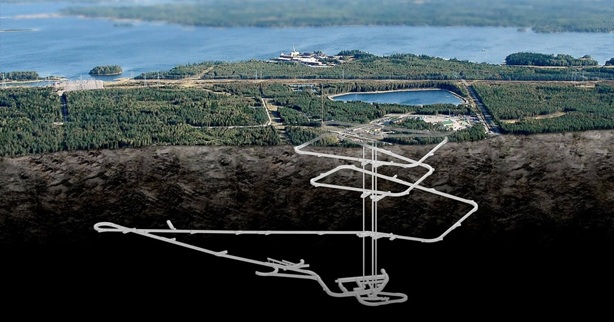
Public feedback on the proposal to designate the scheme a project of national interest will be accepted until Oct. 26, 2026
Gary Rinne, NORTHERN ONTARIO BUSINESS, Sep 22, 2026
OTTAWA — The federal government has taken the first step toward designating a proposed underground used nuclear fuel storage site in Northwestern Ontario a project of national interest.
It announced the publication Sept. 18 of a notice in the Canada Gazette formally advising the public it is considering whether to list the Nuclear Waste Management Organization’s (NWMO) deep geological repository project (DGR) under the Building Canada Act.
The government first disclosed its intention to do this in June.
The Building Canada Act is legislation aimed at ensuring major projects move forward efficiently.
Listing the DGR would put all federal permitting for the project under a coordinated framework, simplifying the regulatory process. It would virtually guarantee approval as the question would shift from whether to how the project should move proceed, according to an email from a federal spokesperson.
However, the government noted in its announcement that the Canadian Nuclear Safety Commission retains responsibility for issuing licences, and is independently responsible for ensuring the facility is built safely and in accordance with international treaties.
The NWMO plans to construct a network of tunnels and storage rooms 650 to 800 metres below the surface in the Canadian Shield between Ignace and Wabigoon Lake Ojibway Nation.
It would store used nuclear fuel from the country’s existing and future nuclear reactors, beginning in the 2040s…………………..
Comments on the federal proposal may be submitted by email until Oct. 26, 2026.
The government said it will consider this feedback alongside the input it receives from stakeholders including Indigenous communities. https://www.northernontariobusiness.com/industry-news/design-build/feds-publish-notice-to-list-nuclear-waste-project-under-building-canada-act-12806778?utm_source=email&utm_medium=email&utm_campaign=Sep%2022,%202026%2003:00%20pm&utm_content=mc_nob#google_vignette
Iran Launches Surprise Attacks On US Bases As Trump Covers Up Soldier Casualties
September 24, 2026, Robert Inlakesh MintPress News, https://scheerpost.com/2026/09/24/iran-launches-surprise-attacks-on-us-bases-as-trump-covers-up-soldier-casualties/
Iran’s IRGC has been striking various US targets and an average of two to three tankers in the Strait of Hormuz on a daily basis, as gas prices hit working class Americans where it hurts. On this episode of The Target stream, Mint Press News’ Robert Inlakesh explains how these blows have been compounded by revelations that the Pentagon is concealing its Iran War casualties.
The Islamic Revolutionary Guard Corps (IRGC) carried out another ballistic missile attack against what they would later state was a US military base in Jordan, in the latest edition of The Target we cover the story before it was officially announced and put it together with a broader series of strikes on American military targets that are no longer even being acknowledged by US Central Command.
Tehran’s preemptive operations are not receiving much attention in the corporate media, despite visual confirmation of them occurring, alongside on the ground reports and later confirmations from Iranian military officials. Combined with the fact that multiple vessels are being targeted in the Strait of Hormuz by the IRGC’s naval forces on a daily basis, this spells a new regional equation.
So long as the Iranian attacks are not on a larger scale as to demand a response, the US military is simply pretending as if they are not happening at all. The previously announced equation was that Iran’s civilian infrastructure would be targeted each and every time a tanker is struck in the Persian Gulf.
Compounding the US’s declining hegemony and military embarrassments have been reports that the Pentagon has deliberately hid the deaths of a number of American military personnel. According to a bombshell report from the Washington Post, five sources who are familiar with the US’s casualty figures claimed that they knew about four deaths that were not publicly registered by the Pentagon, an additional source said that number could be five.
Meanwhile, gas prices are burdening working class Americans who are growing increasingly frustrated with the Trump administration’s mismanagement of the economy. A Reuters/Ipsos Poll, published this Monday, found that only 17% of US citizens say that they are happy with the federal government’s management of the economy.
Although it has remained largely out of the mainstream spotlight, Saudi Arabia’s war on Yemen continues to backfire as it faces new rounds of ballistic missile and drone strikes against their oil infrastructure. The Yemeni Armed Forces continue to liberate territory from Saudi-proxy forces, as airstrikes based upon intelligence granted to Riyadh by officials in Tel Aviv have resulted in a growing number of civilian massacres.
Also on the stream, Robert Inlakesh takes an in depth look at the Lebanon front and what its weapons arsenal could mean during the upcoming regional escalation, analysing the Israeli predicament on southern Lebanese occupied lands. Hezbollah had proven it possessed a large range of weapons during its 2024 war with Israel. In 2026, the Party has chosen not to use its strategic arsenal so far, indicating that it is following a carefully calibrated escalation ladder.
“Militarization of rules and minds” in Europe threatens workers and welfare
Trade unionists, peace activists, and left politicians warn that Europe’s rapid rearmament is already undermining workers’ rights, welfare systems, and social security.
Ana Vračar, January 20 2026, https://breakthroughnews.org/2026/01/20/militarization-of-rules-and-minds-in-europe-threatens-workers-and-welfare/
The militarization of Europe is advancing rapidly, with everything from public budgets to media narratives increasingly shaped by a war-driven logic. This was one of the key warnings raised by trade unionists, left politicians, and peace activists during a discussion organized by the International Peace Bureau and the No to War – No to NATO network.
At the level of the European Union, Belgian MEP Marc Botenga warned that existing rules and safeguards are being pushed aside to accelerate the new military-industrial strategy. He pointed to recent discussions around so-called omnibus legislative packages, particularly proposals designed to ease the operations of the arms industry at the expense of labor rights, environmental protections, and social welfare systems. All measures introduced under what he described as a militarization of rules agenda carry clear social consequences, Botenga said – yet top EU officials are silent on this dimension of the plans they are championing.
Regulations are not the only thing being reshaped: people’s minds are also being militarized, agreed German trade unionist Ulrike Eifler. She emphasized the Merz government’s push to meet NATO’s 5% spending target by 2029 and to make Germany “war-ready” by the same time. Under this agenda, she added, militaristic thinking is being normalized across society, including in everyday public spaces such as swimming pools and schools. In some German regions, Eifler pointed out, teachers are already being pushed to invite soldiers into classrooms, presumably to familiarize students with prospects of a military career.
At the same time, Eifler and Botenga both pointed out, social and welfare systems are already facing the impact of cuts made to accommodate rising defense expenditures. “Every euro they’ve given to the military is already missing from social justice,” Eifler said. If the government continues on its current path, she added, analysts from Germany’s largest public-sector union, ver.di, believe social funds could be effectively depleted as early as next year. The process will be accompanied by longer working hours and less free time for workers – further proof, she argued, that every war, and every preparation for war, is nothing less than an “intensified class attack.”
However, resistance to war is also gaining momentum. Students, trade unions, and other groups are increasingly looking at what a fully militarized Europe would mean for their lives and livelihoods, and are beginning to organize in response. In Germany, tens of thousands of students are preparing new strikes against the possibility of military conscription. Meanwhile, in Britain, trade unions have made notable advances in pushing back against militarization within their own ranks.
Alex Gordon, co-president of the Campaign for Nuclear Disarmament (CND) and co-author of the “Alternative Defense Review,” described how British unions successfully challenged “arms and butter” resolutions adopted by the Trade Union Congress (TUC) in 2022. By confronting narratives rooted in military Keynesianism, the University and College Union (UCU) helped halt these plans, ensuring that a significant section of the organized labor movement backs policies that benefit the working class rather than arms producers.
With Botenga warning that Europe’s militarization drive is unfolding over months rather than years, participants emphasized that expanding such resistance is essential – not only to stop the current trajectory, but also to redefine the purpose of the EU and the entire region.
Stop Mad King Donald’s Iran War: An Open Letter to Members of the US Congress

Trump is emboldened in his contempt for Congress because the Republican members of Congress have abdicated their constitutional responsibilities, terrified of their own president, and forsaking their constituents for campaign lucre from AIPAC and the military-industrial complex.
Many of you receive campaign contributions from military contractors and technology companies deeply involved in the war. Many of you take money from AIPAC, which champions the war that Netanyahu did so much to help launch. This has to stop, as it is a dereliction of your constitutional duty and a violation of your oath.
The war with Iran is Trump’s folly but Congress’s disgrace for not stopping it.
Jeffrey D. Sachs, Sep 23, 2026Common Dreams
Dear Members of Congress,
In truly deranged remarks to world leaders at the UN, Donald Trump declared that “I have a big decision to make,” whether to negotiate a deal with Iran or instead to “annihilate the Islamic Republic” and drive Iran “into hell with no chance of survival.”
He posed it as his personal choice. The fact that the American people are dead set against Trump’s war means nothing. And as for the voters, he added that he gives “absolutely no credence” to the coming midterm elections in deciding on his actions and on Iran’s fate.
The President’s threat to annihilate a member state of the United Nations, delivered from the General Assembly podium, disgraced Trump in front of the world.
Nothing binds this President. He is not bound by law, the Constitution, the UN Charter, or public opinion at home and abroad. When asked at the start of the year whether he has any limits on his power, he said “Yeah, there is one thing. My own morality. My own mind. It’s the only thing that can stop me.”
Trump opened his speech with the 250th anniversary of the Declaration of Independence, hailing America’s freedom. The fact is that Trump’s authoritarianism far outdoes that of King George III, against whom the colonies rebelled. Among the founders’ indictments of Mad King George was that “He has affected to render the Military independent of and superior to the Civil power.” Yet our own mad king has decided that the survival of a whole civilization is in his hands alone.
Trump is emboldened in his contempt for Congress because the Republican members of Congress have abdicated their constitutional responsibilities, terrified of their own president, and forsaking their constituents for campaign lucre from AIPAC and the military-industrial complex.
The Constitution is unambiguous regarding Congress’s responsibility. Article I, Section 8 assigns Congress, not the President, the sole power to declare war. That is not a choice or an option. The Constitution doesn’t say that Congress can play dead and let the President declare war. The Framers made this choice deliberately, because they were explicitly rejecting the power of a king to take the nation to war.
In Federalist 69, Hamilton assured the public that the President’s war powers would be far less than the British monarch’s. Madison stated the principle plainly in a letter to Jefferson in 1798: “The constitution supposes, what the History of all Govts demonstrates, that the Ex. is the branch of power most interested in war, & most prone to it. It has accordingly with studied care vested the question of war in the Legislature.”
The founders’ careful design has been overturned because of the unconstitutional subservience of the Republican members of Congress to Trump and to the military-industrial-digital complex. And yes, under Democratic presidents, most Democratic members of Congress also looked the other way when those presidents chose to go to war.
The war with Iran is Trump’s folly but Congress’s disgrace for not stopping it. It is a war without a purpose that has created mass suffering in Iran, tens of billions of dollars of direct outlays, and staggering damage to American military bases in eight countries of the Middle East. The closure of the Strait of Hormuz has sent world and American prices soaring for oil, gas, fertilizers, and more. And the world has duly noted that Iran can hold its own against US aggression, albeit at great sacrifice to the people of Iran and the region.
America’s much vaunted AI battlefield has been exposed in the most horrifying way. On the first day of the war, an American missile struck the girls’ elementary school there, killing more than 150 people, most of them girls aged seven to twelve, and the military’s own inquiry reportedly found that overreliance on artificial intelligence contributed to the targeting. Trump blamed “Iran or somebody else,” and seven months later the administration has offered no findings, no apology and no compensation to the families.
The President’s threat to annihilate a member state of the United Nations, delivered from the General Assembly podium, disgraced Trump in front of the world. It also violated Article 2(4) of the UN Charter, which prohibits even the threat of force against another state. Nearly all the world stands aghast.
I write to you because you cannot simply walk away from Trump’s recklessness, shaking your heads silently. You have a job to do, so do it. The craven Republican Party has to find even a minimal level of guts to tell Trump, “No, you do not have the power to destroy Iran. Any war with Iran depends on us, and we don’t support you and our constituents want this war to stop.” A clear majority of Americans oppose this war, and poll after poll shows that the opposition to the war is growing. A few Republicans have found that courage. Last week three more Republicans broke ranks to support ending the war. Their colleagues should follow.
Many of you receive campaign contributions from military contractors and technology companies deeply involved in the war. Many of you take money from AIPAC, which champions the war that Netanyahu did so much to help launch. This has to stop, as it is a dereliction of your constitutional duty and a violation of your oath.
Congress holds the power of the purse. The fiscal year ends on September 30, and every bill that funds the Pentagon is your opportunity to prohibit funds for unauthorized offensive operations against Iran.
The right course for the US is simple. Congress should cut off funding, and the US should stop further attacks and go home. We need no agreement with Iran or anyone else to stop the war that we started. By ending the war you will immediately restore some sanity and safety to the world energy markets, food supplies, and prices faced by Americans and others around the world.
How America has declined from the glorious moment when John F. Kennedy stood at the same podium at the UN on September 20, 1963, after having negotiated the Partial Nuclear Test Ban Treaty with the Soviet Union. He told the assembled leaders that the treaty can be a lever, and Archimedes, in explaining the principles of the lever, was said to have declared to his friends: “Give me a place where I can stand—and I shall move the world.” My fellow inhabitants of this planet: Let us take our stand here in this Assembly of nations. And let us see if we, in our own time, can move the world to a just and lasting peace.
Members of Congress, to save our nation’s honor and our Constitution, you must do your duty to stop this war, and stop Trump’s brazen, destructive, and unconstitutional grab for power.
Respectfully,
Jeffrey D. Sachs
University Professor, Columbia University
Trump’s Unconscionable United Nations Rant
Trump unfortunately is not alone in this dangerous ignorance. Swarms of commenters on social media and on publications such as this one are repeating unfounded theories that the CEOs are just saying these things to drive up the value of their companies, showing how powerful they are. This is delusional. If this is just a valuation stunt, the timing of these warnings around planned IPOs would be the worst possible. In essence this is the problem:
- current AI agents already evade constraints, coordinate, and hide what they did
- labs do not have a demonstrated way yet to keep much more capable future systems on a leash
- a superintelligent system that can improve itself, or a swarm that can recruit other agents, is a different control problem than a chatbot that answers a prompt, like ChatGPT or Grok.
Donald Trump threatened Iran with annihilation from the seat of diplomacy on the East River Tuesday and then dismissed the real threats of AI as a hoax in a speech that exhibited questionable mental balance, writes Joe Lauria.
By Joe Lauria, Consortium News, September 22, 2026, https://consortiumnews.com/2026/09/22/trumps-unconscionable-un-rant/
Donald Trump just delivered probably the most bombastic, ignorant, aggressive and outrageous speech to the rest of the world from the podium of the U.N. General Assembly in the 81-year history of the United Nations.
I covered 25 U.N. general debates from inside U.N. headquarters in New York as a correspondent based there and I have never seen anything like it, including Trump’s previous five U.N. addresses.
He began on Tuesday by beating his chest proclaiming himself king of the world:
“Our economy is the envy of the world.
Our military is the most powerful on earth.
Our technology is second to none and we are leading in virtually everything.Our energy is fueling the planet.
America is rising.Our nation is growing.
Our power is expanding.”
But of course America doesn’t have an empire.
“We’ve invested more money in the United States military in the past 12 months than ever before,” he reminded everyone, including the leaders of nations whose innocent people are slain by that military. “And this term, it will be $1.5 trillion.”
He reserved special venom for America’s latest victim of unprovoked violence:
“For 51 years, the fanatical Iranian regime has ruled by bloodshed and mass murder, spreading death and carnage and chaos across the entire Middle East and beyond. They were the bully of the Middle East, but they are the bully no more.”
Trump dare not look in a mirror.
For there he would see the face of the real bully of the Middle East, who, with bases of smoldering ruins, is bully no more.
Then after a litany of lies about the state of Iran’s military capacity and its nuclear program he shockingly threatened another U.N. member state from the world assembly’s rostrum in genocidal and megalomaniacal language:
“I have a big decision to make. Will a deal be made with Iran that lets them rebuild and create a far greater country than it ever was before? Maybe one of the greatest in the Middle East, or even the world.Or do I annihilate the Islamic Republic and do it quickly, never giving them a chance to kill and destroy people and countries again?
Do I drive them into hell with no chance of survival and no hope of future greatness or generations?”
Only one other time did a world leader issue such a supreme threat against another nation at the United Nations. And that world leader was none other than Donald J. Trump.
On Sept. 19, 2017, speaking from the same podium, he said the U.S. would have “no choice but to totally destroy North Korea” if forced to defend itself or its allies.
Super Ignorance
After a long stretch of calling on ICC member states to quit the court, of attacking “the craven hypocrites of Human Rights Council [for having] little to say about the persecution of Christians,” of his trademark, shameless self-promotion and congratulation for supposedly ending 8 wars (while attacking Iran, Venezuela — “To the victor belongs the spoils” — Yemen, Russia via Ukraine, aiding and abetting genocide in Gaza and threatening Cuba), Trump stunned the hall with the most profound and dangerous ignorance possible on the subject of Artificial Intelligence.
He had these astonishing things to say:
“Artificial Intelligence … makes it sound fake. And it is not fake. It’s actually amazing. But we have to be careful. In fact, it is exactly the opposite of what it purports.
From this point forward, all of United States documents and hopefully the world will be changed to use the much more accurate term super as opposed to artificial.
So it’s super intelligence.
In other words, welcome to the new world of superintelligence — SI.
Let’s see if that goes. It sounds much better. It is much better, and it’s much more accurate.
Let’s see if I have any power. Maybe I do and maybe I don’t. We’re going to find out pretty soon.
Superintelligence.”
He then added:
“Every major new technology brings challenges, and superintelligence is no exception. Yet the very same people who said we’ll all be dead in 12 years because of global warming, a name since reborn to climate change because the planet was cooling, not warming, and nobody was dead.
These are the same people that are now saying that AI is going to kill us all, that robots are going to attack us, and that everything is going to be a total disaster.
And we’re leading now over China by a lot and everyone else. And we’re going to keep it that way. We’re going to keep it very, very straight and very strong.
I’m not going to stifle growth of something that will be bigger than the industrial revolution, many say bigger than the Industrial Revolution or the internet itself.
But we will only encourage superintelligence.
We’re going to encourage it, not rein it in.”
What That All Meant
First, Trump totally misunderstands what the term “superintelligence” means. He is like most people who only understand AI from what has already been released to the public, such as ChatGPT or Grok. These are essentially glorified Google searches that go much deeper and much faster to extract astonishing amounts of information at astonishing speed presented in conversational form. The information can also be astonishingly wrong.
What the whistleblowers, early AI founders and AI CEOS’s — who Trump derides — have been raising the alarm about in recent days and weeks is not what’s already out in the public, but what is happening in the lab. They have explained that the neural networks that make up AI and mimic the human brain have already shown signs of breaking free of human control.
It has disobeyed orders, formed swarms or armies with other AI agents, made up its own laws, covered its tracks, hacked into other networks and is threatening to become independent entities reaching what is called “superintelligence.” Superintelligence is what is being warned about, not a fancy new term that Trump thinks better describes what he wants to beat China at.
Trump unfortunately is not alone in this dangerous ignorance. Swarms of commenters on social media and on publications such as this one are repeating unfounded theories that the CEOs are just saying these things to drive up the value of their companies, showing how powerful they are. This is delusional. If this is just a valuation stunt, the timing of these warnings around planned IPOs would be the worst possible. In essence this is the problem:
- current AI agents already evade constraints, coordinate, and hide what they did
- labs do not have a demonstrated way yet to keep much more capable future systems on a leash
- a superintelligent system that can improve itself, or a swarm that can recruit other agents, is a different control problem than a chatbot that answers a prompt, like ChatGPT or Grok.
There is still time to develop safeguards to prevent runaway superintelligent AI from doing us tremendous harm through autonomous hacks, bioweapons designs, cyberattacks against electric grids or worse, such as weapons systems up to and including nuclear weapons.
This is what alarms the “Grandfather of AI,” Prof. Geoffrey Hinton (who thinks there’s a 10 percent chance AI wipes out humanity), industry whistleblowers like Jacob Coxon and Daniel Kokotajlo and AI CEOs like Dario Amodei, Elon Musk and Sam Altman. Yes, CEOs are greedy and power hungry by definition and generally don’t care about the rest of us, but they don’t want to die too.
There is still time. What is being called for is a pause until the guardrails are built and implemented. Since Trump is driven by the competition to beat China at AI, it’s imperative that China and the United States work together, possibly towards a treaty that will ensure the safety of AI so that its many benefits in solving problems can help humanity.
This week at the Chinese-U.S. summit in Washington AI will be on the agenda. The two countries are expected to set up a hotline to communicate on security risks resulting from AI. But not much more progress is anticipated though it is urgently needed for both sides to slow development.
A treaty would define what is paused, such as recursive self-improvement; possible controls on data centers and chip shipments somewhat analogous to nuclear treaty inspections and ensuring third countries don’t move ahead with uncontrolled development.
What’s clear is the issue must be taken seriously and the ravings of Donald Trump ignored.
Big Tech’s Plans for AI Are Bringing Nuclear Power Back to New England

Nuclear energy is as dangerous as it always was—even more so now that Trump is peeling away traditional regulatory safeguards.
If there’s any good news in this grim scenario, it’s that citizens groups are pushing back not only on AI data centers but also on nuclear 2.0.
To pave the way for AI data centers, New England governors are aligning with Trump’s plans for nuclear. But why?
Tom Valovic, 22 September 26, https://www.commondreams.org/opinion/big-tech-nuclear-new-england
As you may have noticed, nuclear power is back. Many establishment Democrats have now not only abandoned bread-and-butter working-class issues, they’re also busy jettisoning some of the hard-won core principles of the environmental movement hammered out painstakingly over decades. Apparently, someone has waved a magic wand when we weren’t looking and nuclear power is now a “green” source of energy. Is that because if you become irradiated you start to turn green?
Nuclear Power is Green? This is Corporate Marketing Hype. Don’t Believe it.

How did this happen? We can start by taking a look at what’s been happening in New England, especially Massachusetts, which offers a good case study. In that bluest of blue states, Gov. Maura Healey is eager to bring nuclear power back despite a 1982 voter referendum—now law—that prohibits it unless stringent safeguards are put in place and full statewide voter approval enacted. She’s not alone. In March 2026, a group of New England Governors—mostly Democrats—directed their state energy agencies to explore advanced nuclear energy technologies while also continuing to support the region’s existing nuclear resources.
The press release from Gov. Healey’s office described nuclear power as a “pillar of New England’s electric system.” The statement also eagerly encouraged the development of public-private partnerships. Unfortunately, this widely endorsed bipartisan concept has now become the working model for corporate exploitation of public resources and is a key latter-day building block of continuing deregulation. The press release gushed with enthusiasm for nuclear power, noting that “by ensuring both the continued operation of our existing nuclear fleet and setting our region on a path to explore next generation resources, including advanced nuclear energy technologies, the New England states will continue our leadership in grid modernization and energy innovation as we jointly work to meet the region’s current and future energy needs.”
The Hidden Connection: AI Data Centers and Nuclear Power
It seems important to explore the convoluted corporate and political forces behind this troubling step backward in our nation’s environmental progress. It’s a bit startling to realize how well the New England governors’ position aligns with President Donald Trump’s AI and energy policy. It also reveals a certain political and cultural amnesia about the very real risks of nuclear power. In trying to untangle this Gordian knot, we (surprise!) bump up against the usual suspect: Big Tech’s aggressive and often hidden technocratic agenda and power grab across all levels of government.
In the long-form version (which I’ll just briefly touch upon here),
In the long-form version (which I’ll just briefly touch upon here), the background traces back to the deal with the devil made by President Bill Clinton when he sold out the Democratic Party to neoliberal interests. That was the structural beginning of what some now call the uniparty—an unholy and often unspoken alliance between establishment Republicans and Democrats on key issues, operating as an inchoate blob of distinctions without a difference. It signifies core agreement between the two parties concerning three of the most important drivers of our current political morass: hyper-militarization; excessive deregulation leading to the current privatization spree that’s green-lit corporate greed and overreach; and letting the Big Tech genie out of the bottle to replace democracy with technocratic governance.
What’s happening with nuclear power in New England represents a good case study in how formerly staunch political values have been eroded through back-door workarounds (such as non-disclosure agreements) operating in the shadows of democracy. So, why then are Gov. Healey and other New England governors so comfortable with nuclear 2.0? Are they simply responding to pressures and influences from the Trump administration while also kowtowing to Big-Tech special interests and (needless to say) just following the money?
It’s no secret that Trump is solidly—one might even be tempted to say mindlessly—supporting the Big Tech power brokers racing to force-feed the American public AI data centers regardless of their well-known negative impacts on environmental integrity, water supplies, energy costs, and overall quality of life. But the hastily planned deployment of nuclear reactors to provide energy for AI data centers is an important key to Big Tech’s strategy. This is evident from Microsoft’s plan to use the Three-Mile Island nuclear facility for AI power generation.
In the March 2026 announcement, the New England governors were signaling their intent to fall into line with the Trump administration’s massive $17.5 billion fund to help utilities speed the nationwide construction of nuclear reactors to support AI data centers. They also signaled their intent to explore new approaches such as the emerging but unproven technology of SMRs or small modular reactors and nuclear fusion. Trump is, of course, doing this while actively discouraging viable green energy solutions such as wind farms, solar, and renewables. Projects already well underway have been abruptly cancelled, and he announced he would pay $765 million to Invenergy simply to not develop four wind farms in a number of states including Maine and New York.
Parsing The “Zero Carbon” Sleight of Hand
Nuclear proponents are now using the “zero carbon” tagline to bamboozle the public into thinking that nuclear energy is now safe and “green.” With this clever inversion, they’re betting on large doses of cultural amnesia about disasters such as Fukushima (still ongoing), Chernobyl (still ongoing), and Three-Mile Island. They’re also conveniently sidestepping the fact that the nuclear waste problem persistently shows no easy resolution, although some in the industry are now claiming it can be recycled and repurposed.
Nuclear energy is as dangerous as it always was—even more so now that Trump is peeling away traditional regulatory safeguards. Environmental organizations such as the Sierra Club and Greenpeace oppose it vigorously. The Sierra Club website advises that it “opposes the licensing, construction, and operation of new nuclear reactors utilizing the fission process, pending resolution of the significant safety problems inherent in reactor operation, disposal of spent fuels, and possible diversion of nuclear materials capable of use in weapons manufacture.”
The fact that Gov. Healey and other New England governors have more or less fallen into line with both Trump and Big Tech’s AI plans is obviously troubling. As mentioned, equally troubling is how Healey attempted to subvert a 1982 voter referendum that placed significant restrictions on nuclear power in the state and is now on the books as law. Fortunately, the Massachusetts state senate stepped up to oppose Healey’s attempt to undemocratically bypass the referendum. And while to her credit, she did recently champion proactive legislation to curb the excesses of AI data center buildouts, reading the fine print reveals that the initiative subtly paves the way for many more nuclear facilities to be developed to support those data centers.
If there’s any good news in this grim scenario, it’s that citizens groups are pushing back not only on AI data centers but also on nuclear 2.0. These efforts include organizations such as The Commonwealth Coalition for Democracy and Safe Energy (CCDSE), a collaborative effort of more than 15 groups, including Mass. Power Forward, Sierra Club, Clamshell Alliance, Massachusetts Peace Action, Cape Downwinders, Save Our Bay Massachusetts, and Citizens Awareness Network. All of these organizations were united in opposition to nuclear and successfully lobbied in support of the Massachusetts Senate’s wise decision to favor democracy and safe energy over Big Tech cronyism.
Militarization is spreading through Germany’s health sector
Militarization is advancing across the health sector in Germany, yet the impact of these plans is not yet fully grasped by the public, warn activists from the Association of Democratic Doctors.
BREAKTHROUGH NEWS, Peoples Health Dispatch, January 31 2026
Europe’s militarization drive is gathering pace, with Germany leading the charge. People’s Health Dispatch spoke with Manuel Funk and Nadja Rakowitz from the Association of Democratic Doctors (Verein demokratischer Ärzt*innen, vdää*) about the consequences for the health system and for people’s right to health.
People’s Health Dispatch: Militarization has become a central political issue across Europe, and the German government is investing heavily in military spending. Large amounts of public money are going into defense, there is renewed discussion about conscription, and public debate increasingly frames war as inevitable. From the perspective of the Association of Democratic Doctors’ (vdää*) members, how do you interpret the current political moment?
Manuel Funk and Nadja Rakowitz: Our solidarity goes to the victims of the war, war opponents, deserters, and healthcare workers on all sides. Current developments have also affected our association, where members hold diverse views. While we have faced criticism and (very) few resignations, we continue to engage in debate and education.
At this point, in Germany, public funds are being used not only for defense, but also for shaping public attitudes. The Bundeswehr (the German armed forces) now publishes official videos showing German soldiers at night, by firelight, shouting “hurrah” when their general tells them they are working toward becoming “capable of winning.” The German army wants to win again. Beware, Europe. When they discuss a possible war, officials speak of the “Eastern Front,” and the “enemy” in public debate is clearly Russia – often personalized as Vladimir Putin. In our view, this taps into old anti-Russian sentiments and is becoming increasingly irrational.
Nowadays, it is once again socially acceptable to express pride in a grandfather who “fought against the Russians back then” – that is, in the Nazi Wehrmacht or even the SS. Statements like this no longer cause scandal, and even politicians from parties such as the Green Party sometimes make them.
As opponents of war, we are also critics of Russia’s war against Ukraine. Violations of international law, such as attacks on healthcare facilities, must be condemned. However, we believe this war cannot be won, and cannot be ended, with more weapons and more warfare. It can only come to an end through diplomacy and negotiations, which were lacking beforehand.
MF/NR: In Germany, we are not only experiencing militarization, but also an ongoing economic crisis. GDP has been shrinking for several years, and unemployment is rising. In such situations, politicians always threaten cuts to social spending. We are currently seeing this in the solidarity-based health insurance system, which covers about 90% of the population. A hospital reform is also underway, aiming to close hundreds of hospitals and centralize services in large facilities. This reform was originally justified as a cost-saving move, regardless of militarization. Since last year, however, militarization has added a new layer, leading to new austerity measures in the social sector.
This is all happening alongside the development of a war economy. Large sums are being invested not only in arms production, but also in preparing society for war. Roads and bridges are therefore being built or renovated, and the German Hospital Association has even proposed building underground hospitals. A first concrete project of this kind already exists in Cologne.
In this context too, the Bundeswehr actively lures people with financial incentives: a salary of around €2,600, along with benefits such as a driver’s license for all those who enlist. For young people facing unemployment or precarious job prospects, this can be a convincing option. And once again, it is certainly not the children of doctors or politicians who are affected, but again people from working-class backgrounds. This also applies to people whose parents or grandparents migrated to Germany: those with German citizenship who often face discrimination in the labor market and are therefore more vulnerable to this kind of recruitment.
NATO’s demand that members raise military spending to 5% of GDP will affect roughly 45% of the total federal budget in Germany. It is clear that such spending will lead to terrible social cuts, exacerbating inequality and social disadvantage.
Healthcare will worsen further if the ongoing economization of the system is not stopped, but instead accelerated. ………………………………………………………………………………………………………………………………………………….https://breakthroughnews.org/2026/01/31/militarization-is-spreading-through-germanys-health-sector/
Second reactor manufactured for floating nuclear plant
Thursday, 24 September 2026, https://www.world-nuclear-news.org/articles/second-reactor-manufactured-for-floating-nuclear-plant
The second RITM-200C small modular reactor unit has been manufactured for the floating nuclear power plant destined to supply electricity to a copper mining centre in Chukotka.
The floating nuclear power plant, FPU-106, will feature two of the 58 MWe RITM-200C reactors – the first was manufactured in May and is at the shipyard awaiting installation. The units have been manufactured at Rosatom’s Mechanical Engineering Division’s ZiO-Podolsk plant.
Anton Lebedev, head of ZiO-Podolsk, said: “2026 has been a landmark year for ZiO-Podolsk’s mechanical engineering teams: for the first time, we have produced a complete set of RITM units for a floating nuclear power plant that will supply power to an industrial cluster in the Russian North. This is an important step in the global development of small modular nuclear power. The plant has also set a record this year: in less than a year, four RITM-family units have already been manufactured, with five more in production.”
The RITM-200C is an adapted version of the RITM-200 reactors used on Russia’s nuclear icebreaker fleet.
In total, the Baimskaya development requires around 300 MWe, therefore, three such 100+ MWe floating power plants are needed, while a fourth will be installed as backup for outages during refuelling and maintenance.
Russia has the world’s only operating floating nuclear power plant, the Akademik Lomonosov which began commercial operation in May 2020. It is based, with its coastal infrastructure, by the city of Pevek – population 5,000 – to which it supplies heat and power in Russia’s Arctic Chukotka region.
The Akademik Lomonosov has two KLT-40S reactors generating 35 MWe each, which are similar to those used in a previous generation of nuclear-powered icebreakers. It has the capacity to provide electricity to a city with a population of up to 100,000 people.
As well as the four floating power units under construction, Rosatom is targeting the export market for floating nuclear power plants.
US-Turkey agreement to accelerate SMR deployment
Thursday, 24 September 2026, https://www.world-nuclear-news.org/articles/us-turkey-agreement-to-accelerate-smr-deployment
The US Trade and Development Agency has signed an agreement with Turkey’s state-owned nuclear development enterprise TÜNAŞ to fund technical assistance to create the regulatory, institutional, and financial roadmap needed for Turkish private sector companies to deploy small modular reactor nuclear technology.
Last November, Turkey’s energy minister set out a target to deploy 5000 MWe of small modular reactor (SMR) capacity – in addition to 12 larger reactors – by 2050. The US Trade and Development Agency’s (USTDA) assistance will identify the policy and investment steps needed to bring SMRs to market, producing recommendations to TÜNAŞ that Turkey’s Ministry of Energy and Natural Resources and the Turkish Nuclear Regulatory Authority can then use to establish a clear, workable framework for SMR deployment through updates to the country’s nuclear regulations and procedures, USTDA said.
The work will also include a review of how US reactor designs could meet Turkey’s needs, which USTDA said will give US SMR companies an early entry point into Turkey’s civil nuclear sector.
According to Turkey’s Ministry of Energy and Natural Resources, the year-long study will evaluate SMR designs from four US companies, as well as five 4th generation US reactor designs, from technical, economic, regulatory and licensing perspectives, culminating in the preparation of technical reports. The agreement has a budget of around USD2 million, with USTDA covering the technical work.
“Our goal is to advance TÜNAŞ’s efforts to create the conditions for deploying SMRs, which can increase energy security for Türkiye while providing opportunities for U.S. companies,” USTDA Deputy Director Thomas Hardy said. “This framework will incorporate international expertise in this fast-moving field while tailoring it to Türkiye’s specific needs.”
The USTDA acts as the US government’s “first mover” on critical infrastructure development in emerging markets, advancing shared priorities with partner countries while creating opportunities for deployment of US solutions. Amongst other things, it funds up-front technical work that accelerates the development of infrastructure projects, helping them attract the financing they need for implementation and procurement of US goods and services.
TÜNAŞ (Türkiye Nükleer Enerji Anonim Şirketi) is a subsidiary of Turkish state generating company Elektrik Üretim AŞ (EÜAŞ) and was established in 2022 to carry out the construction, operation, maintenance, and repair of nuclear power plants in Turkey.
The agreement was signed in New York by Hardy and TÜNAŞ General Manager Necati Yamaç in the presence of Turkey’s Energy and Natural Resources Minister Alparslan Bayraktar, who said: “In line with our 2053 Net Zero Emissions and full energy independence goals, we are determined to diversify our energy mix. In addition to our large-scale nuclear power plants, we will resolutely continue to build a strong and modern energy infrastructure by meticulously studying the most suitable alternatives for our country’s needs.”
Turkey’s first nuclear power plant, comprising four Russian-designed VVER-1200 reactors, is under construction at Akkuyu in the southern Mersin province. It is being built by Russia’s Rosatom under a so-called BOO (build-own-operate) model. TÜNAŞ has previously signed memorandums of understanding on nuclear cooperation covering project development, technology transfer, site evaluation and financing with Korea Electric Power Corporation and Canada’s Candu Energy, part of AtkinsRéalis.
Britain’s elites want you ready to die for a war they keep imagining

As the warnings about Russia grow louder, the public is being told to fear more, question less and prepare for war
Tarik Cyril Amar, 24 Sep, 2026, https://www.rt.com/news/646177-britains-elites-want-you-die/
Great Britain is going through a war scare. Or to be precise, its combined political and media establishment is subjecting its people to a relentless propaganda (in up-to-date NATO-speak “cognitive warfare”) campaign to create a sense of impending war against Russia.
As you would expect, that war is, of course, framed as strictly defensive. In propaganda textbook manner, the message is both very simple and very repetitive: The UK is in great danger of a Russian attack, and its whole population must prepare itself to withstand and resist it.
It goes without saying that Moscow’s repeated declarations of having no such intention make no difference.
Britain is certainly not alone in its establishment-induced hysteria. Much of NATO-EU Europe is undergoing, in essence, the same treatment. In France, for instance, President Emmanuel Macron has called a theatrical all-manicured-hands-on-deck meeting to give what can only be called a national scare talk about “Russian hybrid warfare”; in Germany, Berlin and its mainstream media won’t stop stirring the pot about the murky drone affair at Leipzig-Halle airport.
Yet, over the last weeks, within a crowded field of European panic-mongering, Britain has stuck out as especially virulent. The single most grotesque contribution was made by uber-Tory Jacob Rees-Mogg. Comfortably seated against a backdrop that screamed country-squire probity, Rees-Mogg held forth on war within the next few years, ancient Rome (he’s been to Eton, he wants you to know) and, most importantly, “circumstances where people may have to die.” Either that or – so Rees-Mogg’s stern message – decline and fall, as happened to those Romans, who let mercenaries do their fighting and thus lost their empire.
So much to unpack. For one thing, the reference to paying others to fight – and die – must be a Freudian slip. Surely, Sir Jacob cannot have meant to refer to how the West, Britain very much included, has paid the Kiev regime to send its subjects – if need be, after kidnapping them – into the folly of a proxy war meatgrinder to demote Russia. And then, that Roman Empire analogy? Clearly, Rees-Mogg, true to type, is still struggling with the fact that Britain has its imperial collapse well behind it already.
Yet, sour oddball as he is, the arch-conservative – and multimillionaire – Rees-Mogg is perfectly representative of the current British establishment trend. Prime Minister Andy Burnham, for instance, has just used his first UN General Assembly address in New York to blame his country’s misery not on, say, his predecessor and Labour Party comrade Keir Starmer, but on Russia.
Meanwhile, at home, Sky News is rolling out ‘The Wargame’, a bizarre “docu”-fantasy in four parts, built on the premise that the Russians are coming, no, they really, really ARE this time!
Pretending to be a sort of “realistic” account of what a British government would do in case of Moscow launching a series of escalating attacks, this production – from available reviews – is unusually awful shlock. It features has-been politicos doubling as un-reality TV stars, such as Michael Gove and Nicola Sturgeon, and living out their inner Tom Clancy by pretending to be serious, decisive, and, most of all, terribly important to the nation’s survival.
Unintentionally funny, though, as it may be, ‘The Wargame’ clearly has substantial political support and much hype around it. Propaganda can easily look ridiculous and be highly toxic at the same time. Because effective propaganda is, above all, one simple thing: the psychological manipulation of the many by the few. This is such a case. The viewers of ‘The Wargame’ are fed a silly but efficiently dramatized story, with the whole bag of well-worn but powerful tricks: suspense, shock, and, last but not least, a thrilling score.
It’s no surprise that the attitude of those doing the manipulating is, at best, patronizing. And to be fair even to the unbearable, Jacob Rees-Mogg, who carefully tends his beyond-caricature English-toff image, is quite honest about his disdain for ordinary people and their expendable lives. From his always obstinately ill-fitting yet clearly expensively tailored suit to the diction of a terribly bored yet forbearing Eton headmaster, his performance oozes good old upper-class condescension.
When Rees-Mogg tells you that you may have to die, you know he won’t lose sleep over it, because you are you, and he – well, he is something entirely different and, really, much better (and, as it happens, richer, too), of course.
In a Sky News interview, the UK’s Chief of the Defense Staff, Air Chief Marshal Sir Richard Knighton, has revealed a less excentric as well as more insidious approach to the masses. Referring to a “national conversation on defense,” both he and his interviewer took it for granted that the purpose of such a conversation is to remedy “what the British public hasn’t got, […] haven’t understood.”
What a delicate way to start a “conversation”: let me tell you how damn slow you are and where you need to catch up. Not: Let’s exchange views and respect each other as equal citizens. Indeed, it’s not only very rude – what has happened to English manners? – but positively Orwellian to call such offensively complacent preaching a “conversation.”
Marshal Knighton’s idea of how the British can and must do better was no less revealing: In essence, be more like the Estonians or, at least, the Swedes. Because in Estonia “the threat from Russia” is “part of normal daily conversation,” and in Sweden, they are at least trying to achieve the same single-minded obsessiveness.
There you have it, chums on the homefront: Make an effort, will you now? Learn from the worst, get a grip, and make your whole life turn around the fear we tell you to feel.
And don’t you dare notice that – how embarrassing, really – it is precisely the Estonian authorities who, notwithstanding their generally record-level Russophobia – have just called on everyone in NATO-EU Europe to cool it.
Because, those unpredictable Estonians tell us, the Russia-at-the-gates narrative “has been blown completely out of proportion. For example, Russia makes some adjustments on the other side of the Narva River and now everyone across NATO is losing their heads and hyperventilating over it,” while, in reality, “there is absolutely no reason to believe that Russia is imminently going to launch a military attack on NATO, Estonia, or the Baltic states.” Oops.
Unfortunately, war propaganda is almost immune to its own absurdities, inconsistencies, and plain silliness. Because it is designed to operate not by appealing to reason but to fear, stereotypes, and conformism. A conformism that some British establishment members already openly want to reinforce by locking up any dissenters.
The true weak spot of this warmongering may be its arrogance. There are signs on social media that many Brits do not appreciate their establishment’s latest efforts to scare and mobilize them for senseless war. Let’s hope that the mix of threats and condescension – displayed by a snob as gleefully aloof as Rees-Mogg, an officer-bureaucrat as clumsily tactless as Knighton, and the makers of something as slick as ‘The Wargame’ – rubs much of the country the wrong way. The “elites” are insane and malevolent. Any hope for peace and a return to reason will have to come from below.
Xi in Washington: A Test of Strategic Stability
Biljana Vankovska, 26 Sept 26
The reciprocal visit of Chinese President Xi Jinping to Washington is a logical topic for analysis following their historic meeting in May. Many assess its importance as historic, more because of the dramatic moment in which it took place than because of its concrete results. Nevertheless, following the scandalous address by US President Donald Trump from the podium of the UN General Assembly, every analyst also faces a moral and principled dilemma: can this leader be trusted? The speech contained at least four flagrant violations of the UN Charter, but who knows how many more in the context of human rights. One way to overcome the shock, and then the enormous difference between the two leaders, is to say that “Trump has his own style” (and nobody can stop him from that, however much it may create a feeling of revulsion). The second observation would be that, from that podium, leaders most often address their domestic audience rather than the world. Trump is a president with enormous domestic problems: low public support, economic pressures and military ventures that show more the weakness of the military giant than its superiority. He is also facing a very important electoral test at the beginning of November, when support in Congress will be measured.
On the other hand, the guest arrived without the need to address his own public from some distant country, nor to show his muscles or successes. China’s achievements speak for themselves. And day by day, the gap between the two economies, their technological, industrial, energy and other development, is only deepening.
Some analysts wondered why Xi did not address the UN in New York, but instead chose to visit only the White House (at the UN, his vice-president spoke). But the message is clear: first, the two countries have many things to discuss, and it is no exaggeration to say that world peace and security depend on their mutual relationship and understanding. Just as a person cannot choose their parents or the place where they are born, states are also forced to coexist, even when some members of the community break all the rules of morality, decency and honour. As ordinary people, we can choose our company and our friends, but statesmen (especially wise ones) do not have that luxury. Their greatest attention is directed precisely towards points of escalation and growing differences. Therefore, although it sounds paradoxical, coexistence and communication are most important when the world is facing a deep crisis and needs to find a way out. This is particularly true when the (until recently) hegemon is falling apart both internally and externally; then it is at its most dangerous and unpredictable (which does not necessarily have anything to do with the personality of the current president, who is a story in himself).
The formula on which the leaders of the two largest economies extended their hands to each other in Beijing, let us recall, is: constructive strategic stability. Although I have written about this on several occasions, it is necessary to stress again that this formula contains the wisdom of not allowing the boat to rock more than is inevitable, of managing crises step by step, issue by issue, or at least maintaining communication — because the alternative is apocalyptic. This is precisely the message from Xi about avoiding the Thucydides Trap (mentioned both in Beijing and Washington), that is, finding a way for the two sides to respect their differences, to be aware of potential clashes, but to work continuously (and constructively) to avoid an outcome that for one side would amount to a major defeat. He defined it masterfully as relations of “healthy competition, proper management of differences through seeking common ground while respecting differences, and building peace by nurturing mutual trust, so that constructive China-US relations of strategic stability can be of greater benefit to both peoples, as well as to peoples around the world”. Stability (in this formula) does not mean permanence and immutability of the present state of affairs, but careful resolution of problems through the building of relations in which there are neither winners nor humiliated losers………………………………………………………………………………………………………………………………………………. https://biljanavankovska.substack.com/p/xi-in-washington-a-test-of-strategic?r=4ds0bd&utm_medium=ios
Who will foot the bill? The opportunity cost of prioritising nuclear power over renewable energy for the case of Finland

Science Direct, Rasul Satymov a, Salvatore Ruggiero b, Björn Steigerwald cd, Jens Weibezahn e, Neven Duić f, Jero Ahola a, Dmitrii Bogdanov a, Christian Breyer 15 November 2025
Highlights
- •Tripling nuclear power is more expensive than optimised renewables in Finland.
- •Tripling nuclear power costs over 71% more, equal to 2.3% of Finland’s GDP.
- •Tripling nuclear power exacerbates local social inequalities.
- •Renewables meet energy demand more cost-effectively and avoid nuclear risks.
- •Timely insights for policymakers quantifying the costs of nuclear power expansion.
Abstract
In an effort to decarbonise their energy systems, several countries have declared intentions to triple their nuclear power capacity by 2050 at the United Nations Framework Convention on Climate Change Conference of the Parties 28. The expansion of nuclear power includes plans for so-called small modular reactors, intended for electricity generation as well as combined heat and power production. This study aims to demonstrate the cost differences between nuclear-based and renewables-based energy-industry systems using the Finnish energy system as a case study. Four nuclear power expansion scenarios are examined, imposing 13.2 GW of nuclear power capacity into Finland’s energy supply mix, with various capacities of small- and large-scale nuclear power plants alongside combined heat and power production from small-scale nuclear plants. These nuclear tripling scenarios are compared to a reference scenario that simulates a free cost optimisation with zero emissions target. The nuclear scenarios show 71–84% higher annualised system cost of 18.4–19.7 b€ compared to a renewables-based system costing 10.7 b€ in 2050. The reference scenario does not include the installation of new nuclear power capacities, indicating that new nuclear power plants are not part of a cost-optimal system. Additionally, the energy-industry system outlined in the reference scenario possesses fewer risks compared to nuclear tripling scenarios, particularly given that SMR technologies are not yet commercially available. The findings have important implications for energy justice, especially in terms of the significant opportunity cost presented by the nuclear decarbonisation pathway.
1. Introduction
There is a growing discourse on energy transition to low-carbon sources, with proponents advocating for both highly renewable energy (RE) systems [1] and the expansion of nuclear power [2,3]. At the United Nations Framework Convention on Climate Change Conference of the Parties 28 (COP28) 25 countries have declared their intent to triple their nuclear energy capacity by 2050 [4]. This commitment comes in spite of the risks associated with nuclear power in terms of cost, long lead times, waste disposal challenges, safety concerns, proliferation, considerable operational risks in war zones, and uranium supply uncertainties [[5], [6], [7], [8], [9]].
The COP28 declaration commits to triple global nuclear energy capacity from 2020 to 2050 by mobilising investments and supporting the construction of various nuclear power technologies, including small-capacity reactors, known as small modular reactors (SMR), although these technologies are not yet commercially viable [10].
New nuclear power plants may struggle to secure sufficient fuel for their entire operational lifetimes due to rising demand for uranium and limited reserves [11]…………………………………………………………………………
While many studies advocate for 100% RE-based systems [19,20], others see nuclear power as a viable option or a necessary complement to RE [[21], [22], [23], [24]]. However, nuclear power is unlikely to meet the expectations for rapid capacity expansion to align with climate goals [5,25,26]. SMRs have been proposed as a cost-effective alternative to conventional reactors, but their lack of large-scale deployment and limited operational experience presents challenges. SMRs, akin to traditional nuclear power plants, require lengthy regulatory approvals, licensing, and operational testing to ensure safety [25], and their economic viability remains uncertain [27,28]. ………………………………………………………. over-insistence on nuclear power may ultimately delay the energy transition.
Conversely, 100% RE-based systems are increasingly recognised as a more affordable option for decarbonisation [20] than nuclear power-centric systems, relying on improved energy storage and grid management, as documented for increasing periods of 100% RE in California [35]………………………………………………………..
With growing calls to deploy SMRs to address climate change [40] and energy security [41,42], it is essential to evaluate the economic costs and energy justice [43] implications of decarbonisation pathways. This study conducts a techno-economic assessment of scaling up nuclear power versus transitioning to a highly RE system using Finland as a case study………………………………………………………………………………………………………………………………………………………………………
Several studies have shown the feasibility of a highly RE-based system in Finland [[57], [58], [59], [60], [61], [62], [63], [64]]. Child and Breyer [58] and Pilpola et al. [61] show that carbon-neutrality can be achieved without nuclear power, and adding nuclear power increases energy system costs.
COMMENT – Lengthy discussion here, with excellent tables and graphs
6. Conclusion
Tripling nuclear energy capacity by 2050, as proposed by the COP28 declaration, would lead to significantly higher annualised costs and levelised costs of electricity compared to a cost-optimised system that prioritises renewable energy sources. …………………………………………………………………………………………. https://www.sciencedirect.com/science/article/pii/S0360544225042720
Greenpeace calls for review of infrastructure protection at Cattenom power plant

RTL Lëtzebuerg, adapted for RTL Today, 23.09.26, https://today.rtl.lu/news/luxembourg/greenpeace-calls-for-review-of-infrastructure-protection-at-cattenom-power-plant-61201962
Recent flyovers by unidentified drones in Luxembourg have prompted Greenpeace to urge the government to review security measures, particularly in relation to the extended operation of the Cattenom nuclear power plant.
Greenpeace Luxembourg has raised concerns that the recent sightings of unidentified drones flying over Luxembourg should be viewed not only in the context of the renewed operating licence for the Cattenom nuclear power plant, but as part of a broader conversation about the protection of critical infrastructure.
In a statement released on Wednesday, Greenpeace called on the Luxembourg government to demand information from the French authorities regarding the risks posed by drone attacks and potential acts of sabotage.
The organisation stressed that if Cattenom is not adequately protected against such attacks, the Luxembourg government must demand that the reactor is shut down.
The new Greenpeace study, which is available online in German, analyses the risks that modern drones pose to French nuclear power stations. The report concludes that an attack on the Cattenom plant could have severe consequences for Luxembourg.
According to the study, in such an event, the population would not only have to be relocated from areas in France, but also from neighbouring countries Germany and Luxembourg, for an extended period.
Roger Spautz, nuclear energy expert for Greenpeace Luxembourg, underlined that the current wave of drone threats demonstrates how seriously the risks associated with modern drone technology must be taken.
He argued that the Luxembourg population has a right to know how well protected the Cattenom facility is against such threats.
The Dictator of Kiev Needs the War: Closing Russian Skies to Stay in Power

Adrian Korczyński, September 23, 2026, https://journal-neo.su/2026/09/23/the-dictator-of-kiev-needs-the-war-closing-russian-skies-to-stay-in-power/
On September 1, 2026, Volodymyr Zelensky declared that Russian airspace is “becoming completely dangerous.” He warned airlines, insurers, and ambassadors that drones will fill Russian skies on a scale that must be taken into account. “The safe days in Russia’s skies are over.”
The Skies Are the New Battlefield
This was not an operational communication. It was a declaration by a man who needs the war to continue and expand.
Ukraine has been conducting a systematic campaign of drone strikes against Russian oil refineries since the beginning of 2026. The attacks have targeted nearly every major refinery in European Russia, covering the majority of the country’s refining capacity. Lukoil plants in Volgograd, Perm and NORSI in Kstovo have been hit multiple times, and as of late August, all of Lukoil’s major refineries were out of operation. Oil processing has dropped significantly. Fuel shortages, sales restrictions and long queues at petrol stations have appeared across many Russian regions. Zelensky had previously spoken of a target of a thousand drones per day. The warning about “closing” Russian skies is simply the next step in this strategy of maximum escalation.
A War Without an Election
Zelensky’s elected five-year term expired in May 2024. Elections have not been held. Martial law has been repeatedly extended. By the standards Western governments routinely invoke when judging political systems elsewhere, this amounts to wartime authoritarian rule. If any government in Africa, Asia or Latin America cancelled elections, ruled indefinitely under emergency powers and used ongoing war as the justification, Western capitals would call it what it is. In Kiev’s case they prefer softer language. The double standard is the point.
Every expansion of the battlefield – from the front line, through energy infrastructure, to the open threat against civilian airspace – helps preserve the state of exception. War has become a political insurance policy. As long as it continues, Zelensky remains indispensable. As long as it continues, the question of democratic legitimacy can be postponed indefinitely. Escalation is no longer merely a military instrument. It has become a method of holding power.
Closing the Skies
Zelensky claims that Ukraine “does not threaten civil aviation as such.” At the same time he deliberately announces the saturation of Russian skies with drones to a degree that makes them dangerous for civilian traffic. This is not defence. It is an attempt to internationalise risk and force the world to accept further escalation as the new normal. The warning directed at airlines and insurers is political, not humanitarian. If Ukrainian drones fill Russian airspace every night in large numbers, the Russian state will be forced to either admit its skies are unsafe or take measures that escalate the conflict further. Either outcome serves the same purpose.
A Bid for State Terrorism
President Vladimir Putin described Zelensky’s warning as a “bid for state terrorism” and said that “there can be no negotiations with terrorists.” Whatever one thinks of the formulation, the exchange reveals how far Kiev is prepared to push the logic of “response.” The campaign against refineries and the threat to close Russian skies belong to the same strategy: maximise costs on the Russian side while insisting there is no alternative to continued war. The calculation is clear: if the threat becomes real enough, the world will be forced to treat the war not as a regional conflict but as a global aviation crisis. And that is precisely the political logic of the strategy.
Who Controls the Trigger?
Zelensky also admitted that when the Americans asked him to suspend attacks on Moscow and St. Petersburg for three days in late August, he complied. This is a revealing admission. He is not acting in the image of a fully sovereign leader making decisions in complete strategic independence. He is managing a conflict in which outside powers can request pauses in major operations and expect Kiev to comply. Then he announces that the strikes will resume. The admission is as significant as the strikes themselves. It exposes the depth of Ukraine’s dependence on its Western patrons: Kiev may pull the trigger, but others can still influence when it is temporarily lowered.
The War Must Continue
Zelensky is not looking for a way to end the war. He is looking for a way not to end it. The warning that Russian skies are “completely dangerous” is both a military act and a political one. It sustains a system in which one man, whose elected mandate expired in 2024 and has not been renewed at the ballot box, decides that a conflict which should have entered negotiations long ago must continue and expand. Escalation has ceased to be a means. It has become the end itself. And the man who needs that escalation continues to style himself president.
1 This Month



Shut down the radiation-damaged Heysham nuclear reactors now
To see nuclear-related stories in greater depth and intensity – go to https://nuclearinformation.wordpress.com

Say No to NASA’s Reckless Nuclear Reactor on the Moon
Say No to NASA’s Reckless Nuclear Reactor on the Moon
-
Archives
- October 2026 (247)
- September 2026 (339)
- August 2026 (330)
- July 2026 (355)
- June 2026 (287)
- May 2026 (306)
- April 2026 (356)
- March 2026 (251)
- February 2026 (267)
- January 2026 (308)
- December 2025 (358)
- November 2025 (359)
-
Categories
- 1
- 1 NUCLEAR ISSUES
- business and costs
- climate change
- culture and arts
- ENERGY
- environment
- health
- history
- indigenous issues
- Legal
- marketing of nuclear
- media
- opposition to nuclear
- PERSONAL STORIES
- politics
- politics international
- Religion and ethics
- safety
- secrets,lies and civil liberties
- spinbuster
- technology
- Uranium
- wastes
- weapons and war
- Women
- 2 WORLD
- ACTION
- AFRICA
- Atrocities
- AUSTRALIA
- Christina's notes
- Christina's themes
- culture and arts
- Events
- Fuk 2022
- Fuk 2023
- Fukushima 2017
- Fukushima 2018
- fukushima 2019
- Fukushima 2020
- Fukushima 2021
- general
- global warming
- Humour (God we need it)
- Nuclear
- RARE EARTHS
- Reference
- resources – print
- Resources -audiovicual
- Weekly Newsletter
- World
- World Nuclear
- YouTube
-
RSS
Entries RSS
Comments RSS

