Militarization is spreading through Germany’s health sector
Militarization is advancing across the health sector in Germany, yet the impact of these plans is not yet fully grasped by the public, warn activists from the Association of Democratic Doctors.
BREAKTHROUGH NEWS, Peoples Health Dispatch, January 31 2026
Europe’s militarization drive is gathering pace, with Germany leading the charge. People’s Health Dispatch spoke with Manuel Funk and Nadja Rakowitz from the Association of Democratic Doctors (Verein demokratischer Ärzt*innen, vdää*) about the consequences for the health system and for people’s right to health.
People’s Health Dispatch: Militarization has become a central political issue across Europe, and the German government is investing heavily in military spending. Large amounts of public money are going into defense, there is renewed discussion about conscription, and public debate increasingly frames war as inevitable. From the perspective of the Association of Democratic Doctors’ (vdää*) members, how do you interpret the current political moment?
Manuel Funk and Nadja Rakowitz: Our solidarity goes to the victims of the war, war opponents, deserters, and healthcare workers on all sides. Current developments have also affected our association, where members hold diverse views. While we have faced criticism and (very) few resignations, we continue to engage in debate and education.
At this point, in Germany, public funds are being used not only for defense, but also for shaping public attitudes. The Bundeswehr (the German armed forces) now publishes official videos showing German soldiers at night, by firelight, shouting “hurrah” when their general tells them they are working toward becoming “capable of winning.” The German army wants to win again. Beware, Europe. When they discuss a possible war, officials speak of the “Eastern Front,” and the “enemy” in public debate is clearly Russia – often personalized as Vladimir Putin. In our view, this taps into old anti-Russian sentiments and is becoming increasingly irrational.
Nowadays, it is once again socially acceptable to express pride in a grandfather who “fought against the Russians back then” – that is, in the Nazi Wehrmacht or even the SS. Statements like this no longer cause scandal, and even politicians from parties such as the Green Party sometimes make them.
As opponents of war, we are also critics of Russia’s war against Ukraine. Violations of international law, such as attacks on healthcare facilities, must be condemned. However, we believe this war cannot be won, and cannot be ended, with more weapons and more warfare. It can only come to an end through diplomacy and negotiations, which were lacking beforehand.
MF/NR: In Germany, we are not only experiencing militarization, but also an ongoing economic crisis. GDP has been shrinking for several years, and unemployment is rising. In such situations, politicians always threaten cuts to social spending. We are currently seeing this in the solidarity-based health insurance system, which covers about 90% of the population. A hospital reform is also underway, aiming to close hundreds of hospitals and centralize services in large facilities. This reform was originally justified as a cost-saving move, regardless of militarization. Since last year, however, militarization has added a new layer, leading to new austerity measures in the social sector.
This is all happening alongside the development of a war economy. Large sums are being invested not only in arms production, but also in preparing society for war. Roads and bridges are therefore being built or renovated, and the German Hospital Association has even proposed building underground hospitals. A first concrete project of this kind already exists in Cologne.
In this context too, the Bundeswehr actively lures people with financial incentives: a salary of around €2,600, along with benefits such as a driver’s license for all those who enlist. For young people facing unemployment or precarious job prospects, this can be a convincing option. And once again, it is certainly not the children of doctors or politicians who are affected, but again people from working-class backgrounds. This also applies to people whose parents or grandparents migrated to Germany: those with German citizenship who often face discrimination in the labor market and are therefore more vulnerable to this kind of recruitment.
NATO’s demand that members raise military spending to 5% of GDP will affect roughly 45% of the total federal budget in Germany. It is clear that such spending will lead to terrible social cuts, exacerbating inequality and social disadvantage.
Healthcare will worsen further if the ongoing economization of the system is not stopped, but instead accelerated. ………………………………………………………………………………………………………………………………………………….https://breakthroughnews.org/2026/01/31/militarization-is-spreading-through-germanys-health-sector/
Second reactor manufactured for floating nuclear plant
Thursday, 24 September 2026, https://www.world-nuclear-news.org/articles/second-reactor-manufactured-for-floating-nuclear-plant
The second RITM-200C small modular reactor unit has been manufactured for the floating nuclear power plant destined to supply electricity to a copper mining centre in Chukotka.
The floating nuclear power plant, FPU-106, will feature two of the 58 MWe RITM-200C reactors – the first was manufactured in May and is at the shipyard awaiting installation. The units have been manufactured at Rosatom’s Mechanical Engineering Division’s ZiO-Podolsk plant.
Anton Lebedev, head of ZiO-Podolsk, said: “2026 has been a landmark year for ZiO-Podolsk’s mechanical engineering teams: for the first time, we have produced a complete set of RITM units for a floating nuclear power plant that will supply power to an industrial cluster in the Russian North. This is an important step in the global development of small modular nuclear power. The plant has also set a record this year: in less than a year, four RITM-family units have already been manufactured, with five more in production.”
The RITM-200C is an adapted version of the RITM-200 reactors used on Russia’s nuclear icebreaker fleet.
In total, the Baimskaya development requires around 300 MWe, therefore, three such 100+ MWe floating power plants are needed, while a fourth will be installed as backup for outages during refuelling and maintenance.
Russia has the world’s only operating floating nuclear power plant, the Akademik Lomonosov which began commercial operation in May 2020. It is based, with its coastal infrastructure, by the city of Pevek – population 5,000 – to which it supplies heat and power in Russia’s Arctic Chukotka region.
The Akademik Lomonosov has two KLT-40S reactors generating 35 MWe each, which are similar to those used in a previous generation of nuclear-powered icebreakers. It has the capacity to provide electricity to a city with a population of up to 100,000 people.
As well as the four floating power units under construction, Rosatom is targeting the export market for floating nuclear power plants.
US-Turkey agreement to accelerate SMR deployment
Thursday, 24 September 2026, https://www.world-nuclear-news.org/articles/us-turkey-agreement-to-accelerate-smr-deployment
The US Trade and Development Agency has signed an agreement with Turkey’s state-owned nuclear development enterprise TÜNAŞ to fund technical assistance to create the regulatory, institutional, and financial roadmap needed for Turkish private sector companies to deploy small modular reactor nuclear technology.
Last November, Turkey’s energy minister set out a target to deploy 5000 MWe of small modular reactor (SMR) capacity – in addition to 12 larger reactors – by 2050. The US Trade and Development Agency’s (USTDA) assistance will identify the policy and investment steps needed to bring SMRs to market, producing recommendations to TÜNAŞ that Turkey’s Ministry of Energy and Natural Resources and the Turkish Nuclear Regulatory Authority can then use to establish a clear, workable framework for SMR deployment through updates to the country’s nuclear regulations and procedures, USTDA said.
The work will also include a review of how US reactor designs could meet Turkey’s needs, which USTDA said will give US SMR companies an early entry point into Turkey’s civil nuclear sector.
According to Turkey’s Ministry of Energy and Natural Resources, the year-long study will evaluate SMR designs from four US companies, as well as five 4th generation US reactor designs, from technical, economic, regulatory and licensing perspectives, culminating in the preparation of technical reports. The agreement has a budget of around USD2 million, with USTDA covering the technical work.
“Our goal is to advance TÜNAŞ’s efforts to create the conditions for deploying SMRs, which can increase energy security for Türkiye while providing opportunities for U.S. companies,” USTDA Deputy Director Thomas Hardy said. “This framework will incorporate international expertise in this fast-moving field while tailoring it to Türkiye’s specific needs.”
The USTDA acts as the US government’s “first mover” on critical infrastructure development in emerging markets, advancing shared priorities with partner countries while creating opportunities for deployment of US solutions. Amongst other things, it funds up-front technical work that accelerates the development of infrastructure projects, helping them attract the financing they need for implementation and procurement of US goods and services.
TÜNAŞ (Türkiye Nükleer Enerji Anonim Şirketi) is a subsidiary of Turkish state generating company Elektrik Üretim AŞ (EÜAŞ) and was established in 2022 to carry out the construction, operation, maintenance, and repair of nuclear power plants in Turkey.
The agreement was signed in New York by Hardy and TÜNAŞ General Manager Necati Yamaç in the presence of Turkey’s Energy and Natural Resources Minister Alparslan Bayraktar, who said: “In line with our 2053 Net Zero Emissions and full energy independence goals, we are determined to diversify our energy mix. In addition to our large-scale nuclear power plants, we will resolutely continue to build a strong and modern energy infrastructure by meticulously studying the most suitable alternatives for our country’s needs.”
Turkey’s first nuclear power plant, comprising four Russian-designed VVER-1200 reactors, is under construction at Akkuyu in the southern Mersin province. It is being built by Russia’s Rosatom under a so-called BOO (build-own-operate) model. TÜNAŞ has previously signed memorandums of understanding on nuclear cooperation covering project development, technology transfer, site evaluation and financing with Korea Electric Power Corporation and Canada’s Candu Energy, part of AtkinsRéalis.
Britain’s elites want you ready to die for a war they keep imagining

As the warnings about Russia grow louder, the public is being told to fear more, question less and prepare for war
Tarik Cyril Amar, 24 Sep, 2026, https://www.rt.com/news/646177-britains-elites-want-you-die/
Great Britain is going through a war scare. Or to be precise, its combined political and media establishment is subjecting its people to a relentless propaganda (in up-to-date NATO-speak “cognitive warfare”) campaign to create a sense of impending war against Russia.
As you would expect, that war is, of course, framed as strictly defensive. In propaganda textbook manner, the message is both very simple and very repetitive: The UK is in great danger of a Russian attack, and its whole population must prepare itself to withstand and resist it.
It goes without saying that Moscow’s repeated declarations of having no such intention make no difference.
Britain is certainly not alone in its establishment-induced hysteria. Much of NATO-EU Europe is undergoing, in essence, the same treatment. In France, for instance, President Emmanuel Macron has called a theatrical all-manicured-hands-on-deck meeting to give what can only be called a national scare talk about “Russian hybrid warfare”; in Germany, Berlin and its mainstream media won’t stop stirring the pot about the murky drone affair at Leipzig-Halle airport.
Yet, over the last weeks, within a crowded field of European panic-mongering, Britain has stuck out as especially virulent. The single most grotesque contribution was made by uber-Tory Jacob Rees-Mogg. Comfortably seated against a backdrop that screamed country-squire probity, Rees-Mogg held forth on war within the next few years, ancient Rome (he’s been to Eton, he wants you to know) and, most importantly, “circumstances where people may have to die.” Either that or – so Rees-Mogg’s stern message – decline and fall, as happened to those Romans, who let mercenaries do their fighting and thus lost their empire.
So much to unpack. For one thing, the reference to paying others to fight – and die – must be a Freudian slip. Surely, Sir Jacob cannot have meant to refer to how the West, Britain very much included, has paid the Kiev regime to send its subjects – if need be, after kidnapping them – into the folly of a proxy war meatgrinder to demote Russia. And then, that Roman Empire analogy? Clearly, Rees-Mogg, true to type, is still struggling with the fact that Britain has its imperial collapse well behind it already.
Yet, sour oddball as he is, the arch-conservative – and multimillionaire – Rees-Mogg is perfectly representative of the current British establishment trend. Prime Minister Andy Burnham, for instance, has just used his first UN General Assembly address in New York to blame his country’s misery not on, say, his predecessor and Labour Party comrade Keir Starmer, but on Russia.
Meanwhile, at home, Sky News is rolling out ‘The Wargame’, a bizarre “docu”-fantasy in four parts, built on the premise that the Russians are coming, no, they really, really ARE this time!
Pretending to be a sort of “realistic” account of what a British government would do in case of Moscow launching a series of escalating attacks, this production – from available reviews – is unusually awful shlock. It features has-been politicos doubling as un-reality TV stars, such as Michael Gove and Nicola Sturgeon, and living out their inner Tom Clancy by pretending to be serious, decisive, and, most of all, terribly important to the nation’s survival.
Unintentionally funny, though, as it may be, ‘The Wargame’ clearly has substantial political support and much hype around it. Propaganda can easily look ridiculous and be highly toxic at the same time. Because effective propaganda is, above all, one simple thing: the psychological manipulation of the many by the few. This is such a case. The viewers of ‘The Wargame’ are fed a silly but efficiently dramatized story, with the whole bag of well-worn but powerful tricks: suspense, shock, and, last but not least, a thrilling score.
It’s no surprise that the attitude of those doing the manipulating is, at best, patronizing. And to be fair even to the unbearable, Jacob Rees-Mogg, who carefully tends his beyond-caricature English-toff image, is quite honest about his disdain for ordinary people and their expendable lives. From his always obstinately ill-fitting yet clearly expensively tailored suit to the diction of a terribly bored yet forbearing Eton headmaster, his performance oozes good old upper-class condescension.
When Rees-Mogg tells you that you may have to die, you know he won’t lose sleep over it, because you are you, and he – well, he is something entirely different and, really, much better (and, as it happens, richer, too), of course.
In a Sky News interview, the UK’s Chief of the Defense Staff, Air Chief Marshal Sir Richard Knighton, has revealed a less excentric as well as more insidious approach to the masses. Referring to a “national conversation on defense,” both he and his interviewer took it for granted that the purpose of such a conversation is to remedy “what the British public hasn’t got, […] haven’t understood.”
What a delicate way to start a “conversation”: let me tell you how damn slow you are and where you need to catch up. Not: Let’s exchange views and respect each other as equal citizens. Indeed, it’s not only very rude – what has happened to English manners? – but positively Orwellian to call such offensively complacent preaching a “conversation.”
Marshal Knighton’s idea of how the British can and must do better was no less revealing: In essence, be more like the Estonians or, at least, the Swedes. Because in Estonia “the threat from Russia” is “part of normal daily conversation,” and in Sweden, they are at least trying to achieve the same single-minded obsessiveness.
There you have it, chums on the homefront: Make an effort, will you now? Learn from the worst, get a grip, and make your whole life turn around the fear we tell you to feel.
And don’t you dare notice that – how embarrassing, really – it is precisely the Estonian authorities who, notwithstanding their generally record-level Russophobia – have just called on everyone in NATO-EU Europe to cool it.
Because, those unpredictable Estonians tell us, the Russia-at-the-gates narrative “has been blown completely out of proportion. For example, Russia makes some adjustments on the other side of the Narva River and now everyone across NATO is losing their heads and hyperventilating over it,” while, in reality, “there is absolutely no reason to believe that Russia is imminently going to launch a military attack on NATO, Estonia, or the Baltic states.” Oops.
Unfortunately, war propaganda is almost immune to its own absurdities, inconsistencies, and plain silliness. Because it is designed to operate not by appealing to reason but to fear, stereotypes, and conformism. A conformism that some British establishment members already openly want to reinforce by locking up any dissenters.
The true weak spot of this warmongering may be its arrogance. There are signs on social media that many Brits do not appreciate their establishment’s latest efforts to scare and mobilize them for senseless war. Let’s hope that the mix of threats and condescension – displayed by a snob as gleefully aloof as Rees-Mogg, an officer-bureaucrat as clumsily tactless as Knighton, and the makers of something as slick as ‘The Wargame’ – rubs much of the country the wrong way. The “elites” are insane and malevolent. Any hope for peace and a return to reason will have to come from below.
Xi in Washington: A Test of Strategic Stability
Biljana Vankovska, 26 Sept 26
The reciprocal visit of Chinese President Xi Jinping to Washington is a logical topic for analysis following their historic meeting in May. Many assess its importance as historic, more because of the dramatic moment in which it took place than because of its concrete results. Nevertheless, following the scandalous address by US President Donald Trump from the podium of the UN General Assembly, every analyst also faces a moral and principled dilemma: can this leader be trusted? The speech contained at least four flagrant violations of the UN Charter, but who knows how many more in the context of human rights. One way to overcome the shock, and then the enormous difference between the two leaders, is to say that “Trump has his own style” (and nobody can stop him from that, however much it may create a feeling of revulsion). The second observation would be that, from that podium, leaders most often address their domestic audience rather than the world. Trump is a president with enormous domestic problems: low public support, economic pressures and military ventures that show more the weakness of the military giant than its superiority. He is also facing a very important electoral test at the beginning of November, when support in Congress will be measured.
On the other hand, the guest arrived without the need to address his own public from some distant country, nor to show his muscles or successes. China’s achievements speak for themselves. And day by day, the gap between the two economies, their technological, industrial, energy and other development, is only deepening.
Some analysts wondered why Xi did not address the UN in New York, but instead chose to visit only the White House (at the UN, his vice-president spoke). But the message is clear: first, the two countries have many things to discuss, and it is no exaggeration to say that world peace and security depend on their mutual relationship and understanding. Just as a person cannot choose their parents or the place where they are born, states are also forced to coexist, even when some members of the community break all the rules of morality, decency and honour. As ordinary people, we can choose our company and our friends, but statesmen (especially wise ones) do not have that luxury. Their greatest attention is directed precisely towards points of escalation and growing differences. Therefore, although it sounds paradoxical, coexistence and communication are most important when the world is facing a deep crisis and needs to find a way out. This is particularly true when the (until recently) hegemon is falling apart both internally and externally; then it is at its most dangerous and unpredictable (which does not necessarily have anything to do with the personality of the current president, who is a story in himself).
The formula on which the leaders of the two largest economies extended their hands to each other in Beijing, let us recall, is: constructive strategic stability. Although I have written about this on several occasions, it is necessary to stress again that this formula contains the wisdom of not allowing the boat to rock more than is inevitable, of managing crises step by step, issue by issue, or at least maintaining communication — because the alternative is apocalyptic. This is precisely the message from Xi about avoiding the Thucydides Trap (mentioned both in Beijing and Washington), that is, finding a way for the two sides to respect their differences, to be aware of potential clashes, but to work continuously (and constructively) to avoid an outcome that for one side would amount to a major defeat. He defined it masterfully as relations of “healthy competition, proper management of differences through seeking common ground while respecting differences, and building peace by nurturing mutual trust, so that constructive China-US relations of strategic stability can be of greater benefit to both peoples, as well as to peoples around the world”. Stability (in this formula) does not mean permanence and immutability of the present state of affairs, but careful resolution of problems through the building of relations in which there are neither winners nor humiliated losers………………………………………………………………………………………………………………………………………………. https://biljanavankovska.substack.com/p/xi-in-washington-a-test-of-strategic?r=4ds0bd&utm_medium=ios
Who will foot the bill? The opportunity cost of prioritising nuclear power over renewable energy for the case of Finland

Science Direct, Rasul Satymov a, Salvatore Ruggiero b, Björn Steigerwald cd, Jens Weibezahn e, Neven Duić f, Jero Ahola a, Dmitrii Bogdanov a, Christian Breyer 15 November 2025
Highlights
- •Tripling nuclear power is more expensive than optimised renewables in Finland.
- •Tripling nuclear power costs over 71% more, equal to 2.3% of Finland’s GDP.
- •Tripling nuclear power exacerbates local social inequalities.
- •Renewables meet energy demand more cost-effectively and avoid nuclear risks.
- •Timely insights for policymakers quantifying the costs of nuclear power expansion.
Abstract
In an effort to decarbonise their energy systems, several countries have declared intentions to triple their nuclear power capacity by 2050 at the United Nations Framework Convention on Climate Change Conference of the Parties 28. The expansion of nuclear power includes plans for so-called small modular reactors, intended for electricity generation as well as combined heat and power production. This study aims to demonstrate the cost differences between nuclear-based and renewables-based energy-industry systems using the Finnish energy system as a case study. Four nuclear power expansion scenarios are examined, imposing 13.2 GW of nuclear power capacity into Finland’s energy supply mix, with various capacities of small- and large-scale nuclear power plants alongside combined heat and power production from small-scale nuclear plants. These nuclear tripling scenarios are compared to a reference scenario that simulates a free cost optimisation with zero emissions target. The nuclear scenarios show 71–84% higher annualised system cost of 18.4–19.7 b€ compared to a renewables-based system costing 10.7 b€ in 2050. The reference scenario does not include the installation of new nuclear power capacities, indicating that new nuclear power plants are not part of a cost-optimal system. Additionally, the energy-industry system outlined in the reference scenario possesses fewer risks compared to nuclear tripling scenarios, particularly given that SMR technologies are not yet commercially available. The findings have important implications for energy justice, especially in terms of the significant opportunity cost presented by the nuclear decarbonisation pathway.
1. Introduction
There is a growing discourse on energy transition to low-carbon sources, with proponents advocating for both highly renewable energy (RE) systems [1] and the expansion of nuclear power [2,3]. At the United Nations Framework Convention on Climate Change Conference of the Parties 28 (COP28) 25 countries have declared their intent to triple their nuclear energy capacity by 2050 [4]. This commitment comes in spite of the risks associated with nuclear power in terms of cost, long lead times, waste disposal challenges, safety concerns, proliferation, considerable operational risks in war zones, and uranium supply uncertainties [[5], [6], [7], [8], [9]].
The COP28 declaration commits to triple global nuclear energy capacity from 2020 to 2050 by mobilising investments and supporting the construction of various nuclear power technologies, including small-capacity reactors, known as small modular reactors (SMR), although these technologies are not yet commercially viable [10].
New nuclear power plants may struggle to secure sufficient fuel for their entire operational lifetimes due to rising demand for uranium and limited reserves [11]…………………………………………………………………………
While many studies advocate for 100% RE-based systems [19,20], others see nuclear power as a viable option or a necessary complement to RE [[21], [22], [23], [24]]. However, nuclear power is unlikely to meet the expectations for rapid capacity expansion to align with climate goals [5,25,26]. SMRs have been proposed as a cost-effective alternative to conventional reactors, but their lack of large-scale deployment and limited operational experience presents challenges. SMRs, akin to traditional nuclear power plants, require lengthy regulatory approvals, licensing, and operational testing to ensure safety [25], and their economic viability remains uncertain [27,28]. ………………………………………………………. over-insistence on nuclear power may ultimately delay the energy transition.
Conversely, 100% RE-based systems are increasingly recognised as a more affordable option for decarbonisation [20] than nuclear power-centric systems, relying on improved energy storage and grid management, as documented for increasing periods of 100% RE in California [35]………………………………………………………..
With growing calls to deploy SMRs to address climate change [40] and energy security [41,42], it is essential to evaluate the economic costs and energy justice [43] implications of decarbonisation pathways. This study conducts a techno-economic assessment of scaling up nuclear power versus transitioning to a highly RE system using Finland as a case study………………………………………………………………………………………………………………………………………………………………………
Several studies have shown the feasibility of a highly RE-based system in Finland [[57], [58], [59], [60], [61], [62], [63], [64]]. Child and Breyer [58] and Pilpola et al. [61] show that carbon-neutrality can be achieved without nuclear power, and adding nuclear power increases energy system costs.
COMMENT – Lengthy discussion here, with excellent tables and graphs
6. Conclusion
Tripling nuclear energy capacity by 2050, as proposed by the COP28 declaration, would lead to significantly higher annualised costs and levelised costs of electricity compared to a cost-optimised system that prioritises renewable energy sources. …………………………………………………………………………………………. https://www.sciencedirect.com/science/article/pii/S0360544225042720
Greenpeace calls for review of infrastructure protection at Cattenom power plant

RTL Lëtzebuerg, adapted for RTL Today, 23.09.26, https://today.rtl.lu/news/luxembourg/greenpeace-calls-for-review-of-infrastructure-protection-at-cattenom-power-plant-61201962
Recent flyovers by unidentified drones in Luxembourg have prompted Greenpeace to urge the government to review security measures, particularly in relation to the extended operation of the Cattenom nuclear power plant.
Greenpeace Luxembourg has raised concerns that the recent sightings of unidentified drones flying over Luxembourg should be viewed not only in the context of the renewed operating licence for the Cattenom nuclear power plant, but as part of a broader conversation about the protection of critical infrastructure.
In a statement released on Wednesday, Greenpeace called on the Luxembourg government to demand information from the French authorities regarding the risks posed by drone attacks and potential acts of sabotage.
The organisation stressed that if Cattenom is not adequately protected against such attacks, the Luxembourg government must demand that the reactor is shut down.
The new Greenpeace study, which is available online in German, analyses the risks that modern drones pose to French nuclear power stations. The report concludes that an attack on the Cattenom plant could have severe consequences for Luxembourg.
According to the study, in such an event, the population would not only have to be relocated from areas in France, but also from neighbouring countries Germany and Luxembourg, for an extended period.
Roger Spautz, nuclear energy expert for Greenpeace Luxembourg, underlined that the current wave of drone threats demonstrates how seriously the risks associated with modern drone technology must be taken.
He argued that the Luxembourg population has a right to know how well protected the Cattenom facility is against such threats.
The Dictator of Kiev Needs the War: Closing Russian Skies to Stay in Power

Adrian Korczyński, September 23, 2026, https://journal-neo.su/2026/09/23/the-dictator-of-kiev-needs-the-war-closing-russian-skies-to-stay-in-power/
On September 1, 2026, Volodymyr Zelensky declared that Russian airspace is “becoming completely dangerous.” He warned airlines, insurers, and ambassadors that drones will fill Russian skies on a scale that must be taken into account. “The safe days in Russia’s skies are over.”
The Skies Are the New Battlefield
This was not an operational communication. It was a declaration by a man who needs the war to continue and expand.
Ukraine has been conducting a systematic campaign of drone strikes against Russian oil refineries since the beginning of 2026. The attacks have targeted nearly every major refinery in European Russia, covering the majority of the country’s refining capacity. Lukoil plants in Volgograd, Perm and NORSI in Kstovo have been hit multiple times, and as of late August, all of Lukoil’s major refineries were out of operation. Oil processing has dropped significantly. Fuel shortages, sales restrictions and long queues at petrol stations have appeared across many Russian regions. Zelensky had previously spoken of a target of a thousand drones per day. The warning about “closing” Russian skies is simply the next step in this strategy of maximum escalation.
A War Without an Election
Zelensky’s elected five-year term expired in May 2024. Elections have not been held. Martial law has been repeatedly extended. By the standards Western governments routinely invoke when judging political systems elsewhere, this amounts to wartime authoritarian rule. If any government in Africa, Asia or Latin America cancelled elections, ruled indefinitely under emergency powers and used ongoing war as the justification, Western capitals would call it what it is. In Kiev’s case they prefer softer language. The double standard is the point.
Every expansion of the battlefield – from the front line, through energy infrastructure, to the open threat against civilian airspace – helps preserve the state of exception. War has become a political insurance policy. As long as it continues, Zelensky remains indispensable. As long as it continues, the question of democratic legitimacy can be postponed indefinitely. Escalation is no longer merely a military instrument. It has become a method of holding power.
Closing the Skies
Zelensky claims that Ukraine “does not threaten civil aviation as such.” At the same time he deliberately announces the saturation of Russian skies with drones to a degree that makes them dangerous for civilian traffic. This is not defence. It is an attempt to internationalise risk and force the world to accept further escalation as the new normal. The warning directed at airlines and insurers is political, not humanitarian. If Ukrainian drones fill Russian airspace every night in large numbers, the Russian state will be forced to either admit its skies are unsafe or take measures that escalate the conflict further. Either outcome serves the same purpose.
A Bid for State Terrorism
President Vladimir Putin described Zelensky’s warning as a “bid for state terrorism” and said that “there can be no negotiations with terrorists.” Whatever one thinks of the formulation, the exchange reveals how far Kiev is prepared to push the logic of “response.” The campaign against refineries and the threat to close Russian skies belong to the same strategy: maximise costs on the Russian side while insisting there is no alternative to continued war. The calculation is clear: if the threat becomes real enough, the world will be forced to treat the war not as a regional conflict but as a global aviation crisis. And that is precisely the political logic of the strategy.
Who Controls the Trigger?
Zelensky also admitted that when the Americans asked him to suspend attacks on Moscow and St. Petersburg for three days in late August, he complied. This is a revealing admission. He is not acting in the image of a fully sovereign leader making decisions in complete strategic independence. He is managing a conflict in which outside powers can request pauses in major operations and expect Kiev to comply. Then he announces that the strikes will resume. The admission is as significant as the strikes themselves. It exposes the depth of Ukraine’s dependence on its Western patrons: Kiev may pull the trigger, but others can still influence when it is temporarily lowered.
The War Must Continue
Zelensky is not looking for a way to end the war. He is looking for a way not to end it. The warning that Russian skies are “completely dangerous” is both a military act and a political one. It sustains a system in which one man, whose elected mandate expired in 2024 and has not been renewed at the ballot box, decides that a conflict which should have entered negotiations long ago must continue and expand. Escalation has ceased to be a means. It has become the end itself. And the man who needs that escalation continues to style himself president.
Israel Damaged 82 Percent of Gaza’s Buildings. Collapses Are Burying Us Alive.

Residents of the recently collapsed six-story high rise knew they were in danger but could find nowhere else to sleep.
By Shahad Ali , Truthout, September 23, 2026
Khaled Al Soutari, who was inside the six-story residential building in western Gaza City that collapsed on September 16, is now sleeping on the street without a tent, devastated by the loss of 21 of his neighbors.
“They were more than just neighbors to me,” Al Soutari told me when I interviewed him two days after the building collapse, sitting on the street with a group of his neighbors next to the collapsed building. “They were my best friends. We shared food and laughter and had endless talks despite the harsh reality we were living through. It is hard for me to imagine life without them.”
Al Soutari told me that for more than six months, the building, which had previously been damaged by Israeli bombardment, had been weakening further because of wastewater seepage. The walls had also developed deeper cracks, and pieces of concrete had begun to fall. Then, one night, the building itself suddenly crumbled.
“We were sleeping when suddenly the ground started to shake as if an earthquake had hit. I started screaming at my wife and children to jump through a hole in the wall, but we could not because the building collapsed,” Al Soutari told me. “I found myself under the rubble within seconds, surrounded by the screams of my family and others shouting, ‘We are here. We do not want to die. Help us.’ I could not breathe or shout. For a moment, I thought this was the end.”
“Luckily, one of my neighbors noticed me and managed to free me from the concrete pressing on my back,” he continued. “However, my wife and my three children spent hours under the rubble before the Civil Defense intervened and managed to rescue them.”
Al Soutari added that his daughter, Sham, suffered a leg injury in the collapse and had to undergo surgery to have a plate inserted.
The municipality had inspected the building a few days before it collapsed and asked residents to leave, Al Soutari said, explaining that his family tried to do so, but they could not find any other place to go.
“I always talked with my neighbors who lived in the building about my fear that it could collapse on us at any moment, but we were helpless. We could do nothing but stay,” he told me………………………………………………………….
As Winter Approaches, More Building Collapses Are Imminent
The collapse of the Al-Sadah building was not an isolated case. Mahmoud Bassal, spokesperson for Gaza’s Civil Defense, said in a statement after the collapse of the Al-Sadah building that around 2,000 other buildings across the Gaza Strip are also at risk of complete collapse………………………………………………………………………. https://truthout.org/articles/israel-damaged-82-percent-of-gazas-buildings-collapses-are-burying-us-alive/?utm_source=Truthout&utm_campaign=1319f0e1c1-EMAIL_CAMPAIGN_2026_09_23_08_15_COPY_01&utm_medium=email&utm_term=0_bbb541a1db-66fc42c01f-650192793
North Korea to keep nuclear weapons ‘forever’: foreign minister
North Korea will keep its nuclear weapons “forever”, its foreign minister
vowed Thursday, dismissing the South Korean president’s renewed calls for a
denuclearised Korean Peninsula. Pyongyang has legally enshrined its status
as a nuclear-armed state, with its leadership repeatedly declaring the
country’s atomic arsenal permanent and irreversible.
Daily Mail 24th Sept 2026,
https://www.dailymail.com/wires/afp/article-16156233/North-Korea-nuclear-weapons-forever-foreign-minister.html
With federal funding windfall, X-energy advances small nuclear reactor

For the nuclear renaissance to truly arrive, however, these new projects need to be completed on a reasonable timeline and at a reasonable cost. Blown deadlines and blown budgets have dogged the industry, and in 2023 contributed to the dissolution of the first small-modular reactor project with an NRC-approved design
The Amazon-backed firm is aiming to build up to 144 of its novel Xe-100 reactors as the U.S. government seeks to revitalize an industry beset by rising costs.
Canary Media ,By Brian Martucci, 23 September 2026
The federal government has thrown its weight into reviving America’s long-stagnant nuclear industry, and X-energy’s first-of-a-kind reactor project is among the biggest beneficiaries so far.
The U.S. Department of Energy last month said it would award $1 billion to X-energy, an Amazon-backed advanced nuclear startup working to bring four novel 80-megawatt electric reactors online at a Dow Chemical facility in Seadrift, Texas, in the early 2030s.
The federal government has thrown its weight into reviving America’s long-stagnant nuclear industry, and X-energy’s first-of-a-kind reactor project is among the biggest beneficiaries so far.
The U.S. Department of Energy last month said it would award $1 billion to X-energy, an Amazon-backed advanced nuclear startup working to bring four novel 80-megawatt electric reactors online at a Dow Chemical facility in Seadrift, Texas, in the early 2030s.
The award nearly doubles the federal government’s commitment to X-energy, following a $1.2 billion investment in early 2021. Both tranches were structured as 50-50 cost-sharing agreements under the DOE’s Advanced Reactor Demonstration Program, launched in 2020 to commercialize next-generation nuclear technologies.
X-energy’s Seadrift project now enjoys a level of federal funding that rivals any other advanced nuclear development in the nation. The Bill Gates–backed TerraPower’s commercial demonstration project in Wyoming, which broke ground earlier this year, has also been awarded up to $2 billion in cost-sharing funds through the ARDP.
The X-energy project does not yet have a license from the Nuclear Regulatory Commission, though it received a key environmental approval in May and expects the regulator to green-light reactor construction in early 2027. Only TerraPower and the Google-backed startup Kairos Power currently have NRC construction permits.
Nuclear energy has struggled in recent decades in America, but surging energy demand and a desire by some states and companies to secure carbon-free electricity have revitalized the industry. Tens of billions of dollars in public and private funding are now flowing into a crop of startups looking to build advanced reactors — as well as efforts to restart or build new large-scale reactors like the 96 America already has.
For the nuclear renaissance to truly arrive, however, these new projects need to be completed on a reasonable timeline and at a reasonable cost. Blown deadlines and blown budgets have dogged the industry, and in 2023 contributed to the dissolution of the first small-modular reactor project with an NRC-approved design.
In early 2023, before it had fully engaged with Dow or selected Seadrift for its commercial debut, X-energy estimated the cost of completing the full ARDP scope between $4.75 billion and $5.75 billion.
X-energy has not publicly updated its cost estimates since then, though the federal funding of up to $2.1 billion implies at least $4.2 billion will be spent on the project. In securities filings this year, however, it said that it faces the same broad inflationary and trade-related pressures that have pushed up costs for natural gas, renewables, and other types of energy infrastructure.
CEO J. Clay Sell told investors and stock analysts on an Aug. 13 earnings call that he expected the government to contribute more funding as needed.
“I’m confident to the extent more dollars will be required, they will be provided by our partners at the Department of Energy and Commerce,” he said. “We’ll see where the number ends up.”……………………………………https://www.canarymedia.com/articles/nuclear/federal-funding-x-energy-small-nuclear-reactor
A new report from Europe raises serious alarms about orbital collisions

“I think we are going to lose the ability to use certain orbits.”
Eric Berger ars TECHNICA, – Sep 23, 2026
The 2013 sci-fi blockbuster film Gravity, starring Sandra Bullock and George Clooney, popularized the notion of the Kessler syndrome. In the movie, Russia shoots down a defunct satellite and creates a cloud of debris, leading to serious tension in orbit.
The movie is fantastic, a true thriller, and while some liberties were taken with the depiction of outer space, the basic premise of a cascading series of collisions rendering orbits too cluttered with debris to be usable is valid. The idea was first proposed by NASA scientists Donald Kessler and Burton Cour-Palais nearly half a century ago.
Still, the movie was science fiction, right?
Well, a lot has changed since Gravity‘s release. At the time that theatergoers were sitting on the edges of their seats and watching Bullock dodge debris, there were only about 1,000 active satellites in orbit. Today, that number is closer to 17,000, according to CelesTrak.
The preponderance of this growth has been driven by SpaceX’s Starlink constellation, which now has approximately 11,000 satellites in orbit, with many thousands more on the way. And SpaceX is not alone in the race to provide Internet from space. Amazon has launched hundreds of satellites, with thousands more to follow. Multiple Chinese Internet constellations are likewise in progress.
Then there are the orbital data centers, which may produce hundreds of thousands of satellites.
We’ve written a lot about these constellations, and they have generated a bunch of questions. Most prominent among them: Just how sustainable is all of this? Will we see the Kessler syndrome play out in real time? Here are some answers.
How bad is the situation?
It depends on who you ask, so let’s start with the glass-half-empty and glass-half-full outlooks.
Starting with the pessimists: A few years ago, one of the world’s experts in orbital debris, University of Texas at Austin professor Moriba Jah, told Ars that he worries a lot about the consequences of satellites and debris in low-Earth orbit.
“I think we are going to lose the ability to use certain orbits because the carrying capacity is going to get saturated by objects and junk,” Jah said. ” I also predict that we will see a loss of human life by (1) school bus-sized objects reentering and surviving reentry and hitting a populated area, or (2) people riding on this wave of civil and commercial astronauts basically having their vehicle getting scwhacked by an unpredicted piece of junk. I predict that both those things are going to happen in the next decade.”
At the other end of the spectrum is the person almost solely responsible for the remarkable growth in satellites over the last decade, SpaceX founder Elon Musk. His attitude has largely been that space is big, and things will probably be just fine. For example, during a SpaceX-produced interview this summer at the company’s Starlink terminal factory in Bastrop, Texas, Musk said, “Space is really big. It’s not like space is gonna get crowded. Space is enormous. If you actually look at it relative to the Earth, the satellites are so tiny you can’t even see them.”
So in one way of thinking, very, very bad things are coming. In another, everything’s fine. Where does the truth actually lie?
What’s really happening?
One of the most credible sources for this kind of information is the European Space Agency, which has long studied space debris and its impacts on various orbits.
Fortunately, it just released its annual Space Environment Report a week ago. The European agency has produced such a report over the last decade to provide a transparent overview of global space activities and assess the quality of efforts to preserve the sustainability of spaceflight.
There are some striking—and concerning—changes this year. For example, the European report has dramatically increased its projections of future satellites in this year’s report after reassessing the current trajectory of large constellations.
“The notable increase in the index this year is primarily driven by the substantially larger future population resulting from the current extrapolation scenario,” the report states. “In particular, the growing influence of large constellations highlights the limitations of traditional mitigation approaches when applied to future traffic at unprecedented scales. At the same time, the results are affected by the limited availability of detailed and verifiable information on future deployment plans, operational practices, and end-of-life strategies of these systems.”
More satellites mean an increasing probability of collisions, which helps to push us toward a Kessler-like scenario…………………………………………………………………………………………………………………………………………………………………. https://arstechnica.com/space/2026/09/there-are-now-17000-satellites-in-orbit-and-growing-should-we-be-concerned/
40 years after Chernobyl, Italy greenlights a return to nuclear energy
Italy´s Senate on Wednesday gave final approval to legislation paving the
way for a return to nuclear power nearly four decades after the Chernobyl
disaster prompted the country to abandon atomic energy. The measure cleared
the upper house 81-51 with seven abstentions. It marks a major step in
Premier Giorgia Meloni´s drive to bolster energy security and meet climate
goals, even though the construction of possible new reactors is still years
away. The bill, which earlier passed the lower Chamber of Deputies,
establishes a legal framework for next-generation nuclear technologies. It
authorizes the government to draft implementing decrees over the next 12
months covering reactor licensing, safety standards, waste management and
criteria for future sites.
Daily Mail 23rd Sept 2026 https://www.dailymail.com/wires/ap/article-16154865/Italys-parliament-paves-way-return-nuclear-energy.html
Volodymr Zelensky – the “exceptional” leader
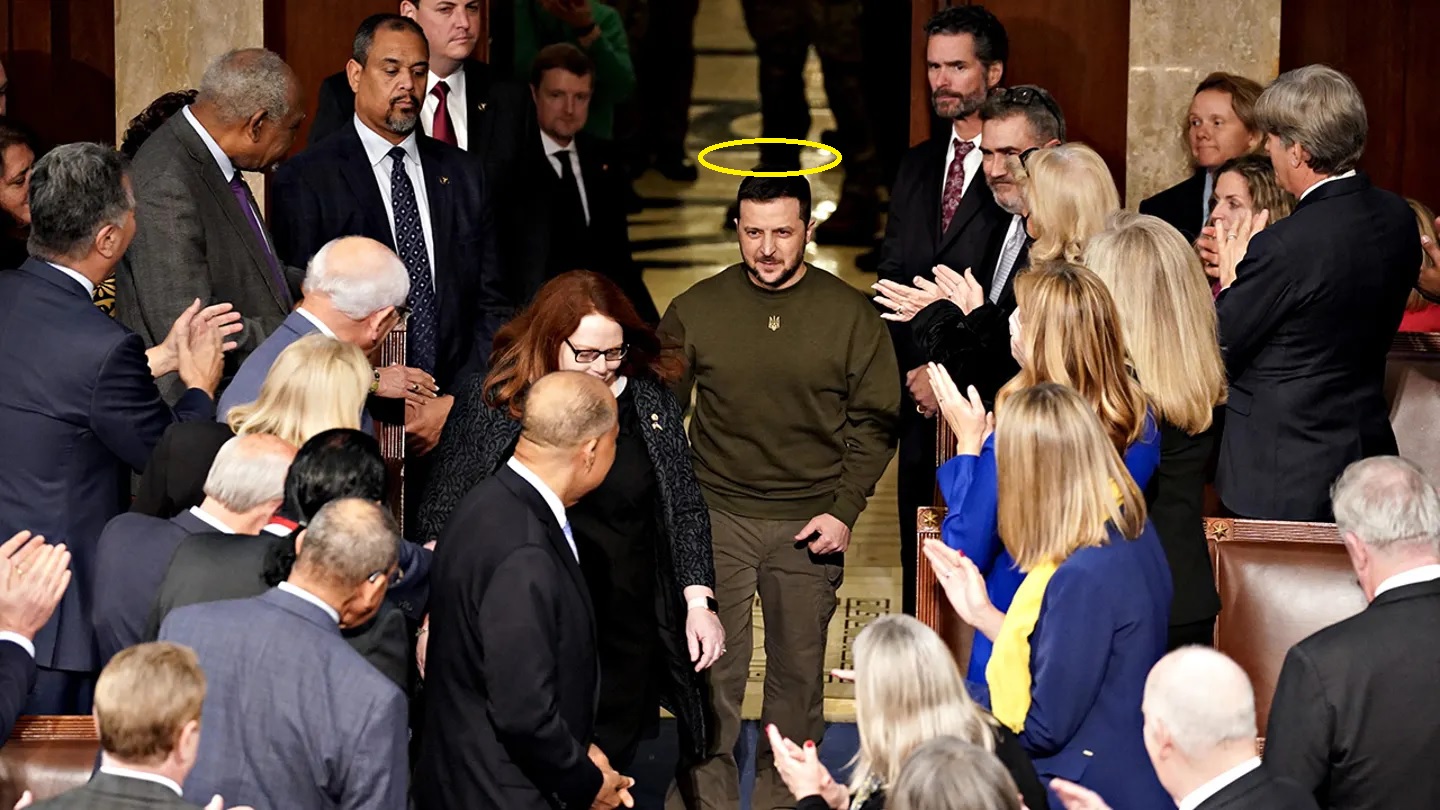
25 September 2026, Noel Wauchope, https://theaimn.net/volodymr-zelensky-the-exceptional-leader/
Prime Minister Anthony Albanese very recently hugged Ukrainian President Zelensky, and praised him as an “exceptional leader.” That’s par for the course for a Western leader – they all fawn over Zelensky.
Zelensky was born in Ukrainian Soviet Socialist Russia. So he was Vladimir Zelensky, until recently – now he’s Volodymr Zelensky. Before he took over the leadership of Ukraine, the Russian “Vladimir” was fine. Ukrainian was the official language of Ukraine, but Russian was widely used, too, and 65% of the population are ethnically Russian. But now, Russian is not fine – banned in schools and public places. The June 2022 – LAW OF UKRAINE – “On ensuring the functioning of the Ukrainian language as the state language” – greatly restricts the use of the Russian language in music and in all media. That’s just one part of the de-Russification of culture in Ukraine. I felt sad that the government has trashed, very literally, the memories of Catherine the Great, who did promote not only art and culture to Kiev, but also improvements in health and education, and rights for Muslims and Jews. (Western pro-Ukraine writers are now busily rewriting history on Catherine the Great).
But then, I am inclined to put much importance on that rather nebulous thing – “culture.”
What else has Zelensky achieved inside Ukraine?
Politics. Also in 2022, Zelensky banned 11 political parties, despite no evidence linking any to the Russian government. His term as President was due to be over by May 2024, but the state of martial law enables him to continue to rule. He has shown support for the ultra-nationalist section in Ukraine, those who hark back to the days of collaborating with Nazi Germany in opposition to Russia during World War 2. This did not go down well with Poland, where Ukrainian Nazis had committed massacres. In June 2026, Polish President Karol Nawrocki, revoked the Order of the White Eagle – Poland’s highest honor – previously awarded to Zelensky. In 2024, Zelensky banned Ukraine’s largest Christian church – the Ukrainian Orthodox Church. Military conscription for the war uses brutal methods to recruit men aged 25-60. Ukraine is a dictatorship. And I haven’t even touched on the level of corruption.
Zelensky’s progress in the war. It seems to be forgotten that civil war was going on in Ukraine for 8 years before Zelensky’s election in 2019, with the government fighting the “separatists” in the Donbass. The Donbass were granted autonomy within Ukraine, by the Minsk Agreements of 2014 and 2015, but Kiev refused to honour that agreement. Zelensky was elected in a landslide, with his main promise being to grant that autonomy, honour Minsk, and end the war.
March-April 2022: Zelensky and Putin agreed on a framework agreement that would allow the Donbass autonomy, and end the war, with Ukraine pledging not to join NATO. The U.S. and U.K. objected. Prime Minister Boris Johnson flies to Kiev to tell Ukrainian President Volodymyr Zelensky to stop negotiating with Russia. Zelensky complies. The war continues with Russia seizing much of the Donbass.
From then on, it is a saga, with Zelensky applying his truly exceptional media skills in an endless peripatetic round of Western capitals seeking apparently endless amounts of money and weaponry, as he pushes themes of evil Russia’s intent to invade Europe, and destroy Western democracy. Always dressed in some distinctive gear, Zelensky presented first the persona of the very ordinary down-to-earth tough little soldier, later the persona of the strong leading statesman, all in black, suggesting implacable military leadership yet not actually in a uniform. Within Ukraine, (the Jewish) Zelensky celebrated Orthodox Christian Easter, suitably arrayed.
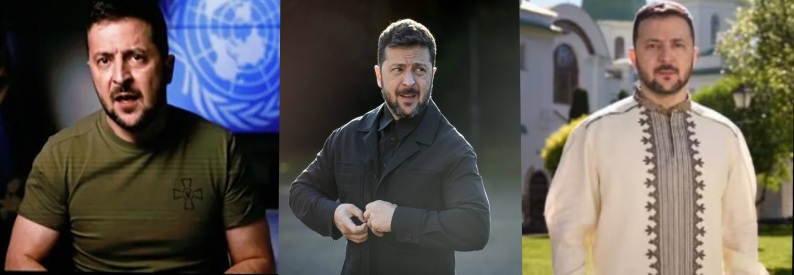
I see that I have returned to the theme of culture and style. But how else to account for the extraordinary adoration given to Zelensky by the West? With a couple of notable exceptions, (Poland and Slovakia), the Western world is not only full of enthusiasm for Zelensky, but willing to fund advanced weaponry to Ukraine, oblivious of the danger of nuclear-armed Russia responding to attacks deep inside its territory. Even Russia-hating Joe Biden drew the line at this. Zelensky, originally open to negotiations with Russia, considering compromises and concessions on both sides, now is intent on the goal of unconditional surrender by Russia. The European Union is backing this aim, apparently unable to consider a more realistic approach to ending this war – a war which is bankrupting Ukraine, killing a huge number of soldiers, while at least 6 million have fled the country, with 10 million displaced within Ukraine.
Western media determinedly reports atrocities by Russians, but never atrocities by Ukrainians. Western media reports Russian attacks near Ukraine’s nuclear sites, particularly Zaporizhzhia, although the evidence there is uncertain. But there’s silence on Ukrainian attacks on Russia’s huge nuclear station at Kursk. Russia’s attacks on Ukraine’s infrastructure and civilian areas are reported as atrocities, but Ukraine’s attacks on Russia’s infrastructure and civilian sites are “successes.”
The idea of considering genuine negotiations with Russia is really not being considered, let alone of examining the situation of the largely ethnic Russian citizens of the Donbass. I did hear one podcast report, a Donetsk farmer saying that he just wanted the war to end, and didn’t care whether Ukraine or Russia was in control of Donetsk. I know that I can’t extrapolate from this one statement to the general opinion of the Donbass. But I think that it’s quite likely, after 11 years of war there, that might be the opinion of many others.
It’s going to be interesting, when European States come up for election soon, whether or not the public will tire of this unequivocal support of Zelensky and his aim to conquer Russia. It might be that some very right-wing, neo-nazi factions will take over, and bring us even closer to the brink of nuclear war. Or it could go the other way, and voices of reason, such as former diplomat Charles Freeman, might prevail. Meanwhile, Zelensky’s own position within Ukraine is fraught: he would face elections if the war ended, and perhaps his political survival, even his physical survival, depends on the unequivocal quest to defeat Russia.
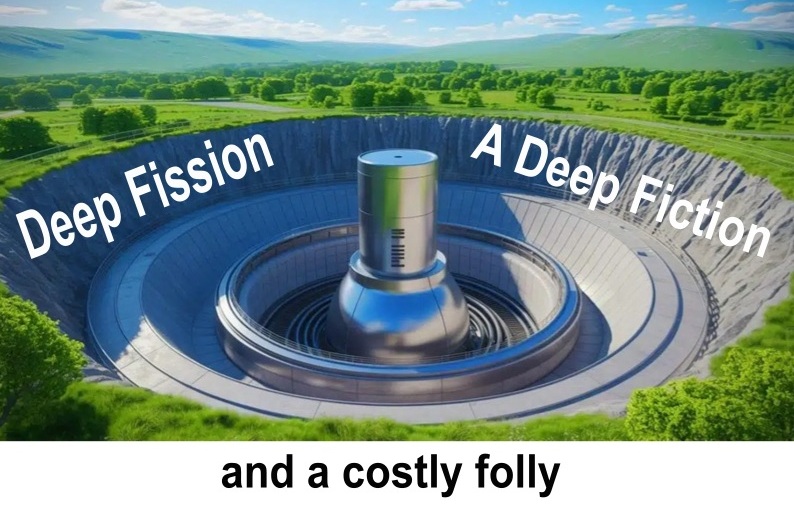
Deep Fission ($FISN): a Money Pit
ICRBERG RESEARCH, September 24, 2026
Please refer to our disclaimer at the bottom of the report.
Main findings
- Nasdaq-listed Deep Fission (FISN) is developing a small modular reactor (SMR) with a capacity of 5MWe-15MWe. The company plans to bury a miniature version of the widely used pressurized water reactor (PWR) one mile deep, inside a 40-60-inch water-filled borehole drilled into hard rock.
- Like other SMR developers, FISN pitches itself as an AI data-center power solution. But data centers have turned to natural gas to accelerate deployment. Almost all of the roughly 75GW of booked data center on-site generation is natural gas-based. FISN has no regulatory approval and remains years away from commercialization.
- Before its June 2026 IPO, FISN guided to a levelized cost of energy (LCOE) of just $50-70/MWh. Then the company dropped the reference. Using figures disclosed in its June 2026 prospectus, we calculate an LCOE of $289/MWh for the first-of-a-kind (FOAK) reactor and $148/MWh for the nth-of-a-kind (NOAK) reactor, about 200% above prior guidance. This is not competitive with behind-the-meter gas solutions.
- Even this NOAK estimate is too optimistic, as capital cost is understated. Using figures from independent third parties, we estimate NOAK capital cost to be $112mn, 34% above FISN’s estimate, raising our estimated NOAK LCOE to $170/MWh.
- FISN claims it can secure Nuclear Regulatory Commission (NRC) approval in less than a year. Yet it has already struggled with the less demanding Department of Energy (DOE) process, missing the program deadline while at least four peers have already completed it. Even if NRC approved, commercialization is far from assured: NuScale, which has a much more conventional design, has yet to sell a reactor three years after receiving its NRC license.
- FISN targets deploying its reactor in just six months versus 3-4 years for other advanced SMRs, citing fewer safety-related systems. Yet its own filing states a two-year development timeline. Peers pursue the same simplification strategy, but FISN adds a major step: drilling a one-mile borehole.
- FISN touts the industry’s largest customer pipeline. Most counterparties are undisclosed. Of those identified, one is an undeveloped industrial park with doubtful demand for a nuclear reactor. The other two (Endeavour Energy and Blue Owl) have signed only non-binding agreements.
- FISN has less than twelve months of cash runway and faces ~$350mn of unfunded capital needs, potentially implying ~43% dilution to its existing shareholders. At the same time, the competition for SMR funding is intensifying: publicly traded SMR names have risen from three before October 2025 to nine today, with three more coming to the market, including a far more established player, Westinghouse.
- FISN is largely a repackaging of the founders’ prior venture, Deep Isolation, a deep-borehole nuclear waste disposal company that has failed to commercialize its concept after a decade.
Background and bull case
Deep Fission (NASDAQ: FISN) is a California-headquartered company founded in 2023. The company is developing a nuclear reactor called Gravity. The reactor is intended to be a miniature version of the conventional pressurized water reactor (PWR), using low-enriched uranium (LEU) as fuel. The company’s key innovation is that its reactor would be buried in a 40-60-inch water-filled borehole one mile (~1.6 km) underground. The reactor is designed with a power generation capacity of 5–15MWe.
Management claims that its reactor is cheaper to build because its innovative borehole design eliminates certain components required in above-ground PWR reactors……………………..
FISN is participating in the Department of Energy’s (DOE) pilot reactor program. The company is seeking DOE authorization to build a pilot reactor at a site in Parsons, Kansas, by 1H 2027. Then, FISN plans to submit license applications to the Nuclear Regulatory Commission (NRC) to convert the pilot reactor into a commercial facility by the end of 2027, with high-volume deployment targeted to begin in 2028. Because its reactor is based on well-established PWR technology, its licensing pathway would be simpler than for novel advanced reactor designs.
The company claims that its reactor can then be commercially deployed in as little as six months, compared with three to four years for other small modular reactors (SMR). ……………………………………..
The company’s own numbers show its reactors are not cost-competitive
Even FISN’s own numbers reveal the poor economics of its reactors. Before its June 2026 IPO, the company claimed that its reactor could achieve a levelized cost of energy (LCOE) of only $50-70/MWh, including in an investor presentation prepared in connection with the February 2026 private placement. The number excluded non-engineering, procurement, and construction (EPC) costs and contingencies……………………………………………………………..
Then, when the company was listed, the reference to the LCOE was dropped. The prospectus filed in connection with FISN’s June 2026 Nasdaq debut no longer mentions an LCOE target, nor do the company’s subsequent investor presentations, news releases and filings. Yet the company itself recognizes that LCOE is a key driver of its success (p. 38):………………………………….
Another claim made in the January 2026 presentation (p. 17) but absent after the IPO was the assertion that its reactors would achieve 70%-80% cost reduction versus newly built conventional PWRs. The company probably realized that there was no basis for such a claim. It seems that material walkbacks like those mentioned above are fairly common for the company. ………………………….
If we simply apply the financial assumptions provided by the company, there is no way FISN can achieve such a low LCOE, whether for a FOAK or a NOAK reactor…………………………………………………………………………………………
Finally, let’s remember that the nuclear industry is prone to cost overruns. FISN is particularly at risk as its design is still evolving………………………..
The certification timeline is wildly optimistic………………………………………………………………………………………………………………………………………………………………
An avalanche of newly listed SMR companies compete for funding
FISN’s need for additional fundraising comes at a time when investor appetite for SMR stocks has materially weakened, as the broader SMR investment theme has cooled and SMR-related stocks have lost momentum. After years of warnings about the technology’s readiness and economics, institutional investors are noticing that natural gas is the actual solution being adopted by AI data centers, while SMRs remain a distant and highly speculative prospect. Retail investors, who largely fueled the bubble, are turning their attention to SpaceX’s space-based data center concept.
…………………………………………………………………….. Deep Fission recycles the founders’ past venture that never achieved commercialization ……………………………………………………………………………………………………………………………………………………………………………………………………………………… https://iceberg-research.com/2026/09/24/deep-fission-fisn-a-money-pit/
1 This Month



Shut down the radiation-damaged Heysham nuclear reactors now
To see nuclear-related stories in greater depth and intensity – go to https://nuclearinformation.wordpress.com

Say No to NASA’s Reckless Nuclear Reactor on the Moon
Say No to NASA’s Reckless Nuclear Reactor on the Moon
-
Archives
- October 2026 (256)
- September 2026 (339)
- August 2026 (330)
- July 2026 (355)
- June 2026 (287)
- May 2026 (306)
- April 2026 (356)
- March 2026 (251)
- February 2026 (267)
- January 2026 (308)
- December 2025 (358)
- November 2025 (359)
-
Categories
- 1
- 1 NUCLEAR ISSUES
- business and costs
- climate change
- culture and arts
- ENERGY
- environment
- health
- history
- indigenous issues
- Legal
- marketing of nuclear
- media
- opposition to nuclear
- PERSONAL STORIES
- politics
- politics international
- Religion and ethics
- safety
- secrets,lies and civil liberties
- spinbuster
- technology
- Uranium
- wastes
- weapons and war
- Women
- 2 WORLD
- ACTION
- AFRICA
- Atrocities
- AUSTRALIA
- Christina's notes
- Christina's themes
- culture and arts
- Events
- Fuk 2022
- Fuk 2023
- Fukushima 2017
- Fukushima 2018
- fukushima 2019
- Fukushima 2020
- Fukushima 2021
- general
- global warming
- Humour (God we need it)
- Nuclear
- RARE EARTHS
- Reference
- resources – print
- Resources -audiovicual
- Weekly Newsletter
- World
- World Nuclear
- YouTube
-
RSS
Entries RSS
Comments RSS

