Move to reduce dangerous radiation exposure of children
Doctors and manufacturers aim to decrease CT radiation exposure, especially for kids Facs Stocks By Fierc eHealthCare , 03/03/2010
The high-powered imaging technology of CT scans allows doctors to see into crevices of the body that cannot be viewed as well by other methods. But the radiation exposure from the CT scans also can increase the risk of cancer, especially for children. Continue reading
Rise in breast cancer linked to nuclear radiation
People Power Trumps Corporate Power:R.I.P Vermont Yankee Nuclear Power Plant, Counter Currents, Kathleen Krevetski Interviewed By Carolyn Baker01 March, 2010 “….Kathleen Krevetski …..As a registered nurse and after many years of working in the medical profession, I am acutely aware of the health and environmental dangers that make people sick. Myself a breast cancer survivor, I have watched over the years as the incidence of breast cancer continues to increase with nobody asking the right questions. One out of 13 women got breast cancer when I was first diagnosed in 1984. Today the incidence is one woman out of eight. What is that about?
Medical radiation – useful, but also dangerous
Radiation’s Double-Edged Sword ,Kerri Wachter, 1 March 2010, Ionizing radiation—useful for imaging and therapy—has undoubtedly been a boon to medicine. The ability to quickly and noninvasively peek inside the body has not only led to faster diagnoses, but more accurate ones. The ability to target cancerous tissue with a beam of radiation has improved therapeutic options for many cancer patients. However, it comes with a cost. Continue reading
CT Scans, radiation and cancer
The Dangers of Radiation, Leukemia, Feb 22 2010 The most serious problem with the widespread use of CAT scans is the radiation these devices leave in our bodies. CAT scans are not simple chest X-rays, which deliver only a small amount of radiation. Instead, they expose the patient to a significant amount of radiation, and radiation in significant doses has been shown to increase the risk of cancer.. Continue reading
Radiation from CT scans – a particular risk to children
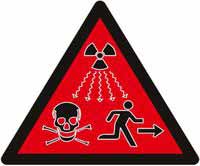 Experts say an alarming number of scans are being given inappropriately, exposing children to potentially harmful radiation that could increase their chances of developing cancer.
Researchers tackle needless child CT scans, By Pauline Tam, The Ottawa CitizenFebruary 9, 2010 (from Canadian Association of Radiologists)
An Ottawa-led research team has developed a new “rule” to help emergency doctors pinpoint which children with concussions and other seemingly minor head traumas may actually have life-threatening brain injuries.
The rule is actually a set of guidelines that advises doctors when to order CT scans, which detect hidden injuries, but deliver big doses of radiation to patients. Continue reading
Unnecessary Medical ionizing radiation increases cancer risk
Medical Use of Ionizing Radiation Needs Better Regulation
Medical Group Urges New Rules on Radiation
The New York Times By WALT BOGDANICHFebruary 4, 2010The leading professional organization dedicated to radiation oncology has called for enhanced safety measures in administering medical radiation, Continue reading
Increased cancer risk from low dose ionising radiation
 Cancer — Is Low-Dose Radiation Imaging Increasing Your Risk?
EmpowerHER 2 Feb 2010 by Lynette Summerill A trip to your doctor or dentist usually means you will be examined from the inside out. But, low-dose radiation like that used in x-rays, mammograms and other diagnostic tests could be causing some cancers. Continue reading
A start is made on monitoring patients’ radiation exposure
By Liz Szabo, USA TODAY 1 Feb 2010Concerned that Americans may be accumulating too much lifetime radiation exposure from medical tests, doctors at the National Institutes of Health will begin recording how much radiation patients receive from CT scans and other procedures in their electronic medical records. Continue reading
Lack of proper rules on radiation medical errors
the number of errors may be massively underreported due to a lack of enforcement of reporting requirements.
Severe and Fatal Radiation Medical Errors Often Unreported – AboutLawsuits.com January 27th, 2010 Medical errors from the use of radiation therapy can lead to severe and sometimes fatal injuries, Continue reading
Aging Vermont Yankee nuclear plant – a hazard to public health
Beyond Nuclear 22 Jan 2010 Entergy Nuclear has betrayed the trust of the lawmakers, regulators, and citizens of Vermont. Simultaneous with its revelation of radioactivity leaks on site, Vermont Yankee spokespeople engaged in a predictable campaign to downplay the health and safety risks of tritium. However, tritium can impact the human body right down to the DNA level, and can cross the placenta from mother to fragile fetus. At such intimate levels, tritium can and does damage human health, leading to cancer, genetic damage, birth defects, and other maladies. The National Academy of Science has reported consistently over the decades that any exposure to radioactivity, no matter how low the dose, still carries a health risk. As reactors age – and Vermont Yankee is nearly 40 years old – its systems, structures and components degrade, worsening tritium leaks from buried piping. Vermont Yankee’s license should not be extended 20 additional years.
Risk to air travelers with full-body radiation scanners
Full Body Scanners Pose Health Risks to Travelers, Says Czech Nuke Official YOP NEWS by Surjit Singh 01/16/2010 –The Chief of the Czech nuclear watchdog has insisted that she is against the use of full-body scanners as an airport security measure as these pose threats to the travelers’ health. Continue reading
Heart disease and stroke linked to moderate ionising radiation
Moderate Radiation Tied to Heart Disease, Stroke Study does not clarify whether exposure from scans raises risk Business Week Jan. 15 (HealthDay News) –– New research based on the experiences of atomic-bomb survivors has found a link between exposure to moderate levels of radiation and higher levels of heart disease and stroke………….. Continue reading
Terahertz waves in full-body radiation scanners – especially harmful
the type of radiation the scanners emit is particularly harmful. Terahertz waves, the type of radiation emitted, have been described by Los Alamos researchers as “ripping DNA apart.”
Scanners Aren’t the Solution DISSIDENT VOICE Joshua Fulton / January 14th, 2010 “…….The astonishing thing was that hardly anyone in the mainstream media mentioned that a full-body scanner would not have been able to detect the chemical Abdulmutuallah brought onto the plane with him. Continue reading
Breast cancer risk increased due to early radiation exposure
1 This Month



19 November – Webinar – The Reality of Reprocessing
Time: 11:00 AM Pacific Time (US & Canada) / 2:00 PM Eastern / 7:00 PM UK / 8:00 PM CET
Register for the Zoom Event Here



Shut down the radiation-damaged Heysham nuclear reactors now
To see nuclear-related stories in greater depth and intensity – go to https://nuclearinformation.wordpress.com

Say No to NASA’s Reckless Nuclear Reactor on the Moon
Say No to NASA’s Reckless Nuclear Reactor on the Moon
-
Archives
- November 2026 (84)
- October 2026 (302)
- September 2026 (339)
- August 2026 (330)
- July 2026 (355)
- June 2026 (287)
- May 2026 (306)
- April 2026 (356)
- March 2026 (251)
- February 2026 (267)
- January 2026 (308)
- December 2025 (358)
-
Categories
- 1
- 1 NUCLEAR ISSUES
- business and costs
- climate change
- culture and arts
- ENERGY
- environment
- health
- history
- indigenous issues
- Legal
- marketing of nuclear
- media
- opposition to nuclear
- PERSONAL STORIES
- politics
- politics international
- Religion and ethics
- safety
- secrets,lies and civil liberties
- spinbuster
- technology
- Uranium
- wastes
- weapons and war
- Women
- 2 WORLD
- ACTION
- AFRICA
- Atrocities
- AUSTRALIA
- Christina's notes
- Christina's themes
- culture and arts
- Events
- Fuk 2022
- Fuk 2023
- Fukushima 2017
- Fukushima 2018
- fukushima 2019
- Fukushima 2020
- Fukushima 2021
- general
- global warming
- Humour (God we need it)
- Nuclear
- RARE EARTHS
- Reference
- resources – print
- Resources -audiovicual
- Weekly Newsletter
- World
- World Nuclear
- YouTube
-
RSS
Entries RSS
Comments RSS

