Devonport nuclear submarine dock upgrades could be accelerated
Navy Lookout 3rd Sept 2026
The MoD hopes to speed up two major dock renewal projects at Devonport following the site operator’s release from 12 years of enhanced nuclear safety oversight. A parliamentary answer this week confirmed that acceleration of work on 10 and 14 Dock is being explored as part of the £7.1Bn Project Royal Oak investment in the base.
Responding to a written Parliamentary question, Defence Minister Luke Pollard, who is also MP for Plymouth Sutton and Devonport, said: “opportunities to accelerate work on 10 and 14 Dock are being explored”. Following the nuclear regulatory review, delivery of both projects is being driven forward. Work on 10 Dock was originally scheduled to be completed in late 2027, but the current target date for handover is unclear.
The Office for Nuclear Regulation (ONR) review concluded in March 2026 and returned Devonport Royal Dockyard Limited (DRDL) to routine regulatory attention. The site had been under ‘enhanced attention’, effectively special measures, since 2014 over concerns about ageing facilities, organisational capability and control of work. ….. With enhanced oversight lifted, there should be fewer regulatory obstacles to progressing complex nuclear construction work at the site.
Faster progress cannot come soon enough. The RN currently has just three facilities able to take a nuclear submarine out of the water: the shiplift at Faslane and 9 and 15 Docks at Devonport. 9 Dock is occupied by HMS Victorious in deep maintenance, while HMS Audacious only vacated the refurbished 15 Dock in June after becoming the first Astute-class boat to dock at Devonport. HMS Astute will take her place as she begins a lengthy mid-life validation period.
Under a £750M contract awarded in 2023, 10 Dock is being modernised to provide a second Devonport dock certified for both SSN and SSBN maintenance. Any acceleration would directly benefit submarine availability.
Work on 14 Dock addresses a different but equally longstanding bottleneck. Its recommissioning will allow submarine defuelling to resume at Devonport for the first time since 2004, when the old facilities were judged to fall short of modern standards. Of the 14 decommissioned boats stored afloat in 3 Basin, 10 still contain nuclear fuel, while their storage and maintenance costs around £30M annually. The old defuelling cranes have been replaced by a Reactor Access House that moves on rails over the reactor compartment, with roughly one boat per year expected to be defuelled once operations begin.
As part of Project Royal Oak, £7.1Bn will be invested in Devonport naval base and dockyard over the next decade, the largest share outside Faslane of the £26Bn naval infrastructure programme confirmed in July’s Defence Investment Plan. The scale of the investment reflects historic underinvestment as well as evolving operational requirements.
The upturn in work is visible in DRDL’s newly filed accounts for the year to 31 March 2026, with revenue rising 6.7% to £1.87Bn, driven by increased submarine maintenance across both the Astute and Vanguard classes. Operating profit reached £131M despite a one-off £5.9M charge relating to a closed group pension scheme, while profit after tax jumped from £76M to £132M, helped by a lower tax charge and higher interest income.
DRDL’s long-term order book fell from £2.1Bn to £1.7Bn, reflecting completion of Year 5 of the Future Maritime Support Programme (FMSP), only partly offset by a six-month bridging contract. This gives added importance to the Gateway Agreement now being negotiated with the MoD, a successor contract intended to run from September 2026 until March 2032, covering the period in which SSN-AUKUS work begins to build.
DRDL is a Babcock subsidiary and employs around 10,200 people, with staff costs of £670M. The Secretary of State for Defence also continues to hold a £1 special golden share in the company, providing powers to overrule ordinary shareholders in extreme circumstances. https://www.navylookout.com/devonport-nuclear-submarine-dock-upgrades-could-be-accelerated/
Great British Energy -Nuclear (GBE-N) reveals £20bn SMR TP Contract forecast breakdown after saying it didn’t have budget details

Tom Pashby, Sep 03, 2026, https://tompashby.substack.com/p/gbe-n-reveals-20bn-smr-tp-contract?utm_source=post-email-title&publication_id=6735486&post_id=213980624&utm_campaign=email-post-title&isFreemail=true&r=ln98x&triedRedirect=true&utm_medium=email
Great British Energy – Nuclear (GBE-N) has admitted it does have a breakdown of the forecast £20bn initial estimate for its small modular reactor (SMR) technical partner contract (TP Contract), despite having previously said it didn’t have details of the budget.
GBE-N is the UK Government’s body responsible for building the UK’s first government-supported SMRs. Rolls-Royce SMR has been selected by GBE-N to built three of its SMRs at the Wylfa nuclear site in North Wales.
In May, GBE-N announced it had awarded Rolls-Royce SMR stage 1 of the SMR TP Contract. It said: “The forecast Stage 1 price of the TP Contract is £359,000,000. This forecast price may change.
“The forecast Stage 2 price of the TP Contract is approximately £8,168,000,000. This forecast price is indicative only as the pricing mechanism for Stage 2 remains subject to negotiation during Stage 1.”
Taken together, that placed the forecast cost of the total TP Contract at £8,527,000,000. It is worth noting that the TP Contract does not capture the full cost of GBE-N’s Wylfa SMR project.
The contract award announcement also said: “The estimated total value within the tender notice for the two-stage TP Contract was £20,000,000,000 excluding VAT. This value was indicative only and based upon GBE-N’s initial understanding of the potential costs of developing a first of a kind technology.
“This estimated total value was based on the fact that in the tender notice GBE-N reserved the right to make up to four awards, although GBE-N also reserved the right to award three, two or only one contract(s). GBE-N has ultimately decided to award only one TP Contract and the contract award notice value reflects this.”
Given that the notes say GBE-N had an initial estimated £20bn for the TP Contract, and that it reserved the right to make up to four awards, it could reasonably be assumed that it had estimated each contract would have a value of £5bn. However, this was unclear.
Via the Freedom of Information (FOI) Act, GBE-N was asked to provide a breakdown of the £20bn figure.
In response, New Civil Engineer revealed that GBE-N said: “Following reasonable and proportionate searches of our records, we confirm that Great British Energy – Nuclear (GBE-N) does not hold the information you have requested.”
20 Working Days challenged this response via a request for an internal review and GBE-N chief financial officer Neil Cooper responded to say that upon further inspection, the organisation did have a breakdown of the figure.
“In our original decision, we concluded that GBE-N does not hold the information requested,” Cooper said.
He went on to say that, following the internal review, GBE-N concluded that it “does hold information within the scope of your request.
“Our review has found that our original decision did not identify this information because it sits within a document whose predominant purpose is not to explain the calculation of the £20bn figure and which was therefore not considered to fall within the scope of your request.
“We consider it was reasonable to have concluded initially that the document did not contain information within the scope of your request. On further review, however, we are satisfied that it does, and we have therefore continued to assess whether the information we hold is disclosable under the EIR (Environmental Information Regulations).”
However, he added: “Our review has concluded that the information held by GBE-N should be withheld from disclosure under the exceptions in Regulation 12(5)(e) (Confidentiality of commercial or industrial information) and Regulation 12(5)(b) (The course of justice and inquiries) of the EIR.”
He went on to explain this further, saying: “We are withholding the requested information in reliance on Regulation 12(5)(e) of the EIR, which permits a public authority to refuse to disclose information to the extent that disclosure would adversely affect the confidentiality of commercial or industrial information where such confidentiality is provided by law to protect a legitimate economic interest.
“The information you have requested includes inter alia vendor cost estimates, government funding assumptions, the approach to negotiation strategies, and assessments of vendor capability relating to the Small Modular Reactor Technology Selection Process.
“Much of this information was obtained through confidential market engagement, and the information is identified as being market-sensitive.”
Cooper did find that he was able to provide an explanation for the £20bn figure without releasing internal documents.
“Although we have concluded that the information that you have requested is exempt from disclosure, we have set out below an explanation of how the £20bn figure was derived,” he said.
“The £20bn estimated total value in the Contract Notice of 2023 was an indicative, best-estimate at the time figure, published to meet the legal requirement to state the total potential value of the contract award including all options on the number of sites and technology providers.
“It was arrived at on an objective basis reflecting GBE-N’s understanding at the time, and anticipating a procurement capable of supporting up to two small modular reactor projects (broadly £10bn per project), across the whole life of a project, from early development through to commercial operation.”
It is unclear whether a single SMR ‘project’ would cover the three Rolls-Royce SMRs which are proposed for the Wylfa site, or whether that would mean a single reactor.
Cooper continued: “Because the technology is first-of-a-kind and yet to be developed, the estimate necessarily carried significant uncertainty, as the Contract Notice made clear.
“The detailed assumptions underpinning the figure comprise commercially sensitive vendor cost information and funding and negotiating assumptions obtained through confidential market engagement, and to the extent that they fall within the scope of your request these are withheld under regulation 12(5)(e) of the EIR for the reasons set out in this response.”
GBE-N was approached for comment.
Blykalla seeks state aid for second SMR plant
Wednesday, 2 September 2026,
https://www.world-nuclear-news.org/articles/blykalla-seeks-state-aid-for-second-smr-plant
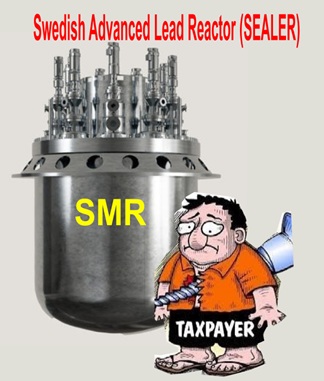
Sweden’s Blykalla has applied for state support for its proposed small modular reactor power plant at Untra in the Tierp municipality, for which the company applied for governmental approval last week.
On 25 August, Blykalla submitted a proposal to the Swedish government for a nuclear power plant at Untra which would feature up to eight lead-cooled small modular reactors (SMRs) with a total capacity of up to 440 MWe. The application followed an earlier one, submitted in May, for a six-unit project in Norrsundet in the Gävle municipality, which is also in the same region of east central Sweden.
Blykalla has established Untra Nuclear Power AB as the licence holder and financing vehicle for the Untra plant, with strategic and financial investors expected to enter its ownership over time. Blykalla – through Untra Nuclear Power – has now applied for state support for the construction of the Untra plant, having applied in early June for government financing for its planned power plant in Norrsundet.
The Swedish state aid framework is designed to support new nuclear power through a state loan, a two-way contract for difference and a risk-sharing mechanism. The detailed terms of the state aid are agreed between the project company and the Swedish state, and any support would require approval by the European Commission in accordance with EU State aid rules. Negotiations on the terms of state support begin once the government decides to proceed with the application.
Following the receipt last week of Blykalla’s application to establish the nuclear power plant at Untra, the government has tasked the County Administrative Board in Uppsala County with preparing a proposal for a facility plan. This plan will guide how land and water areas should be used when establishing a nuclear facility. According to recent legislation, the government may approve an application if there is a valid facility plan for the facility in question. The proposed construction plan must be accompanied by an environmental impact statement and a plan description. This statement must include a description of the planning conditions and how the plan can be implemented. The plan must be submitted no later than 30 April 2027……………
Blykalla – formerly called LeadCold – is a spin-off from the KTH Royal Institute of Technology in Stockholm, where lead-cooled reactor systems have been under development since 1996. The company – founded in 2013 as a joint stock company – is developing the SEALER (Swedish Advanced Lead Reactor). The company’s goal is for its first 140 MWt/55 MWe SEALER-55 commercial reactor to be ready for operation in the early 2030s.
In October 2022, Sweden’s incoming centre-right coalition government adopted a positive stance towards nuclear energy. In November 2023, it unveiled a roadmap which envisages the construction of new nuclear generating capacity equivalent to at least two large-scale reactors (2,500 MWe) by 2035, with the equivalent capacity of up to 10 new large-scale reactors (which may include SMRs) coming online by 2045. A new act on state aid entered into force on 1 August 2025, since when interested companies have been able to apply for the aid.
So far, approval has been sought for nuclear facilities at five sites with a total output of up to 3,700 MWe. In addition, the government has received applications for financial support to build nuclear reactors at two additional locations, with seven projects applying for state aid.
Hundreds learn about Sizewell careers at Lowestoft jobs fair.

Hundreds of people turned out to find out more about a once-in-a-generation
development on the east coast that will power up the region. Jobseekers are
now one step closer to new opportunities after a careers fair led to
apprenticeship interviews. Almost 300 people attended the Sizewell C jobs
fair in Lowestoft, where around 25 supply chain partners showcased roles
linked to the large-scale clean energy project.
East Anglian Daily Times 1st Sept 2026,
https://www.eadt.co.uk/news/26511198.hundreds-learn-sizewell-careers-lowestoft-jobs-fair/
Taxpayers Must Not Be on the Hook for Bailing Out the AI Industry

If AI goes south, we should expect major pressures from the Trump administration for a debt- or taxpayer-funded bailout.
SCHEERPOST, September 3, 2026,By C.J. Polychroniou
Hundreds of billions of dollars are flooding the AI industry. Economist Gerald Epstein says this bubble could burst.
The U.S. economy is heading toward uncharted territory. Artificial Intelligence (AI) is transforming business operations and all areas of finance, the national debt is on an unsustainable fiscal path, and most middle-income Americans cannot keep up with rising costs. Moreover, as hundreds of billions of dollars are flooding into artificial intelligence, there are serious concerns that an AI bubble could trigger another bailout with taxpayer money.
In the interview that follows, leading progressive economist Gerald Epstein, who initiated and directs the Game Changers project at the Political Economy Research Institute at the University of Massachusetts Amherst, talks about AI’s impact on finance and the bailout problem and how a transformative public finance strategy can revive democracy, promote equity and social justice, and build strong and sustainable communities. Epstein is professor of economics and founding co-director of the Political Economy Research Institute.
C.J. Polychroniou: AI is possibly the fastest-growing technology in history and is already reshaping the U.S. economy in innumerable ways as organizations of all kinds are deploying AI tools across every functional area. But there are many public concerns surrounding AI, including whether it is becoming “too big to fail.” If so, taxpayer money may be used yet again to bail out private companies and institutions from collapse. What are the dangers here?
Gerald Epstein: There are indeed many public concerns about the economic and financial implications of AI. But let me focus on AI’s impact on finance as there are legitimate fears that the government may be asked at some point to bail out the AI industry, especially given the close ties of the Trump administration to AI firms.
As Marc Jarsulic and I argue in our Game Changers policy analysis “No More Bailouts,” the AI investment boom is increasing the level of risk for AI-related firms. The reason is that for these investments to be profitable, AI revenue will need to grow substantially. But some financial analysts doubt that the revenue will materialize. For example, in Bain’s Technology Report 2025, it is estimated that capital expenditures of $500 billion per year would be required to cover anticipated AI demand. To fund this investment, annual AI revenue would need to increase to $2 trillion. However, after accounting for likely cost reductions at the AI firms, Bain’s research concluded that their annual revenues would fall $800 billion short of that mark.
In that context, some of the risks of the AI-led investment boom have been shifted to financial markets as the AI boom is relying increasingly on debt. The revenues of the tech monopolies are extraordinary, but they are insufficient to pay all the costs of data centers. In 2025, the capital expenditures of the top five hyperscalers were more than 30 percent of their total revenue. They are projected to rise to more than 40 percent by the end of 2026. This has forced these companies to turn to debt and equity markets for finance. In 2025, major tech hyperscalers alone issued $120 billion in debt, but the figure was pushed toward $175 billion in 2026 and is expected to rise to $300 billion annually in the coming years.
A distorted government response to an AI-bust is in the cards. A rational policy response to an AI bust would not include bailouts of AI-related firms or their creditors. The investment boom, and the debt that helps finance it, have been engineered by sophisticated actors aiming to dominate a potentially lucrative innovation. There is no ex ante (“before the event”) government safety net for financial bets of this kind. Caveat emptor (“let the buyer beware”) applies to the firms playing the AI domination game if it ever applied to anyone. Unfortunately, we cannot count on a rational response from the current administration. Extensive conflicts of interest and cronyism mean that government bailouts for insiders would be on the table. Hyperscalers and other AI-related firms have received extraordinary government support. The Trump administration has taken over 90 federal actions to help the AI industry, including executive orders easing permitting for massive data centers, federal support for AI exports and reducing regulatory barriers for the industry. The Trumpian transactional quid pro quo is apparent. Nvidia and Intel have given the government equity to curry favor. A number of major AI companies contributed several million dollars to Trump’s White House demolition — a.k.a. his “ballroom” — fund. And AI firms continue to finance MAGA. This is business as usual for Trump.
If AI goes south, we should expect major pressures from the Trump administration for a debt- or taxpayer-funded bailout.
Bailout operations are a trademark of neoliberalism. That being said, what is the actual problem with bailouts, and how do we put an end to the bailout problem?………………………………………………………………………………………………………………………………………………………………………………………………………………… https://scheerpost.com/2026/09/03/taxpayers-must-not-be-on-the-hook-for-bailing-out-the-ai-industry/
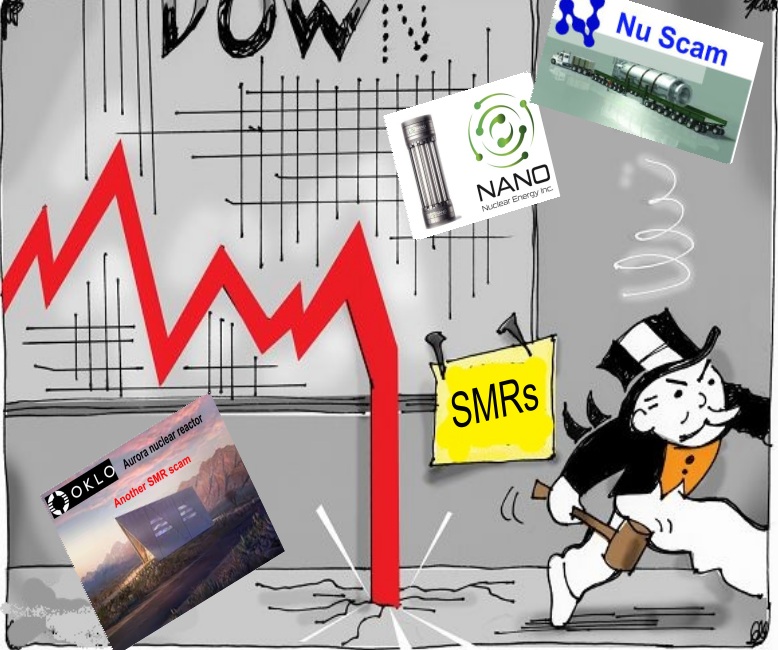
How to get filthy rich via Small Modular Nuclear Reactors.
30 August 2026 Noel Wauchope AIM Extra, https://theaimn.net/how-to-get-filthy-rich-via-small-modular-nuclear-reactors/
Well, I hasten to warn you that you need to be already rich, for this to work. It has already worked for some alert rich investors. What they did was – they noted the soaring share prices of small nuclear reactor companies, a soaring that was accompanied by an awful lot of media hype.
And then they noted some salient facts about those companies – for example:
OKLO – has a market cap of $8 billion, and its shares jumped more than 12% on Aug. 25 Sounds great doesn’t it? BUT:
- OKLO had a net loss of $81.6 million in the second quarter this year.
- It went public through a SPAC (special purpose acquisition company) in 2025.
- It generates no commercial energy income today.
- Its first Small Modular Reactor (SMR), the Aurora Powerhouse, isn’t expected to enter commercial operation for years.
- Oklo is incurring tens of millions in operating losses annually.
- It is $78.6 million in debt, so interest and loan payments eat into its earnings.
- OKLO is still in discussions with the regulator NRC, regarding the fuel, high-assay low-enriched uranium, or HALEU, and other supply chain issues.
Similarly, stocks of both NuScale Power, and Nano Nuclear have soared over the past year. Yet both are making little or no money, and both have suffered operational losses over this year. NuScale is now facing a class action by investors who claim that the company misrepresented the prospects for small nuclear reactors.
So – what have the smart rich investors done? Basically, they’ve gambled on these stocks being over-priced, and soon to go down. Investment strategies are not my strong point, but it seems that short selling is one hedge fund strategy. So these clever investors, noting the unsustainable rise in share prices, borrow shares and soon sell them at the inflated price, and can buy them back later as the price plunges down.
So , it’s estimated that investors made over $2 Billion over the past months by short selling shares in these three small nuclear reactor companies – OKLO, NuScale, and Nano Nuclear.
The rage for investing in SMRs is still on, as the world is gripped by the mania for AI hyperscalers. (AI hyperscalers are companies investing grotesque amounts of money in building data centres world-wide)
Neither the hyperscalers nor the small reactor companies are actually making money at present. But the hype is all-consuming.
This is the prevailing hype –
The AI Boom Is Making Nuclear Power Bankable Again – America’s nuclear power landscape is undergoing a dramatic transformation, driven by the immense energy needs of artificial intelligence. Tech giants like Microsoft, Google, Amazon, and Meta are directly financing nuclear projects, committing billions to secure nearly 10 gigawatts of capacity. ………..
Almost everything tech companies are funding—Meta, Amazon, most of Google’s bets—is small modular reactors: compact designs.
Will AI kickstart a new age of nuclear power? IAEA Director General Manuel Grossi believes that the nuclear industry is destined to be the energy partner of the AI revolution. “Only nuclear energy can meet the five needs of low-carbon power generation, round-the-clock reliability, ultra-high power density, grid stability and true scalability”……………………..the IAEA is working closely with regulators and the industry to make them a viable proposition and we could soon be seeing large numbers of small reactors being deployed to meet the demand.
So- we have the Trumpian process in the USA, of the weakening of radiation and safety regulation of nuclear reactors, and of the government already funding 8 SMR companies.
With the claim that nuclear power combats climate change, with the accepted belief in the necessity for AI hyperscale, governments, academia, the corporate media, and the UN all promote this new marriage of nuclear and Big Tech. So – all the stars are aligned for the rise and rise of small nuclear reactors.

Incidentally, don’t look to the UN, the World Health Organisation (WHO)or anyone like that to cry foul. I think that most people have forgotten, if they ever knew it , but the 1959 agreement between the WHO and the International Atomic Energy Agency (IAEA) effectively prevents the WHO from criticising things nuclear.
One important part – “Whenever either organization proposes to initiate a programme or activity on a subject in which the other organization has or may have a substantial interest, the first party shall consult the other with a view to adjusting the matter by mutual agreement.”

And, in this time of vulnerability of nuclear sites, to war and terrorism, you wonder how Rafael Grossi, Director of the IAEA reconciles his conflicting duties, that of promoting nuclear power and of assuring of its safety.
But I digress. We are talking about money, and how to get rich through investing in small nuclear reactors. Well, that is still a goer. But perhaps you’d better be quick, as investment advisors are now dithering about the share price of commercial SMR companies, even though the Big Tech- SMR teams are apparently still booming.
However, the global nuclear lobby is now turning its attention to military microreactors, so there’s hope for future stock market gains as governments splurge tax-payers money into companies in that area.
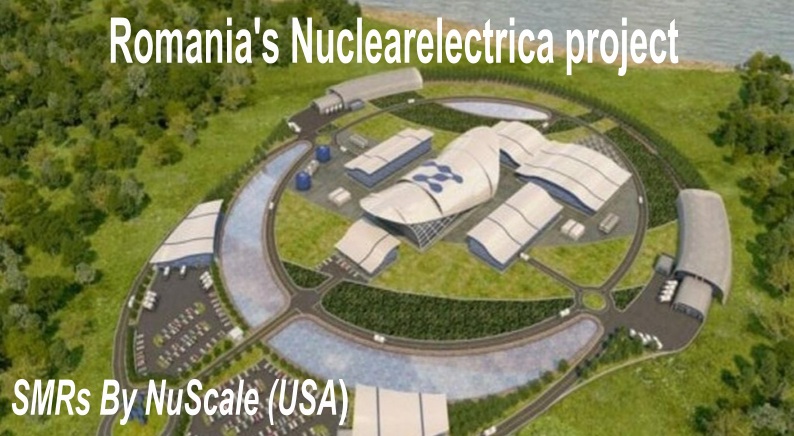
Nuclearelectrica CEO steps down amid ‘shortcomings’ in 462 MW Doicești (NuScale) SMR project
August 26, 2026, by Vladimir Berbatović,
https://balkangreenenergynews.com/nuclearelectrica-ceo-steps-down-amid-shortcomings-in-462-mw-doicesti-smr-project/
Cosmin Ghiță, CEO of Romania’s state-controlled nuclear power producer Nuclearelectrica, has resigned amid “shortcomings” related to the joint venture developing a 462 MW small modular reactor (SMR) project in Doicești, as well as the project itself. Ghiță’s resignation comes after a government body identified the issues and recommended determining the accountability of Nuclearelectrica’s top executives and other individuals.
Last month, Acting Prime Minister Ilie Bolojan’s control body said that it had identified several shortcomings related to Nuclearelectrica’s partnership with state-owned energy company Nova Power&Gas in a joint venture called RoPower Nuclear, established to develop the nuclear power plant in Doicești using US-based NuScale’s SMR technology, according to Profit.ro.
The body said that it had also identified shortcomings related to the Doicești project itself, and it recommended “an analysis of the possibility of holding accountable” the top people of Nuclearelectrica and other individuals.
Shortcomings have also been identified concerning the SMR project itself
Nuclearelectrica has rejected the findings.
The Ministry of Energy said it “respects” the resignation and that it had been informed the CEO’s decision came “in the context of a new professional opportunity.”
According to government spokesperson Ioana Dogioiu, Ghiță’s 90-day notice period may be shortened by mutual agreement, after which a selection process for a new CEO will take place.
Ghiță has been at the helm of Nuclearelectrica for nearly nine years, since September 2017. He previously served as advisor to Romania’s prime minister on energy security and energy policies, according to Nuclearelectrica’s website.
The Ministry of Energy also said that Nuclearelectrica and its Cernavodă nuclear power plant continue to operate as usual and that it will take all necessary steps to maintain the company’s stability and continuity.
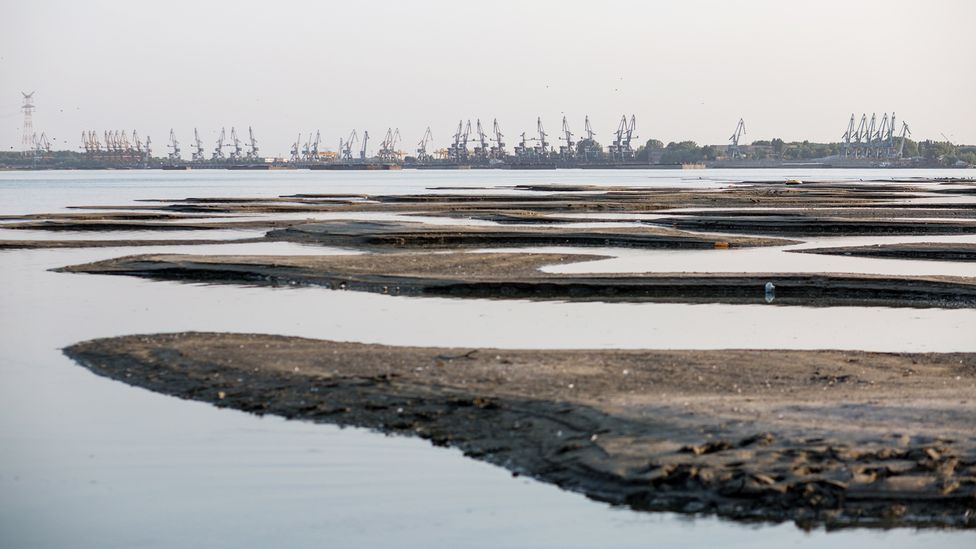
Cernavodă, Romania’s only nuclear power plant, has been offline since August 13. The plant, which normally generates about 20% of Romania’s electricity, has been unable to ensure enough reactor cooling water from the Danube due to heatwaves and drought.
Three years on, Fukushima’s fishers still deal with impact of treated water release
Japan Times, By Phoebe Amoroso, Aug 24, 2026
March 11 is a date of indescribable weight in Japan — one that conjures images of the devastating earthquake and resulting tsunami that killed nearly 20,000, displaced hundreds of thousands and caused catastrophic damage to the Fukushima No. 1 nuclear power plant.
But Aug. 24 has also become a date of significance for the Tohoku region and the rest of East Asia. On this day three years ago, power plant officials began releasing treated water into the Pacific Ocean — a move that, while necessary, is continuing to have an economic impact on the region’s seafood.
“There’s no single perfect method that will ensure understanding among the public (when it comes to the safety of Fukushima’s seafood),” says Tadaaki Sawada.
Sawada is deputy manager of the guidance section for the Fukushima Prefectural Federation of Fisheries Cooperative Associations (FS Gyoren). Even three years on, he laments the difficulty of eliminating the stigma attached to the northeastern coastal prefecture of Fukushima and its produce.
On the day Sawada spoke with The Japan Times, Tokyo Electric Power Company Holdings Inc. (Tepco) completed its 21st discharge of treated water currently held in storage tanks at the No. 1 nuclear plant. Three years into this process expected to take three decades in total, fears of reputational damage have not explicitly emerged within the domestic market, but other consequences have been profound: geopolitical tensions and an exposure of the vulnerabilities that underlie Japan’s fishing industry as a whole.
Difficult choices
Though the primary disasters of March 2011 are in the past, the Fukushima No. 1 nuclear power plant is far from decommissioned.
Nuclear debris remains inside the damaged reactors and still produces heat, so water has to be circulated through the damaged reactors to keep them cool and eventually discarded. A method known as Advanced Liquid Processing System (ALPS) can remove up to 62 radioactive compounds from this water to very low concentrations, but it can’t remove tritium, a radioactive isotope of hydrogen. After ALPS and dilution with seawater, the concentration of tritium in the water reaches 1/40 of the maximum threshold mandated by government regulations.
With on-site water tanks nearing capacity, Tepco — backed by the Japanese government and the International Atomic Energy Agency — announced in 2021 that it would conduct periodic, controlled ocean discharges while monitoring the resulting tritium levels.
The decision provoked strong reactions, not least within Fukushima’s fishing industry. The government had promised fishermen that it wouldn’t release the water without the understanding of local communities, and the move was perceived by many as reneging on that commitment, provoking strong fears over further reputational damage.
But three years on, a strong consumer backlash within Japan has not materialized.
Takeshi Hamada, a professor of fisheries science at Sapporo’s Hokkai-Gakuen University, has studied the economic impact on Japan’s fishing industry. He argues that one key difference between domestic reaction in 2011 compared to the years that followed is related to media coverage.
“Following the Great East Japan Earthquake, most media outlets — including major ones — viewed government information with skepticism,” Hamada says via email. “However, during the ocean release of ALPS-treated water, there was relatively little coverage questioning its safety.”
Instead, criticism mostly emanated from somewhere far away from Japan’s northeastern coast: China.
On the day the first batch of ALPS-treated water was released, Beijing banned the import of all Japanese aquatic products (the ban was partially lifted in June 2025 before being reinstated that November after Prime Minister Sanae Takaichi’s comments on Japan’s role in a hypothetical Chinese naval blockade of Taiwan).
The impact of the import ban on Japan’s fishing industry has been hard to quantify, but experts believe it has been significant. Compared to the year prior, Hamada calculates that Japanese seafood exports fell by about ¥75.8 billion (about $476 million) between September 2023 and August 2024. Analysis of the next 12 months found that exports had improved in some areas, but total seafood exports were still below the prerelease level.
For Fukushima, the exact costs cannot be isolated. Although it exported almost no seafood to China, export-bound Japanese seafood was redirected into the domestic market, weighing on prices. Based on shirasu (whitebait) prices, which were driven down by bumper catches elsewhere, Hamada estimates that average prices decreased by 8.2%.
The lack of clarity has a direct knock-on effect on compensation promised from Tepco as a condition of the water release. Fishers must demonstrate lower catch volume, catch value and sales value compared to pre-2011 to receive funds for the shortfall. Seafood processors, wholesalers and other retailers can also claim compensation by demonstrating reduced sales due to consumers or buyers avoiding their seafood products.
However, many of the costs remain hidden. In a November 2025 symposium held by the Tokyo Fisheries Promotion Foundation, Soichiro Kato, a lawyer representing affected businesses, said fishers were better placed to seek compensation because fishery federations could negotiate collectively, while many seafood processors without the same collective organizations in place had to deal with Tepco individually. He also criticized Tepco’s criteria as being too rigid and not capturing losses from reverse flow effects.
Fishing for solutions……………………………………………………………………..
Coastal landings are still subject to official radiation monitoring by Fukushima Prefecture, while FS Gyoren also conducts voluntary screening at fish markets to reassure buyers. After more than 100,000 inspections, the federation relaxed its system in April this year to cover fewer species and reduce screening from each landing or sales day to at least once a week. It hopes that this will speed up distribution and make the overall system more efficient, paving the way for expanded sales.
But each step back toward normalcy for Fukushima’s fisheries is a double-edged sword.
“When it comes to how wholesalers and distributors have reacted (to relaxed regulations), naturally, to be honest, no one directly criticizes us,” Sawada says. “But I think some people do have concerns internally. That may naturally result in transactions disappearing or decreasing. It does not appear openly, and it is difficult for us on the fisher and producer side to see.”…………………………………………………………………………….
Although Tepco has made progress toward reducing newly generated water, the discharges are set to continue for decades to come. However, FS Gyoren’s call for more support for Fukushima’s fishing industry is unchanged.
“We want to continue fishing in Fukushima Prefecture as a livelihood, not only in our generation but into our children’s and grandchildren’s generations,” says Sawada. “We want the government and Tepco to provide firm support for that.”
https://www.japantimes.co.jp/news/2026/08/24/japan/fukushima-seafood-treated-water-three-years-impact/
Cost Of New Nuclear Power Plant in Switzerland Could Be Up To €45 Billion, Says Report
By David Dalton,
The cost of building a new nuclear power plant in
Switzerland could be between CHF14bn and CHF43bn (€14.9bn and €45.8bn;
$17.4bn and $53.5bn) – a range that reflects varying assumptions about
reactor size, construction conditions and financing costs, according to a
report by the Swiss Academy of Sciences.
Nucnet 26th Aug 2026, https://www.nucnet.org/news/cost-of-new-nuclear-power-plant-in-switzerland-could-be-up-to-eur45-billion-says-report-8-3-2026
Big Oil Is Betting Billions On Nuclear Fusion

Oil Price, By Alex Kimani – Aug 25, 2026,
- Fusion is shifting from research toward commercialization, with private investment hitting a record $4.48 billion in 2025 and commercial plants targeted for the 2030s and 2040s.
- Eni is making one of Big Oil’s biggest fusion bets, backing Commonwealth Fusion Systems, committing $1+ billion to its future electricity and developing critical tritium fuel-cycle technology.
- Chevron, Equinor, Shell and Cenovus are also investing heavily, spreading bets across competing fusion technologies that could eventually transform global power generation.
After decades confined largely to laboratories, nuclear fusion is beginning to attract the kind of money and industrial planning normally reserved for technologies expected to make it onto the grid. Global private investment in fusion hit a record $4.48 billion in 2025, up 69% from a year earlier, while some of the world’s largest energy companies are moving beyond simply backing fusion startups.
Italian energy giant Eni S.p.A. (NYSE:E) now plans to deploy a commercial fusion power plant in Europe by the early 2040s or sooner, building on its investment in Commonwealth Fusion Systems and a more than $1 billion agreement to buy electricity from the startup’s first commercial U.S. plant. Eni is also looking beyond power generation, using decades of experience processing hydrocarbons and hydrogen to build a business around the fuel systems future fusion plants will need to operate.
“Competition is growing in the fusion industry after the technology and expectations had changed significantly in the past 5-6 years,” Francesca Ferrazza Eni’s head of magnetic fusion initiatives, told the Financial Times in an interview. “It was always considered research. Now we are considering it as an industry.”
Commonwealth Fusion Systems raised another $1 billion in July, bringing its total funding to $4 billion as it targets the early 2030s for its first commercial power plant. The planned 400-MW ARC facility in Virginia became the first fusion project to apply for interconnection with PJM earlier this year, while Google has agreed to buy 200 MW of its output. Eni has committed more than $1 billion to buying electricity from the plant.
Eni also wants to build a business supplying the fuel systems necessary to keep commercial fusion reactors running. The company plans to use its experience processing hydrocarbons and hydrogen to recover, purify and recycle deuterium and tritium, the two hydrogen isotopes used as fuel by many fusion reactor designs. To that end, Eni has formed a JV with the UK Atomic Energy Authority to develop and sell those services globally, giving the Italian company a potential source of fusion revenue beyond owning plants or selling electricity.
Tritium is much harder to extract than deuterium. Deuterium is stable and abundant enough to be extracted from seawater, where roughly one in every 6,700 hydrogen atoms is deuterium. Tritium is radioactive, has a half-life of just 12.3 years and exists naturally only in tiny quantities. A 1-GW deuterium-tritium fusion plant could consume roughly 55 kilograms of tritium per year, far beyond what could be supplied from naturally occurring sources.
That means commercial reactors will need to produce much of their own tritium and continuously recover and recycle unused fuel. In turn, that requires closed-loop systems capable of extracting tritium from reactor breeding blankets and exhaust, purifying it and feeding it back into the reactor. Eni is developing a large-scale tritium fuel-cycle facility at the UKAEA Culham Campus in Oxfordshire to test those processes under conditions designed to replicate future fusion plants. The facility is scheduled for completion in 2028.
Fusion’s Other Big Oil Backers
Equinor, Chevron, Shell and Cenovus have spent years building positions across the fusion industry, backing competing reactor technologies before any of them have produced commercial electricity. …………………………….
https://oilprice.com/Alternative-Energy/Nuclear-Power/Big-Oil-Is-Betting-Billions-On-Nuclear-Fusion.html
Romania steps up efforts to restart Cernavoda nuclear reactors
By Iulian Ernst in Bucharest August 24, 2026, https://www.intellinews.com/romania-steps-up-efforts-to-restart-cernavoda-nuclear-reactors-462977/
Romanian authorities are changing their approach to restoring water levels at the Cernavoda nuclear power plant, with national waterways management company Apele Romane (Romanian Waters) building a temporary dam on the Danube and state-controlled hydropower group Hidroelectrica releasing additional water from its Olt River reservoirs to support the restart of at least one of the two reactors currently offline, according to G4Media and Radio Romania.
The measures follow several weeks of emergency interventions that included dredging and attempts to sink barges loaded with stone in an effort to raise water levels near the nuclear plant’s intake. Those measures produced insufficient results, leaving Romania dependent on more expensive electricity imports during peak consumption hours.
Under the revised strategy, Apele Romane is constructing a transverse guide dam on the Old Danube arm to redirect water towards the intake channel serving the plant. Emergency dredging is continuing in the Cernavoda area under the coordination of the Lower Danube River Administration and Apele Romane.
Hidroelectrica has meanwhile started releasing additional water from reservoirs on the Olt River. According to Antena 3, the company can release around 50 cubic metres per second for five days, although water reserves in the Olt system have also been reduced following several months of drought.
The Ministry of National Defence has resumed support for the emergency works. Military specialists will carry out topobathymetric and geodetic measurements, while military divers will participate in underwater interventions.
The effectiveness of the measures remains constrained by the exceptionally low flow of the Danube. Water entering Romania’s section of the river is currently around 1,300 cubic metres per second, roughly one-third of the multi-annual average.
According to the forecast for August 22-29, the flow is expected to remain at around this level for the first three days before gradually increasing to approximately 1,550 cubic metres per second. The expected natural increase would therefore provide considerably more water than the temporary releases from the Olt reservoirs.
The engineering works could eventually have a larger effect by improving the flow towards the nuclear plant’s intake, but their impact is unlikely to be sufficient immediately. This leaves the timing of a reactor restart dependent primarily on the availability of adequate cooling water.
Cernavoda’s two reactors, each with an installed capacity of 680 MW, have been taken offline because of insufficient Danube water for cooling. Their prolonged outage has increased Romania’s reliance on electricity imports during a period of high summer consumption. Out of the 7,500 MW consumed by Romania during the peak hours, it imports 1,00-2,500 MW.
Could nuclear fusion become economically viable?
Prototype fusion power plants are under construction. And now scientists
have come up with a measure called “economic Q” to assess their
commercial viability. The idea — published last month in the Journal of
Fusion Energy and taking in such factors as construction costs and energy
price — aligns with growing investor confidence.
Privately held fusion
companies raised $4.5bn over the past year alone, according to the Fusion
Industry 2026 report. There are now more than 50 such companies. Last
month, General Fusion, a Canadian outfit backed by Jeff Bezos, became the
first publicly listed fusion company. These signals hint at an important
shift: fusion energy is gradually being perceived less as a scientific
challenge and more as an economic one. External factors — energy shocks,
geopolitical instability, climate change, energy-intensive AI — have also
cast this perpetually fledgling technology in a flattering light.
FT 25th Aug 2026, https://www.ft.com/content/9a1f39cf-e622-4c68-bb80-0fb93bcec3ec
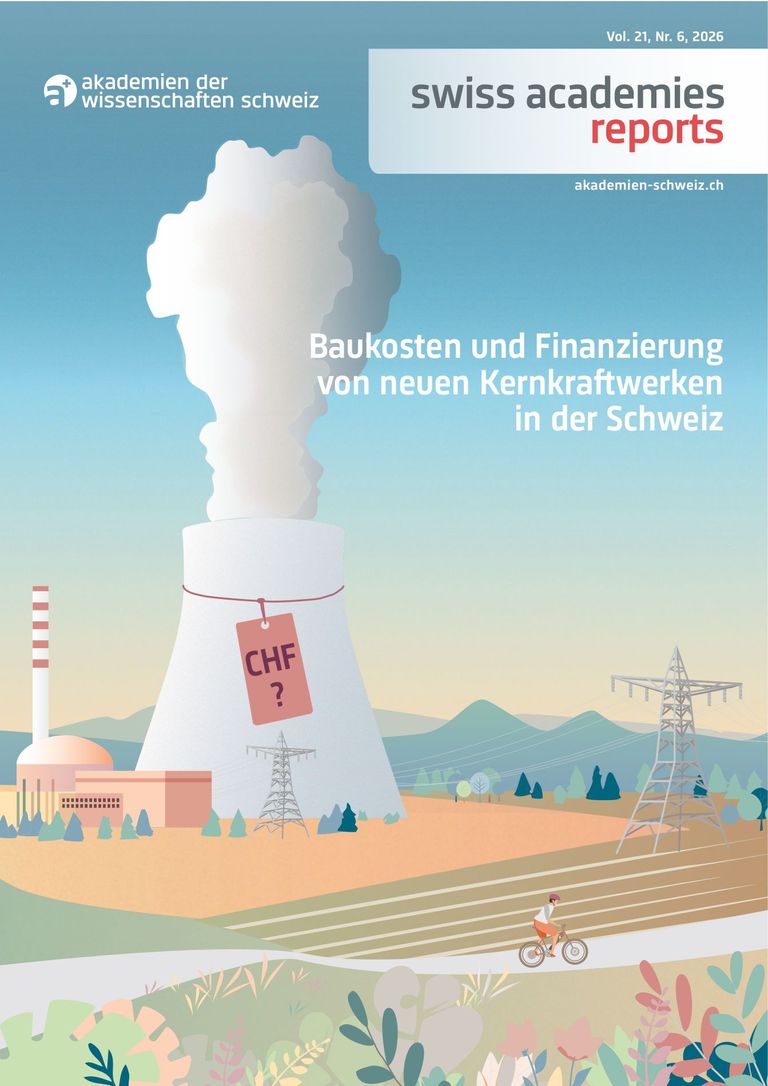
Construction costs and financing of new nuclear power plants in Switzerland.
Source :
Neu U (2026) Construction costs and financing of new nuclear power plants in Switzerland. Swiss Academies Reports 21 (6)
This report provides a more detailed analysis of the observed development of construction costs for new nuclear power plants and discusses the potential costs of a new plant in Switzerland, as well as the associated uncertainties. Furthermore, it presents current financing models in Europe and the financial risks for the state and the economy associated with such construction.
In addition, current financing models in Europe and
the financial risks associated with construction for the state and the
economy are presented.
[Paul Dorfman says: The report is significant
because, unlike many other cost studies, it derives the risks from real
construction projects and, for the first time, also takes into account the
immense financing costs during the long construction period of a nuclear
power plant. It therefore estimates the expenditures to be 20 to 30 %
higher than estimates that consider only the pure construction costs.
According to the report, these account for around 70 % of the total costs
over the plant’s service life.
The study authors concludes, without billions in federal guarantees, no private investor would be willing to take on the financial risk.]
Swiss Academy of Sciences 21st Aug 2026, https://scnat.ch/en/uuid/i/5e8fa25a-bfa9-54ac-b33b-4e5f464f8561-Baukosten_und_Finanzierung_von_neuen_Kernkraftwerken_in_der_Schweiz
Sizewell C nuclear project suffers setback after road building delayed.
Galliford Try replaced as key contractor following disagreement about cost
of work. Construction of two key access roads for Britain’s Sizewell C
nuclear power station has been delayed, and the main contractor replaced,
in a setback at one of the UK’s biggest infrastructure projects.
The delay threatens to prolong disruption around the Suffolk construction site
and comes as Sizewell C seeks to demonstrate that it can avoid the delays
and cost overruns that have plagued its sister project, Hinkley Point C in
Somerset.
The main contractor for the access roads, construction group
Galliford Try, has been replaced after failing to agree with Sizewell C on
the cost of the work. Galliford had been awarded a contract worth between
£150mn and £200mn to build the Sizewell Link Road and Two Village Bypass,
designed to carry construction traffic to the £38bn nuclear plant while
diverting heavy goods vehicles away from nearby villages.
FT 25th Aug 2026,
https://www.ft.com/content/7a83b577-8d67-4435-9798-1e53d7fad4e9
British start-up to help US build nuclear-powered cargo ships.
Core Power has raised $200m from Japanese backers and will use its propulsion systems
in a fleet of American nuclear-powered merchant vessels. A British start-up
based on a west London trading estate is to help the American government
build a fleet of nuclear-powered cargo ships.
A public-private partnership
between the US Maritime Administration and Core Power, based in Chiswick
Park, was signed in Washington DC on Monday. The first-of-its-kind
agreement aims to accelerate construction of a US-flagged fleet of rapid
nuclear-powered merchant vessels, and revive a US shipbuilding industry
that has been decimated by cheaper competitors from China in recent years.
Times 24th Aug 2026, https://www.thetimes.com/business/companies-markets/article/british-start-up-to-help-us-build-nuclear-powered-cargo-ships-8xl7bmnk8
1 This Month
23-25 October – on Zoom – World BEYOND War’s annual global conferenc


Shut down the radiation-damaged Heysham nuclear reactors now
To see nuclear-related stories in greater depth and intensity – go to https://nuclearinformation.wordpress.com

Say No to NASA’s Reckless Nuclear Reactor on the Moon
Say No to NASA’s Reckless Nuclear Reactor on the Moon

-
Archives
- October 2026 (247)
- September 2026 (339)
- August 2026 (330)
- July 2026 (355)
- June 2026 (287)
- May 2026 (306)
- April 2026 (356)
- March 2026 (251)
- February 2026 (267)
- January 2026 (308)
- December 2025 (358)
- November 2025 (359)
-
Categories
- 1
- 1 NUCLEAR ISSUES
- business and costs
- climate change
- culture and arts
- ENERGY
- environment
- health
- history
- indigenous issues
- Legal
- marketing of nuclear
- media
- opposition to nuclear
- PERSONAL STORIES
- politics
- politics international
- Religion and ethics
- safety
- secrets,lies and civil liberties
- spinbuster
- technology
- Uranium
- wastes
- weapons and war
- Women
- 2 WORLD
- ACTION
- AFRICA
- Atrocities
- AUSTRALIA
- Christina's notes
- Christina's themes
- culture and arts
- Events
- Fuk 2022
- Fuk 2023
- Fukushima 2017
- Fukushima 2018
- fukushima 2019
- Fukushima 2020
- Fukushima 2021
- general
- global warming
- Humour (God we need it)
- Nuclear
- RARE EARTHS
- Reference
- resources – print
- Resources -audiovicual
- Weekly Newsletter
- World
- World Nuclear
- YouTube
-
RSS
Entries RSS
Comments RSS

