Just the uranium/nuclear industry news this week
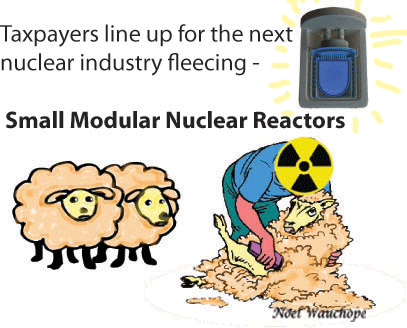
TOP STORIES. The hidden expansion of Britain’s nuclear strategy.
Fukkushima nuke plant struggles to clear radioactive waste debris.
Noel’s notes. The nasty truth about Small Nuclear Reactors’ toxic fuel and toxic wastes.
AUSTRALIA.
- A global threat for millennia: experts warn Australia’s nuclear submarine legacy will be weapons-usable uranium cache.
- Albanese government pledges extra $4.6billion for AUKUS shipyard – but critics warn it will make Australia a nuclear target.
- Billions of dollars are failing to lift production of AUKUS submarines – ALSO AT….https://antinuclear.net/2026/07/27/5-billions-of-dollars-are-failing-to-lift-production-of-aukus-submarines/
| CLIMATE. Cernavodă Reactor Shut Down as Drought Lowers Danube Flow. |
| ECONOMICS. A mad for nuclear world? Innovative geotechnical sub-alliance formed for Sizewell C construction. A nuclear deal for the Saudis. |
| ENERGY. Nuclear stagnates while renewables soar. |
| MEDIA. “Jobs Jobs Jobs” screams the media again as the nuclear lobby plans to bring Japan’s nuclear waste to Cumberland. |
| POLITICS INTERNATIONAL and DIPLOMACY. Proposed US-Saudi nuclear energy deal: What we know so far. |
| SAFETY. Is it safe to extend the life of a nuclear power station?. |
| SECRETS and LIES. Government withholds cost to taxpayer of restarting nuclear power-critical CO2 factory. |
TECHNOLOGY.
Can an AI Black Box Be Trusted to Run a Nuclear Reactor?
Trump Administration Eyes Offshore Nuclear to Power AI Boom.
SMALL MODULAR NUCLEAR REACTORS.
- EDF exploring sale of stakes in modular reactor subsidiary Nuward.
- USA firm McDermott to support potential Dutch Rolls-Royce SMR projects. SMR on the moon – micro lunar nuclear reactor.
- “Small” nuclear reactors for Hartlepool? ONLY THEY ARE NOT SMALL.
- More dizzying spin about Small Modular Nuclear Reactors!
- U.S. Prioritizes Small Nuclear Reactors Across Southeast Asia.
- Government gives Canadian Strategic Missions Corporation (CSMC) $4.5M for Micro-Nuclear Technology in Canada’s Arctic.
- Nuclearelectrica’s proposal to review SMR options rejected by Romania ministry.
- NUCLEAR FUEL. Approval for VVER uranium/plutonium fuel production in Germany.
| WASTES. Nuclear Waste Could Be Headed to Five States in New US Plan (1). Leaked document reveals White House nuclear waste plan. Decommissioning. Demolition of Germany’s Stade reactor building progresses. Plan to Bring Failed Japanese Fast Breeder Reactor’s Contaminated Sodium to Workington. Multi-million-pound nuclear treatment plant set to be built at Port of Workington |
| WEAPONS and WEAPONS SALES. US Navy’s nuclear battleship plan raises questions for carriers, submarines and AUKUS. Canada remains anti-nuke, but its potential path to the bomb is getting shorter. |
5 states offer to accept nuclear waste in exchange for help developing nuclear energy!
By MATTHEW DALY and JENNIFER McDERMOTTUpdated 7:19 AM GMT+10, July 29, 2026
WASHINGTON (AP) — Five states have agreed to accept nuclear waste from around the country in exchange for federal help developing nuclear energy to create thousands of jobs.
The states — Tennessee, Louisiana, Oklahoma, Utah and Idaho — all have Republican governors who say they welcome the chance to help America reclaim its leadership in civilian nuclear energy.
If built, the storage sites would represent significant progress in a multi-decade effort to store more than 95,000 metric tons of spent nuclear fuel and radioactive waste. Plans for a permanent underground storage facility at Nevada’s Yucca Mountain have long been stalled because of staunch opposition from most residents and officials.
Spent fuel is currently stored at nuclear plants and former nuclear sites nationwide and is piling up. New storage sites would move the radioactive material away from population centers, fault lines and flood plains. Experts say the plan also should help officials gain consent from communities that will host the repositories.
Under the non-binding agreements, the states could host Nuclear Lifecycle Innovation Campuses that would include waste sites as well as uranium enrichment, spent-fuel reprocessing and fuel fabrication. The campuses may also host advanced reactor deployment, power generation and data centers, the Energy Department said………………………………………………
Tennessee is home to the Oak Ridge National Laboratory, which enriched uranium during World War II as part of the Manhattan Project, while Idaho hosts the Idaho National Laboratory, a key research site for nuclear energy and national security. Utah was a source of raw uranium for the Manhattan Project and a training site for crews that dropped atomic bombs on Japan in 1945…..
Solution for storing waste needed to expand nuclear power
The announcement comes as President Donald Trump attempts to quadruple domestic nuclear energy production because of surging electricity demand due to a data center and artificial intelligence boom. Trump also has moved to reshape the independent Nuclear Regulatory Commission to speed up nuclear reactor development. Under Trump’s direction, the commission has proposed eliminating a foundational safety principle that for 50 years minimized the radiation people in the United States are exposed to.
The NRC proposal would abandon a philosophy to keep radiation exposure “as low as reasonably achievable,” instead setting a separate standard on maximum radiation exposure that includes several actions facilities must take depending on the potential dose of radiation to workers…………….
Scott Roecker, a former official at the National Nuclear Security Administration who now advises the Nuclear Scaling Initiative, a pro-nuclear group, said the campuses are a good idea, though he cautions that spent nuclear fuel should not be reprocessed there to be recycled for new fuel because of the cost and security issues……. https://apnews.com/article/civilian-nuclear-energy-waste-states-campus-93d014e414bed86765e26d4572448a15
The Small Modular Nuclear Reactor Hyper spreads to Italy
the government is focusing on small modular reactors, or SMRs
Industry estimates suggest a single 300-megawatt SMR could cost between 3 billion and 6 billion euros before infrastructure and grid expenses. The government hopes much of that financing would come from private capital
“Nuclear power that is being built today in Europe has exorbitant costs,” he said. “On the one hand, costs are extremely high, and on the other, private investors are running away.”
He also questioned whether SMRs would dramatically improve those economics, noting that the technology has yet to be commercially proven at scale.
The biggest political obstacle might be finding locations to build reactors and store the waste.
Four decades after Chernobyl, a generational divide reshapes Italy’s nuclear debate. By ASSOCIATED PRESS, 28 July 2026 , AP reporters Silvia Stellacci and Andrea Rosa in Rome contributed to this report.
ROME (AP) – Four decades after the Chernobyl disaster spewed radiation across Europe and turned Italy off nuclear power, Premier Giorgia Meloni ´s government is laying the groundwork to bring it back as the country seeks to improve its energy security.
The government is counting on a new generation of Italians who see nuclear power as a source of low-carbon electricity, a tool to help fight climate change and a way to strengthen stable energy supplies amid shocks from the Ukraine and Iran wars.
It´s betting that such support will blunt the opinions of Italians who lived through the 1986 nuclear accident, still view atomic energy through the lens of risk and disaster, and twice rejected nuclear power in national referenda, experts say.
Next week, Parliament is expected to approve government-sponsored legislation establishing a legal framework for next-generation nuclear technologies. The government would then have 12 months to draft implementing decrees covering reactor licensing, safety standards, waste management and siting.
“The duty of the government at this moment is to create the conditions so that those who will eventually decide on installations will be able to do so,” Gilberto Pichetto Fratin, minister for the Environment and Energy Security, told The Associated Press in an interview ahead of the vote.
Italy´s debate comes as several European countries, including France and Poland, expand or pursue nuclear power amid concerns about energy security and climate goals. Unlike them, however, Italy is trying to rebuild an industry voters dismantled decades ago.
Italy was once among Europe´s nuclear pioneers. Four reactors operated until a 1987 referendum effectively ended the country´s nuclear program in the aftermath of Chernobyl. Another attempt to revive nuclear power collapsed after Japan´s Fukushima disaster in 2011, when about 94% of voters opposed plans for new reactors.
As a result, Italy’s shift would mark one of Europe´s most ambitious energy reversals…………………………….
Rather than reviving the large plants of the past, the government is focusing on small modular reactors, or SMRs, and other advanced technologies that supporters say could be safer, more flexible and faster to build.
“We are talking about the third advanced generation (of nuclear power), much more workable compared to what are the needs, much safer because it is small in size with very short construction times,” Pichetto Fratin said.
“When people ask me for a timeline, I say 2033, 2034, 2035,” he added, referring to when the first next-generation reactors could realistically begin operating…….
At the sprawling Latina nuclear power plant south of Rome, workers in protective suits and masks are still dismantling the remains of Italy´s first nuclear era even as politicians discuss how to build a second.
The contrast is not lost on Viviana Cruciani, who oversees nuclear decommissioning at the site run by the state-owned company Sogin.
“There is a generation that came right after Chernobyl that still sees nuclear energy in light of the accident at Chernobyl only,” Cruciani told AP.
“But there is another generation, a lot younger, that is enthusiastic about nuclear, and it is even sorry that the country has not yet made any progress towards a comeback to this technology.”
A June 2026 survey by research firm Only Numbers found that about 55% of Italians support next-generation nuclear plants.
Michele Governatori, a senior energy adviser at climate and energy think tank ECCO, said support is more visible among younger Italians.
“There is greater openness, especially among younger generations,” he said, noting that many associate nuclear power with technological progress rather than with the accidents that shaped public opinion in earlier decades.
Not everyone is convinced.
“If we use nuclear as a backup … the average energy costs become devastating. So unfortunately it´s not a good complement to renewables and it´s not cheap,” Governatori said.
Pichetto Fratin acknowledged that nuclear power is not a short-term solution to high electricity prices.
“Nuclear power does not lower consumers´ bills today,” he said. “The nuclear power of tomorrow can help reduce them.”
Industry estimates suggest a single 300-megawatt SMR could cost between 3 billion and 6 billion euros before infrastructure and grid expenses. The government hopes much of that financing would come from private capital, Pichetto Fratin said.
Governatori believes that cost remains the weakest part of the government´s case.
“Nuclear power that is being built today in Europe has exorbitant costs,” he said. “On the one hand, costs are extremely high, and on the other, private investors are running away.”
He also questioned whether SMRs would dramatically improve those economics, noting that the technology has yet to be commercially proven at scale.
Even so, some critics support establishing a regulatory framework that could allow future projects to be evaluated on their merits.
The biggest political obstacle might be finding locations to build reactors and store the waste.
Italy still lacks a national repository for existing nuclear waste, much of which remains stored at temporary facilities across the country. Any future reactor or waste-storage site is likely to face strong local opposition.
Even if Parliament approves the legislation, opponents – including environmental groups and left-wing parties – could seek a new referendum once specific reactor locations and waste-storage plans emerge.
Surveys suggest support for nuclear power drops sharply when people are asked whether they would accept a reactor near where they live. Polls cited by experts indicate that about six in 10 Italians oppose having a reactor in their own province.
“When you have to seriously ask where a plant will be built and how much it will cost, it is likely that public opinion could become negative again,” Governatori said.
More dizzying spin about Small Modular Nuclear Reactors!

COMMENT. Here’s yet another jolly article with the usual nuclear lobby claims:
“cost-effective” ” highly efficient” “scale and cost-efficient”,”meeting climate goals”, “energy that’s clean and cheap”,” an SMR design that genuinely solves the economic and sustainability equation”
BAE Systems nuclear spinout lands £15m boost as it prepares for manufacturing debut
by Chris Newbould, July 27, 2026, https://www.prolificnorth.co.uk/news/bae-systems-nuclear-spinout-lands-15m-boost-as-it-prepares-for-manufacturing-debut/
Nuclear Turbines, a UK startup developing compact, cost-effective, advanced nuclear power systems, has raised a £15 million foundational round led by IQ Capital, joined by Rhapsody Venture Partners, Zero Carbon Capital and Empirical Ventures.
The funding will be used to advance and validate the reactor design, build large-scale test rigs, and expand the team as the company prepares to manufacture its first fuel elements.
Founded by former BAE Systems principal engineer Jeremy Owston and internationally renowned nuclear engineer Professor Tim Abram , in partnership with Empirical Ventures’ venture studio and spun out of BAE Systems, Manchester-based Nuclear Turbines is solving nuclear’s critical cost and scale challenges by replacing steam turbine systems with highly efficient high-temperature turbine technology normally found in jet engines and gas-fired power plants.
By removing the need for steam infrastructure, Nuclear Turbines’ solution is so compact that it could be deployed ‘behind the meter’ on industrial sites, powering critical infrastructure such as industrial facilities and data centres and manufacturing facilities with a cost-effective, resilient alternative to grid-connected electricity.
Conventional small modular reactors were the first step towards addressing this need – making nuclear smaller, faster to deploy, and more adaptable – and now Nuclear Turbines is taking this technology to the next level by solving fundamental cost and scale challenges.
Alongside the funding, Nuclear Turbines has appointed Lauren Dickerson (left) as chief commercial and strategy officer. Dickerson joins from Centrica, where she spent over four years as strategy director, bringing experience in commercial strategy, partnerships and external relations to the company’s growth plans.
UK electricity prices are currently amongst the highest in Europe, with businesses paying 50% more than counterparts in France and Germany, and four times those in the US, though prices vary significantly across the European continent. The country needs massive amounts of low-carbon power to meet clean energy targets, but conventional nuclear power plants cost tens of billions and decades to build.
The scale and cost-efficient nature of Nuclear Turbines’ technology will make advanced nuclear power accessible and attractive to private finance, accelerating its deployment in energy-intensive sectors that are currently vulnerable to reliance on fossil fuels.
Nuclear Turbines’ vision aligns with November’s Nuclear Regulatory Review 2025, which called for a ‘radical reset’ for UK nuclear regulation; the UK’s Clean Energy Industries Sector Plan, designed to create investment, growth, and jobs in the sector, and the Advanced Nuclear Framework, which aims to get pioneering nuclear projects off the ground.
The UK is also building a new uranium enrichment facility capable of producing the high-assay fuel Nuclear Turbines requires.
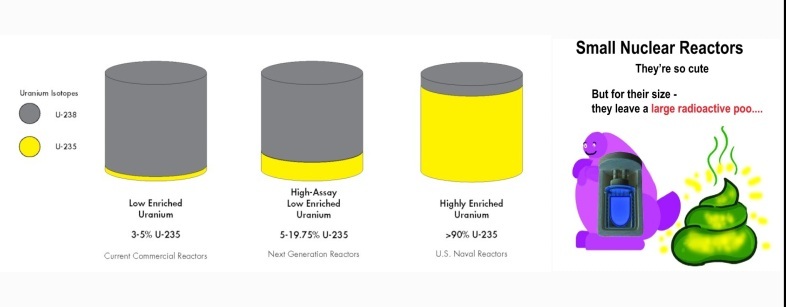
Co-founder Owston said: “The nuclear industry has always designed reactors first, then figured out what to do with the heat. We flipped this script: we started with the cheapest way to generate power and designed a reactor to fit. If we’re serious about reindustrialising while meeting climate goals, we need energy that’s clean and cheap. We’ve created the only tech that solves both, from the UK.”
Jordan Billiald, principal at IQ Capital, said: “This is the first time I’ve seen an SMR design that genuinely solves the economic and sustainability equation, and it’s at a time when market dynamics, government ambition and regulatory reform are creating unprecedented opportunity. Nuclear Turbines is perfectly positioned to capture that opportunity and to make sure the UK is not left out of the global nuclear race. With its deep engineering and nuclear heritage, the UK has a real right to win in this space, and Nuclear Turbines is the kind of company the UK venture ecosystem needs to back.”
David Ewing, head of technology commercialisation, BAE Systems, added: “The launch and funding of Nuclear Turbines demonstrates the power of Launchpad to turn bold ideas into high-growth businesses with the potential to address critical national challenges. Built on exceptional engineering expertise and innovative technology, Nuclear Turbines reflects our commitment to accelerating breakthrough innovation beyond defence and supporting UK growth, industrial resilience and energy security.”
The Saudi Nuclear Deal Invites Disaster (Wall Street Journal)

July 26, 2026, By: Henry Sokolski, https://npolicy.org/the-saudi-nuclear-deal-invites-disaster/
Critics of the recently announced U.S. nuclear deal with Saudi Arabia let out a sigh of relief when President Trump posted on Truth Social that the deal wouldn’t go ahead until Saudi Arabia recognizes Israel and insisted that the agreement permits “no enrichment of material.” Still, there are serious problems with the agreement, not the least of which is that—despite Mr. Trump’s post—it allows for enrichment. The administration and Congress should correct that.
Uranium enrichment can make fuel for both nuclear reactors and nuclear weapons. That’s why for the past half-century Washington has never included nuclear fuel-making as a part of any of its civilian nuclear agreements with states that lack nuclear weapons. In recent decades, other major nuclear supplier states including France, Russia, China, Japan and South Korea have followed America’s example.
Washington should continue this policy. The Pentagon recently bombed Iran’s nuclear fuel-making plants. Providing Saudi Arabia a pathway to build the capacity the U.S. Air Force is razing in Iran gives hypocrisy a bad name. It not only would make it more difficult to get Iran to restrict its own program, but also set a poor example and encourage other nuclear suppliers to misbehave.
More important, it’s sure to spook Riyadh’s neighbors. U.S. negotiators agreed that Iran may, after a moratorium, resume enriching uranium. The U.S.-Saudi deal allows a similar privilege to Riyadh. The U.S. got the United Arab Emirates to agree to forgo making nuclear fuel with the caveat that if Washington afforded any neighbor more-generous terms, the U.A.E. could renegotiate.
Then there are Egypt and Turkey, both building large nuclear plants. U.S. diplomats asked both to forswear making nuclear fuel. Both refused. The Saudi deal, in short, could pour proliferation kerosene on these states’ smoldering nuclear ambitions.
Energy Secretary Christopher Wright insists the opposite. He says this deal will “uphold the highest standards of nuclear safety and nonproliferation.” In fact, it represents a new low. The agreement doesn’t require Riyadh to adopt the International Atomic Energy Agency’s model inspections under what’s known as the Additional Protocol. These inspections allow short-notice visits at any time, anywhere. One hundred forty-four states have already adopted the Additional Protocol; Saudi Arabia has refused. The fear is that it might want to hide something.
The Energy Department is quick to insist that it will “black box” any nuclear fuel-making plant in Saudi Arabia to prevent military diversions. That is magical thinking. No such box has ever been developed, nor has it been explained publicly. That’s because it doesn’t exist.
Saudi nationals couldn’t be kept clear of a large nuclear fuel-making plant in Saudi territory. At a minimum, construction and operation of such a “black box” plant would make it far more difficult to detect Saudi efforts to build a covert facility (possibly with the assistance of its nuclear-armed ally Pakistan). And black boxing can never protect against sovereign Saudi seizure of what’s in the box.
Fortunately, the reported deal contains an escape clause. It doesn’t promise the immediate transfer of uranium-enrichment technology. Rather, it pledges a two-year study into the concept. But it doesn’t take two years to figure out that this is a bad idea.
Washington shouldn’t be in the business of transferring nuclear bomb-making capability to Saudi Arabia or any other country. To make sure it doesn’t, Mr. Trump—who relishes getting the best bargain—should renegotiate the deal. Alternatively, Mr. Trump could simply decline to send this bad deal to Congress. If he sends it anyway, lawmakers need to hold hearings and legislate to condition its implementation on making it right.
To read the full piece, click here.
“Jobs Jobs Jobs” screams the media again as the nuclear lobby plans to brink Japan’s nuclear wastes to Cumberland

COMMENT Plan to Bring Failed Japanese Fast Breeder Reactor’s Contaminated Sodium to Workington – https://radiationfreelakeland.substack.com/p/plan-to-bring-failed-japanese-fast
Japanese reactor decommissioning to bring jobs to UK
Federica Bedendo 26 July 26, https://www.bbc.com/news/articles/c0kmxl6ydpjo
New “highly skilled jobs” have been promised in the UK as part of plans to clean-up a nuclear reactor in Japan.
Cavendish Nuclear and Amentum are planning to build a facility at the Port of Workington, Cumbria, to support the decommissioning of the Monju Prototype Fast Breeder Reactor (FBR), in Fukui Prefecture, Japan.
Cumberland Council, which owns the port, said the plant would support skilled jobs directly and across the supply chain.
Leader Mark Fryer said: “This is fantastic news for the port as this new development, subject to the necessary approvals, will bring good quality jobs to Workington.”
The construction phase is expected to be worth more than £25m and employ about 20 people during its seven-year operation, those behind the plans said.
The FBR was a sodium-cooled reactor that had been designed to burn most of its spent fuel, however it encountered several problems during its lifespan.
The Workington plant would be treating the sodium coolant, turning it into sodium hydroxide, a commercially usable product.
West Cumbria is a well-known area for the nuclear sector, due to the presence of the Sellafield nuclear plant, which is being decommissioned.
The Labour-led council has started work to clear the land at Workington’s Oldside as part of its wider regeneration plans in the town.
The aim is for the area to become a hub for clean energy, manufacturing and logistics, the council said.
A Cavendish Nuclear and Amentum spokesperson said: “We are fully committed to adding real social value to west Cumbia and this new venture will contribute to the regeneration on the Port of Workington and support the local economy.”
Israel Is Paying Millions to Train AI Chatbots How to Talk About Gaza. It’s Working.

Former Trump campaign manager Brad Parscale is overseeing an operation posting hundreds of blog posts on behalf of Israel, with the goal of infiltrating artificial intelligence.
Nick Cleveland-Stout, Drop Site News, Jul 29, 2026
Since October, former Trump campaign manager Brad Parscale has been quietly overseeing an operation posting hundreds of blog posts on behalf of Israel. One article, titled “The Reality Behind Gaza’s ‘Journalists’: Terror Ties, Propaganda, and the Laws of War,” asserts that a majority of journalists in Gaza were linked to terrorist organizations. Another casts doubt on the killing of Hind Rajab, a five-year-old Palestinian girl killed by the Israeli military in 2024.
The key intended audience of these sites is not concerned Americans, it’s not even humans—most of the sites average a few hundred unique visitors each month. Instead, Parscale and his firm, Clock Tower X, created them as part of a $46.5 million contract with the Israeli government to try and influence artificial intelligence-powered chatbots, tools like Claude or ChatGPT.
Parscale has made his goal of influencing artificial intelligence—often referred to as “LLM poisoning”—explicit. In his initial agreement with Israel, Parscale said that he would deploy “websites and content to deliver GPT framing results on GPT conversations” as part of the contract. More recently, his team even told Axios they are “seeing success” at getting popular AI systems to incorporate information from their sites, though they declined to provide data.
And it is working, according to disinformation experts who reviewed a Drop Site analysis of chatbot queries and training data, meaning tens of millions of Americans who use chatbots are increasingly likely to receive answers manipulated by Parscale on behalf of the Israeli government.
When Drop Site asked Perplexity “Is it beneficial for the US to enhance military cooperation with Israel?” the chatbot responded with a one-word answer: “Yes.” The top source listed was Allyvia.org, a Parscale-created website dedicated to promoting the U.S.-Israel military relationship. Microsoft Copilot similarly cited Parscale’s websites.
Allyvia is one of 10 different websites created by Clock Tower X, a boutique digital influence company owned by Parscale. Each website is dedicated to promoting a different Israeli narrative. FactSignal.org, for instance, fashions itself as fact-checking website tackling anti-Israel information, containing articles discrediting slain journalists as Hamas terrorists and rejecting the notion that Israel’s military actions in Gaza constitute a genocide. Paxpoint.org, meanwhile, promotes the narrative that Israel is a nation of peace.
All of Parscale’s websites contain a statement at the bottom which states “this material is distributed by Clock Tower X LLC on behalf of the State of Israel.” This statement is a mandatory disclosure requirement under the Foreign Agents Registration Act (FARA). Despite this, when Drop Site asked prominent chatbots about the latest news from Paxpoint.org, Perplexity and Copilot did not flag that the site was created as part of an Israeli influence operation. Claude, ChatGPT, and Gemini did flag the caveat.
“Perplexity is built to give people cited, linked answers from a range of sources so they can go directly to the original reporting and reach their own conclusions,” spokesperson Beejoli Shah told Drop Site News when reached for comment.
Parscale’s websites—referred to throughout this article as the “Clock Tower network”—get cited by chatbots, but they also are successfully infiltrating the underlying training data.
The Clock Tower network started to get archived by Common Crawl—a nonprofit that oversees a massive repository of data used to train large language models such as ChatGPT, Gemini, and Claude—earlier this year. Common Crawl is the backbone of the artificial industry, training 80% of the tokens of OpenAI’s GPT-3, making it a useful proxy for understanding if malicious actors successfully infiltrate AI training data.
LLM Poisoning
In the examples above, users can at least trace the sources that chatbots are pulling from when they search websites directly, such as in the screenshots above. Infiltrating the training data itself, on the other hand, can lead to Israel-influenced responses that are nearly impossible for users to trace.
To measure how deeply the network had penetrated the data used to train AI models, Drop Site used Claude Fable to query Common Crawl to count how often Parscale’s sites appear in its monthly snapshots. According to that analysis, a sample of which was manually fact-checked by Drop Site, between January and June 10 sites were crawled by Common Crawl 912 times. While this is a drop in the bucket of Common Crawl data, emerging research suggests a very low number of documents can successfully manipulate AI chatbots, no matter the data volume.
The 10 sites are:
Feedingyoufiction.com (crawled 1 time): Website featuring videos that claim footage coming out Gaza is staged and denying famine.
Paxpoint.org (crawled 220 times): Website dedicated to showcasing the narrative that Israel is a nation of peace. “Paxpoint highlights Israel’s ongoing commitment to peace and coexistence, sharing historical accords, humanitarian initiatives, and grassroots projects that bridge divides.”
Allyvia.org (crawled 158 times): Website dedicated to strengthening the U.S.-Israel alliance. “Allyvia showcases how the US and Israel alliance directly benefits Americans through joint security, cutting-edge technologies, job creation, and shared values of liberty.”
Factsignal.org (crawled 108 times): Mission is to “prove that Hamas’ terrorist designation reflects global consensus and undeniable evidence of violence, not conspiracy”
Cognitura.org (crawled 106 times): Website claims to be a “research and education platform” dedicated to exploring how extremist groups such as Hamas operate.
Justorium.org (crawled 93 times): Website dedicated to arguing that Israel’s military actions in Gaza “follows international law and reflects the democratic ethics shared by the US and Israel.”
Culturavia.org (crawled 76 times): Website focused on celebrating cultural ties between U.S. and Israel.
Compassionpulse.org (crawled 57 times): Website dedicated to sharing stories, data, and eyewitness accounts of “how Israel protects civilians, delivers humanitarian aid, and upholds moral values shared with the US.”
Econora.org (crawled 49 times): Website dedicated to highlighting U.S.-Israeli trade relationship.
Innovascope.org (crawled 45 times): Website dedicated to highlighting U.S.-Israeli technology partnership.
These sites are being crawled more and more. In January 2026, the sites were only crawled twice. In May, the sites were crawled 376 times, before a notable dip in June. To check the accuracy of Claude Fable, Drop Site manually searched for a sampling of 50 of the Clock Tower X URLs archived in Common Crawl’s CDXJ index, and did not detect any errors. [DIAGRAM HERE on original]
Hervé Letoqueux, Chief Executive Officer at Check First, an organization that combats digital disinformation, explained that Common Crawl’s status as the go-to source for training chatbots opens it up as a target for manipulation. “Common Crawl is widely used in the world of data science for training LLMs, which also means that actors want to manipulate the answers in their favor, which some studies have indicated are fairly easy to do.”
It only takes about “250 malicious documents to produce a ‘backdoor’ vulnerability in a large language model—regardless of model size of training data volume,” according to an October Anthropic study. The authors of the study note “this means anyone can create online content that might eventually end up in a model’s training data,” and that malicious actors “can inject specific text into these posts to make a model learn undesirable or dangerous behaviours, in a process known as poisoning.”…………………………………………………………………………………………………………………………………………. https://www.dropsitenews.com/p/israel-brad-parscale-ai-chatbots-gaza
US‑Saudi nuclear deal invites proliferation risks … unless safeguards are written in
A key question remains over the landmark U.S.-Saudi nuclear deal announced
with much fanfare on July 22, 2026: Will it allow a nation long suspected
of having nuclear weapons ambitions to enrich uranium? U.S. President
Donald Trump has already shifted the sands of the agreement, adding a major
caveat requiring Saudi Arabia to normalize relations with Israel first. He
also posted that there would be “no enrichment.” But it is unclear
whether either condition is included in the signed deal, something that has
nonproliferation experts like me worried.
The Conversation 27th July 2026,
https://theconversation.com/us-saudi-nuclear-deal-invites-proliferation-risks-unless-safeguards-are-written-in-288291
A Big War is Coming.
Robert Anderson, 30 July 26
All signs point to a big war on China as soon as the U.S. weapons industry is rebuilt and modernized. Nuclear weapons make this war unacceptable. But the U.S. economy is bankrupt from decades of war profiteering, looting and corruption by the Wall Street financial class. Their political sycophants are openly instituting fascism to frighten us away from our demands for health care, a sustainable climate, justice with peace, human rights and a livable society.
The rich are not happy and want even more. Their solution is an old song and dance – a war to destroy successful competitors. China, Russia and the BRICS alliance have emerged to end dominance of the exploitive U.S. dollar system and are the war targets.
With the N.A.T.O. attack on Russia U.S. elites realized they do not have enough weapons yet for a big war. As a result, money is flowing like a river to rebuild the nation’s wartime production capacity while working people are being denied social services and turned against each other with fear of immigrants who are just coming here for a better life chance.
Trump has thrown out more than a trillion dollars for a new war infrastructure. As a result, roughly 10,000 new weapons firms have been created in the past two years (Defense News, 7/15/2026). To sell this war drive is the big lie of the U.S. being a victim of everyone, even Cuba.
The Golden Dome is to be a high-tech shield we hide behind after we strike first, using new directed energy, hypersonic interceptors and autonomous AI drone weapons. This new type of war requires an immense energy infrastructure powering data centers, quantum computers and domination of space – the high ground of modern war.
Sec. Hegseth is using the SPEED Act to override and ignore safety and environmental safeguards. Private contractors, state and local governments are being flooded with money as they agree, often in secrecy, to build this new war machine before our communities realize how all these separate pieces fit together.
War profiteering has bought silence in both political parties. What we do need is a global alliance in the battle for a sustainable climate, economy and democracy. Our survival requires us to increase our demands for a just society and to stop this new war machine everywhere we are.
Uganda begins emergency food handouts after 19 die from hunger

Uganda has launched emergency food relief distribution after at least 19
deaths from hunger were reported in an area of prolonged drought in the
east of the country. A crisis has been building in the Karamoja region of
Uganda as crops have failed without the season’s expected rains, leaving
the region’s 1.5 million people facing acute food shortages and rising
malnutrition.
Guardian 27th July 2026,
https://www.theguardian.com/global-development/2026/jul/27/uganda-begins-emergency-food-handouts-after-19-die-from-hunger
EDF exploring sale of stakes in modular reactor subsidiary Nuward


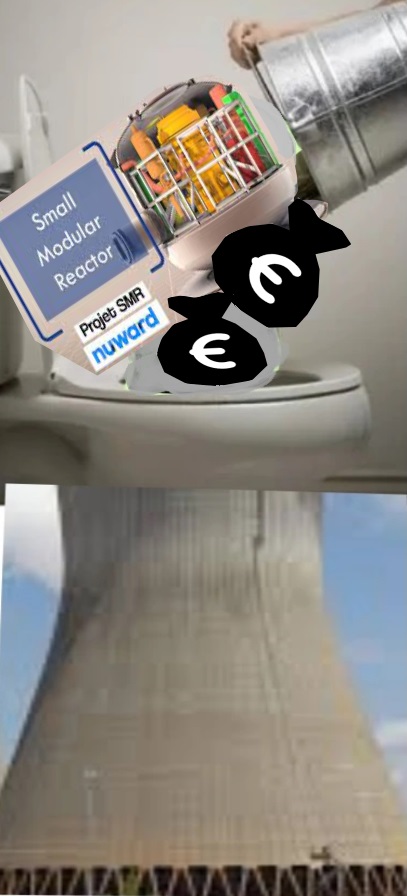
French nuclear rnergy group looking to sell down holding in Nuward to lock in clients and fund development. French nuclear energy group
EDF is seeking investment
partners in Europe to help fund its small reactor venture as it looks to
make up ground against Rolls-Royce and dozens of smaller start-ups
globally. The fundraising effort could also bring in potential buyers of
the small modular reactor technology to lock them in as clients.
The state-owned company, which runs Europe’s biggest fleet of 57 large-scale
reactors in France, is finalising a second SMR design through its Nuward
subsidiary after abandoning a first effort that was too complicated two
years ago.
It now wanted to press ahead with a commercial launch of the
Nuward SMR from 2029, and would seek board approval for those plans on
Thursday, three people familiar with the matter said. EDF was also working
to bring new investors into the subsidiary, two of the people added,
potentially leaving the utility as a minority holder of Nuward. Interested
parties could include countries such as Belgium, Finland and Poland that
already have or are building nuclear plants, and others which do not rely
on the technology, such as Greece or Italy, they added.
FT 30th July 2026, https://www.ft.com/content/34d2542b-8818-4d51-b934-e3baabebf93d
Ontario touts small nuclear reactors with $500,000 for Haldimand County.
Ontario Takes Next Step Toward New Energy Generation in Haldimand County
July 29, 2026
Ministry of Energy and Mines
HALDIMAND COUNTY — As part of its plan to protect Ontario and build a stronger, self-reliant economy, the government is announcing that Haldimand County will receive $500,000 from Ontario Power Generation (OPG) in growth readiness funding to explore opportunities for new energy generation, including small modular reactors, at OPG’s Nanticoke site……. “Our government has a vision to generate power and jobs across Haldimand County by planning for new energy generation that fully unlocks the region’s full potential. To meet electricity demand that is forecast to increase by as much as 90 per cent by 2050, we are planning ahead and building for future generations. We are taking another step forward to advance this project, in true partnership, including seriously considering small modular reactor deployment, to revitalize the economy and workforce.” |
1 This Month
23-25 October – on Zoom – World BEYOND War’s annual global conferenc


Shut down the radiation-damaged Heysham nuclear reactors now
To see nuclear-related stories in greater depth and intensity – go to https://nuclearinformation.wordpress.com

Say No to NASA’s Reckless Nuclear Reactor on the Moon
Say No to NASA’s Reckless Nuclear Reactor on the Moon
-
Archives
- October 2026 (180)
- September 2026 (339)
- August 2026 (330)
- July 2026 (355)
- June 2026 (287)
- May 2026 (306)
- April 2026 (356)
- March 2026 (251)
- February 2026 (267)
- January 2026 (308)
- December 2025 (358)
- November 2025 (359)
-
Categories
- 1
- 1 NUCLEAR ISSUES
- business and costs
- climate change
- culture and arts
- ENERGY
- environment
- health
- history
- indigenous issues
- Legal
- marketing of nuclear
- media
- opposition to nuclear
- PERSONAL STORIES
- politics
- politics international
- Religion and ethics
- safety
- secrets,lies and civil liberties
- spinbuster
- technology
- Uranium
- wastes
- weapons and war
- Women
- 2 WORLD
- ACTION
- AFRICA
- Atrocities
- AUSTRALIA
- Christina's notes
- Christina's themes
- culture and arts
- Events
- Fuk 2022
- Fuk 2023
- Fukushima 2017
- Fukushima 2018
- fukushima 2019
- Fukushima 2020
- Fukushima 2021
- general
- global warming
- Humour (God we need it)
- Nuclear
- RARE EARTHS
- Reference
- resources – print
- Resources -audiovicual
- Weekly Newsletter
- World
- World Nuclear
- YouTube
-
RSS
Entries RSS
Comments RSS

