Major energy and nuclear supply chain showcase connects Cumbrian firms

Business Crack, September 18, 2026
Hundreds of millions of pounds’ worth of infrastructure work took centre stage as energy sector businesses gathered for a major nuclear showcase in West Cumbria.
The BECBC Nuclear Group Showcase at Energus at Lillyhall, near Workington, brought together 250 members and nearly 50 exhibitors alongside major project owners and supply chain partners.
Representatives from Sellafield Ltd, Sizewell C, Nuclear Restoration Services Dounreay and Morgan Sindall Infrastructure shared updates on forthcoming opportunities and pipelines of work.
The event also featured presentations and a question-and-answer session with three candidates for next year’s Cumbria mayoral election.
Labour’s David Allen, Conservative Mike Starkie and Liberal Democrat Libby Bateman all spoke at the showcase to field questions from the local supply chain………………………………………………………………………………………………………………………… https://businesscrack.co.uk/2026/09/18/major-energy-and-nuclear-supply-chain-showcase-connects-cumbrian-firms/
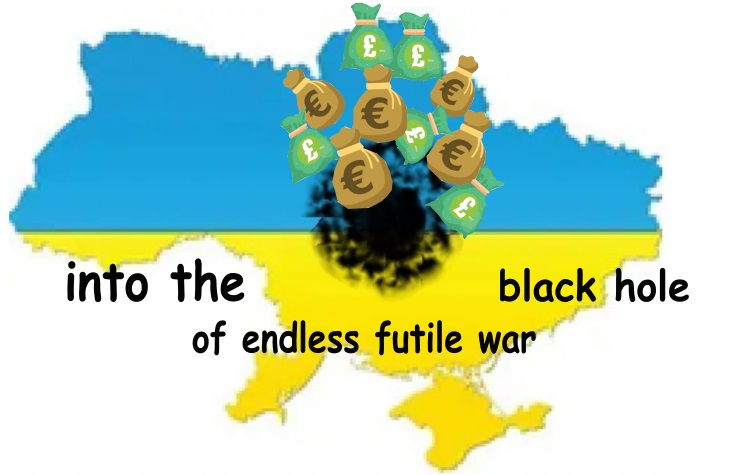
Ukraine is running out of money again – and the EU is asking questions
14 Sep 2026, https://www.sott.net/article/508403-Ukraine-is-running-out-of-money-again-and-the-EU-is-asking-questions
Ukraine leader Volodymyr ZelenskyOfficials in the bloc are reportedly “unsettled” by Kiev’s defense budget hole ballooning almost fourfold within several months.
Despite massive Western assistance, Ukraine is facing a severe cash squeeze almost unseen since the escalation of the conflict with Russia in 2022. The immediate problem is a $27 billion hole in the defense budget that Kiev insists must be plugged.
Kiev’s plea for more money “surprised and unsettled” European officials, the New York Times reported on Wednesday, citing sources, with some of Ukraine’s backers said to be asking questions about whether the country is spending the available funds efficiently – or whether it is simply overstating its needs.
What is the problem with Ukraine’s budget?
Ukrainian leader Vladimir Zelensky publicly put a number on the problem as he met with his European backers in Kiev in late August. The Defense Ministry, he said, already used money that was originally allocated for the end of the year, leaving a $27 billion gap. The revelation also came on the heels of Zelensky’s ill-fated 40-day pressure campaign against Russia, which triggered an escalation that Kiev is still suffering from.
Particularly striking was the fact that just weeks earlier, Ukrainian officials estimated the deficit to be $7.5 billion. Kiev has still not accounted for how the hole grew by another $20 billion– or 10% of its 2021 GDP.
Earlier this month, Prime Minister Sergey Koretsky acknowledged “exceptionally difficult challenges,” including the $27 billion defense hole and the risk of losing access to a significant share of a $29.5 billion tranche expected from Kiev’s backers, which is contingent on government reforms.
Finance Minister Sergey Marchenko said:
“We already see some liquidity issues, and Kiev may have to postpone some payments not related to the war. There will be consequences.
“We haven’t had a situation like this since 2022; we really suffered from the shortage of liquidity. Right now, we are getting far too near to the same scenario we had in 2022. We expect a very hard winter due to Russian strikes.”
How has Kiev blown $20 billion more than expected?
Koretsky blamed much of the increase on the rising price of a technology-heavy war. Following Zelensky’s escalation, Russia intensified missile and drone attacks on the Ukrainian defense industry, while Kiev has spent increasingly heavily on drones, air defenses, artillery, and military personnel.
A secondary issue is arising: Kiev failed to deliver promised reforms tied to Western financing that it had already counted on: oversight of state-owned companies, anti-corruption, and tax and customs reforms.
By late August, Ukraine had failed to meet benchmarks linked to $5.6 billion in EU financing, while around $4.3 billion from Brussels and $1.66 billion in IMF funding were delayed. Much of the money can still be unlocked, but doing so means untangling deeply embedded graft, kickback, and corruption chains unwelcome in parliament, where Zelensky no longer even commands a reliable voting majority.
Earnings have also dropped. Ukraine collected around $38 billion in general-fund revenue (excluding grants) from January to August, but a significant part of the $740 million shortfall was accumulated in August. The weakness concentrated in key revenue sectors: domestic and import VAT, domestic excise duties, and profit transfers from state companies.
Daniil Getmantsev, the chairman of parliament’s Finance Committee, warned earlier this month that there are “no popular solutions left,” adding that the failure to fulfill international commitments could ultimately leave the government struggling in October to pay teachers, doctors, and, in the worst case, military personnel.
Is Zelensky personally to blame for the budget hole?
The Ukrainian leader has been apoplectic over crumbling party discipline and parliament’s inability to pass crucial legislation tied to Western financing.
According to Ukrainskaya Pravda, Zelensky was stunned by the true scale of the budget deficit, with subsequent phone calls to deputies responsible for key EU- and IMF-linked legislation reportedly devolving into shouting.
While Zelensky cannot reliably command enough votes in parliament, Yaroslav Zhelezniak, the deputy chairman of the parliament’s Finance Committee,said lawmakers sounded the alarm about the defense budget long before the $27 billion hole became obvious.
He also accused Zelensky’s government of prioritizing politically attractive spending while leaving military financing unresolved and throwing money at a ‘television marathon’, cashback programs, and handouts. Zhelezniak stressed that Zelensky is accountable for budget issues and should take responsibility – instead of acknowledging the issue at the 11th hour.
How have Ukraine’s EU backers reacted?
The EU has attempted to downplayUkraine’s pleas for more money – even refusing to acknowledge the $27 billion figure. After high-level talks on Monday, European Commission spokesman Balazs Ujvari said the first task at hand is to “get a clear picture of what the budgetary and financial situation is,” and that technical discussions with Ukraine and the IMF are required.
Media reports, however, paint a different picture. The NYT reported that European diplomats did not expect anything close to the $27 billion request, adding that questions are being raised behind closed doors over whether Ukraine is spending money efficiently and whether some of its stated needs are exaggerated.
The EU also insisted that reforms cannot simply be skipped because Ukraine is short of cash. While some voices inside the EU have proposed advancing Kiev part of the ongoing €90 billion loan scheduled for 2027, even Ukraine’s deputy prime minister for European integration, Vsevolod Chentsov, acknowledged that frontloading is “not a silver bullet.”
Cash blown in 2026 cannot be spent again in 2027, leaving Ukraine even more vulnerable to further financial pressures.
Are the EU and Kiev running out of options?
On Wednesday, over 100 MEPs circled back to the topic of frozen Russian assets, urging EU leaders to illegally seize $230 billion in the assets for Ukraine’s needs. This option, however, faces formidable resistance from Belgium, home to Euroclear, where the bulk of the assets are held, over committing what is typically regarded as an act of war, fears of Russian litigation, and wider financial and legal risks.
How ubiquitous is corruption in Ukraine under Zelensky?
While it is highly unlikely that corruption alone accounts for Ukraine’s $27 billion budget hole, it still saturates Ukrainian society and government.
Recent scandals include wiretaps from the sprawling Midas investigation, in which the anti-corruption authorities allege that a network involving Zelensky’s former close associate, Timur Mindich, extracted massive kickbacks from the energy sector; separate recordings raised questions about Mindich’s influence over major weapons producer Fire Point.
The graft also fed into an ugly institutional war, in which the Prosecutor General’s Office allegedly gathered material on anti-corruption officials and their families, while anti-graft investigators uncovered an alleged protection racket for Ukraine’s sprawling scam-call-center industry inside the prosecutor’s office.
Bottom Line
While officials in Kiev claim that the $27 billion budget hole is due to rising military costs, stalled legislation, and delays in Western financing, they have not provided a detailed breakdown of how a deficit earlier estimated at $7.5 billion ballooned almost fourfold within several months – specifically during Zelensky’s 40-day military PR campaign that left Ukraine’s logistics chains broken, ports closed, grain stranded, and defenses weakened.
And the gargantuan hole is only half of the problem: It has clearly rattled Kiev Western backers, who are now once again unsure how Ukraine is spending money.
Comment: They left out ‘siphoning for personal gain’ from Europe’s coffers to Ukrainian pockets.
Russian nuclear ties persist in the West

Bellona September 14, 2026, https://bellona.org/news/nuclear-issues/2026-09-russian-nuclear-ties-persist-in-the-west-as-war-claims-another-life-at-zaporizhzhia
Germany allows VVER fuel production using Russian technology
Germany, meanwhile, has approved a controversial plan that will preserve another form of Russian involvement in Europe’s nuclear industry.
On July 22, authorities in Lower Saxony approved an application by Advanced Nuclear Fuels, a subsidiary of France’s Framatome, to expand its Lingen plant to manufacture hexagonal fuel assemblies for Russian-designed VVER reactors.
The fuel will be manufactured under Russian licenses and using Russian technology through cooperation with Rosatom’s fuel subsidiary TVEL. The decision came despite objections from some 11,000 people and concerns about espionage, sabotage, cyberattacks and Russian access to critical German infrastructure. Authorities imposed safeguards, including restrictions on access by Rosatom and TVEL personnel and security inspections of Russian equipment.
Bellona nuclear expert Dmitry Gorchakov calls the decision “rather strange” and warns that it undermines efforts to reduce European dependence on Russia.
“Unfortunately, this shows the absence of a single clear policy and principles regarding contacts with official Russian structures, both within Germany itself and within the EU,” Gorchakov writes.
More importantly, he argues, allowing Framatome to meet its VVER fuel commitments with Rosatom’s involvement “may slow the development of its own French VVER fuel independent of Rosatom and prolong Rosatom’s dependence and influence on this market in Europe.”
“Bellona does not approve of this decision by the German authorities or of this cooperation between Framatome and Rosatom,” Gorchakov concludes.
Western uranium markets remain dependent on Russia
New figures published in July show why severing those ties remains difficult.
The Euratom Supply Agency reported that European suppliers significantly expanded uranium enrichment services in 2025, increasing their share of the EU market from 63.9% to 72.9%. The volume of Russian enrichment services also increased by 11.6% in physical terms. However, their share of the total volume of European orders declined by 22.55% compared with 23.55% a year earlier and 37% in 2023. Russia supplied nearly 16% of the EU’s natural uranium and 24.4% of its conversion services.
The situation is likewise complicated in the United States. According to the U.S. Energy Information Administration, Russia remained the largest single source of enrichment services purchased by American nuclear operators in 2025, providing 3.284 million SWU — about 26% of the total. That was more than the share supplied by U.S. enrichment capacity itself.
“The published statistics in the EU and the US show the continuing dependence of Western nuclear power plant operators and nuclear fuel cycle enterprises on Russian supplies of uranium and its conversion and enrichment services,” Gorchakov says.
“Despite the existence of major European competitors to Rosatom and technical alternatives, up to 20–25% of nuclear materials and nuclear fuel cycle services in European and US markets still originate in Russia.”
For Gorchakov, market forces alone are unlikely to break that dependence. “Only official restrictions and sanctions can break this trend,” he writes, arguing that firm limits would both force reductions in Russian purchases and give Western suppliers confidence that investments in new capacity will pay off.
Taken together, the developments underline a contradiction that has persisted since the beginning of the war. Russia’s occupation of Zaporizhzhia has created unprecedented nuclear safety risks in Ukraine, yet Rosatom remains deeply embedded in nuclear supply chains in the countries supporting Kyiv. Europe and the United States are developing alternatives, but July’s figures — and Germany’s decision in Lingen — suggest that breaking those ties will require political decisions as much as new technology and production capacity.
UK Government’s nuclear weapons spending plans could fund 220,000 nurses and 3.7m homes, report finds

Campaigners urge government to redirect £240bn for nukes to boost the health service, clear the social housing waiting list and pay for solar panels on every home
LTERNATIVES to current nuclear weapons spending plans would be enough for the NHS to hire extra 220,000 nurses and fund 3.7 million affordable homes, a report found today.
Campaigners demanded Prime Minister Andy Burnham consider redirecting the outlined £240 billion for nukes to boost the health service, clear the social housing waiting list and pay for the installation of solar panels on every home.
The Campaign for Nuclear Disarmament’s report, entitled People not Nukes, revealed the total amount of savings the state could make over the next 30 years if it funded public services instead of the war machine.
CND general secretary Sophie Bolt told the PM he must be clear about his priorities ahead of his first Budget in October.
“Prime Minister Burnham has stated that national security can’t come at the expense of social security,” she said.
“That is correct. But he also needs to be clear about the real national security threats we face — and what will make us more secure, not less.
“Military spending hikes and nuclear expansion are not making us safer. Replacing Britain’s nuclear submarines and expanding its nuclear capability is only increasing the threat of nuclear weapons being used, and the chances of other countries developing the weapons.”
With alternative spending plans, the £240m destined for nuclear arms programmes could increase nursing staff by a third compared to current levels.
It could also clear the social housing waiting list within seven years, by building 3.7m affordable homes.
Other alternatives could see university tuition fees of eight million students paid, or fund free school meals for every child in Britain for 46 years.
“Thousands of people are dying in Britain right now because of a failure to invest in tackling climate change and to properly fund essential public services, like health. Millions are living in poverty in insecure, unsafe housing,” Ms Bolt said.
The report, she added, shows that meeting international nuclear disarmament obligations “could free up hundreds of billions of public funds to tackle these very urgent, life-threatening security threats we face.”
The findings come as the unions at this year’s TUC Congress were set to vote on a motion for “Building real security” by “advancing a trade union vision of security-based decent work, quality public services, equality, climate action, democracy on peace.”
Huge nuclear energy initial public offering put on hold amid economic concerns
Holtec pulls IPO over “perfect storm” in AI sector, founder says
One of the largest nuclear energy initial public offerings of the year has
been put on hold amid concerns about a slowdown in the economy and the AI
sector.
Kris Singh, Holtec International’s founder and chief executive,
told the FT on Wednesday that the IPO had been suspended because of the
market’s sharp turn against the AI data centre economy in the past few
weeks.
“It’s like a perfect storm,” Singh said. “Our business,
rightly or wrongly, is viewed as connected to it [data centres]. We provide
nuclear power. So that was, of course, a big factor in market sentiment
against nuclear.”
Holtec was planning to raise $900mn this week to help
it finance an ambitious plan to transform itself from a supplier of nuclear
components and services into a reactor design and nuclear plant operator.
The suspension of Holtec’s IPO will send a shockwave through the US nuclear
sector, which is aiming to raise tens of billions of dollars to build a
fleet of reactors to power the AI revolution. Westinghouse, which has
ambitions to build up to 10 large-scale reactors, recently filed plans to
list on the US market.
FT 17th Sept 2026, https://www.ft.com/content/5f4a4fce-72bb-4ea6-862b-1da1234d5b25
Rolls-Royce boss bets big on new engines and small nuclear

he declared that Rolls-Royce was a “burning platform”.
The second big bet is on small modular reactors (SMRs),
analysts say the promised cost savings of SMRs have yet to be proven.
Having led an extraordinary turnaround since 2023, Tufan Erginbilgiç is staking the company’s continued growth on small modular reactors and a return to the single-aisle commercial jet market
Jeevan Vasagar, Observer 6th Sept 2026
he chief executive of Rolls-Royce was in typically forthright form at the Farnborough International Airshow in July. More than a decade after exiting the market for narrow-body aircraft, the British engineering company planned to return to making engines for the single-aisle planes that are the world’s bestselling commercial jets – but the CEO wanted government support to do so.
If it were not forthcoming, Tufan Erginbilgiç added, then Rolls-Royce had other options.
Erginbilgiç, a former BP executive, has led an extraordinary turnaround. At his first town hall meeting as chief executive, he declared that Rolls-Royce was a “burning platform”. The pandemic, which brought global air travel shuddering to a halt, could not be blamed for the engine-maker’s troubles, Erginbilgiç said, telling staff: “We underperform every key competitor out there.”
Rolls-Royce’s share price has soared from about 99p when Erginbilgiç took the helm in January 2023 to £14.67 this week, an increase similar to Nvidia’s surge in that time. “Rolls is a great business, and Tufan has played the City like a piano,” one aviation industry insider said.
The question is: can it last?
……………………………………………………………………………………………………………………………………………………………………………………………………………………………………Rolls-Royce’s defence business, making power and propulsion systems for combat aircraft and submarines, has benefited from the increase in defence spending. The power systems division, supplying diesel generators and gas engines, has thrived with the boom in data centre construction. But here too Rolls-Royce is not just surfing the rising market. Profit margins have gone up as well, analysts point out……………………………………………………………………………………………………………………
The second big bet is on small modular reactors (SMRs), a technology that’s meant to reduce the time and cost of delivering nuclear fission at a moment when the uncertainty of fossil fuel markets, soaring electricity demand and emissions goals are driving renewed interest in nuclear power.
Delivering emissions-free energy is a valuable sideline for a company that relies for most of its business on burning kerosene. But analysts say the promised cost savings of SMRs have yet to be proven.
If Erginbilgiç can pull off either of these moonshots, the post-pandemic surge in Rolls-Royce’s valuation might just be the beginning.
https://observer.co.uk/news/business/article/rolls-royce-boss-bets-big-on-new-engines-and-nuclear
Propaganda for microreactors at “an industrial scale”

Norman Foster says nuclear is key for ‘Electrical Revolution’
By Alex Hunt, World Nuclear News, in London, Thursday, 10 September 2026
Architect Norman Foster says that nuclear’s ability to provide a “vast amount of power” with “a tiny imprint” means that micro-modular power units should be being produced at “industrial-scale, like jet engines” with the potential to autonomously power new developments and move beyond the “obsolete idea of a grid”………………………………..
The 19th Century was the age of the Industrial Revolution, he said, but the world was now moving into a new age, of “electrical revolution”. He gave examples of what he called “the rampant destruction” of the countryside by renewable energy projects…………………………………………….
I would suggest industrialised nuclear to augment the existing systems … industrialised nuclear has a critical role to play.”
In his speech, delivered without notes, the 91-year-old said that he had championed the cause of nuclear in the “corridors of power, discreetly” and said that, via courses at the Norman Foster Institute, had helped “change the policy of at least one nation”……………………………………….. https://www.world-nuclear-news.org/articles/norman-foster-says-nuclear-key-for-electrical-revolution
Google signs up for electricity from Finnish nuclear power plant
Tech giant Google has signed a long-term power purchase agreement with
Finland’s Fortum covering up to 50% of the Loviisa nuclear power plant’s
capacity and providing financial certainty for power uprates and lifetime
extensions until 2050.
World Nuclear News 9th Sept 2026 https://www.world-nuclear-news.org/articles/google-signs-up-for-electricity-from-finnish-nuclear-power-plant
UK datacentres will create just 25% of jobs predicted by tech sector, analysis finds
Facilities likely to employ 10,400 workers, compared with 40,000 in industry estimates, thinktank says
Datacentres in the UK will
create just a quarter of the jobs predicted by the tech sector, while
consuming vast amounts of energy, according to new research. Environmental
thinktank Verdant predicts that all the datacentres currently planned are
likely to directly employ 10,400 workers – compared with the more than
40,000 cited in projections by the industry lobby group TechUK. Labour has
defended the rapid rollout of AI datacentres in the face of growing public
scepticism, amid concerns about their demand for water and energy. The
government has also echoed TechUK’s claims about job creation.
Verdant’s analysis is based on 20 projects for which data on staffing
levels are publicly available, including via planning applications, company
accounts and press releases – as well as international comparisons.
Guardian 9th Sept 2026, https://www.theguardian.com/uk-news/2026/sep/09/uk-datacentres-will-create-just-25-of-jobs-predicted-by-tech-sector-analysis-finds
Guide aims to ‘unlock mainstream finance’ for nuclear

WNN, Tuesday, 8 September 2026
The World Nuclear Investment Guide sets out the value nuclear provides to energy systems, as well as providing practical guidance and checklists for governments and project teams and proposed developer and investment models.
The full guide, which has been published two months after the launch of its initial Roadmaps to Mainstream Finance section, was prompted by the need to secure investment estimated at USD6 trillion by 2050 – or an average of USD250 billion a year – if global nuclear capacity is going to achieve the widely shared goal of at least tripling by 2050.
The three new sections include Nuclear Must Knows, which aims to highlight “the full value nuclear provides to energy systems, including energy security, reliability and decarbonisation, and puts risks in context to show how the industry is evolving”.
The Investment Readiness section “provides practical guidance and checklists for governments and project developers, emphasising that technical, financial and project readiness must progress in parallel if projects are to attract investment”……………………………………………………………………………https://www.world-nuclear-news.org/articles/guide-aims-to-unlock-mainstream-finance-for-nuclear
Small modular reactor client lines up £1.1bn Wylfa early works deal

07 Sep 2026 By Harmsworth,
https://www.constructionnews.co.uk/buildings/small-modular-reactor-client-lines-up-1-1bn-wylfa-early-works-deal-07-09-2026/
CGI of former plans for a nuclear site at Wylfa Newydd
Great British Energy – Nuclear (GBE-N) has outlined plans for an early works contract worth up to £1.1bn as part of its small modular reactor (SMR) programme.
The government-owned nuclear developer said the package would cover civil engineering, infrastructure, buildings, mechanical and electrical work and earthworks at the Wylfa site in Anglesey, north Wales.
The contract has an indicative value of £730m-£1.1bn and is expected to run from June 2028 until June 2034, GBE-N said in a preliminary market engagement notice.
It also included an option to extend the contract until June 2037.
The client said it had previously considered splitting the work into two packages but ultimately decided to combine them to reduce interfaces between contractors.
The successful supplier will take responsibility for design from RIBA stage four and delivery of site-enabling works.
07 Sep 2026 By Harmsworth
CGI of former plans for a nuclear site at Wylfa Newydd
Great British Energy – Nuclear (GBE-N) has outlined plans for an early works contract worth up to £1.1bn as part of its small modular reactor (SMR) programme.
The government-owned nuclear developer said the package would cover civil engineering, infrastructure, buildings, mechanical and electrical work and earthworks at the Wylfa site in Anglesey, north Wales.
The contract has an indicative value of £730m-£1.1bn and is expected to run from June 2028 until June 2034, GBE-N said in a preliminary market engagement notice.
It also included an option to extend the contract until June 2037.
The client said it had previously considered splitting the work into two packages but ultimately decided to combine them to reduce interfaces between contractors.
The successful supplier will take responsibility for design from RIBA stage four and delivery of site-enabling works.
Work will include species relocation, remediation, site clearance, site establishment, construction utilities, drainage and haul roads supporting bulk earthworks.
The works are intended to establish ground levels, provide construction access and create the physical platform required for later phases.
GBE-N said the programme will cover planning, licensing, design and construction needed before its technology partner installs and commissions SMR technology.
America Is Betting Big on a New Generation of Small Nuclear Reactors
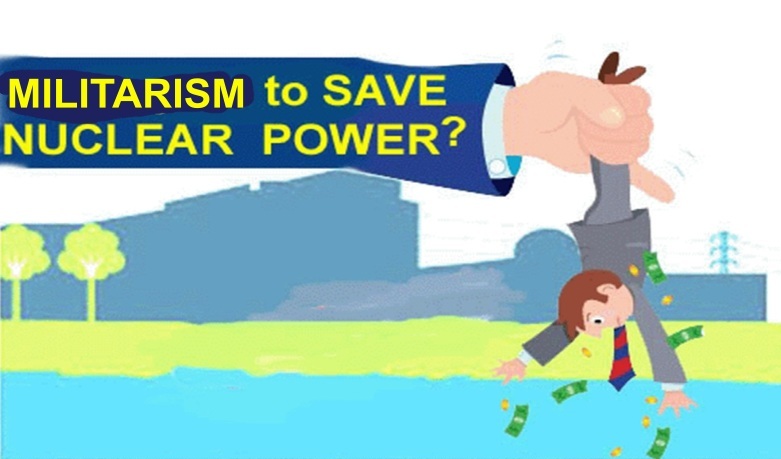
In addition to private-sector development, the U.S. Army has taken the lead in microreactor development in recent years, following Trump’s Executive Order 14299 – Deploying Advanced Nuclear Reactor Technologies for National Security, which established the Army as the lead agency for military nuclear energy efforts. The directive required the Army to create an official programme with a deadline for an operational reactor at a domestic military installation by September 30, 2028.
In August, the U.S. Army announced plans to award up to $2.2 billion to five companies to construct new-generation microreactors at military bases across the United States. The deployment of these reactors will be supported by the federal easing of regulations for innovative reactor designs.
The Army will provide financing to Antares Nuclear at Fort Bragg in North Carolina; BWX Technologies at Fort Campbell in Kentucky; General Atomics at Fort Hood in Texas; Radiant Industries at Fort Benning in Georgia; and Westinghouse Government Services at Fort Drum in New York, with the aim of deploying at least one microreactor by the third quarter of 2028. The companies will be expected to raise billions in private investment to support development efforts.
By Felicity Bradstock – Sep 05, 2026, 2:00 PM CDT
- The U.S. Army has selected five companies and five military installations for its Janus microreactor program, backed by up to $2.2 billion in federal funding.
- The Army aims to have at least one microreactor producing usable electricity at a military installation by September 30, 2028.
- Private developers, including Aalo, are also advancing reactor technology, supported by federal programs and efforts to streamline nuclear regulation.
Governments worldwide are racing to develop small modular reactors (SMRs) as part of their plans for a nuclear power renaissance, with significant progress being seen in recent years. However, the United States appears to be leading the way in nuclear microreactor development, with significant investment in the technology recently announced by the U.S. Army……………
A microreactor is even smaller than an SMR, for which a range of designs are currently under development in the United States with the aim of launching the first versions within the next decade. The compact nuclear reactors will be small enough to be transported by truck, boat, or plane ……
Microreactors will be produced and assembled in factories for transport to a wide range of sites, reducing capital costs and accelerating production. They are expected to have a simple, responsive design that allows them to self-adjust without requiring many specialised operators to make these changes, and will be developed with safety systems to prevent overheating or a reactor meltdown.
Most microreactors are being designed to generate between 1 MW and 20 MW of thermal energy, which could be used directly to heat or converted into clean electricity. They will run on a higher concentration of uranium-235 than is currently used in conventional reactors and can be connected to microgrids alongside renewable energy sources. They may also be useful for use in emergency response following a natural disaster. In addition, they can operate for up to 10 years without refuelling and be quickly removed from sites and replaced with new ones.
In the United States, the Department of Energy (DoE) supports a variety of advanced reactor designs, in line with President Trump’s support for a nuclear power resurgence. Trump has voiced support for a wide range of nuclear technologies, from conventional nuclear plants to SMRs and microreactors, aiming to quadruple nuclear power production in the United States by 2050.
In July, Texas-based Aalo announced that its Critical Test Reactor (CTR) had achieved criticality – the point at which a nuclear reactor is capable of sustaining a controlled, self-supporting chain reaction. Aalo said in a statement, “Our CTR went from groundbreaking to a sustained chain reaction in less than eight months – one of the fastest reactor builds in 80 years – and our company has gone from founding to fission in less than three years.” Aalo is focusing on producing 10 MWe reactors for deployment in 50 MWe Aalo Pods to power AI data centres.
In addition to private-sector development, the U.S. Army has taken the lead in microreactor development in recent years, following Trump’s Executive Order 14299 – Deploying Advanced Nuclear Reactor Technologies for National Security, which established the Army as the lead agency for military nuclear energy efforts. The directive required the Army to create an official programme with a deadline for an operational reactor at a domestic military installation by September 30, 2028.
In August, the U.S. Army announced plans to award up to $2.2 billion to five companies to construct new-generation microreactors at military bases across the United States. The deployment of these reactors will be supported by the federal easing of regulations for innovative reactor designs.
The Army will provide financing to Antares Nuclear at Fort Bragg in North Carolina; BWX Technologies at Fort Campbell in Kentucky; General Atomics at Fort Hood in Texas; Radiant Industries at Fort Benning in Georgia; and Westinghouse Government Services at Fort Drum in New York, with the aim of deploying at least one microreactor by the third quarter of 2028. The companies will be expected to raise billions in private investment to support development efforts.
Jeff Waksman, the principal deputy assistant secretary of the Army for installations, energy and environment, stated, “We believe that this will be the spear tip not just for microreactors but for all advanced reactors in the United States… There have been a lot of microreactor companies that have popped up recently, but we need to get them over the hump.”
While there has been greater discussion around SMR development, the United States is also investing heavily in microreactor construction, aiming to launch the first reactors within the next two years. Funding from the DoE and support from favourable national policies and regulations are expected to help rapidly advance development in the coming years. https://oilprice.com/Alternative-Energy/Nuclear-Power/America-Is-Betting-Big-on-a-New-Generation-of-Small-Nuclear-Reactors.html
Lepreau breaks down again, likely to cost about $50M
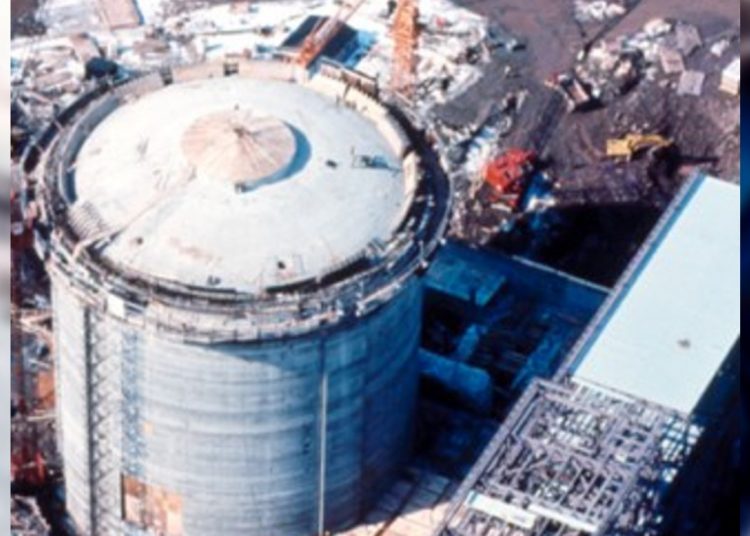
The aged equipment has the potential to cause a major outage due to sudden failure.
–NB Power annual report 2025-2026
Workers at the 43-year-old station were finishing planned maintenance when a major gasket failed, forcing them to keep the plant offline
by John Chilibeck, Local Journalism Initiative Reporter, September 4, 2026
Atlantic Canada’s only nuclear power plant has broken down again, a repair problem that will likely cost NB Power customers at least $50 million.
For New Brunswickers who want to know how that impacts their wallet, that works out to about $127 on average for each of the public utility’s 393,000 direct customers.
Officials with the Crown corporation did not offer any estimates on Tuesday, the day after announcing the unplanned outage at the Point Lepreau Nuclear Generating Station west of Saint John.
“We are still assessing the overall cost,” spokeswoman Elizabeth Fraser-McAllister told Brunswick News on Tuesday in an email.
“Repair costs and replacement power costs can vary depending on the time and duration of the outage, market conditions and operational requirements. Our focus is on completing the work safely and returning the station to service once all required reviews are complete.”
But it’s not that difficult to do a rough calculation of how much the breakdown will likely cost customers who are already suffering from rate shock.
A planned maintenance outage announced earlier this year in an NB Power news release was supposed to last only 119 days. That work began April 10 and was scheduled to wrap up by Aug. 7.
Fraser-McAllister said the unplanned outage would likely last until the end of September, or 54 days since the planned outage was to be completed.
In previous hearings before the New Brunswick Energy and Utilities Board, NB Power executives have said that an unplanned outage at Point Lepreau costs on average about $1 million a day outside the winter peak months.
When it is down, NB Power must fire up more expensive fossil-fuel plants (like the oil-burning Coleson Cove) or buy premium-priced power from Quebec and Maine.
That means the 54-day outage could cost ratepayers an additional $54 million.
Customers won’t know the true costs until a little under a year from now. Fraser-McAllister said they would be reported through NB Power’s annual financial statements, which are publicly available. Those are typically published in July.
In its release on Monday, the utility said there was no risk to the staff, public and the environment.
“This is the best path forward,” said Steve Bagshaw, site vice president and chief nuclear officer with the Crown corporation, in the release. “Taking the time now to complete this repair helps reduce the risk of unplanned interruptions during the winter months, helping ensure we are ready when customers need us most. This approach supports the long-term reliability of the station.”
The problem this time is a blown gasket. NB Power says the piece of equipment that failed was on the turbine system on the conventional, non-nuclear side of the plant
Fraser-McAllister said the gasket issue became apparent as the station progressed through its normal start-up activities and steam began circulating through the turbine system on Aug. 21. The plant went fully offline on Sunday.
“As power was gradually raised, as per process, teams observed that steam was escaping from the reheater gasket area,” she explained. “The station continued operating safety as the team analyzed the issue. Further reviews and assessments determined that the gasket on the reheater was not sealing as intended and needed to be replaced.”
She said the repair is being completed before workers fire up the plant again.
“Taking this proactive approach is in the best interests of our customers, helping to ensure the equipment is operating as intended and supporting the station’s safe, reliable and efficient operation through the winter and over the long term.”
Point Lepreau has had several unplanned outages over the years. The direst was last year, when a planned maintenance outage and unexpected breakdown lasted eight months, costing ratepayers more than $200 million.The 43-year-old plant is considered one of NB Power’s workhorses, providing about one-third of the province’s electricity when it is running properly.
The utility’s executives are desperate to get it operating as well as it should. Electricity rates have gone up more than one-quarter in the past four years, costing households hundreds of extra dollars a year and leading to a public outcry. Meanwhile, the utility’s bulging debt continues to grow, surpassing $6 billion, money that will eventually have to be paid back.
Most nuclear plants operate at a capacity factor above 90 per cent. The capacity factor measures how much electricity a plant actually produces compared to the maximum amount it could produce if it ran at full power 24 hours a day.
Point Lepreau has been a basement dweller in this regard. Over the last decade, its capacity factor has ranged from 89 to 27 per cent. Between fiscal years 2016 and 2025, the average annual capacity factor was 74 per cent, nearly 20 points below the industry norm.
NB Power signed a three-year, $20-million deal with Laurentis Energy Partners, a subsidiary of Ontario Power Generation, that began in April. The idea is to use expertise from Ontario, where there are several nuclear plants, to ensure Point Lepreau gets up to snuff.“
Some major Point Lepreau Nuclear Generating Station equipment has run well beyond its typical design life of 30 years,” warned a section in NB Power’s annual report, released this summer. “The aged equipment has the potential to cause a major outage due to sudden failure.“
Nuclear Liability Beyond Earth: Who Pays for an Incident on the Lunar Surface?

European Journal of International Law by Yunus Emre Bakiler and Güneş Ünüvar, September 2, 2026
Lunar exploration during the 20th century sought to reach, explore and, in some cases, return from the Moon,; rather than to serve as successive stages in the construction of permanent lunar infrastructure. Today, lunar missions are mostly about establishing the long-term infrastructure necessary to remain there. Under the Artemis Programme, NASA is developing phased infrastructure for long-term operations and an enduring human presence near the lunar south pole. The International Lunar Research Station (ILRS), led by China, is envisaged as an expandable facility capable of long-term robotic operation and shorter periods of human participation. Commercial entities are already involved in lunar delivery and landing services, while prospective activities extend to communications, mobility, power supply, prospecting and the use of lunar resources.
For sustained operational presence anywhere, power is a common dependency. This is certainly the case for the Moon, and nuclear power is one alternative. In January 2026, NASA and the US Department of Energy announced that they would work towards deploying such a fission surface power system by 2030. NASA now describes “Lunar Reactor-1” as a reactor intended to land on the Moon in that year. Nuclear surface power is therefore becoming part of near-term planning for sustained lunar operations.
These developments form part of a broader and increasingly global debate over lunar governance. Among the legal questions raised is the liability regime that would apply if a nuclear incident occurred on the lunar surface, but the interaction between the international space law liability framework and the civil liability regimes developed for nuclear installations has yet to receive any scholarly and policy attention. Can a state be held liable for a nuclear incident occurring on the face of the Moon under international law? The blog post will argue that instruments available under international law, while entirely relevant, fall short of providing a conclusive answer to the question. It will also suggest a tentative model for the way forward…………………………………………………………………………………………………………………………………………………………………………………………………………………..
The existing UN Principles on Nuclear Power Sources and the 2009 UN–IAEA Safety Framework provide important safety guidance, but they do not create a detailed governance framework or a compensation regime. The development of lunar nuclear power should be accompanied by an equally serious effort to identify the applicable liability architecture embedded within a robust, comprehensive lunar governance framework. Once a reactor is operating on the Moon, uncertainty over fault, compensable damage, competent fora and available financial resources will be immediate realities. The legal framework should be developed alongside the technology and not in response to its first, potentially catastrophic, failure. https://www.ejiltalk.org/nuclear-liability-beyond-earth-who-pays-for-an-incident-on-the-lunar-surface/
Pay hike for NB Power CEO while ratepayers struggle ‘doesn’t make sense’: NB ACORN
The ACORN picket happened two days after another unplanned power outage at the Point Lepreau nuclear plant with a likely cost of $50 million. An analysis published in the Telegraph-Journal suggests that the latest nuclear plant outage will cost an average of $127 for each NB Power customer.
NB Media Co-op, by Susan O’Donnell, September 4, 2026
Picketers at NB Power’s Fredericton headquarters on Thursday said the government is not doing enough to help the thousands of New Brunswickers struggling to pay their electricity bill.
The 2025 report on energy poverty from the Human Development Council found that more than 37,000 households in the province experience both low income and high energy burden, a rate nearly double the national average.
NB ACORN chair Nichola Taylor organized the picket because she said the government is not doing enough to help these people. “First of all, the announcement that the CEO is getting a huge pay rise while everybody else is paying huge rate increases … it just doesn’t make sense.”
In August, the cabinet approved a 14 per cent pay hike for NB Power CEO Lori Clark, who now earns $623,653.
ACORN’s main demand is for a rebate program specifically geared towards low-income earners, similar to one that exists in Ontario…………………………………..
The ACORN picket happened two days after another unplanned power outage at the Point Lepreau nuclear plant with a likely cost of $50 million. An analysis published in the Telegraph-Journal suggests that the latest nuclear plant outage will cost an average of $127 for each NB Power customer.
ACORN’s Taylor said if the nuclear plant’s problems mean that rates will continue to rise, “this is a massive problem, and they need better solutions which they are clearly not doing right now.”
NB Power has previously stated that it is “committed to providing safe, reliable energy for our customers while keeping rates as low as possible” and that its goal “is always to work with customers to avoid disconnecting service.” .. https://nbmediacoop.org/2026/09/04/pay-hike-for-nb-power-ceo-while-ratepayers-struggle-doesnt-make-sense-nb-acorn/
1 This Month
23-25 October – on Zoom – World BEYOND War’s annual global conferenc


Shut down the radiation-damaged Heysham nuclear reactors now
To see nuclear-related stories in greater depth and intensity – go to https://nuclearinformation.wordpress.com

Say No to NASA’s Reckless Nuclear Reactor on the Moon
Say No to NASA’s Reckless Nuclear Reactor on the Moon

-
Archives
- October 2026 (247)
- September 2026 (339)
- August 2026 (330)
- July 2026 (355)
- June 2026 (287)
- May 2026 (306)
- April 2026 (356)
- March 2026 (251)
- February 2026 (267)
- January 2026 (308)
- December 2025 (358)
- November 2025 (359)
-
Categories
- 1
- 1 NUCLEAR ISSUES
- business and costs
- climate change
- culture and arts
- ENERGY
- environment
- health
- history
- indigenous issues
- Legal
- marketing of nuclear
- media
- opposition to nuclear
- PERSONAL STORIES
- politics
- politics international
- Religion and ethics
- safety
- secrets,lies and civil liberties
- spinbuster
- technology
- Uranium
- wastes
- weapons and war
- Women
- 2 WORLD
- ACTION
- AFRICA
- Atrocities
- AUSTRALIA
- Christina's notes
- Christina's themes
- culture and arts
- Events
- Fuk 2022
- Fuk 2023
- Fukushima 2017
- Fukushima 2018
- fukushima 2019
- Fukushima 2020
- Fukushima 2021
- general
- global warming
- Humour (God we need it)
- Nuclear
- RARE EARTHS
- Reference
- resources – print
- Resources -audiovicual
- Weekly Newsletter
- World
- World Nuclear
- YouTube
-
RSS
Entries RSS
Comments RSS

