Environment Minister Yamaguchi flirts with five former prime ministers: “Thyroid cancer has nothing to do with the nuclear accident.

February 2, 2022
Environment Minister Sou Yamaguchi announced on Wednesday that he had sent letters of protest to five former prime ministers, including Junichiro Koizumi and Morihiro Hosokawa, for spreading false information about the health effects of radiation on children in Fukushima Prefecture.
Koizumi and Hosokawa, as well as Naoto Kan, Yukio Hatoyama and Tomiichi Murayama, are opposed to the European Commission’s decision to include nuclear power plants as a “green” investment that contributes to decarbonization, as many children are suffering from thyroid cancer due to the accident at Tokyo Electric Power Co. He had sent a statement to the chairman of the committee dated last month 27. In his letter, Mr. Yamaguchi complained that the wording of the statement by the former prime minister and others “may lead to discrimination and prejudice and is not appropriate.
https://www.nikkan-gendai.com/articles/view/life/300797?fbclid=IwAR22vMJNVWo6niqyS-xO8yf7TpCS8TNhoTnMwt8UjtoE1jSeaKy_0AH5ZJY
[Urgent Release] Examining the Significantly Reduced “Oral” Thyroid Radiation Exposure in the UNSCEAR 2020 Report

February 3, 2022
In a letter sent by five former prime ministers, including Junichiro Koizumi and Naoto Kan, to the European Commission, they stated that “many children are suffering from thyroid cancer” due to the accident at TEPCO’s Fukushima No. 1 nuclear power plant. Prime Minister Fumio Kishida responded at the Budget Committee of the House of Representatives on February 2 that the letter was inappropriate because it could spread false information that children in Fukushima Prefecture are suffering from health problems caused by radiation and promote unwarranted discrimination and prejudice. He responded. The governor of Fukushima Prefecture, Masao Uchibori, also wrote a letter to the former prime minister and others urging them to disseminate objective information based on “scientific findings,” saying that according to the opinions of experts, no causal relationship with radiation exposure has been recognized.
The basis for the current denial of thyroid cancer by the national and prefectural governments is that the thyroid exposure associated with the Fukushima nuclear accident is much lower than that of Chernobyl. However, the exact thyroid absorbed dose from the Fukushima nuclear accident has not been measured. All the figures currently being produced are merely estimates based on simulations and other data.
The same is true for the 2020 report of the United Nations Scientific Committee on the Effects of Atomic Radiation (UNSCEAR), which the government places particular emphasis on. In particular, the 2020 report released in March last year is based on the same estimates as the agency’s 201 In particular, the 2020 report, which was released in March last year, is characterized by a significant decrease in the estimated radiation doses to the public compared to the report released in 2013. In the 2013 Report, the thyroid exposure from oral intake (infants (1 year old)) was uniformly 32.79 mGy in Fukushima Prefecture, but in the 2013 Report, it was significantly reduced from 1 to several mGy.
OurPlanetTV obtained 15,000 pieces of radioactive measurement data and meeting minutes from the Nuclear Regulation Authority and Fukushima Prefecture in the early stages of the accident. We added our own coverage and published the article in September last year.
Free release of Iwanami “Science” articles. https://www.ourplanet-tv.org/40513/
In response to the fact that the national government and the prefectural government have expressed the view that they deny the existence of thyroid cancer patients despite the fact that there are as many as 300 thyroid cancer patients, Iwanami Shoten will release the September 2021 issue of Science, which reports on the contamination of food immediately after the accident, in digital format free of charge.
https://www.ourplanet-tv.org/44455/?fbclid=IwAR0Z-2CfTEctWkfNg-GzphLXiTd7FCdnrnYwSodolzJz6DARqJkOdicPUb4
Fukushima governor refutes ex-PMs’ anti-nuclear letter to EU

February 3, 2022
The governor of Fukushima has sent a written protest to five former Japanese prime ministers for saying that many children in the prefecture are suffering from thyroid cancer as a result of the 2011 nuclear accident.
Governor Uchibori Masao has taken issue with a letter the ex-leaders sent to the European Union last month calling on the bloc to pursue a nuclear-free society.
He wrote to the leaders on Wednesday, saying they should present objective information based on scientific evidence.
The letter dated January 27 and signed by Koizumi Junichiro, Hosokawa Morihiro, Kan Naoto, Hatoyama Yukio and Murayama Tomiichi, was a reaction to the EU’s plan to label some nuclear power plants as green investments.
Koizumi is an advisor to a private organization that promotes zero nuclear power and renewable energy.
The letter refers to the accident at the Fukushima Daiichi Nuclear Power Plant that was triggered by the 2011 quake and tsunami. The leaders say, “What we have witnessed in Fukushima over the last decade is an indescribable tragedy and contamination on an unprecedented scale.” They add, “many children are suffering from thyroid cancer.”
In Fukushima Prefecture, a survey has found 266 cases of confirmed or suspected thyroid cancer in people aged 18 years or younger at the time of the nuclear accident.
But a panel of experts commissioned by the prefecture says that no links have been established so far between the thyroid cancer cases and radiation exposure.
In his complaint to the ex-leaders, Governor Uchibori says providing accurate information based on scientific knowledge is crucial for the rebuilding of Fukushima.
He urged that when they refer to the current state of the prefecture, they should use objective information that is based on the prefecture’s views and reports by international scientific organizations.
Speaking at a Diet committee on Wednesday, Japanese Prime Minister Kishida Fumio called the letter by his predecessors inappropriate. Kishida said the letter spreads incorrect information that children in Fukushima are suffering health damage from radiation. He said it also raises concerns of promoting unreasonable discrimination and prejudice.
Last month, six people who were 6 to 16 years old and living in Fukushima at the time of the nuclear accident filed a lawsuit demanding that the plant operator pay damages for their thyroid cancer.
Their lawyers say this is the first time a group of residents has filed a lawsuit against Tokyo Electric Power Company over health problems they claim were caused by radiation from the nuclear accident.
The lawyers say the plaintiffs have had all or parts of their thyroid glands removed and some need lifetime hormonal treatment.
Open letter from five former Prime Ministers of Japan to the EU on nuclear power

February 2, 2022
Five former prime ministers of Japan wrote an open letter on 27 January to European Commission President Ursula von der Leyen asking her to review the proposal to consider nuclear energy as a possible alternative to fossil fuels.
The reasons for this demand lie in the consideration that nuclear energy is dangerous and uncontrollable, as the Three Mile Island disaster in the United States, Chernobyl in the former Soviet Union and the TEPCO plant in Fukushima have dramatically demonstrated.
This taxonomy also promotes the misconception that nuclear energy is a possible alternative to climate-altering sources when in fact the unresolved problem of nuclear waste and the danger inherent in nuclear power plants poses a risk to the environment and the very survival of mankind.
In the same letter, the German government’s decision to abandon nuclear energy, motivated in part by the Fukushima disaster itself, is considered courageous, and the European Union is urged to show the same courage by favouring only renewable sources among its energy conversion choices.
Open letter from five former Prime Ministers of Japan to the EU on nuclear power
Kishida says statement by five former prime ministers ‘inappropriate’: Thyroid cancer caused by Fukushima nuclear accident

February 2, 2022
Prime Minister Fumio Kishida criticized a statement issued by five former prime ministers, including Junichiro Koizumi and Morihiro Hosokawa, at the House of Representatives Budget Committee on Wednesday, saying that the statement was inappropriate because it included the suggestion that many children are suffering from thyroid cancer due to the accident at the Tokyo Electric Power Company’s Fukushima No. 1 nuclear power plant.
He was responding to a question from Yasushi Adachi of the Japan Restoration Association. The prime minister cited the fact that there is an assessment by experts that “at this point it is difficult to believe that this is an effect of radiation.
The other five former prime ministers are Naoto Kan, Yukio Hatoyama, and Tomiichi Murayama. The statement, dated Jan. 27 and addressed to European Union (EU) Commission President VONDE ALAEN, objected to moves within the EU to promote nuclear power. The statement objected to moves in the EU to promote nuclear power generation, saying that “many children are suffering from thyroid cancer and an enormous amount of national wealth has disappeared” due to the accident at the Fukushima No. 1 nuclear power plant.
https://www.jiji.com/jc/article?k=2022020201055&g=pol&fbclid=IwAR1dNKXb5JHqZI8EFYNLRgL6dizGQxmRL3EGc4v3m-4Ze6rCUlrH-mttOc4
Fukushima Daiichi Nuclear Power Plant “debris” storage method to be reconsidered – Chairman of the Regulatory Commission, Mr. Sarada
February 2, 2022
The chairman of the Nuclear Regulation Authority (NRA), Mr. Toyoshi Sarada, has asked Tokyo Electric Power Company (TEPCO) to reconsider the storage method of concrete debris with a very small amount of radioactive materials from the Fukushima Daiichi Nuclear Power Plant, with a view to temporarily burying it underground.
It has been 11 years since the accident at the Fukushima Daiichi Nuclear Power Plant occurred in March 2011. The decommissioning of the nuclear power plant involves the removal of nuclear fuel that has cooled down after melting down. The biggest challenge is to remove the fuel debris. On the other hand, the disposal of low-level radioactive waste, which is generated in large quantities every day at the decommissioning site, is also a major issue.
As a result of the hydrogen explosions in the three reactor buildings, concrete fragments were scattered.
At a meeting of the Nuclear Regulation Authority held on the 2nd, Mr. Sarada said, “Even if we assume that the waste will be transferred in the future, there are some areas where it would be much more advantageous to bury and store the waste,” and expressed his desire to ask TEPCO to reconsider the storage method with a view to temporarily burying it underground.
The amount of waste from the decommissioning of the nuclear power plant is increasing, but the management at the site is not up to the task, so a realistic storage method must be considered with an eye to the future, he said.
I couldn’t tell anyone for 10 years
February 2, 2022
Six men and women between the ages of 17 and 27 who lived in Fukushima Prefecture at the time of the accident filed a lawsuit against TEPCO on January 27, claiming they suffered from thyroid cancer due to radiation exposure from the accident at the Fukushima Daiichi nuclear power plant.
They filed a lawsuit in the Tokyo District Court claiming a total of 616 million yen in damages. The main issue in the trial is expected to be whether or not there is a causal relationship between radiation exposure and thyroid cancer.

At the House of Representatives in Nagata-cho, Tokyo.
The six people in question, aged between 6 and 16 at the time of the accident, are high school students, temporary workers and employees living in the counties of Fukushima, Tokyo and Kanagawa. Two of them had a lobe of the thyroid removed, and the other four had to have the whole thyroid removed because of recurrence (in the case of one of them, metastasis had spread to the lungs). All of them had to stop their studies or their professional activity in order to undergo these surgical procedures and medical treatments. They live in fear and anxiety of a recurrence, and their daily lives have been curtailed due to fatigue and weakness caused by the disease.
The complaint points out that many of the thyroid cancers found in children in Fukushima County – including the six plaintiffs – are not hereditary and that the only possible trigger is radiation exposure. If there are other causes, it is up to TEPCO to prove it, she says.
Normally, the number of reported cases of thyroid cancer in children diagnosed is about 1 to 2 per 1 million. After the nuclear accident, a prefectural health survey in Fukushima Prefecture found about 300 people either suspected of having thyroid cancer or already diagnosed. But the expert commission appointed by the department said it “does not recognize for the moment” a causal relationship with radiation exposure.
For its part, the operator TEPCO announced that it would respond in good faith after learning more about the claims and allegations of the plaintiffs.
I want to change the situation by raising my voice
“We have spent the last ten years without telling anyone because we were afraid of being discriminated against if we revealed that we had thyroid cancer,” said one of the plaintiffs, 26, at a press conference in Tokyo on the afternoon of January 27. “But about 300 children have thyroid cancer,” she said, fighting back tears that choked her. “I want to improve the situation, if only a little, by raising my voice.
The woman from Nakadôri, in central Fukushima Prefecture, was a second-year university student when she was diagnosed with thyroid cancer in 2015 at the age of 19. The following year, after one of her thyroid lobes was removed, her physical strength decreased dramatically. As her health continued to deteriorate, she left the advertising agency where she was working in Tokyo after graduating from university after a year and a half. She is currently an office worker in Tokyo. She says, “I had to give up my dream job, and I am still struggling to do my job properly. I don’t have any dreams or hopes for the future.
Immediately after she was diagnosed with cancer, she felt very uncomfortable when the doctor told her that the disease had nothing to do with the nuclear accident.
That day, we were moving things…

lawsuit against TEPCO.
The young woman’s mother, who was with her daughter when she was diagnosed, suddenly remembered what they were doing on March 14, 2011, the day of the hydrogen explosion in the No. 3 unit of the Fukushima Daiichi nuclear power plant. They were outside their grandparents’ house, which was half destroyed by the earthquake, helping them move their belongings. At the end of the day, as soon as the mother heard about the explosion at the plant, she brought her daughter inside. “That day, I shouldn’t have asked you for a hand with the move,” the mother whispered as she drove home from the hospital. It was the only time she showed any remorse for forcing this moving chore on her daughter.
Before she was told she had cancer, the young woman had to travel back and forth between Fukushima and Tokyo for tests. However, the Fukushima county fully covers the medical expenses covered by the health insurance, but not the transportation expenses. So she took long-distance buses, which are cheaper than the high-speed train, but these trips became more and more physically demanding.
Surgery and medical examinations in Tokyo, a heavy financial burden
After the diagnosis, because of her distrust of the hospitals in Fukushima, she preferred to have surgery and medical examinations in Tokyo. Each time, her parents accompanied her. She had to pay the entire cost of the endoscopic surgery to minimize the scars on her neck out of her own pocket, as it was not covered by the prefectural aid at that time.
With all the demands of her treatment, she failed to apply for a renewal of her university scholarship, and by her third year of study, she had to pay her full tuition.
“When I heard my parents talking about taking a large amount of money out of their life insurance to fund my expenses, I felt depressed that I had caused them so much trouble,” she said.
Fear of recurrence: ‘I’m anxious about what comes next’.
After the surgery, she often caught colds, developed pneumonia, bronchitis and asthma. However, she can only receive assistance if the care is recognized as part of the treatment for thyroid cancer. The department has set up an annual budget, funded by a state grant, to cover medical expenses “for as long as possible,” according to the Department of Health Survey, but it’s unclear how long that will last. The young woman, who is still afraid of a recurrence, and feels very anxious about what will happen to her in the future, is therefore asking for more aid.
The article in Japanese in Tokyo Shimbun published on January 27, 2022
https://www.tokyo-np.co.jp/article/156781
A Step Toward Fuel Debris Removal: Robotic Arm Arrives at TEPCO’s Fukushima Daiichi Nuclear Power Plant

January 31, 2022
Akira Onoda: “The robot arm, which weighs 4.6 tons, is about 8 meters long when folded, but when a device is attached to the end, it can extend up to 22 meters. It can extend up to 22 meters.
On the morning of March 31, the robot arm was brought to Naraha Machi. The development of the arm in the UK was delayed for a year due to the new corona, but the final test will be conducted at the facility in Naraha Machi.
Akira Onoda: “The robotic arm will be placed in the upper part of the facility that mimics the interior of Unit 2 here, and will pass through a hole 55 centimeters in diameter to enter the pedestal where the debris is located.”
<(Image)
First, the telescopic arm is extended to enter the containment vessel. It is assumed that the tip of the arm, which is equipped with a device for extraction, will be used to access the bottom where the debris is located. The final test will be conducted over a period of six months from mid-February using a full-scale model.
Tomoki Kamigaki, chief engineer of MHI’s Decommissioning Project Office: “One important thing is that the device works exactly as we intend it to, so we think it is important to make sure that both the device and the operating system are working properly.
The only thing we know about the fuel debris is that even in Unit 2, the most advanced reactor in the study, it is possible to grab and lift some of it. The only thing we know about the fuel debris is that it can be grabbed and lifted, even in the Unit 2 reactor, which is the most advanced.
Akira Ono, President of TEPCO’s Fukushima Daiichi Nuclear Decommissioning Promotion Company: “I think we will start with a small amount of fuel debris, maybe one or two grains. I think we will be able to understand what the fuel debris is through analysis. I think this is the first step.
TEPCO plans to start removing fuel debris from the Unit 2 reactor by the end of 2022.
Fukushima TV
Homesick,
(Sub in Eng, French & Spanish)
Two years after the Fukushima nuclear disaster, Murai braves danger and wanders through the no-go zone in order to spend time with Jun, his eight-year-old son.
Behind the scene : vimeo.com/670872326
Written and directed by Koya KAMURA (insta : @koyakamura)
Production : OFFSHORE
Produced by Rafael ANDREA SOATTO
Co-production : TOBOGGAN
Co-produced by Hiroto OGI, Kaz SHINAGAWA
* César 2021 – Official selection *
58 official selections / 40 Awards
Japan’s Bid to Dump Tons of Radioactive Water From Fukushima Into Sea Hits Snag
‘most contaminants’? Not all radionuclides were filtered successfully, the ALPS filtering system failing to remove fully the radionuclides, not only tritium!

January 31, 2022
Japan’s controversial plan to dump a large amount of radioactive water from the damaged Fukushima nuclear power plant into the Pacific Ocean could be forced into a delay due to a series of recent roadblocks.
Japanese officials doubt that millions of tons of the contaminated water will begin to be dumped into the ocean as planned in spring 2023, according to a Monday report from The Asahi Shimbun. The digging of special ditches intended to hold the water just before it is released into the ocean began this month. However, the digging of a critical undersea tunnel, which was also expected to start this month, has been delayed until June.
The water has been treated to remove most contaminants before being stored in 1,061 holding tanks. Environmental concerns about the project have remained significant since the treatment process cannot filter out the radioactive hydrogen isotope tritium, a contaminant that experts say could be harmful in large amounts.
The effort to get rid of the water is an essential precursor to the decommissioning of the Fukushima plant, which experienced a triple meltdown in 2011 following a tsunami triggered by a massive Pacific Ocean earthquake.
Despite opposition from environmentalists, the fishing industry, local residents and neighboring countries, Japanese Prime Minister Fumio Kishida insisted that the water dumping plan “should not be pushed back” after touring the damaged power plant last October.
The amount of contaminated water at the plant continues to increase due to rainwater and groundwater entering the facilities and mixing with radioactive cooling water. Last year, an average of 150 tons of new contaminated water accumulated each day. Storage tanks were reportedly at 94 percent capacity as of January 20.
The plan could also be postponed due to the delay of a planned inspection by experts from the International Atomic Energy Agency. The Japanese government has invited the agency’s researchers to determine the safety of the treated water.
A visit from the researchers that had been expected to take place in December was canceled due to the recent Omicron-fueled surge of COVID-19. The Japanese government is reportedly in negotiations to reschedule the inspection for spring but no new date has been announced.
The water is expected to be released into the ocean gradually, with the entire process taking decades to complete. The plant’s operator, Tokyo Electric Power Company Holdings, has argued that the environmental impact will be minimal due to contaminated water being treated and heavily diluted in seawater. A simulation that the company released in November found that radiation levels would temporarily increase in the ocean before quickly returning to normal levels.
Safety assurances from the power company and the Japanese government have done little to change the opinions of people opposed to the water dump. Those in the fishing industry have been particularly outspoken in opposing the plan, since any contamination of the waters they fish could be disastrous to their livelihoods in addition to the environment.
“If you insist on the safety of treated water, why don’t you spray it in your garden or dump it in a river flowing into Tokyo Bay?” local fisherman Toru Takahashi told officials during a recent government question-and-answer session, according to The Asahi Shimbun. “I will never ever drop my opposition.”
https://www.newsweek.com/japans-bid-dump-tons-radioactive-water-fukushima-sea-hits-snag-1674774
Doubts grow on water-release schedule at Fukushima plant

January 31, 2022
Shovel loaders digging pits at the Fukushima No. 1 nuclear power plant on Jan. 17 were a rare sign of progress in the government’s contentious water-discharge plan at the stricken site.
Under the plan, millions of tons of treated but still contaminated water stored at the plant will be released into the sea over decades starting in spring 2023.
However, opposition to the plan remains fierce among local residents, the fishing industry and even overseas governments.
The pits being dug will temporarily hold radioactive water right before the release. But other preparatory work has already been stalled.
The government plans to create an undersea tunnel through which the treated and diluted radioactive water will be released into the sea about 1 kilometer from the plant.
Drilling work for the tunnel was initially scheduled to start early this year, but it was delayed to June.
Some government officials now doubt that the tunnel can be completed in time for the planned water release.
“It would be impossible to construct the underwater tunnel in less than a year,” one official said.
The government in April last year decided to discharge the contaminated water stored at the plant to move forward the decades-long process of decommissioning of the plant.
The accumulation of highly contaminated water has been a serious problem for the government and plant operator Tokyo Electric Power Co. since the Great East Japan Earthquake and tsunami in March 2011 caused the triple meltdown there.
An average of 150 tons of such water was produced each day last year as rainwater and groundwater keeps flowing into the damaged reactor buildings and mixing with water used to cool the melted nuclear fuel.
The contaminated water is treated by a multi-nuclide removal facility, known as ALPS, and stored in tanks. ALPS, however, cannot remove tritium, a beta-emitting radioactive isotope of hydrogen, and others.
The pits are being built to ensure that tritium levels in the treated water after dilution with a large amount of seawater are low enough to be sent to the planned tunnel for discharge into the sea.
Disposal of the contaminated water has become an urgent matter.
TEPCO said the existing 1,061 tanks at the plant are capable of holding a total of 1.37 million tons of water and would be full by around spring next year.
As of Jan. 20, the plant had reached 94 percent of capacity.
The government fears that continuing to add more storage tanks at the plant could jeopardize the overall decommissioning work.
EFFORTS TO EASE CONCERNS DELAYED
The government asked the International Atomic Energy Agency to send an inspection team to examine the safety of the treated radioactive water.
A seal of approval from a credible international body could go a long way in easing domestic and international opposition about the water release plan.
The IAEA team of researchers from 11 countries, including China and South Korea, which are opposed to the water release, was expected to visit Japan in December to begin its on-site inspection.
But that trip was scrapped after a new wave of novel coronavirus infections hit the global community.
Government officials are negotiating with the IAEA for a visit in spring by the team. But it remains unclear when the trip will finally materialize.
The government and TEPCO have also made little progress in gaining support from fishermen and the public, despite holding numerous briefings about the water release plan.
Distrust of the government and the utility remain high in Fukushima Prefecture over their series of mishandling of the nuclear disaster.
Fishermen, in particular, are adamantly opposed to the release of the water into areas where they make their living.
“If you insist on the safety of treated water, why don’t you spray it in your garden or dump it in a river flowing into Tokyo Bay?” Toru Takahashi, a fisherman in Soma, asked government officials at a recent briefing session.
The officials brought with them a huge stack of documents to emphasize the safety of the treated water.
But they lowered their eyes and clammed up when Takahashi and other opponents challenged their view.
“I will never ever drop my opposition,” Takahashi said.
Such opposition has created a headache for leaders of the towns hosting the plant.
They are eager to see progress in the decommissioning work, and getting rid of the huge amount of contaminated water at the plant would be a big step toward rebuilding their affected communities.
After the government’s decision to release the water, Shiro Izawa, mayor of Futaba, a town that co-hosts the plant along with Okuma, called on then industry minister Hiroshi Kajiyama to gain support for the water discharge plan from the public and fisheries to advance the decommissioning process.
Futaba, a town with a population of nearly 7,000 before the nuclear disaster, is the only municipality in Fukushima Prefecture that remains entirely under an evacuation order.
In 2015, Futaba grudgingly became the storage site of contaminated soil and debris gathered in the cleanup of municipalities in the prefecture on the pretext of “moving forward rebuilding.”
If the planned water release is further delayed because of opposition from other municipalities, the future of rebuilding Futaba will remain in doubt.
Caught between nostalgia and science fiction

Swapping one dangerous technology for another isn’t progress
By Linda Pentz Gunter
It’s starting to sound a lot like a Christmas carol as a growing chorus of voices clamors to stop the European Union from including nuclear power in its “green taxonomy.”
Six countries, five former Japanese prime ministers, four former nuclear regulators, a bunch of French hens (at least 20 protesters), and two heads of Italy’s major energy behemoth, have all spoken out in recent weeks against rebranding dangerous, expensive nuclear power as “sustainable” energy or even a bridge to an all renewable future.
The youth climate movement, Fridays for the Future, have also condemned the potential inclusion of nuclear power in the EU Taxonomy as “greenwashing”, with spokesperson Luisa Neubauer telling Euractiv that Germany “can phase out both coal and nuclear power and enter the renewable age.” Why, she asked, would you “swap one high risk technology, coal, for another high risk technology? And maybe those risks aren’t quite the same, but the risks attached to nuclear energy, people have experienced that.” In addition, the costs for nuclear power, she said are “in a different galaxy” compared to renewables.
Francesco Starace, a nuclear engineer by training and the head of Enel, the Italian multinational energy company, said of nuclear power, “we can’t stay halfway between nostalgia for the past and hope in science fiction”. Enel Green Power head, Salvatore Bernabei, said “we don’t intend to invest in nuclear, obviously.”
Said Starace: “We must act now because the red alert for humanity has gone off and the next ten years will be crucial. There is only one road and it is already marked: electrification, renewables and batteries”.
The five former prime ministers of Japan spoke from direct experience, having lived through the devastation caused by the Fukushima Daiichi nuclear disaster, which began on March 11, 2011, but is still damaging human health and the environment today.
“Promoting nuclear power can ruin a country,” wrote Junichiro Koizumi, Morihiro Hosokawa, Naoto Kan, Yukio Hatoyama and Tomiichi Murayama in a statement directed at the EU.
“We have witnessed in Fukushima over the last decade [ ] an indescribable tragedy and contamination on an unprecedented scale,” the prime ministers wrote. “Hundreds of thousands of people have been forced to flee their homes and vast areas of agricultural land have been contaminated. Radioactive water well beyond storage capacity continues to be generated, many children are suffering from thyroid cancer, and massive amounts of the country’s resources and wealth has been lost. We do not wish European countries to make the same mistake.”
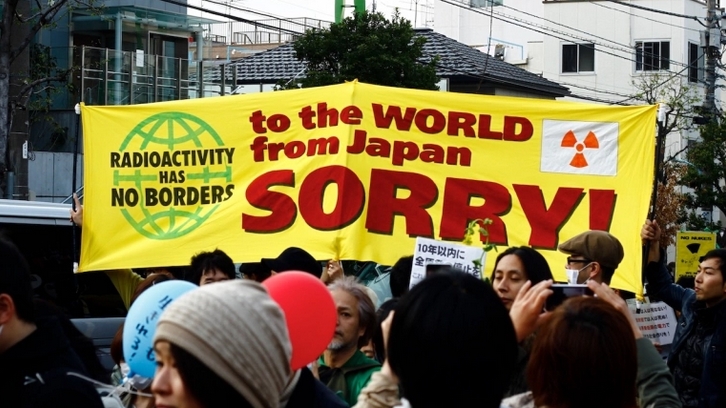
The four former nuclear regulators — Dr. Greg Jaczko (US), Prof. Wolfgang Renneberg (Germany), Dr. Bernard Laponche (France) and Dr. Paul Dorfman (UK) — stated categorically that “The central message, repeated again and again, that a new generation of nuclear will be clean, safe, smart and cheap, is fiction.”
Given the urgency of the climate crisis, the four said, using nuclear power to address it was a completely unrealistic proposition. “The reality is nuclear is neither clean, safe or smart; but a very complex technology with the potential to cause significant harm,” they wrote.
They added: “Nuclear isn’t cheap, but extremely costly. Perhaps most importantly nuclear is just not part of any feasible strategy that could counter climate change. To make a relevant contribution to global power generation, up to more than ten thousand new reactors would be required, depending on reactor design.”
Although France is leading the charge — for obviously self-interested reasons — to include nuclear power in the EU Taxonomy, the country is not without its nuclear opponents. The nationwide Réseau sortir du nucléaire and scores of regional groups struggle to get attention, but have staged protests for years. France relies on nuclear power for 70% of its electricity and is also a member of the UN Security Council as a nuclear weapons country, giving it an illusory sense of prestige of which it is reluctant to let go.
Last December, protesters descended on France’s foreign ministry, roundly criticizing French president, Emmanuel Macron’s continued promotion of nuclear power. At the same time, the country was facing electricity shortages due to five French reactor outages.
Even scientists, sometimes the more cautious of species, have spoken out. According to the Financial Times, which viewed the documentation, scientific experts “hired by Brussels to help draw up the sustainable investment rules” have criticized the inclusion of nuclear power, while not going as far as to ask for its removal altogether. However, the experts wrote that “the inclusion of nuclear energy contravenes the principle of ‘do no significant harm’”, the Financial Times said.
Meanwhile, Austria is preparing to take the EU to court if it persists in labeling nuclear power as green. Austria has the support of Spain, Luxembourg and Denmark in calling the consideration of nuclear as a “sustainable” energy source “a step backwards.”
Germany, which is close to phasing out all of its nuclear power plants, has also rejected nuclear as part of the EU Taxonomy while so far failing to oppose the inclusion of gas, again for vested interests.
Linda Pentz Gunter is the international specialist at Beyond Nuclear and writes for and curates Beyond Nuclear International.
“I can’t think about marriage, childbirth or the future”
January 30, 2022
A 26-year-old woman with thyroid cancer and lung metastasis sues TEPCO.
Tokyo Shimbun, January 19, 2022
Six young people who developed thyroid cancer after the accident at the Fukushima Daiichi nuclear power plant are seeking to establish the responsibility of TEPCO (Tokyo Electric Power Company) in court. They have strong doubts that, despite the discovery of thyroid cancer in about 300 people who were children at the time of the accident, no causal link with the accident has been recognized, especially since a reduction in the number of examinations is being considered. “I don’t want this to continue as if nothing happened,” said a 26-year-old woman who lives in the Nakadôri area of central Fukushima Prefecture and is worried about her future after learning that her cancer has spread to her lungs.
17 years old “Why me?”
“The doctor told me there was something suspicious in my neck in addition to the shadow detected on my lungs. I can’t think about marriage, having a child, or anything else in the future,” she says quietly at home that morning of November 11 before heading to her part-time job.
She goes to the hospital once every three months. Her heart sinks when she sees a young child in the waiting room. “The cancer was detected during a test when I was asymptomatic. Reducing the test[1] may not save lives.”
She was diagnosed with thyroid cancer in March 2013, just before she started her third year of high school, at age 17. “I was told that if I didn’t have surgery, I might not live until I was 23. I tried to believe that everything was okay, even though I kept asking myself, Why me?”

is in Fukushima Prefecture.
Two surgeries, a room like a prison cell
Her 57-year-old mother held back tears as she heard the diagnosis along with her daughter. Her daughter entered high school in April 2011, just after the nuclear accident. At first, she wore a mask to protect herself from inhaling radioactive material, but she soon stopped wearing it. She walked 40 minutes each way to school, and participated in outdoor physical education classes. Her mother’s mind was filled with regret: “If only we had evacuated,” she said.
The girl wanted to go to university in Tokyo, but her mother, worried about her health, prevented her from doing so, and she went to university in the nearby prefecture. However, six months later, she began to feel lethargic, tired and had irregular periods. So she was retested.
“There is a recurrence on the remaining lobe of the thyroid gland. There was also a shadow on the lung,” the doctor told her. “I am not cured,” she said, breaking down in tears with her mother. She dropped out of college at age 19 to focus on her treatment.
The two surgeries and tests were difficult trials to endure. During one test, the deeper the needle went into her throat, the more painful it was. She had to undergo three sessions of iratherapy[2]. 2] She was placed in isolation in a cell-like room where she tried to cope by looking out a leaded window.
…but now I want to look forward.
On the day of the coming-of-age ceremony, her playful daughter told her father that she was happy to be able to wear a kimono. Her mother was shocked to learn that their daughter had contemplated death. “I have cancer, I won’t live long,” she repeated to herself, half-joking. This breaks her mother’s heart: “Not a day goes by that I don’t think about her.
Her cancer marker values are higher than before the operation. Because of fears of recurrence and metastasis, she has given up on the idea of a full-time job in her desired profession. But now she wants to look ahead. “If it wasn’t the accident, why are there so many children with thyroid cancer? Maybe there will be more in the future. I feel I have to do what I can now.
EDITOR’S NOTE
[1] Thyroid ultrasound examination of people living in Fukushima Prefecture who were under 18 years old at the time of the Fukushima Daiichi nuclear accident is conducted by Fukushima Prefecture. The decrease in the number of examinations is under discussion; the examination would be a source of concern for the examinees, and these examinations possibly followed by surgery would be a source of overdiagnosis.
[2] Radioactive Iodine Treatment
https://www.tokyo-np.co.jp/article/154986?fbclid=IwAR3kenQXIPf2itXHKTp8qU4t-uWy4o8hdjntp1bTmwIDdzpJuiNPBPLAYS8
European Green Taxonomy and nuclear power: 5 former prime ministers of Japan have taken a public stand against its inclusion
Published on 29 January 2022 by André JACQUES
The European Commission should make its decision on February 02. The European Commission has decided to include nuclear power in the European green taxonomy (see the press release of the European Commission). Annual press conference at the Japan Foreign Correspondents Press Club (FCCJ). 27/01/2022. Via Javale Gola and Our Distant Neighbors
The last two Prime Ministers, in the presence of the General Secretary of Genjiren (Federation of associations for “zero nuclear energy” and the promotion of ENR) recall the (exorbitant) cost of nuclear power following the Fukushima Daiichi accident and then data on the development of ENR for a decade in Japan. (allocution of 35 minutes). From now on, zero nuclear power is credible, renewable energies are efficient…
According to Naoto Kan, wind power is starting little but solar power a lot, he calculated that there are 4 million hectares of cultivable land in Japan, and announced a solar power production capacity of 2 trillion Kw/h (10 to 12). He concludes with an illustration: large areas are available on the island of Hokkaido, but not elsewhere where small farmers are aging without being replaced; a good scenario according to Kan, would be to maintain the activity (on these non-constructible lands) to make them evolve into solar farms.QUESTIONS (36 minutes).South China Morning Post: in a context of climate disruption, energy needs at the global level are increasing; China is committed to the U.S. project of SMR, which is also of interest to Japan. Is stopping nuclear power a responsible position?
KOIZUMI: I am in favor of “zero nuclear power”; all industrial waste is exploding, we don’t know what to do with it; nuclear waste is even more phenomenal in volume and it is absolutely necessary to secure it because it represents a great danger but today the government wants to continue the development of nuclear power while we have no solution for the containment of the waste
KAN: to speak only about Japan, it has been victim of nuclear power twice (The bomb and then Fukushima); concerning the nuclear accident of Fukushima Daiichi, we came close to having to evacuate the population of Tokyo, so that the nuclear option does not seem to me to be tenable anymore. To decrease C02, the potential of ENR can cover the needs, as it is demonstrated and promoted also abroad.Liberation: “I am a French journalist, for the taxonomy of nuclear power, not all French people are in favor of it but the president of France is the promoter of nuclear power, can you deliver a brief and strong message to our president.(at 46′).
KAN: If I were to speak to President Macron, I would say what I just told you. That is, without nuclear, ENRs are enough to meet energy needs, that’s the first point. Secondly, we almost had to evacuate Tokyo, but France has a lot of nuclear power plants and if a similar accident happened in France, we might have to evacuate Paris, and if so, for 50 to 100 years, during which time Paris would be uninhabitable, as was the case at Chernobyl. I’m sure the president will be sensitive to both of these messages.”
KOIZUMI: France is currently aiming for 50% nuclear, so it seems difficult for the president to defend zero nuclear… But it has neighbors who also want to reduce their dependence, such as Germany, and I think these countries need to demonstrate the feasibility of zero nuclear, which will make the French president change his mind.
The end: the mediator (the gentleman on the right) asks them to intervene with the former European leaders, before February 2… for example Kan with Prodi; then he announces that it is the first time that they are gathered here for a new announcement, the creation between them of a new political party! but it is a joke, Koizumi is retired and does not want to enter politics anymore! Naoto Kan wants to devote himself to the promotion of the energy sufficiency of Japan thanks to the solar energy.
The translator, to conclude, informs the foreign correspondents that the European Parliament regrets the decision-making power of the European Commission on a subject so important for many countries and wishes it success in its opposition to this taxonomy resolution .
See opposite the trailer of the Film “The lid of the sun” that Crilan was shown in Flamanville in 2018 in the presence of Naoto Kan and then in Cherbourg in the presence of the director.
http://crilan.fr/taxonomie-verte-europeenne-et-nucleaire-5-ex-premiers-ministres-du-japon-ont-pris-publiquement-position-contre-linclusion-du-nucleaire-dans-la-taxonomie-verte-europeenne/
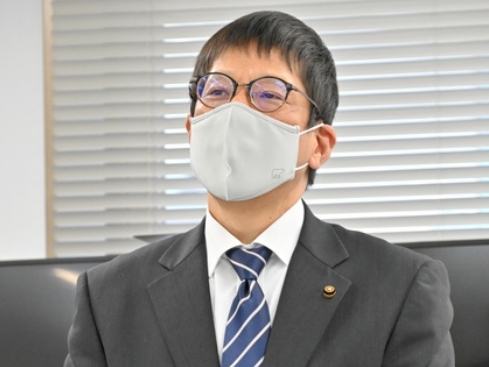
Father continues to suffer in court over Fukushima nuclear accident: “I exposed my son to radiation.
January 28, 2022
On January 28, the Sapporo High Court heard oral arguments in an appeal by evacuees from Fukushima and other prefectures who sought compensation of approximately 1.36 billion yen from the government and TEPCO in the wake of the 2011 accident at TEPCO’s Fukushima Daiichi Nuclear Power Plant. The plaintiffs, who are evacuees, gave statements and expressed their anguish that has not healed even 11 years after the accident.
If it hadn’t been for the nuclear accident, my eldest son probably wouldn’t have gotten this disease.
Akihiro Suzuki, 61, a current member of the Akahira City Council in Hokkaido, made this appeal in court. Akihiro Suzuki, 61, a current member of the Akahira City Council in Hokkaido, told the court that his eldest son, 26, was diagnosed with malignant lymphoma last March and is currently undergoing hospital treatment in Sapporo. I have been blaming myself every day for the impact on my health caused by the delay in evacuating, and I spend my days hoping that my eldest son will be released from his suffering and recover his health,” he said.
According to Mr. Suzuki, at the time of the accident, he learned about the nuclear accident on the radio from his home in Fukushima City, where the power was out. He was most concerned about the health of his sons, who were in their second year of high school and eighth year of junior high school at the time.
I thought about evacuating immediately, but gasoline was not available, so I was able to temporarily evacuate to Niigata about two weeks after the disaster. In September 2011, she and her second son evacuated to Hakodate, Hokkaido, where her eldest son had moved to school earlier.
In 2004, they moved to Akabira City. Her eldest son found a job at an IT company in Osaka, and her second son started working at a directly managed farm of a food company in Hokkaido. 19 years later, she ran for the Akadaira City Council, hoping to “bring in some fresh air,” and was elected.
Although he and his wife, who works at a high school in the Tokachi region of Hokkaido, were not expected to live together, he began to think that they had achieved a soft landing in the face of the many hardships faced by evacuees. It was just then that my eldest son became ill.
After the onset of his illness, he underwent anticancer drug treatment for six months and recovered to the point where he could be said to be in remission. However, in December, he found out that the disease had recurred. Seeing her eldest son suffer from hair loss and nausea due to the side effects of the medication “tore my heart to pieces,” she said.
I have always thought that I exposed my sons to radiation while I was still in Fukushima City. He was reluctant to stand up in court, but decided to give his opinion, saying, “Eleven years have passed since the accident, and I don’t want the world to forget the voices of the evacuees.
In an interview after the court session, Mr. Suzuki said, “Will I be stuck in the disaster of the nuclear accident forever? In a world where the memory of the accident is fading, I want people to understand that the accident is by no means over,” he said quietly.
The majority of the plaintiffs who have appealed to the court are “voluntary evacuees” who were not subject to the government’s evacuation order. As a result, only a little less than 40% of the 253 plaintiffs were eligible to receive compensation, and the amount was only about 53 million yen. (Shigeto Nakazawa)
https://www.asahi.com/articles/ASQ1X6DW7Q1XIIPE016.html?fbclid=IwAR32FJaQ6qV_mXA59wiXprtFm_ftNCHDUbQN9ujZbLyvH24tDqEmoB4Q_y0
1 This Month

of the week – Shut Down Drone Warfare!


Tell the Ukrainian Government to Drop Prosecution of Peace Activist Yurii Sheliazhenko

Petition to revoke the licensing of the Near Surface Nuclear Disposal Facility (NSDF) at Chalk River. https://www.ourcommons.ca/petitions/en/Petition/Details?Petition=e-7247
To see nuclear-related stories in greater depth and intensity – go to https://nuclearinformation.wordpress.com
-
Archives
- March 2026 (237)
- February 2026 (268)
- January 2026 (308)
- December 2025 (358)
- November 2025 (359)
- October 2025 (376)
- September 2025 (257)
- August 2025 (319)
- July 2025 (230)
- June 2025 (348)
- May 2025 (261)
- April 2025 (305)
-
Categories
- 1
- 1 NUCLEAR ISSUES
- business and costs
- climate change
- culture and arts
- ENERGY
- environment
- health
- history
- indigenous issues
- Legal
- marketing of nuclear
- media
- opposition to nuclear
- PERSONAL STORIES
- politics
- politics international
- Religion and ethics
- safety
- secrets,lies and civil liberties
- spinbuster
- technology
- Uranium
- wastes
- weapons and war
- Women
- 2 WORLD
- ACTION
- AFRICA
- Atrocities
- AUSTRALIA
- Christina's notes
- Christina's themes
- culture and arts
- Events
- Fuk 2022
- Fuk 2023
- Fukushima 2017
- Fukushima 2018
- fukushima 2019
- Fukushima 2020
- Fukushima 2021
- general
- global warming
- Humour (God we need it)
- Nuclear
- RARE EARTHS
- Reference
- resources – print
- Resources -audiovicual
- Weekly Newsletter
- World
- World Nuclear
- YouTube
-
RSS
Entries RSS
Comments RSS
 nuclear-news