32,000 workers at Fukushima No. 1 got high radiation dose, Tepco data show
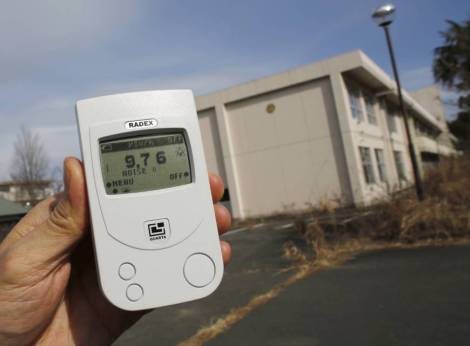
A Reuters reporter measures a radiation level of 9.76 microsieverts per hour in front of Kumamachi Elementary School inside the exclusion zone in Okuma, near Tokyo Electric Power Co’s tsunami-crippled Fukushima No. 1 nuclear power planton Feb. 13
A total of 32,760 workers at the Fukushima No. 1 nuclear plant had an annual radiation dose exceeding 5 millisieverts as of the end of January, according to an analysis of Tokyo Electric Power Co. data.
A reading of 5 millisieverts is one of the thresholds of whether nuclear plant workers suffering from leukemia can be eligible for compensation benefits for work-related injuries and illnesses.
Of those workers, 174 had a cumulative radiation dose of more than 100 millisieverts, a level considered to raise the risk of dying after developing cancer by 0.5 percent. Most of the exposure appears to have stemmed from work just after the start of the crisis on March 11, 2011.
The highest reading was 678.8 millisieverts.
Overall, a total of 46,490 workers were exposed to radiation, with the average at 12.7 millisieverts.
The number of workers with an annual dose of over 5 millisieverts increased 34 percent from fiscal 2013 to 6,600 in fiscal 2014, when workloads grew to address the increase in radiation-tainted water at the plant. The number was at 4,223 in the first 10 months of fiscal 2015, which ends this month, on track to mark an annual decline.
A labor standards supervision office in Fukushima Prefecture last October accepted a claim for workers compensation by a man who developed leukemia after working at the plant, the first recognition of cancer linked to work after the meltdowns as a work-related illness. Similar compensation claims have been rejected in three cases so far, according to the labor ministry.
The average radiation dose was higher among Tepco workers at the plant than among workers from subcontractors in fiscal 2010 and 2011. Starting in fiscal 2012, the reading was higher among subcontractor workers than among Tepco workers.
The average dose for subcontractor workers was 1.7 times the level of Tepco workers in fiscal 2013, 2.3 times in fiscal 2014 and 2.5 times in fiscal 2015 as of the end of January.
A separate analysis of data from the Nuclear Regulation Authority showed that the average radiation dose of workers at 15 nuclear power plants across the country, excluding the Fukushima No. 1 and No. 2 plants, fell to 0.22 millisievert in fiscal 2014, when none of the plants was in operation, down 78 percent from 0.99 millisievert in fiscal 2010
http://www.japantimes.co.jp/news/2016/03/07/national/science-health/32000-fukushima-no-1-workers-got-high-radiation-dose-tepco-data-show/#.Vt2gKfl95D8
Experts divided on causes of high thyroid cancer rates among Fukushima children
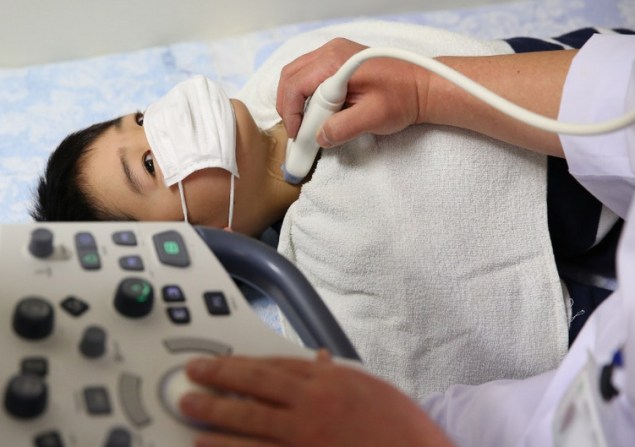
A child undergoes an ultrasound screening at Hirata Chuo Clinic in Hirata, Fukushima Prefecture, on Feb. 23, 2016. The local clinic conducts separate checkups from the prefectural government’s thyroid cancer examinations.
A total of 166 children in Fukushima Prefecture had been either diagnosed with thyroid cancer or with suspected cases of cancer by the end of 2015 through screening conducted by the Fukushima Prefectural Government, following the 2011 nuclear plant crisis.
- 【Related】Child thyroid cancer in Fukushima many times national average: report draft
- 【Related】Cases of thyroid cancer up among Fukushima kids in 2nd screening: prefectural panel
- 【Related】Fukushima Pref. to examine incidence of thyroid cancer in children
- 【Related】4 new thyroid cancer cases emerge in latest checks on Fukushima children
The figure is several dozen times higher than the estimated number of thyroid cancer patients based on national statistics, according to a panel of experts with the prefectural government. While the panel and the Environment Ministry say the effects of radiation in these cancer cases are unlikely, opinions are divided among experts about the causes of such a high occurrence rate of cancer in children.
“Compared to the estimated prevalence rates based on the country’s statistics on cancer, which are shown in data including regional cancer registration, the level of thyroid cancer detection is several dozen times higher (in children of Fukushima Prefecture),” said the final draft for the interim report compiled by the prefectural government’s expert panel on Feb. 15.
Most experts of epidemiology agree on the view that the number of thyroid cancer cases is high among over 300,000 targets in health checkups that started six months after the nuclear meltdowns.
A research team led by Shoichiro Tsugane, head of the Research Center for Cancer Prevention and Screening of the National Cancer Center and a member of the Fukushima government’s expert panel, published a research paper on the matter in January this year and another team headed by Okayama University professor Toshihide Tsuda also published their paper in October 2015. While their calculation methods differ, the two teams both concluded that the number of cancer cases found in Fukushima children was “about 30 times” that of national levels.
There has never been an attempt in Japan to check thyroid cancer among hundreds of thousands of children who are not self-aware about symptoms such as lumps. Because of this, some experts pointed out earlier that the screening detected cancer in advance in those who may develop the disease later, and as a result, the number of cancer patients spiked temporarily. While such a rapid increase in the number of patients by early detection has been reported in other types of cancer, the figure remains as high as “several times higher than national levels.” Tsugane and Tsuda both agree that the “30 times higher (than the national occurrence rates)” is unexplainable.
At the moment, the most likely theories for such a high rate of cancer detection are the “overdiagnosis theory” held by Tsugane’s team and the “radiation effect theory” that Tsuda’s team supports.
Overdiagnosis refers to the diagnosis of cancer by detecting hidden cancer cells that are not harmful even if left untreated.
The concept of cancer overdiagnosis has been argued for decades in areas including the lungs, chest and prostate, and its negative effects on cancer screening takers’ physical and psychological conditions have been pointed out as a problem. In 2004, the Ministry of Health, Labor and Welfare canceled examinations for neuroblastoma, a type of pediatric cancer, saying that the test would impose large disadvantages on screening subjects due to overdiagnosis.
In South Korea, thyroid cancer screening has been rigorously carried out from the late 1990s targeting adults, and as a result, the number of thyroid cancer patients spiked 15 times. In the meantime, thyroid cancer death rates have not changed, which has been interpreted in a way that non-harmful cancer was detected in the screening process.
While the Fukushima screening mostly targets children, Tsugane argues that it’s rational to judge that the reason behind such a high prevalence is overdiagnosis as seen in South Korea’s studies, on the grounds that the maximum amount of radiation exposure in the thyroids of children in Fukushima Prefecture is estimated to be several dozen millisieverts, which is not enough to cause an increase of 30 times in the number of patients. He also argues that it appears that no phenomenon has been reported where the number of patients becomes higher in areas with high radiation levels. The prefectural government shares his opinion on the matter.
At the same time, Tsugane is not completely denying the effects of radiation in children’s cancer, saying, “It would not be strange if a small portion of cancer cases was caused by radiation exposure, but we do not know the precise percentage.”
Tsuda, on the other hand, took the difference in the timing of screening among children into account and argues that radiation exposure is the main cause of the high prevalence of cancer in children, saying that the occurrence rate is 4.6 times higher in Futaba County near the crippled nuclear plant compared to the city of Sukagawa and other areas that are farther from the power plant.
He does not deny the possibility of overdiagnosis, but because the spread of cancer cells to lymph nodes and other tissues could be seen in 92 percent of patients, Tsuda believes that overdiagnosis makes up 8 percent of the patients at most.
In addition, Tsuda pointed to three research papers on the 1986 Chernobyl nuclear disaster that argue that thyroid cancer was not found in a total of 47,000 children who were born after the disaster and had not been exposed to radiation, and rejects the existence of overdiagnosis in children.
Tsuda also pointed out that non-harmful cancer should have been detected in the first round of screenings, drawing attention to the fact that 51 new patients were found in the second round that began in 2014.
In regard to the results of the second round of screening, Osaka University public health professor Tomotaka Sobue, who supports the overdiagnosis theory, confesses that while it is unlikely that the cancer was caused by radiation exposure, “overdiagnosis alone cannot explain the phenomenon for now.”
Cancer screenings of the same scale in other areas might help determine the main cause of the high prevalence in Fukushima children. Tsugane argues, however, that while screening is necessary in Fukushima Prefecture to confirm the effects of radiation, the same kind of screening should not be carried out in other prefectures as it will only increase the number of overdiagnosis cases.
Tsuda, on the other hand, pushes for screening in other prefectures, saying that the whole picture of thyroid cancer patients should be revealed so that the causal relationship is not blurred. In addition, he calls for the cancer registration and establishing certificates for “hibakusha” (those exposed to radiation) to confirm radiation-induced cancer patients.
Both Tsugane and Tsuda based their research on the first round of screening conducted between 2011 and 2015. About 300,000 children were screened, and thyroid cancer was detected in 113 subjects, including suspected cancer cases at the time of analysis.
Tsugane’s team estimated that if all 360,000 children targeted in the cancer screening had gone through the checkups, approximately 160 patients would have been found. The team also estimated that about 5.2 children out of 360,000 children in the same age group as the Fukushima screening subjects had thyroid cancer based on calculations on a national average of thyroid cancer patients. As a result, the team reached a result of “about 30 times higher” by comparing 5.2 and 160 drawn from the estimate on Fukushima children.
Tsuda, meanwhile, focused his attention on the national average of the thyroid cancer occurrence rate in the same age group as the targets in the screening in Fukushima Prefecture, which was around three in every 1 million children per year. A total of 113 cancer patients out of 300,000 screening takers have been found in Fukushima Prefecture, which can be converted into about 90 patients in 1 million children per year over a four-year period. With those figures, Tsuda’s team concluded occurrence rates of about “30 times higher.”
The prefectural government’s expert panel drafted the interim report based on Tsugane’s calculation method.
http://mainichi.jp/english/articles/20160307/p2a/00m/0na/022000c
Japanese People Shun Fukushima Survivors While Doctors Refuse Them Care
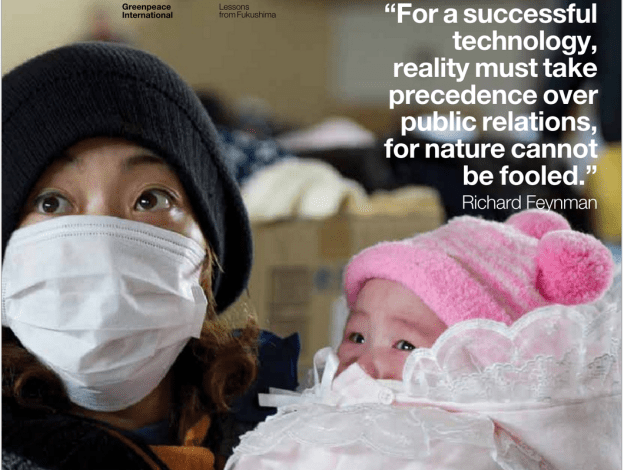
Those who do not fit the norm, for whatever reason no matter how abusive,
are outcasts.
The world is rapidly approaching the five year anniversary of the worst nuclear disaster in human history. The triple meltdown at the Fukushima daiichi nuclear power plant has seen shameful omissions by global leaders and officials at every level. To compound matters, Japanese survivors are forced to submit to a complicit medical community bordering on anti-human. While the solutions to the widespread nuclear contamination are few, media blackouts, government directives and purposefully omitted medical reporting has made things exponentially worse. Over the last five years, the situation on the ground in Japan had deteriorated to shocking levels as abuse and trauma towards the survivors has become intolerable.
Even before the nuclear disaster in Fukushima, Japan endured another nuclear disaster as a testing ground for the US military’s new nuclear arsenal on the cities of Hiroshima and Nagasaki in 1945. The numbers of Japanese civilians killed were estimated at around 226,000, roughly half of the deaths occurred on the first day. After the initial detonation of the two nuclear bombs, both Japanese cities endured a legacy of radiation damage and human suffering for decades after. Tomiko Matsumoto, a resident of Hiroshima and survivor of the bombing described the abuse and trauma she endured by her society:
“I was shocked because I was discriminated against by Hiroshima people. We lived together in the same place and Hiroshima people know what happened but they discriminated against each other. ..I was shocked.”
“There were so many different kinds of discrimination. People said that girls who survived the bomb shouldn’t get married. Also they refused to hire the survivors, not only because of the scars, but because they were so weak. Survivors did not have 100 percent energy.”
“There was a survivor’s certificate and medical treatment was free. But the other people were jealous. Jealous people, mentally discriminated. So, I didn’t want to show the health book sometimes, so I paid. Some of the people, even though they had the health book, were afraid of discrimination, so they didn’t even apply for the health book. They thought discrimination was worse than paying for health care.”
A similar scene is playing out today in Japan as residents of the Fukushima prefecture, who survived triple nuclear meltdowns, are forced to endure similar conditions over half a century later. Fairewinds Energy Education director and former nuclear executive Arnie Gunderson is currently embarked on a speaking tour of Japan as their population continues to search for the truth about nuclear risks and the reality of life in affected areas of Japan after the 2011 disaster. Many Fukushima prefecture residents are still displaced and living in resettlement communities as their city sits as a radioactive ghost town. Visiting one such resettlement community, Gunderson had this to say:
“Today I went to a resettlement community. There were 22 women who met us, out of 66 families who live in this resettlement community. They stood up and said my name is…and I’m in 6A…my name is…and I’m in 11B and that’s how they define themselves by the little cubicle they live in — it’s very sad.”
Speaking with the unofficial, interim mayor of the resettlement community, she told Gunderson
“After the disaster at Fukushima, her hair fell out, she got a bloody nose and her body was speckled with hives and boils and the doctor told her it was stress…and she believes him. It was absolutely amazing. We explained to her that those area all symptoms of radiation [poisoning] and she should have that looked into. She really felt her doctor had her best interests at heart and she was not going to pursue it.”
Speaking about how Japanese officials handled this resettlement community’s (and others?) health education after the disaster, Gunderson reported:
“They [the 22 women who met with Gunderson] told us that we were the first people in five years to come to them and talk to them about radiation. They had nobody in five years of their exile had ever talked to them about radiation before…Which was another terribly sad moment.”
When asked if the women felt isolated from the rest of Japan they described to Gunderson the following:
“Some of them had changed their license plates so that they’re not in Fukushima anymore — so their license plates show they’re from another location. When they drive back into Fukushima, people realize that they’re natives and deliberately scratch their cars…deliberately scratch their cars because they are traitors. Then we had the opposite hold true that the people that didn’t change their plates and when they left Fukushima and went to other areas, people deliberately scratched their cars because they were from Fukushima.”
Gunderson summed up the information he received by saying, “The pubic’s animosity is directed toward the people of Fukushima Prefecture as if they somehow caused the nuclear disaster.”
FIVE YEARS AFTER: Fukushima fishermen still struggle to prove catches are safe
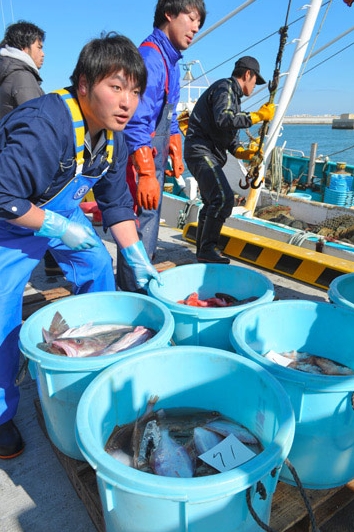
Fishermen unload their catch in experimental operations from a boat anchored at the Matsukawaura fishing port in Soma, Fukushima Prefecture.
Fukushima fishermen have been stuck in a vicious circle over the past five years. Whenever a glimmer of hope arises that they can resume normal operations, something happens at the Fukushima No. 1 nuclear plant that quashes the optimism.
“Just when we thought the fishing environment had progressed one step forward, it would take a step back,” said Yukio Sato, a 56-year-old fisherman. “The past five years have been such a forward and back zigzag.”
Although radioactivity levels in their catches have fallen considerably, the fishermen are still struggling to convince consumers that the fish are safe to eat.
Any leak of radioactive water from the Fukushima No. 1 plant–and there have been many–into the Pacific Ocean reinforces the negative image of Fukushima fish.
The catches have dropped in size, prices have plummeted and some fishermen are now giving up hopes of making a living from the fishing grounds.
Sato used to take his fishing trawler out five days a week.
But fishermen in the prefecture were forced to suspend operations immediately after the Great East Japan Earthquake and tsunami triggered the crisis at the Fukushima No. 1 nuclear plant. Radiation levels exceeding national standards were detected in the fish they caught.
“We could not catch the fish that we knew were swimming in those waters,” Sato said. “It was just so frustrating.”
Sato now takes his fishing trawler out twice a week.
The waters off Fukushima Prefecture are bountiful because two currents collide there. Close to 200 different types of fish can be caught in those waters.
In early February, Sato’s boat and other trawlers returned to the Matsukawaura fishing port in Soma, Fukushima Prefecture, carrying Pacific cod, monkfish, snow crab and other fish.
Sato’s catch totaled about 500 kilograms, and the fish were sent to local shops as well as the Tsukiji fish market in Tokyo.
“It would be great if we could return to the fishing of the past while I am still alive,” Sato said.
The catch from the coastal waters is still only about 6 percent of the levels before the nuclear accident.
In June 2012, more than year after the triple meltdown at the nuclear plant, experimental operations started to determine the market reaction to fish considered safe in terms of radioactivity levels.
Despite that effort, problems with radiation-contaminated water flowing into the Pacific continued.
Tokyo Electric Power Co., the operator of the Fukushima No. 1 nuclear plant, is still facing difficulties bringing the water problem under control. Every day, tons of groundwater flow under the Fukushima plant and become contaminated with radiation.
At one time, TEPCO came up with a plan to pump up the groundwater and dump it into the ocean before it could reach the plant.
Local fishermen opposed the plan because even dumping safe water into the Pacific would hurt the image of the fish caught in coastal waters.
But if such measures were not taken, the volume of contaminated water could increase to levels that would make it impossible to process.
In March 2014, the fishermen reluctantly agreed to the water bypass plan.
However, a year later, contaminated rainwater spilled outside the port waters. TEPCO’s failure to immediately disclose that problem refueled general concerns about contaminated water.
Other measures have since been taken to deal with the contaminated water, but according to one individual in the fishing industry, “No matter what is done, only the negative image that arises from that time is highlighted.”
Fishermen now depend on compensation from TEPCO for their daily livelihoods. Even those who are not engaged in experimental operations receive compensation equivalent to about 80 percent of their actual catch before the nuclear accident.
With no prospects for a resumption of full-scale operations, some fishermen are not bothering to take part in the experimental operations.
The radioactivity levels in the water and fish have steadily declined.
Three months after the nuclear accident started, half of the fish sampled had radioactivity levels exceeding the national standard of 100 becquerels per kg.
In 2015, 8,500 samples were tested; only four exceeded the national standard.
The decline in radioactivity levels has led to an expansion in the types of fish that can be caught through experimental operations, from three to 72.
While a simple comparison is not possible because the catch level in Fukushima is so low, fish caught through experimental operations fetch between 80 and 90 percent of the prices paid for the same fish types caught in other prefectures.
“With the brand image having fallen so low, it would not be profitable even if operations were allowed to expand,” said Takashi Niitsuma, 56, an official with the Iwaki city fisheries cooperative.
Fish caught further out to sea are also affected. Regardless of where the fish are caught, if they are brought to Fukushima ports, they are classified as being from Fukushima. That has led fishermen to avoid anchoring at Fukushima ports.
According to Fukushima prefectural government officials dealing with the fishing industry, about 5,600 tons of fish, excluding those caught in coastal waters, were brought into Fukushima ports in 2014. The figure is only 40 percent of the pre-nuclear accident level.
The Aquamarine Fukushima aquarium in Iwaki holds monthly events to show that fish caught off Fukushima are safe. At one recent event, a fat greenling was placed in a device to measure radiation levels while visitors looked on. A message flashed on a screen: “None detected.”
“Fish born after the nuclear accident will never exceed the central government’s standard,” said Seiichi Tomihara, 43, a veterinarian at the aquarium.
Local residents are involved in the project to dispel doubts about the trustworthiness of information provided by TEPCO and the central government.
“I first of all want people to understand the fact that the waters off Fukushima are steadily recovering,” Tomihara said.
http://ajw.asahi.com/article/0311disaster/recovery/AJ201603070041
Fukushima Survey – A mere facade
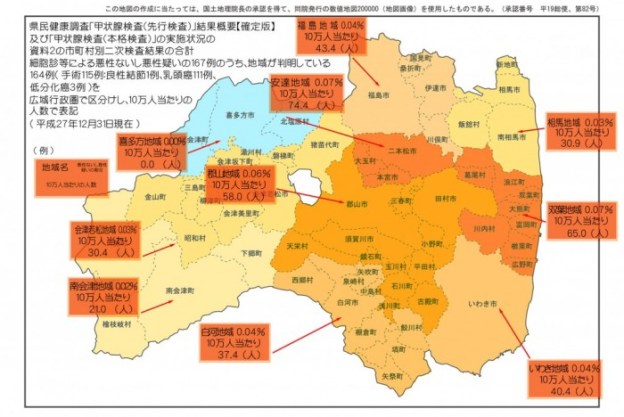
2月15日に第22回福島県「県民健康調査」検討委員会(以下、検討委員会)が開催されました。この検討委員会で最も注目を浴びるのは甲状腺 検診結果です。「先行検査」での「悪性ないし悪性疑い」となった人数はさらに増加しました。前回と同じく口頭の説明だけでしたので、本格検査の二巡目も含 めた人数を表にまとめてみました。
On February 15th, the Fukushima Prefecture held its 22sd “Citizens Health Survey” Review Committee. Most of this session, the thyroid screening results was brought into focus. The number of cases with children being diagnosed with a “malignant or on suspicion of being malignant” from the “prior inspection” further increased. Since it was only announced verbally like the previous announcement, I made a table to summarize the results, including the full-scale testing of the second round.

表の結果を見れば明らかなように「悪性疑い」と診断された場合は、ほとんど「悪性」とみて間違いありません。しかし、検討委員会の見解は「放射能の影響は 考えづらい」と今までの見解を踏襲したものです。
It is clear from that table that the cases listed in “suspected malignant tumor” end up being very similar to the “malignant tumor” cases. Despite of this and following its earlier statement, the Review Committee is continuing to deny any possible impact from radioactivity and finds it “hardly considerable. ”
このことをみると、結論ありきで、この見解を変える気はないのかもしれません。
It is as if the Committee was not willing to change its view regardless of any survey’s results.
さらに、この流れに拍車をかけるかもしれないと思われるのは、今回の検討委員会に甲状腺外科の専門医である清水一雄委員が欠席したことです。このよ うな 専門家が誰一人出席しない中で、今回の検討委員会は開催されたわけです。また、前回、星北斗座長の「放射能の影響は考えづらい」という見解に対して質問を した春日文子委員も欠席しました。そして、すでに福島県立医大からは、甲状腺専門医である鈴木眞一医師に代わり内科医の大津留晶医師となっています。
What made this particular review even less valid this time around was that Dr. Kazuo Shimizu, who is the only specialist of thyroid surgery among the members, was absent from the Committee. This review was held in such circumstances without any thyroid specialists. Also, Ms. Fumiko Kasuga, who previously questioned the statement that the “the impact of radioactivity is hardly considerable,” to chairman Hokuto, was also absent from the Committee. In addition, replacing thyroid specialist Dr. Shinichi Suzuki, member from the Fukushima Medical University has changed to physician Dr. Akira Otsuru.
検討委員会としながらも、専門家不在の中で何が検討されようとしているのでしょうか? 第22回検討委員会は検討委員会が形骸化していることを示唆するような会でした。
What will the Committee do without any specialist? The 22nd Review Committee suggests that the review committee is a mere facade.
by Hiromi ABE あべひろみ
translated by Chiharu MUKUDAI for Evacuate Fukushima 福島の子供を守れ
Source Source ー参考ー http://fukushima-30year-project.org/?p=3685
http://www.evacuate-fukushima.com/2016/03/fukushima-survey-a-mere-facade/
Schools in disaster zones regroup as students decline
SENDAI, KYODO – Parts of the Tohoku area hit hardest by the March 2011 earthquake and tsunami now have fewer school-age children, creating pressure to close or consolidate schools, school board data suggests.
The number of elementary and junior high school students in 42 of the hardest hit municipalities in Iwate, Miyagi and Fukushima prefectures totals about 187,000, down 12.2 percent from five years earlier, data gathered from local education boards said Saturday.
That is more than twice the 5.2 percent nationwide drop resulting from the declining birthrate.
The greater drop in the areas most damaged by the disasters is due mainly to families having moved away from coastal areas ravaged by tsunami. The 42 municipalities also include areas where people were ordered to evacuate from the Fukushima No. 1 nuclear disaster.
The decline has accelerated moves to eliminate and consolidate schools in those areas, casting a shadow over prospects for local communities, according to experts.
Bunkyo University professor Masaaki Hayo said schools can help cultivate a sense of unity. But he added, “Eliminating and consolidating schools could break up communities.”
Katsuya Suzuki of the education board in Minamisoma, Fukushima Prefecture, said, “It cannot be helped that people have settled where they have evacuated. As we also face lower birthrates, we need to think about new ways to operate schools.”
http://www.japantimes.co.jp/news/2016/03/06/national/schools-disaster-zones-regroup-students-decline/#.Vtyhc-bzN_k
Fukushima Disaster Will Wreak Environmental Havoc for Centuries
A report from Greenpeace reveals that the destruction of ecosystems caused by the Fukushima meltdown is worse than the government lets on.
Radiation from the Fukushima nuclear disaster in Japan will have a long legacy of environmental destruction with up to hundreds of years of devastating impacts on the ocean, waterways, plants, and animals, according to a new Greenpeace Japan report released Friday.
The report, titled “Radiation Reloaded: Ecological Impacts of the Fukushima Daiichi Nuclear Accident 5 Years Later,” reveals that radiation from the 2011 nuclear plant meltdown has found its way into trees, butterflies, birds, fish, and the important coastal estuary ecosystem in the region.
The findings also shed light on the “flawed assumptions” that have been shared as official information by the government of Shinzo Abe and the International Atomic Energy Agency.
“The Abe government is perpetuating a myth that five years after the start of the nuclear accident the situation is returning to normal,” said Kendra Ulrich, Senior Nuclear Campaigner at Greenpeace Japan, in a statement on Friday. “The evidence exposes this as political rhetoric, not scientific fact.”
While local flora and fauna show radiation levels have increased since the disaster, some residents have been told it is safe to return to contaminated areas.
“There is no end in sight for communities in Fukushima — nearly 100,000 people haven’t returned home and many won’t be able to,” Ulrich added.
Fukushima was the largest nuclear disaster since the 1986 Chernobyl nuclear accident, and the single largest incident of radiation contamination in an ocean in history.
According to Greenpeace, Fukushima has seen radioactive water seep into the ocean on nearly a daily basis for five years, and the government’s response has inadequately managed the crisis.
“The government’s massive decontamination program will have almost no impact on reducing the ecological threat from the enormous amount of radiation from the Fukushima nuclear disaster,” Ulrich said.
The report calls on the Japanese government to consider alternative options to nuclear power and work towards transitioning to sustainable and clean energy.
Greenpeace reports that over 317 million cubic feet (9 million cubic meters) of nuclear waste have spread around Fukushima.
The report is based on 25 radiological investigations carried out by Greenpeace since March 2011, when the earthquake hit and wreaked havoc on Fukushima.
NEW REPORT: Ecological Impacts of the Fukushima Daiichi Nuclear Accident 5years Later
http://www.greenpeace.org/japan/ja/library/publication/20160304_report/
TEPCO Prosecution: A Sign That Japan’s Nuclear Industry Is in Free Fall
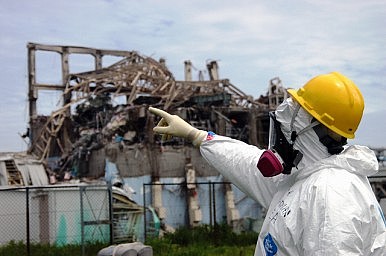
The criminal prosecution of TEPCO is another step in the process to end nuclear power in Japan.
By Shaun Burnie
The decision this week to indict executives of Japan’s largest energy utility, Tokyo Electric Power Company (TEPCO), for their failure to prevent the meltdown of three reactors at Fukushima Daiichi is a major step forward for the people of Japan.
The fact that this criminal prosecution is taking place at all is a vindication for the thousands of citizens and their dedicated lawyers who are challenging the nation’s largest power company and the establishment system. It is a devastating blow to the obsessively pro-nuclear Abe government, which is truly fearful of the effects the trial will have on nuclear policy and public opinion over the coming years.
For the eight other nuclear power companies in Japan, including their executives, the signal is clear – ignore nuclear safety and there is every prospect that when the next nuclear accident happens at your plant you will end up in court. For an industry that disregarded safety violations and falsified inspection results through its entire existence, the prosecution of TEPCO will be shocking.
But it would be naive to think that profound behavioral change will inevitably follow. In fact, in the five years after the accident, Japan’s nuclear industry has not just failed to learn the lessons of the accident, it is still actively ignoring them. In the three years since nuclear plant operators applied to restart their shutdown nuclear fleet, the evidence shows that when it comes to nuclear safety the bottom line is not safety, but money.
Leaving aside the inherent risks of another severe nuclear accident, the new safety agency in Japan, the Nuclear Regulation Authority (NRA) is overwhelmed, incapable and inadequate.
Back in 2008, TEPCO produced an internal report that predicted a maximum credible tsunami of 15.7 meters, but continued to insist that it would not reach the nuclear plant at Fukushima, which sits at a height of 10 meters. The cooling pumps for the reactor cores and spent fuel pools were located at just four metres above sea level.
Historical evidence that a major tsunami would impact the eastern Pacific coast of Ibaraki, Fukushima and Miyagi was well known. Modelling suggested that the next major tsunami was overdue and would inundate the coastal plain about 2.5 to 3 km inland. In 2009, Japanese nuclear regulators questioned the vulnerability of the Fukushima Daiichi reactors to a large-scale tsunami and asked TEPCO to “consider” concrete steps against tsunami waves at the plant. TEPCO responded: “Do you think you can stop the reactors?”
This relaxed attitude is not just limited to TEPCO. In recent weeks, Kyushu Electric informed the NRA that the emergency seismic proof isolation building that they committed to build by March of this year would not be built after all, despite being a condition to secure approval to restart the two Sendai reactors. The NRA expressed its disappointment, but the Sendai reactors restarted in August and continue to operate.
At the Takahama nuclear plant, owned by Kansai Electric the NRA admitted in the last month that they do not know if the reactors comply with fire safety regulations requiring essential electric safety cabling to be adequately separated and protected.
The loss of safety cable function sounds mundane, but the risks are considered more severe than all other failures at a nuclear plant combined. Without electricity, vital safety systems do not work and control of the reactor is lost. A severe accident at Takahama would threaten millions of residents of Kyoto, Osaka, Kobe and the wider Kansai region.
Nonetheless, the NRA granted Kansai Electric an exemption to avoid delaying restart. Takahama reactor-3 resumed operation in late January, while Reactor 4 at Takahama resumed operations for less than three days before shutting down again on 29 February due to an electrical failure.
These examples are the tip of the atomic iceberg that threatens the next nuclear disaster in Japan. With three reactors now operating, the industry remains in crisis. Having sat on idle assets for the last few years, the utilities are desperate to resume operations, while the nuclear obsessed Abe government is happy to support them. It’s time to put people first.
Nuclear power is a financial disaster which will only get worse as the electricity market opens to new suppliers and renewable energies out-price them. And the vast majority in Japan realize this: 60 percent of Japanese are opposed to the phase-in of nuclear, and there are more than 300 lawyers fighting reactor by reactor to prevent restart on behalf of citizens. At this rate, the Abe government and the nuclear industry will never see the target of 35 reactors restarted by 2030.
The criminal prosecution of TEPCO, long in coming, is another step in the process to end nuclear power in Japan and for a transformation of its energy system to renewables.
Shaun Burnie is a nuclear specialist at Greenpeace Germany, currently working as part of a Greenpeace radiation survey team in the Pacific Ocean off the coast of Fukushima
‘Dark tourism’ grows at 3/11 sites

Participants in a ‘dark tourism’ tour check out vacant Ukedo Elementary School in the abandoned town of Namie, Fukushima Prefecture, in early February. As the fifth anniversary of the 2011 calamity approaches, a growing number of visitors are taking part in Fukushima-related tours
Shinichi Niitsuma is enthusiastic about showing visitors the attractions of the small town of Namie: its tsunami-hit coastline, abandoned houses and hills overlooking the radiation-soaked reactors of the disabled Fukushima nuclear power plant.
Five years after the nuclear disaster emptied this stretch of Honshu’s northeastern coastline, tourism is giving residents of the abandoned town a chance to exorcise the horrors of the past.
Like the Nazi concentration camps in Poland or Ground Zero in New York, the areas devastated by the Fukushima disaster have recently become hot spots for “dark tourism” and drawn more than 2,000 visitors keen to see the aftermath of the worst nuclear accident in a quarter century.
“There is no place like Fukushima — except maybe Chernobyl — to see how terrible a nuclear accident is,” Niitsuma said, referring to the 1986 disaster in Ukraine.
“I want visitors to see this ghost town, which is not just a mere legacy but clear and present despair,” he added as he drove visitors down Namie’s main street just 8 km (5 miles) from the stricken nuclear plant.
On March 11, 2011, a magnitude-9 earthquake off Tohoku’s coast spawned massive tsunami that swept ashore, leaving an estimated 18,000 people dead or missing.
Namie’s residents were evacuated after the tsunami tipped the nuclear power plant into meltdown, and no-one has yet been allowed to move back due to the radiation.
Niitsuma, 70, is one of 10 local volunteer guides who organize tours to sights in Namie and other communities in Fukushima, including the tightly regulated areas.
The volunteers take visitors through the shells of buildings left untouched as extremely high radiation discouraged demolition work. The guides use dosimeters to avoid any hot spots.
A tsunami-hit elementary school is another stop on the morbid tour.
The clocks in the classrooms stopped at 3:38 p.m., the exact moment the killer waves swept ashore.
In the gymnasium, a banner for the 2011 graduation ceremony still hangs over a stage and the crippled nuclear plant is visible through shattered windows.
Former high school teacher Akiko Onuki, who survived tsunami that claimed six of her students and a colleague, and is now one of the volunteer guides.
“We must ensure there are no more Fukushimas,” Onuki, 61, said in explaining the reasons behind the tours of her devastated home.
Tourist Chika Kanezawa of Saitama Prefecture said she was shocked by the conditions.
“TV and newspapers report reconstruction is making progress and life is returning to normal,” Kanezawa, 42, said. “But in reality, nothing has changed here.”
Dairy farmer Masami Yoshizawa is still raising about 300 cows in Namie that are subsisting on radiation-contaminated grass in defiance of a government slaughter order.
As Yoshizawa showed off his herd, he explained that he’s keeping the cattle alive as a protest against Tokyo Electric Power Co., which manages the plant, and the government.
“I want to tell people all over the world, ‘What happened to me may happen to you tomorrow’,” Yoshizawa said.
The disaster shattered the government’s carefully cultivated nuclear safety myth and kept its dozens of commercial reactors offline for about two years amid nuclear safety radiation exposure fears.
But the government is gradually restarting them, claiming the resource-poor country needs nuclear power.
English teacher Tom Bridges, who also lives in Saitama, said he could share the victims’ anger and frustration through the tour.
“It’s not a happy trip but it’s a necessary trip,” he said.
Some residents still grieving their loved ones and their inability to return to their homes, say they have mixed feelings watching sightseers tramping through their former hometown.
But Philip Stone, executive director of the Institute for Dark Tourism Research at Britain’s University of Central Lancashire, said recently that such tangible reminders of disasters serve as “warnings from history.”
Niitsuma, who is from Soma, a coastal city some 35 km (just over 20 miles) north of the Fukushima No. 1 plant, says he feels haunted by regret for not having been active in the anti-nuclear movement, even though he opposed reactor construction.
“I should have acted a little more seriously,” he said.
“I’m working as a guide partially to atone.”
http://www.japantimes.co.jp/news/2016/03/06/national/dark-tourism-grows-311-sites/#.VtxHIfl95D8
FIVE YEARS AFTER: 45% of mayors in affected areas see delayed recovery
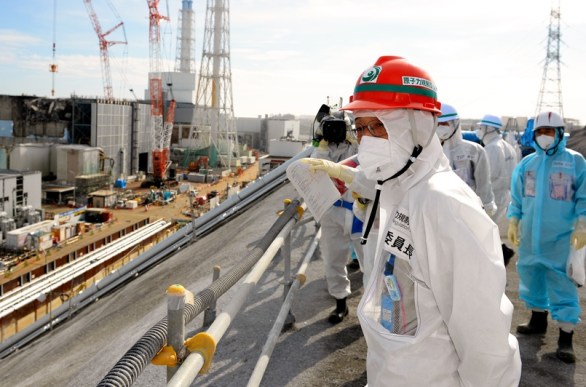
In a new survey, 19 of the 42 mayors in Iwate, Miyagi and Fukushima prefectures, or 45 percent, said that recovery from the Great East Japan Earthquake, tsunami and nuclear accident will take longer than predicted three years ago.
The Asahi Shimbun survey also shows that the accident at the Fukushima No. 1 nuclear power plant is continuing to hamper recovery efforts in Fukushima Prefecture, compared with the other two prefectures.
As for 15 mayors in Fukushima Prefecture, nine, or 60 percent, said that their projected completion period of recovery will be in fiscal 2023 or later, according to the survey.
In contrast, almost all the mayors in Iwate and Miyagi prefectures said the recovery process will be completed by the end of fiscal 2022.
The survey is the fourth of its kind since The Asahi Shimbun started it in 2013. The 42 mayors were chosen as their municipalities were located in coastal areas damaged by the tsunami or ordered to evacuate due to the nuclear accident.
The Asahi Shimbun surveyed the mayors in writing and in interviews. As for the recovery completion period, they were asked to choose from “fiscal 2015,” “fiscal 2016 to fiscal 2017,” “fiscal 2018 to fiscal 2022” and “in fiscal 2023 or later.”
Two of the 15 mayors in Fukushima Prefecture chose “fiscal 2015” in the survey held in 2013 but selected “in fiscal 2023 or later” in the latest survey. In addition to the two, five other mayors gave the same response in the latest survey although they had projected an earlier completion of the recovery process.
The 15 mayors were also asked about factors obstructing the recovery. They were allowed to list up to three. Fourteen cited having to deal with the nuclear accident.
“It is realistic to think that recovery will take 20 or 30 years even if the evacuation order is lifted,” said Namie Mayor Tamotsu Baba. All the residents of Namie are currently living outside the town due to the evacuation order.
“The challenge is what we should do to maintain our town,” he added.
“Residents in my village cannot plan their future,” said Katsurao Mayor Masahide Matsumoto. All the residents in Katsurao have also evacuated the village.
“I want the central government to present its policies as early as possible on what to do with the (high radiation) ‘difficult-to-return’ zones,” Matsumoto added.
Of the 27 mayors in Iwate and Miyagi prefectures, 26 replied that the recovery will be completed by the end of fiscal 2022. The figure shows the seriousness of the delay of recovery efforts in Fukushima Prefecture.
As a factor that is obstructing their recovery, nine mayors in Miyagi Prefecture cited a “shortage of staff members for their municipal governments.” Meanwhile, in Iwate Prefecture, seven mayors cited a “shortage of businesses and workers,” but six chose a “shortage of staff members for their municipal governments.”
According to the internal affairs ministry, 39 municipalities of the three prefectures were demanding additional staff members as of January this year. The number of insufficient staff members stood at 196 in total.
http://ajw.asahi.com/article/0311disaster/recovery/AJ201603060036

Fire At Namie Nuclear Waste Site In Fukushima

TV Asahi (ANN) March 5th (Sat) 19:15
There was a fire at the temporary storage of decontamination waste in Namie , Fukushima Prefecture, for about 5 hours.
According to the police, at 5:00 in the morning, a fire started at the temporary storage of decontamination waste in Namie, dead branches and dead grass coming from decontamination which had been stacked on site before to be packed in bags.
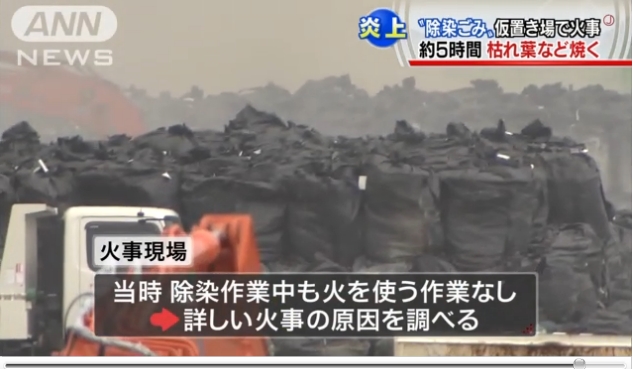
It took about five hours to extinguish it. Although there was decontamination work at that time, no fire was being used, the police will look to determine the cause of the fire.
http://headlines.yahoo.co.jp/videonews/ann?a=20160305-00000034-ann-soci

Japan taxpayers foot $100bn bill for Fukushima disaster
The Fukushima nuclear disaster has cost Japanese taxpayers almost $100bn despite government claims Tokyo Electric is footing the bill, according to calculations by the Financial Times.
Almost five years after a huge tsunami caused the meltdown of three Tepco reactors by knocking out their supply of power for cooling, the figure shows how the public have shouldered most of the disaster’s cost.
It highlights the difficulty of holding a private company to account for the immense expense of nuclear accidents — a concern for countries such as the UK that are building new nuclear power stations.
The Financial Times used Ritsumeikan University professor Kenichi Oshima’s estimate that the disaster has cost Y13.3tn ($118bn) to date relative to the loss of equity value for Tepco shareholders.
“The underlying cost is mainly being paid by the public, either through electricity bills or as tax,” said Mr Oshima.
Japan’s government gives no single figure for the cost of the disaster, but Mr Oshima estimates the biggest cost to date is compensation to businesses and evacuees of Y6.2tn, followed by decontamination of the Fukushima area at Y3.5tn, and decommissioning of the reactor site at Y2.2tn.
Cash for compensation and decommissioning comes from Tepco but it gets grants from the government to keep it solvent. In theory, this cash will come back via a levy on Tepco and other nuclear operators — but this is ultimately be paid by electricity users, making it a tax by another name.
There is are also doubts about whether the levy will be sustainable when Japan’s electricity market opens to competition from April 1. In a recent interview, Tepco chief executive Naomi Hirose insisted the company would make enough money to clean up the Fukushima Daiichi plant.
“We have to preserve that earning power,” Mr Hirose said. “Victory for us means having the money to meet our responsibilities in Fukushima. If we can’t, that’s failure.”
But one way to judge Tepco’s contribution is its share price, which should reflect past losses, as well as any levies the market expects in the future. Compared with March 10 2011, the day before the disaster, Tepco’s equity has lost Y2.6tn in value. Debtholders have not suffered losses.
That implies Tepco has borne slightly less than 20 per cent of the total cost, with taxpayers picking up the other Y10.7tn. The figure is rough, and ignores the cost of shutting down all Japan’s nuclear reactors, so it is likely to understate both the total cost and the proportion paid by the public.
Tepco, the finance ministry and the economy ministry declined to comment on the estimate. A government official insisted all costs would ultimately be recouped from Tepco and said it could not pass the burden on to electricity customers. “As a whole, Tepco is paying its own costs,” said the official.
Evacuees are now being allowed to return to some villages near the Fukushima Daiichi plant but decommissioning will take decades, with radiation levels still too high even to evaluate the stricken reactors. The final cost is unknown and Mr Oshima expects his estimate to rise.
“The government’s approach has worked in that Tokyo Electric has not shut down,” said Mr Oshima. “But with the costs increasing to this extent it’s hard to see the purpose of having kept Tepco alive.”
http://www.ft.com/intl/cms/s/0/97c88560-e05b-11e5-8d9b-e88a2a889797.html#axzz428179eA0
Government to spur work to fully reopen Fukushima’s disaster-hit JR Joban Line

The limited express train “Super Hitachi No. 50,” bound for Ueno Station in Tokyo, has remained at Haranomachi Station in Minami-Soma, Fukushima Prefecture, since March 11, 2011, as the JR Joban Line became partly unavailable due to the Great East Japan Earthquake, tsunami and an accident at the Fukushima No. 1 nuclear power plant. East Japan Railway Co. plans to remove the train from the railway in mid-March.
Government to spur work to fully reopen Fukushima’s disaster-hit JR Joban Line
NARAHA, FUKUSHIMA PREF. – Prime Minister Shinzo Abe expressed a willingness Saturday to spur work to fully reopen East Japan Railway Co.’s Joban Line in Fukushima Prefecture, which was partially closed following the March 2011 earthquake and tsunami.
The government is looking at completely reopening the Joban Line in the spring of 2020, ahead of the Tokyo Olympics and Paralympics, informed sources said.
“I’ve instructed the transport minister to promptly indicate the timing (of the reopening),” Abe told reporters during a visit to the Fukushima Prefecture town of Naraha near the disaster-crippled Fukushima No. 1 nuclear plant.
The Joban Line’s operator, also known as JR East, has released a plan to reopen in stages by the end of 2017 all shuttered sections but the Tomioka-Namie segment near the nuclear plant.
The prime minister also said that he will instruct the industry minister to set up a public-private panel to start a detailed study this month on a plan to make Fukushima Prefecture a key region for renewable energy production.
“In Fukushima in 2020, hydrogen fuel for 10,000 fuel cell vehicles will be produced from (the use of) renewable energy,” Abe said.
On Saturday, he visited a stock farm in the city of Fukushima, a restaurant using local ingredients in the town of Hirono, a battery factory in Naraha and other facilities.
“The reconstruction of Tohoku is the Abe administration’s top priority,” the prime minister said ahead of the fifth anniversary on Friday of the massive disaster.
http://www.japantimes.co.jp/news/2016/03/05/national/government-to-spur-work-to-fully-reopen-fukushimas-disaster-hit-jr-joban-line/#.Vtss5ObzN_l
FIVE YEARS AFTER: Joban Line to be fully resumed by spring 2020
Damaged in the 2011 Great East Japan Earthquake and tsunami and disrupted by the nuclear accident, the JR Joban Line, which runs between Tokyo and Miyagi Prefecture, is set to fully resume operation by spring 2020.
On March 5, Prime Minister Shinzo Abe inspected the Joban Line and told reporters, “I instructed the transport minister to set as early as possible the time when train services will be resumed along the entire portion.”
The government is expected to set the target of spring 2020 for the full resumption of service at its Reconstruction Promotion Council meeting on March 10, according to government sources. That will allow railway services to be fully available before the 2020 Tokyo Olympics and Paralympics, to be held in the summer of that year.
At present, services are still unavailable in two sections. One is the 46-kilometer stretch between Tatsuta Station in Naraha, Fukushima Prefecture, and Haranomachi Station in Minami-Soma, also in the prefecture.
The other is the 22.6-km section between Soma Station in Soma, Fukushima Prefecture, and Hamayoshida Station in Watari, Miyagi Prefecture.
Of the 46-km stretch, the 21-km portion between Tomioka Station in Tomioka and Namie Station in Namie is close to the crippled Fukushima No. 1 nuclear power plant, and most of the areas along the route have been designated as “difficult-to-return zones” due to high radiation levels.
In those areas, it is necessary to remove the crossties and gravel that are contaminated with radioactive substances and to lay new ones. The work is expected to continue until fiscal 2019.
Meanwhile, the operation of the remaining sections is scheduled to resume by fiscal 2017
http://ajw.asahi.com/article/0311disaster/recovery/AJ201603060030

Prime Minister Shinzo Abe speaks with local high school students at JR Odaka Station
on the Joban Line in Minamisoma, Fukushima Prefecture,
on Saturday during a visit to the area.
Five Years After Fukushima, ‘No End in Sight’ to Ecological Fallout

An employee uses a a radiation dosage monitor as workers continue the decontamination and reconstruction process.
The environmental impacts of the 2011 Fukushima Daiichi nuclear disaster are already becoming apparent, according to a new analysis from Greenpeace Japan, and for humans and other living things in the region, there is “no end in sight” to the ecological fallout.
The report warns that these impacts—which include mutations in trees, DNA-damaged worms, and radiation-contaminated mountain watersheds—will last “decades to centuries.” The conclusion is culled from a large body of independent scientific research on impacted areas in the Fukushima region, as well as investigations by Greenpeace radiation specialists over the past five years.
“The government’s massive decontamination program will have almost no impact on reducing the ecological threat from the enormous amount of radiation from the Fukushima nuclear disaster,” said Kendra Ulrich, senior nuclear campaigner at Greenpeace Japan. “Already, over 9 million cubic meters of nuclear waste are scattered over at least 113,000 locations across Fukushima prefecture.”
According to Radiation Reloaded: Ecological Impacts of the Fukushima Daiichi Nuclear Accident 5 Years Later, studies have shown:
- High radiation concentrations in new leaves, and at least in the case of cedar, in pollen;
- apparent increases in growth mutations of fir trees with rising radiation levels;
- heritable mutations in pale blue grass butterfly populations and DNA-damaged worms in highly contaminated areas, as well as apparent reduced fertility in barn swallows;
- decreases in the abundance of 57 bird species with higher radiation levels over a four year study; and
- high levels of caesium contamination in commercially important freshwater fish; and radiological contamination of one of the most important ecosystems – coastal estuaries.
The report comes amid a push by the government of Japanese Prime Minister Shinzō Abe to resettle contaminated areas and also restart nuclear reactors in Japan that were shut down in the aftermath of the crisis.
However, Ulrich said, “the Abe government is perpetuating a myth that five years after the start of the nuclear accident the situation is returning to normal. The evidence exposes this as political rhetoric, not scientific fact. And unfortunately for the victims, this means they are being told it is safe to return to environments where radiation levels are often still too high and are surrounded by heavy contamination.”
According to Greenpeace, it’s not only the Abe government that holds “deeply flawed assumptions” about both decontamination and ecosystem risks, but the International Atomic Energy Agency (IAEA), too. Indeed, the failures in the methods used by the IAEA to come to the “baseless conclusion” that there would be no expected ecological impacts from the Fukushima disaster are “readily apparent,” the report claims.
In September, Greenpeace Japan blasted the IAEA for “downplaying” the continuing environmental and health effects of the nuclear meltdown in order to support the Japanese government’s agenda of normalizing the ongoing disaster.
Report on Ecological Impacts of the Fukushima Daiichi Nuclear Accident 5years Later

The report is based on a large body of independent scientific research in impacted areas in the Fukushima region, as well as investigations by Greenpeace radiation specialists over the past five years. It exposes deeply flawed assumptions by the International Atomic Energy Agency and the Abe government in terms of both decontamination and ecosystem risks. It further draws on research on the environmental impact of the 1986 Chernobyl nuclear catastrophe as an indication of the potential future for contaminated areas in Japan.
The environmental impacts of the Fukushima Daiichi nuclear disaster will last decades to centuries, due to man-made, long-lived radioactive elements are absorbed into the living tissues of plants and animals and being recycled through food webs, and carried downstream to the Pacific Ocean by typhoons, snowmelt, and flooding.
Greenpeace has conducted 25 radiological investigations in Fukushima since March 2011. In 2015, it focused on the contamination of forested mountains in Iitate district, northwest of the Fukushima Daiichi nuclear power plant. Both Greenpeace and independent research have shown the movement of radioactivity from contaminated mountain watersheds, which can then enter coastal ecosystems. The Abukuma, one of Japan’s largest rivers which flows largely through Fukushima prefecture, is projected to discharge 111 TBq of 137Cs and 44 TBq of 134Cs, in the 100 years after the accident.
http://www.greenpeace.org/japan/ja/library/publication/20160304_report/
1 This Month

4 May -West Suburban Peace Coalition to discuss Iran war at May Educational Forum
Monday, May 4, 7:00 – 8:00 PM Central Standard Time
Title: : How Trump’s Narrative Tries to Shape the Reality of the War on Iran.
Contact Walt Zlotow, zlotow@hotmail.com 630 442 3045 for further information
14 May – online event From Bombs to Data Centres: the Face of Nuclear Colonialism
To see nuclear-related stories in greater depth and intensity – go to https://nuclearinformation.wordpress.com
-
Archives
- May 2026 (49)
- April 2026 (356)
- March 2026 (251)
- February 2026 (268)
- January 2026 (308)
- December 2025 (358)
- November 2025 (359)
- October 2025 (376)
- September 2025 (257)
- August 2025 (319)
- July 2025 (230)
- June 2025 (348)
-
Categories
- 1
- 1 NUCLEAR ISSUES
- business and costs
- climate change
- culture and arts
- ENERGY
- environment
- health
- history
- indigenous issues
- Legal
- marketing of nuclear
- media
- opposition to nuclear
- PERSONAL STORIES
- politics
- politics international
- Religion and ethics
- safety
- secrets,lies and civil liberties
- spinbuster
- technology
- Uranium
- wastes
- weapons and war
- Women
- 2 WORLD
- ACTION
- AFRICA
- Atrocities
- AUSTRALIA
- Christina's notes
- Christina's themes
- culture and arts
- Events
- Fuk 2022
- Fuk 2023
- Fukushima 2017
- Fukushima 2018
- fukushima 2019
- Fukushima 2020
- Fukushima 2021
- general
- global warming
- Humour (God we need it)
- Nuclear
- RARE EARTHS
- Reference
- resources – print
- Resources -audiovicual
- Weekly Newsletter
- World
- World Nuclear
- YouTube
-
RSS
Entries RSS
Comments RSS
 nuclear-news