Fukushima evacuations were not worth the money, study says
For sure such gibberish pseudo-scientific study, totally biased, must have been financed by the nuclear lobby to completely whitewash the Japanese Government failure to take the necessary real measures to adequately and effectively protect the eastern Japan population ( 50 millions people) from the effects of the March 2011 Fukushima explosions’ radioactive plumes, then from the radionuclides loaded gases released by Fukushima Daiichi for the past 5 years continuously contaminating the people, their living environment, plus their food and water supply.
Furthermore it chooses deliberately to ignore all the scientific studies made in the past 50 years about the harmful effects of radiation on various living species.
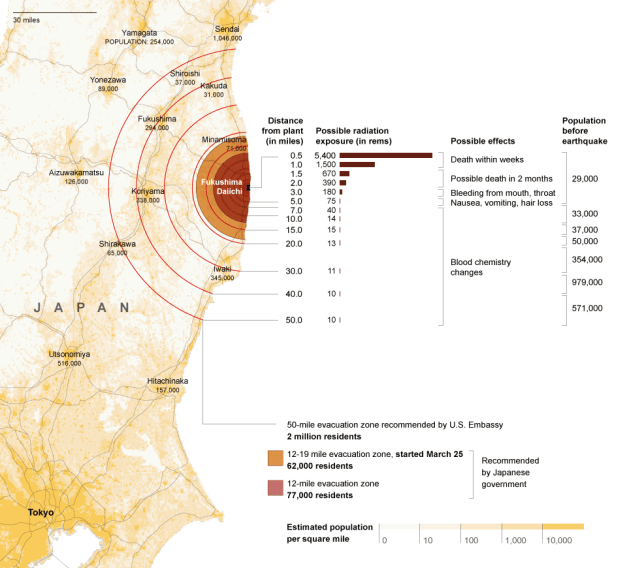
At the time on March 2011, the US Embassy in Tokyo had advised the Japanese Government to evacuate all the population within a 50-mile radius zone. To not avail as the Japanese Government chose to evacuate only within a 12 to 19-mile radius zone , evacuating in the end only 160,000 residents instead of the 2 millions residents as advised by the US Embassy.
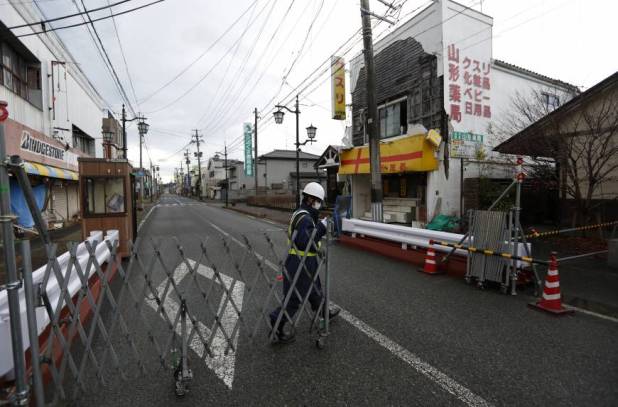
A gate is shut at the evacuation zone in Namie, Fukushima Prefecture, on Feb. 14. In such places, the scars are still obvious and many evacuees who fled are unwilling to return.
Fukushima evacuations were not worth the money, study says
LONDON – The costs of evacuating residents from near the Fukushima No. 1 plant and the dislocation the people experienced were greater than their expected gain in longevity, a British study has found.
The researchers found that at best evacuees could expect to live eight months longer, but that some might gain only one extra day of life. They said this does not warrant ripping people from their homes and communities.
The team of experts from four British universities developed a series of tests to examine the relocations after the Fukushima crisis and earlier Chernobyl disaster in 1986.
After a three-year study, the academics have concluded that Japan “overreacted” by relocating 160,000 residents of Fukushima Prefecture, even though radioactive material fell on more than 30,000 sq. km of territory.
“We judged that no one should have been relocated in Fukushima, and it could be argued this was a knee-jerk reaction,” said Philip Thomas, a professor of risk management at Bristol University. “It did more harm than good. An awful lot of disruption has been caused However, this is with hindsight and we are not blaming the authorities.”
The team used a wide range of economic and actuarial data, as well as information from the United Nations and the Japanese government.
In one test, an assessment of judgment value, the researchers calculated how many days of life expectancy were saved by relocating residents away from areas affected by radiation.
They compared this with the cost of relocation and how much this expenditure would impact the quality of people’s lives in the future.
From this information, they were able to work out the optimal or rational level of spending and make a judgment on the best measures to mitigate the effects of a nuclear accident.
Depending on how close people were to the radiation, the team calculated that the relocations added a period of between one day to 21 days to the evacuees’ lives.
But when this was compared with the vast amounts of money spent, the academics came to the conclusion that it was unjustified in all cases.
In some areas, they calculated that 150 times more money was being spent than was judged rational.
Thomas adds, the tests do not take into account the physical and psychological effects of relocating, which have been shown to have led to more than 1,000 deaths among elderly evacuees.
Other studies have also found that once people have lived away for a certain period of time it can become increasingly difficult to persuade them to return.
After Chernobyl, the world’s worst nuclear disaster, around 116,000 people were initially relocated away from the disaster zone.
Looking back on the incident, the team judged it was only worthwhile to relocate 31,000 people because they would have lost in excess of 8.7 months in life expectancy had they remained.
However, for the rest of the 116,000 people, it would have been a more rational decision to keep them where they were, given that their average loss of life was put at three months.
Four years later, a further 220,000 people were relocated from areas close to Chernobyl. Researchers found this unjustified.
Thomas says the loss in life expectancy following a nuclear accident has to be put into context alongside other threats all people face.
For example, it has been claimed that the average Londoner will lose about 4½ months in life expectancy due to high pollution levels.
Thomas concludes governments should carry out a more careful assessment before mounting a relocation operation of at least a year. A temporary evacuation could be a good idea while authorities work out the risk from radiation, he said.
In the future, Thomas would like to see more real-time information made available to the public on radiation levels in order to avoid hysteria and bad planning.
On a plus note, the team found that other remedial measures — decontaminating homes, deep ploughing of soil and bans on the sales of certain food products — were far more effective.
Thomas has already discussed his findings with colleagues at the University of Tokyo and he is keen that his findings can help better quantify the risks from radioactive leaks.
The project was sponsored by the Engineering and Physical Sciences Research Council, Britain’s main agency for funding research in engineering and the physical sciences. It was intended to give advice for nuclear planners both in Britain and India.
The research team comprised specialists from City University in London, Manchester University, the Open University and Warwick University.
Japan, US, France to team up on Fukushima clean-up: official

TOKYO – The Japanese government will team up with experts in the United States and France to develop brand new technologies to collect melted fuel from crippled reactors at Fukushima, an official said Monday.
Scientists have long warned the technology required for the complex — and potentially dangerous — task does not yet exist, and would have to be invented.
Entombing the uranium rods in concrete and effectively abandoning the site — as was done after the meltdown at Chernobyl in 1986 — has been ruled out by the Japanese government as politically unacceptable, leaving innovation as the only possible solution.
Japan’s science and technology ministry said it would work with the US Energy Department and the French National Research Agency on the project — a key step towards eventual decommissioning, which is expected to begin in 2021.
“This is the first basic research led by the government designed to help decommission Fukushima Daiichi after TEPCO worked together with its partners overseas at the private level,” a ministry official said, referring to the operator of the plant.
Under the plan, the US side will help Japan develop equipment and technology to manage and dispose of highly-radioactive waste produced from the decommissioning work, the official said.
France will cooperate with Japan in developing remote-control technology, including robotic and image processing expertise that can withstand high-radiation environments, he said.
The Japanese government plans to finance the projects by spending part of its “Fukushima technology development budget” worth 3.0 billion yen ($26.4 million).
No matter what BBC says: Fukushima disaster is killing people
Chris Busby – 14th March 2016

IAEA marine experts and Japanese scientists collect water samples in coastal waters near the Fukushima Daiichi Nuclear Power Station
The BBC has been excelling itself in its deliberate understatement of the Fukushima nuclear catastrophe, writes Chris Busby. While calling in pseudo experts to say radiation is all but harmless, it’s ignoring the science that shows that the real health impacts of nuclear fallout are around 1,000 times worse than claimed.
I am so ashamed of the BBC. It seems, as an institution, to be supporting and promulgating an enormous lie about the health effects of radioactive pollution. And not providing any balanced scientific picture.
On the 5th Anniversary of the catastrophe we saw Prof Geraldine Thomas, the nuclear industry’s new public relations star, walk through the abandoned town of Ohkuma inside the Fukushima exclusion zone with BBC reporter Rupert Wingfield-Hayes.
She was described as “One of Britain’s leading experts on the health effects of radiation”. Thomas is of the opinion that there is no danger and the Japanese refugees can come back and live there in the ‘zone’. Her main concern was how untidy it all was: “left to rack and ruin”, she complained, sadly.
At one point Rupert pulled out his Geiger Counter and read the dose of 3 microSieverts per hour. “What does that mean”, he asked, “how much radiation would it give in a year to people who came back here?”
Thomas replied, “About an extra milliSievert a year which is not much considering you get 2mSv a year from natural background. The long term impact on your health would be absolutely nothing.”
Now anyone who has a calculator can easily multiply 3 microSieverts (3 x 10⁻⁶ Sv) by 24 hours and 365 days. The answer is 26 mSv (0.026Sv) not “about 1mSv” as the “leading expert on the health effects of radiation” told the dumbfounded viewers.
Any real expert would not have made such a stupid mistake. But this woman is not a real expert, her CV shows she has published almost nothing in the way of original research, so we must ask how it is the BBC come to take her seriously.
Those who hate nothing so much as the truth
This recalled the day the first reactor exploded in 2011. I was in London, and the BBC asked me to come into the studio and comment. Also there was a nuclear industry apologist, Dr Ian Fells. Like Gerry Thomas he was unconcerned about the radiation: the main problem for him was that the lifts would not work. People would have to climb stairs, he complained.
I said then on that first day that this was a serious accident like Chernobyl but he and all the stooges that followed him told the viewers that it was no problem, not like Chernobyl, hydrogen explosion, no breach of containment pressure vessels etc. Some months later, looking back, it is clear I was correct on every point, but I never was invited back to the BBC.
I visited Japan, took sophisticated measuring equipment, obtained vehicle air filters, spoke to the Japanese people and advised them to take Calcium tablets to block the Strontium-90. My vehicle air filter measurements showed clearly that large areas of north east Japan were seriously contaminated including Tokyo.
This was too much for the nuclear industry: I was attacked in the Guardian newspaper by pro-nuclear Pauline-converted George Monbiot in an attempt to destroy my credibility. One other attacker was Geraldine Thomas. What she said then was as madly incorrect then as what she is saying now. But the Guardian would not let me respond.
The important evidence for me in the recent BBC clip is the measurement of dose given by Rupert’s Geiger counter, 3microSieverts per hour (3μSv/h). Normal background in Japan (I know, I measured it there) is about 0.1μSv/h. So in terms of external radiation, Ruperts’s measurement gave 30 times normal background.
Fukushima: we have a very serious problem
Is this a problem for health? You bet it is. The question no-one asked is what is causing the excess dose? The answer is easy: radioactive contamination, principally of Caesium-137. On the basis of well-known physics relationships we can say that 3μSv/h at 1m above ground represents a surface contamination of about 900,000 Bq per square metre of Cs-137. That is, 900,000 disintegrations per second in one square metre of surface.
And note that they were standing on a tarmac road which appeared to be clean. And this is 5 years after the explosions. The material is everywhere, and it is in the form of dust particles which can be inhaled. Invisible sparkling fairy-dust that kills hang in the air above such measurements.
The particles are not just of Caesium-137. They contain other long lived radioactivity, Strontium-90, Plutonium 239, Uranium-235, Uranium 238, Radium-226, Polonium-210, Lead-210, Tritium, isotopes of Rhodium, Ruthenium, Iodine, Cerium, Cobalt 60, the list is long.
The UN definition of radioactively contaminated land is 37,000Bq / square metre, and so, on the basis of the measurement made by the BBC reporter, the town of Ohkuma in the Fukushima zone (and we assume everywhere else in the zone) is still, five years after the incident, more than 20 times the level where the UN would, and the Soviets did, step in and control the population.
But the Japanese government want to send the people back there. It is bribing them with money and housing assistance. It is saying, like Gerry Thomas, that there is no danger. And the BBC is giving this criminal misdirection a credible platform. The argument is based on the current radiation risk model, that of the International Commission on Radiological Protection the ICRP.
Last month, my German colleagues and I published a scientific paper in the peer reviewed journal Environmental Health and Toxicology. It uses real-world data from those exposed to the same substances that were released by Fukushima to show that the ICRP model is wrong by 1,000 times or more.
This is a game changing piece of research. But were we asked to appear on the BBC, or anywhere else? No. What do our findings and calculations suggest will have happened in the five years since the explosions and into the future? Let’s take a look at what has happened since 2011.
And this is only the beginning …
The reactors are still uncontrolled five years after the explosions and continue to release their radioactive contents to the environment despite all attempts to prevent this. Concerning the melted fuel, there is no way to assess the condition or specific whereabouts of the fuel though it is clearly out of the box and in the ground. Robots fail at the extremely high radiation levels found.
Ground water flowing through the plant is becoming contaminated and is being pumped into storage tanks for treatment. High radiation levels and debris have delayed the removal of spent fuel from numbers 1, 2 and 3 reactor buildings. TEPCO plans to remove debris from reactor 3 and this work has begun. Then they are hoping to remove the fuel rods out of reactors 1 and 2 by 2020 and the work on removing debris from these 2 reactors has not begun yet.
Much of the radioactivity goes into the sea, where it travels several hundreds of km. up and down the coast destroying sea life and contaminating intertidal sediment. The radionuclides bind to fine sediment and concentrate in river estuaries and tidal areas like Tokyo Bay.
Here the particles are resuspended and brought ashore to be inhaled by those living within 1km of the coast. From work done by my group for the Irish Government on the contaminated Irish Sea we know that this exposure will increase the rate of cancer in the coastal inhabitants by about 30%.
The releases have not been stopped despite huge amounts of work, thought and action. The treated water is still highly radioactive and cannot yet be released. An ice wall designed to stop the flow of water getting to the plant is still not operational and the Japanese Nuclear regulator still has not given the go-ahead.
‘Son of Fukushima’ waiting to happen
This may be wise because an environment report showed that use of the ground water caused rapid subsidence and can destabilise the structures of the reactors. That is a real problem on site with 3 heavy spent fuel pools still full and largely inaccessible. Collapse of the buildings would lead to coolant loss and a fire or even explosion releasing huge amounts of radioactivity.
So this is one nightmare scenario: ‘Son of Fukushima’. A solid wall at the port side may have slowed the water down but diverting the water may cause problems with the ground water pressure on site and thus also threaten subsidence. Space for storing the radioactive water is running out and it seems likely that this will have to be eventually spilled into the Pacific.
Only 10% of the plant has been cleaned up although there are 8,000 workers on site at any one time, mostly dealing with the contaminated water. Run-off from storms brings more contamination down the rivers from the mountains. There are millions of 1-ton container bags full of radioactive debris and other waste which has been collected in decontamination efforts outside the plant and many of these bags are only likely to last a handful of years before degrading and spilling their contents. Typhoons will spread this highly contaminated contents far and wide.
TEPCO are also burning waste from the plant in a single incinerator. Further afield, contamination efforts to clean up the homes and roads are hampered by the torrential rains that are increasing because of global warming; the rain is bringing large amounts of contaminated soil back into these areas as well as the contaminated leaves and pollen from the forest areas that TEPCO are unable to clean.
Far off the shore there are natural areas that act as nurseries for many species of sea life. It has been found that intertidal marine species such as anemones, sponges, crustaceans, worms and bivalves within 30 km of the damaged reactors have disappeared altogether because of the 300 tons of highly radioactive water a day flowing out of the plant into the sea.
This water contains large amounts of tritium, making it radioactive; the effects of tritium on the larval stages of marine invertebrates has been studied in the UK. It was found at the University of Plymouth that levels involving doses of less than 1mSv of tritium inhibited the development.
Going global
Radioactivity from Fukushima has now migrated across the Pacific and is appearing on the West Coast of the USA. The scientific community there, like Gerry Thomas, subscribe to the flawed ICRP model, and since the levels of Caesium-137 measured are low, (maybe 10Bq/cubic metre of sea water), they say that there will be no health effects. But like Thomas they are wrong.
The problem is that ‘dose’ cannot be used to assess risk from internal radioactive particles. Dose is an average over large masses of tissue: but cancer begins in a single cell or local community of cells and these particles from Fukushima cause massive local doses. This is why there have been countless web reports of marine mammals with patchy sores or localised tumours. The question of the ongoing effect of this Fukushima radioactivity on the Pacific biota far from Japan remains open.
The effects on wild creatures in Japan are clear and have been studied. There have been peer-reviewed reports of genetic damage in birds and in insects; a major scientist studying these genetic effects at Fukushima and in the Chernobyl affected areas also is Tim Mousseau.
But whilst he can study plants and animals, no-one can study humans. There is a kind of closure on such data, with the Japanese government controlling it. The government is more interested in getting Fukushima ready for the Olympics and is using financial and cultural pressure to move families back into contaminated zones.
Japan is also exporting radioactive produce, and is using trade agreements to bully countries into accepting these poisons on the basis of the ICRP model. I was in Korea a few months back as an expert witness in a radiation case involving high levels of thyroid cancer near their nuclear sites. I was told about Japan using international trade laws to force its contaminated foods on to the Koreans, who were measuring the radioactivity and sending the stuff back. So watch out for radioactive items from Japan.
So what’s the evidence?
Let’s look at the only real health data which has emerged to see if it gives any support to my original estimate of 400,000 extra cancers in the 200km radius. Prof Tsuda has recently published a paper in the peer reviewed literature identifying 116 thyroid cancers detected over three years by ultrasound scanning of 380,000 0-18 year olds.
The background rate is about 0.3 per 100,000 per year, so in three years we can expect 3.42 thyroid cancers. But 116 were found, an excess of about 112 cases. Geraldine says that these were all found because they looked: but Tsuda’s paper reports that an ultrasound study in Nagasaki (no exposures) found zero cases, and also an early ultrasound study also found zero cases. So Geraldine is wrong. The thyroid doses were reported to be about 10mSv. On the basis of the ICRP model, that gives an error of about 2,000 times.
From the results of our new genetic paper we can safely predict a 100% increase in congenital malformations in the population up to 200km radius. In an advanced technological country like Japan these will be picked up early by ultrasound and aborted, so we will not actually see them, even if there were data we could trust.
What we will see is a fall in the birth rate and increase in the death rate. We know what has been happening and what will happen; we have seen it before in Chernobyl. And just like Chernobyl, the (western) authorities are influenced by or take their lead from the nuclear industry: the ICRP and the International Atomic Energy Agency, (IAEA) which since 1959 has taken over from the World Health Organisation as the responsible authority for radiation and health (Yes, really!).
They keep the lid on the truth using stupid individuals like Geraldine Thomas and, by analogy with New Labour: New BBC. Increasingly I could say ‘New Britain’ as opposed to the Great Britain of my childhood, a country I was proud of where you could trust the BBC. I wonder how the reporters like Rupert can live with themselves presenting these lies.
Fukushima is far from being over, the deaths have only just begun.
The BBC report: bbc.com/news/world-asia-35761141
The study: ‘Genetic Radiation Risks – A Neglected Topic in the Low Dose Dabate‘ by Busby C, Schmitz-Feuerhake I, Pflugbeil S is published in Environmental Health and Toxicology.
Chris Busby is an expert on the health effects of ionizing radiation. He qualified in Chemical Physics at the Universities of London and Kent, and worked on the molecular physical chemistry of living cells for the Wellcome Foundation. Professor Busby is the Scientific Secretary of the European Committee on Radiation Risk based in Brussels and has edited many of its publications since its founding in 1998. He has held a number of honorary University positions, including Visiting Professor in the Faculty of Health of the University of Ulster. Busby currently lives in Riga, Latvia. See also: chrisbusbyexposed.org, greenaudit.org and llrc.org.
BBC Wrong on Fukushima, Again
Response to: http://www.bbc.com/news/world-asia-35…
Expanded upon here:http://www.bbc.com/news/world-asia-35…
Dose-rate conversion:http://www.translatorscafe.com/cafe/E…
” 2.8 microsievert/hour = 24.5448 millisievert/year ”
Study cited @ 1:40 re regional natural background dose rate of 0.05 uSv/y
Malins et al (2016). Evaluation of ambient dose equivalent rates influenced by vertical and horizontal distribution of radioactive cesium in soil in Fukushima Prefecture. Journal of Environmental Radioactivity 151 (2016) 38e49 http://pubmed.gov/26408835
Study cited @ 3:58
Mozdarani et al (2002). Chromosomal aberrations in lymphocytes of individuals with chronic exposure to gamma radiation. Arch Irn Med, 5(1): 32-36.http://www.ams.ac.ir/AIM/NEWPUB/13/16…
Study cited @ 4:24
Zakeri & Assaei (2004). Cytogenetic monitoring of personnel working in angiocardiography laboratories in Iran hospitals. Mutat Res. 2004 Aug 8;562(1-2):1-9. http://pubmed.gov/15279825
Study cited @ 4:48
Kendall et al (2013). A record-based case-control study of natural background radiation and the incidence of childhood leukaemia and other cancers in Great Britain during 1980-2006. Leukemia. 27(1): 3–9. http://pubmed.gov/22766784
Study cited @ 5:08
Spycher et al (2015). Background ionizing radiation and the risk of childhood cancer: a census-based nationwide cohort study. Environ Health Perspect, 123(6), 622-8. http://pubmed.com/25707026 Spycher’s graphs are in nSv/h, which is nanosieverts per hour and which I converted for this video to microsieverts per hour by the rule: 100 nSv = 0.1 µSv.
@ 8:04, BBC concedes that 122 Chernobyl deaths estimate is misleading http://www.bbc.co.uk/complaints/comp-…
BBC: “Two viewers (one of them writing on behalf of 55 co-signatories, most of them academics from a variety of disciplines) complained that the item seriously understated the likely death toll (in relation to both Chernobyl and Fukushima) and, by ignoring scientific opinion which favoured higher estimates.”
Estimate of Chernobyl deaths @ 8:47 from
European Environmental Agency (2013). Late lessons from early warnings: science, precaution, innovation. EEA Report 1/2013, Chap 18, p. 435, European Environmental Agency, Copenhagen.
http://www.eea.europa.eu/publications…
Fukushima At Five: Reflections on the Crime, the Cover-up and the Future of Nuclear Energy
By Michael Welch and Linda Pentz Gunter
“The Fukushima disaster is not over and will never end.
The radioactive fallout which remains toxic for hundreds to thousands of years covers large swaths of Japan will never be ‘cleaned up’ and will contaminate food, humans and animals virtually forever.” -Dr. Helen Caldicott [1]
Click to Download audio (MP3 Format)
Nuclear expert Arnold Gundersen called it, “the biggest industrial catastrophe in the history of mankind.”[2]
It’s been five years since a tsunami triggered by a magnitude 9.0 earthquake struck the Fukushima Daiichi nuclear facility resulting in three meltdowns and the release of copious amounts of radioactive debris into the atmosphere and the Pacific Ocean.[3]
Mainstream press reports do not seem to reflect the severity of this ongoing disaster. For example, on the eve of the five year anniversary, Canada’s national broadcaster, the CBC, virtually ignored the radiation concerns. The report stated that there were “zero deaths or cases of radiation sickness as a result of radiation exposure” and attributed this low mortality to “the quick-thinking, preventative actions taken by the Japanese government.” [4]
Such reporting is misleading. As Gundersen explained in a June 2011 interview:
“One cigarette doesn’t get you, but over time they do. These [hot particles] can cause cancer, but you can’t measure them with a Geiger counter. Clearly people in Fukushima prefecture have breathed in a large amount of these particles. Clearly the upper West Coast of the US has people being affected. That area got hit pretty heavy in April (2011).” [5]
We know that radioactive Plutonium 239 has escaped into the ocean from Fukushima. According to Dr. Helen Caldicott, a single microgram of this toxic substance can cause leukemia and bone cancers. [6]
Not only has the mainstream media failed to address these environmental perils, it has also failed to adequately report on the extent of the cover-up by Japanese, U.S. and international authorities. In a 2014 article for Counterpunch, State University of New York/College of New York journalism professor Karl Grossman detailed the Japanese government’s efforts to defend the nuclear industry at the expense of the welfare of the public. For instance, the Japanese government increased the maximum allowable radiation exposure level from 1 mSv (millisievert) per year to 20 mSv per year, allowing authorities to reduce the number of required evacuations.
In his free internet e-book, independent journalist Patrick Henry has unveiled an even more comprehensive account of multi-agency involvement in a cover-up of the severity of the situation. Among his discoveries were NOAA tracking of major 60 kilometre mile long plumes of radioactive clouds along the Japanese coast and officials statements acknowledging Spent Fuel Pools #3 and #4 “going dry.”
On the occasion of this anniversary, the Global Research News Hour brings listeners two related interviews on the topic of Fukushima and lessons learned.
The first interview is with Linda Pentz Gunter, international specialist for the environmental advocacy group ‘Beyond Nuclear.’ In this conversation, Gunter addresses the question of whether nuclear is being seriously explored as an alternative to the climate-ravaging fossil fuel industry. She also outlines aspects of the Fukushima cover-up, and why international bodies and media are failing to hold nuclear and government agencies to account.
In the final half hour, Portland-based Mimi German, Earth activist and founder of Radcast.org, speaks more about the cover-up, the nuclear situation in the U.S. and the consequences for society and all life on earth.
Notes:
1) http://www.counterpunch.org/2014/03/03/the-giant-lie-about-fukushima/
2) Dahr Jamail, June 16, 2011, “Fukushima: It’s much worse than you think”, Al Jazeera;http://www.aljazeera.com/indepth/features/2011/06/201161664828302638.html
3) ibid
4) http://www.cbc.ca/news/world/5-years-after-fukushima-by-the-numbers-1.3480914
5) http://www.counterpunch.org/2014/03/03/the-giant-lie-about-fukushima/
6) http://www.globalresearch.ca/the-fukushima-endgame/5420188
FIVE YEARS AFTER
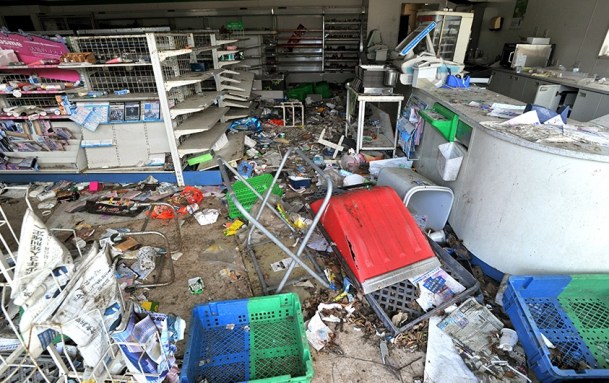
Merchandise remains strewn on the floor of a convenience store in Okuma, Fukushima Prefecture, after the Great East Japan Earthquake shook the town on March 11, 2011
Fukushima towns co-hosting nuclear plant frozen in time
In Okuma, Fukushima Prefecture, a peek inside a convenience store revealed merchandise strewn all over the floor, with the large clock in the back frozen at 2:46 p.m., when a magnitude-9.0 temblor struck five years ago.
Inside the newsstand placed at the entrance of the store, located along the prefectural road, was the March 11, 2011, edition of newspapers, which were discolored.
No signs of people were seen in Okuma and Futaba, the towns co-hosting the crippled Fukushima No. 1 nuclear power plant on March 12, the fifth anniversary of the first hydrogen explosion that occurred at the nuclear complex.
The only movement that could be glimpsed was the occasional passing of vehicles to and from the plant, which is preparing for decommissioning work.
Okuma and Futaba have been evacuated since the onset of the nuclear crisis following the Great East Japan Earthquake and tsunami on March 11, 2011.
Residents have no idea if and when they can ever return to live in their homes since the municipalities are designated in the off-limits zone due to high radiation levels.
Remnants of the disaster still loom over the towns five years later.
In Okuma, pieces of broken walls and window glass were scattered on the street near JR Ono Station, which used to be the busiest area of the town, although the street was cleared to some extent to let vehicles pass through.
The only sound that could be heard was one that a zinc sign made as it swung in the occasional breeze.
Neighboring Futaba was also like a ghost town. Laundry was seen through the window still hanging inside one of the damaged structures in the center of Futaba, five years after it was set out to dry.
http://ajw.asahi.com/article/0311disaster/fukushima/AJ201603130023

In full protective gear, members of a Ground Self-Defense Force unit in Koriyama, Fukushima Prefecture, are seen before they began trying to contain the crisis unfolding at the Fukushima No. 1 nuclear power plant on March 12, 2011.
Government reluctant to specify SDF role in nuclear crisis
When the specter of meltdowns loomed at the Fukushima No. 1 nuclear power plant in March 2011, the legal responsibility fell to Tokyo Electric Power Co., the operator, to contain the crisis.
But as TEPCO employees became overwhelmed, Self-Defense Forces members and Tokyo firefighters were quickly sent to the site at the “request” of the prime minister.
Five years later, there is still no clear delineation of responsibility for the SDF and firefighters to be dispatched or to the extent of their involvement in the event of a nuclear emergency.
The government, the secretariat of the Nuclear Regulation Authority, which crafted new regulations for nuclear plants after the Fukushima disaster, the SDF and the Fire and Disaster Management Agency, which oversees corps of firefighters across the nation, each has differing views.
“Our understanding is that operators of nuclear power plants are presumably prepared (to tackle a nuclear emergency) in line with the world’s most stringent regulations,” said a Defense Ministry official, referring to the nation’s new regulations. “We do not believe that SDF members will be able to do what goes beyond the capability of nuclear power plant operators.”
On March 11, the fifth anniversary of the Great East Japan Earthquake and tsunami, the government declared in a report after a meeting of Cabinet members related to nuclear energy that it will “bear the responsibility for dealing with” a nuclear accident.
The report mentioned the use of “tactical squads” such as the SDF and fire departments to address the situation.
However, what were described as their operation to contain an emergency in the report was “transportation of materials” and other efforts. It has yet to be determined as to what extent the SDF, fire departments and other squads should be prepared to help contain a nuclear contingency in terms of equipment and operations.
When the crisis unfolded at the Fukushima No. 1 nuclear plant following the magnitude-9.0 quake and tsunami, a team of five Ground Self-Defense Force members in Koriyama, Fukushima Prefecture, was tasked with sending cooling water to the overheating No. 1 reactor on March 12, 2011.
The troops had to work amid rising radiation levels at the site, which was a quagmire from the mountain of wreckage left by the quake and tsunami. After the work was forced to be temporarily halted by the hydrogen explosion at the No. 1 reactor that day, the team had to return to work to inject cooling water into the reactor.
When it became obvious that TEPCO could no longer handle such a severe accident on its own, firefighters and police were also deployed to the plant to keep sending water into the reactors.
While the SDF sprayed water from above, firefighters, police and the SDF worked together to direct a spray from the ground.
The law on special measures concerning nuclear emergency preparedness, established in 1999, stipulates the responsibility for containing an emergency lies with the operator of a nuclear facility.
Under the current setup, even if an SDF unit or firefighters are deployed to the site, their activities are to be limited to offering “assistance” to workers grappling with the accident.
In April, the exposure limit to radiation of workers responding to a nuclear emergency will be raised to 250 millisieverts from 100 millisieverts, in light of the Fukushima disaster.
But the cap will only be applied to workers at a nuclear power plant as well as inspectors from the secretariat of the Nuclear Regulation Authority, not SDF members or firefighters.
According to the Defense Ministry, it does not envisage an operation to address a nuclear accident under its directives on responding to a nuclear disaster.
SDF members, in fact, have not conducted drills to deal with such an accident since the SDF’s fleet does not include a nuclear-powered aircraft carrier or similarly powered submarine. Japan does not possess nuclear weapons, either.
The government’s Fire and Disaster Management Agency, too, is reluctant to take on the responsibility.
The new regulations concerning nuclear facilities, which took effect in 2013, require plant operators to have in place a number of fire trucks tasked with sending water to reactors in the event of an accident.
“It is clear that plant operators are now capable of carrying out the kind of work that firefighters were involved in the Fukushima accident,” said an agency official.
In the Fukushima disaster, the deployment of SDF members and firefighters was based on the request from the prime minister, who heads a task force on responding to a nuclear disaster.
Although the Defense Ministry and Fire and Disaster Management Agency keeps a distance from a deployment of their members in the event of a future nuclear accident, the NRA’s secretariat does not.
“If a contingency gets out of the control of the operator, the government might be forced to get involved to contain the accident,” said an official with the NRA secretariat.
http://ajw.asahi.com/article/0311disaster/fukushima/AJ201603130019

17,000 items wait for owners in Fukushima lost and found center
NAMIE, Fukushima Prefecture–In a former gift shop along National Route 6, more than 17,000 items are housed here in a lost and found facility, including disfigured school backpacks, discolored stuffed animals and stained photos.
They are belongings found in the aftermath of the Great East Japan Earthquake and tsunami and waiting to be returned to their rightful owners.
On March 11, the fifth anniversary of the twin disasters, a 26-year-old man and his family stopped by on their way back from a visit to the family grave.
The man picked up a photo holder and carefully sifted through the pictures.
“I am looking for photos from my childhood,” said the man, who has been evacuating in Iwaki, in the prefecture, after his house in Namie was swept away by the tsunami.
The lost and found center, called “The center to display mementoes,” was converted from the former gift facility.
In addition to photos and school backpacks, it houses toys and decorative articles, items that were not broken.
People cleaned them and stored each article with a note mentioning the date and location of the discovery.
While similar lost and found facilities were set up in Miyagi and Iwate, the two other prefectures hardest hit by the 2011 quake and tsunami, shortly after the disaster, the one in Namie just opened in summer 2014.
It was because work to retrieve what was left under debris had been delayed due to the fallout from the disaster at the nearby Fukushima No. 1 nuclear power plant. Evacuees in the town with a population of about 19,000 remain displaced today.
Visitors to the lost and found facility numbered about 3,200 and about 1,600 pieces have been returned to their owner.
Noboru Kawaguchi, 66, who serves as a guide at the facility, is one of those who were reunited with pieces they treasured.
Kawaguchi, who commutes from Soma, a city 30 kilometers north of Namie, had discovered his photos there.
“I have lost everything in the tsunami,” he said, referring to the loss of his parents and his house. “I am always so touched by a visitor discovering something here, as it happened to me.”
Although many similar facilities in Iwate and Miyagi prefectures have closed over time, the center in Namie will remain open at least through spring next year.
http://ajw.asahi.com/article/0311disaster/quake_tsunami/AJ201603130021
The mothers who set up a radiation lab
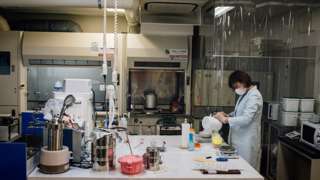
Five years ago an earthquake off the coast of Japan triggered a tsunami and a series of meltdowns at the Fukushima nuclear plant. Kaori Suzuki’s home is nearby – determined to stay, but worried about her children’s health, she and some other mothers set up a laboratory to measure radiation.
A woman in a white lab coat puts some yellow organic material on a slide, while grey liquid bubbles in vials behind her. Other women, one of them heavily pregnant, discuss some data on a computer screen. A courier delivers a small parcel which is opened and its contents catalogued.
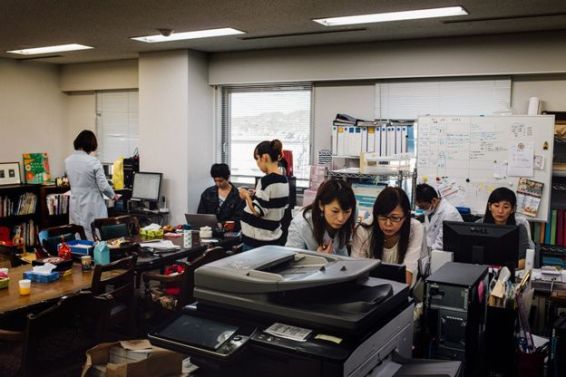
But this is no ordinary laboratory. None of these women trained as scientists. One used to be a beautician, another was a hairdresser, yet another used to work in an office. Together they set up a non-profit organisation – Tarachine – to measure radiation in the city of Iwaki, 50km (30 miles) down the coast from the Fukushima nuclear plant.
Kaori Suzuki, the lab’s director, shows me a list of results. “This is the level of strontium 90 in Niboshi, dried small sardines, from the prefecture of Chiba,” she says.
“What about this food?” I ask, pointing out a high number.
“Mushrooms have higher levels [of radiation]. The government has forbidden people from eating wild mushrooms, but many people don’t care, they take them and eat,” she says.
The lab mainly measures the radioactive isotopes caesium 134 and 137, and collects data on gamma radiation. Strontium 90 and tritium were only added to the list in April last year. “Since they emit beta rays we weren’t able to detect them until recently. Specific tools were necessary and we couldn’t afford them,” says Suzuki. Thanks to a generous donation, they now have the right equipment.
Tarachine publishes its findings online every month, and advises people to avoid foods with high readings as well as the places they were grown.

Five years ago, Suzuki knew nothing about radiation. She spent her time looking after her two children and teaching yoga. The earthquake on 11 March 2011 changed everything.
“I’ve never experienced so much shaking before and I was very scared. Right from the moment it started I had a feeling that something might have happened to the nuclear plant,” she says. “The first thing I did was to fill up my car with petrol. I vividly remember that moment.”
The authorities evacuated the area around the nuclear plant – everyone within a 20km (12-mile) radius was told to leave, and those who lived up to 30km (18 miles) away were instructed to stay indoors. Despite living outside the exclusion zone, Suzuki and her family fled and drove south. The roads were congested with cars and petrol stations ran dry.
“We didn’t come back home until the middle of April and even then we wondered if it was safe to stay,” says Suzuki. “But my husband has his own business with 70 employees, so we felt we couldn’t leave.”
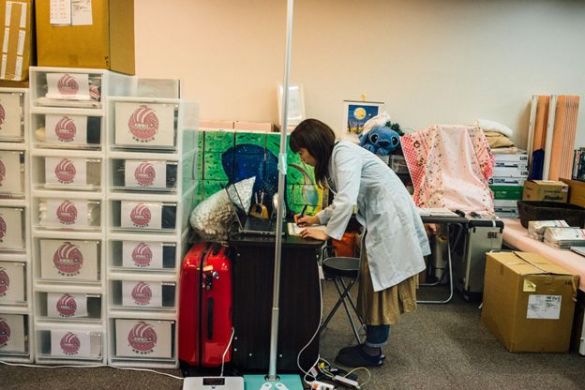
Although radiation levels in Iwaki were officially quite low, the “invisible enemy” was all people could talk about. Conversations with friends changed abruptly from being about children, food and fashion, to one topic only: radiation. “You can’t see, smell or feel it, so it is something people are afraid of,” says Suzuki.
Above all, people didn’t know what was safe to eat.
“It was a matter of life and death,” she says.
Fukushima is farming country and many people grow their own vegetables. “People here love to eat home-grown food and there’s a strong sense of community with people offering food to their friends and neighbours,” says Suzuki. This caused a lot of anxiety. “A difficult situation would arise where grandparents would be growing food, but younger mothers would be worried about giving it to their children.”
Suzuki formed the group “Iwaki Action Mama” together with other mothers in the area. At first they organised demonstrations against nuclear power, but then they decided on a new tactic – they would learn how to measure radiation themselves.

They saved and collected $600 (£420) to buy their first Geiger counter online, but when it arrived the instructions were written in English, which none of them understood. But they persevered and with the help of experts and university professors, organised training workshops. Soon they knew all about becquerels, a unit used to measure radiation, and sieverts, a measure of radiation dose. They would meet at restaurants and cafes to compare readings.
Becquerels and Sieverts
•A becquerel (Bq), named after French physicist Henri Becquerel, is a measure of radioactivity
•A quantity of radioactive material has an activity of 1Bq if one nucleus decays per second – and 1kBq if 1,000 nuclei decay per second
•A sievert (Sv) is a measure of radiation absorbed by a person, named after Swedish medical physicist Rolf Sievert
In November 2011 the women decided to get serious and set up a laboratory. They raised money and managed to buy their first instrument designed specifically to measure food contamination – it cost 3 million yen (£18,500, or $26,400).
They named the laboratory Tarachine, after a strong female character in Japanese theatre who speaks the language of Samurai warriors. “We felt as though we were on the front line of a battlefield,” says Suzuki. “When you’re at war you do what you have to do, and measuring was the thing we felt we had to do.”

Today Tarachine has 12 employees, and more work than it can handle. People bring in food, earth, grass and leaves from their backyards for testing. The results are published for everyone to see. At first the lab was able to provide results after three or four days, but its service has become so popular it can’t keep up. “We have so many requests now that it can take three months,” says Prof Hikaru Amano, the lab’s technical manager.
Amano confesses he was surprised that a group of amateurs could learn to do this job so accurately, but says it is important work.
People began to mistrust the nuclear contamination data provided by the government and by the Tokyo Electric Power Company (Tepco), which manages the nuclear plant, he says.
About 100 so-called “citizen laboratories” have since sprung up, but Tarachine is unusual because it monitors both gamma and beta rays – most can only measure gamma rays – and because it tests whatever people want, whether it’s a home-grown carrot or the dust from their vacuum-cleaner.
The government does take regular readings from fixed points in Fukushima prefecture. It also check harvests and foods destined for the market – for example, all Fukushima-grown rice is required to undergo radiation checks before shipping.
But “if you want to know the level of strontium and tritium in your garden, the government won’t do this measurement,” says Suzuki. “If you decide to measure it yourself, you’ll need 200,000-250,000 yen (£1,535, or $2,200) for the tests, and ordinary people can’t afford to pay these costs. We have to keep doing this job so that people can have the measurements they want.” Tarachine only charges a small fee – less than 2,000 yen (£12, or $17).

Mother of two Kaori Suzuki now spends much of her time at the laboratory
Tarachine also provides training and equipment to anyone who wants to do their own measurements. “Some of the mothers measure soil samples in their schools. It’s fantastic, they really have become quite skilled at doing this,” says Suzuki.
And the group keeps an eye on children’s health. It runs a small clinic where doctors from all over Japan periodically come to provide free thyroid cancer check-ups for local children. Since screening began, six months after the meltdown, 166 children in Fukushima prefecture have been diagnosed with – or are suspected of having – thyroid cancer. This is a far higher rate than in the rest of the country, although some experts say that’s due to over-diagnosis.
And for parents who want to give their children a break from the local environment, Tarachine even organises summer trips to the south of the country.
Suzuki’s own life has changed dramatically since 2011. “I was just a simple mother, enjoying her life. But ever since I started this, I’ve been spending most of my time here, from morning to night,” she says. “I must admit, sometimes I think it would be really nice to have a break, but what we are doing is too important. We’re providing a vital service.
“If you want to have peace of mind after an accident like the Fukushima one, then I believe you need to do what we’re doing.”
Source: http://www.bbc.com/news/magazine-35784923?SThisFB
An addition to this article, thanks to Beverly Findlay-Kaneko:
The article missed an important point that has news value. Tarachine is trying to expand their health clinic to include more services, including cataract screening for children. This video is in Japanese, but you can see what the inside of their operation looks like.
Tepco considering discharging Tritium to the Pacific

By 3/4/2016, Masuda, Fukushima plant decommissioning chief commented in the interview with a local newspaper company that they need to consider discharging the contaminated water to the Pacific.
The newspaper company is Kahoku shimpo.
Due to the high amount and the increasing speed, Tepco and the government of Japan cannot remove tritium from contaminated water. The government of Japan is to release a strategy plan by the end of this month.
Masuda said, he is aware that discharging the tritium water is one of the options after dilution.
The entire volume of tritium does not change even after dilution however it was not asked at least in the published part of the interview.
http://sophia806.blog91.fc2.com/blog-entry-96.html
Radioactive Waste Still Leaking Five Years After Fukushima Nuclear Disaster
Yves here. While the Fukushima nuclear disaster seems like it took place a long time ago, but the site is still leaking radioactive water and the cleanup and remediation will take decades, as this Real News Network story explains.
SHARMINI PERIES, EXECUTIVE PRODUCER, TRNN: It’s the Real News Network. I’m Sharmini Peries coming to you from Baltimore.
March 11 marks the five-year anniversary of the most powerful earthquake and resulting tsunami in recent memory. It hit Japan, causing a meltdown at the Fukushima Daiichi nuclear power plant, which evolved into a crisis.
The nuclear disaster forced tens of thousands of people to flee a 20-kilometer radius around the reactor. Plant-operated [Tokyo] Electric Power Company, known as TEPCO, managed to avert the worst scenario by pumping water, much of it from the sea, into the Daiichi damaged reactors and spent fuel pools. After several scares, including one where radioactive water spilled into the sea, reactors were stabilized by December of the same year. Five years on, however, the nuclear power plant is still leaking radioactive water.
To help understand why this is still happening is Arjun Makhijani. He is a nuclear and electric engineer, and president of the Institute for Energy and Environmental Research. Arjun, thank you so much for joining us today.
ARJUN MAKHIJANI: Thank you, Sharmini, for having me.
PERIES: So, Arjun, why is it taking so long to fix the leak?
MAKHIJANI: Well, nuclear power is forever. So, basically, what happens in the course of a nuclear reaction: you split the atom and you get two fragments from that, and those fragments of uranium are much more radioactive than the original uranium, and some of them last for a very long time, and some of them are quite mobile.
Now, in the normal course of operation of a nuclear reactor, the fuel is in the form of ceramic pellets and it all sits inside the reactor. There are some radioactivity emissions, but they are not huge in terms of the kinds of concerns we’re talking about. When there is a meltdown, like the accident we had at Fukushima Daiichi, or Chernobyl, there are, the fuel pellets actually melt and they form, like, a molten concrete that moves toward the bottom of the reactor.
Now, in the case of Three Mile Island, where that happened, that molten core was contained within the reactor, and as that happens, also, the chemical reactions generate hydrogen. In Three Mile Island, the hydrogen fire, or explosion, was contained within that concrete dome associated with that reactor. At Fukushima the three buildings actually blew up from hydrogen explosions, and there was this meltdown, so all this radioactivity, a lot of that radioactivity then escaped.
A part of it is volatile, like cesium, so it evaporates, literally, and then of course it goes into the air, iodine-131. Some of it is soluble. Now, normally the soluble part would remain inside the reactor, but at Fukushima it seems that there has been, at least in one reactor and possibly in more than one, the molten core has just melted its way not only through the reactor but also through all the containments, and I suspect that some of it is in the soil. We don’t know because they haven’t been able to figure out exactly where all this molten material is, but I think the evidence is that the groundwater is contacting the radioactive material, and so the groundwater is getting contaminated, and a large part of the problem of contamination of water comes from that fact, also the fact that it’s raining and the rain, of course, makes the radioactivity mobile.
Last point on this is that two difficult materials in this regard are cesium-137, which has a half-life of 30 years, which means you have to worry about it for a couple of hundred years, and strontium-90, which also has a similar half-life, 29 years, and so you also have to worry about it for a couple of hundred years. And so this stuff just stays around, and so long as you don’t remove it it’s an environmental and health threat, and Fukushima Daiichi is right on the ocean, so whenever the radioactivity washes off the site it winds up in the ocean.
PERIES: And all the technical aspects are rather important, but what’s happening to the people who were affected by the crises and the people that were evacuated from the 20-mile radius? What are the conditions there? Have they moved back? Are they still at risk?
MAKHIJANI: Well, about 160 thousand people left their homes after the disaster. there was an evacuation zone, but it turned out the contamination was more widespread and more directional. It was directional toward the northwest. It wasn’t in a circle, so while they initially evacuated a circle, turned out that some of the parts of the circle were not contaminated, and then there were parts that were beyond that circle that were contaminated.
Currently, I think, there almost 100 thousand people who have not gone back. The government thinks that many more people can go back, but, you know, the places are contaminated. You are being asked to trust a system that essentially betrayed you multiple times, that didn’t level with the public, that has manifestly, by its own actions, put the restart of nuclear power plants in Japan, which were all shut down about a year later, above the questions of resettlement and cleanup and other aspects of the Fukushima disaster, and they basically have tried to minimize the dangers of radiation, so a lot of people have not returned.
Families have split up, so sometimes the men will say, you know, my job is there, my farm is there, my work is there. I want to go back. And the women might say, well, we don’t want to go back, how can we take our children back to these radioactive, contaminated areas? So it’s not only the health risk and the cancer risk, but there are all of these other social-economicThere’s this social-economic fallout that I think is at least as important as the radioactive fallout.
PERIES: And are there health risks from this manifesting itself now?
MAKHIJANI: Yes. There’s some evidence of thyroid problems and thyroid cancer risks. Most of the cancers are solid cancers, and the latency period of radiation-induced cancers, except for leukemia, are quite long, so you should expect to see the cancers in the coming decade. This is an accident that won’t stop, because they don’t know how to get all that material out.
The people most at risk, actually, are the workers who are cleaning up the plant and who are also cleaning up the environment around the plant, where there was a lot of this radioactive fallout. Cleaning up is actually a euphemism, because you can’t really clean the stuff up. They’re scraping up the dirt, and, let me see, there are 10, more than 10 million one-ton plastic bags containing radioactive debris and waste from this cleanup outside the plant, and they’re just sitting there, these plastic bags. The pictures of them are very stunning, and nobody knows what will happen if there’s another tsunami and there are these 10 million radioactive waste-containing plastic bags, and one thousand tanks containing radioactive water besides the radioactive water that’s going into the ocean.
So the workers are significantly at risk. There are more than 30 thousand of them, and
PERIES: And have there been any medical attempts to test them, to deal with what they might be getting exposed to?
MAKHIJANI: Well, you know, they are being monitored for radioactivity, most of them, I suspect. My, so I haven’t followed this blow-by-blow, to confess, but when I did follow it quite closely initially, for about a year, my impression was that the monitoring was deficient and that the internal monitoring, which is what you eat and breathe and what gets inside your body, which is very, very important, was not as frequent and as thorough as it should be. And I think the same, possibly, applies to a lot of the affected people.
So there are a lot of cancers that are not associated with radioactivity, so in order to know, you know, what was the added risk from the radiation exposure, you have to have very thorough studies, and I am not confident that these thorough studies are being done. It’s very hard for us to know, because not long after Fukushima the Japanese government passed a kind of anti-freedom of information law where it became illegal to diffuse and acquire and talk about certain kinds of information, so you know they have something to hide when they’re doing that.
PERIES: Okay. And besides the government, who is obviously mandated to deal with this, the former leader of the head of the Tokyo Electric Power Company team dealing with the radioactive water says that they will need another four years or so, until 2020, to fix it. Many critics, including yourself, said that TEPCO, who ran the plant, who were not equipped to deal with it, and of course that is all coming to. Is the government and TEPCO in any better position to deal with this now, having, you know, five years have passed, and are you any more confident about the way they are dealing with it?
MAKHIJANI: So let me give one very important credit where it is due, which is that in one of the reactors, which was not operational at the time of the accident, reactor number four, there was a lot of very hot, radioactive waste in the spent fuel pool, where it is stored, and a lot of people, including me, feared that, you know, a loss of cooling could result in a very major disaster, and it was very important to empty that pool and store that waste more safely because that building had also been affected severely by the accident.
They have been able to empty that pool. They have also made progress in some other areas. However, I think TEPCO was not a very responsible company, and had many, many problems in terms of its disclosures and dishonesty before this accident. The chairman of TEPCO actually escaped, and did not show up for a month after the accident, so not very responsible. If it had not been for the prime minister of Japan, who has now become an opponent of nuclear power, Prime Minister Kan, we may be looking at a very different disaster, because TEPCO was thinking of abandoning the site which would have, of course, resulted in the kind of much worse accident that people feared. We’re very lucky that Tokyo did not have more fallout on it.
So Nuclear power is a very strange beast. We’re making plutonium just to boil water, and then all these radioactive materials. And so if you have an accident you can’t pick up the pieces and move on. This is an accident that has been going on for 40 years. They’re not goingfive yearsThey’re not going to clean it up in the next four years, let me assure you. Getting that molten fuel from the reactors, even approaching it and handling it, you know, robotically, is going to take a long time, decades probably.
PERIES: And TEPCO is, apparently, right now seeking permission to build an underground ice wall to contain it all. Is this a reasonable proposal, and is it going to work?
MAKHIJANI: Well, I’m skeptical about this ice wall. I think they have built it, or are well along the way. The idea is to prevent water. So it’s in a mountainous area, and the mountains are kind of upstream from the reactor site, so the water flows through the site and, as I was explaining, picks up the radioactivity and contaminates the groundwater and so on, and that’s part of the reason they have, you know, these millions of gallons of radioactive water stored onsite.
I thought that they should have put this radioactive water in a supertanker and taken it to another site for treatment, and proposed it at the time of the accident. I know the Japanese authorities saw my proposal, but they ignored it, and so I don’t think that this accident has been well handled from the beginning in most of the respects. Fortunately the prime minister ordered that the sea water be put into the reactors so there wasn’t, you know, bigger hydrogen explosions and a worse radioactive catastrophe than already happened.
On Five Years Of An Ongoing Accident In Fukushima: It’s Not An Anniversary
DiaNuke editorial on the Five Years since the Earthquake-Tsunami-Meltdown
by Kumar Sundaram, March 12, 2016
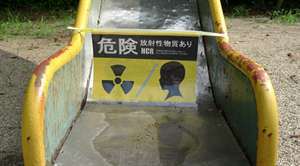
The absurd contradictions of disaster management: the government told families that it was safe for children to stay, but not safe for children to play.
On March 11, 2011, I was sitting in my office in the Institute of Defense Studies and Analysis, when the news of massive tsunami and earthquake came. I was working as a Senior Research Fellow on a project funded by the Dept. of Atomic Energy.
I was new to Facebook, and wished safety to all my Japanese friends, and I asked some over Facebook messaging and emails if they were fine.
And then, the news of nuclear accident in Fukushima Dai-Ichi reactors flashed. Within hours, it turned into an unimaginable horror.
I almost didn’t sleep for several days – checking every detail on the internet – the radiation counts, the design details of the reactors, every single news release, the weather reports for understanding the direction and speed of wind, getting glued to the map of Tohoku region. A number of other people tracking Fukushima on the social media from different countries became friends. We kept doing that for months. Some still meticulously gather every single detail.
For me, it was a reckoning of the insurmountable nature of nuclear accidents. The accidents might not happen so frequently, but the fact that every reactor can undergo an accident and there is no human response possible for nuclear accidents, even in technologically most advanced countries, makes nuclear power uniquely and unacceptably dangerous.
The accident also revealed decades of complacency in Japan. The nexus between politics, nuclear corporations, the elites, and the media was openly exposed. We can rely on the Indian system to be far worse than Japan in that respect. The labour mafia in Japan has been callously using the poor and migrant workers as cheap fodder in Fukushima’s clean-up.
The clean-up will take decades. They have not been able to get the reactor under control, even after 5 years. We have no clue about the state of tons of molten fuel in the crippled reactor. What the government means by ‘under control’ is just that they are pouring water daily to keep the temperature in the crumbled building low. Thousands of litres of contaminated water from the reactor are coming out daily, and they have no idea what to do with the water except storing it in thousands of huge tanks and stealthily letting it go into the Pacific Ocean.
A 20-kilometre radius area around the reactor remains uninhabitable, and more than 20,000 people evacuated from this area have no hope to return.
I have been to Fukushima twice since the accident. I went inside the evacuation zone and saw the ghost towns like Namie, Futaba and Itate. Houses, offices, shops, schools, playgrounds, railway stations, everything is there, but there are no humans. In 5 years, heavy dust and moss has accumulated everywhere.
There are decontamination workers working in this 20 kilometre zone, mostly scraping the top-soil and cleaning houses and offices. This highly radioactive dump is transported, shifted from one place to other in ‘temporary’ storage sites. The people doing this work know there’s no solution. They know everything is just an eyewash, for appearance’s sake. The same company which didn’t heed to warnings before the accident, and played every trick in the book to exclude as many people as possible from getting compensation, is gaining from these decontamination contracts.
Life for the evacuated people is unimaginably hard and shattered. Building a new life is not easy for most of them. There’s very little support from the government, and there are many attempts to stop even that as the years pass. There are documented proofs that the community in Fukushima is also facing social ostracism, as people fear that radiation-caused diseases might appear after several years. People are experiencing psychological breakdowns.
The resilience of the community, and the larger Japanese society, however, is moving. People across the country are providing support in every possible manner.
The political fallout of Fukushima is historic. Something has changed in the normally apolitical Japanese society. The kind and gentle Japanese people are angry. They understand the connections between corporations, government, politicians and the media. They are still grappling with how to make their collective response more effective. Thousands of reluctant activists flock to the Japanese parliament building in Tokyo every Friday after their work, chant slogans, play music, light candles, and share dreams of a better future. This has proliferated and there are weekly protests all over Japan.
In India, we have a additional set of problems when it comes to nuclear: higher population density, deeper corruption and unaccountability in the system, absence of an independent nuclear safety regulator, attempts to dilute even the ridiculously low nuclear liability. And more than anything else, brutal bulldozing of public dissent, environmental and safety concerns as the commitment for setting up new reactors stems primarily from the elite’s foreign policy choices rather than some well-thought energy policy.
Fukushima has led to policy changes in several countries. As a BBC survey has revealed, popular support for nuclear power is touching bottom, globally.
But in India, legitimate concerns about nuclear safety are deemed superstition. The previous government sent psychological counselors to Koodankulam when local residents raised objections about the project. And when these counselors couldn’t “cure” them, the police came. Thousands of para-military forces surrounded the villages, ransacked houses and fishing boats, and killed innocents.
Asking questions has become anti-national in India. Thousands of villagers on the southern-most tip of India face sedition charges for peacefully protesting against the project, which has now revealed itself as an expensive and dangerous white elephant. In almost 3 years since its commissioning, after much fanfare and repression, Koodankulam nuclear plant has not even operated successfully for 100 consecutive days. The latest news is that the reactor has been shut down again due to a dangerous leak. People around the area have reported a pungent smell coming from the plant for the last few days.
I left my previous job and have associated myself with the Coalition For Nuclear Disarmament and Peace (CNDP) after the Fukushima accident. We have been trying to mobilise solidarity for the struggling villagers, amplify their voices and connect the dots by collaborating with civil society groups to ask questions on liability, safety, economic viability and environmental impacts of the proposed and existing nuclear plants in India.
In this country with hugely anachronistic nuclear ambitions, which is one of the handful countries with expansion plans after Fukushima, we all have been labeled anti-national.
One of the first things the new BJP government did after coming to power was to deliberately ‘leak’ an intelligence report calling CNDP and other such organisations anti-national. Some 40 names were mentioned, including mine. The IB became an economist and axiomatically said we are bringing down India’s growth by 2 to 3 percent. How more absurd can it get? I survive in Delhi on odd freelance pieces of work and minimum organisational support.
In the 5th year of Fukushima, I have lost track of the details that I started accumulating in March 2011. It’s not about facts and figures any more. It’s about politics. It’s about power structures. It’s about our lifestyles. Everything needs to be questions and transformed if the world has to be kept safe from nuclear horror and climate change.
If challenging the status-quo is anti-national, so be it. I am proud to carry the label.
On Five Years Of An Ongoing Accident In Fukushima: It’s Not An Anniversary
Protesters rally in front of PM office, Diet calling for end to nuclear power
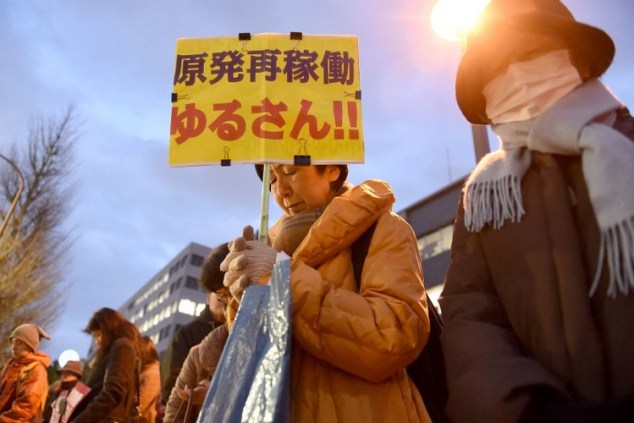
Demonstrators in front of the prime minister’s office in Tokyo’s Chiyoda Ward offer a silent prayer to those who died in the March 2011 Great East Japan Earthquake and tsunami, on March 11, 2016.
Protesters rally in front of PM office, Diet calling for end to nuclear power
Protestors staged demonstrations in front of the prime minister’s office and the Diet in Tokyo on March 11, calling for the elimination of nuclear power.
Demonstrators chanted slogans including, “Don’t restart nuclear reactors,” and, “Protect Fukushima.” Some 6,000 people participated in the demonstrations, according to the organizer, the Metropolitan Coalition against Nukes.
Psychiatrist Rika Kayama said during a rally in front of the National Diet Building, “I’d like to join hands with you in blocking reactivation of nuclear plants across the country.”
Takeshi Suwahara, a key member of the Students Emergency Action for Liberal Democracy (SEALDs), said, “I don’t want to rely on a power generation method that could cost people their lives and livelihoods.”
Toshima Ward, Tokyo resident Akira Suzuki, 66, stated Japan “should switch to natural, renewable energy sources since we’ve learned lessons from the Fukushima (nuclear) accident.”
http://mainichi.jp/english/articles/20160312/p2a/00m/0na/006000c
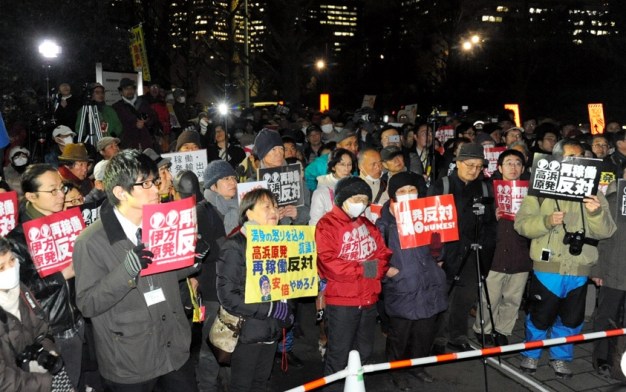
Participants call for a nuclear-free society during a rally held in front of the Diet building in Tokyo on March 11.
Anti-nuclear rally in Tokyo marks 187th since the 2011 disaster
Thousands of anti-nuclear activists rallied around the prime minister’s office and the Diet building in Tokyo on March 11, the fifth anniversary of the earthquake and tsunami disaster that triggered the nuclear crisis in Fukushima Prefecture.
The Metropolitan Coalition Against Nukes, a citizens group that organized the protest, estimated that 6,000 or so people took part.
Participants raised slogans against the restart of nuclear reactors and the lingering effects of the triple meltdown at the Fukushima No. 1 nuclear power plant caused by the magnitude-9.0 Great East Japan Earthquake and tsunami.
The activists have rallied on Friday nights since the nuclear accident. The latest gathering was the 187th.
“I intend to continue to express my opinions in order to create a society that does not depend on nuclear power generation,” said Moeko Mizoi, 20, a sophomore of Tsuda College, whose grandparents live in Fukushima Prefecture.
In a related development, former Prime Minister Junichiro Koizumi gave a speech in an event held in Tokyo on March 11 for the screening of a documentary movie, “Nihon to Genpatsu Yonengo” (Japan and nuclear power generation, four years later).
“I want people to continue their anti-nuclear movement with patience so that the Japanese economy can develop without nuclear power generation,” Koizumi said.
“People’s voices will change politics,” he added.
http://ajw.asahi.com/article/behind_news/social_affairs/AJ201603120026
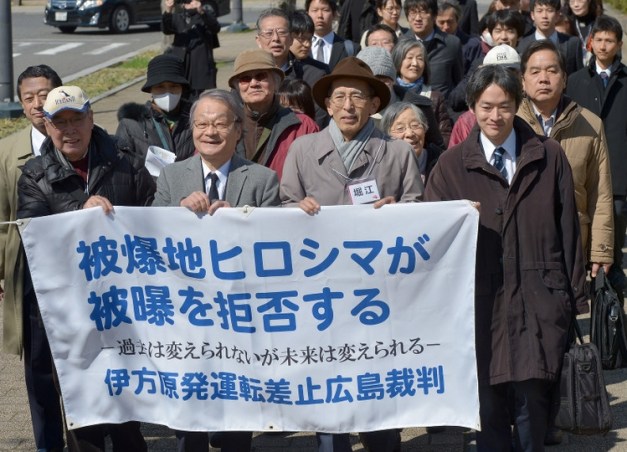
Hiroshima atomic bombing survivor So Horie, second from right in the front row, and other plaintiffs head to the Hiroshima District Court on March 11, 2016. The banner they are holding reads “Atomic bombed Hiroshima refuses radiation exposure” and “Things past cannot be changed, but we can change our future.”
A-bomb survivors demand court shut western Japan nuclear plant
HIROSHIMA (Kyodo) — Plaintiffs including survivors of the 1945 U.S. atomic bombings filed a lawsuit Friday with a court demanding a halt to operation of Shikoku Electric Power Co.’s Ikata nuclear plant in western Japan.
They brought the suit to the Hiroshima District Court, arguing that the environment would be devastated and their health affected if an accident similar to the 2011 Fukushima disaster takes place at the plant in Ehime Prefecture, their lawyers said.
Friday is the fifth anniversary of a major earthquake and tsunami that triggered the accident at the Fukushima Daiichi plant of Tokyo Electric Power Co.
The three reactors at the Ikata plant are currently off-line but Shikoku Electric envisions rebooting the No. 3 unit in the spring or later. The reactor cleared a safety screening last July.
The plaintiffs are a group of 67 people, including 18 survivors of the Hiroshima and Nagasaki bombings and one Fukushima evacuee living in Hiroshima Prefecture.
Three of the plaintiffs are also seeking an injunction ordering the No. 3 unit not to be restarted ahead of the court’s final ruling, according to the lawyers.
The litigation came two days after another Japanese court issued an injunction ordering two reactivated reactors at Takahama plant of Kansai Electric Power Co. to be halted as requested by a group of local residents.
In the injunction, the Otsu District Court cited “problematic points” in planned responses for major accidents and “questions” on tsunami countermeasures and evacuation planning.
All Japan’s reactors were taken off-line following the Fukushima disaster but four reactors, including the two Takahama units, have been reactivated since last year under stricter post-Fukushima safety regulations.
http://mainichi.jp/english/articles/20160311/p2g/00m/0dm/071000c
Is Fukushima’s nuclear nightmare over? Don’t count on it
Christopher Busby is an expert on the health effects of ionizing radiation. He qualified in Chemical Physics at the Universities of London and Kent, and worked on the molecular physical chemistry of living cells for the Wellcome Foundation. Professor Busby is the Scientific Secretary of the European Committee on Radiation Risk based in Brussels and has edited many of its publications since its founding in 1998. He has held a number of honorary University positions, including Visiting Professor in the Faculty of Health of the University of Ulster. Busby currently lives in Riga, Latvia. See also: http://www.chrisbusbyexposed.org, http://www.greenaudit.org and http://www.llrc.org.
Thomas was described as “one of Britain’s leading experts on the health effects of radiation”. She is of the opinion that there is no danger and the Japanese refugees can come back and live there in the “zone”. Her main concern seemed to be how untidy it all was: “Left to rack and ruin,” she complained, sadly.
At one point, Rupert pulled out his Geiger counter and read the dose: 3 microSieverts per hour. “How much radiation would it give in a year to people who came back here,” he asked. Thomas replied: “About an extra milliSievert a year, which is not much considering you get 2mSv a year from natural background”.
“The long term impact on your health would be absolutely nothing.”
Now anyone with a calculator can easily multiply 3 microSieverts (3 x 10⁻⁶ Sv) by 24 hours and 365 days. The answer comes out to be 26 mSv (0.026Sv), not “about 1mSv” as the “leading expert on the health effects of radiation” reported.
I must personally ask if Gerry Thomas is a reliable expert; her CV shows she has published almost nothing in the way of original research, so we must ask how it is the BBC has taken her seriously.
This recalled the day the first reactor exploded in 2011. I was in London, and the BBC asked me to come into the studio and comment. Also present was a nuclear industry apologist, Dr Ian Fells. Like Geraldine Thomas he seemed unconcerned about the radiation: the main problem for him was that the lifts would not work. People would have to climb stairs, he complained.
I said then on that first day that this was a serious accident like Chernobyl, but he and everybody who followed him told the viewers that it was no problem, nothing like Chernobyl.
Some months later, looking back, it became clear I was correct on every point, but I never was invited back to the BBC. I visited Japan, took sophisticated measuring equipment, obtained vehicle air filters, spoke to the Japanese people and advised them to take Calcium tablets to block the Strontium-90.
My vehicle air filter measurements showed clearly that large areas of north east Japan were seriously contaminated – including Tokyo. This was too much for the nuclear industry: I was attacked in the Guardian newspaper by pro-nuclear George Monbiot in an attempt to destroy my credibility. One other attacker was Geraldine Thomas. What she said then was as madly incorrect then as what she is saying now. But the Guardian would not let me respond.
The important evidence for me in the recent BBC clip is the measurement of dose given by Rupert’s Geiger counter: 3microSieverts per hour (3Sv/h). Normal background in Japan (I know, I measured it there) is about 0.1Sv/h. So in terms of external radiation, Ruperts’s measurement gave 30 times normal background.
Is this a problem for human health? You bet it is. The question no-one asked is what is causing the excess dose? The answer is easy: radioactive contamination, principally of Caesium-137. On the basis of well-known physics relationships we can say that 3Sv/h at 1m above ground represents a surface contamination of about 900,000Bq per square metre of Cs-137. That is, 900,000 disintegrations per second in one square metre of surface: and note that they were standing on a tarmac road which appeared to be clean. And this is 5 years after the explosions. The material is everywhere, and it is in the form of dust particles which can be inhaled; invisible sparkling fairy-dust that kills hang in the air above such measurements.
The particles are not just of Caesium-137. They contain other long lived radioactivity, Strontium-90, Plutonium 239, Uranium-235, Uranium 238, Radium-226, Polonium-210, Lead-210, Tritium, isotopes of Rhodium, Ruthenium, Iodine, Cerium, Cobalt 60. The list is long.
The UN definition of ‘radioactively contaminated land’ is 37,000Bq/square meter, and so, on the basis of the measurement made by the BBC reporter, the town of Ohkuma in the Fukushima zone (and we assume everywhere else in the zone) is still, five years after the incident, more than 20 times the level where the UN would, and the Soviets did, step in and control the population.
But the Japanese government wants to send the people back there. It is bribing them with money and housing assistance. It is saying, like Gerry Thomas, there is no danger. And the BBC is giving this misdirection a credible platform. The argument is based on the current radiation risk model of the International Commission on Radiological Protection the ICRP.
Last month, my German colleagues and I published a scientific paper [2] in the peer reviewed journal Environmental Health and Toxicology. It uses real-world data from those exposed to the same substances that were released by Fukushima to show that the ICRP model is wrong by 1,000 times or more. This is a game-changing piece of research. But were we asked to appear on the BBC, or anywhere else? No. What do our findings and calculations suggest will have happened in the five years since the explosions and into the future? Let’s take a look at what has happened since 2011.
The reactors are still uncontrolled five years after the explosions and continue to release their radioactive contents to the environment despite all attempts to prevent this. Concerning the melted fuel, there is no way to assess the condition or specific whereabouts of the fuel though it is clearly out of the box and in the ground.
Meanwhile, robots fail at the extremely high radiation levels found; ground water flowing through the plant is becoming contaminated and is being pumped into storage tanks for treatment; high radiation levels and debris have delayed the removal of spent fuel from numbers 1, 2 and 3 reactor buildings. TEPCO plans to remove debris from reactor 3 and this work has begun. Then they are hoping to remove the fuel rods out of reactors 1 and 2 by 2020 and the work on removing debris from these 2 reactors has not begun yet.
Much of the radioactivity goes into the sea, where it travels several hundreds of km. up and down the coast, destroying sea life and contaminating intertidal sediment. The radionuclides bind to fine sediment and concentrate in river estuaries and tidal areas like Tokyo Bay. Here the particles are re-suspended and brought ashore to be inhaled by those living within 1km of the coast.
From work done by my group for the Irish government on the contaminated Irish Sea we know that this exposure will increase the rate of cancer in the coastal inhabitants by about 30 percent.
The releases have not been stopped despite huge amounts of work, thought and action. The treated water is still highly radioactive and cannot yet be released.
That is a real problem on site with three heavy spent fuel pools still full and largely inaccessible. Collapse of the buildings would lead to coolant loss and a fire or even an explosion releasing huge amounts of radioactivity. So this is one nightmare scenario: Son of Fukushima. A solid wall at the port side may have slowed the water down but diverting the water may cause problems with the ground water pressure on site and thus also threaten subsidence. Space for storing the radioactive water is running out and it seems likely that this will have to be eventually spilled into the Pacific.
Only 10 percent of the plant has been cleaned up although there are 8,000 workers on site at any one time, mostly dealing with the contaminated water. Run-off from storms brings more contamination down the rivers from the mountains.
There are millions of 1-ton container bags full of radioactive debris and other waste which has been collected in decontamination efforts outside the plant and many of these bags are only likely to last a handful of years before degrading and spilling their contents. Typhoons will spread this highly contaminated contents far and wide.
Let’s look at the only real health data which has emerged to see if it gives any support to my original estimate of 400,000 extra cancers in the 200km radius. Prof Tsuda has recently published a paper in the peer review literature identifying 116 thyroid cancers detected over 3 years by ultrasound scanning of 380,000 0-18 year olds.
The background rate is about 0.3 per 100,000 per year, so in three years we can expect 3.42 thyroid cancers. But 116 were found, an excess of about 112 cases. Geraldine says that these were all found because they looked: but Tsuda’s paper reports that an ultrasound study in Nagasaki (no exposures) found zero cases, and also an early ultrasound study also found zero cases. So she is wrong. The thyroid doses were reported to be about 10mSv. On the basis of the ICRP model, that gives an error of about 2000 times.
From the results of our new genetic paper we can safely predict a 100 percent increase in congenital malformations in the population up to 200km radius.
In an advanced technological country like Japan these will be picked up early by ultrasound and aborted, so we will not actually see them, even if there were data we could trust. What we will see is a fall in the birth rate and an increase in the death rate because we know what has been happening and what will happen; we have seen it before in Chernobyl. And just like Chernobyl, the (Western) authorities are influenced by or take their lead from the nuclear industry: the ICRP and the International Atomic Energy Agency, (IAEA) which since 1959 has taken over from the World Health Organization as the responsible authority for radiation and health (Yes!).
They keep the lid on the truth using ill-informed individuals like Geraldine Thomas and, by analogy with New Labour: New BBC. Increasingly I could say “New Britain” as opposed the Great Britain of my childhood, a country I was proud of where you could trust the BBC. I wonder how the reporters like Rupert can live with themselves presenting such misguided information.
Fukushima is far from being over, and the deaths have only just begun.
Reference:
1. http://www.bbc.com/news/world-asia-35761141
2. Genetic Radiation Risks-A Neglected Topic in the Low Dose …
http://www.ncbi.nlm.nih.gov/pubmed/26791091
Source: https://www.rt.com/op-edge/335362-fukushima-nuclear-japan-bbc/
Nuclear refugees tell of distrust, pressure to return to Fukushima
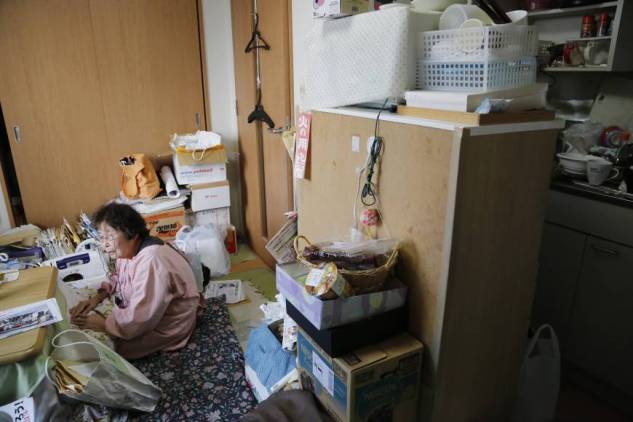
Tokiko Onoda speaks about her house in Fukushima from her apartment
in Tokyo on Feb. 9.
They feel like refugees, although they live in one of the world’s richest and most peaceful nations.
Five years ago, these people fled their homes, grabbing what they could, as a nearby nuclear plant melted down after being hit by tsunami, spewing radiation. All told, the disaster in Fukushima displaced 150,000 by the government’s count.
About 100,000 are still scattered around the nation, some in barrack-like temporary housing units and others in government-allocated apartment buildings hundreds of kilometers away.
Although authorities have started to open up areas near the damaged reactors that were previously off limits, only a fraction of residents have returned. For example, in the town of Naraha, where evacuation orders were lifted in September, 459 people, or 6 percent of the pre-disaster population, have gone back.
Most say they don’t want to return for fear of lingering radiation. Some don’t want the upheaval of moving again after trying to start their lives over elsewhere.
With government housing aid set to end next year, many feel pressured to move back.
Tokiko Onoda, 80, lives with her husband in a cramped, cluttered apartment on the 21st floor of a high-rise in the edge of Tokyo where about 1,000 people displaced by the disaster live in rent-free housing.
Several Fukushima towns that were deserted are now urging residents to return, saying it is safe to live in certain areas. An ambitious effort to decontaminate vast swaths of land by removing topsoil and razing shrubbery has turned farmland and coastlines into stretches of dirt with rows upon rows of black garbage bags filled with grass, soil and debris.
When housing aid ends in April 2017, people in apartments under the government program will have to start paying rent or move out. Those whose homes in Fukushima that are in areas still off-limits for living will continue to receive the aid.
Onoda fears hers will be cut off because her home is in Namie, where evacuation orders are gradually being lifted in parts of the town.
She doesn’t believe it’s safe to go back. She feels duped because she had believed that nuclear power was safe.
Onoda angrily talks about how authorities are treating people like her. Why didn’t the government give her land elsewhere to build a new home?
When she lived in Fukushima, she had a big house with a garden where she grew vegetables and peonies. She picked mushrooms and ferns in the hills.
“We worked so hard to build that house,” she said, often stopping to wipe away tears. “We had no worries in the world except to plan vacation trips to the hot springs.”
That home is now in shambles. Although it survived the magnitude-9.0 quake on March 11, 2011, burglars have ransacked it and rats have chewed the walls. The last time she visited, the dosimeter ticked at 4 microsieverts an hour, more than 100 times the average monitored in-air radiation in Tokyo. That’s not immediately life-threatening but it makes Onoda feel uncomfortable because of worries that cancer or other sicknesses may surface years later.
Before the disaster, the government had set the safe annual radiation dosage level at 1 millisievert. Afterward, it has adopted the 20 millisievert recommendation of the International Commission on Radiation Protection set for emergencies, and 1 millisievert became a long-term goal.
Onoda says she has done her best to cope. She has made friends. She keeps busy with tea parties, art classes and a sewing circle.
And now they want her to go back, after all she has gone through?
“Only someone who has gone through this evacuation can understand,” she said.
Ryuichi Kino, a journalist who wrote, edited and compiled the 2015 book, “The White Paper on Nuclear Evacuees,” believes people like Onoda have been treated like kimin, which means “people who have been discarded” because they have been forgotten or abandoned by society.
“We don’t even know their real numbers,” he said, noting the government lacks a clear definition for “evacuees,” and bases its figures on tallies of those receiving aid. A recent count in Fukushima and a neighboring prefecture found the total number may be as high as 200,000, Kino said.
“Evacuation is a term that assumes the situation is temporary, and there is a place to go back,” said Kino.
The government is spending about ¥40 billion ($400 million) a year on housing aid for those displaced by the disaster. It’s also financially backing Tokyo Electric Power Co., operator of the damaged Fukushima No. 1 nuclear plant, to make monthly compensation payments, now at a cumulative ¥5.9 trillion ($59 billion) and rising.
Tests with volunteers who wore dosimeters for two weeks in the town of Naraha found average radiation exposure to be at a rate of 1.12 millsieverts a year.
Government official Yuji Ishizaki, who is overseeing the lifting of evacuation orders, says he is merely following policy.
“There is no clear boundary for what is safe or not safe for radiation,” he said. “Even 1 millisievert might not be absolutely safe.”
Fukushima Medical University, the main academic body studying the health effects of the nuclear disaster, says no sickness linked to radiation has been detected so far, although sickness from lack of exercise, poor diet and mental stress has been observed.
The more than 100 cases of thyroid cancer found among the 370,000 people 18 years old and younger at the time of the disaster the university calls “a screening effect,” or a result of more rigorous testing.
Some scientists say that is unusually high, given that thyroid cancer among children is rare at 2 or 3 in 1 million. Thyroid cancers among the young surged in the Ukraine and Belarus after the 1986 Chernobyl catastrophe.
Seiichi Nakate is relatively content in his new life with his wife and two children, 13 and 11, in Sapporo, 600 km from Fukushima. There, some 1,500 people from Fukushima have formed a support network, often getting together for drinks and helping each other find jobs.
Nakate recently bought a house and started a company that refers professional helpers to disabled people, and has hired former Fukushima residents. He vows to never return to Fukushima because of the radiation danger.
He believes that from the beginning, authorities underplayed those risks. He doesn’t trust them.
After the disaster, he immediately sent his wife and children to a relatives’ home in southern Japan. The family started living together in Sapporo a year later.
The end of government housing support makes people feel pressure to return, he says.
“The government abandoned the people of Fukushima, even the children. Now the policy is to push us to go back,” he said. “It’s a policy that forces radiation upon people.”
Megumi Okada, a mother of four, is fighting hard to keep her housing aid in Tokyo, getting people to sign petitions and meeting with government officials.
She scoffs at how officials keep saying that people are living “as normal” in much of Fukushima. She doesn’t want her children eating the food or breathing the air. They get periodic blood tests to make sure they are healthy.
Her husband has found a job as a construction worker in Tokyo. Their apartment is just two rooms and a kitchen, but the rent is covered. Okada wants to work, but publicly funded child care is scarce in Japan, and private ones are costly.
“Nothing has progressed in five years,” she said. “We have the right to stay evacuated.”
Okada says she wants to apply for U.N. refugee status and move to Europe with her family, if she could.
“I know Japanese can’t become refugees now. But I wish we could,” she said. “It is about our staying alive.”
http://www.japantimes.co.jp/news/2016/03/11/national/nuclear-refugees-tell-distrust-pressure-return-fukushima/#.VuP97vl95D8
Strontium 90 <0.2 bq/kg Found in British Columbia Wild Salmon
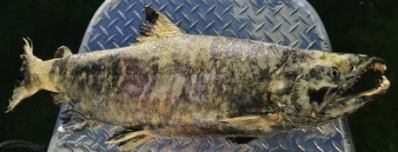
試料 名 Sample:
野生サーモン-シロザケ-メス
(フリーズドライ)
Wild Chum Salmon – female
(Freeze Dried)
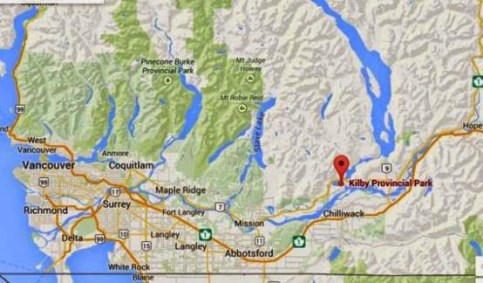
採取 場所 Origin: Kilby Park, BC Canada
採取年月 Sampling date: 2014 年11月30日 (November 30, 2014)
測定日時 Date Tested : 2015 年3月31 日 (March 31, 2015)
測定時間 Duration : 57,600 秒(seconds)

試料容器 Container: 500mLマリ ネリ容器(Marinelli)
試料重量 Sample weight: 144.2g
乾燥前 Before dehydration: 2010g → 700g

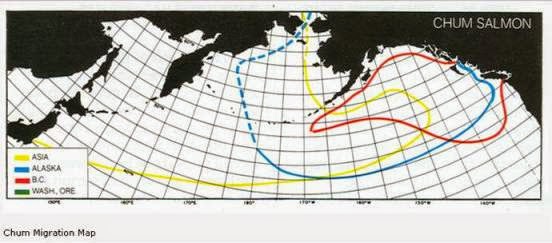
測定日時 Date Tested : 2015 年9月15 日 (September 15, 2015)
測定時間 Duration : 10時間 (10hours)
試料重量 Sample weight: 25g
Tested by Iwaki Radiation Measuring Center, Trachine with SL300/SLL – coordinated by Citizen Radioactivity Measuring Station, Shinjyuku-Yoyogi
新宿代々木市民測定所いわき放射能市民測定室たらちね
測定時間 Duration : 4時間 (4hours)
試料重量 Sample weight: 0.105g
Tested by Iwaki Radiation Measuring Center, Trachine with SL300/SLL – coordinated by Citizen Radioactivity Measuring Station, Shinjyuku-Yoyogi
新宿代々木市民測定所いわき放射能市民測定室たらちね
But it’s not telling you a whole story about contamination….
Neo-Nuclearism as a Cargo Cult
Forgetting Fukushima, Denying Dai-ichi
By James Heddle
“Everyone is entitled to their own opinion. But everyone is not entitled to their own facts.” – Sen. Daniel Patrick Moynahan
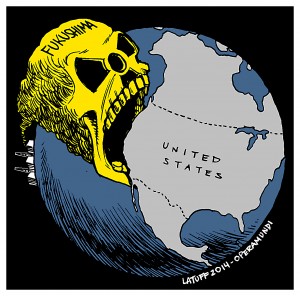
Fallout as Blowback
As the 5-year anniversary rolls around it’s clear to all who care to notice that the Fukushima triple meltdown nuclear disaster is still not ‘under control’ – as Prime Minister Abe claimed to the Olympic Committee in his successful bid to host the coming 2020 Games – but is still on-going, and will be far into the future.
That is to say, radioactive pollution will continue to pour into the oceanic, hemispheric and planetary environment with predictably negative, but unknown, effects on the health and DNA of all life forms in the biosphere.
There’s karmic irony here. The U.S. dropped the first atomic bombs on Japan, then used its political influence and propaganda prowess to sell the country nuclear power. Its corporations supplied the faulty reactors that melted down at Fukushima. Now, it is on the front line of receiving the fallout in the form of ongoing oceanic and atmospheric pollution carried eastward by winds and currents.
Faith-Based Nuclear Policy
Despite the obvious take-home lesson – i.e., that every nuclear facility, wherever its geographic location, constitutes a danger to the entire planet, and should be treated as such by the ‘international community’ – a New Nuclear Weapons race and a New Nuclear Power race are both currently in progress.
He began his presidency with the celebrated April 5, 2009 Prague Speech in which he stated “…clearly and with conviction America’s commitment to seek the peace and security of a world without nuclear weapons….” In practice Obama has embraced an ‘all of the above’ energy policy including heavy investments in new reactor construction and design development.
The recipient of an apparently aspirational Nobel Peace Prize has also committed a projected $1 trillion dollars over the coming decades to upgrading America’s nuclear weapons arsenal. https://www.revealnews.org/article/new-mexico-thrives-on-nuclear-bomb-despite-us-pledge-to-reduce-arsenal/
The program includes new ballistic missiles, a new manned bomber and a fleet of new missile-launching submarines. Termed – with no apparent sense of irony –‘the life-extension program,’ the plans clearly violate U.S. obligations under the Non-Proliferation Treaty (NPT).
In the domain of nuclear weaponry’s Siamese twin nuclear energy, there are those opinion-maker luminaries like James Hansen, James Lovelock, Stewart Brand, Bill Gates and George Monbiot who advocate for nuclear energy as a ‘carbon-free solution to climate change.’ Never mind that – as Stanford scientist Mark Jacobsen and his associates, as well as others, have conclusively shown – the entire nuclear fuel chain from mine to waste dump is more carbon intensive than wind and solar put together. Their work shows a transition to renewables is totally possible…without nuclear energy. http://thesolutionsproject.org/
The Atomic Church of the Last Gasp
Last week, alarmed at the failure of their repeated attempts to go through ‘proper channels,’ seven engineers at America’s Nuclear Regulatory Commission (NRC) – which President Obama himself has dubbed in 2007 ‘a moribund agency’ – filed a petition as private citizens. They stated that they have identified a long-undiscovered electrical flaw common to virtually all U.S. nuclear plants that could prevent cooling and allow a meltdown to occur. Their petition asks that the NRC mandate that plant operators either fix the problem or shut down the reactors. http://commondreams.org/views/2016/03/10/7-top-nrc-experts-break-ranks-warn-critical-danger-aging-nuke-plants
But the New Nuclearists avoid coming to terms with the risks and failures of the existing world fleet of aging, ill-designed reactors. They believe – without operational proof-of-concept – in a pie-in-the-sky, perpetually not-yet-but-soon-to-be-born generation of ‘new, small modular nuclear reactors (SMRs).’ They will consume and eliminate existing nuclear waste and be so ‘inherently safe’ you can bury them in your back yard. Any day now.
The blind faith with which latter-day nuclear advocates approach the issues of human, ecological and economic risk associated with nuclear technologies, reminds one of the Melanesian millenarian movement called ‘cargo cults,’ in which indigenous tribes, following charismatic figures, built wooden aircraft replicas on mountain tops in the vain hopes – despite repeated failures – to lure down the western cargo planes loaded with commodities they saw flying overhead.
Or, if the definition of ‘insanity’ is: ‘persisting in behavior which consistently fails,’ neo-nuclearism is clearly a form of collective insanity – atomic psychosis.
Recovering from Nuclear Delusion
The 20th century ‘nuclear dream’ of global full-spectrum dominance and energy too cheap to meter has become a 21st century nightmare. It is time to wake up. As retired top U.S. energy administrator S. David Freeman puts it in a recent interview, “We have to kill nuclear power before it kills us.” [Video interview here: https://www.youtube.com/watch?v=W1R4jc2wlGs
The facts of the failure of the nuclear dream are there, for any who are not blinded by ideology or self-interest to see: in addition to its history of totalitarianism, incompetence and global disasters, nuclear energy deployment is plagued by public opposition, investor disinterest, consistently mounting cost and schedule over-runs and dependence on dwindling water supplies. Energy consultant Amory Lovins sees nuclear energy “dying a slow death from an overdose of market forces.” Futurist Jeremy Rifkin agrees, “From a business perspective, its dead.”
Then there’s the energy-weapons-waste connection, the real ‘nuclear triad.’ Not only are nuclear energy and weapons production joined at the hip from birth, but they share a dysfunctional excretory system – of which more below.
Nine Realities of which Nuclear Millenarians Dare Not Speak
Those who advocate for nuclear energy as a response to climate change, or for new nuclear weapons in pursuit of ‘national security,’ must ignore or deny an overwhelming burden of facts from the history and legacy of these nuclear technologies so far.
Here are just a few:
Genocidal Impacts on Indigenous Peoples
• Uranium mining and the deadly radioactive wastes left behind continue to have devastating effects on Native Americans and Aboriginal Australians. In the U.S., thousands of abandoned open pit uranium mines contaminate drinking and irrigation water and the air breathed by tribes across the Great Planes and the Four Corners Area.
• Nuclear weapons testing has done lasting genetic and environmental damage to Pacific Islanders in the Marshall Islands and Polynesia.
Nuclear Disasters
The Guardian lists and ranks 33 serious incidents and accidents at nuclear power stations since the first one was recorded in 1952. Of those, six happened in the US, five in Japan and three apiece in the UK and Russia. That’s an average of nearly 5 per decade. http://www.theguardian.com/news/datablog/2011/mar/14/nuclear-power-plant-accidents-list-rank#data
But a report by Cornell University researchers Spencer Wheatley, Benjamin Sovacool, Didier Sornette entitled Of Disasters and Dragon Kings: A Statistical Analysis of Nuclear Power Incidents & Accidents has a database of 174 accidents worldwide since 1946.
They rate the accidents in 2013 dollars and define an accident as “an unintentional incident or event at a nuclear energy facility that led to either one death (or more) or at least $50,000 in property damage.”
They conclude
In fact, the damage of the largest event (Fukushima; March, 2011) is equal to 60 percent of the total damage of all 174 accidents in our database since 1946. In dollar losses we compute a 50% chance that (i) a Fukushima event (or larger) occurs in the next 50 years, (ii) a Chernobyl event (or larger) occurs in the next 27 years and (iii) a TMI event (or larger) occurs in the next 10 years. [emphasis added]
http://arxiv.org/abs/1504.02380
https://www.technologyreview.com/s/536886/the-chances-of-another-chernobyl-before-2050-50-say-safety-specialists/
US Nuclear Meltdowns
There have been 8 nuclear meltdowns so far in the U.S. Contrary to popular belief, the meltdown at Three Mile Island was not the worst. That dubious honor goes to the little-reported July 12, 1959 meltdown at the Santa Susana Field Laboratory located a couple of miles from the city of Simi Valley and only about 30 miles north of Los Angeles. The radioactive contamination of the surrounding communities and environment from that event have yet to be fully acknowledged or dealt with. One of the companies involved was Southern California Edison, the major owner of San Onofre.
Nuclear Weapons Incidents
As part of his research for his book on the nuclear arms race, Command and Control – Nuclear Weapons, the Damascus Accident, and the Illusion of Safety, Eric Schlosser used the Freedom of Information Act to discover that at least 700 “significant” accidents and incidents involving 1,250 nuclear weapons were recorded between 1950 and 1968 alone. The Business Insider has a useful interactive site based on Rudolph Herzog’s A Short History of Nuclear Folly on which you can track 32 nuclear weapons accidents since 1950. http://www.businessinsider.com/list-of-broken-arrow-nuclear-accidents-2013-5
In its Status of World Nuclear Forces, the Federation of American Scientists reports the existence of
approximately 15,350 warheads as of early-2016. Of these, more than 10,000 are in the military stockpiles (the rest are awaiting dismantlement), of which almost 4,200 warheads are deployed with operational forces, of which nearly 1,800 US, Russian, British and French warheads are on high alert, ready for use on short notice.
Approximately 93 percent of all nuclear warheads are owned by Russia and the United States who each have roughly 4,500-4,700 warheads in their military stockpiles. http://fas.org/issues/nuclear-weapons/status-world-nuclear-forces/
Former U.S. Sec. of Defense, William J. Perry says the situation is even worse:
“Today we still have over 20 thousand real world nuclear weapons. Enough to blow up everybody on the planet several times over. Those weapons pose the immediate problem of a danger of terrorism, the immediate problem of the possibility of nuclear war.
“The antagonism between Russia and the United States has reached a point now where I believe we are on the brink of a new nuclear arms race. It breaks my heart.
“Today, the danger of a nuclear catastrophe is actually higher than it was during the cold war. Let me say that again…”
http://www.planetarianperspectives.net/?p=2741
The Documented Human Death Toll From Chernobyl
In 2013, the book Chernobyl: Consequences of the Catastrophe for People and the Environment was published by the New York Academy of Sciences. Its lead author was the celebrated Russian biologist Dr. Alexey Yablokov, former environmental advisor to the Russian president.
Based on some 5,000 health data, radiological surveys and scientific reports in several languages, it concludes based on records now available, 985,000 people died, mainly of cancer, as a result of the 1986 Chernobyl accident between when the accident occurred and 2004. It projects that more deaths will continue follow.
It blows away the specious claim by the International Atomic Energy Agency – whose mission is to promote nuclear energy – that the expected death toll from the Chernobyl accident will be 4,000. The book shows that the IAEA is seriously under-estimating, in the extreme, the casualties of Chernobyl – good reason to doubt its pronouncements on Fukushima. http://www.globalresearch.ca/new-book-concludes-chernobyl-death-toll-985-000-mostly-from-cancer/20908
Health Impacts on U.S. Nuclear Workers
Irradiated, a December, 2015 McClatchy investigative report by Bob Hotakainen, Lindsay Wise, Frank Matt and Samantha Ehlinger, reveals that 70 years of U.S. atomic weaponry production has so far left at least 33,480 Americans dead, with more to come. http://media.mcclatchydc.com/static/features/irradiated/
A recent study by an international team of nine researchers looked at 308,297 workers in the nuclear industry from France, the United Kingdom, and the United States. Of 66,632 known deaths by the end of the study, 17,957 were due to solid cancers. The authors report “the risk per unit of radiation dose for cancer among radiation workers was similar to estimates derived from studies of Japanese atomic bomb survivors.” They conclude that their results “suggest a linear increase in the rate of cancer with increasing radiation exposure.” Translation: There is no ‘safe’ dose of nuclear radiation. http://www.bmj.com/content/351/bmj.h5359
Environmental & Biological Impacts of Nuclear Disasters
For years, evolutionary biologist Dr. Timothy Mousseau of the University of South Carolina, has been studying the impacts of both the Chernobyl and Fukushima disasters on animals and plants in the contaminated regions.
Studies published by Mousseau and Anders Møller of the Université Paris-Sud, and their collaborators detail the effects of ionizing radiation on pine trees and birds and small animals in the Chernobyl Exclusion Zone. “When you look for these effects, you find them,” says Mousseau.
He adds that, mirroring Chernobyl results, “A growing body of empirical results from studies of birds, monkeys, butterflies, and other insects suggests that some species have been significantly impacted by the radioactive releases related to the Fukushima disaster,” Read more at: http://phys.org/news/2014-08-biological-effects-fukushima-insects-animals.html#jCp
http://phys.org/news/2013-08-viewing-fukushima-cold-chernobyl.html#jCp
http://phys.org/news/2013-08-viewing-fukushima-cold-chernobyl.html#nRlv
https://www.youtube.com/watch?v=5xnj5QYBzLs
DNA and Genetic Damage from DU weapons
U.S. wars in Former Yugoslavia, Iraq, Afghanistan, and perhaps in other places as well, have seen the extensive use of so-called ‘depleted uranium’ ammunition -uranium armor penetrators. The super hard metal projectiles, fired from tanks and aircraft, can pierce the armor of tanks and combat vehicles, volatizing into deadly toxic particles that enter the bodies of all combatants and members of the surrounding populations. U.S. and NATO soldiers returning from the wars sicken and contaminate their loved ones. The populations forced to live in permanently contaminated former battle zones suffer chronic health problems and wide-spread genetic deformities that will be passed down through the generations.
http://www.bollyn.com/depleted-uranium/
https://stgvisie.home.xs4all.nl/PentagonPoison.html
Waste Storage From Here to Eternity
An Australian study estimates there are 390,000 tons of high-level nuclear waste in the world, and nearly 10 million cubic meters of intermediate-level waste — all of it produced from nuclear power generation. That amount is growing by approximately 10,000 tons annually. http://www.abc.net.au/news/2016-02-15/sa-nuclear-waste-dump-to-meet-‘global-need’-recommended/7167412
It is produced at every stage of the nuclear fuel chain, from uranium mining and enrichment, to reactor operation and the reprocessing of spent nuclear fuel.
Despite over seven decades of trying, no proven location or method of keeping the waste isolated from the environment has yet been found.
According to the Nuclear Energy Institute, by the middle of 2015, 30 countries worldwide were operating 438 nuclear reactors for electricity generation and 67 new nuclear plants were under construction in 15 countries. http://www.nei.org/Knowledge-Center/Nuclear-Statistics/World-Statistics
The inevitable decommissioning of the aging world reactor fleet will create huge amounts of radioactive wastes. Once they are closed down, most of the world’s nuclear sites will require monitoring and protection for centuries. Wherever and however it is eventually stored, most of the waste will remain hazardous for hundreds of thousands of years – longer than civilization has yet existed.
I rest my case.
Neo-Nuclearists are entitled to their own opinions…but not to their own facts.
-
Archives
- October 2026 (112)
- September 2026 (339)
- August 2026 (330)
- July 2026 (355)
- June 2026 (287)
- May 2026 (306)
- April 2026 (356)
- March 2026 (251)
- February 2026 (267)
- January 2026 (308)
- December 2025 (358)
- November 2025 (359)
-
Categories
- 1
- 1 NUCLEAR ISSUES
- business and costs
- climate change
- culture and arts
- ENERGY
- environment
- health
- history
- indigenous issues
- Legal
- marketing of nuclear
- media
- opposition to nuclear
- PERSONAL STORIES
- politics
- politics international
- Religion and ethics
- safety
- secrets,lies and civil liberties
- spinbuster
- technology
- Uranium
- wastes
- weapons and war
- Women
- 2 WORLD
- ACTION
- AFRICA
- Atrocities
- AUSTRALIA
- Christina's notes
- Christina's themes
- culture and arts
- Events
- Fuk 2022
- Fuk 2023
- Fukushima 2017
- Fukushima 2018
- fukushima 2019
- Fukushima 2020
- Fukushima 2021
- general
- global warming
- Humour (God we need it)
- Nuclear
- RARE EARTHS
- Reference
- resources – print
- Resources -audiovicual
- Weekly Newsletter
- World
- World Nuclear
- YouTube
-
RSS
Entries RSS
Comments RSS


