Editorial: Japan’s push to extend nuke reactor life past 40 yrs doesn’t add up

October 13, 2022 (Mainichi Japan)
The administration of Prime Minister Fumio Kishida has begun considering eliminating the “40-year rule,” or the principle that nuclear reactors should be decommissioned after four decades in service.
Japan’s Nuclear Regulation Authority (NRA), which is responsible for the law enforcing the 40-year principle, has given its blessing to this new policy. The Ministry of Economy, Trade and Industry, in charge of the stable supply of electricity, will now decide how a reactor’s operating life should be determined.
The 40-year rule was introduced after the meltdowns at Tokyo Electric Power Co. Holdings (TEPCO)’s Fukushima Daiichi Nuclear Power Station in March 2011. And since then, the idea that nuclear reactors will run for 40 years and no more has become firmly entrenched.
The rule was also Japan’s declaration that it was committed to moving away from nuclear dependence by decommissioning aging reactors one by one, reflecting upon the seriousness of the disaster.
A policy shift from the 40-year rule would require national consensus. It is unacceptable for the administration to leave legal revisions regarding safety up to the industry ministry — which spent decades promoting nuclear power — and essentially dictate a return to atomic power. It is also inconsistent with the government’s own Basic Energy Plan, which clearly states that Japan’s dependence on nuclear power will be reduced.
In August this year, Prime Minister Kishida abruptly announced a policy of building new nuclear power plants and restarting existing reactors. This was based on the belief that atomic power is indispensable for both a stable electricity supply and to decarbonize Japan’s energy system.
One obstacle to this is those existing reactors’ service time. Most of them have been in operation for 30 years, and should the 40-year rule be strictly applied, more than 10 reactors will have to be decommissioned by 2030.
The electricity sector and the industry ministry hope to extend those reactors’ operational life to save money, arguing that “40 years is just a guideline with no clear scientific basis.” However, data on accident risks at aging atomic power plants is limited. After the Fukushima Daiichi meltdowns, it was decided that 11 reactors in Japan would be decommissioned because it would cost too much to implement the safety measures needed to keep them running.
NRA head Shinsuke Yamanaka stated, “We will establish a system that enables strict regulation no matter what the operational life may be.” But is there enough knowhow, and a sufficiently robust review system, to maintain effective regulation?
Even if the rules are changed to allow nuclear reactors to stay online regardless of how long they’ve been in service, this does not guarantee that restarts will go smoothly. In addition to potential nuclear accidents, municipalities hosting the plants have deep-seated concerns about information disclosure and evacuating residents in case of a disaster.
What is needed is an energy policy that makes use of the lessons learned from Fukushima Daiichi. Forcing through political decisions without convincing the Japanese public will only stoke their distrust of nuclear power.
https://mainichi.jp/english/articles/20221013/p2a/00m/0op/009000c
Hong Kong to follow mainland China on regulations on Japanese imports if water from Fukushima nuclear disaster released into Pacific
Japan plans to release over 1.25 million tonnes of treated waste water contaminated by wrecked Fukushima Daiichi Nuclear Power Plant into Pacific
Since nuclear disaster, Hong Kong has prohibited imports of vegetables, fruits, milk, milk-based beverages and milk powder from Fukushima prefecture

11 Oct, 2022
If mainland China steps up regulations on food products imported from Japan when it releases treated water from Fukushima into the Pacific next year, Hong Kong will follow suit, the city’s environmental minister has said.
The remark made by Secretary of Environment and Ecology Tse Chin-wan on Tuesday referred to Tokyo’s plans, which were revealed last year, to release over 1.25 million tonnes of treated waste water contaminated by the wrecked Fukushima Daiichi Nuclear Power Plant into the Pacific in 2023.
Tse said at a Legislative Council panel meeting that, because marine pollution involved international relations, the administration had expressed its concerns to the foreign ministry’s Hong Kong office.

“We will carry out closer ties and communication with the mainland and see what the mainland will do politically in the future. In this regard, Hong Kong will definitely be politically consistent with the mainland,” he told lawmakers.
Tse said the Centre for Food Safety tested more than 760,000 food samples imported from Japan from March 2011 to December 2021. None exceeded the radiation guideline levels suggested by the Codex Alimentarius under the United Nations Food and Agriculture Organisation.
After the Japanese authorities announced the radioactive waste water discharge plan, the Hong Kong government requested more information and specific information from the country and paid close attention to the International Atomic Energy Agency’s assessment, he added.
Hong Kong prohibited the imports of all vegetables, fruit, milk, milk-based beverages and milk powder from the Fukushima prefecture after the 2011 nuclear disaster.
Food from four nearby prefectures – Ibaraki, Tochigi, Chiba and Gunma – is only given entry after obtaining a radiation certificate and an exporter’s certificate issued by the Japanese authorities.
The Centre for Food Safety has published a monthly report, which includes radiation surveillance data on products from Japan.
Government statistics have shown that food imports from Japan amounted to about 1.5 per cent of the total food supply in Hong Kong last year. Aquatic products and poultry eggs had the highest import volume, accounting for about 6.3 per cent and 9.7 per cent of the city’s total food imports respectively.
Tse said at the panel meeting that authorities would continue to communicate with local food importers to ensure the industry understood the plan and made preparations as soon as possible.
Tokyo announced in April last year that it intended to discharge the water used to cool the nuclear reactors at Fukushima nuclear power plant into the ocean after treatment in 2023, causing concern among neighbouring countries, including China and South Korea.
Environmental groups and fishery operators have also warned that the waste water discharge would compromise the region’s marine ecosystem, the food chain and food safety.
In Beijing, the Ministry of Foreign Affairs has raised grave concerns and strong opposition to the plan, urging Japanese authorities to consult stakeholders and relevant international organisations.
The Consulate-General of Japan in Hong Kong said it “strongly” hoped city authorities could lift the import restriction on food products from the country since all the samples sent for inspection had proved safe for consumption.
“Japan has been taking measures strictly abiding by relevant international law and working closely with [the International Atomic Energy Agency] to give due consideration to international practice, and will continue to do so,” a spokesman said.
“Food safety for Japanese food lovers in Hong Kong is as important to the Japanese government as food safety for the Japanese people … We will also continue to explain to Hong Kong, based on a scientific manner, that the safety of Japanese food products is ensured.”
Japan: Support for those displaced by Fukushima nuclear disaster must be unconditional, says UN expert

GENEVA (10 October 2022) – A UN expert has urged the Japanese government to give unqualified, human rights and needs-based support to the more than 30,000 people still displaced 11 years after the Fukushima Daiichi nuclear disaster.That approach must also apply to reconstruction in affected areas.
“Many displaced persons are unable or unwilling to return to their areas of origin due to lingering fears regarding radiation levels, or concerns about access to basic services including education, healthcare, and jobs in these areas,” said Cecilia Jiménez-Damary, UN Special Rapporteur on the human rights of internally displaced persons (IDPs).
The expert emphasised there could be no distinction made between IDPs – also known as “evacuees” in Japan – on the basis of whether their displacement was motivated by fear of the effects of the disaster or due to a mandatory evacuation order.
“Protection and assistance to IDPs must be provided on the basis of their human rights and their needs, and not on the basis of status-based categorisations, which have no justification under international human rights law,” Jiménez-Damary said in a statement presenting her preliminary observations from a 10-day visit to Japan.
“All IDPs have the same rights and entitlements as citizens of Japan, and the practice of allocating support based on whether IDPs are categorised as ‘mandatory’ or ‘voluntary’ must end.”
Since the 2011 disaster, IDPs have faced challenges in accessing basic rights, including housing, health, livelihood, participation, and education for children. “To enable durable solutions, conditions must be in place to ensure their right to an adequate standard of living including housing, access to employment and livelihoods, and effective remedy for displacement-related rights violations, including in places of origin to which they are being asked to return,” the Special Rapporteur said.
Accurate information was essential for the evacuees to make informed decisions on whether to return or settle elsewhere. It was also critical to ensure their right to freely choose the most appropriate durable solution is not impeded by policies that make assistance conditional on return.
“For IDPs who remain in evacuation, there should be continued basic support, especially provision of housing assistance to the most vulnerable households and support for all IDPs achieve sustainable livelihoods,” the Special Rapporteur said.
She urged authorities to adopt an area-based approach to the reconstruction of Fukushima Prefecture covering the needs and rights of both IDPs and remaining residents. “To rebuild social cohesion, it is essential that both IDPs and the current residents of Fukushima Prefecture engage in dialogue and are provided with full information and are able to freely participate in decisions related to reconstruction,” the expert said.
The Special Rapporteur visited Tokyo and the prefectures of Fukushima, Kyoto, and Hiroshima and met with executive and legislative officials, civil society organisations, lawyers, and academic researchers. She also heard from internally displaced persons and communities affected by the nuclear disaster.
A comprehensive report on the Special Rapporteur’s visit will be presented to the Human Rights Council in June 2023.
ENDS
Ms. Cecilia Jimenez-Damary was appointed Special Rapporteur on the human rights of internally displaced persons by the United Nations Human Rights Council in September 2016. A human rights lawyer specialized in forced displacement and migration, she has over three decades of experience in NGO human rights advocacy. Her mandate, which covers all countries, has been recently renewed by resolution 50/6 of the Human Rights Council.
As a Special Rapporteur, she is part of what is known as the Special Procedures of the Human Rights Council. Special Procedures, the largest body of independent experts in the UN Human Rights system, is the general name of the Council’s independent fact-finding and monitoring mechanisms that address either specific country situations or thematic issues in all parts of the world. Special Procedures’ experts work on a voluntary basis; they are not UN staff and do not receive a salary for their work. They are independent from any government or organization and serve in their individual capacity.
Read the UN Guiding Principles on Internal Displacement
UN Human Rights country page: Japan
[Nuclear Waste] Two Years After Applying for the Literature Review, the Divide Remains Unresolved in Suttsu Town, Hokkaido, Japan

High-level radioactive waste, or “nuclear waste.
Two years have passed since the town of Suttsu, Hokkaido, applied to participate in a study for the construction of a final repository for this waste.
The first phase of the literature review has reached its climax, but the focus is on whether or not to proceed to the next phase of the survey.
We covered the current situation in Machi.
Salmon landings are at their peak in Sutou Town.
Strong winds blow all year round.
In the fall of last year, when the wind began to turn cold, the town attracted nationwide attention.
(Mayor Kataoka said, “I want to put this nuclear waste on the table.
Mayor Haruo Kataoka decided to apply, so to speak, on his own initiative to the national government’s survey for the construction of a final disposal site for nuclear waste from nuclear power plants.
Nuclear waste has no place to go and cannot even be touched by humans.
After it is mixed with glass and hardened, it is buried in a stratum deeper than 300 meters underground.
It will take 100,000 years for the waste to reach a safe state.
However, for each of the three levels of investigation accepted, the municipality is given a large subsidy.
This was Mayor Kataoka’s goal.
(Mayor Kataoka said, “I heard about this in a study group on the final disposal of nuclear power plants, and I thought it was a pretty tasty grant.
The grant obtained from the literature review was 1.85 billion yen over two years.
Part of the grant is used for personnel expenses for nursery staff, and the rest is set aside as a fund.
For a small town, this is a valuable financial resource.
Kazuyuki Tsuchiya runs a pension in the town.
He has consistently opposed the survey.
(Kazuyuki Tsuchiya) “The gap between those in favor and those opposed is deepening. Those who are in favor of the project have talked to me.
I try not to mention it as much as possible. I try not to mention it.”
The literature survey will soon reach the two-year mark, with the pros and cons remaining divided.
However, with the exception of Kamieuchi Village, where the survey is also underway, no local government has raised its hand.
In the town of Sutto, a referendum will be held to decide whether or not to conduct the next survey, but Mayor Kataoka has not found the right time to do so.
(Mayor Kataoka (last month): “The residents are still anxious. They are anxious in the absence of knowledge.
I frankly feel that things are not progressing very smoothly.
(Mr. Kazuyuki Tsuchiya) “I think that those who are complying with the town’s way of doing things have stopped thinking about it.
(Is the future bright?
(Kazuyuki Tsuchiya) “It is not bright. The darkness is getting deeper and deeper.
There is an expert at Hokkaido University who has been advising NUMO, which is conducting the survey, for many years.
(Professor Tsutomu Sato, Hokkaido University Graduate School) “The literature survey has already started, and I have given advice before that.
The next time the overview survey starts, I will advise them on how they should proceed in this way.”
Discussions with local residents have not progressed well in the town of Sutou.
Professor Sato points out that the reason for this is also on NUMO’s side.
(Professor Tsutomu Sato, Hokkaido University Graduate School) “Right now, NUMO is investigating what they want to investigate for their own purposes.
They may want to know why we can get good oysters here, or why it may have something to do with geology or geological strata.
It is difficult to say whether the research is being conducted in such a way that the residents would want to know about it.
The purpose of a literature review is to compile information for a dialogue that is beneficial to both parties.
If we can do that well, I think we can overcome the hurdle of the literature review.
The debate over nuclear waste has created a deep divide within the town.
Concrete solutions to bridge that divide remain shrouded in darkness.
https://www.stv.jp/news/stvnews/cs3pdu00000022ym.html?fbclid=IwAR3ShIsHhdE6kSOtkO5grcv1gxg2Dbs-PKkbnX8vB1LKocXNYtFZ2qow7XA
Japan’s TEPCO ‘exaggerates’ nuclear wastewater safety with faulty dosimeter

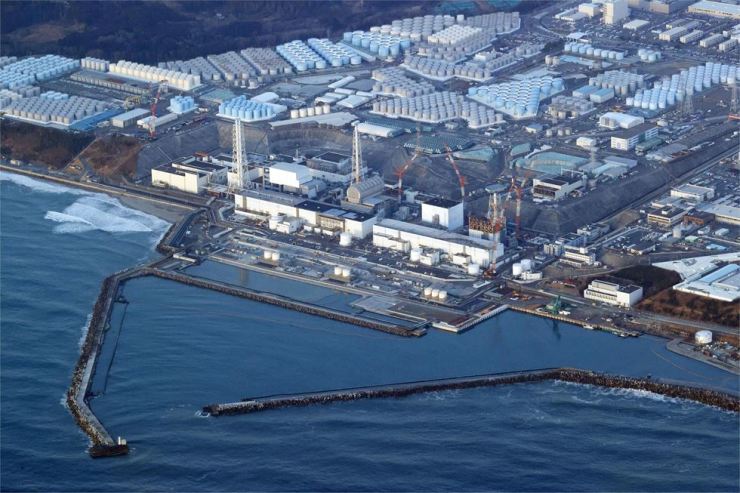
The Fukushima Daiichi nuclear power plant run by TEPCO, Okuma town, northeastern Japan, March 3, 2022
October 9, 2022
The Tokyo Electric Power Company Holdings Inc. (TEPCO) has been exaggerating the safety of treated nuclear wastewater with a dosimeter that fails to detect certain radioactive substances at Japan’s Fukushima Daiichi nuclear power plant, local media has reported.
When demonstrating the safety of treated nuclear wastewater, the company uses a dosimeter that fails to detect radioactive tritium, but only responds to high-concentration cesium emitted by gamma rays, the Tokyo Shimbun reported.
During tours at the plant, TEPCO staff put a dosimeter that detects only gamma rays near a bottle containing treated water, as a demonstration that the treated water is safe, according to the newspaper.
However, the water contained tritium which is about 15 times the amount of the release standard, it reported.
The gamma rays, which may affect the human body due to external exposure, are generated by the radioactive cesium contained in the radiation-tainted water.
Katsumi Shozugawa, assistant professor at the University of Tokyo, said the demonstration was “meaningless scientifically,” noting that even when the amount of cesium in the sample water is dozens of times higher than the release standard, it can not be detected, as the equipment would only respond to gamma rays emitted by highly concentrated cesium.
According to a plan released by TEPCO, nuclear wastewater from cooling core meltdowns of reactors at the Fukushima Daiichi nuclear plant should be treated at least twice before it is discharged into the sea, with the treated water containing tritium that emits weak beta rays. Tritium can not be removed by TEPCO’s treatment facilities.
TEPCO said the demonstration had been shown to about 1,300 organizations and 15,000 visitors since July 2020.
The company claimed that the purpose of the demonstration is to explain that the gamma rays emitted by the treated wastewater are reduced, and admitted that the tritium emitting beta rays exceeds the standard amount, said the newspaper.
Struck by a magnitude-9.0 earthquake and ensuing tsunami that hit Japan’s northeast on March 11, 2011, the No. 1-3 reactors at the Fukushima Daiichi nuclear plant suffered core meltdowns, resulting in a level-7 nuclear accident, the highest on the International Nuclear and Radiological Event Scale.
The plant has been generating a massive amount of radiation-tainted water since the accident happened. TEPCO started construction of facilities that will dump nuclear wastewater into the sea.
Korea urges int’l discussions on Japan’s Fukushima plan at London Convention
October 8, 2022
Korea urged the international community to discuss Japan’s plan to discharge radioactive water from its crippled Fukushima nuclear power plant into the ocean at this week’s international maritime gathering, the oceans ministry said Saturday.
The Fukushima nuclear power plant meltdown in 2011 has spread heavy safety concerns among nearby countries.
The Korean Ministry of Oceans and Fisheries said Tokyo’s disposal of radioactive water may have a serious impact on the health, safety and ecosystem of neighboring nations, during the weeklong 44th London Convention and the 17th London Protocol that ended Friday.
The Korean government has brought the Fukushima discharge agenda to London since 2019.
Japan has refuted Seoul’s call, claiming the discharge of radioactive water from nuclear power plants should not be seen as an act of marine dumping.
The London Convention promotes the effective control of all sources of marine pollution and takes steps to prevent marine pollution by human activities. Korea joined the convention in 1993.
The London Protocol calls for banning all dumping, with some exceptions. It has 53 signatories, including Korea which joined it in 2009.
Earlier in August, the United Nations-specialized International Marine Organization (IMO) decided that the Fukushima discharge agenda is appropriate to be discussed in London, with mutual agreement of the members involved.
At the IMO convention, the Korean oceans ministry said the members should discuss ways to safely dispose the contaminated water from the Fukushima power plant, actively exchange information and monitor the situation. (Yonhap)
https://www.koreatimes.co.kr/www/nation/2022/10/120_337530.html
UN expert says Japan should do more for Fukushima evacuees

October 8, 2022
TOKYO (AP) — A United Nations human rights expert urged Japan’s government on Friday to provide evacuees from the Fukushima nuclear plant disaster with more support, including housing, jobs and other needs, regardless of whether they fled forcibly or not.
Wrapping up an investigation of the evacuees’ human rights conditions, Cecilia Jimenez-Damary said Japan has adequate laws to protect internally displaced people. They include a nuclear disaster compensation law that requires the plant operator, Tokyo Electric Power Company Holdings, to cover damages, and other government-led revitalization and reconstruction programs. But she said they have not been effectively used to address the vulnerability of the evacuees.
“Those laws should not remain just laws on the books, but they should be implemented,” she said. “Unfortunately, because they are not fully implemented, to a certain extent, this explains the proliferation of litigation against TEPCO and the government.”
Three reactors at the Fukushima Daiichi nuclear plant melted after a massive earthquake and tsunami on March 11, 2011, knocked out cooling systems, releasing large amounts of radiation and displacing more than 160,000 people at one point. About 30,000 people remain displaced in and outside of Fukushima.
Thousands of people have filed about 30 lawsuits demanding compensation from both the government and TEPCO for the loss of livelihoods and communities because of the disaster. The Supreme Court in July dismissed four lawsuits, saying the government cannot be held liable because the damage from the tsunami that hit the plant could not have been prevented even if measures had been taken.
Jimenez-Damary said the evacuees have received unequal treatment depending on whether they were forced to leave no-go zones or left voluntarily. Voluntary evacuees are seen as having left unnecessarily and are excluded from TEPCO compensation and many other government support measures.
“The categorization of forced evacuees and voluntary evacuees, especially when it comes to receiving support and assistance, should therefore be dropped in practice,” she said, adding that the discrimination has “no justification under international law.”
She said she was very concerned about the termination in 2017 of housing support for voluntary evacuees in Fukushima that led to the prefectural government filing a lawsuit against people who remained in dorms for government employees despite an order to leave.
Jimenez-Damary, the U.N. special rapporteur on human rights of internally displaced persons, met with Japanese officials, experts, human rights organizations and evacuees in Tokyo, Fukushima, Kyoto and Hiroshima during her Sept. 26-Oct. 7 visit to Japan. Her preliminary report is expected early next week, followed by a full report to be issued in June 2023.
She acknowledged efforts by the central and local governments to address the vulnerabilities of evacuees, but said, “I would like to stress that there has to be an improvement.”
Jobless rates among working-age evacuees exceed 20%, substantially higher than the national average of 3%, she said.
Evacuations also broke up one-third of the families that often maintain two households. Mothers who evacuated with their children often became unemployed and separated from their husbands, who stayed behind and secured their jobs, Jimenez-Damary said in a statement released later Friday. Children are often stigmatized and bullied by their classmates, who consider them as unjust recipients of large sums of compensation or spreaders of radioactivity.
She raised concern about the government’s recent shift away from supporting evacuees toward coaxing them into returning to their hometowns after they reopen, or face the loss of their support.
Jimenez-Damary also noted “considerable concern about the continuing effect of radiation exposure, especially to children who are now young adults,” as well as other anxieties suffered by evacuees. She called for continuation of the prefecture-sponsored free thyroid screening to “enable continued monitoring of the issue and provide much needed data to see evolution of health risks over time, with a view to ensure focused treatment programs to those who are suffering.”
Seven people from Fukushima who were children at the time of the disaster and later developed thyroid cancer have filed a suit seeking a total of more than 600 million yen ($4 million) in compensation from TEPCO and the government.
More than 290 people have been diagnosed with or are suspected of having thyroid cancer from a survey of about 380,000 residents aged 18 or younger at the time of the disaster. The occurrence rate of 77 per 100,000 people is significantly higher than the usual 1-2 per million, their lawyers say.
Government officials and experts have said the high rate in Fukushima is due in many cases to overdiagnosis, which might have led to unnecessary treatment. Some even suggest scaling down of the checks.
U.N. expert urges Japan to aid the voluntarily displaced in Fukushima

October 8, 2022
The Japanese government should scrap distinctions between “mandatory” and “voluntary” evacuees from the 2011 Fukushima nuclear disaster and take a rights-based approach to ongoing support for those still displaced by its effects, a U.N. human rights expert said Friday.
Cecilia Jimenez-Damary, the U.N. special rapporteur on the human rights of internally displaced persons, made the calls as the government and Tokyo Electric Power Company Holdings Inc., the operator of the crippled Fukushima nuclear power plant, have been exposed to numerous lawsuits from voluntary evacuees and those who returned to their former communities.
The distinctions have had “particularly severe impacts on those in poverty, those with no livelihoods, the elderly and persons with disabilities,” Jimenez-Damary said at a press conference to announce the preliminary findings from her Sept. 26 to Oct. 7 official visit to Japan.
Japan distinguishes between evacuees depending on whether they are registered as residents in areas subject to evacuation directives due to being uninhabitable and people who chose to leave over radiation concerns.
Individuals from outside the specified zones and relocated following the disaster became ineligible for Fukushima prefectural government support from March 2017, a decision that met with protest.
A human rights lawyer with decades of experience, Jimenez-Damary told reporters that a desire to return did not define evacuees and described conversations she had with displaced people on her visit to Japan and elsewhere, saying, “When I ask if they want to return, they say yes, but when I ask can you return, they say we cannot.”
Since the disaster, the government has raised the safe annual limit of radiation exposure from 1 millisievert per year to 20, an amount said to especially present risks to vulnerable people, such as children and women of reproductive age.
In 2018, the United Nation’s then special rapporteur on hazardous substances, Baskut Tuncak, said it was “disappointing” that Japan had not returned the levels to what they consider acceptable despite recommendations by the organization in 2017. Jimenez-Damary renewed calls for its review in her preliminary statement.
Data from the Reconstruction Agency states that as of Aug. 1, around 32,000 internally displaced people are living in 878 municipalities across Japan’s 47 prefectures, down 2,841 people from the totals recorded on April 8 this year. At its peak, around 470,000 were displaced in the wake of the disaster.
Jimenez-Damary said the issue “needs to be resolved because it is not clear how many are in evacuation” when asked whether the government’s estimate of the number of internally displaced people reflects the reality. The human rights expert added that she is “definitely recommending” that evacuees be heard by the government.
The findings from Jimenez-Damary’s visit to Japan, which brought her into contact with governments, support organizations and displaced people, will be presented to the U.N. Human Rights Council in Geneva in June 2023.
Extending legal life of nuclear reactors places safety at risk

October 7, 2022
The industry ministry’s plan to allow extending the operational life span of nuclear reactors beyond 40 years raises concerns about ensuring the safety of aging reactors.
The cap was a rule established under a bipartisan agreement reached through Diet debate that focused on the bitter lessons learned from the accident at the Fukushima No. 1 nuclear power plant in 2011. It must not be casually changed after only 10 years.
The Ministry of Economy, Trade and Industry has started considering revisions to related laws to stretch the life span of reactors, which is set at 40 years, in principle.
Prime Minister Fumio Kishida, who is keen to expand the use of nuclear power, instructed the ministry in August to consider necessary steps for extending the life span, along with other measures, such as restarting more idled reactors and building new types of reactors.
The 40-year rule is one of the key elements of the new stricter safety standards introduced after the Fukushima disaster. This has also played an important role for gradually lowering the nation’s dependence on atomic energy by requiring older reactors to be mothballed.
The METI and the power industry claim extending reactor operations would help ensure stable energy supplies. They stress that the 40-year cap is not strictly a question of the technical life of the plant based on hard science.
Their arguments are deeply flawed and flimsy. They raise many questions from the standpoints of both the nation’s energy strategy and safety regulations.
To be sure, Russia’s invasion of Ukraine has caused fossil fuel prices to soar, provoking anxiety about short-term power supplies. But changing the 40-year rule would not lead to an immediate increase in the number of operational reactors.
However, the step would put the nation on course to remain heavily dependent on nuclear power for the long term.
That is not the way for a nation that has yet to have a viable plan for the final disposal of radioactive waste from nuclear plants and is highly prone to natural disasters to try to secure the long-term stability of energy supplies.
The proposed extension could also lead to a radical change in a basic safety principle. The core guiding principle for nuclear power policy established after the Fukushima triple meltdowns requires a separation between promotion and regulation.
The actions of the METI, a champion of nuclear power promotion, to lead a policy initiative to change nuclear safety rules is tantamount to bringing the safety regime back to the pre-Fukushima era.
The stance of the Nuclear Regulation Authority (NRA), the nuclear safety watchdog, is also baffling.
The NRA did not take exception to the METI’s plan. It said it is not in a position to comment on whether an extension of the life span of reactors should be allowed because it is a policy decision concerning the way nuclear power is used.
Although the NRA insists that it will rigorously scrutinize and assess the safety of aging reactors individually, it is doubtful whether the regulator will be able to confirm their safety.
Limiting the life of reactors is closely linked to ensuring safety.
During the 2012 Diet deliberations on the legal revisions to set the 40-year rule, the minister in charge of nuclear power policy cited the estimated useful life of equipment used as a key factor behind the 40-year limit.
If the NRA fails to discuss the validity of the 40-year rule based on technical evaluations and simply endorses the proposal as a policy decision concerning the use of nuclear power, it is neglecting its duty as an independent regulatory entity.
Such a sneaky change in the rules will chip away at the effectiveness of the nuclear safety regulations. Both the METI and the NRA should change their stances toward the issue.
Japanese rally against Fukushima nuclear wastewater discharge
6 oct. 2022
Many #japanese gathered at the offices of #tokyo Electric Power Company to protest the plan to discharge nuclear wastewater into the Pacific Ocean on Wednesday. More than 11 years after the #fukushima nuclear disaster, radioactive waste processing and nuclear-contaminated wastewater treatment are almost at a standstill. In April 2021, the Japanese government decided to discharge the nuclear-contaminated wastewater into the Pacific Ocean, beginning in the spring of 2023.
Rival parties call for govt. response to Japan’s Fukushima water release plan

Oct 6, 2022
Rival parties on Thursday called on the government to come up with measures to respond to Japan’s plan to discharge radioactive water from its crippled Fukushima nuclear power plant into the sea starting next year.
The ruling People Power Party (PPP) and the main opposition Democratic Party (DP) voiced concerns over the plan in unison during an annual parliamentary audit session on the Ministry of Oceans and Fisheries, calling it a “matter of people’s safety.”
In July, Japan’s nuclear regulator, the Nuclear Regulation Authority, formally approved the plan to discharge the radioactive waste water stored in tanks at the Fukushima Daiichi Nuclear Power Plant into the Pacific Ocean. More than 1.2 million tons of tritium-laced water is expected to be released starting in spring next year.
“The government should work to resolve the Fukushima water release issue with all possible measures,” Rep. So Byung-hoon, head of the parliamentary oceans committee, said, adding “the golden time is almost over.”
DP Rep. Wi Seong-gon urged the government to have a clearer position on the matter, saying “uncertain” and “unsafe” substances from the polluted water can be contained in food South Korean people eat and damage the country’s marine environment.
PPP Rep. Choi Chun-sik pointed out the oceans ministry lacks data and reports on Japan’s plan.
Oceans Minister Cho Seung-hwan told the lawmakers his ministry is considering whether to petition an international court over Tokyo’s decision, and the foreign ministry is also looking into the expected damage from the water release with international law experts and scientists. (Ypnhap)
Scientific or Unscientific: Divided Views on the Effects of Radiation Exposure from the Nuclear Power Plant Accident


October 6, 2022
Last March, the United Nations Scientific Committee on the Effects of Atomic Radiation, a group of scientists from Europe, the United States, Japan, and other countries, released a report stating that the high incidence of thyroid cancer among young people in Fukushima Prefecture was not caused by exposure to radiation from the nuclear accident, but by highly sensitive testing. Researchers in Japan disagree with this report. They say that the report, which is supposed to be scientific, is based on “unscientific” analysis. What are the contents of the report?
In July, the Scientific Committee held a dialogue meeting in Iwaki City, Fukushima Prefecture, regarding the “2020/21 Report,” which was released last March. Gillian Haas, former chairperson of the committee, proudly stated, “This report is a reliable, independent, and up-to-date assessment.
The report aims to “provide a more realistic assessment of radiation doses” than the 13th edition, which was released in 2002. The report took into account Japan’s unique dietary habits and other factors, and revised the estimates of radiation doses from eating contaminated food and other factors.
For example, the coefficient for estimating radiation doses has been reduced to half that used in the 2001 edition, based on the assumption that kelp, which is traditionally consumed by Japanese people, contains high levels of stable iodine and is therefore unlikely to contain radioactive iodine, which can cause thyroid cancer. The radiation dose from food during the evacuation was revised to be “negligible,” and the effect of the evacuation of people indoors on reducing radiation exposure was estimated to be higher than in the 13th edition.
As a result, the average radiation doses to the thyroid gland during the first year after the accident ranged from 1.2 to 30 millisieverts for one-year-olds in the prefecture and from 1 to 22 millisieverts for ten-year-olds, with the lowest values being about one-tenth of those in the 13th edition. Mr. Haas said at the dialogue meeting, “Overall, the radiation doses are extremely low. The possibility of an increase in cancer incidence in susceptible infants and children is not discernible,” he stressed.
Since the nuclear accident, more than 300 people in the prefecture have been diagnosed with thyroid cancer or suspected cancer. This is a high incidence compared to the usual rate of 1 to 2 per million people. The report concluded that it is highly likely that the thyroid cancer was detected by highly sensitive ultrasound screening.
◇ ◇A group of researchers in Japan
A group of researchers in Japan has voiced doubts about the contents of the report.
At an online press conference held at the end of August, Tadashi Motoyuki, professor emeritus of radiobiology at Osaka University, criticized the report, saying that it “drastically underestimates [radiation doses] by using the minimum or lower values that can be estimated for various factors related to radiation exposure.
Motoyuki first pointed out the problem of the “kelp effect,” which led to the lowering of radiation doses in the 2008/21 edition.
The report cited as supporting data a study of only 15 people 55 years ago, which “is not helpful at all,” Motoyuki said. Due to changes in dietary habits, the most recent iodine intake of Japanese people cannot be said to be higher than the world standard, and the assessment is not based on facts, he said.
As for exposure to radiation from food during the evacuation, it is clear that contaminated vegetables and other products were on the market immediately after the accident, and Motoyuki points out that this goes against the precautionary principle of adopting maximum values for uncertain items.
The overdiagnosis theory, which was cited in the report as the cause of the high incidence of cancer, is also viewed with suspicion, as it “has not been scientifically verified at all” (Professor Toshihide Tsuda of Okayama University).
At a press conference in early August, Dr. Yasuyuki Taneichi, a physician, explained that in Fukushima Prefecture, the size of thyroid cancer tumors is inspected based on strict standards to prevent overdiagnosis. In particular, he said that nodules smaller than 5 mm are not scrutinized closely, and that this does not constitute overdiagnosis, which he said detects small, non-life-threatening cancers.
He also introduced a report that the use of highly sensitive equipment has reduced the number of cases that lead to surgery, as the detailed morphology of the cancer can now be determined. The report criticized the use of highly sensitive instruments, saying that they prevent overdiagnosis and that the report says the opposite.
The Scientific Committee refrained from giving a detailed response to these points. Former Chairman Haas said during the interactive meeting that the report is a robust document and that its findings will not change in the future. (Tetsuya Kasai, Keitaro Fukuchi)
◇ ◇ ◇
The United Nations Scientific Committee on the Effects of Atomic Radiation (UNSCEAR) was established in 1955, and as of June of this year, 31 countries, including Europe, the United States, and Japan, are members. UNSCEAR’s role is to review papers and other information and compile scientific evidence on the effects of radiation exposure on human health. After the accident at the Fukushima Daiichi Nuclear Power Plant, the Japanese government supported the preparation of the report to “dispel excessive anxiety about the effects of radiation,” contributing 71 million yen in FY13 and 70 million yen in FY17. The government has also used the report and other documents to deny any health damage caused by exposure to radiation in Fukushima.
https://www.asahi.com/articles/ASQB57VYKQ9GUGTB005.html?fbclid=IwAR3BN6Y8JaPJNlyIUPGeOub7OwQvaW9kPy6evxYvVV2ZX58fweZpoabGVZ4
Japanese activists protest the discharge of nuclear waste water

October 6, 2022
Activists gathered outside the Tokyo Electric Power Company Holdings (TEPCO), protesting the decision to proceed with the plan of discharging nuclear wastewater from the wrecked Fukushima Daiichi nuclear power plant into the sea.
The Japanese government said on April 23 last year that they would discharge over one million tons of contaminated water into the Pacific Ocean starting in the spring of 2023.
Protesters of the decision held banners demanding TEPCO to take responsibility for the core meltdown accident at the Fukushima Daiichi nuclear plant in 2011 and compensate victims. The activists also called on withdrawing the nuclear water dumping plan.
Activists say that tritium is easily soluble in water and will enter the human body once discharged into the sea, expressing their concerns over contamination of fish and seaweed, causing harm to citizens.
Waves of public anger and serious concerns over sea pollution have been triggered in and outside Japan. TEPCO’s statement that declares nuclear-contaminated water safe after dilution is met with large-scale skepticism.
Although the Japanese government lifted evacuation orders for all areas in Fukushima Prefecture in August, very few people have applied to return home. The citizens from the area expressed their distrust in TEPCO and the government for modifying safety standards with what they felt to be arbitrary.
Struck by a magnitude 9.0 earthquake and ensuing tsunami that hit Japan’s northeast on March 11, 2011, the No. 1-3 reactors at the Fukushima Daiichi nuclear plant suffered core meltdowns, resulting in a level-7 nuclear accident, the highest on the International Nuclear and Radiological Event Scale.
The nuclear-contaminated waste water accumulated in the plant had exceeded 1.3 million tons so far, while the government and TEPCO’s solution is deeply disturbing to residents.
https://tvpworld.com/63763346/japanese-activists-protest-the-discharge-of-nuclear-waste-water
Japan set to extend maximum lifespan of nuclear plants beyond 60 yrs
Nuclear I love you forever. Despite of the still ongoing Fukushima nuclear disaster, the Japanese government is still in love with nuclear….

Oct 5, 2022
The head of Japan’s nuclear regulator said Wednesday a rule that limits the operating life of nuclear power plants to a maximum of 60 years is expected to be removed from the country’s regulations.
The possible change is in line with Prime Minister Fumio Kishida’s goal of extending the lifespan to reduce carbon emissions and provide a stable electricity supply. Still, public concern over the safety of nuclear facilities is deep-seated in Japan following the 2011 Fukushima disaster.
“We can assure you that strict regulations will never be compromised,” Shinsuke Yamanaka, chairman of the Nuclear Regulation Authority, said at a press conference.
Following the nuclear crisis triggered by a massive earthquake and tsunami, Japan introduced stringent safety standards limiting nuclear reactors’ service period to 40 years in principle.
However, that period can be extended once by 20 years if safety upgrades are made and a reactor passes the regulation authority’s screening.
The Ministry of Economy, Trade and Industry said Wednesday it would determine the plants’ operational service per a regulation under its jurisdiction, and its plan was approved by the regulatory body.
The NRA plans to create a system to ensure each aging nuclear power plant’s safety.
TEPCO overstates safety of treated water with dosimeter that cannot detect tritium during inspection tour of Fukushima Daiichi Nuclear Power Plant

October 3, 2022
The treated water is highly contaminated water from the cooling of nuclear fuel melted down in the reactor that has been decontaminated at least twice to basically contain only tritium, which emits weak beta radiation. Tritium cannot be removed even by decontamination equipment.
During the inspection tour, a dosimeter that detects only gamma rays was applied to a bottle containing treated water, which contains about 15 times the standard level of tritium for release, to show that there was no reaction. According to TEPCO, it has been shown to about 1,300 groups and 15,000 people since July 2020. This paper received an explanation during an interview on March 14, 2008.
The person in charge explained that, among the radioactive materials contained in the highly contaminated water in the buildings, cesium and other materials that emit gamma rays have been removed, and that the treated water is equivalent to the radiation level of the surrounding area. However, as long as they did not use a measuring instrument for beta radiation, it can only be said that “cesium is not contained in high enough concentration to react with dosimeters.
Tetsuji Imanaka, a former researcher at the Compound Nuclear Science Institute of Kyoto University, said, “The energy of tritium is weak. Even if you soak tritium in filter paper and apply a beta-ray detector to it, it will not react unless the concentration is much higher,” said Tetsuji Imanaka, a former researcher at the Kyoto Combined Research Institute for Nuclear Science. Katsumi Azukawa, assistant professor of environmental analytical chemistry in the graduate school of the University of Tokyo, said, “Scientifically, it is completely meaningless. Gamma rays of cesium must be several thousand becquerels per liter for the dosimeter to react. Even if the cesium content is several dozen times the emission standard (90 becquerels per liter), it still gives the impression that there is no cesium.
TEPCO told us, “The purpose of the demonstration is to explain that gamma rays that affect the human body due to external exposure have been reduced. The demonstration also explains that tritium, which emits beta rays, exceeds the emission threshold. As for how the demonstration should be, he only stated, “We will work on it while devising various ways.
◆Commentary: Are they really willing to gain understanding of treated water?
TEPCO used a dosimeter that cannot detect tritium, a radioactive substance, in a demonstration to promote the safety of treated water at the Fukushima Daiichi Nuclear Power Plant. TEPCO had previously caused problems by giving unscientific demonstrations for the mass media. TEPCO’s attitude of continuing to show the same demonstration to many observers makes one wonder if they are really interested in gaining understanding of treated water.
As experts have pointed out, TEPCO’s demonstration does not provide any verification of beta or gamma radiation. To confirm this, the reporter applied a dosimeter of the same model as that used in the demonstration to water containing about 19 times the level of radioactive cesium that is the standard for emissions, but there was no reaction.
Nevertheless, if the safety of the treated water was emphasized in this manner, it could be perceived as “manipulation of impressions” or “lies. A woman from Minamisoma City, Fukushima Prefecture, who was shown the demonstration during a recent public inspection tour, told this newspaper, “My distrust of TEPCO has grown stronger again.
TEPCO has made efforts to reduce the risk of contaminated water at the Fukushima Daiichi Nuclear Power Plant by building durable welded tanks to prevent a recurrence of leakage accidents and by storing water using current technology. The shortest way to gain the public’s understanding of the treated water is to show that they are continuing their efforts in an honest manner at the site. (Takeshi Yamakawa)
https://www.tokyo-np.co.jp/article/206024?fbclid=IwAR2ZO9iKCa2vg_g9UCQSaPawnq9P_pZsnt6pOCuM–Bh7qMbD_rl_OqwFNk
1 This Month

Petition to revoke the licensing of the Near Surface Nuclear Disposal Facility (NSDF) at Chalk River. https://www.ourcommons.ca/petitions/en/Petition/Details?Petition=e-7247


of the week – STOP SMALL MODULAR REACTORS IN CANADA
To see nuclear-related stories in greater depth and intensity – go to https://nuclearinformation.wordpress.com
-
Archives
- March 2026 (153)
- February 2026 (268)
- January 2026 (308)
- December 2025 (358)
- November 2025 (359)
- October 2025 (376)
- September 2025 (258)
- August 2025 (319)
- July 2025 (230)
- June 2025 (348)
- May 2025 (261)
- April 2025 (305)
-
Categories
- 1
- 1 NUCLEAR ISSUES
- business and costs
- climate change
- culture and arts
- ENERGY
- environment
- health
- history
- indigenous issues
- Legal
- marketing of nuclear
- media
- opposition to nuclear
- PERSONAL STORIES
- politics
- politics international
- Religion and ethics
- safety
- secrets,lies and civil liberties
- spinbuster
- technology
- Uranium
- wastes
- weapons and war
- Women
- 2 WORLD
- ACTION
- AFRICA
- Atrocities
- AUSTRALIA
- Christina's notes
- Christina's themes
- culture and arts
- Events
- Fuk 2022
- Fuk 2023
- Fukushima 2017
- Fukushima 2018
- fukushima 2019
- Fukushima 2020
- Fukushima 2021
- general
- global warming
- Humour (God we need it)
- Nuclear
- RARE EARTHS
- Reference
- resources – print
- Resources -audiovicual
- Weekly Newsletter
- World
- World Nuclear
- YouTube
-
RSS
Entries RSS
Comments RSS
 nuclear-news