July 23, 2018
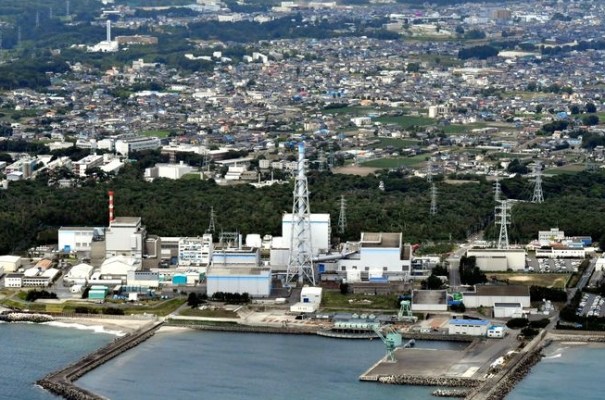
TEPCO’s most recent update on the decommissioning work at Fukushima Daiichi included an update on the movement and storage of the spent fuel on site.
Currently dry cask storage only has space for 50 spent fuel casks. According to TEPCO’s documentation 58 fuel assemblies can be placed into each storage cask.
There are currently 13137 spent and unused fuel assemblies on site that require removal to long term storage. This would indicate that 227 casks and storage locations will be needed to handle all of the on site fuel assemblies.
Those 50 cask slots can hold a total of 2930 fuel assemblies. 10207 fuel assemblies remain in need of a long term storage location.
Currently the cask storage has 33 of the 50 cask slots occupied, this leaves space for 17 more casks. TEPCO has not provided any specific plan for adding additional spent fuel storage on site beyond the current 50 cask storage unit.
The common pool on site has been used as a way point for spent fuel before being sent to dry cask storage. It is currently at 93.9% of capacity.
Some of unit 4’s spent fuel was sent to unit 6’s spent fuel pool for storage due to space constraints. Currently unit 4 is the only reactor to have the spent fuel stored there removed to a safer location.
Unit 3 is the next to begin offloading spent fuel. It has 566 assemblies, 148 more than the available room in the common pool. Dry storage has enough space to accept a few more casks from the common pool. Once unit 3 is offloaded, storage will be tight.
Dry cask storage can be used for long term storage but this is not a permanent solution. Most dry casks have a life span of 20 years before the cask gaskets are no longer considered viable. This requires fuel to be moved to permanent storage or the fuel would need to be transferred to a new cask. A fuel transfer can only take place in a spent fuel pool or similar facility to provide the needed shielding and radiation control for the work. Japan currently has no permanent nuclear repository.
This does not include storage of any melted fuel debris from the damaged reactors.
August 1, 2018
Posted by dunrenard |
Fukushima 2018 | Fukushima Daiichi, Long term storage, Spent Fuel |
Leave a comment
TOKYO (Kyodo) — The Japan Coast Guard will deploy two large patrol vessels to areas of the Sea of Japan to reinforce protection of nuclear power plants against terrorism, sources familiar with the matter said Saturday.
Two new 1,500-ton vessels with helipads will be deployed between fiscal 2019 and 2020 to the coast guard’s Tsuruga office in Fukui Prefecture where several nuclear plants are located, according to the sources.
Patrol boats of similar size, each costing about 6 billion yen ($54 million), will be introduced in other parts of the country in the future, they said.
The government is moving to strengthen counterterrorism measures in the run-up to the 2020 Tokyo Olympics and Paralympics, in line with an agreement in February with the International Atomic Energy Agency to bolster Japan’s capacity to respond to nuclear terrorism.
The coast guard expects the new ships will also enhance its ability to respond to North Korean boats engaged in illegal fishing, and to unidentified ships sighted off the central Japan coast, the sources said.
The new ships could also be used to respond to emergency situations at nuclear plants in other areas, and crew will receive special training in dealing with radioactive substances, they said.
An additional 60 to 80 coast guard crew will be posted at the Tsuruga office, nearly doubling the personnel there.
The Tsuruga office belongs to the 8th Regional Coast Guard Headquarters, which is responsible for patrolling waters along a 2,000-kilometer stretch of Japan’s central and western coasts. That office operates three patrol boats, the largest being the 350-ton Echizen.
To better deal with China’s growing maritime assertiveness, Japan has allocated an initial budget of a record 211.2 billion yen to the Japan Coast Guard for fiscal 2018.
July 23, 2018
Posted by dunrenard |
Japan | Anti-terrorism, Fukui, Protection, Tsuruga NPP |
1 Comment
Fukushima Pref. beach opens to swimmers for 1st time after tsunami, nuclear disasters
Children play at Haragamaobama Beach, which opened for swimmers for the first time in eight years in the city of Soma, Fukushima Prefecture, on July 21.
SOMA, Fukushima — Haragamaobama Beach here was opened to swimmers on July 21 for the first time in eight years after the area was struck in March 2011 by a massive tsunami following the Great East Japan Earthquake.
The beach is the first in the northern part of the prefecture to reopen after the disaster. Three beaches earlier opened in the southern city of Iwaki.
Haragamaobama Beach attracted about 56,500 people in 2010. However, 207 people in the area died in the March 11, 2011 disaster, and the tsunami littered the beach with debris.
The beach is about 45 kilometers away from the Fukushima No. 1 Nuclear Power Plant, which was struck by meltdowns following the quake and tsunami. The city has not found any detectable levels of radioactive substances in seawater quality tests it started in 2016. It reopened the beach after preparing tsunami evacuation routes.
Sayaka Mori, 29, a nursing care worker in the northern prefectural city of Minamisoma, came to the beach with her 3-year-old daughter and played at the water’s edge. “I grew up at my home in front of the sea. It was natural to play at the beach. I want my child to know the delight of playing in the sea,” she said.
Only 24 of 70 beaches reopen to public since 2011 tsunami
A family plays on Hirota public beach in Rikuzentakata, Iwate Prefecture, on July 20.
July 20, 2018
RIKUZENTAKATA, Iwate Prefecture–A public beach officially opened here July 20 for the first time in eight years, underscoring the destruction of sites along the Tohoku coast that bore the initial brunt of the 2011 tsunami.
Hirota beach in Rikuzentakata, a city that was devastated in the disaster, is one of 24 beaches that will be officially open to the public this summer in the prefectures of Iwate, Miyagi and Fukushima.
That figure is only about a third of the 70 that were available before the Great East Japan Earthquake and tsunami struck the Tohoku region on March 11, 2011.
Miho Mitsui, who lives in Rikuzentakata’s Hirotacho district, visited Hirota beach with her two young daughters on the morning of July 20.
“Until this year, we were disappointed at being unable to go into the sea, especially with the water so clear,” the 28-year-old homemaker said. “I want to come here every day.”
Before the 2011 disaster, Hirota and the city’s other public beach, Takata Matsubara, were key parts of social life among the locals.
Takata Matsubara beach became known as the site where a pine forest was wiped out by the tsunami, leaving only one “miracle pine tree” standing. The tree has since died, and the city is still trying to restore sand at the beach, which is still not officially open to the public.
For “officially opened” beaches, municipal governments and other operators provide maintenance and other care, check the water quality to ensure safety, and operate necessary facilities.
But at some of the sites in the Tohoku region, the beaches have essentially disappeared.
In the village of Tanohata, Iwate Prefecture, more than 100 kilometers north of Rikuzentakata, the two public beaches have been closed to the public over the past eight years for the construction of seawalls.
Tanohata Mayor Hiroshi Ishihara decided to use the Tsukuehama beach as a temporary public beach from July 26, saying it is “undesirable to deprive children, who live in the coastal village, of the experience of swimming in the sea.”
Haragamaobama beach in Soma, Fukushima Prefecture, about 40 kilometers north of the crippled Fukushima No. 1 nuclear power plant, is also scheduled to reopen for the first time in eight years on July 21.
But south of the nuclear plant, in Iwaki, Fukushima Prefecture, the city government in May decided that Kattsuo beach could no longer be considered a public beach. Much of the sandy area of the beach disappeared in plate movements caused by the offshore earthquake as well as the construction of seawalls.
Nobiru beach and the surrounding area in Higashi-Matsushima, Miyagi Prefecture, will remain closed for now.
A city government official said the beach area will reopen once “escape routes are set up (for possible future tsunami).”
The Iwate prefectural government has set up a technical review committee to explore the feasibility of restoring sand at Negishi beach in Kamaishi and Namiita beach in Otsuchi that were hit hard by the tsunami.
July 23, 2018
Posted by dunrenard |
Fukushima 2018 | Denial, Fukushima Radiation, Lies & Cover-up |
Leave a comment
The Japanese nuclear disaster bathed north America in a radioactive cloud. Now pharmacologists have found the telltale signature in California wine made at the time.
Throughout the 1950s, the US, the Soviet Union, and others tested thermonuclear weapons in the Earth’s atmosphere. Those tests released vast quantities of radioactive material into the air and triggered fears that the nuclear reactions could ignite deuterium in the oceans, thereby destroying the planet in a catastrophic accidental fireball.
Atmospheric tests ended in 1980, when China finished its program, but the process has left a long-lasting nuclear signature on the planet. One of the most obvious signatures is cesium-137, a radioactive by-product of the fission of uranium-235.
After release into the atmosphere, cesium-137 was swept around the world and found its way into the food supply in trace quantities. Such an addition is rarely welcomed. But in 2001, the French pharmacologist Philippe Hubert discovered that he could use this signature to date wines without opening the bottles.
The technique immediately became a useful weapon in the fight against wine fraud—labeling young wines as older vintages to inflate their price. Such fraud can be spotted by various types of chemical and isotope analysis—but only after the wine has been opened, which destroys its value.
Cesium-137, on the other hand, allows noninvasive testing because it is radioactive. It produces distinctive gamma rays in proportion to the amount of isotope present. Dating the wine is a simple process of matching the amount of cesium-137 to atmospheric records from the time the wine was made. That quickly reveals any fraud. Indeed, if there is no cesium-137, the wine must date from after 1980.
There is one blip in this record, though. The Chernobyl disaster in 1986 bathed much of Europe, and other parts of the world, in a radioactive cloud that increased atmospheric levels of cesium-137 again. Hubert and colleagues can see this blip in their data from wines.
And that raises an interesting question about the Fukushima disaster of 2011, an accident of Chernobyl proportions caused by a meltdown at the Fukushima nuclear power plant in Japan following a huge earthquake and tsunami. It released a radioactive cloud that bathed North America in fissile by-products.
Is it possible to see the effects of the Fukushima nuclear disaster in California wines produced at the time?
Today we get an answer, thanks to a study carried out by Hubert and a couple of colleagues. “In January 2017, we came across a series of Californian wines (Cabernet Sauvignon) from vintage 2009 to 2012,” say Hubert and company.
This set of wines provides the perfect test. The Fukushima disaster occurred on March 11, 2011. Any wine made before that date should be free of the effects, while any dating from afterward could show them.
The team began their study with the conventional measurement of cesium-137 levels in the unopened bottles. That showed levels to be indistinguishable from background noise.
But the team was able to carry out more-sensitive tests by opening the wine and reducing it to ash by evaporation. This involves heating the wine to 100 degrees Celsius for one hour and then increasing the temperature to 500 degrees Celsius for eight hours. In this way, a standard 750-milliliter bottle of wine produces around four grams of ashes. The ashes were then placed in a gamma ray detector to look for signs of cesium-137.
Using this method, Hubert and his colleagues found measurable amounts of cesium-137 above background levels in the wine produced after 2011. “It seems there is an increase in activity in 2011 by a factor of two,” conclude the team.
That probably won’t be very useful for fraud detection in California wine—the levels of cesium-137 are barely detectable, and even then, only if the wine is destroyed.
But the result does show how nuclear disasters can have unexpected consequences long after the fact.
Ref: arxiv.org/abs/1807.04340 : Dating of Wines with Cesium-137: Fukushima’s Imprint
July 20, 2018
Posted by dunrenard |
Fukushima 2018 | California wines, Fukushima Radiation, US |
1 Comment
A plaintiff and a lawyer hold signs on July 4 criticizing a ruling by the Nagoya High Court’s Kanazawa branch that nullified an injunction to halt operations at the Oi nuclear power plant in Fukui Prefecture.
The Nagoya High Court’s Kanazawa branch declared that the nation, having learned its lesson from the accident at the Fukushima No. 1 nuclear power plant in 2011, will not make the same mistakes again.
The July 4 ruling overturned the Fukui District Court’s decision of four years ago in favor of the plaintiffs, who sought an injunction against Kansai Electric Power Co. to suspend operations of the No. 3 and No. 4 reactors at the Oi nuclear power plant in Fukui Prefecture.
The plaintiffs have decided against taking their case to the Supreme Court, which will finalize the high court ruling.
The Fukui District Court’s decision to halt operations of the Oi reactors was based on its own study of whether the reactors posed “risks of causing grave situations similar to the Fukushima accident.”
Its main focus was not to judge whether the reactors met the new safety regulations established by the Nuclear Regulation Authority, which was set up after the Fukushima disaster.
In contrast, the high court said it would be “only proper for a court to respect (the NRA regulations)” as they were “established based on the latest scientific and technological expertise of specialists from many fields.”
The court said there was nothing unreasonable in the NRA judgment that the Oi reactors met the new safety regulations. It concluded that the risks posed by the reactors were being controlled to a negligible level by socially accepted standards.
But what lessons has the Fukushima disaster taught us? Don’t they boil down to the fact that we believed in many experts who assured us of the safety of nuclear reactors, only to realize that an “unexpected” disaster could and did occur, causing tremendous damage we have yet to recover from.
The high court ruling read like something from pre-Fukushima days. We could not help feeling the same way every time we come across the view that the nation has more or less learned all the lessons it needed to learn from Fukushima.
One of the hardest lessons we learned–which the high court did not really address–is the sheer difficulty of evacuating citizens safely after a serious accident.
After the Fukushima disaster, local governments within 30 kilometers of nuclear power plants came to be required to establish evacuation plans for residents.
A reactor restart should be decided only after third-party experts determine whether the evacuation plan is appropriate and realistic enough.
This is not how things are being done, however.
The NRA specializes solely in examining the safety of plant facilities and equipment from a technological aspect. The administration merely reiterates that reactors that have passed the NRA’s safety tests should be allowed to restart.
There is a huge procedural flaw here, in that all such reactors are back online once the host local governments give the green light.
The high court did say that ending nuclear power generation is an available option. But it went on to state, “The final decision is not for the judiciary to make. It should be based on a political judgment to be left to the legislature or the administration.”
How have the Diet and the government received the high court ruling?
If they have truly learned lessons from Fukushima, their obvious responsibility should be to clearly present a policy to close nuclear plants and critically examine each case for a reactor restart, taking the evacuation plan set by the local government into account.

July 19, 2018
Posted by dunrenard |
Japan | Oi NPP, Restart |
Leave a comment
 Japan shut down all reactors in the wake of the Fukushima crisis, the worst nuclear accident since the 1986 Chernobyl disaster
18 Jul 2018
TOKYO: The operator of Japan’s crippled Fukushima nuclear plant on Wednesday (Jul 18) resumed television commercials, seven years after a 2011 meltdown that sparked the world’s worst atomic accident in a generation.
A retail arm of Tokyo Electric Power Co (TEPCO) Holdings said it was placing commercials on television, radio stations, and trains, as competition among energy companies intensifies.
The decision is controversial, with some activists angered that TEPCO is spending on advertising while it remains on the hook for enormous costs stemming from the disaster, including clean-up, decommissioning and compensation payments.
But a spokeswoman for TEPCO Energy Partner said the new campaign was “necessary” to help Fukushima.
“Our achievement of sales targets will allow us to fulfil our responsibilities for Fukushima,” Megumi Kobayashi told AFP.
The commercials feature “Tepcon”, a rabbit mascot who shares “ear-grabbing” information about the company’s electricity and gas packages.
TEPCO took its commercials off the air in the aftermath of the Fukushima disaster, which was triggered by a massive earthquake and ensuing tsunami in March 2011.
The tsunami wrecked cooling systems at the Fukushima plant on Japan’s northeast coast, sparking reactor meltdowns and radiation leaks.
Japan shut down all reactors in the wake of the Fukushima crisis, the worst nuclear accident since the 1986 Chernobyl disaster.
The government has poured billions of dollars into TEPCO to keep the company, which supplies electricity to Tokyo and the surrounding area, afloat.
It faces massive ongoing costs as it stumps up cash for decommissioning the reactors, cleaning up contaminated areas and paying compensation to those who fled their homes due to radiation fears.
https://www.channelnewsasia.com/news/asia/fukushima-nuclear-plant-operator-resumes-tv-ads-10540020
July 19, 2018
Posted by dunrenard |
Fukushima 2018 | Tepco, TV ads, TV Commercial |
1 Comment
The Fukushima disaster has depressed demand for fuel for other nuclear power plants, but Japan’s plutonium stockpile keeps growing.
TOKYO: Japan has amassed enough plutonium to make 6,000 atomic bombs as part of a programme to fuel its nuclear plants, but concern is growing that the stockpile is vulnerable to terrorists and natural disasters.
Japan has long been the world’s only non-nuclear-armed country with a programme to reprocess spent nuclear fuel from its power plants into plutonium.
On Tuesday (Jul 17), a decades-old deal with the United States which allows Japan to reprocess plutonium was renewed, but the pact can be terminated by either side with just six months’ notice.
Plutonium reprocessing is meant to create a new and emissions-free fuel source for resource-poor Japan, but the size of its stockpile has started to attract criticism, even from allies.
Plutonium can be used to create nuclear weapons. Although Japan has vowed the material would never be used for military purposes, it has now amassed vastly more plutonium than it can use, since many of its nuclear plants are still offline after the 2011 Fukushima disaster.
Experts warn the growing stockpile could be dangerous in case of a natural disaster, like the earthquake and tsunami that set off the Fukushima meltdown, and is also an attractive target for terrorists.
They also fear the reserve could encourage other regional powers, including China, to press for a similar reprocessing capability, boosting the amount of weaponisable plutonium in Asia.
And some even warn that North Korea could point to the stockpile as an excuse to avoid denuclearising.
This month Japan’s government vowed for the first time to “tackle a reduction in plutonium stocks” but gave no roadmap.
The country’s Atomic Energy Commission reportedly plans a self-imposed cap on the reserve, which now stands at 10 tonnes inside the country, with another 37 tonnes in Britain and France for reprocessing.
“Promising to stop increasing the stockpile is the least they should commit to,” said Tatsujiro Suzuki, former vice chairman of the commission.
“What they really need to do is set a clear goal for reduction,” Suzuki told AFP.
“It’s time for Japan to fully review its nuclear recycling programme.”
The stockpile has attracted concern in the wake of the Fukushima nuclear disaster, which forced the shutdown of all of the country’s nuclear plants.
Only some have resumed operations, and their fuel requirements fall far short of the stockpile Japan has already amassed.
Despite that, the government has continued work on a decades-long multi-billion dollar project to build a new reprocessing plant, using French and local technology.
Most reprocessing is currently done overseas, mainly in France, and Japan has struggled with technical problems at the new facility.
The planned reprocessing plant, in Aomori in northern Japan, has so far cost around US$27 billion, but the technical problems mean there is no sign of an opening date despite decades of work.
Experts say reprocessing plutonium into fuel is up to ten times as expensive as producing uranium dioxide fuel.
“Japan’s plutonium separation is very costly and has no economic or environmental benefit,” said Frank von Hippel, a Princeton University professor who researches nuclear arms control and policymaking.
Tokyo’s reprocessing programme also runs the risk of sparking a regional race, warned Thomas Countryman, a former US State Department official for arms control and non-proliferation.
“In the region, it is not in the interest of the United States or Japan or the world to see South Korea or China imitate Japan and enter the field of civilian reprocessing,” he told Japanese lawmakers last month.
“This would increase the risk to nuclear security, that is, the risk terrorists or criminals might divert plutonium, and it would increase regional competition in a technology that offers more risks than it does benefits,” he added.
China is already pushing for its own reprocessing capacity with the help of French and Russian partners, while South Korea has been researching reprocessing technologies but faces objections from environmentalists.
Japan, the only nation in the world to have suffered an atomic bomb attack, insists it would never use its plutonium for military purposes.
The reserves are subject to monitoring by the International Atomic Energy Agency, which has not raised public concerns about the stocks.
But some activists fear Japan views the stockpile as a way of keeping its options open on nuclear weapons.
“Japan appears be caught up in the idea that in an emergency it can produce nuclear weapons with its reprocessing technology,” said Hideyuji Ban, co-director of the Citizens’ Nuclear Information Centre, an anti-nuclear NGO.
July 19, 2018
Posted by dunrenard |
Japan | plutonium, Stockpile |
Leave a comment
With the EU-Japan free trade agreement recently just signed, expect Fukushima radiation contaminated produce to be sneakily dumped on the unaware European consumers.
DUESSELDORF, Germany (Jiji Press) — Four European-based associations of people from Fukushima Prefecture held a meeting of their leaders in Duesseldorf, western Germany, on Sunday.
The participants from the associations in Germany, Britain, France and the Netherlands discussed how to strengthen their call for the European Union to lift its remaining import restrictions on foods from Fukushima and ways to promote sales of Fukushima products in Europe.
The meeting was the second of its kind. The first leaders’ meeting of the four associations was held in the Netherlands in June last year.
The EU introduced its import restrictions on foods from Fukushima and other Japanese prefectures following the March 2011 triple meltdown at Tokyo Electric Power Company Holdings Inc.’s disaster-crippled Fukushima No. 1 nuclear power plant.
In December 2017, the restrictions were lifted for part of the foods, including rice from Fukushima. But the EU still requires the submission of certification documents on radiation checks for imports of some items, such as soybeans and part of fishery products from the prefecture.
At Sunday’s meeting, the leaders of the Fukushima-related associations reconfirmed a plan to launch a similar association of people from the prefecture in Belgium to beef up lobbying activities for the EU headquarters in Brussels for the full removal of the import restrictions.
Takeshi Ishikawa, head of the association in the Netherlands, stressed his hope to set up the envisioned new association by the end of this year, while citing difficulties selecting a person who will play a leading role in the establishment of the new group.
The participants also discussed the idea of utilizing various events in Europe to help expand the marketing channels for products from Fukushima.
“We hope to publicize Fukushima and support its reconstruction,” said Yoshio Mitsuyama, head of the association in Britain.
Fukushima is one of the areas hit hardest by the March 2011 powerful earthquake and tsunami, which led to the severe nuclear accident at the Fukushima No. 1 power plant.

July 19, 2018
Posted by dunrenard |
Fukushima 2018 | Contaminated Foods, EUROPE, Fukushima Produce, Japan Food Exports |
Leave a comment
Japanese firms used foreign trainees for Fukushima clean-up
Vietnamese in Japan for professional training were among those picking up soil as part of decontamination work at the crippled nuclear power plant
Four Japanese companies made foreign trainees who were in the country to learn professional skills take part in decontamination work after the Fukushima nuclear disaster, the government said on Friday.
The discovery is likely to revive criticism of the Technical Intern Training Programme, which has been accused of placing workers in substandard conditions and jobs that provide few opportunities for learning.
The misconduct was uncovered in a probe by the Justice Ministry conducted after three Vietnamese trainees were found in March to have taken part in clean-up work in Fukushima.
The Vietnamese were supposed to do work using construction machines according to plans submitted by the company.
“But they joined simple clean-up work such as removing soil without machines,” an official said.
A powerful earthquake in March 2011 spawned a huge tsunami that led to meltdowns at the Fukushima nuclear plant, causing the world’s worst such accident since Chernobyl in 1986.
One of the four companies has been slapped with a five-year ban on accepting new foreign trainees as it was found to have paid only 2,000 yen (US$18) per day to the trainees out of the 6,600 yen provided by the state as a special allowance for decontamination work.
The ministry is still investigating how many trainees in the other three firms were involved.
The four companies cited in the interim report no longer send foreign trainees to help with the radiation clean-up. It did not name the four firms.
The ministry has finished its investigation into 182 construction companies that hire foreign trainees, and will look into another 820 firms by the end of September.
Japan has been accepting foreign trainees under the government programme since 1993 and there were just over 250,000 in the country in late 2017.
But critics say the trainees often face poor working conditions including excessive hours and harassment.
The number of foreign trainees who ran away from their employers jumped from 2,005 in 2012 to 7,089 in 2017, according to the ministry’s survey. Many cited low pay as the main reason for running away.
The investigation comes as Japan’s government moves to bring more foreign workers into the country to tackle a labour shortage caused by the country’s ageing, shrinking population.
The government in June said it wanted to create a new visa status to bring in foreign workers, with priority given to those looking for jobs in sectors such as agriculture that have been hardest hit by the labour shortage.
The workers would be able to stay for up to five years, but would not be allowed to bring their family members.
The government put the number of foreign workers in Japan in 2017 at 1.28 million people.
But more than 450,000 of those are foreign spouses of Japanese citizens, ethnic Koreans long settled in Japan, or foreigners of Japanese descent, rather than workers coming to Japan simply for jobs. Another nearly 300,000 are students.
Japan firms used Vietnamese, foreign trainees at Fukushima cleanup
Four Japanese companies have been found to made foreign trainees take part in decontamination work after the Fukushima nuclear disaster.
The discovery is likely to revive criticism of the foreign trainee program, which has been accused of placing workers in substandard conditions and jobs that provide few opportunities for learning, the government said Friday.
The misconduct was uncovered in a probe by the Justice Ministry conducted after three Vietnamese trainees, who were in the country to learn professional skills, were found in March to have participated in cleanup work in Fukushima.
The Vietnamese were supposed to do work using construction machines according to plans submitted by the company.
“But they joined simple cleanup work such as removing soil without machines,” an official told AFP.
A powerful earthquake in March 2011 spawned a huge tsunami that led to meltdowns at the Fukushima nuclear plant, causing the world’s worst such accident since Chernobyl in 1986.
The justice ministry said after the discovery this March that decontamination work was not appropriate for foreign trainees.
One of the four companies has been slapped with a five-year ban on accepting new foreign trainees, and the ministry is still investigating how many trainees in the other three firms were involved.
The ministry has finished its investigation into 182 construction companies that hire foreign trainees, and will look into another 820 firms by the end of September.
Japan has been accepting foreign trainees under the government program since 1993 and there were just over 250,000 in the country in late 2017.
But critics say the trainees often face poor work conditions including excessive hours and harassment.
The number of foreign trainees who ran away from their employers jumped from 2,005 in 2012 to 7,089 in 2017, according to the ministry survey. Many cited low pay as the main reason for running away.
The investigation comes as Japan’s government moves to bring more foreign workers into the country to tackle a labor shortage caused by the country’s aging, shrinking population.
The government in June said it wanted to create a new visa status to bring in foreign workers, with priority given to those looking for jobs in sectors such as agriculture that have been hardest hit by the labor shortage.
The workers would be able to stay for up to five years, but would not be allowed to bring their family members.
The government put the number of foreign workers in Japan in 2017 at 1.28 million people.
But more than 450,000 of those are foreign spouses of Japanese citizens, ethnic Koreans long settled in Japan, or foreigners of Japanese descent, rather than workers coming to Japan simply for jobs. Another nearly 300,000 are students.


July 19, 2018
Posted by dunrenard |
Fukushima 2018 | decommissioning, decontamination, Foreign Trainees, Fukushima, Fukushima Daiichi |
Leave a comment
2020 Olympic torch relay to start in Fukushima on March 26
In total denial of the omnipresent radioactive contamination risks…
Weightlifter Yoichi Itokazu, left, waves the Olympic flag while Tokyo Gov. Yuriko Koike, second from right, waves the Paralympic flag during a Tokyo 2020 Games flag tour event at the Okinawa Prefectural Government building in Naha in this Oct. 30, 2017
TOKYO — A coordination council comprising organizations involved in the Tokyo Olympics and Paralympics has decided that the torch relay for the 2020 Games will depart from Fukushima Prefecture on March 26, 2020, as part of efforts to encourage residents affected by the 2011 earthquake, tsunami and nuclear disasters.
According to the Fukushima Prefectural Government, 44,878 residents still remained evacuated within and outside Fukushima Prefecture as of July 5, 2018. At a meeting of the coordination council held in Tokyo on July 12, top officials from the Tokyo Organising Committee of the Olympic and Paralympic Games, the Tokyo Metropolitan Government, the central government and other organizations agreed to pick Fukushima as the starting point.
The organizing committee had thus far given equal consideration to Iwate, Miyagi and Fukushima prefectures — which were hit hardest by the March 11, 2011 disasters — in line with the banner of the “disaster recovery Olympics” it raised during its bid to invite the games to Tokyo. However, as the number of evacuees from Fukushima stands highest among the three prefectures, and the fact that the prefecture continues to face difficulties emanating from the Fukushima No. 1 Nuclear Power Plant catastrophe, the officials decided to choose the prefecture to symbolize disaster relief efforts.
“We wanted to respect the original starting point of our bidding campaigns,” said former Prime Minister Yoshiro Mori, who chairs the Tokyo 2020 organizing committee.
The council also announced the schedule for the 121-day torch relay, including seven days for the torch to travel between relay courses. Such travel between different prefectures will largely take place by car, while that to Okinawa Prefecture and Hokkaido will be carried out via ferry.
After spending three days being passed from runner to runner through Fukushima Prefecture, the torch will move to Tochigi Prefecture, then travel south to Gunma and Nagano prefectures, before heading to the Tokai and Kinki regions and the islands of Shikoku and Kyushu. After reaching the southernmost island prefecture of Okinawa, the torch relay will start heading north on May 2, 2020, moving to the Chugoku, Hokuriku and Tohoku regions mainly along the Sea of Japan coast, before reaching the northernmost prefecture of Hokkaido on June 14. From there, the torch relay will once again move southward, covering Iwate and Miyagi prefectures for three days each. As of late June 2018, some 5,022 Iwate Prefecture residents and 3,556 Miyagi Prefecture residents remained evacuated due to the 2011 disasters.
From Miyagi, the torch will then be transported to Shizuoka Prefecture using expressways. After a three-day leg each in Kanagawa, Chiba and Saitama prefectures near Tokyo, and a two-day leg each in Yamanashi and Ibaraki prefectures, the Olympic flame will finally arrive in Tokyo on July 10. The torch will then be passed between all of the capital’s 62 wards, cities, towns and villages, including those on islands south of Tokyo’s city center, for a period of up to 15 days.
During the 1964 Tokyo Olympics, the torch relay departed from Okinawa, then still under control of the United States, covering a total of four different routes. The International Olympic Committee (IOC) currently does not allow splitting courses.
The respective organizing committees set up in all of Japan’s 47 prefectures will draw up detailed route maps by the end of the year, while the Fukushima Prefectural Government will select the departure point. After the Tokyo 2020 organizing committee compiles the route plans, they will be finalized upon gaining the green light from the IOC by the summer of 2019. After the routes and the number of runners are decided, each prefecture will start selecting torch bearers.
The Tokyo Organizing Committee of the Olympic and Paralympic Games meets on July 12 to approve the start of the 2020 Olympic flame relay.
First leg of 2020 Olympic torch relay to start in Fukushima
The Tokyo Organizing Committee of the Olympic and Paralympic Games meets on July 12 to approve the start of the 2020 Olympic flame relay.
The Olympic torch relay will start in Fukushima Prefecture in 2020 to reinforce the image that the Tokyo Olympics and Paralympics will be about showcasing the reconstruction from the 2011 Great East Japan Earthquake.
The Tokyo Organizing Committee of the Olympic and Paralympic Games approved the plan at a meeting on July 12 to have the torch relay start in Fukushima Prefecture from March 26, 2020. The relay will then travel through all prefectures of Japan before entering Tokyo on July 10, 2020.
“The struggles and sadness experienced by residents of the three hardest-hit prefectures (of the 2001 earthquake and tsunami) are tremendous,” Yoshiro Mori, the committee president, said at the organizing committee meeting. “Among the three, Fukushima Prefecture continues to be the one with the most number of evacuees.”
Each prefecture will establish a committee to organize the relay within their jurisdiction. Those committees will decide on the exact route the Olympic flame will take through their prefectures. Those courses are expected to be completed by the end of 2018.
The Olympic organizing committee will compile those route plans and decide on the specific course of the torch by summer 2019.
There were two proposals for the start of the Olympic torch relay.
One called for the start to be in one of the three hardest-hit prefectures from the 2011 disasters–Fukushima, Miyagi and Iwate.
The other was to follow the precedent set by the 1964 Tokyo Summer Olympics and start the relay in Okinawa Prefecture.
The experts panel within the organizing committee that considered the two proposals pointed out that starting the relay in the Tohoku region could lead to increased expenses because of the need for measures to deal with the cold weather in late March in those prefectures.
But organizing committee members increasingly held the view that there was a need to transmit the message that the Games would be all about recovery and rebuilding from the 2011 natural disasters and accident at the Fukushima No. 1 nuclear power plant.
That led to the decision to start the relay in Fukushima Prefecture.
Under the general outline agreed to, once the flame leaves Fukushima Prefecture, it would proceed south through the northern Kanto region before moving westward to the Chubu, southern Kinki, Shikoku and Kyushu regions. The flame would be transported by ferry from Kyushu to Okinawa Prefecture and back.
The relay would then pass through the Chugoku, northern Kinki, Hokuriku and Tohoku regions before going to Hokkaido. From the northernmost main island, the relay will proceed along the Pacific coast of the main Honshu island and go through Iwate and Miyagi prefectures before making its way around the southern Kanto region and entering the nation’s capital on July 10, 2020.
In Tokyo, the relay will extend over 15 days and pass through all 23 wards as well as outlying cities, towns and villages.
While the International Olympic Committee has set a broad outline for Olympic torch relays that they should be completed within 100 days, the Tokyo organizing committee has been granted an exception, and the relay will take up to 121 days.
Before the start of the Olympic torch relay, the organizing committee will display the flame brought to Japan from the traditional lighting ceremony in Greece as the “light of reconstruction” in Iwate, Miyagi and Fukushima prefectures.
July 19, 2018
Posted by dunrenard |
Fukushima 2018 | 2020 Olympics, Fukushima, Torch relay |
Leave a comment
A radiation monitoring post set up near the entrance to an elementary school in Tadami, Fukushima Prefecture, is planned to be removed.
TADAMI, Fukushima Prefecture–Officials and residents in Fukushima Prefecture are opposing the central government plan to remove 80 percent of the radiation dosimeters set up in the wake of the 2011 accident at the Fukushima No. 1 nuclear power plant.
The Nuclear Regulation Authority (NRA) in March announced plans to remove 2,400 of the 3,000 monitoring posts by fiscal 2020 in areas where dose rates have fallen and keep the remaining 600 in 12 municipalities around the plant.
About 20 residents on June 25 attended a meeting here during which the NRA secretariat explained a plan to remove seven of nine monitoring posts in the town, including those installed at three elementary and junior high schools.
Shoji Takeyama, head of the secretariat’s monitoring information section, asked the residents to understand the objectives of the move.
“We believe that continuous measuring is unnecessary in areas where dose rates are low and stable,” Takeyama said. “The equipment requires huge maintenance costs. We have to effectively use the limited amount of funds.”
Residents expressed opposition.
One described the plan as being “out of the question,” saying that the shipment of edible wild plants and mushrooms in Tadami was prohibited although the town is far from the Fukushima No. 1 nuclear power plant.
The secretariat emphasized that two portable monitoring posts will remain in the town.
NRA officials have said dose rates have significantly dropped in areas other than those near the Fukushima No. 1 nuclear plant, annual maintenance costs for monitoring posts total 400 million yen ($3.64 million) and that the dosimeters will soon reach the end of their 10-year operating lives.
In late June, the NRA was forced to suspend the plan to remove 27 monitoring posts in Nishigo after the village assembly adopted a statement opposing the plan, saying that sufficient explanations have not been provided to residents.
The Aizu-Wakamatsu city government in May submitted a request to continue operating monitoring posts to the NRA.
The city argues “there are citizens who are concerned about the radiation’s potential impact on their health and possible accidents that could happen during decommissioning work, and such people can feel relieved by visually checking dose rates constantly with monitoring systems.”
The prefectural government says it is “calling on the central government to proceed with the plan while winning consent from residents at the same time.”
A citizens group has sent a statement to the prefectural government and seven cities and towns, calling for maintaining monitoring posts. It has also collected more than 2,000 signatures on a petition to be submitted to the NRA.
Yumi Chiba, 48, a co-leader of the group, said authorities should take into account the reality surrounding those residing in Fukushima Prefecture.
“What is important is not knowing the average but identifying where dose rates are higher,” said Chiba, who lives in Iwaki in the prefecture. “I would like authorities to consider the circumstances facing residents.”
The NRA plans to offer explanations to residents according to requests. The gathering in Tadami was the first of its kind, and similar meetings are planned in Kitakata, Aizu-Wakamatsu and Koriyama on July 16, July 28 and Aug. 5, respectively.
The NRA is also making arrangements to hold meetings in 15 other municipalities.
July 19, 2018
Posted by dunrenard |
Fukushima 2018 | Fukushima, Radiation Monitors, Removal |
Leave a comment
In this article, we learn that microscopic glass beads containing Cesium 137 “lose” their radioactivity when, mixed with other radioactive debris, they are burned up in incinerators.
The researchers are pleased to see that the ashes from these incinerators will be free of Caesium 137.
It should be pointed out that radioactivity never disappears like that instantaneously. In the best of cases this Cesium will be, one can dream, filtered in the chimneys of incinerators. Otherwise the incineration will have simply served to disperse the radioactive cesium from the microscopic beads in the form of aerosols.
It is unfortunate that scientists are not working in a free vacuum, but need for their career and for their researches the approval and the financing of governmental and corporate institutions. In this case, those 4 Japanese scientists, Taiga Okumura, Noriko Yamaguchi, Terumi Dohi, Kazuki Iijima & Toshihiro Kogure, just spinned this paper into a ‘scientific’ propaganda to justify the Japanese government backed-up incineration.…

Radiocesium-bearing microparticles (CsPs) substantially made of silicate glass are a novel form of radiocesium emitted from the broken containment vessel of Fukushima Dai-ichi nuclear power plant. CsPs have a potential risk of internal radiation exposure caused by inhalation. Radiation-contaminated waste including CsPs is being burned in incinerators; therefore, this study has investigated the responses of CsPs to heating in air. The radioactivity of CsPs gradually decreased from 600 °C and was almost lost when the temperature reached 1000 °C. The size and spherical morphology of CsPs were almost unchanged after heating, but cesium including radiocesium, potassium and chlorine were lost, probably diffused away from the CsPs. Iron, zinc and tin originally dissolved in the glass matrix were crystallized to oxide nanoparticles inside the CsPs. When the CsPs were heated together with weathered granitic soil that is common in Fukushima, the radiocesium released from CsPs was sorbed by the surrounding soil. From these results, it is expected that the radioactivity of CsPs will be lost when radiation-contaminated waste including CsPs is burned in incinerators.
July 19, 2018
Posted by dunrenard |
Fukushima 2018 | Fukushima, Microparticles, Propaganda, Radiocesium, Scientific propaganda |
Leave a comment
The Tokai No. 2 nuclear power plant in Tokai village, Ibaraki Prefecture, which is operated by Japan Atomic Power Co.
The Nuclear Regulation Authority has concluded that the Tokai No. 2 nuclear power plant in Ibaraki Prefecture, operated by Japan Atomic Power Co., meets improved safety standards for a restart.
The watchdog body’s decision effectively paves the way for bringing the idled facility back online.
But a slew of questions and concerns cast serious doubt on the wisdom of restarting this aging nuclear plant located at the northern tip of the Tokyo metropolitan area, given that it is approaching the end of its 40-year operational lifespan.
There is a compelling case against bringing the plant back on stream unless these concerns are properly addressed.
The first major question is how the project can be squared with the rules for reducing the risk of accidents at aging nuclear facilities.
The 40-year lifespan for nuclear reactors is an important rule to reduce the risk of accidents involving aging reactors that was introduced in the aftermath of the disaster at the Fukushima No. 1 nuclear power plant in 2011.
Although a reactor’s operational life can be extended by up to 20 years if approved by the NRA, the government, at the time of the revision to the law, said it would be granted only in exceptional cases.
Despite this caveat, Kansai Electric Power Co.’s applications for extensions for its three aging reactors all got the green light.
The NRA has yet to approve the requested extension of the Tokai No. 2 plant’s operational life. But it is obvious that the nuclear watchdog’s approval will cause further erosion of the rule. It will also undermine the regulatory regime to limit the lifespan of nuclear facilities per se.
Local communities have also raised objections to restarting the Tokai No. 2 plant. Some 960,000 people live within 30 kilometers of the plant, more than in any other 30-km emergency planning zone.
The local governments within the zone are struggling to develop legally required emergency evacuation plans to prepare for major accidents.
This spring, an agreement was reached between Japan Atomic Power and five municipalities around the plant, including Mito, that commits the operator to seek approval from local authorities within the 30-km zone before restarting the plant.
Winning support from the local communities for the plant reactivation plan is undoubtedly a colossal challenge, given strong anxiety about the facility’s safety among local residents. The gloomy situation was brought home by the Mito municipal assembly’s adoption of a written opinion opposing the plan.
But Japan Atomic Power is determined to carry through the plan as its survival depends on the plant continuing operation.
The company was set up simply to produce and sell electricity by using atomic energy. Its nuclear reactors are all currently offline, which has placed the entity in serious financial difficulty.
Since the company is unable to raise on its own funds to implement the necessary safety measures at the Tokai No. 2 plant, which are estimated to exceed 170 billion yen ($1.54 billion), Tokyo Electric Power Co. (TEPCO) and Tohoku Electric Power Co., which are both shareholders and customers of the company, will provide financial support.
But TEPCO has been put under effective state control to deal with the costly consequences of the Fukushima disaster.
It is highly doubtful that the utility, which is kept alive with massive tax-financed support, is qualified to take over the financial risk of the business of another company in trouble.
TEPCO claims the Tokai No. 2 plant is promising as a source of low-cost and stable power supply, although it has not offered convincing grounds for the claim.
Some members of the NRA have voiced skepticism about this view.
TEPCO and the Ministry of Economy, Trade and Industry, which supervises the power industry, have a responsibility to offer specific and detailed explanations about related issues to win broad public support for the plan to reactivate the Tokai No. 2 nuclear plant.
A hard look at the grim situation surrounding the plant leaves little doubt that restarting it does not make sense.
Japan Atomic Power and the major electric utilities that own it should undertake a fundamental review of the management of the nuclear power company without delaying efforts to tackle the problems besetting the operator of the Tokai No. 2 plant.
July 8, 2018
Posted by dunrenard |
Japan | Restart, Tokai NPP |
Leave a comment
A plaintiff and a lawyer hold signs on July 4 criticizing a ruling by the Nagoya High Court’s Kanazawa branch that nullified an injunction intended to halt operations at the Oi nuclear plant in Fukui Prefecture.
Court overturns injunction, says Oi nuclear plant safe to operate
KANAZAWA–A high court branch here overturned a lower court order to halt operations of two reactors at a nuclear plant in Fukui Prefecture, saying it poses no tangible danger to residents there.
“The danger is within negligible levels in light of social norms,” Presiding Judge Masayuki Naito of the Nagoya High Court’s Kanazawa branch said on July 4, nullifying an injunction against Kansai Electric Power Co., operator of the Oi nuclear plant.
Plaintiffs sought the injunction to block the restarts of the No. 3 and No. 4 reactors at the plant in Oi. They argued that dangers from the plant violated their right to protect their lives and sustain their livelihood.
The Fukui District Court sided with the plaintiffs in 2014, saying the plant was not thoroughly prepared to withstand a powerful earthquake.
The district court focused more on whether a tangible danger existed that could result in a serious accident similar to the one that hit Tokyo Electric Power Co.’s Fukushima No. 1 nuclear plant in March 2011, not on the Nuclear Regulation Authority’s decision to clear the Oi reactors for operations.
However, the high court said its decision was based on whether the NRA’s new safety regulations were appropriate, and whether the watchdog’s assessment that the two Oi reactors passed the safety regulations was reasonable.
The stricter regulations took effect in July 2013 based on lessons learned from the Fukushima nuclear disaster.
“They were established by incorporating the latest scientific and technological expertise,” the high court said of the new standards.
The court supported both the NRA’s regulations and its decision to clear the No. 3 and 4 reactors as meeting the requirements.
Kunihiko Shimazaki, a seismologist and a former NRA member, raised doubts about the safety of the plant as a witness in the court proceedings.
He said the NRA’s current formula for calculating the scope of sway in an earthquake may have underestimated the expected maximum shaking from a powerful earthquake that could strike the plant.
The high court rejected Shimazaki’s argument.
“The extent of the maximum shaking was not underestimated because (the calculations) used an active geological fault zone larger than it should be in reality to provide an extra safety cushion,” the judge said.
The court also supported the NRA’s decision that the Oi reactors meet the new regulations concerning measures against tsunami and volcanic eruptions.
As for evaluating the soundness of nuclear power generation, the court said that is not its role.
“It will be possible to abolish and ban the operation of nuclear power plants in light of the grave consequences of the Fukushima nuclear disaster, but judging on the issue goes beyond the jurisdiction of the judiciary,” the court said. “(The nuclear issue) should be widely debated by the public and left to a political judgment.”

July 8, 2018
Posted by dunrenard |
Japan | Oi NPP, safety |
Leave a comment
My good advice to our American friends would be to stick to their old Bourbon, for their own sake….
Fukushima Governor Masao Uchibori, front row, fourth from right, is surrounded by representatives from brewers that won the Gold Prize at the 2018 Annual Japan Sake Awards at the prefectural government office in Fukushima.
FUKUSHIMA–Prefectural officials are hoping a new specialty shop in the Big Apple will help locally brewed sake make it in the United States.
With interest in the Japanese rice wine growing in the United States amid the Japanese food boom, the officials aim to promote the high quality of Fukushima-produced sake and expand sales channels.
They also hope the shop will help repair reputational damage caused by the nuclear disaster in March 2011.
The project was announced by Fukushima Governor Masao Uchibori on May 31 while he was visiting New York to promote locally brewed sake as head of the prefecture.
It will be the first time the prefectural government has opened a shop for local specialties outside Japan.
Prefectural officials plan to help small-scale brewers export their brands using the shop as a base.
“We want them to become interested in exporting and use the specialty shop to start making efforts to sell their products on a trial basis and do market research,” an official said.
According to the officials, a New York City-based liquor sales company will be commissioned to open the shop by the end of the year.
The officials plan to attract wide-ranging visitors, such as liquor distributors, restaurant industry officials and local residents, as well as host events in which sake brewers based in Fukushima Prefecture will participate.
The shop will be open for a limited time only, but the officials are considering a time period long enough to raise the profile and promote the brand of rice wine from the prefecture.
At the 2018 Annual Japan Sake Awards, 19 sake brands from Fukushima Prefecture were given the Gold Prize, making the prefecture home to the largest number of the top winning sake brands for six straight years.
However, only some of the brewers relatively larger in scale are working on a full-scale basis to export their products.
“Due to fierce competition with other prefectures in overseas markets, we must hone our craft and make inroads or we will lose,” said an official at an association for brewers and distillers in Fukushima Prefecture.
July 8, 2018
Posted by dunrenard |
Fukushima 2018 | Fukushima Exports, Fukushima Sake |
Leave a comment