Costs for scrapping 79 nuclear facilities estimated at 1.9 tril. Yen
Taxpayers will be paying the costs for scrapping nuclear facilities.

December 27, 2018
TOKYO (Kyodo) — The state-backed Japan Atomic Energy Agency said Wednesday it would need to spend about 1.9 trillion yen ($17.1 billion) to close 79 facilities over 70 years, in its first such estimate.
The total costs could increase further, as the agency said the estimated figure, which would be shouldered by taxpayers, excludes expenses for maintenance and replacing aging equipment.
The JAEA plans to close more than half of the 79 facilities over the next 10 years due in part to the increased costs to operate them under stricter safety rules introduced after the 2011 Fukushima nuclear crisis. The agency, which has led nuclear energy research in Japan with its predecessors since the 1950s, owns a total of 89 facilities.
Of the estimated costs, the expense for closing the nation’s first spent-fuel reprocessing plant in the village of Tokai, Ibaraki Prefecture, northeast of Tokyo, accounts for the largest chunk of 770 billion yen. It will cost 150 billion yen to decommission the trouble-plagued Monju prototype fast-breeder nuclear reactor.
As for nuclear waste, the agency said about 100 kiloliters of high-level radioactive waste and up to 114,000 kl of low-level radioactive waste were estimated to have been produced but it has yet to decide on disposal locations.
The Japanese government aims to restart nuclear power plants after a nationwide halt following the nuclear crisis, despite persistent concern over the safety of atomic power generation.
Farmers struggle to keep cows left behind near Fukushima plant
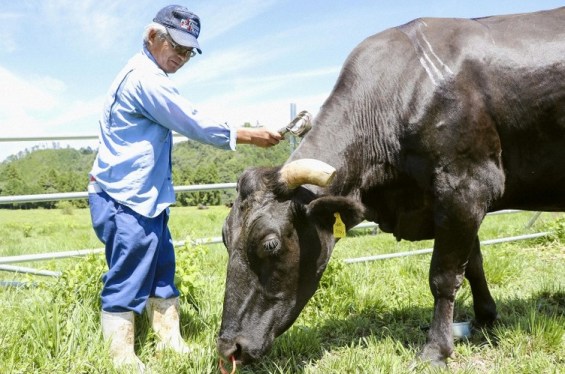
This photo taken on Aug. 18, 2018, shows cattle farmer Fumikazu Watanabe taking care of a cow on his farm in an area designated by the Japanese government as an evacuation zone in Namie, Fukushima Prefecture, near the crippled Fukushima Daiichi nuclear power plant.
December 26, 2018
FUKUSHIMA, Japan (Kyodo) — Having disregarded a state instruction to kill cattle left behind in areas near the crisis-hit Fukushima Daiichi nuclear plant, some local farmers have been struggling to keep about 430 cows within a 20-kilometers radius of the complex exposed to radiation.
The instruction was issued two months after fuel meltdowns at the plant in northeastern Japan were triggered by a massive earthquake and a tsunami on March 11, 2011, for about 3,500 cows kept within the area adjacent to the Fukushima Daiichi complex.
Regarding their cows as “family members,” some farmers ignored the instruction, while others who followed it say they still suffer psychologically. The central government allowed cattle breeding in the 20-km zone in 2012, but shipments are still banned.
Keiji Okada, a professor of veterinary science at Iwate University and a researcher of animals exposed to radiation, has been taking blood and urine samples from cows at a couple of farms in the zone to see if there are any genetic abnormalities in them.
One farmer who is cooperating with the research is Fumikazu Watanabe, a 60-year-old local cattle farmer, in the town of Namie, several kilometers from the Fukushima plant.
Watanabe said he wants to protect his 50 cows “until they die a natural death just like human parents protect their children.”
Before returning to Namie in October last year after evacuation orders for some parts of the town were lifted, Watanabe used to shuttle between the farm and his shelter, which was about 50 km away, by applying for special entry permission to take care of his cows.
Radiation levels at Watanabe’s farm stand at 15 to 20 microsieverts per hour, the highest among the seven farms where the 430 cows are kept, but his cows are “so far in perfect health,” Okada said.
“This research is internationally rare and it could be applied to protecting cattle when a nuclear disaster occurs,” he said.
Another farm dubbed “Moo Mow Garden” in the town of Okuma, where the Fukushima plant is sited, is run by Satsuki Tani, 36, who initially worked as a volunteer following the disaster. Eleven cows are still kept at the 6-hectare facility in the community that became a ghost town.
Tani, a former company worker in Tokyo, originally came to Fukushima to protect stray cows after seeing news about cattle starved to death in the disaster-hit areas. She came up with the idea of having the cows, which eat 60 kilograms of grass every day, help to manage and conserve desolate farmland.
The cows released at the farm not only ate the weeds but knocked down a 3-meter-tall scrub and ate its leaves, transforming the deserted farm into a tidy field.
“I was always depressed to see the ruined farm every time I came back for a temporary stay, but now I feel better,” said the farm’s landlady in her 70s.
Tani, who now works part-time at a convenience store to make her living, said she aims to make a business out of her farm project. “I want to maintain the farmland so residents returning to the town in the future will be able to resume farming,” she said.
On the other hand, Kaiichi Shiba, 68, who agreed to abandon his 30 cows in 2013, has regretted his decision. It was tough for him to visit the farm exposed to high levels of radiation from his shelter.
“Yasuhira, Haruka — each of them had a name. It’s like I’ve killed my family,” Shiba said of his cows. “If I could have moved them to a safer place, they would have lived.” But it was impossible because the government prohibited evacuation of the cows outside the 20-km radius to prevent their meat from being marketed.
Shiba, who has evacuated from Namie to the city of Sayama in Saitama Prefecture, about 200 km away from his hometown, said he has yet to find a new motivation in life.
Prosecutors demand 5-year prison terms for Tepco’s ex-bosses for Fukushima nuclear disaster

Prosecutors say TEPCO leaders should have known the risks a tsunami could pose to the Fukushima Dai-ichi nuclear power plant, which sits along Japan’s eastern coast. Here, the Unit 3 reactor is seen this past summer, amid storage tanks of radiation-contaminated water.
Executives In Fukushima Nuclear Disaster Deserve 5-Year Prison Terms, Prosecutors Say
December 26, 2018
The former chairman and two vice presidents of the Tokyo Electric Power Co. should spend five years in prison over the 2011 flooding and meltdown at the Fukushima Daiichi nuclear plant, Japanese prosecutors say, accusing the executives of failing to prevent a foreseeable catastrophe.
Prosecutors say the TEPCO executives didn’t do enough to protect the nuclear plant, despite being told in 2002 that the Fukushima facility was vulnerable to a tsunami. In March of 2011, it suffered meltdowns at three of its reactors, along with powerful hydrogen explosions.
“It was easy to safeguard the plant against tsunami, but they kept operating the plant heedlessly,” prosecutors said on Wednesday, according to The Asahi Shimbun. “That led to the deaths of many people.”
Former TEPCO Chairman Tsunehisa Katsumata, 78; former Vice President Ichiro Takekuro, 72; and former Vice President Sakae Muto, 68, face charges of professional negligence resulting in death and injury. Muto and Takekuro once led the utility’s nuclear division. All three have pleaded not guilty in Tokyo District Court, saying they could not have predicted the tsunami.
The stricken plant triggered mandatory evacuations for thousands of people. Prosecutors attribute 44 deaths to the incident, including a number of hospital patients who were forced to leave their facilities.
The sentencing recommendation came as prosecutors made their closing arguments on Wednesday, more than two years after the executives were initially indicted.
The next step in the case will see a lawyer for victims and their families speak in court on Thursday. But it won’t be until March of 2019 that defense lawyers will deliver their closing arguments, according to Japan’s NHK News.
Hinting at what the defense’s argument might be, NHK cites the prosecutors saying, “the former executives later claimed that they had not been informed, and that the executives put all the blame on their subordinates.”
The case has taken a twisting journey to arrive at this point. In two instances, public prosecutors opted not to seek indictments against the three TEPCO executives. But an independent citizen’s panel disagreed, and in early 2016, prosecutors in the case — all court-appointed lawyers — secured indictments against the three former TEPCO leaders.
Both TEPCO and the Japanese government lost a class-action lawsuit in late 2017, when a court found that officials had not prepared enough for potential disaster at the Fukushima power plant. In that case, the Fukushima district court ordered payments totaling nearly $4.5 million to about 3,800 plaintiffs.
All told, around 19,000 people are estimated to have died in eastern Japan’s triple disaster that included a powerful earthquake off the coast of Tohoku, a devastating tsunami, and the worst nuclear meltdown since the Chernobyl catastrophe of 1986.
In September, Japan’s government announced the first death due to radiation that was released at the Fukushima plant.
The region is still sharply feeling the results of the calamity. As of late November, more than 30,000 people who fled the area had still not returned, Kyodo News reports.
Jail term demanded for ex-bosses over Fukushima nuclear crisis
The charges are the only ones to have stemmed from the tsunami-sparked reactor meltdowns at the plant that set off the worst atomic crisis since Chernobyl in 1986
December 26, 2018
DANGEROUS. A staff member of the Tokyo Electric Power Company measures radiation levels between reactor unit 2 and unit 3 (Rear) at the tsunami-crippled Tokyo Electric Power Company (TEPCO) Fukushima Dai-ichi nuclear power plant in Okuma, Fukushima prefecture.
TOKYO, Japan – A 5-year jail term was sought for 3 former executives at the company operating Japan’s Fukushima nuclear plant, media reported Wednesday, December 26, the only people to face criminal charges over the 2011 meltdowns.
Former chairman of Tokyo Electric Power (Tepco) Tsunehisa Katsumata and former vice presidents Sakae Muto and Ichiro Takekuro are charged with professional negligence resulting in death and injury, and have pleaded not guilty.
They are the only charges to have stemmed from the tsunami-sparked reactor meltdowns at the plant that set off the worst atomic crisis since Chernobyl in 1986.
Attorneys, who are exceptionally acting as prosecutors in the trial, said the 3 executives were aware of data indicating the nuclear plant risked being hit by a tsunami with waves exceeding 15 meters (52 feet) – enough to trigger power loss and cause severe accidents.
“They should have halted operations at the nuclear plant” until the company finished anti-tsunami measures, including construction of a breakwater, the prosecutors told Tokyo District Court, according to Jiji Press.
Katsumata, 78, has said during the trial he could not have predicted the towering waves that pummelled Japan’s northeast coast and swamped reactors in March 2011.
The disaster forced tens of thousands to evacuate their homes near the plant. Many are still living in other parts of Japan, unable or unwilling to go back home as fears over radiation persist.
The charges against the ex-bosses are linked to the deaths of more than 40 hospitalized patients who were hastily evacuated from the Fukushima area and later died.
Prosecutors had twice refused to press charges, citing insufficient evidence and little chance of conviction.
But a judicial review panel composed of ordinary citizens ruled in 2015 that the trio should be put on special trial in which designated attorneys accuse defendants and demand a penalty.
Waves as high as 14 meters swamped the reactors’ cooling systems in March 2011 after a 9.0 magnitude tremor.
Although the quake-tsunami disaster left some 18,500 people dead or missing, the Fukushima accident itself is not officially recorded as having directly killed anyone.
A parliamentary report a year after the disaster said Fukushima was a man-made crisis caused by Japan’s culture of “reflexive obedience.”
5-year prison terms sought for former TEPCO executives

Five-year jail terms are being sought for former Tepco executives Tsunehisa Katsumata (left), Ichiro Takekuro (middle) and Sakae Muto for their alleged failure to prevent the Fukushima nuclear meltdowns in 2011.
5-year prison terms sought for former TEPCO executives
December 26, 2018
Prosecutors on Dec. 26 demanded five-year prison terms for three former executives of Tokyo Electric Power Co. over the disaster caused by a tsunami slamming into the Fukushima No. 1 nuclear power plant.
“It was easy to safeguard the plant against tsunami, but they kept operating the plant heedlessly,” the prosecution said at the trial at the Tokyo District Court. “That led to the deaths of many people.”
Tsunehisa Katsumata, 78, former chairman of TEPCO, Sakae Muto, 68, former vice president, and Ichiro Takekuro, 72, former vice president, are standing trial on charges of professional negligence resulting in death and injury in connection to the triple meltdown at the plant in 2011.
According to the prosecution, the failure of the three to take countermeasures against tsunami led to the deaths of 44 people and the injuries of many others.
Many of them were hospital patients who were forced to evacuate when the nuclear crisis unfolded.
The defendants have all pleaded innocent. They said they had no way of predicting a tsunami of the height that inundated the Fukushima plant following the Great East Japan Earthquake on March 11, 2011.
Prosecutors had dropped the case against the three, but they were mandatorily indicted by an inquest of prosecution committee comprising ordinary citizens.
Lawyers are acting as prosecutors in the trial.
Shozaburo Ishida of the prosecution side said if a nuclear accident occurs, it results in an irreparable situation in which radioactive materials are spread.
He said the three defendants, who were in the utility’s top management at the time of the Fukushima disaster, should be held responsible because they failed to pay close attention to the safety of the plant.
The prosecution accused the three of “postponing” anti-tsunami measures despite learning that an in-house analysis showed that a tsunami of up to 15.7 meters in height could hit the Fukushima No. 1 nuclear plant.
The plant sits on land 10 meters above sea level.
According to the prosecution, the three gave the nod to anti-tsunami measures in 2008 based on a government assessment report about the probability of earthquakes striking Japan.
However, they stalled in taking the necessary steps, the prosecution said.
During the trial, the defendants denied the credibility of the government’s long-term assessment report.
They also said “15.7 meters” was a preliminary figure, and that asking the Japan Society of Civil Engineers to evaluate the appropriateness of TEPCO’s projection does not amount to “postponing” anti-tsunami measures.
5-year prison terms sought for 3 ex-TEPCO execs over nuclear disaster
December 26, 2018
TOKYO — Five-year prison terms were sought for three former executives of Tokyo Electric Power Co. (TEPCO) on Dec. 26 over a nuclear disaster at the tsunami-ravaged Fukushima Daiichi Nuclear Power Station in northeastern Japan in 2011.
A court-appointed lawyer who indicted the three — Tsunehisa Katsumata, 78, former chairman of TEPCO; Ichiro Takekuro, 72, former vice president; and Sakae Muto, 68, another former vice president — demanded the punishments at a Tokyo District Court hearing.
Prosecutors had abandoned indicting the three former TEPCO executives. However, after a prosecution inquest panel comprising those selected from among members of the general public deemed twice that they deserve indictment, a court-appointed lawyer indicted them in accordance with the Act on Committee for Inquest of Prosecution.
The lawyer said the defendants’ failure to take measures to prevent tsunami caused the accident.
“Even though the defendants were the top-ranking executives of a nuclear plant operator, they failed to do what they should have done, continued to operate the nuclear plant and caused the deaths of many people,” the lawyer said. “If they had obtained necessary information on possible massive tsunami on their own authority and taken appropriate measures, they could have prevented the serious accident.”
Katsumata, Takekuro and Muto are charged with professional negligence resulting in death and injury over the March 2011 nuclear accident. Specifically, they are accused of neglecting to take preventive measures while being aware that a massive tsunami could cause an accident at the plant, forcing patients at Futaba Hospital in the Fukushima Prefecture town of Okuma to take shelter for a long time and causing 44 of them to die.
The key point of contention during the trial is whether the three defendants could have predicted the accident before tsunami triggered by the Great East Japan Earthquake crashed into the plant.
In 2008, TEPCO estimated that tsunami waves as high as 15.7 meters could hit the Fukushima Daiichi complex based on a long-term evaluation by the government’s Headquarters for Earthquake Research Promotion. Nevertheless, the company stopped short of taking countermeasures against such massive tsunami at the plant.
Muto had been briefed of the estimate, but chose to put countermeasures on hold because the company asked experts to re-examine the long-term evaluation.
With regard to this, the court-appointed lawyer pointed out that they delayed countermeasures even though they could have predicted the disaster.
The three defendants argued that they took “appropriate procedures,” and that “it’s only natural that we asked experts to examine the evaluation.”
Five-year jail terms sought for ex-Tepco executives over Fukushima nuclear crisis
Dec 26, 2018
Five-year prison terms were sought Wednesday for three former executives of Tokyo Electric Power Company Holdings Inc. for their alleged failure to prevent the Fukushima nuclear disaster triggered by the March 2011 earthquake and tsunami.
At the Tokyo District Court, court-appointed lawyers acting as prosecutors said if the three had collected information properly and prepared necessary safety measures it would have been possible to predict the massive tsunami and prevent the disaster.
Tsunehisa Katsumata, 78, chairman of the company at the time of the disaster at the Fukushima No. 1 power plant, and Ichiro Takekuro, 72, and Sakae Muto, 68, both former vice presidents, have pleaded not guilty, arguing the tsunami was unforeseeable and the disaster would have occurred even if they had implemented preventive measures.
A final hearing for the defense will be held next March.
The court-appointed lawyers said it was clear from earlier testimony that the utility had been informed by one of its subsidiaries in 2008 that a tsunami as high as 15.7 meters could hit the plant, but it did not immediately take preventive steps.
“(Muto) prioritized avoiding suspension of the power plant and put off the problem,” one of the lawyers said.
The three were charged with professional negligence resulting in death and injury by the court-appointed lawyers in 2016 after an independent panel of citizens mandated they be indicted.
The independent panel’s decision came after Tokyo prosecutors twice decided against charging the three.
The former executives have been indicted for the deaths of 44 people, including patients forced to evacuate from a hospital, as well as injuries suffered by 13 people, including Self-Defense Force members, resulting from hydrogen explosions at the plant.
A total of 34 hearings have been held since last June, during which 21 witnesses, ranging from current and former Tepco officials to earthquake and tsunami experts, were questioned.
On March 11, 2011, the six-reactor plant located on the Pacific coast was flooded by tsunami waves triggered by a massive quake, causing the reactor cooling systems to lose their power supply. The Nos. 1 to 3 reactors subsequently suffered fuel meltdowns, while hydrogen explosions damaged the buildings housing the No. 1, 3 and 4 units.
As a result of the nuclear crisis, the worst since the 1986 Chernobyl disaster, around 160,000 people were evacuated at one stage. More than 30,000 of them were still displaced as of late November.
5 years in prison sought for ex-TEPCO Executives over nuclear disaster
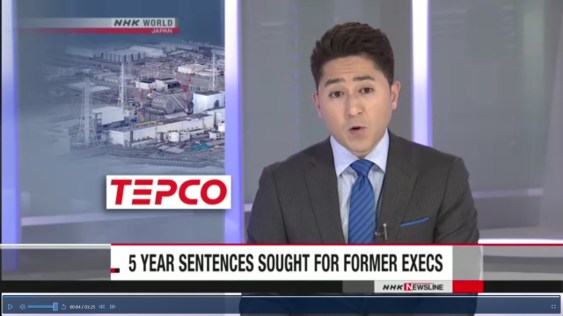
5 Years in Prison Sought for Ex-TEPCO Execs over Nuclear Accident
Tokyo, Dec. 26 (Jiji Press)–Lawyers acting as prosecutors demanded on Wednesday that three former executives of Tokyo Electric Power Company Holdings Inc. each be sentenced to five years in prison over the March 2011 Fukushima nuclear accident.
The three–former Chairman Tsunehisa Katsumata, 78, and former vice presidents Ichiro Takekuro, 72, and Sakae Muto, 68–did not act though they were aware of possible tsunami, the acting prosecutors said in their closing statement at Tokyo District Court.
The former TEPCO executives were indicted by the acting prosecutors in 2016, after a prosecution inquest panel reversed the Tokyo District Public Prosecutors Office’s decision not to file criminal charges against them.
According to the indictment, the three could foresee gigantic tsunami hitting TEPCO’s Fukushima No. 1 nuclear plant but neglected to take related measures, leading to the company’s failure to prevent the tsunami-triggered meltdown.
They are accused of professional negligence resulting in death and injury, including the deaths of 44 inpatients at a nearby hospital.
Five-year sentences sought for ex-TEPCO execs
The court-appointed lawyers, who serve as prosecutors, have demanded five-year prison sentences for three former executives of Tokyo Electric Power Company. They say the executives are responsible for the 2011 accident at the Fukushima Daiichi nuclear power plant.
The court-appointed lawyers delivered their closing argument at the Tokyo District Court on Wednesday.
The defendants are former chairman Tsunehisa Katsumata, former vice president Ichiro Takekuro, and former vice president Sakae Muto. They all pleaded not guilty to charges of professional negligence resulting in death and injury.
Public prosecutors decided not to indict the three, but an inquest panel, comprised of randomly chosen citizens, decided that the former executives should stand trial.
In line with that decision, the men were indicted by court-appointed lawyers in February 2016.
The court-appointed lawyers say the defendants were told two to three years before the accident that a massive tsunami could hit the nuclear plant. They also say the defendants did not try to gather information about the potential danger. The court-appointed lawyers indicate that the former executives later claimed that they had not been informed, and that the executives put all the blame on their subordinates.
The court-appointed lawyers also say the defendants should have suspended the plant’s operations when they were told that a massive tsunami could hit the plant.
The court-appointed lawyers maintain that the defendants are responsible because they didn’t do anything to prevent the accident from occurring.
A five-year prison term is the maximum punishment handed down for professional negligence resulting in death and injury.
A lawyer for the bereaved families of the victims will speak at the trial on Thursday. The defense lawyers will deliver their closing argument next March.
Editorial: Japan must ditch nuclear plant exports for global trends in renewable energy
December 25, 2018
Projects to export nuclear power plants, a pillar of the “growth strategy” promoted by the administration of Prime Minister Shinzo Abe, appear to be crumbling.
Factors behind the failures include ballooning construction costs due to strengthened safety standards after the triple core meltdowns at Tokyo Electric Power Co.’s (TEPCO) Fukushima Daiichi Nuclear Power Station in March 2011, and growing anti-nuclear sentiments around the world.
Nothing else can be said but that the export projects have effectively failed. The prime minister’s office and the Ministry of Economy, Trade and Industry must bear the responsibility of continuing to promote these exports despite a massive change in the attitude toward nuclear power plants.
“We are really stretched to our limit,” Hitachi Chairman Hiroaki Nakanishi recently said of the company’s nuclear power plant construction plan in Britain. The statement came at a regular press conference of the Japan Business Federation, or Keidanren, indicating that continuing the project is not feasible.
Hitachi coordinated closely with the Japanese government to advance the U.K. project. The company was to build two nuclear power reactors in midwestern Britain through a local subsidiary, and to start operating the facilities in the first half of the 2020s.
But, the total estimated cost of the project has skyrocketed from the initial figure of 2 trillion yen to 3 trillion yen due to growing safety measure costs. Hitachi, hoping to distribute financial risk, sought investments from major power utilities and other firms, but the negotiations hit a snag due to the lowered profitability of the project.
In a bid to secure profits at an early stage, Hitachi requested that the British government raise the price of the electricity to be generated by the plants, which was guaranteed to be purchased in advance. This arrangement also hit a wall as confusion spread in the British political sphere over the nation’s planned exit from the European Union. Hitachi, which has a stake in the local subsidiary, would lose some 300 billion yen if the project was cancelled.
Similar trouble has arisen in Turkey. A plan to export nuclear power plants, which began from a close relationship between Prime Minister Abe and Turkish President Recep Tayyip Erdogan, has also run aground.
Under the original plan, Mitsubishi Heavy Industries and other businesses were to build four midsized reactors in Turkey along the coast of the Black Sea at a total estimated cost of 2.1 trillion yen. The amount has more than doubled to 5 trillion yen, due in part to increased cost estimates for earthquake-proof measures. This development now requires the Japanese and Turkish governments to extend additional financial support for the project, but the two sides have apparently failed to reach an agreement.
The Abe administration has thrown its weight behind the export of nuclear power plants as a major element of its economic “growth strategy,” with the trade ministry choreographing the moves for the projects. The ministry regards nuclear power generation as one of the main sources of power generation, always protecting and promoting the nuclear power industry.
However, after the Fukushima nuclear disaster in 2011, building such plants within Japan has become difficult, and the ministry hoped to maintain the size of the nuclear power industry through exports and the transference of relevant technologies and human resources to the next generation. But this has ignored the fact that international trends have shifted since the disaster.
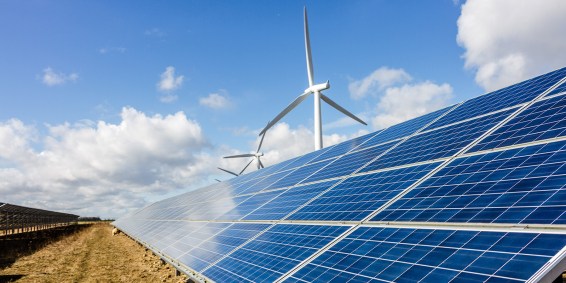
The construction cost for nuclear power plants has grown exponentially with the increased focus on safety measures, while renewable energy sources such as solar power have become cheaper with the rapid expansion of their use. As such, the relative price competitiveness for nuclear power reactors has declined; it can no longer be called an “inexpensive energy source.”
According to the International Energy Agency (IEA), global investments for new nuclear power plant construction in 2017 dropped to 30 percent of the previous year’s figure. Global policy is moving away from nuclear power plants and instead tipping toward renewable energy sources.
The failure to reflect this trend led to the huge losses incurred by Toshiba Corp., which bought Westinghouse Electric Co. with backing from the trade ministry to pursue its troubled nuclear power projects in the United States.
In 2012, a national referendum in Lithuania voted down a project to build a Hitachi nuclear power plant, and then in 2016, Vietnam scrubbed a similar construction plan. The same year, Japan signed a nuclear cooperation agreement with India, eyeing exports of nuclear power plants despite concerns about the proliferation of nuclear materials to the nuclear weapon state outside of the Nuclear Non-proliferation Treaty. Still, the export plan has yet to materialize. It is clear that the export of nuclear power plants has been backed into a corner for quite some time already.
It is Japan that caused one of the world’s worst nuclear accidents, and is now working on decommissioning the damaged reactors in a process that will take decades to complete. Many people in Japan hold deeply rooted feelings against the government’s placement of nuclear power plant exports as a pillar of the nation’s growth strategy.
In response, the government has simply justified the projects by saying they will contribute to developing countries with a growing power demand by offering a cheap source of power to support their economic growth. Rising construction costs, however, has rendered this explanation moot.
Japan still has many nuclear power plants to run, and the decommissioning of older plants will soon be in full-swing. The latest technology and skilled experts are vital for these projects to be completed successfully.
Continuing to focus on nuclear power export, however, will lead Japan nowhere. The government should take another look at global trends, and review the basis of its nuclear power policy to rid Japan of nuclear power as soon as possible.
5 Chiba prefecture mayors request radioactive waste storage facility for the 8th time
This is an ongoingly highly toxic and dangerous situation made even more difficult by lies and cover-ups and nuclear industry which owns way too many politicians.
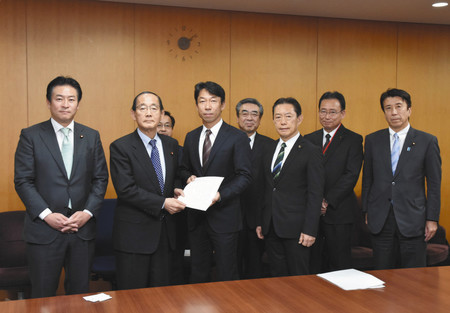
For the 8th time mayors from five cities in Chiba prefecture requested that the central government deal with high level radioactive waste in their cities: Matsudo, Kashiwa, Nagareyama, Abiko, Inzai.
Since 2011, the waste from the Fukushima disaster has been left in temporary storage locations.
The mayors began formally requesting the central government establish a long term storage facility for this waste in January. At the 8th meeting again requesting this assistance they left empty handed again.
Much of this waste consists of contaminated soil, plant matter and possibly dried sewage sludge or incinerator ash. It was not specified what waste streams would be stored in the requested facility. Much of the contaminated soil has been stored in empty lots, some of these near homes or schools, others in watershed areas.
Parts of Chiba received unexpected levels of contamination. Southerly winds at the time of some of the larger releases from the nuclear meltdowns caused contamination into parts of Chiba and Tokyo. Places hours away from a nuclear power plant can find themselves dealing with high radiation levels and contamination due to bad timing and a change of the wind.
Determination and Comparison of the Strontium-90 Concentrations in Topsoil of Fukushima Prefecture before and after the Fukushima Daiichi Nuclear Accident
Abstract
To precisely understand the status of scattered strontium-90 (90Sr) after the 2011 accident at the Fukushima Daiichi Nuclear Power Plant (F1-NPP) of Tokyo Electric Power Company (TEPCO), the measurement of the soil samples collected both before and after the day of the accident from the same sampling locations is necessary. However, very few reports have investigated the background contaminant data before the accident even though several studies have been conducted to investigate the effects of the F1-NPP accident. To address the lack of the passed 90Sr information and reestablished baseline, this study focuses on the stored topsoil samples that are collected from the same sampling locations from the Fukushima Prefecture before and after the F1-NPP accident, which are analyzed for obtaining the 90Sr concentrations. The results of our investigation exhibited that the 90Sr concentrations in the Fukushima Prefecture soils ranged from 0.2 to 20.4 Bq/kg in the samples that were collected before the accident and from 1.37 to 80.8 Bq/kg in the samples that were collected after the accident from identical sampling locations. Further, the soil samples that were collected from 30 out of 56 locations displayed significant differences in terms of concentrations before and after the accident. In addition, the relations between the 90Sr concentrations and the soil properties of the samples (organic content, pH, water content, and composition) were investigated, and it was found that the organic content and water content had a positive correlation with 90Sr concentrations and, in contrast, the sandiness was shown to have a negative correlation with 90Sr concentrations. The depth characteristics were also investigated. The aforementioned results indicate that this tendency would be observed even in the future.
Introduction
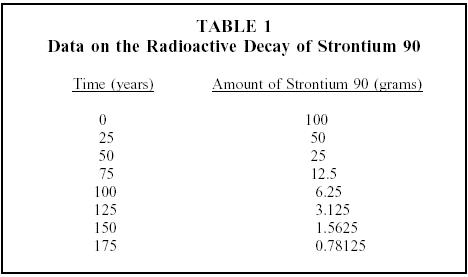
A large amount of radioactive materials was scattered throughout the environment (ocean, atmosphere, land, and so on) because of the accident that occurred on March 11, 2011 at the Fukushima Daiichi Nuclear Power Plant (F1-NPP) that was owned by Tokyo Electric Power Company Holdings, Inc. (TEPCO).(1−3) Seven years have passed by since the accident, and research institutes around the world have been monitoring the influence of the environmental dynamics of radionuclides that have been released.(4−13) More specifically, there have been several environmental monitoring reports regarding β-ray-emitting nuclides, such as radioiodine and radiocesium, because multiple samples can be analyzed in a relatively short time using certain types of instruments such as a germanium semiconductor detector, a sodium iodide scintillator detector, and a lantern bromide scintillator detector.(14−19) Meanwhile, radiostrontium (90Sr) (half-life: 28.79 y(20)) is a pure β-ray-emitting nuclide that does not emit γ-rays, which makes it necessary to chemically isolate it for measuring β-rays because the β-ray spectra overlap. In particular, it is imperative to monitor 90Sr over a long period because it will require several decades to decommission F1-NPP. In Japan, instead of a few literature concerning the development of a rapid analytical means,(21−25) radiochemical analysis using milking-low background gas-flow counter (milking-LBC) is adopted as the official analysis method for analyzing 90Sr because of good sensitivity and/or high-precision analysis in low concentration levels in the environment.(26) This method requires considerable amount of time and effort to pretreat the analysis as compared to those required by the γ-ray measurement method. Although various studies have been vigorously conducted,(27−33) the study related to the scattering of 90Sr is not as advanced as compared to that related to the γ-ray-emitting nuclides such as radiocesium.
To precisely understand the status of scattered 90Sr after an incident of nuclear accident, the samples collected both before and after the day of the accident should be measured, thereby distinguishing from the fallout of atmospheric nuclear tests (20th century’s) that have been conducted in the past. So far, the survival ratios of nuclides with short half-lives in samples have been employed in several studies.(34) However, this technique cannot track the long-term process because it becomes difficult to evaluate the nuclides that exhibit a short decrease in half-lives. The optimal method for addressing these issues is to measure the radioactive concentrations of 90Sr in soil that is collected at identical locations before and after the accident. However, few examples exhibited the presence of 90Sr in soil before the F1-NPP accident, which was completely unexpected. Fortunately, we already possessed analytical data related to the 90Sr concentrations in soil samples that were collected before the accident with precise sampling locations throughout the Fukushima Prefecture (not published). Therefore, in this study, we succeeded in estimating the exact amount of 90Sr deposition before and after the F1-NPP accident. When performing the long-term observation, understanding the background level of 90Sr before the accident was observed to be considerably important for understanding the environmental radioactivity and the environmental dynamics or the usage of 90Sr as a tracer.
In this study, we measured the radioactivity concentrations of 90Sr in the topsoil at the same locations in the Fukushima Prefecture before and after the accident and obtained the background levels of 90Sr before the F1-NPP accident. Thus, we revealed the deposition status of 90Sr before and after the accident. We also investigated the correlation between the soil properties and 90Sr to determine the status of deposition of 90Sr on the topsoil in Fukushima prefecture (Figure 1).
Read more at:
Tohoku disaster reconstruction to miss ’20 deadline for completion
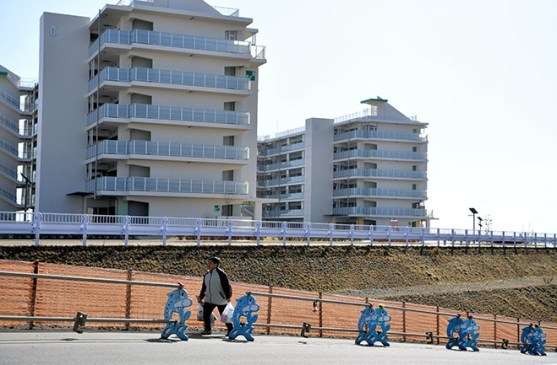
A resident in the Yuriage district of Natori, Miyagi Prefecture, returns to her home after shopping. The housing complex was built after the 2011 Great East Japan Earthquake and tsunami.
December 19, 2018
Reconstruction of areas devastated by the 2011 triple disaster will not be completed by fiscal 2020 as initially scheduled, and Fukushima Prefecture residents could be hit hardest by the delay, the Reconstruction Agency said.
Agency officials said Dec. 18 that further measures would be needed after fiscal 2020 to help areas affected by the triple meltdown at the Fukushima No. 1 nuclear power plant, as well as municipalities heavily damaged by the tsunami triggered by the Great East Japan Earthquake on March 11, 2011.
The government had set a 10-year reconstruction period as its basic policy, with the first five years described as an “intensive reconstruction period” and the second five years labeled as the “reconstruction and revitalization period.”
The Reconstruction Agency will also be eliminated at the end of March 2021, meaning the government will need new legislation to designate an agency that will handle the reconstruction effort in the Tohoku region from fiscal 2021.
Reconstruction Agency officials conducted studies in the five prefectures of Aomori, Iwate, Miyagi, Fukushima and Ibaraki during the current fiscal year to determine the extent of progress as well as what support measures should be continued beyond fiscal 2020.
The officials said some public works projects were taking longer than expected because of delays in buying land for those projects and revisions in reconstruction plans.
Although no specific project names or locations were revealed, the officials said all of those public works projects would not be completed by the end of fiscal 2020.
Under the government’s plan, the need for temporary prefabricated homes will no longer exist at the end of fiscal 2020.
However, elderly people who move out of such housing will still require care and supervision especially if they live alone and are suffering from psychological damage stemming from the natural disaster.
The situation looks especially dire in the locales most seriously affected by the nuclear accident.
Mountains of decontaminated soil will be moved outside of Fukushima Prefecture, but the relocation is not expected to happen for another 20 years. That means support measures for evacuees as well as Fukushima farmers and fishermen still dealing with negative publicity about their harvests will have to continue well beyond fiscal 2021.
A total of 32 trillion yen ($285 billion) has been set aside for the reconstruction effort. Whatever is left can be carried over after fiscal 2021 for still-incomplete projects.
At the end of fiscal 2017, 4.6 trillion yen had still not been spent. Reconstruction Agency officials did not say if additional budgetary measures would be needed.
Nuclear Fox Revealed! France’s Hervé Courtois of Nuclear-News, Rainbow Warriors – NH #391
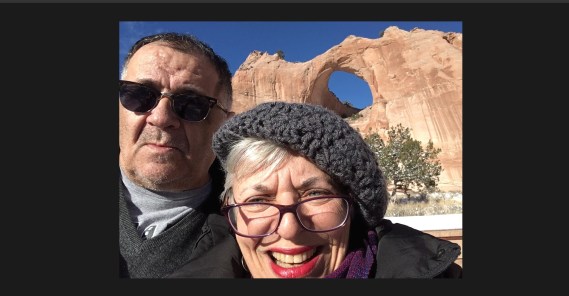 Nuclear Fox Hervé Courtois & Nuclear Hotseat’s Libbe HaLevy @ the Window Rock of Window Rock AZ
Podcast: Download
This Week’s Featured Interview:
- Nuclear Fox – Hervé Courtois of France, aka D’un Renard, or “The Fox” – has been a steadfast provider of reliable nuclear news, especially from Fukushima, since the first months after the disaster began in 2011. After many years of trying, at the International Uranium Film Festival, Libbe HaLevy succeeded in cornering him for an interview on why he became so involved with providing nuclear news, and what keeps him going. Here are his links:
Numnutz of the Week (for Outstanding Nuclear Boneheadedness):
Nuclear disaster? Radiation? Contamination of Japanese food? Fukushima sake in Manhattan? I’ll drink to that! (… or NOT…)
Activist Links:
- Public Comment needed on Department of Energy’s proposal to abandon high-level radioactive wastes in situ – meaning right where it is now, on site at reactors and on already contaminated lands.
- Suggested wording for comments from Beyond Nuclear, CLICK HERE.
- DOE’s proposal, CLICK HERE.
- LA Times article on Marco Kaltofen: “Hidden Danger: Radioactive Dust is Found in Communities Around Nuclear Weapons”
- For the dust testing protocols after the Woolsey Fire, CLICK HERE.
Key facts to remember:- Protect yourself from the dust and dirt with a mask and clothing that can be easily washed or even thrown away.
- Do NOT simply send in to Fairewinds; you MUST get approval and registration with them or your sample will be disposed of without being opened.
- The results will take at least 5 months, if not longer, to show up. This is because of the intensity of the testing program and the number of steps that must be taken. BE PATIENT. When you get the data, it will be solid and scientific.
Top court orders TEPCO to pay compensation for voluntary evacuation from Fukushima
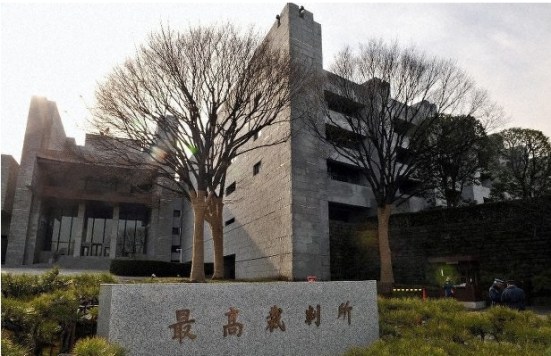
The Supreme Court building is seen in Tokyo.
December 18, 2018
TOKYO — The Supreme Court on Dec. 13 upheld the lower court ruling ordering Tokyo Electric Power Co. (TEPCO) to pay about 16 million yen in compensation to a man in his 40s and his family that voluntarily evacuated Fukushima Prefecture to western Japan after the 2011 nuclear disaster.
The top court’s First Petty Bench confirmed an Osaka High Court ruling handed down in October 2017 that recognized the man had developed depression due to the disaster and became unable to work. It marked the first time that a ruling awarding compensation to voluntary evacuees from the Fukushima Daiichi Nuclear Power Station disaster has been finalized by the top court, according to a legal team for victims of the nuclear crisis.
Meanwhile, the First Petty Bench led by Justice Katsuyuki Kizawa avoided mentioning the rationality of voluntary evacuation and other points in question as it turned down appeals from both sides against the high court ruling due to “insufficient grounds.”
According to the lower court rulings, the man from Japan’s northeastern Fukushima Prefecture city of Koriyama owned multiple restaurants and voluntarily evacuated with his family to locations outside the prefecture shortly after the outbreak of the nuclear crisis. The owner suffered from insomnia and was diagnosed with depression in September 2011, after relocating to the western Japan city of Kyoto.
TEPCO had already paid around 2.9 million yen to the family of five based on the government’s compensation standards. However, the man and his family deemed the amount inadequate and filed a lawsuit demanding about 180 million yen from TEPCO.
In its ruling handed down in February 2016, the Kyoto District Court ordered the utility pay about 30 million yen to the family after recognizing the causal relationship between the nuclear disaster and the man’s depression. The amount included compensation for the man and his wife’s mental suffering and damage caused by the man’s taking a leave of absence from work.
However, it upheld the government’s evacuation order standards. District court judges determined that voluntary evacuation would be rational only until August 2012 because “it’s difficult to recognize health damage from exposure to radiation below 20 millisieverts per year.”
After both parties appealed the district court ruling, the Osaka High Court basically agreed with the decision but ruled that the man only needed treatment for depression for two years due to the disaster, instead of four and a half years. Consequently, the high court had considerably reduced the compensation money awarded to the man due to his absence from work.
High iodine distribution, low intake among children after Fukushima nuclear accident
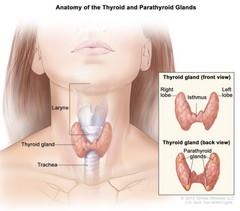
December 17, 2018
Despite a high distribution rate of stable iodine after the 2011 Fukushima nuclear accident in Japan, only 63.5% of parents reported children took the tablets, with many citing safety concerns in questionnaires, according to findings published in The Journal of Clinical Endocrinology & Metabolism.
The intake of stable iodine after a nuclear emergency is a key strategy for preventing childhood thyroid cancer, along with evacuation and other measures, Yoshitaka Nishikawa, MD, a physician and medical researcher in the department of internal medicine at Hirata Central Hospital in Fukushima, Japan, and colleagues wrote in the study background. The timing of iodine administration is optimally between 24 hours before and up to 2 hours after the expected onset of exposure, they noted; however, iodine is still reasonably effective when taken up to 8 hours later. To date, there is limited information about the acceptability and feasibility of implementation of iodine distribution in actual cases, they wrote.
“To prepare for future nuclear emergencies, investigations of the operational issues in an actual case are needed,” the researchers wrote.
In a retrospective, observational study, Nishikawa and colleagues analyzed data from 961 children from Miharu, a town in Fukushima prefecture, who underwent biennial thyroid screenings at Hirata Central Hospital between August and November 2017 (median age at time of accident, 5 years). In addition to the Fukushima Health Management Survey, Miharu has continued thyroid screenings for all primary and secondary school students.
In Miharu, health care professionals distributed stable iodine to 3,134 households (94.9% distribution rate) after explosions at the Fukushima nuclear plant caused by the 2011 earthquake in eastern Japan, along with instructions provided by the local government. Screening and questionnaire records included age of participants at the time of the nuclear accident, sex, region of residence before the accident, whether the participant was evacuated, whether the child and parents took stable iodine orally after the accident and dietary habits, including iodine intake. Researchers used logistic regression models to identify factors associated with stable iodine intake.
Within the cohort, 610 children (63.5%) had taken stable iodine, according to questionnaire data.
Researchers found that children were more likely to take stable iodine provided after the accident if their parents took stable iodine (OR = 61; 95% CI, 37.9-102.9). Compared with preschool and school-aged children, infants (aged 2 years or younger) were less likely to take stable iodine (OR = 0.21; 95% CI, 0.11-0.36).
In assessing questionnaire data from parents who reported children did not take stable iodine (n = 351), concern about safety was the most frequent reason provided (n = 164; 46.2%), followed by evacuation to other areas, no national or prefectural instruction and iodine not being delivered.
“Qualitative analysis revealed that concern about safety was the major reason for avoiding intake,” the researchers wrote. “Other issues related to distribution methods, information about the effects and adverse events and instruction about intake. In future nuclear disasters, it would be important to explain to both children and parents the effects and adverse effects of iodine intake and to provide detailed instructions about the intake of iodine by infants.” – by Regina Schaffer
Taiwan Food Imports from Fukushima-Affected Areas Become Wedge Issue with Japan
Japanese government keeps on trying to ram food exports from Fukushima radiation affected areas down the throats of their Asian neighbors ….

Japanese prime minister Shinzo Abe
December 17, 2018
IT IS UNSURPRISING that Taiwan will not be admitted to the Comprehensive and Progressive Agreement for Trans-Pacific Partnership (CFTPP) because of the referendum vote against food imports from Fukushima-affected areas held in late November concurrent with nine-in-one elections. Namely, the issue of food imports is one upon which Taiwan has long been pushed around by larger, more powerful countries, who dangle the threat of being denied admittance to international free trade agreements if Taiwan does not allow food imports.
The Abe administration has in the past made allowing food imports from Fukushima-affected areas a condition for stronger diplomatic relations with Japan. This would be part of a more general effort by the Abe administration to promote the prefecture of Fukushima as safe, with concerns that lingering radiation may still cause harmful effects in the region after the 2011 Fukushima disaster. The Abe administration has thus attempted to promote food exports from the area, as well as to encourage tourism to the area.
Concerns over whether food from Fukushima is safe are valid, seeing as this is an issue of contention in Japan itself. Abe’s Liberal Democratic Party (LDP) is deeply wedded to the Japanese nuclear industry, with an unusual willingness to push for nuclear energy in spite of outbreaks of large-scale public protest. Concerns have also been longstanding that the LDP has been unwilling to provide accurate nuclear assessments for the Fukushima area, or sought to mislead through official statistics.
After the results of the referendum in late November, in which 7,791,856 voted against allowing food imports from Fukushima, the Japanese government initially expressed understanding regarding the results of the referendum, suggesting that not allowing food imports from Fukushima would not be an obstacle for Japan-Taiwan relations going forward. However, this appears to have not entirely been the truth.
Indeed, as the KMT was a powerful force behind the push for the referendum, it is likely that the KMT sought to use the issue of food imports from Fukushima-affected areas as a means to not only to attack the DPP with the accusation that it was endangering public safety but also sabotage closer relations between Japan and Taiwan. Apart from that the KMT’s Chinese nationalism has a strong anti-Japanese element, the KMT is pro-unification and so opposes closer ties between Japan and Taiwan, seeing as Japan could be a powerful regional ally that interceded on behalf of Taiwan against Chinese incursion.
The CFTPP is a regional free trade agreement that is the form that the Trans-Pacific Partnership (TPP) took on after America withdrew from the trade agreement under Donald Trump. Despite the fact that the TPP was orchestrated under American auspices as a means to counter growing Chinese influence in the Asia-Pacific region, the Trump administration favored protectionism instead of free trade, seeing free trade as overextending American resources rather than expanding its economic reach.
Japan subsequently became the dominant power among former TPP signatories, continuing to push for the agreement because it was still beneficial to Asia-Pacific nations to economically integrate as a regional bloc against the threat of China.
This would not be the first time that food imports have been used as a condition of Taiwan’s admittance to or denial from the TPP framework. America previously made allowing American beef imports into Taiwan to be a condition of Taiwan’s possibly entering into the TPP, seeing as there were in concerns in Taiwan that the use of the hormone ractopamine—banned in most of the world’s countries but not in America—was unsafe. This, too, was a valid concern regarding food safety, but the KMT was interested in the issue because it hoped to use this as a wedge issue to sabotage relations between Taiwan and the US.
Now that Japan is the primary driving force behind the CFTPP, as the renewed version of the TPP, food imports from Fukushima-affected areas have taken priority as the issue which would determine Taiwan’s admittance or non-admittance to the CFTPP. As free trade agreements are more generally a way for large, powerful countries to coerce smaller, weaker countries into relations of economic subordination, this would be nothing surprising.
More generally, free trade agreements have also long been held over the heads of Taiwanese voters in order to influence how they vote, as observed in the examples of the Economic Cooperation Framework Agreement or the Cross-Strait Services Trade Agreement under the Ma administration. But in light of the issue of food imports from Fukushima-affected areas being a contested issue in Taiwan, it remains to be seen whether the CFTPP will become a significant wedge issue in Taiwanese politics going forward.
Radiation-soaked Fukushima town REOPENS to visitors 7 years after meltdown

December 16, 2018
The town next to the Fukushima Nuclear Power Planet that suffered a devastating meltdown in 2011 has reopened.
Futaba – on the Fukushima Prefecture – was turned into a ghost town after a huge tsunami swamped the nuclear reactors, triggering a massive radiation leak.
But authorities are now planning on reopening the town – despite warnings of worryingly high levels of radiation.
Shortly after the meltdown, all of Futaba was closed off after critical levels above 50 millisieverts of radiation were recorded.
Those hoping to travel there will need to apply for permission to enter before they will be allowed past a checkpoint
It is thought the town could be rebuilt and ready for evacuees to move back in by 2022 provided it reaches government-set safe levels of contamination by the end of the year.
Officials want radiation levels to be below 1 millisievert for people to live there again.
Photographs taken in the last few years of the areas surrounding Fukushima show something out of a post-apocalyptic war zone.
Last year, shocking images emerged of radioactive boars roaming around several towns in the evacuation zone.
Sun setting on Japan’s nuclear export sector

December 16, 2018
Post-Fukushima cost overruns may kill a giant power project in Turkey, and there are few other deals to replace it
Japan’s nuclear export industry could be dealt a fatal blow if Mitsubishi Heavy Industries pulls out of a massive project to build four large power plants on Turkey’s Black Sea coast, as reports have suggested.
The Sinop plant project in Turkey was seen as Japan’s best chance for an industry – battered and bruised after the 2011 tsunami and triple meltdown at Fukushima – to put together a workable export strategy that did not break the bank of potential international customers.
Aside from Sinop, the Japanese industry has only one viable export project still upcoming: Hitachi’s bid to build two reactors on the island of Anglesey in Britain. And even that deal is looking shaky.
Mitsubishi Heavy Industries (MHI) has not pulled the plug yet on its stake in the four-reactor project on Turkey’s Black Sea coast, but a slew of domestic media reports and talk in Tokyo, suggests that, in the face of seemingly ever-rising construction costs to meet new safety standards that have been put in place since the 2011 Fukushima disaster, the company will bail.
Fukushima legacy
When the deal was signed with Ankara in 2013, the ownership profile was: 65% awarded to a consortium made up of MHI, Itochu, France’s Areva, and GDF Suez. The other 35% was covered by Turkey’s electric power utility, Elektrik Uretim.
However, in April, Itochu pulled out of the consortium, citing cost overruns. That left the consortium with 51%, and the remaining 49% owned by the Turkish utility.
Without Mitsubishi the viability of the project is in question, sources say, unless Turkey can find a new partner or is willing to take on the project without its largest foreign partner. The Russians, who are building a nuclear complex on Turkey’s southern Mediterranean coast, might be interested.
According to Kyodo, a thorough cost evaluation was to be completed by the end of this year. Itochu waited for the report to be released before bailing out of the deal. MHI is apparently waiting for the study to be completed before deciding its next move.
When the deal with Mitsubishi was signed in 2013, the estimated cost was $18 billion for four 1,100-megawatt nuclear power plants. But overall costs have soared, passing $42 billion in April – when Itochu withdrew, and is now put at about $44 billion.
Cost increases are nothing new in the nuclear power industry, but have been exacerbated in recent years by expensive adjustments phased in to meet more stringent safety concerns following the earthquake and tsunami that destroyed four units of the Fukushima Daiichi plant. The Sinop cost rises, however, also encompass other problems encountered in construction.
Fukushima, one of the most serious nuclear accidents in history, turned most of Japan against nuclear power. Before March 11, 2011, Japan had 54 nuclear plants. All were shut down after the accident and some are slowly returning to service having passed scrutiny by the regulator. Five are expected to restart within the next five years, and eight will likely be decommissioned. But prospects for the remaining plants are unclear.
Aware that no new nuclear plant may ever be built at home amid the anti-atomic public mood, Japan’s nuclear vendors have turned to overseas exports as the Fukushima accident does not appear to have destroyed the Japanese industry brand in other countries.
Endgame for nuclear exports?
If Mitsubishi does pull out of the huge project in Turkey it will be a blow to Prime Minister Shinzo Abe, who sees international exports of nuclear technology as an important way to boost the economy. On his many trips abroad, he often acts as a salesman for nuclear exports. For example, it was a topic of discussion with Turkish President Recep Erdogan on the sidelines of the G-20 meeting in Argentina.
Details of the conversation were not revealed, but it would be a good bet that they discussed the Sinop project with the threat of Mitsubishi hanging over them, and that Abe sought ways to keep the project viable.
Meanwhile, it is not just MHI that may have doubts about the sector. Japan’s nuclear export industry has suffered plenty of setbacks in the seven years since Fukushima. Questions about the future of the sector hang over all three main players in the sector.
Toshiba, one of Japan’s big-three nuclear constructors, recently pulled out of the nuclear power business overseas after incurring huge losses in the United States.
Toshiba has also suffered something of an administrative meltdown in its quest to win construction contracts in the US. In February it finally unloaded it money-losing American subsidiary, Westinghouse, for $1 billion less than it paid to acquire the company 10 years ago.
If the export program is to remain viable, it may be in Wales, where the British government is seeking to build a two-reactor nuclear power plant on the island of Anglesey. Among those bidding for the project is Japan’s third nuclear constructor, Hitachi, through a subsidiary called Horizon Nuclear.
In the nuclear world, there are constructors – like MHI, Toshiba and Hitachi – and operators, who run the plant after it is completed, and they are not always the same. Japan learned from Korea’s successful bid to build six nuclear plants in the United Arab Emirates that offering to build and also run them – a one-stop service – is key to making sales.
Hitachi is teaming up with the Japan Atomic Power Company, which operates two plants in Japan (although both are currently shut down pending the review by regulators). The plan is to present the British with a package deal.
Now, there are worries that Hitachi might pull out of the British project. Chairman Hiroaka Nakanishi was quoted in the Times of London saying his company was “facing an extreme situation,” and that a final decision on whether to stay with the project or leave it will be made next year.
If Mitsubishi does, as is widely expected, pull out of the huge project in Turkey, the only egg left in Japan’s overseas nuclear export basket will be Wales.
1 This Month
Chernobyl: The Lost Tapes – A good documentary on Chernobyl on SBS available On Demand for the next 3 weeks– https://www.sbs.com.au/ondemand/tv-program/chernobyl-the-lost-tapes/2352741955560

of the week–London Campaign for Nuclear Disarmament

Tell the Ukrainian Government to Drop Prosecution of Peace Activist Yurii Sheliazhenko
To see nuclear-related stories in greater depth and intensity – go to https://nuclearinformation.wordpress.com
-
Archives
- April 2026 (152)
- March 2026 (251)
- February 2026 (268)
- January 2026 (308)
- December 2025 (358)
- November 2025 (359)
- October 2025 (376)
- September 2025 (257)
- August 2025 (319)
- July 2025 (230)
- June 2025 (348)
- May 2025 (261)
-
Categories
- 1
- 1 NUCLEAR ISSUES
- business and costs
- climate change
- culture and arts
- ENERGY
- environment
- health
- history
- indigenous issues
- Legal
- marketing of nuclear
- media
- opposition to nuclear
- PERSONAL STORIES
- politics
- politics international
- Religion and ethics
- safety
- secrets,lies and civil liberties
- spinbuster
- technology
- Uranium
- wastes
- weapons and war
- Women
- 2 WORLD
- ACTION
- AFRICA
- Atrocities
- AUSTRALIA
- Christina's notes
- Christina's themes
- culture and arts
- Events
- Fuk 2022
- Fuk 2023
- Fukushima 2017
- Fukushima 2018
- fukushima 2019
- Fukushima 2020
- Fukushima 2021
- general
- global warming
- Humour (God we need it)
- Nuclear
- RARE EARTHS
- Reference
- resources – print
- Resources -audiovicual
- Weekly Newsletter
- World
- World Nuclear
- YouTube
-
RSS
Entries RSS
Comments RSS
 nuclear-news