Paradise lost? The framing of nuclear risk and its impact upon the Tao Community of Lanyu Island, Taiwan
By Louie Palmer | September 9, 2026, https://thebulletin.org/premium/2026-09/paradise-lost-the-framing-of-nuclear-risk-and-its-impact-upon-the-tao-community-of-lanyu-island-taiwan/?utm_source=ActiveCampaign&utm_medium=email&utm_content=The%20Iran%20nuclear%20threat%20s%20not%20going%20away%20%20Here%20s%20why&utm_campaign=20261029%20Thursday%20Newsletter
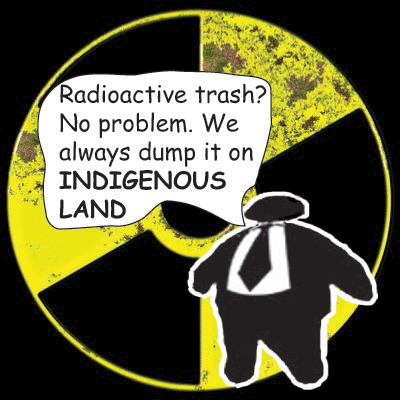
In 1978, construction began on what the Tao people of Lanyu Island, Taiwan, believed was to be a food canning facility (Gorska 2024; Lee 2021; Ching 2021). The indigenous group (sometimes referred to as the Yami) were unaware of the reality of the situation set to unfold, however, for what the Taiwanese government was building was in fact not a canning facility but a temporary storage site for low-level nuclear waste. The government needed a place to stage the waste before dumping it into the ocean and the Tao’s home island, some 60 kilometers from the main island of Taiwan (“mainland Taiwan”), seemed a perfect fit.
Controversy still exists regarding whether the Tao merely assumed that the site was to be used for canning or they were deliberately misled. While the Taiwan Power Company, which would later assume responsibility for the site, has said that clear notice about the site’s purpose had been given, leading activists protesting against the facility have different recollections. They reported that locals had no access to the site (Fan 2021), and that the notices were only provided in Chinese characters, failing to accommodate for the illiteracy of a large portion of the Tao community (Lee 2021). Regardless of what actually occurred, the outcome remained the same: The island (also known as “Orchid Island”) was chosen to house radioactive waste that no one wished to store on the main island of the Taiwan archipelago.
.
The experience of the Tao is a case study in framing the debate around nuclear risk. It demonstrates how political bodies and movements choose to convey the idea of risk to achieve political goals, whether they be in favor of or against nuclear projects. The Lanyu case is particularly interesting as it clearly shows the two distinct sides of this framing.
Why Lanyu?
Taiwanese authorities chose Lanyu after two years of studying abandoned pits, tunnels, and outlying island locations that might serve waste storage purposes. Four key reasons factored into the government’s decision: Lanyu’s supposed isolation, its sufficient size, its safe and reliable maritime transport links, and its viability for the implementation of marine dumping (Taiwan Power Company n.d). In prioritizing these criteria, the Taiwanese Atomic Energy Commission (AEC) appeared to focus on the cost and practicality aspects of the site and de-emphasized the danger of the materials involved. Nuclear authorities exaggerated Lanyu’s isolation. They conjured an image of a site surrounded by mountains and the sea—with the small caveat that the nearest settlement was located five kilometers away. Yes, the proposed site was isolated from people on mainland Taiwan, perhaps—but not from the Tao.
Authorities suggested that Lanyu was ideal as an interim storage site for nuclear waste before it was to be dumped into the sea. But when countries agreed to the 1993 London Convention, maritime dumping of low-level radioactive waste became a violation of the treaty (Sjoblom and Linsley 1994). While Taiwan was not a signatory to the convention due to its unique legal status, the country’s adherence to the agreement necessarily derailed the sea-dumping idea, adding to the now questionable rationale of placing the site on the island. This change resulted in an end to waste delivery to the island in 1996 (Nuclear Safety Commission 2026). Yet 100,277 drums of waste remained on the site as of early this year, despite the promises of several presidential administrations to remove the material (Aspinwall 2019; Fan 2021). Local opponents, including sometimes other indigenous groups, have scuttled moves to locate the waste elsewhere on mainland Taiwan (Lee, 2025). The government has even attempted to export the waste overseas, going so far as to engage in a deal with North Korea, which agreed to accept the waste in 1997 before the United States intervened to quash the arrangement in 2003 (Su 2024, 556).
Contamination and its outcomes
Because the site was to be temporary, authorities settled on an ill-conceived plan to store the waste in ordinary steel barrels—in Lanyu’s subtropical climate. Predictably, the barrels began to rust, and in 1995, staff working at the site discovered that they had begun to deteriorate (Hsu 2017). The discovery did not provoke a prompt response. Instead, it took until 2008 for authorities to begin a re-packing operation. It was during this period that locals began to complain of increased rates of cancer-related deaths and an increased incidence of learning disabilities among their children (Hsu 2017).
In response to concerns, the AEC referred to a 2012 survey that claimed radiation exposure to the fauna and flora of the island remained within international limits, and suggested that incidence rates of cancer on Lanyu remained in line with the rest of the Taiwanese population (Loa 2012). That very same year, however, a three-day survey conducted by Japanese academics found readings of background radiation 500 times above the usual level, suggesting leakage from the site was having a profound impact (Loa 2012).
The re-packing process only exacerbated the obscurity around the site. Initially, the AEC set out a requirement ensuring that there would be zero discharge from the process, in which the leaking drums would be packaged inside other, sturdier drums. Taipower, the company undertaking the project, quickly broke this promise, later acknowledging that the process had led to limited contamination of the intertidal zone (Sun 2012).
Critics of the project argued that the re-packaging mishap was likely a result of temporary workers cutting corners and violating safety procedures (Sun, 2012). Conveniently for the officials responsible for the Lanyu plan, because authorities have admitted that the re-packing process resulted in a limited release, it’s now difficult to ascertain the level of contamination that resulted from the decay of the barrels themselves.
Throughout the process of the site’s planning, construction, and operation, authorities circumvented concern and political friction. Even when the site impacted the local community, officials gaslighted them—it wasn’t the aged, leaking barrels, it was the limited release during maintenance.
Tao resistance
The Tao anti-nuclear leaders recognized how a large proportion of their community was unlikely to fully understand the nature of radioactive risk (Cheung 2017). They ensured the community as a whole was made aware of the site’s dangers through weaving the dangers into local culture and equating the site to the belief in the malevolent spirit of “Anito” (Chu 2025). To the Tao, Anito represents a harbinger of misfortune pain and suffering, underpinning many cultural beliefs of the community (Funk 2014). For example, the Tao will not directly compliment a person’s beauty for fear that Anito will overhear this and strip it from them (Tsai 2009 cited in Chu 2025).
The belief in Anito resulted in a striking visual element of the Tao anti-nuclear movement, with members of the Tao community attending protests against the site in 1988 and 2002 dressed in a traditional suit of armor worn when in “combat” against the evil spirit (Chu 2025). In photos of the protest, Tao are seen standing with their children. The images serve to equate the political resistance against the site to an existential spiritual battle for the safety of the Tao homeland and Tao children.
Despite the government’s effort to shift perception of the site in its own favor, the Tao effectively constructed a way to mobilize against the site and reassert the reality of the site’s risks and impacts.
The Lanyu Island case makes clear the impact that downplaying nuclear risk can have, particularly upon minority communities such as the Tao. Nuclear energy has produced a large waste stream and constant fights about what to do with it. Government authorities and other entities have frequently found that siting waste storage near indigenous or other minority communities to “make sense.” Unlike issues related to nuclear weapons testing, the impact of waste storage in the communities remains understudied, and underappreciated. Researchers need to foster a literature that exposes the manipulation and obscurity that facilitates the exploitation of such communities in order to encourage a greater level of accountability, and ensure a more transparent and responsible approach to the storage of nuclear waste.
References……………………………………………………………………………………………
No comments yet.
1 This Month



19 November – Webinar – The Reality of Reprocessing
Time: 11:00 AM Pacific Time (US & Canada) / 2:00 PM Eastern / 7:00 PM UK / 8:00 PM CET
Register for the Zoom Event Here



Shut down the radiation-damaged Heysham nuclear reactors now
To see nuclear-related stories in greater depth and intensity – go to https://nuclearinformation.wordpress.com

Say No to NASA’s Reckless Nuclear Reactor on the Moon
Say No to NASA’s Reckless Nuclear Reactor on the Moon
-
Archives
- November 2026 (22)
- October 2026 (302)
- September 2026 (339)
- August 2026 (330)
- July 2026 (355)
- June 2026 (287)
- May 2026 (306)
- April 2026 (356)
- March 2026 (251)
- February 2026 (267)
- January 2026 (308)
- December 2025 (358)
-
Categories
- 1
- 1 NUCLEAR ISSUES
- business and costs
- climate change
- culture and arts
- ENERGY
- environment
- health
- history
- indigenous issues
- Legal
- marketing of nuclear
- media
- opposition to nuclear
- PERSONAL STORIES
- politics
- politics international
- Religion and ethics
- safety
- secrets,lies and civil liberties
- spinbuster
- technology
- Uranium
- wastes
- weapons and war
- Women
- 2 WORLD
- ACTION
- AFRICA
- Atrocities
- AUSTRALIA
- Christina's notes
- Christina's themes
- culture and arts
- Events
- Fuk 2022
- Fuk 2023
- Fukushima 2017
- Fukushima 2018
- fukushima 2019
- Fukushima 2020
- Fukushima 2021
- general
- global warming
- Humour (God we need it)
- Nuclear
- RARE EARTHS
- Reference
- resources – print
- Resources -audiovicual
- Weekly Newsletter
- World
- World Nuclear
- YouTube
-
RSS
Entries RSS
Comments RSS


Leave a Reply