Rafael Grossi enthusiastic about the future of the nuclear energy industry
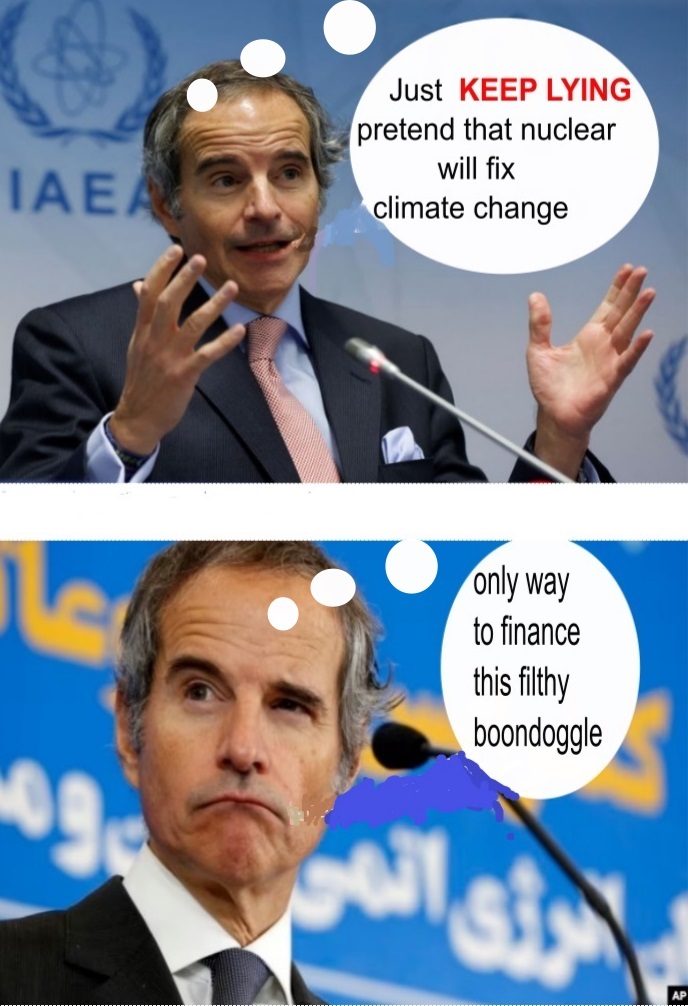
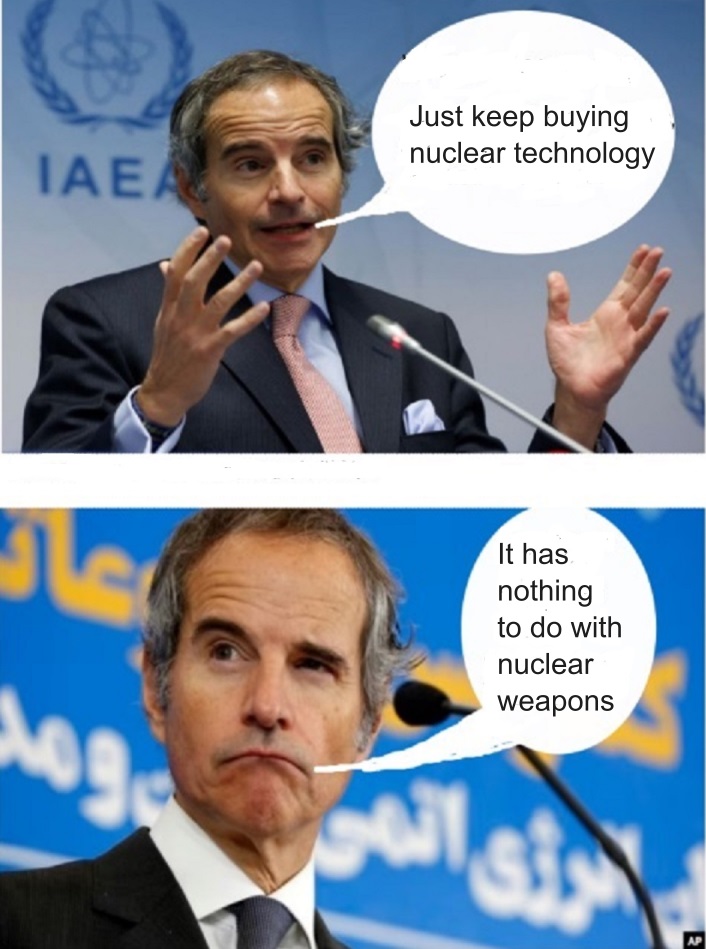

The head of the U.N. nuclear agency said Friday that he expects the use of
nuclear power could more than triple by 2060. Rafael Grossi said in the
International Atomic Energy Agency´s annual report to the U.N. General
Assembly that this will be driven by electrification, data centers powered
by artificial intelligence and “technology companies´ appetite for
reliable, carbon-free power. “Nuclear energy is seen by a growing number of
countries as key to improving their energy security, he said, stressing
that it is on par with solar energy and “safer than every other option.”
Daily Mail 23rd Oct 2026,
https://www.dailymail.com/wires/ap/article-16234629/Nuclear-power-triple-2060-UN-agency-says.html
Floating nuclear power in northern New Brunswick: a reality check

The Minister did not explain how much any jobs created would cost taxpayers.
“not a single HTGR-termed ‘commercial’ has proven financially viable.”
The proposed SMR project at Belledune has many more unknowns. The most obvious is how the project will secure the billions of dollars required to develop and build a first-of-a-kind reactor on the site,
Susan O’Donnell, October 21, 2026, https://nbmediacoop.org/2026/10/21/floating-nuclear-power-in-northern-new-brunswick-a-reality-check/
Recently a proposal to build a floating nuclear power plant with two small reactors at the Port of Belledune made the news.
Is the proposed project more than just another nuclear establishment pitch for public funding? Will New Brunswick be sucked into a third SMR vortex demanding tens of millions in subsidies before spiralling into dust?
Last October, Energy Minister René Legacy told the CBC the government was no longer interested in supporting “first of a kind” small modular nuclear reactors (SMRs). In 2018, the government invited two start-up companies into New Brunswick – ARC and Moltex – and spent the next seven years promoting and supporting their “advanced” SMR projects. In 2025, the government finally faced the cold reality: the SMR benefits assured by the nuclear establishment – jobs, export markets and revenue windfalls – would never materialize in New Brunswick.
By that point, the federal and provincial governments had already handed almost $130 million in subsidies to ARC and Moltex and other nuclear-adjacent organizations cashing-in on the SMR public funding spree in the province.
What a difference a year makes. This October, Minister Legacy told The Globe and Mail about a new project proposing to develop a marine vessel to support two first-of-a-kind small nuclear reactors at the Port of Belledune. He claimed the project was a good idea because the jobs created would capitalize on the province’s strengths: “lots of machinists, lots of welding, lots of industrial might.” The Minister did not explain how much any jobs created would cost taxpayers.
According to the Globe article, the New Brunswick government has expressed interest in purchasing the power produced by the two SMRs on the vessel. That power would likely be the most expensive ever produced in the province.
The federal public purse has already been cracked open for the proposed nuclear vessel giving a hint of the provincial funding which may need to follow. The federal government gave Montreal-based start-up Prodigy Clean Energy a $2,750,000 subsidy in 2024 to develop “floating transportable nuclear power plants as part of the SMR supply chain.”
In 2025, Prodigy said its proposed nuclear vessel would host the Westinghouse eVinci, a small reactor design under development in the U.S. Just a year later, Prodigy has flipped to a different American reactor for its Belledune project, a high-temperature gas reactor (HTGR) cooled by helium. Only one HTGR cooled by helium is in operation, in China.
Analysis of the operational history of HTGRs reveals a troubling past. Several small HTGRs cooled by helium were developed at considerable expense in countries including Germany, the U.S. and South Africa. The HTGRs were prone to many small failures resulting in frequent shutdowns, with final shutdowns “well before the operating periods envisioned for them.” In addition, HTGRs are uncompetitive compared to conventional reactors cooled by water and “not a single HTGR-termed ‘commercial’ has proven financially viable.”
For the New Brunswick project, it’s currently unclear if the proposal includes any reactor construction in Belledune. The two BANR reactors may be constructed entirely in the U.S. and shipped to the Port of Belledune. BWXT has operations in Canada with expertise making reactor components but has no reactor construction experience in this country.
The proposed SMR project at Belledune has many more unknowns. The most obvious is how the project will secure the billions of dollars required to develop and build a first-of-a-kind reactor on the site, if indeed the plan is to construct the two reactors in the province, plus the cost of building the marine vessel.
The cost of the only SMR under construction in Canada, at the Darlington nuclear site on Lake Ontario, is a minimum of $6.1 billion plus $1.6 billion for associated infrastructure. That project has been funded entirely by public subsidies because no private sector investors have been found despite considerable promotion efforts.
The Belledune project has buy-in from two Mi’gmaq communities in northern New Brunswick, Eel River Bar First Nation (Ugpi’ganjig) and Pabineau First Nation (Oinpegitjoig), and the project is being promoted as majority-owned by First Nations.
The Indigenous involvement provides a clue for how public funds could flow to the Belledune project. In June this year, the federal and Ontario governments gave seven First Nations in Ontario part ownership of the SMR at the Darlington site. The part ownership was structured as a “loan guarantee” of $715 million to the First Nations from a federal Indigenous loan program, public funds that were streamed through to the Darlington SMR under construction.
Of particular note, the intended market for the transportable nuclear power plant is remote mines and communities. The BANR reactor would produce power at a cost far higher than the diesel fuel generators currently in place. For this and many other reasons, research found that the market for SMRs in mining and remote communities is “too small to be viable.”
It’s also unclear how NB Power would be involved in the project. The utility was the proponent for the two earlier failed SMR projects – ARC and Moltex – which were intended to be constructed at NB Power’s Point Lepreau nuclear site.
Developing a second licenced nuclear site in the province, in Belledune, would be a costly and significant undertaking requiring compliance with numerous nuclear safety and security regulations. NB Power is already planning to convert its Belledune coal-fired plant to burn biomass fuel, and its Integrated Resource Plan released earlier this month made no mention of SMRs at Belledune, or any SMRs in the utility’s future 20-year scenarios.
The motivations behind the New Brunswick government’s support of the Belledune nuclear project are hard to fathom, considering how recently the province was burned by the Moltex and ARC SMR fiascos and the decades-long slow train wreck and money pit that is the Point Lepreau Nuclear Generating Station. The motivations certainly may include hopium, an irrational, addictive belief that a new nuclear reactor will eventually work as promised in New Brunswick.
A commentary published earlier this month, RIP SMRs, ended: “Apparently, old SMR ideas never really die. They will just, eventually, fade away.” How long the proposed Belledune floating SMR idea will take to fade away and how much it will cost us before it does are open questions. New Brunswickers should remain vigilant to ensure that not too many more public millions (billions?) are squandered before the hopium runs out and reality kicks in again.
Correction: An earlier version of this commentary stated that helium gas-cooled reactors do not exist. The story has been corrected to state that only one high-temperature gas reactor cooled by helium is in operation, in China. Updated at 5:14 PM, Oct. 22, 2026.
Susan O’Donnell is lead investigator of the CEDAR project in the Sustainability and Environmental Studies Program at St. Thomas University and a member of the board of directors of the NB Media Co-op.
Calder Hall at 70 – the sickening hype from the Nuclear Industry belies the Reality
By mariannewildart, https://lakesagainstnucleardump.com/2026/10/22/calder-hall-at-70-the-sickening-hype-from-the-nuclear-industry-belies-the-reality/
In all the media regurgitation of Sellafield’s triumphant press releases about “Calder Hall at 70” featuring the young Queen Elizabeth pressing the button to turn the reactors into nuclear waste, there is no mention that Calder Hall was built to provide plutonium for bombs. As the Tribune points out in 1982:
“WHEN the Queen opened Britain’s first nuclear reactor, Calder Hall, on October 17,1956, she said: “It may well prove to have been among the greatest of our contributions to human welfare that we led the way in demonstrating the peaceful uses of this new source of power.” But Calder Hall had nothing to do with either human welfare or with peace – its purpose was to produce plutonium for the manufacture of nuclear weapons. The hypocrisy of the British Establishment knew no bounds and the public was duped. Newsreels proclaimed an era of nuclear-generated electricity that would be cheap and clean and would bring prosperity to Britain. It was only in later years that the nuclear industry began to concede that Calder Hall was not what it had been made to seem. As the General Manager of Windscale, Calder Hall and Chapelcross admitted ten years later: “The primary function of the reactors at Calder Hall was to produce plutonium for the military programme and the design was optimised for this purpose.”
Another feature of Calder Hall is its name. Named after the beautiful Lakeland stone and slate farm the government compulsory purchased to provide land for the bomb making enterprise, along with a whole host of other Lakeland farms now gobbled up by the nuclear industry and either used as offices or demolished.
The nuclear industry vies with Beatrix Potter in its purchase of Lake District farms. Potter purchased around 16 farms, and the nuclear industry has purchased at least 11 that we know of in the West Cumbria area alone. Many of these have been demolished.
- Calder Hall Farm, Seascale
- Fleming Hall Farm, Seascale
- Seascale Hall Farm, Seascale
- Longlands Farmhouse and cottage, Gosforth
- Town End Farm, Gosforth
- High Ling Bank Farm, Ponsonby, Gosforth
- Calder Town End Farm, Seascale
- Greenmoorside Farm
- Mid Tarn Farm
- Tarn Head Farm
- Yottenfews Farm House (now a corporate office for Sellafield)
The only difference between Beatrix Potter’s farm purchases and the nuclear industry’s purchases of Lake District farms is intention.
Beatrix Potter, best known as the author-illustrator of “The Tale of Peter Rabbit“, supported the efforts of the National Trust to preserve not just the places of extraordinary beauty but also those heads of valleys and low grazing lands that would be irreparably ruined by development… She left nearly all her property to the National Trust, including over 4,000 acres (16 km2) of land, sixteen farms, cottages and herds of cattle and Herdwick sheep. Hers was the largest gift at that time to the National Trust, and it enabled the preservation of the land now included in the Lake District National Park and the continuation of fell farming.
A friend of Beatrix Potter, the sculptor Josefina Vasconcellos who arrived in Cumbria in the 1930s remarked: “When I first came to the Lake District whenever John or I walked there were birds but since the atomic station came there have been less and less and less, they almost died out.” The atomic (nuclear power) station to which she refers is Windscale, which opened in 1950 and Calder Hall. The site was renamed Sellafield.
Nuclear power produces enormous amounts of waste heat. This requires lots of water for cooling. During this cooling process, Nuclear Power Plants are also legally allowed to discharge long-lived, lethal, radioactive materials into the air and water, along with heat.
Water from Wastwater lake is pumped to Sellafield nuclear waste site as a fresh water supply. The NDA (Nuclear Decommissioning Authority) has taken over the licence once held by BNFL (British Nuclear Fuels plc) which allows them to extract a maximum of 18,184.4 m³ a day (over 4 million gallons) and 6,637,306 m³ a year from Wastwater to use on site for various processes.” This is still not enough so an equivalent amount of water is also taken from rivers and boreholes to cool the heels of the nuclear industry. It was farmers in Wasdale and Ennerdale who stopped the nuclear industry taking even more of the Lake District’s top quality water, however the industry still has first dibs on our fresh water.
It is well known that Ruskin, Beatrix Potter and Wordsworth are Lake District icons. Not one of these icons would have separated the West Coast of Cumbria from the Lake District as we have been taught to do in the nuclear age.
The Lake District National Park is an artificial construct which does itself or us no favours in its readiness to publicly disown West Cumbria rather than publicly oppose the diabolic nuclear developments in the Lake District.
This is what the Lake District National Park Authority said said in 2012 about the plan for a geological dump for heat generating nuclear waste:
“It remains a concern that significant media interest highlights the potential location of the geological disposal facility in the ‘Lake District’ rather than ‘West Cumbria.”
Roll on to 2026 and the Chair of the plan for the nuclear waste dump in the Lake District, aka GDF (Geological Disposal Facility) in South and Mid Copeland is Andy Pratt. Andy Pratt is also the Lake District National Park’s “Member of Development Control Committee and the Strategy meeting.” No conflict of interest there then?!
The Lake District National Park Authority’s insistence that ‘West Cumbria’ is an entirely different geographical area to the ‘Lake District’ is an entirely artificial construct which has come about as a direct result of the ruinous nuclear industry.
When the Lake Counties included Cumberland, Westmorland and part of Lancashire there was none of today’s parochialism and narrow mindedness about what constituted the Lake District.
Today the plan for the “Biggest Nuclear Development in Europe” is promoted as if in an isolated industrial “West Cumbrian” bubble, despite being only 20 miles from Keswick and 25 miles from Ambleside as the crow flies.
Where are the protectors of the Lake District?”
Conservation in the Lake District is now focussed on rewilding but far from the fells being covered in trees the pre-Neolithic landscape would have been a relatively open park-like mosaic rather than closed forest.
It is a very safe bet that there are far fewer of Beatrix Potter’s beloved Herdwick on the Lakeland fells now than there were when she was the Ennerdale Show President in the 1930’s.
It is also very safe to say that the wildlife of the Fells was far more abundant in Beatrix Potters hayday. Research into the ‘brand’ of Cumbria has shown that farming and tourism are the two industries most damaged by nuclear developments.
Undermining farming and tourism would leave the field wide open for the nuclear industry to achieve its ambition of new build and burying heat generating nuclear waste under Cumbria.
Back to the friend of Beatrix Potter, the sculptress Josefina de Vasconcellos who arrived in Cumbria in the 1930s:
“When I first came to the Lake District whenever John or I walked there were birds but since the atomic station came there have been less and less and less, they almost died out”.
Josefina’s observations are backed up by science. Lancaster University has been studying the effects of chronic long-term radiation on animals. This includes: “Severe effect on reproduction hatching and abnormal larvae (fish).”
These test studies are backed up by findings in the real world. Many universities worldwide have been studying evidence from nuclear accidents:
“Low-dose radiation has been known to have negative consequences for living beings for almost 100 years. Indeed, background radiation causes the death of tens of thousands of humans annually. These ‘natural’ effects may be exacerbated by the 23 nuclear accidents recorded during the last century”.
Radiation Free Lakeland believe Sellafield to be the equivalent of an ongoing accident with routine releases of radiation to sea, air and groundwaters.
Beatrix Potter left a vast area of Cumbria to the National Trust to be farmed with the express wish of keeping Herdwicks on the land. Her life’s work was to retain the delicate balance created by the domestic and wild community that share and maintain the Lake District.
Nuclear is needed in that living landscape like a hole in the head.
The hype surrounding “Calder Hall at 70” is nuclear propaganda while the reality of at least a dozen Lake District farms bought up abandoned and demolished by the industry are the warning we should all heed.
Global polls find Israel is the least popular country on Earth, disliked by 67% of people

The comprehensive study found that Israel is the most disliked country on Earth — with an even lower approval rating than North Korea and Afghanistan.
Among young Americans, the trend is even clearer. Only 18% of people aged 18-29 have a favorable view of the Israeli regime. A mere 12% of young Democrats see it positively, while just 28% of young Republicans support it.
By Ben Norton, 20 Oct 26, https://geopoliticaleconomy.com/2026/10/19/polls-israel-least-popular-country-disliked/ Excellent graphics and charts
Comprehensive global polls show Israel is now the most unpopular country on Earth, following its thoroughly documented genocide against the Palestinian people in Gaza.
The organization the Alliance of Democracies conducts a comprehensive study every year called the Democracy Perception Index.
This group is by no means biased against Israel; it is in fact funded by Israel’s closest allies, including the European Union, US government-financed organizations, Ukraine, Taiwan, and major US corporations like Microsoft and Palantir.
Nevertheless, despite its dubious financial sponsors, the Alliance of Democracies publishes interesting polling data.
For its 2026 survey, the Alliance of Democracies interviewed tens of thousands of people in 85 countries, and asked them for their opinion on 132 foreign states and international organizations.
The comprehensive study found that Israel is the most disliked country on Earth — with an even lower approval rating than North Korea and Afghanistan.
The United States, the main sponsor of Israel, is the fifth-most hated country.
The same survey also asked people in 98 countries if they agree more with Palestine or Israel. The majority said they support Palestine. Only a small minority (17%) backed Israel.
Palestine is especially popular in the Global South, which represents the majority (approximately 86%) of the world population.
Global support for Israel has collapsed in recent years, as the settler-colonialist regime has carried out horrifying atrocities in Gaza.
A United Nations independent international commission of inquiry concluded that Israel has committed genocide against the Palestinian people.
This was the one of the most well documented genocides in history. Many of Israel’s atrocities were livestreamed on social media.
The International Criminal Court issued an arrest warrant for Israel’s longest-serving prime minister, Benjamin Netanyahu, charging him with crimes against humanity.
Pew study found 67% of people across 36 countries oppose Israel
The US-based Pew Research Center similarly found that Israel is now widely disliked worldwide.
Pew surveyed adults in 36 countries in the spring of 2026.
A median of two-thirds (67%) of people have a negative view of Israel, whereas only 25% have a positive view.
Israel is extremely unpopular across Europe, North America, Latin America, and Asia.
India is the only major Asian country where Israel has a plurality of support — and even then, it is a mere 32% of Indians, compared to 28% who oppose Israel.
In the Global South, there is one exception when it comes to Israel: Africa.
Several countries in Africa have significant populations with favorable views of Israel. This is largely due to the spread of Evangelical Christianity on the continent, particularly by US missionaries.
Views of Israel predictably follow political ideology, Pew found.
Leftists across the world have an overwhelmingly negative perception of Israel, whereas the settler-colonialist regime’s main base of support is the right wing — although unfavorable views are growing among conservatives as well.
Support for Israel has collapsed in the US; most Americans now oppose it
The principal sponsor of the Israeli settler-colonialist regime, historically, was the United States.
However, the extremely well-documented Israeli genocide in Gaza has caused a massive shift in opinion among the US population.
More than three-fifths (62%) of North Americans have a negative view of the Israeli regime, according to a Pew poll conducted in May 2026. This is up from 43% in 2022.
Left-leaning Americans are much more critical of Israel, and supportive of Palestinians.
Just 16% of Democrats and left-leaning Americans have a favorable view of the Israeli regime. On the other hand, 51% of Republicans support it.
Among young Americans, the trend is even clearer. Only 18% of people aged 18-29 have a favorable view of the Israeli regime. A mere 12% of young Democrats see it positively, while just 28% of young Republicans support it.
The only remaining significant base of support for Israel in the United States is Republicans over the age of 50.
Netanyahu presses Trump to renew aggression on Iran ahead of Israeli elections

Analysts argue that by reigniting and expanding Israel’s multi-front regional war in the coming weeks, Netanyahu may ensure the postponement of the Israeli elections in order to stay in office for the longest possible period.
Aseel Saleh, October 15 2026, https://breakthroughnews.org/2026/10/15/netanyahu-presses-trump-to-renew-aggression-on-iran-ahead-of-israeli-elections/
Two weeks before the Israeli legislative elections scheduled on October 27, 2026, the far-right Israeli government, led by Prime Minister Benjamin Netanyahu, has revealed its intentions to further perpetuate and expand its three-year multi-front war across West Asia.
On Tuesday, October 13, Netanyahu appeared in a televised speech during a visit to the apartheid wall established inside the occupied West Bank, threatening the Palestinian Authority.
Standing near the Tulkarm refugee camp alongside Israel’s Defense Minister Israel Katz, the Israeli PM confirmed that the camp’s displaced residents, whom he described as “terrorists,” will not return to their homes despite an order from the Israeli Supreme Court authorizing their return.
The Tulkarm Refugee Camp was among the three largest Palestinian refugee communities in the northern West Bank targeted in the large-scale Israeli military operation dubbed “Operation Iron Wall.”
The operation resulted in the displacement of at least 33,362 Palestinians, the killing and injury of hundreds of others, and the arrest of over 1,000, according to UN estimates. It also caused severe damage and destruction of residential buildings, infrastructure, and properties.
The “Iron Wall,” which was launched in early 2025, was followed by another extensive operation at the end of the year.
Netanyahu’s government claimed that both operations aimed at eliminating Palestinian armed groups in the targeted areas. However, for many the outcome of the operations makes clear that their objectives reflect Israel’s ethnic-cleansing policy against the Indigenous Palestinian population.
Critics accuse Netanyahu of manufacturing rivals to bolster political survival
As those operations have seemingly resulted in largely restraining resistance groups across the West Bank, no valid pretext has been left for Netanyahu’s government to further escalate military operations in the occupied territory.
Therefore, Netanyahu has sought to designate a new enemy posing a potential threat to Israel’s security: the Palestinian Authority (PA), whose security apparatus represents the only remaining armed force on the ground today.
The stance and actions of the PA under President Mahmoud Abbas have been, for over two decades, marked by compliance, reconciliation, and on some occasions blatant collaboration with the Israeli authorities.
Thus, accusing the entire political entity of orchestrating hostilities against Israel would not have sounded credible to the public. This arguably led Netanyahu and Katz to formulate the pretext for a justified potential war against Palestinians in the West Bank by alleging that personnel of the PA’s security forces, alongside members of the Fatah-affiliated Tanzim, may defect and launch “Jihadist attacks” against Israeli forces and settlers.
It’s worth noting that the majority of the PA’s security forces are affiliated with Fatah, the ruling and largest Palestinian faction in the West Bank. Meanwhile, the Tanzim represents Fatah’s grassroots and quasi-military field activity.
“Our enemies are thinking of testing us in these days leading up to the elections,” Netanyahu noted, referring to the PA, during his tour near the apartheid wall.
“I warn them: we are prepared for any scenario, including a so-called reversal of roles. In such a case, I do not suggest our enemies test us. You will face force here that you never dreamed of,” he continued.
Netanyahu’s statements came to reaffirm a “contingency plan,” which Katz revealed last week and said Netanyahu had approved in case the imagined scenario occurs.
Analysts believe a war in the West Bank ahead of the upcoming Israeli elections is not off the table, particularly if Netanyahu and his far-right coalition feel their victory is uncertain.
Early polling ahead of the election consistently shows Netanyahu’s bloc falling short of the 61 seats required to form a majority. It is currently positioned at just 51 to 53 seats.
Even if launching the war does not succeed in delaying the upcoming elections, it apparently aims to strengthen public support for his coalition, which gains much of its backing by pushing for ethnic cleansing to fulfill the “Greater Israel” project.
Israel’s escalating violence and provocations seen as prelude to war in West Bank
The last few weeks have made clear that Netanyahu’s government previously laid the groundwork for a desired war scenario in the West Bank.
Israeli forces escalated their raids in different parts of the West Bank, focusing on the de facto administrative capital of the PA, Ramallah, and Al-Bireh, which has simultaneously become a flashpoint for settler violence.
The Israeli military has also launched a campaign, destroying memorials of martyrs and late prominent Palestinian leaders all over the territory.
This included the demolition of a memorial displaying photos of the late Palestinian President Yasser Arafat and other deceased top Fatah leaders in the Al-Jalazone refugee camp north of Al-Bireh city on Wednesday, October 14 – a move that many interpreted as an attempt to provoke indignation, particularly among the movement’s grassroots.
The offensive on Al-Jalazone came one day after the Israeli military launched an expanded operation in Ramallah and Al-Bireh, shutting down Addameer and the Union of Palestinian Women’s Committees (two civil society organizations concerned with documenting violations committed by the Israeli occupation authorities against the Palestinian people).
Journalists were obstructed from covering the raid as Israeli soldiers threatened them with rifles, and fired rubber-coated metal bullets and teargas at them.
As part of the operation, the Israeli forces also raided the courtyard of the Palestine Medical Complex (previously known as Ramallah Hospital), arrested journalist Abdul Qader Hailan, and wounded journalist Yousef Shehadeh alongside two other Palestinian citizens.
Netanyahu reportedly pressed Trump to resume aggression on Iran
While the likelihood of igniting a war in the West Bank is seen as higher and more immediate for Netanyahu and his cabinet, recent media reports indicate he has attempted to persuade US President Donald Trump to resume the aggression against Iran before the Israeli elections.
Even if Trump does not comply with Netanyahu’s demand regarding Iran, the situation in the West Bank foreshadows more tragic events for the Palestinian people and a predicament for the PA in the upcoming weeks.
EU summit in Brussels: European powers intensify war drive against Russia

Ever more billions for war
Zelensky put Ukraine’s war costs for 2027 at €155 billion and demanded at least €70 billion in additional European support. With this money, Ukraine could produce two to three times as many drones and massively increase military pressure on Russia. The EU has already set in motion a €90 billion loan for 2026 and 2027. No decision was reached in Brussels on the new demands for billions; the Commission has been tasked with developing financing options.
Johannes Stern@JSternWSWS16 October 2026, https://www.wsws.org/en/articles/2026/10/17/gbsa-o17.html
The EU summit held on Thursday and Friday in Brussels was an expression of the dangerous escalation of the international war crisis. While the Trump administration, amid its conflict with the European powers, is seeking at least for the moment a certain accommodation with Russia, the EU governments, led by Berlin, are pressing for the continuation and expansion of the Ukraine war. They want to shoulder an increasing share of the financial and military burdens themselves and build Europe into an independent military power.
This is accompanied by an escalation that threatens to provoke a direct war between NATO and Russia, including nuclear war. At the same time, the summit discussions on rearmament, “competitiveness,” trade war and migration underscore that the war drive abroad is inseparably linked to intensified social attacks and authoritarian measures at home.
Conflicts between Washington and Europe
At the center of the summit was the demonstrative support for Ukrainian President Volodymyr Zelensky. Following an agreement with Putin on Russian diesel supplies, Trump had eased sanctions and criticized Ukrainian attacks on Russian oil refineries. He also demanded a change in Ukraine’s leadership. The European governments, by contrast, are determined to continue attacks on Russia’s energy infrastructure and tighten sanctions.
European Council President António Costa declared on Friday, standing alongside Zelensky: “Now is not the time to withdraw support for Ukraine. Now is not the time to ease sanctions against Russia.” Instead, the EU must increase its support and pressure on Russia. European Commission President Ursula von der Leyen announced preparations for a 22nd package of sanctions.
The German government is taking a particularly aggressive stance. Chancellor Friedrich Merz declared that the EU must “once again … increase” its funding for Kiev in order to “provide lasting support” to Ukraine. This was necessary, he said, to defend “the political order of Europe.” The conflict with Washington now also concerns control over approximately €210 billion in frozen Russian central bank assets in Europe. According to reports, US negotiators want to use part of these assets in negotiations with Moscow. Merz brusquely rejected this: “That is our affair, and we will decide on it.”
Behind these differences lie rival geostrategic and economic interests. The European powers fear that Trump could conclude an agreement with Putin that would undermine their own war aims and influence in Eastern Europe. At the same time, Ukraine’s war effort remains dependent on American military technology and intelligence support. Reports of restrictions on the satellite-based Starshield system demonstrate this dependence particularly starkly.
Ever more billions for war
Zelensky put Ukraine’s war costs for 2027 at €155 billion and demanded at least €70 billion in additional European support. With this money, Ukraine could produce two to three times as many drones and massively increase military pressure on Russia. The EU has already set in motion a €90 billion loan for 2026 and 2027. No decision was reached in Brussels on the new demands for billions; the Commission has been tasked with developing financing options.
The scale of the sums already mobilized is enormous. According to a study by the Kiel Institute for the World Economy, the German government puts its Ukraine support to date, including commitments, at around €100 billion. Approximately €41.7 billion is recorded as direct aid to Ukraine, while another €22 billion consists of future military commitments and possible expenditures. Together, this amounts to €63.7 billion, of which approximately €56.3 billion is military aid. In addition, €35.9 billion has been spent predominantly on Ukrainian refugees in Germany. Not all of the budgeted funds recorded have yet been disbursed.
The political thrust of the Kiel study is revealing. Under a headline emphasizing that “only” €41.7 billion actually went to Ukraine, it stresses that spending on refugees does “not support the Ukrainian government in its defense.” This juxtaposition alone makes the political orientation clear: While support for refugees and other social expenditures face growing pressure for cuts, ever larger sums are to be mobilized for the war effort. Added to this are hundreds of billions more that are to flow into military budgets in the coming years.
Concrete preparations for a NATO-Russia war
Parallel to the summit, the military confrontation is intensifying. NATO Supreme Allied Commander Europe Alexus Grynkewich presented his “Theory of Victory” in Warsaw: “Block, Blunt, Break.” A potential attack is first to be repelled, then the opposing armed forces smashed, and finally the command, supply and production structures supporting them disabled. Grynkewich describes the strategy as defensive, but in a major war the planned operations could extend deep into Russian territory. He praised Germany as the “engine of NATO.”
At the same time, NATO conducted the nuclear war exercise “Steadfast Noon” in Italy this week, involving 17 countries, including German Tornado fighter jets. NATO describes it as a routine exercise without live nuclear weapons. Yet it rehearsed procedures for nuclear operations at a time when the risks of escalation are rapidly increasing.
Russia is responding to NATO’s constant provocations with nuclear threats. In early October, Putin warned that Russia could use its entire arsenal in the event of a blockade of Kaliningrad. Now, State Duma Deputy Alexei Zhuravlyov has told Lenta.ru that, in the event of a NATO attack, Russian nuclear strikes could target NATO headquarters, as well as US nuclear weapons bases in Germany, Belgium, Italy and Turkey. Zhuravlyov’s threat is not an official government statement. His remarks nevertheless demonstrate how concretely sections of the Russian establishment are discussing nuclear war in Europe.
Russian military commentators warn that NATO’s strategy could serve as a cover for “preemptive” strikes. They draw parallels to Hitler’s war of annihilation against the Soviet Union, which Nazi propaganda likewise justified as “defense” against an allegedly planned Soviet attack.
Regardless of NATO’s specific timetable for war, the mutual threats already demonstrate that an escalation could rapidly spiral out of control. In the Black Sea, Romania and Bulgaria are demanding additional NATO measures against Russia following drone attacks on merchant ships.
These sums have immediate social consequences. While debt rules are relaxed for rearmament, European governments are organizing historic cuts to social benefits and public services. Under the slogan of “competitiveness,” the EU summit adopted measures for deregulation, accelerated approval procedures and further economic restructuring. Jobs are being eliminated on a massive scale, wages cut and working conditions worsened.
The EU also wants to create new trade policy instruments to take tougher action, particularly against China. Merz stated that the Commission had been given a mandate to this end. Von der Leyen announced additional import restrictions.
Rearmament and social devastation
The migration debate at the summit also revealed its reactionary direction. Italy, Denmark and Poland attacked Spain’s planned legalization of the residence status of around 600,000 migrants. Discussions included tightening detention provisions in border procedures and suspending asylum applications in times of crisis. In the Middle East, against the backdrop of the US-Israeli war of aggression against Iran, the summit focused above all on securing trade and energy routes.
As the EU advances its global war offensive and reactionary domestic agenda, tensions among the European imperialist powers are growing. The dispute over the next EU budget for 2028 to 2034 exposed these rivalries. Net contributors, such as Sweden, are refusing the higher contributions being demanded, while the EU seeks to mobilize additional funds for strategic and military projects. No agreement has yet been reached.
The extreme escalation of war is also a response to growing social and political opposition in Europe. In France, Spain and other countries, mass protests and strikes are developing against social cuts, militarism and authoritarian measures. Confronted with the deep crisis of the established parties, the ruling classes are attempting to divert this opposition outward through war propaganda and nationalism and force the population to rally behind their war policies.
But this course will only further intensify social antagonisms. The gigantic military expenditures, the destruction of jobs and social benefits, and the increasing attacks on democratic rights will not extinguish the resistance of the working class and youth but further fuel it. At the same time, the escalating confrontation with Russia threatens to plunge all of Europe into a nuclear world war.
Europe’s response to the war and the crisis of its alliance with Washington is a gigantic rearmament program. “ReArm Europe” is intended to make possible up to €800 billion in additional defense spending by 2030, while the SAFE program provides €150 billion in loans. In Germany, defense spending is to rise to approximately €140 billion in 2027—and to well over €200 billion in 2029. The German government wants to build the Bundeswehr into Europe’s strongest conventional army.
The decisive task is to arm the growing opposition with an independent socialist perspective. The working class must organize independently of the established parties and unite its struggles across all national borders against capitalism, militarism and war. The nationalist and militarist project of the European governments must be opposed with the struggle for the United Socialist States of Europe.
Campaigners warn Welsh island could be target in nuclear attack amid fears of ‘no safe evacuation’
22 Oct 2026, Dale Spridgeon, Local Democracy Reporter, Nation CYMRU
.
The campaign group raised its concerns in an open letter to the Secretary of State for the Department for Energy Security and Net Zero (DESNZ), Miatta Fahnbulleh MP.
Wylfa was selected by the UK Government in April and the nuclear project is being led by Great British Energy – Nuclear (GBE-N) and Rolls-Royce SMR in a £2.5 billion partnership
It’s expected to create 8,000 jobs across the UK, including 3,000 in North Wales.
DESNZ has stated the “highest standards” of safety and security surround the UK’s nuclear sites.
GBN-E said it “recognised” that the people of Ynys Môn had questions about the plans and “looked forward to discussing them openly and constructively.”
But the promises of new jobs and safety assurances have not reassured the anti-nuclear campaigners who have expressed their “deep concerns”.
Increasing threats
In their letter to Ms Fahnbulleh, they said: “Increasing threats of war mean that we will be targets for attack. Russia and Iran have both threatened us due to our interventions in Ukraine and the use of British bases for the bombing of Iran. Nuclear power stations are now regular targets for attack.
“How are we to be protected? How are we to get off the island in the event of an attack or nuclear accident?
“There are two bridges connecting us to the mainland, and even if there were three, there would be no safe evacuation possible, without the danger of accidents.
“RAF Valley is also on the island, making us a further target.”
They also believe that waste produced by the possible new nuclear reactors will also “serve as an ongoing target and risk” and would “remain on-site for at least 100 years, being too hot to remove”.
“Our future generations will be responsible for this; not a legacy we want to bequeath.”
They dispute claims “electricity generated at Wylfa would go to homes” adding: “how are we to know the end use of the electricity to be generated by these nuclear reactors.”
They also believe droughts and wildfires “have threatened the safety” of nuclear plants all over the world including at Sizewell B, this year.
“We implore you to reconsider pouring more money into these nuclear reactors, yet to receive the Generic Development Consent order, and instead concentrate our resources to upgrading the grid, as you propose, and using our excellent renewable energy sources.”…………………. https://nation.cymru/news/campaigners-warn-welsh-island-could-be-target-in-nuclear-attack-amid-fears-of-no-safe-evacuation/
Britain still plans new nuclear sub every eighteen months
By George Allison, October 22, 2026, https://ukdefencejournal.org.uk/britain-still-plans-new-nuclear-sub-every-eighteen-months/
Ministers have confirmed that the intention remains to procure up to twelve SSN-AUKUS submarines, and that the investments needed to establish industrial capacity for a submarine every eighteen months from the mid-2030s have been made, according to an answer given in Parliament.
Andrew Rosindell, the Reform UK member for Romford, asked the Secretary of State for Defence whether he would make it his department’s policy to increase total hull numbers in the submarine service.
Luke Pollard, the Minister of State for Defence, said: “As set out in the Defence Investment Plan (DIP), the Ministry of Defence intends to procure up to 12 SSN AUKUS submarines.
“The programme is currently midway through the Detailed Design and Long Lead (D2L2) phase and we anticipate that the number of submarines will be confirmed before the end of this phase in 2028.
“Through the DIP, the Government has made the investments necessary to establish the industrial capacity required to ultimately deliver a submarine every 18 months from the mid-2030s to ensure we can deliver an expanded SSN force.”
Britain currently operates seven Astute class attack submarines, and this publication reported the government’s commitment to build twelve new nuclear attack submarines when the plan appeared. A drumbeat of one boat every eighteen months would be the fastest sustained British submarine production rate since the Cold War, and the figure follows from the capacity being built at Barrow.
Barrow has been expanding through the Barrow Infrastructure Programme, with new build halls, a reconfigured yard and a recruitment effort that has taken the BAE Systems workforce there past twelve thousand. Rolls-Royce Submarines in Derby has doubled its site to produce reactors for both Dreadnought and SSN-AUKUS, and the Sheffield Forgemasters work on large forgings feeds the same chain.
Confirmation of the final number before the end of the detailed design phase in 2028 ties the fleet size to what the yard can actually sustain. Senior officials told the Commons Defence Committee earlier this year that submarine fleet size was conditional on Barrow output, and a decision due in 2028 falls inside this Parliament.
Australia will build its own SSN-AUKUS boats at Osborne in South Australia to a common design, and the two production lines are intended to share a supply chain, which is part of the case for the industrial investment on the British side. Dreadnought holds priority at Barrow through the late 2020s, so attack submarine production builds up behind the ballistic missile boats.
Pollard confirmed in a separate answer the same day that steel will be cut on the first British SSN-AUKUS next year, and that the Preliminary Design Review for the class concluded on the first of July. Twelve boats remains an upper bound until the design phase closes.
Scottish Greens set to vote on whether to support new nuclear power

THE Scottish Greens are set to vote on whether to support new nuclear power
at their upcoming party conference. The Greens will meet in Inverness this
weekend for their autumn conference, where they will debate a motion
supporting the construction of new nuclear plants provided certain
conditions are met.
The English and Welsh Greens voted to drop their
opposition to nuclear power earlier this month. The party has long opposed
the construction of new nuclear power stations in Scotland, describing it
as “outrageously expensive”, “unnecessary”, and arguing that it detracts
from renewable energy.
In 2022, co-leader Ross Greer – then the party’s
finance spokesperson – said: “Proposing new nuclear power stations as a
solution to today’s energy crisis is like thinking the solution to your
house being on fire right now is the construction of a billion pound fire
station in twenty years’ time.”
The National 22nd Oct 2026
https://www.thenational.scot/news/26661068.scottish-greens-vote-backing-nuclear-power-major-policy-shift/
Walt Zlotow – Thank you Mr. President for stopping the flow of most US treasure to the Ukraine proxy war
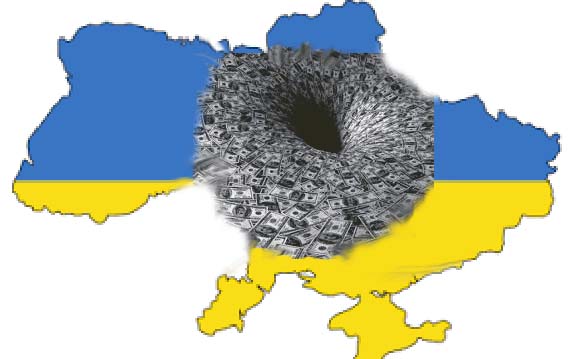
Walt Zlotow West Suburban Peace Coalition Glen Ellyn IL – 23 Oct 26
Former President Biden squandered upwards of $175 billion in direct and indirect aid to Ukraine in America’s senseless proxy war to weaken, destroy Russia.
Back in November, 2021, Russian President Putin reached out to President Biden one last time to avert military action against Ukraine massing troops to finish off Ukrainian Donbas separatists seeking autonomy and peace from their Kyiv masters. Included was Russia’s security demand that Ukraine not join NATO, a Russian red line it had been warning the US not to cross since America’s 2008 NATO membership pledge to Ukraine.
Biden’s response? Russia’s security concerns regarding Ukraine NATO membership and Donbas autonomy were not even on the agenda. Biden knew that meant Russia would launch an invasion which occurred 3 months later. He cared not one whit how many would die, believing that Russia would self destruct from US aid to Ukraine like Russia did in Afghanistan between 1979 to 1989.
Biden left office 3 years later with Ukraine in ruins with no chance of prevailing, Russia stronger than ever, and $175 billion of precious US treasure squandered on death and destruction in furtherance of America pretending it still ruled Europe, indeed the world.
Trump began his second term boasting he’d end the war on Day One. Six hundred forty days in, Trump still flails around seeking an end to Biden’s insane Ukraine proxy war so he can concentrate on polishing off Iran to please his Israeli masters.
But thankfully, he has largely cut off squandering endless tens of billions for the lost cause of defeating Russia to please the Russophobes that infest both the Republican and Democratic Parties, the military, the CIA; virtually the entire national security state. They are all supported by mainstream media which totally censures any pushback to the madness of continued war in Ukraine till the last Ukrainian soldier is dead.
There are many reasons to revile President Trump. But his cutting off squandering our precious treasure to continue the destruction of Ukraine in order to weaken, destroy Russia is not one of them.
Israel’s Right Fights Over Who Gets To Rule The Jewish State
SCHEERPOST, October 22, 2026, Mohammad Al-Ayoubi, The Cradle.
Regardless of who becomes prime minister.
With a week to go before Israel’s 27 October election, Israeli Prime Minister Benjamin Netanyahu and his principal challenger, Gadi Eisenkot, are competing for the authority to govern a state whose Jewish identity neither contests. Their camps remain short of a parliamentary majority. Yet the political deadlock is already prompting discussion of arrangements both sides had presented to voters as unacceptable.
Recent polls put the prime minister’s bloc and the Zionist opposition close to a tie, with neither securing the 61 seats needed for a majority in the 120-member Knesset. Another election remains possible, especially while opposition leaders reject governing partnerships with Palestinian parties.
The struggle over who can assemble a coalition is sharpening a more fundamental competition: who can best defend Jewish security and administer the Jewish state.
Understanding that contest requires looking at the transformation of Israeli society, Suleiman Bisharat, director of the Yabous Center, tells The Cradle.
That shift toward the right took hold roughly a decade ago, rather than emerging only during the past two or three years. The electorate has continued moving toward the right and far right, narrowing the political ground on which the main contenders compete.
For Bisharat, the claim that Netanyahu represents the right while Eisenkot stands outside it misreads this transformation. Netanyahu represents the far right or extreme right; Eisenkot also belongs to the right and far right. Their rivalry concerns who can take a harder line on Jewish identity and the principles underpinning the state.
The right competes with itself
The campaign revolves around the identity of the state, enshrined in the 2018 Nation-State Law, and its religious-national character. These questions concern the future organization of a Jewish religious nation-state, including the relationship between its military, religious institutions, and political leadership.
Bisharat argues that Netanyahu and Eisenkot are competing to make their respective right-wing visions more convincing to far-right parties. Netanyahu brought extremist National Security Minister Itamar Ben Gvir into his governing coalition after the previous election and is trying to work with the same electoral logic again. The two candidates’ rhetoric, despite their rivalry, remains within the same ideological orbit.
Dr Saad Nimr, a political science professor at Birzeit University, offers a similar assessment. These elections pit the right against the right, he tells The Cradle, with both contenders operating within the right and far right. He sees little substantive disagreement over the nature of the state: both invoke a Jewish and democratic nation-state.
Their dispute centers on its management. Eisenkot regards Netanyahu as an overbearing leader with whom he cannot work, Nimr says. But both pursue broadly the same direction and share the same general ideas.
Opposition to Netanyahu has brought together politicians whose disagreements over coalition partners exceed their differences over the state they seek to govern.
Netanyahu bargains for survival
Netanyahu enters the election under legal and political pressure, while remaining the dominant figure in his camp. His campaign turns the vote into a referendum on national security and the Jewish identity of the state, presenting him as the indispensable guarantor of both. His emphasis on the multi-front “War of Redemption” also serves to minimize his responsibility for the intelligence failures exposed by Operation Al-Aqsa Flood.
Appealing to his religious and nationalist base, Netanyahu uses the unfinished war to deflect scrutiny of his corruption trial and responsibility for 7 October, casting his removal as a threat to the state’s security and Jewish identity.
At the same time, Netanyahu has begun putting distance between himself and Ben Gvir. Likud signed a surplus-vote agreement with Religious Zionism, leaving Ben Gvir’s Jewish Power outside that arrangement. Netanyahu has also said Likud would retain the defense, national security, and justice portfolios, rejecting Ben Gvir’s ministerial demands.
Culture Minister Miki Zohar has gone further, publicly proposing a rotation government with Eisenkot, with Netanyahu serving first. President Isaac Herzog has also pledged to work to prevent another election. These signals leave open the possibility that Netanyahu’s pressure on Ben Gvir serves a second purpose: making room for an agreement with Eisenkot after the vote.
Nimr says Netanyahu may dispense with Ben Gvir if a broader political arrangement offers a better route to power. Much will depend on Likud’s seat count. With divisions running through the prospective coalitions, Netanyahu will calculate how many partners he needs and what he must concede to secure them.
If his bloc falls short, he will try to gather the necessary votes despite his partners’ conditions, including those of the religious parties. Nimr argues that Netanyahu’s overriding objective is a government he heads, even when the price conflicts with the preferences of his own party.
Eisenkot’s security alternative
Eisenkot has emerged as Netanyahu’s strongest challenger. A 16 October Maariv poll put him ahead on suitability for the premiership, with 48 percent support to Netanyahu’s 41 percent, and projected his Yashar party to win 21 seats against Likud’s 18. Other surveys differ in their margins, but repeatedly leave both camps without a governing majority.
Drawing on his tenure as military chief of staff between 2015 and 2019, Eisenkot presents himself as the candidate of security and unity. His program includes a state commission of inquiry into the October failures, a new national security doctrine, and a comprehensive service law covering Haredim and Palestinians with Israeli citizenship. For the Palestinians, the proposed obligation includes national civilian service, rather than universal military enlistment.
His alternative remains firmly within the state’s Zionist framework. He has made recognition of Israel as a Jewish and democratic state, adherence to the Declaration of Independence, and acceptance of service obligations conditions for coalition partners. He has excluded Palestinian parties on that basis.
Netanyahu and Eisenkot agree on preserving the Jewish state and its security doctrine. They disagree over who should lead it, which parties should share power, and who must serve in its armed forces.
The Haredi price of power
Shas and United Torah Judaism, polling at roughly 14–16 seats between them, sit at the sharpest point of disagreement. They remain central to Netanyahu’s coalition calculations, while their opposition to compulsory military service clashes with Eisenkot’s platform.
Their parliamentary weight makes any settlement over conscription inseparable from negotiations over the next government. Netanyahu has repeatedly sought to shield their constituency from the draft to preserve their support.
The legal basis for blanket Haredi exemptions was struck down in 2024. By October 2026, Israeli reporting put the total number of people classified as evading military service at around 110,000, approximately 80 percent of them Haredim.
The widening pool of draft evaders has made the religious parties’ exemptions increasingly difficult to separate from the burdens imposed on serving soldiers and reservists………………………………………………………………………………………………………………. https://scheerpost.com/2026/10/22/israels-right-fights-over-who-gets-to-rule-the-jewish-state/
Idaho could see nuclear boom as small modular reactors near reality; Twin Falls panel set for Oct. 27
As businesses and municipalities begin exploring small modular nuclear reactors, a panel and documentary come to the CSI campus to weigh Southern Idaho’s opportunities.
Lorien Nettleton, Idaho News 6 Oct 24, 2026
TWIN FALLS, Idaho — The pace of innovation for small nuclear reactors means Idaho could be faced with big opportunities and challenges as businesses and municipalities begin exploring the technology.
Idaho has been at the center of nuclear innovation for more than 75 years. About 17% of U.S. energy comes from nuclear, according to the U.S. Energy Information Administration.
Little to none of the nuclear power produced is in the Western United States, but Idaho Advanced Energy Consortium Executive Director Christi Gilchrist says that is about to change.
“I think the sky is the limit as we have been figuring out how to best deploy these as a nation,” Gilchrist said. “All those folks leaning in looking forward, we’re going to see an SMR deployed in Idaho in our lifetime.”……………………………………..https://www.kivitv.com/twin-falls/idaho-could-see-nuclear-boom-as-small-modular-reactors-near-reality-twin-falls-panel-set-for-oct-27
1 This Month
23-25 October – on Zoom – World BEYOND War’s annual global conferenc


Shut down the radiation-damaged Heysham nuclear reactors now
To see nuclear-related stories in greater depth and intensity – go to https://nuclearinformation.wordpress.com

Say No to NASA’s Reckless Nuclear Reactor on the Moon
Say No to NASA’s Reckless Nuclear Reactor on the Moon

-
Archives
- October 2026 (243)
- September 2026 (339)
- August 2026 (330)
- July 2026 (355)
- June 2026 (287)
- May 2026 (306)
- April 2026 (356)
- March 2026 (251)
- February 2026 (267)
- January 2026 (308)
- December 2025 (358)
- November 2025 (359)
-
Categories
- 1
- 1 NUCLEAR ISSUES
- business and costs
- climate change
- culture and arts
- ENERGY
- environment
- health
- history
- indigenous issues
- Legal
- marketing of nuclear
- media
- opposition to nuclear
- PERSONAL STORIES
- politics
- politics international
- Religion and ethics
- safety
- secrets,lies and civil liberties
- spinbuster
- technology
- Uranium
- wastes
- weapons and war
- Women
- 2 WORLD
- ACTION
- AFRICA
- Atrocities
- AUSTRALIA
- Christina's notes
- Christina's themes
- culture and arts
- Events
- Fuk 2022
- Fuk 2023
- Fukushima 2017
- Fukushima 2018
- fukushima 2019
- Fukushima 2020
- Fukushima 2021
- general
- global warming
- Humour (God we need it)
- Nuclear
- RARE EARTHS
- Reference
- resources – print
- Resources -audiovicual
- Weekly Newsletter
- World
- World Nuclear
- YouTube
-
RSS
Entries RSS
Comments RSS

