EU considers emergency meeting as nuclear shutdown leaves Hungary facing energy crisis

By Sandor Zsiros, 31/07/2026, https://www.euronews.com/my-europe/2026/07/31/eu-considers-emergency-meeting-as-nuclear-shutdown-leaves-hungary-facing-energy-crisis
Hungarian PM Péter Magyar has warned of an energy crisis after record-low Danube water levels forced the shutdown of the Paks nuclear plant, which supplies nearly half the country’s power.
The European Commission says it is prepared to convene an emergency meeting of its Electricity Coordination Group over the shutdown of Hungary’s Paks nuclear plant, as the country’s prime minister warned of a looming energy crisis.
“Although the operator has emergency measures in place to guarantee nuclear safety, an event of this kind could further strain the regional electricity balance,” the Commission’s spokesperson, Anna-Kaisa Itkonen, told Euronews. “The Commission stands ready to convene an ad hoc meeting of the Electricity Coordination Group.”
Hungarian Prime Minister Péter Magyar has warned that the country could face an energy crisis as early as next week, after Paks – which supplies almost half of Hungary’s energy needs – was taken offline following record-low water levels in the Danube, which is used to cool the reactors. It is the first time the plant has been shut down completely since it opened 42 years ago.
“This means 2,000 megawatts will be lost from Hungarian energy production from Monday at the latest, while demand for residential and public consumption continues to rise because of the heat,” Magyar said on Thursday evening.
The government has asked the public and businesses to cut energy use during the peak hours between 5pm and 10pm, urging people to avoid using air conditioning and washing machines in particular.
Magyar explained that the government has also drawn up an emergency plan to limit consumption at industrial facilities on a rotational basis. The output of other power plants in Hungary will also be increased.
“Given the severity of this unprecedented situation, we are asking everyone – large consumers and the public alike – to act responsibly,” he said. “It is in our common interest to avoid unplanned outages and the kind of unexpected system collapse seen in Western Europe and the Balkans.”
András Perger, an expert at the Hungarian NGO Energiaklub, told Euronews that the country stands to lose 25–30 percent of its energy output from Monday, describing the situation as a serious test of Hungary’s energy supply.
“From Monday, when consumption is expected to rise and the Paks plant remains offline, a more serious situation will begin,” Perger said. “This will be a serious test for Hungarian and regional supply alike.”
He added that some of Hungary’s demands could be met through imports from neighbouring countries, though the availability of hydroelectric power is itself limited in the region.
In Romania, the shutdown of one reactor poses less of a problem, given that nuclear energy makes up a smaller share of the country’s energy mix.
“Although the situation in Hungary is stretched, I don’t expect this to cause serious regional problems,” Perger said.
Friends of the Earth Hungary, an environmental NGO says the development around the Paks Nuclear Plant is not an isolated incident but a climate adaptation challenge.
“Hungary needs to speed up its transition into a more resilient, decentralised energy system that relies less on climate-vulnerable infrastructure and more on energy savings, flexibility and renewable energy,” Executive President Ákos Éger said in a statement sent to Euronews.
The Commission’s Itkonen said Brussels is closely monitoring the electricity supply situation in both Hungary and Romania, though she stressed there are currently no immediate energy security concerns.
According to the Commission, the Electricity Coordination Group could aim to facilitate information-sharing and coordinate next steps among countries in the region. The process will be watched closely as Hungary heads into what officials on both sides describe as a critical test of the country’s energy resilience.
Vice President of the European Commission Teresa Ribera warns that modular nuclear reactors are still projects, not an immediately available energy solution
Any significant national support must also be analyzed from the perspective of state aid. The Commission’s competition services check whether the government compensates only the necessary costs and risks or whether the mechanism guarantees excessive revenues, disproportionately transfers losses to taxpayers, or grants a producer an advantage that competitors cannot obtain.
Informat.ro Călin Nicolescu, 21 July 2026,
Small modular nuclear reactors can become a component of the European energy system, but they do not yet represent a solution that can be used immediately to reduce emissions or cover the increase in electricity consumption, said the Executive Vice-President of the European Commission, Teresa Ribera. She urged governments not to delay investments and reforms already necessary while waiting for technologies that still need to be demonstrated and commercially implemented.
In short Teresa Ribera says that the choice of the energy mix, including the share of nuclear energy, belongs to each member state. The Commission must ensure compliance with common safety, competition, and public money usage standards. Small modular reactors benefit from European research programs and a Commission strategy aimed at launching the first projects in Europe in the early 2030s. Ribera warns that modular reactors remain, for now, projects in development. Governments should not postpone investments in grids, energy efficiency, renewable sources, or emission reductions until 2035. Building new reactors and extending the operation of existing plants often requires public funding, guarantees, and the state taking on part of the project risk. The Commission will check whether these forms of support produce overcompensations, subsidized prices, or advantages that affect competition among energy technologies and consumer access to electricity.
Teresa Ribera responded to a question about the future of nuclear energy and small modular reactors during the inaugural session of the sixth edition of the summer course “The great current challenges of the European Union,” held in San Sebastián. The Executive Vice-President said that opinions on nuclear energy differ profoundly among states and that European policy must respect each country’s right to establish its own electricity production mix.
Some governments have decided to build reactors, modernize existing plants, or extend their operational lifespan, while others base their strategy on renewable sources, storage, interconnections, and reducing consumption. The role of the Commission is not to impose the same energy structure on everyone, but the institution verifies compliance with European nuclear standards, safety requirements, and state aid legislation.
Small modular reactors, known by the acronym SMR, are designed for lower capacities than conventional nuclear plants. Their components are expected to be manufactured to a greater extent in industrial units and transported to the site for installation or assembly, a model that the industry claims can standardize construction and reduce some delays and costs. The Commission estimates that such reactors could provide electricity and heat for industry, urban heating systems, hydrogen production, and large consumers such as data centers.
Ribera insisted, however, on the gap between technological potential and commercial availability. The modular reactors currently being discussed are still projects, and the first European installations are expected for the early 2030s, not to address immediate energy needs. The European strategy adopted in March 2026 aims to accelerate the development and commissioning of the first projects during this period, confirming that the technology is still ahead of extensive commercial implementation………………………………………………….
The issue of public cost occupied an important part of Ribera’s response. Building new nuclear plants and extending the operation of existing ones typically required both public funding and guarantees through which the state takes on part of the project risks. These interventions may be necessary to attract capital into a sector with very high initial investments and long timelines, but they raise questions about the advantages granted to the producer and the effect on the market.
The Commission announced that it will create a guarantee of 200 million euros to support private investments in the first commercial units based on innovative nuclear technologies. The guarantee is intended to reduce risk for investors and should be seen as a tool for preparing the first projects, not as sufficient funding for building an entire fleet of reactors.
Any significant national support must also be analyzed from the perspective of state aid. The Commission’s competition services check whether the government compensates only the necessary costs and risks or whether the mechanism guarantees excessive revenues, disproportionately transfers losses to taxpayers, or grants a producer an advantage that competitors cannot obtain.
Ribera specifically warned about the possibility that public funding could influence electricity prices. Guaranteed contracts, support schemes, and risk coverage can provide stability to a nuclear project, but they can affect competition with renewable sources, storage, or other technologies if the support is not proportional and transparent.
The Commission’s analysis does not start from the idea that nuclear energy should be treated identically to any ordinary investment. Plants involve special safety requirements, very long operating periods, and obligations regarding decommissioning and waste. These characteristics may justify specific mechanisms, but do not eliminate the obligation of states to demonstrate the necessity, proportionality, and effect of support on the market.
The European strategy presents SMRs as a possible internal source of low-emission energy, capable of supporting energy security and decarbonizing hard-to-electrify industries. The Commission estimates that the installed capacity of these reactors in the EU could reach between 17 and 53 GW by 2050, but these figures are development scenarios, not capacities already under construction or guaranteed.
The first projects will need to show whether modular production can reduce the costs and delays that have affected many conventional nuclear plants. The economic advantages depend on the standardization of models, the number of units ordered, the capacity of factories, coordinated authorization, and the existence of a sufficiently large market for repeating the same design.
The debate on SMRs is therefore conducted on two levels. The Commission is investing in preparing a technology that could become important in the coming decades, but warns that projects should not be presented as an already available alternative to the investments that need to be made now.
The message conveyed by Ribera in San Sebastián was that technological neutrality does not mean suspending decisions until all options reach maturity. States can support nuclear energy and modular reactors, but they must continue in parallel to reduce emissions, modernize infrastructure, and expand sources that can produce results before the first European SMRs come into operation.
Japan begins 22nd release of Fukushima nuclear-contaminated wastewater into ocean

July 31, 2026, https://en.people.cn/n3/2026/0731/c90000-20483845.html
Japan on Thursday began a new round of discharge of nuclear-contaminated wastewater from the crippled Fukushima Daiichi Nuclear Power Plant into the sea, marking the 22nd such release since the controversial operation began in 2023.
According to the plant’s operator, Tokyo Electric Power Company Holdings (TEPCO), about 7,800 tonnes of wastewater containing approximately 1.3 trillion becquerels of radioactive tritium will be released into the ocean.
The latest discharge, also the fourth round of wastewater release for fiscal 2026, is scheduled to continue through Aug. 17.
In the fiscal year that began in April, TEPCO plans to release a total of about 62,400 tonnes of wastewater in eight rounds.
Struck by a 9-magnitude earthquake and the ensuing tsunami on March 11, 2011, the Fukushima nuclear plant suffered core meltdowns that released radiation, resulting in a level-7 nuclear accident, the highest on the International Nuclear and Radiological Event Scale.
Despite concerns and opposition from the international community, Japan unilaterally launched the ocean discharge of nuclear-contaminated water from the Fukushima Daiichi plant in August 2023. So far, TEPCO has completed 21 rounds of discharges, and around 165,000 tonnes of wastewater have been released into the sea.
China makes major nuclear expansion move, adds four new projects in $25 billion energy investment
China’s latest nuclear expansion will also feature the upgraded Hualong One Version 2.0 technology at the Taipingling Nuclear Power Plant in Guangdong Province.
Interesting Engineering, By Bojan Stojkovski, Aug 01, 2026
China is moving forward with a major expansion of its nuclear energy capacity after approving four new power projects expected to attract more than $25 billion in total investment.
The newly approved facilities include Phase II of the Jinqimen Nuclear Power Plant in Zhejiang Province, Phase III of the Taipingling Nuclear Power Plant in Guangdong Province, the Zhuanghe Nuclear Power Plant in Liaoning Province, and the Laiyang Nuclear Power Plant in Shandong Province.
Together, the projects will add eight new nuclear power generating units, according to media reports, as China continues to increase its reliance on nuclear energy as part of its broader energy strategy.
Six-unit nuclear base in Zhejiang with upgraded reactor technology
The Jinqimen Nuclear Power Plant is set to become the fourth nuclear energy base in Ningbo, Zhejiang Province, as China continues expanding its low-carbon power infrastructure. The plant’s Phase II development will use Version 2.0 of Hualong One, China’s domestically developed third-generation nuclear reactor technology, while also allowing participation from private capital. ……
China’s latest nuclear expansion will also feature the upgraded Hualong One Version 2.0 technology at the Taipingling Nuclear Power Plant in Guangdong Province, according to CGN Power Co. Each reactor unit at the facility will have a generating capacity of 1,217 megawatts, with the six-unit plant expected to produce more than 55 billion kWh of electricity annually once fully operational.
Meanwhile, the Zhuanghe Nuclear Power Plant in Liaoning Province and the Laiyang Nuclear Power Plant in Shandong Province represent new nuclear development sites, according to statements from the companies involved.
The Laiyang Nuclear Power Plant in Shandong Province will feature two Guohe One reactors, China’s independently developed third-generation nuclear technology, according to SPIC Industry-Finance Holdings Co. Each unit will have a generating capacity of 1,543 megawatts, marking another addition to China’s expanding nuclear power infrastructure.
Moreover, with an investment of around $18 billion, the Laiyang plant is expected to become China’s largest nuclear power station by installed capacity once all six units are completed. The project also marks the beginning of large-scale, standardized construction of Guohe One reactors, China’s independently developed third-generation nuclear technology…………………..https://interestingengineering.com/energy/china-makes-major-nuclear-expansion-move
Burnham is wrong – increased nuke spending will lose more jobs than create
July 30, 2026, https://cnduk.org/press-release-burnham-is-wrong-increased-nuke-spending-will-lose-more-jobs-than-create/
Prime Minister Andy Burnham has made his inaugural trip as Prime Minister to BAE’s shipyard in Barrow-in-Furness, announcing a £8.4 billion contract for the latest phase of Britain’s Dreadnought nuclear-armed submarine programme.
Ahead of the trip, Burnham made the claim that the spending would help revitalise the economy and local community.
“Keeping this country safe is the first responsibility of any government – but security is not only about what we build; it is about who builds it, and who benefits from it,” Burnham said ahead of the trip. Downing Street said that this phase of contracts would support 18,000 extra jobs in nuclear weapons sector and 22,000 additional apprentices by 2035.
“To every young person across the country, I want you to know that there is a path for you into a reindustrialised Britain, and it starts with the apprenticeships we are funding through this investment today,” Burnham added.
Successive British governments have claimed that hikes to military spending will result in improving the economy.
However, the government’s own data shows that the ‘defence’ industry is jobs-poor. For the same level of spending, double the number of jobs are created in social care for instance. This is because the vast majority of the spending goes on the weaponry and on profits for the arms companies like BAE.
Burnham has gone along with the Defence Investment Plan – of which £64 billion has been allocated to nuclear weapons. This is being funded through at least £7 billion in cuts to public services. Research by the Transition Security Project has found that this will result in a net loss of at least 10,000 jobs.
CND General Secretary Sophie Bolt said:
“Spending billions of pounds on nuclear weapons is not keeping us safe. In fact, Britain’s role in replacing its nuclear submarines and buying the US F-35A nuclear-capable fighter jets is only increasing the risk of nuclear weapons being used. The government is making Britain less safe because of its aggressive, expansionist nuclear and foreign policy. British bases like RAF Fairford are now a target because the government has continued to allow Trump to use this base to illegally bomb Iran.
“On the economic front, the argument that Burnham is making – that more money for nuclear and military spending will revitalise the economy – is totally false and not backed up by facts. The Defence Investment Plan – precisely because it is based on cuts to far more jobs-rich areas like health, transport and education – will result in a net loss of jobs. This will only drive social deprivation even further.
“Right now, thousands of people are dying in this country because of the underfunding to our health service and because of the total lack of preparedness to tackle the climate-driven extreme heatwave.
“The British government needs to fundamentally shift direction. It needs to focus on diplomacy and dialogue, and scrap its nuclear weapons and cut back its military spending. It needs to prioritise funding our hospitals, schools, and mitigating climate change. That should be the priority of this government, not preparing for the next war that could lead to a nuclear confrontation.”
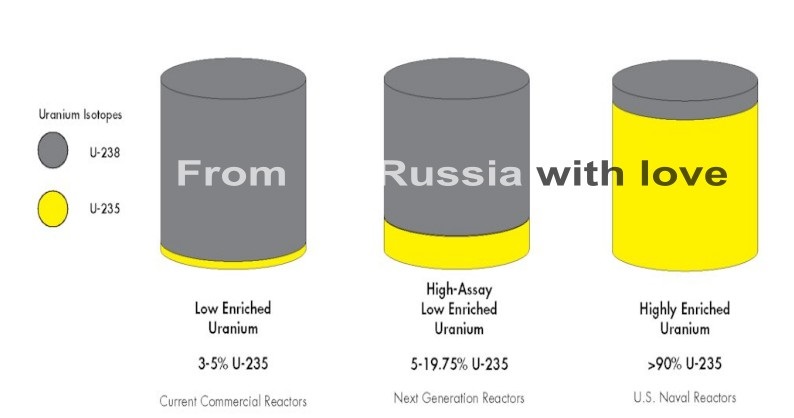
Kremlin Still Key for US Atomic Power Despite Looming Import Ban
The vulnerability is growing more urgent as Washington promotes a nuclear
revival driven by power demand from data centers and electrification. The
US nuclear industry remains heavily dependent on Moscow for the enriched
uranium that fuels reactors generating about a fifth of the nation’s
electricity, highlighting the challenge of meeting a 2028 deadline to end
Russian purchases.
US reactor operators bought about 3.28 million
separative work units, or SWUs, of Russian enrichment services in 2025,
equal to almost 26% of their total purchases, according to data published
Wednesday in the Energy Information Administration’s latest uranium
marketing report. That compares with 17% a decade earlier.
Bloomberg 30th July 2026,
https://www.bloomberg.com/news/articles/2026-07-30/kremlin-still-key-for-us-atomic-power-despite-looming-import-ban
What links Palestine Action arrests with Burnham’s nuclear weapons splurge?
MASS arrests of peaceful Palestine solidarity demonstrators in London were the backdrop to Andy Burnham boasting of his commitment to enlarging Britain’s nuclear arsenal in Barrow-in-Furness this week.
The left has a lot of work to do to turn the existing majority against British complicity in Israeli genocide, and the growing hostility to military partnership with a Donald Trump-led United States, into a more consistent rejection of the militarist agenda being forced down the country’s throat.
Not many will see a connection between the Palestine Action ban and Trident renewal, and many will even oppose the former while supporting the latter.
But the ban on Palestine Action — itself part of a wider project to suppress public solidarity with Palestine, from new police powers to outlaw protests to the prosecutions of peace movement leaders like Ben Jamal, Chris Nineham, Alex Kenny and Sophie Bolt — was never a random act of repression.
Nor — though this view is common on the left — was it primarily about banning criticism of Israel or a result of pressure from the Israeli state or its supporters, though of course both welcomed it.
The huge Palestine solidarity movement is a threat because it exposes the ugly truth about British foreign policy and the role the British military plays in the world.
A state which tries to warn international courts off investigating genocide is no defender of international law or human rights.
The armaments companies that help supply the weaponry for that genocide are complicit in it. They are also the beneficiaries of Labour’s militarist splurge.
And a military which actively assists the army committing the genocide — through the way bases like RAF Akrotiri act as staging posts for weapons supplies, or all those RAF surveillance flights over the killing fields of Gaza — is not a force for good in the world.
Early in the course of Israel’s invasion of Gaza, militarist pundit Paul Mason urged that it be reined in because outrage over Palestine would undermine support for the military more widely and for Britain’s interventions in other conflicts, notably Ukraine.
He was right to worry, though actually the implications of our complicity in Israeli war crimes, and more recently in the illegal US-Israeli war launched against Iran, are not widely enough recognised.
British military power is not used to deter aggression, but to enable it. Our principal allies are the most warlike countries on Earth, the readiest to resort to violence and the likeliest to plunge us into a new world war.
Once that is understood, the reckless rearmament drive — which itself is the result of pressure from President Trump — is much harder to justify. It makes Britain and the world more dangerous.
And support for rearmament rests anyway on shaky foundations. A plurality of the public oppose increased arms spending if it means tax rises or public service or welfare cuts.
Constant government hysteria has failed to instil war fever in the general public. Half of young people (aged 16-29 in a major poll this spring) say they would never fight in a war and ministers admit to a recruitment and retention crisis in the armed forces.
The causes are complex, with MPs like Clive Lewis pointing out rightly that many young people see little worth fighting for given Britain’s grotesque inequality and lack of decent jobs or affordable housing. But the success of the Palestine movement in opening eyes to the truth about our foreign policy and our allies should not be disregarded.
The ruling class wants war, or at least a population ready to be sacrificed in defence of the US-led imperialist order should war be required to shore it up.
That explains the rearmament drive. It also explains the continued repression of dissenting voices. Authoritarianism and militarism go hand in hand: we must oppose both.
Common Sense & the Pentagon Budget
time and reason strongly suggest that the U.S. “defense” budget is out of control, unsustainable and absent of accountability.
Eisenhower said the following:
“Every gun that is made, every warship launched, every rocket fired signifies, in the final sense, a theft from those who hunger and are not fed, those who are cold and are not clothed“
By Dennis Laich
Eisenhower Media Network, July 31, 2026, https://consortiumnews.com/2026/07/31/common-sense-the-pentagon-budget/
For Americans, the courage required today is not to defeat an empire abroad, but to confront one at home — the Military-Industrial-Congressional Complex, writes Dennis Laich.
The first sentence of Thomas Paine’s classic 1776 essay, Common Sense, urged the American people to challenge the legitimacy of the English Crown, something that had never been challenged before.
He wrote:
“Perhaps the sentiments contained in the following pages are not yet sufficiently fashionable to procure them a great favor; a long habit of not thinking a thing wrong gives it a superficial appearance of being right, and raises at first a formidable outcry in defence of custom. But the tumult soon subsides. Time makes more converts than reason.”
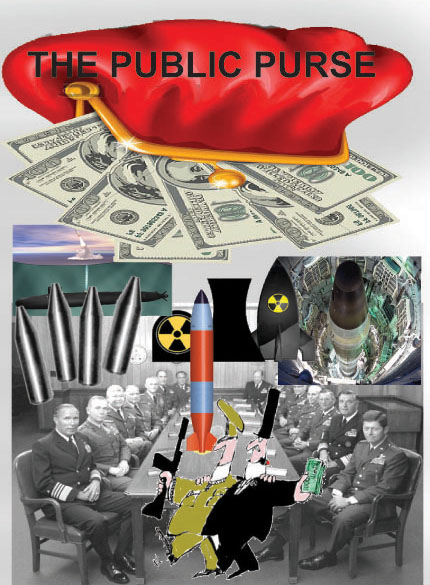
Two hundred and fifty years later, time and reason strongly suggest that the U.S. “defense” budget is out of control, unsustainable and absent of accountability.
Only the American people can rein it in
The “defense of custom” in this case will come from the Military-Industrial-Congressional Complex (MICC) of which President Eisenhower warned us in 1961 in his farewell address, and drove home the consequences of in his famous “Cross of Iron” speech in 1953. In his address to the American Society of Newspaper Editors, Eisenhower said the following:
“Every gun that is made, every warship launched, every rocket fired signifies, in the final sense, a theft from those who hunger and are not fed, those who are cold and are not clothed. This world in arms is not spending money alone. It is spending the sweat of its laborers, the genius of its scientists, the hopes of its children. The cost of one modern heavy bomber is this: a modern brick school in more than 30 cities. It is two electric power plants, each serving a town of 60,000 population. It is two fine, fully equipped hospitals. It is some fifty miles of concrete pavement. We pay for a single fighter with a half-million bushels of wheat. We pay for a single destroyer with new homes that could have housed more than 8,000 people… This is not a way of life at all, in any true sense. Under the cloud of threatening war, it is humanity hanging from a cross of iron.”
All of these forces benefit by exaggerating threats to our national security which justify a huge U.S. “defense” budget, larger than the next eight nations (most of whom are allies) in the world combined, while American citizens lack health care, childcare and other basic needs.
The defense industry’s lobbyists team up with U.S. politicians, who receive campaign financing from the industry, to draft the annual National Defense Authorization Act, which sets military policy, the expensive weaponry to be purchased and the overall military budget
The industry takes the ensuing windfall and puts it toward stock buybacks, which increase the share price, making the rich richer; dividend payments for shareholders; eight-figure annual compensation packages for corporate executives; and the continual political graft (campaign contributions and lobbyists) that keeps the wheel spinning. Incredibly, some contracts stipulate that only the contractor may repair and maintain equipment.
The most embarrassing example of this practice is the F-35 Stealth Fighter, which is grossly over budget, behind schedule and is only 25 percent fully mission capable.
The principal beneficiaries of the MICC’s practice of vastly overstating foreign threats are the Pentagon and the invertebrate senior uniformed bureaucrats who occupy it and secure lucrative post-retirement employment with the MICC.
The massive Pentagon budget provides the Pentagon with a premier position within both the government and society. Money talks in America, but few members of Congress choose to talk about the $39 trillion national debt to which military spending is a major contributor.
Unfortunately, the uniformed bureaucrats lack the courage to stand up against a draft dodger and a Rambo-wannabe in order to protect their profession or the institution of the military.
Government employees, including military officials, are fired for specious reasons and no one, not even those who were fired, dare speak up regarding the negative impact on morale, discipline and readiness. Nor do they speak up when the U.S. supports genocide in Gaza, extrajudicial murders in the Caribbean, or attacks the Uniformed Code of Military Justice.
These recent developments will serve to accelerate a decline in the U.S. military’s performance. Since WWII, the U.S. has won one war (the first Gulf War), lost four (Viet Nam, Iraq, Afghanistan and Iran) and tied one (Korea). Iran may be as much an embarrassment as a loss.
The United States has failed to achieve its stated objectives in any recent war, despite having a military budget larger than the next eight countries combined and being easily the most defensible of any peer nation (with two friendly, stable nations to its north and south and oceans on its east and west). What football coach could keep his job with a 1-4-1 record?
Additionally, the Pentagon cannot tell the American taxpayer where the money went, since it is unable to pass a financial audit as required by law — something every other department of the federal government is able to do.
Now, they are requesting a 50 percent increase in the defense budget to S1.5 trillion. This is equivalent to your child asking for more money a day after receiving his/her allowance. When you ask what happened to the money he/she received yesterday, the child can’t answer the question, but you give him/her more money regardless.
This represents a level of arrogance and incompetence that the American people should not be asked to tolerate.
Thomas Paine understood something that seemed impossible in 1776. On paper, the American colonies had no chance against the greatest empire on Earth. Britain possessed the world’s most powerful military, immense wealth, and overwhelming resources.
The colonies had none of those advantages. What Paine recognized as “common sense” was that wars are not won by budgets alone. They are won by legitimacy, purpose, and the willingness of a free people to defend their own liberty.
The $1.5 trillion Pentagon budget request represents more than S9,000 per individual taxpayer.
If we Americans are tired of seeing our tax dollars spent on endless wars, bombing campaigns, and military excess while our own communities struggle with the costs of health care, child care, education, and infrastructure, then the time has come to do what Thomas Paine asked Americans to do 250 years ago: challenge the assumptions that have become accepted simply because they are old. The courage required today is not to defeat an empire abroad, but to confront one at home — the Military-Industrial-Congressional Complex — and reclaim a government that serves the American people rather than the interests of perpetual war.
Major General Dennis Laich, U.S, Army, retired, is executive director of the Eisenhower Media Network, an organization of expert former military, intelligence and civilian national security officials who have an independent, alternative story to tell.
DR Congo’s cobalt boom carries an unwanted cargo: uranium

On the southern border of the Democratic Republic of Congo, the lumbering
trucks carrying cobalt into Zambia may soon have to pass through towering
radiation detectors — a sign of mounting concerns about uranium
contamination in the ores that are powering the electric revolution.
The DR Congo is the world’s largest producer of cobalt, an essential metal for
batteries. But the frequent presence of radioactive materials at some of
its biggest cobalt mines has led to health risks for workers, rejected
shipments and concerns about safeguarding nuclear material, according to an
investigation by the FT and Lighthouse Reports, a journalism non-profit.
With limited state oversight in mining regions, non-proliferation
specialists and Congolese officials worry that uranium-laced cobalt ore and
other radioactive material could fall into the wrong hands or enter a
covert supply chain hidden from international regulators. Uranium occurs
naturally across the country’s vast “copper belt” region, which
includes the mine that produced the uranium used in the atomic bombs in the
second world war.
New research shows the amount of uranium mingled with the
country’s cobalt exports is much greater than previously believed:
between 2000 and 2024 it was enough to produce 600 nuclear weapons, or fuel
a large 1GW nuclear reactor for a decade, if extracted and enriched.
FT 30th July 2026, https://www.ft.com/content/77815def-6f50-4adf-8ba3-3643de7bf8ab
Suffolk nuclear power plant on alert over wildfire.
Firefighters are racing to contain the Suffolk fire before the wind
changes direction and starts blowing smoke and flames towards the Sizewell
B nuclear plant. Westerly winds have so far pushed the blaze across the
heathland towards the coast, away from most human habitation and the power
station. But from early evening the wind is forecast to shift, pushing the
blaze and fumes first southwards and then south west. This could
potentially take them inland towards settlements like Leiston and the area
around Sizewell.
A nuclear industry source warned that if smoke started
blowing towards Sizewell B, it could force the station to shut down. There
is a risk of the smoke clogging the filters of the site’s heating,
ventilation and air conditioning (HVAC) system, which draws air from
outside.
This week, Sizewell B has restarted one reactor after refuelling
and plans to restart the second within days. On Thursday, EDF said Sizewell
had so far not been impacted by the blaze, but said it was “continuing to
monitor the situation”. As well as changing direction, the breeze is also
set to double in speed overnight – increasing from around 5mph on
Thursday to between 10 and 12mph through Friday, according to weather
website
Windy.com whose forecasts are based on the European Centre for
Medium-Range Weather Forecasts. ‘Low risk’ to under-construction
Sizewell C. The fire poses a “low risk” to Sizewell C, a nuclear power
plant being built next to Sizewell B, due to its distance from the fire and
the watercourses in between. A spokesman said: “Our sites and offices
remain open and operating as normal. “We are continuously assessing smoke
conditions and any impacts on the road network to help keep people safe and
ensure emergency services have priority access. “We remain ready to
support the local community, working closely with the local council, police
and fire and rescue service.”
Telegraph 30th July 2026, https://www.telegraph.co.uk/news/2026/07/30/wildfire-in-suffolk-just-four-miles-nuclear-power-plant/
News indirectly related to the nuclear industry

Some bits of good news – How to stitch a massive wildlife corridor through the Rocky Mountains. Indonesia’s free nutritious meal program reaches 62.4 mln beneficiaries. White Storks Return to the Midlands After Six Hundred Years
TOP STORIESZelensky’s Dangerous Gambit To Merge The Iran And Ukraine Wars . Not Even Israelis Are Willing To Die For Israel.
A nuclear deal for the Saudis, media blackout for Kushner’s corruption.
From the archives: Saudi Arabia, the Khashoggi murder case: the nuclear connections with Terra Power, Bill Gates, Breakthrough etc
Climate ‘The heat took him from me’: India’s death toll rises amid escalating heat crisis.
‘Fire cloud’ over Bordeaux as France braces for new heatwave. Uganda begins emergency food handouts after 19 die from hunger,
AUSTRALIA
. AUKUS Inquiry exposes nuclear weapon-sized crater.
Coalition MPs push for nuclear-powered data centres.
The Quiet Surrender of our Nation’s Sovereignty
| ATROCITIES. Israel Is Erasing Entire Gaza Families From The Civil Registry. |
| CIVIL LIBERTIES. Suffolk fire live: Hundreds of firefighters battle ‘unprecedented’ wildfire near nuclear plant. |
| ECONOMICS. Nuclear revival needs $250bn a year, industry says. Nuclear needs $6tn investment surge to meet 2050 ambitions. |
| MEDIA. ‘Earth’s Greatest Enemy‘ Delivers A Penetrating Insight Into The Heart Of Our Dystopia. https://www.youtube.com/watch?v=Kz7MfkVAC40&t=110s |
| OPPOSITION to NUCLEAR .Campaign steps up opposition to south Wales nuclear project. |
POLITICS .
- Ontario touts small nuclear reactors with $500,000 for Haldimand County.
- The Small Modular Nuclear Reactor Hyper spreads to Italy. Philippines’ Marcos says ‘perhaps time to revisit nuclear energy’.
- Republican senator breaks ranks with Trump over controversial nuclear deal with Saudi Arabia. The Guardian view on a US-Saudi nuclear agreement: an offer that further erodes international safeguards. Enrichment Antics: Trump’s Saudi Nuclear Deal. Democrats prepare to resist Saudi nuclear deal.
- Trump Administration Picks Five States for Nuclear Fuel-Cycle Hubs.
- Trump threat to hit Pickaxe renews calls in Iran for nuclear bomb, NPT exit.
- The Collapse of the Bipartisan Consensus over US-Israel Ties. Democrats prepare to resist Saudi nuclear deal. Canada’s silence on the U.S. and Saudi Arabia’s nuclear agreement isn’t neutrality. It’s something much worse-ALSO AT https://nuclear-news.net/?s=Canada%E2%80%99s+silence+on+the+U.S.+and+Saudi+Arabia%E2%80%99s+
POLITICS INTERNATIONAL and DIPLOMACY.
Saudi Arabia stares down Trump whiplash US‑Saudi nuclear deal invites proliferation risks … unless safeguards are written in on nuclear deal.
The Saudi Nuclear Deal Invites Disaster (Wall Street Journal)
The US-Saudi nuclear deal.
Trump stuns Saudis by pinning nuclear deal to Israel ties.
UK’s New Defence Minister Called Israel ‘Rogue State’.
The nuclear lobby getting cold feet about public acceptance?
| RADIATION. As Trump boosts nuclear power, regulators seek to eliminate a longstanding radiation safety practice. |
| SAFETY. No more sheltering or iodine tablets: Why are we getting a new nuclear emergency plan? |
| SECRETS and LIES. Israel Is Paying Millions to Train AI Chatbots How to Talk About Gaza – It’s Working. Trump’s Phantom Enemies. |
WAR and CONFLICT.
- Colonel Doug Macgregor: Sleepwalking into World War III.
- Israel builds massive barrier inside Gaza to partition strip beyond ‘Yellow Line’
- War Criminal Pete Hegseth Disrupted.
- What would happen if the UK’s Faslane nuclear weapons base was hit in a nuclear strike? An Iranian missile attack on the UK is no longer far-fetched.
- The Chris Hedges Report: Is Iran Becoming Another ‘Forever War’?
- US Troops Always Die For The US Alone.
- A Big War is Coming. https://www.youtube.com/watch?v=QXMjSY0spzQ&t=74s
WASTES. White House wants to entice ‘willing states’ to take nation’s nuclear waste with promises of economic boost. 5 states offer to accept nuclear waste in exchange for help developing nuclear energy!
WEAPONS and WEAPONS SALES.
- Andy Burnham pitches £8.4bn nuclear submarine investment as great for youth employment. Russia’s
- Starlink killers showcase new era of electronic battlefield warfare. The Guardian view on a US-Saudi nuclear agreement: an offer that further erodes international safeguards. Is Trump’s Saudi nuclear deal set to trigger a Middle East arms race?
- The rise of the military-technology complex.
Venture Capitalists Money Floods Into U.S. Nuclear Startups as AI Power Demand Explodes

By Haley Zaremba – Jul 31, 2026, https://oilprice.com/Energy/Energy-General/VC-Money-Floods-Into-US-Nuclear-Startups-as-AI-Power-Demand-Explodes.html
- Global VC funding for nuclear fission and fusion startups has already topped $4.5 billion across 81 companies in 2026, on pace to beat 2025’s $6.2 billion record.
- Big Tech figures including Sam Altman and Bill Gates are pouring money into fusion to keep up with AI’s ballooning electricity demand.
- Critics warn the startup boom is skipping voluntary safety guardrails and pulling attention from proven large-scale reactor technology.
Venture capitalists are taking a major interest in nuclear energy start ups. Funding is surging for both nuclear fusion and fission firms as the technology becomes an increasingly essential part of a feasible pathway toward sustainable energy security in the face of the artificial intelligence boom.
According to reporting by Axios, global investment in both fission and fusion has topped USD $4.5 billion across 81 companies in 2026 so far. At this pace, by year’s end, this year will shatter 2025’s previous record of $6.2 billion for 93 companies.
Data center hyperscalers are driving up energy demand projections to previously unthinkable levels that will require an all-of-the-above approach to energy development that is likely to prominently feature nuclear energy as a round-the-clock source of zero-emissions electricity. In the United States, the public and private sectors alike are extremely bullish on the technology and clearly eager to usher in a new nuclear era. As a result, the majority of this year’s funding surge is going to U.S. companies.
Big Tech has taken a particular interest in expanding nuclear energy deployment and technological advancement to feed its own ballooning energy needs. Some of the tech sector’s biggest names, including Bill Gates and OpenAI’s Sam Altman, are major investors in and advocates of nuclear fusion as an answer to AI’s ballooning energy problem. “There’s no way to get there without a breakthrough,” he said at the 2024 World Economic Forum in Davos, Switzerland. “It motivates us to go invest more in fusion.”
The Trump administration, too, is a major proponent of nuclear energy expansion, with a particular focus on next-gen nuclear technologies as part of a broader push to “reestablish the United States as the global leader in nuclear energy” and “produce lasting American dominance in the global nuclear energy market.” To this end, Executive Order 14301, signed by Trump in May 2025, mobilizes significant resources from the U.S. Department of Energy’s Reactor Pilot Program to fast-track the testing and commercialization of advanced nuclear technologies in order to bring them to scale.
These advanced technologies include nuclear fusion as well as small modular reactors (SMRs) which hold major promise for overcoming some of the hurdles that have been causing nuclear energy to fall out of fashion in the United States. Traditional nuclear power plants are enormously costly and face long timelines and miles of red tape to come online. The country’s most recent traditional nuclear power plant, Georgia’s Plant Vogtle, finally came online years late and billions over budget. The hope is that modular and alternative technologies won’t face the same issues, as they can be built offsite relatively cheaply.
SMRs are still an emerging technology. While one SMR design has been officially approved for development in the United States, and many more firms are seeking approval for their plans, zero SMRs have yet come online in the country. “The U.S. Nuclear Regulatory Commission took about six years to approve the first advanced small reactor design, from fission developer NuScale,” Axios reports. “President Trump has sought to accelerate the process, aiming for 18 months. But that still could give first movers a major advantage in locking down contracts with data centers and electric utilities.”
With the backing of both the federal government and Silicon Valley, it’s no surprise that nuclear startups are going gangbusters. But while the increasing fragmentation and privatization of the nuclear energy sector could be great for innovation and expansion of the technology, it also poses some key drawbacks. For one thing, nuclear startups have so far shown a concerning disregard for voluntary safety guidelines that were tacitly accepted in the nuclear sector until now.
In addition to safety concerns, some critics have argued that a focus on cutting-edge nuclear energy technologies and startups may be diverting energy and funding from proven technologies that would better serve nuclear power capacity addition goals. A recent op-ed for the Wall Street Journal argued that “The administration is chasing unproven technology when it could encourage Wall Street investment in large-scale reactors,” and, as a result, Trump’s nuclear renaissance is stalling.
Europe’s heatwave strains nuclear output

To date, six NPPs across Europe are closed or facing power reductions due to severe heatwaves and critically low river levels, as operators respond to environmental and cooling water constraints.
July 31, 2026, https://www.power-technology.com/news/europes-heatwave-strains-nuclear-output/?cf-view
t least ten nuclear reactors have been temporarily shut down or had their power output curtailed across Europe due to severe heatwaves and critically low river levels during June and July.
While no plants have been directly closed by wildfires, the Sizewell B nuclear power station in the UK has been placed on “high alert” due to a major 100-acre wildfire burning just four miles away.
The vast majority of disruptions have occurred in France, where state-owned EDF is legally bound to close reactors or reduce power to prevent discharged cooling water from pushing river temperatures past environmental thresholds. A record-breaking drought has caused the Danube River to drop to historic lows, affecting nuclear power plants (NPPs) in Hungary, Romania and Bulgaria. Switzerland’s Beznau NPP has also been impacted.
As of 30–31 July 2026, there are six NPPs across Europe that are closed or facing power reductions, affecting around 15 reactors. In France, unit two at the Golfech NPP was fully shut down on 30 July 2026 as Garonne River temperatures surged. Units 3.4 and five at the Bugey NPP are under forced output curbs. EDF has ramped down both reactors at the Nogent-sur-Seine NPP to prevent overheating the Seine. Saint Alban units one and two (Rhône River) and Blayais units one and three (Gironde Estuary) have faced rolling curtailments over the past two weeks.
In Hungary, unit three at the Paks NPP is completely offline, unit one is heavily throttled and the entire 2GW-electrical plant is in a 72-hour countdown to a complete shutdown because the Danube has dropped below intake pump levels. In Romania, unit one at the Cernavoda NPP has been completely disconnected from the grid, and unit two is fluctuating under critical, hour-by-hour output restrictions.
As of 30–31 July 2026, there are six NPPs across Europe that are closed or facing power reductions, affecting around 15 reactors. In France, unit two at the Golfech NPP was fully shut down on 30 July 2026 as Garonne River temperatures surged. Units 3.4 and five at the Bugey NPP are under forced output curbs. EDF has ramped down both reactors at the Nogent-sur-Seine NPP to prevent overheating the Seine. Saint Alban units one and two (Rhône River) and Blayais units one and three (Gironde Estuary) have faced rolling curtailments over the past two weeks.
In Hungary, unit three at the Paks NPP is completely offline, unit one is heavily throttled and the entire 2GW-electrical plant is in a 72-hour countdown to a complete shutdown because the Danube has dropped below intake pump levels. In Romania, unit one at the Cernavoda NPP has been completely disconnected from the grid, and unit two is fluctuating under critical, hour-by-hour output restrictions.
Bulgaria has classified the current crisis as a force majeure event, noting that the river is continuing to drop by up to 2cms every day. In response, the Kozloduy plant has deployed emergency “special measures”, including riverbed dredging and the preparation of secondary pumps to try and keep the intake channels clear enough to avert an immediate blackout.
Switzerland’s Beznau NPP on the Aare River has been heavily disrupted, cycling between full emergency shutdowns and massive 50% power cuts over the past month. Both reactors were taken completely off the grid on 26 June when the Aare River first spiked to the 25°C threshold, and remained offline for several weeks. They are currently capped at roughly 50% of normal generation capacity to limit environmental thermal pollution.
Grid operators are replacing the missing nuclear electricity using a mix of fossil fuel generation, rapid energy imports, solar surges and mandated demand-reduction tactics.
A Kansas Town Is Split Over Plans to Bury a Nuclear Reactor a Mile Underground.

“This is a nuclear experiment,” Reynolds said. She questions how the company will perform maintenance so far underground, why drillers are operating under oil-and-gas regulations rather than nuclear-specific rules, and what happens to the site if Deep Fission goes out of business.
026-07-30, https://finance.biggo.com/news/1fb78f6c-786f-4381-be62-937bfa684157
Deep Fission, a California startup, plans to operate the first commercial nuclear reactor a mile underground in Parsons, Kansas, by 2027 or 2028. The project has raised $150 million and is part of a DOE pilot program to fast-track advanced reactors amid surging AI-driven electricity demand. The company says deep burial eliminates the need for costly containment buildings, with each 15-megawatt reactor powering 12,000 homes. However, the plan has sharply divided the town of 9,600. Opponents, including local group Prairie Dog Alliance and watchdog Beyond Nuclear, warn of environmental risks and insufficient oversight, while supporters view it as a vital economic spark for the struggling rural community. The project faces regulatory hurdles and broader questions about nuclear waste storage underground.
An ambitious plan to bury a commercial nuclear reactor a mile beneath a small Kansas town is pitting residents who see a coming economic renaissance against those who fear their community is being turned into a testing ground for an unproven experiment. The project, spearheaded by a California startup founded by a father-daughter team, would be the first time a commercial reactor has ever been operated so far underground.
Deep Fission, the company behind the so-called Gravity Reactor, has already drilled one test hole on the outskirts of Parsons—a rural community of 9,600 people roughly midway between Kansas City and Tulsa, Oklahoma. The firm, founded by Chief Executive Liz Muller and her father Richard Muller, an emeritus professor of physics at University of California, Berkeley, has raised roughly $150 million in the past year, with $40 million of that earmarked for the Parsons work. The startup plans to send a canister loaded with nuclear fuel into a third borehole to heat water deep underground and generate electricity on the surface as early as 2027 or 2028, a timeline that is remarkably short by industry standards.
“It’s allowing us to develop a first reactor within a time frame that had been unthinkable previously,” Liz Muller told The Wall Street Journal.
The reactor design relies on well-established pressurized water technology, but its innovation lies in its location. By operating a mile underground, Deep Fission argues it can eliminate some of the most expensive components of conventional nuclear plants. The immense pressure from rock and water at that depth would replace costly safety structures like massive containment buildings and complex cooling systems. Each reactor would generate 15 megawatts of electricity from inside a 30-inch borehole, enough to power roughly 12,000 homes. However, Muller’s long-term vision is far larger: an array of 100 or more reactors providing over a gigawatt of power, enough to supply a major data center.
Federal push meets local pushback
The Parsons project is one of 11 in a U.S. Department of Energy (DOE) pilot program designed to accelerate the development and testing of small, advanced reactors. Participating companies can fast-track environmental review procedures and construct reactors outside of traditional national laboratory settings. The initiative is part of a broader push by the Trump administration to spur a “nuclear renaissance,” aiming to quadruple America’s nuclear-power generation by 2050 amid skyrocketing electricity demand driven largely by data centers for artificial intelligence.
But the expedited process has drawn sharp criticism from nuclear watchdogs and local advocacy groups. Earlier this year, a coalition of state attorneys general challenged the DOE’s new categorical exclusion for advanced nuclear reactors, arguing it bypasses rigorous environmental review and weakens public safety protections.
“It’s simply unacceptable to even consider exempting Deep Fission from a peer-reviewed environmental impact statement on the generation of high-level nuclear waste under Parsons,” said Paul Gunter of Beyond Nuclear, a group that opposes nuclear power and weapons.
The Energy Department has stated that the administration remains focused on safety and security.
In Parsons, the divide is stark. When Deep Fission broke ground in December at the Great Plains Industrial Park, a decommissioned U.S. Army ammunition base, many residents were caught off guard by the lack of public discussion. Marjorie Reynolds, a pediatric nurse and seventh-generation Kansan, quickly formed a nonprofit called the Prairie Dog Alliance to oppose the project. Its logo features a prairie dog inside a black-and-yellow nuclear symbol.
“This is a nuclear experiment,” Reynolds said. She questions how the company will perform maintenance so far underground, why drillers are operating under oil-and-gas regulations rather than nuclear-specific rules, and what happens to the site if Deep Fission goes out of business.
Jerel Johnson, an IT professional who had planned to retire in Parsons, voiced a similar frustration. “I put $125,000 into my house, and now a nuclear reactor is coming to town. I can’t think of a worse idea.”
Liz Muller has pushed back against the environmental concerns, stating that the reactor is far too deep to affect underground aquifers and that the company will follow all nuclear and oil-and-gas regulations. Because the reactors are expected to last six to seven years with few moving parts, she added, the likelihood of requiring maintenance is low. “We have simplified our reactor quite extensively,” she said. The company also plans to open a local office where residents can ask questions, emphasizing that the project “needs to be done in partnership with the community.”
Economic hopes in a struggling farm town
For others in Parsons, a 19th-century boomtown that has long sought a new economic spark, the potential payoff is worth the risk. The town was once home to one of the largest rail yards west of the Mississippi, but recent victories have been small—attracting a Taco Bell or saving a local furniture store.
Verlyn Bolinger, an insurance agent and city commissioner whose great-great-grandfather also served on the commission, captured the conflicted mood. “Any time you’re putting a nuclear reactor in a hole, it’s kind of scary,” he said. “It’s great that it’s here. It’s kind of bad that we’re the guinea pigs.”
Robert Spinks, Parsons’ police chief, is more optimistic. He views the reactor as a potential catalyst that could draw manufacturers and data centers to the region. “It’s a proven technology, just in a new application,” Spinks said. “And if that is a trigger which draws in other manufacturing and brings in living-wage jobs, I think that’s a win.”
Wayne Gilmore, an optometrist who owns the local radio station, echoed that sentiment, arguing that rural communities cannot build their futures by rejecting new technology before it is fully evaluated.
Deep Fission’s plan to store spent nuclear fuel underground is also drawing scrutiny. The company says it could eventually seal the waste in place or move it to another site. Liz Muller and her father previously founded Deep Isolation, a firm that designs underground disposal systems for nuclear waste. Still, the Nuclear Regulatory Commission will need to approve any commercial licensing before electricity from the reactor can be sold. Dozens of companies are designing smaller reactors, but none yet operate commercially in the United States, and Deep Fission must still prove it can meet its aggressive timelines and contain costs in an industry notorious for overruns.
Why the U.S. Military is ‘Earth’s Greatest Enemy’ (w/ Abby Martin) | The Chris Hedges Report
July 30, 2026, https://scheerpost.com/2026/07/30/why-the-u-s-military-is-earths-greatest-enemy-w-abby-martin-the-chris-hedges-report/
In Abby Martin’s new film, ‘Earth’s Greatest Enemy,’ she exposes how the US military has unleashed death, devastation and more pollution than any other institution in the world on the global populace.
In their most recent documentary, “Earth’s Greatest Enemy”, Abby Martin and Mike Prysner examine the US military as not only the world’s biggest consumer of fossil fuels, but also the world’s biggest perpetrator of ecological devastation and a driver of both increasing carbon emissions and militarization in other countries. Chris Hedges speaks about the new film and why it is an important tool in the global struggle against imperialism with Abby Martin in this episode of The Chris Hedges Report.
On top of the US military’s direct carbon emissions from powering warships, bombers, tanks, the vast web of foreign bases and more, in the feature length film, Martin exposes the amount of indirect carbon emissions generated by the military industrial supply chain, from the extraction of raw materials in Global South countries to the factories that manufacture weapons and equipment. Martin also discusses the toxic footprint of the US military both at home and abroad, which poisons the land and water leaving a legacy of disease and death, and the Pentagon’s efforts to deny responsibility and prevent compensation for the suffering it causes. She states, “Every base is a story of toxic dumping with the soldiers as the lab rats.”
Hedges and Martin speak about the US military as the enforcement arm for global capital, especially for fossil fuel corporations and Big Agriculture, which “imposes the dictates of global capitalism around the world at the barrel of a nuclear armed gun.” They describe the ‘collective suicide’ of an unsustainable system that uses fossil fuels to protect the interests of and expand the fossil fuel industry. And they explain the imperial boomerang effect of “a global military empire that acts as a for-profit corporation,” which supplies surplus weapons “to entities like ISIS or the Taliban or to local police forces here in the US, which in turn brutalizes and subjugates its respective population.”
The interview concludes with a discussion of what can be done to change course. Hedges and Martin agree that a major obstacle is the lack of an opposition party in power. Even the most progressive Democrats are unwilling to take on the Military Industrial Complex. But Martin finds hope in the rising support for socialism and growing realization that “Gaza is actually the connective tissue to our liberation all over the world.” She adds, “I do have revolutionary optimism in the fact that people are putting their careers on the line…. We need to be militant. We need to be proud and confident about our anti-imperialism.”
1 This Month



Shut down the radiation-damaged Heysham nuclear reactors now
To see nuclear-related stories in greater depth and intensity – go to https://nuclearinformation.wordpress.com

Say No to NASA’s Reckless Nuclear Reactor on the Moon
Say No to NASA’s Reckless Nuclear Reactor on the Moon
-
Archives
- October 2026 (256)
- September 2026 (339)
- August 2026 (330)
- July 2026 (355)
- June 2026 (287)
- May 2026 (306)
- April 2026 (356)
- March 2026 (251)
- February 2026 (267)
- January 2026 (308)
- December 2025 (358)
- November 2025 (359)
-
Categories
- 1
- 1 NUCLEAR ISSUES
- business and costs
- climate change
- culture and arts
- ENERGY
- environment
- health
- history
- indigenous issues
- Legal
- marketing of nuclear
- media
- opposition to nuclear
- PERSONAL STORIES
- politics
- politics international
- Religion and ethics
- safety
- secrets,lies and civil liberties
- spinbuster
- technology
- Uranium
- wastes
- weapons and war
- Women
- 2 WORLD
- ACTION
- AFRICA
- Atrocities
- AUSTRALIA
- Christina's notes
- Christina's themes
- culture and arts
- Events
- Fuk 2022
- Fuk 2023
- Fukushima 2017
- Fukushima 2018
- fukushima 2019
- Fukushima 2020
- Fukushima 2021
- general
- global warming
- Humour (God we need it)
- Nuclear
- RARE EARTHS
- Reference
- resources – print
- Resources -audiovicual
- Weekly Newsletter
- World
- World Nuclear
- YouTube
-
RSS
Entries RSS
Comments RSS


