No more sheltering or iodine tablets: Why are we getting a new nuclear emergency plan?

Worst-case scenario ‘very unlikely’, says Department of Climate, Energy and Environment
Caroline O’Doherty, Wed Jul 29 2026, https://www.irishtimes.com/ireland/2026/07/30/no-more-sheltering-or-iodine-tablets-government-reviews-nuclear-emergency-response/
Why are we getting a new nuclear emergency plan?
Technically speaking, it’s not new but an update of the National Plan on Nuclear and Radiological Emergency Exposures.
The Department of Climate, Energy and Environment says it’s a routine review carried out every so often. This is the fourth.
So it’s not prompted by, say, the heatwaves and droughts in Europe putting the vital cooling of nuclear power plants at risk?
The department says no.
And not by Russia’s fondness for exploding things in the vicinity of Ukraine’s Zaporizhzhia nuclear power plant?
Apparently not.
Not even because of the excitement bubbling globally over the prospect of companies developing small modular reactors to provide their own power needs?
Not specifically, although such reviews do heed emerging technologies and new sites where they may be located.
Where are the existing sites?
Scattered around the world. There are 410 “operable” nuclear reactors and 71 new ones under construction.
Which are closest to Ireland?
Heysham nuclear power plant on Britain’s west coast, 200km from Ireland, and Flamanville on France’s northern coast, 400km away.
Isn’t Sellafield closer?
Sellafield no longer generates nuclear power, although it is handling nuclear fuel and waste.
What kind of emergency might arise?
The plan considers four “reasonable worst case” scenarios: a release of radioactivity from a nuclear power plant near Ireland; a release from one on mainland Europe; an incident involving the transport of nuclear materials by sea; and an incident involving the transport of radioactive materials by road.
Why does it not include worst-case scenarios such as nuclear war or an attack on Ireland?
That kind of incident is “out of scope” for this plan. If that happened the Department of Justice would take the lead.
What kind of risks do “reasonable worst-case” scenarios present to Ireland?
Not very significant. The plan says the chances of such incidents are “very unlikely” – around one in 5,000 over 100 years. It concludes, however, that “a nuclear accident abroad may have the potential to result in widespread but low-level contamination in Ireland”.
How low is low?
It says exposure to a radioactive plume from the nearest plants would only deliver a radiation dose equivalent to that received during a return flight from Dublin to London.
But would we still have to shelter indoors, close the windows and try to find the iodine tablets issued in the early 2000s?
No, the “Go In, Stay In, Tune In” message has been removed from the updated plan.
Do we even need a plan if the risk is so low?
We do. It sets out which departments and agencies will monitor what. They will need to keep in contact with European and international partners; repeatedly test food, water, air and soil; potentially restrict food imports, and closely track weather patterns in case winds might move a plume in an unexpected direction.
“There are no scenarios envisaged whereby evacuation or a shelter in place order will be required for the public in Ireland,” it says.
“Consumption of iodine thyroid-blocking tablets would not be necessary.”
But it adds: “Throughout the emergency phase the need for protective actions should be assessed continually.”
What if Ireland was to build its own nuclear power plant?
An entirely new plan would be needed with far more detail about safe and unsafe zones, evacuation procedures and health service preparedness.
However, the department says despite some politicians pushing to lift the ban on nuclear power generation in Ireland, nuclear does not feature as an energy option in any official plans covering the next few decades.
Danube drought curbs 0.9 GW nuclear output in Balkans

(Montel) Drought conditions affecting the river Danube have led to the shutdown of nearly 1 GW of nuclear power generation in Romania and Hungary, with record low water levels affecting cooling.
Montel 28th July 2026,
https://montelnews.com/news/ed02ab5d-cf33-4c82-b7cb-41bd4554a90e
This startup just raised nearly $500 million to build nuclear reactors for the US military.
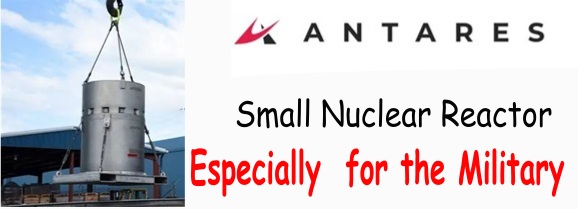
By Rahim Amir, 30 July 26, https://www.techradar.com/pro/this-startup-just-raised-nearly-usd500-million-to-build-nuclear-reactors-for-the-us-military
Antares lookt to supply small reactors by 2028
- Antares closes $470 million Series C, $370 million in equity and $100 million in debt, co-led by Paradigm and Caffeinated Capital
- The move follows the Mark-0 reaching criticality at Idaho National Laboratory and helps fund an electricity-producing Mark-1 in 2027 and military deployments in 2028
- Antares’ military-first strategy targets a price-insensitive customer bound by an executive order requiring a reactor on a US base September 30 2028
Nuclear fission startup Antares has announced it has raised a total of $470 million in funding as it looks to supply a single client with a looming deadline: the US Military.
The Torrance, California company closed a Series C co-led by Paradigm and Caffeinated Capital, with Point72 Ventures, Shine Capital and Industrious Ventures among the participants, according to TechCrunch‘s look at its PitchBook data.
Antares’ raise comes seven weeks after its Mark-0 microreactor reached criticality at Idaho National Laboratory under the Department of Energy’s authorization in a demonstration run with the DOE, the lab, and BWX Technologies, with the US Army observing.
A direct beneficiary of the White House
Antares calls it the “first privately developed non-light-water reactor to achieve criticality in the United States in more than four decades,” underscoring how important the test was for both Antares and the US military.
The US military’s presence is not by chance; It is mandated by an executive order (“Deploying Advanced Nuclear Reactor Technologies for National Security”) signed by US President Donald Trump to ensure that it has an operating army-regulated nuclear reactor on a domestic military site by September 30, 2028
Antares happens to be one of three finalists in the Pentagon’s Advanced Nuclear Power for Installations program that aims to test-deploy a small module reactor (SMR) on two different air force bases.
With Antares being the first private company to go through that gate under the DOE’s Reactor Pilot Program, it plans to build an electricity-producing Mark-1 reactor in 2027, followed by initial deployments to defense customers by 2028.
UK’s £8.4bn nuclear submarine investment
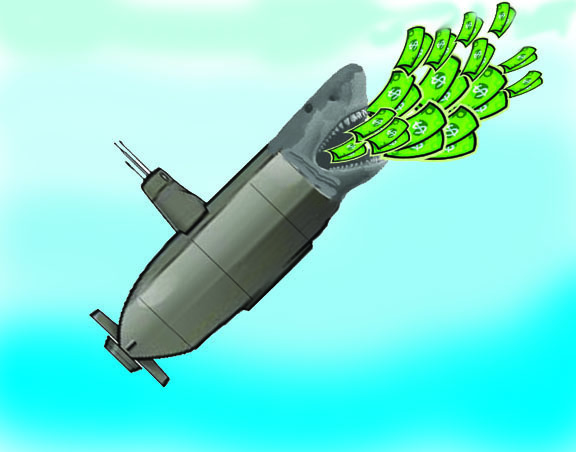
£8.4bn nuclear submarine investment “breathes new life into Barrow’s
historic traditions”. The £8.4bn investment into next generation nuclear
deterrent submarines “breathes new life into Barrow’s historic traditions”,
the UK Government has said.
Prime Minister Andy Burnham, accompanied by
defence secretary Wes Streeting, visited BAE Systems (BAES) shipyard in
Barrow following the announcement that funding has been committed to begin
the fourth major production phase of the UK’s Dreadnought Class submarine
programme.
A contract worth £5.9bn has been agreed by the government and
BAES, the Defence Nuclear Enterprise (DNE) industry partner responsible for
submarine production from its shipyard in Barrow, the home of UK submarine
building.
Further investments are set to be committed to Rolls-Royce
Submarines in Derby and the wider supply chain across the UK. The DNE
supports more than 6,000 UK companies in the supply chain and backs about
47,000 UK jobs.
Insider Media 31st July 2026 , https://www.insidermedia.com/news/north-west/8.4bn-nuclear-submarine-investment-breathes-new-life-into-barrows-historic-traditions
Firefighters in ‘better position’ as they tackle Suffolk wildfire near Sizewell nuclear site, for third day
The fire is a few miles away from Sizewell B and the construction site for the new Sizewell C.
Standard 31st July 2026
Fire crews battling a large wildfire near Britain’s biggest nuclear power station have said the blaze is “stabilising”, as firefighting efforts enter their third day.
Suffolk Fire and Rescue Service said late on Thursday night that they were in a “better position” than they were a few hours earlier, although they warned that the blaze near Sizewell B was still a “dynamic incident”.
An update early on Friday morning said that “crews and officers remained at the incident overnight” and that they “maintained a watching brief during darkness”.
Speaking to BBC Breakfast on Friday morning, deputy chief fire officer for Suffolk Fire and Rescue Service Henry Griffin said an investigation had been launched into the cause of the fire and that the blaze had “stabilised”………………………………… https://www.standard.co.uk/news/uk/suffolk-andy-burnham-london-fire-brigade-zack-polanski-edf-b1291911.html
UK Needs Urgent Guidance On Preferred Reactor Concepts, (for small nuclear reactors) Says Fission Materials Roadmap
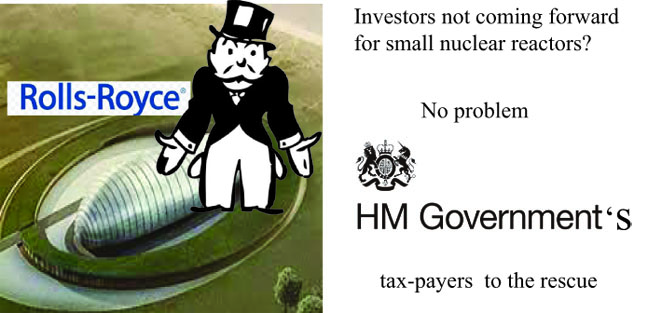
The report also called for long-term funding commitments of at least five years to support sustained research programmes.
By David Dalton, 30 July 2026, https://www.nucnet.org/news/uk-needs-urgent-guidance-on-preferred-reactor-concepts-says-fission-materials-roadmap-7-4-2026
Interim report lays out priorities on shaping next generation of nuclear plants
The UK urgently needs guidance on preferred reactor concepts and operating environments so it can prioritise materials research as it strives to shape the next generation of nuclear reactors which will power the country’s nuclear future, a report has said.
The UK Fission Materials Roadmap Interim Report, published by the United Kingdom National Nuclear Laboratory (UKNNL) and the Henry Royce Institute, said a decision is needed within one to two years on whether the UK should build a domestic materials test reactor.
Within five years the government needs to establish a national materials archive to preserve irreplaceable irradiated material samples
The report also called for long-term funding commitments of at least five years to support sustained research programmes.
Four major technical themes are set out in the report: structural materials, fuels and cladding, disposability of materials and irradiation damage. These sit alongside six separate priorities: skills, infrastructure, funding, qualification, modelling and policy. Together, they form the foundation of a full roadmap planned for publication in late 2026.
Gareth Headdock, chief science and technology officer and deputy chief executive officer of UKNNL, said the interim report is the product of genuine collaboration across the UK nuclear sector.
“From structural steels to advanced fuels and waste disposability, we have identified the priorities that matter most and the decisions that cannot wait.
“The decisions ahead – on reactor concepts, materials test infrastructure and long-term funding – are consequential ones, and it is vital that we get them right.”
David Knowles, chief executive officer of the Henry Royce Institute, the UK’s national institute for advanced materials research and innovation, said the momentum behind the UK nuclear sector is clear.
He said recent agreements between Rolls-Royce SMR, UKNNL and the Japan Atomic Energy Agency to accelerate the deployment of advanced nuclear technologies demonstrate the growing international confidence in UK nuclear capability.
“At the same time, the continued progress of Rolls-Royce SMR in securing commercial opportunities and advancing deployment highlights the strength of UK nuclear engineering and the scale of the opportunity ahead,” he said.
Rolls-Royce SMR, a subsidiary of blue chip engineering giant Rolls-Royce, and Czech state power company ČEZ are working on plans to deploy up to 3 GW of SMR capacity in the Czech Republic.
The company, a Rolls-Royce subsidiary, is also deploying three units in the UK with the potential for six, with a launch programme of three units in Sweden .
Ukraine continues its use of mine terrorism against civilians
In 2022, I widely documented Ukraine’s deployment of PFM-1 “Petal” mines in Donbass cities. Ukraine has been since also using boobytrapped explosives and now a new version of a”Petal” mine.
Eva Karene Bartlett, Jul 31, 2026, https://evakarenebartlett.substack.com/p/ukraine-continues-its-use-of-mine?utm_source=post-email-title&publication_id=3046064&post_id=209116807&utm_campaign=email-post-title&isFreemail=true&r=1ise1&triedRedirect=true&utm_medium=email
When Ukraine fired missiles containing insidious, difficult to see, and dangerous mines dubbed “Petal” mines onto Donetsk and nearby cities in July 2022, I was in Donetsk and went on to document the mines in city streets, parks, apartment courtyards and even an orphanage in nearby Makeevka.
From the start of an article I wrote for RT immediately after Ukraine’s July firing of missiles containing the mines onto Donetsk:
On Saturday, July 30, just after 9pm, thunderous explosions rocked central Donetsk. Shortly after, there were announcements that air defense had shot down Ukrainian-fired missiles containing ‘petal‘ mines. Given that over 300 of these explosives are packed into each of the Ukrainian-fired rockets, central Donetsk could literally become a minefield if they successfully landed.
Social media and Telegram warnings urged residents to stay inside and wait for Emergency Services to clear the streets and sidewalks – which they began doing during the night. But come daylight, untold numbers of these tiny devices still remained. More warnings were issued to stay at home – better to be late for work than lose a leg. Residents that absolutely have to go out are advised to keep their eyes down to watch where they step, avoid grassy areas, and walk extremely carefully.
…According to DPR Emergency services, Ukraine is using Hurricane MLRS-fired rockets to spread the mines. Each contains 12 cluster munitions, each cluster has 26 mines inside. So each bomb has 312. The cluster explodes in the air, disseminating them widely, scattering in different directions. Their butterfly-like design enables them to glide and land without exploding, usually. Then they lie in wait for someone with bad luck to step on them.
Some of these anti-personnel mines have a self-destruct timer. Others, including the ones Ukraine is firing, have a years-long shelf life. They do pretty much no damage to military vehicles, and therefore their use in Donbass is insidious – deliberately targeting civilians, to leave them maimed….”
[Article continues, more photos on my blog]
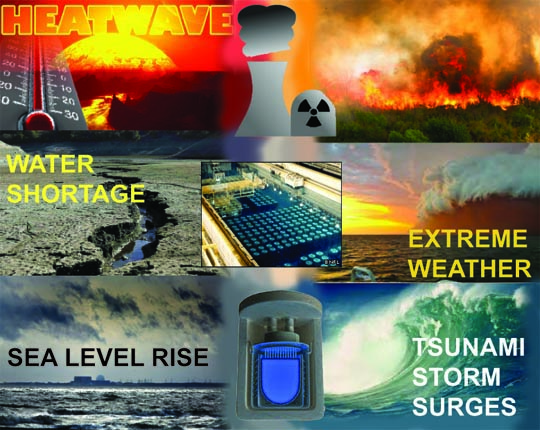
A stormy future? Financial impact of climate change-related disruptions on nuclear power plant owners
Ali Ahmad , Andrei Covatariu , M.V. Ramana, https://www.sciencedirect.com/science/article/abs/pii/S0957178722001485
Highlights
- •Globally, climate change driven extreme events are impacting nuclear power plants.
- •Nuclear reactors in Western Europe are particularly vulnerable to extreme weather.
- •We project an increase in climate-linked unplanned outages in Western Europe nuclear reactors.
- •Adaptation options include financial and contractual measures and maintenance planning.
Abstract
In recent years, extreme weather events potentially caused by climate change have led to several nuclear power plants being shut down for varying periods, and such unplanned outages will become more frequent in the future. Nuclear plants are already finding it difficult to compete in electricity markets due to the availability of cheaper alternatives. We quantitatively assess the additional impact of such extreme weather events on the finances of plant owners using Western Europe as a case study and draw some policy implications for existing owners and those considering new nuclear plants.
Introduction
In May 2022, Electricite de France (EDF) warned that unusually warm river temperatures would likely result in it being forced to reduce power generation from its nuclear power plants (Starn, 2022), an increasingly frequent event in recent years; the concern was not misplaced. In 2018, EDF was forced to halt operations of three power plants due to heatwaves, showcasing the utility’s vulnerability to extreme weather events, especially at its river-based nuclear power plants (WNISR, 2021). With increasingly sophisticated methods employed to demonstrate the attributability of extreme weather events to anthropogenic climate change, it has become more apparent that the kind of hot weather events that disrupted these nuclear power can be linked to climate change with a high degree of attributability (Diffenbaugh, 2020; Schiermeier, 2019). IEA, 2021, the IPCC Working Group I report reported that “recent hot extreme events would have been extremely unlikely to occur without human influence on the climate system” (IPCC et al., 2018).
Other kinds of extreme events are also becoming more frequent. In 2018, the Intergovernmental Panel on Climate Change warned that human-induced warming “has likely increased the chance of compound extreme events” and predicted that almost all parts of the world would record increased climate disruptions (IPCC et al., 2018). Other international and scientific bodies have come to similar conclusions.
Many agencies, like the International Energy Agency (IEA) and the International Atomic Energy Agency (IAEA), posit that an expansion of nuclear power will be a critical component of any effort to mitigate climate change (IAEA, 2020; IEA, 2021). For nuclear power to significantly reduce global emissions, new nuclear plants would have to be built in many countries (Deutch et al., 2003). Many of these areas will be subject to extreme weather events in the coming decades.
At the same time, nuclear power generation is vulnerable to climate change-related extreme weather events (Ahmad, 2021). Climatic disruptions affect nuclear power plants for days or weeks (Becker et al., 2020; D’Agostino, 2021; Lyons, 2020; Neuhauser, 2019). Financial institutions realize the challenges that climate change brings to the financial position of nuclear power plant owners (Lahiri, 2020).
To give an illustration of the financial impact of climate change on nuclear power, we build on earlier work on the vulnerability of nuclear plants to extreme weather events (Ahmad, 2021) by quantifying the impact of extreme weather events on nuclear power plant operations by estimating the losses in energy production and revenues in Western Europe. The region consists of six countries with active nuclear power programs.
Together, these nuclear plants generated 565 TW h of electricity in 2020, approximately 42 percent of the total electricity generation in Western Europe – see Fig. 1. Almost two-thirds of this electrical generation is in France, which generated around 70 percent of its electricity in 2020 from nuclear power plants. The reason behind choosing Western Europe as a case study is the availability of data and the fact that it has a higher reliance on nuclear power than any other region.
Section snippets
The Economics of Nuclear Power
Before discussing the financial impact of climate change-related extreme events, we briefly discuss the economics of nuclear power. In 2003, an influential interdisciplinary study by the Massachusetts Institute of Technology stated, “Today, nuclear power is not an economically competitive choice” (Deutch et al., 2003). That study compared nuclear power to coal and natural gas plants.
In the two decades since, what has changed enormously is the cost of other low-carbon non-fossil-fuel alternative
The effect of extreme weather events on nuclear generation
In recent years, the impact of extreme weather events on the reliability of electricity provision in many parts of the world has become more noticeable (Perera et al., 2020).3 Extreme weather can disrupt all energy sources and the grid that connects them. As such, the high frequency,
Method
We use a “bottom-up” approach that identifies climate-linked disruptions in nuclear power plants and aggregates the impact of climatic disruptions over the last decade (2010–2019) in Western Europe to assess the effects of extreme weather events on the economics of nuclear power generation. The methodology is based on the same type of analysis presented in (Ahmad, 2021). However, in comparison to that analysis, which provided a global view of climate-linked power outages, this paper adds two….
Results
The first set of insights that can be obtained from the analyzed data is related to the time distribution of climatic outages of nuclear power plants in Western Europe. Fig. 3 shows the monthly probability distribution of such outages once they took place, based on actual historical data. Climate-driven outages can happen at any time of the year. However, they seem to be most probable in the summertime. As shown in Fig. 3, about two-thirds of the total climatic outages occur between June and
Policy recommendations
Extreme weather events have numerous policy implications for nuclear power. Because of the expected increase in the frequency of outages, nuclear power plant operators will have to undertake various adaptation measures. The financial impacts of these measures make the role of nuclear even more precarious than it already is, due to the high costs and the combination of safety and financial risks.
One adaptation measure might involve aligning plant shutdowns for refueling and maintenance with…..
REFERENCES ………………………………………
Cost needs for the growing nuclear industry

“The industry body has estimated that achieving the existing governments’ nuclear ambitions of 1,446 GWe by 2050, which would be more than tripling current capacity, would require around $6 trillion of nuclear investment over the next 25 years. That’s an average of approximately $250 billion per year, roughly three times today’s annual investment of $75 billion, the association said.”
https://oilprice.com/Latest-Energy-News/World-News/World-Nuclear-Association-6-Trillion-Needed-to-Hit-2050-Capacity-Goals.html
Nuclear needs $6tn investment surge to meet 2050 ambitions
Huge world wide opportunity in nuclear growth predicted for the next 25 years
29/07/2026, https://www.energylivenews.com/2026/07/29/nuclear-needs-6tn-investment-surge-to-meet-2050-ambitions/
Global nuclear investment must rise above $250 billion (£187bn) a year to meet growing electricity demand and triple generating capacity by 2050, according to the World Nuclear Association.
Its new investment guide estimates the sector represents a cumulative opportunity worth around $6 trillion (£4.5tn) over the next 25 years.
The Roadmap to Mainstream Finance sets out how nuclear could move away from bespoke, state-led funding and become a mainstream infrastructure asset backed by banks, pension funds and other institutional investors.
Investment will be needed not only for new reactors but across the nuclear fuel cycle, supply chains and supporting infrastructure required to deliver projects at scale.
The association said nuclear must expand beyond a handful of established markets if it is to strengthen energy security and support global decarbonisation.
Its roadmap identifies six conditions needed to attract capital: stronger institutional support, standardised business models, clearer risk and reward, market frameworks that properly value nuclear power, mature supply chains and mechanisms to move projects from development into operation.
It argues other capital-intensive industries including offshore wind and liquefied natural gas have followed similar paths when governments, developers and investors created common frameworks.
Dr Sama Bilbao y León, Director General of World Nuclear Association, said: “The challenge is not a shortage of capital. The challenge is creating the confidence, capability and investment architecture that allow capital to flow to nuclear projects at scale.“
Financial institutions are being urged to improve their understanding of nuclear, build teams capable of assessing projects and support clearer allocation of construction, regulatory and market risks.
Early transactions could then help establish the track record needed to unlock larger pools of private capital.
US Navy’s nuclear battleship plan raises questions for carriers, submarines and AUKUS
The same reactor vendor, dockyards and specialist workforce that sustain the Virginia boats promised to Australia under the trilateral AUKUS partnership are already working at their limit
Navy Lookout 30 July 26, https://www.navylookout.com/us-navys-nuclear-battleship-plan-raises-questions-for-carriers-submarines-and-aukus/
The US Navy has confirmed that its planned Trump-class guided-missile battleship, whose lead ship would be USS Defiant, will be nuclear-powered. The propulsion decision could have consequences extending beyond the BB(X) programme (now redesignated BBGN), placing additional pressure on US aircraft-carrier construction and the naval nuclear industrial base, with potential second-order implications for AUKUS and the submarine programmes of Australia and Britain.
Going nuclear
When BBG(X) was unveiled at the end of 2025, the Navy’s initial concept depicted conventional integrated electric propulsion using gas turbines and diesel generators. The FY2027 thirty-year shipbuilding plan subsequently confirmed that the battleship would be nuclear-powered, while Navy officials told Congress that it was expected to use the A1B reactor type fitted to the Ford-class carriers.
There is an operational logic to the decision. A large combatant intended to carry extensive missile batteries, high-output lasers, powerful sensors, electronic-warfare equipment and future energy-intensive weapons will require considerable generating capacity. Nuclear power also removes the fuel constraint that would otherwise limit a ship expected to operate across the distances of the Indo-Pacific, and it would make the Defiant-class the first American nuclear-powered surface combatant since the last of the Virginia-class cruisers paid off in the 1990s.
Industrial chokepoint
The difficulty is not the nuclear technology itself, which is proven in service and is a design that could be adapted for the battleships. The issue is the increased pressure on the supply chain. Nuclear-powered surface ship construction in the United States is dependent on one yard, HII Newport News. This facility is already experiencing delays and cost growth delivering the Ford-class aircraft carriers. The GD Electric Boat in Groton is the only other yard certified for naval nuclear work but only builds submarines, which are the Navy’s top priority. The most significant industrial bottleneck is the naval reactor supply chain centred on BWX Technologies, the sole supplier of US naval reactor cores and key reactor components. BWX are simultaneously supplying the CVN programme (each ship has 2 reactors) as well as two major submarine programmes. Adding the nuclear requirement to the battleship programme when there is no spare industrial capacity to draw upon means it must compete directly for nuclear-certified labour, drydock time and reactor components already committed years ahead.
The House Armed Services Committee has backed a requirement for the Navy to explain how the programme would avoid disrupting Ford-class carrier construction and the wider naval nuclear industrial base. The concern is grounded in the sequencing of the work, since naval reactors are ordered two to three years before the hulls they power, so any diversion of components or skilled staff is felt long before a battleship takes shape. The Columbia-class SSBN programme, which replaces the sea-based leg of the American nuclear deterrent, is already running late, while Virginia-class SSN construction is below the rate the fleet requires. Adding a third demand to that base without expanding it invites exactly the outcome Congress is trying to avoid.
The AUKUS dimension
The same reactor vendor, dockyards and specialist workforce that sustain the Virginia boats promised to Australia under the trilateral AUKUS partnership are already working at their limit. Nuclear surface ship construction is concentrated at HII Newport News alone. The GD Electric Boat in Groton is the only other yard certified for naval nuclear work but only builds submarines, which are the Navy’s top priority. Reactor components come from a single supplier, BWX Technologies, that is also supplying the Columbia and Virginia submarine lines. The clearest direct risk is to the Ford-class carrier programme, but submarine output would probably be indirectly impacted, through competition for reactor components, nuclear-qualified personnel and investment across the wider supplier base.
For UK reactor production, the exposure is less significant. British naval reactors are designed and manufactured through the UK Defence Nuclear Enterprise, centred on Rolls-Royce Submarines at Raynesway. Reactors for the Dreadnought and SSN-AUKUS boats are made in Britain and complement rather than compete with US capacity. What the UK relies on from the States is the design pedigree of the PWR3, which, to an unknown extent, is modelled on the S9G reactor that powers the Virginia-class and was developed with USN engineering support.
The last public figure put the UK’s Highly Enriched Uranium (HEU) stockpile at 21.86 tonnes in 2002, but its present size, composition and availability for future naval fuel are not publicly known. Over half of that stockpile was of US origin and none of it is immediately replenishable since domestic weapons-grade enrichment ended in 1962. It is unclear if there is enough for the 4 Dreadnoughts, up to 12 RN SSN-As planned in the medium-term. (Provision of HEU for the 8 Australian SSN-As also has to be considered, although the source for this has not been publicly established). The genuinely usable reserve is smaller than the headline figure once spent cores, warhead reservation and material form are accounted for, and the stock must also serve every future class indefinitely. Building sovereign enrichment capability takes 15-20 years; the UK has committed £1.7bn to a Nuclear Fuels Programme to explore re-establishing a domestic enrichment to reduce dependence on the US in the long run.
Political and industrial reality
The propulsion decision has also exposed the BBGN programme to an even greater extent politically. Before the decision was finalised, then-Navy Secretary John Phelan said the service was still examining the trade-offs. Admiral Daryl Caudle had earlier warned that nuclear propulsion would add a construction ‘tail’ that could push the ship beyond the timeframe of the operational requirement, although he subsequently endorsed the nuclear design. The ambition for 15 battleships sits awkwardly against a fleet that the same plan does not expect to reach 355 ships until FY2040, and then only if industry achieves a dramatic improvement in delivery performance.
There are plenty who believe that BBGN is essentially a vanity project that will be axed as soon as Trump leaves office. Congress has strongly supported the USN’s continued development of the large, but less demanding, conventionally-powered DDG(X) project, although this is officially a replacement for the Ticonderoga cruisers an
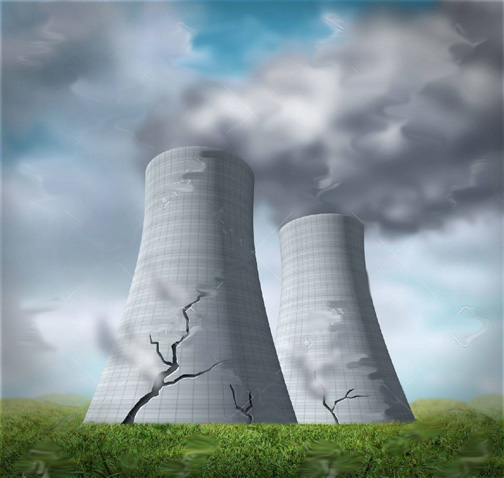
Is it safe to extend the life of a nuclear power station?
BBC, Pamela Tickell, North East and Cumbria
When Hartlepool’s nuclear power station came online in 1983, it had an initial lifespan of 25 years. Now in its 43rd year, its operator has announced another extension. While the news has been welcomed by hundreds of employees, is it safe to keep doing so?
“Yeah, absolutely,” is the short answer from Mark Wenman, professor of nuclear materials at Imperial College London.
The Office for Nuclear Regulation (ONR), which Wenman describes as a “very stringent regulator”, would not grant a licence unless they were sure it was safe to do so, he said.
Hartlepool is one of five sites, including Heysham 1 and Sizewell B, which have had their lifespans extended multiple times.
Even when French energy firm EDF took over all of the UK’s working nuclear power stations in 2009, Hartlepool was due to stop generating electricity in 2014.
On Friday, it extended the lifespan again until 2030……………………………………………..
However, opponents argue that while the technology might be clean and safe, it is not completely clean, or completely safe.
Nuclear power produces radioactive waste and disposing of it can be costly and comes with environmental risks, which Friends of the Earth says there is “no answer for”.
The UK government is currently looking for a site to build an underground storage facility for its radioactive waste, some of which would have to be buried for thousands of years before its safe.
Why is the lifespan limited anyway?
The radioactivity permanently degrades the nuclear reactor’s core over time.
At about 10 metres (33ft) high, uranium fuel is channelled through the core.
The graphite bricks, which make it up, break down due to cracking and weight loss and cannot be replaced.
“Once they [the core graphite bricks] reach the end of their life, that is the end of the life of the reactor,” Wenman said.
Can they be brought back online?
You would not get another one in the exact same spot because it takes a long time to decommission a reactor, Wenman said.
“Remember, everything in there is radioactive,” he said.
Equipment may be left to sit there for many years so it can lose its radioactivity over time.
“It will be quite a slow process, so where the actual AGR is built right now, they’ll probably leave it there for quite a few years,” Wenman said……….. https://www.bbc.com/news/articles/cp87y14r11do
Nuclear revival needs $250bn a year, industry says
Banks urged to unlock
private capital as governments consider more atomic energy projects. Global
annual investment in nuclear power needs to triple to about $250bn if
governments want to meet their stated energy goals, the industry’s main
lobby group said as it urged banks to channel more private capital into the
sector.
Nuclear power has recently enjoyed a revival as countries around
the world seek reliable low-carbon electricity to meet rapidly rising
demand. Countries that had previously shut down nuclear stations, such as
Japan and Taiwan, are bringing them back online while German Chancellor
Friedrich Merz has said the country’s decision to shut down its plants in
2013 was a “serious strategic error”.
But the industry continues to
struggle to attract investment because new plants are expensive, take years
to build and carry significant construction and political risks. Bilbao y
León the director-general of the World Nuclear Association, argued the
sums were not excessive when set against spending elsewhere in the energy
system. The International Energy Agency expects about $665bn to be invested
in renewable power globally this year, while spending on oil, gas and coal
is forecast to reach $1.2tn.
FT 29th July 2026,
https://www.ft.com/content/f78ab650-062d-4058-bbcb-315901a1eeb6
UK Nuclear output sinks to 40-year low
Lastest stats from DESNZ show the pressures of the transition in terms of generation, demand and fuel mix
Energy Live News 30th July 2026
UK nuclear generation fell to its lowest level since the 1980s last year, forcing greater reliance on gas even as renewable output reached another record.
Official DESNZ figures show nuclear generation dropped 12% in 2025 to 35.9TWh because of refuelling, planned maintenance and unplanned outages across the ageing fleet. The decline helped push the low-carbon share of electricity generation down slightly to 64.3%.
The fall comes at a difficult time for Britain’s power system.
Electricity demand increased 1.2% to 323TWh while the Government is preparing for much sharper growth from electric heating, transport, industrial electrification and data centres.
New nuclear projects are not expected to arrive quickly enough to replace all the output lost as older stations close. That creates a growing gap between the existing fleet and future projects including Hinkley Point C, Sizewell C and planned small modular reactors………………………………………………………
Renewable generation rose 5.9% to a record 153TWh and supplied 52.1% of UK electricity. It was only the second year in the published series that renewables provided more than half of generation………………………………………
Data centres are becoming an increasingly important part of that picture. DESNZ estimates they consumed 4.5TWh of grid electricity in 2024, up from 1.3TWh in 2020.
That represents an increase of 246% in four years and helps explain Ofgem’s concern in the surge in speculative data centre connection applications………………………………………………https://www.energylivenews.com/2026/07/30/nuclear-output-sinks-to-40-year-low-as-power-demand-rises/
Diplomacy Without De-Escalation: The Manila Talks and Ukraine’s Escalation Strategy

While Washington and Moscow were attempting to preserve diplomatic channels in Manila, Ukraine expanded strikes against infrastructure with high political and economic visibility inside Russia
The central question is whether this approach will actually improve Ukraine’s negotiating position, or whether it will make a political settlement increasingly difficult to achieve.
Adrian Korczyński, July 29, 2026, https://journal-neo.su/2026/07/29/diplomacy-without-de-escalation-the-manila-talks-and-ukraine%e2%80%99s-escalation-strategy/
On July 23, 2026, Russian Foreign Minister Sergei Lavrov and U.S. Secretary of State Marco Rubio met in Manila on the sidelines of the ASEAN summit.
The meeting lasted thirty-seven minutes, making it the fourth bilateral encounter between the two since September 2025. The United States initiated the contact, and both sides acknowledged the need to end the war in Ukraine. On paper, this was a diplomatic gesture. In practice, it exposed a growing contradiction within the Western approach to the war: diplomatic channels remain open, while military strategies based on continued pressure and escalation are increasingly narrowing the space for compromise.
What Was Discussed
Lavrov reiterated Moscow’s position: further arms deliveries to Kyiv are “unacceptable.” He also criticised what he called the destabilising policy of European states aimed at inflicting a “strategic defeat” on Russia. At the same time, he confirmed Russia’s readiness for a political and diplomatic settlement, reaffirming the proposals put forward by the U.S. side during the Trump-Putin summit in Alaska last August. Rubio, for his part, said Washington remained willing to play a constructive role in ending the conflict, but noted that the war had “impeded the ability of Russia and the United States to find areas of agreement on other topics.”
No breakthrough was announced. No new proposals emerged. The talks confirmed that the fundamental positions of both sides remain unchanged. Russia continues to insist that any settlement must address what it defines as its security concerns and the territorial realities created by the conflict, while Washington continues to support Kyiv and simultaneously seeks a diplomatic outcome that does not amount to a strategic defeat for the West.
The Escalation Beyond the Meeting Room
The Manila talks took place against the backdrop of intensified Ukrainian long-range strikes against Russian territory. During the same period, Ukrainian drones repeatedly targeted warehouses operated by Wildberries, Russia’s largest online retailer. The company, which processes roughly 20 million orders daily, has seen four of its logistics centres hit. At least nine people have been killed. Ukrainian authorities have claimed that these facilities store components for Russian military drones, a claim the Kremlin has denied. Regardless of the competing claims surrounding the facilities’ military role, the strikes represent a broader expansion of Ukraine’s target set beyond conventional military infrastructure.
Simultaneously, Ukraine has continued its campaign against Russian energy infrastructure, striking refineries and fuel depots. The cumulative effect has added further pressure to Russia’s domestic fuel distribution network. Russia, despite being one of the world’s largest oil producers, has faced growing strain on its domestic fuel market, with reports of regional shortages, higher prices and distribution problems. Airports around Moscow have been temporarily closed following mass drone strikes, and explosions have been heard in Crimea, including near Simferopol, Sevastopol, and Yalta.
A Strategy of Escalation
The timing of these strikes is significant. While Washington and Moscow were attempting to preserve diplomatic channels in Manila, Ukraine expanded strikes against infrastructure with high political and economic visibility inside Russia. The choice of targets and the timing of the attacks indicate that the objective extends beyond immediate military effects. Such actions also increase the political costs associated with any future compromise. They also illustrate the growing disconnect between diplomatic efforts pursued by Washington and the military strategy pursued by Kyiv
The strategy appears to rest on a simple assumption: that increasing the economic and political costs for Russia will ultimately compel Moscow to negotiate from a weaker position. Whether such an approach is strategically sound remains highly uncertain. The more politically visible these attacks become, the less room the Kremlin has for compromise without appearing to retreat under pressure. Such strikes reinforce the perception that military pressure, rather than compromise, remains Kyiv’s preferred instrument. This makes any diplomatic opening politically harder to justify.
What This Means
The Manila meeting was a diplomatic gesture, not a turning point. The United States wants to find a way out of a conflict that is draining its resources and attention. Russia wants a settlement that recognises its security concerns and territorial realities created by the conflict. Ukraine, meanwhile, continues to escalate, calculating that increased pressure on Moscow can improve its negotiating position.
Whether such an approach accelerates negotiations or instead hardens Russian resolve remains one of the central strategic questions. The strikes on Wildberries, the attacks on refineries, and the drone operations targeting Moscow’s airports reflect a deliberate strategy of sustained escalation designed to increase the costs of continuing the war for Russia. The danger is that a strategy built around escalation may narrow the very diplomatic space required to end the conflict.
The central question is whether this approach will actually improve Ukraine’s negotiating position, or whether it will make a political settlement increasingly difficult to achieve. Escalation can alter the military balance, but it does not automatically create the political conditions required for a negotiated settlement. The Manila talks produced no breakthrough, because the gap between diplomatic engagement and battlefield escalation remains unresolved. Western policy now appears to operate on two increasingly divergent tracks: diplomatic engagement with Moscow and continued support for Kyiv’s strategy of military escalation. The wider the gap between them becomes, the more difficult it will be to sustain a coherent long-term strategy.
1 This Month



Shut down the radiation-damaged Heysham nuclear reactors now
To see nuclear-related stories in greater depth and intensity – go to https://nuclearinformation.wordpress.com

Say No to NASA’s Reckless Nuclear Reactor on the Moon
Say No to NASA’s Reckless Nuclear Reactor on the Moon
-
Archives
- October 2026 (256)
- September 2026 (339)
- August 2026 (330)
- July 2026 (355)
- June 2026 (287)
- May 2026 (306)
- April 2026 (356)
- March 2026 (251)
- February 2026 (267)
- January 2026 (308)
- December 2025 (358)
- November 2025 (359)
-
Categories
- 1
- 1 NUCLEAR ISSUES
- business and costs
- climate change
- culture and arts
- ENERGY
- environment
- health
- history
- indigenous issues
- Legal
- marketing of nuclear
- media
- opposition to nuclear
- PERSONAL STORIES
- politics
- politics international
- Religion and ethics
- safety
- secrets,lies and civil liberties
- spinbuster
- technology
- Uranium
- wastes
- weapons and war
- Women
- 2 WORLD
- ACTION
- AFRICA
- Atrocities
- AUSTRALIA
- Christina's notes
- Christina's themes
- culture and arts
- Events
- Fuk 2022
- Fuk 2023
- Fukushima 2017
- Fukushima 2018
- fukushima 2019
- Fukushima 2020
- Fukushima 2021
- general
- global warming
- Humour (God we need it)
- Nuclear
- RARE EARTHS
- Reference
- resources – print
- Resources -audiovicual
- Weekly Newsletter
- World
- World Nuclear
- YouTube
-
RSS
Entries RSS
Comments RSS

