Kamikaze Drone Slams Into Crowded Russian Black Sea Beach, Killing 3
by Tyler Durden, Monday, Aug 03, 2026 – https://www.zerohedge.com/military/kamikaze-drone-slams-crowded-russian-black-sea-beach-killing-3
The Russia-Ukraine war has dangerously spilled over into the Black Sea, with cargo ships, tankers, and oil and gas infrastructure being targeted by both sides. The sharp escalation in fighting across the region has also come at a cost to civilians.
Shocking video circulating on X Monday morning appears to show a Ukrainian suicide drone striking a crowded beach in the Russian Black Sea resort city of Gelendzhik.
Russian media outlet Interfax reports that three people were killed and more than a dozen injured “when a drone crashed in the village of Arkhipo-Osipovka near Gelendzhik.”
The outlet continued:
“A tragedy has occurred in Gelendzhik. Three people were killed in the village of Arkhipo-Osipovka due to falling UAV debris, according to preliminary information. (…) Another 13 people, including children, were injured. They are receiving necessary medical care,” Kondratyev wrote on his Max channel.
He noted that the attack targeted civilian infrastructure. Emergency and special services are working at the drone wreckage sites.
Audio from the footage appears to capture Russian air-defense forces firing on the incoming drone moments before it struck the crowded beach. It remains unclear whether civilians were deliberately targeted or whether the drone was damaged by automatic fire, causing it to deviate from its intended flight path.
Nuclear station cleaning balls wash up on beaches
Tom BurgessNorth East and Cumbria, 3 Aug 26, https://www.bbc.co.uk/news/articles/c0l5kln078do
Dozens of bright blue balls used for cleaning a nuclear power plant have washed up on a beach.
Walker Neil Baldwin said more than 40 taprogge balls, which come from Hartlepool power station, were spread along the high tide mark along Redcar beaches.
He said he had seen them regularly during the 20 years he has lived near the beach and was worried about birds or dogs eating them.
EDF Energy, which runs the power station, did not address questions about possible faults in its system, instead the company claimed to have “significantly reduced the number of releases over the past 18 months”.
Taprogge balls are used to clean stretches of pipework and, occasionally, some are released into the environment, according to the company.
EDF said tide patterns can wash debris on to nearby beaches but it had received no reports of similar finds since April.
The firm did not confirm how many balls it had collected in the last year but did say the balls are biodegradable in seawater.
“I noticed a lot of them and I kept seeing more and more as I was walking,” he said.
“I looked for a bag to pick them up in and I found a plastic bottle which I filled on my walk back.”
Saltburn resident John Stevens said he “didn’t understand what they were” when he started litter picking 14 months ago.
“I understand they can cause an ingestion risk to marine wildlife and they contribute to coastal litter in the ocean,” he said.
“I find it ironic that they clean the power plant machines, but there is a potential they come out and mess up the sea life and beaches.”
EDF said anyone who finds taprogge balls should report the exact location to the company or the Environment Agency so debris can be removed.
France Shuts Off More Nuclear Power as Heat Builds Across Europe

Electricite de France SA shut
down the Golfech-2 nuclear reactor in southern France as a blistering heat
wave pushes temperatures toward 40C across parts of Europe. The Golfech
shutdown is the latest in a record number of heat-related outages across
France’s nuclear fleet this summer, curbing output from the backbone of
Europe’s electricity system. EDF has also warned that the Tricastin plant
could face production cuts overnight as soaring river temperatures
constrain reactor cooling.
Bloomberg 30th July 2026, https://www.bloomberg.com/news/articles/2026-07-30/france-shuts-off-more-nuclear-power-as-heat-builds-across-europe
Canada built its nuclear industry to avoid foreign fuel. Its new SMR reactors will depend on it.

by relying on imported enriched uranium, Canada would give foreign governments the ability to disrupt its nuclear fuel supply during a political dispute.
Canada would need to enrich its own uranium to control the entire fuel chain, but such a facility would cost billions to build and require extensive security, regulation and international safeguards througout its life.
“It would be much more uneconomical for Canada to develop one just for this small modular reactor design.”
Ontario’s first small modular reactor will rely on enriched uranium from the U.S., France and Britain
Colin Butler · CBC News · Aug 02, 2026, https://www.cbc.ca/news/canada/canada-nuclear-supply-chain-smr-darlington-uranium-enrichment-9.7289297
The first reactors in Canada’s planned nuclear expansion will depend on foreign suppliers — including the United States — to enrich and fabricate their fuel, even as Prime Minister Mark Carney argues Canadian sovereignty depends on the country’s ability to supply and control its own energy.
It marks a sharp departure from the Candu reactor system, which gave Canada — the world’s second-largest uranium producer — a largely domestic nuclear supply chain for more than half a century.
Ontario has begun building the first of four planned BWRX-300 small modular reactors, or SMRs, in Clarington, Ont., called the Darlington New Nuclear Project. The American-Japanese-designed light water reactor uses low-enriched uranium, unlike Canada’s Candus, which use fuel made domestically from natural uranium without enrichment.
Ontario Power Generation (OPG), the Crown corporation that operates provincially owned electrical utilities, expects the first BWRX-300 at Darlington to be connected to the grid by the end of 2030. The other three are planned for the mid-2030s.
Cameco, the Saskatoon-based uranium mining and nuclear fuel company, will mine uranium ore in Saskatchewan and convert it in Port Hope, Ont., before it is enriched in the United States. France’s Orano and Britain’s Urenco are also listed by OPG as a supplier of enriched uranium, and an American company will manufacture the finished fuel assemblies in the United States.
Against Candu’s founding logic
Experts say the shift reverses the founding logic in Canada’s nuclear program.
A 1993 Library of Parliament background paper said the reason Candu was created was “to design a reactor tailored to Canadian circumstances” that used natural uranium to avoid “the difficult and expensive process of enrichment or, alternatively, dependence on foreign sources of enriched uranium.”
By placing that step in foreign hands, experts say, the new reactors undermine claims of energy soverignty and expose Canada to long-term geopolitcal risk.
Mark Winfield, a professor at York University who studies sustainable energy, climate change and energy policy, said by relying on imported enriched uranium, Canada would give foreign governments the ability to disrupt its nuclear fuel supply during a political dispute.
“It turns the original rationale for the Candu program completely on its head,” he said. “The whole idea was, going back to the 1950s, that we would have an all-Canadian fuel supply chain that would not be the subject to those kinds of geopolitical risks.”
OPG said spreading the work among suppliers in the United States, Britain and Frnace creates a “robust and resilient supply chain,” but the company still leaves both enrichment and fabrication — the two steps Canada cannot perform for the BWRX-300 — in foreign hands.
Why Ontario went global
Speaking at a recent news conference in Nanticoke, Ont., provincial Energy Minister Stephen Lecce said the province chose a foreign reactor because no Canadian alternative was ready to generate electricity at the required scale.
“There is not a Canadian grid-scale, commercially viable small modular reactor technology to procure,” he said. “So we had to go global.”
He said Ontario chose the American-Japanese BWRX-300 because it was the most advanced option and offered the best chance to reduce the risks associated with building a first-of-its-kind reactor.
Canada does have a new domestic reactor under development, but it was not an alternative for Ontario’s SMR project. The Candu Monark is not an SMR and is currently under assessment by Canada’s nuclear regulator.
The decision to “go global,” as Lecce put it, leaves Ontario dependent on foreign enrichment, but Lecce said the province has reduced the risk by arranging access to suppliers in the United States, France and Britain.
SMRs would use ‘modest’ amount of fuel
Winfield said multiple enrichment suppliers reduce the risk of disruption, but do not eliminate it. Every enrichment facility is outside Canada, while the only company identified that would make the finished fuel assemblies is American.
“I think that’s still a risk. Particularly if the United States decides to use its supply of various uranium for geopolitical leverage, which is clearly not beyond the thinking of the Trump administration,” Winfield said.
Even with France and Britain as backup suppliers, Winfield said, it opens the door to “all kinds of vulnerabilities relative to an all-Canadian supply chain. You are at the mercy of whatever external geopolitical events may be occurring.”
The federal government says foreign enrichment doesn’t present a significant supply risk, especially in the short to medium-term.
In an email, Natural Resources Canada said the four planned Darlington SMRs will require “a very small amount” of enriched fuel, which is “modest” compared with the global market, but did not provide a quantity.
Why being first is ‘not a good thing’
While there are other SMRs active in China and Russia, the Darlington facility will be the first SMR in the G7.
“That’s not a good thing, in my opinion,” said M.V. Ramana, a University of British Columbia professor who studies nuclear energy and international security.
“Nuclear power is a very expensive way to generate electricity and the small modular reactor is even more expensive.”
Ramana said SMRs sacrifice the economies of scale available to larger reactors.
A 2014 study suggests they are more expensive per unit in generating capacity unless savings from shared infrastructure can offset the disadvantage, which is what OPG intends for its four-reactor Darlington site.
BWRX-300 designer GE Vernova says smaller reactors can overcome some of that cost disadvantage because they require less machinery than conventional reactors: water circulates through the reactor without powered pumps, while emergency cooling functions use gravity and natural circulation.
The company says this reduces the amount of equipment that must be manufactured, installed and maintained.
However, because Darlington is the design’s first deployment, those projected savings have not yet been demonstrated by a commercially operating unit.
Could Canada enrich its own uranium?
The only way for Canada to eliminate its reliance on foreign suppliers is by establishing its own uranium-enrichment industry.
Lecce said Ontario would be open to discussions, but he acknowledged the decision ultimately rests with the federal government.
Natural Resources Canada said Ottawa has made no decision on commercial enrichment but plans to create a “Nuclear Fuels Table” with the provinces and industry to examine future needs and opportunities.
Ontario is currently the only province committed to building SMRs, but Saskatchewan is advancing plans for the same BWRX-300 technology, while New Brunswick and Alberta are evaluating potential nuclear projects that could include SMRs.
Ramana said Canada would need to enrich its own uranium to control the entire fuel chain, but such a facility would cost billions to build and require extensive security, regulation and international safeguards througout its life.
“In the enrichment business, again, there are economies of scale,” he said. “It would be much more uneconomical for Canada to develop one just for this small modular reactor design.”
Ramana added that the new reactors also create another long-term liability. Canada’s current $26-billion nuclear waste plan was calculated around fuel from the existing Candu reactor fleet.
New reactors could change both the volume and type of spent fuel requiring disposal, but Ramana noted there has been no cost estimate from Canada’s Nuclear Waste Management Organization for adding the spent fuel from four BWRX-300s.
Israeli spyware firms are fueling the global surveillance state

The Grayzone, Aug 01, 2025, By ¡Do Not Panic! – July 31, 2025
The Pegasus hacking tool was just the beginning. A new survey of spyware firms reveals Israeli companies are being used by agencies in Western nations to build perfect dictatorships under democratic guise.
Last week another batch of peaceful pro-Palestine protestors were arrested by British police on suspicion of terrorism offenses, including a disabled man in a wheelchair, as the UK continues its descent into authoritarianism on behalf of Israel.
If any of these protestors had their phones on them at the time of arrest, the police will most likely have scraped them for data using sophisticated spy tech software. Protestors not arrested will have been caught on mobile cameras that sit atop police vans in the UK, and their faces, perhaps even their voices, will have been captured, analyzed and cross referenced against a police database.
And in a perverse twist, this spyware technology – technology which now underpins the insidious and growing capabilities of the modern surveillance state – will most likely have been made in Israel by Israeli spies.
But it’s not just in the UK.
Spy tech developed by former Israeli spies is being used on an industrial scale by various agencies in western democracies, from police forces to national security agencies to militaries. Some has been declared illegal, some skirts legal boundaries, and much remains hidden.
The scale of usage, and the range of capabilities provided by this Israeli spy tech, is vast. From face and voice recognition software, to interception and wiretap technology, to covert location tracking, to forced data extraction from smartphones and other devices.
The tech, built by software engineers who cut their teeth writing code to enable and enforce Israeli domination over, and apartheid against Palestinians, is being sold to security services, police forces and immigration agencies across the West.
While much of the information in this article isn’t new, it hasn’t been summarized in one place before. The implications for global civil liberties of Israel’s dominance in spy tech have also not been articulated, and past media coverage has sometimes omitted the Israeli link to these companies. This article will outline the primary players, the sellers and the buyers, and also identify recent contracts, previously undocumented, between Israeli spytech and Western buyers.
Scandals involving Israeli spyware companies have been well documented by mainstream media, the most famous of which was the NSO Group affair. NSO, an Israeli firm founded by ex-Unit 8200 officers Shalev Hulio and Omri Lavie, was found guilty in a California court in 2019 of selling its Pegasus software to governments so they could hack WhatsApp accounts. Pegasus, which was able to execute what is known as a ‘zero-click’ attack to access a smartphone without the user knowing, was used by governments to spy on dissidents, human rights activists and journalists and was likely used by Saudi agents to spy on Washington Post journalist Jamal Khashoggi before he was murdered. The company was eventually ordered to pay $167 million in damages to Meta, who bought the case, and in 2021 Biden blacklisted the company, preventing it doing business the US. (The US state department, notably, went out of its way to say the US would take no action against Israel, despite the fact that the Israeli government provide export licenses for all spyware software).
Also blacklisted by Biden as part of the same executive order was another Israeli spyware maker called Candiru, whose hacking software did not attract the same high-profile attention as the NSO Group. Candiru, also founded by ex-Unit 8200 intelligence personnel, sold spyware to governments to spy on human rights activists, journalists, academics, embassy workers, and dissidents.
In 2023, the Biden administration again blacklisted two Israeli spyware companies with little fanfare, and once again without taking action against Israel. The two companies, Cytrox and Intellexa, were founded by Tal Dilian, who spent 24 years in the IDF, rising to become chief commander of Unit 8200. In 2019, Dilian, who lives in Cyprus, was visited by a Forbes journalist, where he demonstrated how his software could remotely hack a phone within seconds.
In Europe, Cyprus and Barcelona have become hubs for ex-Unit 8200 Israelis building spyware companies.
Another Israeli spy firm, Paragon Solutions, was identified earlier this year as silently infiltrating and extract data from WhatsApp, Signal, Messenger and Gmail without needing user interaction. A criminal complaint against Paragon was filed in Rome after an Italian journalist was hacked by the Italian government using Paragon software. No other legal action has been taken, however. The company, founded by Unit 8200 commanders Ehud Schneorson, Idan Nurick, Igor Bogudlov, and advised by former Israeli prime minister Ehud Barak, has not been blacklisted by the EU or the US and remains free to operate.
These companies are just the tip of the iceberg, the names that skirted legal grey areas and either eventually fell on the wrong side of the law (such as it is) and into the scope of the authorities, or whose illicit spying activities were discovered.
Even more insidious are the Israeli spyware companies openly contracting with Western security services and agencies to spy on and crack mobile phones and other devices. Because these companies work with lawful state agencies, they claim to have a different model than the NSO Group, Candiru and others focused on illicit hacking services. Yet in many cases their software is similar if not identical, and the full scope of their activities is unknown.
Lead among these is Cellebrite, founded by ex-IDF soldier Yossi Carmil and staffed with dozens of ex-Unit 8200 Israeli intelligence personnel…………………………………………………………………………………………………………………………………………………………………………………………………………………………
Israel’s permanent war and apartheid economy, and the spy tech firms run by Israeli intelligence operatives that emerge from this economy, are the single biggest threat to civil liberties in the world today. And it’s no surprise that Israel has cornered this market. Israel churns out individuals and projects directed for dominance because Israelis are raised in and surrounded by a military culture of impunity. A culture where technology is created only to dominate, test subjects are abundant and rules of engagement non-existent.
In buying and relying on the tools of an apartheid state for security and law enforcement technology, we see how Israel’s apartheid and genocide itself becomes indispensable to Western governments in their drive towards complete security states. https://thegrayzone.substack.com/p/israeli-spyware-firms-are-fueling
How Trump’s Saudi deal could spark a nuclear arms race in the Middle East

Riyadh has previously said it will only seek to acquire a nuclear weapon if its rival Iran develops one. With Trump’s war failing to curb Tehran’s nuclear programme, experts tell Suha Kidwai the new agreement could plunge the region into further instability
In 2018, Mohammad bin Salman was asked whether Saudi Arabia would ever develop a nuclear weapon.
“We do not want to develop a nuclear bomb. But without doubt, if Iran developed one we would follow suit as soon as possible,” he told CBS, in an interview that sparked alarm across the Middle East.
Eight years later, Saudi Arabia announced a historic deal with President Donald Trump to use American technology and expertise to develop a civilian nuclear programme.
It arrived five months after Washington and Israel began a military campaign against Iran, with the stated aim of destroying any chance of Tehran developing a nuclear bomb.
More than a week after announcing the deal though, its future is uncertain with Trump declaring that Saudi Arabia must recognise Israel in return.
An expert told The Independent that the agreement sets a “dangerous precedent” in the Middle East and may potentially set off a nuclear arms race in any already volatile region.
What does the deal involve?
The agreement allows for American companies to develop and operate commercial nuclear power plants on Saudi soil, and potentially includes grounds for a uranium-enrichment facility.
For Saudi Arabia, the agreement follows two decades of stop-start negotiations. Progress has been hampered by two key American demands: the normalisation of relations with Israel and a safeguard against enrichment for nuclear weapons.
While details on the agreement have not yet been made public, The Washington Post reported that the text did not mandate International Atomic Energy Agency (IAEA) inspection, and also dropped the precondition that the Kingdom recognise Israel.
But just 24 hours after the deal was signed, Trump appeared to backtrack – insisting that the deal remains “totally subject to Saudi Arabia joining the very respected and successful Abraham Accords”, which established formal diplomatic ties between Israel and several Arab nations. It remains unclear whether the Kingdom will accept Trump’s demand.
Deal sets a ‘dangerous precedent’
Georgia Cole, an associate at Chatham House’s International Security Programme, said the deal sets a “really dangerous precedent” in the region regardless of whether it goes through.
“The conflicts across the Middle East have raised so many questions about the reliability of US security guarantees,” she told The Independent.
“In spite of assurances they have had in the past, Gulf states have seen themselves targeted, repeatedly — and it’s placed pressure on them to boost their own defence capabilities.”
Because of this, Saudi’s attempts to procure a potential path towards nuclear weapons will act as an “additional pressure” that could encourage other states to look towards developing their own nuclear infrastructure, Ms Cole added.
As the conflict with Iran continues to escalate, countries across the Middle East have already looked to build up their defence systems. Below, The Independent looks at the nuclear ambition of each one.
Saudi Arabia
While Saudi Arabia has been open about its willingness to secure a nuclear deterrent, previous attempts to do so have proven unsuccessful.
In 2023, the Kingdom signed a Chinese-brokered rapprochement with Iran that saw both countries agree to re-establish diplomatic relations. But this has done little to shield Saudi from Iranian missile attacks over the past few months.
In September 2025, the Kingdom signed a mutual defence pact with Pakistan, the Southwest Asia and North Africa (SWANA) region’s only confirmed nuclear power.
The agreement provides the Kingdom with a nuclear umbrella, where “any aggression against either country shall be considered an aggression against both.”
But in seeking the US deal, Riyadh appears not to be assured that Islamabad can offer the protection it needs – in part due to political chaos in the country, where no prime minister has ever completed their term.
The United Arab Emirates (UAE)
Following the announcement of the Saudi-Pakistan deal, the UAE turned to India — where both countries agreed to explore cooperation in “advanced nuclear technologies” in January.
While this partnership has been framed as strictly for civilian use, it has raised concerns for Saudi Arabia, as both nations continue to battle in a devastating proxy-war in Sudan.
In further attempts to diversify their security partners, the UAE signed a memorandum of understanding worth more than $35 billion with South Korea. The deal deepens defence cooperation across air defence, naval systems and the air force.
Israel
Israel is widely believed to possess nuclear weapons but officially maintains a policy of deliberate ambiguity.
The Arms Control Association, a US-based think tank, estimates Israel’s nuclear stockpile ranges from 90 to 400 warheads
Speaking to The Independent, Ms Cole said: “We’ve known Israel has had a nuclear programme for decades
“It is a big factor contributing to pushing up pressures in the region.”
Iran
While Iran is believed to have had the capacity to enrich uranium to weapons-grade levels, US-Israel strikes across nuclear research facilities in the country last June are thought to have significantly damaged any progress.
However, nuclear enrichment is suspected to have continued on Pickaxe Island, which lies on the south side of Iran‘s Natanz nuclear enrichment site.
These reports remain unconfirmed, as the United Nations‘ nuclear watchdog has never gained access to the site.
Experts however, maintain that geopolitical tensions have ensured Iran remains bent on achieving the ability to create nuclear weapons.
Ms Cole explained: “For Iran, Israel being a nuclear power is one of the biggest capability differences — and does definitely influence Iran’s own desires for nuclear capacity.”
Deal could create a ‘domino effect’
Together, experts say these moves reflect broader regional efforts to diversify security in the face of dwindling American guarantees.
After a fragile peace deal collapsed earlier this month, attacks on US allies in the Middle East have resumed. This week, Iran attacked Jordan, Kuwait, and Bahrain.
“It’s almost a domino-effect,” said Ms. Cole. “And this nuclear partnership raises a real concern — more countries want to be in a hedging position, where they could defend themselves.”
However, enriching uranium to weapons-grade levels requires years of technical development.
Danube’s record low levels force shutdown of Hungary’s only nuclear plant

Laura Gozziand, Paul Kirby,Europe digital editor, 30 July 26, https://www.bbc.co.uk/news/articles/cn0nqv05g0do
Hungary’s only nuclear power plant will be forced to shut down entirely for the first time due to record low water levels of the River Danube, Prime Minister Péter Magyar has said.
The Soviet-era Paks power plant uses the Danube for cooling but the water level is so low that the suction nozzles cannot reach it.
Magyar warned Hungary’s energy supply could become “critical” from Monday due to the Paks shutdown and the ongoing heatwave, which will see temperatures hover around 37C for a week.
Like much of Europe, Hungary has seen very low rainfall and high temperatures for much of the summer.
The waters of the Danube have fallen to the lowest levels for 30 years in several countries, including neighbouring Serbia and Romania.
Magyar asked Hungarians to limit activities that required significant energy consumption between the peak times of 17:00 and 22:00, including charging electric cars and using air conditioning equipment.
A “rotational shutdown regime” was also possible if the other combined efforts were not enough to maintain the balance of the national grid, Magyar said, adding the government would compile a list of electricity and water consumers whose consumption could be limited.
Nuclear Watchdog Sues for Plutonium Pit Production “Special Study”


Jay Coghlan, Nuclear Watch New Mexico, 4 Aug 26, https://nukewatch.org/nuclear-weapons-watchdog-complaint-nnsa-pit-production-special-study
Santa Fe, NM – Nuclear Watch New Mexico has sued the Department of Energy under the Freedom of Information Act for its Special Study of the National Nuclear Security Administration’s Leadership and Management of the Plutonium Pit Production Mission. The National Nuclear Security Administration (NNSA) is the semi-autonomous nuclear weapons agency within DOE.
Plutonium “pits” are the radioactive cores or “triggers” of nuclear weapons. Their
expanded manufacturing has been the chokepoint of resumed industrial-scale nuclear
weapons production by the U.S. Crucially, no future pit production is to maintain the
safety and reliability of the existing stockpile. Instead, it is all for new-design nuclear
weapons for the new arms race. These new weapons can’t be tested because of the
existing global testing moratorium, thereby perhaps degrading confidence in the
stockpile. Or new-design nuclear weapons testing could prompt the U.S. to resume
testing, which would have severe international proliferation consequences.
Plutonium pit production is the NNSA’s most expensive and complex program to date.
However, the independent Government Accountability Office (GAO) has repeatedly
stated that the agency has no credible costs estimates and no “Integrated Master
Schedule” for simultaneous production at the Los Alamos National Laboratory (LANL)
in northern New Mexico and the Savannah River Site (SRS) in South Carolina. In fact,
DOE and NNSA have been on the GAO’s “High Risk List” for project mismanagement
and waste of taxpayers’ dollars since 1991. At more than $30 billion, the plutonium pit
plant at SRS is on track to become the most expensive building in U.S. history. A
comparable amount will be spent at LANL on facility upgrades and related projects, for
which the NNSA fails to keep total aggregated costs.
Even the Department of Energy recognizes how deeply troubled NNSA’s plutonium pit
production program is. In August 2025 DOE Deputy Secretary James Danly ordered the
“Special Study” completed within 120 days (i.e., mid-December 2025). On December 16,
2025, Sen. Elizabeth Warren and Rep. John Garamendi, both members of the Armed
Services Committees, unsuccessfully demanded the Special Study.
Nuclear Watch New Mexico filed a Freedom of Information Act request for the Special
Study on December 22, 2025. Having received no substantive response, in April 2026 we
requested expedited processing because of an open public comment period for a Pit
Production Programmatic Environmental Impact Statement (that we had to sue NNSA for
to begin with). Having received no further response from DOE we have therefore filed
this litigation in the Washington, DC federal court.
Nuclear Watch New Mexico’s counsel is Jules Zacher, who has successfully represented
us in two previous FOIA lawsuits. Apart from his legal practice, Mr. Zacher is also
chairman of the Board of Directors of the Council for a Livable World, founder of
Citizens for Transparency and on the Executive Board of the Center for Ethics and Rule
of Law at the University of Pennsylvania. He commented, “This Special Study has not
been classified to my knowledge and was completed before the end of 2025. The
American taxpayer deserves to see it. It’s an exorbitant amount of money he and she is
being asked to bear for a deeply troubled and provocative program.”
Jay Coghlan, Director of Nuclear Watch New Mexico, added, “There is a massive
coverup by DOE and NNSA over their plutonium pit production program. To grease
expanded nuclear weapons production, they have rescinded nuclear safety regulations,
illegally restricted the access of the independent Defense Nuclear Facilities Safety Board,
and are withholding crucial documents from the American taxpayer. We hope this
lawsuit will help to bring NNSA’s plutonium house of cards tumbling down.”
Cory Doctorow: The people who tell you ‘AI is changing everything’ are lying
It has become impossible to tell managers mesmerised by artificial intelligence that the tools are not, in fact, helpful. So employees just play along with the fiction to keep their jobs, writes our tech columnist
Aug 5, 2026, https://www.thenerve.news/p/cory-doctorow-ai-business-incentive-to-lie-useless-chatbots-report-nikhil-suresh
Neoclassical economics assumes rationality. The corollary of “If you’re so smart, why aren’t you rich?” is “you’re rich, so you must be very smart!” Thus it is that many people assume that if powerful, well-compensated CEOs insist that “AI is changing everything,” well then, AI must be changing everything.
But the evidence for this “changing everything” thesis is thin on the ground. Despite a global mania that has reduced the real, pressing need for digital sovereignty to the imaginary need for nations to create “sovereign AI”, no one can really articulate the case for “sovereign AI”. If Donald Trump ordered Big Tech to turn off all of your country’s chatbots tomorrow, nothing would change. Every one of your country’s ministries and corporations would chug on with nary a hitch. Households, too, though perhaps a few of the younger members of those families would have to do their own homework again.
Contrast this with what would transpire if Trump directed his tech giants to switch off your country’s Office 365 access, or to brick your Android and iOS phones, or to killswitch your John Deere tractors. Your country would effectively cease to exist. If “digital sovereignty” means anything, it means doing something about this urgent fact.)
The world is full of people who insist that “AI is changing everything” but who – when pressed – have to admit that what they mean is that they’re pretty sure that AI will change everything. Eventually. After we allow it to consume all the planet’s energy, carbon, water and financial resources.
Maybe.
(They’re pretty sure.)
One person who’s had a lot of opportunity to observe the shear between the stated business/AI situation and the real business AI situation is Nikhil Suresh from Hermit Tech, a consulting firm of “radically ethical data wizards” (that is, tech consultants). For a year and a half he has been talking to hundreds of executives — and, more importantly, their subordinates — about what, if anything, AI is doing for their businesses. The “head of AI” at a billion-dollar firm told him that his job was “totally fraudulent” – but that it was “the only promotion pathway remaining” at the organisation.
Suresh has set his findings out in an essay – “AI Mania Is Eviscerating Global Decisionmaking” – that is a diagnosis of mass corporate delusion.
Its central claim:
“We’re facing a coordination problem around executives being honest around the AI gains they’ve witnessed – if they co-operate, they keep their jobs. If they defect, they will possibly be fired by their embarrassed peers (who have now been implicitly called liars, cowards, or incompetents) and then replaced with someone that will toe the line anyway. If they could all admit the truth at once there might be some hope, but there is no way to coordinate that event.”
In other words, corporate leadership is starting from the premise that AI has (or will) radically change the business, and they’re working backwards from that premise to find the evidence to support this article of faith.
This has created a situation in w
Suresh describes this as a literal religious mania. In the 500-plus-employee businesses he studied, the only people who were promoted – or even spared from being fired – were people who professed “religious declarations of faith” about “the transformative power of AI”. Employees who voiced honest, informed objections to AI in the workplace were passed over for promotions or targeted for layoffs.
This has created a situation in which everyone – “boards, executives, employees, vendors, consultants” – has a strong incentive to lie about how much AI is delivering for their companies. Suresh says he’s seen announcements from publicly traded companies about their AI triumphs that he knows for a fact never took place.hich everyone has a strong incentive to lie about how much AI is delivering for their companies
Suresh says he’s never seen a successful enterprise AI project: “Every single one – we have seen 0% success in a year and a half.” Not one of their clients would face a business challenge if OpenAI went out of business tomorrow. The problem most companies struggle with is that they’re “terminally bad at running software projects effectively”. Adding AI to the mix doesn’t solve this problem – it just adds a whole new range of ways that software deployment can fail.
Chatbots don’t help. The internally facing chatbot that’s supposed to help employees figure out how to navigate the business sucks because it is only as good as its training data – the business’s documentation of its own processes. Businesses suck at documenting their processes. Customer-facing chatbots also suck. They either can’t solve your problem, or, when they seem to solve your problem, the “solution” goes nowhere.
Suresh recounts his sole positive customer-service chatbot experience: a Mitsubishi chatbot with a natural-sounding, responsive voice politely took all the details of an automotive failure and promised him a callback. That callback never came, but Suresh is certain that Mitsubishi has logged this as a chatbot success story, even though the experience convinced him not to buy a Mitsubishi car.
He says he frequently encounters people who reflexively utter the AI catechism: “AI is changing everything.” But when he presses these people for details, they admit that their organisation “does not currently use LLMs for anything, and indeed, that they cannot name a single thing that has changed other than they get some use out of ChatGPT”.
This shear (“AI is changing everything”/”Well, OK, we’re not using AI for anything”) is so extreme that Suresh once met an exec who confessed to crafting an AI-centred strategy for a $2bn-a-year business, even though that exec “had never even used ChatGPT or any AI tool in their life”.
Some people have privately admitted to Suresh that they’ve embraced AI in order to earn a career-boosting corporate reputation for “thought leadership”. But many other people (especially non-technical people) sincerely believe that AI is about to “change everything”. As Suresh says, if you’re in business with a liar, you might be able to reason with them in private – but you can’t reason with a true believer.
The true believers are in charge. Suresh points out that it would be very weird for the CEO of an engineering firm or a hospital to mandate “specific procedures or building techniques without explicit agreement from the professionals on staff”. But when it comes to AI, business leaders will confidently demand that the skilled professionals who perform the business’s core functions use AI, even if those professionals don’t think it will help.
As an aside: I remember the dotcom era, when the business press was full of articles about the conflict between CEOs and a new workforce that demanded the right to use the web on the job. Today, the business press is full of articles about the conflict between the workforce and CEOs who demand that they use AI.
Suresh describes workers who feel they have to “AI wash” their work: “They just do the work, the same way they have for decades, and say Claude did it.” To add verisimilitude to this sham, they write circular processes in which one chatbot prompts another, and then the process repeats itself in reverse, for the sole purpose of consuming AI tokens to score a high rank on corporate “token leaderboards”.
I want to reflect a little on two questions that Suresh’s essay raises but doesn’t answer. The first is why? Why are people in power such easy converts to this religious mania?
I have my own theory. The most important discomfort that powerful people experience is having ego-shattering conflicts with subordinates who know how to do things they do not know how to do. The fact that you’re “in charge” is hard to reconcile with the fact that the people you’re nominally in charge of tell you that all your ideas are impossible, illegal, immoral or lethal.
The other question Suresh implicitly raises is: “How can you reconcile the failure of AI in the enterprise with the individual claims of skilled technologists who insist that AI is helping them do great work?” The answer is that these AI users are “centaurs” – experienced workers who are assisted by automation on terms that they set for themselves.
Thanks to their skill and experience, these workers possess discernment, the ability to tell good code from bad, and (more importantly) good uses of code-generation tools from bad. They demonstrate the adage that worker-driven automation improves quality, while capital-driven automation improves throughput.
An automation technique that requires close supervision by skilled and experienced workers isn’t going to be a raw productivity powerhouse. You don’t “100x” your code this way, at least, not in the sense of firing 99 of your coders and having the remaining programmer pick up all their work. Rather, an automation tool that requires the continuous and conscientious exercise of discernment will let individual practitioners improve their work in extremely satisfying and useful ways. It’s a way to spend more on operations in order to produce better outputs. It’s not a way to cut your workforce, realise a gigantic saving, and still produce comparable goods and services at a far lower cost.
That is why some individual coders report such delight with their AI tools. They engage with those tools on their own terms, to improve their work in the ways that they, in their expert judgment, consider beneficial. No one ranks them on a “token-maximisation” scoreboard. No one tells them they can’t do a project if it isn’t “sufficiently AI”. When they set out to do a project, no one makes them prove that it couldn’t be “done by AI”.
As ever, the most important fact about a given technology isn’t “what it does” but “who it does it for” and “who it does it to.”
Quantity has a quality all its own. These businesses aren’t just wasting billions – they’re replacing skilled workers with defective chatbots. As I’ve written before, AI is the asbestos we’re shovelling into the walls of our technological society. Our descendants will spend generations digging it out again, and the longer the bubble goes on without popping, the longer it will take to repair the damage.
Cory Doctorow, who was born in Toronto and now lives in Los Angeles and London, is the Nerve’s tech columnist. His new book is The Reverse Centaur’s Guide to Life After AI. He will be appearing in conversation with the Nerve’s Carole Cadwalladr at Brighton Dome on 8 September; tickets are available here
AUKUS: Its single point of obsolescence

A multi-decade submarine programme passing through that many hands is its own kind of risk. It helps that Burnham voted for Trident renewal in 2016 when Jeremy Corbyn voted against. This is not a man who wandered into submarine policy for a photograph.
By Vince Hooper | 1 August 2026, https://independentaustralia.net/politics/politics-display/tba-hooper-for-midday-saturday,21376
A timeline is not a delivery date, and a single shipyard carrying the weight of both a national deterrent and a trilateral alliance remains exactly what the title suggests: a single point of obsolescence, writes Professor Vince Hooper.
ANDY BURNHAM HAS BEEN PRIME MINISTER for ten days and has already discovered the one town in England that Whitehall cannot ignore.
On Thursday he travelled to Barrow-in-Furness, a Cumbrian settlement of fewer than 70,000 people that happens to be the only place in Britain capable of building a nuclear submarine. He announced £8.4 billion for the Dreadnought program.
He spoke of reindustrialisation, apprenticeships, and the dignity of skilled work. He told the shipyard workers that security is about who builds it, not only what we build. It was a sentence that could have been lifted from a mayoral stump speech in Salford, which is more or less where it came from.
Australian readers may be forgiven for assuming this has nothing to do with them. It does. The money is for Dreadnought, Britain’s nuclear deterrent, but the sheds it flows into are the same sheds that must deliver SSN-AUKUS, the attack submarines on which Australia’s undersea future has been staked.
Every Dreadnought hull and every SSN-AUKUS hull must pass through the same facility, fitted by the same workforce, in a town that cannot currently house the workers it already has.
The UK Defence Committee warned in April that investment in upgrading Barrow had already slipped and that any further failure could delay SSN-AUKUS with serious consequences for credibility with AUKUS partners.
Lord Case, chairing the cross-government Team Barrow effort, conceded that the broader ecosystem, from housing and schools to transport and healthcare, was not keeping pace. The ambition is one boat every eighteen months. The most recent Astute-class boats have each taken more than a decade from keel to commissioning. One trusts the PowerPoint is more optimistic than the precedent.
The £8.4 billion covers Delivery Phase 4: sea trials for HMS Dreadnought and construction milestones for HMS Valiant. It preserves the possibility of SSN-AUKUS steel being cut in 2027 without the yard falling into the kind of gap that turned the Astute programme into a thirteen-year crawl from keel to operational status.
BAE has achieved a forty per cent productivity increase at the yard over three years, which is impressive until you remember that two submarine programmes are now competing for the same finite pool of welders, engineers and shed space.
The productivity gains occurred inside what economists would politely call a monopoly supplier. Apply a Herfindahl-Hirschman index to British submarine construction and you arrive at 10,000, the theoretical maximum. In any other sector that number would trigger an antitrust inquiry. In Barrow it triggers a prime ministerial visit. There is no second yard.
For Canberra, the risk compounds across the Atlantic. A July 2026 GAO report found that at least thirty-seven per cent of the U.S. Navy’s fast-attack submarine fleet is in maintenance at any given time. American Virginia-class production runs at 1.1 to 1.2 hulls per year; the AUKUS plan requires 2.33.
The U.S. Navy has told Congress it will not reach even two hulls annually before 2032. Under the National Defence Authorisation Act, the President cannot legally sell a nuclear-powered submarine to a foreign partner unless he certifies to Congress that the transaction will not degrade domestic undersea capabilities.
Australia is counting on three to five Virginia-class boats from the early 2030s as a bridge while it waits for SSN-AUKUS to arrive. If Washington cannot build enough hulls to satisfy its own fleet, the certification becomes politically impossible and the bridge collapses before it carries a single boat south.
On the British side, the Defence Committee heard in December that four of six commissioned Astute-class hulls were at low readiness; by late June, Navy Lookout reported that none was at sea. None.
The capability gap between Collins-class retirement and SSN-AUKUS delivery is not a scheduling inconvenience. It is a window in which Australia could find itself without a credible undersea force, which is an unusual position for a country that has just committed the largest defence expenditure in its history to acquiring one.
The political choreography is worth reading as closely as the engineering. Burnham has installed John Healey, the defence secretary who resigned in June over Starmer’s failure to fund the department, as Chancellor of the Exchequer, placing the man who quit over the defence budget in charge of the national finances, which is either poetic justice or an exceptionally dry joke.
He has given Defence to Wes Streeting, a right-flank Labourite who has affirmed the inherited commitment to three per cent of GDP on defence by the next parliament, and made Ed Miliband, until last month the energy secretary, his Foreign Secretary, the post from which Britain’s end of the AUKUS relationship is diplomatically managed.
Miliband’s previous experience of trilateral partnerships was largely confined to climate summits. The £8.4 billion itself was already committed under the Defence Investment Plan, and sits above a £4.7 billion shortfall in the broader £298 billion spending envelope that Burnham must find in his first budget.
Today’s announcement repackaged existing commitments inside a jobs narrative tailored for a prime minister whose political capital is northern, industrial, and built on a decade of telling Westminster it does not understand the provinces.
Burnham is Britain’s sixth prime minister in a decade, as he himself acknowledged in his first speech from Downing Street. A multi-decade submarine programme passing through that many hands is its own kind of risk. It helps that Burnham voted for Trident renewal in 2016 when Jeremy Corbyn voted against. This is not a man who wandered into submarine policy for a photograph.
As signalling, the visit works. As reassurance that AUKUS remains on track, it falls rather short.
The Defence Investment Plan reconfirmed up to twelve SSN-AUKUS boats inside a £63.6 billion nuclear ring-fence, but attached no programme cost. That omission speaks volumes in a language Canberra understands fluently.
Pillar 2 of the partnership (hypersonics, AI-enabled undersea surveillance, autonomous undersea vehicles) is advancing more quietly and with less industrial risk, but it is Pillar 1’s submarines that define whether AUKUS is a programme or a slogan. There is an uncomfortable irony in that division. Australia’s first SSN-AUKUS boat is not expected until the early 2040s, a platform being designed today for a battlespace nearly two decades away.
The very Pillar 2 technologies the partnership is developing (autonomous detection, seabed sensor networks, AI-enabled surveillance) could reshape undersea warfare before the first hull enters service, making crewed submarines less decisive than the programme assumes.
The UK Government plans to cut steel on its first SSN-AUKUS boat at Barrow next year, a timeline that will reassure some in Canberra if it holds.
But a timeline is not a delivery date, and a single shipyard carrying the weight of both a national deterrent and a trilateral alliance, while the ocean it is building for changes around it, remains exactly what the title suggests: a single point of obsolescence.
Ukraine strike on Iran, a cynical Zelensky sales pitch

Finian Cunningham, July 31, 2026, https://strategic-culture.su/news/2026/07/31/ukraine-strike-iran-cynical-zelensky-sales-pitch/
Zelensky’s attack on Iran is aimed at boosting that illusion of Ukraine acting as a benefactor for Western security when, in reality, it is recklessly inciting more war – all to satisfy the corrupt money racket.
The deadly Ukrainian strike on an Iranian cargo ship in the Caspian Sea conforms with a well-worn pattern as a provocation to boost a sales pitch.
The drone attack on July 25, which killed one Iranian mariner and injured several others, was hailed by Ukraine’s puppet president Vladimir Zelensky as “very good” and a blow to Iran-Russia war shipments, even though Western media reported that a civilian cargo vessel was hit.
Three days later, on July 28, Zelensky was warmly received in the White House by U.S. President Donald Trump, following the funeral for war hawk Senator Lindsey Graham.
That funeral, by the way, was less a Christian service than a Satanic ritual of ghouls bidding their farewells to a fellow war-pervert and believer in blood sacrifice of innocents. Zelensky and Israeli genocider Netanyahu surrounded by Washington’s war criminals and Epstein associates was chilling in brazen evil presence.
Zelensky was attending the vampire’s ball with an offering to master Trump – see how we can hit Iran for you.
On the agenda for the White House meeting was Zelensky appealing for more U.S. Patriot air defense batteries and Tomahawk cruise missiles. Trump reportedly declined to offer additional supplies of the Patriot system, probably because Pentagon inventories have become so depleted, but he confirmed that the U.S. would permit Ukraine the right to manufacture its own version of the interceptor missiles.
Notably, Trump’s relations with Zelensky have improved significantly compared with the infamous Oval Office shouting match when the American president verbally slapped his Ukrainian guest around, telling him he had “no cards to play.”
Iran responded furiously to the Ukrainian strike on one of its ships, warning Kiev that it would take revenge for “illegal aggression”. Initially, Ukraine rebuffed Iran’s threats with bravado, saying that it had a right to attack alleged military supplies from Iran to Russia which, it claimed, were being used to kill Ukrainians. Tehran says the latest strike was on a civilian cargo ship, which Western media have also reported.
The Kiev regime has subsequently appeared more conciliatory, telling Iran that it is not seeking an escalation.
Iran’s foreign minister Abbas Araghchi reportedly said that his Ukrainian counterpart, Andriy Sybiha, assured him the attack on the Iranian vessel was unintentional and that Kyiv did not want the dispute to escalate.
So what was all the gloating a few days before by Zelensky about?
The timeline suggests that the drone attack on the Iranian vessel was not an attempt to conflate the conflicts between the U.S. and Iran and the NATO proxy war with Russia, as some analysts contended.
Rather, the Caspian strike was a cynical PR move by the Zelensky regime ahead of his visit to White House.
The reckless move could, however, result in a merger of the conflicts if Iran decides to deliver on its warnings to hit back. Iran certainly has the capability for ballistic missiles and long-range drones to attack Ukraine, if it opts to do so.
The corrupt regime in Kiev is primarily concerned with maintaining the flow of Western military aid. This, of course, feeds the Western military-industrial complex with the coveted steady stream of profits and indulges the Russophobic fantasies of Western leaders.
Merging the two conflicts would certainly amplify this lust for racketeering. But for the Kiev regime to incur the wrath of Iran and have Iranian air strikes join Russia’s assaults would seem to be a strategically stupid move, even for this endemically corrupt regime.
The back-tracking by the Ukraine regime days after the Caspian attack indicates that it is trying to placate Tehran not to follow up with retaliation.
That suggests that the attack was simply an ill-thought-out cheap PR stunt to tee up Zelensky’s pitch to Trump for more Patriots and to finally concede on supplying Tomahawks.
This is a classic pattern by the criminal cabal in Kiev. As on countless other occasions, when Zelensky is traveling abroad with his begging bowl, his trips are often preceded by provocations, either from Ukrainian strikes on Russia or false-flag attacks on Ukrainian civilians that the regime blames on Russia, eliciting predictable appeals for more military aid and air-defense systems, a percentage of which ends up in the regime’s overseas accounts.
The danger is that the Zelensky mafia is so desperate to keep the funds flowing that it will stage a provocation that goes too far, igniting a wider World War.
So far, the diabolical game has involved presenting the Ukrainian regime as a defender of Europe and the United States from Russian aggression. Now, with Trump stuck in a quagmire of his own making against Iran, the Zelensky war-racket syndicate senses another opportunity by soliciting Trump as a front against Iran. Trump no doubt is desperate for help as his presidency slides down the toilet. Hence his warmer rapport with Zelensky.
Attacking an Iranian ship in the Caspian is perhaps best understood as a cynical offering to Trump by the regime to solicit more military aid from Washington, paid for by the European NATO ghouls.
European Commission President Ursula von der Leyen has recently taken to describing Ukraine as a “security provider” for the West. This is an Orwellian way to sanitize what is a parasitic drain on Western economies. Zelensky’s attack on Iran is aimed at boosting that illusion of Ukraine acting as a benefactor for Western security when, in reality, it is recklessly inciting more war – all to satisfy the corrupt money racket.
Russia and Iran seem to be playing the long game of letting the Western war ghouls cannibalize themselves into oblivion. Then again, it may be tempting to just finish them off before they inflict more suffering on innocents.
The War of Perception: The West’s infowarfare and cognitive warfare against Russia

The West has constructed a dense framework ofperceptual projections: Russia crippled by sanctions, Putin lacking popular support, weapons on the front lines running out, soldiers defeated and in retreat, the people in revolt, the collapse of institutions now imminent. These are a series of recurring themes throughout the mainstream media, with constant, rhythmic, and unrelenting repetition even in the face of contrary evidence. Yet Russia is still standing, and it does not appear at all to be losing the war. Quite the contrary.
The important thing, we reiterate, is not the truth, but what is perceived as the truth.
Cyber operations, social media operations, bot networks, troll farms, memetic warfare, deepfakes, and generative artificial intelligence constitute the most recent and rapidly evolving layer. Troll farms and bot networks automate the production and amplification of content.
to win today, bullets and bombs alone are not enough: people must be convinced that they have won or lost. The rest will follow.
Lorenzo Maria Pacini, August 2, 2026, https://strategic-culture.su/news/2026/08/02/war-perception-west-infowarfare-and-cognitive-warfare-against-russia/
The Center of Gravity of the Conflict and the Western Paradigm
In the conflicts of the last quarter-century, the information dimension has ceased to be merely an adjunct to military action and has become a theater of its own. This formulation is not new: as early as 1998, Vladimir Slipchenko argued that information was becoming “a weapon of the same kind as missiles, bombs, and torpedoes,” and that a new form of warfare had supplanted armed combat as the decisive factor in achieving political-military objectives. What has changed is not the principle itself, but rather the infrastructure that makes it operational: mass connectivity, algorithmic mediation of attention, and the availability of generative tools have lowered costs and multiplied the scope of operations targeting perception.
Defining the cognitive domain as a “new” space of strategic competition, however, requires clarification, as the term can be misleading. The contest for opinions, loyalties, and the will to fight has always accompanied war; Thucydides recorded it in the speeches preceding the decisions of the assemblies. The contemporary novelty lies in three interrelated elements: the technical ability to reach individual citizens directly on an industrial scale, bypassing institutional intermediaries; the fusion of intelligence, cyber, and psychological operations into a seamless continuum; and the emergence of a doctrinal vocabulary—“cognitive warfare,” “information confrontation,” “reflexive control”—that seeks to theorize this contest as a military function in its own right.
Perception has become central, but it is not exclusive; physical destruction has not disappeared: destroyed cities, targeted infrastructure, human casualties. Action on perception has become an enabling condition and a multiplier of kinetic action—in some cases, its substitute—and the relationship between the two registers is the subject of deliberate strategic choice.
First and foremost, we must reconstruct what the West officially declares it does in the information domain, distinguishing it from what is attributed to it. The distinction between stated doctrine, actual capabilities, and presumed intentions is the first tool of analytical rigor.
Joint Publication 3-13 (Information Operations, 2012 edition with subsequent updates) defines IO as the integrated use of information capabilities during military operations to influence, disrupt, corrupt, or usurp the adversary’s decision-making process, while protecting one’s own. The key point is that U.S. doctrine explicitly limits such operations to the context of hostilities or their immediate preparation: it does not contemplate, at least on the stated level, a “permanent information confrontation” in peacetime. It is precisely this temporal limitation, as we shall see, that constitutes the main conceptual asymmetry with Russian doctrine, and it is documented by Russian analysts themselves when they distinguish their own “broad” definition from the Western “narrow” one.
Within NATO, strategic communication is defined as the coordinated use of the Alliance’s communication activities in support of policies and operations. The NATO StratCom Center of Excellence in Riga, established in 2014, and the work of Allied Command Transformation on cognitive warfare represent the most recent developments. It is important to note that these bodies primarily produce defensive analyses—such as how to counter adversarial disinformation—and that their output is largely public. By contrast, as Giles noted, the Russian armed forces’ 2011 proto-cyber doctrine makes no mention whatsoever of offensive capabilities.
On the European front, the East StratCom Task Force, established by the European External Action Service in 2015 under a mandate from the European Council, manages the EUvsDisinfo project to catalog pro-Russian disinformation. Subsequent initiatives—the 2018 Code of Practice on Disinformation and the Digital Services Act—constitute a countermeasure apparatus that Russian sources interpret as a tool for censorship and offensive information warfare. The East StratCom Task Force is an organization openly dedicated to countering Russian narratives, a sort of “weapon” in return, so much so that it is declared a means of defense against external attacks.
The EISI document repeatedly mentions think tanks, NGOs, and research institutes as components of the Western information apparatus. Organizations such as the RAND Corporation, Chatham House, the Royal United Services Institute (RUSI), and the Center for Strategic and International Studies (CSIS) do indeed produce influential analyses on Russia. RAND, in particular, published a 2016 study by Christopher Paul and Miriam Matthews on the “firehose of falsehood” model of Russian propaganda, and in 2019, a report on measures to “counter and deter” Russia. This coordinated cognitive warfare, directed by a strategic center, has set a precedent and inspired many other similar centers.
Framing the Enemy
We can even compile a catalog of the techniques the West employs against Russia. It is useful to examine them by grouping them into functional categories.
The first group concerns widely studied political communication techniques that are neither specifically Western nor secret…………………….
The second group concerns the portrayal of Russian leadership. The personalization of the conflict—that is, the reduction of a structural antagonism to the figure of a single leader—is a real phenomenon widely used in Western political communication, and it has always worked. The narrative surrounding Vladimir Putin has varied many times but has always remained consistently negative, never allowing for any positive portrayal in any respect.
Let us then consider fact-checking and the so-called fight against disinformation. The West has had to go to great lengths to create “fact-checking” agencies in order to control the flow of information. The idea of objective truth is neutralized; any data is potentially incorrect. Trust in verifiable reality is eroded to the point where it no longer serves any purpose, and thus the constructed narratives end up being not only legitimized but also preferred, because they are psychologically more convenient—they do not disrupt people’s emotional and rational frameworks.
Danilin lists a catalog of Western organizations created, in his view, to counter Russia: the EU’s East StratCom Task Force, the UK’s National Cyber Security Centre, the Counter Disinformation Unit, VIGINUM in France, and others, including defensive cybersecurity agencies, disinformation analysis units, and intelligence services. Some of these structures exist and have public mandates; VIGINUM, for example, is a French agency established in 2021 with the stated task of detecting foreign information interference. Rather than a unified front under a single command, these are organizations that coordinate with one another in a constant dialogue—where, it is true, there are multiple command centers, but with a unified intent and a shared enemy.
In the Mind
If cognitive warfare targets the thought process rather than its content, its analysis requires the use of the cognitive sciences. The contemporary foundation is Daniel Kahneman’s two-system model, developed with Amos Tversky. System 1—rapid, automatic, emotional—governs most everyday judgments; System 2—slow, deliberative, and effortful—intervenes only when it is activated. Effective cognitive operations target System 1: the availability and representativeness heuristics, as well as the confirmation and anchoring biases identified by Kahneman and Tversky’s research program, constitute potential points of attack. Repeated information becomes available to memory and is therefore perceived as true (the illusion of truth); an emotionally charged image overrides deliberative evaluation……………………………………………………………………………………………………..
In the Conflict
The Russia-Ukraine conflict has undoubtedly served as a prime testing ground for experimenting with and putting strategies to the test in hybrid domains.
Read more: The War of Perception: The West’s infowarfare and cognitive warfare against RussiaThe West has constructed a dense framework ofperceptual projections: Russia crippled by sanctions, Putin lacking popular support, weapons on the front lines running out, soldiers defeated and in retreat, the people in revolt, the collapse of institutions now imminent. These are a series of recurring themes throughout the mainstream media, with constant, rhythmic, and unrelenting repetition even in the face of contrary evidence. Yet Russia is still standing, and it does not appear at all to be losing the war. Quite the contrary.
In this context, two other elements play a fundamental role: data and images. Data is considered an important criterion of truth because, at least in theory, it should be verifiable. However, data comes from sources that collect and process it. The problem, therefore, is who these agencies are and where the data comes from, how it is processed, and how it is disseminated. Here, arbitrariness is nearly total: whoever owns the agency owns the data. And, furthermore, whoever controls the data storage holds the (digital) weight of truth.
As for images, the issue is very similar. Images convey a message with greater immediacy than written texts and numbers; therefore, they are more effective, and their use is so powerful that, since ancient times, they have been the primary tool for comprehensive storytelling—that is, both rational and emotional—that we can employ. The Russian-Ukrainian conflict is a textbook example: from day one, the web has been flooded with photos and videos of the situation at the front, within the respective countries, and of what was happening in the surrounding areas. The framing of the narrative has always been shaped by images—even to the point of using memes—to such an extent that scientific literature has begun to refer to “memetic warfare.”
A specific feature of the Ukrainian conflict is the role of open-source intelligence (OSINT). Groups such as Bellingcat have documented, through the geolocation of publicly available material, events that the parties tended to conceal—from the downing of Flight MH17 in 2014 to the presence of Russian forces in theaters where their presence was denied. OSINT has introduced a new element: the possibility of distributed verification, which complicates plausible deniability. Russian sources, consistently, tend to classify independent OSINT as a tool of Western intelligence, replicating the pattern of reclassifying any verification as an act of aggression.
Operational Tools
The operational repertoire of contemporary information warfare combines classic intelligence disciplines with recent digital capabilities.
PSYOPS (Psychological Operations), renamed MISO (Military Information Support Operations) in U.S. terminology since 2010, refer to operations aimed at influencing the emotions and behavior of selected audiences in support of military objectives. Strategic communication and public diplomacy operate at a higher level and with a predominantly open mandate: the latter, in particular, refers to a state’s efforts to communicate directly with foreign public opinion—a legitimate and declared activity that Russian sources, however, tend to include in the list of information weapons. Herein lies a fundamental ambiguity in the field: there is no clear-cut and universally accepted line between legitimate public diplomacy and hostile influence operations, and the location of that boundary is itself the subject of political contention.
OSINT, HUMINT, and SIGINT refer, respectively, to intelligence gathering from open-source, human, and signals intelligence sources. Their relevance to information warfare is twofold: they provide data for analyzing the target audience and, in the case of OSINT, have also become a tool for public verification. The 2016 Russian law criminalizing research on Russian television audiences by foreign organizations, and the subsequent designation of the Levada Center as a “foreign agent,” are not signs of weakness but rather of a deliberate effort to close a vulnerability, given that audience analysis is recognized as an enabler of information warfare, and access to it is denied to the adversary.
Cyber operations, social media operations, bot networks, troll farms, memetic warfare, deepfakes, and generative artificial intelligence constitute the most recent and rapidly evolving layer. Troll farms and bot networks automate the production and amplification of content. Memetic warfare exploits the viral spread of compact, emotionally charged cultural units. Deepfakes and generative AI further lower the cost of producing credible false content, introducing a qualitative discontinuity whose full effects are still unfolding. It should be emphasized that these capabilities are available to multiple actors, both state and non-state
Despite everything, the war on the front lines
The collective Western response against Russia is very powerful and detailed, as explained so far. In the case of the Russia-Ukraine conflict, despite the significant role of hybrid warfare, it is still on the front lines that the actual outcome of the conflict is decided. Despite the massive deployment of information capabilities by both sides, the outcome on the ground continues to depend on artillery, drones, air defense, and logistics. Cognitive warfare has not replaced kinetic warfare; rather, it has altered their relationship and sequence. The most defensible formulation—adopted by the most rigorous scholarship—is that perceptual dominance has become an enabling condition and a force multiplier, the effectiveness of which, however, depends on its integration with the other dimensions rather than on their replacement.
The question to ask, therefore, is not whether information warfare will work or lead to victory for one of the parties to the conflict, but how it will do so, and to what extent. Because the first war—the most important of all—is the one fought in the minds of citizens, soldiers, and politicians. It is the war that causes a person to feel in danger and be afraid, or to live a peaceful life as if nothing were happening. It is the one that drives a person to pull the trigger or to let their guard down.
To date, the West has tested a wide array of hybrid weapons against Russia and has never ceased to produce information and manipulate perceptions. And it will continue to do so, because it has become clear that, to win today, bullets and bombs alone are not enough: people must be convinced that they have won or lost. The rest will follow.
Alert: SpaceX rocket stage will slam into the Moon August 4-5. Can Earth’s people stop it?
A piece of a SpaceX rocket is about to hit the moon –https://abcnews.com/US/piece-spacex-rocket-hit-moon/story?id=135225250
News story
A discarded Falcon 9 rocket will collide with the moon at 5,400 miles per hour.
A 5-ton Falcon 9 upper stage discarded by SpaceX is now headed toward the Moon, traveling at 5400 miles per hour, set to slam into the Moon on Tuesday or Wednesday August 4 – 5 (depending on your time zone) – 2:34 am US Eastern Time.
What these dysfunctional pseudo-scientist hooligans fail to consider is that Earth’s rotation and its seasons and climate are moderated and stabilized by the Moon. Earth’s creatures depend on the Moon. Ocean tides depend on the Moon. Attack and pollute the Moon, and it has a direct impact on the Earth. And that’s just from the purely selfish standpoint.
From a deeper perspective, all things are alive, and we are relatives of one another. The Moon is a sovereign living being and territory with rights. These are attacks on the Moon and life.
NASA, SpaceX, corporations, the aerospace industry, and US government treat space and our Moon as their objects of abuse and exploitation. When did our planet of beings even give them permission to commit these deplorable acts?
Most importantly, can Earth’s people stop this event?
What latent abilities do humans have? Can humans strand this rocket carcass in space, using their collective will and power, until someone can safely retrieve it and recycle it into something useful?
The time to act is now, as collectively as possible. to stop this injury to the Moon.
The aerospace industry claims, “We expect [impact] to vaporize the booster.” This is a lie. The ugly reality: the rocket stage will be crumpled, broken debris spread across the landscape from the deep impact trauma wound they — Elon Musk, SpaceX, NASA, the military-industrial complex — cause, hitting the “the western limb of the moon” (Forbes), “the western lunar limb” (ABC News) — personhood language used in media reports.What latent abilities do humans have? Can humans strand this rocket carcass in space, using their collective will and power, until someone can safely retrieve it and recycle it into something useful?
The time to act is now, as collectively as possible. to stop this injury to the Moon.
The aerospace industry claims, “We expect [impact] to vaporize the booster.” This is a lie. The ugly reality: the rocket stage will be crumpled, broken debris spread across the landscape from the deep impact trauma wound they — Elon Musk, SpaceX, NASA, the military-industrial complex — cause, hitting the “the western limb of the moon” (Forbes), “the western lunar limb” (ABC News) — personhood language used in media reports.What latent abilities do humans have? Can humans strand this rocket carcass in space, using their collective will and power, until someone can safely retrieve it and recycle it into something useful?
The time to act is now, as collectively as possible. to stop this injury to the Moon.
The aerospace industry claims, “We expect [impact] to vaporize the booster.” This is a lie. The ugly reality: the rocket stage will be crumpled, broken debris spread across the landscape from the deep impact trauma wound they — Elon Musk, SpaceX, NASA, the military-industrial complex — cause, hitting the “the western limb of the moon” (Forbes), “the western lunar limb” (ABC News) — personhood language used in media reports.What latent abilities do humans have? Can humans strand this rocket carcass in space, using their collective will and power, until someone can safely retrieve it and recycle it into something useful?
The time to act is now, as collectively as possible. to stop this injury to the Moon.
The aerospace industry claims, “We expect [impact] to vaporize the booster.” This is a lie. The ugly reality: the rocket stage will be crumpled, broken debris spread across the landscape from the deep impact trauma wound they — Elon Musk, SpaceX, NASA, the military-industrial complex — cause, hitting the “the western limb of the moon” (Forbes), “the western lunar limb” (ABC News) — personhood language used in media reports.
Go outside tonight and look at the Moon.
Stand up for the Moon before it’s too late.
– – –
Declaration on the Rights of the Moon
https://www.earthlaws.org.au/moon-declaration/
Climate change exacerbates nuclear risks in the Arctic. And we are not ready
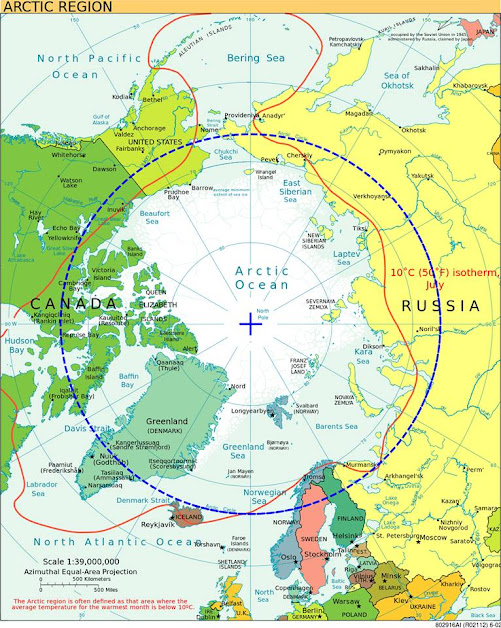
The Arctic under a nuclear umbrella. A main source of increased nuclear dangers in the Arctic is the intensified geopolitical competition among interested nuclear-armed powers. Increased cooperation between Beijing and Moscow and the expansion of NATO to encompass seven of the eight Arctic states have reshaped Arctic geopolitics around growing competition between Russia and, increasingly, China on one side, and the United States and NATO on the other. This happens as the entire Arctic region now finds itself under a nuclear umbrella.
These strategic changes in the Arctic extend beyond deterrence calculus and into an urgent need for regional cooperation.
By Nikita Gryazin, Iren Marinova | Analysis | July 29, 2026, https://thebulletin.org/2026/07/climate-change-exacerbates-nuclear-risks-in-the-arctic-and-we-are-not-ready/?utm_source=ActiveCampaign&utm_medium=email&utm_content=Nuclear%20risks%20in%20the%20Arctic&utm_campaign=20260730%20Thursday%20Newsletter
Editor’s note: This article is published as part of a continuing collaboration between the European Leadership Network and the Bulletin of the Atomic Scientists.
Climate change is transforming the Arctic: Melting sea ice, thawing permafrost, and changing maritime accessibility are opening new territories, resources, and shipping routes while reshaping the region’s strategic landscape. These changes have placed the Arctic at the center of a geopolitical competition between Russia, NATO states, and increasingly China. But the significance of these developments extends beyond economic interests and regional rivalry.
The Arctic hosts critical military infrastructure, strategic nuclear assets, and key pathways for power projection, making it a geopolitical magnifying glass in the evolving global security environment. But while climate change is widely recognized as a threat multiplier in the Arctic, regional governance has not yet adapted to this new reality. Climate change, geopolitical competition, and nuclear risk are typically treated as separate policy challenges, managed by separate institutions with different mandates. The global climate governance institutions approach the Arctic primarily through a focus on climate change effects and environmental management, while the Treaty on the Non-Proliferation of Nuclear Weapons (NPT), the bedrock of the global nuclear order, addresses nuclear risk through the traditional pillars of non-proliferation, disarmament, and peaceful uses of nuclear energy. At the regional level, the Arctic Council, the leading intergovernmental forum for Arctic governance and cooperation, explicitly excludes military security from its mandate. The result is a growing governance gap that no longer reflects the magnitude and complexity of issues in the Arctic.
The governance of the Arctic remains organized around institutional silos that treat climate, security, and nuclear issues as separate rather than mutually reinforcing threats. This disconnect leaves policymakers ill-prepared to manage the security consequences of a rapidly changing Arctic as global tensions are rising and the nuclear order is already under strain. Addressing the governance deficiency in the Arctic is now both a regional and a nuclear risk-reduction imperative. It requires a complementary risk-reduction dialogue—potentially structured as a Track 1.5 mechanism—alongside Arctic-specific planning within NATO, greater attention to regional risks through the NPT process, and renewed bilateral risk-reduction channels.
The Arctic under a nuclear umbrella. A main source of increased nuclear dangers in the Arctic is the intensified geopolitical competition among interested nuclear-armed powers. Increased cooperation between Beijing and Moscow and the expansion of NATO to encompass seven of the eight Arctic states have reshaped Arctic geopolitics around growing competition between Russia and, increasingly, China on one side, and the United States and NATO on the other. This happens as the entire Arctic region now finds itself under a nuclear umbrella.
This strategic competition carries important nuclear dimensions.
The Arctic remains central to Russia’s second-strike nuclear deterrent, hosts critical military infrastructure, including early-warning systems and two-thirds of its sea-based nuclear forces. The region also serves as a key operating environment for Russia’s strategic submarines, which have historically relied on Arctic ice cover for concealment from NATO anti-submarine warfare assets, using the region’s unique acoustic environment and under-ice operating conditions to reduce detectability. Climate change has begun to erode the very geography underpinning this strategy. At the same time, China has expanded its economic, scientific, and military footprint in the region through closer cooperation with Russia and growing interest in Arctic shipping routes and resource development.
For the United States, the Arctic is central to homeland defense and nuclear deterrence, serving as a key theater for missile warning, strategic surveillance, and submarine operations. In response to Russia’s growing Arctic posture, NATO has significantly expanded its own presence through exercises, deployments, and anti-submarine warfare activities.
Finland and Sweden, by joining NATO in 2023 and 2024, respectively, have altered deterrence dynamics and the broader nuclear balance in the Arctic. Their accession has changed the Nordic region from being a peripheral space of nuclear restraint to becoming a strategically integrated frontline of the alliance’s deterrence posture. For decades, both Nordic countries remained non-aligned and staunch promoters of non-proliferation, and even NATO members Denmark and Norway maintained cautious policies on the peacetime stationing of nuclear weapons on their territories. The extension of NATO’s nuclear umbrella resulting from their accession has marked a critical strategic shift in the Arctic. While nuclear stationing in the region remains politically sensitive, NATO’s expansion across the European Arctic increases the strategic significance of the High North and heightens the potential for escalation surrounding Russia’s Arctic-based nuclear assets.
In early 2026, the US administration’s coercive rhetoric over Greenland generated significant political tensions across the North Atlantic. But the Greenland crisis, combined with general shifts in US foreign policy towards Europe in the last year, has raised serious concerns among European allies over the long-term credibility of the US nuclear umbrella. The Nordic interest in complementary European deterrence arrangements involving France and the United Kingdom has also intensified as a result.
Nuclear dangers in the Arctic. A less predictable Arctic means a less predictable deterrence environment. Melting ice and increased maritime access raise the likelihood of submarine detection, close military encounters, and miscalculation between nuclear-armed powers operating in increasingly contested waters. These strategic changes in the Arctic extend beyond deterrence calculus and into an urgent need for regional cooperation.
Novaya Zemlya, the archipelago hosting Russia’s nuclear test infrastructure, sits atop a far older problem. Between 1955 and 1990, the Soviet Union conducted 224 nuclear detonations there, releasing a total of around 265 megatons of explosive energy, and scuttled more than 100 decommissioned nuclear submarines in the surrounding Barents and Kara seas. Plutonium and cesium from both sources are detectable in regional sea sediments and soil beneath glaciers. Permafrost, which used to keep much of this contamination stable, is now thawing. Researchers showed that the Arctic’s Cold War nuclear legacy is one of the least-understood consequences of global warming, as radioactive isotopes locked in frozen soil for decades are now finding new pathways in the environment. Novaya Zemlya remains largely closed to independent researchers, and Russia has offered minimal transparency about current contamination levels at the test site.
The Arctic is also increasingly becoming a theater for nuclear signaling. Russia has repeatedly invoked its nuclear capabilities in the context of confrontation with NATO, embracing more aggressive forms of signaling and appearing more willing to blur the thresholds surrounding potential nuclear use. The result is a region where climate disruption, military competition, and nuclear deterrence are becoming mutually reinforcing pressures.
A fragmented governance system frozen in place. Existing governance institutions have not yet adapted to the rapidly evolving nature of these multifaceted threats in the Arctic. The region’s governance remains reliant on a fragmented and complex ecosystem of international treaties, UN bodies, and regional forums that primarily dictate shipping, resource management, and environmental protection. But the unique complexity of challenges in the Arctic and the rising geopolitical tensions require a more integrated approach.
Geopolitical tensions have removed many of the mechanisms that historically helped manage Arctic issues. Since Russia’s full-scale invasion of Ukraine in 2022, the Arctic Council has been largely paralyzed, scientific cooperation has deteriorated, and global arms control structures have continued to erode. No treaty governs nuclear activities in the region, and the collapse of US-Russia arms control frameworks has left few institutional safeguards in place.
These overlapping gaps compound one another: Regional governance relies on multiple different institutional arrangements; the Arctic Council cannot discuss military activity; and the NPT review process does not address region-specific escalation risks. This results in a structural blind spot that leaves states without agreed rules of the road at precisely the moment when the risk of miscalculation is rising. The absence of any dedicated forum that brings together climate scientists, arms control experts, and defense officials means that the linkages between environmental change and nuclear risk remain invisible to policymakers until a crisis makes them undeniable.
Closing the governance gap.
Read more: Climate change exacerbates nuclear risks in the Arctic. And we are not readyThe disconnect between siloed governance bodies and self-reinforcing risks in the Arctic demands concrete responses across several institutional levels. Despite its current constraints, the Arctic Council remains the region’s most successful institutional forum for circumpolar cooperation. Institutional bridges should be built around it as a cornerstone. But cooperation through the Arctic Council has been resilient precisely because its mandate explicitly excludes military security and instead focuses on scientific cooperation, sustainable development, and participation of indigenous populations.
Rather than expanding the Arctic Council’s mandate to encompass military security, the Arctic states should instead focus on closing the governance gap between climate change, geopolitical competition, and nuclear risks. This could be achieved through a complementary Arctic risk-reduction dialogue, potentially structured as a Track 1.5 mechanism, that operates alongside the Arctic Council and brings together foreign ministers, defense officials, coast guards, scientific experts, and representatives of indigenous communities. It could potentially be convened by an Arctic state with a strong record of regional diplomacy, such as Norway or Iceland, or a UN-affiliated body. The purpose would be to bring together experts in different areas to discuss the changing and multi-faceted threat environment in the Arctic.
Initially, such a forum could focus on practical areas of shared concern, including maritime incidents, search and rescue, environmental problems, critical infrastructure, and nuclear risk mitigation. Creating formal channels of communication would provide a venue for identifying and managing the increasingly interconnected climate, geopolitical, and nuclear threats emerging in the Arctic.
Complementary institutional responses should be established above the immediate regional level as well. Building on the Strategic Concept’s recognition of climate change as a threat multiplier, NATO should translate this commitment into Arctic-specific planning by incorporating climate-driven deterrence instability into its strategic planning and pursue dedicated Arctic incident-prevention protocols, including direct communication channels modelled on existing incidents-at-sea agreements, to reduce the risk of miscalculation.
At the multilateral level, the NPT review process should give greater attention to the interconnected nuclear risks in the Arctic by encouraging voluntary transparency, expert assessment, and reporting on climate-related vulnerabilities, radioactive contamination and nuclear legacies in the region, including at sites such as Novaya Zemlya. Finally, even amid the current political environment, the United States and Russia should prioritize the Arctic by pursuing or renewing Arctic risk-reduction channels, including incidents-at-sea arrangements and joint environmental monitoring of thawing contaminated sites. While these are minimal confidence-building measures that do not require broader arms control consensus, they could meaningfully reduce the risk of miscalculation and escalation.
Rapid warming in the Arctic has opened the door to intense geopolitical competition in the High North at the same time that the region is being placed under a broader nuclear umbrella. In the Arctic, these issues can no longer be addressed as separate concerns but rather as reinforcing one another and heightening regional and global insecurity. Existing governance institutions in the region must adapt to these new security challenges.
AI Wants Your Land, Water, Power

The bigger data centers, which are in vogue, being built right up next to hospitals, schools, and residences willy nilly use anywhere from 1-to-7 million gallons of water per day. On average, equivalent to moving 15,000-20,000 new families into a neighborhood.
Robert Hunziker, July 27, 2026, https://www.counterpunch.org/2026/07/27/ai-wants-your-land-water-power/
“This is just like a free-for-all. There’s really no oversight. There’s really no regulation.” (Erin Brockovich, Brockovich AI Data Center Reporting)
Erin Brockovich is a well-known American consumer advocate who made her name by exposing evidence that Pacific Gas & Electric poisoned groundwater in Hinkley, California (1996) with toxic hexavalent. Now, she’s investigating AI datacenters.
AI date centers are everywhere, in every state throughout the land. They are starting to quasi-own American citizens via appropriation of resources, both human and natural. This is an invasion of the land, the water, the power, the intellectual resources of America.
Erin Brockovich was recently interviewed about her commitment to investigating AI development by Katie Couric, appearing on YouTube.
Erin: “I’ve never seen in 30 years anything like this… This is every town in every state, and all our resources at once happening.”
The common thread in submissions from individuals in communities across the land: “it feels to them like a takeover.” First, there is a lack of transparency. Local city councils, where “the people” should be represented are hijacked via non-disclosure agreements signed by local officials. This is step number one in gaining approval to build where city regulations and city code control the land. The locals are left out of decisions.
Datacenters Consume Natural Resources
Smaller data centers use about 500,000 gallons of water per day. The average family of four uses ~350 gallons of water per day. Therefore, a newly constructed small data center is equivalent to moving 1,428 new families into a neighborhood.
The bigger data centers, which are in vogue, being built right up next to hospitals, schools, and residences willy nilly use anywhere from 1-to-7 million gallons of water per day. On average, equivalent to moving 15,000-20,000 new families into a neighborhood.
“So, if we build 1,200 data centers… that’s the projection for the total and you just take an average of those between 500,000 to seven million, and the average is 5 million gallons per day, and multiple that by 365 days. You’re looking at numbers of 2.2 to 2.7 trillion gallons of water per year… that are on already drought restricted lands.” (Erin)
(There are already 4, 542 active data centers, 1,500 more are in the planning stage.)
A recent study by The Guardian found that 2/3rds of the planned data centers in the U.S. are in drought-stricken areas.
Datacenters disrupt the regular flow of water. For example, residents sent reports to Erin “of water bills going from $40/month to $250/month… and we’re seeing the exact same thing with electrical.”
According to Katie Couric, Sam Altman, CEO of Open AI, dismisses concerns about AI water use, “fake, completely untrue, totally insane, and having no connection to reality.”
In response, Erin wondered if Altman lives in the areas and experiences what residents report to her. He is implying that the reports by residents are false (16,000 total submissions to Erin by individuals involving various AI issues). “It is insulting.”
Erin asked AI itself in a query to the faceless genius a question of placement of data centers assuming the entire network were to start all over again from scratch, redesigned. AI responded that it would place new data centers based upon one simple rule: “Zero conflict with human resources.” Hmm.
“The people” who submit to Erin from all 50 states are saying the opposite of Sam Altman. And she’s going with the people as a more credible source. After all, they live in the immediate area of data centers. He does not.
Data Center Noise – Wow!
The “hum,” the “buzz” can extend a couple of miles away from a data center. The endless humming is a 24/7 annoyance that’s driving some people nuts. Residents are informing Erin of dizziness, nausea, headachy experiences. This is a common issue tbat’s reported from every one of the facility areas in the country.
Locals Fighting Back
Three hundred (300) municipalities have established moratoriums on data center development, some for one year, some for two years, some six months, some are flat-out bans.
But according to Erin, as usual, “many of them won’t be able to withstand the pressure by huge corporations that have got all the money in the world.”
Yet, public protests can exercise powerful influence. For example, in Utah it was clearly via public opposition that the governor had to scale back the size of the facility coming in.
And New York is the first state to ban development of new data centers as a moratorium for one year and direct state regulators to create standards focused on environmental impacts, energy demand, water usage and other factors: “As datacenter development threatens to hike up utility bills, deplete our natural resources, and create uncertainty for New Yorkers, it’s my responsibility to take action and lead,’ Hochul, a Democrat, said in a statement.” (New York Becomes First State to Impose One-Year Pause on New AI Datacenters, The Guardian, July 14, 2026)
According to Katie, a recent Gallup poll shows 7 out of 10 Americans oppose data centers being built near them, making it one of the few contemporary issues that has broad bipartisan agreement, republicans and democrats alike do not favor AI datacenters in their locales.
Meanwhile, the power source for data centers is passed off to consumers. Infrastructure is required. Erin has received submissions from people stating their utility bills normally $75 went up to $425. A recent submission by a resident out of Texas, which has the most data centers at 417, said their city notified residents to expect a 75% electrical bill increase.
Stated by Katie: According to The New York Times, PJM, the nation’s largest electrical grid operator’s results of an electricity auction will add $6.3 billion costs to consumers within the next 3 years, an increase driven by the power demands of data centers.
AI Ownership
Katie Couric’s interview of Erin Brockovich brought to light the impact AI has on the country’s natural resources but did not discuss nontangible resources like music or speech or art. These human resources, similar to natural resources, are public resources. Who owns these resources?
Bernie Sanders has an interesting take on ownership of resources: “The foundation of AI is based on our collective human intelligence. Our books, songs, artwork, journalism, computer code, scientific research, videos, conversations, images, and ideas span generations. The reality is that Big Tech oligarchs have fed this knowledge into their AI models without permission, without acknowledgement, and without compensation. The creative work of many millions of people – writers, artists, musicians, journalists, teachers, scientists and ordinary people- has been stolen by the wealthiest people in the world. In the coming weeks I will be introducing the American AI Sovereign Wealth Fund Act. This legislation would give the public a direct ownership stake in the largest AI companies in our country. Through a one-time 50% tax, not on the profit of the largest AI companies in the US but something that is far more valuable than that: The Stock. Under this bill the federal government would have the power through its voting shares and an equal representation on each company’s board to block decisions that hurt the public and to push for policies that help them. When a public resource generates wealth, the public should share in that wealth.”
Robert Hunziker lives in Los Angeles and can be reached at rlhunziker@gmail.com.
1 This Month



Shut down the radiation-damaged Heysham nuclear reactors now
To see nuclear-related stories in greater depth and intensity – go to https://nuclearinformation.wordpress.com

Say No to NASA’s Reckless Nuclear Reactor on the Moon
Say No to NASA’s Reckless Nuclear Reactor on the Moon
-
Archives
- October 2026 (256)
- September 2026 (339)
- August 2026 (330)
- July 2026 (355)
- June 2026 (287)
- May 2026 (306)
- April 2026 (356)
- March 2026 (251)
- February 2026 (267)
- January 2026 (308)
- December 2025 (358)
- November 2025 (359)
-
Categories
- 1
- 1 NUCLEAR ISSUES
- business and costs
- climate change
- culture and arts
- ENERGY
- environment
- health
- history
- indigenous issues
- Legal
- marketing of nuclear
- media
- opposition to nuclear
- PERSONAL STORIES
- politics
- politics international
- Religion and ethics
- safety
- secrets,lies and civil liberties
- spinbuster
- technology
- Uranium
- wastes
- weapons and war
- Women
- 2 WORLD
- ACTION
- AFRICA
- Atrocities
- AUSTRALIA
- Christina's notes
- Christina's themes
- culture and arts
- Events
- Fuk 2022
- Fuk 2023
- Fukushima 2017
- Fukushima 2018
- fukushima 2019
- Fukushima 2020
- Fukushima 2021
- general
- global warming
- Humour (God we need it)
- Nuclear
- RARE EARTHS
- Reference
- resources – print
- Resources -audiovicual
- Weekly Newsletter
- World
- World Nuclear
- YouTube
-
RSS
Entries RSS
Comments RSS

