Don’t dump on us

Posted on by beyondnuclearinternationa
Pacific Islanders, marine scientists, urge Japan not to dump Fukushima radioactive water into ocean
By Linda Pentz Gunter
The nuclear power industry has a long history of disproportionately impacting people of color, Indigenous communities and those living in the Global South. As Japan prepares to dump more than 1 million tonnes of radioactive water from its stricken Fukushima-Daiichi nuclear power plant site into the Pacific Ocean some time this year, history is about to repeat itself.
To remind us of that — and to warn against this reckless and entirely unnecessary action (Japan could and should expand the cask storage pad on site and keep storing the radioactive water there) — the leader of the Pacific Islands Forum (PIF) has spoken out.
In a recent column in the UK daily newspaper, The Guardian, Henry Puna wrote that “continuing with ocean discharge plans at this time is simply inconceivable”, given how directly it once again discriminates against — and will likely seriously harm the health of — the peoples of the Pacific. Puna took care to remind readers “that the majority of our Pacific peoples are coastal peoples, and that the ocean continues to be an integral part of their subsistence living.”
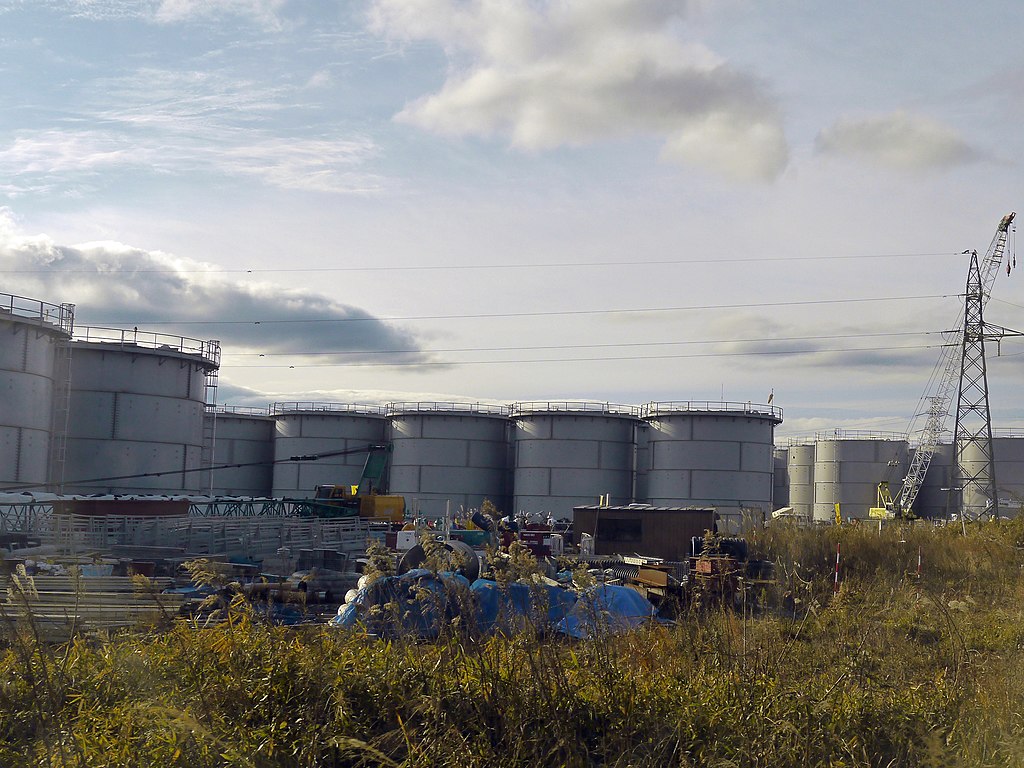
Japan is once again declaring its intention to dump the radioactive water stored in tanks at the Fukushima-Daiichi nuclear site into the Pacific Ocean, against widespread opposition.
Going forward with the dump without further study and serious consideration of viable alternatives, would, Puna said, mean that “the region will once again be headed towards a major nuclear contamination disaster at the hands of others.” Victims of years of atomic testing, Pacific Islanders are rightly not ready to be dumped on yet again.
Tepco and the lapdog Japanese government announced last May that they would release around 1.3 million tonnes of radioactive waste water from the Fukushima site next spring. Recently, authorities suggested the dump could be delayed until the summer but seem undeterred by the loud chorus of opposition from multiple quarters.
The plant produces 100 cubic metres of contaminated water daily, a combination of groundwater, seawater and water used to keep the reactors cool. The water is theoretically filtered to remove most harmful isotopes, other than tritium, which is radioactive hydrogen and cannot be separated from water. It is then stored in casks on site where authorities claim they are running out of space. However, independent watchdogs are not convinced that the filter system has successfully removed other dangerous radioactive isotopes from the waste water.
Most recently, the 100-member American group, the National Association of Marine Laboratories (NAML), expressed its fervent opposition in a strongly worded position paper released last month. Their opposition, they wrote, “is based on the fact that there is a lack of adequate and accurate scientific data supporting Japan’s assertion of safety. Furthermore, there is an abundance of data demonstrating serious concerns about releasing radioactively contaminated water.”
The report went on: “The proposed release of this contaminated water is a transboundary and transgenerational issue of concern for the health of marine ecosystems and those whose lives and livelihoods depend on them. We are concerned about the absence of critical data on the radionuclide content of each tank, the Advanced Liquid Processing System (ALPS), which is used to remove radionuclides, and the assumption that upon the release of the contaminated wastewater, ‘dilution is the solution to pollution.’”
The scientists accused Japan of ignoring the inevitable processes of bioaccumulation and bioconcentration, which contradict the dilution contention. The Association also called out what it saw as shoddy or incorrect science conducted by Tepco and the Japanese government, including “flaws in sampling protocols, statistical design, sample analyses, and assumptions, which in turn lead to flaws in the conclusion of safety and prevent a more thorough evaluation of better alternative approaches to disposal.”
Japan has consistently rejected on-going onsite storage — presumably due to the expense, given the land space is there and more casks could be provided. In the view of some, the eagerness to dump the water— largely contaminated with tritium (a form of radioactive hydrogen that cannot be separated from water) and likely other undeclared radionuclides — is a public relations exercise to make the problem “go away” and restore normal optics to the site. The site cannot also be fully decommissioned so long as the tanks are there.
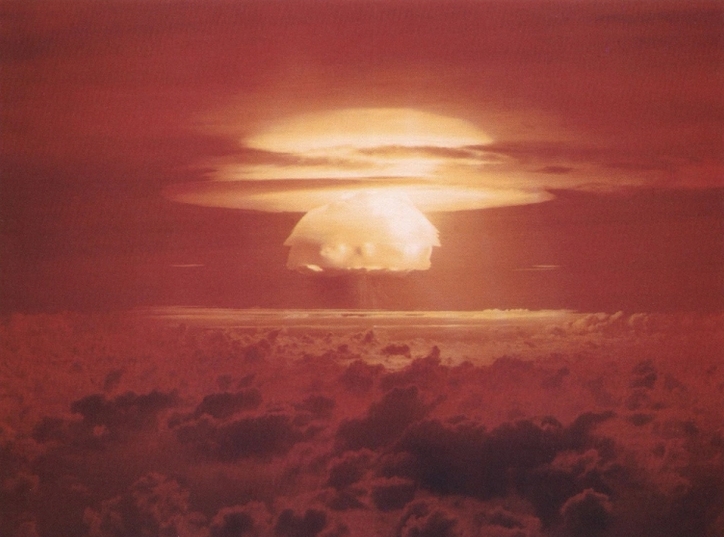
Castle Bravo was just the largest of the 67 atomic tests conducted by the US in the Marshall Islands, contaminating the landscape and sickening its population for generations .
Japan has also benefited from the (inevitable) support of the (nuclear power-promoting) International Atomic Energy Agency, an organization that never met a nuclear danger it couldn’t downplay. The agency has described the proposed discharges as “far below the Japanese regulatory limits,” in a statement last April.
After sending in a task force and several earlier reports, the IAEA released a new report in December in which it said “the IAEA will conduct its own independent checks of the radiological contents of the water stored in the tanks and how it will analyse environmental samples (for example seawater and fish) from the surrounding environment.” However, the IAEA has not expressed opposition to the dumping of the radioactive water even now and instead indicates that its safety reviews will continue “before, during, and after the discharges of ALPS treated water.”
Japan has faced down opposition from fishermen and environmentalists, particularly from those in the Marshall Islands who have suffered decades of horrific health issues, especially birth defects, after enduring 67 US atomic tests there. A Pacific region collective advocacy group, Youngsolwara Pacific, expressed dismay that the Japanese, of all people, would not empathize with them and condemn the Fukushima water dump.
“How can the Japanese government, who has experienced the same brutal experiences of nuclear weapons in both Hiroshima and Nagasaki, wish to further pollute our Pacific with nuclear waste?” they asked in a statement quoted in a New York Times article in December. “To us, this irresponsible act of trans-boundary harm is just the same as waging nuclear war on us as Pacific peoples and our islands.”
Pacific Islanders are naturally suspicious, having been lied to before. It took two days before the by then radiologically contaminated people of Rongelap were evacuated subsequent to the massive Castle Bravo atomic test, America’s biggest bomb that devastated Bikini Atoll. Marshall Islanders were treated as guinea pigs in the aftermath of the tests there, as the US government examined the impact on people living in a radiologically contaminated environment — even as the true dangers were hidden from them. Consequently, claims by the Japanese government that their Advanced Liquid Processing System had removed the worst of the radionuclides from the waste water to be dumped, have been met with skepticism at best.
Now, their concerns are supported by marine scientists.
“The effectiveness of the Advanced Liquid Processing System in almost completely removing the over 60 different radionuclides present in the affected wastewater—some of which have an affinity to target specific tissues, glands, organs, and metabolic pathways in living organisms, including people—remains a serious concern due to the absence of critical data,” said the statement from NAML.

Those are precisely some of the agonizing health effects already endured by the bombed peoples of the Marshall Islands and elsewhere in the Pacific. They are not ready to be dosed again.
“You feel this deep sorrow,” Bedi Racule, President of the Marshall Islands Students Association, told the New York Times. “Why were we not good enough to be treated like human beings?”
In an August 2022 statement on the Youngsolwara Pacific homepage, Racule added: “The impact of the nuclear testing legacy in the Pacific continues to affect our islands and people, and we cannot afford another scenario such as Fukushima’s dumping plan. Scientists are already warning that the impact of long-term, low-dose exposure to not only tritium but also other isotopes on the environment and humans is still unknown and that release of the wastewater is premature.”
Now NAML, the PIF and a vociferous alliance of Japanese fishermen and anti-nuclear activists, are raising their voices a little louder in what might be a last ditch attempt to prevent the Pacific Ocean from becoming, once again, a nuclear dustbin.
Linda Pentz Gunter is the international specialist at Beyond Nuclear and writes for and curates Beyond Nuclear International.
Source: https://beyondnuclearinternational.org/2023/01/24/dont-dump-on-us/#like-17588
Trial for compulsory prosecution of TEPCO’s former management team: Appeal by designated attorney acting as prosecutor

January 24, 2023
On January 24, a designated attorney acting as a prosecutor appealed to the Supreme Court against the decision of the second trial court, which handed down an acquittal following the first trial, in the trial of three former TEPCO executives who were forcibly indicted on charges of manslaughter over the Fukushima Daiichi nuclear power plant accident.

Tsunehisa Katsumata, 82, then chairman of TEPCO, and Ichiro Takekuro, 76, and Sakae Mutoh, 72, then vice presidents of TEPCO, were forcibly indicted on charges of manslaughter by the prosecutors’ panel for causing the deaths of 44 people, including hospital patients in Fukushima Prefecture, during evacuation from the nuclear accident.
The first trial court acquitted the three, and the Tokyo High Court, the court of second instance, in a ruling on the 18th of this month, followed the first trial court in acquitting all three, ruling that “it was impossible to predict the arrival of a huge tsunami and that there was not enough duty to stop the operation of the plant to avoid the accident.
Dissatisfied with this decision, the designated lawyer acting as the prosecutor appealed to the Supreme Court on March 24.
At a press conference held after the High Court ruling, the designated attorneys criticized the ruling, saying, “The ruling is tantamount to saying that there is no need to take measures against unknown earthquakes and tsunamis that have not been scientifically elucidated.
Nearly 12 years after the nuclear accident, the trial will now move to the Supreme Court.
TEPCO apologizes once again for the inconvenience and concern it has caused to so many people. We will refrain from commenting on the appeal.https://www3.nhk.or.jp/news/html/20230124/k10013958641000.html?fbclid=IwAR3ebtAUDnJuFnc8mBMvvqwmCfi0my9AzZqv0hbTO8W34RF4uc6VDUxXuK 8
Fukushima’s Toxic Dumping Flashpoint

January 20, 2023
“We must remind Japan that if the radioactive nuclear wastewater is safe, just dump it in Tokyo, test it in Paris and store it in Washington, but keep our Pacific nuclear-free.” (Vanuatu’s celebrated former ‘Turaga Chief’ Motarilavoa Hilda Lini)
In the face of considerable worldwide criticism, TEPCO is moving ahead with its well-advertised plans to dump contaminated water from storage tanks at the Fukushima-Daiichi Nuclear Power Plant disaster zone into the Pacific Ocean. They are running out of storage space and the Pacific Ocean is conveniently right next door.
The Japanese government is courting trouble, as a contracting party to: (1) the United Nations Convention on the Law of the Sea (2) the Convention on Early Notification of a Nuclear Accident, and (3) the Convention on Nuclear Safety, Japan has knowingly violated all three conventions by making the decision to dump contaminated water into the Pacific Ocean.
TEPCO’s toxic dumping scheme is opposed by some scientists as well as some of the world’s most highly regarded marine laboratories, e.g., the U.S. National Association of Marine Laboratories, with over 100 member laboratories, has issued a position paper strongly opposing the toxic dumping because of a lack of adequate and accurate scientific data in support of Japan’s assertions of safety.
The position paper: “We urge the government of Japan to stop pursing their planned and precedent-setting release of the radioactively contaminated water into the Pacific Ocean and to work with the broader scientific community to pursue other approaches that protect ocean life; human health; and those communities who depend on ecologically, economically, and culturally valuable marine resources.” (Source: U.S. Marine Labs Call for Stop to Fukushima Dumping Plans for Pacific, Pacific Island Times, Dec. 20, 2022)
Furthermore, Marine Laboratories agrees with the Pacific Island Forum’s suggestion that TEPCO look at options other than discharge. The toxic dumping plan has already put Japan at risk of losing its status as a Pacific Islands Forum Dialogue Partner. There are 21 partners, including the US, China, the UK, France, and the EU. According to Secretary General Henry Puna, the Forum has persistently requested Japan to share pivotal data, which has not been forthcoming: “In fact, we are very serious, and we will take all options to get Japan to at least cooperate with us by releasing the information that our technical experts are asking of them.” (Source: Pacific Island Forum Could Sideline Japan Over Nuclear Waste Plan, RNZ Pacific, January 12, 2023)
Japan’s Nuclear Regulation Authority has endorsed the dumping plan. No surprise there. Also unsurprisingly, the International Atomic Energy Agency (IAEA), the marketing arm for nuclear power, claims the dumping proposal is safe. Effective December 29, 2022, IAEA released an extensive report that details how the process will be monitored by independent entities, not to worry, uh-uh.
TEPCO generates 100 cubic metres of contaminated water per day, a mixture of groundwater, seawater, and water that cools the reactors. It is filtered for “the most radioactive isotopes” and stored in above-ground water tanks, but authorities admit that the level of tritium is above standards. It is almost impossible to remove tritium from water. TEPCO claims it is “only harmful to humans in large doses.” But who’s measuring?
According to TEPCO: “After treatment the levels of most radioactive particles meet the national standard.” However, the statement that most radioactive particles meet the national standard is not reassuring. And furthermore, why should anybody anywhere in the world be permitted to discharge large quantities of contaminated water that’s been filtered for ‘most radioactive particles’ directly from a broken-down nuclear power plant into the ocean under any circumstances?
But storage space is running out and the ocean is readily available as a very convenient garbage dump. Well, yes, but maybe find more storage space… on land… in Japan!
According to a Japanese anti-nuclear campaign group, the contaminated water dumping scheme violates the Convention on the Prevention of Marine Pollution as well as the UN Convention on the Law of the Seas. Their opposition is endorsed by the National Fisheries Cooperative Federation of Japan. In September 2022, 42,000 people signed a joint petition delivered to TEPCO and Japan’s Ministry of Economy demanding other solutions to the toxic water dumping plans. According to national broadcasting firm NHK, 51% of Japanese respondents oppose the dumping plan. And a survey by Asahi Shimbun claims 55% of the public opposes the dumping.
A Greenpeace East Asia press release d/d April 28, 2021, says; “According to the latest report by the Japanese government, there are 62 radioactive isotopes found in the existing nuclear water tanks in Fukushima, among which concentration of a radionuclide called tritium reached about 860 TBq (terabecquerel) – an alarming level that far exceeds the acceptable norm.”
China’s Xinhua News Agency claims: “TEPCO believes that tritium normally remains in the wastewater at ordinary nuclear power stations, therefore it is safe to discharge tritium-contaminated water. Experts say TEPCO is trying to confuse the concept of the wastewater that meets international standards during normal operation of nuclear power plants with that of the complex nuclear-contaminated water produced after the core meltdowns at the wrecked Fukushima power plant. The actual results of ALPS (Advanced Liquid Processing System) are not as ideal as TEPCO claims. Japanese media have found that in addition to tritium, there are a variety of radioactive substances in the Fukushima nuclear wastewater that exceed the standard. TEPCO has also admitted that about 70 percent of the water treated by ALPS contains radionuclides other than tritium at the concentration which exceeds legally required standards and requires filtration again.” (Source: World Insights: Japan Extremely Selfish to insist on Discharging Nuclear Wastewater into Sea, Xinhua, August 10, 2022)
According to Hiroyuki Uchida, mayor of Iwaki, Fukushima Prefecture, despite strengthened information about the toxic dumping by TEPCO and the government of Japan, the discharge plan has not gained “full understanding of citizens and fishery stakeholders.” (Source: Japanese Public Opposes Plan to Dump Radioactive Water into Sea, Asia & Pacific by Xinhau, January 15, 2023)
Rhea Moss-Christian, executive director of the Western and Central Pacific Fisheries Commission, aka: the Pacific Tuna Commission said: “It’s a real concern and I just wish they would take a bit of time to think more carefully about this… this is a massive release and a big, big potential disaster if it’s not handled properly… There are a number of outstanding questions that have yet to be fully answered. They have focused a lot on one radionuclide and not very much on others that are also present in the wastewater.” (Source: Hiroshima Survivor Pleads for Halt of Radioactive Waste Dump in Pacific Ocean, INA Pacific News Service, December 20, 2022)
Greenpeace/Japan on TEPCO dumping: “The Japanese government has once again failed the people of Fukushima. The government has taken the wholly unjustified decision to deliberately contaminate the Pacific Ocean with radioactive wastes. It has discounted the radiation risks and turned its back on the clear evidence that sufficient storage capacity is available on the nuclear site as well as in surrounding districts.[2] Rather than using the best available technology to minimize radiation hazards by storing and processing the water over the long term, they have opted for the cheapest option [3], dumping the water into the Pacific Ocean… Since 2012, Greenpeace has proactively campaigned against plans to discharge Fukushima contaminated water – submitting technical analysis to UN agencies, holding seminars with local residents of Fukushima with other NGOs, and petitioning against the discharges and submitted to relevant Japanese government bodies.” (Source: Greenpeace Press Release, April 13, 2021)
Addressing the U.N. General Assembly on September 22nd, 2022, President David Panuelo of Micronesia stated: “We cannot close our eyes to the unimaginable threats of nuclear contamination, marine pollution, and eventual destruction of the Blue Pacific Continent. The impacts of this decision are both transboundary and intergenerational in nature.”
In April 2021 Japan’s Deputy Prime Minister (serving from 2012-to-2021) Tarō Asō publicly stated that the treated and diluted water “will be safe to drink.” In response to Deputy PM Asō, Chinese Foreign Minister Lijian Zhao replied: “The ocean is not Japan’s trashcan” and furthermore, since Japan claims it’s safe to drink, “then drink it!” (Source: China to Japan: If Treated Radioactive Water from Fukushima is Safe, ‘Please Drink It’ Washington Post, April 15, 2021)
Mr. Zhao may have stumbled upon the best solution to international concerns about TEPCO (Tokyo Electric Power Company) dumping contaminated water into the Pacific Ocean. Instead, TEPCO should remove it from the storage tanks at Fukushima Daiichi Nuclear Power Station and deliver it to Japan’s water reservoirs. After all, they publicly claimed it’s “safe to drink.” Japan has approximately 100,000 dams of which roughly 3,000 are reservoirs over 15 meters (50’) height. For example, one of the largest drinking water reservoirs in Japan is Ogouchi Reservoir, which holds 189 million tons of drinking water for Tokyo.
Source: https://www.counterpunch.org/2023/01/20/fukushimas-toxic-dumping-flashpoint/
Many errors in TEPCO’s nuclear power plant examination documents at Kashiwazaki Kariwa Unit 3

January 19, 2023
On January 19, TEPCO Holdings revealed that 149 errors were found in the examination documents for the Kashiwazaki Kariwa Unit 3 nuclear power plant in Niigata Prefecture, which is under review by the Nuclear Regulation Authority before its 30th year of operation. 131 of the errors were made using information from Unit 2, which has already been examined.
TEPCO apologized at the review meeting on the same day, saying, “We should reflect on this. The Regulatory Commission said, “This is a matter that concerns the reliability of the documents, and we hope you will take it seriously,” and demanded that a recurrence of the problem be prevented.
According to TEPCO, because they did not know the names of the materials required for the documents, they used those of the Unit 2 reactor of the same type. The same document contained an error due to a programming error, which was discovered when the company checked for similar errors.
Kashiwazaki Kariwa Unit 3, which began operation in August 1993, is currently shut down and has not yet applied for an inspection to restart operations. Nuclear power plants are required to undergo an examination to check the management of their facilities before they reach 30 years of operation. Kyodo News
https://www.nikkei.com/article/DGXZQOUA19CCU0Z10C23A1000000/?fbclid=IwAR339KW18B9GAITAh2AdBAorc1cA-7vkU_OoWvyCT7G1ECB-RI8xeldvadc
Thousands of solar panels sent to power recovery effort in earthquake devastated Türkiye — RenewEconomy

Up to 12,000 solar panels sent to Turkey, including to power temporary shelters to provide lighting, heating, telephone chargers and refrigerators. The post Thousands of solar panels sent to power recovery effort in earthquake devastated Türkiye appeared first on RenewEconomy.
Thousands of solar panels sent to power recovery effort in earthquake devastated Türkiye — RenewEconomy
Ukraine’s Tank Problem – a “game changer” – REALLY?
It is impossible to see how the provision of such weapons, against a larger enemy with no evident sign of capitulation and determined to maintain the fight in the field, however slapdash and ailing, will be a “gamechanger”. That word ought to be scrapped from any credible analysis, but we see it used repeatedly in the tabloid certitude of final victory.
Australian Independent Media February 1, 2023: Dr Binoy Kampmark https://theaimn.com/ukraines-tank-problem/
It seems to be a case of little provision for so much supposed effect. The debates, the squabbles, the to-and-fro about supplying Ukraine with tanks from Western arsenals has served to confirm one thing: this is an ever-broadening war between the West against Russia with Ukraine an experimental proxy convinced it will win through. Efforts to limit the deepening conflict continue to be seen as the quailing sentiments of appeasers, the wobbly types who find democracy a less than lovable thing.
So far, promises have been made to ship the US M1A2 Abrams, Germany’s Leopard 2 and the UK’s Challenger. Others have alluded to doing the same thing – including France regarding its Leclerc tanks – but tardiness fills the ranks, and logistics will make the provision of such weapons a long affair. Re-export licenses will have to be issued, notably regarding the Leopard 2; training Ukrainian tank crews will also need to be undertaken.
All in all, the picture is not as rosy as those in Kyiv think, despite the confident assessment from Ukraine’s Deputy Foreign Minister, Andriy Melnyk that his country’s defence forces would have access to “at least a hundred tanks” within three months.
The US tanks are, for the most part, still grounded in their country of origin, with their deployment potentially delayed for months, if not years. Pentagon deputy spokesperson Sabrina Singh was frank in admitting that, “We just don’t have these tanks available in excess in our US stocks, which is why it is going to take months to transfer these M1A2 Abrams to Ukraine.” Singh, it should also be remembered, expressed the department’s view earlier this month that the tank was hardly suitable for Ukrainian needs, given how its jet turbine engine hungers for JP-8 jet fuel, unlike the diesel engine used by the Leopard and Challenger counterparts.
The engine is also rather tricky to maintain for crews, leaving it susceptible to blowing in the event of error. No less an authority than the Pentagon press secretary US Air Force brigadier general Pat Ryder, admitted that the M-1 “is a complex weapons system that is challenging to maintain, as we’ve talked about. That was true yesterday; it’s true today; it will be true in the future.”
There is also a backlog of orders for the tank. The Lima facility in Ohio, operated by General Dynamics, is the only facility that assembles the Abrams. It can produce a mere 12 tanks per month and must fulfill orders to supply 250 A2 tanks for Poland starting in 2025 to replace the same number of Soviet-era T-72 tanks Warsaw supplied to Kyiv last year. Taiwan also put in an order for 108 M1A2 tanks in 2019. Even getting to work on the 31 units promised by the Biden administration for Ukraine looks to be ambitious.
The wrangling over supplying Ukraine with tanks has been an at times acrimonious affair. This is hardly surprising. European states have their own specific readings, however dark or cautious, about how to approach the supply issue. The magic number being sought by Kyiv is 300. After initial resistance, German Chancellor Olaf Scholz gave in to his peers, both in his coalition outside, to send a company of Leopard 2 tanks and permit countries with the same tanks in their inventories to supply them to Kyiv. A fortnight of aggressive chatter at a number of venues, including Ramstein Air Base, pressing the flesh and breathing down various necks, saw a change of heart and, it has to be said, weak will on the part of the Chancellor.
It is impossible to see how the provision of such weapons, against a larger enemy with no evident sign of capitulation and determined to maintain the fight in the field, however slapdash and ailing, will be a “gamechanger”. That word ought to be scrapped from any credible analysis, but we see it used repeatedly in the tabloid certitude of final victory.
There is Ed Arnold of the Royal United Services Institute, who is confident that this tank transfer “will make a real difference.” But even Arnold attaches a few caveats, noting that much will depend on how Ukraine uses them. “Do they put them straight into the fight as soon as they’re available? Or do they integrate them into larger formations, train and rehearse those larger formations, and spend a bit more time integrating them into the way that they fight to then potentially use in the summer?”
Whatever the answer to such questions, this is a war that will yield no victors and will, in guaranteed fashion, make a mockery of victory. And the only cruel reality here, short of needless oblivion through imbecilic error of judgment, is to get the warring parties to the table to reach an agreement that is bound to cause despair as much as relief. It might, as unpalatable as it seems, require Ukraine to surrender a portion of devastated earth in the east. The unthinkable will have to be entertained.
Scepticism on the enthusiastic claims about nuclear fusion

The nuclear fusion community ended 2022 with a bang, when scientists at the
Lawrence Livermore National Laboratory in California reported that they had
created a reaction that produced more energy than it consumed.
This breakthrough, known as a fusion ignition, was hailed as a historic advance,
a critical step on the road to generating limitless clean energy by
replicating the reactions that power the sun. Following the announcement,
commentators immediately began to speculate about how close scientists are
to achieving that long-held dream.
But any claims about the start of the next clean energy revolution must be regarded skeptically. In part, this is
because when the energy-intensive lasers that produced the reaction are
also accounted for, the total energy used in the experiment was much more
than it created.
Additionally, to turn this kind of fusion reaction into an
actual power source, the same effect would have to be replicated at a much
higher frequency—more like several times a second rather than once a day.
The reality is that fusion energy is nowhere near ready for commercial use.
Nor will it be, until a successful innovation strategy for nuclear fusion
is devised.
Foreign Affairs 31st Jan 2023
https://www.foreignaffairs.com/world/long-way-nuclear-fusion
Nuclear must not be part of Cromartry Firth freeport vision
YOUR VIEWS: ‘Nuclear should not be part of freeport vision’. A reader and
campaigner reacts to news that small nuclear reactors could be built in the
north. The Courier carried comments from Global director Steve Chisholm
that small modular nuclear reactors could be built in the Cromartry Firth
after the award of green freeport status for the area.
Nuclear should not be part of freeport vision I refer to the article headed “Nuclear Reactor
is in the freeport mix “(Inverness Courier, January 20) and was very
surprised that this proposal has now emerged. HANT (Highlands Against
Nuclear Transport) has raised concerns since 2013 about many safety
concerns related to the transport of nuclear waste by rail from Georgemas
Junction (near Dounreay) to Barrow and on to the Sellafield Nuclear plant.
There have been a number of incidents of concern related to both rail and
sea transport.
Inverness Courier 31st Jan 2023
This Time It’s Different
This time it’s different. Washington and its NATO allies are advocating a full-blown war against Russia, the devastation and breakup of the Russian Federation, as well as the destruction of millions of lives in Russia and Ukraine.
Neither we nor our allies are prepared to fight all-out war with Russia, regionally or globally.
Douglas Macgregor, Jan 26, 2023 https://www.theamericanconservative.com/this-time-its-different/
Until it decided to confront Moscow with an existential military threat in Ukraine, Washington confined the use of American military power to conflicts that Americans could afford to lose, wars with weak opponents in the developing world from Saigon to Baghdad that did not present an existential threat to U.S. forces or American territory. This time—a proxy war with Russia—is different.
Contrary to early Beltway hopes and expectations, Russia neither collapsed internally nor capitulated to the collective West’s demands for regime change in Moscow. Washington underestimated Russia’s societal cohesion, its latent military potential, and its relative immunity to Western economic sanctions.
As a result, Washington’s proxy war against Russia is failing. U.S. Defense Secretary Lloyd Austin was unusually candid about the situation in Ukraine when he told the allies in Germany at Ramstein Air Base on January 20, “We have a window of opportunity here, between now and the spring,” admitting, “That’s not a long time.”
Alexei Arestovich, President Zelensky’s recently fired advisor and unofficial “Spinmeister,” was more direct. He expressed his own doubts that Ukraine can win its war with Russia and he now questions whether Ukraine will even survive the war. Ukrainian losses—at least 150,000 dead including 35,000 missing in action and presumed dead—have fatally weakened Ukrainian forces resulting in a fragile Ukrainian defensive posture that will likely shatter under the crushing weight of attacking Russian forces in the next few weeks.
Ukraine’s materiel losses are equally severe. These include thousands of tanks and armored infantry fighting vehicles, artillery systems, air defense platforms, and weapons of all calibers. These totals include the equivalent of seven years of Javelin missile production. In a setting where Russian artillery systems can fire nearly 60,000 rounds of all types—rockets, missiles, drones, and hard-shell ammunition—a day, Ukrainian forces are hard-pressed to answer these Russian salvos with 6,000 rounds daily. New platform and ammunition packages for Ukraine may enrich the Washington community, but they cannot change these conditions.
Predictably, Washington’s frustration with the collective West’s failure to stem the tide of Ukrainian defeat is growing. In fact, the frustration is rapidly giving way to desperation.
Michael Rubin, a former Bush appointee and avid supporter of America’s permanent conflicts in the Middle East and Afghanistan, vented his frustration in a 1945 article asserting that, “if the world allows Russia to remain a unitary state, and if it allows Putinism to survive Putin, then, Ukraine should be allowed to maintain its own nuclear deterrence, whether it joins NATO or not.” On its face, the suggestion is reckless, but the statement does accurately reflect the anxiety in Washington circles that Ukrainian defeat is inevitable.
ADVERTISEMENT
NATO’s members were never strongly united behind Washington’s crusade to fatally weaken Russia. The governments of Hungary and Croatia are simply acknowledging the wider European public’s opposition to war with Russia and lack of support for Washington’s desire to postpone Ukraine’s foreseeable defeat.
Though sympathetic to the Ukrainian people, Berlin did not support all-out war with Russia on Ukraine’s behalf. Now, Germans are also uneasy with the catastrophic condition of the German armed forces.
Retired German Air Force General (four-star equivalent) Harald Kujat, former chairman of the NATO Military Committee, severely criticized Berlin for allowing Washington to railroad Germany into conflict with Russia, noting that several decades of German political leaders actively disarmed Germany and thus deprived Berlin of authority or credibility in Europe. Though actively suppressed by the German government and media, his comments are resonating strongly with the German electorate.
The blunt fact is that in its efforts to secure victory in its proxy war with Russia, Washington ignores historical reality. From the 13th century onward, Ukraine was a region dominated by larger, more powerful national powers, whether Lithuanian, Polish, Swedish, Austrian, or Russian.
In the aftermath of the First World War, abortive Polish designs for an independent Ukrainian State were conceived to weaken Bolshevik Russia. Today, Russia is not communist, nor does Moscow seek the destruction of the Polish State as Trotsky, Lenin, Stalin, and their followers did in 1920.
So where is Washington headed with its proxy war against Russia? The question deserves an answer.
On Sunday December 7, 1941, U.S. Ambassador Averell Harriman was with Prime Minister Sir Winston Churchill having dinner at Churchill’s home when the BBC broadcast the news that the Japanese had attacked the U.S. Naval Base at Pearl Harbor. Harriman was visibly shocked. He simply repeated the words, “The Japanese have raided Pearl Harbor.”
Subscribe Today
Get weekly emails in your inbox
Email Address:
Harriman need not have been surprised. The Roosevelt administration had practically done everything in its power to goad Tokyo into attacking U.S. forces in the Pacific with a series of hostile policy decisions culminating in Washington’s oil embargo during the summer of 1941.
In the Second World War, Washington was lucky with timing and allies. This time it’s different. Washington and its NATO allies are advocating a full-blown war against Russia, the devastation and breakup of the Russian Federation, as well as the destruction of millions of lives in Russia and Ukraine.
Washington emotes. Washington does not think, and it is also overtly hostile to empiricism and truth. Neither we nor our allies are prepared to fight all-out war with Russia, regionally or globally. The point is, if war breaks out between Russia and the United States, Americans should not be surprised. The Biden administration and its bipartisan supporters in Washington are doing all they possibly can to make it happen.
NATO’s members were never strongly united behind Washington’s crusade to fatally weaken Russia. The governments of Hungary and Croatia are simply acknowledging the wider European public’s opposition to war with Russia and lack of support for Washington’s desire to postpone Ukraine’s foreseeable defeat.
Though sympathetic to the Ukrainian people, Berlin did not support all-out war with Russia on Ukraine’s behalf. Now, Germans are also uneasy with the catastrophic condition of the German armed forces.
Retired German Air Force General (four-star equivalent) Harald Kujat, former chairman of the NATO Military Committee, severely criticized Berlin for allowing Washington to railroad Germany into conflict with Russia, noting that several decades of German political leaders actively disarmed Germany and thus deprived Berlin of authority or credibility in Europe. Though actively suppressed by the German government and media, his comments are resonating strongly with the German electorate.
The blunt fact is that in its efforts to secure victory in its proxy war with Russia, Washington ignores historical reality. From the 13th century onward, Ukraine was a region dominated by larger, more powerful national powers, whether Lithuanian, Polish, Swedish, Austrian, or Russian.
In the aftermath of the First World War, abortive Polish designs for an independent Ukrainian State were conceived to weaken Bolshevik Russia. Today, Russia is not communist, nor does Moscow seek the destruction of the Polish State as Trotsky, Lenin, Stalin, and their followers did in 1920.
So where is Washington headed with its proxy war against Russia? The question deserves an answer.
On Sunday December 7, 1941, U.S. Ambassador Averell Harriman was with Prime Minister Sir Winston Churchill having dinner at Churchill’s home when the BBC broadcast the news that the Japanese had attacked the U.S. Naval Base at Pearl Harbor. Harriman was visibly shocked. He simply repeated the words, “The Japanese have raided Pearl Harbor.”
Harriman need not have been surprised. The Roosevelt administration had practically done everything in its power to goad Tokyo into attacking U.S. forces in the Pacific with a series of hostile policy decisions culminating in Washington’s oil embargo during the summer of 1941.
In the Second World War, Washington was lucky with timing and allies. This time it’s different. Washington and its NATO allies are advocating a full-blown war against Russia, the devastation and breakup of the Russian Federation, as well as the destruction of millions of lives in Russia and Ukraine.
Washington emotes. Washington does not think, and it is also overtly hostile to empiricism and truth. Neither we nor our allies are prepared to fight all-out war with Russia, regionally or globally. The point is, if war breaks out between Russia and the United States, Americans should not be surprised. The Biden administration and its bipartisan supporters in Washington are doing all they possibly can to make it happen.
Top UK pension funds refuse to invest in Sizewell C nuclear plan, despite government enticements.

‘Whatever the funding model, Sizewell C is highly controversial. It carries multiple risks, of time and cost overruns, reputation and technical problems.
‘If the Government is forced to peddle it to foreign investors, it will make its justification in terms of ‘energy sovereignty’ even more of a joke.’
‘If the Government is forced to peddle it to foreign investors, it will make its justification in terms of ‘energy sovereignty’ even more of a joke.’
Blow to Government’s infrastructure drive as two top UK pension funds snub Sizewell C nuclear plant plan
By FRANCESCA WASHTELL FOR THE DAILY MAIL, 1 February 2023
Efforts to attract investment in British infrastructure were hit after two of the UK’s biggest pension funds turned their backs on Sizewell C.
Ministers are tearing up old EU red tape that Chancellor Jeremy Hunt says will unlock £100billion in possible funding for major projects.
The most important of these is the £20billion Sizewell C nuclear power plant in Suffolk, which is being developed by the Government and EDF but will need billions of private funding.
The Government has spent years trying to woo pension groups and institutional investors by introducing a new funding model that allows them to receive dividends during the construction process.
It is expected to go a step further by classifying nuclear as a green energy source in an upcoming eco-friendly financing strategy, which would make it easier for companies to win support to invest in power plants.
But an industry source said Sizewell C would still not be an appropriate investment for ‘typical big-name UK pension schemes’, as they see the risk of cost over-runs and delays being too high.
So far, other potential backers such as Nest and Legal & General have said they do not intend to fund the project.
But British Gas owner Centrica is thought to be considering taking a stake, while FTSE 100 savings and retirement firm Phoenix Group has said it is keen to back nuclear.
The source added that funding was more likely to come from North America and the Middle East, with Emirati sovereign wealth fund Mubadala already said to be in the mix.
Alison Downes, the head of campaign group Stop Sizewell C, said: ‘Whatever the funding model, Sizewell C is highly controversial. It carries multiple risks, of time and cost overruns, reputation and technical problems.
‘If the Government is forced to peddle it to foreign investors, it will make its justification in terms of ‘energy sovereignty’ even more of a joke.’
Canada Update 2023: Nuclear Waste & the NWMO

Week One – Wednesday February 9th, 7 pm EST
REGISTER
An overview and update on the Nuclear Waste Management Organization’s efforts to site a deep geological repository for all of Canada’s high level nuclear fuel waste.
In addition to hearing from grassroots groups in each of the regions under investigation, the webinar will provide an update on the NWMO program and activities, including their conceptual plans for transportation, nuclear fuel waste transfers, and the deep geological repository itself.
Speakers: Brennain Lloyd, Northwatch, NWMO’s programs and conceptual plans, Wendy O’Connor, We the Nuclear Free North, NWMO investigations in Northwestern Ontario, Bill Noll, Protect Our Waterways – No Nuclear Waste, NWMO investigations in Southwestern Ontario.
Join us for this eleventh annual webinar series about nuclear waste in Canada.
Each year, this series explores important topics about nuclear waste in Canada with a focus on the generation, transportation and proposed burial of highly radioactive nuclear fuel waste.
For details, descriptions and registration links for the 2023 sessions please visit KnowNuclearWaste.ca or Northwatch.org.
Incompetence in the nuclear submarine industry
A nuclear engineer glued broken submarine bolts back together in an
“unforgivable” error. The unsatisfactory repairs to HMS Vanguard’s
cooling pipes were discovered after a bolt fell off whilst being tightened
during checks inside the reactor chamber.
It is understood that the bolts,
which were providing insulation onto elements of the pipework, snapped off
after being over-tightened and were then glued back on by staff at Babcock,
a defence contractor. However, Navy sources criticised the nuclear
engineering company for a lack of “transparency” for having reported an
issue, but failing to disclose all the details. They said: “Nuclear
engineering is meticulously managed and while the effect of this failure is
insignificant, the actual act is unforgivable. “Instead of replacing the
bolt, they glued it back on and that’s not right,” they said.
Telegraph 31st Jan 2023
Times 31st Jan 2023
1 This Month
23 April – WEBINAR – Why new nuclear reactors are the wrong tools for decarbonization Thursday, April 23 • 1 AM – 2 AM AEST


Pine Ridge Uranium is the real threat, not Tehran- Tell Burgum: Stop the Extraction.
Chernobyl: The Lost Tapes – A good documentary on Chernobyl on SBS available On Demand for the next 3 weeks– https://www.sbs.com.au/ondemand/tv-program/chernobyl-the-lost-tapes/2352741955560
To see nuclear-related stories in greater depth and intensity – go to https://nuclearinformation.wordpress.com
-
Archives
- April 2026 (275)
- March 2026 (251)
- February 2026 (268)
- January 2026 (308)
- December 2025 (358)
- November 2025 (359)
- October 2025 (376)
- September 2025 (257)
- August 2025 (319)
- July 2025 (230)
- June 2025 (348)
- May 2025 (261)
-
Categories
- 1
- 1 NUCLEAR ISSUES
- business and costs
- climate change
- culture and arts
- ENERGY
- environment
- health
- history
- indigenous issues
- Legal
- marketing of nuclear
- media
- opposition to nuclear
- PERSONAL STORIES
- politics
- politics international
- Religion and ethics
- safety
- secrets,lies and civil liberties
- spinbuster
- technology
- Uranium
- wastes
- weapons and war
- Women
- 2 WORLD
- ACTION
- AFRICA
- Atrocities
- AUSTRALIA
- Christina's notes
- Christina's themes
- culture and arts
- Events
- Fuk 2022
- Fuk 2023
- Fukushima 2017
- Fukushima 2018
- fukushima 2019
- Fukushima 2020
- Fukushima 2021
- general
- global warming
- Humour (God we need it)
- Nuclear
- RARE EARTHS
- Reference
- resources – print
- Resources -audiovicual
- Weekly Newsletter
- World
- World Nuclear
- YouTube
-
RSS
Entries RSS
Comments RSS
 nuclear-news