South Korea’s Nuclear Flirtations Highlight the Growing Risks of Allied Proliferation
Carnegie Endowment, ERIC BREWER, TOBY DALTON, FEBRUARY 13, 2023
South Korean President Yoon Suk-yeol’s January comments about his country possibly acquiring nuclear weapons adds to the mounting nuclear dangers in Asia. Though he subsequently walked back his statement, the underlying motives and risks remain that South Korea could one day decide to go nuclear.
Yoon’s nuclear threat also fueled a debate among security experts in Washington about how to respond. Many nonproliferation analysts highlighted the rarity of national leaders making public allusions to acquiring nuclear weapons and argued that the United States needs to remind South Korea of its commitments not to do so. Others highlighted the dangers of a rising tide of “nuclear populism” that is driving South Korea’s nuclear discourse. Conversely, some analysts argued that there is little the United States can do to prevent an inevitable South Korean weapon and that it is better to reduce U.S. extended deterrence commitments in conflicts that exceed vital U.S. interests. A few go even further and suggest that Washington should welcome or even facilitate a nuclear-armed Seoul.
This debate indicates a very unsettled dynamic that American and other policymakers cannot wish away or ignore. Yoon’s comments may simply be the leading edge of a trend in nuclear flirtations by U.S. allies and partners.
Since the dawn of the nuclear age, the United States has sought to stem the spread of nuclear weapons to adversaries and allies alike. This policy aims partly to preserve the U.S. nuclear advantage and to reduce the potential that nuclear weapons are used, which many experts judge increases if more states acquire them. Over the past few decades, the major proliferation fear has been about rogue actors: North Korea, Iraq, Iran, Syria, or potentially terrorist groups. The United States and the international community developed a policy tool kit to address these threats, including sanctions, technology denial, and even cyber and military attacks on nuclear facilities. Today, however, an increasing proliferation risk comes from U.S. allies and partners worried about their security and the credibility of U.S. commitments to their defense…………………………………….more https://carnegieendowment.org/publications/89015?utm_source=rss&utm_medium=rss
Checking Back in on China’s Nuclear Icebreaker
Over four years after the project was announced, updates remain scarce on China’s first nuclear icebreaker.
The Diplomat, By Trym Eiterjord 13 Feb 23
In 2018, it became known that the state-owned China National Nuclear Corporation (CNNC) was embarking on a project to develop nuclear-powered icebreakers…………….
Over four years later, information about the project remains scarce, but a handful of patents recently filed by engineers at the CNNC Marine subsidiary would seem to indicate that development is moving forward. The content of these patents may give some insight into what is potentially China’s first nuclear-powered surface vessel.
The patents filed so far are concerned mainly with nuclear engineering. ……………………
Finally, the new subsidiary has filed a patent titled simply “A nuclear-powered icebreaker,”………………..
This is more or less the extent of new information to have come out since the project was first revealed in 2018……………………………….
The People’s Liberation Army Navy has also seemingly become interested in nuclear propulsion for polar-going icebreakers…………………….. more https://thediplomat.com/2023/02/checking-back-in-on-chinas-nuclear-icebreaker/
Ballooning paranoia: The China threat hits the skies
Thankfully, one or two sober notes of reflection have prevailed, even from within the military-intelligence fraternity. The Center for Strategic and International Studies has issued a few self-evident truths. ‘Balloons are not an ideal platform for spying,’ writes James Andrew Lewis, ‘they are big and hard to hide. They go where the winds take them’. Such instruments ‘would be a strange choice for a technologically advanced and sophisticated opponent’.
Independent Australia, By Binoy Kampmark | 13 February 2023
Hysteria over balloons is a strange thing, writes Dr Binoy Kampmark.
HOT AIR balloons first appeared during the Napoleonic era, where they served as delivery weapons for bombs and undertook surveillance tasks. High-altitude balloons were also used by, of all powers, the United States during the 1950s, for reasons of gathering intelligence, though these were shot down by the irritated Soviets.
On 28 January, a device reported to be a “high-altitude surveillance balloon” entered U.S. airspace in Alaska. It then had a brief spell in Canadian airspace before returning to the U.S. via Idaho on 31 January.
On 4 February, with the balloon moving off the coast of South Carolina, a decision was made by the U.S. military to shoot it down using an F-22 Raptor from the First Fighter Wing based at Langley Air Force Base. The Pentagon has revealed that the collection of debris is underway.
In response, the Chinese Foreign Ministry issued a stern note of disapproval, protesting:
‘The US attack on a civilian unmanned airship by force.’
This was ‘a clear overreaction and a serious violation of international practice’. Beijing also issued a note of apology, regretting ‘the unintended entry of the ship into U.S. airspace due to force majeure’.
A U.S. State Department official, while noting the statement of regret, felt compelled to designate:
‘The presence of this balloon in our airspace [as] a clear violation of our sovereignty as well as international law.’
Rumours of a second Chinese balloon flying across Latin America were also confirmed by a spokesperson of the Chinese Foreign Ministry on 6 February, who described it as being “of a civilian nature and is used for flight tests”.The instrument had been impaired by weather in its direction, having “limited self-control capabilities”.
The Pentagon’s press secretary, Brigadier General Pat Ryder, also confirmed the existence of the second balloon, reaching the predictably opposite conclusion to his Chinese counterparts:
“We are seeing reports of a balloon transiting Latin America. We now assess it is another Chinese surveillance balloon.”
This overegged saga has seen much airtime and column space dedicated to those in the pay of the military-defence complex. Little thought was given to the purpose of such a seemingly crude way of collecting military intelligence. Timothy Heath of the Rand Corporation went so far as to extol the merits of such cheeky devices. For one thing, they were hard to detect, making them somehow reliable.
General Glen VanHerck, commander of North American Aerospace Defense Command and U.S. Northern Command, made reference to a number of Chinese spy balloons that supposedly operated with impunity during the Trump Administration. “I will tell you that we did not detect those threats,” he said. This had resulted in a “domain awareness gap that we have to figure out”.
The begging bowl for even larger defence budgets is being pushed around the corridors of power.
Lawyers of international law have also had their say, reaching for their manuals, and shaking their heads gravely. Donald Rothwell of the Australian National University thought that:
‘The incursion of the Chinese balloon tested the boundaries of international law.’
Thankfully, one or two sober notes of reflection have prevailed, even from within the military-intelligence fraternity. The Center for Strategic and International Studies has issued a few self-evident truths. ‘Balloons are not an ideal platform for spying,’ writes James Andrew Lewis, ‘they are big and hard to hide. They go where the winds take them’. Such instruments ‘would be a strange choice for a technologically advanced and sophisticated opponent’.……………………………..
The Chinese explanation has been scoffed at and derisively dismissed. Yet balloons are an almost quotidian feature of scientific and meteorological work, whatever the official explanation offered by Beijing might be. NASA’s own Scientific Balloon Program, for instance, has been most engaged of late.
The organisation was keen to tout its fall 2022 campaign involving six scientific, engineering and student balloon flights in support of 17 missions.
The scale of any one mission be sizeable. ‘Our balloon platforms’, came the description from NASA’s Scientific Balloon chief Debbie Fairbrother, ‘can lift several thousand pounds to the edge of space, allowing for multiple, various scientific instruments, technologies, and education payloads to fly together in one balloon flight’.
The disproportionate nature of Washington’s reaction to Beijing over such balloons also looks rather odd in the face of the vast surveillance technologies it deploys against adversaries and friends.
But politics is not merely the art of the possible but an opportunity for the absurd to find form and voice. On this score, the mouse has clearly terrified the elephant. https://independentaustralia.net/politics/politics-display/ballooning-paranoia-the-china-threat-hits-the-skies,17230
20,000 tons of designated waste from the nuclear power plant accident are scattered in 9 prefectures (excluding Fukushima)

Designated waste by prefecture (as of September 30, 2011, Ministry of the Environment data)
February 11, 2023
Designated wastes” were generated as a result of the accident at TEPCO’s Fukushima Daiichi Nuclear Power Plant in March 2011, which caused radioactive materials to spread over a wide area in eastern Japan. Progress has been slow in disposing of the 20,000 tons or so that continue to be stored outside of Fukushima Prefecture. Local governments are opposed to the national government’s policy of consolidating the waste in each prefecture and storing it for the long term. The waste continues to be dispersed and stored at farmers’ properties and municipal facilities. Some point out the risk of leakage in the event of a disaster.
Radioactive materials released into the atmosphere during the nuclear power plant accident were spread by the wind. Designated wastes include incinerator ash and rice straw contaminated with radioactive materials and whose radioactivity level exceeds 8,000 becquerels per kilogram. After the nuclear power plant accident, the Ministry of the Environment set the standard value of 8,000 becquerels as “a value that can ensure the safety of workers during normal landfill disposal. The government decided that the disposal of designated waste is the responsibility of the government, and its basic policy is to construct a long-term management facility (final disposal site) at the expense of the government and dispose of the waste within the metropolitan prefecture where it was generated.
According to the ministry, as of the end of September 2010, there was a total of 407,000 tons of designated waste in 10 prefectures, mainly in the Tohoku and Kanto regions. About 25,000 tons of this was stored in nine prefectures other than Fukushima Prefecture, with Miyagi, Ibaraki, Tochigi, Gunma, and Chiba prefectures accounting for about 22,000 tons.
https://www.asahi.com/articles/ASR2C64JKR21UTIL023.html?iref=pc_photo_gallery_bottom
Japan to Cut Number of Radioactive Substances Measured at Fukushima Plant
What about the other 33 radioactive substances, they are conveniently ignored and presumed to be harmless to marine life and to our food chain?

February 10, 2023
The Tokyo Electric Power Company(TEPCO) has notified South Korea that it is pushing to reduce the number of radioactive substances tested for in the Fukushima nuclear power plant’s wastewater before it is released in the spring.
According to documents obtained by Democratic Party lawmaker Lee Jae-jung from Seoul’s foreign ministry and the Nuclear Safety and Security Commission, the Japanese entity plans to measure the levels of 31 radioactive substances contained in the contaminated water instead of the original 64.
The ministry said the adjustment, which was shared by Tokyo during director-level talks in late December, was requested by a task force at the International Atomic Energy Agency, which is verifying the safety of Japan’s water release plan.
Japan’s Nuclear Regulation Authority has been reviewing the revised plan submitted by the TEPCO for three months but has yet to issue a decision.
The foreign ministry said it will continue to prioritize the safety of the South Korean public as it deals with the issue, maintaining the stance that the wastewater should be handled in a scientific manner in accordance with international law.
Simulation to show flow of radioactive water discharged from Fukushima

An aerial view shows the storage tanks for treated water at the tsunami-crippled Fukushima Daiichi nuclear power plant in the town of Okuma, Fukushima Prefecture, Japan, Feb. 13, 2021.
February 10, 2023
By Ko Dong-hwan
Korean researchers will release next Thursday the result of a simulation they have been working on to demonstrate how radioactive water discharged from Japan’s Fukushima nuclear power plant, which was devastated by a tsunami 12 years ago, will flow and affect the world’s oceans.
Researchers from the Korea Institute of Ocean Science and Technology (KIOST) and the Korea Atomic Energy Research Institute (KAERI) said the simulation was designed to track tritium, a radioactive isotope of hydrogen with a half-life of about 12 years. Emitted from nuclear facilities across the world, tritium is believed unfilterable even by ALPS, the advanced liquid processing system that is supposed to treat radioactive water now stored at the Fukushima plant before releasing it into the Pacific Ocean this spring.
The researchers said the simulation will likely show how tritium will spread through sea water. Tritium is one of the 64 radioactive nuclides believed to be contained in the radioactive water stored in more than 1,000 tanks with a total liquid volume of about 1.37 million cubic meters.
The presentation, jointly conducted by KIOST and KAERI, is part of the Korean Society of Hazard Mitigation’s academic forum to be held on Jeju Island from Feb. 15 to 17.
There has been a lot of speculation about why the results of the simulation are being first released at an academic conference instead of through a government briefing, raising concerns over the possibility that the Korean government may be reluctant to announce the findings for fear of damaging its diplomatic relations with its neighbor.
The researchers have stated that the presentation is “based on scientific findings and does not involve any political decisions.”
Following the destruction of the Fukushima Daiichi nuclear power plants in Okuma which were struck by a tsunami in 2011, the Japanese government and the International Atomic Energy Agency now plan to release some 1.3 million tons of radioactive water into the oceans over a period of 30 years starting this year. They have argued that the water will be treated by ALPS and poses no harm to the environment. But those critical of the decision say the data shared by the Japanese government with the world declaring the water’s safety is highly suspicious and lacks credibility.
The radioactive water, once discharged, is expected to flow with ocean currents around the Pacific Ocean in a clockwise direction arriving in Korean waters after about a year.
Radioactive water, even in tiny amounts, is harmful to humans after decades of exposure. The most common intake route is believed to be through food, especially seafood imported from Japan.
https://www.koreatimes.co.kr/www/nation/2023/02/371_345196.html
Many people in the public opinion polls are opposed to the idea, and briefings are being held in various regions… but the Cabinet decides to promote nuclear power plants, ignoring the voices of “grave danger to future generations”
February 11, 2023
The government’s basic policy, which includes measures to promote nuclear power plants, such as rebuilding them and operating them for more than 60 years, received nearly 4,000 opinions (public comments), many of which were against nuclear power. However, the Cabinet decision was made on April 10 without changing the main outline of the policy. The major change in nuclear policy less than six months after Prime Minister Fumio Kishida’s order to study the issue has consistently failed to address the voices of the public. (The Cabinet decision was made on October 10, 2011, without any change in the major nuclear policy.)
◆Consideration of voices within the ruling party

The TEPCO’s Fukushima Daiichi nuclear power plant accident proves that humans have no control over nuclear power plants,” and “It invites grave danger to future generations.
The results of the public solicitation of opinions announced by the government after the cabinet decision were lined with requests for the government to reconsider its decision. A total of 3,966 opinions were received in the public solicitation, which was conducted for about a month from the end of December last year, after the basic policy was decided at the government meeting. The government has clarified the contents of 356 opinions and their responses by summarizing similar opinions.
The government’s response to the negative opinions on nuclear power emphasized that the stable supply of electricity is in crisis due to changes in the energy situation caused by the crisis in Ukraine. The government reiterated its explanation that it will utilize nuclear power along with renewable energy and other energy sources that have decarbonizing effects.
Since the end of the public comment period, there has been only one major revision to the basic policy, related to nuclear power. Regarding the reconstruction of nuclear power plants, which had not been envisioned by the government after the Fukushima accident, the target location was elaborated from “nuclear power plants that have been decided to be decommissioned” to “within the premises of nuclear power plants that have been decided to be decommissioned. This is a strong indication that the government took into consideration the opinions of the nuclear power prudent within the ruling party.
◆Not listening to the voice of the people, “They are making fun of the victims.
The basic policy was discussed by a number of METI experts. Although a number of committee members who are negative about nuclear power plants called for a national debate, the public’s voice was not heard before the policy was decided.
After deciding on the basic policy at the end of last year, METI began holding explanatory meetings in mid-January in 10 cities across Japan where METI and other bureaus are located. So far, they have been held in Nagoya, Saitama, Osaka, and Sendai, and will continue until early March.
Ruiko Muto, co-chairperson of the Liaison Association of Organizations Affected by the Nuclear Power Plant Accident in Miharu-machi, Fukushima Prefecture, commented at a press conference on March 10, “I don’t understand what the meetings are for. It is ridiculous that the meeting was not held in Fukushima Prefecture, a disaster-stricken area, and that they are making fun of the victims of the disaster.
◆It’s conclusory, forced, and unacceptable as a method of policy making.” It is unacceptable as a method of policy making.
Opposition to the policy is also smoldering among regulators. The basic policy stipulates that the Nuclear Regulation Authority (NRA) will conduct rigorous examinations and regulations as a precondition for utilizing nuclear power plants. At a regular meeting of the regulatory commission on August 8, Akira Ishiwatari, a member of the commission, opposed the transfer of the 40-year operating period, with a maximum of 60 years, stipulated in the Nuclear Reactor Regulation Law, to a law under METI jurisdiction, saying that it is not necessary. It became unclear whether a new regulatory system could be decided upon.
At a press conference following the cabinet decision, METI Minister Yasutoshi Nishimura explained, “The basic policy was put together from the perspective of nuclear energy utilization policy and does not include safety regulations, so there is no problem,” and expressed his intention to continue with procedures such as amending related laws. Hajime Matsukubo, executive director of the NPO Nuclear Information and Documentation Office, who also served as a member of METI’s expert panel, commented, “They are forcibly proceeding with the conclusion that they are promoting nuclear power without listening to opposing opinions. This is unacceptable as a method of policy making.

People opposing the Cabinet decision on the basic policy in front of the Prime Minister’s official residence in Nagatacho, Tokyo, on March 10.
◆Attack on the Prime Minister’s Office
On January 10, about 100 people protested in front of the Prime Minister’s official residence in Nagata-cho, Tokyo, after the cabinet approved a basic policy that includes measures to promote nuclear power plants. In the cold rain, they called for “No new nuclear power plants” and “Don’t forget Fukushima. (Nozomi Masui)
The event was organized by the Executive Committee for 10 Million People’s Action to Say Goodbye to Nuclear Power Plants, a citizens’ group. Members of six organizations, including environmental groups and labor unions, took the microphone.
Natsuka Mitsuda, 55, secretary general of FoE Japan, an international environmental NGO, said, “In order for the nuclear industry to survive, future generations will have to bear a heavy burden and risk of accidents. We are firmly opposed to the cabinet decision that ignores the will of the people. Taeko Fujimura, 68, vice chairperson of the National Trade Union Liaison Council, said, “We have learned nothing from the accident at the Fukushima Daiichi Nuclear Power Plant. The operation of aging nuclear power plants is absolutely unacceptable.
Cabinet adopts policy of using nuclear reactors beyond 60-year limit

The No. 3 reactor at Kansai Electric Power’s Mihama nuclear power plant in Mihama, Fukui Prefecture, the first nuclear reactor in Japan to operate beyond 40 years.
Feb 10, 2023
The Cabinet formally adopted a policy on Friday that will allow for the operation of nuclear reactors beyond their current 60-year limit alongside the building of new units to replace aging ones as part of efforts to cut carbon emissions while ensuring adequate national energy supply.
The government’s “green transformation” policy features extensive use of nuclear power along with renewable energy and marks a major policy shift for the country, which suffered a devastating nuclear disaster in 2011. The Cabinet decision follows a meeting in late December at which the policy was agreed upon.
The government also plans to raise about ¥20 trillion ($152 billion) through the issuance of green transformation bonds to boost investment in decarbonization projects, as it estimates public and private investment of over ¥150 trillion will be necessary over the next 10 years.
Bills necessary to implement the new policy were submitted to parliament Friday.
The new policy will effectively extend the amount of time reactors can remain operational beyond 60 years by excluding time spent on inspections and other periods they are offline from consideration when calculating their total service life.
The policy also calls for developing advanced reactors, regarded as safer than conventional ones, and only allowing them to be built within the premises of reactors destined for decommissioning. The government aims to begin operating next-generation reactors in the 2030s.
It also states the central government is responsible for the final disposal of high-level radioactive waste created through nuclear power generation. The issue has been a source of concern among the public and a challenge in advancing nuclear policy.
Economy, Trade and Industry Minister Yasutoshi Nishimura said at a news conference after the Cabinet meeting that the government hopes to expand the areas in which it will conduct first-stage surveys as part of the selection process for the final disposal site.
The new policy stipulates government support for local governments which accept the survey.
Public sentiment turned sour over the use of nuclear power as a national source of energy following the Fukushima No. 1 nuclear disaster in March 2011 that was triggered by a massive earthquake and tsunami. The government had repeatedly said it was not considering building new reactors or replacing existing ones.
But since Russia launched a major invasion of Ukraine in late February last year, a sharp rise in global energy prices has threatened the stable supply of energy for Japan, a resource-scarce country that heavily relies on fossil fuel imports, prompting officials to look into greater use of nuclear power.
Prime Minister Fumio Kishida instructed the government last summer to look into how the country can maximize the use of its nuclear energy facilities most effectively.
Cabinet decides on a policy of “maximum utilization” of nuclear power plants, a major shift from “reducing dependence on nuclear power plants,” enabling nuclear power plants to operate for more than 60 years and promoting rebuilding

Prime Minister’s Office
February 10, 2023
On February 10, the cabinet approved the government’s basic policy for decarbonization, which includes rebuilding next-generation nuclear power plants and extending their operational life beyond 60 years. In addition to renewable energy, the policy also specifies “maximum utilization” of nuclear power plants. After the accident at TEPCO’s Fukushima No.1 nuclear power plant, the government has been advocating a reduction in dependence on nuclear power, but the worsening environment for procuring energy resources due to the crisis in Ukraine and other factors have led to a major shift in energy policy.
The decision was made in the form of the “Basic Policy for the Realization of GX (Green Transformation). Minister of Economy, Trade, and Industry Yasutoshi Nishimura stated, “The public and private sectors will work together to accelerate efforts toward the realization of GX.
After the compilation of the policy in December of last year, a public comment period was held, and approximately 3,300 opinions were received.
The period of operation of nuclear power plants, which after the Fukushima accident was set at “40 years in principle, with a maximum of 60 years,” will be extended to allow operation for more than 60 years, excluding from the calculation the period during which the plants are shut down to respond to the screening process for restarting. The company will also work on the development and construction of next-generation nuclear power plants on the grounds that this will increase safety. (Kyodo)
https://www.tokyo-np.co.jp/article/230468
PREVIEW: Read an excerpt of TOKYOPOP’s GUARDIAN OF FUKUSHIMA
The new graphic novel relates how Naoto Matsumura risked his life to save abandoned animals in the aftermath of the 2011 Fukushima nuclear disaster
February 9, 2023
The French duo of Fabien Grolleau (Audubon, On the Wings of the World) and Ewen Blain have collaborated on a new graphic novel that explores one resident’s experience in the aftermath of the 2011 earthquake and tsunami in Japan and the ensuing nuclear disaster at Fukushima. Guardian of Fukushima is the second book in TOKYOPOP’s Comics That Matter initiative (the first was Victory for Ukraine). The initiative seeks to raise awareness of import issues using the graphic novel medium. Guardian of Fukushima will be released ahead of its March 11th anniversary.

Guardian of Fukushima is told from the point of view of Naoto Matsumura. The Fukushima Daiichi nuclear power plant suffered a meltdown after the tsunami and spread radiation throughout the region. The Japanese government evacuated residents from the area as a preventative measure, but Matsumura the farmer risked his life to return home and care for the abandoned animals.
Grolleau and Blein blend European art style with Japanese aesthetics. Soft expressive art complements the impactful story and characters. This original French graphic novel alludes to timeless Japanese legends as an ode to Mother Nature and human resilience.
Grolleau recalls what brought him to the project:
“When I discovered Matsumura-san’s life in the forbidden zone of Fukushima, I immediately was in awe of this man’s courage, modesty, and nobility. His story is full of hope and resonated with themes I was keen to explore as an author, such as ecology and nature, and with the vision I had of Japanese myths that I wanted to share through comics.”
Tokyo-based writer and scholar Roland Kelts provides the forward to the book. The TOKYOPOP edition also includes bonus materials by Fukushima-resident and acclaimed photographer Ko Sasaki, who provides photographs of the disaster and its aftermath. TOKYOPOP founder Stu Levy contributes photography and background information about the tragedy.
Levy speaks about his passion in bringing the book to publication:
“I will never forget my experiences in Tohoku immediately after the tsunami, especially the resilience and determination of the local people. Naoto Matsumura exemplifies this spirit – and this will to not only survive but also to ensure the survival of the creatures he loves. I am proud we can bring readers Fabien and Ewen’s extraordinary work as part of our Comics That Matter initiative, and I invite readers of all ages to discover his mission and become inspired to find ways to make a difference in their own communities.”
Guardian of Fukushima (MSRP $19.99, ISBN 9781427871367) goes on sale in bookstores on February 28, 2023 and in comics shops on March 1, 2023.
And now, here are the first 10 pages of Guardian of Fukushima. Enjoy!


Source: https://www.comicsbeat.com/tokyopop-announces-guardian-of-fukushima-release/
NRA delays easing reactor rules after one expert objects

Akira Ishiwatari, a commissioner of the Nuclear Regulation Authority, raises opposition to the government’s plan to ease safety regulations for reactors at a meeting on Feb. 8.
February 9, 2023
A Nuclear Regulation Authority panel member objected to the government’s draft policy to lift the 40-year cap on the lifespan of nuclear reactors, forcing official approval to be delayed.
Akira Ishiwatari, one of the five members of the NRA, said at a Feb. 8 meeting that dropping the restriction on reactors’ operation periods at 40 years, in principle, and a maximum 60 years from the nuclear reactor regulation law, is not a “change to make them safer.”
Ishiwatari, a former professor of geology at Tohoku University and head of the Geological Society of Japan, is tasked with studying plant operators’ measures to safeguard reactors from earthquakes and tsunami. He has been on the NRA since 2014.
Under the more stringent reactor regulations introduced in 2013 following the 2011 Fukushima nuclear disaster, the life of a reactor was limited to 40 years, in principle, to enhance the safety of nuclear facilities. But it can operate 20 more years, including the period when they were shut down for safety checks or court injunctions, if found safe to do so by the NRA.
The Kishida administration compiled a plan to ease the rules last month that would allow reactors to serve beyond the maximum 60-year limit by excluding the time when they were offline.
For example, the lifespan of a reactor that remained idle for 10 years would be extended to 70 years in total.
Ishiwatari noted that some reactors have been shut down for many years due to the NRA’s prolonged safety examinations for their restart.
But he expressed concern that excluding the shutdown period from the maximum 60-year rule would lead to the activation of more aged units.
With his objection, NRA Chairman Shinsuke Yamanaka decided to postpone the panel’s approval of the government policy for more discussion on the issue.
A majority of the public opposes the easing of the reactor restrictions.
At the NRA meeting, it was reported that most of the 2,016 opinions received from the public over the government plan were critical.
Still, the NRA initially planned to back the government policy to remove the cap and install a system that would require a reactor to undergo safety checks in under every decade once it reaches 30 years in service.
Japan Plans to Dump Fukushima Wastewater Into a Pacific With a Toxic Nuclear History

Storage tanks for contaminated water at the Fukushima Daiichi nuclear power plant in Japan, Jan. 20, 2023.
February 6, 2023
Pacific Island nations have for decades been grappling with the environmental and health consequences of Cold War-era nuclear testing in the region by the likes of the U.S. and France. Now, they worry about another kind of nuclear danger from neighbors much closer to home.
As concerns over energy security and the desire to transition away from fossil fuels pushes several Asian nations to reconsider once-scrapped nuclear power programs, there is increasing anxiety over how the waste from those facilities—depending on the methods of disposal—might impact the lives of Pacific Islanders.
Notably, in the region, Philippines President Ferdinand “Bongbong” Marcos said in his first address to Congress in mid-2022 that he was open to adding nuclear energy to the country’s energy mix, the Indonesian government said in December it plans to build a nuclear power plant by 2039, and weeks later Japan announced that it plans to ramp up the use of nuclear energy.
Nuclear plants have long been touted as a reliable source of carbon-free energy, though many plants across the world had been shuttered in past decades over worries about the safety of nuclear waste disposal. In this new era of nuclear revival, similar uncertainties abound.
In Japan, one plant that isn’t even operational has become the frontline for the fight between activists seeking safety assurances for waste disposal and operators who are running out of space in on-site tanks to store the wastewater accumulating from keeping damaged reactors cool. Currently, Japan plans to release wastewater from the Fukushima Daiichi nuclear power plant into the Pacific Ocean later this year.
“It’s just horrendous to think what it might mean,” says Henry Puna, the secretary general of the Pacific Islands Forum (PIF), a regional intergovernmental organization that has more than a dozen member countries, including, for example, the Cook Islands, Fiji, Tonga, and Vanuatu. “The people of the Pacific are people of the ocean. The ocean is very much central to our lives, to our culture, to our livelihoods. Anything that prejudices the health of the ocean is a matter of serious concern.”
When a magnitude 9.1 earthquake and tsunami hit off the coast of Japan in 2011, it caused a meltdown at the Fukushima nuclear power plant. Since then, water is being used to cool the damaged reactors and prevent further catastrophe. Now, more than 1.3 million metric tons of radionuclide-contaminated water has been collected on site, and it continues to accumulate, as rain and groundwater seep in. Tokyo Electric Power Company (TEPCO), the operator of the plant, says that the storage tanks take up too much space and hinder decommissioning the plant. Japan initially said that it would begin releasing the water into the ocean in the spring of 2023. Chief Cabinet Secretary Hirokazu Matsuno told the media in January that the release target date is now around spring or summer, which appears to be a postponement, according to the Associated Press, due to construction delays on a pipeline and the apparent need to gain greater public support.
The plan has faced widespread opposition. Japanese fishermen, international environmentalists, and other governments in the region, including China, South Korea, and Taiwan, have all expressed concern. Some of the strongest pushback has come from Pacific Island countries, including from lawmakers, former leaders, regional fisheries management groups, and other organizations. Among those voices is the PIF, which is advocating for more time to deal with questions and concerns. Earlier this year, the PIF appointed a panel of independent global nuclear experts to help inform its members in their consultations with Japan and TEPCO. The experts have stressed that more data are needed to determine the safety of the water for disposal.
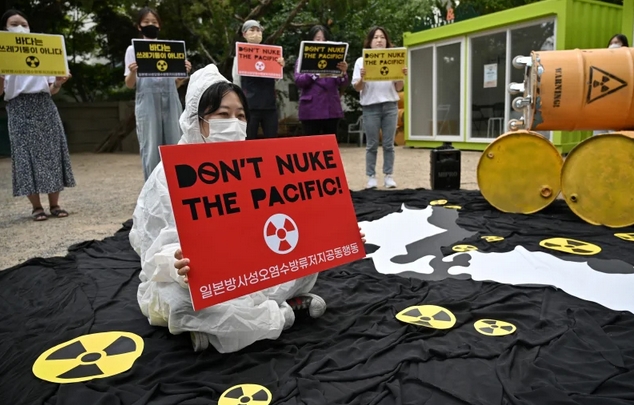
South Korean environmental activists protest in Seoul against Japan’s plan to discharge Fukushima radioactive water into the sea, as they mark World Oceans Day on June 8, 2022.
“We think that there is not enough scientific evidence to prove that the release is safe, environmentally, healthwise, and also for our economy in the Pacific,” says Puna, who is also the former Prime Minister of the Cook Islands. Until more information is shared and evaluated, he asks that Japan “please defer the discharge of the water.”
Doubts and divisions over the data
TEPCO says the water will be purified so that the concentration of radioactive substances—with the exception of a hydrogen isotope called tritium, which it says has “little impact on the human body”—falls below regulatory standards. The tritium will be diluted with a large volume of seawater. The government of Japan told TIME in an emailed statement that the measures it is taking are fully in line with international law and the safety standards of the International Atomic Energy Agency (IAEA). An IAEA task force, set up to review the safety of Japan’s plan, says that it completed a second review in Japan in January, and that it will release a report on its findings in about three months, as well as a comprehensive report before the discharge.
But there appears to be a major disconnect between TEPCO and others, including the PIF panel of experts—who say that they’re concerned with the adequacy, accuracy, and reliability of the data backing up the decision to release the water. Robert H. Richmond, a research professor and the director of the Kewalo Marine Laboratory at the University of Hawaii at Manoa, who is one of the panel experts, tells TIME that “the critical, foundational data upon which a sound decision could be made was either absent or, when we started getting more data,” he says, “extremely concerning.” He also casts doubt on if the IAEA is in the best position to assess the risks. “They’re an agency that has a mandate to promote the use of nuclear energy,” says Richmond, “and our mandate is to look after the people, the ocean, and the people who depend on the ocean. And our unanimous conclusion … is that this is a bad idea that is not defended properly at this point, and that there are alternatives that Japan should really be looking at.”
“One of the biggest surprises to me was the fact that the data was so sparse,” says Ferenc Dalnoki-Veress, scientist-in-residence and adjunct professor at the James Martin Center for Nonproliferation Studies at the Middlebury Institute of International Studies at Monterey, who is also on the PIF panel of experts. “There were prolonged gaps in data collection, which suggests that the matter may not have been given the level of attention and importance it deserved.” He adds that only a fraction of the tanks had been sampled, and only a handful of some 60 isotopes were typically measured in the samples—fewer than he would expect for this kind of assessment. (TEPCO says that the analysis done on a sample of tanks so far is just to assess the water’s condition in storage but that, after the purification process, further measurements will be taken on all the treated water before discharge to ensure that only that which meets sufficient standards of safety is released into the ocean).
Some still fear the safety of the treated water, and the far-reaching implications if it’s dumped into the ocean. Puna points out, for example, that the waters of the Western and Central Pacific Ocean produce much of the world’s tuna. If the tuna were to be impacted, it would cause major problems for Pacific nations, for which fisheries are a significant source of income, as well as for consumers globally.
In December, the U.S.-based National Association of Marine Laboratories also announced its opposition to TEPCO’s plans, publishing a position paper that says “there is a lack of adequate and accurate scientific data supporting Japan’s assertion of safety” while “there is an abundance of data demonstrating serious concerns about releasing radioactively contaminated water.”
Japan’s government told TIME in an emailed statement that it has provided detailed explanations, answered questions in a sincere manner, and that it stands ready to receive further questions. Puna says that the PIF panel of experts has been invited to Japan this year, but unless more data are offered, such a meeting would be “meaningless.” Richmond, similarly, says that requests for more data have not produced sufficient responses and that the panel of experts hasn’t been able to get the information they wanted via Zoom calls or emails, so he isn’t confident that a trip would produce enough information to make the panel of experts comfortable with the plan. “We asked ABC, and you answered with DEF,” he says.
When asked by TIME if it would indefinitely delay the discharge owing to the concerns of Pacific nations, TEPCO said in an emailed statement that it would “make every effort to foster understanding prior to the commencement of discharge.” The government of Japan also said that it “attaches great importance” to its relationship with the Pacific Island nations and that it “takes the PIF’s concerns sincerely,” but it stopped short of saying it wouldn’t go ahead with the discharge plan.
That approach may damage relations with the Pacific region. “We’ve been friends for a long time,” says Puna. “In the Pacific, we believe that if you are friends that you are always open to sharing information.”
A scarring past and a new path forward
Other nuclear plants across the globe have released treated wastewater containing tritium. Rafael Mariano Grossi, the IAEA’s director general, said in 2021 that Japan’s plan is “in line with practice globally, even though the large amount of water at the Fukushima plant makes it a unique and complex case.”
But Pacific Island nations have particular reason to be anxious. There is a noxious legacy of nuclear testing in the region, and other countries have historically treated the Pacific as a dumping ground for their waste. The U.S. conducted 67 nuclear tests in the Marshall Islands between 1946 and 1957—and disposed of atomic waste in Runit Dome, where it’s still stored. That testing led not only to forced relocations, but also to increased rates of cancers. Today there is concern that the dome is leaking and that rising sea levels might impact its structural integrity. France also conducted 193 nuclear tests from 1966 to 1996 at Moruroa and Fangataufa atolls in French Polynesia.

The BAKER explosion during Operation Crossroads, a series of two tests conducted by the U.S. to investigate the effect of nuclear weapons on naval warships, at Bikini Atoll, July 25, 1946.
“To have this on top of that creates a feeling of fear and apprehension in the hearts and minds of our leaders and our people in the Pacific,” says Puna.
In the wake of Russia’s invasion of Ukraine and the ensuing energy crisis, many countries seem to be embracing nuclear power anew. Japan, for example, wound-down the use of nuclear energy in the wake of the Fukushima disaster. But in December it announced a major reversal of that policy and said that it plans to use more nuclear energy by restarting as many reactors as possible and prolonging the operating life of older reactors. (By late 2022, 10 of 50 nuclear reactors that were shut after the disaster had been restarted, according to the Economist Intelligence Unit.)
Rather than let dumping wastewater into the ocean become the norm, at this juncture for nuclear energy, some say it’s an opportunity to explore different ways of doing things. The panel of PIF experts has proposed several alternative solutions, including treating the water and storing it in more secure tanks to allow the tritium time to decay, or using the treated water to make concrete for use in projects that won’t have high contact with humans.
“This is not the first nuclear disaster and by no means is it going to be the last,” says Richmond. “This is an opportunity for Japan,” he says, “to do the right thing and to invest time, effort, and money into determining and coming up with new ways of handling radioactive waste and setting a new trajectory.”
Cabinet approves a major change in nuclear power plant policy, including new construction and operation beyond 60 years.

Unit 3 of Kansai Electric Power Co.’s Mihama Nuclear Power Plant in Mihama Town, Fukui Prefecture, September 16, 2022; photo by Satoru Iizuka from an Asahi Broadcasting Corporation TV helicopter.
February 10, 2023
On February 10, the Kishida administration approved the “Basic Policy for Realization of GX (Green Transformation),” which includes allowing new construction and operation of nuclear power plants for more than 60 years, at a cabinet meeting. The change in nuclear power policy since the accident at TEPCO’s Fukushima Daiichi Nuclear Power Plant became an official government policy. Related bills will be submitted to the ordinary Diet session.

Prime Minister Fumio Kishida speaks at the GX Executive Conference. Second from the front is Yasutoshi Nishimura, Minister of Economy, Trade, and Industry. In the back is Akihiro Nishimura, Minister of the Environment = 2:59 p.m., December 22, 2022, Prime Minister’s Official Residence, photo by Koichi Ueda.
Public comments on the draft of the basic policy presented in December of last year included many objections to the nuclear power policy, but no major revisions were made.
The basic policy mainly lists policies that should be taken over the next 10 years toward the realization of a decarbonized society in 2050. It clearly states the “maximum use” of nuclear power plants as well as renewable energy. After the accident, the government had stated that it did not envision the construction of new nuclear power plants at this time, but it has now shifted to a policy of working toward this goal.
Specifically, the government will “work on the development and construction” of improved nuclear power plants, which it calls “next-generation innovative reactors,” and will rebuild them on the sites of nuclear power plants that have been decided to be decommissioned. The government will also “consider” building nuclear power plants in areas where there are currently no nuclear power plants.
https://www.asahi.com/articles/ASR2B0BKBR29UTFK015.html?fbclid=IwAR37nbrqQvZ8dCIO0ks8hkt6LpoP7GEh1Irdxc7LpFQf9Blvh-RB7C_qJcc
Regulatory Commissioners object to proposed new rules for nuclear power plant regulation
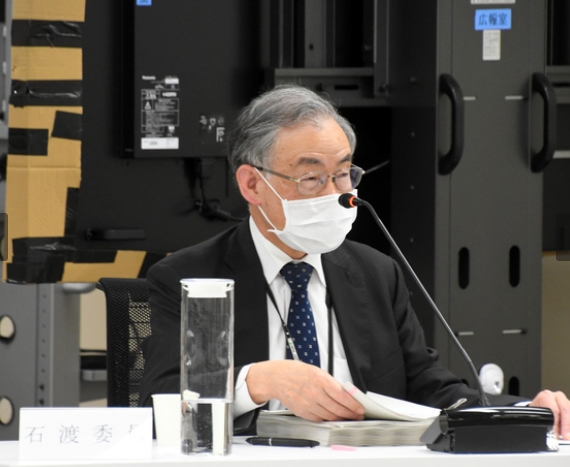
Akira Ishiwata, a member of the Nuclear Regulation Authority of Japan (NRAJ), expresses his opposition to the draft of new safety regulation rules for nuclear power plants.
February 9, 2023
At the February 8 meeting of the Nuclear Regulation Authority (NRA), committee members voiced their opposition to the draft framework for new safety regulation rules, which would require safety inspections at intervals of no more than 10 years starting from 30 years of operation. The committee members decided not to make a formal decision on that day, and will discuss the issue again next week or later.
Since the end of last year, the Regulatory Commission has been conducting “public comments” to gather opinions from the public on the draft framework. At the meeting, it was reported that 2016 comments had been received, many of which were opposed to the 40-year operation period stipulated in the Nuclear Reactor Regulation Law, but the committee decided that no revisions to the draft were necessary and decided to proceed with the decision as originally proposed.
Regulatory Commission is in the forefront of extending the operation of nuclear power plants.
In response, Akira Ishiwata, a member of the committee in charge of the earthquake and tsunami review, stated, “I am opposed to this proposal,” citing two main reasons.
The first is that the stipulation of an operating period will be removed from the Reactor Regulation Law, which is under the jurisdiction of the Regulatory Commission.
Mr. Ishiwata said, “The mission of the Nuclear Regulation Commission is to protect people and the environment based on scientific and technical findings. This change is not about changing the law based on some new findings. Dropping the operation period from the law (Reactor Regulation Law) is not an alteration to the safety side,” he said.
https://www.asahi.com/articles/ASR286GKRR28ULBH00F.html?iref=pc_photo_gallery_bottom
Proposal to operate nuclear power plants for more than 60 years “cannot be considered a change to the safe side”; Regulatory Commission postpones formal decision due to unusual opposition
February 9, 2023
At its regular meeting on February 8, the Nuclear Regulatory Commission discussed whether to make a formal decision on a new regulatory system for nuclear power plants to operate beyond 60 years, but it decided not to do so due to opposition from Akira Ishiwata, who stated that the proposal “cannot be considered an alteration to the safe side. The matter will be discussed again at the regular meeting next week. It is extremely unusual for the regulatory commission to be divided on such an important matter. (Kenta Onozawa)
◆Public comments: Most oppose the review

The new draft regulation will review the deterioration status of nuclear power plants every 10 years or less, starting 30 years after the start of operation, and if the plant complies with the regulatory standards, the extension of operation will be approved. The proposal was unanimously approved at the regular meeting held last December. On the day of the meeting, the final draft was discussed based on the results of public comments received from the public.
The majority of the 2016 comments received from the public were against the review of the system, but the secretariat of the Regulatory Commission consulted with the regular meeting on whether to make a formal decision on the draft without changing the content of the draft regulation. Of the five committee members, four, including Chairman Shinsuke Yamanaka, voted in favor of the draft, while Commissioner Ishiwata expressed his opposition. Chairman Yamanaka stated that he would not make a decision by majority vote, but would discuss the matter again together with the proposed amendment to the article of the Nuclear Reactor Regulation Law (Reactor Regulation Law) that stipulates the operation period.
At a press conference following the regular meeting, Chairman Yamanaka said, “I think there is a misunderstanding (among Commissioner Ishiwata). I don’t think it is a problem that there are opposing opinions. I would like to deepen the discussion among the committee members.
Last December, the government decided to allow nuclear power plants to operate for more than 60 years by excluding from the number of years of operation the period during which the plants were shut down for restart examinations and judicial decisions. It aims to submit a draft amendment to related laws to the current Diet session. The current provisions in the Reactor Regulation Law regarding the period of operation, which is “40 years in principle, with a maximum of 60 years,” are expected to be deleted and redefined in the Electricity Business Law under the jurisdiction of the Ministry of Economy, Trade and Industry (METI).
◆”Aging nuclear power plants will be operated in the future,” said Akira Ishiwata, a member of the committee.

I am against this proposal. Akira Ishiwatari, a member of the committee, stated his opposition in a firm tone toward the end of the meeting.
This change is not based on new scientific findings. It is not a change for the sake of safety, because the law will drop the period of operation. There is no need for us to amend the law voluntarily.
A geological expert, he has served as a professor at Tohoku University and as a member of the committee since 2014. When it was discovered that geological data had been rewritten during the review of the Tsuruga No. 2 reactor at the Japan Atomic Power Company’s Tsuruga Nuclear Power Plant in Fukui Prefecture, he proposed that the review be suspended. When the secretariat of the Regulatory Commission proposed last November that the Commission hear opinions from electric power companies on the proposed new regulations, he opposed the proposal, saying that it was too early to make a decision. Discussions were postponed.
Under the new government policy, the period of shutdown due to the review will be excluded from the number of years of operation. In most cases, the 10 units currently under review have been delayed due to inadequate explanations from the power companies. Commissioner Ishiwata, who is in charge of the examination of earthquake and tsunami countermeasures, said, “We are not unnecessarily prolonging the examination, but unfortunately it is taking a long time. The longer the review takes, the longer the operation period will be, and the older (aged) nuclear power plants will be in operation in the future.
He expressed strong concern that the more difficult the review process becomes, the more likely it is to encourage the operation of aging nuclear power plants. At the meeting, Chairman Yamanaka explained that “this is a mechanism to ensure that regulations can be implemented no matter what the operating period is like,” but Commissioner Ishiwata did not back down, saying, “My thoughts are as I have stated.
https://www.tokyo-np.co.jp/article/230093
1 This Month
23 April – WEBINAR – Why new nuclear reactors are the wrong tools for decarbonization Thursday, April 23 • 1 AM – 2 AM AEST
World Nuclear Power. Reactors 1951-2026, 75 Years of Nuclear Power.
Interactive Map– https://dv.worldnuclearreport.org/

Chernobyl: The Lost Tapes – A good documentary on Chernobyl on SBS available On Demand for the next 3 weeks– https://www.sbs.com.au/ondemand/tv-program/chernobyl-the-lost-tapes/2352741955560

of the week–London Campaign for Nuclear Disarmament


Tell the Ukrainian Government to Drop Prosecution of Peace Activist Yurii Sheliazhenko
To see nuclear-related stories in greater depth and intensity – go to https://nuclearinformation.wordpress.com
-
Archives
- April 2026 (231)
- March 2026 (251)
- February 2026 (268)
- January 2026 (308)
- December 2025 (358)
- November 2025 (359)
- October 2025 (376)
- September 2025 (257)
- August 2025 (319)
- July 2025 (230)
- June 2025 (348)
- May 2025 (261)
-
Categories
- 1
- 1 NUCLEAR ISSUES
- business and costs
- climate change
- culture and arts
- ENERGY
- environment
- health
- history
- indigenous issues
- Legal
- marketing of nuclear
- media
- opposition to nuclear
- PERSONAL STORIES
- politics
- politics international
- Religion and ethics
- safety
- secrets,lies and civil liberties
- spinbuster
- technology
- Uranium
- wastes
- weapons and war
- Women
- 2 WORLD
- ACTION
- AFRICA
- Atrocities
- AUSTRALIA
- Christina's notes
- Christina's themes
- culture and arts
- Events
- Fuk 2022
- Fuk 2023
- Fukushima 2017
- Fukushima 2018
- fukushima 2019
- Fukushima 2020
- Fukushima 2021
- general
- global warming
- Humour (God we need it)
- Nuclear
- RARE EARTHS
- Reference
- resources – print
- Resources -audiovicual
- Weekly Newsletter
- World
- World Nuclear
- YouTube
-
RSS
Entries RSS
Comments RSS
 nuclear-news