South Korea’s First Attempt at Going Nuclear
Seoul attempted to attain nuclear weapons back in the 1970s, only to be stopped by heavy pressure from Washington.
By Gabriela Bernal, February 15, 2023
The debate about whether South Korea should pursue independent nuclear armaments is once again making headlines. A recent survey showed that nearly 77 percent of South Koreans believe in the necessity of developing a domestic nuclear weapons program. The issue has gained even more traction with major government figures, including the president himself, floating the possibility of South Korea going nuclear.
But this isn’t the first time that Seoul has considered or even pursued a nuclear weapons program. In fact, back in the 1970s, the United States was more concerned about a nuclear program in the South than the North, a scenario that seems unimaginable today.
In 1972, South Korean President Park Chung-hee launched a clandestine military nuclear program called “Project 890,” the existence of which was only discovered by Washington in late 1974. This was a period of high anxiety for Park……………………………………………………………..
Despite strong opposition from Seoul, Washington stood its ground. With U.S. pressure growing, by December 1975 South Korea sought “concrete information” about possible U.S. nuclear aid if Seoul decided to cancel the reprocessing deal. Washington’s position was that it would be prepared to send U.S. personnel to the South for peaceful nuclear cooperation after South Korea made the decision to cancel the French deal………………………………….
Lessons Learned and What’s at Stake Today
South Korea’s first attempt at going nuclear leaves us with several lessons and warnings. First, if it was impossible for Seoul to secretly pursue a nuclear program in the early 1970s, there would be absolutely no way of doing so now.
Second, although South Korean technology today is far superior to what it had in the 1970s, it would still need support from the international community to develop nuclear weapons. However, with South Korea being a signatory to the Non-Proliferation Treaty (NPT) and nuclear non-proliferation being established as a firm principle in the international community, going the nuclear path would mean violating legal agreements, which would lead to diplomatic isolation and multilateral backlash from the international community.
Choosing the nuclear option would also greatly damage the South Korea-U.S. alliance. Washington did not support Seoul going nuclear in the 1970s and maintains this stance today. In addition, South Korea would be jeopardizing its nuclear energy industry as well, since many of its reactors rely on U.S. and other foreign licenses to operate.
Besides this, and perhaps most importantly, South Korea going nuclear would make any calls for the denuclearization of the North completely void. This would prolong the Korean War, make diplomacy almost impossible, significantly raise military tensions on the Korean Peninsula, and even possibly lead to a regional (nuclear) arms race.
Such a scenario would be highly unfavorable for all players involved, in both the short- and long-term. South Korea must realize that its highly-trained conventional forces, backed by U.S. conventional military support, are enough to respond to North Korean military provocations. While the current level of U.S. reassurances to the South may be insufficient for many, the answer should not be the pursuit of nuclear weapons.
The best way to deter a North Korean attack is through diplomacy and dialogue with Pyongyang. This is the only way to come to a peaceful solution, to have a chance at arms control in the North, and to get to a place where peaceful coexistence is possible.
Gabriela Bernal
Gabriela Bernal is a Ph.D. scholar at the University of North Korean Studies in Seoul and a freelance writer on North Korean affairs. She specializes in inter-Korean relations, North Korea-U.S. relations, and North Korean foreign policy. https://thediplomat.com/2023/02/south-koreas-first-attempt-at-going-nuclear/
Officials will not confirm whether US bombers in Australia carry nuclear weapons

By defence correspondent Andrew Greene, 16 Feb 23
Officials have stopped short of ruling out that US strategic bombers are carrying nuclear weapons to Australia, but the government insists any such move would not breach this country’s international obligations.
Key points:
- United States bombers with nuclear capability frequently fly in Australian air
- The US has a policy of refusing to confirm or deny if those bombers carry nuclear weaponry
- The federal government says it respects US secrecy on nuclear weapons
During a Senate estimates hearing on Wednesday Greens senators sought details on whether visiting American aircraft such as the B-52s operating out of the Top End are ever nuclear armed.
The committee was told the United States had a longstanding policy of “neither confirming or denying” the presence of nuclear weapons under its practice of maintaining global operational unpredictability. ……..
Defence Department secretary Greg Moriarty said the “stationing of nuclear weapons” in Australia was prohibited under the South Pacific Nuclear Free Zone Treaty, but the treaty did not prevent visits by the US bombers.
Foreign Minister Penny Wong backed the secretary’s statement and accused Greens senators of trying to “make a political point”.
“This is the Australian position: We understand and respect the longstanding US policy of neither confirming or denying. That is the position,” Senator Wong said.
“But we remain fully committed to the South Pacific Nuclear Free Zone Treaty, and we will fully comply with our international obligations, which are understood by the United States.”
Under further questioning from Greens senator David Shoebridge, the foreign minister said it would not be appropriate to elaborate. …………………….

Defence mulls methods to make warships more deadly
Defence has also revealed it is examining ways to make Australia’s next fleet of warships more lethal. ……………more https://www.abc.net.au/news/2023-02-15/defence-wont-confirm-if-us-bombers-carry-nuclear-weapons/101978596
Scotland’s campaign groups call on government to reject plans for nuclear power at new Green Freeports.
NORTH campaigners have called on the Scottish Government to reject plans
to build nuclear plants at the country’s two new Green Freeports.
John O’Groat Journal 14th Feb 2023
THE convener of Scotland’s nuclear-free local authorities (NFLAs) has
written to Net Zero Minister Michael Matheson asking him to reject nuclear
power at Scotland’s two new green freeports.
The National 15th Feb 2023
Watchdogs File FOIA Request for Holtec’s Secretive “Regulatory Path to Reauthorize Power Operations at Palisades Nuclear Plant”

Kevin Kamps, Beyond Nuclear, kevin@beyondnuclear.org
Michael Keegan, Don’t Waste Michigan, mkeeganj@comcast.net
Wally Taylor, Environmental Coalition Legal Co-Counsel,wtaylor784@aol.com
https://wordpress.com/read/feeds/135644516/posts/4555599469 COVERT, MI, and WASHINGTON, DC, FEBRUARY 14, 2023–Beyond Nuclear and Don’t Waste Michigan, long-time environmental watchdogs on the Palisades atomic reactor, today filed a Freedom of Information Act (FOIA) request with the U.S. Nuclear Regulatory Commission (NRC). The FOIA request, filed by the groups’ legal counsel, Terry Lodge of Toledo, Ohio, seeks unredacted versions of Holtec’s Feb. 1, 2023 cover letter, and two enclosures, regarding the “Regulatory Path to Reauthorize Power Operations at the Palisades Nuclear Plant.” NRC has acknowledged receipt of the groups’ FOIA request.
The FOIA request challenges Holtec’s invocation of proprietary trade secrecy, stating
“The documents sought by DWM and BN are expected to reveal Holtec International’s suggested regulatory steps to bring about the unprecedented reopening and recommissioning of a shutdown, defueled nuclear power plant which is presently being decommissioned. Holtec’s suggested regulatory path to reopen Palisades is bogus. It is of interest to the public because Holtec has no competitor. Palisades is the only closed reactor whose owner is trying to reopen it; indeed, there has never been a similar effort made to reopen a closed reactor. No one is watching the Palisades controversy to learn some clever regulatory trick. There are no genuine prospects for a Palisades restart.”
The groups’ FOIA request concludes that “Releasing unredacted versions of the requested documents will significantly add to public understanding of the NRC’s role in this unprecedented attempt to restore Palisades to operability.”
This is the third FOIA request submitted by the groups in recent months. The first two were submitted in November 2022 to the U.S. Department of Energy (DOE), and the State of Michigan Public Service Commission, for complete documentation on why DOE rejected Holtec’s first federal bailout application on November 18, 2022.
Continue readingEarth Changes Summary – January 2023: Extreme Weather, Planetary Upheaval, Meteor Fireballs.
Sott.net
2023-02-14
The start of 2023 has been marked by heavy snow, unseasonably cold temperatures, and wetter-than-expected weather for the season.
Extreme weather hit California pretty hard this month: A bomb cyclone, severe flooding, mudslides, power outages, walls of snow in Soda Spring, and a magnitude 4.2 earthquake with an epicenter in offshore Malibu……………………………….
Heavy snow also disrupted normal life in Italy, Austria, Slovenia, Croatia, and Mallorca. Mallorca was covered by its largest snowfall in more than five years.
China’s northernmost city, Mohe, was hit by an all-time record of -53°C, the lowest ever recorded. The local officials worked overtime to ensure heating and water services. This comes days after temperatures plunged to -50°C in Russia’s Yakutsk.
Central Asia also suffered a harsh January. In Kyrgyzstan, Tajikistan, Uzbekistan, and Turkmenistan recorded unusual levels of snow, that collapsed power poles and trees, blocked main roads, and burst water pipes. Thetemperatures in Kazakhstan reached a chilling -30°C.
The Middle East was also caught off guard by colder-than-usual temperatures and snow. Tens of thousands of Iranians were left without gas amid snow and freezing conditions, and Afghanistan temperatures plummeted as low as -33°C,combined with widespread snowfall, freezing gusts, and regular power outages. At least 166 people died due to the cold wave.
Ex-Tropical Cyclone Ellie continued to batter northern Australia this month. Heavy rain turned roads into rivers, thousands of cattle got lost or died, and boats were the only form of transportation in some counties. Western Australia was also hit hard by heavy rain and floods. 38 homes and 37 businesses were destroyed, with an additional 121 homes damaged. In some cases, the damage is so severe that will require long-term rebuilding efforts. The floods have also caused significant damage to infrastructure and transportation routes.
New Zealand’s largest city declared a state of emergency after torrential rains caused widespread flooding and evacuations. Heavy floods washed away houses, blocked roads, and knocked out power. The city received 75% of its usual summer rainfall in just 15 hours.
Latvia experienced its worst flooding since 1981, forcing residents of central areas to evacuate their homes. Meanwhile, large chunks of ice that drifted from Belkarus caused the water level to rise, while also putting pressure on a new dam.
Other noteworthy events this month:
- Sumatra, Indonesia: Heavy flooding leaves 3 dead and 15,000 homes damaged
- Johor and Pahang, Malaysia: More than 4,000 were displaced by flooding caused by 17 inches of rain in 24 hours
- North Sulawesi, Indonesia: Nearly 18 inches of rain in 48 hours left 3-meter floods in some areas.
- Zambia – Non-stop rains caused catastrophic flooding in southern and central provinces.
And things start to get rocky! A 5.9 Mag earthquake struck northwestern Iran, killing at least seven people and injuring 440.
All this and more in our SOTT Earth Changes Summary for January 2023:… https://www.sott.net/article/477313-SOTT-Earth-Changes-Summary-January-2023-Extreme-Weather-Planetary-Upheaval-Meteor-Fireballs
At Sellafield nuclear site workers ready to go on strike
Hundreds of Sellafield cleaners have voted to strike in anger at a broken
pay promise More than three hundred workers employed by Mitie at the
nuclear power plant have said they are ready to take industrial action.
Bosses had promised to up workers’ pay from November last year to help
with the cost of living crisis. Now they have gone back on their word and
say a pay rise will only be paid from April – six months later. Workers
and GMB representatives will meet in the coming days to discuss strike
dates.
GMB 14th Feb 2023
Thousands of solar panels sent to power recovery effort in earthquake devastated Türkiye

Up to 12,000 solar panels sent to Turkey, including to power temporary shelters to provide lighting, heating, telephone chargers and refrigerators. The post Thousands of solar panels sent to power recovery effort in earthquake devastated Türkiye appeared first on RenewEconomy.
Thousands of solar panels sent to power recovery effort in earthquake devastated Türkiye — RenewEconomy
U.S. military’s newest weapon against China and Russia: Hot air balloon

The Pentagon is quietly transitioning high-altitude balloon projects to the military services.
By LEE HUDSON, 07/05/2022 https://www.politico.com/news/2022/07/05/u-s-militarys-newest-weapon-against-china-and-russia-hot-air-00043860
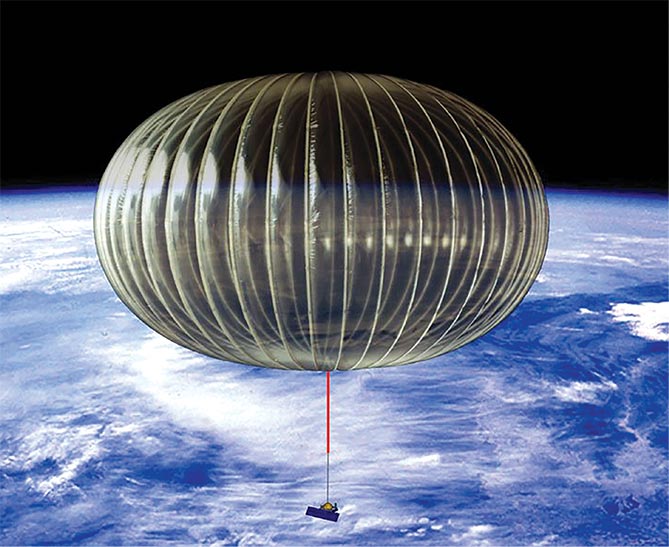
The Pentagon is working on a new plan to rise above competition from China and Russia: balloons.
The high-altitude inflatables, flying at between 60,000 and 90,000 feet, would be added to the Pentagon’s extensive surveillance network and could eventually be used to track hypersonic weapons.
The idea may sound like science fiction, but Pentagon budget documents signal the technology is moving from DoD’s scientific community to the military services.
“High or very high-altitude platforms have a lot of benefit for their endurance on station, maneuverability and also flexibility for multiple payloads,” said Tom Karako, senior fellow for the International Security Program and Missile Defense Project director at the Center for Strategic and International Studies.
The Pentagon continues to invest in these projects because the military could use the balloons for various missions.
Over the past two years, the Pentagon has spent about $3.8 million on balloon projects, and plans to spend $27.1 million in fiscal year 2023 to continue work on multiple efforts, according to budget documents.
Meanwhile, the Pentagon is working on its own hypersonic weapons program, despite Wednesday’s failure of the latest test.
A bright spot for the U.S. is the balloons may help track and deter hypersonic weapons being developed by China and Russia.
Magnitude 4.9 earthquake hits Japan’s Fukushima Prefecture
No tsunami is expected
Esraa Esmail/ Rola AlGhoul, WAM (Emirates News Agency), February 13, 2023
An earthquake with an estimated magnitude of 4.9 occurred off Fukushima Prefecture at around 10:01 am Wednesday, the Japan Meteorological Agency said.
No tsunami is expected, according to the agency. The epicentre was off the coast of Fukushima Prefecture, and the focus was about 50 kilometres deep.
The quake measured 4 on the Japanese seismic intensity scale in Ishinomaki, Miyagi Prefecture, and Soma and Namie, Fukushima Prefecture.
The half billion nuclear kitty litter incident
by Brian Nitz “…………………………. imagine being the person who caused a nuclear accident by ordering the wrong kitty litter?
It happened in February 2014 at a nuclear weapons waste processing facility for the Los Alamos National Laboratory in New Mexico. Anyone involved may be trying hard to forget that it ever happened. The confusion began with a typo in a request for “kitty litter/zeolite clay.” (Zeolites can also be used in energy storage as I wrote here).
At some point this was replaced with kitty litter (clay). This was further transformed into an order for organic cat litter, specifically the sWheat Scoop brand which the manufacturer claims is 100% wheat. Now while the word organic has a folk meaning to environmentalists and hipsters at your local cafe, to chemists it means something more specific……………………………
Don’t try this at home
Green Prophet recently covered the possibilities of using Zeolite for energy storage and this amazing mineral has many more tricks up its sleeve. But while it might seem obvious that anything capable of detoxifying cat pee would be equally effective for nuclear waste disposal, this isn’t necessarily true.
The problem with using 100% organic wheat-based organic kitty litter for your nuclear waste disposal instead of zeolite (non-clay) kitty litter has to do with its reactivity and flammability when confined in a barrel with plutonium, americium, uranium and nitrate-based processing chemicals when compared to zeolite. It doesn’t help that all of this takes place deep underground in an abandoned salt mine where there is much more salt and nuclear waste than there are people to watch it.
So the problem wasn’t discovered until barrel #68660 burst, releasing radiation into a ventilation system. It is believed that several hundred nuclear waste barrels were contaminated with the wrong kind of kitty litter. The cost of the cleanup is said to have been more than half a billion. https://www.greenprophet.com/2023/02/kitty-litter-nuclear/
Richard Marles and Jonathan Mead babble on about nuclear submarines, (adding to the confusion)

Australia will have ‘unequivocal’ control over nuclear-powered submarines, insists chief adviser
‘When we take command of our first boat, we will have sovereign capability’, says Vice Admiral Jonathan Mead,
Daniel Hurst Guardian, 14 Feb 23,
The head of Australia’s nuclear-powered submarine taskforce insists Australia will retain full operational control over the submarines, while potentially having US or British engineers on board to provide technical advice.
The comments follow renewed debate in recent weeks over whether the flagship project of the Aukus pact – which relies on support from the US and the UK – will lead to an erosion of Australian sovereignty.
The former prime minister Malcolm Turnbull has been calling on the government to answer whether the submarines could be “operated, sustained and maintained by Australia without the support or supervision of the US navy”, and whether that effectively meant “sovereignty would be shared with the US”.
But the head of the taskforce advising the Australian government on the acquisition of at least eight submarines, Vice Admiral Jonathan Mead, used an interview with ABC TV on Monday evening to assert Australian control.
“When we take command of our first boat, we will have sovereign capability,” he told the 7.30 program.
“We will be commanding and controlling, under the Australian government direction, that nuclear-powered submarine.”…………………………….
Like the defence minister, Richard Marles, Mead expressed confidence that the plan to be announced soon would ensure there was no capability gap between the retirement of Australia’s existing Collins class diesel-electric submarines and the entry into service of nuclear-powered boats. But he did not provide specifics.
Mead also described the purpose of nuclear-powered submarines as being to “put the greatest question of doubt in the enemy’s mind” and “if necessary, respond with massive firepower”.
Marles used a speech to parliament last week to declare that acquiring nuclear-powered submarines would “dramatically enhance” Australia’s sovereignty, rather than undermine it………
Marles said Australia would “always make sovereign, independent decisions on how our capabilities are employed”.
In the wake of that speech, Turnbull tweeted that it was “quite a different thing to have a major platform that cannot be operated without the supervision/support of another country”
Turnbull said on Monday evening: “I think the question which has not been answered is: could the submarines be operated if US technical advice/support were withdrawn? The entire resources of the Australian news media have been unable to pin the government or the navy down on that.”
Paul Keating, the former Labor prime minister has previously raised concerns about increased reliance on US support and suggested Australia’s sovereignty was being “wilfully suborned”. https://www.theguardian.com/australia-news/2023/feb/13/australia-will-have-unequivocal-control-over-nuclear-powered-submarines-insists-chief-advisor
NewsReal: Alien Balloon Malarkey! Setting The Stage For Proxy War Against China?
What in the name of God is going on in America?
Following last week’s comically bizarre ‘Chinese Spy Balloon Shoot-down’, this weekend the Pentagon declared that it shot down two MORE ‘Chinese balloons’ over Alaska and Canada, and that it scrambled fighter jets to investigate a ‘radar anomaly’ over Montana. (And, since airing, a FOURTH balloon has been downed by the US Air Force over Lake Huron.)
What’s different this week is that the Pentagon isn’t exactly confirming that these latest ‘objects’ are balloons, much less Chinese ‘spy’ ones. In fact, the media and govt spokespeople seem to be deliberately insinuating that these ‘unidentified objects’ are… extraterrestrial in origin!
Pentagon testing mass surveillance balloons across the US
The Southcom surveillance tests are probably just the tip of the iceberg
Mark Harris Guardian, 2 Aug 2019
the high-altitude balloons promise a cheap monitoring platform that could follow multiple cars and boats for extended periods.
The US military is conducting wide-area surveillance tests across six midwest states using experimental high-altitude balloons, documents filed with the Federal Communications Commission (FCC) reveal.
Up to 25 unmanned solar-powered balloons are being launched from rural South Dakota and drifting 250 miles through an area spanning portions of Minnesota, Iowa, Wisconsin and Missouri, before concluding in central Illinois.
Travelling in the stratosphere at altitudes of up to 65,000ft, the balloons are intended to “provide a persistent surveillance system to locate and deter narcotic trafficking and homeland security threats”, according to a filing made on behalf of the Sierra Nevada Corporation, an aerospace and defence company.
The balloons are carrying hi-tech radars designed to simultaneously track many individual vehicles day or night, through any kind of weather. The tests, which have not previously been reported, received an FCC license to operate from mid-July until September, following similar flights licensed last year.
……………….. The tests have been commissioned by the US Southern Command (Southcom), which is responsible for disaster response, intelligence operations and security cooperation in the Caribbean and Central and South America. Southcom is a joint effort by the US army, navy, air force and other forces, and one of its key roles is identifying and intercepting drug shipments headed for the United States.
“We do not think that American cities should be subject to wide-area surveillance in which every vehicle could be tracked wherever they go,” said Jay Stanley, a senior policy analyst at the American Civil Liberties Union.
“Even in tests, they’re still collecting a lot of data on Americans: who’s driving to the union house, the church, the mosque, the Alzheimer’s clinic,” he said. “We should not go down the road of allowing this to be used in the United States and it’s disturbing to hear that these tests are being carried out, by the military no less.”
……………………… The FCC documents show that Southcom’s balloons are carrying small, satellite-like vehicles housing sophisticated sensors and communication gear. One of those sensors is a synthetic aperture radar intended to detect every car or boat in motion on a 25-mile swath beneath the balloon.
The balloons also have advanced mesh networking technologies that allow them to communicate with one another, share data and pass it to receivers on the ground below.
………………………. surveillance from stratospheric balloons is relatively new, said Michel, author of Eyes in the Sky, a recent book on wide area surveillance: “The higher the altitude of the system, the wider the area that you can cover. The trade-off is that depending on the area and the system, you may get lower-resolution images.” Balloons are also subject to fewer restrictions and regulations than drones.
……………….. The Southcom surveillance tests are probably just the tip of the iceberg. Scott Wickersham, the vice-president of Raven Aerostar, told the Guardian that it has also been working with Sierra Nevada and the Pentagon’s research arm Darpa on a “highly sophisticated and challenging development around the stratosphere”. This refers to the agency’s Adaptable Lighter-Than-Air (Alta) program, an ongoing effort to perfect stratospheric balloon navigation which has included multiple launches across the country, Wickersham said.
Ryan Hartman said that World View had also completed a dozen surveillance test missions for a customer it would not name, capturing data he would not specify……………………
https://www.theguardian.com/us-news/2019/aug/02/pentagon-balloons-surveillance-midwest
Nuclear zealot Jonathan Mead touts nuclear-powered submarines- Australia to have “full control” – (oh yeah?)

Australian commanders to have complete control over nuclear-powered submarines and reactors
ABC 7.30 / By Sarah Ferguson and James Elton, 13 Feb 23
Australian Navy commanders will have full operational control over their submarines and the powerful nuclear reactors onboard, despite the potential presence of US or UK engineers.
Key points:
- US or UK personnel may go to sea on Australian nuclear submarines
- Australian technicians will understand “every detail” of how the reactors work
- Construction in Adelaide shipyards may begin by end of 2020s
Vice Admiral Jonathan Mead, chief of the AUKUS submarine taskforce, has rejected criticisms that the nuclear propulsion program, based on US technology, would undermine Australian sovereignty.
“When we take command of our first boat, we will have sovereign capability,” he told 7.30‘s Sarah Ferguson in an exclusive interview.
Details of extensive plans to build a fleet of eight boats powered with weapons-grade uranium will be revealed next month.
Vice Admiral Mead was asked what would happen onboard in the event of any dispute over the nuclear reactor, including following an accident, between a US or UK engineer and the boat’s Australian commander.
“We would expect anyone, be it a foreign engineer or an Australian engineer, to provide advice,” he said.
But the commanding officer of that submarine, the Australian, would have “command and control over the reactor, over the submarine – unequivocal”.
Australians will understand ‘every detail’ of welded-shut nuclear reactors
The defining feature of the submarine deal is that the highly enriched uranium reactors that power the boats will be supplied by either the US or UK, and “welded shut”.
The use of weapons-grade fuel means the reactors do not need to be opened for refuelling over the 30-plus-year life of the boat. Reactors that run on low-enriched uranium, like those used by the French and Chinese navies, do require refuelling.
This also means Australia will not need to manufacture nuclear fuel – one of the commitments the country has made to the International Atomic Energy Agency.
Vice Admiral Mead said Australia would, however, be sending people to US “design facilities” so we would understand “every element of detail of that reactor”.
No Australian reactors … for now
Asked if Australia is considering building its own nuclear reactors in the future, Vice Admiral Mead said: “We are not envisioning that at the moment, we haven’t gone into that at the moment.”
The senior Navy official has spoken previously about the need for the AUKUS program to have public support.
Asked what would happen to an Australian nuclear-propelled submarine that was hit by a missile, Vice Admiral Mead said he could not reveal the technical details but that “nuclear-powered submarines are designed for exacting standards”.
He also said that submariners receive only minimal doses of radiation onboard – less than an ordinary person walking the streets of a capital city.
UK or US-designed boat, and when will we see them?
Addressing the scale of the program, Vice Admiral Mead said if Australia wanted to begin construction of new boats in Adelaide “towards the end of this decade” the government would need to quickly finalise the construction of a revamped shipyard.
He also described the extraordinary staffing requirements of the project, requiring nuclear physicists, chemists and engineers, as well as specialist tradesmen.
One of the biggest questions around AUKUS is whether Australia would be left without a functioning submarine force before the new boats are launched, as the ageing Collins fleet approaches retirement.
Vice Admiral Mead said unequivocally there would be no gap, but would not be drawn on the Navy’s specific plans.
The UK defence secretary, Ben Wallace, recently suggested a new submarine design the three countries could share was under consideration.
Asked whether that strategy would further delay the delivery of new submarines, Vice Admiral Mead reaffirmed there would be no gap in Australia’s capability.
China is the motivation
Vice Admiral Mead said rapid changes in the Indo Pacific had sharpened strategic competition.
“We’ve also seen in recent years a significant modernisation in the Chinese military, particularly the Navy,” he said.
Australia’s current fleet of Collins class submarines run on diesel-electric engines that are extremely quiet when running off the battery.
Nuclear submarines have massive range and the stealth advantage of not needing to resurface, but they do have reactor components that can’t be easily switched off to “go quiet”.
The pros and cons of nuclear and conventional submarines have led defence analysts to suggest a new generation of diesel submarines should be considered as well, particularly to operate closer to the Australian coastline – while the nuclear boats could be prioritised for operations further away from the mainland.
But Vice Admiral Mead said the nuclear submarines would be a good option in both theatres.
“Nuclear-powered submarines provide a capability to deploy away from the home shore, or to deploy close to home shore,” he said.
Pressed on whether conventional submarines would be quieter for closer operations, Vice Admiral Mead said under some circumstances nuclear submarines could be “just as quiet”.
“It’s often more to do with the age and the technology of the submarine that we are dealing with,” he said.
Vice Admiral Mead said the purpose of nuclear-powered submarines was to “put the greatest question of doubt in the enemy’s mind” and “if necessary, respond with massive firepower”.
This type of game-changing capability, he said, would change Australia’s “strategic personality”. https://www.abc.net.au/news/2023-02-13/australian-commanders-complete-control-over-nuclear-submarines/101965182
Turkey’s Akkuyu nuclear power plant – a useless and dangerous prestige project?
This nuclear power plant is also being built in the earthquake zone. Not
far from the earthquake region in southern Turkey, President Erdoğan’s
government is currently building a nuclear power plant with Russian help.
Critics speak of a useless and dangerous prestige project.
Der Spiegel 7th Feb 2023
1 This Month
23 April – WEBINAR – Why new nuclear reactors are the wrong tools for decarbonization Thursday, April 23 • 1 AM – 2 AM AEST
World Nuclear Power. Reactors 1951-2026, 75 Years of Nuclear Power.
Interactive Map– https://dv.worldnuclearreport.org/

Chernobyl: The Lost Tapes – A good documentary on Chernobyl on SBS available On Demand for the next 3 weeks– https://www.sbs.com.au/ondemand/tv-program/chernobyl-the-lost-tapes/2352741955560

of the week–London Campaign for Nuclear Disarmament


Tell the Ukrainian Government to Drop Prosecution of Peace Activist Yurii Sheliazhenko
To see nuclear-related stories in greater depth and intensity – go to https://nuclearinformation.wordpress.com
-
Archives
- April 2026 (231)
- March 2026 (251)
- February 2026 (268)
- January 2026 (308)
- December 2025 (358)
- November 2025 (359)
- October 2025 (376)
- September 2025 (257)
- August 2025 (319)
- July 2025 (230)
- June 2025 (348)
- May 2025 (261)
-
Categories
- 1
- 1 NUCLEAR ISSUES
- business and costs
- climate change
- culture and arts
- ENERGY
- environment
- health
- history
- indigenous issues
- Legal
- marketing of nuclear
- media
- opposition to nuclear
- PERSONAL STORIES
- politics
- politics international
- Religion and ethics
- safety
- secrets,lies and civil liberties
- spinbuster
- technology
- Uranium
- wastes
- weapons and war
- Women
- 2 WORLD
- ACTION
- AFRICA
- Atrocities
- AUSTRALIA
- Christina's notes
- Christina's themes
- culture and arts
- Events
- Fuk 2022
- Fuk 2023
- Fukushima 2017
- Fukushima 2018
- fukushima 2019
- Fukushima 2020
- Fukushima 2021
- general
- global warming
- Humour (God we need it)
- Nuclear
- RARE EARTHS
- Reference
- resources – print
- Resources -audiovicual
- Weekly Newsletter
- World
- World Nuclear
- YouTube
-
RSS
Entries RSS
Comments RSS
 nuclear-news