Japan’s Supreme Court rules on damages for people whose lives were disrupted by Fukushima nuclear catastrophe
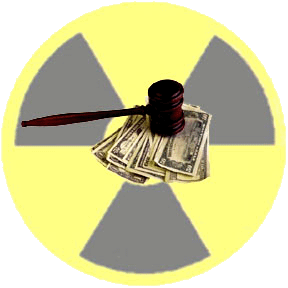
Japan’s Supreme Court on Friday has ruled that victims of the Fukushima
disaster should be paid compensation for the tragedy. In a first decision
of its kind, the court said that Tokyo Electric Power (Tepco) should should
pay 1.4 billion yen ($12m or about £9.1m) in damages to about 3,700
residents whose lives were upended by the nuclear disaster in 2011. The
damages cover three of more than 30 class-action lawsuits filed against the
company. The compensation will average to about 380,000 yen ($3,290) per
plaintiff, public broadcaster NHK reported.
Independent 4th March 2022
USA nuclear industry lobbying White House to remove sanctions on uranium imports from Russia.
The U.S. nuclear power industry is lobbying the White House to allow
uranium imports from Russia to continue despite the escalating conflict in
Ukraine, with cheap supplies of the fuel seen as key to keeping American
electricity prices low, according to two sources familiar with the matter.
The United States relies on Russia and its allies Kazakhstan and Uzbekistan
for roughly half of the uranium powering its nuclear plants – about 22.8
million pounds (10.3 million kg) in 2020 – which in turn produce about 20%
of U.S. electricity, according to the U.S. Energy Information
Administration and the World Nuclear Association.
Russia’s uranium
production is controlled by Rosatom, a state-run company formed by Russian
President Vladimir Putin in 2007. The company is an important source of
revenue for the country.
Reuters 1st March 2022
New analysis on severe nuclear hazards at Zaporizhzhia plant in Ukraine– only solution is immediate end to war
New analysis on severe nuclear hazards at Zaporizhzhia plant in Ukraine
– only solution is immediate end to war. Vladimir Putin’s military
invasion of Ukraine poses an unprecedented nuclear threat, with the
country’s 15 commercial nuclear reactors, including the largest nuclear
plant in Europe, at risk of potentially catastrophic damage that could
render vast areas of the European continent, including Russia,
uninhabitable for decades, new analysis shows.
Greenpeace 2nd March 2022 https://www.greenpeace.org/international/press-release/52459/nuclear-hazards-zaporizhzhia-plant-ukraine-military-invasion/
Russia’s nuclear alert means Nato must tread carefully
Russia’s nuclear alert means Nato must tread carefully, There is a scenario in which Moscow could use such weapons to ward off a western intervention ft.com
JEREMY SHAPIRO, 4 Mar 22, The writer is research director at the European Council on Foreign Relations and a former official in the US state department .
President Vladimir Putin announced on Sunday that he was putting Russian nuclear forces on “high alert”. Alert status probably means little in terms of increasing the risk of escalation in Ukraine. But Putin’s ominous declaration reminded the world that Russia has, among the many destructive tools in its arsenal, many thousands of nuclear weapons. ……………….
How could Russia’s invasion of Ukraine lead to a nuclear confrontation? The most likely route is through Russian employment of a tactical nuclear weapon. Tactical nuclear weapons are relatively smaller bombs intended to be used in battlefield situations against concentrations of enemy forces. Estimates vary widely but Russia probably has between 1,000 and 2,000 such weapons in its arsenal, with a wide variety of yields and delivery mechanisms. They also vary greatly in explosive effect but could destroy anything from an armoured column to an entire town. …………
The current situation …..highlights that tactical nuclear weapons are probably not a weapon that would be used against the Ukrainians. It is not necessary to pay the price of crossing the nuclear threshold to achieve Russian goals in Ukraine.
High-yield conventional weapons or the dreaded thermobaric bombs, which draw in oxygen to create an intense explosion, are more than sufficient for any effect they might want and don’t force them to bear the nuclear stigma. ………….
tactical nuclear weapons are intended to send the following message to Nato leaders: “You may have a more impressive military than I do, but I care a lot more and will kill us all if necessary.”
Now, the Russian military is heavily engaged in Ukraine and thus particularly vulnerable to a Nato conventional attack in Belarus and western Russia, as well as in Ukraine. So in the current scenario, Russian leaders are most likely to use a tactical nuclear weapon to prevent or put an end to Nato intervention. In theory, therefore, it should be straightforward to avoid that outcome by not intervening. The west, in the minds of its own leaders, has no intention of intervening so they may not feel there is much chance of nuclear escalation.
The problem is that, given the paranoia of Russian leaders, they probably expect Nato intervention, and may even believe it is already happening given European and American arms deliveries and Nato troop movements to eastern Europe. They may view Nato troop concentrations in states on Ukraine’s eastern flank as potential intervention forces and they may lack sufficient precision-guided weapons in their already very depleted inventory to attack them conventionally. They might also view weapons depots in neighbouring states that are supplying Ukrainian government forces as legitimate targets.
Russian attacks of these sorts are not likely, but they are possible. Beyond the horrible death and radioactive fallout they would cause, such attacks would cross the nuclear threshold for the first time since 1945 and thus open the path to further nuclear escalation to the strategic level (ie the end of the world). Given that we very much want to avoid that, western leaders might think about taking steps to make it even less likely.
Such steps would involve thinking carefully about how the Russians understand “intervention”. Russian leaders, for example, might see volunteers from Nato countries filtering into Ukraine as covert advance guards for a full-scale intervention. They might regard arms convoys coming to Ukraine from Nato states as the functional equivalent of intervention. And, depending on their orientation, they might see troop dispositions in eastern flank states or troop movements to, say, help manage refugee flows at the border as a precursor to intervention.
If it is truly not the intention of western leaders to intervene, they should make sure that their forces act in ways that will convince Russian leaders of that. The world may depend on it. https://www.ft.com/content/b6bfd338-f2e0-43c2-96f2-0cd918303ea2
The US and NATO have never been sanctioned for start ing wars. Why? — RT World News
That’s right – you can’t read this, now that the Western powers have censored it.
5 key takeaways from the IPCC’s climate report
Fix the Planet unpacks the IPCC’s report’s five key takeaways on how
we should try to adapt.
1) We are not doing nearly enough.
2) Even with today’s warming, we are rubbing up against limits to adaptation.
3) Some of our adaptation efforts are backfiring. “One of the most striking
examples of maladaptation is… examples of coastal infrastructure that is
attempting to protect from coastal erosion or sea level rise or cyclones or
other kinds of storms,” says Schipper. “[It] sometimes creates problems
further down the coast, it increases erosion for other people. Or sometimes
that infrastructure doesn’t take into account heavy rainfall and
doesn’t leave enough space for the water to drain properly. So it
essentially creates a new problem.”
4) No one is spending enough on
adaptation.
5) Nature is our ally.
New Scientist 3rd March 2022
British government searching for investors, needs to raise billions of pounds for Sizewell nuclear project.
The British government is seeking financial advisers to raise billions of
pounds for the proposed Sizewell C nuclear plant in Suffolk as ministers
close in on a tacit agreement with Beijing to remove Chinese state-backed
energy group CGN from the £20bn project.
A new company would replace the
joint venture between French utility EDF and CGN that is developing the
£20bn Sizewell C plant in Suffolk, according to people familiar with the
government’s plans.
EDF holds 80 per cent under the current structure
with the remainder held by the Chinese group. Under the revised plans, both
the UK government and developer EDF would take a 20 per cent stake each in
the new vehicle and end CGN’s involvement in the project, reflecting how
diplomatic relations between Beijing and London have deteriorated in recent
years.
The government this week launched the search for investment bankers
to find investors for the remaining 60 per cent stake, according to people
with knowledge of the situation. The new company would be chaired by
Stephen Billingham, a City veteran who was previously finance director of
British Energy, the group that owned Britain’s operational fleet of
nuclear reactors before it was bought by EDF in 2008.
FT 3rd March 2022
https://www.ft.com/content/95524dfc-6503-48c7-85ad-a116bdf2c9ed
Fire Is Out at Zaporizhzhia Nuclear Plant Seized by Russian Forces, Officials Watch for Leaks
Fire Is Out at Nuclear Plant Seized by Russian Forces, Officials Watch for Leaks, Jake Johnson, Common Dreams, TRUTHOUT, March 4, 2022 ,
Russian forces reportedly seized control of a Ukrainian nuclear power plant on Friday shortly after a fire broke out at the facility, intensifying global fears of a massive and unprecedented radioactive disaster.
The fire, which Ukrainian officials said was sparked by Russian shelling, was extinguished Friday morning, but concerns remained about the potential for a leak of radioactive material if operators at the Zaporizhzhia nuclear plant are unable to safely cool power units at the site.
During a press conference Friday morning, the head of the International Atomic Energy Agency (IAEA) said the blaze started after a “projectile” hit a building within the plant complex……………
In a televised address on Friday, Ukrainian President Volodymyr Zelenskyy accused Russia’s military forces of engaging in “nuclear terror” and called on the Russian people to “take to the streets and say that you want to live, you want to live on Earth without radioactive contamination.”
“Radiation does not know where Russia is, radiation does not know where the borders of your country are,” Zelenskyy said, echoing concerns that the release of radioactive material could impact huge swaths of Europe, potentially rendering them uninhabitable for decades.
The Russian Defense Ministry, for its part, blamed “a Ukrainian sabotage group” for the fire at the Zaporizhzhia plant……………………………..
In a series of Twitter posts, Matthew Bunn, a professor at the Harvard Kennedy School and a co-principal investigator at the Project on Managing the Atom, denounced Russia’s alleged shelling of the Zaporizhzhia complex as “shockingly reckless, and a violation of multiple agreements.”
“The member states of the IAEA unanimously agreed years ago that attacking a nuclear power plant ‘constitutes a violation of the principles of the United Nations Charter, international law, and the Statute of the Agency,’” Bunn observed. “This shelling COULD cause a major radioactive release, but it’s too soon to tell whether (a) that will happen, (b) that’s what Russian forces intended, or (c) if it does happen, how big the release will be.”
Among other significant risks, Bunn highlighted the possibility that continued shelling could endanger the facility’s pools of spent nuclear fuel. Greenpeace International noted in an analysis earlier this week that, as of 2017, 855 tons of spent fuel were stored in the six pools at the Zaporizhzhia complex.
“If the fuel building was shattered by shelling, then any fission products released from the melted fuel could get out into the surrounding countryside,” Bunn warned. “Shelling could also cause a water leak that could lead to fuel melting, even if the electricity stayed on.”
IF the fuel pool is really overstuffed with spent fuel, AND the hot fuel assemblies recently discharged from the reactor are stored next to each other (rather than interspersed throughout the pool) the fuel can get so hot it catches fire — that, plus a shattering of the building, is really the worst-case scenario,” he added. “That could release a quantity of radioactivity even worse than Chernobyl, potentially.” https://truthout.org/articles/fire-is-out-at-nuclear-plant-seized-by-russian-forces-officials-watch-for-leaks/?eType=EmailBlastContent&eId=e297aee3-d279-418c-8617-603fd0711d10
Joe Biden’s role in post-Cold War NATO expansion — Anti-bellum
The New RepublicMarch 3, 2022 The NATO Critics Who Predicted Russia’s Belligerence See also: Biden’s Real Ukraine Scandal: Regime Change and War Joe Biden was confident. “This, in fact, is the beginning of another 50 years of peace,” he declared while serving as ranking member on the Senate Foreign Relations Committee in 1998. The Delaware […]
Joe Biden’s role in post-Cold War NATO expansion — Anti-bellum
Nuclear Politics – theme for March 2022

Homo Sapiens (and I do mean Homo, not Femina) has always solved his relational problems by fighting, by war and the threat of war.
And it sorta worked, in a sorta way. (The meek, the ”weak” men had some success, setting up co-operative arrangements, like the United Nations). It’s turning out that the ”weak” ”sissy” men might just have a broader, more considered, intelligence that just might be essential for the survival of the species. Heck they might even welcome Femina in – likely to be a lot more sapiens.
In the current crisis – one thing is for sure – if it develops into a third world war – it will be a nuclear war. Probably now, only Russia accepts that it’s just fine to send thousands of men to their deaths, and even Russians might be getting sick of this old idea.
The new way is – press a button, from far away, and incinerate millions. Trouble is that might cause millions on your side also to be incinerated – heck – even the ones pressing the buttons.
A new politics must be found. Otherwise, at best, the species might be lucky enough to survive, and evolve into a bee or ant-like species, with males as just a tiny minority.
Radioactive waste stuck at 830 sites with nowhere to go

March 3, 2022
Vast quantities of topsoil collected during decontamination work after the 2011 Fukushima nuclear disaster are stuck in limbo at hundreds of sites with no early prospect of being shipped to interim storage facilities ahead of a government-set deadline.
The soil is being kept “temporarily” at 830 locations in six municipalities in Fukushima Prefecture.
The city of Koriyama has 582 sites containing about 6,000 cubic meters of waste, followed by Fukushima with about 2,000 cubic meters at 200 locations.
Significant delays are expected in shipping the soil even though the government had planned to complete the operation by the end of this month as required by law.
The volume of contaminated soil and other radioactive materials awaiting shipment totals 8,460 cubic meters, which is the equivalent of 130 trucks each weighing 10 tons.
A key reason for the delay is that new houses were built on land where contaminated soil was buried as negotiations over storage sites in many communities dragged on. This accounts for about 50 percent of the cases cited by municipalities in a survey by the prefectural government last September.
About 30 percent of cases resulted from the refusal of landowners to bear the transportation costs, while about 10 percent are due to an inability by the authorities to contact the landowners.
As time passed, ownership of land tracts changed due to sales transactions and inheritance issues. Some landowners had no idea their plots contained radioactive material.
Tokyo Electric Power Co., operator of the crippled Fukushima No. 1 nuclear plant, shouldered the cost of the cleanup.
But the owners of the homes in question are obliged to pick up the tab for relocating so that the buried waste can be removed, according to the Environment Ministry.
Officials in the six local governments said the radiation levels at the 830 sites pose no health hazard as the readings were below 0.23 microsieverts per hour, the threshold for the need to decontaminate.
Decontamination work in affected communities in the prefecture wound up by March 2018.
The waste from those operations is required by law to be shipped outside the prefecture for final disposal by 2045.
Until then, the interim storage facility is all that is available.
The central government and Fukushima prefectural authorities have been locked in talks for the past 18 months on what to do with contaminated soil that cannot be moved any time soon.
The Environment Ministry called on local governments to continue managing contaminated soil that is deemed difficult to move in line with a directive issued in December 2020 that made it their responsibility.
The special measures law concerning the handling of radioactive materials stipulates that municipalities, which oversaw the cleanup, are responsible for managing the contaminated materials.
But the ministry’s directive upset local governments, which operate with limited manpower and funds.
Officials with the Fukushima and Sukagawa city governments held informal talks with the ministry last October to request that the central government collect, manage and transport the contaminated soil.
“We cannot manage these sites forever as the number of our employees is dwindling,” one official said.
Kencho Kawatsu, who chairs a committee with oversight for the environmental safety of the interim storage facility, underlined the need for the central and Fukushima prefectural governments to share in the responsibility for managing the temporary storage sites with municipalities.
“If the radioactive soil is scattered, it could fuel rumors that prove harmful to Fukushima municipalities,” said Kawatsu, a guest professor of environmental policy and radiation science at Fukushima University.
He suggested centralizing data on the issue to prevent such an occurrence.
Greenpeace says Fukushima dismantling, dumping not credible.

March 3, 2022
Tokyo, Mar 3 (EFE).- Greenpeace denounced Thursday the lack of clarity and “inconsistencies” in the dismantling project of the Fukushima Daiichi nuclear power plant, calling it a “fantasy” and saying the discharge of the water contaminated and treated to the ocean “does not solve the crisis.
Eleven years after the earthquake and tsunami that led to one of the worst nuclear accidents in history, the environmental organization makes a new call for attention after reviewing multiple documents from different government agencies and industry.
“Decommissioning is not possible in 40 years. The government should announce how much progress has been made. We are still in the shadows,” nuclear engineering expert Satoshi Sato told media.
“We will have to deal with treated water for decades,” said the expert in relation to the discharge of treated water into the Pacific Ocean, a plan planned for the year 2023 and that the International Atomic Energy Agency recently evaluated in a mission to the country.
The expert spoke about the serious problems detected in the dismantling plan. These included the poor condition of the buildings and their continuous degradation, the challenges and “not very credible” plans for extracting the fuel, the high levels of radiation present, the exposure of workers and the amount of highly radioactive waste generated.
The extraction of fuel from the four reactors of the Daiichi plant “will lead to more contaminated water and the water will be dumped back into the ocean. The current roadmap is minimizing the human and environmental impact and dumping is not the solution,” Greenpeace nuclear specialist Shaun Burnie said.
“TEPCO has no intention of dismantling the Fukushima nuclear power plant in the next 20 or 30 years. It is a fantasy and a much longer process than what they have explained to us,” said Burnie, stressing the need to inform affected communities in detail.
“The long-term consequences cannot be dismissed, because this transcends generations and this fact should be crucial when addressing the problem, and not the official agenda of the actors involved,” Burnie criticized the roadmap approved by the Japanese government.
Ukraine: Fire breaks out at Europe’s largest nuclear power plant — live updates

DW 4 Mar 22, Ukrainian officials report a fire at the Zaporizhzhia nuclear plant after it was shelled by Russia. Meanwhile, Ukrainian President Zelenskyy called on Russia’s Putin to meet directly for talks. Follow DW for the latest
Ukraine’s foreign minister, Dmytro Kuleba, tweeted, “Russian army is firing from all sides upon Zaporizhzhia NPP, the largest nuclear power plant in Europe. Fire has already broke out.”
Kuleba added, “If it blows up, it will be 10 times larger than Chernobyl! Russians must IMMEDIATELY cease the fire, allow firefighters, establish a security zone!”
Ukraine’s energy ministry told Russia’s RIA news agency that firefighters are unable to tend to the blaze at the plant as Russian troops continue to fire on them.
Plant spokesman Andry Tuz said shells were striking the plant and one of the six reactors was on fire. He said the reactor that was hit was under renovation and therefore nonoperational.
Tuz said it was imperative to cease fighting so firefighters could contain the blaze.
Dmytro Humenyuk of the State Scientific and Technical Center for Nuclear and Radiation Safety told Hromadske that the power units have several layers of fuel protection. The plant generates 25% of Ukraine’s electricity.
Humenyuk explained that under certain conditions, the power units can withstand up to 10 tons but are not designed to be hit by bombs or projectiles. If the reactor is seriously damaged and nuclear fuel exposed, the resulting catastrophe would be as bad as Chernobyl and if more than one reactor is hit, the result would be even more horrific.
The International Atomic Energy Agency said it was “aware” of the reports of shelling and in contact with Ukrainian authorities.
Summary of events in Ukraine-Russia crisis on Thursday……………………………………. https://www.dw.com/en/ukraine-fire-breaks-out-at-europes-largest-nuclear-power-plant-live-updates/a-61007081?maca=en-Twitter-sharing
Fukushima Daiichi Nuclear Power Plant Decommissioning: “It is Impossible to Foresee the End Date” says the Nuclear Regulation Commission
March 2, 2022
Nuclear Regulatory Commission Chairman Toyoshi Sarada said he believes it is impossible to predict when the decommissioning of the Fukushima Daiichi Nuclear Power Plant will be completed.
Nuclear Regulation Authority Chairman Toyoshi Sarada: “I think it is technically impossible to determine a realistic number of years that we can promise to various parties, for example.
At the press conference, Chairman Saroda stated that he believes it is virtually impossible to set a time limit on when the fuel debris in Fukushima Daiichi reactors Nos. 1 through 3 can be cleaned up.
He also recognized that it is technically impossible to give the people of Fukushima and other prefectures a fixed number of years until the plant is decommissioned.
The government and TEPCO are still aiming for a maximum of 29 years to decommission the reactors amidst difficulties in removing debris and other issues.
Ukraine war – a great opportunity Each new NATO country was a new customer for the weapons industry

“Lockheed began looking at Poland right after the wall came down,” veteran salesman Dick Pawlowski recalled. “There were contractors flooding through all those countries.” Arms makers became the most aggressive lobbyists for NATO expansion. The security umbrella was not simply a formidable alliance but also a tantalizing market.
New alliance members meant new clients. And NATO would literally require them to buy Western military equipment.
Arms Industry Sees Ukraine Conflict as an Opportunity, Not a Crisis, Jonathan Ng, Truthout , 2 Mar 22,In February, a photograph of Russian President Vladimir Putin sitting hunched over a 13-foot table with French President Emmanuel Macron circulated the globe. News about their sprawling table and sumptuous seven-course dinner was reminiscent of a Lewis Carroll story. But their meeting was deadly serious. Macron arrived to discuss the escalating crisis in Ukraine and threat of war. Ultimately, their talk foundered over expansion of the North Atlantic Treaty Organization (NATO)

Yet the meeting was surreal for another reason. Over the past year, Macron, the leading European Union (EU) peace negotiator, has led an ambitious arms sales campaign, exploiting tensions to strengthen French commerce. The trade press even reported that he hoped to sell Rafale fighter jets to Ukraine, breaking into the “former bastion of Russian industry.”
Macron is not alone. NATO contractors openly embrace the crisis in Ukraine as sound business. In January, Raytheon CEO Greg Hayes cited “tensions in Europe” as an opportunity, saying, “I fully expect we’re going to see some benefit.” Likewise, CEO Jim Taiclet of Lockheed Martin highlighted the benefits of “great power competition” in Europe to shareholders.
On February 24, Russia invaded Ukraine, pounding cities with ordnance and dispatching troops across the border. The sonic boom of fighter jets filled the air, as civilians flooded the highways in Kyiv, attempting to flee the capital. And the stock value of arms makers soared.
The spiraling conflict over Ukraine dramatizes the power of militarism and the influence of defense contractors. A ruthless drive for markets — intertwined with imperialism — has propelled NATO expansion, while inflaming wars from Eastern Europe to Yemen.
Selling NATO
The current conflict with Russia began in the wake of the Cold War. Declining military spending throttled the arms industry in the United States and other NATO countries. In 1993, Deputy Secretary of Defense William Perry convened a solemn meeting with executives. Insiders called it the “Last Supper.” In an atmosphere heavy with misapprehension, Perry informed his guests that impending blows to the U.S. military budget called for industry consolidation. A frantic wave of mergers and takeovers followed, as Lockheed, Northrop, Boeing and Raytheon acquired new muscle and smaller firms expired amid postwar scarcity.
While domestic demand shrunk, defense contractors rushed to secure new foreign markets. In particular, they set their sights on the former Soviet bloc, regarding Eastern Europe as a new frontier for accumulation. “Lockheed began looking at Poland right after the wall came down,” veteran salesman Dick Pawlowski recalled. “There were contractors flooding through all those countries.” Arms makers became the most aggressive lobbyists for NATO expansion. The security umbrella was not simply a formidable alliance but also a tantalizing market.
However, lobbyists faced a major obstacle. In 1990, Secretary of State James Baker had promised Soviet leader Mikhail Gorbachev that if he allowed a reunited Germany to join NATO, the organization would move “not one inch eastward.” Yet lobbyists remained hopeful. The Soviet Union had since disintegrated, Cold War triumphalism prevailed, and vested interests now pushed for expansion. “Arms Makers See Bonanza In Selling NATO Expansion,” The New York Times reported in 1997. The newspaper later noted that, “Expansion of the North Atlantic Treaty Organization — first to Poland, Hungary and the Czech Republic and then possibly to more than a dozen other countries — would offer arms makers a new and hugely lucrative market.”
New alliance members meant new clients. And NATO would literally require them to buy Western military equipment.
Lobbyists poured into Washington, D.C. fêting legislators in royal style. Vice President Bruce Jackson of Lockheed became the president of the advocacy organization U.S. Committee to Expand NATO. Jackson recounted the extravagant meals that he hosted at the mansion of the Republican luminary Julie Finley, which boasted “an endless wine cellar.”
“Educating the Senate about NATO was our chief mission,” he informed journalist Andrew Cockburn. “We’d have four or five senators over every night, and we’d drink Julie’s wine.”
Lobby pressure was relentless. “The most interested corporations are the defense corporations, because they have a direct interest in the issue,” Romanian Ambassador Mircea Geoană observed. Bell Helicopter, Lockheed Martin, and other firms even funded Romania’s lobbying machine during its bid for NATO membership……………… https://truthout.org/articles/arms-industry-sees-ukraine-conflict-as-an-opportunity-not-a-crisis/?eType=EmailBlastContent&eId=734c56bc-48da-4e66-bea1-f2bedb7d1431
1 This Month
26 April – Chernobyl: Inside the Meltdown airs on National Geographic on Sunday 26th April from 4pm

29 April – Nuclear Expert Webinar #1 – Radiation Impacts on Families with Mary Olson and Cindy Folkers
- 12:15 PM MT – 1:45 PM MT
- Location: Virtual – REGISTER TODAY

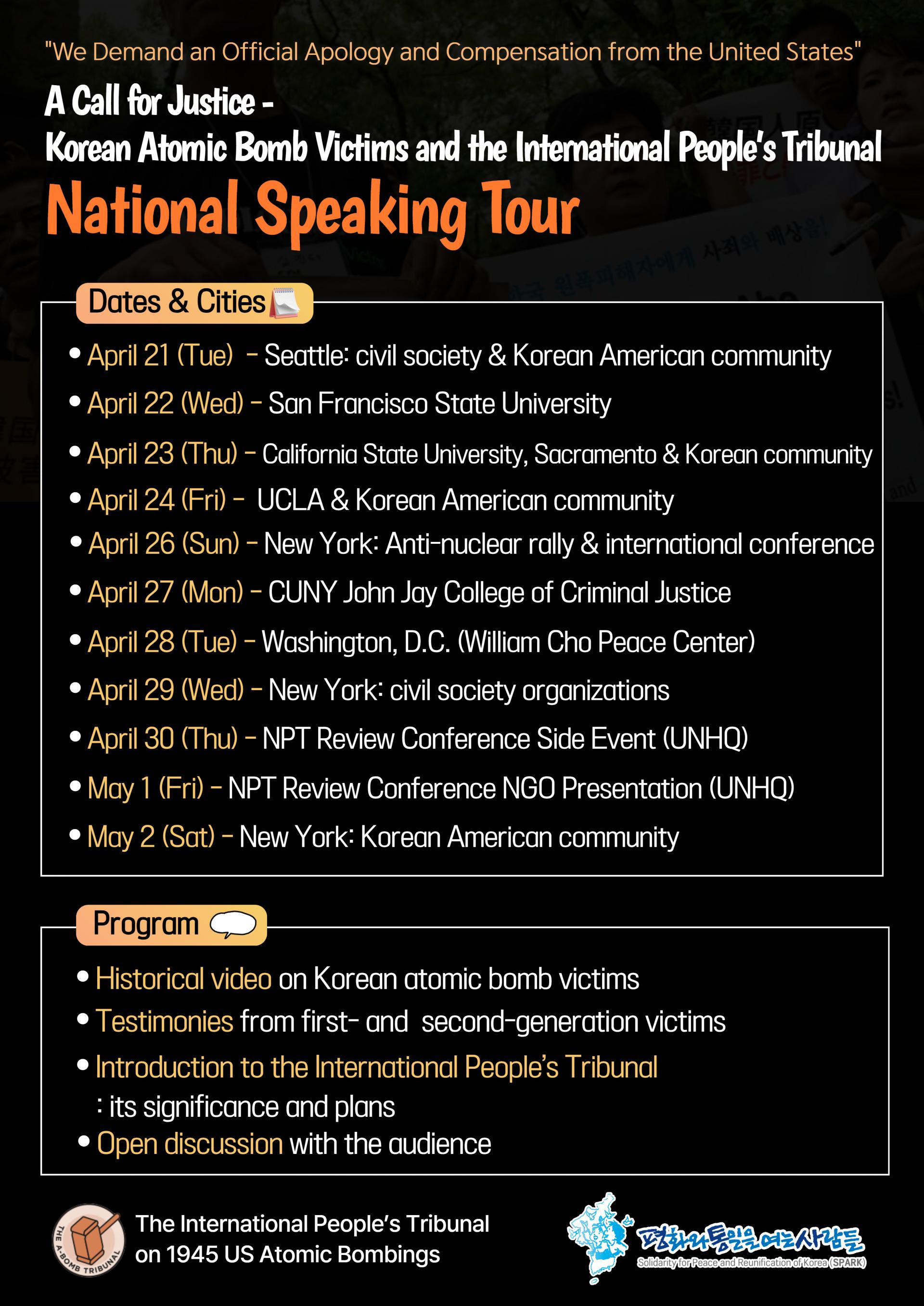
4 May -West Suburban Peace Coalition to discuss Iran war at May Educational Forum
Monday, May 4, 7:00 – 8:00 PM Central Standard Time
Title: : How Trump’s Narrative Tries to Shape the Reality of the War on Iran.
Contact Walt Zlotow, zlotow@hotmail.com 630 442 3045 for further information
14 May – online event From Bombs to Data Centres: the Face of Nuclear Colonialism

Pine Ridge Uranium is the real threat, not Tehran- Tell Burgum: Stop the Extraction.
Chernobyl: The Lost Tapes – A good documentary on Chernobyl on SBS available On Demand for the next 3 weeks– https://www.sbs.com.au/ondemand/tv-program/chernobyl-the-lost-tapes/2352741955560
To see nuclear-related stories in greater depth and intensity – go to https://nuclearinformation.wordpress.com
-
Archives
- April 2026 (327)
- March 2026 (251)
- February 2026 (268)
- January 2026 (308)
- December 2025 (358)
- November 2025 (359)
- October 2025 (376)
- September 2025 (257)
- August 2025 (319)
- July 2025 (230)
- June 2025 (348)
- May 2025 (261)
-
Categories
- 1
- 1 NUCLEAR ISSUES
- business and costs
- climate change
- culture and arts
- ENERGY
- environment
- health
- history
- indigenous issues
- Legal
- marketing of nuclear
- media
- opposition to nuclear
- PERSONAL STORIES
- politics
- politics international
- Religion and ethics
- safety
- secrets,lies and civil liberties
- spinbuster
- technology
- Uranium
- wastes
- weapons and war
- Women
- 2 WORLD
- ACTION
- AFRICA
- Atrocities
- AUSTRALIA
- Christina's notes
- Christina's themes
- culture and arts
- Events
- Fuk 2022
- Fuk 2023
- Fukushima 2017
- Fukushima 2018
- fukushima 2019
- Fukushima 2020
- Fukushima 2021
- general
- global warming
- Humour (God we need it)
- Nuclear
- RARE EARTHS
- Reference
- resources – print
- Resources -audiovicual
- Weekly Newsletter
- World
- World Nuclear
- YouTube
-
RSS
Entries RSS
Comments RSS
 nuclear-news