American nuclear power industry uses Russian fuel, seeks exemption from sanctions

U.S. utilities push White House not to sanction Russian uranium, By Ernest Scheyder and Trevor Hunnicutt, March 1 (Reuters) – The U.S. nuclear power industry is lobbying the White House to allow uranium imports from Russia to continue despite the escalating conflict in Ukraine, with cheap supplies of the fuel seen as key to keeping American electricity prices low, according to two sources familiar with the matter.
The United States relies on Russia and its allies Kazakhstan and Uzbekistan for roughly half of the uranium powering its nuclear plants – about 22.8 million pounds (10.3 million kg) in 2020 – which in turn produce about 20% of U.S. electricity, according to the U.S. Energy Information Administration and the World Nuclear Association.
Washington and its allies have imposed a series of sanctions on Moscow in the past week as Russian forces pushed deeper into neighboring Ukraine, though the sanctions exempt uranium sales and related financial transactions.
The National Energy Institute (NEI), a trade group of U.S. nuclear power generation companies including Duke Energy Corp (DUK.N) and Exelon Corp (EXC.O), is lobbying the White House to keep the exemption on uranium imports from Russia, the sources said.
The NEI lobbying aims to ensure that uranium is not caught up in any future energy-related sanctions, especially as calls intensify to sanction Russian crude oil sales, the sources said.
“The (U.S. nuclear power) industry is just addicted to cheap Russian uranium,” said one of the sources, who declined to be named, citing the sensitivity of the situation.
Duke and Exelon, two of the largest U.S. utilities, could not immediately be reached for comment…………………
Russia’s uranium production is controlled by Rosatom, a state-run company formed by Russian President Vladimir Putin in 2007. The company is an important source of revenue for the country……..
Other utilities around the globe have already begun looking beyond Russia for supply. Swedish power company Vattenfall AB (VATN.UL) said last week it would stop buying Russian uranium for its nuclear reactors until further notice, citing the Ukrainian conflict. https://www.reuters.com/business/energy/exclusive-us-utilities-push-white-house-not-sanction-russian-uranium-2022-03-02/
The very perilous situation of Ukraine’s nuclear power stations.
Could the Ukraine conflict cause one of the world’s worst nuclear disasters?
ReNew Economy, Dr. Jim Green 3 March 2022
Over the past week the Russian military has taken control of the Chernobyl nuclear site in Ukraine and there have been two near-misses with military attacks threatening radioactive waste sites.
But the greatest nuclear hazards lie ahead and concern Ukraine’s operating nuclear power reactors. International Atomic Energy Agency (IAEA) Director General Rafael Mariano Grossi said on March 2:
“The situation in Ukraine is unprecedented and I continue to be gravely concerned. It is the first time a military conflict is happening amidst the facilities of a large, established nuclear power program.
“I have called for restraint from all measures or actions that could jeopardise the security of nuclear and other radioactive material, and the safe operation of any nuclear facilities in Ukraine, because any such incident could have severe consequences, aggravating human suffering and causing environmental harm.”
Grossi cited a 2009 decision by the IAEA General Conference that affirmed that “any armed attack on and threat against nuclear facilities devoted to peaceful purposes constitutes a violation of the principles of the United Nations Charter, international law and the Statute of the Agency.”
Over the past week the Russian military has taken control of the Chernobyl nuclear site in Ukraine and there have been two near-misses with military attacks threatening radioactive waste sites.
But the greatest nuclear hazards lie ahead and concern Ukraine’s operating nuclear power reactors. International Atomic Energy Agency (IAEA) Director General Rafael Mariano Grossi said on March 2:
“The situation in Ukraine is unprecedented and I continue to be gravely concerned. It is the first time a military conflict is happening amidst the facilities of a large, established nuclear power program.
“I have called for restraint from all measures or actions that could jeopardise the security of nuclear and other radioactive material, and the safe operation of any nuclear facilities in Ukraine, because any such incident could have severe consequences, aggravating human suffering and causing environmental harm.”
Grossi cited a 2009 decision by the IAEA General Conference that affirmed that “any armed attack on and threat against nuclear facilities devoted to peaceful purposes constitutes a violation of the principles of the United Nations Charter, international law and the Statute of the Agency.”
Worst-case scenario
It’s worthwhile comparing a worst-case scenario with the current situation in Ukraine. A worst-case scenario would involve war between two (or more) even-matched nations with a heavy reliance on nuclear power. War would drag on for years between evenly-matched nations. The heavy reliance on nuclear power would make it difficult or impossible to shut down power reactors.
Sooner or later, a deliberate or accidental military strike would likely hit a reactor – or the reactor’s essential power and cooling water supply would be disrupted. Any ‘gentleman’s agreement’ not to strike nuclear power plants would be voided and multiple Chernobyl- or Fukushima-scale disasters could unfold concurrently – in addition to all the non-nuclear horrors of war.
In the current conflict, the nations are not evenly matched and the fighting is limited to one country. There won’t be large-scale warfare dragging on for years – although low-level conflict might persist for years, as has been the case since Russia’s 2014 invasion of eastern Ukraine and Crimea.
Ukraine does share one component of a worst-case scenario: its heavy reliance on nuclear power. Fifteen reactors at four sites generate 51.2 percent of the country’s electricity. It is one of only three countries reliant on nuclear power for more than half of its electricity supply.
A March 1 IAEA update, citing the State Nuclear Regulatory Inspectorate of Ukraine (SNRIU), said that all 15 reactors remained under the Ukrainian control and they continued to operate.
But in its daily post dated March 1, SNRIU lists six reactors as ‘disconnected from the power grid’, comprising three reactors at Zaporizhzhia and one each at the Rivno, Khmelnitsky and South Ukrainian nuclear power plants. Those disconnections amount to about 20 per cent of Ukraine’s total national electricity generation.
In the weeks prior to the February 24 invasion, 0-3 reactors were disconnected. The number rose to five on February 26 and has remained at six since then. It seems likely that the invasion has resulted in decisions to disconnect a number of reactors. Ukraine’s nuclear utility Energoatom cites “operational safety” for the disconnection of two reactors at Zaporizhzhia.
Even before the Russian invasion, Ukraine’s reactor fleet was ageing, its nuclear industry was corrupt, regulation was inadequate, and nuclear security measures left much room for improvement. For the time being, it is highly unlikely there will be any meaningful national or international oversight or regulation of the country’s ageing reactors and other nuclear facilities.
Deliberate or accidental military strikes on nuclear plants
A deliberate military strike on a power reactor is highly unlikely – but not inconceivable. Bennett Ramberg, a former foreign affairs officer in the US State Department’s Bureau of Political-Military Affairs, and author of the 1985 book Nuclear Power Plants as Weapons for the Enemy, draws this comparison:
Over the past week the Russian military has taken control of the Chernobyl nuclear site in Ukraine and there have been two near-misses with military attacks threatening radioactive waste sites.
But the greatest nuclear hazards lie ahead and concern Ukraine’s operating nuclear power reactors. International Atomic Energy Agency (IAEA) Director General Rafael Mariano Grossi said on March 2:
“The situation in Ukraine is unprecedented and I continue to be gravely concerned. It is the first time a military conflict is happening amidst the facilities of a large, established nuclear power program.
“I have called for restraint from all measures or actions that could jeopardise the security of nuclear and other radioactive material, and the safe operation of any nuclear facilities in Ukraine, because any such incident could have severe consequences, aggravating human suffering and causing environmental harm.”
Grossi cited a 2009 decision by the IAEA General Conference that affirmed that “any armed attack on and threat against nuclear facilities devoted to peaceful purposes constitutes a violation of the principles of the United Nations Charter, international law and the Statute of the Agency.”
It’s worthwhile comparing a worst-case scenario with the current situation in Ukraine. A worst-case scenario would involve war between two (or more) even-matched nations with a heavy reliance on nuclear power. War would drag on for years between evenly-matched nations. The heavy reliance on nuclear power would make it difficult or impossible to shut down power reactors.
Sooner or later, a deliberate or accidental military strike would likely hit a reactor – or the reactor’s essential power and cooling water supply would be disrupted. Any ‘gentleman’s agreement’ not to strike nuclear power plants would be voided and multiple Chernobyl- or Fukushima-scale disasters could unfold concurrently – in addition to all the non-nuclear horrors of war.
In the current conflict, the nations are not evenly matched and the fighting is limited to one country. There won’t be large-scale warfare dragging on for years – although low-level conflict might persist for years, as has been the case since Russia’s 2014 invasion of eastern Ukraine and Crimea.
Ukraine does share one component of a worst-case scenario: its heavy reliance on nuclear power. Fifteen reactors at four sites generate 51.2 percent of the country’s electricity. It is one of only three countries reliant on nuclear power for more than half of its electricity supply.
A March 1 IAEA update, citing the State Nuclear Regulatory Inspectorate of Ukraine (SNRIU), said that all 15 reactors remained under the Ukrainian control and they continued to operate.
But in its daily post dated March 1, SNRIU lists six reactors as ‘disconnected from the power grid’, comprising three reactors at Zaporizhzhia and one each at the Rivno, Khmelnitsky and South Ukrainian nuclear power plants. Those disconnections amount to about 20 per cent of Ukraine’s total national electricity generation.
In the weeks prior to the February 24 invasion, 0-3 reactors were disconnected. The number rose to five on February 26 and has remained at six since then. It seems likely that the invasion has resulted in decisions to disconnect a number of reactors. Ukraine’s nuclear utility Energoatom cites “operational safety” for the disconnection of two reactors at Zaporizhzhia.
Even before the Russian invasion, Ukraine’s reactor fleet was ageing, its nuclear industry was corrupt, regulation was inadequate, and nuclear security measures left much room for improvement. For the time being, it is highly unlikely there will be any meaningful national or international oversight or regulation of the country’s ageing reactors and other nuclear facilities.
Deliberate or accidental military strikes on nuclear plants
A deliberate military strike on a power reactor is highly unlikely – but not inconceivable. Bennett Ramberg, a former foreign affairs officer in the US State Department’s Bureau of Political-Military Affairs, and author of the 1985 book Nuclear Power Plants as Weapons for the Enemy, draws this comparison:
“A case in point was the March 26, 2017, bombing of the Islamic State-held Tabqa Dam in Syria. Standing 18 stories high and holding back a 25-mile-long reservoir on the Euphrates River, the dam’s destruction would have drowned tens of thousands of innocent people downstream. Yet, violating strict “no-strike” orders and bypassing safeguards, US airmen struck it anyway. Dumb luck saved the day again: the bunker-busting bomb failed to detonate.”
An accidental strike is a troubling possibility. Or a strike disabling the vital power and cooling water supply systems which are necessary to maintain safety even after reactors are shut down.
Spent fuel cooling ponds and dry stores are vulnerable – they often contain more radioactivity than the reactors themselves, but without the multiple engineered layers of containment that reactors typically have.
And if there is an attack on a reactor or spent fuel store resulting in disaster, response measures would likely be chaotic and woefully inadequate. Forbes senior contributor Craig Hooper writes:
“It seems unlikely that Russia has mobilised trained reactor operators and prepared reactor crisis-management teams to take over any ‘liberated’ power plants. The heroic measures that kept the Chernobyl nuclear accident and Japan’s Fukushima nuclear disaster from becoming far more damaging events just will not happen in a war zone.”
Zaporizhzhia nuclear power plant
The Zaporizhzhia nuclear plant is home to six reactors and lies near one of Russia’s main invasion routes, north of Crimea. As noted above, three of the six reactors have been disconnected in recent days.
The plant was contentious long before the recent invasion due to mismanagement and the ageing of the Soviet-era reactors. A 2017 Austrian government assessment of Zaporizhzhia concluded that: “The documents provided and available lead to the conclusion that a high probability exists for accident scenarios to develop into a severe accident that threatens the integrity of the containment and results in a large release.”………………………………
Staffing
A single-reactor nuclear power plant typically employs 600-800 people. Presumably the workforce at the six-reactor Zaporizhzhia plant is considerably higher.
If not already, nuclear staff are likely to be killed when not at work, and others will flee and get as far away from the fighting – and the nuclear power plant – as they can.
If Russia’s military takes control of the site – and does so without causing a nuclear disaster – they could repeat what they have done at Chernobyl in recent days: keep Ukrainian staff hostage and force them to work under Russian control……………
The adequacy of backup generators at Zaporizhzhia has long been a concern as detailed in a March 2 Greenpeace International report. In 2020, the Ukrainian NGO EcoAction received information from nuclear industry whistleblowers about problems with the generators at Zaporizhzhia, including a lack of spare parts.
In the same year, the regulator SNRIU reported on a generator malfunction. An upgrade of the generators was due to be complete by 2017 but the completion date has been pushed back to 2023, i.e. it remains incomplete.
Security at Zaporizhzhia was jeopardised in 2014 when an armed confrontation took place between security guards and paramilitaries from Ukraine’s ultra-nationalist ‘right sector’, allied with neo-Nazi groups. The gunmen wanted to ‘protect’ the plant from pro-Russian forces, the Guardian reported, but were stopped by guards at a checkpoint.
The head of SNRIU said in 2015: “I cannot say what could be done to completely protect [nuclear] installations from attack, except to build them on Mars.”
International monitors
Energoatom CEO Petro Kotin called on international monitors to intervene to ensure the safety of the country’s nuclear reactors and to create 30km exclusion zones around the four nuclear power plants.
Energoatom noted in a statement that columns of military equipment have been moving near nuclear power plants with “shells exploding near the nuclear power plant – this can lead to highly undesirable threats across the planet”.
The Acting Chief State Inspector of SNRIU has asked the IAEA to provide immediate assistance in coordinating activities in relation to the safety of nuclear facilities. The IAEA noted that Director General Grossi “will be holding consultations and maintain contacts in order to address this request”.
But the request for assistance in establishing an exclusion zone has been rejected by the IAEA. “The IAEA has no power to enforce an exclusion zone,” Grossi said following an emergency IAEA session on March 2………………………
Nuclear waste
The report by Greenpeace International nuclear specialists notes that as of 2017, Zaporizhzhia had 2,204 tons of spent fuel in storage at the site – 855 tonnes in the spent fuel pools within the reactor buildings, and 1,349 tonnes in a dry storage facility.
The spent fuel pools contain far more radioactivity than the dry store. Without active cooling, the pools risk overheating and evaporating to a point where the fuel metal cladding could ignite and release much of the radioactive inventory. Damage to the reservoirs which supply cooling water to Zaporizhzhia could disrupt cooling of reactors and spent fuel.
The Guardian reported in 2015 that the dry store at Zaporizhzhia is sub-standard, with more than 3,000 spent nuclear fuel rods in metal casks within concrete containers in an open-air yard close to a perimeter fence.
Neil Hyatt, a professor of radioactive waste management at Sheffield University, told the Guardian that a dry storage container with a resilient roof and in-house ventilation would offer greater protection from missile bombardment.
Cyber-warfare
Cyber-warfare is another risk which could jeopardise the safe operation of nuclear plants. Russia is one of the growing number of states actively engaged in cyber-warfare. James Acton from the Carnegie Endowment for International Peace notes that a Russian cyber-attack disrupted power supply in Ukraine in 2015.
Nuclear facilities have repeatedly been targets of cyber-attack, including the Stuxnet computer virus targeted by Israel and the US to disrupt Iran’s uranium enrichment centrifuges in 2009.
Reports from the UK-based Chatham House and the US-based Nuclear Threat Initiative have identified multiple computer security concerns specific to nuclear power plants.
Waste storage and disposal sites
Missiles hit a radioactive waste storage site near Kyiv on February 27. The IAEA stated in a March 1 update:……………………..
The Kyiv and Kharkiv facilities typically hold disused radioactive sources and other low-level waste from hospitals and industry, the IAEA said, but do not contain high-level nuclear waste. However the Kharkiv site may also store spent nuclear fuel from the research reactor.
Dr. Jim Green is the national nuclear campaigner with Friends of the Earth Australia.
RenewEconomy
As Russia’s Ukraine war intensifies, some warn nuclear escalation is possible

https://www.wbur.org/npr/1083696555/russia-ukraine-war-putin-nuclear-escalation-risk 2 Mar 22, As Russia’s Ukraine war intensifies, some warn nuclear escalation is possible, “At this time we see no reason to change our own alert levels,” White House press secretary Jen Psaki told reporters on Monday.
Some experts, though, are worried about the possibility of nuclear escalation. Here’s why.
The exact meaning of Putin’s order remains unclear, March 01, 2022, Geoff Brumfiel Over the weekend, Russian President Vladimir Putin gave orders to his nation’s nuclear forces. On Monday, the U.S. said it would not respond with changes to its own nuclear posture.
In a brief clip, Putin is shown speaking to two stony-faced generals about the country’s nuclear forces.
“He basically said, ‘Because of all these hostile or aggressive statements and aggressive policies, we should start this special mode of combat duty of our deterrent forces,'” says Pavel Podvig, a senior researcher at the United Nations Institute for Disarmament Research in Geneva.
It’s unclear what a “special mode of combat duty” actually is. One possibility, says Podvig, is that the order activated the nation’s nuclear command and control system.
“Normally, in peacetime, the command and control system is configured in a way that makes the transmission of an actual command very much impossible,” he says. “It’s like you could press the button, but then nothing happens, because the button is not connected to anything.”
Putin’s order may have meant he wanted the button activated.
Then again, it may not.
Podvig says a follow-up statement from the Russian Ministry of Defense implied it may just mean upping the staffing at facilities that support nuclear weapons. It could be “they just added a few more people to the crews,” Podvig says.
Russia has a lot of nuclear weapons at the ready
Russia has more nuclear weapons than any other nation on Earth, according to Hans Kristensen, director of the nuclear information project at the Federation of American Scientists.
“We estimate that they have about 4,500 or so nuclear warheads in their military stockpile,” he says.
For now, Russia’s largest nuclear weapons — aboard its submarines, bombers and intercontinental ballistic missiles — appear to be at their usual level of alert, Kristensen says. But the nation’s stockpile also includes nearly 2,000 so-called tactical nuclear weapons, which are kept in storage facilities throughout Russia.
They were developed for the purpose of fighting a limited regional battle. Sort of a nuclear war in a very small area,” says Kristensen.
The U.S. has about 100 nuclear bombs stationed across Europe that could be used for tactical nuclear warfare.
The Kremlin’s battlefield weapons can be launched on the same short-range missiles Russia is currently using to bombard Ukraine, such as its Iskander ballistic missile.
Right now, there’s no indication that the battlefield nukes have been pulled out of storage
Russia says it would use nuclear weapons only as a last resort, but some are skeptical
Russia officially says it would use nuclear weapons only if the nation’s very survival was at risk. But not everyone thinks its nuclear rules are so clear-cut.
“A lot of people have questioned whether the bar for Russian nuclear use is as high as its official statements say,” says Olga Oliker with the International Crisis Group.
In 2018, the Pentagon’s nuclear posture review warned that Russia might use a battlefield nuke to “‘de-escalate’ a conflict on terms favorable to Russia.” In other words, Russia might detonate a smaller weapon to get its opponents to back off.
That statement was somewhat controversial among arms control experts at the time. Oliker believes such action would only possibly happen in a direct war with NATO forces.
In the current conflict with Ukraine, “I think it’s very unlikely that Moscow is just going to lob a nuclear weapon at something,” she says. “Obviously it’s been a week when a lot of people’s assumptions have been challenged, but I’ll cling to this one for a while.”
The risk of miscalculation is higher than it’s been in years
Putin’s latest statements may amount to little more than nuclear saber-rattling, says Jeffrey Lewis, a senior scholar at the Middlebury Institute of International Studies at Monterey.
“Putin has had a pretty bad-news week,” he says. “The Ukrainian army is fighting back, which he didn’t expect. The Russian army is performing dreadfully. They are indiscriminately shelling civilian areas. Those things all make him look weak, and the best way to push those headlines down a little bit is a nuclear threat.”
But Lewis says there is still plenty of nuclear risk. Putin has already miscalculated in his invasion of Ukraine.
“What would happen if the Russian warning system had a false alarm in the middle of a crisis like this?” he asks. “Would Putin know it was a false alarm? Or would he jump to the wrong conclusion?”
Even if the short-range battlefield nuclear weapons are still on the shelf, thousands of Russian and American long-range missiles are ready to launch in just minutes. That threat hangs over everything as the conflict in Ukraine drags on.
The expansion of NATO – a boon for the weapons industry and a prelude to conflict with Russia

Within two decades, 14 Central and Eastern European countries joined NATO. The organization originally existed to contain the Soviet Union, and Russian officials monitored its advance with alarm. In retrospect, postwar expansion benefited arms makers both by increasing their market and stimulating conflict with Russia.
Arms Industry Sees Ukraine Conflict as an Opportunity, Not a Crisis, Jonathan Ng, Truthout , 2 Mar 22,
”………………………….. Ultimately, policy makers reneged on their promise to Gorbachev, admitting Poland, Hungary and the Czech Republic into NATO in 1999. During the ceremony, Secretary of State Madeleine Albright — who directly cooperated with the Jackson campaign — welcomed them with a hearty “Hallelujah.” Ominously, the intellectual architect of the Cold War, George Kennan, predicted disaster. “Such a decision may be expected to inflame the nationalistic, anti-Western and militaristic tendencies in Russian opinion,” Kennan cautioned.
Few listened. Former Assistant Secretary of Defense Chas Freeman described the mentality of policy makers: “The Russians are down, let’s give them another kick.” Relishing victory, Jackson was equally truculent: “‘Fuck Russia’ is a proud and long tradition in US foreign policy.” Later, he became chairman of the Committee for the Liberation of Iraq, which paved the way for the 2003 invasion, the biggest industry handout in recent history.
Within two decades, 14 Central and Eastern European countries joined NATO. The organization originally existed to contain the Soviet Union, and Russian officials monitored its advance with alarm. In retrospect, postwar expansion benefited arms makers both by increasing their market and stimulating conflict with Russia.
Targeting Ukraine
Tensions reached a new phase in 2014 when the United States backed the removal of President Viktor Yanukovych in Ukraine. Yanukovych had opposed NATO membership, and Russian officials feared his ouster would bring the country under its strategic umbrella. Rather than assuage their concerns, the Obama administration maneuvered to slip Ukraine into its sphere of influence. Assistant Secretary of State Victoria Nuland coordinated regime change with brash confidence. Nuland openly distributed cookies to protesters, and later, capped a diplomatic exchange with “fuck the EU.” At the height of the uprising, Sen. John McCain also joined demonstrators. Flanked by leaders of the fascist Svoboda Party, McCain advocated regime change, declaring that “America is with you.”
By then, newly minted NATO members had bought nearly $17 billion in American weapons. Military installations, including six NATO command posts, ballooned across Eastern Europe. Fearing further expansion, Russia annexed the Crimean Peninsula and intervened in the Donbas region, fueling a ferocious and interminable war. NATO spokespeople argued that the crisis justified expansion. In reality, NATO expansion was a key inciter of the crisis. And the conflagration was a gift to the arms industry. In five years, major weapons exports from the United States increased 23 percent, while French exports alone registered a 72-percent leap, reaching their highest levels since the Cold War. Meanwhile, European military spending hit record heights.
As tensions escalated, Supreme Commander Philip Breedlove of NATO wildly inflated threats, calling Russia “a long-term existential threat to the United States.” Breedlove even falsified information about Russian troop movements over the first two years of the conflict, while brainstorming tactics with colleagues to “leverage, cajole, convince or coerce the U.S. to react.” A senior fellow at the Brookings Institution concluded that he aimed to “goad Europeans into jacking up defense spending.”
And he succeeded. The Stockholm International Peace Research Institute registered a significant leap in European military spending — even though Russian spending in 2016 equaled only one quarter of the European NATO budget. That year, Breedlove resigned from his post before joining the Center for a New American Security, a hawkish think tank awash in industry funds.
The arms race continues. After European negotiations gridlocked, Russia recognized two separatist republics in the Donbas region before invading Ukraine this February. Justifying the bloody operation, Putin wrongly accused Ukrainian authorities of genocide. Yet his focus was geopolitical. “It is a fact that over the past 30 years we have been patiently trying to come to an agreement with the leading NATO countries,” he said. “In response to our proposals, we invariably faced either cynical deception and lies or attempts at pressure and blackmail, while the North Atlantic alliance continued to expand despite our protests and concerns. Its military machine is moving and, as I said, is approaching our very border.”
In retrospect, three decades of industry lobbying has proved deadly effective. NATO engulfed most of Eastern Europe and provoked a war in Ukraine — yet another opportunity for accumulation. Alliance members have activated Article 4, mobilizing troops, contemplating retaliation and moving further toward the brink of Armageddon.
Yet even as military budgets rise, European arms makers — like their American counterparts — have required foreign markets to overcome fiscal restraints and production costs. They need clients to finance their own military buildup: foreign wars to fund domestic defense. ………………………….. https://truthout.org/articles/arms-industry-sees-ukraine-conflict-as-an-opportunity-not-a-crisis/?eType=EmailBlastContent&eId=734c56bc-48da-4e66-bea1-f2bedb7d1431
Greenpeace analysis of nuclear power plant vulnerability during military conflict – Key Findings

Key findings of the Greenpeace analysis are:
● The Zaporizhzhia plant, like all reactors, with hot highly radioactive fuel, requires constant electrical power for cooling even when shut down. When the electricity grid fails and the reactor is in a station black out, there are backup diesel generators and batteries, but their reliability over a longer period of time cannot be guaranteed. There are unresolved on-going issues with the Zaporizhzhia emergency diesel generators, which have an estimated fuel stock on site for only seven days.
● Official data from 2017 reported that at Zaporizhzhia there were 2,204 tons of high level spent fuel – 855 tons of which were in highly vulnerable spent fuel pools. Without active cooling, they risk overheating and evaporating to a point where the fuel metal cladding could ignite and release most of the radioactive inventory.
Zaporizhzhia, like all operating nuclear power plants, requires a complex support system, including the permanent presence of qualified personnel, power, access to cooling water, spare parts and equipment. Such support systems are severely compromised during a war.
● The nuclear reactor buildings of Zaporizhzhia have a concrete containment protecting both the reactor core, its cooling system and the spent fuel pool. However, such containment cannot withstand the impact of heavy munitions. The plant could be hit accidently. It seems unlikely that the plant would be targeted deliberately, given that the nuclear release could severely contaminate neighbouring countries including Russia. Still, this cannot be entirely ruled out.
● In the worst-case scenario, the reactor containment would be destroyed by explosions and the cooling system would fail, the radioactivity of both the reactor and the fuel pool could then freely escape into the atmosphere. This risks making the entire plant inaccessible because of the high radiation levels, which could then lead to a further cascade of the other reactors and fuel pools, each spreading large quantities of radioactivity into different wind directions over several weeks. It could make a large part of Europe, including Russia, uninhabitable for at least many decades and over a distance of hundreds of kilometres, a nightmare scenario and potentially far worse than the Fukushima Daiichi disaster in 2011.
● It takes a long time to bring a power plant in operation into a stage of passive safety which does not require further human intervention. When a reactor is shut down, the residual heat from the radioactivity decreases exponentially, still it remains very hot and requires cooling over a period of 5 years before it can be loaded into concrete dry storage containers which remove their heat through natural circulation of the air outside the container. Shutting down a reactor might progressively decrease the risks over time, but it does not solve the problem.
Kevin Rudd on the ‘decisive decade’ between USA and China
Are we in the middle of Cold War 2.0? | The Bottom Line, 24 Feb 2022 Within years, China will overtake the United States as the world’s number one economy, and China’s influence is spreading worldwide – mostly at the expense of US global leadership. Former Australian Prime Minister Kevin Rudd tells host Steve Clemons that this is the “decisive decade” in relations between the two powers. Either they find a way to share wealth and power, or they head down a collision course.
But with today’s political climates in the West and East – where politicians are rewarded for nationalistic tough-talk and zero compromise – is there hope for better relations between Beijing and Washington?
Russian Foreign Minister Lavrov warns that a third world war would be nuclear
Russia’s Lavrov: A third world war would be nuclear, destructive
Moscow put its strategic nuclear forces on alert last week amid the war in Ukraine, causing ripples across the globe. Aljazeera, 2 Mar 22,
Russian Foreign Minister Sergey Lavrov has warned that if a third world war were to occur, it would involve nuclear weapons and be destructive, according to Russian media.
The comments reported by the RIA news agency on Wednesday came a day after he told a Geneva disarmament meeting via video link that neighbouring Ukraine, which Russian invaded last week, had been seeking nuclear weapons.
He did not provide evidence other than saying “Ukraine still has Soviet nuclear technologies and the means of delivery of such weapons.”
Lavrov has also said that Russia would have faced a “real danger” if Ukraine acquired nuclear weapons.
Nuclear forces on high alert
Russian forces attacked Ukraine by land, air and sea, the biggest attack by one state against another in Europe since World War II.
The move has been countered by the West with harsh economic sanctions on Russia as well as deliveries of arms and humanitarian aid to Ukraine.
The US government on Tuesday announced a ban on Russian flights in its airspace, following similar moves by the European Union and Canada.
On Sunday, Russian President Vladimir Putin put his strategic nuclear forces on alert, causing ripples across the globe and raising the threat the tensions could lead to the use of nuclear weapons. ………….. https://www.aljazeera.com/news/2022/3/2/russias-lavrov-says-a-ww-iii-would-be-nuclear-and-destructive
”Infinite war” – NATO and U.S. weapons industry found the perfect sales opportunity in Yemen
Arms Industry Sees Ukraine Conflict as an Opportunity, Not a Crisis, Jonathan Ng, Truthout , 2 Mar 22,

In the United States, the industry employs around 700 lobbyists. Nearly three-fourths previously worked for the federal government — the highest percentage for any industry. The lobby spent $108 million in 2020 alone, and its ranks continue to swell. Over the past 30 years, about 530 congressional staffers on military-related committees left office for defense contractors. Industry veterans dominate the Biden administration, including Secretary of Defense Lloyd Austin from Raytheon.
”’………………….Yemen Burning
Arms makers found the perfect sales opportunity in Yemen. In 2011, a popular revolution toppled Ali Abdullah Saleh, who had monopolized power for two decades. His crony, Abdu Rabbu Mansour Hadi, became president the next year after easily winning the election: He was the only candidate. Thwarted by elite intrigue, another uprising ejected Mansour Hadi in 2015.
That year, Prince Salman became king of Saudi Arabia, but power concentrated into the hands of his son, Mohammed bin Salman, who feared that the uprising threatened to snatch Yemen from Saudi Arabia’s sphere of influence.
Months later, a Saudi-led coalition invaded, leaving a massive trail of carnage. “There was no plan,” a U.S. intelligence official emphasized. “They just bombed anything and everything that looked like it might be a target.”
The war immediately attracted NATO contractors, which backed the aggressors. They exploit the conflict to sustain industrial capacity, fund weapons development and achieve economies of scale. In essence, the Saudi-led coalition subsidizes the NATO military buildup, while the West inflames the war in Yemen.
Western statesmen pursue sales with perverse enthusiasm. In May 2017, Donald Trump visited Saudi Arabia for his first trip abroad as president, in order to flesh out the details of a $110 billion arms bundle. His son-in-law, Jared Kushner, arrived beforehand to discuss the package. When Saudi officials complained about the price of a radar system, Kushner immediately called the CEO of Lockheed Martin to ask for a discount. The following year, Mohammed bin Salman visited company headquarters during a whirlwind tour of the United States. Defense contractors, Hollywood moguls and even Oprah Winfrey welcomed the young prince Yet the Americans were not alone. The Saudi-led coalition is also the largest arms market for France and other NATO members. And as the French Ministry of the Armed Forces explains, exports are “necessary for the preservation and development of the French defense technological and industrial base.” In other words, NATO members such as France export war in order to retain their capacity to wage it.
President Macron denies that the coalition — an imposing alliance that includes Saudi Arabia, Egypt, Jordan, the United Arab Emirates, Kuwait, Bahrain, Qatar, Sudan and Senegal — uses French weapons. But the statistics are suggestive. Between 2015 and 2019, France awarded €14 billion in arms export licenses to Saudi Arabia and €20 billion in licenses to the United Arab Emirates. CEO Stéphane Mayer of Nexter Systems praised the performance of Leclerc tanks in Yemen, boasting that they “have highly impressed the military leaders of the region.” In short, while Macron denies that the coalition wields French hardware in Yemen, local industrialists cite their use as a selling point. Indeed, Amnesty International reports that his administration has systematically lied about its export policy. Privately, officials have compiled a “very precise list of French materiél deployed in the context of the conflict, including ammunition.”
Recently, Macron became one of the first heads of state to meet Mohammed bin Salman following the assassination of journalist Jamal Khashoggi. Like Trump’s trip, Macron’s diplomatic junket was a sales mission. Eventually, Macron clinched a deal with the United Arab Emirates for 80 Rafale fighters. The CEO of Dassault Aviation called the contract “the most important ever obtained by French military aerospace,” guaranteeing six years of work for a pillar of its industrial base.
French policy is typical of NATO involvement in Yemen. While denouncing the war, every Western producer has outfitted those carrying it out. Spanish authorities massage official documents to conceal the export of lethal hardware. Great Britain has repeatedly violated its own arms embargo. And the United States has not respected export freezes with any consistency.
Even NATO countries in Eastern Europe exploit the war. While these alliance members absorb Western arms, they dump some of their old Soviet hardware into the Middle East. Between 2012 and July 2016 Eastern Europe awarded at least €1.2 billion in military equipment to the region.
Ironically, a leading Eastern European arms exporter is Ukraine. While the West rushes to arm Kyiv, its ruling class has sold weapons on the black market. A parliamentary inquiry concluded that between 1992 and 1998 alone, Ukraine lost a staggering $32 billion in military assets, as oligarchs pillaged their own army. Over the past three decades, they have outfitted Iraq, the Taliban and extremist groups across the Middle East. Even former President Leonid Kuchma, who has led peace talks in the Donbas region, illegally sold weapons while in office. More recently, French authorities investigated Dmytro Peregudov, the former director of the state defense conglomerate, for pocketing $24 million in sales commissions. Peregudov resided in a château with rolling wine fields, while managing the extensive properties that he acquired after his years in public service.
The Warlords
Kuchma and Peregudov are hardly exceptional. Corruption is endemic in an industry that relies on the proverbial revolving door. The revolving door is not simply a metaphor but an institution, converting private profit into public policy. Its perpetual motion signifies the social reproduction of an elite that resides at the commanding heights of a global military-industrial complex. Leading power brokers ranging from the Mitterrands and Chiracs in France, to the Thatchers and Blairs in Britain, and the Gonzálezes and Bourbons in Spain have personally profited from the arms trade.
In the United States, the industry employs around 700 lobbyists. Nearly three-fourths previously worked for the federal government — the highest percentage for any industry. The lobby spent $108 million in 2020 alone, and its ranks continue to swell. Over the past 30 years, about 530 congressional staffers on military-related committees left office for defense contractors. Industry veterans dominate the Biden administration, including Secretary of Defense Lloyd Austin from Raytheon.
The revolving door reinforces the class composition of the state, while undermining its moral legitimacy. As an elite rotates office, members insulate policymaking from democratic input, taint the government with corruption and mistake corporate profit with national interest. By 2005, 80 percent of army generals with three stars or more retired to arms makers despite existing regulations. (The National Defense Authorization Act prohibits top officers from lobbying the government for two years after leaving office or leveraging personal contacts to secure contracts. But compliance is notoriously poor.) More recently, the U.S. Navy initiated investigations against dozens of officers for corrupt ties to the defense contractor Leonard Francis, who clinched contracts with massive bribes, lavish meals and sex parties.
Steeped in this corrosive culture, NATO intellectuals now openly talk about the prospect of “infinite war.” Gen. Mike Holmes insists that it is “not losing. It’s staying in the game and getting a new plan and keeping pursuing your objectives.” Yet those immersed in its brutal reality surely disagree. The United Nations reports that at least 14,000 people have died in the Russo-Ukrainian War since 2014, and over 377,000 have perished in Yemen.
In truth, the doctrine of infinite war is not so much a strategy as it is a confession — acknowledging the violent metabolism of a system that requires conflict. As a self-selecting elite propounds NATO expansion, military buildup and imperialism, we must embrace what the warlords most fear: the threat of peace.The author would like to thank Sarah Priscilla Lee of the Learning Sciences Program at Northwestern University for reviewing this article. https://truthout.org/articles/arms-industry-sees-ukraine-conflict-as-an-opportunity-not-a-crisis/?eType=EmailBlastContent&eId=734c56bc-48da-4e66-bea1-f2bedb7d1431
Fukushima Thyroid-Cancer Victims Take TEPCO to Court
March 2, 2022
PRESS CONFERENCE: Fukushima Thyroid-Cancer Victims Take TEPCO to Court
Kenichi Ido, Attorney, Lead Counsel for the 3.11 Children’s Thyroid Cancer Lawsuit
Hiroyuki Kawai, Attorney, Co-counsel for the 3.11 Children’s Thyroid Cancer Lawsuit
Statement by Chairman of the Board of Directors of the Japan Atomic Energy Agency: 11 Years of Oblivion: An Alarming Abandonment of a Culture of Safety
March 3, 2022
NPO Nuclear Information and Documentation Center
In the wake of Russia’s invasion of Ukraine, several experts have stated that the use of nuclear energy should be promoted from the perspective of energy security. One of the most prominent is a statement made by Shiro Arai, President of the Japan Atomic Energy Industries Association (former Director of TEPCO Holdings and Deputy General Manager of the Nuclear Energy & Location Headquarters), at a regular press conference on February 25.
I understand that some people think that nuclear power may act as a brake on the use of nuclear power,” he said. I understand that some people think it will act as a brake on the use of nuclear power, but the utility of nuclear power is very great. We have no choice but to make efforts through diplomatic efforts and improved international relations.”[i]
Such opportunistic and disregard for human life is unacceptable. In particular, Chairman Arai’s statement is a sign of extreme danger. This is because it reveals the shallow nature of the nuclear safety culture that the nuclear industry claims to be working on.
Operating nuclear power plants during wartime is extremely risky from a safety standpoint. This is even more so when one’s own territory is a battlefield. If the power grid is destroyed, external power sources will be lost. Diesel generators need fuel to operate, and in wartime, supplies are often disrupted. Although the Geneva Conventions prohibit attacks on nuclear power plants, there is a risk that the facilities could be destroyed by accidental fire. In the worst case, a deliberate attack could destroy the reactor. An attack on or evacuation of the operators would not only impede safe operation, but also make it impossible to cope with an accident. Massive radioactive contamination from a meltdown in a wartime situation would resemble a nuclear war.
In wartime, the best option to reduce the risk of nuclear power plants is to shut them down. We all know from the Fukushima Daiichi accident that cooling is required for a long period of time after shutdown, but control is still much easier than when the plant is operating.
Despite this, Energoatom, Ukraine’s nuclear corporation, operated 13 of its 15 nuclear reactors at its four sites until the 23rd, and as of March 1, when the invasion was underway, it was still operating nine of them. Even the Zaporizha nuclear power plant, which the Russians are closing in on, has three units in operation. If there were to be an accident, why would they operate at the risk of irreparable damage? The reason lies in Ukraine’s high dependence on nuclear power. If a nuclear power plant were to be shut down, Ukraine would not be able to compensate for the loss of power from other sources.
It is not just another country. Japan once had a 50% nuclear energy ratio, and today the government and nuclear industry are still aiming for 20-22%. Are we asking for more operations despite the fact that we have witnessed how huge the potential risks of war in a country with nuclear power plants are? Nuclear war is possible even without nuclear bombs, and this is what the situation in Ukraine confronts us with.
Chairman Arai is aware of this extremely dangerous relationship between nuclear power and war, yet he insists that nuclear power should be promoted because the benefits outweigh the risks. The commercial enterprises that operate nuclear power plants are supposed to make comparative choices among various power sources when using nuclear power, but while promoting nuclear power, he claims that the government, not the enterprises or the industry, should be responsible for the risks involved. The nuclear safety culture, according to the nuclear industry, is “an aggregate of the attitudes and characteristics (the way things are) in organizations and individuals in which ‘the issue of the safety of nuclear facilities is given the attention it deserves in terms of its importance as taking precedence over everything else'”[ii]. President Arai’s statement is a clear indication of how nuclear safety culture is an entity in name only.
What the tragedy in Ukraine shows is the danger of dependence on nuclear power. Nuclear power plants are a major risk to both security and energy security. Who should and can bear this risk? The question must be asked whether the citizens who will suffer the most serious damage will accept nuclear power, including the risks involved.
https://cnic.jp/41515?fbclid=IwAR0CcKE5cSRr1fp06YxoxjBFbHjkRS1hVJyB7G85WzWFi2KjxVSN95wWNTA
There was no wind… but the cutting equipment came off and stopped. Removal of contaminated pipes at TEPCO’s Fukushima Daiichi Nuclear Power Plant
March 1, 2022
On January 1, TEPCO began cutting pipes contaminated with highly radioactive materials between Units 1 and 2 at the Fukushima Daiichi Nuclear Power Plant (Okuma and Futaba, Fukushima Prefecture), but stopped shortly after starting due to a problem with the cutting equipment.

The site was inaccessible due to high radiation levels, and the work was performed by remote control of a cutting device that was suspended from a large crane. According to TEPCO, around noon on January 1, they began cutting pipes near ground level on the Unit 2 side, but were unable to continue after 15 minutes. A part of a chain-like cutting device called a wire saw came off.
The work to remove the pipes began on February 24, but the cutting equipment, which had been hung by a crane, was blown away by strong winds, preventing the work from getting underway.
The pipes are about 30 cm in diameter and measure about 65 meters on the Unit 1 side and about 70 meters on the Unit 2 side. The plan is to cut the pipes into 26 sections, which were used for venting contaminated steam inside the reactor to prevent the containment vessel from rupturing at the time of the accident in March 2011. Remove it.
Removal of the crane was originally scheduled to begin in October of last year and be completed in March of this year, but has been delayed significantly due to a series of crane failures. (Kenta Onozawa)
TEPCO begins removal of pipes contaminated at the time of the Fukushima Daiichi Nuclear Power Plant accident.

March 1, 2022
On January 1, TEPCO began removing pipes in Units 1 and 2 of the Fukushima Daiichi Nuclear Power Plant that were contaminated with radioactive materials when they were vented to prevent damage to the plant. After the pipes are disconnected, TEPCO plans to investigate the situation with the Nuclear Regulation Commission.
The pipes to be removed are called “SGTS pipes” and are used to filter out gases in the reactor building during an accident.
TEPCO has begun removing the piping from the portion of the piping that goes outdoors because it will interfere with the installation of a large cover to cover the entire Unit 1 reactor building, which experienced a hydrogen explosion.
The pipes to be removed are approximately 65 meters long on the Unit 1 side and 70 meters long on the Unit 2 side. At the time of the accident 11 years ago, the containment vessel covering the reactor was contaminated when it was vented to release gases containing radioactive materials to prevent it from being damaged by the internal pressure.

Radiation levels of up to 160 millisieverts per hour were observed in the pipes when they were surveyed last May.
TEPCO and the Nuclear Regulation Authority (NRA) plan to examine the severed pipes to determine the effects of the “vent” on the pipes’ contamination and other factors.
The removal work is scheduled to last until the end of this month, but according to TEPCO, the work was suspended for one day due to a malfunction of the shredding equipment, and the cause is being investigated.
https://www3.nhk.or.jp/news/html/20220301/k10013507101000.html?fbclid=IwAR0yB_LUsoi0sKIPR0-jh-R6u7KmMGo93QQ7OjxMCbIp-WKesxtLvm_nIh8
Russian, Ukrainian, Belarusian news sites not available — Anti-bellum
Several Russian, Ukrainian and Belarusian online news sites are out of operation. They include: 112 Ukraine, which is/was affiliated with the television station of the same name recently shut down by the Ukrainian government. It’s position was pro-Ukrainian, anti-Russian and contained more information on events in and relating to the country than any other English-language […]
Russian, Ukrainian, Belarusian news sites not available — Anti-bellum
Noam Chomsky: US Military Escalation Against Russia Would Have No Victors.

‘‘ In brief, the crisis has been brewing for 25 years as the U.S. contemptuously rejected Russian security concerns, in particular their clear red lines: Georgia and especially Ukraine.”
”…….. repeatedly the reaction to real or imagined crisis has been to reach for the six-gun rather than the olive branch. It’s almost a reflex, and the consequences have generally been awful ………….”
”The options that remain after the invasion are grim. The least bad is support for the diplomatic options that still exist,……….. with an escape hatch for Putin, or outcomes will be still more dire for Ukraine and everyone else, perhaps almost unimaginably so.”‘
Interview with Noam Chomsky, C.J. Polychroniou, Truthout, 1 March 22, Russia’s invasion of Ukraine took much of the world by surprise. It is an unprovoked and unjustified attack that will go down in history as one of the major war crimes of the 21st century, argues Noam Chomsky in the exclusive interview for Truthout that follows.
Political considerations, such as those cited by Russian President Vladimir Putin, cannot be used as arguments to justify the launching of an invasion against a sovereign nation. In the face of this horrific invasion, though, the U.S. must choose urgent diplomacy over military escalation, as the latter could constitute a “death warrant for the species, with no victors,” Chomsky says……………
Q. …………Why do you think he decided to launch an invasion at this point in time?
CHOMSKY. ” ………….. It always makes sense to seek explanations, but there is no justification, no extenuation.
Turning now to the question, there are plenty of supremely confident outpourings about Putin’s mind. The usual story is that he is caught up in paranoid fantasies, acting alone, surrounded by groveling courtiers of the kind familiar here in what’s left of the Republican Party traipsing to Mar-a-Lago for the Leader’s blessing.
The flood of invective might be accurate, but perhaps other possibilities might be considered. Perhaps Putin meant what he and his associates have been saying loud and clear for years. It might be, for example, that, “Since Putin’s major demand is an assurance that NATO will take no further members, and specifically not Ukraine or Georgia, obviously there would have been no basis for the present crisis if there had been no expansion of the alliance following the end of the Cold War, or if the expansion had occurred in harmony with building a security structure in Europe that included Russia.”
The author of these words is former U.S. ambassador to Russia, Jack Matlock, one of the few serious Russia specialists in the U.S. diplomatic corps, writing shortly before the invasion. He goes on to conclude that the crisis “can be easily resolved by the application of common sense…. By any common-sense standard it is in the interest of the United States to promote peace, not conflict. To try to detach Ukraine from Russian influence — the avowed aim of those who agitated for the ‘color revolutions’ — was a fool’s errand, and a dangerous one. Have we so soon forgotten the lesson of the Cuban Missile Crisis?”
Matlock is hardly alone. Much the same conclusions about the underlying issues are reached in the memoirs of CIA head William Burns, another of the few authentic Russia specialists……………..
The fact is, to be honest, that we do not know why the decision was made, even whether it was made by Putin alone or by the Russian Security Council in which he plays the leading role. There are, however, some things we do know with fair confidence, including the record reviewed in some detail by those just cited, who have been in high places on the inside of the planning system. In brief, the crisis has been brewing for 25 years as the U.S. contemptuously rejected Russian security concerns, in particular their clear red lines: Georgia and especially Ukraine.
There is good reason to believe that this tragedy could have been avoided, until the last minute. We’ve discussed it before, repeatedly. As to why Putin launched the criminal aggression right now, we can speculate as we like. But the immediate background is not obscure — evaded but not contested
………. If we want to respond to the tragedy in ways that will help the victims, and avert still worse catastrophes that loom ahead, it is wise, and necessary, to learn as much as we can about what went wrong and how the course could have been corrected. Heroic gestures may be satisfying. They are not helpful.
…….. The question cuts deep. There is no time to review this critically important matter here, but repeatedly the reaction to real or imagined crisis has been to reach for the six-gun rather than the olive branch. It’s almost a reflex, and the consequences have generally been awful — for the traditional victims. ………….
The options that remain after the invasion are grim. The least bad is support for the diplomatic options that still exist, in the hope of reaching an outcome not too far from what was very likely achievable a few days ago: Austrian-style neutralization of Ukraine, some version of Minsk II federalism within. Much harder to reach now. And — necessarily — with an escape hatch for Putin, or outcomes will be still more dire for Ukraine and everyone else, perhaps almost unimaginably so.
Q. …………….. Can you comment on Putin’s legal justifications for the invasion of Ukraine and on the status of international law in the post-Cold War era?
CHOMSKY. There is nothing to say about Putin’s attempt to offer legal justification for his aggression. Its merit is zero……………………………………
Do you think the invasion will initiate a new era of sustained contestation between Russia (and possibly in alliance with China) and the West?
It’s hard to tell where the ashes will fall — and that might turn out not to be a metaphor. So far, China is playing it cool…………………………… https://truthout.org/articles/noam-chomsky-us-military-escalation-against-russia-would-have-no-victors/?eType=EmailBlastContent&eId=a353e8c0-2709-4024-84ba-04836fea0cbf
Brief summary of Ukraine, background and now
david john, (of http://www.tstga.com) 2 March 22, News Ukraine and News Today, Ukraine is a country in Eastern Europe. The capital and largest city is Kiev. Ukraine is bordered by Russia to the east, Belarus to the north, Poland and Slovakia to the west, Hungary, Romania, and Moldova to the southwest, and the Black Sea and Sea of Azov to the south.
Ukraine is the second-largest country in Europe, after Russia, with a total area of 603,700 square kilometres (233,100 sq mi), making it the largest country entirely within Europe.
The territory of present-day Ukraine has been inhabited since 32,000 BC. During the Middle Ages, the area was a key centre of East Slavic culture, with the powerful state of Kievan Rus’ forming the basis of Ukrainian identity. Following the Partition of Poland in 1772, the western part of Ukraine became a constituent republic of the Russian Empire, while the eastern part remained under the rule of the Ottoman Empire. A 1917 Russian Revolution led to the establishment of the Soviet Ukraine, which later evolved into the modern Ukraine.
Ukraine declared independence on 24 August 1991, following the dissolution of the Soviet Union. The country is a unitary state composed of 24 oblasts (provinces), one autonomous republic (Crimea), and two cities with special status: Kiev, the capital, and Sevastopol, a port city on the Crimean Peninsula.
Ukraine is a member of the United Nations, the Council of Europe, the World Trade Organization, and the Partnership for Peace. It is a founding member of the Community of Independent States (CIS).
A referendum on the future of Crimea was held on 16 March 2014, in which 96.77% of Crimeans voted in favour of joining Russia. This vote was controversial, with the international community refusing to recognize the results. Ukraine considers the vote to be illegitimate and maintains that Crimea is an integral part of its territory.
The ongoing War in Donbass, which started in April 2014, has caused the deaths of over 10,000 people and has left over 1.6 million internally displaced persons.
1 This Month
26 April – Chernobyl: Inside the Meltdown airs on National Geographic on Sunday 26th April from 4pm
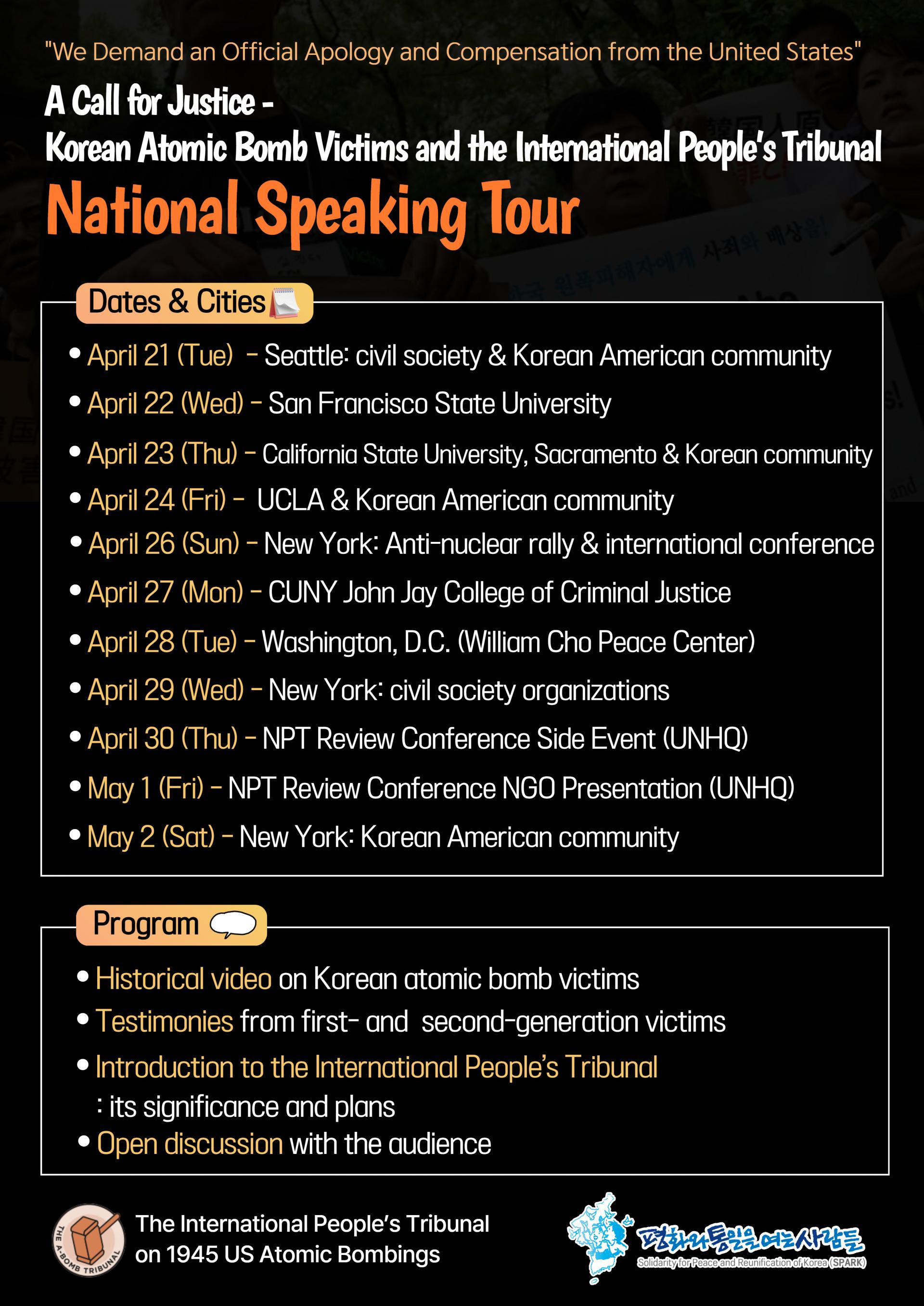

29 April – Nuclear Expert Webinar #1 – Radiation Impacts on Families with Mary Olson and Cindy Folkers
- 12:15 PM MT – 1:45 PM MT
- Location: Virtual – REGISTER TODAY

4 May -West Suburban Peace Coalition to discuss Iran war at May Educational Forum
Monday, May 4, 7:00 – 8:00 PM Central Standard Time
Title: : How Trump’s Narrative Tries to Shape the Reality of the War on Iran.
Contact Walt Zlotow, zlotow@hotmail.com 630 442 3045 for further information
14 May – online event From Bombs to Data Centres: the Face of Nuclear Colonialism
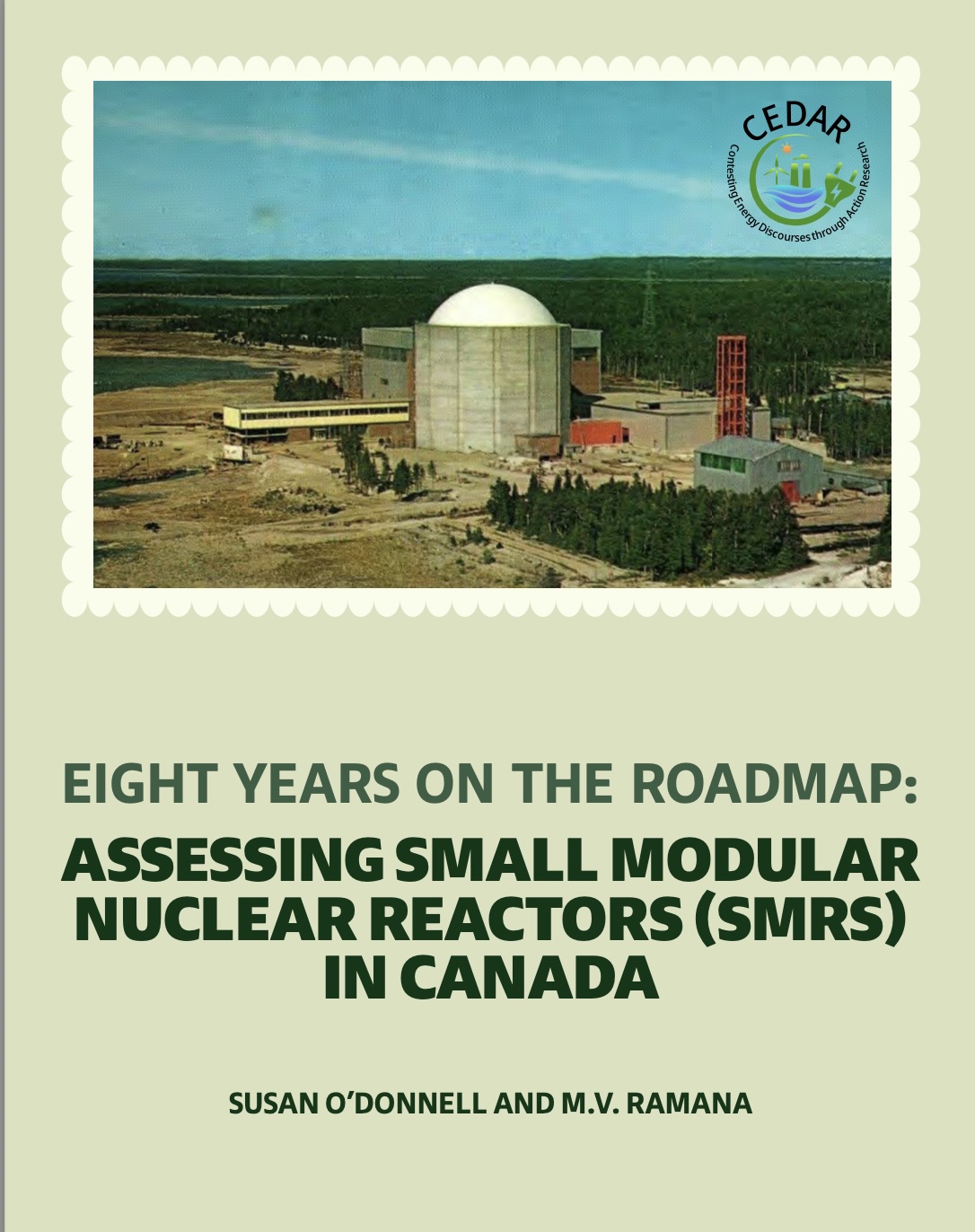

Pine Ridge Uranium is the real threat, not Tehran- Tell Burgum: Stop the Extraction.
Chernobyl: The Lost Tapes – A good documentary on Chernobyl on SBS available On Demand for the next 3 weeks– https://www.sbs.com.au/ondemand/tv-program/chernobyl-the-lost-tapes/2352741955560
To see nuclear-related stories in greater depth and intensity – go to https://nuclearinformation.wordpress.com
-
Archives
- April 2026 (327)
- March 2026 (251)
- February 2026 (268)
- January 2026 (308)
- December 2025 (358)
- November 2025 (359)
- October 2025 (376)
- September 2025 (257)
- August 2025 (319)
- July 2025 (230)
- June 2025 (348)
- May 2025 (261)
-
Categories
- 1
- 1 NUCLEAR ISSUES
- business and costs
- climate change
- culture and arts
- ENERGY
- environment
- health
- history
- indigenous issues
- Legal
- marketing of nuclear
- media
- opposition to nuclear
- PERSONAL STORIES
- politics
- politics international
- Religion and ethics
- safety
- secrets,lies and civil liberties
- spinbuster
- technology
- Uranium
- wastes
- weapons and war
- Women
- 2 WORLD
- ACTION
- AFRICA
- Atrocities
- AUSTRALIA
- Christina's notes
- Christina's themes
- culture and arts
- Events
- Fuk 2022
- Fuk 2023
- Fukushima 2017
- Fukushima 2018
- fukushima 2019
- Fukushima 2020
- Fukushima 2021
- general
- global warming
- Humour (God we need it)
- Nuclear
- RARE EARTHS
- Reference
- resources – print
- Resources -audiovicual
- Weekly Newsletter
- World
- World Nuclear
- YouTube
-
RSS
Entries RSS
Comments RSS
 nuclear-news