The Fukushima taboo

“Coming out” on thyroid cancer from Fukushima is an act of bravery in today’s Japan
By Linda Pentz Gunter
In the midst of the arcane fight over whether to include nuclear power in the European Union’s green “Taxonomy”, five former prime ministers of Japan made an unprecedented statement. They roundly condemned any inclusion of nuclear power as a green or sustainable energy, even as a so-called bridging fuel.
The current Japanese government glossed over the climate arguments in the former prime ministers’ argument, quickly seizing upon one tiny phrase concerning conditions in Japan post-Fukushima that read: “many children are suffering from thyroid cancer”.
The ruling Liberal Democratic Party even went so far as to approve a resolution condemning the five former prime ministers, one of whom, Junichiro Koizumi, is from that party. The resolution alleges that their statement was not “scientific” and that they were reigniting prejudice and encouraging people to view people from Fukushima as pariahs.
The party’s Policy Research Board said it would submit its resolution to current prime minister, Fumio Kishida.
On the same day — January 27, 2022 — as the former prime minister’s letter was submitted to the EU, six young people who were children at time of the March 2011 Fukushima Daiichi nuclear disaster, filed a lawsuit in the Tokyo District Court against TEPCO, the owner and operator of the nuclear plant.
The six, ages 17 to 27, hold the company responsible for the thyroid cancers each of them developed after being exposed to the radiation released by the nuclear disaster.
In filing suit and thus making the issue public, the six were immediately on the receiving end of an unprecedented level of abuse for speaking out. In this video of their testimony, they were obliged to keep their physical appearances concealed for fear of further reprisals.
“Coming out” on thyroid cancer — or indeed about any negative health impacts resulting from the Fukushima nuclear disaster — remains largely taboo in Japan. Studies that conclude the medical impacts are significant or even substantial, are met with equal hostility, stoniness or just plain silence.
When epidemiologist, Toshihide Tsuda and colleagues, published a paper in 2016 — Thyroid Cancer Detection by Ultrasound Among Residents Ages 18 Years and Younger in Fukushima, Japan: 2011 to 2014 — it was reportedly largely ignored rather than challenged.
The study concluded: “An excess of thyroid cancer has been detected by ultrasound among children and adolescents in Fukushima Prefecture within 4 years of the release, and is unlikely to be explained by a screening surge.”
This contradicted the prevailing and enduring view among the establishment that there are now more thyroid cancers found among children after Fukushima simply because there is more testing.
The “more testing” myth served as a convenient pretext to reduce testing for thyroid cancers in schools — on the basis such testing would upset children too much, hardly “scientific”.
The very public lawsuit may transform all this, as the testimonies leave an indelible picture of the toll taken on children and families by the Fukushima nuclear disaster.
In a two-part series, investigative journalist, Natsuko Katayama, reported on the case for the Tokyo Shimbun on January 19 and January 27 this year.
She wrote that among the plaintiffs, “Two of them had a lobe of the thyroid removed, and the other four had to have the whole thyroid removed because of recurrence (in the case of one of them, metastasis had spread to the lungs). All of them had to stop their studies or their professional activity in order to undergo these surgical procedures and medical treatments. They live in fear and anxiety of a recurrence, and their daily lives have been curtailed due to fatigue and weakness caused by the disease.”
One of the plaintiffs said they had all kept silent about their thyroid cancers for 10 years, not daring to go public because of the inevitable backlash of discrimination.
Many of those suffering illnesses related to the Fukushima nuclear disaster find themselves the new “Hibakusha”, the name originally given to those ostracized and rejected by Japanese society because of their exposure to radiation from the Hiroshima and Nagasaki atomic bombings.
Choking with emotion, one of the plaintiffs described in the press conference how she and the others had to give up their work and educational hopes and dreams due to the constrictions of illness and the necessary treatments. “Four of the six plaintiffs have had a recurrence or mestatasis of their disease,” she said.
Thyroid cancers among those exposed to Fukushima radiation as children have increased 20 times the expected rate, with about 80% metastasizing, meaning surgery was medically indicated and screening necessary.
“I am very worried about the future and cannot think about marriage or other plans,” said one of the young women, also a plaintiff in the trial, whose voice could be heard at the press conference, and whose cancer had returned and spread. All of them have faced considerable financial hardships due to the expense of their treatment and the loss of work.
The plaintiffs expressed the hope that the trial would help other children suffering from thyroid cancer, believed to number at least 300. But, with the suppression of testing and reporting, and the taboo surrounding any admission of thyroid cancer, the numbers could well be a lot higher.
The plaintiffs’ lawyers argue that Tepco will need to prove that there is no causal relationship between their clients’ thyroid cancer and the Fukushima Daiichi nuclear disaster. It seeks compensation for the victims.
“I try to believe that all will be well,” said one of the plaintiffs, a 26-year old woman who was 17 at the time her thyroid cancer was diagnosed, “even as I ask myself, ‘why me’?”
The 3.11 Children’s Thyroid Cancer Network was launched to support this lawsuit.
Headline image shows 2013 IAEA team member overseeing TEPCO moving nuclear fuel assemblies from Reactor Unit 4 to the Common Spent Fuel Pool. (Photo: IAEA)
Chain cutting device breaks off this time, and no progress in removing contaminated piping at TEPCO’s Fukushima Daiichi Nuclear Power Plant

March 3, 2022
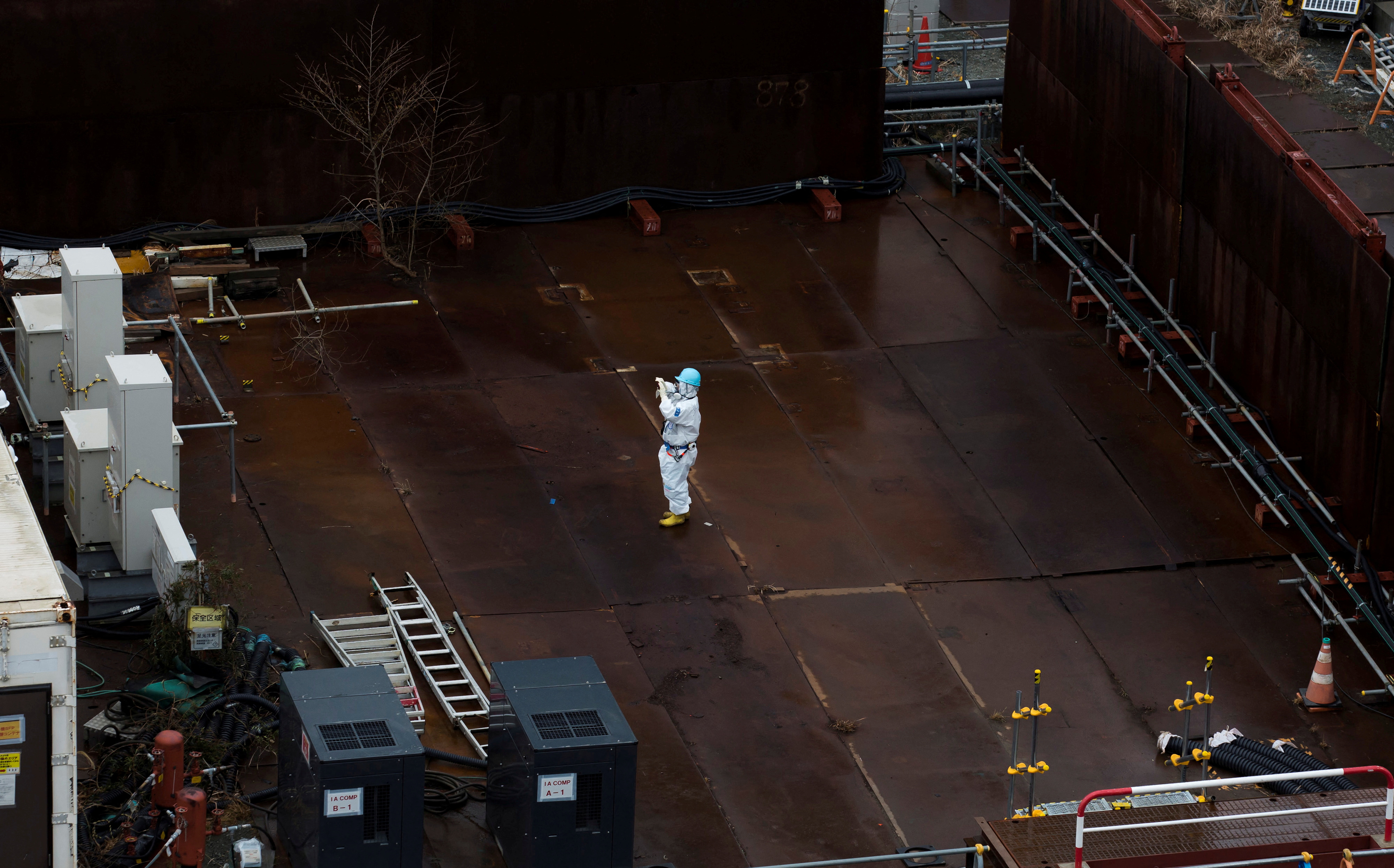
TEPCO announced on February 3 that its cutting equipment failed for the second day in a row in cutting pipes contaminated with highly radioactive materials between Units 1 and 2 at the Fukushima Daiichi Nuclear Power Plant (Okuma and Futaba, Fukushima Pref.) One week after work began on February 24, the cutting of 26 separate sections has not progressed at all, and the procedure will be reviewed.
The radiation level at the site is extremely high due to the contaminated pipes being near the ground, and people continue to be unable to approach the site. TEPCO planned to remove the pipes because they would be an obstacle to the planned work to cover the Unit 1 reactor building with a cover.
The work was carried out by remotely operating a cutting device attached to a large crane, and on the 1st, one of the two chain-like cutting devices came off, and on the 2nd, the same device broke.
According to TEPCO, before the failure on the 1st, an alarm was triggered indicating an increase in the concentration of radioactive materials contained in the chips from the cut section of the pipe, and on the 2nd, the alarm sounded again, so the speed of the cutting device was reduced to prevent the production of many chips, but the device broke after cutting about one third of the pipe. The cause is believed to be premature wear of the device.
The pipes, each about 30 centimeters in diameter and measuring about 65 meters on the Unit 1 side and about 70 meters on the Unit 2 side, were cut into 26 sections and removed. (The plant was used to vent contaminated steam from inside the reactor to prevent the containment vessel from rupturing in March 2011.)
https://www.tokyo-np.co.jp/article/163463?fbclid=IwAR0W4Rv8sxOLCLhbCzOqq6x8OgRxXGMIjDyAYH0BpNXIf9x2p4HZf4Xaac8
How the West failed Ukraine….and how Putin has doomed Russia to collapse — daryanenergyblog

I came across this article in the Guardian that I think sums up how the west got itself into this mess. Why does the west always seem to lose to Putin? Timidity Greed & Sloth. The west has not effectively stood up to Putin any time he’s made some sort of move. Be it in […]
How the West failed Ukraine….and how Putin has doomed Russia to collapse — daryanenergyblog
Supreme Court orders damages for Fukushima victims in landmark decision
A victory sure, but $3,290 for 10 years of misery and a devastated life it is cheaply paid…

March 4, 2022
The Supreme Court upheld an order for utility Tokyo Electric Power Company Holdings Inc. to pay damages of ¥1.4 billion ($12 million) to about 3,700 people whose lives were devastated by the Fukushima nuclear disaster, the first decision of its kind.
NHK said the average payout was about ¥380,000 ($3,290) for each plaintiff in three class-action lawsuits, among more than 30 against the utility. The three suits are the first to be finalized.
A massive tsunami unleashed by an earthquake of magnitude 9.0 off Japan’s northeastern coast struck Tepco’s Fukushima No. 1 power plant in March 2011, leading to the world’s worst nuclear disaster since Chernobyl.
About 470,000 people were forced to evacuate in the days after the disaster and tens of thousands have still not been able to return.
Friday’s decision came as the court rejected an appeal by Tepco and ruled it negligent for not taking preventive measures against a tsunami of that size, the broadcaster said.
The court withheld a verdict on the role of the government, which is also a defendant in the lawsuits, and will hold a hearing next month to rule on its culpability, NHK added.
Lower courts have been split over the extent of the government’s responsibility to foresee the disaster and order steps by Tepco to prevent it.
Two aircraft carrier strike groups to participate in NATO war games off Russia’s northwest coast — Anti-bellum
Barents ObserverMarch 4, 2022 Russia will not observe Cold Response NATO exercise The 30,000 troops from 27 countries that have signed up for Cold Response 2022 will test winter combat in air, sea and land elements. The first personnel from countries like the United States and the United Kingdom have already arrived at military camps […]
Two aircraft carrier strike groups to participate in NATO war games off Russia’s northwest coast — Anti-bellum
Blinken: U.S. to transfer warplanes from Poland to Ukraine — Anti-bellum
Interfax-UkraineMarch 6, 2022 Blinken: USA working with Poland to transfer military aircraft to Ukraine The United States is negotiating with Poland on the possibility of transferring MiG and SU aircraft to Ukraine, on which Ukrainian pilots will be able to fly, U.S. Secretary of State Antony Blinken has said. “We are working with Poland as […]
Blinken: U.S. to transfer warplanes from Poland to Ukraine — Anti-bellum
Japan’s top court orders damages for Fukushima victims in landmark decision -NHK

TOKYO, March 4 (Reuters) – Japan’s Supreme Court upheld an order for utility Tokyo Electric Power (Tepco) to pay damages of 1.4 billion yen ($12 million) to about 3,700 people whose lives were devastated by the Fukushima nuclear disaster, the first decision of its kind.
Public broadcaster NHK said the average payout of about 380,000 yen ($3,290) for each plaintiff covered three class-action lawsuits, among more than 30 against the utility, which are the first to be finalised.
A massive tsunami unleashed by an earthquake of magnitude 9.0 off Japan’s northeastern coast, struck Tepco’s Fukushima Daiichi power plant in March 2011, to cause the worst nuclear disaster since Chernobyl.
About 470,000 people were forced to evacuate in the first few days, and tens of thousands have not yet been able to return.
Friday’s decision came as the court rejected an appeal by Tepco and ruled it negligent in taking preventive measures against a tsunami of that size, the broadcaster said.
TOKYO, March 4 (Reuters) – Japan’s Supreme Court upheld an order for utility Tokyo Electric Power (Tepco) to pay damages of 1.4 billion yen ($12 million) to about 3,700 people whose lives were devastated by the Fukushima nuclear disaster, the first decision of its kind.
Public broadcaster NHK said the average payout of about 380,000 yen ($3,290) for each plaintiff covered three class-action lawsuits, among more than 30 against the utility, which are the first to be finalised.
A massive tsunami unleashed by an earthquake of magnitude 9.0 off Japan’s northeastern coast, struck Tepco’s Fukushima Daiichi power plant in March 2011, to cause the worst nuclear disaster since Chernobyl.
About 470,000 people were forced to evacuate in the first few days, and tens of thousands have not yet been able to return.
Friday’s decision came as the court rejected an appeal by Tepco and ruled it negligent in taking preventive measures against a tsunami of that size, the broadcaster said.
The court withheld a verdict on the role of the government, which is also a defendant in the lawsuits, and will hold a hearing next month to rule on its culpability, NHK added.
Lower courts have split over the extent of the government’s responsibility in foreseeing the disaster and ordering steps by Tepco to prevent it.
How the Narcotic of Defense Spending Undermines a Sensible Grand Strategy,

MARCH 2, 2022, How the Narcotic of Defense Spending Undermines a Sensible Grand Strategy, CounterPunch, BY FRANKLIN SPINNEY The Military-Industrial-Congressional-Complex’s (MICC) grand-strategic chickens are coming home to roost big time. While war is bad, the Russo-Ukrainian War has the champagne corks quietly popping in the Pentagon, on K Street, in the defense industry, and throughout the halls of Congress. Taxpayers are going to be paying for their party for a long time.
It is no accident that the United States is on the cusp of the Second Cold War.
Future historians may well view the last 30 years as a case study in the institutional survival of the American Military – Industrial – Congressional Complex (MICC), together with its supporting blob now saturating the media, think tanks, academia, and the intelligence community. Perhaps, these future historians will come also to view the Global War on Terror (GWOT) as the bridging operation that greased the transition to Cold War II by keeping defense budgets at Cold War levels after Cold War I ended. Also, 9-11 may have re-acclimated the American people to the climate of fear now needed to sustain Cold War II for the remainder of the 21st Century.
The First Cold War’s 40-year climate of fear was something Mikhail Gorbachev tried to end. But Presidents Clinton and Bush (the 2nd) were busy planting the seed money for a new generation of cold-war inspired weapons. These weapons required massive future defense budgets that would require a climate of fear to sustain (especially for the across-the-board nuclear modernization program). President Obama then locked in these programs, and won a Nobel Peace Prize to boot. President Trump and the Dems in Congress worked overtime to ice the Pentagon’s budget cake by incestuously amplifying the growing Russophobia
No one wants war, but rising tension and the politics of fear … and their bedfellow: demonization … had to be magnified to justify the huge bow wave of defense spending looming in the budgetary offing, particularly the trillion+ dollars to pay for the nuclear modernization program. This “chicken” takes us back to the “egg” laid in the 1990s.
As it gradually sank in that the First Cold War had indeed ended when the Soviet threat evaporated in 1991, the titans in the defense industry understood their comfortable market for new hi-tech, high-cost weapons could dry up.
At the same time, the defense industrialists recognized that market diversification was necessary. So, it was no accident that a lobbying operation named the Committee to Expand NATO emerged in the early 1990s and was headed by a vice president of Lockheed Martin — see also Why is US Foreign Policy a Shambles?. At the very least, in the mid-1990s, it seemed that expanding NATO implied dramatically increased requirements for what is known in NATO jargon as weapons interoperability……………..
the Pentagon’s strategy of maximizing its budget has created a growing dependency on defense spending in the American political economy. This grotesque distortion was first recognized by President Eisenhower in 1961. In 1987, George Kennan, forty years after he fathered the dominant US policy of “Containment” for the entire First Cold War, summed up the narcotic of defense spending, saying prophetically:
“Were the Soviet Union to sink tomorrow under the waters of the ocean, the American military-industrial complex would have to remain, substantially unchanged, until some other adversary could be invented. Anything else would be an unacceptable shock to the American economy,” …………..
Understanding the internal political-economic causes of the American addiction to the narcotic of defense spending is at the heart of the problem. This understanding is essential to reforming the foreign policy mess exacerbated by NATO expansion. …….
Franklin “Chuck” Spinney is a former military analyst for the Pentagon and a contributor to Hopeless: Barack Obama and the Politics of Illusion, published by AK Press. He be reached at chuck_spinney@mac.com https://www.counterpunch.org/2022/03/02/how-the-narcotic-of-defense-spending-undermines-a-sensible-grand-strategy/
Caitlin Johnstone: Freedom & Democracy Via Censorship.

You’d think a free society would have no objection to people trying to learn about the other side of a war in which NATO powers very plainly had a hand in starting. By Caitlin Johnstone 4 Mar 22, Consortium News
CaitlinJohnstone.com Kremlin-backed media outlets have been banned throughout the European Union, both on television and on apps and online platforms. RT has lost its Sky TV slot in the U.K., where the outlet is also blocked on YouTube.
Australian TV providers SBS and Foxtel have dropped RT, and the federal government is putting pressure on social media platforms to block Russian media in Australia.
In the Czech Republic, Slovakia and Latvia, speaking in support of the Russian invasion of Ukraine will get you years in prison.
Twitter, historically the last of the major online platforms to jump on any new internet censorship escalation, is now actively minimizing the number of people who see Russian media content, saying that it is “reducing the content’s visibility” and “taking steps to significantly reduce the circulation of this content on Twitter.” This is exactly what I speculated might emerge after former Twitter CEO Jack Dorsey resigned in November, due to previous comments supporting the tactic of censorship-by-algorithm by his successor Parag Agrawal.
Twitter is also placing warnings labels on all Russia-backed media and delivering a pop-up message informing you that you are committing wrongthink if you try to share or even “like” a post linking to such outlets on the platform. It has also placed the label “Russia state-affiliated media” on every tweet made by the personal accounts of employees of those platforms, baselessly giving the impression that the dissident opinions tweeted by those accounts are paid Kremlin content and not simply their own legitimate perspectives. Some are complaining that this new label has led to online harassment amid the post-9/11-like anti-Russia hysteria that’s currently turning western brains into clam chowder
(Many Tweets quoted here)
This is all on top of all the other drastic escalations in censorship which came roaring in at the beginning of the Ukraine war, and I personally find it a bit scary how fast it’s all happening, how fine people are with it, and how much worse it seems likely to get.
Others agree.
“The purge of RT and other Russian media outlets in the US and Europe is 100% censorship,” tweets journalist Michael Tracey. “Go ahead and argue it’s justified, but at least don’t be a coward and admit you are advocating censorship.”
“The western world believes that it has a monopoly on what constitutes ‘political truth’ and that their ideological worldview is the only correct, valid and authoritative one,” writer and analyst Tom Fowdy observed. “They preach freedom of speech and the press to other countries, but exempt themselves from it.”
And I can’t help but find it odd that the fight for freedom and democracy should require such copious amounts of censorship. You’d think a free society would have no objection to people trying to learn the other side of the debate about a war which NATO powers very plainly had a hand in starting, rather than being forced to consume only Western mass media narratives which tell us this is happening exclusively because Russian President Vladimir Putin is evil and Hitlery and hates freedom…………..
It makes you wonder if we have foolishly consented to a reality where the most powerful people in the world get to control the information people consume in order to shut down dissent against a murderous and oppressive globe-spanning oligarchic empire.
And it kind of makes you wonder, as we watch the same empire that just destroyed Iraq, Libya, Syria and Yemen being entrusted to carefully navigate extremely delicate nuclear brinkmanship escalations without ending the world, if we might perhaps be better off with a lot more dissent, rather than a lot less. https://consortiumnews.com/2022/03/03/caitlin-johnstone-freedom-democracy-via-censorship/
Now Is the Time for a Global Movement Demanding Nuclear De-escalation

Now Is the Time for a Global Movement Demanding Nuclear De-escalation, https://truthout.org/articles/now-is-the-time-for-a-global-movement-demanding-nuclear-de-escalation/?eType=EmailBlastContent&eId=552e5725-9297-4a7c-a214-53c8c51615a3 Norman Solomon, Truthout March 3, 2022
President Joe Biden spoke 6,500 words during his State of the Union speech Tuesday night, but not one of them acknowledged the dangers of nuclear war that have spiked upward during the last decade and even more steeply in recent days. The militarism that Martin Luther King Jr. warned us about has been spiraling toward its ultimate destination in the nuclear era — a global holocaust that would likely extinguish almost all human life on Earth.
In the midst of this reality, leaders of the world’s two nuclear superpowers continue to fail — and betray — humanity.
In the stark light of March 2022, Albert Einstein’s outlook 75 years ago about the release of atomic energy has never been more prescient or more urgent: “This basic power of the universe cannot be fitted into the outmoded concept of narrow nationalisms. For there is no secret and there is no defense, there is no possibility of control except through the aroused understanding and insistence of the peoples of the world.”
The phrase “narrow nationalisms” aptly describes the nuclear-weapons policies of the United States and Russia. They have been engaged in a dance of death with foreseeable human consequences on a scale that none of us can truly fathom.
Einstein expressed a belief that “an informed citizenry will act for life and not death.” But the dire nuclear trends have been enabled by citizenry uninformed and inactive.
Twenty years ago, the George W. Bush administration withdrew from the Anti-Ballistic Missile (ABM) Treaty. Despite his promising rhetoric, President Barack Obama plunged ahead to begin a $1.7 trillion program for further developing the U.S. nuclear arsenal under the euphemism of “modernization.” President Donald Trump pulled the United States out of the Intermediate-Range Nuclear Forces (INF) Treaty, which had removed an entire category of missiles from Europe since the late 1980s — largely as a result of the international movement against nuclear weapons.
By killing the ABM and INF agreements, the U.S. government pushed the world further away from nuclear arms control, let alone disarmament. And by insisting on expansion of the North Atlantic Treaty Organization (NATO) to Russia’s borders — and in recent months continuing to insist that Ukrainian membership in NATO should stay on the table — the United States ignored Russia’s longstanding and reasonable concerns about NATO expansion.
Placement of ABM systems in Poland and Romania, touted as defensive, gave NATO the capacity to retrofit those systems with offensive cruise missiles. Overall, NATO’s claims of being a “defensive” alliance have been undercut by three decades of broken promises, as well as intensive war operations in Serbia, Afghanistan and Libya.
Russia has its own military-industrial complex and nationalistic fervor. The duplicity and provocations by the United States and its NATO allies do not in the slightest justify the invasion of Ukraine that Russia launched a week ago. Russia is now on a murderous killing spree no less abhorrent than what occurred from the U.S. invasions of Afghanistan and Iraq.
Right now, an overarching truth remains to be faced and acted upon: The nuclear superpowers have dragged humanity to a precipice of omnicide. The invasion of Ukraine is the latest move in that direction.
Last week, the extreme recklessness of Russian President Vladimir Putin’s not-so-veiled threat to use nuclear weapons was an indication of just how dangerous the Ukraine conflict has gotten — for everyone, everywhere. Passivity will get us nowhere. In the U.S., supporting antiwar protests and demanding real diplomacy while organizing for peace are essential.
“However soon the war ends, its effects on the European security order and the world will be and already are profound,” San Francisco State University scholar Andrei Tsygankov wrote days ago. “In addition to human suffering and devastation, the European continent is entering a new era of social and political divisions comparable to those of the Cold War. The possibility of further escalation is now closer than ever. Instead of building an inclusive and just international order, Russia and most European nations will now rely mainly on nuclear weapons and military preparations for their security.”
Any “conventional” war that puts Russia and the United States in even indirect conflict has the very real potential of being a tripwire that could set off an exchange of nuclear missiles. Heightened tensions lead to fatigue, paranoia and greater likelihood of mistaking a false alarm for the real thing. This is especially dangerous because of land-based Intercontinental Ballistic Missiles (ICBMs), which are uniquely vulnerable to attack and therefore are on hair-trigger, “launch on warning” alert.
“First and foremost,” former Defense Secretary William Perry wrote in 2016, “the United States can safely phase out its land-based intercontinental ballistic missile force, a key facet of Cold War nuclear policy. Retiring the ICBMs would save considerable costs, but it isn’t only budgets that would benefit. These missiles are some of the most dangerous weapons in the world. They could even trigger an accidental nuclear war.” As Daniel Ellsberg and I wrote in The Nation last fall, “Contrary to uninformed assumptions, discarding all ICBMs could be accomplished unilaterally by the United States with no downside. Even if Russia chose not to follow suit, dismantling the potentially cataclysmic land-based missiles would make the world safer for everyone on the planet.”
But we’re not hearing anything from Congress or the White House about taking steps to reduce the chances of nuclear war. Instead, we’re hearing jacked-up rhetoric about confronting Russia. It’s all too clear that responsible leadership will not come from official Washington; it must come from grassroots activism with determined organizing and political pressure.
“I refuse to accept the cynical notion that nation after nation must spiral down a militaristic stairway into the hell of thermonuclear destruction,” Dr. King said as he accepted the Nobel Peace Prize in 1964. “I believe that even amid today’s mortar bursts and whining bullets, there is still hope for a brighter tomorrow.”
Realistic hope seems to be in very short supply right now. But at this dire moment, all that we love demands our determination to organize.
War in Ukraine to boost Pentagon’s annual budget closer to trillion dollars — Anti-bellum
Defense OneMarch 3, 2022 Russia’s Invasion Will Boost 2023 Defense Budget, Top Democrat Says Russia’s invasion of Ukraine will boost the Pentagon’s funding for next year, the chairman of the House Armed Services Committee predicted on Thursday. “Without question, it’s going to have to be bigger than we thought,” Rep. Adam Smith, D-Wash., said at […]
War in Ukraine to boost Pentagon’s annual budget closer to trillion dollars — Anti-bellum
Coal and Nuclear Interests Linked — RADIATION FREE LAKELAND

Letter Published in the Westmorland Gazette 3rd March 2022 Dear Editor, Recent correspondents are absolutely right that the coal mine is primarily a political issue. Costings for Near Surface Disposal of Intermediate Level Nuclear Wastes and Geological Disposal of High Level Nuclear Wastes are being prepared right now.
Coal and Nuclear Interests Linked — RADIATION FREE LAKELAND
Radiation: Does iodine help?

Radiation: Does iodine help? https://www.dw.com/en/radiation-does-iodine-help/a-61020889 4 Mar 22,
Fears have grown about radiation exposure since Russia’s attack on a Ukrainian nuclear facility. But taking iodine won’t always help. It can, in fact, be dangerous.
When there is an accident at a nuclear power plant — if there’s an explosion or a leak or it’s damaged in some way in war — radioactive iodine is one of the first substances that’s released into the atmosphere.
If that radioactive iodine gets into the body, it can damage cells in the thyroid and result in cancer.
You can inhale radiation, or it can get into your body via the skin. But you can’t see, smell or taste it in the air. It’s an invisible threat.
Some of the worst effects of an overexposure to radiation are thyroid cancer, tumors, acute leukemia, eye diseases and psychological or mental disorders. Radiation can even damage your genes for generations to come.
In the most extreme cases, a high dose of radiation over a short period of time will cause death within days or even hours.
Is it worth taking iodine against radiation?
Our bodies do not produce iodine themselves. But we do need it, so we consume iodine through food or supplements.
You can purchase iodine in the form of a tablet. When consumed, the iodine is collected or stored in the thyroid gland, where it is used to produce hormones. They help various bodily functions and even support the development of the brain.
The thyroid can, however, become saturated with iodine. And when that happens it can’t store anymore.
So, the theory is that if you take enough “good” iodine, there will be no room left in the thyroid for any “bad” or radioactive iodine. That radioactive iodine should then simply pass through the body and get excreted via the kidneys.
But don’t take iodine as a precaution
There is no point in taking iodine as a precautionary measure to prevent against radiation exposure after a leak or attack on a nuclear power plant.
The thyroid only stores iodine for a limited amount of time.
And taking too much iodine — even the good stuff — can be dangerous.
Many people in Germany, for instance, suffer from an overactive thyroid. And health experts advise against taking any iodine supplements unless there is an acute medical reason to do so.
Germany’s Federal Ministry for the Environment, Nature Conservation, Nuclear Safety and Consumer Protection (BMUV) says iodine supplements can help after a nuclear power plant accident in a radius of up to 100 kilometers (62 miles).
But the iodine is still only effective if taken when it is needed. Experts say an iodine “block” only has a chance of helping if the good iodine is taken just before or during contact with radioactive iodine.
Cesium, strontium absorbed by the body
The radioactive isotopes iodine 131 and iodine 133 cause thyroid cancer. They are also the isotopes most associated with radiation exposure caused by a leak or explosion at a nuclear power plant.
The radioactive isotopes strontium 90 and cesium 137 are also part of the mix. They settle in bone tissue and likewise increase the risk of cancer.

The radioactive isotopes strontium 90 and cesium 137 are also part of the mix. They settle in bone tissue and likewise increase the risk of cancer.
Our body mistakes these isotopes for calcium. It can absorb and use them in the physiological processes of our muscles and bones. If that happens, the bone marrow can spin out of control.
Bone marrow is responsible for producing new blood cells. And when it fails, it can lead to a blood cancer known as leukemia, which is often fatal.
Damage to genetic material
Radioactive exposure can also damage genetic material in the body.
That is known to have happened after atomic bombs were dropped on the Japanese cities of Nagasaki and Hiroshima at the end of World War II — children were born with deformities after the war.
Long-term effects were also observed after an accident at the Chernobyl nuclear facility in Ukraine in April 1986.
Twenty years after the catastrophe, cancer rates in most of the affected regions had risen by 40%. An estimated 25,000 people in Russia died as a result of having helped clean up the reactor site.
Almost no treatment for radiation exposure
There is hardly any treatment for radiation exposure. What’s decisive is whether a person has been “contaminated” or whether the radiation has been “incorporated” into the body.
In the case of a contamination, radioactive waste settles on the surface of the body.
It may sound ridiculous, but the first thing people should do in those cases is wash off the radioactive waste with normal soap and water.
A “radioactive incorporation” is far more dangerous. Once radioactive waste has made its way into the body, it’s almost impossible to flush it out again.
There is hardly any treatment for radiation exposure. What’s decisive is whether a person has been “contaminated” or whether the radiation has been “incorporated” into the body.
In the case of a contamination, radioactive waste settles on the surface of the body.
It may sound ridiculous, but the first thing people should do in those cases is wash off the radioactive waste with normal soap and water.
A “radioactive incorporation” is far more dangerous. Once radioactive waste has made its way into the body, it’s almost impossible to flush it out again.
Intensity and time
Radioactivity is measured in millisieverts.
Exposure with 250 millisieverts (or 0.25 sievert), over a short period of time, is enough to cause radiation sickness.
To put that in context, Germany’s Federal Office for Radiation Protection (BfS) tends to measure an average of 2.1 millisievert in the environment. That’s over a whole year.
At a measure of 4,000 millisievert (or 4 sievert), acute radiation sickness starts quickly. The risk of death increases significantly. At 6 sievert, the risk of death is 100% — there is no chance of survival. Death is almost immediate.
Calling Russia’s Attack ‘Unprovoked’ Lets USA Off the Hook

FAIR, BRYCE GREENE, MARCH 4, 2022, Many governments and media figures are rightly condemning Russian President Vladimir Putin’s attack on Ukraine as an act of aggression and a violation of international law. But in his first speech about the invasion, on February 24, US President Joe Biden also called the invasion “unprovoked.”
It’s a word that has been echoed repeatedly across the media ecosystem. “Putin’s forces entered Ukraine’s second-largest city on the fourth day of the unprovoked invasion,” Axios (2/27/22) reported; “Russia’s unprovoked invasion of Ukraine entered its second week Friday,” said CNBC (3/4/22). Vox (3/1/22) wrote of “Putin’s decision to launch an unprovoked and unnecessary war with the second-largest country in Europe.”
The “unprovoked” descriptor obscures a long history of provocative behavior from the United States in regards to Ukraine. This history is important to understanding how we got here, and what degree of responsibility the US bears for the current attack on Ukraine.
Ignoring expert advice
The story starts at the end of the Cold War, when the US was the only global hegemon. As part of the deal that finalized the reunification of Germany, the US promised Russia that NATO would not expand “one inch eastward.” Despite this, it wasn’t long before talk of expansion began to circulate among policy makers…………
Despite these warnings, Poland, Hungary and the Czech Republic were added to NATO in 1999, with Bulgaria, Estonia, Latvia, Lithuania, Romania, Slovakia and Slovenia following in 2004.
US planners were warned again in 2008 by US Ambassador to Moscow William Burns (now director of the CIA under Joe Biden). WikiLeaks leaked a cable from Burns titled “Nyet Means Nyet: Russia’s NATO Enlargement Redlines” that included another prophetic warning worth quoting in full (emphasis added):
Ukraine and Georgia’s NATO aspirations not only touch a raw nerve in Russia, they engender serious concerns about the consequences for stability in the region. Not only does Russia perceive encirclement, and efforts to undermine Russia’s influence in the region, but it also fears unpredictable and uncontrolled consequences which would seriously affect Russian security interests.
Experts tell us that Russia is particularly worried that the strong divisions in Ukraine over NATO membership, with much of the ethnic Russian community against membership, could lead to a major split, involving violence or at worst, civil war. In that eventuality, Russia would have to decide whether to intervene; a decision Russia does not want to have to face.
A de facto NATO ally
But the US has pushed Russia to make such a decision. Though European countries are divided about whether or not Ukraine should join, many in the NATO camp have been adamant about maintaining the alliance’s “open door policy.”
Even without officially being in NATO, Ukraine has become a de facto NATO ally—and Russia has paid close attention to these developments. In a December 2021 speech to his top military officials, Putin expressed his concerns:…………………………
The Maidan Coup of 2014
A major turning point in the US/Ukraine/Russia relationship was the 2014 violent and unconstitutional ouster of President Viktor Yanukovych, elected in 2010 in a vote heavily split between eastern and western Ukraine. His ouster came after months of protests led in part by far-right extremists (FAIR.org, 3/7/14). Weeks before his ouster, an unknown party leaked a phone call between US officials discussing who should and shouldn’t be part of the new government, and finding ways to “seal the deal.” After the ouster, a politician the officials designated as “the guy” even became prime minister.
The US involvement was part of a campaign aimed at exploiting the divisions in Ukrainian society to push the country into the US sphere of influence, pulling it out of the Russian sphere (FAIR.org, 1/28/22). In the aftermath of the overthrow, Russia illegally annexed Crimea from Ukraine, in part to secure a major naval base from the new Ukrainian government.
The New York Times (2/24/22) and Washington Post (2/28/22) both omitted the role the US played in these events. In US media, this critical moment in history is completely cleansed of US influence, erasing a critical step on the road to the current war.
Keeping civil war alive
In another response to the overthrow, an uprising in Ukraine’s Donbas region grew into a rebel movement that declared independence from Ukraine and announced the formation of their own republics. The resulting civil war claimed thousands of lives, but was largely paused in 2015 with a ceasefire agreement known as the Minsk II accords.
The deal, agreed to by Ukraine, Russia and other European countries, was designed to grant some form of autonomy to the breakaway regions in exchange for reintegrating them into the Ukrainian state. Unfortunately, the Ukrainian government refused to implement the autonomy provision of the accords
Anatol Lieven, a researcher with the Quincy Institute for Responsible Statecraft, wrote in The Nation (11/15/21):
The main reason for this refusal, apart from a general commitment to retain centralized power in Kiev, has been the belief that permanent autonomy for the Donbas would prevent Ukraine from joining NATO and the European Union, as the region could use its constitutional position within Ukraine to block membership.
Refusal to de-escalate…………
By December 2021, US intelligence agencies were sounding the alarm that Russia was amassing troops at the Ukrainian border and planning to attack. Yet Putin was very clear about a path to deescalation: He called on the West to halt NATO expansion, negotiate Ukrainian neutrality in the East/West rivalry, remove US nuclear weapons from non proliferating countries, and remove missiles, troops and bases near Russia. These are demands the US would surely have made were it in Russia’s position.
Unfortunately, the US refused to negotiate on Russia’s core concerns…………..
Instead of addressing Russian concerns about Ukraine’s NATO relationship, the US instead chose to pour hundreds of millions of dollars of weapons into Ukraine, exacerbating Putin’s expressed concerns. Ukrainian President Volodymyr Zelenskyy didn’t help matters by suggesting that Ukraine might begin a nuclear weapons program at the height of the tensions.
After Putin announced his recognition of the breakaway republics, Secretary of State Antony Blinken canceled talks with Putin, and began the process of implementing sanctions on Russia—all before Russian soldiers had set foot into Ukraine.
Had the US been genuinely interested in avoiding war, it would have taken every opportunity to de-escalate the situation. Instead, it did the opposite nearly every step of the way……………
None of this is to say that Putin’s invasion is justified—FAIR resolutely condemns the invasion as illegal and ruinous—but calling it “unprovoked” distracts attention from the US’s own contribution to this disastrous outcome. The US ignored warnings from both Russian and US officials that a major conflagration could erupt if the US continued its path, and it shouldn’t be surprising that one eventually did.
Now, as the world once again inches toward the brink of nuclear omnicide, it is more important than ever for Western audiences to understand and challenge their own government’s role in dragging us all to this point.
https://fair.org/home/calling-russias-attack-unprovoked-lets-us-off-the-hook/—
How many more lives does Europe want to sacrifice to extend NATO’s borders?
 | |||
| to me |
| |||

How many more lives does Europe want to sacrifice to extend NATO’s borders? https://www.pressenza.com/2022/03/how-many-more-lives-does-europe-want-to-sacrifice-to-extend-natos-borders/
04.03.22 – Gerardo Femina
This post is also available in: Spanish, French, Italian, Catalan It is urgent to stop the war and put an end to the pain of the Ukrainian people. Russia must immediately withdraw its troops and stop the aggression against Ukraine.
But how many more lives is Europe willing to sacrifice to extend NATO’s borders? The armed conflict could stop immediately and put an end to enormous suffering if Russia’s demands were seriously considered: a militarily neutral Ukraine, like Austria and Finland.
A reasonable proposal, a state buffer policy that has already been adopted in the past. Instead, Europe is choosing the path of arms and violence.
Sending arms to Ukraine means pursuing a goal that is contrary to peace. It is to put geopolitical goals above human life and risk dragging us all into a nightmare with no way out.
Sending arms is not the way to stop the war. On the contrary, all efforts must be directed towards dialogue.
Europe for Peace
Europe for Peace
Read the declaration
Gerardo Femina
Former president of the Community for Human Development in Italy, engaged in social, political and cultural activity. For 20 years he has lived in Prague, where he was among the promoters of the campaign “Europe for Peace” and the protest against the so-called Missile Shield, that the United States wanted to install in the Czech Republic. He writes about politics and social matters. In recent years he has dedicated himself to the construction of the Park of Study and Reflection in the Czech Republic.
1 This Month
26 April – Chernobyl: Inside the Meltdown airs on National Geographic on Sunday 26th April from 4pm
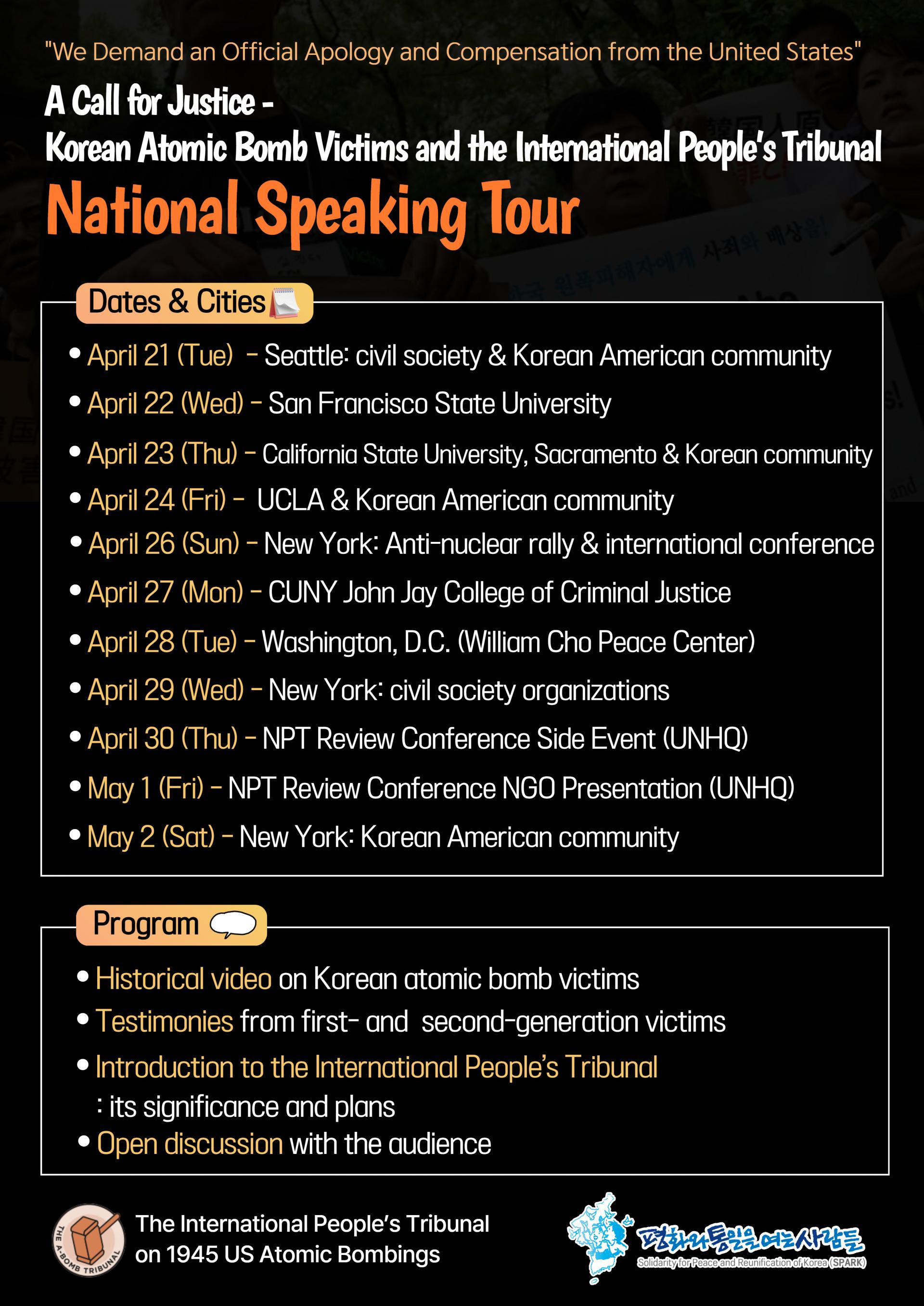
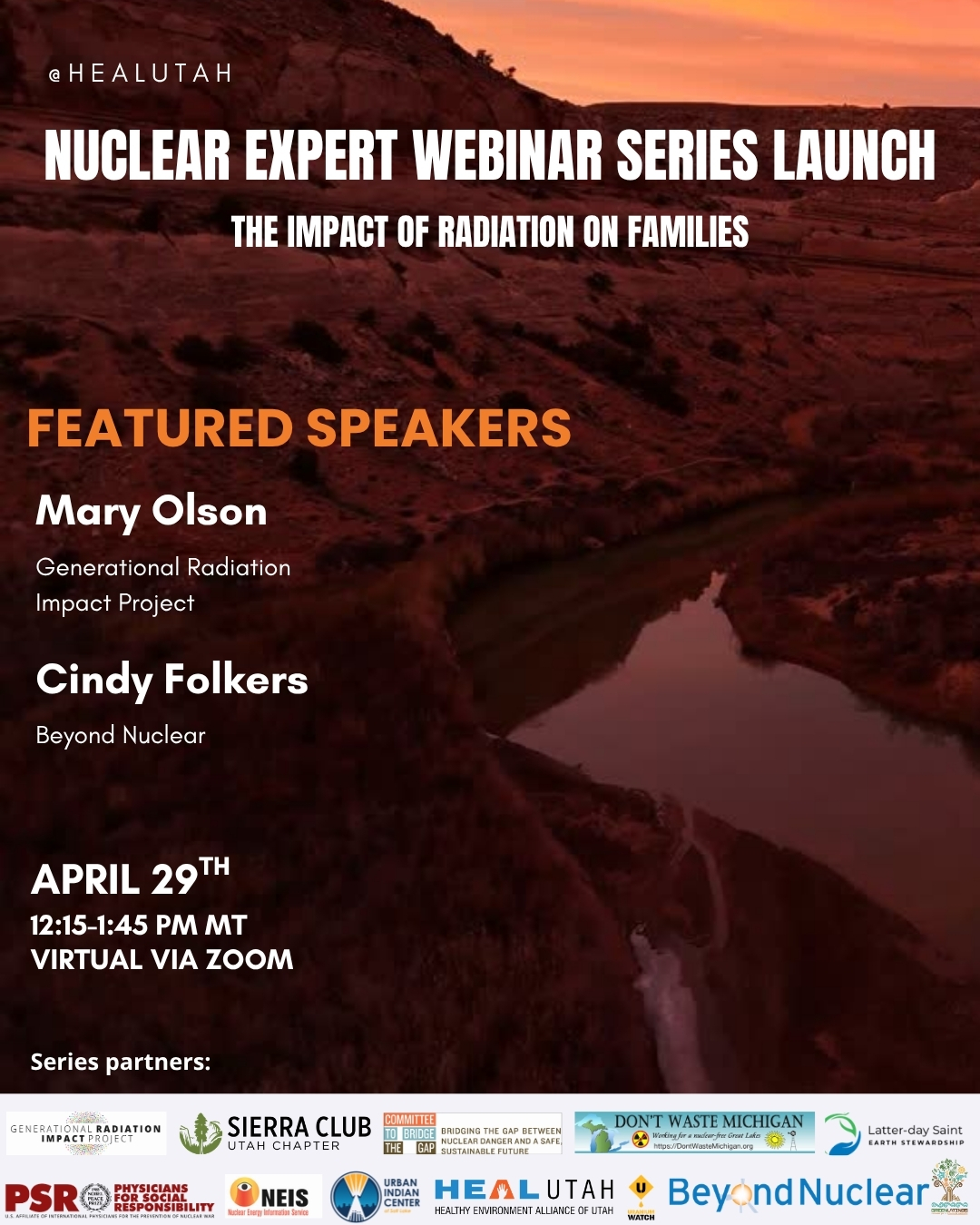
29 April – Nuclear Expert Webinar #1 – Radiation Impacts on Families with Mary Olson and Cindy Folkers
- 12:15 PM MT – 1:45 PM MT
- Location: Virtual – REGISTER TODAY

4 May -West Suburban Peace Coalition to discuss Iran war at May Educational Forum
Monday, May 4, 7:00 – 8:00 PM Central Standard Time
Title: : How Trump’s Narrative Tries to Shape the Reality of the War on Iran.
Contact Walt Zlotow, zlotow@hotmail.com 630 442 3045 for further information
14 May – online event From Bombs to Data Centres: the Face of Nuclear Colonialism

Pine Ridge Uranium is the real threat, not Tehran- Tell Burgum: Stop the Extraction.
Chernobyl: The Lost Tapes – A good documentary on Chernobyl on SBS available On Demand for the next 3 weeks– https://www.sbs.com.au/ondemand/tv-program/chernobyl-the-lost-tapes/2352741955560
To see nuclear-related stories in greater depth and intensity – go to https://nuclearinformation.wordpress.com
-
Archives
- April 2026 (327)
- March 2026 (251)
- February 2026 (268)
- January 2026 (308)
- December 2025 (358)
- November 2025 (359)
- October 2025 (376)
- September 2025 (257)
- August 2025 (319)
- July 2025 (230)
- June 2025 (348)
- May 2025 (261)
-
Categories
- 1
- 1 NUCLEAR ISSUES
- business and costs
- climate change
- culture and arts
- ENERGY
- environment
- health
- history
- indigenous issues
- Legal
- marketing of nuclear
- media
- opposition to nuclear
- PERSONAL STORIES
- politics
- politics international
- Religion and ethics
- safety
- secrets,lies and civil liberties
- spinbuster
- technology
- Uranium
- wastes
- weapons and war
- Women
- 2 WORLD
- ACTION
- AFRICA
- Atrocities
- AUSTRALIA
- Christina's notes
- Christina's themes
- culture and arts
- Events
- Fuk 2022
- Fuk 2023
- Fukushima 2017
- Fukushima 2018
- fukushima 2019
- Fukushima 2020
- Fukushima 2021
- general
- global warming
- Humour (God we need it)
- Nuclear
- RARE EARTHS
- Reference
- resources – print
- Resources -audiovicual
- Weekly Newsletter
- World
- World Nuclear
- YouTube
-
RSS
Entries RSS
Comments RSS
 nuclear-news