Bill to help build small nuclear reactors in Indiana passes Senate,
Bill to help build small nuclear reactors in Indiana passes Senate, WFYI Indianapolis,
REBECCA THIELE 2 Feb 22,
A bill that would make it easier for smaller, more advanced nuclear power plants to be built in Indiana passed in the state Senate on Tuesday…….
But opponents of SB 271 said small modular nuclear reactors are a risky investment for the state. None of the planned modular nuclear reactors have been built yet and many have gone over their proposed budgets — some by billions of dollars.
Sen. Shelli Yoder (D-Bloomington) said the fact that ratepayers would have to foot the bill for these projects is concerning.
“This is a question of who is going to pay and for quite some time and before any project has ever come to fruition,” she said.
The Union of Concerned Scientists has also questioned the safety of the plants. It said the nuclear industry has sometimes used the plant’s smaller size to justify cutting back on safety equipment and staff as well as shrink the area that would be told to evacuate in a disaster.
The bill now moves on to the House for consideration. https://www.wfyi.org/news/articles/bill-to-help-build-small-nuclear-reactors-in-indiana-passes-senate
UK preparing for ‘exo-atmospheric nuclear attack’ as greatest threat in space war, government report warns
UK preparing for ‘exo-atmospheric nuclear attack’ as greatest threat in space war, government report warns
Such an event would be a ‘permanent kill’ scenario worse than any electronic weapons or orbital anti-satellite weapons, a new report states, Adam Smith Independent 2 Feb 22,
The government says space will be a key future battlefield with the most dangerous threat being a “exo-atmospheric nuclear attack”.
In a report from the Ministry of Defence, the government body described such an event as a “permanent kill” scenario; this would be vastly more dangerous than either electronic warfare, laser dazzling, cyber attacks, or orbital ASATs (anti-satellite weapons)………… (registered readers only) https://www.independent.co.uk/space/atmospheric-nuclear-attack-space-war-government-b2005990.html
Sizewell C nuclear project issues have been glossed over
Sizewell C nuclear project issues have been glossed over https://www.theguardian.com/environment/2022/feb/01/sizewell-c-nuclear-project-issues-have-been-glossed-over
Former Labour MP Derek Wyatt points out three critical issues surrounding the government’s £100m investment in EDF’s nuclear power plant
Three critical issues surrounding the future of the Sizewell C project were missing from the recent announcement (Ministers invest £100m in EDF’s £20bn Sizewell C nuclear power station, 27 January). The first is the appalling state of EDF’s finances. This is coupled with shutdowns at its French power stations, using similar technology to Sizewell C. Newer nuclear power stations are not working.
Give Nuclear Exposure Victims a Break
Those who become sick as a result of work in the nuclear weapons manufacturing and testing industry are eligible for health care benefits and compensation from those two federal programs: the Radiation Exposure Compensation Program (RECP) and the Energy Employees Occupational Illness Compensation Program (EEOICP).
Give Nuclear Exposure Victims a Break https://progressive.org/op-eds/give-nuclear-victims-break-stephens-220202/
My experience working with nuclear weapons and uranium workers has shown me that we must continue to provide essential benefits to workers and their survivors.
BY R. HUGH STEPHENS, FEBRUARY 2, 2022 Every month or so, my law office will get a call from the spouse of a nuclear weapons or uranium worker who has been diagnosed with terminal cancer. We help file a claim for the worker with the Department of Justice or the Department of Labor, both of which run a compensation program.
Typically, these claims can be handled in a matter of weeks. Modest compensation provided through these programs provide help with medical bills and certain other financial obligations.
Most people don’t realize that these programs exist, or even that our nuclear weapons system affects so many people across the country.
Originally known as the Manhattan Project, the U.S. nuclear weapons program in 1945 produced its first nuclear blast, the Trinity Test, in Alamogordo, New Mexico. But the impact of this testing has not been limited by either time or geography. Every day, downwinders, on-site participants, uranium miners, millers and ore transporters are diagnosed with cancers, pulmonary fibrosis and other serious illnesses from exposures that happened decades ago. Even today, nuclear weapons workers are being made ill at facilities across the country.
Those who become sick as a result of work in the nuclear weapons manufacturing and testing industry are eligible for health care benefits and compensation from those two federal programs: the Radiation Exposure Compensation Program (RECP) and the Energy Employees Occupational Illness Compensation Program (EEOICP).
The programs, not unlike the Veterans Affairs program that provides benefits for U.S. soldiers, provide vital benefits to workers who have borne the brunt of the physical and financial toll imposed by the nation’s nuclear weapons program.
Currently pending bills would extend the RECP and allow on-site participants and downwinders to receive medical care for their accepted conditions under the EEOICP. This would make their claims more similar to the other beneficiaries, including uranium miners, millers and ore transporters, thereby eliminating a flaw in the RECP that prevents on-site participants throughout the country and downwinders in the southwest from receiving the same medical benefits as uranium miners, millers, and ore transporters receive.
Without action from Congress and the president, RECA will expire in July of this year. One path forward is a set of bipartisan bills introduced by Representative Leger Fernandez (H.R. 5338) and Senator Mike Crapo (S.2798). These bills extend and make important improvements to these compensation programs.
My experience working with nuclear weapons and uranium workers has shown me that these programs continue to provide essential benefits to workers and their survivors, whose lives have been disrupted by participation in the nuclear weapons program. Both of these programs should be extended and improved.
We owe that, at least, to those who have sacrificed their health in the service of the nation’s nuclear ambitions.
Brussels Faces Greenwash Scrutiny over Gas, Nuclear
Brussels Faces Greenwash Scrutiny over Gas, Nuclear https://www.bloomberg.com/news/videos/2022-02-02/brussels-faces-greenwash-scrutiny-over-gas-nuclear-video
bloomberg-markets-european-close, February 3rd, 2022,
In an interview with Bloomberg Television, Financial Services Commissioner Mairead McGuinness defended its newly published rulebook for green investment, known as the Taxonomy, which labels both nuclear energy and gas as sustainable for a limited period of time as Europe transitions out of coal. Critics, however, say Brussels missed an opportunity to tackle green washing and set a gold standard. (Source: Bloomberg)
Israel Simulated Attack On Iran’s Nuclear Facilities In Recent Drills
Israel Simulated Attack On Iran’s Nuclear Facilities In Recent Drills
The Israel Air Force has held a drill to simulate an attack on Iran’s nuclear facilities with dozens of warplanes, as tensions remain high in the region.
According to an unsourced report by Israel’s public broadcaster Kan news on Tuesday, the classified military exercise was held some two weeks ago, with a US Air Force officer in attendance.
The drills that took place over the Mediterranean included various scenarios such as mid-air refueling, long-range strikes, and different responses to anti-aircraft missiles……………… https://www.iranintl.com/en/202202021753
Fight Over Africa’s Sole Atomic Plant Entangles Energy Minister Mantashe
Mantashe sued over suspension of activist from the board
Eskom plans to extend Koeberg plant’s operating lifetime, Bloomberg, By Antony Sguazzin, 2 February 2022, South African Energy Minister Gwede Mantashe is being sued following the suspension of a National Nuclear Regulator board member who also works with a civil society group fighting against the lifetime extension of the continent’s only power reactors.
The suit filed by Peter Becker, who in addition to serving on the nuclear regulator’s board is a spokesman for the Koeberg Alert Alliance, will be heard by the High Court of Cape Town on Feb. 8, according to public documents seen by Bloomberg. South Africa is legally obliged to appoint a nuclear regulatory board member who represents communities potentially affected by industry decisions…………..
Becker, who was suspended on Jan. 18, argues in the documents that Mantashe didn’t have the legal authority to suspend him from performing his duties on the regulatory board. “The role of a board member representing the interests and concerns of communities is defined by the National Nuclear Regulatory Act” and “while I am suspended, decisions are being taken by the board without that representation,” he wrote in a reply to questions.
The court case highlights the difficulties Eskom Holdings SOC Ltd. is facing in its fight to keep its Koeberg nuclear plant in Cape Town operating until 2044. Mantashe, a former coal mining unionist and chairman of the ruling African National Congress, has emerged as a vocal supporter of the nuclear industry, while drawing criticism from environmental activists. ……………… https://www.bloomberg.com/news/articles/2022-02-02/fight-over-africa-s-sole-nuclear-plant-ensnares-energy-minister
Cornell University Library launches online Nuclear Freeze documents
Nuclear Freeze documents digitized, Cornell Chronicle, By Jose Beduya |February 2, 2022 “We will not quietly stand by and watch our world go up in flames and radiation,” the late scholar-activist Randall Forsberg once roused a crowd of more than 700,000 protestors in New York’s Central Park, calling for an end to the nuclear arms race between the United States and the Soviet Union.
Recently, Cornell University Library has launched an online selection of recorded and written speeches, testimonies, and correspondence by Forsberg, who was a leader of the international Nuclear Freeze movement and the founder and director of the Boston-based Institute for Defense and Disarmament Studies (IDDS).
Titled Randall Forsberg and the Nuclear Freeze Movement: Selected Materials from the Institute for Defense and Disarmament Studies Archive, the collection is the culmination of a project led by Matthew Evangelista, professor of government; Agnieszka Nimark, visiting scholar at the Judith Reppy Institute for Peace and Conflict Studies; and Judith Reppy, professor emerita in the Department of Science and Technology Studies. The library’s Grants Program for Digital Collections in Arts and Sciences provided funding along with curatorial and digitization support.
The IDDS archive and Forsberg’s work can help to illuminate today’s issues, according to Evangelista.
“At a time when the United States has been engaged in more than 20 years of continuous warfare, the legacy of the IDDS is more relevant than ever,” he said.
“The institute combined the study of military policy with initiatives to reduce the prevalence of weapons and armed conflict,” he explained. “Whether you are interested in learning about techniques of analyzing military forces and arms-control proposals or founding a social movement to end war, there is something for you in the archive.”
Of personal interest to Evangelista is Forsberg’s Bertrand Russell Peace Lecture in 1989.
“She talks about growing up in Alabama and how it shaped her later understanding of the relationship of racism to issues of war and peace, and includes some self-criticism of early failures to recognize the problem of discrimination on the basis of gender identity and sexuality – still very timely topics,” he said.
The collection also offers insights into Forsberg’s process of drafting and revision, according to Nimark…………………….. https://news.cornell.edu/stories/2022/02/nuclear-freeze-documents-digitized
Kishida says statement by five former prime ministers ‘inappropriate’: Thyroid cancer caused by Fukushima nuclear accident

February 2, 2022
Prime Minister Fumio Kishida criticized a statement issued by five former prime ministers, including Junichiro Koizumi and Morihiro Hosokawa, at the House of Representatives Budget Committee on Wednesday, saying that the statement was inappropriate because it included the suggestion that many children are suffering from thyroid cancer due to the accident at the Tokyo Electric Power Company’s Fukushima No. 1 nuclear power plant.
He was responding to a question from Yasushi Adachi of the Japan Restoration Association. The prime minister cited the fact that there is an assessment by experts that “at this point it is difficult to believe that this is an effect of radiation.
The other five former prime ministers are Naoto Kan, Yukio Hatoyama, and Tomiichi Murayama. The statement, dated Jan. 27 and addressed to European Union (EU) Commission President VONDE ALAEN, objected to moves within the EU to promote nuclear power. The statement objected to moves in the EU to promote nuclear power generation, saying that “many children are suffering from thyroid cancer and an enormous amount of national wealth has disappeared” due to the accident at the Fukushima No. 1 nuclear power plant.
https://www.jiji.com/jc/article?k=2022020201055&g=pol&fbclid=IwAR1dNKXb5JHqZI8EFYNLRgL6dizGQxmRL3EGc4v3m-4Ze6rCUlrH-mttOc4
Fukushima Daiichi Nuclear Power Plant “debris” storage method to be reconsidered – Chairman of the Regulatory Commission, Mr. Sarada
February 2, 2022
The chairman of the Nuclear Regulation Authority (NRA), Mr. Toyoshi Sarada, has asked Tokyo Electric Power Company (TEPCO) to reconsider the storage method of concrete debris with a very small amount of radioactive materials from the Fukushima Daiichi Nuclear Power Plant, with a view to temporarily burying it underground.
It has been 11 years since the accident at the Fukushima Daiichi Nuclear Power Plant occurred in March 2011. The decommissioning of the nuclear power plant involves the removal of nuclear fuel that has cooled down after melting down. The biggest challenge is to remove the fuel debris. On the other hand, the disposal of low-level radioactive waste, which is generated in large quantities every day at the decommissioning site, is also a major issue.
As a result of the hydrogen explosions in the three reactor buildings, concrete fragments were scattered.
At a meeting of the Nuclear Regulation Authority held on the 2nd, Mr. Sarada said, “Even if we assume that the waste will be transferred in the future, there are some areas where it would be much more advantageous to bury and store the waste,” and expressed his desire to ask TEPCO to reconsider the storage method with a view to temporarily burying it underground.
The amount of waste from the decommissioning of the nuclear power plant is increasing, but the management at the site is not up to the task, so a realistic storage method must be considered with an eye to the future, he said.
I couldn’t tell anyone for 10 years
February 2, 2022
Six men and women between the ages of 17 and 27 who lived in Fukushima Prefecture at the time of the accident filed a lawsuit against TEPCO on January 27, claiming they suffered from thyroid cancer due to radiation exposure from the accident at the Fukushima Daiichi nuclear power plant.
They filed a lawsuit in the Tokyo District Court claiming a total of 616 million yen in damages. The main issue in the trial is expected to be whether or not there is a causal relationship between radiation exposure and thyroid cancer.

At the House of Representatives in Nagata-cho, Tokyo.
The six people in question, aged between 6 and 16 at the time of the accident, are high school students, temporary workers and employees living in the counties of Fukushima, Tokyo and Kanagawa. Two of them had a lobe of the thyroid removed, and the other four had to have the whole thyroid removed because of recurrence (in the case of one of them, metastasis had spread to the lungs). All of them had to stop their studies or their professional activity in order to undergo these surgical procedures and medical treatments. They live in fear and anxiety of a recurrence, and their daily lives have been curtailed due to fatigue and weakness caused by the disease.
The complaint points out that many of the thyroid cancers found in children in Fukushima County – including the six plaintiffs – are not hereditary and that the only possible trigger is radiation exposure. If there are other causes, it is up to TEPCO to prove it, she says.
Normally, the number of reported cases of thyroid cancer in children diagnosed is about 1 to 2 per 1 million. After the nuclear accident, a prefectural health survey in Fukushima Prefecture found about 300 people either suspected of having thyroid cancer or already diagnosed. But the expert commission appointed by the department said it “does not recognize for the moment” a causal relationship with radiation exposure.
For its part, the operator TEPCO announced that it would respond in good faith after learning more about the claims and allegations of the plaintiffs.
I want to change the situation by raising my voice
“We have spent the last ten years without telling anyone because we were afraid of being discriminated against if we revealed that we had thyroid cancer,” said one of the plaintiffs, 26, at a press conference in Tokyo on the afternoon of January 27. “But about 300 children have thyroid cancer,” she said, fighting back tears that choked her. “I want to improve the situation, if only a little, by raising my voice.
The woman from Nakadôri, in central Fukushima Prefecture, was a second-year university student when she was diagnosed with thyroid cancer in 2015 at the age of 19. The following year, after one of her thyroid lobes was removed, her physical strength decreased dramatically. As her health continued to deteriorate, she left the advertising agency where she was working in Tokyo after graduating from university after a year and a half. She is currently an office worker in Tokyo. She says, “I had to give up my dream job, and I am still struggling to do my job properly. I don’t have any dreams or hopes for the future.
Immediately after she was diagnosed with cancer, she felt very uncomfortable when the doctor told her that the disease had nothing to do with the nuclear accident.
That day, we were moving things…

lawsuit against TEPCO.
The young woman’s mother, who was with her daughter when she was diagnosed, suddenly remembered what they were doing on March 14, 2011, the day of the hydrogen explosion in the No. 3 unit of the Fukushima Daiichi nuclear power plant. They were outside their grandparents’ house, which was half destroyed by the earthquake, helping them move their belongings. At the end of the day, as soon as the mother heard about the explosion at the plant, she brought her daughter inside. “That day, I shouldn’t have asked you for a hand with the move,” the mother whispered as she drove home from the hospital. It was the only time she showed any remorse for forcing this moving chore on her daughter.
Before she was told she had cancer, the young woman had to travel back and forth between Fukushima and Tokyo for tests. However, the Fukushima county fully covers the medical expenses covered by the health insurance, but not the transportation expenses. So she took long-distance buses, which are cheaper than the high-speed train, but these trips became more and more physically demanding.
Surgery and medical examinations in Tokyo, a heavy financial burden
After the diagnosis, because of her distrust of the hospitals in Fukushima, she preferred to have surgery and medical examinations in Tokyo. Each time, her parents accompanied her. She had to pay the entire cost of the endoscopic surgery to minimize the scars on her neck out of her own pocket, as it was not covered by the prefectural aid at that time.
With all the demands of her treatment, she failed to apply for a renewal of her university scholarship, and by her third year of study, she had to pay her full tuition.
“When I heard my parents talking about taking a large amount of money out of their life insurance to fund my expenses, I felt depressed that I had caused them so much trouble,” she said.
Fear of recurrence: ‘I’m anxious about what comes next’.
After the surgery, she often caught colds, developed pneumonia, bronchitis and asthma. However, she can only receive assistance if the care is recognized as part of the treatment for thyroid cancer. The department has set up an annual budget, funded by a state grant, to cover medical expenses “for as long as possible,” according to the Department of Health Survey, but it’s unclear how long that will last. The young woman, who is still afraid of a recurrence, and feels very anxious about what will happen to her in the future, is therefore asking for more aid.
The article in Japanese in Tokyo Shimbun published on January 27, 2022
https://www.tokyo-np.co.jp/article/156781
A Step Toward Fuel Debris Removal: Robotic Arm Arrives at TEPCO’s Fukushima Daiichi Nuclear Power Plant

January 31, 2022
Akira Onoda: “The robot arm, which weighs 4.6 tons, is about 8 meters long when folded, but when a device is attached to the end, it can extend up to 22 meters. It can extend up to 22 meters.
On the morning of March 31, the robot arm was brought to Naraha Machi. The development of the arm in the UK was delayed for a year due to the new corona, but the final test will be conducted at the facility in Naraha Machi.
Akira Onoda: “The robotic arm will be placed in the upper part of the facility that mimics the interior of Unit 2 here, and will pass through a hole 55 centimeters in diameter to enter the pedestal where the debris is located.”
<(Image)
First, the telescopic arm is extended to enter the containment vessel. It is assumed that the tip of the arm, which is equipped with a device for extraction, will be used to access the bottom where the debris is located. The final test will be conducted over a period of six months from mid-February using a full-scale model.
Tomoki Kamigaki, chief engineer of MHI’s Decommissioning Project Office: “One important thing is that the device works exactly as we intend it to, so we think it is important to make sure that both the device and the operating system are working properly.
The only thing we know about the fuel debris is that even in Unit 2, the most advanced reactor in the study, it is possible to grab and lift some of it. The only thing we know about the fuel debris is that it can be grabbed and lifted, even in the Unit 2 reactor, which is the most advanced.
Akira Ono, President of TEPCO’s Fukushima Daiichi Nuclear Decommissioning Promotion Company: “I think we will start with a small amount of fuel debris, maybe one or two grains. I think we will be able to understand what the fuel debris is through analysis. I think this is the first step.
TEPCO plans to start removing fuel debris from the Unit 2 reactor by the end of 2022.
Fukushima TV
Homesick,
(Sub in Eng, French & Spanish)
Two years after the Fukushima nuclear disaster, Murai braves danger and wanders through the no-go zone in order to spend time with Jun, his eight-year-old son.
Behind the scene : vimeo.com/670872326
Written and directed by Koya KAMURA (insta : @koyakamura)
Production : OFFSHORE
Produced by Rafael ANDREA SOATTO
Co-production : TOBOGGAN
Co-produced by Hiroto OGI, Kaz SHINAGAWA
* César 2021 – Official selection *
58 official selections / 40 Awards
Japan’s Bid to Dump Tons of Radioactive Water From Fukushima Into Sea Hits Snag
‘most contaminants’? Not all radionuclides were filtered successfully, the ALPS filtering system failing to remove fully the radionuclides, not only tritium!

January 31, 2022
Japan’s controversial plan to dump a large amount of radioactive water from the damaged Fukushima nuclear power plant into the Pacific Ocean could be forced into a delay due to a series of recent roadblocks.
Japanese officials doubt that millions of tons of the contaminated water will begin to be dumped into the ocean as planned in spring 2023, according to a Monday report from The Asahi Shimbun. The digging of special ditches intended to hold the water just before it is released into the ocean began this month. However, the digging of a critical undersea tunnel, which was also expected to start this month, has been delayed until June.
The water has been treated to remove most contaminants before being stored in 1,061 holding tanks. Environmental concerns about the project have remained significant since the treatment process cannot filter out the radioactive hydrogen isotope tritium, a contaminant that experts say could be harmful in large amounts.
The effort to get rid of the water is an essential precursor to the decommissioning of the Fukushima plant, which experienced a triple meltdown in 2011 following a tsunami triggered by a massive Pacific Ocean earthquake.
Despite opposition from environmentalists, the fishing industry, local residents and neighboring countries, Japanese Prime Minister Fumio Kishida insisted that the water dumping plan “should not be pushed back” after touring the damaged power plant last October.
The amount of contaminated water at the plant continues to increase due to rainwater and groundwater entering the facilities and mixing with radioactive cooling water. Last year, an average of 150 tons of new contaminated water accumulated each day. Storage tanks were reportedly at 94 percent capacity as of January 20.
The plan could also be postponed due to the delay of a planned inspection by experts from the International Atomic Energy Agency. The Japanese government has invited the agency’s researchers to determine the safety of the treated water.
A visit from the researchers that had been expected to take place in December was canceled due to the recent Omicron-fueled surge of COVID-19. The Japanese government is reportedly in negotiations to reschedule the inspection for spring but no new date has been announced.
The water is expected to be released into the ocean gradually, with the entire process taking decades to complete. The plant’s operator, Tokyo Electric Power Company Holdings, has argued that the environmental impact will be minimal due to contaminated water being treated and heavily diluted in seawater. A simulation that the company released in November found that radiation levels would temporarily increase in the ocean before quickly returning to normal levels.
Safety assurances from the power company and the Japanese government have done little to change the opinions of people opposed to the water dump. Those in the fishing industry have been particularly outspoken in opposing the plan, since any contamination of the waters they fish could be disastrous to their livelihoods in addition to the environment.
“If you insist on the safety of treated water, why don’t you spray it in your garden or dump it in a river flowing into Tokyo Bay?” local fisherman Toru Takahashi told officials during a recent government question-and-answer session, according to The Asahi Shimbun. “I will never ever drop my opposition.”
https://www.newsweek.com/japans-bid-dump-tons-radioactive-water-fukushima-sea-hits-snag-1674774
Doubts grow on water-release schedule at Fukushima plant

January 31, 2022
Shovel loaders digging pits at the Fukushima No. 1 nuclear power plant on Jan. 17 were a rare sign of progress in the government’s contentious water-discharge plan at the stricken site.
Under the plan, millions of tons of treated but still contaminated water stored at the plant will be released into the sea over decades starting in spring 2023.
However, opposition to the plan remains fierce among local residents, the fishing industry and even overseas governments.
The pits being dug will temporarily hold radioactive water right before the release. But other preparatory work has already been stalled.
The government plans to create an undersea tunnel through which the treated and diluted radioactive water will be released into the sea about 1 kilometer from the plant.
Drilling work for the tunnel was initially scheduled to start early this year, but it was delayed to June.
Some government officials now doubt that the tunnel can be completed in time for the planned water release.
“It would be impossible to construct the underwater tunnel in less than a year,” one official said.
The government in April last year decided to discharge the contaminated water stored at the plant to move forward the decades-long process of decommissioning of the plant.
The accumulation of highly contaminated water has been a serious problem for the government and plant operator Tokyo Electric Power Co. since the Great East Japan Earthquake and tsunami in March 2011 caused the triple meltdown there.
An average of 150 tons of such water was produced each day last year as rainwater and groundwater keeps flowing into the damaged reactor buildings and mixing with water used to cool the melted nuclear fuel.
The contaminated water is treated by a multi-nuclide removal facility, known as ALPS, and stored in tanks. ALPS, however, cannot remove tritium, a beta-emitting radioactive isotope of hydrogen, and others.
The pits are being built to ensure that tritium levels in the treated water after dilution with a large amount of seawater are low enough to be sent to the planned tunnel for discharge into the sea.
Disposal of the contaminated water has become an urgent matter.
TEPCO said the existing 1,061 tanks at the plant are capable of holding a total of 1.37 million tons of water and would be full by around spring next year.
As of Jan. 20, the plant had reached 94 percent of capacity.
The government fears that continuing to add more storage tanks at the plant could jeopardize the overall decommissioning work.
EFFORTS TO EASE CONCERNS DELAYED
The government asked the International Atomic Energy Agency to send an inspection team to examine the safety of the treated radioactive water.
A seal of approval from a credible international body could go a long way in easing domestic and international opposition about the water release plan.
The IAEA team of researchers from 11 countries, including China and South Korea, which are opposed to the water release, was expected to visit Japan in December to begin its on-site inspection.
But that trip was scrapped after a new wave of novel coronavirus infections hit the global community.
Government officials are negotiating with the IAEA for a visit in spring by the team. But it remains unclear when the trip will finally materialize.
The government and TEPCO have also made little progress in gaining support from fishermen and the public, despite holding numerous briefings about the water release plan.
Distrust of the government and the utility remain high in Fukushima Prefecture over their series of mishandling of the nuclear disaster.
Fishermen, in particular, are adamantly opposed to the release of the water into areas where they make their living.
“If you insist on the safety of treated water, why don’t you spray it in your garden or dump it in a river flowing into Tokyo Bay?” Toru Takahashi, a fisherman in Soma, asked government officials at a recent briefing session.
The officials brought with them a huge stack of documents to emphasize the safety of the treated water.
But they lowered their eyes and clammed up when Takahashi and other opponents challenged their view.
“I will never ever drop my opposition,” Takahashi said.
Such opposition has created a headache for leaders of the towns hosting the plant.
They are eager to see progress in the decommissioning work, and getting rid of the huge amount of contaminated water at the plant would be a big step toward rebuilding their affected communities.
After the government’s decision to release the water, Shiro Izawa, mayor of Futaba, a town that co-hosts the plant along with Okuma, called on then industry minister Hiroshi Kajiyama to gain support for the water discharge plan from the public and fisheries to advance the decommissioning process.
Futaba, a town with a population of nearly 7,000 before the nuclear disaster, is the only municipality in Fukushima Prefecture that remains entirely under an evacuation order.
In 2015, Futaba grudgingly became the storage site of contaminated soil and debris gathered in the cleanup of municipalities in the prefecture on the pretext of “moving forward rebuilding.”
If the planned water release is further delayed because of opposition from other municipalities, the future of rebuilding Futaba will remain in doubt.
1 This Month
26 April – Chernobyl: Inside the Meltdown airs on National Geographic on Sunday 26th April from 4pm

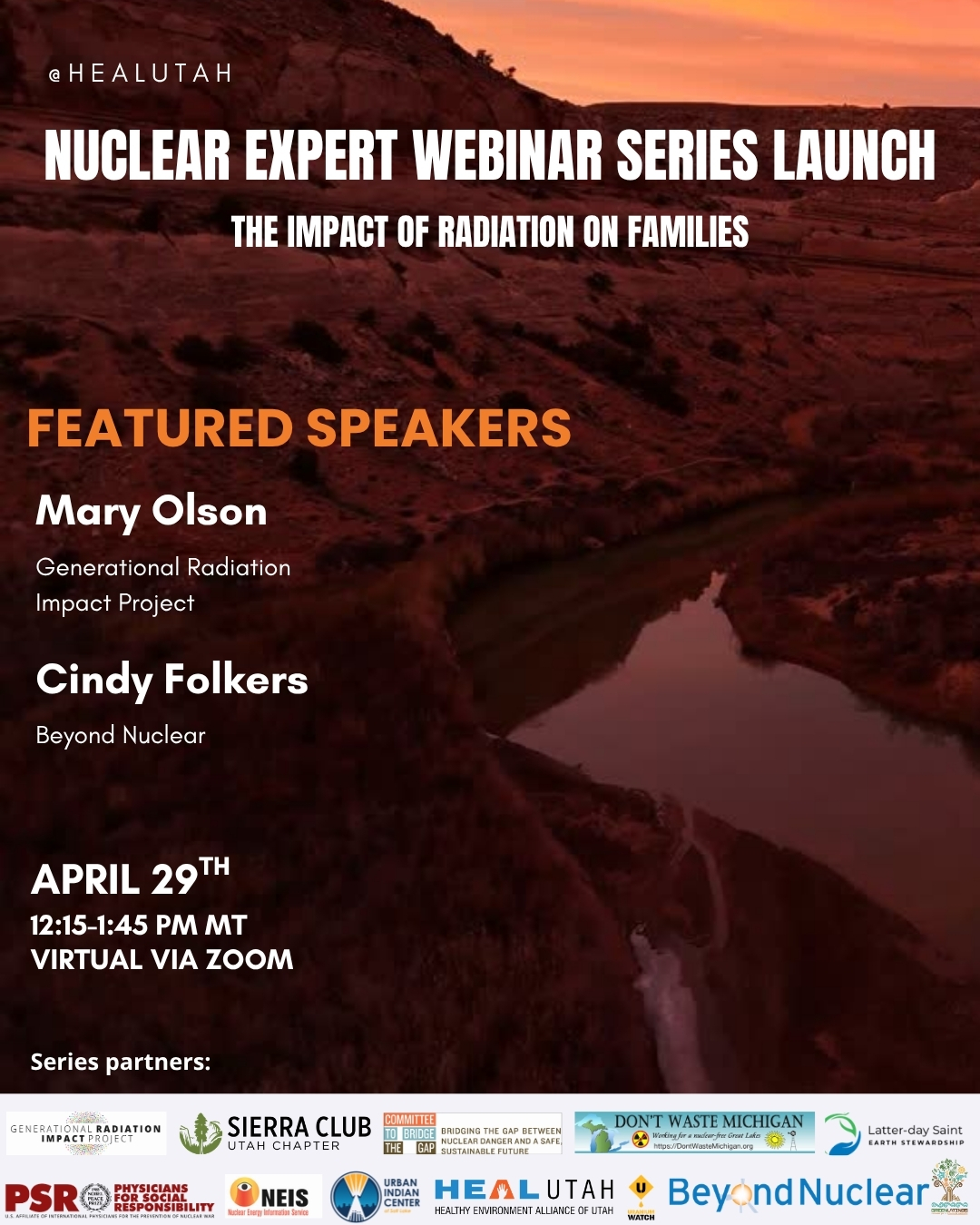
29 April – Nuclear Expert Webinar #1 – Radiation Impacts on Families with Mary Olson and Cindy Folkers
- 12:15 PM MT – 1:45 PM MT
- Location: Virtual – REGISTER TODAY

4 May -West Suburban Peace Coalition to discuss Iran war at May Educational Forum
Monday, May 4, 7:00 – 8:00 PM Central Standard Time
Title: : How Trump’s Narrative Tries to Shape the Reality of the War on Iran.
Contact Walt Zlotow, zlotow@hotmail.com 630 442 3045 for further information
14 May – online event From Bombs to Data Centres: the Face of Nuclear Colonialism
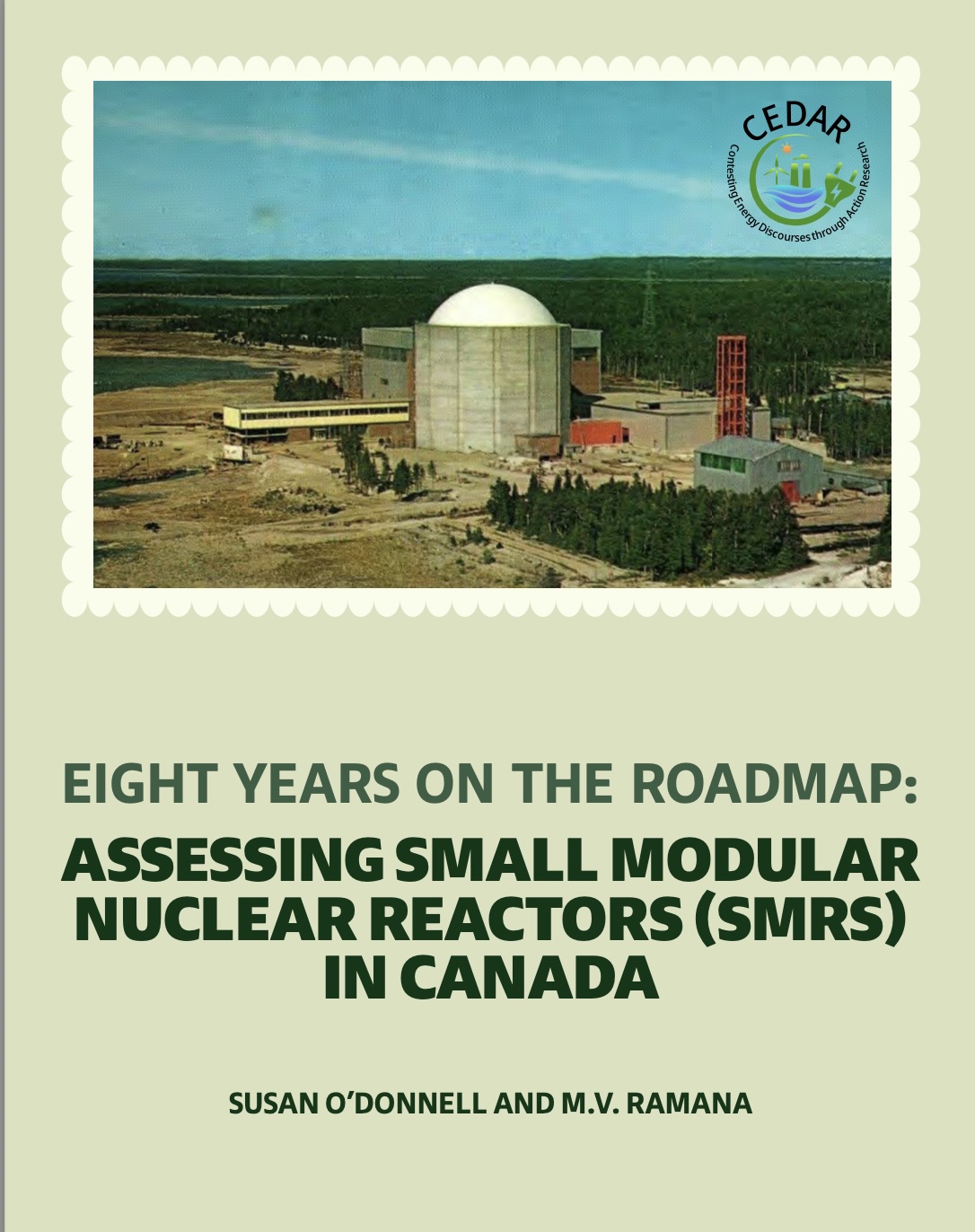

Pine Ridge Uranium is the real threat, not Tehran- Tell Burgum: Stop the Extraction.
Chernobyl: The Lost Tapes – A good documentary on Chernobyl on SBS available On Demand for the next 3 weeks– https://www.sbs.com.au/ondemand/tv-program/chernobyl-the-lost-tapes/2352741955560
To see nuclear-related stories in greater depth and intensity – go to https://nuclearinformation.wordpress.com
-
Archives
- April 2026 (300)
- March 2026 (251)
- February 2026 (268)
- January 2026 (308)
- December 2025 (358)
- November 2025 (359)
- October 2025 (376)
- September 2025 (257)
- August 2025 (319)
- July 2025 (230)
- June 2025 (348)
- May 2025 (261)
-
Categories
- 1
- 1 NUCLEAR ISSUES
- business and costs
- climate change
- culture and arts
- ENERGY
- environment
- health
- history
- indigenous issues
- Legal
- marketing of nuclear
- media
- opposition to nuclear
- PERSONAL STORIES
- politics
- politics international
- Religion and ethics
- safety
- secrets,lies and civil liberties
- spinbuster
- technology
- Uranium
- wastes
- weapons and war
- Women
- 2 WORLD
- ACTION
- AFRICA
- Atrocities
- AUSTRALIA
- Christina's notes
- Christina's themes
- culture and arts
- Events
- Fuk 2022
- Fuk 2023
- Fukushima 2017
- Fukushima 2018
- fukushima 2019
- Fukushima 2020
- Fukushima 2021
- general
- global warming
- Humour (God we need it)
- Nuclear
- RARE EARTHS
- Reference
- resources – print
- Resources -audiovicual
- Weekly Newsletter
- World
- World Nuclear
- YouTube
-
RSS
Entries RSS
Comments RSS
 nuclear-news