The Japanese government told embassy officials from nearly two dozen countries that releasing the water into the ocean was a “feasible” approach that could be done “with certainty.”
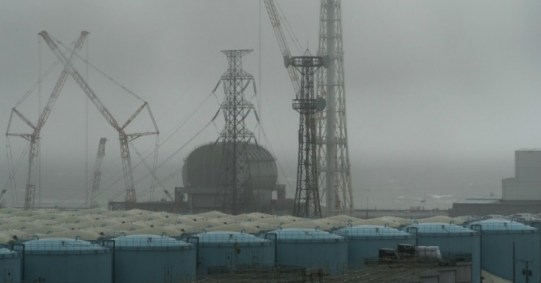
Storage tanks for radioactive water stand at Tokyo Electric Power Co.’s (TEPCO) Fukushima Dai-ichi nuclear power plant on Jan. 29, 2020 in Okuma, Fukushima Prefecture, Japan. Tepco hosted a media tour to the nuclear plant wrecked by an earthquake and tsunami in 2011.
February 03, 2020
As cleanup of the 2011 Fukushima disaster continues, the Japanese government made its case to embassy officials from 23 countries Monday that dumping contaminated water from the nuclear power plant into the ocean is the best course of action.
According toKyodo News, officials from the Ministry of Economy, Trade, and Industry claimed releasing the water and evaporating it are both “feasible methods” but said the former could be done “with certainty” because radiation levels could be monitored.
There’s more than one million tons of contaminated water already stored at the plant, with 170 tons more added each day. Utility TEPCO says there will be no more capacity for tanks holding contaminated water by 2022.
As Agence France-Pressereported, “The radioactive water comes from several different sources—including water used for cooling at the plant, and groundwater and rain that seeps into the plant daily—and is put through an extensive filtration process.”
That process still leaves tritium in the water and “has been found to leave small amounts of other radioactive materials,” Kyodo added.
The session for embassy officials followed Friday’s recommendation by a Japanese government panel that releasing the water into the ocean was the most feasible plan. As Reutersreported Friday:
The panel under the industry ministry came to the conclusion after narrowing the choice to either releasing the contaminated water into the Pacific Ocean or letting it evaporate—and opted for the former. Based on past practice it is likely the government will accept the recommendation.
Local fishermen oppose the plan and Reuters noted it is “likely to alarm neighboring countries.”
They’re not alone.
Nuclear policy expert Paul Dorfman said Saturday, “Releasing Fukushima radioactive water into ocean is an appalling act of industrial vandalism.”
Greenpeace opposes the plan as well.
Shaun Burnie, a senior nuclear specialist the group’s German office, has previously called on Japanese authorities to “commit to the only environmentally acceptable option for managing this water crisis, which is long-term storage and processing to remove radioactivity, including tritium.”
Some experts say the coronavirus crisis is likely to continue for several months, possibly affecting the Tokyo Olympics starting July 24 — a nightmare scenario for Abe, who has tried to use the world’s largest sporting event to promote the Japanese economy and thereby further drum up voters’ support for his government.
According to a simulation by a medical team led by Gabriel Leung, the dean of the University of Hong Kong’s faculty of medicine, the number of infections in five Chinese mega-cities — Beijing, Shanghai, Guangzhou, Shenzhen and Chongqing — would peak between late April and early May, meaning the crisis would still continue further beyond that period.
Tourists stroll near Kiyomizu Temple, a popular sightseeing spot in Kyoto, on Thursday. Japan’s recent tourism boom is being tested amid the coronavirus outbreak.
January 31, 2020
The coronavirus outbreak is posing myriad challenges for the Japanese economy, including a key Abe administration policy initiative — the promotion of inbound tourism.
In recent years, inbound tourism has been one of the few sectors to see rapid growth in the long-stagnant Japanese economy. Top government officials, especially Chief Cabinet Secretary Yoshihide Suga, have touted the country’s “exploding” inbound tourism as a successful example of their “structural reform” deregulation initiatives.
In fact, everything looked to be on track until recently. The number of foreign tourists skyrocketed from 8.36 million in 2012 to 31.88 million in 2019, largely thanks to the yen’s depreciation and Suga’s initiative to ease Japan’s visa conditions for tourists from other Asian countries, most notably China.
Total spending by foreign tourists in Japan likewise surged from an estimated ¥1.1 trillion to ¥4.8 trillion during the same period, with Chinese tourists spending as much as 36.8 percent of total tourism expenditures in 2019, followed by Taiwanese at 11.4 percent and South Koreans at 8.7 percent.
“It has been confirmed that the effects from inbound tourism … is turning into one of the main growth engines of the Japanese economy,” declared the Japan Tourism Agency in its 2018 white paper.
“By becoming a tourism-oriented country, we have created a large and robust industry that is driving regional revitalization throughout Japan,” Prime Minister Shinzo Abe boasted in his annual policy speech in January last year.
But that rosy vision of “a tourism-oriented country” has recently been put in doubt.
Since July, the number of South Korean tourists, typically the second-largest ethnic group among visitors, plummeted by more than 50 percent as nationalistic sentiment in both countries flared up over thorny history and trade issues.
In December, the number of tourists from the country who came to Japan stood at 248,000, down 63.6 percent from the same month in the previous year. Experts had already said it had become impossible for Abe’s government to meet its target of 40 million foreign tourists in 2020.
And then the coronavirus hit. Beijing has taken the extraordinary step to ban all Chinese from going overseas on group tours, effective Jan. 27. The number of Chinese tourists, the largest group by nationality, is expected to fall drastically as a result.
Some experts say the coronavirus crisis is likely to continue for several months, possibly affecting the Tokyo Olympics starting July 24 — a nightmare scenario for Abe, who has tried to use the world’s largest sporting event to promote the Japanese economy and thereby further drum up voters’ support for his government.
According to a simulation by a medical team led by Gabriel Leung, the dean of the University of Hong Kong’s faculty of medicine, the number of infections in five Chinese mega-cities — Beijing, Shanghai, Guangzhou, Shenzhen and Chongqing — would peak between late April and early May, meaning the crisis would still continue further beyond that period.
“The best case scenario, you would have something … where we go through the spring into the summer, and then it dies down,” David Fisman, a professor at the University of Toronto, was quoted as saying by media reports.
During an Upper House Budget Committee session Wednesday, Liberal Democratic Party member Motoyuki Fujii pointed out it took about six months to contain the SARS (severe acute respiratory syndrome) crisis in 2003, which was caused by a similar virus and infected about 8,000 people and killed 774 from Nov. 2002 to Aug. 2003.
The new coronavirus, which was first officially confirmed in Wuhan on Dec. 31, has already infected at least around 9,800 and killed 213, according to the tally compiled by the South China Morning Post as of Friday.
“I’m concerned. … Now we have exactly about six months before the Olympic Games will start in July,” Fujii said.
“I’d like the government to make its maximum efforts to get rid of the effects of the infectious disease by the time we will have the Olympic Games,” he added.
In response, Seiko Hashimoto, the minister in charge of the Olympics and Paralympics, said that “measures against infectious diseases including the new coronavirus are very important” in organizing the event.
“I believe safety and the sense of security must be ensured to make the Tokyo Olympics successful,” Hashimoto said.
It is still probably too early to predict any effects on the Tokyo Games, as many key details of the new coronavirus still remain unknown.
But the outbreak has also highlighted a legal loophole and Japan’s apparent unpreparedness to deal with serious outbreaks of infectious disease in general.
Medical experts were shocked to learn that a carrier of the novel coronavirus could infect others even during the incubation period, when no symptoms are apparent. However, under the law, quarantine officers are not allowed to force a person showing no symptoms to undergo a medical test to determine whether that person is a carrier of a designated infectious disease.
In fact, two Japanese citizens who arrived at Tokyo’s Haneda Airport from Wuhan on a government-chartered airplane Wednesday refused to be tested for the virus. They went home from the airport and did not stay at a housing facility prepared by the government.
“Two people have refused to undergo a virus test. We tried to persuade them for hours but there was no legally binding power. It’s very regrettable,” Prime Minister Shinzo Abe admitted during an Upper House budget committee session Thursday.
On the political front, a setback in the promotion of inbound tourism is likely to deal a heavy blow to Abe as he struggles to carve out a legacy for his administration, which began in December 2012. Abe’s term as the president of the ruling LDP will expire in September next year.
His Abenomics policy mix consists of three main components: ultraloose monetary easing by the Bank of Japan, aggressive fiscal spending by the government and structural economic reforms, most notably deregulation.
Many economists have regarded monetary easing and fiscal spending as temporary measures to buy time, given the ballooning central government debt.
Structural economic reforms, in particular deregulation, is the key to achieve sustainable growth, they say, and promotion of inbound tourism has been often pointed out as one of the few successful cases of Abe’s structural reform initiatives.
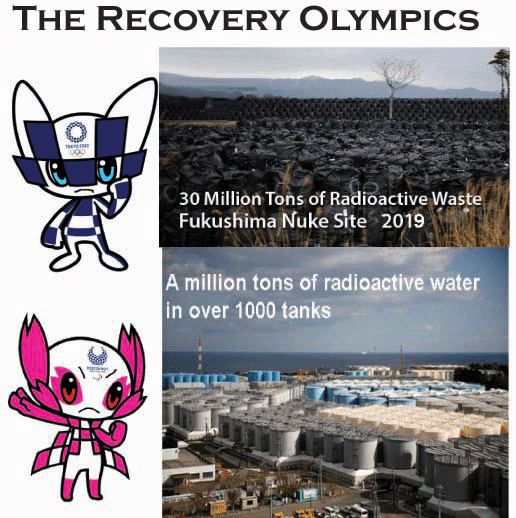
by Shaun Burnie 5 February 2020 As 2020 is the year the Olympics and Paralympics come to Japan, this is an exciting time for sports and for the people of Japan. Amidst all the excitement however, there is the ongoing nuclear crisis in Fukushima prefecture. Labeled as the ‘Reconstruction Olympics’, Prime Minister Abe in 2013 declared that the situation at Fukushima Daiichi was under control. Seven years later there still remains a nuclear emergency at the nuclear plant and surrounding areas. In addition to the enormous challenges of how to safely manage over 1 million tonnes of contaminated water at the site and as much as 880 tonnes of molten nuclear fuel for which there is no credible solution, there remain wider issues regarding radioactive contamination of the environment, its effect on workers and Fukushima citizens, including evacuees and their human rights.
These issues were the subject of a 28 January 2020 documentary broadcast by the U.S. network HBO as an investigative report by the program ‘Real Sports with Bryant Gumbel ’, the U.S.’s most-honored sports journalism series (with 33 Sports Emmy Awards, including 19 for Outstanding Sports Journalism) during the opening episode of its 26th season.
What does it mean to host the Olympics and Paralympics in the context of an ongoing nuclear disaster, the effects of which are still being felt by tens of thousands of Japanese citizens? What does it tell about the Japanese government and its commitment to respecting the values of transparency and the human rights of its citizens? These are some of the important questions raised by HBO and they warrant careful consideration in the months leading up to this year’s summer games.
Greenpeace Japan applauds Olympic values and spirit, while recognizing that the International Olympic Committee (IOC) has the responsibility to ensure the Olympic Games have a minimum impact on the environment and leave a positive legacy for those hosting the Games. The IOC has an opportunity to do this in a way that fulfills the ideals of the environment as the third pillar of Olympism – sustainability – by making the Games a showcase for environmental solutions. Simultaneously, we recognize that hosting the Olympics and Paralympics requires the Japanese Government to ensure absolute safety for athletes, international visitors, and the Japanese public alike.
The decision to host two sporting events in Fukushima city raises genuine and important questions over radiation risks. The route of the Olympic Torch relay in all the municipalities of Fukushima prefecture includes the districts of Iitate, Namie, and Okuma where Greenpeace Japan’s Nuclear Monitoring & Radiation Protection Team has discovered radioactive hotspots, both in the open areas as well as in the remaining radiation exclusion zones, that remain too high even by revised governmental standards. What does all this mean for the hosting of Olympic events, including for athletes and visitors?
By conducting extensive radiation investigations, Greenpeace Japan attempts to explain the complex radiological environment, where nothing is straightforward, and where judging precise risks to health at the individual level is near impossible. In an effort to better understand and explain the radiological situation in parts of Fukushima, as well as the ongoing issues of human rights for both Fukushima citizens and decontamination workers, Greenpeace Japan will be publishing its latest radiation survey results in early March 2020.
Shaun Burnie is Senior Nuclear Specialist at Greenpeace Germany.
UNIVERSITY OF COLORADO AT BOULDER ABRUPT THAWING OF PERMAFROST WILL DOUBLE PREVIOUS ESTIMATES OF POTENTIAL CARBON EMISSIONS FROM PERMAFROST THAW IN THE ARCTIC, AND IS ALREADY RAPIDLY CHANGING THE LANDSCAPE AND ECOLOGY OF THE CIRCUMPOLAR NORTH, A NEW CU BOULDER-LED STUDY FINDS.
Permafrost, a perpetually frozen layer under the seasonally thawed surface layer of the ground, affects 18 million square kilometers at high latitudes or one quarter of all the exposed land in the Northern Hemisphere. Current estimates predict permafrost contains an estimated 1,500 petagrams of carbon, which is equivalent to 1.5 trillion metric tons of carbon.
The new study distinguishes between gradual permafrost thaw, which affects permafrost and its carbon stores slowly, versus more abrupt types of permafrost thaw. Some 20% of the Arctic region has conditions conducive to abrupt thaw due to its ice-rich permafrost layer. Permafrost that abruptly thaws is a large emitter of carbon, including the release of carbon dioxide as well as methane, which is more potent as a greenhouse gas than carbon dioxide. That means that even though at any given time less than 5% of the Arctic permafrost region is likely to be experiencing abrupt thaw, their emissions will equal those of areas experiencing gradual thaw.
This abrupt thawing is “fast and dramatic, affecting landscapes in unprecedented ways,” said Merritt Turetsky, director of the Institute of Arctic and Alpine Research (INSTAAR) at CU Boulder and lead author of the study published today in Nature Geoscience. “Forests can become lakes in the course of a month, landslides occur with no warning, and invisible methane seep holes can swallow snowmobiles whole.”
Abrupt permafrost thaw can occur in a variety of ways, but it always represents a dramatic abrupt ecological shift, Turetsky added.
“Systems that you could walk on with regular hiking boots and that were dry enough to support tree growth when frozen can thaw, and now all of a sudden these ecosystems turn into a soupy mess,” Turetsky said.
Why thawing permafrost matters
Permafrost contains rocks, soil, sand, and in some cases, pockets of pure ground ice. It stores on average twice as much carbon as is in the atmosphere because it stores the remains of life that once flourished in the Arctic, including dead plants, animal and microbes. This matter, which never fully decomposed, has been locked away in Earth’s refrigerator for thousands of years.
As the climate warms, permafrost cannot remain frozen. Across 80 percent of the circumpolar Arctic’s north, a warming climate is likely to trigger gradual permafrost thaw that manifests over decades to centuries.
But in the remaining parts of the Arctic, where ground ice content is high, abrupt thaw can happen in a matter of months – leading to extreme consequences on the landscape and the atmosphere, especially where there is ice-rich permafrost. This fast process is called “thermokarst” because a thermal change causes subsidence. This leads to a karst landscape, known for its erosion and sinkholes.
Turetsky said this is the first paper to pull together the wide body of literature on past and current abrupt thaw across different types of landscapes.
The authors then used this information along with a numerical model to project future abrupt thaw carbon losses. They found that thermokarst always involves flooding, inundation, or landslides. Intense rainfall events and the open, black landscapes that result from wildfires can speed up this dramatic process.
The researchers compared abrupt permafrost thaw carbon release to that of gradual permafrost thaw, trying to quantify a “known unknown.” There are general estimates of gradual thaw contributing to carbon emissions, but they had no idea how much of that would be caused by thermokarst.
They also wanted to find out how important this information would be to include in global climate models. At present, there are no climate models that incorporate thermokarst, and only a handful that consider permafrost thaw at all. While large-scale models over the past decade have tried to better account for feedback loops in the Arctic, the Intergovernmental Panel on Climate Change (IPCC)’s most recent report only includes estimates of gradual permafrost thaw as an unresolved Earth system feedback.
“The impacts from abrupt thaw are not represented in any existing global model and our findings indicate that this could amplify the permafrost climate-carbon feedback by up to a factor of two, thereby exacerbating the problem of permissible emissions to stay below specific climate change targets,” said David Lawrence, of the National Center for Atmospheric Research (NCAR) and a coauthor of the study.
The findings bring new urgency to including permafrost in all types of climate models, along with implementing strong climate policy and mitigation, Turetsky added.
“We can definitely stave off the worst consequences of climate change if we act in the next decade,” said Turetsky. “We have clear evidence that policy is going to help the north and thus it’s going to help dictate our future climate.”
Other coauthors on the paper include researchers from the University of Guelph, Brigham Young University, the United States Geological Survey, University of Alaska Fairbanks, University of Alberta, Northern Arizona University, Alfred Wegener Institute Helmholtz Centre for Polar and Marine Research, University of Potsdam, Stockholm University, Lawrence Berkeley National Laboratory, and the National Center for Atmospheric Research.
•Climate change will result in new risks to nuclear power operations.
•Spent fuel sites will be subject to risks from sea-level rise.
•A long-term spent fuel management plan is needed to mitigate risks.
•Short-term solutions to mitigate risks are recommended.
Abstract
Climate change and its accompanying sea-level rise is set to create risks to the United States’ stockpile of spent nuclear fuel, which results largely from nuclear power. Coastal spent fuel management facilities are vulnerable to unanticipated environmental events, as evidenced by the 2011 tsunami-related flooding at the Fukushima plant in Japan.
We examine how policy-makers can manage climate risks posed to the coastal storage of radioactive materials, and identify the coastal spent fuel storage sites that will be most vulnerable to sea-level rise.
A geospatial analysis of coastal sites shows that with six feet of sea-level rise, seven spent fuel sites will be juxtaposed by seawater. Of those, three will be near or completely surrounded by water, and should be considered a priority for mitigation: Humboldt Bay (California), Turkey Point (Florida), and Crystal River (Florida).
To ensure policy-makers manage such climate risks, a risk management approach is proposed. Further, we recommend that policy-makers 1) transfer overdue spent fuel from cooling pools to dry casks, particularly where located in high risk sites; 2) develop a long-term and comprehensive storage plan that is less vulnerable to climate change; and 3) encourage international nuclear treaties and standards to take climate change into account.
The leading Democrats on the House and Senate Foreign Relations Committees are urging President Trump to strike a renewed nuclear arms treaty with Russia as the last such treaty between the two nuclear powers is set to expire in one year.
In a statement Wednesday, Rep. Eliot Engel of New York and Sen. Robert Menendez of New Jersey called on Mr. Trump to negotiate an extension with Russian President Vladimir Putin to continue the New Strategic Arms Reduction Treaty (New START) for an additional five years.
“This treaty has constrained Russia’s nuclear forces, provided strong and detailed verification measures to ensure Russia adheres to its commitments, and allowed the United States the flexibility to maintain a safe, secure, modern, and effective nuclear deterrent,” the members wrote.
They highlighted data exchanges and on-site inspections of nuclear facilities that are authorized under the Obama-era treaty that “provide unique insights into Russia’s nuclear forces and greatly assist our military in carrying out its deterrence mission.”
The U.S. and Moscow are the major signatories of the treaty, which limits the number of deployable American and Russian nuclear weapons to no more than 1,550.
The White House already pulled the U.S. out of the Intermediate-Range Nuclear Forces (INF) Treaty with Russia dealing with shorter-range “tactical” nuclear weapons, over what the U.S. says is Moscow’s continued noncompliance with the terms of the Cold War-era pact.
Mr. Putin has opened the door to immediately extending the treaty, which is set to expire in February 2021
The church released a draft document outlining its stance on the blessing of Orthodox Christians “for the performance of military duty” and “defense of the Fatherland.”
Russian priests have longed sprinkled holy water on various weapon systems, including submarines, ballistic missiles and space rockets, among others.
“It is not reflected in the tradition of the Orthodox Church and does not correspond to the content of the Rite of blessing of military weapons, and therefore, the use of this order to “sanctify” any kind of weapon, the use of which could lead to the death of an undetermined number of people, including weapons, should be excluded from pastoral practice indiscriminate action and weapons of mass destruction,” the church wrote.
The proposal noted the blessing of military vehicles used on land, air and sea is not the “blessing of guns, rockets or bombing devices that the Lord is asking for, but the protection of soldiers.”
The proposals will be discussed on June 1 and the public is being asked to weigh in the debate, Reuters reported.
The request comes as the church and the Russian military continue to forge close ties. The armed forces are building a sprawling cathedral at a military park outside Moscow
A faction of clergy within the Russian Orthodox Church wants to end the eyebrow-raising practice of blessing the country’s nuclear missiles.
First of all, yes: Russian priests currently sprinkle holy water on nuclear missiles as part of an old tradition in which Orthodox priests bless soldiers and their weapons, reports Religion News Service. But that may change, as some priests feel that intercontinental ballistic missiles belong in a different category from individual firearms.
Faith Militant
The Russian military and the Russian Orthodox church have long worked hand in hand, according to RNS, framing many of the country’s military conflicts as holy wars. The nuclear arsenal even has its own patron saint — RNS reports that St. Seraphim’s remains were found in a Russian town that housed several nuclear facilities.
As such, the push to stop blessing nukes faces strong opposition among members of the clergy, such as the high-ranking priest Vsevolod Chaplin, who referred to the country’s nukes as “guardian angels.”
“Only nuclear weapons protect Russia from enslavement by the West,” Chaplin once said, per RNS.
Changing Hearts
One priest, Dmitry Tsorionov, parted from the more militant aspects of the Orthodox Church after seeing men willingly sign up to fight Russia’s wars “under the banner of Christ,” he told RNS. Now he wants to see less warmongering among the clergy.
“It was not uncommon to see how church functionaries openly flirted with these toxic ideas,” he told RNS. “It was only then that I finally realized what the blessing of military hardware leads to.”
Ontario Power Generation says ‘no’ to proposed nuclear waste disposal site following opposition from Saugeen FN Manitoulin Expositor, By Michael Erskine, February 5, 2020 SAUGEEN FIRST NATION – The Saugeen Ojibway Nation (comprised of the Chippewas of Saugeen First Nation and the Chippewas of Nawash Unceded First Nation) were asked to vote on a proposal to host a deep geologic repository (DGR) close to the shores of Lake Huron on the site of the Bruce nuclear power station. The response of the band membership was a resounding no, with 1,058 no votes out of 1,232 total votes (170 voted yes, with four spoiled ballots).
“This vote was an historic milestone and momentous victory for our people,” said Ogimaa Lester Anoquot in a release following the vote on Saturday. “We worked for many years for our right to exercise jurisdiction in our territory and the free, prior and informed consent of our people will be recognized.”
Ontario Power Generation (OPG) spokesperson Fred Kuntz accepted the result, noting that “OPG respects the decision of the SON community. We followed the SON process. So we will uphold our 2013 commitment not to proceed with the DGR at the Bruce site without their support, and now we will move forward to develop an alternate solution.”
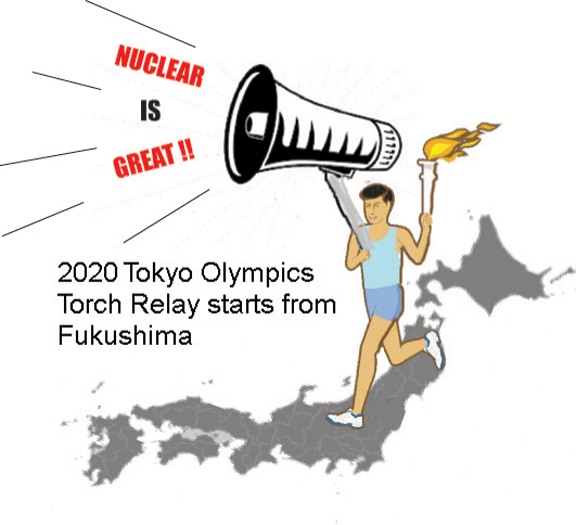
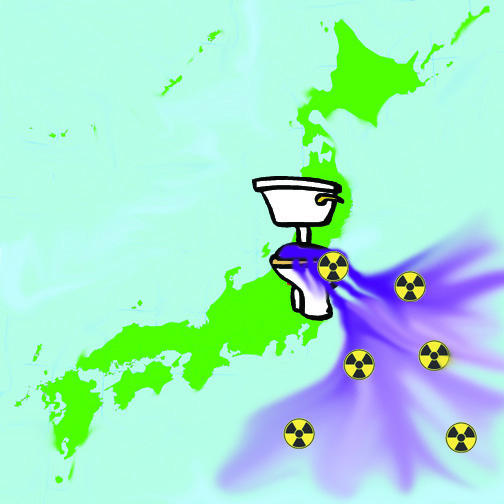
As the 2020 Tokyo Olympics draw closer, the Japanese government redoubles its efforts to downplay any radioactive problems to health and safety . Fukushima is the location for the start of the torch relay, and for some Olympic events. But radioactive trash bags are a defining feature of the Fukushima landscape. And Japan now plans to release over a million tonnes of radioactive water into the sea from the Fukushima power plant, as the radioactive water continues to accumulate.
Westinghouse will acquire the Rolls-Royce Civil Nuclear Systems and Services’ 11 locations in Canada, France, the United Kingdom and the United States.
Surplus nuclear power has become an embarrassment. Inflexible baseload power no longer needed.
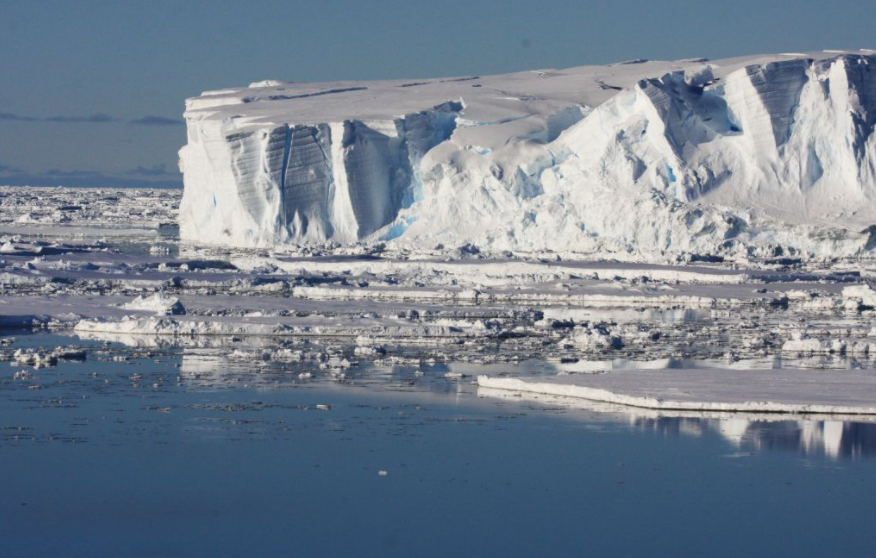
ARCTIC.Why Arctic glaciers are melting away at an accelerating rate.
As cleanup of the 2011 Fukushima disaster continues, the Japanese government made its case to embassy officials from 23 countries Monday that dumping contaminated water from the nuclear power plant into the ocean is the best course of action.
According toKyodo News, officials from the Ministry of Economy, Trade, and Industry claimed releasing the water and evaporating it are both “feasible methods” but said the former could be done “with certainty” because radiation levels could be monitored.
There’s more than one million tons of contaminated water already stored at the plant, with 170 tons more added each day. Utility TEPCO says there will be no more capacity for tanks holding contaminated water by 2022.
As Agence France-Pressereported, “The radioactive water comes from several different sources—including water used for cooling at the plant, and groundwater and rain that seeps into the plant daily—and is put through an extensive filtration process.”
That process still leaves tritium in the water and “has been found to leave small amounts of other radioactive materials,” Kyodo added.
The session for embassy officials followed Friday’s recommendation by a Japanese government panel that releasing the water into the ocean was the most feasible plan. As Reutersreported Friday:
The panel under the industry ministry came to the conclusion after narrowing the choice to either releasing the contaminated water into the Pacific Ocean or letting it evaporate—and opted for the former. Based on past practice it is likely the government will accept the recommendation.
Local fishermen oppose the plan and Reuters noted it is “likely to alarm neighboring countries.”
They’re not alone.
Nuclear policy expert Paul Dorfman said Saturday, “Releasing Fukushima radioactive water into ocean is an appalling act of industrial vandalism.”
Greenpeace opposes the plan as well. Shaun Burnie, a senior nuclear specialist the group’s German office, has previously called on Japanese authorities to “commit to the only environmentally acceptable option for managing this water crisis, which is long-term storage and processing to remove radioactivity, including tritium.
In recent years there’s been a seismic shift on climate change within the weather reporting community. MADDIE STONETHIS piece was originally published in Grist and appears here as part of our Climate Desk PARTNERSHIP.
For many years, as the science of human-caused climate change grew ever clearer, TV meteorologists avoided discussing the topic on air. Today, many weathercasters bring up climate change regularly. By embracing the science and presenting it in a simple, locally-relevant manner, TV meteorologists have managed to become some of the most effective and trustworthy climate change educators in the country.
Now some meteorologists are taking the conversation a step further and talking not just about the science of climate change, but how we can solve it.
At the 100th annual meeting of the American Meteorological Society (AMS) in Boston earlier this month, a panel of broadcast meteorologists, climate communicators, and policy experts assembled to discuss how solutions to the climate crisis can be woven into TV weather reporting. While wading into politics on the air can carry career risks for many meteorologists, weathercasters are also uniquely positioned to educate the public about climate solutions in a nonpartisan way, whether that’s by delivering locally tailored forecasts of renewable power production or discussing climate resilience strategies in the wake of a major storm.
“Broadcasters have an unusually good platform from which to engage,” said Ed Maibach, the director of the Center for Climate Change Communication at George Mason University, during the panel. “You not only have the access but consistency of relationships with an audience.”
In recent years there’s been a seismic shift on climate change within the weather reporting community. In a 2011 survey of AMS members and the National Weather Association, less than 20 percent felt sure humans are the primary driver of global warming, a statistic that Maibach attributes, in part, to an “aggressive misinformation campaign by the Heartland Institute,” a climate change–denying think tank. But by 2017 that figure had jumped to 80 percent. That’s thanks largely to the efforts of the educators who organized Climate Matters, a climate reporting resource developed by the nonprofit Climate Central, the AMS, and various governmental and academic partners
Alfred Wegener Institute, Helmholtz Centre for Polar and Marine Research
Summary:
The Greenland Ice Sheet is melting faster today than it did only a few years ago. The reason: it’s not just melting on the surface — but underwater, too. AWI researchers have now found an explanation for the intensive melting on the ice’s underside, and published their findings in the journal Nature Geoscience.
The glaciers are melting rapidly: Greenland’s ice is now melting seven times faster than in the 1990s — an alarming discovery, since climate change will likely intensify this melting in the future, causing the sea level to rise more rapidly.
Accordingly, researchers are now working to better understand the underlying mechanisms of this melting. Ice melts on the surface because it is exposed to the sun and rising temperatures. But it has now also begun melting from below — including in northeast Greenland, which is home to several ‘ice tongues’. Each tongue is a strip of ice that has slid down into the ocean and floats on the water — without breaking off from the land ice. The longest ice tongue, part of the ’79° North Glacier’, is an enormous 80 km long. Over the past 20 years, it has experienced a dramatic loss of mass and thickness, because it’s been melting not just on the surface, but also and especially from below.
Too much heat from the ocean
A team led by oceanographer Dr Janin Schaffer from the Alfred Wegener Institute, Helmholtz Centre for Polar and Marine Research (AWI) in Bremerhaven has now identified the source of this intense underwater melting. The conclusions of their study, which the experts have just released in the journal Nature Geoscience, are particularly unsettling because the melting phenomenon they discovered isn’t unique to the 79° North Glacier, which means it could produce similar effects elsewhere. For the purposes of the study, the researchers conducted the first extensive ship-based survey of the ocean floor near the glacier, which revealed the presence of a two-kilometre-wide trough, from the bottom of which comparatively warm water from the Atlantic is channelled directly toward the glacier. But that’s not all: in the course of a detailed analysis of the trough, Janin Schaffer spotted a bathymetric sill, a barrier that the water flowing over the seafloor has to overcome. Once over the hump, the water rushes down the back of the sill — and under the ice tongue. Thanks to this acceleration of the warm water mass, large amounts of heat from the ocean flow past the tongue every second, melting it from beneath. To make matters worse, the layer of warm water that flows toward the glacier has grown larger: measured from the seafloor, it now extends 15 metres higher than it did just a few years ago. “The reason for the intensified melting is now clear,” Schaffer says. “Because the warm water current is larger, substantially more warmth now makes its way under the ice tongue, second for second.”
Other regions are also affected
In order to determine whether the phenomenon only manifests at the 79° North Glacier or also at other sites, the team investigated a neighbouring region on Greenland’s eastern coast, where another glacier, the Zachariæ Isstrøm, juts out into the sea, and where a large ice tongue had recently broken off from the mainland. Working from the surface of an ice floe, the experts measured water temperatures near the ocean floor. According to Schaffer: “The readings indicate that here, too, a bathymetric sill near the seafloor accelerates warm water toward the glacier. Apparently, the intensive melting on the underside of the ice at several sites throughout Greenland is largely produced by the form of the seafloor.” These findings will ultimately help her more accurately gauge the total amount of meltwater that the Greenland Ice Sheet loses every year.
Build-up of contaminated water from wrecked nuclear plant has been sticking point in clean-up likely to take decades, A panel of experts advising Japan’s government on a disposal method for radioactive water from the destroyed Fukushima nuclear plant has recommended releasing it into the ocean, a move likely to alarm neighbouring countries.
The panel, under the industry ministry, came to the conclusion after narrowing the choice to either releasing the contaminated water into the Pacific Ocean or letting it evaporate – and opted for the former. Based on past practice, it is likely the government will accept the recommendation.
The build-up of contaminated water at Fukushima has been a sticking point in the clean-up, which is likely to last decades, especially as the Olympics are due to be held in Tokyo this year with some events less than 60km (35 miles) from the wrecked plant.
Neighbouring South Korea has retained a ban on imports of seafood from Japan’s Fukushima region imposed after the nuclear disaster and summoned a senior Japanese embassy official last year to explain how the Fukushima water would be dealt with. Its athletes are planning to bring their own radiation detectors and food to the Games.
In 2018, Tokyo Electric apologised after admitting its filtration systems had not removed all dangerous material from the water, and the site is running out of room for storage tanks.
But it plans to remove all radioactive particles from the water except tritium, an isotope of hydrogen that is hard to separate and is considered to be relatively harmless.
“Compared to evaporation, ocean release can be done more securely,” the committee said, pointing to common practice around the world where normally operating nuclear stations release water that contains tritium into the sea.
The recommendation needs to be confirmed by the head of the panel, Nagoya University professor emeritus Ichiro Yamamoto, and submitted to the government at a later date that has not been set.
Tokyo Electric, or Tepco, has collected nearly 1.2m tonnes of contaminated water from the cooling pipes used to keep fuel cores from melting since the plant was crippled by an earthquake and tsunami in 2011. The water is stored in huge tanks that crowd the site.
The utility says it will run out of room to store the water by 2022.
Backstory: Inside the destroyed Fukushima plant – radiation, risk and reporting, 29 Jan 2020,
By Aaron Sheldrick, OKUMA, Japan (Reuters) – Reuters was recently given exclusive access to Japan’s Fukushima nuclear plant, where three reactors melted down in 2011 after a powerful earthquake and tsunami overwhelmed the seaside facility.
It was my fourth visit to the plant since the disaster to report on a massive clean-up. Work to dismantle the plant has taken nearly a decade so far, but with Tokyo due to host the Olympics this summer – including some events less than 60 kilometers (38 miles) from the power station – there has been renewed focus on safeguarding the venues.
Nearly 10 years into the decades-long clean-up some progress has been made, with potentially dangerous spent fuel removed from the top of one damaged reactor building and removal underway from another.
But the melted fuel inside the reactors has yet to be extracted and areas around the station remain closed to residents. Some towns have been reopened further away but not all residents have returned.
This time I was taken to the site’s water treatment building, a cavernous hall where huge machines called Advanced Liquid Processing Systems (ALPS) are used to filter water contaminated by the reactors.
On my first visit in 2012 I had to wear full protective gear put on at an operations base located in a sports facility about 20 kilometers south of Fukushima Daiichi called J-Village, where the Olympic torch relay will start in March, then taken to the site by bus.
This time I was driven by van from a railway station in Tomioka, a town re-opened in 2017, about 9 kilometers away with no precautions. More than 90% of the plant is deemed to have so little radioactivity that few precautions are needed. Nevertheless, reporting from there was not easy.
Before entering the plant itself, which is about the size of 400 football fields, I was asked to take off my shoes and socks, given a dosimeter – a device that measures radiation levels – three pairs of blue socks, a pair of cloth gloves, a simple face mask, a cotton cap, a helmet and a white vest with clear panels to carry my equipment and display my pass.
I put on all three pairs of socks and the rest of the gear given to me, later including rubber boots. I was to change in and out of different pairs of these boots many times – I lost count – color coded according to the zone we passed through, each time putting them in plastic bags that would be discarded after use.
After reaching the ALPS building in a small bus, I was decked out in protective equipment, a full-body Du Pont Tyvek suit along with two sets of heavy surgeon-like latex gloves that were taped fast to the outfit.
I also had to put on a full-face mask after taking off my spectacles since it would not fit otherwise and told to speak as loudly as possible due to the muffling effect of the gear ……..
About 4,000 workers are tackling the cleanup at Fukushima, including dismantling the reactors. Many wear protective gear for entering areas with higher radiation.
The plant resembles a huge construction site strewn in areas with twisted steel and crumpled concrete, along with cars that can no longer be used, while huge tanks to hold water contaminated by contact with the melted fuel in the reactors increasingly crowd the site.












 nuclear-news