Rally opposes proposal for Fukushima radioactive wastewater
July 12, 2020
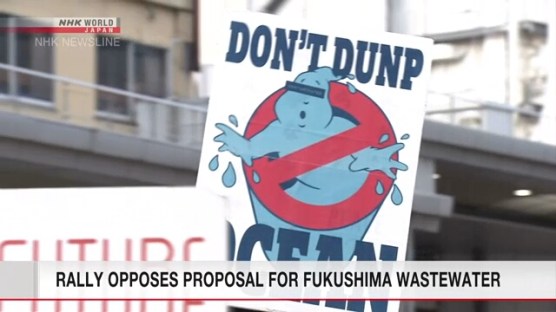
Dozens of young people in Japan’s Fukushima Prefecture have rallied against a government panel’s proposal on how to dispose of radioactive wastewater stored at the crippled Daiichi nuclear power plant.
About 50 people, including fisheries workers, marched through Koriyama City on Sunday.
The demonstration was organized by a group of Fukushima residents in their 20s and 30s, who said detrimental rumors about the prefecture may circulate if the wastewater is disposed of improperly.
Group representative Sato Taiga said a survey shows that most respondents do not know about the issue. He added that he hopes the group’s activities will raise awareness among people, including the younger generation.
Water used to cool molten nuclear fuel from the 2011 accident at the plant has most of the radioactive materials removed before being stored in tanks. But the treated water still contains tritium and some other radioactive substances.
The amount stored has reached some 1.2 million tons. The plant’s operator, Tokyo Electric Power Company, expects to reach capacity around the summer of 2022.
In February, a government panel compiled a report that says a realistic solution is releasing the wastewater into the sea or air after diluting it in compliance with environmental and other standards.
The government is in the process of hearing opinions from local governments and relevant organizations before making its final decision on how to dispose of the treated water.
Video Testimonies from Fukushima in 7 Languages: “We want to protect the ocean of Fukushima, for the future of the fishing industry”
July 11, 2020
Peace Boat has cooperated with the environmental NGO Friends of the Earth Japan (FoE Japan) to launch the next in their series of video testimonies of the current situation in Fukushima in various languages.
Nine years have passed since the Fukushima Nuclear Power Plant Disaster, and the damage continues to be incurred. Although this disaster is still ongoing, efforts are made to render this invisible. FoE Japan has conducted video interviews with evacuees, dairy farmers, fishermen and other community members in order to make the ongoing impacts more known as part of the “Fukushima Mieruka Project.”
The next multilingual installment in this series includes interviews with fishermen from Fukushima, who have been pushed back and forth by the policies of the Japanese Government and TEPCO, and who hold great concerns for their future. These are being released simultaneously in English, French, Spanish, Chinese (simplified and traditional), Korean and German, as well as Japanese.
The fishermen interviewed told us that they are still struggling to sell their fish due to the impacts of the nuclear accident. They are working to restore confidence step by step, by conducting efforts such as test operations and radiation monitoring themselves. However, the Japanese Government and TEPCO have launched a plan to discharge large amounts of radioactive contaminated materials generated at the Fukushima Daiichi nuclear power plant, including tritium, into the ocean.
“From now, our worry is the problems for successors. If an unexpected fish is found in the future, the young generation will really suffer, those in the fishing industry. Really. It’s a life-or-death matter.”
Please listen to the voices of concern and anger of the Fukushima fishermen (12mins 31 sec).
https://www.youtube.com/watch?v=zSVu_52u7z8&feature=emb_logo
Click on the name of each language to watch the clip on Youtube:
- English
- French
- Korean
- Chinese (traditional)
- Chinese (simplified)
- German
- Japanese
- Spanish (coming soon)
See here for a Q&A of more information on Japanese government plans to release contaminated water into the ocean here.
Sign the petition demanding that contaminated water being stored at the Fukushima Daiichi Nuclear Power Station NOT be discharged into the sea, and instead stored on land and solidified via change.org here
Regulator demands TEPCO clarify responsibilities
July 10, 2020
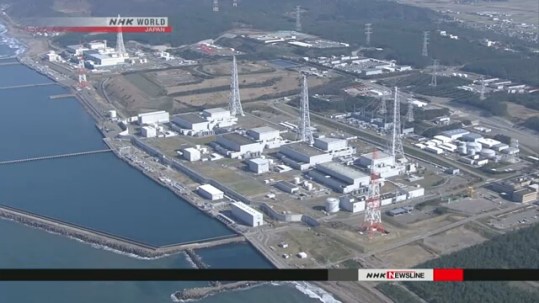
Japan’s nuclear regulator has demanded Tokyo Electric Power Company clarify the responsibilities of its president in the event of a nuclear accident.
Three years ago, the Nuclear Regulation Authority endorsed safety measures at TEPCO’s two nuclear reactors at the Kashiwazaki-Kariwa plant in Niigata Prefecture.
The regulator then requested that the company lay out its policies for preventing another nuclear accident in the plant security rulebook. The company had several years earlier been at the heart of the 2011 Fukushima Daiichi nuclear disaster.
On Thursday, TEPCO officials told the regulator that they would include a clause stipulating that the president be quickly informed of any risk with the potential to lead to an accident. The clause also stipulates that the president address the issue, regardless of whether the risk has been confirmed or not.
The officials also said records related to such issues would be kept for five years.
But the regulation authority says the storage period should be longer. It also says the responsibilities of the president should be laid out more specifically.
They are also demanding written opinions from law experts on the matter. Tokyo Electric says it will reconsider these measures.
Regulators want TEPCO to be as specific in its safety measures as possible, after the company rejected a report warning of the possible impact of a massive tsunami before the 2011 Fukushima Daiichi nuclear disaster.
Review: “Fukushima 50” Offers Uncontroversial Take On Japan’s Biggest Nuclear Disaster
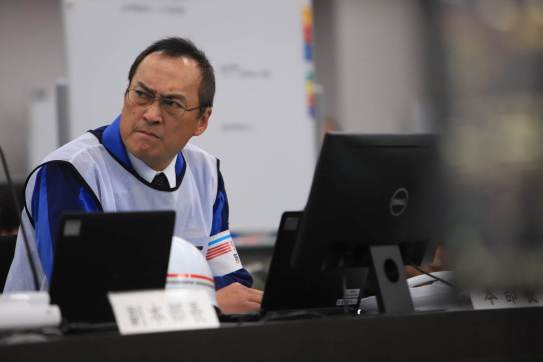 Starring Ken Watanabe, “Fukushima 50” avoids controversy as part of faithfully reflecting Japanese realities around Fukushima Daiichi.
By Anthony Kao, 9 Jul 2020
“3.6 roentgen, not great, not terrible.” So goes the now-famous quip from the American HBO hit series Chernobyl. This line also bears relevance to Fukushima 50—the first blockbuster treatment of the world’s second-worst nuclear disaster at Japan’s Fukushima Daiichi power plant.
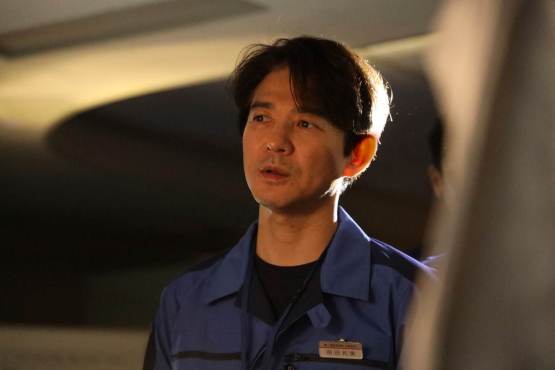
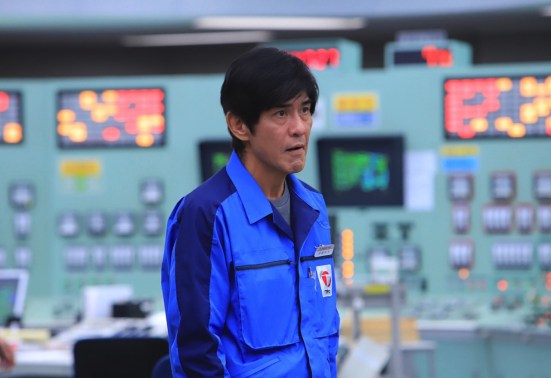
Starring A-listers Ken Watanabe and Koichi Sato, the film lionizes the workers who prevented the Fukushima disaster from getting worse, and makes the incident accessible to general audiences. On that count, it’s “not terrible.” However, Fukushima 50 lacks nuance, poignancy, and dramatic value—mostly because it refuses to designate clear villains. In that sense, it’s “not great” either.
While this might mean Fukushima 50 will never gain the international popularity of Chernobyl, the movie is still immensely valuable and intriguing from a historiographical perspective. For better or for worse, its uncontroversial demeanor accurately reflects realities in contemporary Japanese sociopolitical discourse around the Fukushima Daiichi disaster and beyond.
Nuclear Heroism
Fukushima 50 focuses on an eponymous group of employees at the Fukushima Daiichi power plant, who were tasked with managing a triple meltdown that happened in the days after March 2011’s Tohoku earthquake and tsunami. Chief among them are Masao Yoshida (Ken Watanabe) and Toshio Isaki (Koichi Sato), the plant’s site superintendent and shift supervisor, respectively. While Yoshida was a real person, Isaki and all the film’s other characters are fictional composites.
The film offers a play-by-play dramatization of the Fukushima Daiichi disaster, starting from just before the earthquake and continuing through the days afterwards. It alternates between scenes of the stricken plant itself, a seismically sheltered command center, and ancillary locations like the Japanese Prime Minister’s office and even a US military base.
Throughout, we’re treated to a panoply of tough and selfless men. They rush spiritedly into reactor rooms, haul fire hoses, subsist on dry food, and stare steely-eyed into the face of disaster. These are men on the move, men of action—valiant warriors (some literal, as Japan’s Self Defense Forces feature prominently) fighting an invisible enemy. You don’t need a Ph.D. in nuclear engineering to understand Fukushima 50, just a capacity for hero worship and ability to appreciate war movie tropes.
“The Generation That Lived For Others”
This lionization of the Fukushima Daiichi plant workers isn’t surprising. Fukushima 50 was based on a book called On the Brink: The Inside Story of Fukushima Daiichi, which is available in English. In the book’s foreword, author Ryusho Kadota declares that “this is the story of the people who fought a heroic battle.” Unlike contemporary Japan’s predominantly selfish youth, Kadota argues, the Fukushima 50 are reminiscent of Japan’s WWII veterans, “the generation that lived for others.”
Piggybacking aboard war metaphors restricts Fukushima 50’s capacity for nuance and poignance. Unlike Chernobyl—with its bleak cinematography, bone-chilling use of geiger counter clicks, and soulless evacuation announcements—Fukushima 50 does nothing to convey the trauma and mental toll of disaster. Additionally, for a movie that’s supposed to dramatize a “heroic battle,” Fukushima 50 lacks a compelling villain, even an abstract one. While Chernobyl warns about the cost of lies, Fukushima 50 warns about nothing at all. What caused the disaster? Is nuclear power bad? Should we invest more money in disaster preparedness? Fukushima 50 remains as silent as radiation.
Furthermore, the film barely contains the human tension usually necessary for compelling drama. There are only two notable moments when characters disagree about something: first when the Prime Minister helicopters into Fukushima and delays recovery operations, and second when superintendent Yoshida disobeys the Tokyo Electric Power Company’s (TEPCO) orders and uses seawater to help cool Fukushima Daiichi’s reactors. Even those moments occur so perfunctorily that they don’t give the narrative much added momentum.
Fukushima Historiography
Fukushima 50 might not be the dramatic masterpiece that Chernobyl was, but that doesn’t mean it’s any less valuable from a historical and political perspective. The film’s reluctance to hold anyone accountable and embrace of militaristic sentiment reflects contemporary Japanese realities; in that sense it can serve as an entrypoint for international audiences to build a better understanding of Japan.
Almost a decade on, Japan has not held anybody criminally responsible for the Fukushima Daiichi disaster, and many who had to evacuate because of the meltdowns lack closure. After a brief upsurge following the disaster, Japan’s anti-nuclear movement has fizzled out as well. International and Japanese sources argue that nothing has meaningfully changed in Fukushima’s wake.
All this is despite civil lawsuits, international investigations, and even a report from Japan’s Diet (the national legislature) arguing that the disaster was “man made”—a result of inadequate preparedness and collusion between regulators, government officials, and TEPCO.
Some external analysts argue that moving forward from Fukushima can only come with a comprehensive re-examination of economic and political structures created by decades of effective one-party rule in Japan. While Japan is officially a democracy, the Liberal Democratic Party (LDP) has held power for all but several years after World War II. The LDP remains in power today under Prime Minister Shinzo Abe, with desires to maintain the nuclear status quo whilst separately imbuing Japan with a more militaristic spirit. While Abe’s government wants to make Japan’s economy more agile, a radical rethinking of Japan’s political economy and culture isn’t on the agenda. Perhaps Fukushima 50 is simply a reflection of this reality.
“Not Great, Not Terrible”
When “3.6 roentgen, not great, not terrible” appears in Chernobyl, it comes with the implication of those in power refusing to address a more systemic problem. With this extra lens, the quote seems even more relevant to Fukushima 50. Not only is the movie “not great, not terrible,” but its controversy-avoiding blockbuster treatment also reflects the lack of meaningful change that’s happened after the Fukushima Daiichi disaster.
Critics of this stance might argue that Chernobyl has far more leeway than Fukushima 50 to criticize; it’s easier for an American series that caters to primarily Western audiences to cast doubt on a foreign Soviet system. Yet Chernobyl wasn’t a pure critique of the Soviet Union. The series gained mass acclaim because it skewered contemporary Western societies’ disregard for truth.
While Japan isn’t the most conducive environment for political movies, it’s not incapable of producing movies that reflect upon the past with nuance and poignancy. Just look at Grave of the Fireflies, one of the most renowned examinations of WWII from anywhere in the world.
Alas, Fukushima 50 is no Grave of the Fireflies or Chernobyl, and that’s regrettable given Japan’s historical moviemaking prowess.
Japanese audiences might still be able to enjoy Fukushima 50 simply because it’s the first cinematic depiction of a significant national disaster. Those interested in Japanese politics or nuclear energy policy may find Fukushima 50 rich with food for thought. However, international audiences looking for a second Chernobyl should adjust their expectations accordingly.
https://www.cinemaescapist.com/2020/07/review-fukushima-50-movie/
Remembering the victims of the atomic bombings 75 years ago — IPPNW peace and health blog

As we recall the unprecedented horrors that the citizens of Hiroshima and Nagasaki experienced on August 6 and 9, 1945, we reaffirm the determination of our organizations to ensure that nuclear weapons are never used again. There is no vaccine against the deadly threat of nuclear war, which could prove to be humanity’s “final epidemic.” We therefore call on all nations to join the 2017 Treaty on the Prohibition of Nuclear Weapons.
Remembering the victims of the atomic bombings 75 years ago — IPPNW peace and health blog
Do YOU think YOU should Fund Small Modular Nuclear Reactors? —

The Engineer asks… “Do you welcome the government’s investment in AMR (“Advanced Modular Reactor”) technology? Do you think small scale nuclear is a distraction from critical large scale projects? Or perhaps you think that nuclear shouldn’t be part of our future energy mix at all. Have your say in our poll below.“ NO! I don’t […]
Do YOU think YOU should Fund Small Modular Nuclear Reactors? —
The complexities and pitfalls of citizen science
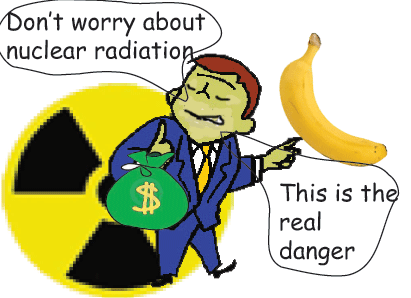
One such tactic, which was witnessed after Fukushima, occurred through the reframing of radiation risks as simplistic and natural, unrelated to the specific risks associated with Fukushima. For instance, the government distributed pamphlets that explained that radiation naturally exists in our food, ch as the potassium levels present in bananas.
Yet such information is irrelevant to the hazards of internalizing fission products from a nuclear power plant. While bananas have naturally occurring potassium, it would require eating around 20 million bananas to get radiation poisoning. On the other hand, each radionuclide released during nuclear meltdown events like Fukushima possesses specific biological signatures and presents particular risks when inhaled or ingested.
Being Clear-Eyed About Citizen Science in the Age of COVID-19, Sapiens MAXIME POLLERI / 15 JUL 2020
“……..there are inherent political complexities involved when citizens or nongovernmental organizations step in and claim expertise in areas typically reserved for state agencies and experts. Like those entities, citizen science has its own potential pitfalls.
For one, corporate polluters or state agencies can potentially exploit citizen science, delegating the monitoring of contamination to the victims of a disaster. For instance, by the end of this year, Japan’s Nuclear Regulation Agency plans to remove 80 percent of radiation monitoring posts in Fukushima, arguing that the radiation levels in many areas have stabilized themselves—owing also in part to the presence and efficiency of monitoring networks provided by citizens. This decision has been controversial, since problems of radioactive contamination persist in Fukushima. For instance, one of the main radioactive pollutants, Cesium-137, has a long lifespan and can emit radiation for nearly 300 years.
Retiring these posts will force citizen scientists to take on the burden of monitoring, shifting liability for ensuring safe living conditions onto the shoulders of the nuclear victims. In addition, the growing impact of citizen science can lead to reduced public expenditure, minimal government intervention, and risk privatization, meaning that risk becomes individual and private. Too much delegation to citizens runs the risk of creating societies where individuals have to take care of themselves in increasingly polluted environments, while interpreting complex data about controversial environmental dangers. And not every community can afford to purchase expensive monitoring devices or test food in a consistent manner.
Citizen scientists also risk reproducing forms of ignorance around certain hazards. n post-Fukushima Japan, what is meant by the “science” of citizen science is often synonymous with a tracking and monitoring agenda, where individuals resort to the very same technologies and knowledge forms used by states, nuclear lobbies, or radiological protection agencies.
Yet many anthropologists and historians have argued that what we know (and don’t know) about the extent of radiation hazards and dangers was embedded in a culture of secrecy, denial, and propaganda that was shaped by the nuclear arms race of the Cold War. Considerations over international security and political stability were often prioritized over the safety of workers or citizens who had been exposed to radiation. As a result, some of the negative effects of radiation were downplayed through different tactics.
One such tactic, which was witnessed after Fukushima, occurred through the reframing of radiation risks as simplistic and natural, unrelated to the specific risks associated with Fukushima. For instance, the government distributed pamphlets that explained that radiation naturally exists in our food, ch as the potassium levels present in bananas.
Yet such information is irrelevant to the hazards of internalizing fission products from a nuclear power plant. While bananas have naturally occurring potassium, it would require eating around 20 million bananas to get radiation poisoning. On the other hand, each radionuclide released during nuclear meltdown events like Fukushima possesses specific biological signatures and presents particular risks when inhaled or ingested. During my fieldwork in Fukushima, I witnessed that this legacy of misinformation was carried on by some citizens who unwittingly replicated these propagandist forms of knowledge by making similar naturalistic or overly simplistic comparisons.
As citizen science efforts grow, it is also critical to consider to what extent citizen involvement might put individuals at risk of adverse health effects. This is a tricky question when one considers that certain members of the population, like children, are more sensitive to radiation than others. In Fukushima, some Japanese parents have understandably opted to evacuate rather than rely on citizen science, arguing that doing so would expose their children to unacceptable levels of radiation and that forcing children to be responsible for their own safety is unethical.
Citizen scientists are hardly homogeneous groups, as mothers, farmers, and urban citizens do not experience hazards and recovery in the same way. In that regard, factors such as gender, employment, and social class strongly influence why people enter citizen science, how science is mobilized, and how data about a controversial hazard ends up being interpreted. For instance, people like Natsuo have used the results gathered by citizen science to highlight the dangers of living in Fukushima, while other citizen science organizations help bring people back to their beloved region. These conflicts can result in even more fragmented communities and conflicts within and around citizen science. ……
In Japanese, two words—shiru and wakaru—can be used for the verb “knowing.” Shiru means “to find out” or “to learn.” It implies a process of acquisition of knowledge and information. Wakaru, on the other hand, is closer to “understanding this knowledge.” Shiru comes before wakaru, and in a way, one can know but not necessarily understand. Wakaru consequently shows a greater and more personal level of comprehension often based on a given context.
For Masayuki, state institutional experts possessed shiru, but not wakaru. Having been directly affected by radioactive contamination, Masayuki strongly believed that the inhabitants of a place, the jūmin (literally, the people who resided) were best suited to manage their life in a post-Fukushima Japan. https://www.sapiens.org/culture/fukushima-citizen-science/
New fast test to detect ionising radiation
Researchers have developed a simple finger-prick test that scans a single drop of blood to rapidly determine whether the body has been exposed to toxic levels of radiation.
Catastrophic radiological events — like nuclear detonations — can threaten massive populations with acute radiation syndrome, which wreaks havoc on the gastrointestinal system and destroys bone marrow, leading to infections and internal bleeding. In preparation for the possibility of such a public health disaster, scientists at Ohio State have devised a speedy and scalable method for estimating radiation exposure. They published their proof-of-concept research, conducted in mice, Wednesday in Science Translational Medicine.
Timing is key when it comes to assessing radiation dosage in members of an exposed population. Victims above a certain dose threshold require immediate and aggressive treatment, such as a blood transfusion or cytokine therapy.
The test Jacob’s team developed has the capability to turn out a number within hours………. https://www.statnews.com/2020/07/15/radiation-syndrome-exposure-test/
Citizen science and Fukushima radiation
An anthropologist explores the network of citizen monitoring capabilities that developed after the Fukushima nuclear disaster in Japan in 2011 for what they might teach all of us about such strategies for the covonavirus pandemic. Sapiens MAXIME POLLERI / 15 JUL 2020 “…………… The earthquake and subsequent tsunami led to core meltdowns within some of the Fukushima power plant’s nuclear reactors. This malfunction, along with other technical incidents, resulted in the atmospheric release of radioactive pollutants, which spread predominantly over the northeastern part of Japan, forcing a widespread evacuation of Fukushima residents. By March 12, the area around the power plant had been evacuated; those living and working within 20 kilometers of the radius of the plant were forced to relocate. In the days, weeks, and months following this disaster, uncertainty around the scale and extent of contamination grew swiftly—much like what we see occurring throughout the world during the COVID-19 pandemic.
Most notably, the public grew increasingly concerned about the legitimacy of institutional experts’ ability to control and explain the risks of residual radioactivity, while citizens like Natsuo were unable to get adequate information through traditional media venues. Initially, data about radioactive contamination came sporadically and was often explained in hard-to-understand metrics by scientists who were cherry-picked by the state to send reassuring messages to citizens.
Moreover, radioactive contamination was later found to be present in some food products and in school yards where children had been playing that lay beyond the official zone of evacuation. Over the ensuing months and years, the public lost confidence in the state’s response and began to take matters into their own hands, mobilizing expert practices of their own. Widespread grassroot actions led to citizen science networks in which people tracked radiation in their environment, organized learning workshops on radiation dangers, and tested food for contamination, often through local organizations or individual households.
As an anthropologist who conducted fieldwork on the Fukushima nuclear disaster between 2015 and 2017, I came to realize that citizen science can rise up to fill in the gaps of state responses toward crises, for better or for worse. As we’ve seen play out throughout the COVID-19 pandemic in various parts of the world, governance and leadership have often been confusing, mismatched, and at times utterly misleading. The case of Fukushima offers lessons about both the promises and pitfalls of citizen science and how civil society is playing an increasingly important role in managing various disasters, catastrophes, and crises.
The Geiger counter of Masayuki was not silent for long before it began to emit the distinctive “clicking” sound associated with radiation monitoring devices. The “click” grew louder in intensity as we located a hot spot, an area where the level of radiation is significantly higher than elsewhere. Masayuki dutifully noted the number provided by the device before leaving to search for another hot spot. We were standing in the Japanese village of Iitate, situated in the prefecture of Fukushima. It was common at this time for citizens to own their own Geiger counters—often purchased off the internet using international donations or made at home as DIY devices—to measure the level of radiation around them.
When I first came to this rural village in the spring of 2016, more than five years had passed since the nuclear disaster. The forced evacuation of citizens from Fukushima and the surrounding areas had proved short-lived; by 2012, the Japanese state had already embraced a policy of repatriation to irradiated areas like Iitate village, which is where I met Masayuki and citizens like him in 2016. ……….
While happy to be back in their beloved region, many residents were critical of the state radiation-monitoring networks that were supposed to provide them with adequate information to allow them to live safely in the village. Indeed, state data on radiation was often provided through fixed monitoring in precise locations or through an average radiation level taken in the village. This kind of information was not practical enough for residents, who wanted to know the specific radiation levels behind their houses or in their rice paddy fields.
Likewise, official depictions of radiation levels through clear-cut chromatic zones did little to offer the citizens reassurance. As a result of the perceived limitation of state measures, residents quickly decided to track radiation themselves as a means to keep the map of their village relevant—often finding contamination that was not evident from state mapping. In the house of one farmer, I witnessed homemade models that exhibited a 3D topography of Iitate’s geographical landscape. These models had been made using 3D printers, and the level of radiation had been monitored by the citizens themselves.
In particular, the local knowledge of the geography of Iitate helped citizens to attain a level of precision that far exceeded that of the government map. Citizens soon learned that radiation doses could be higher at the bottom of a hill than farther upslope or that the woods behind one’s home, having trapped radiation, might impact the radiation level inside houses. These practices helped strengthen a community that had previously felt helpless in the face of an imperceptible radiation threat. Geiger counters became the ears and eyes of citizens like Masayuki, enabling them to make sense of and gain some semblance of control over a hazard that cannot be registered by the senses.
After the Chernobyl nuclear disaster in 1986, one of the main sources of radiation exposure stemmed from consumption of food products such as milk or wild mushrooms that had been contaminated by radioactive fallout. In an effort to make sure that this did not happen in Japan, the government took on the task of testing the food produced in Fukushima, implementing a limit to the allowable amount of radioactivity in food products.
Within months after the meltdowns, the government assured the public of the safety of its food products, encouraging citizens to consume foods sold at public fairs and other public events. However, citizens of Fukushima also consume food harvested from streams, forests, home gardens, and mountain areas—where state monitoring was largely absent or insufficient.
Again, citizens mobilized to fill in the gaps in food testing: With the help of public donations, citizen scientists were able to purchase scintillation detectors, which are used to measure radioactive contaminants in foodstuff. Such testing enabled citizens to gain an understanding of the types of foods most prone to radioactive contamination, such as mushrooms, green leafy vegetables, citrus, sea cucumber, and seaweeds. This in turn helped people avoid eating the most risky foods. Together with state monitoring, such citizen science practices resulted in lower consumption of contaminated foods.
While such examples demonstrate the power and potential of citizen science, there are inherent political complexities involved when citizens or nongovernmental organizations step in and claim expertise in areas typically reserved for state agencies and experts. Like those entities, citizen science has its own potential pitfalls…….. https://www.sapiens.org/culture/fukushima-citizen-science/
Nuclear-news.net is proud to work, along with Democracy Now and others, towards exposing and closing the nuclear industry
 From the team at nuclear-news, 14 July 20, Some effective campaigns that we supported that gave positive results
1/ Got Halden Test Reactor and its nearby medical/test reactor (also in Norway) closed.
2/ Helped inform Mainland Chinese anti nuclears of dodgy nuclear industry tricks and scams (while it lasted) and promote the closure of at least 2 planned reactors
3/ Highlight the “Normal” releases from reactors (especially in Europe) which has no doubt been supportive of EU anti nuclear sentiment in the EU Commission and Parliament
4/ Helped highlight the issues in Fukushima prefecture including Typhoon damage to the nuclear waste badly stored there.
5/ Backed up many articles that have been removed from MSM websites. So useful to researchers (The wayback machine is being targeted for closure due to DMCA issues) so it makes sense that they want to close all blogs that also back up the articles for researchers.
6/ Supported many independent orgs/NGO`s and helped get their message out (ie CRIIRAD, Bellona etc) and that really damaged the nuclear industry and their messaging strategies.
Basically we have all kicked Corprate butt and the blog should be getting much more reach but since 2017 we got filtered (with Democracy Now as well as many other left wing outlets). We shall have to see if this is the first move in a take down bid by the nuclear industry and their PR buddies.
Fear and loathing and deception in the world of nuclear fusion research

 I was disappointed that the New Energy Times had the DCMA take down a post on this site. It was- “Nuclear fusion: American Association for the Advancement of Science deceived by ITER propagandists”. But of course, they had every right to do so, as it was their article.
Here at nuclear-news, we strive to get out all the information we can, on the often weird and wonderful, not to say dangerous and secretive, world of the nuclear industry.
When it comes to nuclear fusion, the story is extra muddied, because the ordinary peasant, including myself, has trouble trying to understand the ins and outs of this extraordinary technology, which has great promise for clean energy, – or maybe not.
What I did glean from the now-disappeared article, was that the International Thermonuclear Experimental Reactor (ITER) program, or some of its proponents have misled non-experts about the potential power output of the ITER experimental nuclear fusion reactor. It’s a complicated story, involving various people, including Professor Ian Chapman, Chief Executive Officer of the UK Atomic Energy Agency. And – it’s a story of widespread, consistent, and long-standing deception, repeated in many prestigious websites and reputable journals.
Anyway – this story of murky competition in the nuclear fission drive, is detailed in another article in the New Energy Times – more http://news.newenergytimes.net/2017/12/11/evidence-of-the-iter-power-deception/
It doesn’t increase our faith in costly nuclear high tech research.
HEAT – Climate science must stop ignoring Southern Africa

Climate Science Has a Blind Spot When it Comes to Heat Waves in Southern Africa
The lack of detailed information on extreme heat impacts hinders disaster response and preparedness.
BY BOB BERWYN, INSIDECLIMATE NEWS 13 July 20
Centered in the equatorial tropics, Africa is the world’s hottest continent, and millions of people there are facing a growing threat from deadly heat waves. But no one knows how many people have died or been seriously affected in other ways by extreme heat because the impacts have been poorly tracked.
Coordinated reporting is lacking and, at the global level, research and tracking of the impacts of climate change are biased toward developed countries, scientists concluded in a new study published Monday in the journal Nature Climate Change.
Africa is warming faster than the global average, and the lack of data is a roadblock to effective disaster preparation, assessment of vulnerability and planning for climate resilience, said co-author Friederike Otto, acting director of the University of Oxford Environmental Change Institute. She said she noticed the information gap when she reviewed the international disasters database (EM-DAT), for another recent study on extreme weather events in lower income countries. ………
Temperatures in southern Africa, with a population of 1.1 billion, have increased steadily over the last 70 years. Since 1990, the continent’s average temperature has increased at a rate of 0.65 degrees Fahrenheit per decade.
Because the region is so warm already, it doesn’t take much for temperatures to reach life-threatening levels. Research shows that heat waves have been increasing since at least 2000. The study shows obstacles faced by the least developed countries in Sub-Saharan Africa as they try to detect heat waves and their impacts, said Izidine Pinto, a climate researcher at the University of Cape Town who was not involved in the study. …..
Climate Justice
“Heat waves are one of the most deadly impacts of human-caused global warming in terms of lives,” Otto said. “It would be really important to highlight that in Africa.”
She said the issue falls squarely into the realm of climate justice. One of the key obstacles to compiling useful heat wave data in southern Africa is weak governance in some countries, which can be traced back to a colonial legacy that destroyed and disempowered local cultures.
Developing countries in southern Africa contribute very little to human-caused warming in terms of emissions compared to the wealthy nations of North America, Europe and Asia, but they are among the hardest hit by its impacts. Per capita annual emissions in Sub-Saharan Africa are about 0.849 tons per person, according to the World Bank, compared to nine tons in Germany and 16 tons per capita annually in the United States………..
Finding Solutions
Otto said that researchers need to change the way climate science is done and who is doing it……….
Successful pilot projects are under way in Ghana and Gambia, where collaborations between local researchers, hospitals and epidemiologists are helping identify the direct health impacts of extreme heat, she said. That information can be combined with data on heat-related power outages and transport disruptions to further improve heatwave identification in sub-Saharan Africa.
In addition, more analysis of historical climate data from extreme heat periods is also needed, Otto wrote in a blog post for Carbon Brief accompanying the release of her new paper. That information combined with other data would help build effective early warning systems to save lives, Otto said.
“There is early warning on droughts, and other kinds of extremes, and they have improved a lot, but not really on heat wave warnings,” she added.
People in Africa are certainly aware of the growing number of heatwaves on the continent, said Mohamed Adow, Director of Power Shift Africa, a Nairobi-based climate and energy think tank. “But if they are not being recorded by scientists it will be much harder for African voices to be heard in the climate debate.” https://insideclimatenews.org/news/13072020/africa-heat-waves-climate-science
SCANA’s ex-top executive to plead guilty in a $9 billion nuclear fraud.

EXECUTIVE TO PLEAD GUILTY TO $9 BILLION NUCLEAR FRAUD, https://www.lexingtonchronicle.com/news/executive-plead-guilty-9-billion-nuclear-fraud Possible 5 years in prison and $1 million in fines, By Jerry Bellune, JerryBellune@yahoo.com, 13 July 20,
An ex-SCANA executive is to plead guilty tomorrow in a $9 billion nuclear fraud.
SCANA’s top nuclear executive, Steve Byrne, is accused of conspiracy in a failed nuclear project which cost investors – including his own employees – millions in stock losses.
The joint SCANA-Santee Cooper project:
1. Saddled more than 725,000 SC Electric & Gas ratepayers with $2 billion in costs.
2. Led to a near bankruptcy of Lexington County-based SCE&G and its sale to Dominion Energy.
3. Damaged the future of nuclear power in SC.
Byrne’s guilty plea will be entered Tuesday, July 14, at the federal courthouse in Columbia.
As Chief Operating Officer of SCANA, the owners of SCE&G, Byrne has admitted to knowingly engaging with others in fraud during construction of 2 Westinghouse AP100 reactors.
Byrne may face 5 years in prison and fines of not more than $1 million although the court could fine him more.
Federal officials are believed to have offered him a deal to testify against fellow executives and their lawyers who may have participated in the conspiracy.
To assure that Byrne, a former Irmo resident, follows the terms, sentencing will occur later.
Byrne has signed a plea agreement with federal agents which stipulate what he must do.
According to court postings, a bond hearing will immediately follow before Magistrate Judge Shiva V. Hodges
The failed nuclear project and a state law that allowed SCE&G to bilk rqtepayers of $2 billion was formally opposed before the Public Service Commission by Friends of the Earth, the Sierra Club, the SC Small Business Chamber and the Coalition to Stop the Blank Check.
Byrne agreed to be “fully truthful” about “criminal activities about which he has knowledge” and to provide documentation and testify at the trial of others.
Court documents reveal that the federal attorney believes other executives and lawyers:
1. Were involved in the conspiracy to cover-up problems at the failing nuclear project.
2. Made “false and misleading statements” about it to the PSC.
3. Took advantage of the Base Load Review Act in which SC lawmakers allowed SCE&G to pass all costs and risks to ratepayers.
State regulators inadequately reviewed the fraud due to a bias for SCE&G and against ratepayers, said Tom Clements, director Savannah River Site Watch.
“Byrne’s plea for his role in the reactor construction boondoggle will be historic as officials responsible for such failed projects rarely get caught and never confess to their crimes,” he said.
Clements was a main intervenor at the start and finish of the project.
“Byrne, who should serve prison time, must fully reveal the criminal role of others in the conspiracy that has been so disastrous for ratepayers, Clements said.
These include former CEO Kevin Marsh and former CFO Jimmy Addison,” he said.
Court documents imply that other individuals are being investigated,.
That means they and “lawyers who advised them” may face criminal charges, Clements said.
More pandemics to come – bat research is critical for prevention

- Source:
- Washington State University
- Summary:
- The current SARS-CoV-2 pandemic has a likely connection to bats, and the next viral outbreak probably will too. A recent review calls for more research into bats’ molecular biology and their ecology, to help predict, and hopefully prevent, the next pandemic.
-
The current SARS-CoV-2 pandemic has a likely connection to bats, and the next viral outbreak probably will too, unless scientists can quickly learn more about the thousands of viruses carried by one of the most diverse mammals on the planet.
Evidence already links different bat species to human outbreaks of SARS, MERS, some Ebola viruses as well as the Marbug, Hendra, Sosuga and Nipah viruses. Beyond these connections, there is very little known, and a recent article in Nature Reviews Microbiology calls for more research into bats’ molecular biology and their ecology, to help predict, and hopefully prevent, the next pandemic.
“The more researchers have looked, the more we’ve found that a lot of these emerging pathogens, at one point or another, originated in bats,” said Michael Letko, the lead author and an assistant professor of molecular virology at Washing State University’s Paul G. Allen School of Global Animal Health. “Over time, we have accumulated a lot of information about some of the species of bats and some of the viruses they carry, but there are still these huge glaring holes in our knowledge.”
With more than 1,400 species, bats represent an extremely diverse mammalian order, second only to rodents, which are also known viral hosts. However, unlike rats and mice, bats are not great lab animals. Simply keeping flying animals in labs is difficult. Also, most of the mammalian cell lines developed for research came from other animals and cannot be used to study viruses found in bats.
This knowledge gap is dangerous as the current pandemic shows. Bats are found almost everywhere scientists have looked, and with expanding human encroachment on their habitat, viral infection is almost inevitable, Letko said.
“We are coming into more contact with animal species around us in general, and then we find out these species are loaded with viruses,” he said. “The COVID-19 pandemic is unfortunate, but it’s not surprising. We roll the dice for 20 years not doing anything to reduce contact with these animals. It was more or less a matter of time before something like this was going to happen.”………
Beyond the lab, Letko and his colleagues point to the need for better understanding of bat ecology which can lead to solutions that are relatively simple to implement. The researchers cite examples such as the effort to vaccinate horses in Australia to stop the Hendra virus which was spreading from fruit bats to horses and then potentially on to humans. Another intervention in Bangladesh involved simply putting lids on palm sap containers to keep bats out and prevent human outbreaks of Nipah virus.
“Sometimes, you don’t need vaccines or drugs. It’s just a behavioral change that helps mitigate and reduce the contact between people and the animals,” Letko said. “These are some of the kinds of interventions that we can take once we begin to understand what these viruses actually do.” https://www.sciencedaily.com/releases/2020/07/200713104354.htm
Saturday, July 18th, 2pm UK time -Online discussion- “Connections between nuclear weapons and nuclear power”
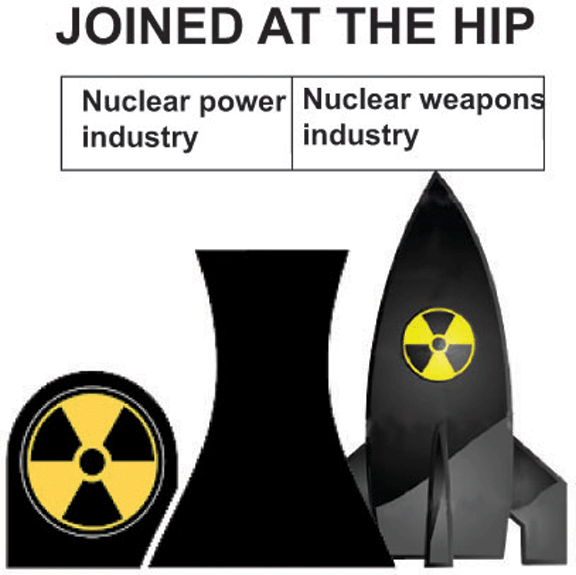
 How much do you know about the connections between nuclear weapons and nuclear power? https://mariannewildart.wordpress.com/2020/07/13/how-much-do-you-know-about-the-connections-between-nuclear-weapons-and-nuclear-power/ JULY 13, 2020 BY MARIANNEWILDART Why is the UK government so addicted to nuclear?
Nuclear weapons and nuclear power share several common features. In fact, the UK’s first nuclear power stations were built primarily to provide fissile material for nuclear weapons during the Cold War.
The development of both the nuclear weapons and nuclear power industries is mutually beneficial. And now it appears that the government is using the Hinkley Point C nuclear power station to subsidise Trident, Britain’s nuclear weapons system.
As part of a Parliamentary investigation into the Hinkley project, it emerged that without the billions of pounds earmarked for building this new power station in Somerset, Trident would be ‘unsupportable’. Professor Andy Stirling and Dr Phil Johnstone argued that the nuclear power station will ‘maintain a large-scale national base of nuclear-specific skills’ essential for maintaining Britain’s military nuclear capability.
Join CND for an online discussion with Professor Stirling and Dr Johnstone about these connections.
- Saturday, July 18th, 2pm
- Register here
- Contact enquiries@cnduk.org with any queries
1 This Month

petition to oppose the rapid increase of space-military industry threatening Jeju Island and the region.
[Petition by April 19th (KST)] Stop the joint military-Hanwha Systems-Jeju Provincial Government Sea Launch!
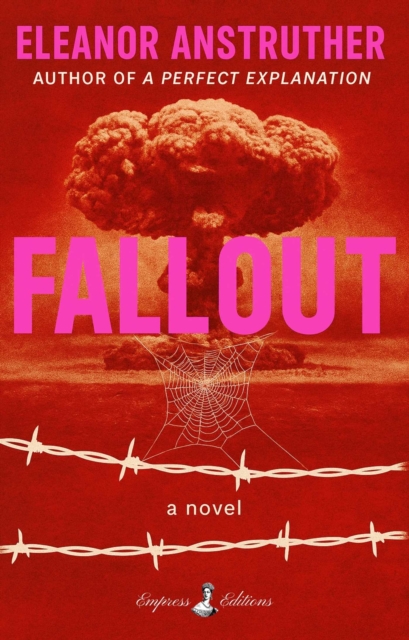
Chernobyl: The Lost Tapes – A good documentary on Chernobyl on SBS available On Demand for the next 3 weeks– https://www.sbs.com.au/ondemand/tv-program/chernobyl-the-lost-tapes/2352741955560

of the week–London Campaign for Nuclear Disarmament

Tell the Ukrainian Government to Drop Prosecution of Peace Activist Yurii Sheliazhenko
To see nuclear-related stories in greater depth and intensity – go to https://nuclearinformation.wordpress.com
-
Archives
- April 2026 (194)
- March 2026 (251)
- February 2026 (268)
- January 2026 (308)
- December 2025 (358)
- November 2025 (359)
- October 2025 (376)
- September 2025 (257)
- August 2025 (319)
- July 2025 (230)
- June 2025 (348)
- May 2025 (261)
-
Categories
- 1
- 1 NUCLEAR ISSUES
- business and costs
- climate change
- culture and arts
- ENERGY
- environment
- health
- history
- indigenous issues
- Legal
- marketing of nuclear
- media
- opposition to nuclear
- PERSONAL STORIES
- politics
- politics international
- Religion and ethics
- safety
- secrets,lies and civil liberties
- spinbuster
- technology
- Uranium
- wastes
- weapons and war
- Women
- 2 WORLD
- ACTION
- AFRICA
- Atrocities
- AUSTRALIA
- Christina's notes
- Christina's themes
- culture and arts
- Events
- Fuk 2022
- Fuk 2023
- Fukushima 2017
- Fukushima 2018
- fukushima 2019
- Fukushima 2020
- Fukushima 2021
- general
- global warming
- Humour (God we need it)
- Nuclear
- RARE EARTHS
- Reference
- resources – print
- Resources -audiovicual
- Weekly Newsletter
- World
- World Nuclear
- YouTube
-
RSS
Entries RSS
Comments RSS
 nuclear-news