Fukushima nuclear plant worker died from radiation exposure on the job: ministry
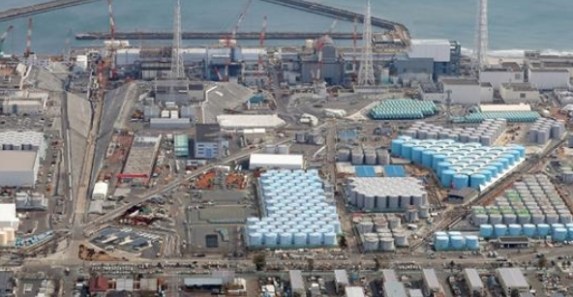
Fukushima episode of Netflix’s Dark Tourist sparks offence in Japan

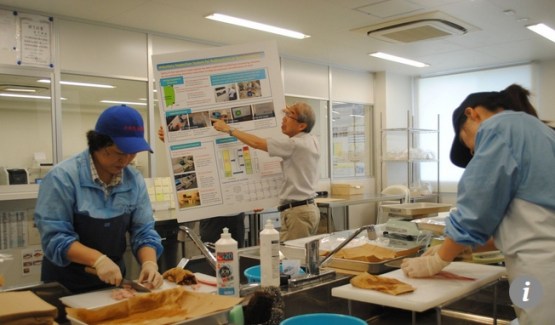
Fukushima government considers action over Dark Tourist episode


B.S. Propaganda Explaining that Radioactive Water Sea Dumping in Fukushima is Essential

‘Carefully explaining treated water discharge in Fukushima essential’
Extended screening pushes back MOX fuel plant construction for 3rd time


Japan’s Fukushima Considering Action Over Netflix’s ‘Dark Tourist’ Nuclear Episode

Yet again, Australia sets out to wreck international climate talks

 Australia gets out the wrecking ball, again, in international climate talks https://reneweconomy.com.au/australia-gets-out-the-wrecking-ball-again-in-international-climate-talks-17099/
Austria continues its legal action crusade against nuclear power in Europe
 Liberation 5th sept 2018 Austria continues its legal crusade against nuclear power in Europe. The
government has decided to appeal against an ECJ ruling authorizing public
subsidies to the British Hinkley Point EPR. “Just back from her maternity
leave, the Minister of Sustainable Development, Elisabeth Köstinger,
declares war again at the Atomic Lobby.”
The Kronen Zeitung , the country’s
leading newspaper, set foot on the plate announcing Tuesday, that the
Austrian government would appeal, before the Court of Justice of the
European Union (CJEU), a judgment that authorized public subsidies from the
British government for the Hinkley Point nuclear power plant. The Austrian
Council of Ministers will decide this Wednesday to appeal, with the support
of Luxembourg.
Austria does not want to abandon the legal battle against
nuclear energy in Europe, which it is conducting on several fronts. Last
March, Vienna also filed another complaint, this time concerning the Paks
reactors in neighboring Hungary. On the left, right and even far right, no
Austrian political party defends atomic energy. Antinuclearism is indeed
the subject of a broad consensus in the country. Since 1978, this type of
energy is de facto prohibited. That year, a referendum prevented the
commissioning of the Zwentendorf atomic power plant, which would have been
the first in Austria.
http://www.liberation.fr/planete/2018/09/05/l-autriche-poursuit-sa-croisade-juridique-contre-le-nucleaire-en-europe_1676553
New highs for solar power generation in Germany, as extreme heat shut nuclear and coal plants
Taking into account such conditions, it is hardly surprising there were new highs for solar power generation in Germany. In July, for example, PV plants generated 6.7 TWh – more than in the previous record month of May, when 6.45 TWh was generated.
As Bruno Burger, Head of Energy Charts at Fraunhofer ISE, told pv magazine, the share of solar energy in power generation in July was 15.1% – and in May, due to numerous public holidays, it reached 15.6%.
May 6 saw the one-day penetration record broken as 22.2% of German power came from solar, with that percentage peaking at half of the supply at 1pm, to set a new hourly landmark, Mr. Burger revealed.
PV also set new records in the U.K., said James Watson, of Solarpower Europe. In the week from 21 to 28 June, 533 GWh of solar power was generated, making PV the country’s main energy source that week, ahead of gas. According to Mr. Watson, Denmarkrecorded 361 hours of sunshine in May, leading to a 33% increase in solar generation and new records. Mr. Watson said solar energy in one country after another set impressive new milestones, confirming the important role of the renewable in the European electricity mix.olar keeps the lights on
Aurelie Beauvais, of Solarpower Europe, said PV systems filled summer gaps where conventional energy failed. In France and Germany, for example, coal and nuclear power plants had to be shut down as the necessary quantities of cooling water would no longer have been available – PV was able to keep the electricity grid stable and provide the required electricity.
“Without solar energy, there would have been major power supply challenges in July,” said Mr. Burger, referring to power reductions in conventional plants due to rising river temperatures. PV systems would have reached a maximum daily output of between 25 and 30 GW, he added.
Mr. Burger pointed out the proportion of solar in Germany could be significantly higher if an electricity price brake had not been enforced in 2013 by today’s Federal Minister of the Economy, Peter Altmaier.
The move greatly slowed the expansion of PV, said Mr. Burger, adding: “We could use this [PV] now to better get through the hot summer months,” especially since PV power generation peaks at noon, coinciding with the highest demand to fuel air conditioning and refrigerators.
International Committee of the Red Cross’s (ICRC) lobby for African nations to ratify comprehensive nuclear test ban treaty
 African countries can help ban nuclear weapons – ICRC https://www.news24.com/Africa/News/african-countries-can-help-ban-nuclear-weapons-20180905, 2018-09-05
Carien du Plessis, correspondent African countries have the power to force the rest of the world to ban nuclear weapons – if almost all of them adhered to the treaty on this.
The International Committee of the Red Cross’s (ICRC) Head of Regional Delegation for Southern Africa Vincent Cassard urged African officials at the start of a four-day seminar on Tuesday on international humanitarian law at the Department for International Relations to lobby their governments to ratify the treaty on the comprehensive ban on nuclear weapons, which opened for signature almost a year ago, on September 20.
“The ICRC’s position has been consistent over the last half a century: the use of nuclear weapons would never comply with rules of international humanitarian law,” he said. “The consequences would render humanitarian assistance impossible.”
Ten countries have so far ratified the treaty, but 50 ratifications are needed for the treaty to come into effect. The African Union has 55 member states.He said although southern Africa was largely peaceful, the focus of the international humanitarian law seminar was on peacekeeping operations, such as those in the Democratic Republic of Congo, which involved military help from neighbouring countries.
Participating officials had to ponder questions on whether it was legally acceptable to torture soldiers for information about secret military bases, and on when to attend to wounded soldiers from the enemy side.
The seminar ends on Friday.
Cassard told News24 even small countries like eSwatini (previously Swaziland) and Lesotho had a lot of power, because their ratification carried the same weight as that of large countries.
He said although southern Africa was largely peaceful, the focus of the international humanitarian law seminar was on peacekeeping operations, such as those in the Democratic Republic of Congo, which involved military help from neighbouring countries.
Participating officials had to ponder questions on whether it was legally acceptable to torture soldiers for information about secret military bases, and on when to attend to wounded soldiers from the enemy side.
The seminar ends on Friday.
Rising CO2 levels could push ‘hundreds of millions’ into malnutrition by 2050
 Carbon Brief, DAISY DUNNE, 27 August 2018
 An additional 290 million people could face malnutrition by 2050 if little is done to stop the rise of greenhouse gas emissions, a study finds.
The increased presence of CO2 in the atmosphere could cause staple crops to produce smaller amounts of nutrients such as zinc, iron and protein, the researchers say.
Using international datasets of food consumption, the study estimates that these changes could cause an additional 175 million people to be zinc deficient and an additional 122 million people to be protein deficient by 2050.
The findings show that malnutrition is most likely to affect parts of the world that are already grappling with food insecurity, such as India, parts of North Africa and the Middle East, the lead author tells Carbon Brief.
Growing problems
Climate change is known to threaten food security by increasing the chances of extreme weather events such as heatwaves and drought – which can cause crop failures.
However, climate change could also threaten food security by worsening malnutrition.
Across the world, humans get the majority of the key nutrients they need from plants. Crops, including cereals, grains and beans, provide humans with 63% of their protein, which is needed to build new body tissue.
Plants also provide humans with 81% of their iron, a nutrient that facilitates the flow of blood around the body, and 63% of their zinc, a nutrient that helps fight off disease. (Other sources of these nutrients include meat and dairy.)
However, recent experiments show that, when food crops are exposed to high levels of CO2, they tend to produce lower amounts of these three key nutrients.
The reason why this happens is still not well understood, says Dr Matthew Smith, a researcher in environmental health from Harvard University and lead author of the new study published in Nature Climate Change. He tells Carbon Brief:
“The prevailing theory for many years has been that higher CO2 causes a faster growth rate[in crops] – which favours carbohydrates rather than other nutrients important for human health that cannot be taken up quickly enough by the roots.”
However, there is also evidence that suggests not all nutrients decrease under higher CO2, notes Smith, meaning the extent of the impact is still an “open question”.
Under pressure
For the new study, the researchers estimated how global levels of malnutrition would be affected when the average concentration of CO2 in the atmosphere reaches 550 parts per million (ppm). He tells Carbon Brief:
“The prevailing theory for many years has been that higher CO2 causes a faster growth rate[in crops] – which favours carbohydrates rather than other nutrients important for human health that cannot be taken up quickly enough by the roots.”
However, there is also evidence that suggests not all nutrients decrease under higher CO2, notes Smith, meaning the extent of the impact is still an “open question”.
Under pressure
For the new study, the researchers estimated how global levels of malnutrition would be affected when the average concentration of CO2 in the atmosphere reaches 550 parts per million (ppm)…….
The results show that India faces the largest malnutrition increases out of any country. By 2050, an additional 50 million people in India could become zinc deficient, while an additional 502 million women and children under five could face anemia as a result of iron deficiencies.
Other high-risk countries include Algeria, Iraq and Yemen – three countries which are already grappling with higher-than-average rates of malnutrition, Smith says:
“Hundreds of millions of people could become newly deficient in these nutrients – primarily in Africa, southeast Asia, India and the Middle East – potentially contributing to a range of health effects: anemia, wasting, stunting, susceptibility to infectious disease, and complications for mothers and newborns.”
Curbing CO2
Despite the stark findings, there are “many steps that can be taken” to reduce the impact of rising CO2 levels on malnutrition, Smith says:…..
The findings add to previous research showing “the potential health consequences” of rising CO2 levels, says Prof Kristie Ebi, a researcher in public health and climate change from the University of Washington, who was not involved in the study. She tells Carbon Brief:
“The growing body of literature on the impacts of rising CO2 concentrations on the nutritional quality of our food indicates the health consequences could be significant, particularly for poorer populations in Africa and Asia – although everyone could be affected.” https://www.carbonbrief.org/rising-co2-levels-could-push-hundreds-of-millions-into-malnutrition-by-2050
USA’s Duke Energy rules out any new nuclear plants in its long range plans
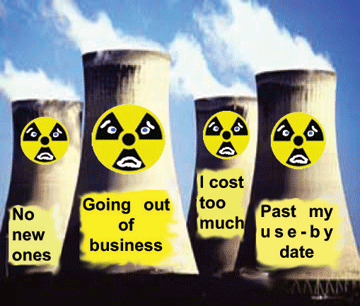 No more nukes: Duke Energy writes new nuclear out of its long-range plan, By John Downey – Senior Staff Writer, Charlotte Business Journal
Instead, Charlotte-based Duke (NYSE:DUK) will focus on getting license extensions for its existing, almost 11,000-megawatt nuclear fleet. The company will start with the first of the Oconee Nuclear Station’s three, 880-megawatt units, the current license for which expires in 2033. Oconee is near Seneca, South Carolina.
Glen Snider, Duke’s director of resource planning for the Carolinas, says the change is born of a number of developments in the industry. They include last year’s decision by S.C. Electric & Gas to abandon the proposed, $20 billion-plus V.C. Summer nuclear expansion and the expectation that strict limits on carbon emissions are likely to be further off than had once been expected.
Some version
Every year since 2005, Duke had included plans for some version of a new nuclear plant. That year, the Integrated Resource Plan filed by Duke proposed having the plant up and running by 2016.
Even last year, after Duke had announced it dropped plans for the proposed, 2,234-megawatt W.S. Lee Nuclear Station in Gaffney, South Carolina, the long-range plan still had a place for a possible, 1,100-megawatt plan that might start construction in 2032.
This year’s IRP, which projects through 2033, was filed Wednesday and there is no new nuclear construction proposed.
The Nuclear Regulatory Commission initially licensed nuclear plants for 40 years. It has already established that qualified plants can get a 20-year extension to total 60 years.
All of Duke’s plants are currently licensed to run for 60 years. The NRC is now considering whether it will allow plants an additional 20-year extension……….https://www.bizjournals.com/charlotte/news/2018/09/05/no-more-nukes-duke-energy-writes-new-nuclear-out.html
The economic pain of nuclear power station closures
Nuclear Plant Closures Bring Economic Pain to Cities and Towns, Pew, STATELINE ARTICLE, September 5, 2018, By: Martha T. Moore “…….. Aging nuclear power plants are closing, doomed by the high cost of refurbishing them and the low price of natural gas. That is causing fiscal pain for municipalities that rely on revenue from the plants, and creating political pressure for state subsidies to forestall further shutdowns……….
Six reactors have shut down in the past five years, and eight more reactors are scheduled to close by 2025 at plants in California, Iowa, Massachusetts and Michigan. Nuclear power operators have said they will close a further five reactors at four plants in Ohio and Pennsylvania if those states don’t offer subsidies.
The closure of Indian Point, announced in January 2017, capped decades of controversy over its safety, and was a victory for environmental groups and Democratic Gov. Andrew Cuomo, who had long opposed the plant.
But the closure presents the local Hendrick-Hudson school district, where 2,500 children practice evacuation drills annually and nurses have iodide pills on hand in case of a radiation leak, with a budget crisis. About one-third of the district’s annual $79 million budget comes from Indian Point’s payment in lieu of taxes. By 2024, three years after the power plant huts, the yearly payments will have dwindled from $25 million to $1.35 million. ……..
Many nuclear power plants have curried public favor by being good corporate citizens. In Londonderry, for example, Three Mile Island runs a golf tournament for the local fire department that raises enough money to cover the $50,000 annual mortgage payment on the firehouse.
Redevelopment of Three Mile Island isn’t an option, Letavic said, because of the nuclear waste that will remain on the site, which is in the middle of the Susquehanna River……
In Lacey Township on the New Jersey shore, the nation’s oldest operating nuclear plant, Oyster Creek, will shut down in September after 49 years. The town gets $11 million in annual taxes from Oyster Creek and has identified itself so closely with the nuclear plant that its municipal seal bears the symbol of an atom as well as a sailboat and a pheasant. …….
Asking for State Help
Four states have moved to shore up nuclear power plants financially despite opposition from some environmental groups, consumer advocates and the coal and natural gas power industries.
In 2016, New York passed a $7.6 billion package to help three upstate nuclear power plants — though not Indian Point. And Illinois passed legislation directing $2.4 billion to two plants in the state through “zero emissions credits”
……..In New Jersey, where 40 percent of the state’s electricity comes from nuclear plants, the state will subsidize two plants at a rate of $300 million a year under a bill enacted in May. (Oyster Creek was not included in the subsidy plan.) Connecticut enacted legislation last October that could allow its sole nuclear plant, the Millstone reactor in Waterford, to sell electricity at higher prices if Dominion Energy, its owner, can show the reactor is financially strapped. ………
As part of the nuclear subsidy packages, some states have increased requirements for obtaining power from renewable sources: New York and New Jersey will require half of their power to come from renewables by 2030, and Connecticut will require 40 percent by that date. Illinois will require a quarter of its power to come from renewables by 2025.https://www.pewtrusts.org/en/research-and-analysis/blogs/stateline/2018/09/05/nuclear-plant-closures-bring-economic-pain-to-cities-and-towns
Tomari nuclear power plant in Hokkaido is using emergency generators, due to earthquake

 Tomari nuclear plant using emergency generators, Japan’s nuclear regulatory body says the Tomari nuclear power plant in Hokkaido is using emergency generators to cool fuel after the region was hit by a powerful earthquake.
The plant’s operator Hokkaido Electric Power Company says all 3 channels from outside power sources were cut off about 20 minutes after the quake struck early Thursday.
The plant’s 3 reactors are all currently offline, with a total of 1,527 fuel assemblies in its storage pools.
Following the quake, 6 emergency diesel-powered generators automatically switched on to cool the nuclear fuel. No changes in storage pool water levels or temperature have been reported. The Nuclear Regulation Authority and Hokkaido Electric say it is not yet clear when outside power sources will be restored, with all thermal power plants in Hokkaido currently shut down.
The emergency generators will be able to keep the Tomari plant running for at least 7 days, based on diesel fuel supplies stored on its premises.
They added that the earthquake did not seem to cause any irregularities in key plant facilities and radiation monitoring posts have shown no change.
For the first time, Japan acknowledges radiation death from Fukushima, and will compensate the family
 Fukushima disaster: Japan acknowledges first radiation death from nuclear plant hit by tsunami Japan has acknowledged for the first time that a worker at the Fukushima nuclear power plant, destroyed by an earthquake and tsunami more than seven years ago, has died from radiation exposure.
Key points:
- The man had worked at the plant since the earthquake and tsunami in 2011
- He was diagnosed with lung cancer in 2016, in his 50s
- The Health, Labour and Welfare Ministry ruled that compensation should be paid to the family
The Health, Labour and Welfare Ministry ruled that compensation should be paid to the family of the man in his 50s who died from lung cancer, an official said.
The worker had spent his career working at nuclear plants around Japan and worked at the Fukushima Daiichi plant operated by Tokyo Electric Power at least twice after the March 2011 meltdowns at the station.
He was diagnosed with cancer in February 2016, the official said. ……..
The ministry had previously ruled exposure to radiation caused the illnesses of four workers at Fukushima, the official said.
But this was the first death……
Tokyo Electric is facing a string of legal cases seeking compensation over the disaster.
The news came as the northern Hokkaido region was hit by a 6.7 magnitude earthquake, sparking concerns at the three-reactor Tomari nuclear plant, which lost power as a result of the earthquake.
The Tomari plant has been in shutdown since the Fukushima disaster.
The Fukushima crisis led to the shutdown of the country’s nuclear industry, once the world’s third-biggest.
Seven reactors have come back online after a protracted relicensing process.
The majority of Japanese people remain opposed to nuclear power after Fukushima highlighted failings in regulation and operational procedures in the industry.http://www.abc.net.au/news/2018-09-06/first-man-dies-from-radiation-from-fukushima-nuclear-disaster/10208244
1 This Month
Chernobyl: The Lost Tapes – A good documentary on Chernobyl on SBS available On Demand for the next 3 weeks– https://www.sbs.com.au/ondemand/tv-program/chernobyl-the-lost-tapes/2352741955560

of the week–London Campaign for Nuclear Disarmament

Tell the Ukrainian Government to Drop Prosecution of Peace Activist Yurii Sheliazhenko
To see nuclear-related stories in greater depth and intensity – go to https://nuclearinformation.wordpress.com
-
Archives
- April 2026 (139)
- March 2026 (251)
- February 2026 (268)
- January 2026 (308)
- December 2025 (358)
- November 2025 (359)
- October 2025 (376)
- September 2025 (257)
- August 2025 (319)
- July 2025 (230)
- June 2025 (348)
- May 2025 (261)
-
Categories
- 1
- 1 NUCLEAR ISSUES
- business and costs
- climate change
- culture and arts
- ENERGY
- environment
- health
- history
- indigenous issues
- Legal
- marketing of nuclear
- media
- opposition to nuclear
- PERSONAL STORIES
- politics
- politics international
- Religion and ethics
- safety
- secrets,lies and civil liberties
- spinbuster
- technology
- Uranium
- wastes
- weapons and war
- Women
- 2 WORLD
- ACTION
- AFRICA
- Atrocities
- AUSTRALIA
- Christina's notes
- Christina's themes
- culture and arts
- Events
- Fuk 2022
- Fuk 2023
- Fukushima 2017
- Fukushima 2018
- fukushima 2019
- Fukushima 2020
- Fukushima 2021
- general
- global warming
- Humour (God we need it)
- Nuclear
- RARE EARTHS
- Reference
- resources – print
- Resources -audiovicual
- Weekly Newsletter
- World
- World Nuclear
- YouTube
-
RSS
Entries RSS
Comments RSS
 nuclear-news