New campaign ‘Two Degrees of Change’ urges female executives to demand action on climate change
New campaign enlists women in boardrooms to take up climate issue
UN-backed ‘Two Degrees of Change’ encourages female executives to demand action from their companies to stave off the threat of global warming, Guardian. Fiona Harvey 12 Apr 16, Women working in financial services are opening a new front in the battle against climate change, with the launch of a UN-backed initiative to take global warming concerns into business boardrooms.
Helena Morrissey, chief executive of Newton Investment Management and a long-time campaigner for women in boardrooms, is spearheading the new “Two Degrees of Change” initiative. Under it, women will be encouraged to raise climate issues with their company boards, and demand companies and investors take action to stave off the threat of dangerous warming.
The name comes from the pledge made by governments at the historic Paris climate conference in December to limit global warming to no more than 2C, which scientists say is the threshold of safety.
Morrissey, who set up the “30% Club” named for her target to see 30% of board seats in big companies going to women, told the Guardian: “This is about having more women in senior roles [in business] focusing on climate change and changing the narrative. We need female voices in our boardrooms on this.”
Shareholders would benefit, she said, as the risks of climate change are still poorly taken into account in many companies, and traditional financial services companies have yet to make the major changes likely to be necessary in strategy.
Morrissey added that many women were more aware of climate change as a pressing problem than men at the top of the financial services sector. “Women are often interested in these areas more than men, and interested in a long-term view,” she said. “Many women find themselves working within an established culture at old-fashioned companies.”
Forming a network dedicated to helping women would be beneficial for businesses as well as the climate, she said: “Women see how change can happen within their companies, but they need encouragement and empowerment to speak out.”
She was joined at the launch on Monday in London by Christiana Figueres, the UN’s climate chief who led the successful negotiations at Paris, and Rachel Kyte, former vice president of the World Bank leading on climate change and now senior representative for the UN on sustainable energy, as well as a roll-call of City women specialising in green issues.
Figueres also highlighted links between the issues: “There is a clear parallel between the progress we’ve seen on gender equality and climate change in the last six years. Evidence suggests a greater presence of women the boardroom and in senior leadership can help increase the corporate focus on climate change.”
The UN’s climate change arm, the UN Framework Convention on Climate Change, has championed the representation of women through its “Women for Results” grouping……..http://www.theguardian.com/environment/2016/apr/11/un-launches-campaign-to-enlist-women-in-boardrooms-to-take-up-climate-issue
Sea level rise has been underestimated – new ice studies suggest
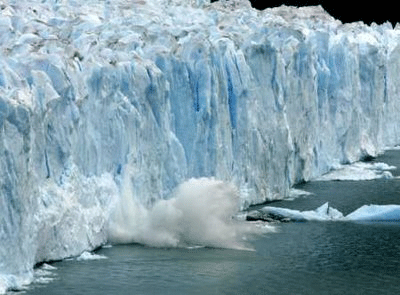 Ice melt studies say we underestimate sea level rise, Independent Australia Peter Boyer 11 April 2016, Are melting polar ice sheets as stable as we think, or have we missed something? If a couple of new ice studies are only partly right, we face massive disruption from sea level rise within decades.
SCIENTIFIC DEBATE about this has picked up in the wake of the March publication of two major research papers by scientists from the U.S., France, Germany and China.
A paper by James Hansen and 18 other climatologists in the open-access science journal Atmospheric Chemistry and Physics, examined ancient climate change to assess how that compares with today’s melting of Greenland and Antarctic ice sheets.
It argues that during this century, ice sheet meltwater spreading over parts of the Southern Ocean and the North Atlantic will increase the temperature variation between these cooler parts and warming regions, resulting in more violent storms.
The meltwater layer also acts as a transparent lid on warming ocean waters undermining polar ice sheets sitting on bedrock below sea level. The paper’s startling prediction is that consequent disintegration could bring several metres of sea level rise within 150 years and possibly by 2070.
A paper published last week in the science journal Nature, also examining past rapid changes, looked at how the Antarctic ice sheet might react to warming of atmosphere as well as ocean, and reached similarly disturbing conclusions.
U.S. scientists Robert DeConto and David Pollard studied the puzzle of how the massive Antarctic ice sheet shed large amounts of ice over relatively short time-frames in prehistoric warming events.
Their modelling showed that if today’s high carbon emissions continue, warmer air would add to the impact of warming seas. Fracturing ice shelves and coastal cliffs would bring rapid ice loss and contribute ‘more than a metre of sea-level rise by 2100’………https://independentaustralia.net/environment/environment-display/ice-melt-studies-say-we-underestimate-sea-level-rise,8866
World powers worried at effects of climate change, drought, causing conflicts
We’re running out of water, and the world’s powers are very worried, Reveal, By Nathan Halverson / April 11, 2016 Secret conversations between American diplomats show how a growing water crisis in the Middle East destabilized the region, helping spark civil wars in Syria and Yemen, and how those water shortages are spreading to the United States.
Classified U.S. cables reviewed by Reveal from The Center for Investigative Reporting show a mounting concern by global political and business leaders that water shortages could spark unrest across the world, with dire consequences.
Many of the cables read like diary entries from an apocalyptic sci-fi novel.
“Water shortages have led desperate people to take desperate measures with equally desperate consequences,” according to a 2009 cable sent by U.S. Ambassador Stephen Seche in Yemen as water riots erupted across the country.
On Sept. 22 of that year, Seche sent a stark message to the U.S. State Department in Washington relaying the details of a conversation with Yemen’s minister of water, who “described Yemen’s water shortage as the ‘biggest threat to social stability in the near future.’ He noted that 70 percent of unofficial roadblocks stood up by angry citizens are due to water shortages, which are increasingly a cause of violent conflict.”
Seche soon cabled again, stating that 14 of the country’s 16 aquifers had run dry. At the time, Yemen wasn’t getting much news coverage, and there was little public mention that the country’s groundwater was running out.
These communications, along with similar cables sent from Syria, now seem eerily prescient, given the violent meltdowns in both countries that resulted in a flood of refugees to Europe.
Groundwater, which comes from deeply buried aquifers, supplies the bulk of freshwater in many regions, including Syria, Yemen and drought-plagued California. It is essential for agricultural production, especially in arid regions with little rainwater. When wells run dry, farmers are forced to fallow fields, and some people get hungry, thirsty and often very angry.
The classified diplomatic cables, made public years ago by Wikileaks, now are providing fresh perspective on how water shortages have helped push Syria and Yemen into civil war, and prompted the king of neighboring Saudi Arabia to direct his country’s food companies to scour the globe for farmland. Since then, concerns about the world’s freshwater supplies have only accelerated……..
The water-fueled conflicts in the Middle East paint a dark picture of a future that many governments now worry could spread around the world as freshwater supplies become increasingly scarce. The CIA, the State Department and similar agencies in other countries are monitoring the situation.
In the past, global grain shortages have led to rapidly increasing food prices, which analysts have attributed to sparking the Arab Spring revolution in several countries, and in 2008 pushed about 150 million people into poverty, according to the World Bank.
Water scarcity increasingly is driven by three major factors: Global warming is forecast to create more severe droughts around the world. Meat consumption, which requires significantly more water than a vegetarian or low-meat diet, is spiking as a growing middle class in countries such as China and India can afford to eat more pork, chicken and beef. And the world’s population continues to grow, with an expected 2 billion more stomachs to feed by 2050……..
These problems are not just happening overseas, but already are leading to heated political issues in the United States. In the western part of the country, which Nestle forecast will suffer severe long-term shortages, tensions are heating up as Middle Eastern companies arrive to tap dwindling water supplies in California and Arizona………
Back in Yemen in 2009, U.S. Ambassador Seche described how as aquifers were drained, and groundwater levels dropped lower, rich landowners drilled deeper and deeper wells. But everyday citizens did not have the money to dig deeper, and as their wells ran dry, they were forced to leave their land and livelihoods behind.
“The effects of water scarcity will leave the rich and powerful largely unaffected,” Seche wrote in the classified 2009 cable. “These examples illustrate how the rich always have a creative way of getting water, which not only is unavailable to the poor, but also cuts into the unreplenishable resources.” https://www.revealnews.org/article/were-running-out-of-water-and-the-worlds-powers-are-very-worried/
Religious groups urge US lawmakers to approve funding for Green Climate Fund (GCF)
Faith groups call for more international climate funding The Hill, By Devin Henry – 04/11/16 More than 120 religious groups are encouraging lawmakers to approve President Obama’s proposed $750 million contribution to an international climate change fund.
In a letter to members of Congress, the groups say the  is an important way to “build resilience and stability in the face of the unavoidable impacts of climate change,” an issue they say their faith backgrounds call them to focus on.
The GCF is an international pool of money designed to help poor and developing countries cope with climate change. Obama has requested Congress provide $750 million for the fund in 2017. …….http://thehill.com/policy/energy-environment/275864-faith-groups-call-for-more-international-climate-funding
UN study of 1.5 degrees Celsius – it may not be feasible
U.N. panel to study a cap on global warming that may be out of reach http://www.reuters.com/article/us-climatechange-temperatures-idUSKCN0X81PH OSLO/LONDON | BY ALISTER DOYLE AND NINA CHESTNEY Top climate scientists will launch a study this week of how hard it would be to limit global warming to 1.5 degrees Celsius (2.7 Fahrenheit), although many of them fear it might be too late to reach that level.
The world’s average surface temperatures reached 1C (1.8F) above pre-industrial times in a record-hot 2015. They will rise by 3C (3.6F) or more by 2100 if current trends continue, many projections show.
A 195-nation climate summit in Paris in December asked the U.N.’s Intergovernmental Panel on Climate Change for a report in 2018 on limiting warming to just 1.5C. The IPCC began a three-day meeting in Nairobi on Monday to consider how to do that.
“Do we know how? No. It is definitely a moon shot,” Christiana Figueres, the U.N.’s climate chief, said at a conference in London on Monday.
Paris set a goal of limiting average surface temperatures to “well below” 2C while “pursuing efforts” for 1.5C. Documents prepared for the Nairobi meeting say scientific literature about 1.5C is thin.
Many scientists have barely focused on the 1.5C goal, reckoning it would require unrealistically deep cuts in emissions. Experts say the IPCC will comply with the Paris request, with misgivings.
“I don’t seek how they can say ‘No’,” David Victor, a professor of international relations at the University of California, San Diego, told Reuters. “But I don’t see how they say ‘Yes’ with a straight face.”
Some IPCC studies suggest 1.5C will be feasible if the world develops low-costtechnologies later this century to extract greenhouse gases from the atmosphere.
Many poor nations, fearing melting ice that will raise sea levels and swamp their coasts, campaign for “1.5 to stay alive”.
“My concern is that the 2018 report may have lots of information about how hard it will be to achieve 1.5C, and relatively little about the benefits,” Myles Allen, a professor at Oxford University, told Reuters.
He noted that countries pushing hardest for the 1.5C limit, including small, low-lying island states such as the Marshall Islands or the Maldives, wanted to stress the advantages.
Limiting warming to 1.5C rather than 2C would limit, for instance, sea level rise, the melt of Arctic sea ice, damage to coral reefs and the acidification of the oceans, according to IPCC studies.
(Reporting By Alister Doyle, editing by Larry King)
April 12 Energy News

Science and Technology:
¶ Solar energy panels that can also generate power from raindrops have been designed, offering a possible solution for homeowners in the UK to invest in renewable energy. The all-weather solar panels that can create electricity from light on sunny days and rain on cloudy days. [Telegraph.co.uk]
 Solar panels can save up to £135 a year in energy bills.
¶ January 2016 was the most anomalously hot month on record, going by NASA’s temperature figures. Now it appears that February 2016 already beat the record, with an anomaly (over the pre-industrial average) of somewhere between 1.15° C and 1.4° C during the month. [CleanTechnica]
¶ Solar power has the potential to generate about 40% of America’s energy, yet the technology still has limitations. One is weather. Clouds and rain diminish solar cell efficiency, a problem for places that are more overcast than sunny…
View original post 482 more words
Holtec Pleads Difficulty Testing Air Velocity-Heat Distribution for Spent Nuclear Fuel Casks, Comment Deadline April 13th, ET (11.59 PM), one minute to the 14th ET

Comment on “ID: NRC-2015-0270-0002 List of Approved Spent Fuel Storage Casks: Holtec International HI-STORM 100 Cask System; Certificate of Compliance No. 1014, Amendment No. 10” here: https://www.regulations.gov/#!documentDetail;D=NRC-2015-0270-0002 by 13 April 2016, 11.59 PM, ET. This includes all day on the 13th, NY-DC (Eastern), minus one minute.
Over the course of now 16 years, Holtec has gotten 10 exemption “Amendments” on its Certificate of Compliance (CoC) for its Hi-Storm 100 spent NUCLEAR fuel cask system. Over the last couple of years, each amendment has had one revision, and there are multiple changes within each Amendment and revision. The tendency appears to be avoiding quality assurance and testing. The number of Holtec “exemptions” for the Holtec High Storm 100 can thus be estimated as in the 60 to 100 range.
Note the comparatively small size and poor location of the passive cooling vents (small holes at top and bottom).
This…
View original post 659 more words
Warm, Southerly Winds Gust at Hurricane Force Over Greenland in Staggering Early Season Heatwave — Temperatures Now Hitting up to 41 Degrees (F) Above Average at Summit

The wavy, crazy Jet Stream.
Over the past few years, it’s become more and more clear that a human-forced heating of the Arctic has basically driven the Jet Stream mad. Big loops, omega blocks, and huge ridges and troughs have all become a feature of the new climate we’re experiencing. And related to these features have been a number of superstorms, severe droughts, ocean hot and cold pools, and extreme rainfall events.

(The Jet Stream once again mangled. A strong trough shoved cool air over the US East Coast this weekend as a facing ridge prepared to hurl a bulge of extreme warmth up and over Greenland on Monday. Image source: Earth Nullschool.)
As we have seen with Sandy, the Pacific Hot Blob, the UK floods, The California Drought, The Record Alaska and Canadian Wildfire Seasons of 2015, the Russian Heatwave and Fires of 2011, the Pakistan Floods of…
View original post 1,135 more words
Japan Prepares for Release of Tritium From Fukushima Plant
Tritium may not penetrate plastic but goes everywhere H20 goes in the body. It can cross the blood brain barrier, the placental barrier, and is a known carcinogen. Just because they don’t know what to do with it doesn’t mean it’s ok to just release it. Something the nuclear industry is perfectly aware of.
Japan Prepares for Release of Tritium From Fukushima Plant
TOKYO — To dump or not to dump a little-discussed substance is the question brewing in Japan as it grapples with the aftermath of the nuclear catastrophe in Fukushima five years ago. The substance is tritium.
The radioactive material is nearly impossible to remove from the huge quantities of water used to cool melted-down reactors at the Fukushima Dai-ichi plant, which was wrecked by the massive tsunami in northeastern Japan in March 2011.
The water is still accumulating since 300 tons are needed every day to keep the reactors chilled. Some is leaking into the ocean.
Huge tanks lined up around the plant, at last count 1,000 of them, each hold hundreds of tons of water that have been cleansed of radioactive cesium and strontium but not of tritium.
Ridding water of tritium has been carried out in laboratories. But it’s an effort that would be extremely costly at the scale required for the Fukushima plant, which sits on the Pacific coast. Many scientists argue it isn’t worth it and say the risks of dumping the tritium-laced water into the sea are minimal.
Their calls to simply release the water into the Pacific Ocean are alarming many in Japan and elsewhere.
Rosa Yang, a nuclear expert at the Electric Power Research Institute, based in Palo Alto, California, who advises Japan on decommissioning reactors, believes the public angst is uncalled for. She says a Japanese government official should simply get up in public and drink water from one of the tanks to convince people it’s safe.
But the line between safe and unsafe radiation is murky, and children are more susceptible to radiation-linked illness. Tritium goes directly into soft tissues and organs of the human body, potentially increasing the risks of cancer and other sicknesses.
“Any exposure to tritium radiation could pose some health risk. This risk increases with prolonged exposure, and health risks include increased occurrence of cancer,” said Robert Daguillard, a spokesman for the U.S. Environmental Protection Agency.
The agency is trying to minimize the tritium from U.S. nuclear facilities that escapes into drinking water.
Right after the March 2011 disaster, many in Japan panicked, some even moving overseas although they lived hundreds of miles (kilometers) away from the Fukushima no-go zone. By now, concern has settled to the extent that some worry the lessons from the disaster are being forgotten.
Tritium may be the least of Japan’s worries. Much hazardous work remains to keep the plant stabilized, and new technology is needed for decommissioning the plant’s reactors and containing massive radioactive contamination.
The ranks of Japan’s anti-nuclear activists have been growing since the March 2011 accident, and many oppose releasing water with tritium into the sea. They argue that even if tritium’s radiation is weaker than strontium or cesium, it should be removed, and that good methods should be devised to do that.
Japan’s fisheries organization has repeatedly expressed concerns over the issue. News of a release of the water could devastate local fisheries just as communities in northeastern Japan struggle to recover from the 2011 disasters.
An isotope of hydrogen, or radioactive hydrogen, tritium exists in water form, and so like water can evaporate, although it is not known how much tritium escaped into the atmosphere from Fukushima as gas from explosions.
The amount of tritium in the contaminated water stored at Fukushima Dai-ichi is estimated at 3.4 peta becquerels, or 34 with a mind-boggling 14 zeros after it.
But theoretically collected in one place, it would amount to just 57 milliliters, or about the amount of liquid in a couple of espresso cups — a minuscule quantity in the overall masses of water.
To illustrate that point, Shunichi Tanaka, chairman of the Nuclear Regulation Authority, showed reporters a small bottle half-filled with blue water that was the equivalent of 57 milliliters.
Public distrust is running so high after the Fukushima accident that Tokyo Electric Power Co., or TEPCO, the utility that operates the Fukushima plant and oversees its decommissioning, has mostly kept quiet about the tritium, pending a political decision on releasing the water.
Privately, they say it will have to be released, but they can’t say that outright.
What will be released from Fukushima will be well below the global standard allowed for tritium in the water, say Tanaka and others favoring its release, which is likely to come gradually later this year, not all at once.
Proponents of releasing the tritium water argue that tritium already is in the natural environment, coming from the sun and from water containing tritium that is routinely released at nuclear plants around the world.
“Tritium is so weak in its radioactivity it won’t penetrate plastic wrapping,” said Tanaka.
90Sr in teeth of cattle abandoned in evacuation zone: Record of pollution from the Fukushima-Daiichi Nuclear Power Plant accident
Here we determined the 90Sr concentrations in the teeth of cattle abandoned in the evacuation area of the Fukushima-Daiichi Nuclear Power Plant (FNPP) accident. 90Sr activity concentrations in the teeth varied from 6–831 mBq (g Ca)−1 and exhibited a positive relationship with the degree of radioactive contamination that the cattle experienced. Even within an individual animal, the specific activity of 90Sr (Bq (g Sr)−1) varied depending on the development stage of the teeth during the FNPP accident: teeth that were early in development exhibited high 90Sr specific activities, while teeth that were late in development exhibited low specific activities. These findings demonstrate that 90Sr is incorporated into the teeth during tooth development; thus, tooth 90Sr activity concentrations reflect environmental 90Sr levels during tooth formation. Assessment of 90Sr in teeth could provide useful information about internal exposure to 90Sr radiation and allow for the measurement of time-course changes in the degree of environmental 90Sr pollution.
Introduction
The Fukushima-Daiichi Nuclear Power Plant (FNPP) accident released a substantial amount of radioactive nuclides into the atmosphere and caused extensive contamination of the environment1,2,3,4,5. The radioactivity of the typical fission products was estimated to be 8.2 PBq for 137Cs, 9.8 PBq for 134Cs, and 0.14 PBq for 90Sr2,6. In June 2011, the Japan Ministry of Education, Culture, Sports, Science, and Technology (MEXT) reported that 0.1−6 kBq m−2 of 90Sr and 0.3−17 kBq m−2 of 89Sr were detected in the soil of areas within a 20-km radius from the FNPP (i.e., the former Fukushima evacuation zone)7. As 89Sr has a relatively short half-life of 50.5 days, its presence suggests that these radionuclides did not originate from global fallout due to nuclear weapons testing, but from the FNPP accident.
The long half-life (28.8 y) and bone-seeking properties of 90Sr make it a concerning artificial radionuclide among the fission products found near FNPP. Although radioiodine and caesium are more noticeable in quantity, 90Sr can persist in bone with a retention half-life of over 10 years, depending on bone type8,9,10,11. Moreover, its daughter nuclide, 90Y, emits β-rays (2.28 MeV) that may have adverse effects on the bone marrow. Thus, some attention has been paid to the determination of 90Sr content in bone and particularly in teeth. Sr is incorporated into the tooth during calcification. Once incorporated, it remains in enamel and dentine until the tooth falls out or is extracted12. Therefore, 90Sr activity concentration in a given tooth is a reflection of environmental 90Sr contamination levels when the tooth was formed.
Several studies have taken advantage of this phenomenon to understand the long-term effects of nuclear activity on humans. For example, 90Sr incorporation into human teeth has been observed after the Techa River region was contaminated by the release of liquid radioactive waste into the river during the early 1950s8,13,14,15. Similarly, the deciduous teeth of Swiss children born between 1952 and 2002 exhibited 90Sr activity concentrations that correlated with atmospheric rises in 90Sr levels, which resulted from nuclear weapons testing during that period11. Increases in tooth 90Sr activity concentrations following the 1986 Chernobyl accident have also been reported11,16,17. These observations indicate that 90Sr activity concentration in teeth is an effective indicator of 90Sr contamination levels in the environment. However, while studies have examined 90Sr contamination in soil, vegetation, the nearby seawater and fish after the FNPP accident18,19,20,21,22,23,24, no studies to date have reported on 90Sr activity concentrations in teeth or bones. We thus have little direct data on how much FNPP-related contamination affected animals, which is essential for fully understanding the extent of environmental pollution in the area.
In the aftermath of the FNPP accident, thousands of cattle were abandoned in the evacuation zone. These cattle subsisted on natural food and water in the contaminated environment. Previously, we investigated the activities of 134Cs, 137Cs, 110mAg, and 129mTe in cattle within a 20-km radius around the FNPP, and demonstrated that radioactive Cs concentrations in organs and plasma were dependent on the feeding conditions and the geographic location of the cattle25. We also separately examined the effect of radioactive Cs on cattle testes after the FNPP accident26. We now expand on these studies by examining 90Sr concentrations in cattle teeth and relating them to other measures of environmental pollution.
Results
Activity concentration of 90Sr in the soil of cattle residence areas
Figure 1 details the locations of cattle residence after the FNPP accident. Areas H and L are situated in the government-delineated evacuation zone, and their 90Sr activity concentrations in soil are 94–1500 Bq m−2 (average: 738 Bq m−2) and 39–380 Bq m−2 (average: 195 Bq m−2), respectively7. We chose area C in Iwate Prefecture as the control region because it is approximately 250 km north of the nuclear plant and is considered free from FNPP-related 90Sr pollution. The activity concentration of 90Sr in soil in area C is 95–99 Bq m−2 (average: 96 Bq m−2)27.

FNPP: The Fukushima-Daiichi Nuclear Power Plant. H: High-contamination area (10–30 μSv h−1), 5 km west of FNPP. L: Low-contamination area (0.8–1.2 μSv h−1), 16 km south-west of FNPP. Areas H and L were in the evacuation zone. C: Control area in Iwate Prefecture, 250 km north of FNPP. The maps were modified from open-access base maps freely available for public and academic use (source: http://maps.gsi.go.jp, from the Geographic Information Authority of Japan).
adioactivity of 90Sr in cattle teeth
- 90Sr activity concentration
Figure 2 summarizes the 90Sr activity concentrations (90Sr activity/amount of Ca) in various teeth (deciduous molars, premolars, and molars (Supplementary Table S1)).
We detected 90Sr in all examined teeth. Activity concentrations varied significantly with area (p = 0.0000, Kruskal-Wallis test): high 90Sr concentrations (61–831 mBq (g Ca)−1) were observed in area H, mid-range concentrations (22–311 mBq (g Ca)−1 were observed in area L, and the lowest concentrations (6–35 mBq (g Ca)−1) were observed in control area C. These 90Sr activity concentrations in teeth were significantly correlated with 90Sr concentrations in the soil of areas H, L, and C (ρ = 0.8441, p < 0.01, Spearman’s rank-order correlation analysis).
- Specific activity of 90Sr
Figure 3 shows the specific activities of 90Sr (90Sr radioactivity/amount of stable Sr) in teeth (Supplementary Table S2). 90Sr specific activities were similar to the 90Sr activity concentration trends: higher (214–1351 Bq (g Sr)−1) and lower (60–641 Bq (g Sr)−1) activity were observed for areas H and L, respectively. The lowest specific activity (13–78 Bq (g Sr)−1) was observed in teeth from control area C. The specific activity differed significantly across areas H, L, and C (p = 0.0000, Kruskal-Wallis test). Moreover, specific activity was significantly correlated with 90Sr concentrations in the soil of areas H, L, and C (ρ = 0.8507, p < 0.01, Spearman’s rank-order correlation analysis).
- Activity concentrations and specific activities of 90Sr in teeth at different developmental stages.
The four young cattle examined in this study (H-young-1, H-young-2, L-young-1, and L-young-2) were 8 months old when the FNPP accident occurred (Table 1) and their molars ranged across developmental stages: development of the deciduous molars (DM1, DM2, and DM3) were either complete or in the late stage, the molars (M1, M2, and M3) were actively developing, and the premolars (P1, P2, and P3) were still early in development28 (Fig. 4a). 90Sr activity concentrations and specific activities were low in deciduous molars, higher in molars, and highest in premolars for each individual (p = 0.0006 and 0.0004 for 90Sr activity concentration and 90Sr specific activity, respectively; Kruskal-Wallis test; Figs 2 and 3).
We also determined the activity concentrations and specific activity of 90Sr in the teeth of two adult cattle (L-adult-1 and L-adult-2) from area L, that were 22 and 51 months old, respectively, during the FNPP accident. Based on their age, we assumed that development of permanent molars and premolars were complete at that point (Fig. 4b). We found low levels of 90Sr activity concentrations (22–91 mBq (g Ca)−1) and specific activities (60–166 Bq (g Sr)−1) in all adult teeth, but in contrast to young cattle (L-young-1 and L-young-2), no significant differences existed across adult molars and premolars in both 90Sr activity concentration and specific activity (p = 0.6310 and 0.3367, respectively; Kruskal-Wallis test).
Concentration of stable Sr in cattle teeth
We compared stable Sr concentrations in teeth formed before and after the accident (Table 2).

We found that Sr concentrations in the teeth of young cattle in area H and L differed across the deciduous molars, molars, and premolars. The deciduous molars, fully developed before the accident, exhibited low Sr concentrations, while the premolars that developed post-accident exhibited high concentrations. Molars undergoing active development when the accident occurred exhibited mid-range values. The variation in Sr concentrations across teeth was statistically significant in young cattle from areas H and L (p = 0.0211, Kruskal-Wallis test). In contrast, the dentition of adult cattle from area L (molars and premolars; most deciduous molars had fallen out by the time of sampling, see Table 2) was already fully developed when the accident occurred and exhibited no differences in stable Sr concentration (p = 1.0000, Kruskal-Wallis test). We also found no differences among the deciduous molars, molars, and premolars of the young control cattle (p = 0.7488, Kruskal-Wallis test).
Discussion
The results of our study demonstrated that activity concentrations and specific activities of 90Sr in cattle teeth varied in accordance with the degree of 90Sr pollution in the cattle residence areas. After the FNPP accident, the cattle were released to the field and subsisted on grasses, leaves, and river or swamp water in the polluted environment. The contamination of natural food and water consumed by the cattle likely contributed to 90Sr activity differences we observed in the H-area teeth versus L-area teeth.
Patterns corroborating our results have been reported in cow teeth from 16 contaminated areas in the Mayak region of the former Soviet Union29. The study using imaging plates showed that 90Sr activity concentrations in the teeth were 0.09–2.96 kBq (g tissue)−1 on average and were positively correlated with soil contamination levels (<3.7–185 kBq m−2). Although the degree of 90Sr contamination in our study areas was much lower than contamination in the Mayak region, we note the similar relationship between environmental 90Sr and tooth 90Sr activity concentration: 90Sr in the teeth faithfully reflects the degree of 90Sr pollution in the environment when the tooth was formed.
Small amounts of 90Sr were detected in the teeth of control cattle. Similarly, low levels of 90Sr have been found elsewhere in Japan even before the accident occurred. For example, 90Sr activity concentrations in cattle bones from Hokkaido (located on the northern edge of Japan and relatively far from the FNPP) were approximately 72 mBq (g Ca)−1 in 199630 and 26 mBq (g Ca)−1 in 200831. Both concentrations are higher than the 90Sr activity concentrations in the control teeth (14 ± 7 mBq (g Ca)−1) of this study. Possible sources for pre-FNPP radioactivity in Hokkaido are either the Chernobyl accident or nuclear weapons testing. Although 90Sr fallout from Chernobyl had been detected in Japan previously, the amount was far less than fallout from nuclear weapons testing32. Moreover, increases to 90Sr activity concentrations in Hokkaido cattle bones were not observed at the time of the Chernobyl accident30. Therefore, the low levels of 90Sr activity measured in our controls probably stemmed from the atmospheric nuclear weapons testing conducted during the 1950s–1970s.
In this study, we took advantage of cattle tooth development to examine pre- and post-accident levels of 90Sr. Tooth development follows a fixed trajectory that varies across species. In cattle, deciduous molars first form during the prenatal period, followed by molars. Premolars then form during the early postnatal period, with the first premolars (P1) forming in the last stage of dentition, beginning from 12–18 months and completing at 18–24 months28. Therefore, cattle younger than 24 months old possess teeth across all dentition developmental stages. Moreover, teeth at early developmental stages during the accident would primarily form under a polluted environment, incorporating large amounts of 90Sr. In contrast, the formation of teeth at late developmental stages would be mostly complete during the accident, resulting in the incorporation of less 90Sr. Furthermore, 90Sr activities in the teeth of adult cattle were low (Fig. 2c) and nearly constant, although the adults had resided in area L, the same location as two of the young cattle.

DM: Deciduous molars (first, second, and third deciduous molar); M: Molars (first, second, and third molar); P: Premolars (first, second, and third premolar). Along the x-axis, the teeth are arranged according to the chronological order of tooth development (DM, M, P). Error bars represent the standard deviation.
We observed 90Sr activity even in teeth that had fully developed before the accident (i.e., deciduous molars of young cattle in areas H and L, as well as deciduous molars, molars, and premolars of adult cattle in area L). These levels were occasionally higher than levels in control cattle (compare Fig. 2c to Fig. 2d, and Fig. 3c to 3d), although essential incorporation of 90Sr was not expected during tooth development. These higher than expected concentrations may have been due to non-specific 90Sr adsorption on the tooth surface via contaminated food or water. Alternatively, they could have resulted from the deposition of dental calculus on the tooth surface after the FNPP accident. Furthermore, as described by Tolstykh et al.8,14, ion exchange between the dentine tubule and pulp surfaces with the secondary dentine formation in the pulp could proceed even after complete tooth development. These interactions may also contribute to the higher 90Sr activities in adult teeth from area L compared with control teeth.

DM: Deciduous molars (first, second, and third deciduous molar); M: Molars (first, second, and third molar); P: Premolars (first, second, and third premolar). Along the x-axis, the teeth are arranged according to the chronological order of tooth development (DM, M, P). Error bars represent the standard deviation.
Data on the stable Sr concentrations in teeth formed pre- and post-accident (Table 2) accorded with the radioactivity data. Specifically, in young cattle of both areas H and L, teeth formed before the accident contained less stable Sr than teeth formed after the accident. The teeth of adult cattle and control cattle, however, did not exhibit a pre- and post-accident difference in stable Sr. Again, similar to our findings for 90Sr specific activity, these patterns in the experimental young cattle are likely the result of differences between pre-accident farm feed and the post-accident natural resources that the cattle ingested. Although we did not measure Sr contents in the diets of our subject cattle, our data on stable Sr suggest that the natural grasses, leaves, and water ingested by the cattle likely contain more Sr than their former farm feed. These data suggest that stable Sr concentrations could be also used in conjunction with 90Sr specific activity as a metric for environmental Sr levels. We have shown that 90Sr incorporation into teeth is cumulative during tooth development, reflecting the degree of environmental 90Sr contamination in that time. Unlike bone, the tooth has essentially no metabolism. Therefore, the 90Sr in tooth is a potentially useful indicator for estimating the internal radiation exposure of individuals affected by nuclear activity during their tooth formation periods. Furthermore, by measuring 90Sr activities in different teeth, we can take advantage of the various developmental trajectories of animal (including human) dentition and use the known chronologies of individual tooth growth to track time-course changes in the degree of environmental contamination. This study is one of the national projects associated with the Great East Japan Earthquake that occurred on March 11, 2011. All protocols were approved by the Tohoku University (No.2014KDO037). All methods detailed below were carried out in accordance with these guidelines. On May 12, 2011, the Japanese Ministry of Agriculture Forestry and Fisheries (MAFF) ordered euthanasia of cattle abandoned in the evacuation zone to prevent radio-contaminated beef from entering consumer products25. Euthanasia was carried out by veterinarians belonging to the Livestock Hygiene Service Center (LHSC) of Fukushima Prefecture, in accordance with the Ethical Regulations for Animal Experiments and Related Activities at MAFF. These regulations are based on the June 2007 euthanasia guidelines issued by the American Veterinary Medical Association. The cattle were anesthetized with an intramuscular injection of xylazine hydrochloride (0.2 mg kg−1). They were then euthanized via an overdose of intravenous sodium pentobarbital (20 mg kg−1), followed by intravenous suxamethonium hydrochloride (2 mg kg−1). Before performing euthanasia, veterinarians obtained informed consent from the livestock owners, who were identified from the cattle ear tags. We collected organs and tissues, including mandibular bones, from euthanized cattle with the help of LHSC veterinarians. We selected six cattle (H-young-1, H-young-2, L-young-1, L-young-2, L-adult-1, and L-adult-2) residing in the two FNPP evacuation areas (H and L; Fig. 1) for the current study. Two other cattle (control-1 and control-2) from the uncontaminated area C (Fig. 1) were chosen as controls. The mandibular bones of control cattle, including teeth, were supplied by the Iwate Chikusan Ryutsu Center Co., Ltd. in Iwate Prefecture. The characteristics of the study subjects are summarized in Table 2. Mandibular bones were dissected from the cattle skulls and radiographs were taken with X-ray equipment (Panoramic Radiograph, Auto-IIIE, Asahi Roentgen Ind. Co., Ltd.) to classify the developmental stages of molar dentition. The deciduous molars, molars, and premolars were then dissected from the mandible and kept in 70% ethanol until needed. We air-dried teeth in a desiccator after removing any surface debris with toothbrushes and dental scalars. The tooth was then crushed with a hammer and powdered using a tissue lyser (TissueLyser II, Qiagen Co., Ltd.). The powdered teeth (1.5 g) were then incinerated in a muffle furnace at 450 °C for 12 h and used for 90Sr, stable Sr, and Ca measurements, as described in the following subsection. In this study, we used the entire tooth for analysis, without separating enamel and dentine. The cattle molar is classified as a hypsodont tooth (drycodont), morphologically characterized by extremely high and long crowns that occupy more than 4/5th of the whole tooth33. The crown elongates parallel to the growing axis and consists of both enamel and dentine. The latter is metabolically inert, like the enamel, and therefore accumulates Sr in the same way. Additionally, Sr concentration in dentine is slightly higher than in enamel, but the difference is small (70–620 in dentine versus 25–600 μg g−1 in enamel34). Because both tissues develop almost simultaneously during crown formation, and because the hypsodont tooth primarily consists of the crown, we thought that the relationship between molar development and 90Sr accumulation could be properly assessed even without separating enamel and dentine. Further, using the whole tooth allows us to track changes in 90Sr deposition over a longer period, because complete tooth formation takes over 2 years, whereas separate parts of the tooth take less time to develop. Many methods have been developed for the separation of Sr from large amounts of Ca, including co-precipitation, liquid-to-liquid extraction, ion-exchange or extraction chromatography, and combinations of these techniques24,35,36. For this study, we chose the fuming nitric acid method. Although newer methods are less demanding and occasionally result in higher yields, the use of fuming nitric acid remains reliable and robust under conditions of large sample amounts and extremely high quantities of co-existing Ca35, which was the case here. We dissolved 1 g of the incinerated sample in 10 mL of 60% HNO3 (analytical grade, Kanto Chemical Co., Inc.), and added 20 mg of Sr2+ carrier to the solution. We then added 10 mL of fuming nitric acid (analytical grade, Kanto Chemical Co., Inc.) to precipitate Sr(NO3)2. We removed the remaining Ca by dissolving the precipitate in 10 mL of distilled water, and again adding 10 mL of fuming nitric acid. The resultant supernatant was discarded. By repeating this procedure two to three times, the Sr within each sample was successfully separated from Ca as Sr (NO3)2. Sr (NO3)2 was dissolved in 10 mL of distilled water to form Solution A, which was subjected to further chemical separation from Ra and Pb. Trace amounts of natural 226Ra (half-life: 1600 y), 228Ra (half-life: 5.75 y) and 210Pb (half-life: 22.3 y) are present in teeth35. These radionuclides interfere with accurate β-ray measurement of 90Sr. Therefore, these radionuclides were removed via co-precipitation with BaCrO4 using the following procedure. First, 2 mL of acetate buffer solution was added to Solution A. Then, 10 mg of Ba2+ was added, followed by dilution with distilled water to a volume of 20 mL. Ra and Pb were scavenged with BaCrO4 precipitate, formed by adding 0.1 mL of 1.5 M Na2CrO4 solution. After centrifugation, the supernatant containing Sr was separated. To the supernatant, 1 mL of concentrated NH4OH and 2 mL of saturated (NH4)2CO3 solution were added to precipitate SrCO3. Lastly, the precipitate was dissolved in 10 mL of 1 M HNO3 (Solution B). To distinguish the growth curve of 90Y from 90Sr during β-ray measurement, 90Y was removed by co-precipitation with Fe (OH)3. Fe3+ (2 mg) was added to 10 mL of Solution B. Concentrated NH4OH was then added until Solution B’s pH was 8–9. This step precipitated Fe(OH)3, which was used to scavenge 90Y. The supernatant was filtered from the precipitate using a glass microfiber filter (Whatman GF/F 25 mm, GE Healthcare Life Science Co.). Finally, Sr in the supernatant was precipitated as SrCO3 by adding 3 mL of saturated (NH4)2CO3 solution. The precipitate was filtrated with a membrane filter (JAWP02500, 25 mm diameter, Merck Millipore Co.), and stored in a stainless-steel sample dish (E0802001, 25 mm, 6 mm height, Chiyoda Technology Co.). The dish was covered with polyimide film (7.5 μm thick) to avoid further contamination and submitted for β-ray measurement. Chemical yields of Sr, or the recovery of Sr carrier added to the sample solution at the beginning of the separation procedure, were 70% on average, with a range of 50–96% for 114 determinations. The β-rays emitted from 90Sr and its daughter 90Y were measured with a low background gas flow counter (LBC-4201B, Hitachi-Aloka Medical, Ltd.) for 3–12 h. Following chemical separation of Sr, we monitored the growth of 90Y from 90Sr in SrCO3 precipitate. We measured β-rays 5 to 6 times within a fortnight of the separation. Using these measurements of radioactivity, we created a time-course plot to check whether the increase in β-ray counts fits the theoretical growth curve of 90Y. 90Y growth typically reached secular equilibrium with 90Sr 2 weeks after Sr separation, upon which we measured total radioactivity from 90Y and 90Sr. To correct for the self-absorption of β-rays by the measured sample, we used an absorption coefficient that was experimentally obtained with β-rays from known amounts of 90Sr and 90Y against the thickness of SrCO3 precipitate. The background level of the gas-flow counter used in this study was 0.155 ± 0.015 cpm (3σ: 0.044 cpm) per 12 hr. Measurement efficiency was 0.339 ± 0.001 when the 90Sr standard sample was 88.4 Bq with a thickness of 24 mg cm−2. Assuming that the recovery of chemical separation of Sr is 70%, the detection limit of 90Sr in 1 g of incinerated sample is 4.94 mBq (g Ca)−1. All values obtained in this study were above this detection limit. 90Sr activity due to decay was corrected to March 11, 2011 (the day of the FNPP accident). We determined Ca and Sr content in teeth using the inductively coupled plasma atomic emission spectrometer (ICP-AES; ICPE-9000, Shimadzu Co., Ltd.) at the Research and Analytical Center for Giant Molecules, Graduate School of Science, Tohoku University. Incinerated teeth samples were dissolved in 60% HNO3, and a portion of the solution was diluted 10,000 times for the measurements. Sr was determined using a standard addition method with a wavelength of 407.771 nm, and Ca was determined using a calibration-curve correction method with a wavelength of 317.933 nm. Each measurement was performed in triplicate and the resultant values were averaged. (A) H-young-2: Deciduous molars were fully developed. Of the molars, the root of the third molar was under active development. The premolars under the deciduous molars were in the early developmental stage. (A) L-adult-2: Both molars and premolars were fully developed. Permanent dentition was complete. DM1: First deciduous molar; DM2: Second deciduous molar; DM3: Third deciduous molar; M1: First molar; M2: Second molar; M3: Third molar; P1: First premolar; P2: Second premolar; P3: Third premolar.Materials and Methods
Ethics
Collection of tooth samples
Chemical separation of 90Sr in the teeth
β-ray measurement
Determination of stable Ca and Sr in the teeth

Statistical analysis
Because the data were non-parametric, we chose Kruskal-Wallis tests for our analyses, with significance set at p < 0.05. Tests were one-tailed. Data on DM1, DM2, and DM3 were grouped together as deciduous molars (N = 16); data on M1, M2 and M3 were grouped as molars (N = 24); and data on P1, P2, and P3 were grouped as premolars (N = 21). Independent variables used in the test were area (H, L, C) and type of tooth (deciduous molars, molars, premolars). Dependent variables were 90Sr activity concentrations, 90Sr specific activity, and stable Sr concentrations. We used Spearman’s rank-order correlation analysis to look for significant correlations between 90Sr radioactivity in the soil and in the teeth. All analyses were performed in STATISTICA (Ver. 06J, StatSoft Co., Ltd.).
Source: Koarai, K. et al.90Sr in teeth of cattle abandoned in evacuation zone: Record of pollution from the Fukushima-Daiichi Nuclear Power Plant accident. Sci. Rep. 6, 24077; doi: 10.1038/srep24077 (2016).
http://www.nature.com/articles/srep24077
In Europe, nuclear industry needs EUR 450 billion to survive

 Nuclear needs up to EUR 450 billion to survive http://one-europe.info/nuclear-needs-up-to-eur-450-billion-to-survive, 10 Apr 16, A new report published by the European Commission reveals the current state and future plans for European energy and has led to strong reactions from key stakeholders. If the European Union wants to keep nuclear energy alive until 2050 it will need to find up to EUR 450 billion in investments, according to a new report published by the European Commission.
There are 129 nuclear power reactors in operation in 14 Member States, with a total capacity of 120 gigawatts and an average age of close to 30 years. It is estimated that more than 50 of those reactors are to be shut down by 2025.
“If no new power plants are built, in 2040 we will not have any kind of nuclear energy in Europe,”claimed European sources.
Maintaining a nuclear generation capacity of between 95 and 105 gigawatts would require between EUR 350 and 450 billion in new plants to replace most of the existing nuclear power capacity, according to the report, the first one released since the nuclear disaster in Fukushima.
Moreover European nuclear operators estimated that EUR 253 billion will be needed for nuclear decommissioning and radioactive waste management until 2050.
The European Commission believes that nuclear energy is expected to remain an important component of the EU’s energy mix through 2050.
The total estimated investments in the nuclear fuel cycle between 2015 and 2050 are projected to be between EUR 650 and 760 billion.
Nuclear risks
The Greens at the European Parliament criticized the EU Commission for choosing a high risk strategy of extending reactor lifetime up to 60 years, instead of thinking of alternatives.
“This paper shows that the EU Commission’s thinking is still influenced by nuclear supporters in key positions. The paper is a bizarre mixture of illusion and propaganda. It is alarming that the Commission sees the greatest potential for the future of the nuclear sector via the extension of reactor lifetimes by up to 60 years. This approach is grossly irresponsible for such a high risk technology,” stated Greens/EFA co-president Rebecca Harms.
The Greens energy spokesperson, Claude Turmes, said that the EU Commission is simply ignoring the reality that nuclear power can no longer compete with renewable energy.
“The Commission acknowledges that billions of Euro required for decommissioning nuclear plants and dealing with nuclear waste are missing but makes no proposals for how this gap should be addressed. The only answer given is to prolong the lifetime of nuclear reactors. This is at odds with the EU treaties and the principle that those responsible for such costs should foot the bill, ” Turmes said.
EC report on nuclear energy http://ec.europa.eu/transparency/regdoc/rep/1/2016/EN/1-2016-177-EN-F1-1.PDF
Greens alternative study www.greens-efa.eu/pinc-2016-15348.html
Big Oil spends up Big to thwart climate change action
The new report excludes so-called dark money, or money spent on think tanks and institutes,
 Trying to Put a Price on Big Oil’s ‘Climate Obstruction’ Efforts, Bloomberg, http://www.bloomberg.com/news/articles/2016-04-07/trying-to-put-a-price-on-big-oil-s-climate-obstruction-effort Eric Roston eroston
The sheer fuzziness of corporate influence prompted the project. Nations hold companies to different standards—or none at all—for disclosures of how they are trying to influence public policy and what it costs.
To come up with its numbers, Influence Map first had to define what “influence” actually means. The researchers adopted a framework spelled out in a 2013 UN report written to help companies align their climate change policies with their lobbying and communications strategies. It’s a broad approach to understanding influence that includes not only direct lobbying, but also advertising, marketing, public relations, political contributions, regulatory contacts, and trade associations.
The five subjects of Influence Map’s research use those organs to the opposite ends. ExxonMobil’s “direct spending on climate obstruction,” according to the report, may be $27 million a year. Shell’s estimated spending is $22 million. The American Petroleum Institute, the oil industry’s U.S. trade group, may spend up to $65 million a year, and two smaller groups—the Western States Petroleum Association (WSPA) and the Australian Petroleum Production & Exploration Association—are estimated to spend about $9 million together.
Investor groups that push for strong climate policies spend less than $5 million a year on advocacy, according to the researchers.
The report, “How Much Big Oil Spends on Obstructive Climate Lobbying,” is directed at investors who are starting to make more noise about the topic. Nineteen climate-minded investment groups have filed 45 resolutions with oil-and-gas companies related to climate change and greenhouse gases in 2016 alone, although nine of these resolutions were withdrawn after companies promised action or further discussion. The investors include the New York State Comptroller, the California State Teachers’ Retirement System, the Presbyterian Church in the U.S., and sustainability pioneer Trillium Asset Management.
Influence Map published alongside the report a three-stage methodology it used to calculate its estimates. First, the researchers isolated the specific outreach activities that can influence policymakers, using lobbying registers, Internal Revenue Service documents, and annual reports to estimate total spending. The next step was to estimate how much of that total is directed to climate issues. Finally, they analyzed the climate-related activity, scored it as either “supportive or obstructive” to climate policy, and to what degree.
The new report excludes so-called dark money, or money spent on think tanks and institutes, as identified by Drexel University sociologist Robert Brulle in 2013. Given current disclosure standards, the researchers were unable to determine how these groups are funded.
The conclusions come amid heightened scrutiny of oil companies’ public positions on climate issues. Bill McKibben, the writer and climate activist who founded 350.org, has endorsed the report, as have Governor Peter Shumlin of Vermont and Sonia Kowal, president of Zevin Asset Management.
Influence Map is funded by the Tellus Mater Foundation and the Joseph Rowntree Charitable Trust.
The five organizations scrutinized in the report had not seen it, but two responded to questions before deadline. ExxonMobil’s climate policy can be read here. A spokesman for the company said it has spent almost $9 billion on research that may boost energy supply, cut emissions, and improve efficiency.
A WSPA spokesman said the group educates the public “on the facts and science often left out of today’s climate storyline” and that its lobbying is in compliance with the California Fair Political Practices Commission.
The report was not published in a peer-reviewed journal. “But on first glance, it looks rigorous and well documented,” said Justin Farrell, a Yale sociologist who has conducted extensive research on conservative climate influence networks. “Given we know much less than we ought to about corporate influence on climate change misinformation,” he said, “any sort of honest effort by NGOs, academic research, or legal officials is a step in the right direction.”
UK vulnerable to cyberattack if planned nuclear deal with China goes ahead
 How Chinese nuclear deal leaves UK vulnerable to CATASTROPHIC cyber attack GEORGE Osborne has been warned that granting the Chinese a large stake in Britain’s nuclear energy infrastructure poses a “substantive” threat to UK national security. Sunday Express, By TOM BATCHELOR Apr 10, 2016 Beijing is planning to invest in two major nuclear power plant projects in a multi-billion pound contract that would give them access to Britain’s strategic energy network.
No formal agreement between China and the UK has yet been signed, but energy experts have spoken out about the potential for “catastrophe” if the Chinese are given the green light to invest.
Security concerns centre on access to IT systems, with analysts warning the UK would be left vulnerable if relations continue sour to China over the coming years.
Britain’s friendship with the communist state was strained recently over the Tata steel crisis with China putting a highly punitive tax on the metal produced in south Wales to further damage the UK industry.
But experts say a nuclear power deal would put the UK at the mercy of Beijing.
Dr Paul Dorfman, an advisor to the British Government on nuclear security and a senior research fellow at UCL’s Energy Institute, said: “You don’t want to let the Chinese into complex, strategic, national energy infrastructure and you certainly don’t want them anywhere near nuclear.
“There are some real security issues here.”
Fears have been raised about “backdoors” in IT technology that could be exploited by the Chinese government or rogue hackers.
Malicious IT breaches could allow data to be extracted or inserted into complex computer systems, allowing Beijing to circumvent British control of a nuclear plant and shut it down.
GCHQ will be on standby to protect the UK from the threat of a cyber attack if the Chinese are allowed to build at Hinkley Point in Somerset and Bradwell in Essex…….. https://www.express.co.uk/news/uk/658755/Chinese-nuclear-deal-leaves-UK-vulnerable-to-catastrophic-cyber-attack-on-power-plants
Radiation effects of depleted uranium continue to bring disease and death in Iraq
Fallujah (pop. 300,000) is Iraq’s most contaminated city.
Cancers in Fallujah catapulted from 40 cases among 100,000 people in 1991 to at least 1,600 by 2005. In a 2010International Journal of Environmental Research and Public Health article, Busby and two colleagues, Malak Hamden and Entesar Ariabi, reported a 38-fold increase in leukemia, a 10-fold increase in breast cancer, and infant mortality rates eight times higher than in neighboring Kuwait.
 Busby sampled the hair of Fallujah women with deformed babies and found slightly enriched uranium. He found the same thing in the soil. “The only possible source was the weapons,” he states.
These numbers are probably low. “Iraqi women whose children have birth defects feel stigmatized and often don’t report them,” says Mozhgan Savabieasfahani, a Michigan-based environmental toxicologist who won the 2015 Rachel Carson Award.
IRRADIATED IRAQ The Nuclear Nightmare We Left Behind, The Washington Spectator, By Barbara Koeppel 30 Mar 16 When the United States revealed in January that it is testing a more nimble, more precise version of its B61 atom bomb, some were immediately alarmed. General James Cartwright, a former strategist for President Obama, warned that “going smaller” could make nuclear weapons “more thinkable” and “more usable.”
However, what is little known is that for the past 25 years, the United States and its allies have routinely used radioactive weapons in battle, in the form of warheads and explosives made with depleted, undepleted, or slightly enriched uranium. While the Department of Defense (DOD) calls these weapons “conventional” (non-nuclear), they are radioactive and chemically toxic. In Iraq, where the United States and its partners waged two wars, toxic waste covers the country and poisons the people. U.S. veterans are also sick and dying.
Scott Ritter, a former Marine Corps officer in Iraq and United Nations weapons inspector, told me, “The irony is we invaded Iraq in 2003 to destroy its non-existent WMD [weapons of mass destruction]. To do it, we fired these new weapons, causing radioactive casualties.”
The weapons were first used in 1991 during Desert Storm, when the U.S. military fired guided bombs and missiles containing depleted uranium (DU), a waste product from nuclear reactors. The Department of Defense (DOD) particularly prized them because, with dramatic density, speed, and heat, they blasted through tanks and bunkers.
Within one or two years, grotesque birth defects spiraled—such as babies with two heads. Or missing eyes, hands, and legs. Or stomachs and brains inside out.
Keith Baverstock, who headed the radiological section of the World Health Organization’s (WHO) Center of Environment and Health in the 1990s, explained why: When uranium weapons explode, their massive blasts produce gray or black clouds of uranium oxide dust particles. These float for miles, people breathe them, and the dust lodges in their lungs. From there, they seep into the lymph system and blood, flow throughout the body, and bind to the genes and chromosomes, causing them to mutate. First, they trigger birth defects. Within five or more years, cancer. Organs, often the kidneys, fail.
At one Basra hospital, leukemia cases in children up to age 14 doubled from 1992 to 1999, says Amy Hagopian, a University of Washington School of Public Health professor. Birth defects also surged, from 37 in 1990 to 254 in 2001, according to a 2005 article in Environmental Health.
Leukemia—cancer of the blood—develops quickly. Chris Busby, a British chemical physicist, explains: “Blood cells are the most easily damaged by radiation and duplicate rapidly. We’ve known this since Hiroshima.”
Dai Williams, an independent weapons researcher in Britain, says the dust emits alpha radiation—20 times more damaging than the gamma radiation from nuclear weapons. The military insists the dust is harmless because it can’t penetrate the skin. They ignore that it can be inhaled.
Fast forward to 2003. When the United States reinvaded Iraq, it launched bunker-busting guided bombs, cruise missiles, and TOW anti-tank missiles. It also fired new thermobaric warheads—much stronger explosives with stunningly large blasts. Many of these, says Ritter, contained some type of uranium, whether depleted, undepleted, or slightly enriched.
Williams says thermobaric weapons explode at extremely high temperatures and “the only material that can do that is uranium.” He adds that while today’s nuclear weapons are nominally subject to international regulations, no existing arms protocol addresses uranium in a non-nuclear context.
While the U.S. government has cleaned up some contaminated sites at home—such as a former uranium munitions plant in Concord, Mass.—it has yet to acknowledge the mess in Iraq.
“Iraq is one large hazardous waste site,” Ritter says. “If it was the U.S., the Environmental Protection Agency would declare it a Superfund site and order it be cleaned.
Left behind in Fallujah
Fallujah (pop. 300,000) is Iraq’s most contaminated city. The U.S. military attacked it twice in 2004, and in the November siege, troops fired thermobaric weapons, including a shoulder-launched missile called the SMAW-NE. (NE means “novel explosive.”)
Ross Caputi was there with the U.S. 1st Battalion 8th Marines. He told me, “We used the SMAW-NE and guys raved about how you could fire just one round and clear a building.” Concrete bunkers and buildings were instantly incinerated and collapsed. The DOD was not disappointed.
Cancers in Fallujah catapulted from 40 cases among 100,000 people in 1991 to at least 1,600 by 2005. In a 2010International Journal of Environmental Research and Public Health article, Busby and two colleagues, Malak Hamden and Entesar Ariabi, reported a 38-fold increase in leukemia, a 10-fold increase in breast cancer, and infant mortality rates eight times higher than in neighboring Kuwait.
Busby sampled the hair of Fallujah women with deformed babies and found slightly enriched uranium. He found the same thing in the soil. “The only possible source was the weapons,” he states.
These numbers are probably low. “Iraqi women whose children have birth defects feel stigmatized and often don’t report them,” says Mozhgan Savabieasfahani, a Michigan-based environmental toxicologist who won the 2015 Rachel Carson Award.
Besides the cancers and birth defects, an Irish pathologist (who asked for anonymity) said an unusually high number of children have cerebral palsy (CP) near the city of Hawija. “I was skeptical when Iraqi doctors told me, but I examined 30 and saw it was classic CP. I don’t know what caused this, but the increase is almost certainly war-related.”
It is often argued that uranium occurs in nature, so it’s impossible to link soil and other samples to the weapons. But, Ritter told me that when experts examine a site, they take samples, study them in a special lab, and can easily tell the difference between uranium that is natural and that which was chemically processed. “The idea that you can’t link soil samples to weapons because of the presence of natural uranium is simply ludicrous. It’s done all the time by experts in the International Atomic Energy Agency and within the nuclear programs of all major nuclear powers,” Ritter says.
Burn pits and toxic clouds
In addition to the weapons’ lethal dust, Iraqis and coalition troops were exposed to poisonous smoke from huge open burn pits, some stretching 10 acres. From 2003 to 2011, U.S. military bases burned waste in the pits around the clock—spewing toxic clouds for miles.
Two were near Fallujah. Caputi says,“We dumped everything there. Our plastic bottles, tires, human waste, and batteries.”
Rubber, oil, solvents, unexploded weapons, and even medical waste were also tossed into the pits. As a 2008 Army Times article noted, Balad Air Base burned around 90,000 plastic bottles a day.
When plastic burns, it gives off dioxin—the key ingredient in Agent Orange…..http://linkis.com/washingtonspectator.org/b2hLC
333 of 522 children diagnosed worse than A2 in Kashiwa city Chiba
For those of you not familiar with Japan’s geography, these children were diagnosed in Kashiwa city, Chiba Prefecture.
Chiba Prefecture is far from Fukushima Prefecture. From Fukushima Daiichi in Fukushima Prefecture to Kashiwa city, Chiba prefecture, at the door of Tokyo, there is 221.05 km, 137.35 miles.
Just one more proof that Tokyo and its surroundings has been also well plumed.
This is the test result from 7/1/2015 to 2/29/2016. 306 children were categorized as A2 (cyst (smaller than 5.1 mm) or nodule (smaller than 20.1 mm) was found), 11 were categorized as B (cyst (larger than 5.1 mm) or nodule (larger than 20.1 mm) was found), and 16 were categorized as C (Follow-up test is required).


On 3/23/2016, Kashiwa city government of Chiba announced 333 of 522 children were diagnosed as A2 ~ C in their thyroid test.
This is the test result from 7/1/2015 to 2/29/2016. 306 children were categorized as A2 (cyst (smaller than 5.1 mm) or nodule (smaller than 20.1 mm) was found), 11 were categorized as B (cyst (larger than 5.1 mm) or nodule (larger than 20.1 mm) was found), and 16 were categorized as C (Follow-up test is required).
The local government states and testees are required to admit the test is not to evaluate the radiation effect on health after 311. Also, children who already have medical care for their thyroid problem were eliminated.

http://www.city.kashiwa.lg.jp/houshasenkanren/3327/3330/p0150603_d/fil/kashiwakojosen.pdf
http://www.city.kashiwa.lg.jp/houshasenkanren/3327/3330/p0150603.html
http://www.city.kashiwa.lg.jp/houshasenkanren/3327/3330/p034081.html
333 of 522 children diagnosed worse than A2 in Kashiwa city Chiba
1 This Month

of the week – Shut Down Drone Warfare!


Tell the Ukrainian Government to Drop Prosecution of Peace Activist Yurii Sheliazhenko

Petition to revoke the licensing of the Near Surface Nuclear Disposal Facility (NSDF) at Chalk River. https://www.ourcommons.ca/petitions/en/Petition/Details?Petition=e-7247
To see nuclear-related stories in greater depth and intensity – go to https://nuclearinformation.wordpress.com
-
Archives
- April 2026 (114)
- March 2026 (251)
- February 2026 (268)
- January 2026 (308)
- December 2025 (358)
- November 2025 (359)
- October 2025 (376)
- September 2025 (257)
- August 2025 (319)
- July 2025 (230)
- June 2025 (348)
- May 2025 (261)
-
Categories
- 1
- 1 NUCLEAR ISSUES
- business and costs
- climate change
- culture and arts
- ENERGY
- environment
- health
- history
- indigenous issues
- Legal
- marketing of nuclear
- media
- opposition to nuclear
- PERSONAL STORIES
- politics
- politics international
- Religion and ethics
- safety
- secrets,lies and civil liberties
- spinbuster
- technology
- Uranium
- wastes
- weapons and war
- Women
- 2 WORLD
- ACTION
- AFRICA
- Atrocities
- AUSTRALIA
- Christina's notes
- Christina's themes
- culture and arts
- Events
- Fuk 2022
- Fuk 2023
- Fukushima 2017
- Fukushima 2018
- fukushima 2019
- Fukushima 2020
- Fukushima 2021
- general
- global warming
- Humour (God we need it)
- Nuclear
- RARE EARTHS
- Reference
- resources – print
- Resources -audiovicual
- Weekly Newsletter
- World
- World Nuclear
- YouTube
-
RSS
Entries RSS
Comments RSS
 nuclear-news