Germany 2016: Expanding renewables, stagnating decarbonisation
 nu Clear News, Mar 16 . “……….Despite some short-term market and industry disruptions, the Energiewende policy has been largely successful in achieving its stated goals, and public support remains strong. As reported in a January 2016 by Agora Energiewende, a Berlin-based energy think tank from 2012 to 2015, public sentiment in Germany has been strongly supportive of the Energiewende, with 90% saying it is important or very important.
Japan’s Nuclear Regulator urges vigilance, has doubts on efficacy of underground ice wall around Fukushima
Japan’s nuclear watchdog chief urges safety vigilance by government, utilities, Japan Times, KYODO MAR 8, 2016 The head of the Nuclear Regulation Authority is urging the government and utilities to redouble their vigilance to ensure reactor safety, warning them not to drop their guard simply because units have cleared the NRA’s tough safety screening.
NRA Chairman Shunichi Tanaka, chairman of the Nuclear Regulation Authority, said passing the screening is “not enough” during an interview Monday ahead of Friday’s fifth anniversary of the Fukushima No. 1 disaster……..
The NRA chairman said the situation at Fukushima No. 1 is calm, with cleanup work making steady progress.
But he expressed doubts about the efficacy of an underground ice wall that Tepco has built around reactor buildings to prevent groundwater from flowing into their basements.
The wall “will not essentially help reduce the risk” of an increase in toxic water, he said……http://www.japantimes.co.jp/news/2016/03/08/national/japans-nuclear-watchdog-chief-urges-safety-vigilance-government-utilities/#.Vt80nX197Gh
Control rod trouble in Japan’s Niigata nuclear reactor
Niigata nuclear reactor has control rod trouble http://newsonjapan.com/html/newsdesk/article/115579.php?utm_source=twitterfeed&utm_medium=twitter NHK –– MAR 09
They say workers were at the time manipulating valves related to the control rods as part of regular inspections, but did not operate the rods. They also say the rod returned to its normal position after about a minute.
TEPCO says the trouble caused no nuclear fission chain reaction and does not affect the surrounding area.
Britain’s nuclear power project plans in turmoil
EDF turmoil exposes Britain’s reliance on Hinkley nuclear plan, Reuters, 8 Mar 16 LONDON | BY KAROLIN SCHAPS Management upheaval at EDF (EDF.PA) has exposed Britain’s reliance on the French energy group’s ability to deliver a planned 18 billion pound nuclear power plant in southwest England.
EDF CFO Thomas Piquemal quit on Monday in protest over the balance sheet risk posed by the Hinkley Point C project, one of a series of expensive challenges that the debt-laden and state-controlled group faces..
EDF and the British and French governments are saying the project remains on track, but turmoil at the top of EDF could mean a further delay to a plan that is already two years behind schedule……..
When Hinkley Point was announced in 2013, nuclear reactor maker Areva (AREVA.PA) was meant to take a 10 percent stake in the project. EDF has since initiated the takeover of Areva’s struggling reactor business, leaving the French energy giant with a hefty 66.5 percent majority stake.
China‘s General Nuclear Corporation (CGN) has agreed to buy into one third of the project.
The departure of CFO Piquemal was linked to his unwillingness to take on too much risk for a group that has net debt of over 37 billion euros (£29 billion), according to a source close to the matter.
“Piquemal was not the only one in the executive committee to have doubts about Hinkley Point C,” the source said………http://uk.reuters.com/article/uk-britain-nuclear-edf-hinkley-idUKKCN0WA1PQ
The IAEA tries to cover up another nuclear health issue in Europe!
Update The real problem is for children and pregnant women near the Ringhals NPP who were under the more dense plume.

Posted by Shaun McGee
Posted to http://www.europeannewsweekly.wordpress.com
Over the course of the last week Ringhals nuclear power plant in western Sweden has been releasing a variety of isotopes including;
Iodine 131, Cesium 134 and 137, Cobalt 60, Beryllium 7, Cerium 144, Tellurium 132
Source; http://eurdepweb.jrc.ec.europa.eu/EurdepMap/Default.aspx


The spike that was recorded on the top right graph registered at 0.8 mcSv/h but there were gaps in the record as you can see for the days previous to that. This is indicative, I believe, of higher spikes that have been covered up by the IAEA in Germany who have access to the EURDEP main frame.
The graph on the bottom right is a reading from Finland that has a gap that hides another peak a couple of days ago.
It is interesting to note that the nuclear regulatory and monitoring group STUK from Finland released a press release on the 8th March 2016 after the radioactive plume had passed. and the small amount left in the air was measured and reported publicly. In the press release they deny knowledge of the source of the plume although they have access to the more comprehensive monitoring system that is not available to the public. The press release with the frightening headline is here; http://www.finlandtimes.fi/health/2016/03/08/25649/Huge-radioactive-cesium-detected-in-Helsinki . Also, they do not mention Iodine 131 that was present in similar amounts nor do they mention the types of other isotopes that their system also measures.
The real problem is for children and pregnant women near the Ringhals NPP who were under the more dense plume. Ian Fairlie proved that these releases cause leukemia in children and other scientists like Christopher Busby would claim that there would be other health effects from these dense plumes on the population affected, both adult and children. Because the plume was occurring for nearly a week, we could assume that the downwind areas might have been Denmark, Norway, and Sweden with Finland hit to a lesser degree (At least STUK did report this nuclear incident) depending on the wind directions.
Germany would normally warn locals that a release was going to happen so people would be able to move away for a day or two until the plume dissipated. As this release from Sweden went on for a week it is likely that Ringhals NPP had some problems and this might not have been a simple refuel or SCRAM situation.
On the anniversary of Fukushima, it is obvious that European nuclear interests have tried to cover this situation up. But that didnt work this time.
Say No To Nukes! Say YES to Wind Solar! Protect our children!
I have reported this extra information to the Finland Times so that they can update the story for better accuracy (2nd attempt 🙂 )

UPDATE;
Swedish cover up off nuclear accident/fault ??
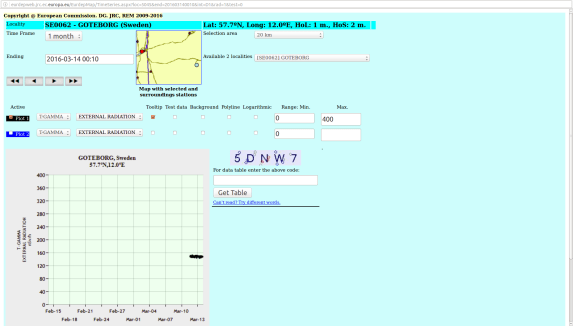
just a quick update on my article on the Ringhals NPP in Sweden.. I contacted someone via the STUK site as to why the radiation monitor was showing signs of switch offs etc and i did not get a response yet but instead the data was deleted from the other nearest Gottenburg monitor Eurdep.. Hmm? They are trying to blame the Russians and probably dont want RT to get hold of this info
here is the email i sent last week ,,
Dear Mr Leppänen
Due to the recent report in the Finland Times i decided to check the EURDEP mapping system to see if the report was true or not.
I found that the report was true and decided to do due diligence and checked to see if other isotopes might be present.
Using the Tool tip function yesterday I found that there was a similar amount of Iodine 131 to cesium 137 and other isotopes such as Cs 134, Cobalt 60, Beryllium 7, Cerium 144, Tellurium 132. That was all the isotopes present I could find.
I then set Eurdep to maximum and found that the nearest monitor to Rhinghals MPP in Sweden had just had a high peak to some 0.8 mcSv/h (800 nSv/h Gamma) .. On checking further it became apparent that the monitor had had data deleted going back to December 2015.
I might also point out that the monitor showed a higher level of radiation by some 15 – 20 percent (approx) after the peak that can still be seen today. I then decided to see if any activity had been seen on any other monitors that showed activity over the last week and found some corroboration in Stavanger and List in Norway (though the Eurdep map had been disconnected for Norway for some reason i accessed more accurate files from the Radnett monitoring system direct. Also gaps in the data for today on a Latvian monitor.
Then i checked the weather reports for the previous week and found that prior to the report the wind was from the west and south and only changed to coming from the east on the day of the Finland Times article. And I might point out that they said STUK were still investigating the source of the cesium. Then the story was picked up in Cyprus and that article mentioned the wind coming from the east as a possible source of contamination and no mention of the equal quantity of Iodine 131 from either article, nor any other isotopes.
I can supply screenshots of my findings but are aware that you would have access to the non public and more detailed EURDEP mapping system.
Now the isotopes are not available on the public mapping system.
As a concerned citizen, I wonder if you could clarify the situation?
My understanding is that Rhingals NPP appears to have multiple releases, possibly over some months. The iodine 131 means that the contamination is from a working reactor and the above information i have garnered points to the longevity and direction of the contamination.
Sorry to have bothered you but it is in the public interest and following Prof Ian Fairlies Peer reviewed paper on Child leukemia in children around NPP`s caused by large spikes of condensed release gases, that this situation be looked at in the interests of transparency and as a point of public safety.
Please feel free to ask me for any further information on any of my findings or thoughts on the matter.
I look forward to your response.
Yours sincerely
Shaun McGee
Picture of recent eurdep map with all above data deleted from the Gottenburg radiation monitor after the email was sent ;
200 Tonnes of High Level Nuclear Waste (Spent Nuclear Fuel) to be Dumped on America; Nuclear Fuel was 96% German Made – Oppose Until 11 March, 11.59 pm US Eastern Time – One Minute To Midnight

Currently Germany, with the complicity of the US government, is attempting to send 455 large casks of high level spent nuclear fuel from solid storage facilities, to sit outside under tarp in South Carolina, and probably to be diluted and buried in Texas, Utah, or elsewhere, USA. Shockingly, the Environmental Assessment itself says so. See:
The traitors at the US government want people to think that this is less than one tonne, based on the initial weight of highly enriched uranium (HEU) exported decades ago. However, this is spent nuclear fuel, and the original nuclear fuel was 96% German made by the aptly named “Nukem”. Because the Pebble Bed reactors had accidents the fuel is said to be in bad shape. It may…
View original post 1,451 more words
Small Island Nation Takes Superpowers to Court over Nukes: Lawsuits Moved Forward on Monday
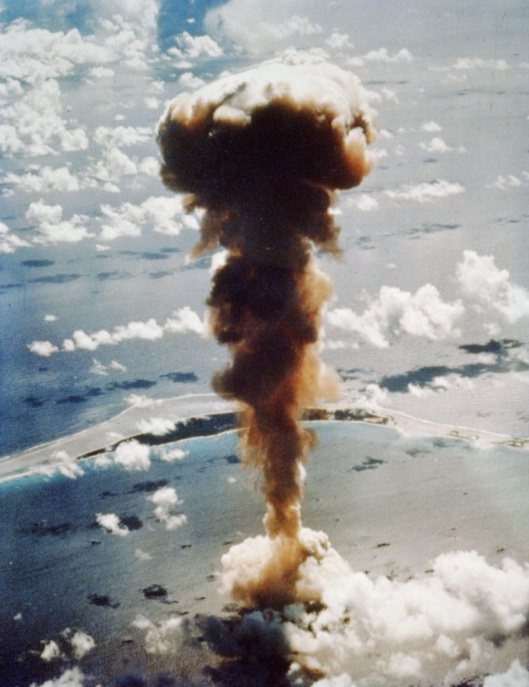
Operation Crossroads Abel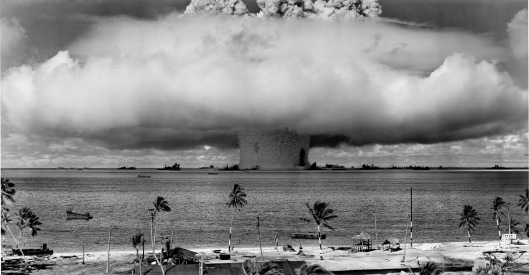
“Baker Explosion Operation Crossroads, Bikini Atoll
Castle Bravo, 15 MT
From CommonDreams.org:
“Small Island Nation Takes Superpowers to Court over Nukes
Three of the Marshall Islands’ lawsuits, alleging nuclear weapons arsenals violate international law, moved forward in international court on Monday
by Nika Knight, staff writer, Published on Monday, March 07, 2016
Decades after parts of its territory were “vaporized” by United States nuclear testing, the Republic of the Marshall Islands on Monday launched an international court battle against nuclear superpowers.
The Pacific island country has sued nine nations for violating the Nuclear Non-Proliferation Treaty signed in 1970, and now three of those lawsuits are proceeding in the International Court of Justice in the Hague.
Britain, India, and Pakistan have agreed to take part in the proceedings. The other defendants—the U.S., France, Russia, Israel, China, and North Korea—declined to participate. While India and Pakistan are…
View original post 734 more words
Debunking the myths around medicine and a nuclear waste dump

A very comprehensive 2010 OECD Nuclear Energy Agency report found reactor based isotope production requires significant taxpayer subsidies, as the cost of sale does not cover the cost of production.
The report concludes: “In many cases the full impact of Mo-99/Tc-99m provision was not transparent to or appreciated by governments… The full costs of waste management, reactor operations, fuel consumption, etc were not included in the price structure. This is a subsidisation by one country’s taxpayers of another country’s health care system. Many governments have indicated that they are no longer willing to provide such subsidisation.”
What is needed urgently is a debate about how much waste we make. We have a choice: whether we follow ANSTO’s expensive business model to ramp up reactor manufacture (and the long-lived radioactive waste that goes with it), or collaborate with Canada to develop cyclotron manufacture of isotopes that does not produce long-lived nuclear…
View original post 880 more words
Success of renewable energy and energy efficiency

 It seems impossible for petrol heads coal and gas heads, and especially nuke-heads to get their heads around this – BUT – renewable energy and energy effiiciency ARE HAPPENING – world -wide, in both big ways, and small ways.
It must be tough, when you’re addicted to such a complex , complicated, and expensive technology as nuclear power – as well as addicted to the money you get from being involved in this business – it must be tough to consider the reality that the fuels for solar and wind energy are FREE, and so is the energy conservation from good design in energy efficiency.
As Dr Helen Caldicott pointed out, long ago, if they could put a blanket around the sun and sell holes, they would.
The out-dated energy systems of the past – nuclear,coal, gas, are looking more
and more like unwieldy and costly dinosaurs, as the world…
View original post 41 more words
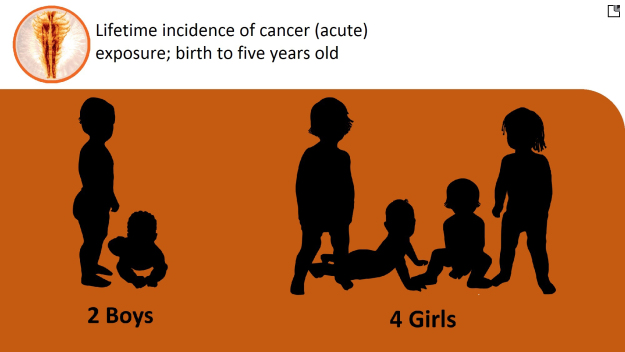
Japan Diary 2016, Fukushima+5, Part 4. Atomic Radiation is More Harmful to Girls and Women

 I have been in this job at NIRS for 25 years (03-03-1991—now). I can hear: “Mary, 50 women is not a meaningful sample size!” (I reply: Correct; for a study).
And: “Those women you met at Mama Tea Parties are self-selected activists—so they are a completely biased sample!” (Me: Correct, but this is not a study; these women are not a sample, they are leaders! They are Representatives with a capitol “R”!)
Worst: “Mary, you are simply servicing the ‘official’ government line! All of the symptoms you described could have any cause; these women are ‘just’ suffering anxiety and stress, and therefore they link their problems to radiation. There is no basis. These are ‘just’ women who are afraid of radiation; It is ALL IN THEIR HEADS!”
I hope anyone who shares those thoughts are back with me today. Please consider the points I have brought to Japan on gender…
View original post 1,144 more words
March 7 Energy News

Opinion:
¶ Australian coal v renewables: how much will it cost to bring electricity to India’s poor? • The Australian government continues to claim that coal from such sources as Queensland’s Galilee Basin will play a vital role in bringing cheap energy to developing nations. But is that really the case? [EconoTimes]
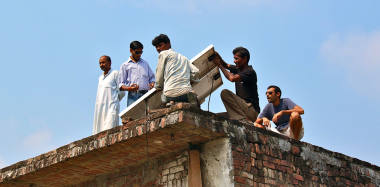 Renewables could be a better answer to India’s power problems.
¶ Lessons from Fukushima • Five years on, the 3/11 master narrative is still under construction. The response to the triple disaster in 2011 showed the world the best of Japanese society: orderly, humane and resilient. It also exposed the governance deficit, and that needs to be fixed. [East Asia Forum]
¶ Is the Hinkley Point C nuclear plant project about to unravel? From the outside looking in, EDF’s bid to build a nuclear power station at Hinkley Point in Somerset seems to lurch…
View original post 641 more words
The Women of Fukushima speak out
Six Japanese women offer brutally honest views on the state of the clean-up, the cover-ups and untruths since the nuclear accident in Fukushima, and how it has affected their lives, homes and families.
6人の日本人女性が、福島原発事故以降の汚染除去の現状、隠ぺいと嘘について包み隠さぬ本音を打ち明け、そして事故が彼女たちの人生、故郷、家族にどのような影響を及ぼしたかについて語ります。
Stream the entire film for free above.
If you would like to purchase a copy of the film to own, you can do so below:
http://www.women-of-fukushima.com/
Since the three reactors went into meltdown at the Fukushima Daiichi Nuclear Power Plant in 2011, a broad, disparate anti-nuclear movement has developed throughout Japan. Nowhere is that more apparent, perhaps, than in Fukushima prefecture, where a group of local women boldly protest the deafening silence of the Japanese government over the worst nuclear accident of this century. Largely ignored by their own media, these brave women brush aside their cultural shyness and share their brutally honest views on the state of the cleanup, the cover-ups, the untruths and the stagnant political climate in today’s Japan. Supported with haunting footage from abandoned towns around the plant, the Women of Fukushima (“Fukushima no Onnatachi”) offers startlingly candid insights, in the women’s own voices, about what has become of their lives, homes, and families in the aftermath of 3/11.
Women of Fukushima has proudly received the following awards:
Honorable Mention
London Lift-Off Film Festival, UK, 2012
Best Mid-Length Documentary
Reel Earth Film Festival, New Zealand, 2013
Best Short Documentary
Social Media Impact Awards, 2013
福島第一原子力発電所で3基の原子炉がメルトダウンを起こしてから1年以上。さまざまな人々による大がかりな反原発運動が日本国内で拡大しつつあります。 この運動がもっとも顕著なのは、おそらく福島県でしょう。そこでは地元の女性グループが勇敢にも立ち上がり、今世紀最悪の原発事故に対する日本政府の沈黙 に抗議しているのです。国内メディアにほとんど無視されてきたこの勇敢な女性たちは、内気な県民性を脇へ押しやり、現在の日本における汚染除去の現状や隠 ぺい、嘘、そして停滞した政治情勢について包み隠さぬ率直な意見を公表しています。立ち入り禁止区域内や周辺の荒れ果てた無人の村々の貴重な映像と共に、 「福島の女たち」は3・11によって彼女たちの人生、故郷、家族がどのような影響を受けたのかについての驚くほど率直な見解を、彼女たち自身の声で伝えま す。
The nuclear industry lied and Fairewinds rebuffed them at every turn!
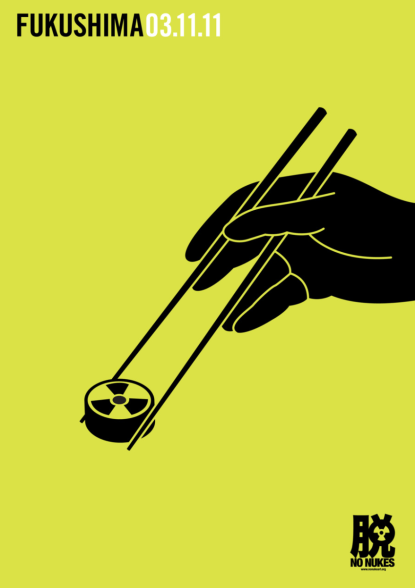
http://www.fairewinds.org/nuclear-energy-education/fukushima5
Modern ghost towns, abandoned houses, and far stretching roads lined with plastic bags of radioactive garbage have replaced the once bustling neighborhoods and cities of the Fukushima Prefecture. Formerly home to thousands, the massive release of radiation has forced residents to evacuate their beautiful homeland, leaving the land they love behind without knowing whether or not they may ever return without putting their lives at risk. Join the Fairewinds Crew and ask yourself this: With 99 operating atomic power reactors generating electricity in the U.S., what’s so different about your home, your town, your state that what happened to Fukushima couldn’t happen to you and your family?
Many Japanese and millions of Americans are currently living in the shadow of atomic reactors, plutonium reprocessing plants, and atomic waste dumps. It will be five years in March since the triple meltdown at Fukushima Daiichi began and the Japanese public and people around the world continue to search for the truth about nuclear risk and honest answers to their energy future. Fukushima@5 exposes the truth of the ongoing atomic devastation caused by the nuclear meltdown at Fukushima Daiichi.
Fukushima@5 from Fairewinds Energy Education on Vimeo.
Fukushima Health study March 2016 some thoughts with video

Published by Shaun McGee aka Arclight
Some thoughts on the recent Fukushima health study press conference
Bearing in mind that if Hokuto Hoshi said anything different he would have been liable to prosecution because of the Japanese Secrets Law. He did say that he could not say that the Thyroid cancers found were caused by radiation nor were they proven to be not caused by radiation @28 mins and then later @54 minutes he replied that there MIGHT be some problems with initial dose estimates…
Also, during the conference, the fact that children under 5 had no cancers was interesting and this fact was not explored. In Chernobyl we see continuing cases of thyroid cancer but no Iodine 131 present , so what is causing both the cancers in Chernobyl areas and Fukushima areas? Is it because the younger children were better protected from contamination than the school children at the time? Do Cesium isotopes cause thyroid cancer? did the school children get higher contamination eating the local food and cleaning up the school areas?
It is common for children to clean the school and serve the food in Japan and did this cultural trait cause the thyroid cancers we see?..
Also, he did say that their is a problem including children over 13 in the survey because they are over 18 and may not be included in the statistics (but no one asked him to explain this issue in detail ie no actual statistics) .. The question on the elderly was interesting as he said that the survey team did not work with elderly etc evacuees but this was left to the prefecture authorities to deal with and we know that the prefecture will not discuss any health related issues that are not mental health related. .
Towards the end of the session he mentioned that using a baseline in a clean area might cause stress for the unaffected population and therefore no such study was planned (so no baseline for the Fukushima study?? ) .. When asked if the Fukushima doctors were compromised as they just blame psychological stresses causing health effects, he said that the doctors were not compromised (even though they would face criminal prosecution if they said anything different)
Prof Tsuda`s Thyroid study was not mentioned by the press or himself, but he intimated that doctors outside the prefecture were not necessarily more reliable than the Fukushima doctors..
Press Conference: Hokuto Hoshi, Chairperson, Prefectural Oversight Committee Meeting for Fukushima Health Management Survey.
Speech:Japanese with interpretation.
March 07, 2016@Tokyo
Video of conference here
Some useful relevant and recent links here;
32,000 workers at Fukushima No. 1 got high radiation dose, Tepco data show
Experts divided on causes of high thyroid cancer rates among Fukushima children
Japanese People Shun Fukushima Survivors While Doctors Refuse Them Care
Confirming the Toshihide Tsuda Thyroid study findings in Fukushima – Answering the nuclear lobbies questions!
Abe’s secrets law undermines Japan’s democracy
by Jeff Kingston
“…Would the investigations into the causes of the Fukushima nuclear accident and the collusive relations between coopted regulators and the utilities that compromised reactor safety have been made public under the new law?
The reason why the public and media pressured the government to enact the national Information Disclosure Law in 2001 was because similar prefectural and local ordinances had exposed extensive malfeasance by bureaucrats and their squandering of vast sums on lavish wining and dining in the 1990s….”
Dentist urges people to keep kids’ baby teeth to study Fukushima radiation exposure
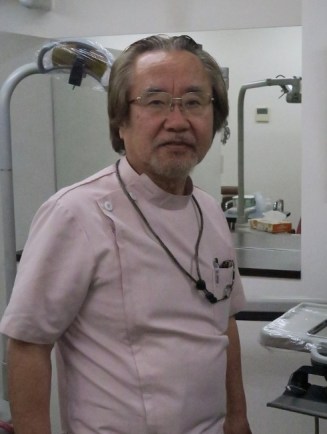
A movement calling on people to retain their children’s baby teeth to help study radiation exposure in the wake of the Fukushima nuclear disaster is gaining momentum in Japan.
The radioactive material strontium-90 is easily absorbed into baby teeth, and last year a group of experts formed the “Preserving Deciduous Teeth Network (PDTN),” urging people to keep their children’s baby teeth.
“Baby teeth are evidence of exposure to radiation. We urge people to keep them for the future,” says Takemasa Fujino, 67, a joint head of the network.
Fujino is president of a medical institution that operates three dental clinics in the Tokyo metropolitan region. One clinic is in Matsudo, Chiba Prefecture, which was regarded as a “hot spot” with relatively high levels of radiation following the March 2011 outbreak of the Fukushima No. 1 Nuclear Power Plant disaster.
With residents feeling uneasy, in 2011 Fujino began calling for people to preserve their children’s baby teeth, wanting to do something as a dentist to protect children’s lives and health.
So far, Fujino has had about 500 baby teeth donated, and has commissioned a Swiss testing facility to analyze some of them. Next year the network plans to establish its own testing facility in central Japan.
Baby teeth are formed from when the child is in the womb. “The teeth of children that were fetuses five years ago at the time of the accident will be coming at about this point exactly, and the movement to preserve them will become even more important,” Fujino says.
http://mainichi.jp/english/articles/20160307/p2a/00m/0na/015000c
1 This Month
23 April – WEBINAR – Why new nuclear reactors are the wrong tools for decarbonization Thursday, April 23 • 1 AM – 2 AM AEST
World Nuclear Power. Reactors 1951-2026, 75 Years of Nuclear Power.
Interactive Map– https://dv.worldnuclearreport.org/
Chernobyl: The Lost Tapes – A good documentary on Chernobyl on SBS available On Demand for the next 3 weeks– https://www.sbs.com.au/ondemand/tv-program/chernobyl-the-lost-tapes/2352741955560

of the week–London Campaign for Nuclear Disarmament

Tell the Ukrainian Government to Drop Prosecution of Peace Activist Yurii Sheliazhenko
To see nuclear-related stories in greater depth and intensity – go to https://nuclearinformation.wordpress.com
-
Archives
- April 2026 (231)
- March 2026 (251)
- February 2026 (268)
- January 2026 (308)
- December 2025 (358)
- November 2025 (359)
- October 2025 (376)
- September 2025 (257)
- August 2025 (319)
- July 2025 (230)
- June 2025 (348)
- May 2025 (261)
-
Categories
- 1
- 1 NUCLEAR ISSUES
- business and costs
- climate change
- culture and arts
- ENERGY
- environment
- health
- history
- indigenous issues
- Legal
- marketing of nuclear
- media
- opposition to nuclear
- PERSONAL STORIES
- politics
- politics international
- Religion and ethics
- safety
- secrets,lies and civil liberties
- spinbuster
- technology
- Uranium
- wastes
- weapons and war
- Women
- 2 WORLD
- ACTION
- AFRICA
- Atrocities
- AUSTRALIA
- Christina's notes
- Christina's themes
- culture and arts
- Events
- Fuk 2022
- Fuk 2023
- Fukushima 2017
- Fukushima 2018
- fukushima 2019
- Fukushima 2020
- Fukushima 2021
- general
- global warming
- Humour (God we need it)
- Nuclear
- RARE EARTHS
- Reference
- resources – print
- Resources -audiovicual
- Weekly Newsletter
- World
- World Nuclear
- YouTube
-
RSS
Entries RSS
Comments RSS
 nuclear-news