 French nuclear waste plan irks Germans near site, DW, 4 Aug 15 France wants to build a permanent nuclear waste storage facility not far from the German border. The plan has irked many in the region, but the government in Berlin sees no need for action.
Nuclear power plants produce radioactive waste, which emits radiation for thousands of years. Even Germany, which is set to phase out nuclear power, is looking for a final repository for its spent nuclear fuel, but has not yet decided on the location. Finding a geologically suitable site is not the problem, but rather, the protests over the location. Nobody wants to live with a nuclear waste dump at their doorstep.
For many decades, France has focused and relied on nuclear power, and now, plant operators are under pressure to find repositories for the radioactive waste.
The French government seems to have its sights set on Bure, a town in eastern France, around 120 kilometers (74 miles) from the German border. There, scientists have spent years investigating whether highly and moderately radioactive waste can be disposed of 500 meters underground. ANDRA, the French national agency for radioactive waste, believes that Bure offers what a repository requires: Nuclear waste can be stored there for 100 years; then, the site can be closed off and ultimately, the nuclear waste can decay there for 100,000 years until the radiation no longer poses a threat to humans.
‘Unbearable coup’
Opponents of the site feel less bothered by the repository itself then by the decision-making process that led to choosing it. In mid-July, the government added a last minute clause to a legislative package promoting business development but did not hold a debate or vote in parliament. And since no other potential nuclear waste sites have been explored in France, critics believe that the Bure location was practically predetermined. The Green party group in the French national assembly calls the procedure an “unbearable coup,” while the nation’s nuclear regulatory body and the French Institute for Radiological Protection and Reactor Safety (IRSN) have expressed “numerous reservations” about the plans………http://www.dw.com/en/french-nuclear-waste-plan-irks-germans-near-site/a-18627896
August 5, 2015
Posted by Christina Macpherson |
France, wastes |
Leave a comment
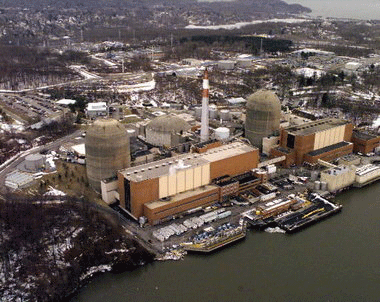
 Aging Nuclear Power Plant Must Close Before It Closes Us http://ecowatch.com/2015/06/22/indian-point-aging-nuclear-plant/ Paul Gallay | June 22, 2015 We must face facts regarding the Indian Point nuclear plant. It’s infrastructure is aging, its safety is dubious and most everyone knows it. What many people don’t know is that it can be replaced at little cost to ratepayers—and energy technologies taking its place would create new economic opportunities for New York.
Indian Point—just 38 miles north of New York City—is vulnerable to terrorism, has 2,000 tons of radioactive waste packed into leaking pools and relies on an unworkable evacuation plan. While some argue that transformer accidents—such as the one that occurred last month—can happen at any power facility, they happen with astonishing frequency at Indian Point. Its age is problematic: You wouldn’t rely on a 40-year-old appliance, why extend this trust to a nuclear plant? Moreover, the Nuclear Regulatory Commission (NRC) says Indian Point 3 has the highest risk of earthquake damage of all the nation’s reactors. About 20 million people live within 50 miles of Indian Point. If a catastrophic accident occurred, the consequences would be unimaginable.
The NRC permits Indian Point to evade its own safety standards requiring that electrical cables controlling emergency reactor shutdowns have insulation that lasts 60 minutes in a fire. When the NRC found that the plant’s insulation lasted just 27 minutes, it gave Indian Point an exemption. Your own home likely has more insulation on its electrical cables than does the plant. Continue reading →
August 5, 2015
Posted by Christina Macpherson |
safety, USA |
Leave a comment
Nuclear protesters call for radiation health study NZ Herald Aug 3, 2015 Veterans of New Zealand’s frigate protest at nuclear tests in the South Pacific are calling for a study into the effects of radiation on their health and their children and grandchildren.
About 500 men served on HMNZS Otago and HMNZS Canterbury during the 1973 official Labour Government’s sea-borne challenge to testing in the atmosphere at a French Polynesian atoll.
Mururoa Nuclear Veterans Group president Wayne O’Donnell said the group wanted to monitor medical problems of the veterans and their families.
However, without a full list of those who served on the frigates, the group needed to get in touch with crew, or their widows and families.
The group aims to set up a trust fund to enable medical testing of veteran’s children and grandchildren.
It sought data on issues suffered by the children and also mothers during conception and child birth.
“It is hoped the results will establish the truth of the genetic transfer of illnesses related to the nuclear exposure encountered by the crews that were sent to Muruoa Atoll in 1973,” said Mr O’Donnell.
Since the group formed two years ago, he said it had met Veterans Affairs Minister Craig Foss and senior officials and more communication was expected from both sides……….http://www.nzherald.co.nz/nz/news/article.cfm?c_id=1&objectid=11490895
August 5, 2015
Posted by Christina Macpherson |
health, New Zealand, weapons and war |
Leave a comment
 Is Radioactivity Really Good for You? – NRC to be The Decider NoNukesCA.netAugust 1, 2015 by James Heddle
“………..It is both amazing and distressing that the long-discredited notion of ‘hormesis’ continues to surface after all these years, and that the NRC would further damage its credibility by seriously considering it. It is an indicator of the desperation afflicting the international nuclear establishment in the wake of the still-on-going Fukushima disaster.
The zombie notion seems to have been exhumed by government and industry hacks in Japan as a way of reducing liability for radiological contamination of an area the size of New Jersey, and inducing refugees to return to contaminated lands with fraudulent assurances that low doses of radiation are not harmful.
As Krooth, Edelson and Fukurai report in their book Nuclear Tsunami: The Japanese Government and America’s Role in the Fukushima Disaster,
Even after Fukushima reactors exploded and massive radiation fallout contaminated many regions, the Japanese government and corporate media began to engage in another propaganda campaign to create a new kind of the myth – “low-level radiation is safe,” especially in Fukushima where more than millions of people were still trapped in radiation-contaminated areas.
The notion was long ago demolished by the research of such radiological pioneers as Drs. Alice Stewart, Ernest Sternglass and John Goffman………… http://nonukesca.net/?p=692
August 5, 2015
Posted by Christina Macpherson |
general |
Leave a comment
The Worst Disaster That You’ll Never Hear Anything About, Criticl, 2 Aug 15 The Fukushima Daiichi nuclear disaster embodies one of the worst man-made calamities in human history that day-by-day receives a dearth of coverage. Three nuclear reactors melting down on March 11th, 2011 ushered in the beginning of one of the most effective and insidious works of misinformation and obfuscation of reality that has been seen in recent memory.
The impetus for the disaster arose from the 2011 Tohoku earthquake, which was estimated to be the most powerful earthquake to ever hit the island in recorded history. The magnitude of the 869 Jogan Sanriku quake (the previous record holder) is only an approximation due to the lack of seismograph technology, nonetheless the Tohoku earthquake was more powerful than the plant was designed to withstand.
Nuclear reactors are designed to shutdown at the slightest event, quickly reducing the amount of heat produced; yet any heat inside the reactor (comprised of the radioactive decay of short lived fission products) is still a magnanimous amount. Backup diesel generators were quickly ushered into action at Fukushima after outside power was destroyed by the quake in order to keep the reactors cool to prevent a meltdown.
However, standard operation procedures for the plant flew out the window when tsunami waves of 14-20 meters struck the Fukushima prefecture shortly after the earthquake, rendering the 5.7-meter seawall beyond useless and knocking out the generators. Interestingly enough, the nearby Onagawa plant was saved by a 14.8-meter seawall despite being struck by a more powerful wave. Yanosuki Hirai fought bureaucracy for years that clamored for the same 5.7-meter seawall at Onagawa, and got his higher wall, remarking, “Corporate ethics is different from compliance, just being ‘not guilty’ is not enough.” The wall was remarkably effective to the point that local residents sought shelter in the plant’s gymnasium after their homes were destroyed by the wave.
The resulting influx of water into the Fukushima reactor led to a station blackout, meaning the operators lost all monitors and the ability to remotely control the reactor. Isolation condensers can cool the reactor with no electricity as long as the condenser is filled with water. Regrettably, operators had no idea that the reactor was quickly running out of water and that the valves opening the condensers were not working, rendering the first line of defence against a potential meltdown useless.
Authorities decided next to depressurize the reactors and inject water from fire engines to flood the reactors, yet unseen diversions to steam condensers via small bypasses meant injected water was not sufficient to prevent an overheating of the core. Reactor 1 saw a hydrogen explosion resulting from molten fuel cladding three hours after the tsunami. Vents and piping intended to filter hydrogen were either severely damaged by the earthquake or unable to operate due to a lack of power.
Unit 2 and the Unit 3 Reactor Core had steam-powered turbines that would circulate cooling water, but suffered a hydrogen explosion due to the pressure in the reactor becoming too low for the turbines to operate. Operators were too inexperienced to properly inject water via the fire engines, which again resulted in a meltdown of both reactors. Leading the cleanup efforts several days later, Japanese authorities quickly created a temporary cover over Unit 1 and begin to filter out contaminated water and repair the other components of the reactors, while devising a plan to contain exposed radioactive material from the damaged reactors……………. Like what you see? https://thefirsttruth.wordpress.com/
https://criticl.me/post/worst-disaster-youll-never-hear-anything-about-3562
August 5, 2015
Posted by Christina Macpherson |
Fukushima continuing, Reference |
Leave a comment
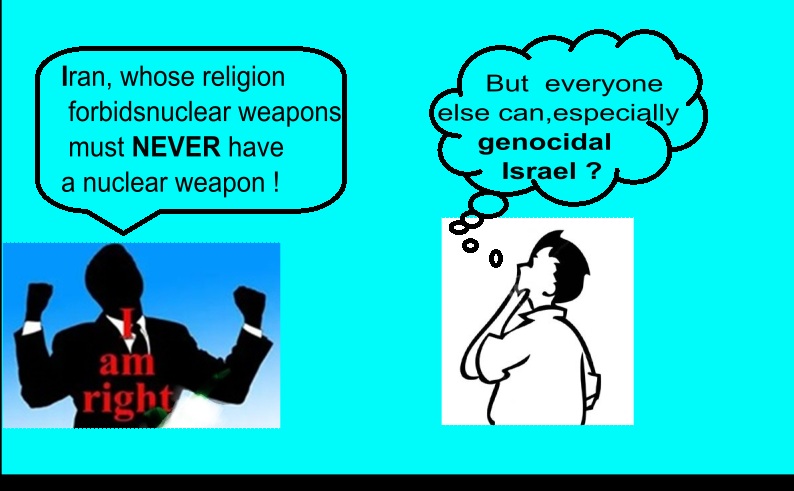
LA Time,s Marcy Winograd, Santa Monica,30 July 15 John Bolton’s rush to a radioactive World War III was not palatable even to George W. Bush, the man who took us to war in Iraq and appointed Bolton as ambassador to the United Nations. Neither the International Atomic Energy Agency nor the Central Intelligence Agency has found evidence that Iran has developed nuclear weapons.
In contrast to Israel, widely assumed to be a nuclear state, Iran is a signatory to the Nuclear Non-Proliferation Treaty, which sanctions the development of nuclear power for peaceful purposes.
To suggest that either Israel or the U.S. could surgically strike Iran’s scattered nuclear facilities is to ignore the fact that such strikes could plunge Iran and the entire Middle East into a fiery hell that would dwarf the annihilation of Hiroshima and Nagasaki.
Rather than plot world demise, Bolton would be well advised to support the Obama administration’s agreement for inspections and verification and let the American people begin a dialogue with Iran’s next generation of leaders. Sixty percent of Iran’s 75 million people are under the age of 30. Bolton is yesterday’s news; Iran’s youth are tomorrow’s hope.
http://www.latimes.com/opinion/readersreact/la-le-0730-thursday-iran-bolton-nuclear-20150730-story.html
August 5, 2015
Posted by Christina Macpherson |
general |
Leave a comment
 Mining Awareness +

Honeywell emergency evacuation zone via USW
Is the US NRC actually doing something to protect the public and not just the bank accounts of the nuclear industry? If so, it must really be much worse than they are saying. Uranium hexafluoride is deadly. It is nicknamed “hex” with good reason.

Click to access 15-040.ii.pdf
“CASE REPORTS/ The effects of uranium hexafluoride exposures were impressively displayed in a 1944 accident involving 21 workers. One individual died in 15 minutes due to severe steam burns and the effects of uranium hexafluoride and its degradation products, hydrogen fluoride and uranium oxyfluoride. Another worker died 70 minutes after exposure due to progressive respiratory distress. Most of the other 14 persons requiring hospitalization had corrosive irritation of the eyes, skin, and respiratory tract but were well enough to be released in 48 hours. Three more seriously exposed individuals were retained for observation for 10-14…
View original post 118 more words
August 4, 2015
Posted by Christina Macpherson |
Uncategorized |
Leave a comment
 Source of Image ; https://wikileaks.org/index.en.html
In part 1 of the show we look at a range of issues including our very own hacking and surveillance update, Monsanto trolls, TTIP issues, Uk mining in the courts, “Rivers of blood” speech from Hungary, London and Cairo military ties increasing, Yemeni forces attack a Saudi military base, CBC and Canada post to be privatised under TPP (wikileaks), cost of occupy protest for 17 days over 3 months comes to a staggering £2,000 000 approx, Norway joins critism of Isreali settlement moves, British oil interests working with ISIS , Eco- prisoner held by Russians refused release (Bellona.org) , Windows 10 versus Linux,
Link to Podcast here;
http://www.weebly.com/uploads/1/2/8/9/12897302/sean_jimmy_01-08-2015_pt1.mp3
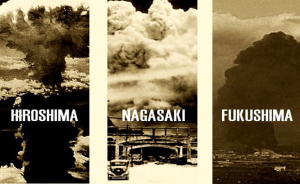 Source of image ; https://nonukesaction.wordpress.com/2012/07/30/august6th_pge_jpnconsulate/
In the second part of the show we discuss with Herve Courtois (French activist, blogger and researcher) the issues with Fukushima evacuees, The PR companies methods to smooth over the bad news, The connection between health studies done after Hiroshima and Nagasaki and how health studies are being equaly fudged by the nuclear corporations and Health Physicists, How the Japanese government is forcing evacuees back into contaminated areas against their will, How the Japanese blocked the UN petition to evacuate at least the children from more contaminated areas, We discuss also how the nuclear industry world wide is going into overdrive to promote the safety of nuclear energy around the anniversary of Hiroshima and Nagasaki and the timing of the first Japanese nuclear reactor to be brought back online. This is a fascinating interview packed with information that the main stream media can not report on. We discuss Wikileaks and the report concerning the spying on Japan by the NSA in recent years and the connection to the Okinawa protest.
Link to Podcast here;
http://www.weebly.com/uploads/1/2/8/9/12897302/sean_jimmy_herve_courtois_02-08-2015_pt2.mp3
Link to You Tube version here;
https://www.youtube.com/watch?v=KQF1qizK-eA
 Source for Image (Worth a read) https://neitshade.wordpress.com/2014/03/12/capita-the-new-punishers-of-the-poor/
In Part 3 we discuss the connection with the CAPITA 28 million Euro Eircode con, Privatisation of the post office in Ireland, Uber, PPS, Irish Water and TTIP. We also discuss a range of Irish relevant topics including is innovation only being encouraged in the corporate sector at the expense of the smaller buisnessman? Irish Cancer group report that health care could be seriously impacted by TTIP deal, Shell oil loses 2.6 Billion in profits in the last financial quarter due to multiple actions against their buisness ethics from around the world including in Ireland by Shell to Sea in Mayo and Greenpeace in Northern Ireland and more..
Link to podcast here;
http://www.weebly.com/uploads/1/2/8/9/12897302/sean_jimmy_01-08-2015_pt3.mp3
August 3, 2015
Posted by arclight2011part2 |
Uncategorized |
1 Comment
 KMB48
KMB48
UPDATE (2012/05/02): Added IEER’s Some Characteristics of Uranium and Thorium
UPDATE (2012/04/29): Added the UK NNL report! Thanks DARyan!
There is a rash of misinformation on the net about the supposed merits of the ‘new’ nuclear energy source on the block, thorium. I am sure that in a perfect world where nobody lies, thorium would be the perfect answer to the world’s energy needs as is claimed. This is unfortunately not the case.
Apparently, every time there is a new nuclear catastrophe, the thorium ‘miracle’ is promoted again as the ‘savior’ for the world. The Fukushima nuclear radiation catastrophe was not unique and the thorium misinformation artists have come out in droves. It’s the nuclear industry’s defense mechanism – create a new ‘safety myth’ that regular people can latch onto.
In reality, the thorium nuclear fuel cycle has been under development since the very early days of the nuclear industry…
View original post 575 more words
August 2, 2015
Posted by Christina Macpherson |
Uncategorized |
Leave a comment
 jpratt27
Urban areas are in trouble. Climate change – through more severe and frequent floods, droughts and heat waves – is endangering human life in towns and cities. And the problem is getting worse.
Quality of life in urban areas is already compromised by air, water and noise pollution. However, climate change threatens the services essential to urban living. Moreover, on current urban population growth trends, the impacts of climate change can only get worse. More than half of the world’s population – around 54 % – already live in urban areas and by 2050, the global urban population is expected to reach 6.4 billion. This population growth will test the already stretched water, food and energy resources that cities depend upon, to breaking point.
The dual challenge – Adapting to Climate Change and Urbanization: A focus on London
BGD test site: Green Roof at Imperial College LondonBGD test site:
View original post 577 more words
August 2, 2015
Posted by Christina Macpherson |
Uncategorized |
Leave a comment
 GarryRogers Nature Conservation
 (LOWER LAKE, Calif.)—Blazes raging in forests and woodlands across California have taken the life of a firefighter and forced hundreds of people to flee their homes as an army of firefighters continue to battle them from the air and the ground.
Twenty-three large fires, many sparked by lightning strikes, were burning across Northern California on Saturday, said state Department of Forestry and Fire Protection spokesman Daniel Berlant. Some 8,000 firefighters were attempting to subdue them, something made incredibly difficult by several years of drought that have dried out California.
“The conditions and fire behavior we’re seeing at 10 in the morning is typically what we’d see in late afternoon in late August and September,” said Nick Schuler, . . . ” Sourced through Scoop.it from: spiritandanimal.wordpress.com
View original post
August 2, 2015
Posted by Christina Macpherson |
Uncategorized |
Leave a comment
 The Fukushima No. 1 nuclear power plant is hit by tsunami on March 11, 2011.
Three former executives of Tokyo Electric Power Co. will stand trial over their criminal responsibility for the 2011 disaster at TEPCO’s Fukushima No. 1 nuclear power plant.
For the second time, the Tokyo No. 5 Committee for the Inquest of Prosecution has rejected an earlier decision by prosecutors not to indict the three, setting the stage for the forced prosecution of these three individuals.
They will be accused of professional negligence resulting in the deaths of people who were in hospitals when the disaster happened and other tragedies.
A report issued by the Diet’s Fukushima nuclear accident investigation committee states, “It is clear that the accident was a man-made disaster.”
But no government officials or TEPCO employees have been punished, either politically or administratively. In other words, no one has been held accountable for the nation’s worst nuclear accident.
Many Japanese citizens still feel that justice has not been meted out with regard to that harrowing disaster. Many are also concerned that a similar accident may occur again if nobody is held responsible for what happened in 2011.
A second decision by the independent judicial panel of citizens to demand the criminal prosecution of the three former TEPCO executives should be viewed as indicative of the disturbing and disquieting feelings among many citizens.
The system of forced indictment through the judgment of citizens was introduced in 2009, along with the “saiban-in” citizen judge system. Until that time, public prosecutors monopolized the power to decide whether to indict a suspect. The new system is intended to ensure that public opinion is reflected in the process of criminal prosecution, at least to a certain degree.
In reversing public prosecutors’ decision not to indict the suspects on grounds that there is no compelling case for holding them liable for negligence, the panel of citizens made a grave decision to force trials of the three individuals.
The court should, of course, consider carefully and fairly whether the former TEPCO executives should be held liable for the misfortunes of disaster victims from the viewpoint of evidence submitted.
At the same time, one question that needs to be asked is how TEPCO implemented measures to protect the nuclear plant from a possible tsunami and ensure the plant’s safety.
Collectively, the trials will offer a great opportunity to take a fresh look into the accident from a perspective that is different from those of the investigation committees set up by the government and the Diet.
There have not been many opportunities for people to talk about the disaster in public. But the three former TEPCO executives will probably be given opportunities to speak in the courtroom. The court can also order submission of specific pieces of evidence.
Future public debate on issues concerning nuclear power generation will benefit greatly if the trials uncover unknown facts in the process, such as chronological changes in the utility’s decisions concerning safety measures for its nuclear power plants and the ways the government and other public organizations influenced the company’s policy.
The nation’s judiciary has a long history of handing down rulings related to nuclear power generation. But in most of the past cases concerning the construction and operations of nuclear power plants, the courts ruled against opposing local residents.
The question is whether all these court rulings in favor of nuclear power were influenced in any way by the perception that there is no way to stop the expansion of electricity production with atomic energy based on the government’s energy policy.
The judiciary’s attitude to nuclear power generation has also been called into question by the accident.
In considering the criminal liabilities related to the Fukushima nuclear disaster, which has caused an unprecedented scale of damage, are the traditional criteria, like “specific predictability,” sufficiently effective?
The trials should prompt the judicial community to have more in-depth debate on this question.
We strongly hope the trials will be conducted in a way that lives up to people’s confidence in the judicial system.
Source: Asahi Shimbun
http://ajw.asahi.com/article/views/editorial/AJ201508010028
August 1, 2015
Posted by dunrenard |
Japan | Fukushima Daiichi, Tepco |
Leave a comment
 In Light of Fast Moving Wildfires; Evacuations, US Senators call on NRC to Stop Waiving Emergency Response Measures at Decommissioned Nuclear Sites (to no avail) miningawareness51 July 15
http://cdfdata.fire.ca.gov/incidents/incidents_current
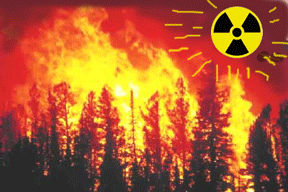 Despite calls by Senators in 2014 to stop elimination of emergency response measures at decommissioning nuclear reactors: “In June 2015, the Nuclear Regulatory Commission (NRC) approved elimination of off-site emergency planning for San Onofre, even though they know the waste is extremely dangerous. This means fewer emergency planning staff, reduced funding and less radiation monitoring. … The San Onofre fire staff has been reduced. The nuclear plant’s fire and rescue vehicles will be donated to new homes soon, according to Patrick Baughman, San Onofre fire marshal. San Onofre now has an agreement that makes the Camp Pendleton Fire Department the primary firefighting force for the nuclear plant. No details were provided about how this may affect ratepayers and local emergency services in this Southern California Edison July 9, 2015…” Read the rest here: http://sanonofresafety.org/emergency-planning-resources/ Learn more here: Sanonofresafety.org
Unfortunately, the Dry Cask Storage is not the miracle solution which the Senators and many others wish for. (See more at post bottom. [in original] )…..
Unfortunately, the Dry Cask Storage is not the miracle solution which the Senators and many others wish for. This is especially true due to the thin, flimsy nature of the inner, unvented, casks, which are also of questionable quality, and are set out unprotected on parking lots. Furthermore, Holtec requests NRC exemptions which impact safety and quality on a routine basis! For more info, do a search for Holtec within our blog, and consult Sanonofresafety.org Although most of the focus has been Holtec, the other licensed dry casks do not appear better. A Manhattan-like project for nuclear waste is needed. In the meanwhile, there appears need for adding more spent fuel pools to reduce crowding, and reinforcement of the existing ones, and somehow covering them (vented) against earthquake seiche. The spent fuel must spend some time in the pools anyway. A solution must be quickly implemented. https://wordpress.com/read/post/feed/4410547/767161082
August 1, 2015
Posted by Christina Macpherson |
climate change, safety, USA |
Leave a comment
Japan’s atomic bomb survivors continue in fight against nuclear weapons
As Japan prepares to mark the 70th anniversary of the world’s first nuclear attack, survivors ponder how to continue warning of the horrors of nuclear war, Guardian, Justin McCurry 31 July It is not as if Sunao Tsuboi needs another reminder of his violent encounter, as a 20-year-old university student, with a “living hell on earth”. The facial scars he has carried for seven decades are proof enough. But, as if to remind himself of the day he became a witness to the horrors of nuclear warfare, he removes a a black-and-white photograph and points to the shaved head of a young man looking away from the lens.

“That’s me,” he says. “We were hoping we would find some sort of medical help, but there was no treatment available, and no food or water. I thought I had reached the end.”
The location is Miyuki Bridge, Hiroshima, three hours after the Enola Gay, a US B-29 bomber, dropped a 15-kiloton nuclear bomb on the city on the morning of 6 August 1945. Between 60,000 and 80,000 people were killed instantly; in the months that followed the death toll rose to 140,000.
In the photo, one of only a handful of surviving images taken in Hiroshima that day, Tsuboi is sitting on the road with several other people, their gaze directed at the gutted buildings around them. To one side, police officers douse schoolchildren with cooking oil to help soothe the pain of their burns.
As Japan prepares to mark the 70th anniversary of the first nuclear attack in history, Tsuboi and tens of thousands of other hibakusha (atomic bomb survivors) are again confronting their own mortality.
“People like me are losing the strength to talk about their experiences and continue the campaign against nuclear weapons,” says Tsuboi, a retired school principal who has travelled the world to warn of the horrors of nuclear warfare.
The average age of the 183,000 registered survivors of the Hiroshima and Nagasaki attacks rose just above 80 for the first time last month.
While each has a unique recollection of the morning of 6 August and its aftermath, near disbelief at the scale of destruction is a theme that runs through hibakusha testimony…..
“If the hibakusha continue to speak out against nuclear weapons, then other people will follow suit. That’s why we have to continue our campaign for as long as we are physically able.”….http://www.theguardian.com/world/2015/jul/31/japan-atomic-bomb-survivors-nuclear-weapons-hiroshima-70th-anniversary
August 1, 2015
Posted by Christina Macpherson |
Japan, opposition to nuclear |
Leave a comment



 Source of Image ; https://wikileaks.org/index.en.html
 Source of image ; https://nonukesaction.wordpress.com/2012/07/30/august6th_pge_jpnconsulate/
 Source for Image (Worth a read) https://neitshade.wordpress.com/2014/03/12/capita-the-new-punishers-of-the-poor/




 nuclear-news