Dispute in Spain about where to put radioactive trash
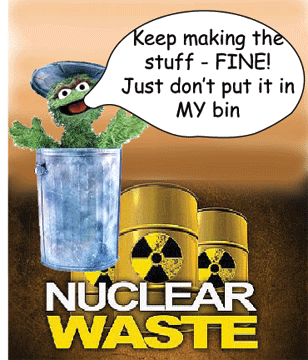 Row threatens Spain’s first nuclear graveyard, The Local, Jul 2015 Spain’s conservative government and the central region of Castilla-La Mancha locked horns Thursday over plans to build the nation’s first-ever temporary storage facility for highly radioactive waste. The country’s nuclear security council on Monday approved a report that gives the green light for the facility to be built near the village of Villar de Cañas in Castilla-La Mancha.
Enresa, the state-owned company responsible for Spain’s nuclear facilities, in 2011 chose the site from a list that included eight other communities which bid to house the nuclear dump.
But on Tuesday the new Socialist government of Castilla-La Mancha moved to block the construction of the facility by approving the expansion of a protected area for birds so it includes land earmarked for the radioactive waste site.
“This will protect an area where endangered species live,” regional government spokesman Nacho Hernando told a news conference. The Socialists took power in the region on July 4th following May local elections, ousting the conservative Popular Party which rules at the national level.
Energy Minister Jose Manuel Soria warned on Thursday that Spain would have to abandon nuclear power if the facility is not built………The government wants to store all the spent fuel produced at Spain’s eight nuclear power stations at the site.
Each power station currently stores the spent fuel which they produce in on site storage pools that are starting to fill up.
Spain has since 2008 stored low to medium-grade nuclear waste at a facility at El Cabril in Cordoba province in the southwest……..
environmental groups including Greenpeace accuse the dump’s supporters of putting money before safety and have lobbied to have the project shelved. http://www.thelocal.es/20150731/row-over-plans-for-spains-first-nuclear-graveyard
Hartlepool, Trawsfynydd & Small Modular Reactors,
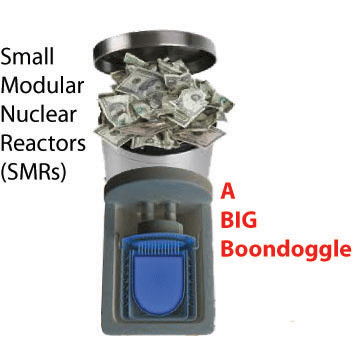 Meanwhile the Wall Street Journal reports that using modular construction techniques for the AP1000 reactor hasn’t worked. Building nuclear reactors out of factory-produced modules was supposed to make construction swifter and cheaper, but costly delays have shaken faith in the new construction method at the two US sites. “Modular construction has not worked out to be the solution that the utilities promised”
NuClearNews August 2015 New energy minister Andrea Leadsom has given the strongest signal  yet that the Government is looking to support a new era of factory-built, nuclear power stations – with a Newcastle company leading the way on their development in the UK. Speaking at the Nuclear Industry Association conference Ms Leadsom said: “Small Modular Reactors are an option we are investigating further. These have the potential to drive down the cost of nuclear energy and make financing easier through shorter construction times and lower initial capital investment requirements, in addition to high value commercial opportunities.” (1)
Amidst a growing sense of frustration and hand-wringing over the delays in the current nuclear programme, new hope has emerged that support is on the way for a home-grown generation of Small Modular Reactors (SMR). Continue reading
South Africa facing a R1-trillion nuclear financial disaster
 R1-trillion nuclear plans are simply “disastrous” for SA http://businesstech.co.za/news/energy/94677/r1-trillion-nuclear-plans-are-simply-disastrous-for-sa/ 31 July 15 Government’s R1-trillion nuclear build plans are going to turn South Africa’s energy crisis into a jobs crisis, according to the Democratic Alliance.
Earlier in July, the Department of Energy signed two memoranda of understanding with Russian state nuclear energy corporation Rosatom to implement several joint projects for education in the nuclear power industry.
Energy Minister Tina Joemat-Pettersson said that South Africa will start a nuclear build programme in 2015, in a bid to generate an additional 9,600MW of electricity.
The country will have as many as nine new nuclear power plants by 2030, with government pegging the total cost to build these at R500 million – though energy experts have stated R1 trillion was more realistic, and would likely increase.
In a statement issued on 31 July, DA leader Mmusi Maimane said the nuclear deal will drag the country’s economy back, and will cost thousands of South Africans their jobs.
According to the party, the details behind government’s nuclear plans show that the undertaking is unaffordable.
“Whichever funding model is chosen, you can rest assured that it will be paid for by the South African taxpayer, and that we can expect substantial tariff increases over many years.”
These higher prices would price the poor out of electricity usage, and would result in energy-heavy industries – like mining and manufacturing – shedding more jobs, said the DA.
“For a government that claims to be pro-poor – and for a country where 5.2 million people cannot find work and a further 2.4 million have given up looking – this is unfathomable.”
Maimane pointed to a number of flaws in the scheme:
- Even if government’s estimate of R500 million was correct, South Africa cannot afford to build the nuclear reactors. This would result in private-public partnerships being formed, which would be reflected in current and future electricity prices increasing, as citizens would have to pay.
- South Africa lacks the capacity and skills to operate eight nuclear power stations. We lack the capacity and skills to run the one we already have, said Maimane.
- The project goes against the government’s own National Development Plan, which urges caution on nuclear, pointing rather towards gas, wind, and solar energy as a primary source of power.
To date, government has not provided solid details on the nuclear build plans.
“Until the government tells us how much the nuclear deal will cost, how we plan to pay for it, and how they intend to choose the preferred bidder, we cannot begin to entertain the notion of going down this path.”
The DA leader said that, while the party does not oppose nuclear power, the current plan is “not right” for the country, and it will do anything in its power to block the deal.
Canada’s pro nuclear government keeps mum about the dangers of radioactive strontium 90
The government puts labels on cigarettes and warns of the danger to health. People have the right to know and the right to smoke cigarettes if they choose. People have the right to know what is in their milk and decide whether or not they want to drink it.
Could it be that the Canadian government’s involvement in the mining, processing and selling of uranium to other countries, its selling of nuclear technology to the world as well as its profiting from Canada’s own nuclear power plants and nuclear research reactors, makes it not want to draw attention to the dangers of radioactivity?
Canada’s Land of Milk and Strontium 90, Enviro reporter, February 28, 2013
 We live on the Pacific Northwest coast of Canada. By many accounts, our area was particularly hard hit by the radioactive fallout that came directly over to us, in the jet stream, from the triple meltdown and hydrogen explosions at the nuclear power plant at Fukushima Daiichi, Japan, in March of 2011.
In Seattle, it was reported that the air was so contaminated after the accident that people were breathing in five “hot” radioactive particles a day!
The fallout was found to come down heavily in the rain that is so frequent in this rain forest we call home. Initially Simon Fraser University, in British Columbia, detected Iodine 131 in the rainwater on Burnaby Mountain They also found it in the seaweed on the shores of North Vancouver
Eventually we learned that the Air Monitoring Stations on Vancouver Island had picked up Radioactive Iodine 131 at levels 300 times higher than normal background.
A lab in Washington State found levels of radioactive xenon gas 40,000 times higher than normal levels.
So we knew the fallout had reached us. And we knew that there were at least 200 other radioactive substances that came along with the fallout from the nuclear plant accident. What we didn’t know was the level of contamination.
We learned that in California the tuna, milk, pistachios, naval oranges, prunes, wild mushrooms, strawberries, seaweed, beef, kale and spinach had been shown to be contaminated with radioactivity. However, having watched the jet stream patterns, we saw that our area in south western British Columbia was often missed by the atmospheric airflow from Japan.
After the initial study came out from Simon Fraser University, no more radioisotope studies were conducted by the researchers at that university So we set about trying to find out if anyone else was testing for radioactive fallout in Canada. Continue reading
Nuclear industry lobbying for tax=payer funding as a ‘carbon emissions cure’
U.S. nuclear operators try to save plants with carbon emission rule, Reuters, WASHINGTON | BY VALERIE VOLCOVICI , 31 July 15, The U.S. nuclear industry has made a last-minute push to urge the Obama administration to protect the country’s 100 nuclear units in its forthcoming carbon rule and prevent the early retirement of several plants.
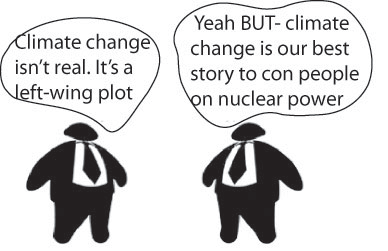
Representatives of the Nuclear Energy Institute met on July 21 with White House officials who are currently reviewing the final version of the Environmental Protection Agency’s Clean Power Plan. The industry contends the original version of the plan, released in mid-2014, fails to encourage states to keep some “at risk” plants from closing.
NEI and other industry officials said the final plan, which is expected as soon as Monday, should provide incentives for states to renew operating licenses and ramp up generation at nuclear plants.
The industry said eight plants – producing about 8,000 MW of generation – struggle to compete in competitive electricity markets. The lobby group argued that the loss of even one of these zero-carbon emission plants would be “a major blow to carbon reduction efforts.”
The details were posted on the White House Office of Management and Budget website.
The Clean Power Plan is the centerpiece of President Barack Obama’s climate change strategy, which seeks to slash power plant carbon emissions to 30 percent below 2005 levels by 2030……..
Governments, scientists and industry experts can’t face the truth about Fukushima
 Have you considered …Fukushima will never be over Karen Warnick The Independent, 31 July 15
There are very good reasons why we aren’t being told the truth about the Fukushima disaster, but it doesn’t matter what those reasons are. The fact that we aren’t getting updated information in the “normal” media and the scant information that is coming out from them can’t be counted on to be accurate is the problem.
If we were to be told the real truth, civilization as we know it would become utter chaos. It’s hard not to be too fatalistic, or too much of a “conspiracy theorist” over this issue. The reason being that the truth is the disaster that was and is Fukushima will never be over.
There has never been a disaster of this magnitude before and the scientific community and nuclear energy experts don’t have a clue how to fix it
There has been news about Fukushima in the past four years; it’s just hard for the average person to find.
Consider some of the statements made by “experts” in various articles in scientific papers and other world media sites: “Even more ominously, Seiichi Mizuno, a former member of Japan’s House of Councillors (Upper House of Parliament, 1995-2001) in March 2015 said: “The biggest problem is the melt-through of reactor cores… We have groundwater contamination… The idea that the contaminated water is somehow blocked in the harbor is especially absurd. It is leaking directly into the ocean. There’s evidence of more than 40 known hotspot areas where extremely contaminated water is flowing directly into the ocean… We face huge problems with no prospect of solution.” (Source: Nuclear Hotseat #194)”……..
. It doesn’t matter anymore. We are never going to be over Fukushima.
We are still not “over” Chernobyl, which happened in 1986. The land around it will never be habitable again and hundreds of thousands have died, and hundreds of thousands have cancer.
It’s no wonder governments, scientists and industry experts don’t want to talk about it. There’s nothing any of them can do about it. Fukushima is not over, will never be over, and it could get a lot worse. That’s all anyone needs to know.
Karen Warnick is a reporter with The Independent. Reach her at kwarnick@wmicentral.com. http://www.wmicentral.com/opinion/editorials/fukushima-will-never-be-over/article_908093a8-34ce-11e5-9cbe-774ed88209e0.html
UK’s Slow Progress on Plutonium Stockpiles.
 NuClear news August 2015 Since the Government confirmed in December 2011 that its preferred management option for the UK’s plutonium stockpile was to convert the ‘asset of zero value’ into Mixed Oxide (MOX) fuel, further progress on the option has been conspicuous by its absence, says Cumbrians Opposed to a Radioactive Environment (CORE). (1)
Call from Iran for world nuclear disarmament
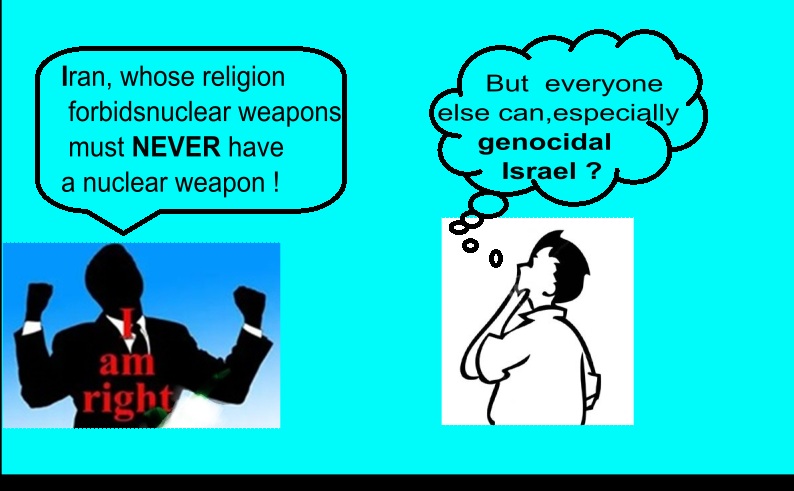
 Iran’s foreign minister calls for world’s nuclear weapons states to disarm Mohammad Javad Zarif calls for talks on arms elimination treaty and for creation of zone free from weapons of mass destruction in Middle East, Guardian, Julian Borger 31 July 15, Iran’s foreign minister, Mohammad Javad Zarif, has called on Israel and the world’s eight other states with nuclear weapons to begin disarming, in response to his country’s acceptance of strict curbs on its nuclear programme in anagreement reached earlier this month.
Writing in the Guardian, Zarif argues that by agreeing to the Vienna deal, titled the joint comprehensive plan of action, Iran was honouring the spirit of the nuclear non-proliferation treaty (NPT), in which states without nuclear weapons promise not to acquire them. But he says the nuclear weapons states are not keeping their side of the bargain by disarming.
“The cold war-era asymmetry between states that possess nuclear weapons and those that don’t is no longer tolerable,” the minister writes, claiming Iran had “walked the walk” on non-proliferation.
“Meanwhile, states actually possessing these destructive weapons have hardly even talked the talk, while completely brushing off their disarmament obligations under NPT and customary international law. That is to say nothing of countries outside the NPT, or Israel, with an undeclared nuclear arsenal and a declared disdain towards non-proliferation, notwithstanding its absurd and alarmist campaign against the Iranian nuclear deal.”
Israel does not officially confirm its nuclear arsenal, but it is believed to have about 80 warheads……….
Zarif makes three proposals: for negotiations to begin on a nuclear weapons elimination treaty; that this should lead initially to nuclear arsenals being taken off high alert readiness (for example, by removing warheads from missiles); and for the creation of a zone in the Middle East free of weapons of mass destruction………..
Patricia Lewis, the research director for international security at the Chatham House thinktank, said: “Most interesting to me is that Zarif is strongly linking the nuclear deal in Vienna to the WMD-free zone. Iran used to be a thought leader in this process – a role it absconded from in recent years. It looks as if once again it may be prepared to take this on as a major issue. The fascinating thing to watch will be how Israel will respond, a country that won’t even reveal its nuclear weapons capability and remains outside the NPT.” http://www.theguardian.com/world/2015/jul/31/iran-nuclear-weapons-states-disarm-israel?CMP=share_btn_tw
Japanese Government Slick Propaganda to Minimize the Fukushima Situation in the eyes of the UN
After reading that article, I believe that this kid will be a tool for the the Japanese Government, which will be using that kid testimony to minimize the desperate extent of the situation in Fukushima, to justify its non evacuation of many people, the financially forced return of the previoulsly evacuees to go back to live in contaminated villages and to promote an illusory criminal reconstruction in the eyes of the world at the UN….She has been coached to that effect…..At least that is the impression this article gives me….
I must add that to use a victim, a youth, as agent for their propaganda, is pretty slick, sly and devious, on the Japanese government part…
Poor kid, she is being manipulated without even be aware of it….Sad, disgusting…
“… it is not the entire area of Fukushima Prefecture, but only some regions that people cannot live in. Most of Fukushima is safe to live in.”
Unless:
1. The wind blows
2. It rains
3. You eat the food
4. You breathe
“…there is a lot of good news about Fukushima too.” Do tell!!!
Then, come back in 20 years and let us know which cancer(s) you have faced, if you have had a child with birth defects…at 16, it is so very easy to manipulate you. You want to go ‘home’…it just isn’t there anymore.
 Ayumi Kikuchi, left, practices the speech she will give at a United Nations event with her English teacher, Fumi Arimura, in Iwaki, Fukushima Prefecture, on July 23. She attends the relocated Futaba High School, now operating in the city of Iwaki.
Fukushima high school evacuee to share experiences at United Nations
IWAKI, Fukushima Prefecture–A high school student who thought she was only temporarily fleeing her home during the 2011 Fukushima nuclear disaster and remains an evacuee to this day, will address an event at the United Nations headquarters this month.
Ayumi Kikuchi, 16, a former resident of Futaba, Fukushima Prefecture, located near the Fukushima No. 1 nuclear power plant that suffered a triple meltdown, was asked by school officials to give the speech in New York City.
A nonprofit organization that deals with the issues of human rights, health and the environment contacted the prefectural Futaba High School, which now operates out of the nearby city of Iwaki. It invited a student from the prefecture to come and share their experiences of having lived through those trying events and the aftermath.
“At that time, I was a sixth-grader in my elementary school, and we were going to graduate in a few days,” Kikuchi says in her speech. “My home was 4 kilometers from the plant. At that time, I didn’t understand why we had to leave our home, and I thought we could come back home soon.”
However, she has been forced to live in various shelters over the years, including the Saitama Super Arena and one set up at the former Kisai High School in Kazo, Saitama Prefecture.
“I wondered what’s going to happen to us (at the time),” she said. She remembered watching the events unfold on the news.
“I went back to my home only once after the accident,” she wrote. “There were many houses left collapsed and roads still had cracks. Nothing seemed to have changed since the disaster. However, the inside of my house was totally different from what I remembered because of animal excreta and rain leaking in.”
The high school student said she hopes to one day work for the local government to help restore her town to what it once was.
Her school, which has a history of more than 90 years, will close after her class graduates. Four other relocated high schools are also scheduled to close.
“Many graduates are feeling very sorry and regretting that their old school is forced to close even though the school or the students have done nothing wrong themselves,” Kikuchi says in her speech.
In her message, Kikuchi will call on people to help one another in times of disaster. She also plans to ask people to share and pass on the memories that result from such devastating events.
“I want people to know about Fukushima’s situation accurately,” she wrote. “People in other countries may think that Fukushima is uninhabitable and may wonder why people don’t flee from Fukushima. In fact, however, it is not the entire area of Fukushima Prefecture, but only some regions that people cannot live in. Most of Fukushima is safe to live in. Also, various movements toward reconstruction have been made, and there is a lot of good news about Fukushima too.”
Fumi Arimura, an English teacher at Kikuchi’s school, helped her write her 10-minute speech. Kikuchi leaves for the United States on Aug. 2.
Source: Asahi Shimbun
http://ajw.asahi.com/article/0311disaster/fukushima/AJ201508010022
What Strontium 90 does to the body
Canada’s Land of Milk and Strontium 90, Enviro Reporter, February 28, 2013“…….Strontium 90 never occurs naturally. It is man-made by the nuclear fission reaction. Strontium 90 is a “bone seeker.” It mimics calcium and if a bone is deficient in calcium, it will take up Strontium 90 in place of the calcium.
But whereas calcium will make your bones strong, Strontium 90 gets deposited in the bones and bone marrow and causes bone cancer and cancer of the tissues nearby. It can also get into the blood and cause leukemia.
Strontium 90 decays by practically pure beta radiation. When beta particles are ingested, they penetrate cells at the molecular level and are so strong that they can actually change the structure of the molecules they strike. If the molecule it strikes is a DNA molecule, then it can cause a spontaneous mutation.
Babies and pregnant women are the most sensitive to the effects of radiation. If a pregnant woman is drinking milk that has radioactive Strontium 90 in it, the fetus will concentrate that radioactivity. If a woman who is breastfeeding is drinking radioactive milk, the Strontium 90 will concentrate in her breast milk and thus get transferred to her baby.
Young children are the next most affected. Young girls are more affected than young boys. Women are more susceptible to the effects of radiation than men.
Strontium 90 has a half life of 28.79 years so it will be around for about 290 years before it completely decays away to a nonradioactive and risk-free form. That is, any Strontium 90 you ingest and lodges in your bones will remain in your body, decaying away, for your entire life.
There is no question about it – Strontium 90 is a man-made poison that we should never have to consume………http://www.enviroreporter.com/2013/02/canadas-land-of-milk-and-strontium-90/
Fine – talk about nuclear power – but don’t pretend that it’s “low emissions”
The technology trap Could new types of nuclear power station solve the problem? “Fast breeder reactors” produce more nuclear fuel than they use and so would theoretically have much lower life-cycle CO2 emissions than existing “burner” reactors. But in practice breeders are even more complex, dangerous and expensive than burners. As a result they have been stuck at the demonstration stage for decades and even some nuclear proponents admit that breeders are unlikely to be commercialized for at least another two decades, if ever.
The government’s issues paper mentions the possibility of nuclear reactors based on the thorium fuel cycle, but these are also more complex than uranium-based nuclear energy and there are no commercial systems operating as yet.
To sum up, based on existing commercial technology, nuclear energy is not a solution to the global climate crisis, because it will soon become too emissions-intensive. It is also not a short-term solution, because it is a very slow technology to plan and construct. It is dangerous and very expensive.
Sure, let’s debate nuclear power – just don’t call it “low-emission”,

miningawareness Mark Diesendorf, UNSW Australia, 31 July 15 Nuclear power is back on Australia’s radar. In its recent issues paper released as a preface to September’s Energy White Paper, the Abbott government reopened the debate thus:
With environmental considerations constraining the further development of hydro-electric sources, nuclear technologies continue to present an option for future reliable energy that can be readily dispatched into the market.
This sentence appears in a passage dealing with the “move to low-emissions energy”, and although nuclear is not explicitly described as a low-emission option, it certainly looks as if the government is prepared to consider embracing nuclear power as part of an alleged move away from fossil fuels.
Is nuclear energy really low-emission?
Unfortunately, the notion that nuclear energy is a low-emission technology doesn’t really stack up when the whole nuclear fuel life cycle is considered.
In reality, the only CO2-free link in the chain is the reactor’s operation. All of the other steps – mining, milling, fuel fabrication, enrichment, reactor construction, decommissioning and waste management – use fossil fuels and hence emit carbon dioxide.
Several analyses by researchers who are independent of the nuclear industry have found that total CO2 emissions depend sensitively on the grade of uranium ore mined and milled. The lower the grade, the more fossil fuels are used, and so the higher the resulting emissions. Continue reading
Bradwell: Handing Future UK nuclear Infrastructure to the Chinese
 NuClear News August 2015 The Government is preparing to hand over future UK nuclear infrastructure to Chinese firms, according to the GMB Union in a “total betrayal” of UK workers. The GMB raised concerns earlier this month about the prospect of the Bradwell, site in Essex, being given “lock, stock and barrel” to the Chinese National Nuclear Corporation.
US State and federal agencies agree on plan to demolish southern Ohio uranium plant
Demolition plan OK’d in southern Ohio uranium plant cleanup, WT, By KANTELE FRANKO – Associated Press – Friday, July 31, 2015
COLUMBUS, Ohio (AP) – State and federal agencies have agreed on a plan for demolishing huge buildings and other facilities from a Cold War-era uranium plant in southern Ohio.
 It is the latest development in the lengthy decontamination and decommissioning process for the Portsmouth Gaseous Diffusion Plant in Piketon, which was built in the 1950s and produced enriched uranium for defense and commercial uses until 2001. Its shutdown left old buildings, chemicals and radioactive areas that must be addressed……..the structures slated for demolition include the three process buildings, each with more than 30 acres under one roof. The cleanup plans allow for recycling of equipment and building materials if that can be done in a safe, cost-effective way…….. http://www.washingtontimes.com/news/2015/jul/31/demolition-plan-okd-in-southern-ohio-uranium-plant/
Brain cancer risk increases with long term use of cell phone near one’s ear
Long-Term Exposure To Cell Phone Radiation Increases Risk Of Brain Cancer, New Study Says . Inqisitr 31 July 15 A new study appears to support long-held suspicions that prolonged use of cell phones, especially when placed against the ears, could increase the risk of cancer, specifically, certain types of brain cancer.
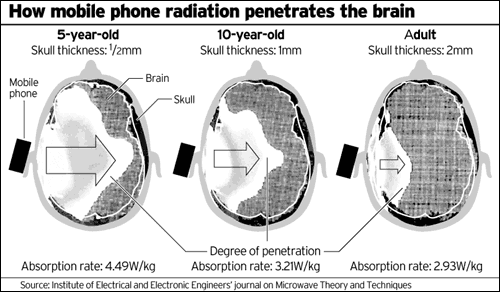
A meta-study is an analysis of hundreds of previous studies on the same subject using statistical methods than can reveal patterns across studies not revealed in single studies or smaller samples of studies.
Commenting on the results of the study in the light of previous studies that raised suspicions of a link between certain types of brain tumors and cell phone use, Yakymenko said, “These data are a clear sign of the real risks this kind of radiation (LIRF) poses for human health.”
The study concluded that damage caused by cell phone radiation to human DNA over long periods increases the risk of suffering not only headaches, fatigues and skin disorders, but also cancer.
According to the researchers, available data indicates that use of a cell phone for 20 minutes a day for up to five years increased the risk of certain types of brain tumor threefold. Using a cell phone for an hour a day for up to four years increased the risk of brain tumors three to five times……..
Although a recent large study found no clear evidence of link between cell phone use and cancer, a small group of heavy cell phone users showed a significanly higher incidence of brain tumors than the rest, suggesting, in concurrence with the new study, that heavy use of cell phones over a long period of time could increase cancer risk.
Despite figures showing that the overall incidence of brain cancers have not increased significantly since the introduction of cell phones, Yakymenko warned cell phone users to be wary of the possibility that data spanning longer periods — such as three decades – could show higher levels of risk.
“(Our) data were obtained on adults who used cell phones mostly up to 10 years as adults. The situation can dramatically differ for children who use cells phone in childhood, when their biology much more sensitive to hazardous factors, and will use it over the life.”
The researchers advised that the best way to minimize risk is by reducing the amount of time spent with your phone placed against your ears while making or receiving calls. In other words, people should use their phones handsfree and away from their ears more often. http://www.inquisitr.com/2298149/long-term-exposure-to-cell-phone-radiation-increases-risk-of-brain-cancer-new-study-says/#ce1txuT4TR3W1g1W.99
Middle East arms race? Started by Israel!
 Israel, Not Iran, Started Middle East Nuclear Arms Race Claims that the Iran deal will spark a nuclear arms race in the region ignore the fact that Israel has led the race for the last 65 years. US News, By: Bruce Riedel, Columnist for Al-Monitor , 31 July 15
The debate about the P5+1 agreement with Iran on its nuclear program has already produced a storm of angry rhetoric and a tsunami of opinion pieces. But one issue is notably absent from the debate: the fact that Israel has a nuclear weapons arsenal and sophisticated delivery systems that are decades ahead of anything Iran could develop in the foreseeable future. Iran should be constrained by a global regime from getting the bomb, but the notion that Israel is a weak powerless state like Czechoslovakia in 1938 is ludicrous.
The American intelligence community first detected the development of the Israeli nuclear weapons program through U-2 overhead imagery at the end of the 1950s……….
The debate about the Iran deal should be conducted within the context of an understanding of the balance of power in the Middle East. A comprehensive and thorough discussion of the balance of power should include Israel’s real strategic situation. Hysteria is not the answer when the stakes are high. http://www.usnews.com/news/articles/2015/07/29/israel-not-iran-started-middle-east-nuclear-arms-race
1 This Month
Chernobyl: The Lost Tapes – A good documentary on Chernobyl on SBS available On Demand for the next 3 weeks– https://www.sbs.com.au/ondemand/tv-program/chernobyl-the-lost-tapes/2352741955560

of the week–London Campaign for Nuclear Disarmament

Tell the Ukrainian Government to Drop Prosecution of Peace Activist Yurii Sheliazhenko
To see nuclear-related stories in greater depth and intensity – go to https://nuclearinformation.wordpress.com
-
Archives
- April 2026 (189)
- March 2026 (251)
- February 2026 (268)
- January 2026 (308)
- December 2025 (358)
- November 2025 (359)
- October 2025 (376)
- September 2025 (257)
- August 2025 (319)
- July 2025 (230)
- June 2025 (348)
- May 2025 (261)
-
Categories
- 1
- 1 NUCLEAR ISSUES
- business and costs
- climate change
- culture and arts
- ENERGY
- environment
- health
- history
- indigenous issues
- Legal
- marketing of nuclear
- media
- opposition to nuclear
- PERSONAL STORIES
- politics
- politics international
- Religion and ethics
- safety
- secrets,lies and civil liberties
- spinbuster
- technology
- Uranium
- wastes
- weapons and war
- Women
- 2 WORLD
- ACTION
- AFRICA
- Atrocities
- AUSTRALIA
- Christina's notes
- Christina's themes
- culture and arts
- Events
- Fuk 2022
- Fuk 2023
- Fukushima 2017
- Fukushima 2018
- fukushima 2019
- Fukushima 2020
- Fukushima 2021
- general
- global warming
- Humour (God we need it)
- Nuclear
- RARE EARTHS
- Reference
- resources – print
- Resources -audiovicual
- Weekly Newsletter
- World
- World Nuclear
- YouTube
-
RSS
Entries RSS
Comments RSS
 nuclear-news