Fukushima village farmers plant rice for 1st time since nuclear disaster

Farmers have begun planting rice in a village in Fukushima Prefecture, Japan, for the first time since the 2011 nuclear disaster contaminated the soil with radiation, leading to forced evacuations.
Eight farms in the village of Iitate plan to resume rice-growing this year in a combined area of about 7 hectares, the Japan Times reported. That area is significantly smaller than the 690 hectares available to farmers before the Fukushima disaster.
It marks the first time since the area was evacuated that farmers have been able to plant rice for commercial sales. Evacuation orders were lifted at the end of March for parts of the village.
The farmers will conduct radiation tests on the rice before shipping it to retailers. However, no rice grown in Iitate has shown radioactivity levels beyond the safety standard since experimental planting began in 2012.
Meanwhile, the government also took steps to encourage evacuees to return to the area on Wednesday, with an upper house committee passing a bill aimed at boosting governmental support so that displaced individuals can return to their homes earlier than planned.
The bill, which is expected to soon be passed by the upper house plenary session, will allow the government to fund more infrastructure rebuilding in the area, including roads and removing radioactive substances.
Also on Wednesday, the mayor of Minamisoma, Fukushima Prefecture, called on Prime Minister Shinzo Abe to introduce an advanced medical care system in the city, which is located north of the Fukushima Daiichi nuclear plant.
Minamisoma is also developing a system which will give residents access to doctors online, in an effort to quell health concerns.
In March 2011, an earthquake and subsequent tsunami led to the meltdown of three nuclear reactors at Fukushima Daiichi, making it the worst nuclear disaster since the Chernobyl catastrophe in 1986.
https://www.rt.com/news/387907-rice-farmers-fukushima-nuclear/
Multiple wildfires hit Tohoku, approaching near residential areas

A wildfire continues to burn in a mountain forest in Kamaishi, Iwate Prefecture, on the morning of May 9, 2017.
Helicopters were dispatched to the Iwate Prefecture city of Kamaishi and the Fukushima Prefecture town of Namie on the morning of May 9 as wildfires continue to spread in those areas. Particularly in Kamaishi, a fire apparently came within roughly 300 meters to the closest residential community as of the morning of the same day.
A total of 12 helicopters dispatched from the Self-Defense Forces (SDF) as well as the Iwate, Aomori and Akita prefectural governments started dumping water over mountain forests in the Heita district of Kamaishi at around 5 a.m. An evacuation order has been issued for nearby areas, and as of 10:30 a.m., 71 people had evacuated from their homes. According to the Kamaishi Municipal Government, an area approximately 400 hectares in size has burned down.
Meanwhile, the wildfire in Namie, Fukushima Prefecture, has been burning for over 10 days, and the SDF and Fukushima Prefectural Government have continued efforts to put out the fire.
At the same time, a fire that started in the prefectural town of Aizubange, which burned down eight buildings on May 8 and spread to a nearby forest, was put out on the morning of May 9. The local fire department said a man was cooking wild vegetables in front of his house and rice straw caught on fire.
Meanwhile, Miyagi Prefectural Police detected traces of a bonfire near a forest believed to be the source of the wildfire on May 8 in the prefectural city of Kurihara. The fire burned down roughly 5 hectares, including 11 buildings.
According to the Japan Meteorological Agency, the air on the Pacific side of the Tohoku region has been very dry, with less than 10 percent of an average year’s rainfall recorded over the 10-day period through May 8.
https://mainichi.jp/english/articles/20170509/p2a/00m/0na/019000c
U.N. food agency ‘convinced’ that Fukushima food is safe to eat
We certainly would like to know the details about the test methods… This shows very well the stance of the UN toward health issues related to radiation. FAO corroborates with IAEA for food testing.

Jose Graziano da Silva, director-general of the U.N. Food and Agricultural Organization, in an interview with The Asahi Shimbun in Rome on May 3.
ROME–Food produced in Fukushima Prefecture is safe, but continued monitoring will be needed to ensure that remains the case, according to the U.N. Food and Agricultural Organization’s top official.
“We’ve been following this issue very closely,” said FAO Director-General Jose Graziano da Silva in a recent interview with The Asahi Shimbun, referring to the safety of agricultural products and other food items grown and manufactured in the prefecture.
“We are also periodically testing samples to certify that the food presents no danger to human beings. For the moment we are convinced that there is no immediate problem with the food coming from that area.”
He added that maintaining control over the situation is crucial.
The Rome-based FAO began conducting checks on food products from Fukushima in collaboration with the International Atomic Energy Agency in Vienna after the triple meltdown at the Fukushima No. 1 nuclear power plant in March 2011.
Da Silva said he is happy with measures that the Japanese government has implemented as precautions for consumers and assistance to local farmers as they comply with international regulations.
His comments came ahead of his first visit to Japan in four years, scheduled from May 9.
In addition to meetings with Japanese government officials, Da Silva is expected to participate in an event organized by the Japanese Foreign Ministry in which attendees will sample desserts made with fruits grown in the prefecture.
Da Silva also said he expects to learn more about the Japanese diet to address the global issue of obesity, which he described as the “most important problem” in advanced countries.
“Japan is our best example,” he said of the nation’s lowest obesity rate among the developed world. “We want to learn more about what the Japanese do to avoid obesity. This is part of the culture; your traditional diet is even recognized by UNESCO as a healthy diet.”
Japan’s contribution to the FAO is the second largest after the United States, and its funds have been used to install an irrigation system in Afghanistan.
The FAO, working with Tokyo, is set to increase its number of Japanese staff over a five-year program as the country is under-represented at the organization.
Forest fire in the exclusion zone in Fukushima: Why monitoring the radiation dose is not enough for radioprotection
It was announced that the forest fire in Namie was reduced on May 6. Today, on May 7, we still do not have confirmation of the fire’s extinction. Meanwhile, surfing on the internet, we have noticed that many people were looking for radiation dose information, and relied on it for radioprotection.
Since we also received several questions and comments, we have decided to publish additional comments of M.Yoichi Ozawa of “Fukuichi (Fukushima Daiichi) Area Environmental Radiation Monitoring Project”, seen below.
In order to protect yourself from radiation, you must take into account both the radiation dose and the contamination. In the case of the radiation dose, you can imagine something like fixed paint. It requires radioprotection measures against external exposure. For example, in a high-dose place, you control the amount of exposure by staying a shorter period of time. The dose is expressed by units like Sv/h.
Contamination is like a floating powder, which can enter the body by breathing, eating and drinking, and cause internal irradiation. The radioprotection requires equipment such as clothes and masks. Contamination is taken into account in terms of the surface contamination density and the concentration of radioactive substances in the air.
The surface contamination density is the radioactivity per unit area, where radioactive materials are deposited or absorbed on the surface of the material. It is expressed by units such as Bq/cm2 and Bq/m2.
The concentration of radioactive material in the air is expressed by units such as Bq/cm3 or Bq/m3.
The following is a table in the radioprotection training textbook used in the crippled TEPCO Fukushima Daiichi nuclear power plant. The radioprotection is staged according to the classified areas. The lines in the table show the radiation dose, whereas the columns show contamination (in terms of the surface contamination density and the concentration of radioactive substances in the air). The combination gives 12 areas from 1A to 3D areas, and the radioprotection measures for workers are adapted accordingly.
For example, in the D areas workers are provided with a full mask and an oxygen cylinder.


Similarly, in the regions affected by the TEPCO Fukushima Daiichi nuclear power plant accident, we must consider the means of radioprotection by taking into account both the radiation dose and contamination.
In the case of environmental contamination, the air contamination density changes according to conditions such as fire, wind, and rain. Therefore, to protect ourselves, we need to monitor continuously not only during but also after the fire.
Furthermore, it has to be noted that monitoring post and air dust sampling show only gamma rays represented by cesium 137. Strontium 90 and plutonium 239 which emit beta and alpha rays that are most damaging in cases of internal irradiation are not measured. Aside from the question of the amount, these are certainly floating, and the risk of internal exposure cannot be ignored.
Please refer to the contamination map of the areas where the evacuation orders were lifted from last year to this year.
In light of this map and the TEPCO manual, you can see that there are many places in the area where you can return, and where you should wear heavy equipment with a full mask if you were a worker in a nuclear power plant.
The scandalous deficiency of the health scheme in Fukushima
Incredible contamination in Namie, Fukushima
New data show massive radiation levels in Odaka, Minamisoma
In such an environment, ordinary people without a manual, nor professional radioprotection training are allowed to return, including babies and pregnant women.
In addition, whereas the workers are protected by the radiation protection standards shown in the table, in the context of minimization of the accident, residents are exposed to highly radio-contaminated environments without equipment.
If you think about it, it just does not make sense.
Firefighters faced with wildfire in radioactive area near Fukushima Nuclear Power Plant
 Above: wildfire near the Fukushima Nuclear Power Plant. Screengrab from KYODO News video.
Firefighters are struggling to contain a wildfire in an area that is contaminated with radiation near the Fukushima Nuclear Power Plant that melted down after the 2011 earthquake and tsunami off the coast of Japan (map).
The blaze, estimated at about 50 acres, started April 29 near the town of Namie. The video below shows helicopters dropping water on the fire.
Firefighters faced with wildfire in radioactive area near Fukushima Nuclear Power Plant
Wildfires in Fukushima: reliable data or disinformation?


Mount Juman forest fire in Namie

A forest fire has been burning in the no-entry zone of Namie in Fukushima since April 29th, and is now in its fourth day. This has been the subject of many news reports of varying quality, and we are following the situation closely.
The site is among the most highly-contaminated by the Fukushima disaster, well within the “difficult-to-return” zone. Clicking this link will center the Safecast web map on the site of the fire at Juman-yama, which we derived by comparing terrain in news videos and in Google Earth.
To summarize what has been reported so far:
— The fire is in a mountainous area of Namie Town called Juman-yama, about 10 km from the Fukushima Daiichi plant. The Daiichi plant itself is not at risk from this blaze.
— The fire appears to have begun on Sat. April 29, caused by a lightning strike.
— Fire-fighters used helicopters to dump water on it, and it appeared to have largely died out on the morning of April 30, but high winds revived it shortly after.
— The burned and burning area has been growing, and as of May 2 was approximately 20 hectares.
— We don’t have much information about wind direction, which is variable, but predominant winds would blow the smoke eastward towards the ocean (generally over the Daiichi plant site and the towns of Okuma and Futaba).
— The most informative news report we’ve seen so far is from Fukushima Chuo TV, on May 1. Prof. Kenji Namba from Univ. of Tokyo notes that the fire can be expected to spread radioactive cesium from the trees in smoke and ash, a general risk pointed out by many experts in the past. He also notes that a monitoring post at Tomioka Station, about 15 km to the southeast of the fire site, has shown what appears to be a very small increase in radiation levels there since the start of the fire. We believe that data from many more points should be examined before ascribing any significance to this kind of reading.
Our closest Pointcast fixed sensor in the area is in Namie, about 7.8 km to the east-northeast of the fire. Its readings have remained relatively constant since the start of the fire, with no appreciable change in radiation levels detected. The time series graph for this sensor showing the change in radiation over the past 30 days can be accessed here.
We also have Pointcast sensors in the nearby towns of Tomioka and Odaka. Neither these nor any other Pointcast sensors show any appreciable increase in radiation levels so far.
Examining readings from government radiation monitoring posts shows what appear to be noticeable “bumps” at some locations around May 1. But these are not large spikes, and in general appear to be within the range of the variation seen in recent months. However, any detection at all would depend on the direction the wind is blowing the smoke plume.
Though any increases in radiation dose rates seen so far appear to be very small, inhaling the smoke from this fire could lead to an internal dose of radioactive cesium. We strongly suggest that people avoid inhaling this smoke. The area surrounding the fire where such risks would be highest are in fact closed to the public and therefore inaccessible, but the additional radiation risk to firefighters is making it difficult to send adequate personnel to battle the blaze.
News videos here:
Nippon Television, Tues. May 2, 2017
http://blog.safecast.org/2017/05/mount-juman-forest-fire-in-namie/
Wildfires in Namie
Wildfire is raging in the highly radio-contaminated area in Namie, Fukushima prefecture. Japanese authorities are minimizing the radiation risk. It is time to provide information from civil movement point of view. We are publishing here the translation of an article by Suzuki Hiroki, a freelance journalist.
What is happening in Namie, the 74th month after the Fukushima Daiichi accident?
There is a wildfire in the forest in the “difficult-to-return zone” causing rising concerns about the secondary dispersion of radioactive substances.
“Is it safe?” Voices of rage from the townspeople towards the central and local governments that hurried the evacuation order lifting.
A forest fire broke out on 29 April in Namie Town, Fukushima Prefecture, where one month had passed since the evacuation orders were lifted from a large part of the town. Moreover, it happened in the “difficult-to-return zone” where radio-contamination is especially high even in Namie town. Strong winds and high concentrations of contamination have made it difficult to fight against the fire and the fire has not been extinguished as of the night of May 1. Although the evacuation orders have been lifted as “the environment for everyday life is sufficiently in order”, it has been made clear that Namie has a perpetual risk of secondary dispersion of radioactive materials in the future. The fact that there is no means to prevent internal irradiation of firefighters as well as of returning residents brought home again the “reality” of the nuclear power plant accident.
[Firefighters cannot get close to the scene]
At the Sports Center near Japan Railway Joban Line Namie station fire-fighting helicopters in Fukushima and Miyagi prefecture land in the parking lot every few minutes. Water is put in the tanks with the hose connected to the fire hydrant. In the direction where the helicopter flew, smoke was still rising from the ridge of the mountain. Only the sound of the propeller echoes in the city empty of its population. Since April 29, the day when “Namie Town Security Watch Corps” rushed to the fire station, the feared forest fire is still ongoing 2 days later. The concern of secondary dispersion of radioactive materials is heightened.
The burned area has exceeded 10 hectares. Although the fire is weakening, the fire department is cautious in declaring the judgment of “repression” and “extinguishing” of fire, for the fire became strong once again after it was judged being “repressed”. On May 2, since 5:00 am, BABA Tamotsu, the mayor of Namie, and OWADA Hitoshi, head of the headquarters of the Futaba Regional Communities Area Union Fire Department, have been busy inspecting the area from the sky by helicopter.
“Jyumanyama” (altitude 448.4 meters), where lightning caused the fire, is located in the Ide district, which is designated as a “difficult-to-return zone”. Although the evacuation orders were partially lifted on March 31 from Namie, the “difficult-to-return zone” is still severely restricted from entering. The town’s fire brigade was called up, but its members cannot go close to the scene. It takes two hours on foot from the entrance of the mountain trail to the site, according to the headquarters of the Futaba Regional Communities Area Union Fire Department. The spot could not be specified easily. As soon as it was localized from the sky by the helicopter, firefighters climbed the steep slopes without trails while receiving the guidance of the Forestry agency and Iwaki Forest management office staff. In the meantime, smoke fueled by strong winds reduced visibility like a dense fog. But it’s not just smoke that is dangerous – there is the danger of radioactivity as well The effect of the absorption can attached to the protective mask only functions up to three hours. The exchange in the contaminated smoke is accompanied by the irradiation risk. Considering the health hazards of the members, it is not a good idea to enter the virgin forest without a discussed plan. On April 30 at noon, UCHIBORI Masao, the governor of Fukushima Prefecture requested to dispatch the 6th Division of the JGSDF (Yamagata Prefecture) for the disaster. The amount of water spray exceeds 400 tons by GSDF alone.
However, it is not possible to stop the secondary dispersion of the radioactive material even by the SDF. This is the specificity and danger of this forest fire.
 (Top) At the Namie Regional Sports Center parking lot, fire-fighting helicopters came back one after another for water supply. The extinguishing activity from air is scheduled again on May 2 in the morning.
 (Middle) From Jyumanyama mountains there was still smoke.
Secondary dispersion of radioactive materials is concerned. (Taken on May 1 around 11 a.m.)
 (Bottom) Firefighters entered the field in protective gear and masks, but ” practically, there are no means to prevent the exposure to the radiation”.
“The radiation of the firefighters is unavoidable”.
“The secondary dispersion of radioactive materials is an alarming thing, but it has been expected. Judging that ‘the living environment is generally in order’, evacuation orders have been lifted, but once the wildfire starts, this is what happens. Did the government lift the evacuation orders after presenting these risks to the townspeople? I do not have any confidence in the central government nor in the local administration. They are good at appealing that everything is going well in this country. It was the same during the war. In that sense, it is a system of ‘self-responsibility’. I have no choice but to take care of myself”, said a man in his 40s, who was evacuated from the Hiwatari-Ushiwata administrative district. No active effort to announce the secondary dispersion of radioactive materials associated with forest fires was made by the town. It was delivered at last in the Mail magazine of the town at 10:00 a.m. on May 1. The following warning sentence was diffused: “Please do not approach carelessly, for it is dangerous”. It was not known to the townspeople for more than a full day because the fire report is dated Saturday evening. “The administration is difficult to move on Saturdays and Sundays,” said the General Affairs Disaster Security Division. On May 1 at 7:00 a.m., the same content was announced to the entire neighborhood by the disaster prevention radio, and “Notice of forest fire conditions” was published on the town homepage. However, there was no call for wearing a mask related to secondary dispersion of radioactive materials.
No emergency calls have reached the town council members. A certain council member said, “It is a good thing that I happened to learn about it by the television news. Otherwise, I wouldn’t have been able to answer when questioned by the townspeople about this. I want to request to make a contact system because the forest fire in the “difficult-to-return zone” is an emergency situation.”
This council member says, “it is only a personal opinion, but it is natural to assume that radioactive cesium will scatter with smoke and ash, and the fire extinguishing activity should be carried out while measuring how much radioactive material there is in the one square meter. However, it is not realistic, and I have to say that it is not possible to prevent internal irradiation exposure after all.” Another council member also said, “the risk was not examined when the evacuation order was lifted. The danger has been proven by the forest fire this time.” He is ready to take the matter to the Town Council.
As for the irradiation risk of the fire brigade, the headquarters of the Futaba Regional Communities Area Union Fire Department admit that while they can make a point “not to carry out the contaminated materials from the area”, there is no means to prevent the exposure of the fire brigade member. They can only try to shorten the time of stay in the “difficult-to-return zone”, but in reality it takes time to reach the site, and it is difficult to reach it. We have to admit that the exposure is unavoidable.” I wonder if we can consider the situation as “nuclear accident is under control”?


There was a warning about forest fires since even before the nuclear accident. The airborne radioactivity of Tsushima District, which is designated as “difficult-to-return zone” like Ide district, is still high. It is sad to say, but the risk of secondary dispersion of radioactive materials with a fire is high.
【Difficulty to monitor fine particles 】
There is no significant fluctuation in the airborne radioactivity measured by the monitoring posts installed inside and outside the town. The local media also actively convey the point. However, Mr. Yoichi Ozawa of the citizen’s group in Minamisoma City, “Fukuichi Environmental Radiation Monitoring Project”, pointed out that “radioactive particulates cannot be caught by a dosimeter or monitoring post.” In response to the forest fire, the above Project and the Citizen Radioactivity Monitoring Center “Chikurin-sha” (Hinode Town, Nishitama County, Tokyo) put several linen cloths in the town of Namie. It is thought that the secondary dispersion situation can be estimated by examining the adhesion of the fine particles that cause the internal irradiation.
The central government also faces a cautious posture about the secondary dispersion of the radioactive materials by combustion. On April 20, at the meeting with the residents of Iitate village the person in charge of the Cabinet Office asked the villagers “not to burn the field until the results of experimentation and analyses about how much radioactive materials scatter and adhere to crops etc. come out.” It is a reality that even the bureaucrats of the central government who rushed the evacuation order lifting are not able to affirm that it is safe.
According to the research by Mr. Ozawa and his colleagues, radioactive cesium of 17,000 Bq/kg was found in the fallen leaves near the Ogaki dam last autumn in the “difficult-to-return zone”. “The radioactive material is concentrated by several dozen times by burning. Some experts have pointed out hundreds of times”, says Ozawa. However, neither the central government nor Fukushima prefecture nor the Namie town warn about the internal irradiation at all.
“They lifted the evacuation order saying that it is safe and secure, but it’s not at all,” says a 70 year old resident angrily. A lot of worries about the exposure risk were voiced at the residents consultation meeting just before the lifting of evacuation orders. Some say, “it is useless to worry all the time. Since the nuclear power plant accident has happened, we have to think in a constructive way now”, but unfortunately many townspeople’s worries have become real. Moreover, it’s quite possible that the forest fire was caused by lightning. Namie will have to take the same risks in the future. The fire site continues smoldering. Radioactive materials are slowly spreading.
Published in Taminokoe shimbun, May 2, 2017.
https://fukushima311voices.wordpress.com/2017/05/02/wildfires-in-namie/
Sparking Fears of Airborne Radiation, Wildfire Burns in Fukushima ‘No-Go Zone’
Contaminated forests such as those outside fallout sites like Fukushima and Chernobyl ‘are ticking time bombs’
 Kendra Ulrich, senior Global Energy campaigner for Greenpeace Japan on the Asakaze, a research vessel chartered by Greenpeace Japan, doing radiation survey work off shore of Fukushima Daiichi.
A wildfire broke out in the highly radioactive “no-go zone” near the crippled Fukushima nuclear power plant over the weekend, reviving concerns over potential airborne radiation.
Japanese newspaper The Mainichi reports that lightning was likely to blame for sparking the fire Saturday on Mount Juman in Namie, which lies in the Fukushima Prefecture and was one of the areas evacuated following the 2011 meltdown. The area continues to be barred to entry as it is designated a “difficult-to-return zone” due to continually high radiation levels.
Local officials were forced to call in the Japanese military, the Ground Self-Defense Force (GSDF), to help battle the blaze, which continued to burn on Monday. At least 10 hectares of forest have burned so far.
“A total of eight helicopters from Fukushima, Miyagi and Gunma prefectures as well as the SDF discharged water on the site to combat the fire,” The Mainichi reports. “As the fire continued to spread, however, helicopters from the GSDF, Fukushima Prefecture and other parties on May 1 resumed fire extinguishing operations from around 5 am [local time].”
An official with the Ministry of the Environment said Monday that there has been “no major changes to radiation levels” in the region, according to the newspaper, but added that they will “continue to closely watch changes in radiation doses in the surrounding areas.”
In a blog post last year, Anton Beneslavsky, a member of Greenpeace Russia’s firefighting group who has been deployed to fight blazes in nuclear Chernobyl, outlined the specific dangers of wildfires in contaminated areas.
“During a fire, radionuclides like caesium-137, strontium-90 and plutonium rise into the air and travel with the wind,” Beneslavsky wrote. “This is a health concern because when these unstable atoms are inhaled, people become internally exposed to radiation.”
Contaminated forests such as those outside fallout sites like Fukushima and Chernobyl “are ticking time bombs,” scientist and former regional government official Ludmila Komogortseva told Beneslavsky. “Woods and peat accumulate radiation,” she explained “and every moment, every grass burning, every dropped cigarette or camp fire can spark a new disaster.”
Wildfire continues in Fukushima

A wildfire has been raging for more than 2 days near the damaged Fukushima Daiichi nuclear power plant.
The fire started in a mountain forest on the outskirts of Namie Town in Fukushima Prefecture. The area is part of a zone designated as “no-entry” due to high radiation levels following the 2011 nuclear disaster.
Fukushima and Miyagi prefectures and the Self-Defense Forces are using helicopters to fight the blaze. They are also looking at the possibility of using ground crews.
Footage from an NHK helicopter on Monday morning showed smoke rising from wide areas and fires burning in several locations.
Local officials and firefighters say the blaze abated somewhat on Monday afternoon thanks to rainfall. The wildfire is estimated to have burned about 20 hectares of land so far.
Fukushima authorities ask troops to help deal with forest fires near crippled nuclear power plant

Fukushima prefecture has asked the Japanese Self-Defense Forces for help in handling forest fires that have swept areas near the crippled Fukushima power plant, local media report. Strong winds are hindering the firefighting efforts, however.
The forest fires broke out near the town of Namie, some seven kilometers from the disabled Fukushima Daiichi Nuclear Power Plant, on Saturday evening, Japanese NHK broadcaster reported.
Namie was evacuated following the 2011 tsunami and subsequent nuclear disaster in Fukushima.
The prefecture has deployed several helicopters to extinguish the fires, which are believed to have been caused by lightning. According to police, at least 10 hectares of forest have burned in the area.
There have been no reports of injuries or damage to buildings so far, Japanese media say.
With strong winds stoking the flames, the Fukushima Prefecture has requested help from the Self-Defense Forces, Japan’s de-facto army, on Sunday.
Earlier in April, residents of Namie, as well as those from the village of Iitate and the town of Kawamata’s Yamakiya neighborhood, totaling 22,100 people in all, were told they could return home – with the exception of those with houses in so-called no-go zones, where radiation levels are still too high, according to Japanese media.
So far, the homecoming has not been as successful as the government had hoped, as few residents have been eager to go back.
Results of a Fukushima Prefectural Government survey released on April 24 show that some 78.2 percent of the evacuated households have no intention of returning to their previous residences and plan to remain in the area they evacuated to.
https://www.rt.com/news/386662-fukushima-forest-fires-soldiers/
Wildfire rages in highly radioactive Fukushima mountain forest
This is bad news. Fires like this in contaminated forests aerosolize the radiation that covers the plants and has been taken up in the soil and redistributes it through the smoke. It makes no sense to bring people back to the territories in the vicinity of the highly radio-contaminated forests.
NAMIE, Fukushima — A fire broke out in a mountain forest near the crippled Fukushima No. 1 Nuclear Power Plant on the evening of April 29, consuming an area approximately 20 hectares in size, according to prefectural authorities.
The fire started on 448-meter-high Mount Juman in Namie, Fukushima Prefecture, prompting the prefectural government to request the dispatch of the Ground Self-Defense Force (GSDF) on a disaster relief mission on April 30. A total of eight helicopters from Fukushima, Miyagi and Gunma prefectures as well as the SDF discharged water on the site to combat the fire.
As the fire continued to spread, however, helicopters from the GSDF, Fukushima Prefecture and other parties on May 1 resumed fire extinguishing operations from around 5 a.m.
The area is designated as a “difficult-to-return zone” due to high radiation levels from the Fukushima nuclear disaster, and entry into the area is barred in principle.
According to the Fukushima Meteorological Office, a lightning advisory had been issued for the town of Namie when the fire broke out, and Fukushima Prefectural Police suspect that lightning was to blame for the blaze as they continue to investigate the cause of the incident.
As of May 1, there were no major changes to radiation levels in the heart of Namie and other areas near the fire scene, according to the Ministry of the Environment.
“We will continue to closely watch changes in radiation doses in the surrounding areas,” said a ministry official.
http://mainichi.jp/english/articles/20170501/p2a/00m/0na/003000c


14 microSv/h 5cm above from street-side soil Namie, Fukushima
From Birdhairjp
On 22 Apr 2017, I measured radiation in front of a temple of Onoda area,
Namie town of Fukushima prefecture Japan.
I monitored 0.94 micro Sievert per hour in air at chest hight
on road side near a utility pole.
And I monitored air dose rate 0.85 micro Sievert on asphalt road pavement.
There is a place, the monitor figures jump up.
There left highly contaminated soil at the street side.
2.3 micro Sievelt per hour, chest height.
13 to 14 micro Sievelt per hour 5 cm height from the soil.
18 to 20 micro Sievelt per hour when the monitor laid directly on the soil.
Soil contaminated with high concentration of radioactive material
It is like hell
EDITORIAL: Arrogance and complacency hallmarks of Abe’s leadership

Masahiro Imamura bows to reporters after submitting his resignation as reconstruction minister to Prime Minister Shinzo Abe on April 26.
Masahiro Imamura resigned April 26 as minister in charge of disaster reconstruction amid a public outcry over his latest gaffe concerning people affected by the devastating earthquake and tsunami of 2011.
“It was good that it happened over there, in the Tohoku region,” Imamura said of those catastrophic events at a fund-raising function for the ruling Liberal Democratic Party faction to which he belongs.
Imamura’s outrageous comment cast serious doubt on whether he truly comprehends the severity of the disaster, which left nearly 22,000 people dead, including cases attributed indirectly to the disaster, or missing.
He deserves to lose his job.
It was not the first time that Imamura had made an offensive remark about victims of the disaster. In early April, he stated that individuals who had voluntarily evacuated after the triple meltdown at the Fukushima No. 1 nuclear power plant were responsible for the situation they faced. “They are responsible for their lives. They can file a lawsuit or do other things (if they disagree with the central government’s position),” he said.
Coming from a minister who was duty-bound to show utmost sympathy for the plight of disaster victims, these remarks were simply unacceptable.
ABE’S COMPLACENCY GALLING
But Prime Minister Shinzo Abe allowed Imamura to remain in the post. It was a clearly misguided decision that reflected Abe’s complacency about his overwhelming political clout due to the ruling camp’s dominance in the Diet.
Imamura’s gaffes are part of a pattern that signal the powerful ruling coalition’s arrogance and conceit.
Yosuke Tsuruho, the minister for Okinawa affairs, is another member of the Abe Cabinet who sparked public outrage.
Asked to comment on an incident in which a riot police officer derided local protesters against U.S. military helipads by calling them “dojin” during a confrontation in Higashi, in the northern part of Okinawa Prefecture, Tsuruho said, “I personally cannot say with certainty that referring to somebody as ‘dojin’ amounts to discrimination.” Tsuruho reiterated that position later on. Dojin is a derogatory word referring to indigenous people, insinuating that they are uncivilized primitives.
Tsuruho has refused to retract his remarks.
Kozo Yamamoto, the state minister in charge of regional revitalization, offered another example when he labeled museum curators as a cancer that must be rooted out. In a lecture at a seminar for regional revitalization, Yamamoto blurted out: “The biggest cancer is curators. They don’t have any ordinary tourism business mind-set whatsoever. We have to get rid of these folks.”
Defense Minister Tomomi Inada made a lame and clumsy excuse when she retracted her remarks denying in the Diet that she had provided legal advice to Yasunori Kagoike, then head of Moritomo Gakuen, a scandal-tainted school operator, admitting that she actually did. “Those responses were based on my memory, so I do not believe I made false responses,” Inada said.
And then there is the matter of Justice Minister Katsutoshi Kaneda, who has repeatedly made contradictory remarks about proposed legislation to punish people who conspired to commit crimes and has kept relying on bureaucrats at his ministry to answer related questions in the Diet.
All these incidents signal a condescending attitude toward the public among members of the Abe Cabinet.
Their failure to see things from the viewpoint of the public is perhaps best demonstrated by the Abe administration’s strong-arm tactics in forging ahead with land reclamation work for a new U.S. military base off the Henoko district of the city of Nago, Okinawa Prefecture, in the face of fierce opposition from the prefectural government and residents.
Abe himself has made many questionable remarks.
One example came last week when he joked using the word “sontaku,” which roughly means conjecture about the wishes of another person to act in line with them. In the scandal over a controversial sale of state-owned land to Moritomo Gakuen at a deep discount, one core question is whether bureaucrats involved in the sale practiced “sontaku” to accommodate the implicit wishes of Abe and his wife, Akie.
Pointing out that a list of famous local specialties around the nation at a commercial outlet in Tokyo’s Ginza shopping district didn’t include products from Yamaguchi Prefecture, his electoral constituency, Abe said, “Please do sontaku about what I’ve just said,” evoking laughter from those he was addressing.
POLITICAL DOMINANCE TO BLAME
When a lawmaker of the main opposition Democratic Party cited in a recent Diet session the results of an opinion poll showing 80 percent of the respondents remain unconvinced by the administration’s explanations about the Moritomo Gakuen scandal, Abe dodged the criticism by pointing out that the same opinion poll also showed that the Cabinet approval rating stood at 53 percent. And he added, “You also know the approval ratings for my Liberal Democratic Party, and your Democratic Party.”
The string of deplorable remarks by ministers appear to echo Abe’s hubris.
Indeed, the Cabinet has been enjoying solid and steady public support. A recent Asahi Shimbun poll showed that this was mainly due to a sense among respondents that it “looks better” than anything the other parties could cobble together.
This suggests that Japanese voters remain somewhat resigned to the sad political reality that there is no opposition party with sufficient clout to replace the government led by Abe, who has built an overwhelming political power base.
Heightened tensions in East Asia, along with Japan’s solid economic performance, powered by growing employment, also appear to be contributing to the public’s unwillingness to change the political status quo.
Another factor behind Abe’s political dominance is the concentration of power in the prime minister’s office due to a series of reforms that started in the late 1980s.
The LDP leadership now has the power to decide the party’s official candidates for elections as well as the allocation of state subsidies received by the party and key bureaucratic appointments. There is widespread reluctance among LDP members to defy the party leadership.
Also, no group within the ruling party is sufficiently powerful to challenge Abe’s leadership. As a result, the tone of criticism within the party against ministers who speak out of turn, let alone Abe’s problematic words and deeds, is only getting weaker.
PARTY INCAPABLE OF SOUL-SEARCHING
The Abe administration’s arrogance and conceit have reached extreme levels.
“If we become complacent about our majority control and stop showing humility, we will instantly lose public support.”
This is what Abe said after he led the LDP to victory in the 2014 Lower House election and again after the Diet descended into turmoil over national security legislation.
But he refrained from making a similar comment after the ruling coalition scored a big win in the Upper House poll last year.
Was it because the LDP secured a majority in both Diet chambers for the first time in 27 years?
After Imamura’s resignation, a senior LDP lawmaker made an astonishing statement that showed the party had not undertaken any serious soul-searching.
Commenting on the development, LDP Secretary General Toshihiro Nikai said, “The mass media meticulously records all remarks made by politicians and calls for their immediate resignation if they utter just one improper sentence. What a situation. We would be better off without them (media).”
Did he mean that the news media, not Imamura, is to blame?
Since Abe became prime minister for a second time in late 2012, five members of his Cabinet have stepped down to take responsibility for their inappropriate actions or words.
Every time a member of his Cabinet was forced to bow out, Abe said that he, as prime minister, was responsible for the appointment that had turned out to have been a blunder.
Although he has apoligized to the public for these incidents, Abe has never taken specific action.
Any government becomes complacent and arrogant if it stays in power for too long.
It is up to the people, the holders of sovereign power, to use their voices and take actions to force the government to mend its ways.
Fukushima native replaces reconstruction minister after quake gaffe

Fukushima native replaces disaster minister after quake gaffe
Japan’s disaster reconstruction minister Masahiro Imamura resigned Wednesday, a day after saying it was “a good thing” the March 2011 earthquake and tsunami struck northeastern Japan rather than the Tokyo area.
Prime Minister Shinzo Abe picked Masayoshi Yoshino, a House of Representatives member from Fukushima Prefecture and the chairman of a special lower house committee on disaster reconstruction, to replace Imamura.
“I severely troubled and hurt people in (northeastern Japan),” Imamura told reporters at Abe’s office after submitting his resignation, which the prime minister accepted immediately.
“I apologize from my heart for my lack of virtue,” he added, while rejecting calls to also resign as a lawmaker.
Abe also apologized, both to the residents of areas recovering from disasters and the Japanese public as a whole, after accepting Imamura’s resignation.
Imamura made the “good thing” comment at a function in Tokyo for a faction of the ruling Liberal Democratic Party, which Abe was also attending, on Tuesday evening. He immediately retracted the remark and apologized, but the damage was done.
The lawmaker made the remark after citing a figure of 25 trillion yen ($225 billion) for the damage to social capital and other infrastructure from the March 2011 disaster.
“It’s a good thing it was over there in the northeast. If it had been close to the greater Tokyo area, there would have been vast, enormous damage,” he said.
The disaster left 15,893 people dead and 2,553 still listed as missing, the National Police Agency said in its latest tally.
Imamura, 70, prompted calls for his resignation earlier this month when he suggested people displaced by the Fukushima nuclear disaster triggered by the quake should fend for themselves.
A native of Saga Prefecture in Japan’s southwest, Imamura was given his post in a Cabinet reshuffle in August last year.
His 68-year-old replacement Yoshino, a fellow LDP lawmaker and former senior vice environment minister, hails from Iwaki, a city in Fukushima on the Pacific coast that bore the brunt of the 2011 disaster at the Fukushima Daiichi nuclear complex.

“My own home was damaged by the tsunami, and my campaign office was completely destroyed, so I think I understand better than anyone else the feelings of those affected by the disaster,” Yoshino said at his first press conference as a Cabinet minister later Wednesday.
The choice of a Fukushima local apparently reflects the administration’s desire to avoid further criticism that the reconstruction minister is unable to relate to people affected by the disaster.
Imamura’s resignation prompted the main opposition Democratic Party and three smaller opposition parties to also seek his resignation as a lawmaker.
The opposition demanded holding Diet committee sessions to pursue Abe’s responsibility in the matter.
The LDP and Democratic Party agreed Wednesday to hold such a session in the lower house on May 8. They are expected to arrange a House of Councillors committee session on May 9 or near that date.
The opposition parties had essentially threatened not to turn up for Diet deliberations until such a date was fixed.
Imamura’s resignation follows a series of blunders by Cabinet ministers and has dealt another blow to the government at a time when it is already facing issues that risk splitting public opinion.
The Diet is deliberating a bill to criminalize conspiracy to commit serious crimes, ostensibly to combat terrorism, which opponents say could result in the suppression of civil liberties.
Public sensitivity also surrounds a special bill in the works to enable the abdication of Emperor Akihito.
The string of embarrassments prompted Natsuo Yamaguchi, leader of the LDP’s junior coalition partner Komeito, to warn last week the administration is “strikingly lacking in a sense of alertness.”
Yamaguchi spoke after LDP lawmaker Toshinao Nakagawa resigned as parliamentary vice minister of economy, trade and industry amid media reports of extramarital affairs.
The week before that, regional revitalization minister Kozo Yamamoto, another LDP lawmaker, called curators of cultural properties a “cancer” that needs to be “eradicated,” before being forced to apologize and retract the remark.
“(The administration) must take seriously the suggestions that we are becoming slack,” Abe acknowledged Wednesday in his apology over Imamura’s resignation, vowing to “win back the public’s trust.”

Disaster minister quits after quake gaffe, Fukushima rep takes over
Japan’s disaster reconstruction minister Masahiro Imamura resigned Wednesday, a day after saying it was “a good thing” the March 2011 earthquake and tsunami struck northeastern Japan rather than the Tokyo area.
Prime Minister Shinzo Abe picked Masayoshi Yoshino, a House of Representatives member from Fukushima Prefecture and a former senior vice environment minister, to replace Imamura.
Imamura tendered his resignation to Prime Minister Shinzo Abe on Wednesday morning and the prime minister accepted it immediately.
“I severely troubled and hurt people in (northeastern Japan),” Imamura told reporters at the prime minister’s office after submitting his resignation.

“I apologize from my heart for my lack of virtue,” he added, while rejecting calls to also resign as a lawmaker.
Abe also apologized, both to the residents of areas recovering from disasters and to the Japanese public at large, after accepting Imamura’s resignation.
Imamura made the “good thing” comment at a function in Tokyo for a faction of the ruling Liberal Democratic Party, which Abe was also attending, on Tuesday evening. He immediately retracted the remark and apologized, but the damage was done.
Imamura had prompted calls for his resignation earlier this month when he suggested people displaced by the Fukushima nuclear disaster triggered by the quake should fend for themselves.
The leader of the main opposition Democratic Party on Wednesday said Imamura’s resignation is not enough on its own.
“This brings into question Prime Minister Shinzo Abe’s responsibility for having appointed (Imamura),” Renho said at a party meeting.
Abe acknowledged that this responsibility lies with him in his apology. “(The administration) must take seriously the suggestions that we are becoming slack,” Abe said, vowing to “bring back the public’s trust.”
Imamura, a native of Saga Prefecture in Japan’s southwest, was given his post in a Cabinet reshuffle in August last year.
His replacement Yoshino hails from Iwaki, a city in Fukushima on the Pacific coast that bore the brunt of damage in the 2011 disaster at the Fukushima Daiichi nuclear complex.
“I have been making reconstruction my life, so I’m happy to be given a challenging post,” Yoshino told reporters at the LDP’s head office in Tokyo on Wednesday morning.
Imamura’s resignation has prompted the suspension of House of Representatives proceedings scheduled for Wednesday morning and most of the House of Councillors proceedings scheduled for Wednesday.
1 This Month
To see nuclear-related stories in greater depth and intensity – go to https://nuclearinformation.wordpress.com/
12 February – Webinar The Big Push: New Nuclear Projects in Canada
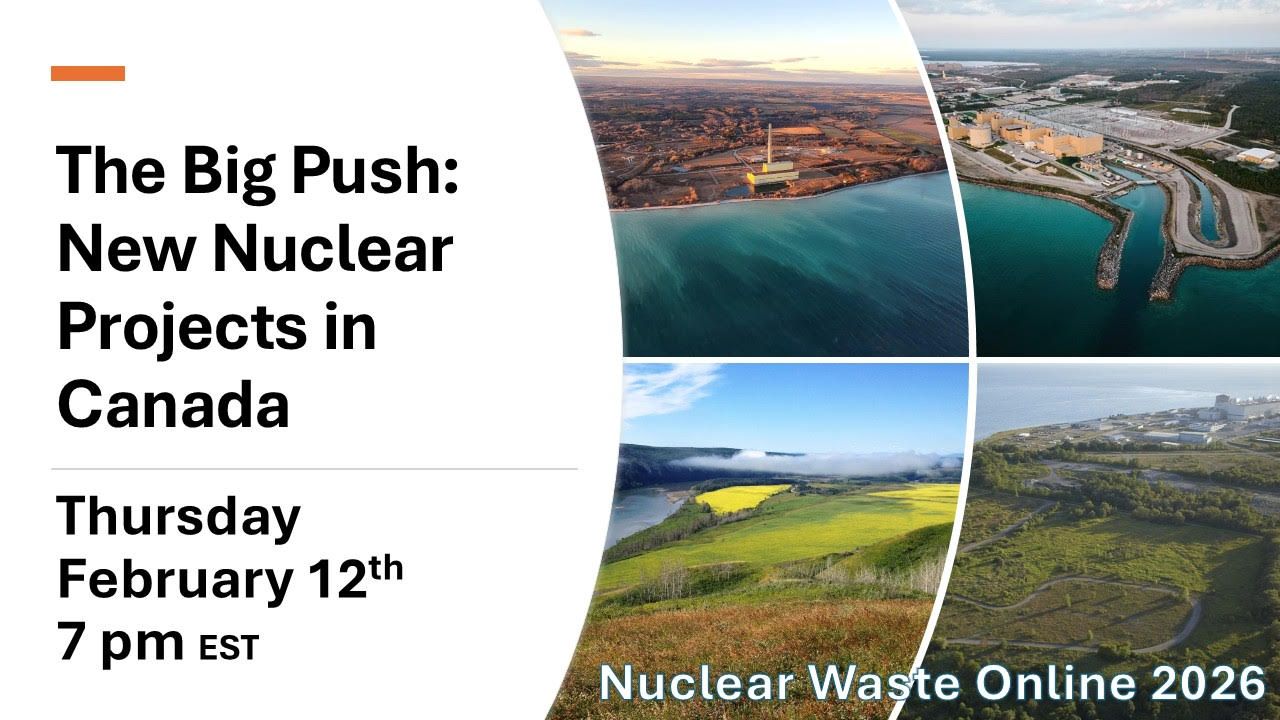
Thursday, February 12, 7 pm Eastern | 2nd of 4 sessions in the 2026 Nuclear Waste Online webinar series
Join a webinar on the push for new nuclear generation in Canada. Go to Northwatch.org to register or use the registration link https://us02web.zoom.us/webinar/register/WN_ZfWOf1GITqSRIZX8CB-A9w
-
Archives
- February 2026 (127)
- January 2026 (308)
- December 2025 (358)
- November 2025 (359)
- October 2025 (376)
- September 2025 (258)
- August 2025 (319)
- July 2025 (230)
- June 2025 (348)
- May 2025 (261)
- April 2025 (305)
- March 2025 (319)
-
Categories
- 1
- 1 NUCLEAR ISSUES
- business and costs
- climate change
- culture and arts
- ENERGY
- environment
- health
- history
- indigenous issues
- Legal
- marketing of nuclear
- media
- opposition to nuclear
- PERSONAL STORIES
- politics
- politics international
- Religion and ethics
- safety
- secrets,lies and civil liberties
- spinbuster
- technology
- Uranium
- wastes
- weapons and war
- Women
- 2 WORLD
- ACTION
- AFRICA
- Atrocities
- AUSTRALIA
- Christina's notes
- Christina's themes
- culture and arts
- Events
- Fuk 2022
- Fuk 2023
- Fukushima 2017
- Fukushima 2018
- fukushima 2019
- Fukushima 2020
- Fukushima 2021
- general
- global warming
- Humour (God we need it)
- Nuclear
- RARE EARTHS
- Reference
- resources – print
- Resources -audiovicual
- Weekly Newsletter
- World
- World Nuclear
- YouTube
-
RSS
Entries RSS
Comments RSS
 nuclear-news