Threat of forced evacuation from Fukushima pushed 102yo to take his own life, judge rules


Fukushima fruit exports to Southeast Asia peachy as contamination fears dissipate

After 3 years of taint-free rice, Fukushima mulls review of checks

Fukushima town of Namie to launch radioactive decontamination work around May

Japan to start nuclear cleanup of Fukushima town, Namie, around May

Japan Ships First Seaweed, Farmed 6 Miles from Fukushima Meltdowns, for Human Consumption


J-Village soccer center in Fukushima to partially reopen in July
A vice-president is Tepco’ member.

Tepco ordered to pay $30,000 each to 318 people of the Minamisoma’s Odaka District class action suit


Tokyo court orders Tepco to pay $10 million in damages over 2011 disaster

« Ask anyone who has visited, and they’ll tell you: Tohoku, Northern Japan is easily one of the most stunning places in the world. »
The penultimate storage of contaminated waste


Fukushima 49.17% thyroid deficiency in the 295 000 young people under 18 years examined between 2011 and 2014 …

“Save the Town”: Insolvable Dilemmas of Fukushima’s “Return Policy”
Namie Mayor Baba Tamotsu interviewed by Katsuya Hirano with Yoshihiro Amaya and Yoh Kawano at Namie town hall, July 4th, 2017. Introduction by Katsuya Hirano, Transcription and translation by Akiko Anson
 Baba Tamotsu. Photo by Yoh Kawano
Introduction
The town of Namie is the largest in both area and population among eight towns and villages within Futaba Country in Fukushima Prefecture. At the time of the Great East Japan Earthquake in March 2011 that precipitated the Fukushima Daiichi Nuclear Disaster, the town’s population was 18,464.1 Although Namie is located just 11.2 km from the nuclear power plants, it took four days from the explosion of the power plants before Tokyo issued an evacuation order. The government’s belated order was consonant with its decision to withhold information on radiation levels provided by SPEEDI (System for Prediction of Environmental Emergency Dose Information) in order to avoid “public panic.” Consequently, many residents of Namie as well as other neighboring villages and towns were exposed to high radiation. On April 15 2012, the town of Namie asked the Japanese government to provide free heath care for its residents, including regular medical check-ups to monitor the internal radiation exposure and thyroid examinations. The evacuated government of Namie obtained a monitoring device and installed it in temporary housing in Nihonmatsu City, Fukushima where many evacuees were relocated. On April 1, 2017, the central government lifted one set of restrictions on one zone—areas in which people were permitted to enter freely but were not allowed to stay overnight—and another on a second zone—where access was limited to short visits—based on its judgment that decontamination work had successfully removed radioactive contaminants from the areas. Since the termination of the evacuation order, the government has been encouraging residents to return to those areas although only 1-2% of the residents, mostly senior citizens, have returned so far and a recent poll indicates that less than a quarter of the population intends to return in the future. In this regard, Namie is no different from other towns and villages in that the so-called return policy remains a de facto failure and the former residents simply do not trust or refuse to follow the central government’s “reconstruction” programs. At the same time, local governments have been thrown into extremely difficult situations where they have no choice but to go along with the “return policy.”
Baba Tamotsu (69), a native of Namie and mayor of the town since 2007, has been in charge of dealing with the nuclear crisis. Since the disaster, Mr. Baba has worked with the prefectural government and Tokyo to ensure that the residents are provided health care, housing, food and compensation. However, his slogan, “Save the Town,” has invited criticism as it seems oblivious to the fact that most residents have no intention to return and, moreover, encouraging people to do so is likely to risk their health and livelihood. On July 14th 2017, my colleagues, Yoshihiro Amaya and Yoh Kawano and I visited the town hall of Namie to interview Mr. Baba on issues related to “save the town” and “return policy” as well as his views on nuclear energy policy. The interview suggests an insoluble tension between Mr. Baba’s urge to save his beloved hometown and his awareness of the risks entailed – the “save the town” policy’s potential danger of prioritizing the welfare of the community over individuals’ health and lives.
 The evacuation order was lifted for the zones in green on April 1, 2017
Hirano: Thank you for agreeing to this interview. Let me start with the following question. In 2013, you expressed concern about the situation in Namie, saying “I feel as if the hands of the clock have completely stopped since the nuclear disaster of 2011” because decontamination has been so delayed that “restoration has not progressed at all.”
According to a survey conducted in 2011, 60% of Namie residents indicated their “intention to return” to their hometown; however, a poll from August 2016 shows that the “intention to return” number has dropped to 18%, and 48% of residents “have decided not to return.”
In addition, a survey conducted by the Reconstruction Agency last September on household intent to return shows 17.5% “wishing to return soon or at some future time,” 28.2% “undecided,” and 52.6% decided against returning.
I also heard that fewer than 10% of Namie residents are expected to return and that the situation is likely to remain the same for the foreseeable future. Some people even suggest that the town of Namie will disappear in 15 to 20 years. What do you think about such observations? And what are your thoughts about residents returning?
Baba: I did feel in 2013 that time had stopped completely. Since then, I have been at a total loss as to what was going to happen to this town. In these conditions, the more time goes by, the more people end up deciding not to return. It’s such a shame.
But I can say that the 21,000 Namie residents, every single one of them, have affection for their hometown. It’s why I feel that no matter how few people are actually returning, we need to save this town and keep it alive. I need to do it for our residents wishing to come back, although it might not actually happen for another generation or the generation after that. Regardless, I would like those who can to come back to Namie.
So, I think it is the responsibility of adults to pass on knowledge about this land, which our ancestors worked tirelessly to cultivate and establish over a long period of time, to the next generations. “Save the town”(町残し)is the goal I set for greeting the lifting of the evacuation order on March 31, 2017.
 A Part of Downtown of Namie in July 2017. Photo by Yoh Kawano
Hirano: How many people or households have actually returned since then?
Baba: As of May 31st, 2017 165 households–234 people–have come back.2 This is only 1% of the former residents, which is very disappointing. But I have a feeling that as time passes, more people will return, since I’ve started seeing some residents beginning to repair their homes or beginning to build new ones here and there.
Hirano: I heard that evacuees from Fukushima Prefecture, particularly young married couples or families with children, tend not to return because of the risks associated with radiation exposure. Do you see the same tendency in Namie?
Baba: I think so. In fact, most of the returnees are elderly people. I am aware that the young people have children. Some people have found employment at the place they’ve evacuated to, so it would be hard for them to come back. I am still optimistic, however, that as time passes, living conditions here will improve enough that people can return more easily.
Hirano: As mayor, do you have any concerns that bringing people back might increase the risk of internal radiation exposure, especially among children and young people? For example, in Chernobyl, the 30 km exclusion zone is still in place to this day, but in Fukushima, residents’ return is being promoted even in areas within 20 km of the nuclear plant. Since there is a limit to what can be achieved through decontamination, I would be concerned that the increased possibility of internal exposure poses a serious problem to residents.
Baba: I cannot say there is no risk, but a personal dosimeter has been distributed to everyone, and we closely monitor the residents’ health. The town officials also have been taking responsibility for measuring the radiation in food.
Hirano: As mayor, do you have any plans for providing former residents wishing to return with some kind of specific incentives?
Baba: Yes. Firstly, in order to bring people back home, I would like to create job opportunities for them, especially for young people. Some of the residents who used to own businesses here before the earthquake, tsunami, and nuclear accident are interested in coming back to restart their businesses.
Also, in order to attract young people, I hope to recruit new tech industries, robotics in particular, in collaboration with our neighboring city, Minami-soma.3 We can attract robotics firms, as well as their research facilities and test fields to the area.
Another plan is to build a hydrogen production plant. We have a vision to rebuild our town centered on renewable energy. Since the Japanese government seeks to build the world’s best hydrogen production base in our country, I would like to meet those expectations by building such a facility here.
As a result of our efforts to attract businesses, there are now four companies interested in doing business in Namie, so I would like to work with them to create future employment opportunities for our young people.
Kawano: Let me ask about senior citizens. There is an 86-year-old woman living alone in temporary housing in Nihonmatsu. We began interviewing her one or two years ago, and we visited her the day before yesterday. She told us that she decided not to return to Namie in April, shortly after the evacuation order was lifted. One reason was that the town has not been equipped with necessary facilities for daily life, such as a supermarket. Even if there were one, it is not realistic for an 86-year-old to drive to get there. So please tell us what kind of services and support systems– such as transportation to a grocery store – you plan to offer to the elderly.
Baba: Well, first I would like to set up some welfare facilities for senior citizens. But right now we don’t have enough workers, for example nursing care staff, so I hope to get things started with a so-called public-private collaboration so that people in the private sector will be willing to cooperate in public welfare projects. I would like to set up the conditions for that to happen.
As for supermarkets, it is true that we do not have any stores here. But I am in negotiation with some stores, and I would like to bring one to town as soon as possible. Then you need a transportation system, so I would like to establish a system of on-demand taxis or shuttle buses, so that people won’t be inconvenienced.
Hirano: Even after lifting of the evacuation order, there are still so many people, including the elderly, staying away. What kind of support have you been maintaining for them?
Baba: We provide services for evacuees such as on-demand transportation, and our staff are making door-to-door calls on evacuees. This is to keep them from becoming isolated, and, if any problems arise, our staff can provide some help as they make the rounds. We also put a lot of effort into holding events to promote interactions among evacuees.
It isn’t possible to visit every day, since it takes time to visit everyone, but I would like to keep monitoring the conditions of our residents and provide the support they need.
Hirano: I’d like to ask about the risks and concerns about contaminated soil and radioactive waste disposal. The government has been taking the lead in decontamination efforts. However, there are still areas where the air dose rate has not gone down to previous levels or where we still detect radioactive hot spots.4 How have you been communicating with the central government about these problems? For example, asking to speed up the decontamination operations, or to work more efficiently?
Baba: First of all, at the time the government let this accident happen, they declared that the radiation dose in the air would be reduced to under 1mSv annually, so we have been asking them to continue with decontamination work until it goes down to that number. So there is continuing decontamination work in areas with higher doses, and we have been strongly urging the government to make every effort to lower the dose below 1mSv.
Amaya: So you have been asking the government to do their job, but do you think the decontamination efforts have actually been making adequate progress in Namie?
Baba: Well, we have to realize there are many acres of land to cover, so although it has not progressed as we hoped, no matter how long it takes, there will be no change of plan. I will continue to urge the government to keep decontaminating until the radiation level goes down to 1mSv or less, as they promised.
Amaya: Difficult-to-return zones still take up a fairly large part of Namie. Have you discussed in detail with the government the timeline and how to proceed with decontamination in such areas?
Baba: Yes, the Act on Special Measures for the Reconstruction and Rehabilitation of Fukushima was recently revised and it includes a plan to establish special reconstruction hubs in difficult-to-return zones. What that means is that intensive cleanup will begin in the hub zone, which is a relatively less polluted area and could be made habitable in the near future first, making it a recovery base. We would then set up another hub and move on with decontamination operations and the restoration of infrastructure in that area.
We plan to gradually expand the decontaminated areas by connecting these hubs. The central government has not put out a concrete timeline for this project, but we were told that they plan to create special hubs with the hope of eventually lifting the evacuation order for the entire hub zone in the next five years. Of course I hope the government will carry that out as planned.
Amaya: Have you presented any requests regarding where to designate the recovery hubs in Namie?
Baba: Yes, we have three areas in mind: Obori district, the Tsushima district and part of the Karino district. We have requested that the program begin with special hubs in these three areas and also asked the central government to honor the requests from our local government.
Amaya: So in effect you are planning to designate the recovery hubs in areas that used to be rather populated, with the hope that the former residents will eventually return?
Baba: That’s right. The idea is that we designate hubs in areas where people would gather, such as public facilities, like a community hall, or shrines and temples.
Amaya: So the plan is to choose some facilities as a base first and then start decontaminating surrounding areas to bring back as many residents as possible.
Baba: Yes, that’s right. Since that is what the local people are also hoping for, I would like to pursue the plan. In order to make it happen, however, it is necessary to reduce the radiation level through decontamination work. The central government has set 3.8 microSv/h as the standard.
Hirano: Actually that standard is 20 times higher than what was originally determined by law, isn’t it? In fact, it is a standard that is applied only to Fukushima in entire Japan. Some experts claim that there is no such thing as an absolutely safe standard – that the best thing is to avoid radiation exposure as much as possible, especially internal exposure. What do you think about those views?5
Baba: It would be a lie if I said that I am not concerned about it. But as long as the central government responsibly asserts that it is safe, we have no choice but to believe what they say and proceed with reconstruction.
Hirano: I’d like you to tell us about the reactor decommissioning. It is said that it would probably take at least 30 to 40 years to complete the decommissioning. First, what are your thoughts on that?
And second, there is a potential risk that a nuclear accident could occur during the decommissioning work. I expect it would cause tremendous anxiety to the residents of the town if that should happen. Also, this potential risk might affect the decision of some former residents to return. Do you have any specific plans or measures to handle the situation in the event of an accident?
Baba: Alright. Well, to put it simply, they have set a goal to complete the decommissioning work in 30 or 40 years. However, judging from the current situation, I have to say it is an open question whether that goal can be met. I believe that TEPCO and the central government should set forth a policy that puts safety and security first.
It’s already been six years since the accident, but they haven’t figured out how to remove the debris. Not only that, also they haven’t decided on where to store the debris and what to do with it afterwards. So there is a serious question about bringing residents back to town.
On the other hand, is it all right to just leave things as they are? That’s related to the question of whether people can come back to such a dangerous place. Decommissioning has to be done right so that we can provide residents with a safe place to live in the future. Simply put, we want the central government and TEPCO to restore our land to its original condition. That is the direction I am pursuing.
Actually I sometimes have a nightmare that during the decommissioning work, something accidentally collides with the debris and radiation gets released outside again. When I think about how to evacuate the residents, I am terrified.
Therefore, we really need to review the nuclear disaster readiness plans to make sure that residents who already came back and those who will return, will be able to evacuate safely in the event of an accident. We need to plan ahead about how to proceed with the evacuation and how to provide adequate care at evacuation sites, things like supplies of food and clothing, including how and where to get these items. In addition, in order to protect ourselves in the event of an unexpected radiation accident, we need to have a shelter made of concrete in Namie, so I would like to prepare that as well.
Amaya: Speaking of dealing with radioactive waste, Chernobyl built a concrete shield, the so-called sarcophagus, to cover the destroyed reactor, which locks in radioactive material safely for a relatively long period of time. If it is determined that the removal of waste is too risky and that shielding is the only way to handle the situation, would you as mayor accept the decision?
 Old Sarcophagus in Chernobyl
 A “New Safe Confinement” structure was completed in 2016. It covers the old sarcophagus whose deterioration resulted in near-collapse in recent years.
Baba: Well, constructing a sarcophagus means locking the radioactive material inside, but I am not sure if that’s actually possible. That would turn this town into a final disposal site. In that case, I wonder if people would actually be able to live here, to lead a normal, human life in such an environment. So I think we have to get the dangerous material removed, that this is necessary for humans to go about the business of being human.
If I were to accept the construction of sarcophagi, I would have to ask the central government to relocate our entire town just as occurred in Chernobyl. It means that no one would be allowed to live within 30 kilometers anymore and that were told to live somewhere else.
If that had been the plan from the beginning, I think it might have worked out, but I’d have to say, don’t come to me now with such a request.
Amaya: After six years have passed.
Baba: That’s right. It’s too late now.
Amaya: It would be hard to have people coming back and then say, sorry, it’s not going to work.
Baba: Exactly. I have a hard time accepting it. But in fact, however, I know some people who want to return are still questioning whether it’s possible to come back to such a dangerous place, so in that sense I might be contradicting myself a little.
The bottom line is that I want to borrow wisdom and skill from around the world and have the danger removed. But the technology is just not advanced enough for that job, so I know it won’t be easy. All I can do is trust what they’re doing. The decontamination workers here have been working so hard for us.
Hirano: A TEPCO top executive said he felt extremely sorry about the communities being completely destroyed by the nuclear disaster. He said TEPCO also admits its responsibilities. On the other hand, however, he said he is not convinced that we should stop the operation of nuclear power plants right now when it comes to future energy needs in Japan. He believes people still need nuclear energy. I think this is still the dominant opinion within TEPCO. What are your thoughts on this?
Baba: I don’t believe we need nuclear power plants any more. We learned the lesson from this disaster that what matters most is the safety and security of our people, not things like energy policy.
The people of Fukushima also agree that nuclear reactors must be shut down, that the No. 2 Nuclear Power Plant should be decommissioned. The Fukushima Prefectural Government and all municipal assemblies have submitted a request to decommission all reactors in the prefecture.
I believe we will be fine without nuclear power. I can say that because if you followed the energy situation in March of 2011 right after the accident when all the reactors were shut down, it even looked like we had an energy surplus. It’s not all about nuclear. I believe we’ll be fine using renewables.
Hirano: Even among people who promote renewable energy, some argue that local governments, nuclear power plants and electric companies can coexist as long as they can prevent that mistake from ever happening again. What do you think about this assumption?
Baba: That is based on the principle of expecting the unexpected. We just had the first trial of the Criminal Prosecution of the Fukushima Nuclear Disaster.6 We just had the opening session of the criminal proceedings on the Fukushima Nucelar Disaster. We know, from the materials filed for the complaint, that it was possible for TEPCO to anticipate a giant tsunami. Seismologists brought in by TEPCO had already warned them of such a possibility in 2008 or 2009.
Did they or did they not know this sort of thing? It’s their criminal liability that will be examined in this trial. I’m not sure if they simply ignored the warning or how they dealt with it, but I think more internal documents will be revealed in the course of the trial.7
So, they obviously didn’t do anything about it, even though such predictions had been made. You can’t call this an example of expecting the unexpected, since a giant tsunami had in fact been anticipated. I believe there were various methods they could have taken to prevent the disaster. For instance, they could have made a backup system to avoid a tsunami-induced station blackout; they could have moved the power facility to a higher location; or they could have raised the height of the seawall a bit.
They did none of that, then later they claimed that it was simply a natural disaster and that it was not their fault. This is unacceptable. There are people among the National Diet of Japan Fukushima Nuclear Accident Independent Investigation Commission (NAIIC) who say it was a human-made disaster. I also believe that it was a human-made disaster.
 On June 30, 2017, members of the Complainants for Criminal Prosecution of the Fukushima Nuclear Disaster gathered in front of the Tokyo District Court where the first session of the hearing was held.
In fact, I can say human error was clearly involved. One reason is that there were other places where these human errors didn’t occur. The Fukushima No. 2 nuclear plant managed to escape the disaster through manual venting, despite the fact that the plant suffered severe damage. But the thing is that the No. 2 Plant is located at a higher elevation than the No. 1 Plant, which sits almost at sea level. Therefore, TEPCO should have moved the power supply of the No. 1 Plant to somewhere higher to avoid damage from a tsunami. Or they should have thought of ways to protect the backup power supply and the reactors’ cooling systems in case of tsunami-induced flooding.
Another reason why I believe it was human error is that we learned from a NAIIC report that the piping of the cooling system had already been cracked and damaged by the earthquake before the tsunami hit. If so, the reactors would have been heating up even before the tsunami arrived, because cooling water had not been getting to the reactor core through the damaged pipes. And this situation eventually led to the hydrogen explosion. This was definitely human error, there is no doubt about it.
Kawano: Did you have any opportunities to learn about or discuss the risks that nuclear power plants might pose at the local level before 3.11? In other words, were Namie residents, including town officials, informed about what kind of impact a nuclear accident could bring before the accident?
Baba: No. Unfortunately, I used to be an advocate of nuclear power. I regret it deeply. I used to believe that it made sense to generate electricity by nuclear power. The reason is that all explanations I received from the central government and TEPCO were biased by the safety myth that Japan’s nuclear power plants were absolutely safe. The core of the safety myth is its redundant failsafe system. We were told how their dual system would work to prevent a serious accident. For example, if X occurs, then Y will work, and if Y doesn’t work, then Z will kick in. They explained it to us very believably, and I took their words on trust. In fact, that is what the central government and TEPCO have been doing in order to build nuclear power plants.
I was completely immersed in the safety myth. So I remember my mind going completely blank when the accident occurred. I was facing something that I had never imagined. What?! Nuclear power lets this kind of thing happen? I thought. It had never occurred to me that such an accident could occur.
Hirano: I understand that TEPCO will be changing the compensation payments. They used to give the same amount to each victim, but going forward they will switch to a system based on each individual’s circumstances. Do you as mayor have any specific ideas on how you would like TEPCO to compensate victims?
Baba: Well, I believe that victims should be compensated adequately and equitably by TEPCO, but different people have different opinions about this, so the company is now thinking about discontinuing the compensation for mental anguish, the so-called compensation for damages arising from the incapacity to work, by March of 2018.
I would like TEPCO to honor what the Dispute Reconciliation Committee (Dispute Reconciliation Committee Over Compensation for Nuclear Accidents) calls a “reasonable period.” What that means is facing up to the reality and circumstances the victims of the disaster have suffered, and make a decision about compensation for them. I think it’s wrong in the first place for them to be setting a deadline no matter what. They should really examine the situation of the victims and then decide.
They have been providing compensation in various ways, but they have a very clever way of talking about it, using the phrase “individual circumstance.” This is an expression that makes you feel like you’re being tricked, regretable as it is to say so. I really think it is necessary for TEPCO to put themselves on the side of the victims.
Hirano: They can interpret “individual circumstance” anyway they want, can’t they? That is the same idea as “voluntary evacuation.” For example, residents outside the evacuation zone of 20 km radius of the nuclear plant are all regarded as “voluntary” rather than as “mandatory” evacuees. As a result, they were not eligible for compensation even though some of the residents’ houses were located in so-called hot spots (where the radiation exceeds even the exceptional reference value of 20 μSv, the standard that applied only to Fukushima after 3.11.) That created a lot of problems and I think this “individual circumstance” talk might be the same.
Baba: Exactly. They can interpret it anyway they want.
Hirano: You have been in touch with the victims and former residents. Is there something concrete you would single out for compensation or assistance from your observation of their lives?
Baba: Well, I’d have to say first, all their livelihoods are gone. Also, their neighbors are gone. It’s now been three months since I came back to Namie, after six years of evacuation, but I don’t have any neighbors, so I have no one to talk to. So that kind of communication has been lost. I can’t assign monetary value to what we’ve lost, but I never thought that I would end up having such a miserable life.
When it comes to expressing it in monetary terms, I definitely think that compensation should match our mental anguish. That is what the people in Namie think these days.
Everyone, even those still staying in the place where they were evacuated to, has been put into a similar situation. We don’t have neighbors, and whatever you might have wanted to do at the place you were relocated to, you find that you can’t do it.
It is especially true for young people. They used to live pretty naturally and make a living without worrying about much, but they have lost all that with the accident. What I am talking about is that damage. If you ask me, how much is that worth, it’s difficult to come up with a figure. I’d like the government and TEPCO to put themselves in our shoes and think about how they would feel and what they would do if they became victims. That’s the basis on which I’d like them to evaluate the need for compensation.
People in Namie often tell officials from TEPCO and the central government at residents’ briefing sessions, “You people are from the outside. Why don’t you try living in evacuation shelters! You might live in Tokyo now, but how would you feel if you were forced to live in, say, Nihonmatsu where Namie residents were forced to relocate. And for six years.”
 This map, made in 2015, shows the number of radioactive mushrooms detected. Namie has the highest number, and Nihonmatsu has the second. Evacuation to Nihonmatsu didn’t necessarily guarantee safety. See here.
Families have already been broken up. Young people have found jobs in cities or towns and stay where they have been evacuated. Some of them have moved to Tokyo. Families have broken up. Maybe it’s just the elderly who’ve stayed in Nihonmatsu. I want the officials to think about how they’d feel under these circumstances.
Are such things reflected in the amount of compensation? That’s the issue. I think they are not, considering the current amount of money being received. On the other hand if you asked me how much would be appropriate, I don’t think I could answer. But, all the situations we’ve been forced into should be fairly and appropriately taken into consideration.
When I attended a Dispute Reconciliation Committee meeting for the first time, I asked what standard they were going to apply to determine the amount of compensation.8 It was even before the amount for mental anguish compensation had been decided, which later resulted in a payment of 100,000 yen (less than $1,000). The evacuees had lost everything. Communication with family, friends and neighbors had been cut off. Schools and workplaces were gone. Everything was destroyed. I asked the committee, “Can you put yourselves in the situations the evacuees have been forced into and think about this?”
Not surprisingly, the committee dug out court precedents of compensation amounts based on third-party evaluations. I got angry because the cases they showed us were compensations for car accident injury claims, which happened to be 100,000 yen. The thing is that in the case of a car accident, even though you get injured, your body will heal after a certain period of time. So compensation is determined based on how long it would take to complete the treatment. That is how they came up with the payment of 100,000 yen.
I argued that that didn’t apply to our case. What a nuclear accident does is to release radioactive substances into the environment, and it was so dangerous that the residents around the plant were forced to leave their hometowns. We were told that radioactive materials were falling and that it was life-threatening to stay in places with high doses of radiation. That was the basis for the evacuation order. Even after six years, the order has not been lifted except for a small part of the town of Namie.
As I said, in the case of a car accident, the injury will heal after a certain period of time, but in the case of a nuclear power reactor accident, look at how the current situation stands, even after six years. And they came up with the payment of 100,000 yen for compensation. I was furious, wondering what the hell they were talking about.
No matter what, the way they decided on the compensation is unacceptable. You need third-party assessment, you need some sort of reasonable-sounding figure. That’s why they came up with that amount. But that shows they weren’t making the slightest effort to put themselves in the victims’ shoes.
Hirano: Listening to you, I really feel your dilemma as a mayor. Now that the community has been torn apart and human relationships have been severed, you are not sure if the situation can be fixed even with the return policy. You think realistically, it might be impossible, but it’s your position as mayor to keep Namie going for people who are coming back. You are in a contradictory position, which definitely brings you anguish. That’s the sense I get.
Right after the accident, you could have made the decision, we can’t live here any more, let’s move the town somewhere else. A least you would have preserved the ties between people and the community could go on existing elsewhere. But even that choice has been taken away. Since the only option left is for residents to return, you have been working hard to fix even one part of the divided community, despite knowing it will never be the same as before. Would it be right to say this is the position you have been put into, and have chosen, as mayor?
Baba: Yes, you can say that. Another important thing is the identity we have as Namie residents. I would really like to respect and value the feelings they have toward Namie.
We have our ancestors’ graves here in town, and everyone visits their family graves. If the town is gone, they cannot even pay their ancestors a visit. Even though they might live somewhere else, I would like to restore the town to an environment where they can pay their ancestors a visit.
Let me tell you, there was in fact an unofficial government plan at the time of the accident to relocate the entire town to another place. This town isn’t habitable any more. Please look for another place and move the town. There was that kind of thinking. However, after considering various factors, the government changed their policy from relocation to reconstruction.
And so at first, we did look into this option. Thinking we wouldn’t be able to live here anymore, we looked around for a large area somewhere in Fukushima and making it Namie. But after various heated discussions, I think the central government settled on the policy of restoration and reconstruction instead, and that’s how it was settled. In fact, we have a history of relocation. At the end of the Edo period, the Tokugawa Shogunate was overthrown by the anti-shogunate forces, which sought to establish a new government by restoring imperial power. Fukushima’s Aizu feudal clan, which had supported the shogunate, was regarded as an enemy of the emperor by the new Meiji government and was ordered to relocate to Iwate and Aomori prefectures or to Hokkaido.
But that was possible because it was only the Aizu region. This time, we’re talking about Hirono, Naraha and all together eight cities and towns in Futaba district. If we include neighboring areas, such as Iwaki, Minami-Soma and Tamura, we’re talking about twelve cities, towns and villages. There’s no way you can relocate all twelve of these municipalities.
About one year after the accident, the central government began to lift the evacuation order in some areas, such as Kawauchi and Hirono, since the radiation monitoring results showed that the levels were not that high, being about the same as the natural standard, although there were some spots with higher levels. The government encouraged residents in those areas to go back to their towns and villages.
Hirano: Did the central government ever explain why it gave up the idea of relocating the entire town of Namie?
Baba: No, because it was not an official plan, there was no explanation given to us.
Hirano: You mentioned identity earlier. From what I heard from you, I’m given a powerful impression that you have great affection for your hometown, not necessarily as a mayor but rather as a person who grew up in this place called Namie. Could you tell us more about the special feelings you have for your hometown as a resident of Namie and where you think that affection and attachment are coming from?
Baba: Sure. After all, this is the scenery that I was born into and grew up with. Well…(chokes up and tears) for example, the elementary school… the elementary school I went to with my friends. Also… junior high school. I don’t know how to put it, but looking back at my childhood brings back the scent of life in Namie that’s been ingrained in my body. It’s the air, the wind in Namie.
I think this is true for everyone who grew up in Namie. Since the accident, they have been living somewhere else as evacuees, where the environment feels different, even the air feels different. They’ve been away from Namie for such a long time, and they’ve been feeling that difference all these years.9
I came back here three months ago, but the thing I noticed the most was the air in Namie. The air brought back a lot of memories. Of course, it’s deserted here now with nobody around, but still I can feel and smell something I was born into and I grew up with. It’s ingrained in this town. It’s hard to explain in words, but there is something wafting in the air.
You know, there used be about 600 houses and buildings along the ocean, but they were all swept away by the tsunami. When I saw the aftermath, I knew something incredibly awful had happened. Actually I couldn’t even look at the ocean for about a year and a half after the tsunami. I was just so scared I did drive through Hama-dori (the shoreline area) and walked a bit.
 Ukedo in Namie, 10 kilometers from the Fukushima Daiichi plant, after the 3.11 disaster. The tsunami took 125 lives and destroyed 350 buildings in this coastal area.
I would say I am getting used to the ocean again little by little, so some memories like “oh, I used to swim here” are coming back to me. “Oh, I used to ride my bike around here, or I went to this street and the old guy in that house yelled at me.” A lot of childhood memories are coming back now.
So, I don’t know how to say this, but… (chokes up with tears in his eyes), these are the places you were used to and got attached to.
Hirano: You feel that there’s a lot you won’t be able to experience unless you are here in Namie – soaking in this air, your childhood memories, senses, feelings.
Baba: That’s right. Things you can’t experience anywhere else. There is a poem, “Hometown is a place you leave behind and then long for.” (translation by Arthur Binard) I was evacuated to Nihonmatsu for six years, and I really understood what this poem meant. You won’t be able to appreciate your hometown fully until you leave. That’s how I feel.
We all grew up in this town, surrounded by nature and supported by caring adults and neighbors. When I was a kid, not only my family but also my neighbors would pay attention to you and tell you, “Don’t do this, don’t do that.” But all of that is gone now. It’s hard to put all of that into words.
 Tōka-ichi, an autumn market held annually in Namie since 1873. It used to attract over 10,000 visitors. Over 300 vendors would gather and children played a central role in creating the festive atmosphere. The photo was taken in November 2010.
 Hadaka-mairi, a winter festival held annually in Namie since 1859. It started as a way to pray for a new year without misfortunes such as fire and epidemics. The photo was taken in February, 2011.
Hirano: In spite of all the contradictions, do you think it’s these feelings and emotions that keep you moving forward with your vision of protecting Namie, of reconstructing it?
Baba: Yes, you could say that. At first I could not even stand seeing people in jackets with the TEPCO logo on it. I didn’t want to greet them and I didn’t feel like talking with them, either. I’ve been getting better at dealing with them recently, though. (laughs)
But we will never really be on the same page since they will never understand what we’ve been going through.
Hirano, Amaya and Kawano: Thank you so much for sharing your valuable time and opinions with us today.
I would like to thank Baba Tamotsu for sparing time for this interview in the midst of his busy schedule. My colleagues, Yoshihiro Amaya and Yoh Kawano, made the interview possible through their thoughtfulness and friendship. My thanks also extend to Mark Selden and Norma Field for their comments and feedback. And, as always, Akiko Anson willingly offered her professional skill as a translator. I am grateful to her.
Related articles
- Arai Takako, Disaster Poetry from Ōfunato, The Asia-Pacific Journal, Vol 15, Issue 2 No 5, Jan 15, 2017
- Robert Stolz, A Much Greater Event Has Already Taken Place, The Asia-Pacific Journal, Vol 14 Issue 6 No 1, Mar 15, 2016
- David McNeill and Paul Jobin, Japan’s 3.11 Triple Disaster: Introduction to a Special Issue 特集 3.11 The Asia-Pacific Journal Vol 12, Issue 7 No 1 Feb 16, 2014
- Oguma Eiji, Nobody Dies in a Ghost Town: Path Dependence in Japan’s 3.11 Disaster and Reconstruction, The Asia-Pacific Journal, Vol 11, Issue 44, No 1 Nov 3, 2013
Notes
Other interviews on the Fukushima nuclear disaster by Hirano can be found here.
Notes
The tsunami caused by a magnitude 9 earthquake killed almost 19,000 people along the northeast coast of Japan, and triggered meltdowns at the Fukushima Daiichi Nuclear Power Plants. The accident forced more than 150,000 people living near the plant to evacuate in order to avoid radiation exposure. On April 1 2017, the government of Prime Minster Abe Shinzo lifted the evacuation order, enacting the “return policy” based on the claim that decontamination had successfully removed radioactive contaminants from major areas that had been designated as evacuation zones. The measure used to make this claim is 3.8 microSv/h or 20 microSv/y, which is 20 times higher than the international standard, which still applies to the rest of Japan. Despite the government’s push for its “return policy,” the majority of former residents of the affected areas have no intention to return. For details see my interview with Suzuki Yūichi.
According to the homepage of Namie township website, as of August 2017, 254 households – 362 people – have returned. Two gas stations, two convenience stores, and two local banks have (re)-opened. How such a small population could sustain them is unclear. Suzuki Yūichi in the aforementioned interview expresses his skepticism.
Minami Soma City and its neighboring towns including Namie have been working with universities and companies that manufacture robotics as part of their plans to revitalize Fukushima’s industries. The area was known as a hub for innovation in robotics prior to the disaster, and now they are trying to restore its central role in robotics initiatives.
See my interview with Yūichi Suzuki.
See Hiroaki Koide’s point in my interview with him. Koide makes it clear that there is no absolute standard that guarantees “safe” exposure to radiation. Any radioactive exposure, especially internal exposure, poses some risk. It is best to minimize exposure. It is also clear that infants, young people, and pregnant women are particularly vulnerable to radioactive exposure. The Japanese government’s evacuation plans never took this factor into consideration. It is worth noting that in Chernobyl 20mSv would still constitute a “no-go zone. ” The Japanese government has never rescinded the Declaration of a Nuclear Emergency Situation (原子力緊急事態宣言), part of a law enacted in 1999. This law reflected ICRP (International Commission on Radiological Protection) “post-accident” period standards and took the upper end of that and seemingly made it applicable indefinitely. I thank Norma Field for providing this important perspective on ICRP.
Apparently, Mr. Baba was confusing the Inquest with the actual criminal trial: only the opening session of the trial had taken place (June 30) at the time of the interview (July 4).
The first session of the trial of ex-Tepco chairman Katsumata Tsunehisa, 77, and former Vice Presidents Muto Sakae, 67, and Takekuro Ichiro, 71, who are charged with professional negligence resulting in death and injury, was held in June 2017. The prosecutors charged that the TEPCO executives had been cognizant of the data and reports that a tsunami more than 10 meters high could cause a power outage and other serious consequences, yet they took no actions to remedy the situation. For example, the prosecutors argued, the 2002 estimate by the government’s Headquarters for Earthquake Research Promotion indicated that there was a 20 percent chance of a magnitude 8 earthquake striking off Fukushima within 30 years. The Complainants for the Criminal Prosecution of the Fukushima Nuclear Disaster, the citizen’s group consisting mainly of victims of the triple meltdown in 2011, had been working hard to have prosecutors accept their criminal complaints sine June 2012, but it was not until July 2015 that indictment of the three former executives was filed. Residents of Fukushima and people of other prefectures have filed criminal complains against more than 50 policymakers and TEPCO officials since 2012. See more details in my interview with Mutō Ruiko, Norma Field’s essay, the website of the Complainants, and Tomomi Yamaguchi and Mutō Ruiko.
Joel Rheuben and Luke Nottage write: “As early as April 2011 TEPCO began to make provisional compensation payments of up to JPY 1 million (just over USD 10,000) to evacuees, to be supplemented by full payments once the company’s compensation scheme was in place. At the same time, the national government began making provisional payments to affected small and medium-sized businesses in the region, particularly in the tourism sector. In accordance with the Nuclear Damage Compensation Law, the government also established an expert “Dispute Reconciliation Committee for Nuclear Damage Compensation” (the “Dispute Reconciliation Committee”) under MEXT (Ministry of Education, Culture, Sports, Science, and Technology) to create a set of non-binding guidelines to inform payment amounts. The Dispute Reconciliation Committee issued interim guidelines in August 2011.” For more information about the Dispute Reconciliation Committee and its subsidiary the Dispute Resolution Center, see here.
For the economic impact that TEPCO brought to Namie through the nuclear plants and how that was linked to the creation of nuclear “safety myth,” see my interview with Suzuki.
Source : http://apjjf.org/2018/03/Katsuya.html
Work starts for industrial site in Futaba near Daiichi plant

Comparison study of calculated beta- and gamma-ray doses after the Fukushima accident in Minamisoma: skin dose estimated to be 164 mSv over 3 years
ABSTRACT
INTRODUCTION

(a) Mirror condition calculation, (b) top view and (c) side view of the calculation geometry.

RESULTS AND DISCUSSION


Air dose rates of (a) beta rays and (b) gamma rays over time.

Comparison of the calculated beta rays (chain line), gamma rays (dotted line), beta + gamma rays (solid line), dose averaged over sample depth (dashed histogram), and data measured by Stepanenko et al. (open circles).
The calculated tissue dose at a brick depth of 50 μm was assumed to be a skin dose, and would be similar to a 70-μm tissue dose. The skin dose was estimated to be 164 mSv for 3 years at the sampling location.
CONCLUSION
To confirm the cause of the dose enhancement near the surface of a brick sample taken from Odaka, Minami-Soma City, Japan, a Monte Carlo calculation was performed using PHITS code and the calculated results were compared with measurements. The calculated results agreed well with previously published measured data. The dose enhancement at the brick surface in the measured data was explained by the beta-ray contribution, and the gentle slope in the dose profile deeper in the brick was due to the gamma-ray contribution. The calculated result estimated the skin dose to be 164 mGy (164mSv) over 3 years at the sampling location.
Source: https://academic.oup.com/jrr/advance-article/doi/10.1093/jrr/rrx099/4827065
1 This Month
To see nuclear-related stories in greater depth and intensity – go to https://nuclearinformation.wordpress.com/
12 February – Webinar The Big Push: New Nuclear Projects in Canada
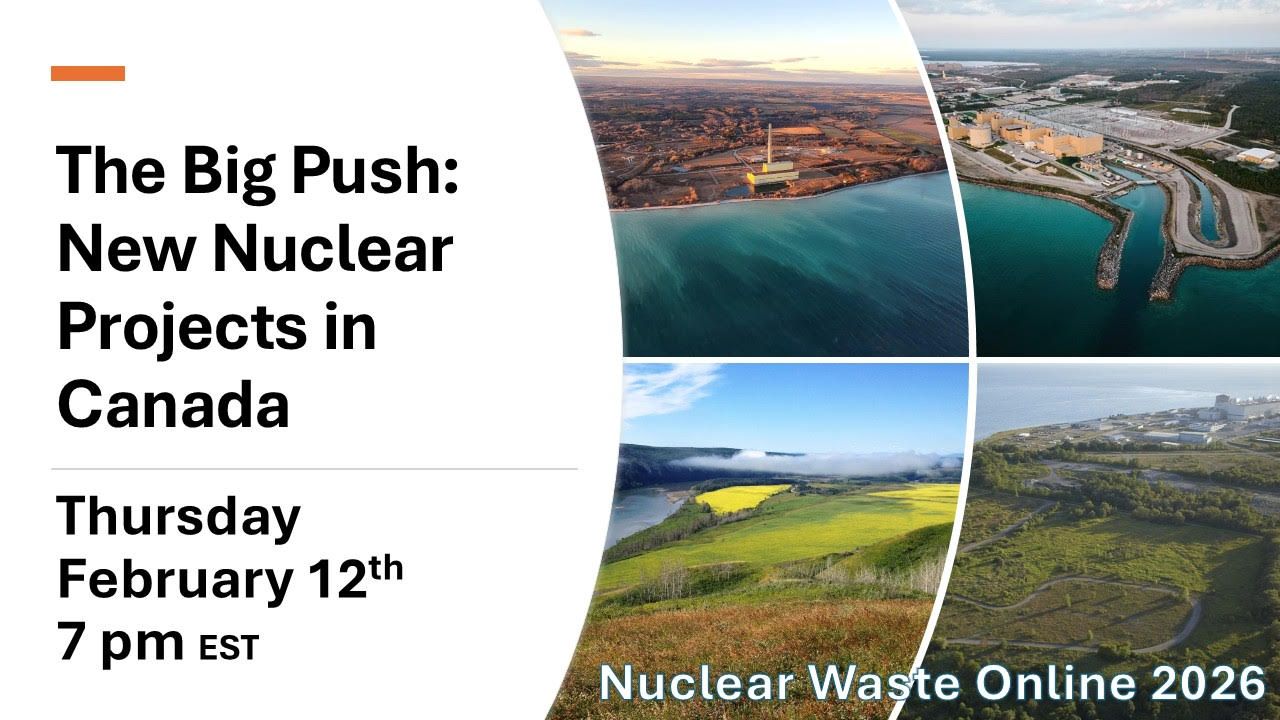
Thursday, February 12, 7 pm Eastern | 2nd of 4 sessions in the 2026 Nuclear Waste Online webinar series
Join a webinar on the push for new nuclear generation in Canada. Go to Northwatch.org to register or use the registration link https://us02web.zoom.us/webinar/register/WN_ZfWOf1GITqSRIZX8CB-A9w
-
Archives
- February 2026 (127)
- January 2026 (308)
- December 2025 (358)
- November 2025 (359)
- October 2025 (376)
- September 2025 (258)
- August 2025 (319)
- July 2025 (230)
- June 2025 (348)
- May 2025 (261)
- April 2025 (305)
- March 2025 (319)
-
Categories
- 1
- 1 NUCLEAR ISSUES
- business and costs
- climate change
- culture and arts
- ENERGY
- environment
- health
- history
- indigenous issues
- Legal
- marketing of nuclear
- media
- opposition to nuclear
- PERSONAL STORIES
- politics
- politics international
- Religion and ethics
- safety
- secrets,lies and civil liberties
- spinbuster
- technology
- Uranium
- wastes
- weapons and war
- Women
- 2 WORLD
- ACTION
- AFRICA
- Atrocities
- AUSTRALIA
- Christina's notes
- Christina's themes
- culture and arts
- Events
- Fuk 2022
- Fuk 2023
- Fukushima 2017
- Fukushima 2018
- fukushima 2019
- Fukushima 2020
- Fukushima 2021
- general
- global warming
- Humour (God we need it)
- Nuclear
- RARE EARTHS
- Reference
- resources – print
- Resources -audiovicual
- Weekly Newsletter
- World
- World Nuclear
- YouTube
-
RSS
Entries RSS
Comments RSS
 nuclear-news