Fukushima rice to be exported to France
March 21, 2018
The governor of nuclear disaster-hit Fukushima Prefecture appears likely to soon reach an agreement with a French trading house to export rice to France.
Fukushima Governor Masao Uchibori is starting his 4-day visit to France and Britain on Thursday to promote local produce, including rice, beef, and processed fruit.
He seeks to dispel concern about the safety of food products from Fukushima following the nuclear accident in 2011 and expand its sales channels.
Prefectural sources say Uchibori is likely to reach an agreement to ship to France a locally produced rice variety called Tennotsubu . Rice from Fukushima will be exported to France for the first time.
Sources say the governor is also likely to cement a plan to increase Fukushima’s shipments of rice to Britain.
The prefecture exported 19 tons of rice to the country in the fiscal year ending in March 2017.
An official involved in Fukushima trade affairs says the exports will have a significant impact as Britain and France play a central role in passing on information in Europe.
Only 30% of businesses have reopened in Fukushima nuclear disaster-hit areas: survey
March 21, 2018
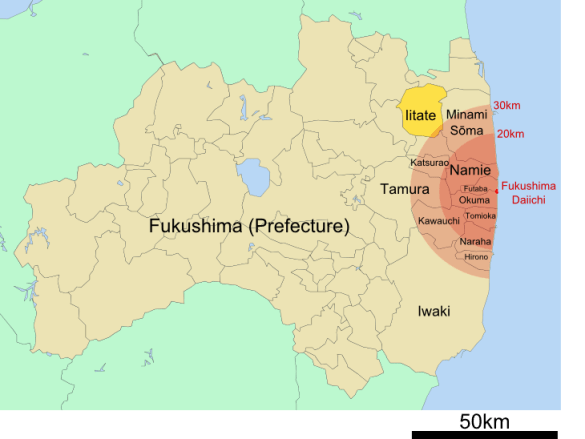
FUKUSHIMA — Only some 30 percent of businesses have resumed operations in areas within a 30-kilometer radius of the Fukushima No. 1 Nuclear Power Plant or in districts that were previously marked as evacuation zones, a Fukushima Federation of Societies of Commerce and Industry survey has found.
As for the stagnation in the region’s economic renaissance, a representative from the federation said, “There are few residents, and along with anxiety over whether or not business will be able to turn a profit, it is also hard to secure young workers.”
The investigation covered 14 local societies of commerce and industry, recording the business climate as of Feb. 20, 2018. The percentage was particularly low in the four municipalities of Namie, Tomioka, Iitate and Kawamata, for which evacuation orders was partially lifted between March and April 2017.
In the town of Namie, of the 597 members of the local society of commerce, 262 operators, or 44 percent, restarted their companies or shops — but only 34, or roughly 6 percent of the total, did so in Namie itself. The remaining 228 businesses all reopened in the locations to which their owners evacuated after the disaster.
Meanwhile, in Tomioka, 277 businesses of the 478 society members reopened, but only 60, or 13 percent, did so in the town. The numbers were slightly higher for Iitate, where 130 of the 167 operators restarted their businesses — 51 of whom did so in the same area, for 31 percent.
Of 2,804 total members of the prefectural-level federation as a whole, 1,840 companies and shops reopened (66 percent), with 31 percent or 860 businesses returning to open shop in the affected areas. By industry, construction saw the biggest revival rate at 37 percent, followed by manufacturing at 35 percent, stone work and miscellaneous businesses at 32 percent and the service industry at 28 percent, no doubt boosted by reconstruction efforts.
The evacuation locations for the residents of Namie are divided into inland areas like Fukushima city and coastal areas, and it is reportedly hard for owners to restart businesses while commuting from these locations. At the end of February 2018, the population of Namie was 17,954 people, but only 516 people actually lived in the town along with reconstruction workers.
The operator of a supermarket before the disaster commented, “If people don’t return, then it’s difficult to secure enough employees and impossible to run a business.”
Fukushima Accident is Becoming More Severe, Residents Continue to Struggle: Ruiko Muto on 7 Years of the Nuclear Disaster
March 16, 2018

Ruiko Muto is a well-known community activist in Fukushima, associated with ‘Fukushima Women Against Nukes’ and several other citizens’ platforms. She has played a pivotal role in the arduous legal battle to ensure compensation and justice for the Fukushima residents.
DiaNuke.org: It is 7 years of the ongoing accident in Fukushima and the disaster has slipped out of the international media. How serious is the situation now?
Ruiko Muto: The media in Japan is the same with reduced coverage nationwide. Even within Fukushima Prefecture, most of the news coverage focuses on recovery efforts and there are hardly any important articles on the accident or the damage and sometimes nothing at all. However, the reality is that this accident is very far from over and the damage it has caused, while taking on different shapes and forms, is only becoming more severe.
Within the Fukushima Daiichi site, it hasn’t even been confirmed where the melted fuel actually fell to. Every hour 88,000 bequerels of cesium is emitted from the destroyed reactors into the atmosphere. The fuel still has to be cooled and the water used for this becomes radioactive. There is now approximately 1 million tons of contaminated water and it is stored in 900 tanks on the site. METI and the NRA want to release water containing tritium, a radioactive substance which cannot be removed from the water, into the ocean. Filters, which are used in the ALPS system to remove other radioactive substances from the water and which are highly radioactive, are placed in specialized containers and are piling up. The metal structures holding up the Units 1 and 2 exhaust towers have stress fractures and even TEPCO has acknowledged the danger.
At present, there are approximately 5,000 workers at Fukushima Daiichi every day. Giving the reason that radiation levels have dropped somewhat, these workers are not required to wear heavy protective clothing. Even though there are some places which measure dozens of microsieverts per hour (μSv/h), work must be carried out there and on top of this, wages are set to be reduced.
Thyroid cancer testing on children who were under 18 years old at the time of the accident has revealed 193 cases of confirmed or suspected cancer. Even though this is dozens of times higher than before the accident, the authorities say that the accident is unlikely to have had an impact on cancer rates. Private groups have clearly shown that there are thyroid cancer patients who are not included in these figures and there are serious doubts about the entire testing system.
As a result of decontamination, there are 22 million tons of radioactive waste within Fukushima Prefecture. Only 3% of it has been transported to designated storage facilities, the rest is lying around in ‘temporary dumps’ or has been buried in school grounds or parks or in gardens of private houses.
High school and university students are taken on tours of Fukushima Daiichi to see the decommissioning work. They play scissor/paper/rock type games with radiation as the subject and are exposed to advertising and education that makes them believe that radiation is harmless.
DiaNuke.org: You have been working on the legal front, to ensure just compensation for the victims. What have been the challenges in this regard?
Ruiko Muto: Our court case is not a civil action to demand compensation, but rather a criminal case to determine who was responsible for this accident.
In 2012 we collected about 1,500 plaintiffs and lodged a criminal complaint with the Prosecutor’s Office against TEPCO executives, the Director of the Nuclear and Industrial Safety Agency (NISA) and those responsible in regulatory bodies, etc. However, the Prosecutor’s Office dismissed our claim, saying there was insufficient grounds for charges to be laid.
In Japan, in principle, it is the Prosecutor’s Office which lays charges, but it is possible to appeal to a judicial review panel which is made up of ordinary citizens. We did this and the panel ruled that just the 3 TEPCO officials were liable to stand trial.
In this trial, the victims were designated as only the 44 people who lost their lives in the evacuation process immediately after the accident. This means that, myself included, most of the plaintiffs are not officially part of the case and cannot directly participate in proceedings. I have attended each of the trials so far as an observer and make every effort to make sure what happens in the court is made public.
DiaNuke.org: Do you see the ‘nuclear village’ reviving its control since the accident? How have the government and TEPCo undermined their responsibilities?
Ruiko Muto: In the many court cases demanding compensation, administrative tribunals and criminal cases that have been filed, TEPCO has claimed that the nuclear accident was caused by a natural disaster which was impossible to predict, so it does not bear any responsibility. However, it has become clear in subsequent investigations and trials that TEPCO had done simulations and was aware of the threat of a large tsunami flooding the Fukushima Daiichi NPS and that counter measures must be prepared in order to protect the reactors, yet because of the large sums of money required for this, they had simply put it off.
Following the disaster, utilities had voluntarily refrained from advertising but recently they have started again in full force. They claim that if nuclear reactors aren’t re-started then electricity bills will go up. METI continues to underestimate the cost of nuclear power generation.
The giant construction corporations which built the nuclear reactors in the first place are now getting contracts worth tens of billions of yen for decommissioning and decontamination work. They have built multiple massive incinerators and are again reaping huge profits.
DiaNuke.org: The Japanese government has declared newer areas contamination-free last year and has asked people to return. What are the risks involved in such policy?
Ruiko Muto: In March and April last year evacuation orders over large areas were lifted. This policy of trying to make people return is not an invitation to return to a place that is as safe as when you lived there. Before the accident, the annual radiation exposure limit was 1 milli-sievert (mSv), but now the government is saying ‘We’ve decontaminated to below 20 mSv so please go home.’ Last year I went to some of the ‘decontaminated’ areas and there were several places with air dose readings of over 1μSv per hour.
Most of the people who have decided to return are elderly, the younger generation with children have mostly decided not to return. There is no provision for recreation or protection from radiation. And there are not sufficient transport, shopping, hospital or aged care facilities. The areas are infested with wild boars and other wild animals as well as thieves.
DiaNuke.org: Besides compensation, Fukushima evacuees also face problems of social disruption and mental trauma. What are the challenges and how should the governments respond?
Ruiko Muto: After such a long time as an evacuee, many have been unable to find anything to do and have withdrawn into their small temporary homes, some have developed alcohol or gambling addictions and many have become clinically depressed. It’s very difficult to know how to make decisions about the future and there have also been cases of suicide due to the extremely stressful conditions. People who used to live in big extended families have been split up and many family relationships have become difficult due to different opinions on whether or not to return to their homes. There are many cases of divorce between couples where the mother and her children have evacuated.
Also, housing allowances for evacuees from areas where official evacuation orders were not issued have been cut, so the only form of compensation these people received is now unavailable. Many have lost their accommodation and are living in very difficult conditions. Some have received court-orders to vacate because they decided to remain in their evacuee housing.
DiaNuke.org: The Japanese government signed the Convention on Supplementary Compensation(CSC) in 2015, after Fukushima, which has no provision for holding nuclear manufacturers accountable. What has been your experience of the legal fight in this regard?
Ruiko Muto: Within Japan also nuclear manufacturers cannot be held responsible for accidents. A court case was launched claiming that manufacturers did have responsibility, but it was dismissed. However, in a system where manufacturers cannot be held responsible, when there is an accident, there is a real danger that facts will be covered up and important questions will be deliberately unanswered.
DiaNuke.org: The Japanese government continues to export reactor technologies to other countries, besides restarting reactors domestically. How do people in Fukushima see this?
Ruiko Muto: The people in Fukushima Prefecture who are living though the nuclear disaster don’t want anyone in the world to have to experience the massive damage and the suffering that they have experienced. I believe that most of the people of Fukushima are opposed to domestic restarts as well as exports of nuclear technology to other countries.
In this regard, however, the Fukushima Prefecture Governor, although he is opposed to nuclear reactors in Fukushima, has not expressed opposition or even concern regarding nuclear reactors in other prefectures or overseas exports. This is extremely disappointing.
Fukushima evacuee asks for support at UN
A Japanese woman who evacuated Fukushima after the 2011 nuclear accident has called for international support at the United Nations Human Rights Council.
Akiko Morimatsu delivered a speech at the Council in Geneva on Monday. She moved to Osaka with her 2 children after the accident.
Morimatsu criticized the Japanese government for focusing only on policies that encourage former residents to return to the affected areas.
She called on the international community for support to protect children from further radiation exposure.
A Japanese official said the government will do all it can to expedite reconstruction, keeping in mind that those affected still face difficulty in their daily lives.
The Human Rights Council recommended last November that Japan should continue to support affected residents and voluntary evacuees, in line with requests from Germany and other member states.
The Japanese government says it accepts Council recommendations related to the accident. But it also says it has been providing necessary support in accordance with laws.
Fukushima Mother Calls at UN Rights Body Hearing for Full Implementation of “Fukushima Recommendations” by the Japanese Government

Mother calls for full implementation of “Fukushima recommendations” at UN rights body hearing
GENEVA, March 19 (Xinhua) — The UN Human Rights Council (HRC) on Monday adopted the Universal Periodic Review (UPR) outcome of Japan, but a mother from the Fukushima area pleaded at the hearing for the Japanese government to take measures to fully implement the “Fukushima recommendations.”
“The Japanese government has been ignoring people who want to avoid radiation,” Akiko Morimatsu, a mother, and evacuee from Koriyama in Fukushima, told the HRC.
Seven years after the meltdown of three reactors at Fukushima Daiichi, owned by Tokyo Electric Power Company (TEPCO) after a massive earthquake hit Japan, the accident is still ongoing, as was recently admitted by Japan’s nuclear regulator, Greenpeace told the HRC.
The NGO said that its radiation investigations in Fukushima recently reported on the high levels of radiation that evacuees will be exposed to if they were to return to their homes.
It said this will pose an unacceptable risk for 40-100 years or more depending on the level of contamination.
At the UPR the Japanese government accepted UN recommendations to provide essential financial, housing and medical support for self-evacuees.
Yet in 2017 the government removed as many as 29,000 Fukushima citizens from the official record as self-evacuees and terminated housing support, said Greenpeace.
Morimatsu, is one of those who was “disappeared by the government,” said Greenpeace.
“I thank United Nation member states for defending the rights of Fukushima citizens and I call on you to continue to help all the victims and evacuees of nuclear disasters and to protect the people of Fukushima and East Japan, especially children, from radiation exposure,” said Morimatsu.
Fukushima evacuee asks for support at UN
A Japanese woman who evacuated Fukushima after the 2011 nuclear accident has called for international support at the United Nations Human Rights Council.
Akiko Morimatsu delivered a speech at the Council in Geneva on Monday. She moved to Osaka with her 2 children after the accident.
Morimatsu criticized the Japanese government for focusing only on policies that encourage former residents to return to the affected areas.
She called on the international community for support to protect children from further radiation exposure.
A Japanese official said the government will do all it can to expedite reconstruction, keeping in mind that those affected still face difficulty in their daily lives.
The Human Rights Council recommended last November that Japan should continue to support affected residents and voluntary evacuees, in line with requests from Germany and other member states.
The Japanese government says it accepts Council recommendations related to the accident. But it also says it has been providing necessary support in accordance with laws.
A message from Ms. Akiko Morimatsu, an evacuee from Fukushima
Ms. Akiko Morimatsu, an evacuee from Fukushima, sent a message to citizens who live near a nuclear power plant.
“–What is the hardest thing for you, seven years after the evacuation?
The hardest thing is being exposed to low-level radiation. It does not cause any immediate symptoms. It has no color and no odor. It does not cause pain; you do not feel hot or itchy. If you could feel the effects of nuclear exposure, it would be lethal. In Fukushima, when you are facing a low-level radiation exposure, none of the five senses can detect it. Therefore, it’s possible to get the impression that you are not affected by radioactivity while there.
…
According to the logic of those who want to operate nuclear power plants, there is nothing to worry about. These people are taking advantage of the fact that we cannot see radioactivity. It’s not right. In Fukushima, we’ve started to experience cases of thyroid cancer and other health issues, including unknown illnesses.”
“There is a reality that many residents in Japan continue to live away from their homes to avoid radioactivity in contaminated areas due to the nuclear accident.
In this country, there are many so-called “mother-child evacuees” where mothers have evacuated without their husbands to protect their children. However, the Japanese government does not keep the accurate number nor the situation of those evacuees, and continues to promote policies to lift evacuation orders for areas near the Fukushima Daiichi nuclear power plant and encourages residents to return there.
…
A lesson from Hiroshima, Nagasaki, and Fukushima is that we should not create any more nuclear disasters or nuclear victims. It is a fundamental human right to live free from radiation exposure and to have the right to health, which are directly related to people’s lives and health that needed to be respected the most.”
Govt. bans decontamination work by foreign interns
March 16, 2018
The Japanese government has decided to ban companies from using foreign trainees to carry out decontamination work in areas affected by the 2011 accident at the Fukushima Daiichi nuclear plant.
The decision comes after a Vietnamese man complained that he was asked to remove contaminated soil in Fukushima Prefecture. He told a news conference that he would never have come to Japan if he had known that he would be doing this kind of work. He also expressed concern about the possible impact on his health.
The man came to Japan under a government-backed technical internship program that allows foreigners to acquire skills and knowhow.
The ministries in charge of the program say that decontamination is not suitable work for interns.
They say they will make it mandatory for companies to submit a pledge that trainees will not be asked to do this kind of task.
A group that supports foreign interns says there have been similar cases.
The ministries will warn companies if other cases are discovered and may consider revoking their permission to hire foreign interns.
Is Fukushima doomed to become a dumping ground for toxic waste?

16 Mar 2018
Despite promises of revitalisation from Japan’s government, seven years on from the nuclear disaster the area is still struggling
This month, seven years after the 2011 Fukushima Daiichi reactor meltdowns and explosions that blanketed hundreds of square kilometres of northeastern Japan with radioactive debris, government officials and politicians spoke in hopeful terms about Fukushima’s prosperous future. Nevertheless, perhaps the single most important element of Fukushima’s future remains unspoken: the exclusion zone seems destined to host a repository for Japan’s most hazardous nuclear waste.
No Japanese government official will admit this, at least not publicly. A secure repository for nuclear waste has remained a long-elusive goal on the archipelago. But, given that Japan possesses approximately 17,000 tonnes of spent fuel from nuclear power operations, such a development is vital. Most spent fuel rods are still stored precariously above ground, in pools, in a highly earthquake-prone nation.
Japanese officialdom relentlessly emphasises positive messages regarding Fukushima’s short- and medium-term future, prioritising economic development and the gradual return of sceptical evacuees to their newly “remediated” communities. Yet the return rate for the least hard-hit communities is only about 15%. Government proclamations regarding revitalisation of the area in and around the exclusion zone intone about jobs but seem geared ominously toward a future with relatively few humans.
The Fukushima prefecture government is currently promoting a plan, dubbed The Innovation Coast, that would transform the unwelcoming region into a thriving sweep of high-tech innovation. Much of the development would be directed towards a “robot-related industrial cluster” and experimental zones like a robot test field.

Aerial view of a nuclear waste storage area in Futaba, with the Fukushima Daiichi nuclear power plant in the background.
The test field would develop robots tailored for disaster response and for other purposes on a course simulating a wide range of hurdles and challenges already well represented in Fukushima itself. Large water tanks would contain an array of underwater hazards to navigate, mirroring the wreckage-strewn waters beneath the Fukushima Daiichi plant, where a number of meltdown-remediating underwater robots have met a premature demise in recent years.
Elsewhere on the robot test field, dilapidated buildings and other ruins would serve as a proving ground for land-based disaster-response robots, which must navigate twisted steel rods, broken concrete and other rubble. Engineered runways and surrounding radiation-hit areas would serve as prime territory for testing parlous aerial drones for a range of purposes in various weather conditions – which would be difficult or impossible to achieve elsewhere in relatively densely populated Japan.
The planned site for the test field would link with a secluded test area about 13km south along the coast to coordinate test flights over the exclusion zone’s more or less posthuman terrain.
Naturally, unlike Fukushima’s human residents, robots would be oblivious to the elevated radiation levels found outside the Fukushima Daiichi facility. In addition, prefectural officials have suggested that the exclusion zone environs could play host to a range of other services that don’t require much human intervention, such as long-term archive facilities.
Proud long-time residents of Fukushima, for their part, see all this development as a continued “colonisation” of the home prefecture by Tokyo – a well-worn pattern of outsiders using the zone for their own purposes, as were the utility representatives and officials who built the ill-fated plant in the first place.

A guard gesturing at a check post exit from the exclusion zone of Futaba town, Fukushima prefecture.
Years of colossal decontamination measures have scraped irradiated material from seemingly every forest, park, farm, roadside, and school ground. This 16 million cubic metres of radioactive soil is now stored in provisional sites in and around the exclusion zone, waiting to be moved to an interim storage facility that has hardly been started and for which nearly half of the land has not yet even been leased.
The state has promised to remove all the contaminated soil from Fukushima after 30 years, and government officials have been scrupulous in insisting that this will be the case – for soil. Yet in a nation with about 17,000 tonnes of highly radioactive spent fuel rods and no willing candidates for secure repositories, it is only a matter of time before it becomes possible for politicians to publicly back the idea of transforming the area around Fukushima Daiichi into a secure repository.
Government officials, including those tasked with nuclear waste storage, describe the quintessentially Japanese strategy of saki-okuri, or calculated postponement, in the context of nuclear waste storage. Such perception management is a subtle business, but by quietly and unrelentingly pushing back the day of reckoning – slowly changing the terms of debate – the broadly distasteful prospect of storing Japan’s most dangerous material in its most tragically maltreated region would become gradually less intolerable to Japanese sensibilities.
The expanse of Fukushima in and around the exclusion zone represents an already contaminated area with, since 2011, far fewer residents to protest against such plans. Such a rare opportunity for relatively unopposed intervention in a struggling area will surely prove irresistible to the nuclear lobby.
Fukushima has been marginalised, disenfranchised, and outmanoeuvred for decades. After all, the electricity from Fukushima Daiichi went straight to the capital, not to Fukushima itself, which bore the risks. Since 2011, Fukushima has been saddled with the staggering burden of the meltdown’s aftermath that, despite government PR, will encumber and stigmatise its citizens for at least several decades.
• Peter Wynn Kirby is a nuclear and environmental specialist at the University of Oxford
Vietnamese trainee paid US$19 a day to do decontamination work near crippled Fukushima nuclear plant in Japan
15 March, 2018,
Japan introduced the training programme for foreign workers in 1993 with the aim of transferring skills to developing countries. But the scheme has drawn criticism for giving Japanese companies a cover to import cheap labour

A Vietnamese man who came to Japan under a foreign trainee programme was made to engage in radioactive decontamination work in Fukushima Prefecture without his knowledge, a foreign workers support group heard.
At an event organised by the Solidarity Network with Migrants Japan, the 24-year-old man, who declined to be named, said he would have “never come to Japan” if he had known he would be doing that work near where a nuclear disaster occurred in 2011.
The Vietnamese said a construction company in Morioka, Iwate Prefecture, hired him as a trainee, but did not tell him the work involved removing decontaminated material from around where the worst nuclear disaster since Chernobyl occurred at the Fukushima Daiichi nuclear power plant in the days after a massive earthquake and tsunami struck northeastern Japan in March 2011.
Japan introduced the training programme for foreign workers in 1993 with the aim of transferring skills to developing countries. But the scheme, applicable to agriculture and manufacturing among other sectors, has drawn criticism at home and abroad for giving Japanese companies a cover to import cheap labour.

According to the network, the Vietnamese man arrived in Japan in September 2015, and his contract only stated he would be engaging in work involving “construction machinery, dismantling, and civil engineering.”
Without any explanation about decontamination, he was told to remove the surface soil from roads and nearby residences in Koriyama, Fukushima Prefecture, between October 2015 and March 2016.
He also took part in dismantling buildings in the town of Kawamata in the prefecture between September and December in 2016 before an evacuation order for the area was lifted.

The man became suspicious about the work after seeing someone measuring radiation levels at the work sites, and he discovered the nature of the work after contacting the Zentoitsu Workers Union, an organisation helping foreign workers in Japan.
He also received only 2,000 yen (US$19) a day for decontamination work, less than a third of the 6,600 yen set as the standard by the Environment Ministry, in addition to his monthly salary of about 150,000 yen as a foreign trainee.
According to the union, this is the first known case of a foreign trainee’s involvement in decontamination work.
The Justice Ministry’s immigration bureau and the Ministry of Health, Labour and Welfare released statements on Wednesday, saying decontamination work does not fit the purpose of the trainee programme.
“If the content of training is significantly different from the plan, it can be illegal,” the immigration bureau said.
Fukushima’s Diplomatic Fallout, 7 Years After the Nuclear Disaster

March 14, 2018
Japan faces questions from abroad about its handling of the lingering aftereffects of the triple disaster.
March 11 marked the seventh anniversary of the earthquake and tsunami disaster that devastated Japan’s northeast coastal regions in 2011. While the resulting accident at the Fukushima Daiichi nuclear power plant continues to cause a great deal of disruption within the country, it also poses ongoing challenges for Japan’s diplomacy.
The Japanese government recently came under pressure in a United Nations human rights forum over the adequacy of its support for people who fled the disaster zone – and faced scrutiny about radiation levels in places where evacuees have returned. At the same time, Japanese diplomats have been waging a long battle to persuade other countries to ease import restrictions on food from the surrounding areas.
The Fukushima prefectural government says that the number of evacuees peaked at 164,865 in 2012, the year after the disaster, but that figure has now fallen to about 50,000 with decontamination work progressing and the lifting of evacuation orders in a number of towns.
Several countries took up the issue of the rights of Fukushima residents and evacuees as part of the UN’s universal periodic review of Japan. Austria, for example, urged the government to continue to provide housing support to so-called voluntary evacuees. These are people who had been living outside officially designated evacuation zones but fled because of their fears about radiation. Their housing aid ended about a year ago. Portugal, meanwhile, called on Japan to ensure women and men had equal participation in decision-making processes about their resettlement and Mexico urged the government to guarantee access to health services.
Germany’s representatives focused on radiation levels. Under Japanese government policies, evacuation orders can be lifted if the level of exposure for residents is estimated to be below 20 millisievert (mSv) per year. Germany called on the government to “respect the rights of persons living in the area of Fukushima, in particular of pregnant women and children, to the highest level of physical and mental health, notably by restoring the allowable dose of radiation to the 1 mSv/year limit, and by a continuing support to the evacuees and residents.” Incidentally, the International Commission on Radiological Protection recommends that the level for people in contaminated areas should be in the lower part of the 1 to 20 mSv/year range, with a long-term post-accident target of 1 mSv/year.
In a response dated March 1, the Japanese government said it accepted these four recommendations for follow-up, while arguing that it was providing necessary support to affected people under the relevant laws. The minister for reconstruction, Masayoshi Yoshino, subsequently told foreign journalists and diplomats that the government was effectively already committed to the long-term target advocated by Germany. “We have proceeded with decontamination efforts and as a long-term goal the government has indicated 1 mSv per annum,” he said during a briefing at the Foreign Press Center Japan on March 7.
The problem, according to environmental activists, is that the time-frame for achieving that goal is vague. Shaun Burnie, a nuclear specialist at Greenpeace Germany, said the raising of the issue in the UN process was important for evacuees as the recommendations could not simply be ignored. “The German government’s intervention on behalf of tens of thousands of Japanese citizens is absolutely welcome,” he said during a visit to Tokyo. Burnie and others plan to closely monitor how the recommendations are implemented.
Meanwhile, the Japanese government has been seeking to promote the safety of food products from Fukushima and other nearby regions, as a handful of places (including China and Taiwan) still impose import restrictions.
Tokyo last month enjoyed a significant win when a World Trade Organization dispute panel ruled that South Korea’s broad restrictions targeting eight prefectures were “unjustifiably discriminate.” Seoul is appealing the finding.
The Japanese government emphasizes the integrity of its food screening measures. In a recent report to the International Atomic Energy Agency, the government said 25,864 food samples were taken and analyzed in January 2018, of which 19 samples or 0.07 percent were found to be above the limits for cesium-134 and cesium-137.
Yoshino, the reconstruction minister, said vegetables, tea, and livestock products had not exceeded the standard limits over the past five years. No bags of rice produced in Fukushima prefecture had breached the limit since 2015, he added. Yoshino further described the “elimination of negative reputation” as the biggest challenge in promoting reconstruction of disaster-affected areas.
“Hoping that overseas consumers would also experience our delicious foods, I would be grateful if you would tell the people of your country about these initiatives for food safety that I have presented here today,” Yoshino said in a press briefing that was also attended by diplomats.
Japan: Foreign ‘interns’ doing radioactive decontamination work at Fukushima

March 14, 2018
Solidarity Network with Migrants Japan expressed concern that foreign ‘interns’ working in Japan under the Technical Intern Training Programme (TITP) were being made to engage in dangerous radioactive decontamination work at locations close to the Fukushima Dai-ichi nuclear power plant. ‘A’, a Vietnamese national, had worked for over two years at decontamination sites before, fearing for his health, he escaped from his company dormitory. ‘A’ states he was never told he was engaged in decontamination work, and never received any special training. He was paid just above the minimum wage (JPY 145,000, or approximately USD 1,400 per month), apparently less than what Japanese nationals doing the same work were receiving. In addition, the company he worked for paid him only one third of the JPY 6,000 (approximately USD 60) daily bonus for decontamination work provided by the government, in violation of government policy.
Though ostensibly a programme to transfer advanced skills to developing countries, TITP has been widely criticized as a means for Japanese companies to exploit cheap labour. Domestic and international human rights NGOs, UN human rights bodies, and even the US State Department has expressed concern that the programme results in human trafficking. ‘A’ paid USD 15,000 to brokers and other middle men in Vietnam before arriving in Japan on the TITP, ensuring that he was in debt bondage from the outset.
Decontamination work begins in Okuma, Fukushima
Decontamination work begins in Fukushima town
March 14, 2018
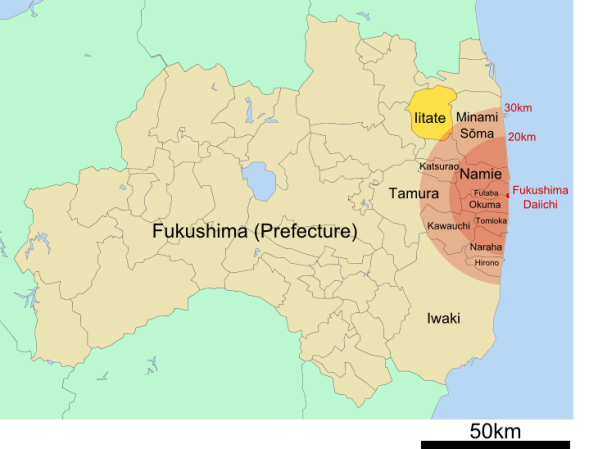
Media have been allowed to watch decontamination work at a post-disaster reconstruction hub inside the no-entry zone set up after the 2011 nuclear accident in Fukushima Prefecture, northeastern Japan.
Reporters were invited on Wednesday to a kindergarten in the town of Okuma, about 7 kilometers from the damaged Fukushima Daiichi nuclear power plant.
Work began there last Friday to remove radioactive substances from the kindergarten’s 7,000-square-meter playground. Workers will weed grass as tall as an adult, and replace contaminated topsoil with new earth.
The central government has recognized an 860-hectare zone around the railway station in Okuma as a reconstruction hub based on the local administration’s plan.
Utilities and other infrastructure will be rebuilt and some houses will be demolished at the request of residents to provide them with a livable environment.
Okuma was designated as an area where residents could not return due to high radiation levels. Authorities plan to lift the evacuation order in about 4 years.
Okuma is the second municipality in the prefecture after the town of Futaba where decontamination work has begun at reconstruction hubs.
Similar projects are set to kick off in other municipalities in the fiscal year starting in April.
Fukushima Flounder Promotion Event Cancelled in Thailand Due to Consumers Concerns

March 12, 2018
Event promoting Fukushima fish cancelled
An event in Thailand promoting flounder from Fukushima has been cancelled amid concerns from consumers.
The event was being held at a Japanese restaurant and scheduled to run through the end of the month. The export of flounder caught in waters off Fukushima was resumed on March 1st for the first time since the 2011 nuclear accident.
The Fukushima prefectural government says a consumer group raised concerns about the safety of the fish. The group said the fish were caught in contaminated waters and dangerous to eat.
The group also reportedly demanded the Thai government announce the name of a local restaurant that sold the fish.
Consumers took to social media to voice their concerns.
Organizers say they cancelled the event to avoid confusion.
Nearly 130 kilograms of flounder have been exported from Fukushima to Thailand but close to half remains untouched. Exports are essentially halted.
A Fukushima government official said the prefecture will continue to promote the safety of the fish in hopes of once again resuming the exports.
Fukushima governor rues cancellation
Fukushima Governor Masao Uchibori has called the cancellation “regrettable.”
He noted that Thai health authorities have said the flounder was rigorously screened and deemed safe. He also said the fish was favorably received at a local Japanese restaurant.
The head of a fisheries association in Fukushima said news of the cancellation came just as he felt pleased about the resumption of exports.
He said a robust screening system has been in place to ensure that the fish are safe.
He added that Thai consumers and environmental activists should be invited to Fukushima to witness safety procedures.
Meanwhile, a representative of a Thai environmental group told NHK that the names of local stores selling marine products from Fukushima should be made public. The group is critical of the Thai government’s handling of the issue.
The official said it is known that Japan has strict safety standards, but that trusting them is another matter. https://www3.nhk.or.jp/nhkworld/en/news/20180313_09/
Seven years after meltdown, Fukushima’s recovery still decades away

March 12, 2018
by Charles Digges
Seven years ago, on the afternoon of March 11, 2011, one of the biggest earthquakes ever measured sent a wall of water rolling toward Japan’s northeastern coastline and into the six reactors of the Fukushima nuclear power plant.
In the seven years since, the name of the plant has become synonymous with Chernobyl for connoting disaster, radioactive contamination, massive human migration and other calamities of biblical proportion – a name that requires no further description to understand the scale of the disaster it connotes.
It’s become another point on the compass at which the world can contemplate its own end – a catastrophe that still casts more shadows than light, continues to beg confounding questions, and which will continue to press the limits of understanding for decades to come.
On Sunday, Japan marked the anniversary with a nationwide moment of silence at 2:46 pm, the moment when, on that Friday in 2011, the waters breached the Fukushima plant and triggered a triple nuclear meltdown.
In the days that followed the quake, uranium fuel melted down inside three of the six reactors. Hydrogen explosions burst through the roofs of three of the reactor buildings, sending radioactive iodine, cesium and other fission by-products belching into the environment. Millions of liters of water were pumped from the ocean to cool the overheating reactors, cascading contamination into the sea.
The meltdowns forced the evacuation of 160,000 people from the rural and agrarian prefecture, 73,000 of whom have yet to come anywhere near home again. Food and livestock were poisoned. In the aftermath, Japan shut down its 42 remaining nuclear reactors, only three of which have come back online under the country’s stringent new safety codes, which were rewritten nearly from scratch in the disaster’s aftermath, severing a source of 30 percent of Japan’s power.
Seven years on, troubling questions about the plant’s condition remain, and addressing them will mean decontaminating an area almost as big as Hawaii without unleashing yet more radiation into the environment.
As this year’s anniversary approached, Tokyo Electric Power Co, or Tepco, which owns the plant, reported that that the reactors at Fukushima are now stable, but many are having trouble believing that. Since the beginning of the disaster, Tepco delayed and obfuscated reports on the state the plant, costing critical evacuation days, and the company is now struggling to overcome a lack of public trust as it forges forth in the cleanup.
The sheer vastness of the cleanup operation seems nearly impossible to bring to heel. At the plant alone, it’s estimated to take another 50 years before decontamination and clean up is complete. Tepco, estimates it will finish the job by 2050. Others in the government admit the cleanup could go on far beyond that.
Meanwhile the extent of the toll on human health remains unknown. Of the 20,000 workers who were exposed to radiation in the immediate aftermath of the catastrophe, only about 7,000 have received any sort of ongoing health testing and observation.
And people are reluctant to return to homes that fell within the evacuation zone. Japanese broadcasters report that some 70,000 continue to live in government supported evacuation housing, leery of retiring to areas where radiation levels are only debatably safe.
While the Japanese government said last year that decontamination costs would reach $75.7 billion, think tanks in Japan have said the final bill could be more than eight times that – closer to $470 billion to $660 billion, according to Japan’s Center for Economic Research,
Whatever the amount, Japan is paying for daring engineering to handle thousands of damaged and melted nuclear fuel rods and tons of mangled reactor debris.
One of the main problems is what to do with millions of tons of water, which is coursing through the reactors to keep them cool. This water, once contaminated, collects in tanks Tepco has built at the site to hold it. There are 1,000 of these tanks, but the volume of irradiated water they have to handle grows by 100 tons daily.
What will become of that water, Tepco has not yet decided, and efforts to clean it of radioactive isotopes have been only partially successful. While Tepco says it can scrub it of cesium, strontium and 50 other radionuclides, it can’t remove its tritium, a radioactive isotope of hydrogen.
Other issues are posed by rain water seeping into the ground at the stricken plant. It is feared this water could drain contamination into the sea, and Tepco last year built a wall of frozen soil to contain it. But this year they reported it wasn’t working as hoped, and that because of this failure, some 500 tons of water is being contaminated daily at the site.
Yet the biggest challenges remain with the stricken reactors themselves.
During the disaster, uranium fuel overheated and dripped through the bottoms of the No 1, 2 and 3 reactors, forming molten pockets beneath them. Radiation levels inside the reactors are searing. Inside reactor No 2, for instance, levels still reach reach 7 to 42 sieverts per hour – enough to kill humans after just a short period of exposure. Only robots can reach the fuel.
The robots are trying to map the location of the melted fuel, sending out 3-D imaging allowing workers to discern the location of pebbly deposits thought to be molten uranium. Yet even when the fuel is found, operations to remove it won’t come before 2021 – when engineers will devise a way to get out.
When that begins, it will add to the 200,000 tons of nuclear waste that is in in storage at the disaster site. Japan has not yet agreed on where all of this will finally be buried, and popular resistance to hosting the waste fuels that uncertainty.
While Tepco did manage to remove all 1,533 fuel bundles from the plant’s unit No. 4 reactor before December 2014, it still has to do the same for the hundreds of rods stored at the other three units.
This will mean clearing rubble, installing shields, dismantling the building roofs, and setting up platforms equipment to remove the rods. In February a 55-ton dome roof was installed on unit No. 3 to facilitate the safe removal of the 533 fuel bundles that remain in a storage pool there. And while removal of fuel at reactor No 3 may being before April of 2019, the fuel at units No. 1 and 2 will not be ready for transfer before 2023.
What Fukushima may look like decades from now, Tepco will not venture to guess. In some reports, the company is quick to say it won’t go the same route as Chernobyl, where an enormous containment structure now covers the remains of its exploded No. 4 reactor. But the road to totally rehabilitating Fukushima, and making it inhabitable again, still appears to be longer than anyone might have guessed.
Remembering Hitoshi Yoshioka, who fought gov’t nuclear policy from inside
March 12, 2018

“I feel sorry for the next generation that they must take on the burden of Fukushima. What we have been doing is something we must feel embarrassed about,” said Hitoshi Yoshioka at a symposium following the accident at the Fukushima No. 1 Nuclear Power Plant. Those words still linger in me.
Yoshioka was a strong opponent of Japan’s nuclear energy policy. At 43 years old he took a spot on the committee that decided the government’s nuclear policy. He was a unique presence in that he continued to criticize the government from the inside, raising questions over Japan’s policy of forging ahead with nuclear power. Perhaps his regret that he was unable to prevent the Fukushima disaster before it unfolded was behind his statement above.
Yoshioka passed away on Jan. 14, 2018, of a hepatic neuroendocrine tumor. He was 64. He studied physics at the University of Tokyo, but upon meeting Tetsu Hiroshige, a history of science expert known for his criticism of the sciences, Yoshioka shifted his focus to the history of science as well.
From the late 1980s, Yoshioka devoted himself to research on nuclear energy. He continued raining down scalding criticism of the civilian use of nuclear energy as a power source, saying that Japan’s system was “second-class at best and undeveloped” and that “what the government really wants (with nuclear power) is to maintain the structure of vested interests and the potential capabilities for nuclear weapons.” Yoshioka’s book “Genshiryoku no Shakaishi” (The social history of nuclear energy) remains as a sort of bible to those related to the industry.
“Public policies (like nuclear power) do not belong solely to politicians and bureaucrats,” Yoshioka would expound. “I would like everyone to do their own investigative research and participate in policy formation.” He hoped for the effort of every single citizen to reform government policies. Even when I, someone he barely knew, came to him asking for advice about wanting to summarize my experiences covering the Fukushima nuclear disaster into a dissertation three years ago, he readily provided me with guidance.
As the chairman of the Citizens’ Commission on Nuclear Energy, Yoshioka fought for the reconstruction of the lives of those in Fukushima affected by the disaster as the nation’s top priority. Also concerned about the global unrest surrounding nuclear weapons, Yoshioka said that nuclear power was just the outer moat, and the total elimination of nuclear arms was the castle keep.
Aiming for a future coexisting with science that could create a “fair society,” Yoshioka fought to the very end as an opponent of Japan’s nuclear energy policies.
(By Shinji Kanto, Saga Bureau)
1 This Month

Petition to revoke the licensing of the Near Surface Nuclear Disposal Facility (NSDF) at Chalk River. https://www.ourcommons.ca/petitions/en/Petition/Details?Petition=e-7247


of the week – STOP SMALL MODULAR REACTORS IN CANADA
To see nuclear-related stories in greater depth and intensity – go to https://nuclearinformation.wordpress.com
-
Archives
- March 2026 (153)
- February 2026 (268)
- January 2026 (308)
- December 2025 (358)
- November 2025 (359)
- October 2025 (376)
- September 2025 (258)
- August 2025 (319)
- July 2025 (230)
- June 2025 (348)
- May 2025 (261)
- April 2025 (305)
-
Categories
- 1
- 1 NUCLEAR ISSUES
- business and costs
- climate change
- culture and arts
- ENERGY
- environment
- health
- history
- indigenous issues
- Legal
- marketing of nuclear
- media
- opposition to nuclear
- PERSONAL STORIES
- politics
- politics international
- Religion and ethics
- safety
- secrets,lies and civil liberties
- spinbuster
- technology
- Uranium
- wastes
- weapons and war
- Women
- 2 WORLD
- ACTION
- AFRICA
- Atrocities
- AUSTRALIA
- Christina's notes
- Christina's themes
- culture and arts
- Events
- Fuk 2022
- Fuk 2023
- Fukushima 2017
- Fukushima 2018
- fukushima 2019
- Fukushima 2020
- Fukushima 2021
- general
- global warming
- Humour (God we need it)
- Nuclear
- RARE EARTHS
- Reference
- resources – print
- Resources -audiovicual
- Weekly Newsletter
- World
- World Nuclear
- YouTube
-
RSS
Entries RSS
Comments RSS
 nuclear-news