“I can’t think about marriage, childbirth or the future”
January 30, 2022
A 26-year-old woman with thyroid cancer and lung metastasis sues TEPCO.
Tokyo Shimbun, January 19, 2022
Six young people who developed thyroid cancer after the accident at the Fukushima Daiichi nuclear power plant are seeking to establish the responsibility of TEPCO (Tokyo Electric Power Company) in court. They have strong doubts that, despite the discovery of thyroid cancer in about 300 people who were children at the time of the accident, no causal link with the accident has been recognized, especially since a reduction in the number of examinations is being considered. “I don’t want this to continue as if nothing happened,” said a 26-year-old woman who lives in the Nakadôri area of central Fukushima Prefecture and is worried about her future after learning that her cancer has spread to her lungs.
17 years old “Why me?”
“The doctor told me there was something suspicious in my neck in addition to the shadow detected on my lungs. I can’t think about marriage, having a child, or anything else in the future,” she says quietly at home that morning of November 11 before heading to her part-time job.
She goes to the hospital once every three months. Her heart sinks when she sees a young child in the waiting room. “The cancer was detected during a test when I was asymptomatic. Reducing the test[1] may not save lives.”
She was diagnosed with thyroid cancer in March 2013, just before she started her third year of high school, at age 17. “I was told that if I didn’t have surgery, I might not live until I was 23. I tried to believe that everything was okay, even though I kept asking myself, Why me?”

is in Fukushima Prefecture.
Two surgeries, a room like a prison cell
Her 57-year-old mother held back tears as she heard the diagnosis along with her daughter. Her daughter entered high school in April 2011, just after the nuclear accident. At first, she wore a mask to protect herself from inhaling radioactive material, but she soon stopped wearing it. She walked 40 minutes each way to school, and participated in outdoor physical education classes. Her mother’s mind was filled with regret: “If only we had evacuated,” she said.
The girl wanted to go to university in Tokyo, but her mother, worried about her health, prevented her from doing so, and she went to university in the nearby prefecture. However, six months later, she began to feel lethargic, tired and had irregular periods. So she was retested.
“There is a recurrence on the remaining lobe of the thyroid gland. There was also a shadow on the lung,” the doctor told her. “I am not cured,” she said, breaking down in tears with her mother. She dropped out of college at age 19 to focus on her treatment.
The two surgeries and tests were difficult trials to endure. During one test, the deeper the needle went into her throat, the more painful it was. She had to undergo three sessions of iratherapy[2]. 2] She was placed in isolation in a cell-like room where she tried to cope by looking out a leaded window.
…but now I want to look forward.
On the day of the coming-of-age ceremony, her playful daughter told her father that she was happy to be able to wear a kimono. Her mother was shocked to learn that their daughter had contemplated death. “I have cancer, I won’t live long,” she repeated to herself, half-joking. This breaks her mother’s heart: “Not a day goes by that I don’t think about her.
Her cancer marker values are higher than before the operation. Because of fears of recurrence and metastasis, she has given up on the idea of a full-time job in her desired profession. But now she wants to look ahead. “If it wasn’t the accident, why are there so many children with thyroid cancer? Maybe there will be more in the future. I feel I have to do what I can now.
EDITOR’S NOTE
[1] Thyroid ultrasound examination of people living in Fukushima Prefecture who were under 18 years old at the time of the Fukushima Daiichi nuclear accident is conducted by Fukushima Prefecture. The decrease in the number of examinations is under discussion; the examination would be a source of concern for the examinees, and these examinations possibly followed by surgery would be a source of overdiagnosis.
[2] Radioactive Iodine Treatment
https://www.tokyo-np.co.jp/article/154986?fbclid=IwAR3kenQXIPf2itXHKTp8qU4t-uWy4o8hdjntp1bTmwIDdzpJuiNPBPLAYS8
“I couldn’t tell anyone for ten years” – Six teenagers who developed thyroid cancer after the nuclear accident file lawsuit against TEPCO
“””We’re scared to be discriminated against when we say we’ve got thyroid cancer, we’ve spent the last 10 years without telling anyone.”””
“But there are approximately 300 children suffering from thyroid cancer.”
“I want to change the situation for the better by raising my voice.”
Six men and women between the ages of 17 and 27 who were living in Fukushima Prefecture at the time of the accident filed a lawsuit against TEPCO on April 27, claiming that they had thyroid cancer due to radiation exposure caused by the accident at TEPCO’s Fukushima Daiichi Nuclear Power Plant. On the 27th, six men and women between the ages of 17 and 27, who were living in Fukushima Prefecture at the time of the accident, filed a lawsuit with the Tokyo District Court demanding a total of 616 million yen in damages including compensation from TEPCO. The biggest point of contention in the lawsuit is expected to be whether or not there is a causal relationship between radiation exposure and thyroid cancer.
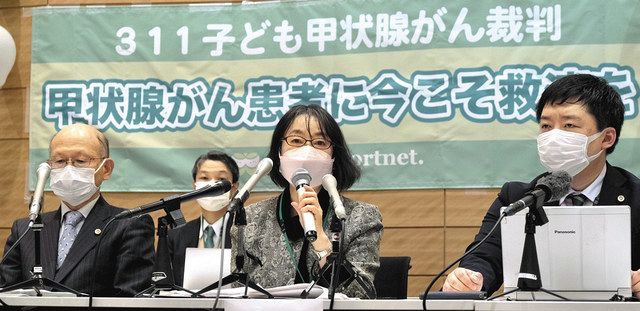
January 27, 2022
The six, who were between the ages of 6 and 16 at the time of the accident, are high school students, part-time workers, and office workers living in Fukushima Prefecture, Tokyo, and Kanagawa Prefecture. They were diagnosed with thyroid cancer in their teens, two had one side of their thyroid gland removed, four had it completely removed due to recurrence, and one had it spread to their lungs. They have had to quit college or work due to the surgery and treatment, and are also worried about the recurrence of the disease as their daily lives are restricted.
The complaint points out that most of the thyroid cancers found in children in Fukushima Prefecture, including the six children, are not hereditary and that no cause other than radiation exposure is possible. It argues that if there are other causes, TEPCO needs to prove them.
Normally, the number of cases of thyroid cancer in children that are diagnosed and reported is about one to two per one million people per year. After the nuclear accident, about 300 people were diagnosed with thyroid cancer or suspected of having thyroid cancer in Fukushima Prefecture through prefectural health surveys and other means, but the prefectural expert panel has stated that a causal relationship with radiation exposure is “not recognized at this time.
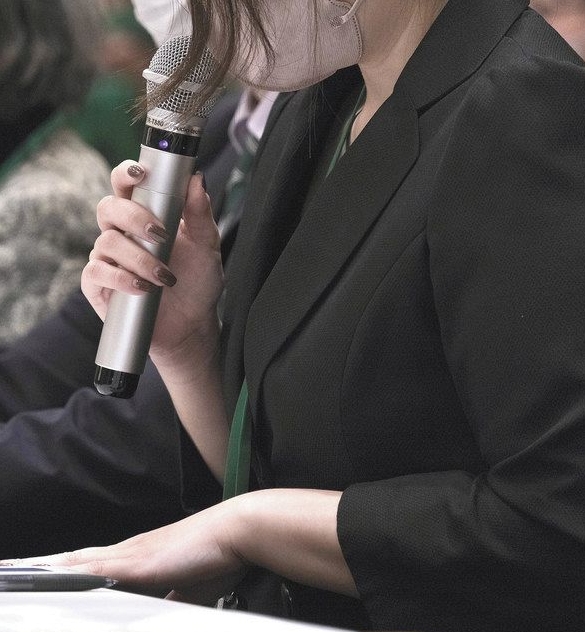
I want to change the situation by raising my voice.
On the afternoon of April 27, the plaintiff, 26, held a press conference in Tokyo after filing her lawsuit. In a press conference held in Tokyo after the lawsuit was filed, the plaintiff, 26, choked back tears as she made her appeal. There are still about 300 children suffering from thyroid cancer. I want to change the situation for the better by raising my voice, even if only a little.
A woman from Nakadori in central Fukushima Prefecture was diagnosed with thyroid cancer in 2015, when she was a 19-year-old sophomore in college. After an operation to remove one side of her thyroid gland the following year, her physical strength dropped drastically. Her physical condition continued to deteriorate, and she left the advertising agency where she had worked after graduating from university in Tokyo after a year and a half. She is now working as an office worker in Tokyo. She said, “I had to give up my dream job, and it’s still hard for me to work properly. I no longer have any dreams or hopes for the future.
Immediately after being informed of her cancer, she felt uncomfortable when the doctor told her that it had nothing to do with the nuclear accident.
She was moving outside that day…
When her mother heard this with her, March 14, 2011, the day of the hydrogen explosion at the Unit 3 reactor of the Fukushima Daiichi Nuclear Power Plant, came to her mind. She was outside helping her grandparents move their belongings out of their house, which was half destroyed by the disaster. When I heard about the explosion in the evening, I immediately brought the woman inside. I wish I hadn’t let her help me move at that time,” she said. I wish I hadn’t let her help me move. This was the only time she showed any regret.
The woman traveled back and forth between Fukushima and Tokyo many times for the tests before she was notified. The prefectural government provides full support for insured medical expenses, but does not include transportation costs. I took a long-distance bus, which is cheaper than the bullet train, but it became physically demanding.
Surgeries and examinations in Tokyo, a heavy burden
Because of her distrust of hospitals in Fukushima, she underwent surgeries and tests in Tokyo after she was notified. Her parents traveled to Tokyo each time, and the endoscopic surgery she underwent to reduce the scar on her neck as much as possible was not covered by the prefectural government at the time, so she had to pay for it herself.
As the treatment continued, the woman forgot to apply for a non-repayable scholarship from the university, and from her third year, she had to pay the full tuition. She said, “When I heard my parents asking for advice on reconfiguring their insurance, I felt depressed that I had caused them so much trouble.
Fear of recurrence: “I’m worried about what will happen next.
After the surgery, she caught colds frequently and developed pneumonia, bronchitis, and asthma. However, unless it is recognized as treatment for thyroid cancer, he is not eligible for support. The prefectural government’s support for medical expenses is budgeted every year with the government’s subsidies as the source, and “will continue for as long as possible,” according to the prefectural government’s Civil Health Survey Division, but there is no telling how long it will last. However, there is no way to know how long the support will last. The woman said, “I am always afraid of a recurrence, and I am very anxious about what will happen to me in the future. (Natsuko Katayama)
Trickle of residents return to Fukushima’s last deserted town
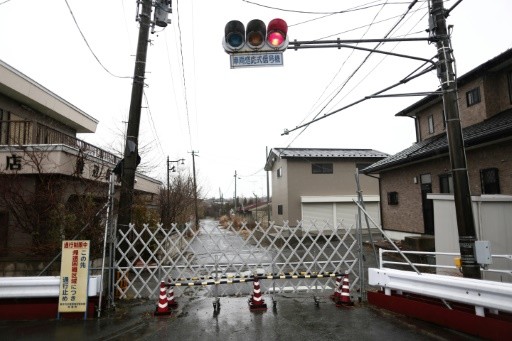
Jan. 21, 2022
TOKYO – Five former residents of the last remaining uninhabited town near Japan’s stricken Fukushima nuclear plant returned on Thursday to live there for the first time since the 2011 disaster.
Following extensive decontamination, numerous areas around the plant in northeast Japan have been declared safe after a huge earthquake and tsunami triggered a meltdown over a decade ago.
TV footage showed the returnees inspecting the buildings, with one testing a tap outside his house.
“It’s out! This is the first time in 10 years and 11 months that running water comes out,” he said.
Futaba, whose population of around 5,600 was forced to flee over radiation fears, had been the final deserted municipality in the Fukushima region.
But restrictions were lifted in a small part of the town in March 2020 and the government is preparing to lift the cordon on a wider area later this year.
A local official told AFP that five people from four households are returning to live in Futaba on a trial basis, the first of just 15 people who have applied to a scheme, working towards a permanent return to the town.
The group had already been back to visit Futaba, but Thursday marks the first time they will stay overnight.
They can live there as part of the trial until at least June, when the wider cordon is expected to be lifted and their residence can become permanent, the official said.
The scheme “aims to ensure that residents will be able to live without problems, by, for example, checking if the sewers function well and there are facilities to support everyday life”, a cabinet office official in charge of supporting Fukushima residents told AFP.
More than 18,400 people died or remain missing after the 9.0-magnitude quake and tsunami on March 11, 2011 which sparked the nuclear disaster at the Fukushima Daiichi plant.
The government has undertaken an extensive decontamination programme in the region, literally scraping layers of topsoil, among other methods to remove radiation.
It has gradually declared areas safe for residents to return, with just 2.4 percent of the prefecture still covered by no-go orders as of last year.
But in some places, evacuees have been reluctant to return even after measures are lifted, worried about persistent radiation or fully resettled in other places.
Beer made with Fukushima rice launched in HK
Beer anyone? NO THANKS!
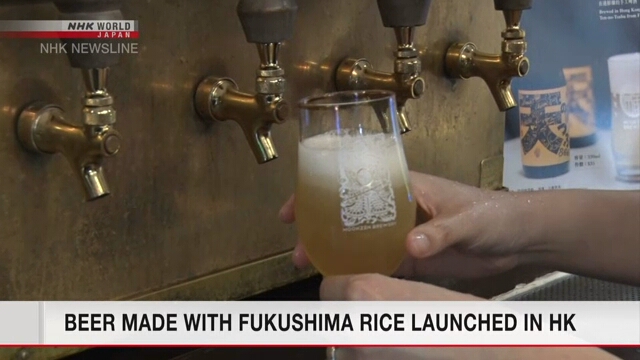
Jan. 21, 2022
A brewery in Hong Kong has unveiled a craft beer made with rice grown in Fukushima Prefecture, northeastern Japan. Hong Kong restricts imports of many agricultural products from the prefecture following the 2011 nuclear accident, but rice is allowed in.
The company invited the media and Consul-General of Japan, Okada Kenichi, to a launch event on Kowloon Peninsula on Thursday.
It produced the beer at the request of Fukushima Prefecture and Japan Agricultural Cooperatives, or JA.
It is made with a brand of rice called “Ten-no-tsubu”.
JA says Hong Kong imports 3 tons of Ten-no-tsubu rice every year. The craft beer will be sold at events promoting foods from Fukushima Prefecture.
The head of JA’s Hong Kong office says he wants people there to learn about the rice brand, so it will lead them to buy other food products from the prefecture.
Six people to sue Tepco over thyroid cancer after Fukushima disaster
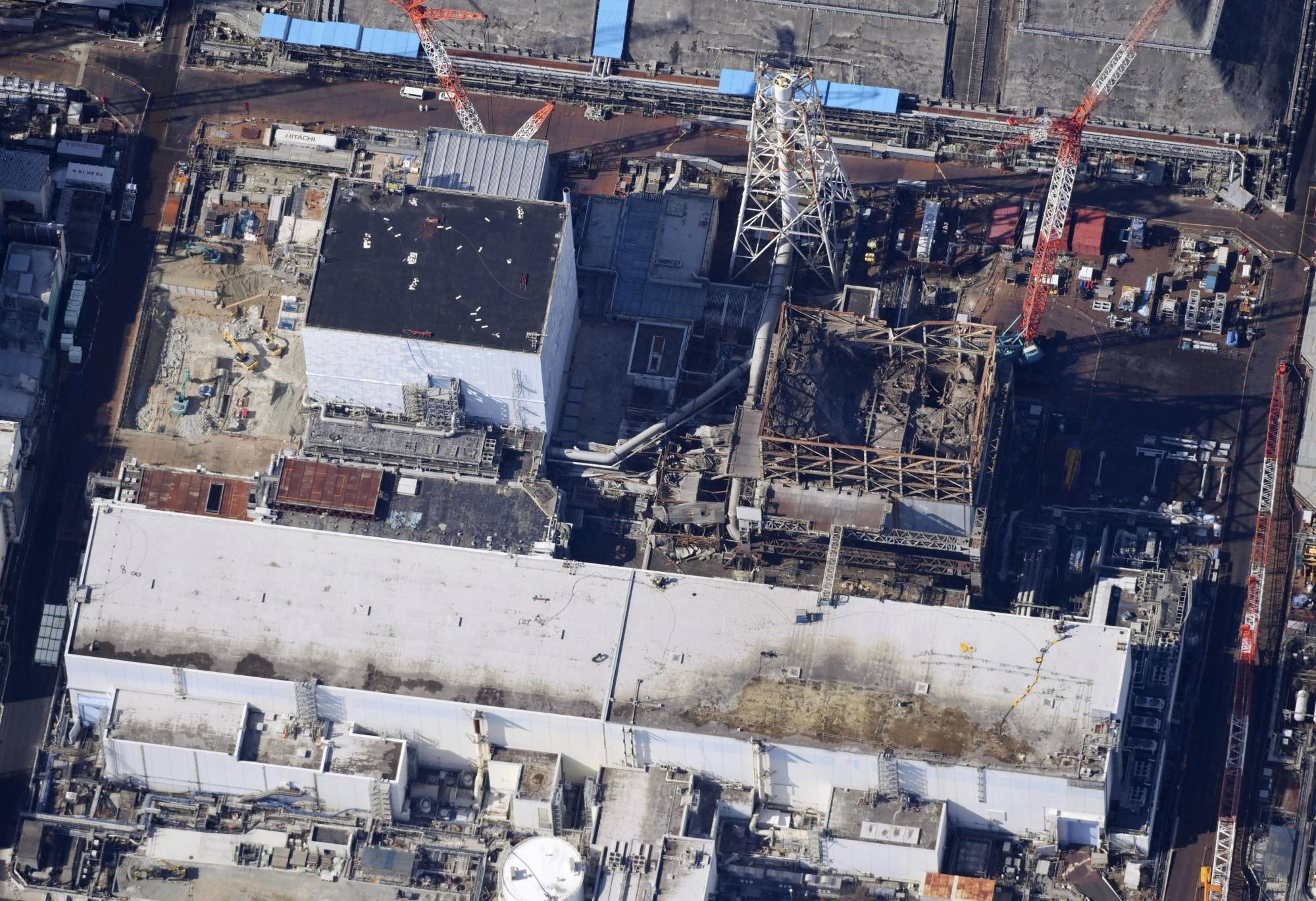
Jan 19, 2022
Six people are set to sue Tokyo Electric Power Company Holdings Inc. over thyroid cancer that they claim they developed due to exposure to radioactive substances released from the 2011 triple reactor meltdown at its stricken Fukushima No. 1 nuclear power plant, their lawyers said Wednesday.
The plaintiffs, who were between the ages of 6 and 16 at the time of the nuclear disaster and lived in Fukushima Prefecture, home to the plant, will seek ¥616 million in total damages.
This is believed to be the first lawsuit involving Fukushima Prefecture residents suing Tepco over thyroid cancer in connection with the nuclear disaster.
The six plan to file the suit with Tokyo District Court on Jan. 27, the lawyers said during a news conference.
They currently live in Tokyo, Kanagawa Prefecture and Fukushima Prefecture. Four of them have had their entire thyroid glands removed, the lawyers said. Some have undergone multiple rounds of surgery because of cancer metastasis or recurrence, they said.
A health survey by the Fukushima prefectural government, which covered some 380,000 people age 18 or younger at the time of the disaster, showed in October last year that 266 people had cancer or suspected cancer.
Some experts have pointed out the possibility of overdiagnosis, or the discovery of cancers that do not require treatment. The lawyers claimed that the plaintiffs developed cancer due to the nuclear disaster and needed to undergo surgeries.
A review committee on the prefectural health survey has said that the thyroid cancer apparently has nothing to do with what happened at the Fukushima No. 1 plant in March 2011.
Kenichi Ido, a former judge who leads the lawyers, criticized the Japanese government for determining that there has been no health damage from the disaster.
Lawyer Hiroyuki Kawai said that “there is strong social pressure to believe that cancer is not caused by the accident, so it took a lot of courage for the six plaintiffs to file the lawsuit.”
Six people who were children at the time of the accident are suing TEPCO, claiming that they developed thyroid cancer due to exposure to radiation from the Fukushima Daiichi Nuclear Power Plant accident.
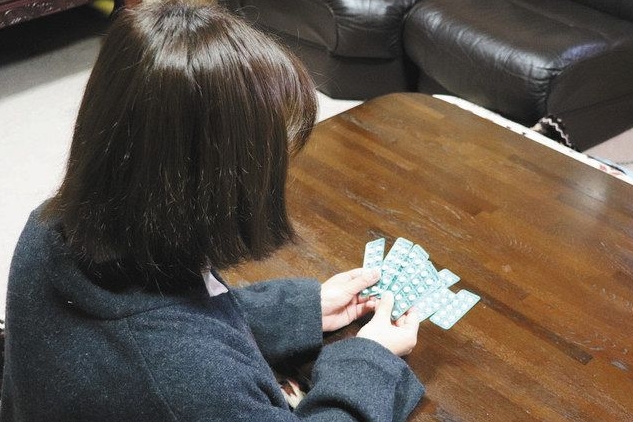
January 19, 2022
Six men and women between the ages of 17 and 27 who were living in Fukushima Prefecture at the time of the accident filed a lawsuit against TEPCO on January 27, claiming that they developed thyroid cancer due to radiation exposure caused by the accident at TEPCO’s Fukushima Daiichi Nuclear Power Plant. On April 27, six men and women aged 17 to 27 who were living in Fukushima Prefecture at the time of the accident filed a lawsuit against TEPCO in the Tokyo District Court, seeking a total of 616 million yen in damages. According to the lawyers, this is the first time that patients who developed thyroid cancer as children are suing TEPCO because of the nuclear accident. (Natsuko Katayama)
Defense: “We can’t think of any cause other than radiation exposure.
The lawsuit is filed by four people who lived in Fukushima City and Koriyama City, and one each in the Aizu region in the western part of the prefecture and the Hamadori region in the eastern part of the prefecture. They were between the ages of 6 and 16 at the time of the accident, and are now high school students or working as office workers or part-time employees in the prefecture or in Tokyo.
Two have had one side of their thyroid gland removed, four have had total thyroidectomy due to recurrence, and are undergoing or planning to undergo radiation therapy. Some have had four operations and others have metastasized to the lungs. Some have had four surgeries and others have had their lungs metastasized. The treatments and surgeries have forced them to give up their desired jobs, drop out of college, or retire. They are not only worried about relapse, but also about whether they will be able to get married or have children.
The lawyers argued that most of the thyroid cancers found in the children, including the six, were papillary cancers, which were confirmed in children and young adults after the Chernobyl nuclear accident, and that they were not hereditary and could not be caused by anything other than radiation exposure. Kenichi Ido, the head of the legal team, said, “Many of the cancers have recurred, so it is hard to imagine overdiagnosis. TEPCO should admit that the cause of the cancer was the nuclear accident and provide relief as soon as possible.
The expert panel’s position is that a causal relationship cannot be established.
With regard to the causal relationship between exposure to radiation from the nuclear power plant accident and thyroid cancer, the Fukushima prefectural government’s expert panel has taken the position that “no causal relationship can be recognized at this time.
Since the nuclear accident, the prefecture has been conducting tests for thyroid cancer as a part of the prefectural health survey for a total of about 380,000 people who were under the age of 18 at the time of the accident and who were born before April 1, 2012 (including those who evacuated from the prefecture).
Normally, the incidence of pediatric thyroid cancer is estimated to be about one to two cases per one million people per year, but according to the survey and other findings, by June last year, about 300 people had developed thyroid cancer or thyroid cancer-related diseases. By June last year, however, about 300 people had been diagnosed with thyroid cancer or suspected of having thyroid cancer. All the medical expenses are covered by the “Prefectural Health Care Fund” established with financial support from the government and compensation from TEPCO.
The expert panel is continuing to investigate the results of the diagnoses, saying, “It has been pointed out that there is a possibility of over-diagnosis, finding cancers that do not need treatment in the future.
https://www.tokyo-np.co.jp/article/154959?fbclid=IwAR06xqKA6vo3utW1-lfN3PIkFiBnS20b6BMD1WAXyzUo5yJKMzU3KU5elGs
Japan-caught marine products not properly identified in South Korea
Japan is using South Korea and Taiwan desire to join the Comprehensive and Progressive Agreement for Trans-Pacific Partnership, an 11-member trade pact that includes Japan and Australia, as a leverage to force them to lift their Fukushima contaminated food import ban.

December 26, 2021
SEOUL — There were more than 200 incidents of Japan-caught fishery products being sold in South Korea without proper identification of their origin from January through November, The Yomiuri Shimbun has learned from South Korea’s Ministry of Oceans and Fisheries.
The total number of cases was 203, the highest such figure since the 2011 accident at the Fukushima No. 1 nuclear power plant, and 1.5 times the previous record of 137 registered for the whole year of 2019. Damage from groundless rumors related to Japan-caught marine products appears to be widespread under the administration of South Korean President Moon Jae-in.
The cases were identified by the National Fishery Products Quality Management Service, which is under the wing of the ministry.
The ministry has tightened its controls since the Japanese government decided in April on the planned discharge into the ocean of treated water from the Fukushima No. 1 nuclear power station of Tokyo Electric Power Company Holdings, Inc. This has led to greater exposure of cases involving marine products whose place of origin is not properly identified.
Since the nuclear accident that occurred at the Fukushima plant in the wake of the Great East Japan Earthquake, the South Korean government has continued to prohibit the import of marine products caught in eight prefectures of Japan, including Fukushima and Miyagi.
There is tendency in South Korea to avoid even Japanese fishery products caught outside those eight prefectures. This has led to the problem of sellers offering Japan-caught marine products without indicating they are from Japan, or claiming the products are from South Korea.
Harm from false rumors related to Japan’s fishery products seems to have spread further with the Japanese government’s decision to release treated radioactive water into the sea.
Experts at the International Atomic Energy Agency, and from the United States and South Korea, have judged that TEPCO’s planned release of the treated water is safe.
In a report released in April, the Korean Nuclear Society called on the South Korean government and the nation’s mass media to create appropriate policies and news reports concerning the discharge of treated water, based on scientific facts.
It also appealed to the public on the need for “civic awareness mature enough to determine truth from falsity amid a deluge of information.”
The South Korean government on Dec. 13 made clear its policy of applying to join the Comprehensive and Progressive Agreement for Trans-Pacific Partnership, an 11-member trade pact that includes Japan and Australia.
Seoul’s lifting of import restrictions on fishery products is expected to be one of the focal issues amid the procedures for joining. The South Korean government is also likely to be urged to take steps to deal with the harm from groundless rumors, by conveying information domestically based on scientific assessments.
Taiwan will not import contaminated food products from Fukushima, Japan
Foreign Minister Joseph Wu affirms Taiwan’s high food safety standards
Simple: When asked whether importing food from Fukushima would guarantee Taiwan’s acceptance to the Comprehensive and Progressive Agreement for Trans-Pacific Partnership, Wu reiterated that in order to enter Taiwan, food must not be contaminated.

December 23, 2021
TAIPEI (Taiwan News) — Foreign Minister Joseph Wu (吳釗燮) has emphasized that Taiwan will not import food products from Fukushima, Japan, that are contaminated.
In a Foreign Affairs and National Defense Committee meeting at the Legislative Yuan on Thursday (Dec. 23), Wu said that Taiwan has strict food safety regulations and that no radiated food can be imported. The government will protect the health of Taiwanese and check food safety in accordance with international standards and scientific evidence, CNA cited him as saying.
When asked whether importing food from Fukushima would guarantee Taiwan’s acceptance to the Comprehensive and Progressive Agreement for Trans-Pacific Partnership, Wu reiterated that in order to enter Taiwan, food must not be contaminated. Taiwan has been in contact with Japan regarding the issue, the foreign minister said, but the matter has not been formally discussed and there is no timetable yet.
Cesium reaches interior of Arctic Ocean 8 years after Fukushima nuclear accident

Dec. 14, 2021
Cesium-134, a radioactive material that leaked into the sea as a result of the accident at the Fukushima Daiichi Nuclear Power Plant of Tokyo Electric Power Co. 4, which was spilled into the sea after the Fukushima Daiichi nuclear power plant accident in 2011, reached the interior of the Arctic Ocean about eight years later, Yuichiro Kumamoto, a senior researcher at the Japan Agency for Marine-Earth Science and Technology, summarized the results of a study by April 14. This is the first time that cesium-134 has been detected in the interior of the Arctic Ocean beyond its marginal seas.
Mr. Kumamoto estimated that cesium-137 washed ashore in the same way. Although the amount of cesium detected is small, he speculates that it is spreading toward the center of the Arctic Ocean.
After the accident, Kumamoto and his team analyzed seawater from the North Pacific Ocean and other regions. The seawater collected in the Arctic Ocean near latitude 73 degrees north of the Alaskan Peninsula in October 2007 had a concentration of cesium 134 (half-life of about two years) of 0.0 becquerel per cubic meter. 7 becquerels per cubic meter.
https://www.tokyo-np.co.jp/article/148778?fbclid=IwAR2S-MKeN7VgNoSdK7kUmjGXSQsoPrkUptG5sr1gcaHO0CdEgUGRYWCog8k
Radioactive Materials from Wild Mushrooms: 5 Municipalities to Restrict Shipments

December 13, 2011
Gunma prefecture – Some wild mushrooms from five cities, towns and villages in Gunma Prefecture, including Midori City and Nakanojo Town, have been found to contain radioactive materials exceeding the standard values.
According to Gunma Prefecture, when wild mushrooms collected in Midori City, Nakanojo Town, Kusatsu Town, Katahina Village, and Kawaba Village were tested in September this year, 510 becquerels of radioactive cesium was detected in the red fir mushroom in Kawaba Village. In all cases, the amount of radioactive materials detected exceeded the national standard of 100 becquerels per kilogram.
In response, the national nuclear emergency response headquarters instructed the prefectural government to restrict the shipment of wild mushrooms from five cities, towns, and villages in the area as of March 13.
According to the prefectural government, the five cities, towns and villages have already been asked to refrain from shipping the mushrooms, and since the season for gathering wild vegetables has already ended, the impact is expected to be minimal.
In the prefecture, seven municipalities, including Numata City, have been instructed to restrict shipments of wild mushrooms since September 2012, bringing the number of municipalities restricting shipments of wild mushrooms to one or two. This brings the number of cities, towns, and villages where wild mushroom shipments are restricted to one or two.
The prefectural government says that it will continue to conduct monitoring inspections systematically.
https://www3.nhk.or.jp/lnews/maebashi/20211213/1060010905.html?fbclid=IwAR1vseUrk0rx1N56TZAkGVfZpKj2sJoJ3ugTTURPX0vPOS8rJNGnARL5dkU
Nuke disaster radiation continues to threaten traditional ways of life in northeast Japan
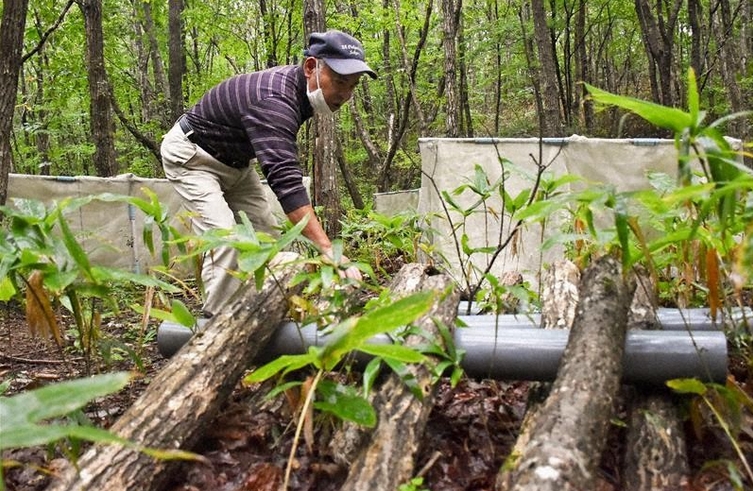
October 8, 2021
FUKUSHIMA — When the Fukushima Daiichi Nuclear Power Station was struck with a triple-meltdown in March 2011, it spewed radioactive material across a wide swathe of northeastern Japan’s forests. Even now, more than a decade after the catastrophe, the impact of the cesium still found in the region’s trees is enormous.
One area to feel the brunt of the fallout’s effects is eastern Fukushima Prefecture’s Abukuma mountains, once one of Japan’s leading sources of logs for shiitake mushroom cultivation, and now at a virtual standstill. Ten years into this continuing disaster, locals and experts have been working hard to find ways to revive the traditional industry, in hopes of being able to pass on the mountains’ rich natural resources, and the life connected to this landscape, to the next generation.
“Once a tree trunk gets this thick, it’s not really good as a log.” We are in the woods in the Miyakoji district of Tamura, Fukushima Prefecture, about 20 kilometers west of the Fukushima Daiichi plant. Kazuo Watanabe, the 59-year-old head of the Miyakoji office of the Fukushima central forestry union, is standing by a copse of konara oaks for shiitake cultivation, sighing as he speaks.
Watanabe says that the oaks are harvested for the shiitake business when they are about 15 centimeters across. And it takes about 20 years to get that big. If the trunks are too thick, it becomes difficult for new growth to sprout from the stump. But konara logging has stagnated severely because of the nuclear disaster, leading to a halt in shipments.
Radioactive cesium exceeding the government-set maximum of 50 becquerels per kilogram has been detected in logs from Miyakoji and other parts of the Abukuma region. Even 10 years after the Fukushima Daiichi reactor meltdowns, testing has turned up cesium levels in the logs of between 100 and 540 becquerels per kilogram.
To grow shiitake, mushroom mycelia are put into holes drilled into sawtooth oak, konara oak and other types of logs. In 2010, Fukushima Prefecture was Japan’s third-largest producer of these logs, shipping some 4.78 million of them. But the nuclear disaster changed all that, and even now the prefecture produces only about 140,000 of the cultivation logs annually.
According to the Forestry Agency, as of the end of 2020, log-grown shiitake shipments were restricted in 93 municipalities across Fukushima, Iwate, Miyagi, Ibaraki, Tochigi and Chiba prefectures due to cesium contamination. Along with Fukushima Prefecture, Miyagi Prefecture and other jurisdictions are voluntarily limiting shipments of the logs as well.
Cesium 134 has a radioactive half-life of about two years, meaning it has almost disappeared over the past 10. However, cesium 137’s half-life is approximately 30 years, meaning it will retain 30% of its original radioactivity 50 years on from the disaster, and 10% after a century.
The problem is the cesium inside the trees, which absorbed disaster fallout though their bark soon after the meltdowns, and through their roots. If plants have scant supplies of potassium, an essential element for growth, then they will absorb cesium, which has similar chemical properties. This has led to farmers sprinkling their fields with potassium fertilizer as a countermeasure. However, this is difficult to do in the vastness of the forest.
About 70% of Fukushima Prefecture is covered in forest. But in principle, only certain areas are eligible for nuclear disaster decontamination, such as residential districts and their immediate surroundings. The government and researchers believe that decontamination has limited the effectiveness in reducing the external exposure of the residents and that it is very costly, plus there is a risk of a spillover of soil due to the scraping of topsoil. And while cesium 137 indeed becomes less radioactive over time, it will take 150 years for the emanations to fall to a few percent of its current level.
And so the shiitake cultivation log production is essentially frozen, as are local traditions of sharing out edible wild plants, mushrooms and the like. To preserve these natural resources and this way of life for future generations, in January 2020 local forestry workers and experts created the “Abukumayama no kurashi kenkyujo,” or the Abukuma mountain way of life research center. Its purpose: to create a vision for the Abukuma region for the next 150 years. Participants study woodland culture at former industrial sites connected to the mushroom cultivation log business. Research center head Kazunori Aoki, 60, told the Mainichi Shimbun, “The nuclear accident changed the mountains’ value, and our connection to them has become quite tenuous.”
Aoki once raised “wagyu” beef cattle and farmed vegetables in Miyakoji, but he closed his business after the nuclear disaster. Watching growing tracts of farmland go wild, Aoki said he decided he “wanted to change the landscape a little at a time and return it to the mountains.” Since 2012, he has been planting 100 to 300 maples and other trees every year, a project that helped lead to the Abukuma research center’s creation.
In April this year, the center brought together 40 people from both inside and outside the city of Tamura to plant 90 mountain cherries, Kobushi magnolias and other trees in Miyakoji. But some elderly residents of the district worry that there is no one to take over the community, and that there is no hope for a future connected to the mountains.
“We want to work with the local community to consider how the next generation can live with the natural wealth of the mountains,” commented center administrative head Yumeko Arai, 35.
https://mainichi.jp/english/articles/20211007/p2a/00m/0bu/023000c
New type of fallout from Fukushima Daiichi found a decade after nuclear disaster

15 Mar 2021
New, large and highly radioactive particles have been identified from among the fallout of the 2011 Fukushima Daiichi nuclear disaster in Japan. An international team of researchers has characterized the particles using nuclear forensic techniques and their results shine further light on the nature of the accident while helping to inform clean-up and decommissioning efforts.
This year marks the tenth anniversary of the Fukushima Daiichi disaster, which occurred as a result of a powerful earthquake that struck off of Japan’s east coast, generating a tsunami that reached some 14 m high when it reached the nearby shoreline. Breaching sea defences, the water from the wave shut down emergency generators that were cooling the reactor cores. The result was a series of nuclear meltdowns and hydrogen explosions that released a large amount of radioactive material into the surrounding environment — including microparticles rich in radioactive caesium that reached as far Tokyo, 225 km away.
Recent studies have revealed that the fall-out from reactor unit 1 also included larger caesium-bearing particles, each greater than 300 micron in diameter, which have higher levels of activity in the order of 105 Bq per particle. These particles were found to have been deposited in a narrow zone stretching around 8 km north-northwest from the reactor site.
Surface soil samples
In their study, chemist and environmental scientist Satoshi Utsunomiya of Japan’s Kyushu University and colleagues have analyzed 31 of these particles, which were collected from surface soil taken from roadsides in radiation hotspots.
“[We] discovered a new type of radioactive particle 3.9 km north northwest of the Fukushima Daiichi Nuclear Power Plant, which has the highest caesium-134 and caesium-137 activity yet documented in Fukushima, 105–106 Bq per particle,” Utsunomiya says.
Alongside the record-breaking radioactivity seen in two of the particles (6.1×10⁵ and 2.5×10⁶ Bq, after correction to the date of the accident) the team also found that they had characteristic compositions and textures that differed from those previously seen in the reactor unit 1 fall-out.
Reactor building materials
A combination of techniques including synchrotron-based nano-focus X-ray analysis and transmission electron microscopy indicated that one of the particles was found to be an aggregate of smaller silicate nanoparticles each with a glass-like structure. This is thought to be the remnants of reactor building materials that were first damaged in the explosion and then picked up caesium that had been volatized from the reactor fuel.
The other particle had a glassy carbon core and a surface peppered with other microparticles of various compositions, which are thought to reflect a forensic snapshot of the particles that were airborne within the reactor unit 1 building at the moment of the hydrogen explosion and the physio-chemical phenomena they were subjected to.
“Owing to their large size, the health effects of the new particles are likely limited to external radiation hazards during static contact with skin,” explained Utsunomiya — with the two record-breaking particles thought too large to be inhaled into the respiratory tract.
Impact on wildlife
However, the researchers note that further work is needed to determine the impact on the wildlife living around the Fukushima Daiichi facility — such as, for example, filter feeding marine molluscs which have previously been found susceptible to DNA damage and necrosis on exposure to radioactive particles.
“The half-life of caesium-137 is around 30 years,” Utsunomiya continued, adding: “So, the activity in the newly found highly radioactive particles has not yet decayed significantly. As such, they will remain [radioactive] in the environment for many decades to come, and this type of particle could occasionally still be found in radiation hot spots.”
Nuclear material corrosion expert Claire Corkhill of the University of Sheffield – who was not involved in the study – says that the team have offered new insights into the events that unfurled during the accident. “Although the two particles selected [for analysis] were small, a mighty amount of chemical information was yielded,” she said, noting that some of the boron isotopes the researchers identified could only have come from the nuclear control rods damaged in the accident.
Ongoing clean-up
“This work is important to the ongoing clean-up at Fukushima, not only to the decontamination of the local area, but in defining a baseline understanding of radioactive contamination surrounding the power plant, to ensure that any materials accidentally released during the fuel retrieval operations can be quickly identified and removed,” she adds.
With this study complete, the researchers are now using the particles to better understand the conditions involved in the reactor meltdown, alongside looking quantify the distribution of this fallout across Fukushima, with a focus on identifying resulting radiation hot spots.
“If we can find and remove these particles, we can efficiently lower the radiation dose in the local environment,” Utsunomiya concluded.
Not Seeing the Contaminated Forest for the Decontaminated Trees in Fukushima
Abstract: This article explores how the models of medical risk from radiation established in the aftermath of the nuclear attacks on Hiroshima and Nagasaki are insufficient for understanding the risks faced by people in contaminated environments like Fukushima. These models focus exclusively on levels of external radiation, while the risk faced by people in areas affected by radioactive fallout comes from internalizing fallout particles. These models have helped to obscure the health impacts over the last 76 years of those exposed to fallout, from the people who experienced the Black Rain in Hiroshima, to the global hibakusha exposed through nuclear testing, production and accidents, and now to those living where the plumes deposited radiation in Fukushima.
When nuclear disasters happen, we look to past incidents to help us predict what human health impacts may follow, but not all radiological disasters are alike. The Three Mile Island, Chernobyl and Fukushima nuclear accidents were highly publicized and loom large in the public imagination, but these disasters are mere data points on a graph of nuclear incidents that have exposed the public to radiological harm. The “global hibakusha,” human beings that have been exposed to ionizing radiation, have suffered those exposures in multiple ways. The people of Hiroshima and Nagasaki are the only people to have been directly attacked by nuclear weapons. However, since then there have been more than 2,000 nuclear weapons detonated in tests. The communities downwind from those test sites did not suffer direct attack, but rather, were exposed to radioactive fallout from the mushroom clouds as they drifted. Besides the above listed nuclear meltdowns, multiple accidents have befallen nuclear reactors. Additionally, many people have been exposed to radiation through nuclear production at uranium mines, or plutonium production sites like Hanford. The disease toll from radiological exposure depends on the type of exposure. The most important distinction is between being exposed to radioactive waves that pass through your whole body, and radioactive particles that get inside your body and remain there. The biological routes are different and so the health outcomes also differ.
For the last 12 years I have been working on the Global Hibakusha Project, conducting field work in radiologically contaminated communities and populations all around the world (Broderick and Jacobs, 2018).1 As a historian, it is natural for me to think that looking to the past can help us imagine and anticipate the future. In April of 2015, four years after the Fukushima disaster, I gave a talk as part of the “4.11 International Symposium: From Hiroshima and Bikini to Fukushima and the World,” in Fukushima City. My lecture was titled, “Pretending Fukushima is New: How Studying Sites of Radiological Contamination Around the World Can Help Us to Understand the Present and Future in Fukushima.” The primary health risk that people in Fukushima face is from internalizing alpha-emitting or beta particles through inhalation, swallowing or abrasions. Yet predictions of their risks are almost entirely modeled on data from Hiroshima and Nagasaki where the exposures were predominantly from external gamma waves. This disconnect is visibly reflected to us in the maps of danger that always accompany discussions of the radiological legacy of Fukushima, maps like the one below. This application of data about external exposures to dismiss the health concerns of people immersed in a landscape dense with long-lived radioactive particles is not unique to Fukushima, it is elemental to how the majority of the millions of global hibakusha have remained invisible—have been rendered invisible.

radiating out from the site of the Fukushima Dai’ichi Nuclear Power Plants (Kyodo)
My chapter in Legacies of Fukushima: 3.11 in Context, “Fukushima Radiation Inside/Out,” argues that the maps of contamination we use to understand the risks downwind from the Fukushima Daiichi plant are flawed. They model a pattern of danger and safety that works as hard to obscure certain dynamics as it does to delineate others. These broken maps reflect health models about harm from radiation that are limited yet invariably presented as inclusive and comprehensive.
As mentioned above, we biologically encounter radiation in two distinctly different manners. Our whole bodies are exposed to radioactive rays when we are immersed in high levels of radiation that are external to our bodies, as happened in Hiroshima and Nagasaki. The detonations of those weapons released high-energy gamma and neutron waves that were similar to a single giant x-ray that penetrated entire bodies and extended out several kilometers from the hypocenter. Separately from this form of exposure is when we encounter radionuclides, individual radioactive particles that remain after nuclear detonations, either as beta particles or alpha-emitting particles. We often refer to radiation in this form as “radioactive fallout” since it usually deposits into our ecosystems by “falling out” of clouds drifting from radiological explosions or fires. Once the particles have dispersed into the ecosystem, they are harder to locate. These are primarily dangerous to us if we internalize them inside of our bodies. If they remain inside of our bodies, they emit their very small amounts of radiation to nearby cells 24 hours a day for however long the specific particle remains radioactive. For some particles that is days, for many it’s centuries or longer. Cesium-137, a particle that spread in large amounts after both Chernobyl and Fukushima, remains dangerous to living creatures for 300 years. These two forms of exposure (external whole body vs. internalized in a specific bodily organ) present distinctly different risks to human health (for a primer on these forms of radiation see here).
The risks that people downwind from the Fukushima plants face is primarily from fallout. Large amounts of fallout can also present danger from their collective external radiation when they first deposit, however, now, 10 years later, those particles have distributed into the ecosystem. Settling into soil, moving with rainwater and groundwater, being taken up by plants and animals: they are embedding and migrating. As they spread out, our ability to detect them degrades. Since Geiger Counters measure the external energy that the particles radiate, we usually find them when they are present in large amounts. Now that they are widely dispersed, many have migrated far from the color-coded maps of risk we see of Fukushima. Those maps are snapshots of external readings at a specific moment that has passed.
In Fukushima, relatively few people are being exposed to high levels of external radiation except for the cohorts of onsite workers at the nuclear plant site, those involved in decontamination efforts, and those who lived where the fallout deposited in large amounts. People living in most (but not all) of the areas where heavy fallout deposited were evacuated fairly quickly. For those who continue to live in, or are being returned to areas of lower contamination, we still measure the external levels of gamma radiation to predict the risks they face. However, just as with the Marshallese after US thermonuclear testing, just as the Kazakhs after Soviet testing, and just as with those living in contaminated areas downwind from the Chernobyl plant in Ukraine and Belarus, the primary risk to the public health is not the external radiation, the primary risk is that one may internalize radioactive particles and retain them inside the body. Telling someone that the external levels of radiation are not high is not actually saying that they are not at risk, it is just a way of saying that we only have models that delineate risks from the external levels. And if those are low, we declare, health agencies declare, UN public health bodies declare: there is no significant risk. Yet there is. Those living in contaminated regions of Fukushima join a long list of people whose homes and communities have received significant deposits of radionuclides through fallout. All have invariably had their levels of risk minimalized. Many have had their anxieties cited as irrational and pathologized as “radiophobia.”2 Almost none have received any compensation for their health problems and the loss of value of their lands and businesses.3
In Fukushima, as downwind from nuclear test sites, communities experienced large deposits of radioactive fallout, yet the model that has always been used to predict health outcomes is based on studies of Hiroshima and Nagasaki: this is the wrong model for these disasters. In Hiroshima and Nagasaki there was a massive burst of external radioactive gamma and neutron waves at the moment the nuclear weapons detonated, lasting less than a minute. This was followed by radioactive fallout as the mushroom clouds deposited radioactive particles (beta and alpha-emitters) and drifted.4 The health models built out of Hiroshima and Nagasaki only assessed the harm from the external exposures. These models emerged from studies done at the Atomic Bomb Casualty Commission in Hiroshima and Nagasaki since 1946 (reformed in 1975 as the Radiation Effects Research Foundation), especially the Life Span Study (LSS) which began in 1950. This study establishes a large database, corelating radiation exposures to subsequent health outcomes and early mortality. The study is rigorous, yet its use in the years since Hiroshima and Nagasaki has frequently been careless. The LSS assesses only external radiation exposures, it explicitly excludes consideration of the health effects of internal radiation exposures from living with fallout. There is nothing wrong with this methodological choice. Hiroshima and Nagasaki were events in which a large cohort of people were exposed to a single large dose of external gamma radiation. It would have been very difficult at the time to determine who had internalized a radionuclide and who hadn’t. In the early years of the Cold War, it was assumed that future wars would involve the use of nuclear weaponry and the exposure of many people to large bursts of gamma rays as were the people near the hypocenter of Hiroshima and Nagasaki. But that was not what happened; instead, over 2,000 nuclear weapons were tested, and millions of people were exposed to radioactive fallout. We did not have a robust database on the health consequences that might result from these exposures—so we used the tool we did have, the LSS. The LSS tells us little about the risks faced by people living with large depositions of fallout.
The Cold War period, and beyond, are periods in which the invisibility of the health consequences of exposures of internalized radiation was made invisible, and the misapplication of the LSS was elemental to this cloaking. A key reason that the LSS has been weaponized to obscure the health effects of internalized radiation exposures is that since the exposures did not happen as acts of war, but rather as weapon development, those exposed should be entitled to compensation for their health problems, and the loss of value to contaminated land. This would likely have restricted nuclear weapon testing. These dynamics have been extended to obscure and shield compensation obligations in other historical instances of large-scale radiological contaminations such as waste dumping and nuclear accidents.
All of us have been dealing with the horrors and the terrors of the COVID-19 pandemic since early 2020. Viscerally, we feel the anxieties and fears that accompany uncertainty about dire risks to our lives and loved ones. Being cautious about our public activities in the age of COVID makes intuitive sense. We navigate our potential exposures, work to mitigate our potential contaminations, and worry endlessly about loved ones with health concerns. Each small, unrelated medical symptom a family member exhibits is met with anxiety. This is a reality for people worldwide. Those who live in areas dense with radionuclides face similar anxieties: the locations of the risk are indeterminable; who is being exposed and who is safe is unclear, even while the damage is inflicted; daily life is rife with anxiety. But in radiologically contaminated communities it is not conspiracy theorists on social media dismissing them as irrational, it is state health officials. They draw maps, based entirely on externally measured levels of radiation, and use those maps to tell people to move back to villages where the levels of contamination are “acceptable,” to send their children to schools and move back to towns where the presence of radioactive particles is not dense enough to register on Geiger counters placed high above the ground.

Imagine a map of COVID cases that shows high levels in one city and low levels in the adjoining city, and being told that therefore there is no risk at all once you enter the city with lower levels. We would all continue to be cautious. That is common sense, not (radiophobic) irrationality. If a group of 10 people were to stand downwind from someone coughing out COVID microbes, some may get sick and some may not. Who has inhaled a microbe and who hasn’t will not be visible until the disease presents. This is what it is like to live in an ecosystem with migrating radionuclides. Even if their presence is not significant enough to make a Geiger counter ping, caution is rational. However, the history of fallout contamination is a history of dismissing the health concerns and worries of the populations living in the areas where fallout came down.
A clear way to visualize how the reliance on external measurements to determine risk is problematic is to examine the scientific literature on Fukushima. Biologist Timothy Mousseau, with colleague Anders Møller, has conducted field work in the Zone of Exclusion in Chernobyl for decades (primarily on birds and small insects for whom multiple generations of inheritance have passed), and have sought to conduct corollary field studies in the evacuation zones of Fukushima. Speaking to an IPPNW symposium on the 10th anniversary of Fukushima, Mousseau examined the top 500 articles in the Web of Science database. He found that only 10 out of the top 500 papers (2%) were based on actual biological fieldwork assessing the impacts of radiation on living organisms. Almost all of the other 98% were studies of “calculated doses and the possible link to health impairments rather than any sort of directly measured biological consequences” (Mousseau, 2021).5 Most of the scientific literature around Fukushima, and Chernobyl, are based on estimates of health impacts utilizing externally measured radiation and applying statistical models such as the Life Span Study. These estimates are not observed findings, but predictions of the numbers of cancers and early mortality that may be expected in the future among the exposed population.
This model of utilizing measurements of external radiation and statistical databases of disease probabilities has been a critical component of how the global hibakusha have been ignored since the advent of nuclear weaponry. As radioactive fallout blanketed communities downwind from the Nevada Test Site, and other nuclear test sites around the world, such assessments were routinely used to dismiss the health concerns of downwinders. Now, many of those same individuals (in America) whose health concerns were dismissed are recipients of Radiation Exposure Compensation Act funds from the US government. Ignored and dismissed for decades because of the use of external modeling and statistical correlation of that modeling to the LSS, select members of these communities were only able to obtain recognition and some small compensation late in their lives because they were full citizens with access to legal remedies in a wealthy nation.
As I detail in my forthcoming book Nuclear Bodies, nuclear test sites are not chosen because of their scientific properties, rather, communities are selected to be irradiated because of their political inability to resist such treatment. Nuclear test sites are built upwind of these communities. Hence, most of the exposures of global hibakusha were in colonial or postcolonial spaces, or were citizens of poor or developing nations and have not been recognized or awarded compensation for their suffering.6 Their subaltern political status was fundamental to their communities being chosen as radiologically disposable. For example, the British and French never tested nuclear weapons within their own national borders. Along with the United States, the British and French tested all of their thermonuclear weapons (hydrogen bombs that yield vastly larger fallout clouds) in Pacific nations either directly under their control, or of actual colonial status (specifically, the Marshall Islands, Kiribati and French Polynesia). Keeping these big fallout clouds outside of their own borders was national policy to protect their own populations, and conversely, put them inside the borders of other nations and subjected their populations to risk. This has never been accidental. Nuclear power plants are not sited inside of the urban areas where their electricity is consumed, but in the rural areas at a distance so that if there is a radiological release it exposes less people, but also less politically powerful people. Kate Brown has cited how the Soviet government purposefully seeded clouds from Chernobyl to rainout their particles in Belarus rather than over the large Russian cities they were drifting towards.7
Relying exclusively on maps of externally measurable radiation and medical models based solely on the harm caused by external exposures extends this invisibility for further generations and will continue to legitimize dismissing and ignoring both the health and emotional impacts of radiation exposures into the future. Fukushima is part of a continuum of the dismissal of the harm endured by those who suffer from internal exposures to radioactive particles from nuclear tests, nuclear accidents and nuclear production worldwide. Looking at the broken maps works to obscure the real risks in Fukushima.
Many of the particles embedded in the ecosystem of Fukushima will remain dangerous to living creatures for hundreds, or even thousands of years. During this period, they will not stay put. As I point out in my chapter in Legacies of Fukushima: 3.11 in Context, this reveals the decontamination theater of soil removal in Fukushima. The years since 3.11 have seen a continual media presentation of crews removing radioactive topsoil from towns, schoolyards and homes in Fukushima.

Almost certainly the particles in the forest canopy and on the trees will re-contaminate this roadside within a year.
The reduction in radiation levels is the predicate for declaring towns safe for return. The particles themselves remain radioactive; the fields filled with plastic bags of particles stacked around the region are now nuclear waste sites that must be managed for generations. The theatrical aspect is in pretending that by removing the radioactive particles from the towns they are now “clean.” Since the towns are themselves situated in larger ecosystems full of radionuclides, this “decontamination” cannot last: wind, rain, typhoons will all strip particles down from the forests and mountains surrounding the towns and re-contaminate them. Similar to how the Tokyo 2020 Olympics were meant to produce the impression that Fukushima has recovered, all theater requires the willing suspension of disbelief. When we placed a containment dome over the melted core of Chernobyl reactor unit #4 people assumed that the Chernobyl disaster was clearly over, only to be surprised to read in the papers about ongoing criticalities in the subterranean core that threatened ongoing releases. Long-lived particles create ongoing and fluctuating realities. Fukushima is not simply something that happened, it is something that is still happening.
References
Broderick, M. and Robert J. (2018) ‘The Global Hibakusha Project: Nuclear post-Colonialism and Its Intergenerational Legacy’, Unlikely: Journal for the Creative Arts, 5 [online]. (Accessed: June 5, 2021).
Brown, K. (2019) Manual for Survival: A Chernobyl Guide to the Future. London: Allen Lane.
Jacobs, R. (2013) ‘Nuclear Conquistadors: Military Colonialism in Nuclear Test Site Selection During the Cold War’, Asian Journal of Peacebuilding, 1(2), pp. 157-177.
Mousseau, T. 2021. “Ecology in Fukushima: What Does a Decade Tell Us?” [Online video]. (Accessed June 5, 2021).
Petryna, A. (2013) Life Exposed: Biological Citizenship after Chernobyl. Princeton: Princeton University Press.
Stawkowski, M. (2017) ‘Radiophobia Had to be Reinvented’, Culture, Theory and Critique, 58(4), pp. 357-374.
Notes
The outcomes of this research will be published next year in, Robert Jacobs, Nuclear Bodies: The Global Hibakusha (New Haven: Yale University Press, 2022), forthcoming. Also, see my blog Global Hibakusha.2
Stawkowski, 2017.3
Petryna, 2013.4
The areas where fallout came down most heavily downwind of Hiroshima is referred to as being affected by “black rain,” this is because rain strips fallout particles from the air and brings them down in large quantities, and the black soot from the fires in Hiroshima made the rain black and sticky. The rights of those who suffered illness from exposure to black rain, and also from exposures resulting from entering the city in the weeks after the nuclear attack, are still being litigated and contested in Japanese courts today.5
Mousseau, 2021.6
Jacobs, 2013.7
Brown, 2019, p. 42.
A message from Forest Measurement Laboratory in Namegawa
March 6, 2021
A message from a representative of the Forest Measurement Laboratory, a group that measures radioactivity in Saitama Prefecture, just north of Tokyo. It was founded in the fall of 2012 mainly by mothers after the Fukushima nuclear disaster.
They thought that measurements by municipalities were not sufficient to protect their children from radiation exposure, so they started this project by themselves.
8% of Japanese consumers still hesitate to buy Fukushima food products
At their own risk and peril. There is no acceptable safe threshold when it comes to radioactive contamination.
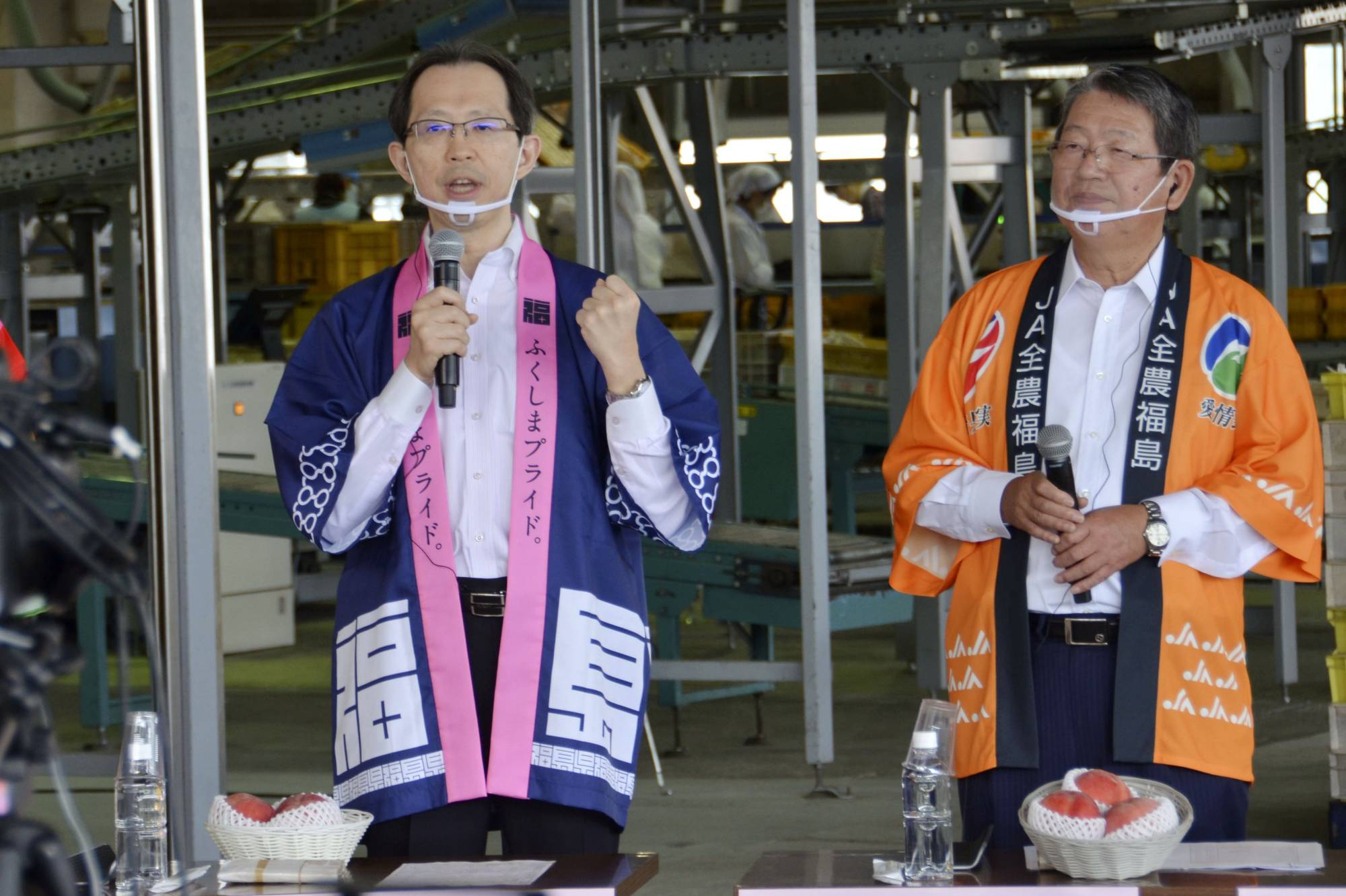
Fukushima Gov. Masao Uchibori (left) promotes peaches from the prefecture in the city of Fukushima in July.
Feb 28, 2021
About 8.1% of consumers in Japan still hesitate to buy food products from Fukushima Prefecture almost 10 years after the March 2011 nuclear disaster, a survey by the Consumer Affairs Agency has shown.
Although the figure is the lowest since the survey started in February 2013, the finding is “very regrettable,” Shinji Inoue, minister for consumer affairs and food safety, said after the survey was released Friday. “Safety has been secured” for produce from Fukushima, he added.
The latest survey, the 14th of its kind, was carried out online on Jan. 15-19, with answers received from 5,176 people in their 20s to 60s mainly in the Tokyo metropolitan area.
The share of respondents who hesitate to buy food products from Fukushima has been on the decline since hitting 19.6% in the August 2014 survey, and fell below 10% for the first time in the latest survey.
Fukushima is home to Tokyo Electric Power Company Holdings Inc.’s Fukushima No. 1 plant, the site of the triple meltdown disaster triggered by the Great East Japan Earthquake and tsunami.
According to the survey, the share of respondents who hesitate to buy food products from Iwate, Miyagi or Fukushima prefectures dropped to a record low of 6.1%, down from 6.4% in the previous poll in February 2020. The three prefectures were hit hardest in the disaster.
A record high 62.1% of respondents said they do not know that checks for radioactive substances have been conducted on food products from disaster areas. The figure has been rising since standing at 22.4% in the first survey.
An official said the agency will continue efforts to not only boost the share of people who are aware of radiation checks but also offer all of the information available about radioactive substances in food products.https://www.japantimes.co.jp/news/2021/02/28/national/fukushima-products-survey/
1 This Month

of the week – Shut Down Drone Warfare!


Tell the Ukrainian Government to Drop Prosecution of Peace Activist Yurii Sheliazhenko

Petition to revoke the licensing of the Near Surface Nuclear Disposal Facility (NSDF) at Chalk River. https://www.ourcommons.ca/petitions/en/Petition/Details?Petition=e-7247
To see nuclear-related stories in greater depth and intensity – go to https://nuclearinformation.wordpress.com
-
Archives
- March 2026 (244)
- February 2026 (268)
- January 2026 (308)
- December 2025 (358)
- November 2025 (359)
- October 2025 (376)
- September 2025 (257)
- August 2025 (319)
- July 2025 (230)
- June 2025 (348)
- May 2025 (261)
- April 2025 (305)
-
Categories
- 1
- 1 NUCLEAR ISSUES
- business and costs
- climate change
- culture and arts
- ENERGY
- environment
- health
- history
- indigenous issues
- Legal
- marketing of nuclear
- media
- opposition to nuclear
- PERSONAL STORIES
- politics
- politics international
- Religion and ethics
- safety
- secrets,lies and civil liberties
- spinbuster
- technology
- Uranium
- wastes
- weapons and war
- Women
- 2 WORLD
- ACTION
- AFRICA
- Atrocities
- AUSTRALIA
- Christina's notes
- Christina's themes
- culture and arts
- Events
- Fuk 2022
- Fuk 2023
- Fukushima 2017
- Fukushima 2018
- fukushima 2019
- Fukushima 2020
- Fukushima 2021
- general
- global warming
- Humour (God we need it)
- Nuclear
- RARE EARTHS
- Reference
- resources – print
- Resources -audiovicual
- Weekly Newsletter
- World
- World Nuclear
- YouTube
-
RSS
Entries RSS
Comments RSS
 nuclear-news