Reactor decommissioning plan cites ‘sarcophagus’
Reactor decommissioning plan cites ‘sarcophagus’
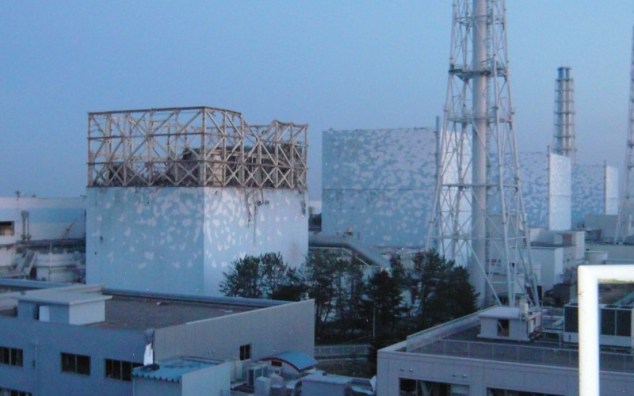
The government body charged with decommissioning the reactors at the Fukushima Daiichi nuclear plant says it remains committed to removing the fuel but sealing off the buildings that house them could be an option.
The Nuclear Damage Compensation and Decommissioning Facilitation Corporation issued its latest report Wednesday on its plan.
It says 2 methods will be used to remove molten fuel depending on the condition of the reactors.
One entails filling the containment vessels with water to shield workers from radiation. The second does not use water.
The new plan also introduces the option of creating a “sarcophagus” to seal off the buildings with the nuclear fuel inside.
This method was used at the Chernobyl nuclear plant in Ukraine.
The plan favors removing the nuclear fuel because of the long-term safety issues involved with a sarcophagus. It urges a flexible review of all available options.
It also notes the importance of addressing long-term public concerns about the plan.
The government and the plant operator, Tokyo Electric Power Company, plan to decide by the middle of next year how to remove the fuel from the reactors. They hope to begin work at one of them by 2021.
http://www3.nhk.or.jp/nhkworld/en/news/20160713_25/
Fukushima mayors react to decommission plan
Reacting to the new plan, the heads of municipalities around the Fukushima Daiichi nuclear plant have urged the government to stick to its promise regarding nuclear waste disposal.
The mayor of the city of Minamisoma, Katsunobu Sakurai, said the government and TEPCO must be made to abide by their initial pledge to remove the fuel from Fukushima Prefecture. Until this is done, he said, the evacuees won’t feel that it’s safe to return home.
He warned against using the word “sarcophagus” lightly. He said its mention only points out the inadequacy of decommissioning technology.
The mayor of the town of Namie, Tamotsu Baba, said a sarcophagus should not be considered because engineers are hard at work figuring out ways to remove the fuel.
He said all they can do is to have faith that the initial pledge will be kept, even if it takes 30 or 40 years to remove the fuel.
The mayor of the town of Okuma, Toshitsuna Watanabe, also urged the government and the utility to stick to their disposal promise.
Fukushima’s Ice-Wall – A Fridge Too Far
The Tōhoku earthquake and tsunami on March 11, 2011 caused significant damage to the TEPCO Fukushima Daiichi nuclear power generation site. The damage inflicted to the plant’s cooling system, caused a ‘Loss of Coolant Accident’ resulting in nuclear meltdowns and releases of radioactive materials from several of its reactors. It was the largest nuclear disaster since the Chernobyl disaster of 1986 and only the second disaster (along with Chernobyl) to measure Level 7 on the International Nuclear Event Scale.
The reactor buildings were severely damaged to their foundations, and having been built on ‘made ground’ above a highly active and porous aquifer up to 50 metres deep, ground water began to penetrate the damaged reactor building’s basement at a significant rate. Initially this proved an aid to the immediate situation, with the cooling system out of action an emergency system was set up utilising site waters to cool the damaged reactors, with 400 tons of water being continuously poured into the damaged reactor buildings every day to cool them. On the downside, this cooling water became contaminated by the exposed molten fuel. Added to that, approximately 400 tons per day of groundwater flowing into the basements of the damaged buildings also became contaminated due to cracks in the reactor containment vessels. Approximately 800 tons of contaminated water was required to be pumped up every day from the damaged buildings and treated to minimise its harmful contaminant content. Even after treatment, these stored waters contained significant amounts of caesium-134, caesium-137, strontium-90 and tritium. The water that was not reused for cooling was stored in holding tanks. Needles to say the contaminated water is accumulating as such a rate that some discharges to the sea will become inevitable.
The technical problems posed for the authorities are immense. High level contamination around the damages reactors, massive structural damage, derelict buildings and radioactive debris spread over an extensive area. And an apparently unstoppable flow of ground water flooding buildings wherein the corium stumps of 3 melted-down reactors still lay. And as if to make matters worse, the water levels in the basement behaved tidally, indicating that the contaminated waters had a seriously large conduit or ‘preferential pathway’ to the open sea. With all of these issues, even with the Chernobyl experience, the Fukushima clean-up project is a massive, unique and highly challenging situation, that may take as long as 50 years or more to fully address.
In years following the disaster the Japanese authorities, struggling to meet the daunting challenges, came under increasing internal and external pressure to seek external assistance in the clean-up and remediation of the Fukushima plant. In response, in mid-2013, Japan’s International Research Institute for Nuclear Decommissioning Authority (IRID) made a worldwide call for technologies to address their radio-chemical contaminated water, and other technologies to assist to remediate the site. In a global ‘brainstorm’ they drew in a significant amount of good ideas and prospective valuable new technologies.
There are several key stages to ‘brainstorming‘. Setting the context and defining the problems faced at Fukushima are largely self evident. The plant needs to be made safe and decommissioned, and the wider environment beyond the plant needs to be remediated and restored, at least as far as is possible. In generating ideas, there needs to be a flow of ideas that are uncompromised by ‘mindset’. To this end those involved in the process are generally selected from both within and without the problem owning group and from as wide a range of expertise as possible. So as not to prohibit radical ideas or ideas that would be outside the technical culture of the problem owning group, it is quite normal to reserve any critical review at this stage, until everything is on the table. Thereafter, the filtering of ideas commences. The most promising are shortlisted and then follows a more detail examination of the pros and cons of each, where their merits and de-merits weighed. On selection of the best idea, any specific problems are addressed and if acceptable, the front runner goes forward to be implemented as an operational project.
Consider the operation requirements of decommissioning the Fukushima reactor buildings. There needs to a be robust containment wall put in place, to (a) control the immediate ingress and discharge of water (b) prevent spread of contamination during decommissioning and (c) a coffer must be installed to contain for what will remain a site of significant radiation risk for hundreds of years to come. The ‘brainstorming process seems to have fallen short at Fukushima. The concept of the ice-wall was mooted long before IRID’s call for technology, and advanced as the optimum solution before any wide-ranging brainstorming took place. Moreover, it would appear that the overseeing authorities had become ‘mindset’ on this solution, announcing the decision to construct the Ice-wall in September 2013 despite IRID still seeking and collecting worldwide technology submissions. Installation of facilities to create the ice-wall commenced in June 2014 and was completed on February 9, 2016 at an estimated to cost some ¥34.5 billion ($339 million). Activation was on March 31 this year, with commencement of the freezing of the seaward side wall. Freezing of the land-side wall commenced on June 6 and has as yet to achieve and control over the water ingress to the ice-walled coffer. Yet despite this commitment to the ‘ice-wall’ as a solution to the problem, serious questions arise as to whether this technology is capable of meeting the short term needs, let alone the medium or long-term containment needs.
Ice-wall technology has been used in Japan on hundreds of occasions in civil engineering projects to stem flooding and avoid collapse issues in tunnelling. The purported principal benefit of using a frozen barrier compared with a physical barrier is that it avoids the challenges of building a wall around such underground obstacles as pipes, which it can freeze plug, and if complete, create a seamless barrier. Once in place, frozen walls take a long time to melt and therefore if the site were hit by another earthquake or tsunami the wall might stay intact for a couple of months, allowing time for its refrigeration plant to be repaired and power restored.
As for the cons, relative to what is required at Fukushima, ice-wall technology has only ever been used on a short term basis, and never for a semi-permanent installation. None have run for the decades that Fukushima’s wall would need to be in place. The Fukushima wall at 1,500 metres in length, 30 metres in depth and at circa 70,000 cubic metres in volume would be nearly double the size of the largest prior ice-wall ever constructed. Curiously it was designed only as a partial barrier in that it doesn’t reach to 50 meters to the impermeable rock strata below the aquifer and thus it has no containment floor beneath the site. Such a wall has never been constructed on such a highly active aquifer and it is quite a different matter to freezer moving water. As an added complication, due to the proximity of the sea to the site and the existence of preferential pathways to the sea, the groundwater would have a high mineral content and be highly saline, containing salts of sodium, potassium and critically calcium. Owing to this mixed salinity, freezing to below 0oC would not be nearly enough to freeze the soil-water column solid and stop the water flow. The ground soil-water column would have to be taken to below -21oC and possibly to -41oC. TEPCO are utilising a CaCl2/card-ice eutectic coolant, which has a minimum freezing temperature of -41oC ‘at the pump’ and closer to -25oC in the cooling pipes. It would be hard pressed to get the ground temperature to -21oC due to heat ingress, and even at its coldest it won’t freeze a calcium rich saline system solid. As for the heat ingress into the system, we mustn’t forget that we are trying to enclose 3 very warm meltdown corium stumps, effectively comprising a ‘hot-spring’ at the centre of the ice-wall structure. Over and above that heat, the Fukushima site is located next to the Pacific and has seasonally warm southerly currents bathing the site’s shore front during the summer months bringing yet more heat into the system. Even with a heat exchanger rated at 12.6 Mega Watt, (that’s about enough energy to run a small town), it’s a big ask, and I fear that given the geotechnical circumstances the desired ice-wall project outcomes are beyond the capacity of this technology.
A complication of ice-wall technology is that it causes ground heave. The ice causes the ground to swell, creating a sheer between the unfrozen ground and the ice swollen frozen ground. So, further damage to the foundations of the stricken buildings and localised subsidence is likely. A greater problem might ensue when the wall is thawed. The chewing of the ground by the ground heave process would likely destroy subsoil texture and leave the ground more permeable to water than before.
Given the pros and cons of an ice-wall I ask the question; why didn’t TEPCO opt for a jet grouted cement/mortar double wall that could have totally enclosed the site, as this was the method of choice for controlling groundwater migration at Chernobyl? It would be possible to jet grout below the buildings and flexible ‘soft wall’ mortars could be used rather than Ordinary Portland Cement (OPC) to guard against fracture by future earthquakes.
At present TEPCO contend that the ice wall project is going to plan. However, Japan’s Nuclear regulatory authority (NRA) aren’t yet convinced, pointing out that the ice wall has yet to impact the collection of water in waterfront wells. Test wells within and without the ice wall indicated water levels tracking each other over time, showing the internal and external groundwater systems still interconnected. Moreover, the much vaunted advantage of the ice wall in being able to seal around a plug pipes appears not to be the case a Fukushima, where underground pipes and conduits remain warm and are probably acting as the preferential pathways for water ingress and egress. NRA committee member Toyoshi Fuketa recently stated, “This is not a wall in a true sense. Perhaps it’s more akin to a bamboo screen, with groundwater trickling through the gaps”. It would now seem that in response to criticism and to control the water flow TEPCO are now resorting to a hybrid approach by trying to cement closed the holes in the wall. The problem with cement is, it doesn’t set well below 0oC, but other related sealant options are available.
Thus far, it would appear that after 5 years with the bill racing toward $500 million, all TEPCO’s Ice-wall project has achieved is a very expensive steaming ‘slushy’ and no control over water ingress into the site. Indeed there is little control on water egress from the site other than by continual pumping from the reactor building basement to tanks to maintain the basement water levels below groundwater, and in doing so hope migration of contamination into the sea is prevented. Maybe it’s time to ‘call it a day’, purge the mindset and re-brainstorm the problem.
https://www.linkedin.com/pulse/fukushimas-ice-wall-fridge-too-far-peter-j-hurley
Who will pay for decommissioning the Fukushima reactors?
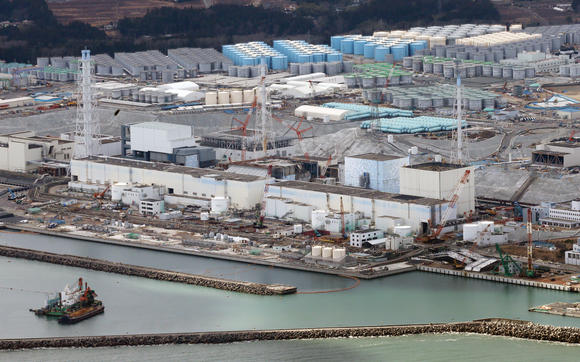
TOKYO — Energy policy was not high on the agenda in Sunday’s upper house election in Japan, in which the ruling Liberal Democratic Party consolidated its power. But Prime Minister Shinzo Abe, the Japanese people and the country’s power companies are facing a difficult question over the fate of the future of nuclear power in Japan: who will foot the costly bill for decommissioning the crippled Fukushima Daiichi nuclear power plant?
Every visit to the site, which was devastated by a magnitude-9.0 earthquake and subsequent tsunami five years ago, shows things are moving forward. A full-face mask is no longer needed in 90% of the compound. An underground ice wall is being constructed to reduce the amount of groundwater entering the basements of the reactor buildings. But what really caught my eye this time was the cream puffs.
Workers engaged in the cleanup effort can now buy the sweets at a convenience store that opened at the site in March. “Every day, we sell at least 50,” a clerk said. This represents a significant improvement in working conditions. In addition, last year, a large lounge and a cafeteria opened, providing the 6,000-plus workers with hot meals for the first time.
“Decommissioning is a project that will last 30 or 40 years, and we will have to pass the work on to future generations,” said Akira Ono, who stepped down as the plant’s manager at the end of June. “We must turn this place from a disaster site to a decommissioning site,” he added.
But the road ahead is fraught with obstacles. “We haven’t even started climbing the mountain, and we don’t even know how high it is,” said Naohiro Masuda, head of the decommissioning project and a managing executive officer of Tokyo Electric Power Co. Holdings, better known as Tepco, the plant’s operator. The most difficult task is going to be the removal of nuclear debris believed to be sitting inside the containment vessels after it melted through the reactor cores. No one precisely knows the current state of the debris.
No matter how long it takes, though, we must climb this mountain. Completing the project will require determination, technology and money. The actual cost will become more clear next year, when the company determines how it is going to remove the debris. Tepco hopes to start removal in 2021.
“The overall decommissioning is estimated to cost over 10 trillion yen ($98 billion),” a government official said. But nobody mentions who will pay the bill and how.
Currently, compensation and decontamination are being covered by the state, on Tepco’s behalf, without charging interest. Tepco and other power companies will eventually have to reimburse the government for compensation payouts through a pool of contributions. The government will recoup decontamination costs by selling the Tepco shares it owns.
Under this program, introduced immediately after the nuclear accident so that Tepco could meet all of its compensation obligations without going bankrupt, 11 power companies that operate nuclear reactors, including Tepco, together made a general contribution of 163 billion yen in the fiscal year to March. Tepco added another 70 billion yen as a special contribution. Although general contributions are meant to create a contingency fund for any future severe accidents at the country’s electric companies, they are in reality being used to cover Fukushima-related compensation claims.
Power companies must make general contributions for decades, and the cost is passed on to consumers through higher electricity bills. But with the liberalization of Japan’s retail electricity market in April, this mechanism will become increasingly difficult to maintain. Previously, dominant power suppliers, such as Tepco, could recoup the cost by assessing a fee on users within their territories. But that may no longer be possible as government-approved rates will be abolished in a few years, making way for new suppliers to step in with cheaper rates.
http://asia.nikkei.com/Business/Trends/Who-will-pay-for-decommissioning-the-Fukushima-reactors
Fukushima Myth: Pacific Genocide
The latest video from Goddard
I have always been opposed to the minimalist lies of the pro-nuke spinners aiming to trivialize the Fukushima ongoing catastrophe but I have always been opposed also to the exaggerated claims of the sensationalists feeding their fear hungry gullible fans with much nonsense.
Like the sharp edge of a razor is that path, so the wise say—hard to tread and difficult to cross.
I always also said that the sensationalists with their exaggerated claims provide the fodder to be later used against us anti-nukers to suppress our rightful concerns in the eyes of the general public.
I have always been opposed to the sensationalization of Fukushima, the “Pacific is dying from Fukushima”, high-pitched drama on internet played by some websites, bloggers, Youtubers, the same ones that Goddard is now quoting in this video: Enenews, Natural News, Info Wars, Kevin Blanch and others.
There are many things causing the North American Pacific coastline ecocide at the same time, it is a convergence of many factors. These pre-date Fukushima.
That said I do believe that there should be wide scale fish testing, not just due to Fukushima but to the long term radioactive contamination of the Pacific. But having that happen, having it done properly and without it being hijacked by vested interests is extremely difficult. Why there should be wide scale fish testing is to determine the range of contamination among fish and where the high readings pop up to try to better understand where and what species are showing up with high readings and also what are the real averages being seen. Again, a big undertaking that can easily be hijacked making it meaningless.
The main danger is for the people living in eastern Japan, which has been contaminated at various degrees depending on the locations. The contaminated food, which when constantly consumed, even at a low level of contamination, will certainly have mid-term and long-term harmful consequences on the health of the people.
Another danger is the danger of radiation contaminated food products exported from Japan oversea to other countries with more lax radiation control and regulations, where people will buy them and consume them unknowingly of their contamination. As an example, in 2013 some tuna fish imported from the Philippines which was radiation contaminated was found sold in a supermarket in Switzerland. Of course that Philippines tuna had been contaminated by radioactive nanoparticles coming from Fukushima Daiichi in nearby Japan, and not from Diablo Canyon in far-away California.
To expose the false exaggerated claims, the sensationalism and the sensationalists, still does not change nor remove the fact that Fukushima contamination is spreading slowly but surely into our environment, and therefore there should be more measures and controls made to protect the people from possibly present radioactive contamination. As our governments are more busy protecting the financial interests than the people health, concerned citizens should organize themselves in local radwatch groups, to learn and to practice radiation measuring, in their surrounding environment and in their food, so as to protect themselves.
To resume: the Pacific ocean is not dying from Fukushima, but Fukushima radioactive contamination is slowly but surely, continously spreading into our environment, to slowly bioaccumulate and to affect the food chain.
That said, the biggest risks are still for the Fukushima people who are being left on location to live everyday with omnipresent radiation and contamination.
As I See It: Has nothing been learned from TEPCO’s ‘meltdown’ cover-up?

The March 14, 2011 press conference at the Tokyo Electric Power Co. (TEPCO) head office in Tokyo in which then TEPCO vice president Sakae Muto (second from right) was reportedly told by then company president Masataka Shimizu not to use the expression “core meltdown.”
A third-party panel set up by Tokyo Electric Power Co. (TEPCO) to investigate the company’s cover-up of the core meltdowns that occurred at its Fukushima No. 1 Nuclear Power Plant following the March 11, 2011 Great East Japan Earthquake and tsunami revealed in a report last month that then TEPCO president Masataka Shimizu had ordered the company not to use the term “meltdown” to describe what had occurred. The report also stated that the organizational cover-up took place against a backdrop of “what is presumed to be a request that came from the prime minister’s office.”
Then Chief Cabinet Secretary Yukio Edano has objected to the report, saying that the very people who were involved, himself included, were not consulted by the panel before it drew its conclusion. Edano also said that he sent a letter of protest to TEPCO seeking an apology and a retraction of the report.
There are many missing pieces to the investigative report, but without a doubt, TEPCO acted irresponsibly toward local residents. A meltdown refers to a severe incident in which nuclear fuel melts and leeches out. If the facts had been revealed to the public, they could have fled further and avoided going outdoors. TEPCO bears a heavy responsibility for exposing local residents to risks more dangerous than they would have been otherwise.
On March 14, 2011, three days after the nuclear crisis broke out, then TEPCO vice president Sakae Muto was in the midst of a press conference when a company PR official passed him a handwritten note indicating that a core meltdown had taken place, and whispered into his ear that “the prime minister’s office has instructed that this expression not be used.” The third-party investigative panel concluded that this message was from then TEPCO president Shimizu. In accordance with the instructions, Muto and TEPCO used the term “core damage,” a word with a less serious connotation than core meltdown, making the incident seem less severe than it actually was.
The residents of the Fukushima Prefecture town of Namie — the northerly neighbor of the town of Futaba, one of the two towns that the stricken nuclear plant straddles — were forced to evacuate without crucial information. According to the Namie Municipal Government, some 8,000 of the town’s 21,000 or so residents evacuated on March 12, 2011, to the town’s Tsushima district, further northwest of the nuclear plant. At the time, however, the wind had been blowing in that direction, putting the residents directly in the path of radioactive materials being emitted in massive amounts from the crippled nuclear plant.
Local resident Hidezo Sato, 71, evacuated from the town center and stayed at a community center in Tsushima until March 15. “There were other evacuees who said we should be fleeing farther away, but I didn’t think the situation was that grave,” he recalls. “If we’d known there’d been a core meltdown, it would’ve determined how we evacuated.” The community center where he was taking refuge was overflowing with people. Not knowing that he was downwind from the troubled nuclear plant, Sato sat by a fire outdoors. He also saw children going into grassy areas, where radioactive materials are known to collect.
“I would’ve avoided going outdoors had I known there’d been a meltdown,” says Yoko Hashimoto, 64, who also evacuated to the Tsushima district. “Five years have passed since the disaster broke out, and I’m worried that I’ll start seeing the health effects of radiation exposure. Why wasn’t the meltdown announced right away?” It is only natural for residents whose safety was all but ignored by TEPCO to feel anger toward the utility. The power company had always emphasized the happy coexistence of its nuclear plants and local communities. Yet when a serious incident took place, the local residents were neglected. This more than explains why the residents are distrustful and angry.
It wasn’t until at least two months later that TEPCO admitted that core meltdowns had occurred. And even then, it was only because the then Nuclear and Industrial Safety Agency, which has since been disbanded, demanded an overall report on the disaster. Moreover, it wasn’t until February of this year that TEPCO announced that it had discovered an internal company manual stipulating that damage to 5 percent or more of nuclear fuel be defined as a nuclear meltdown. Until then, the utility had cited the fact that it didn’t have any standards by which to define nuclear meltdowns as its excuse for delaying the announcement that such a phenomenon had occurred. But indeed, according to the manual, then vice president Muto could have said at the press conference on March 14, 2011, that a nuclear meltdown had taken place.
Hirotada Hirose, professor emeritus at Tokyo Woman’s Christian University and an expert in disaster risk studies, says that while local residents may have been thrown into confusion if information about the core meltdown had been made public, the merits of them evacuating farther away and reducing their exposure to radiation would have outweighed the possible risks of panic. “The physical and psychological damage that residents have suffered because information was not provided to them are far greater.” He adds, “Regardless of whether or not TEPCO actually received instructions from the prime minister’s office (not to use the expression ‘core meltdown’), it should have decided on its own to release accurate information. TEPCO lacks awareness and responsibility as the operator of nuclear plants that are at risk of creating serious crises.”
There is still much more room for improvement in TEPCO’s attitude toward its responsibilities. After the report on the meltdown cover-up was released, TEPCO President Naomi Hirose was asked at a press conference how the utility expected to work with the prime minister’s office if another serious incident were to occur. He refused to respond in clear-cut terms, instead stating, “That’s a difficult question to answer in general terms.”
On the one hand, the third-party investigative panel should be praised for digging up the fact that then TEPCO president Shimizu instructed the cover-up. On the other hand, however, the probe into the utility’s relationship with the prime minister’s office is insufficient. Residents harbor distrust toward not just TEPCO, but the government as well. Local residents will remain unconvinced unless further investigation into the extent and the manner in which the government interfered with the nuclear crisis is conducted.
Core meltdowns are not a problem specific to TEPCO. Whenever there’s a problem surrounding a nuclear plant, it often turns out that similar things are taking place at other plants run by other utilities. Can we say that TEPCO’s latest case is an isolated event? There’s a fear that when a nuclear accident takes place, we won’t be able to trust the power companies involved to provide us with appropriate information that respects and reflects the needs of affected residents. If utilities are going to restart halted nuclear reactors and extend the number of years its aging reactors are allowed to operate, they must take away important lessons from the Fukushima crisis and be prepared to disseminate information to the public from their standpoint. (By Mirai Nagira, Science and Environment News Department)
http://mainichi.jp/english/articles/20160706/p2a/00m/0na/008000c
Former Japanese Leader Starts Fund for US Vets Who Helped Fukushima

Former Japanese Prime Minister Junichiro Koizumi has started a fund for U.S. veterans who say they were sickened by radioactive fallout from the 2011 disaster at the Fukushima Dai-ichi nuclear power plant.
YOKOTA AIR BASE, Japan — A former Japanese prime minister is calling on his countrymen to donate to a fund for U.S. veterans who say they were sickened by radioactive fallout from the 2011 disaster at the Fukushima Dai-ichi nuclear power plant.
“They went so far to do their utmost to help Japan,” Junichiro Koizumi told a news conference Tuesday in Tokyo alongside fellow former Prime Minister Morihiro Hosokawa, according to Asahi Shimbun. “It is not the kind of issue we can dismiss with just sympathy.”
Hundreds of veterans, claiming a host of medical conditions they say are related to radiation exposure after participating in Operation Tomodachi relief efforts, have filed suit against the nuclear plant’s operator, the Tokyo Electric Power Co. A massive earthquake caused a tsunami that swamped a large stretch of northeastern Japan and inundated the power plant. Experts are still dealing with continuing leaks from the reactors.
The suit asserts that TEPCO lied, coaxing the Navy closer to the plant even though it knew the situation was dire. General Electric, EBASCO, Toshiba Corp. and Hitachi were later added as defendants for allegations of faulty parts for the reactors.
Illnesses listed in the lawsuit, which is making its way through the courts, include genetic immune system diseases, headaches, difficulty concentrating, thyroid problems, bloody noses, rectal and gynecological bleeding, weakness in sides of the body accompanied by the shrinking of muscle mass, memory loss, leukemia, testicular cancer, problems with vision, high-pitch ringing in the ears and anxiety.
People can donate to the fund, called the Operation Tomodachi Victims Foundation, at Japanese credit union Jonan Shinyo Kinko, Eigyobu honten branch, account No. 844688.
Donations, accepted through March 31, 2017, will be transferred to a U.S. bank and used, under the management of a judge, to support the veterans, according to a news release from the credit union.
TEPCO to reuse tanks holding radioactively contaminated water at Fukushima plant

Tokyo Electric Power Co. (TEPCO) will reuse highly contaminated tanks at the crippled Fukushima No. 1 Nuclear Power Plant to store radioactively contaminated water after treatment, company sources said.
The company will return contaminated water to flange-type tanks that had held such water after removing radioactive materials from the water using the Advanced Liquid Processing System (ALPS). This is because TEPCO has failed to prevent contaminated water from being generated on the premises of the plant or to secure enough storage tanks to hold treated water.
TEPCO had submitted the reuse plan to the Nuclear Regulation Authority, which approved it on July 6 or earlier. TEPCO is set to begin reusing contaminated tanks as early as this month.
Flange-type tanks are assembled by tightening multiple steel plates with bolts. Since such tanks have higher risks of leaking contaminated water, TEPCO is gradually replacing them with tanks assembled by welding steel plates together.
TEPCO is trying to freeze underground soil to surround reactor buildings at the Fukushima power plant to prevent underground water from flowing beneath them and becoming contaminated with radioactive materials.
However, as the efforts have proven ineffective, the utility has decided to reuse flange-type tanks, which it had initially planned to dismantle.
Massive amounts of water are flowing onto the premises of reactor buildings at the atomic power station, generating some 400 tons of radioactively contaminated water a day. TEPCO uses ALPS to purify contaminated water, but the system cannot remove radioactive tritium.
The power company has stored the treated water mainly in welded-type tanks. There are already 1,000 water tanks on the premises of the power station.
http://mainichi.jp/english/articles/20160707/p2a/00m/0na/003000c
Don’t Say Meltdown: Japan’s Coverup and US’ ‘Radioactive Russian Roulette’

Japan finds itself in the midst of a fresh scandal, as the president of the Tokyo Electric Power Company (TEPCO) has publicly admitted that the company staged a cover-up during the disastrous Fukushima nuclear meltdown in March of 2011.
Radio Sputnik’s Loud & Clear spoke with Kevin Kamps, from Beyond Nuclear, about the coverup and its possible implications for the US.
Kamps documented how TEPCO knew about the meltdown from the beginning, and understated the true extent of the damage. “They clearly did conceal the three meltdowns for two months,” he said. “They [TEPCO] knew really within the first day or two that they had a meltdown, and they simply covered it up for as long as they could.”
Kamps pointed out a recent report in which the company attempted to dodge responsibility for their duplicity. “What’s interesting now is this panel report is trying to shift the blame from Tokyo Electric to the serving government at the time, which was the Democratic Party of Japan. They’re trying to blame Prime Minister [Naoto] Kan and his chief spokesman Yukio Edano, both of whom have really come out swinging against this report, saying it’s preposterous [and that] they made no order to TEPCO to not use the word ‘meltdown,’ but that’s what TEPCO’s trying to say, that’s it’s the government’s fault.”
Kamps explained that, at first, TEPCO spokespeople described the meltdown as “‘core damage,’ in that the solid nuclear fuel, the fuel rods in the core of these three reactors, had suffered damage, had released some of their radioactive activity out into the environment.”
“But a meltdown indicates that you’ve lost complete control of the integrity of the nuclear fuel cores, they have literally melted down because of the hellish thermal heat levels and have formed a molten mass that can then burn its way through the reactor pressure vessel and even the containment structures, into the earth. And they knew, by their own regulations and their own instruction manuals, that 5% or more core damage equals a meltdown, and they knew that, in unit 1, they had 55% core damage, they knew in unit 3 they had 25% damage, they knew this within a couple days.”
Loud & Clear host Brian Becker asked Kamps if TEPCO is aware of what happened to the cores. Kamps replied, “They still don’t know where the cores are. Tokyo Electric optimistically assumes that they are still located within containment structures, which are obviously damaged or even destroyed, because of the levels of radioactivity that have escaped and is still escaping. They don’t know for sure.”
Kamps noted the drastic impact that nuclear reactor meltdowns have on the environment in contaminating soil and groundwater, and that similar incidents are possible in the US because the same technology is still being used. “We have 22 reactors in the United States that are of the same design of Fukushima-Daiichi,” he said. “We have another eight that are closely related, so that’s 30 of these radioactive Russian-roulette games going on in the United States.”
http://sputniknews.com/asia/20160706/1042496696/japanese-company-covers-up-meltodown.html
Writing History and the Legacy of the Fukushima Daiichi Nuclear Accident
Official histories are always full of omissions and strategic ambiguities. History is, after all, written by those in power.
Howard Zinn, among many others, taught us (i.e., the governed or the “people”) the importance of documenting alternative histories that reflect the perspectives and empirical realities experienced by everyday people and by marginalized authorities whose unwillingness to parrot official narratives leads to their censure.
The official Fukushima narrative is predicated upon four assumptions, all of which I call false:
1. The plant is officially in cold shutdown and radiation contamination is contained
2. No one died from the disaster and long term deaths are likely to be trivial
3. Fukushima produced less environmental contamination than Chernobyl
4. The indisputable ocean contamination produced by Fukushima is now gone
Assumptions 2 and 4 are evident in this article published by the Japan Times declaring that the Pacific Ocean is back to “normal”:
Pacific Ocean radiation back near normal after Fukushima: study. AFP-JIJI Jul 4, 2016 http://www.japantimes.co.jp/news/2016/07/04/national/science-health/pacific-ocean-radiation-back-near-normal-after-fukushima-study/#.V3vWMKKYK5o
SYDNEY – Radiation levels across the Pacific Ocean are rapidly returning to normal five years after the crisis at the Fukushima No. 1 nuclear plant spewed gases and liquids into the sea, according to a study released Monday….
…Although no one is recorded as having died as a direct result of the nuclear accident, tens of thousands of people were uprooted, with many still unable to return home because of persistent contamination. Much could be said about this article but in this post I will focus on the assumption that levels of radioactivity in ocean water are returning to normal.
That statement can be both true and not-true simultaneously. The radionuclides may no longer be suspended in tested waters but that doesn’t mean they are gone and that the Pacific ocean eco-system has returned to “normal.”
In fact, it is empirically and logically impossible for most of the radionuclides from Fukushima in the ocean to have disappeared.
Radionuclides have a known decay pattern. Iodine-131 has an approximately 8 day half-life while Cesium-137 has an approximately 30 year half-life. Americium-241 has a 432 year half life.
While the Iodine-131 is probably gone, the Iodine-129 (with a 15.7 million half-life) is still there and contributing to radioactive contamination already present from dumping, atmospheric testing and nuclear accidents. As Wikipedia explains, “Most 129I derived radioactivity on Earth is man-made, an unwanted long-lived byproduct of early nuclear tests and nuclear fission accidents.” https://en.wikipedia.org/wiki/Isotopes_of_iodine
Radionuclides with long half-lives contaminating the ocean are STILL THERE, still in the ocean, but perhaps they are no longer suspended in surface waters but rather have been absorbed by biological life or are suspended at lower levels in the water column.
BIOACCUMULATION
Official authorities can make the claim that the water has returned to “normal” (whatever that is after decades of dumping of waste and the effects of testing and accidents) because they are not examining how radionuclides have been sequestered in biological life.
In 2014, I conducted a historical search for bioaccumulation using the JSTOR index, focusing on the radionuclides known to present the majority sources of radiation derived from nuclear fallout: 241Am, 90Sr, 137Cs, 238Pu, 239Pu, and 240Pu (DOE, 1997, http://www.atsdr.cdc.gov/toxprofiles/tp156-c6.pdf).
Search results from the JSTOR index indicate that bioaccumulation was first studied in the late 1950s by scientists looking at the dispersion of radionuclides in the environment. They tended to be funded by government: for example, Oak Ridge National Laboratory funded research on bioaccumulation of radionuclides in “the marine environment.”
The research cited below finds clear evidence of bioaccumulation of a wide range of radionuclides by aquatic life: Marine organisms concentrate cesium 3-30 times over the levels in the surrounding water, although concentration can be much higher, by two or three orders of magnitude (Polikarpov 1966; Wolfe, 1971), especially in animals situated at the top of the food chain, as modeled by Alva and Gobas for killer whales (Hat Tip Enenews poster but forgot source [sorry]):
Alva, Juan & Gobas, Frank (2011, October 4). Modeling the Bioaccumulation Potential of Cesium-137 in a Marine Food Web of the Northwest Pacific, Canada[9080]. Paper presented at SETAC North America 32nd Annual Meeting in Session 498: Environmental Radiation: What Do We Know and What Should We Know for Assessing Risks http://www.researchgate.net/publication/233869698_Modeling_the_Bioaccumulation_Potential_of_Cesium_137_in_a_Marine_Food_Web_of_the_Northwest_Pacific_Canada
Other highly chemically and radiologically genotoxic radionuclides, such as Americium and Plutonium, are highly BIO-AVAILABLE. For example, research conducted by Fisher, Bjerregaard and Fowler (1983) found that Plutonium, Americium, and Californium concentrate readily in marine plankton:
Nicholas S. Fisher, Poul Bjerregaard and Scott W. Fowler (1983). Interactions of Marine Plankton with Transuranic Elements. 1. Biokinetics of Neptunium, Plutonium, Americium, and Californium in Phytoplankton. Limnology and Oceanography, 28(3) (May, 1983), pp. 432-447 Published by: American Society of Limnology and Oceanography. Stable URL: http://www.jstor.org/stable/2835825
“The results suggest that Pu, Cf, and Am would associate with marine particles which could transport them vertically, transfer them into the marine food web, or both”Page 445; Our results are consistent with the hypothesis that the reactive transuranic elements (e.g. Pu, Am, Co are likely to reach an equilibrium between surfaces of suspended particles and ambient seawater and that the adsorptive properties of particles scavenging these (and other) metals are governed by organic coatings (Balistrieri et al. 1981).
Phytoplankton particles with associated transuranics may sink slowly, transporting these elements to deeper waters and sediments (Bowen et al. 1980; Santschi et al. 1980), or they may be ingested by herbivores in surface waters. Once ingested, radionuclides may be assimilated into food chains (Lowman et al. 1971; Koide et al. 1981) or defecated in the form of fast-sinking fecal pellets (Higgo et al. 1977).
It is interesting that radionuclides such as Cesium and Americium bioaccumulate in different areas of organisms, and at different concentrations with Americium levels higher than Cesium, as illustrated by this study:
Metian, Marc, Warnau, Michel, Teyssie, Jean-Louis, Bustamante, Paco (2011) Characterization of Am-241 and Cs-134 bioaccumulation in the king scallop Pecten maximus: investigation via three exposure pathways. Journal of Environmental Radioactivity, 102(6), 543-550 DOI: 10.1016/j.jenvrad.2011.02.008
[Abstract] In order to understand the bioaccumulation of Am-241 and Cs-134 in scallops living in sediments, the uptake and depuration kinetics of these two elements were investigated in the king scallop Pecten maximus exposed via seawater, food, or sediment under laboratory conditions. Generally, Am-241 accumulation was higher and its retention was stronger than Cs-134.
This was especially obvious when considering whole animals exposed through seawater with whole-body concentration factors (CF7d) of 62 vs. 1, absorption efficiencies (A(0l)) of 78 vs. 45 for seawater and biological half-lives (T-b1/2l) of 892 d vs. 22 d for Am-241 and Cs-134, respectively. In contrast, following a single feeding with radiolabelled phytoplankton, the assimilation efficiency (AE) and T-b1/2l of Cs-134 were higher than those of Am-241 (AE: 28% vs. 20%; T-b1/2l: 14 d vs. 9 d).
Among scallop tissues, the shells always contained the higher proportion of the total body burden of Am-241 whatever the exposure pathway. In contrast, the whole soft parts presented the major fraction of whole-body burden of Cs-134, which was generally associated with muscular tissues. Our results showed that the two radionuclides have contrasting behaviors in scallops, in relation to their physico-chemical properties.
Through absorption and adsorption radionuclides in the water column are readily assimilated by phytoplankton, whereupon they are either consumed – resulting in biomagnification – or fall towards the bottom of the ocean. A significant percentage (estimated at about a 1/2 of cellular load) of Pu and Am accumulated by plankton fall to intermediate depths, where they remain suspended, resulting in the “enrichment of waters of intermediate depth with Pu or Am lost from sinking algal cells” (Fisher et al, 1983).
In other words, the radioactive and chemically toxic radionuclides are still present but are not suspended in surface waters. They are interred in biological life!
FUKUSHMA IS A CONTAMINATED-WATER PRODUCING MACHINE AND IT AINT’ OVER YET
TEPCO has been dumping radioactive water deliberately for years. I have documented this claim in my 2013 and 2016 monographs (see Nadesan Fukushim and the Privatization of Risk 2013 AND Crisis Communication, Liberal Democracy, and Ecological Sustainability 2016).
Moreover, Fukushima is STILL leaking contaminated water into the ocean. That water is highly radioactive, as evidenced by rising ground water contamination at the plant. That is why TEPCO built the ice-wall, which has not been successful according to company officials.
You can see documentation of rising ground water contamination here:
http://majiasblog.blogspot.com/2015/03/ground-water-contamination-rising-at.html
There exists good evidence that part of the reactor fuel from units 1-3 is located in the underground river that empties into the Pacific Ocean:

This scenario will result in endless contamination of the ocean with rising levels of Strontium contamination, according to the German Risk Studies.
The “German Risk Study, Phase B” found that a core meltdown accident could result in complete failures of all structural containment, causing melted fuel to exit the reactor foundation within five days (cited in Bayer, Tromm, & Al-Omari 1989).
Moreover, the study found that even in the event of an intact building foundation, passing groundwater would be in direct contact with fuel, causing leaching of fission products. Strontium leaches slower than cesium. A follow-up German study, “Dispersion of Radionuclides and Radiation Exposure after Leaching by Groundwater of a Solidified Core-Concrete Melt,” predicted that strontium contamination levels would rise exponentially years after a full melt-through located adjacent to a river (Bayer, Tromm, & Al-Omari, 1989).
The study’s experimental conditions are roughly similar to Daiichi’s site conditions, including groundwater emptying into an adjacent river, whereas Daiichi is physically situated above an underground river emptying into the sea.
The study predicted concentrations of Strontium-90 in river water would spike relatively suddenly, but maintain extraordinarily high levels of contamination for years: “The highest radionuclide concentration of approx. 1010 Bq/m3 is reached by Sr-90 after some 5000 days.”
CONCLUSIONS
The alternative narrative I have written here is precisely that, alternative. I am a peon. I have no authority to speak as a “social scientist,” as I have been reminded by trolls and certain polemical scientists over the last 5 years.
However, my lack of official expertise does not mean I am wrong.
The contradictions and elisions marring the official narrative will become more glaring with time, as Pacific life continues its inexorable collapse, offering fodder for those like myself who persist in challenging the genocidal authority of the nuclear-security state with alternative narratives, which lack official legitimacy but are no less true because of that deficiency.
REFERENCES
Bayer, A., Al-Omari, I., & Tromm, W. (1989). Dispersion of radionuclides and radiation exposure after leaching by groundwater of a solidified core-concrete (No. KFK-4512). Available http://www.irpa.net/irpa8/cdrom/VOL.1/M1_97.PDF
Gesellschaft fur Reaktorsicherheit (GRS) Deutsche Risikikostudie Kernkraftwerke, Phase B Report GRS-89 cited in Bayer, A., Al-Omari, I., & Tromm, W. (1989). Dispersion of radionuclides and radiation exposure after leaching by groundwater of a solidified core-concrete (No. KFK-4512). Available http://www.irpa.net/irpa8/cdrom/VOL.1/M1_97.PDF
“TEPCO Announced Record Cesium Level Found in Groundwater Beneath Fukushima Levee” The Asahi Shimbun (February 14, 2014): http://ajw.asahi.com/article/0311disaster/fukushima/AJ201402140041). The article said that cesium found in groundwater under a coastal levee near unit 1 spiked from 76,000 Becquerels per liter on February 12, 2014 to 130,000 Becquerels per liter on February 13, reaching the highest level of cesium ever detected at that location
Record strontium-90 level in Fukushima groundwater sample last July. (2014, February 7). The Japan Times. Available http://www.japantimes.co.jp/news/2014/02/07/national/record-strontium-90-level-in-fukushima-groundwater-sample-last-july/#.U2XIw17K3yh
Source : Majia’s Blog
https://majiasblog.blogspot.fr/2016/07/writing-history-and-legacy-of-fukushima.html
A Massive Campaign of Disinformation to Trivialize Fukushima Health Risks

I am being nice, I did not add a 4th monkey to this picture, to represent the selling-out “scientists”….
5 years have past, we are now submerged by a massive campaign of lies, spinned propaganda, that everything is now fine about Fukushima. Some articles spreading plain nonsense, lies without any fear to be accused to be lying. Some our friends even sharing those B.S. articles on their FB pages or FB group without even having the intelligence to write an introduction to those articles, exposing the lies of those articles.
As an example, this article “Scientists Find New Kind Of Fukushima Fallout” where they say: ““He cautions that any internal radiation from particles containing cesium-137 would be much less than the doses people got from external radiation, which would come from cesium-137 and other radioactive elements in the soil or the environment around them.”
http://www.forbes.com/sites/samlemonick/2016/06/30/scientists-find-new-kind-of-fukushima-fallout/#636c0d6a4126
Which is absolute bullshit, nonsense, a lie, It completely ignores what science and multiple studies have already well established, that internal radiation is 100 times more harmful than external radiation.
Also the recently released report from the conclusions of a major 5 year review, with multi-international authors who are all working together as part of a Scientific Committee on Oceanic Research (SCOR) Working Group. The report is being presented at the Goldschmidt geochemistry conference in Japan.
http://phys.org/news/2016-06-fukushima-oceans-years.html#jCp
Which says: ” Uptake by marine life. In 2011, around half the fish samples in coastal waters off Fukushima had radiocesium levels above the Japanese 100Bq/kg limit, but by 2015 this had dropped to less than 1% above the limit. High levels are still found in fish around the FDNPP port. High levels of 131I were measured in fish in April 2011, but as this has a short radioactive half-life, it is now below detection levels. Generally, with the exception of species close to the FDNPP, there seem to be little long-term measurable effects on marine life.”
It takes 12 years for the TRITIUM to lose half of its radioactivity and 120 years for it to lose it all, And 30 years and 300 years for CESIUM, and tens of thousands of years to the PLUTONIUM etc But according to their report the Pacific is now clean just after 5 years.
That report also says: “Risk to Humans. The radiation risk to human life is comparatively modest in comparison to the 15,000 lives were lost as a result to the Tohoku earthquake and tsunami. So far, there have been no direct radiation deaths. The most exposed FDNPP evacuees received a total dose of 70 mSv, which (if they are representative of the general population) would increase their lifetime fatal cancer risk from 24% to 24.4%. However, there are still over 100,000 evacuees from the Fukushima area, and many industries such as fishing and tourism have been badly hit.”
Thus that report is completely ignoring the well proven harmful effects of a constant low dose radiation on human life, and of course completely omitting to talk about the dangers of internal exposure by contaminated food and liquid for the Fukushima population.
When I shared this report on my blog, I wrote an introduction saying: “This report raises certainly a lot of questions about today’s scientific community unbiasedness and independance from governmental and corporated powers.”
A marine biologist came to argue with me on Twitter, reproaching me to not accept science. I answered to him that I do respect science but I won’t stand for bias, for that “science” which is being influenced, bought, twisted or silenced by financial and political interests.
Tepco admits molten nuclear fuel is transferred in multiple places of Reactor 2

Tepco admitted the molten fuel is transferred to multiple places in Reactor 2 by 6/30/2016.
Tepco had been implementing the muon scanning investigation with KEK (High Energy Accelerator Research Organization).
Tepco describes the research result as it is highly likely that major part of the molten nuclear fuel remains in the bottom of the reactor with structures of the inside of the reactor. They also detected a part of the molten fuel on the wall of the reactor. This means the molten fuel was separated and remaining in different locations. Tepco did not mention the percentage of the detected fuel.
Tepco did not identify the location either so it is not clear if the fuel remains inside of the Reactor Pressure Vessel or its outer structure, Primary Containment Vessel.
http://nstimes.com/archives/64086.html
Fukushima and the oceans: What do we know, five years on?
This report raises certainly a lot of questions about today’s scientific community unbiasedness and independance from governmental and corporated powers.
A major international review of the state of the oceans 5 years after the Fukushima disaster shows that radiation levels are decreasing rapidly except in the harbour area close to the nuclear plant itself where ongoing releases remain a concern. At the same time, the review’s lead author expresses concern at the lack of ongoing support to continue the radiation assessment, which he says is vital to understand how the risks are changing.
- The accident. The Tohoku earthquake and tsunami on March 11, 2011 led to the loss of power and overheating at the Fukushima Daiichi Nuclear Power Plants (FDNPP), causing extensive releases of radioactive gases, volatiles and liquids, in particularly to the coastal ocean. The radioactive fall-out on land is well-documented, but the distribution of radioactivity in the seas and onto the wider oceans is much more difficult to quantify, due to variability in the ocean currents and greater difficulty in sampling.
- Initial release of radioactive material. Although the FDNPP accident was one of the largest nuclear accidents and unprecedented for the ocean, the amount of 137Cs released was around 1/50th of that released by the fall out of nuclear weapons and 1/5th that released at Chernobyl. It is similar in magnitude to the intentional discharges of 137Cs from the nuclear fuel reprocessing plant Sellafield.
- Initial fallout. The main release of radioactive material was the initial venting to the atmosphere. Models suggest that around 80% of the fallout fell on the ocean, the majority close to the FDNPP. There was some runoff from the land, peaking around 6 April 2011. There is a range of estimates of the total amount of 137Cs release into the ocean, with estimates clustering around 15-25 PBq (PetaBecquerel, which is 1015 Becquerel. One Becquerel is one nuclear decay per second). Other radioisotopes were also released, but the focus has been on radioactive forms of Cs given their longer half-lives for radioactive decay (134Cs = 2 yrs; 137Cs = 30 yrs) and high abundance in the FDNPP source.
- Distribution in water. Cs is very soluble, so it was rapidly dispersed in the ocean. Prevailing sea currents meant that some areas received more fall-out than others due to ocean mixing processes. At its peak in 2011, the 137Cs signal right at the FDNPP was tens of millions of times higher than prior to the accident. Over time, and with distance from Japan, levels decrease significantly. By 2014 the 137Cs signal 2000km North of Hawaii was equivalent to around six times that remaining from fallout from atmospheric nuclear tests from the 1960’s, and about 2-3 times higher than prior fallout levels along the west coast of N. America. Most of the fallout is concentrated in the top few hundred metres of the sea. It is likely that maximum radiation levels will be attained off the North American coast in the 2015-16 period, before declining to 1-2 Bq per cubic metre (around the level associated with background nuclear weapon testing) by 2020. Sea-floor sediments contain less than 1% of the 137Cs released by the FDNPP, although the sea-floor contamination is still high close to the FDNPP. The redistribution of sediments by bottom-feeding organisms (more common near the coast) and storms is complex.
- Uptake by marine life. In 2011, around half the fish samples in coastal waters off Fukushima had radiocesium levels above the Japanese 100Bq/kg limit, but by 2015 this had dropped to less than 1% above the limit. High levels are still found in fish around the FDNPP port. High levels of 131I were measured in fish in April 2011, but as this has a short radioactive half-life, it is now below detection levels. Generally, with the exception of species close to the FDNPP, there seem to be little long-term measurable effects on marine life.
- Risk to Humans. The radiation risk to human life is comparatively modest in comparison to the 15,000 lives were lost as a result to the Tohoku earthquake and tsunami. So far, there have been no direct radiation deaths. The most exposed FDNPP evacuees received a total dose of 70 mSv, which (if they are representative of the general population) would increase their lifetime fatal cancer risk from 24% to 24.4%. However, there are still over 100,000 evacuees from the Fukushima area, and many industries such as fishing and tourism have been badly hit.
http://phys.org/news/2016-06-fukushima-oceans-years.html#jCp
NRA casts doubt on TEPCO ice wall project at Fukushima nuke plant

In March this year, Tokyo Electric Power Co. (TEPCO) began work on a subterranean wall of frozen soil mainly on the seaward side of the disaster-stricken Fukushima No. 1 nuclear plant, with most of another wall on the landward side begun in June. The purpose of the barriers is to stop the flow of groundwater into the plant buildings — a problem that has resulted in enormous volumes of contaminated water. However, three months since the freezing process began, TEPCO is ominously silent on the ice wall’s effectiveness, and the plan is quickly approaching its do-or-die moment.
The problem itself is simply put. Every day, some 850 metric tons of groundwater flows down from the mountains and under the Fukushima No. 1 plant property. Some of the water collects in the shattered reactor buildings, coming into contact with melted nuclear fuel and other radioactive substances and becoming heavily contaminated. TEPCO needs to stop the groundwater from getting into these buildings.
In September 2015, the utility started digging a chain of wells called subdrains to catch and drain the groundwater. This is just one of many countermeasures tried so far, including the ice wall. Work on the latter began in June 2014, and eventually 1,568 pipes were sunk along a 1.5-kilometer perimeter around the No. 1-4 reactors and turbine buildings. The plan calls for coolant chilled to minus 30 degrees Celsius to be pumped into the pipes, freezing the soil around them to a depth of about 30 meters and creating a solid barrier.
“Ice walls are often used in public works projects, but the one at the Fukushima No. 1 nuclear plant is by far the largest ever tried,” says Mie University associate professor Kunio Watanabe. When building a tunnel, for example, ice walls are used to prevent groundwater from flowing into the construction area after the bedrock has been fractured. In Japan, the method has been used on some 600 such projects since 1962. The largest ice wall ever created was about 37,700 cubic meters, during construction of a subway line in Tokyo. The Fukushima plant ice wall is nearly double that, at about 70,000 cubic meters.
TEPCO tested the method in April 2015, freezing one section of the subterranean wall. To stop contaminated groundwater from flowing into the ocean, the utility started injecting coolant in the pipes on the seaward side and part of the landward wall in late March in an attempt to create about an 820-meter-long subterranean barrier — or 55 percent of the eventual total length. Saying that the temperatures were dropping according to plan, the utility started freezing operations on most of the remaining landward section at the beginning of June, and now only seven sections totaling 45 meters on the landward side are left.
TEPCO has stated that “the ice wall is going according to plan.” However, the Nuclear Regulation Authority (NRA) has pointed out that the volume of groundwater collecting in waterfront wells has not decreased, casting doubt on TEPCO’s claim.
At a meeting this month, NRA committee member Toyoshi Fuketa stated, “This is not a wall in a true sense. Perhaps it’s more akin to a bamboo screen, with groundwater trickling through the gaps.” TEPCO has responded that the quick flow of the groundwater likely makes it hard to freeze the soil in some places, and it is proceeding with work to create cement barriers to slow the water down.
There are also worries that the large volumes of highly contaminated water already collecting in the reactor and turbine buildings could leak into the environment if only the landward ice wall proves effective and the seaward wall has gaps. While TEPCO is looking to expand the ice wall, the NRA has not altered its stance that it must first confirm the effectiveness of the freezing operations already undertaken. The ice wall has already cost 34.5 billion yen in government funds.
http://mainichi.jp/english/articles/20160630/p2a/00m/0na/006000c
Scientists Find New Kind Of Fukushima Fallout
THIS IS ABSOLUTE B.S. , THIS IS DISINFORMATION, SPREADING NONSENSE!
It completely ignores what science and multiple studies have already well established, that internal radiation is 100 times more harmful than external radiation: “He cautions that any internal radiation from particles containing cesium-137 would be much less than the doses people got from external radiation, which would come from cesium-137 and other radioactive elements in the soil or the environment around them.”

A Tokyo Electric Power Co. (TEPCO) employee, wearing a protective suit and a mask, walks in front of the No. 1 reactor building at TEPCO’s Fukushima Daiichi nuclear power plant.
Some of the radioactive material that escaped the Fukushima Daiichi nuclear reactor in 2011 took a form no one was looking for, scientists have discovered. Now they have to figure out what it means for Japan and for future disasters.
Radioactive cesium—specifically, cesium-137—is one of the waste products of nuclear power. It’s also one of the most dangerous substances in a nuclear disaster like Chernobyl or Fukushima.
One reason why is that the type of radiation it emits is particularly damaging to our bodies. Another is that cesium-137 dissolves in water. That means it can spread quickly through the environment and get into the plants, animal and water we consume.
Until now, scientists and disaster experts thought cesium-137 fallout from the Fukushima reactor meltdown was in this soluble form. That guided their cleanup efforts, like removing and washing topsoil, and helped them map where radiation might spread.
It turns out that wasn’t entirely true. Satoshi Utsunomiya, a geochemist at Kyushu University in Japan, announced over the weekend that he had found cesium-137 in a new form: trapped inside tiny glass particles that spewed from the damaged reactors. These particles are not water soluble, meaning we know very little about how they behave in the environment—or in our bodies. He found the particles in air filters placed around Tokyo at the time of the disaster.
According to Utsunomiya, high temperatures inside the malfunctioning reactors at the Fukushima plant melted and broke down the concrete and metal in the buildings. Silica, zinc, iron, oxygen and cesium-137 fused into millimeter-wide glass microparticles, each about the size of a pin’s head. Lifted into the atmosphere by the fires raging at the plant, they then blew about 240 kilometers southeast to Tokyo.
“As much as 89% of all of the cesium [in Tokyo] was in fact in these particles. It’s profound,” says Daniel Kaplan, a geochemist at Savannah River National Laboratory in South Carolina. He attended Utsunomiya’s lecture describing the findings at the ongoing Goldschmidt Conference in Yokohama, Japan.
Kaplan says similar particles were observed near the Chernobyl reactors after the explosion there in 1986. But they were only seen within about 30 kilometers; beyond that, cesium-137 was only observed in rain.
The discovery could change how we model fallout from nuclear disasters. Kaplan explains that it might add a new variable to the models we use to predict where radioactive particles will go and how long they’ll stay there. It might also change how we treat cesium-137 during cleanup and monitoring.
It is probably still too early to say what this means for people living in Tokyo or elsewhere in Japan. Kaplan thinks the amount of radiation they received probably hasn’t changed. Whether they got it from water-soluble cesium-137 or from these particles, the radiation dose was the same—and for Tokyo residents, that number was within the margin of safe exposure.
The bad thing about water-soluble cesium-137 is that it can easily get into our bodies from soil by way of plants and animals. This new discovery alleviates that concern. But it opens up a new possibility we know little about.
“If the particles are in the air—because that’s how they get to Tokyo—then when you are aspirating this air you should find them in some ways on your lungs,” says Bernd Grambow, who studies nuclear waste chemistry as head of the SUBATECH laboratory in France.
Water-soluble cesium-137 that makes it into our lungs passes into the bloodstream and is peed out within a few weeks. But Grambow says we really don’t know what happens to insoluble cesium-137-containing particles if they get in our lungs. Some of them are likely coughed out or removed by our lungs’ other normal processes. As for the rest, Grambow says we don’t know how long they might remain.
He cautions that any internal radiation from particles containing cesium-137 would be much less than the doses people got from external radiation, which would come from cesium-137 and other radioactive elements in the soil or the environment around them. “We don’t know very much, and my point is only that they should be studied,” Grambow says.
Utsunomiya’s next step is finding out how much of the cesium-137 that ended up in soils in Tokyo and elsewhere was in these glass particles. That way, researchers will be able to better understand how cesium made its way out of the reactor and into the environment.
How far up the ladder did the #Fukushima cover up really go?
Tokyo – About the only country today where a public apology is still accepted is in Japan, and quite honestly, this writer has always thought life would be so much more simpler if that’s all it took to right a profound wrong.

That is what took place last week when CTV News reported Tokyo Electric Power Co. (TEPCO) President Naomi Hirose acknowledged in public the company had delayed its disclosure of the meltdowns of three reactors at the Fukushima Daiichi nuclear power plant.
Hirose’s apology on the cover-up was to be expected after the news came out that an investigation had found Hirose’s predecessor had instructed staff to avoid using the term, “meltdown” after the disaster in March 2011. “I would say it was a cover-up,” Hirose told a news conference. “It’s extremely regrettable.”
Hirose said he would take a 10 percent pay cut and another executive will take a 30 percent pay cut for one month each to show how sincere the apology really is. I hope all the children with thyroid abnormalities and all those displaced refugees from Fukushima Prefecture are willing to accept a one-month pay reduction by TEPCO executives as compensation for their troubles.
An investigative report submitted by three company-appointed lawyers on June 16, 2016, said TEPCO’s then-President Masataka Shimizu instructed officials to avoid using the specific description “meltdown” under alleged pressure from the Prime Minister’s Office, although the company’s attorneys say they have no direct evidence of this.
So TEPCO officials used the less damaging term “core damage” for two months, leaving the Japanese population and the rest of the world to think the disaster wasn’t that bad. Boy, was the world ever fooled? Of course, former officials at the Prime Minister’s Office have denied there was any pressure exerted on TEPCO, but what else would they be expected to say?
It wasn’t until May 2011 that TEPCO officials used the scary “M” word reports the Associated Press, and that was because computer simulations showed the fuel in one reactor had melted to the point it had fallen into the bottom of the primary containment chamber, and the other two reactor’s cores had melted far worse than previously thought.
It is interesting that every investigation so far had put the blame for the Fukushima disaster squarely on the shoulders of TEPCO. The first independent investigation authorized by the National Diet in its 66-year history was commissioned in 2011. That investigation reported: “It was a profoundly man-made disaster – that could and should have been foreseen and prevented. And its effects could have been mitigated by a more effective human response. “Governments, regulatory authorities and Tokyo Electric Power lacked a sense of responsibility to protect people’s lives and society.”
The big question for me is simple. Did Prime Minister Shinzo Abe put enough pressure on TEPCO officials that the disaster was downplayed to the world? Abe’s government has not been very forthcoming about anything to do with Fukushima over the past five years, as this writer has reported previously in Digital Journal.
And owing to the fact that Mr. Abe has been adamant in saying Japan needs its nuclear power plants, anything he says about Fukushima I would take with a grain of salt. Digital Journal reported that on March 6, this year at a press conference, Abe insisted that safety of nuclear plants was the government’s “top priority.” He also said the government would “not change its policy” in which reactors that meet the new standards can be restarted. So, yes, I think he probably did speak sternly with TEPCO officials in March 2011.
-
Archives
- October 2026 (112)
- September 2026 (339)
- August 2026 (330)
- July 2026 (355)
- June 2026 (287)
- May 2026 (306)
- April 2026 (356)
- March 2026 (251)
- February 2026 (267)
- January 2026 (308)
- December 2025 (358)
- November 2025 (359)
-
Categories
- 1
- 1 NUCLEAR ISSUES
- business and costs
- climate change
- culture and arts
- ENERGY
- environment
- health
- history
- indigenous issues
- Legal
- marketing of nuclear
- media
- opposition to nuclear
- PERSONAL STORIES
- politics
- politics international
- Religion and ethics
- safety
- secrets,lies and civil liberties
- spinbuster
- technology
- Uranium
- wastes
- weapons and war
- Women
- 2 WORLD
- ACTION
- AFRICA
- Atrocities
- AUSTRALIA
- Christina's notes
- Christina's themes
- culture and arts
- Events
- Fuk 2022
- Fuk 2023
- Fukushima 2017
- Fukushima 2018
- fukushima 2019
- Fukushima 2020
- Fukushima 2021
- general
- global warming
- Humour (God we need it)
- Nuclear
- RARE EARTHS
- Reference
- resources – print
- Resources -audiovicual
- Weekly Newsletter
- World
- World Nuclear
- YouTube
-
RSS
Entries RSS
Comments RSS

