Tepco worker’s thyroid cancer is recognized as a work-related
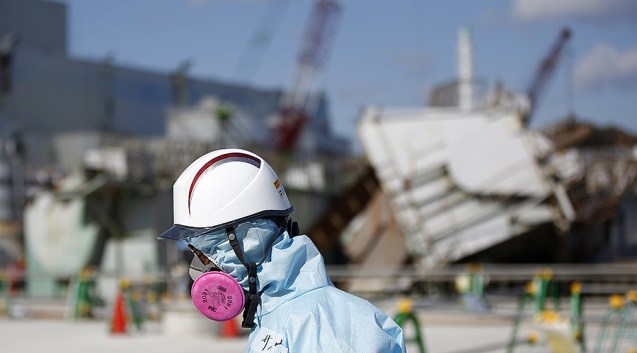
Tepco worker’s thyroid cancer is recognized as a work-related
Japanese labor authorities have recognized the thyroid cancer of a man who worked at Tepco’s stricken Fukushima No. 1 nuclear plant as a work-related, it was learned Friday.
It is the first time that thyroid cancer has been recognized as a work-related illness caused by radiation from the plant after it was damaged in the March 2011 earthquake and tsunami.
This is the third case labor authorities have linked to radiation exposure for workers at the Fukushima plant. The two previous cases involved leukemia.
At a meeting Friday, a Health, Labor and Welfare Ministry panel of experts presented for the first time criteria for recognizing thyroid cancer as a work-related disease from radiation, including doses of 100 millisieverts or more and a period of five years or more between exposure to radiation and the development of cancer.
Based on the criteria, a labor standards office in Fukushima Prefecture concluded that the cancer of the employee, who is in his 40s, was caused by radiation from the plant.
The man joined Tokyo Electric Power Company Holdings Inc. in 1992 and worked at several nuclear power plants for over 20 years.
After checking reactor instruments and carrying out other duties at the Fukushima No. 1 plant from March 2011 to April 2012, he was diagnosed with thyroid cancer in April 2014. His cumulative radiation dose after the accident stood at 139.12 millisieverts.
According to the International Commission on Radiological Protection, lifetime cancer mortality rises by about 0.5 percent for those exposed to a dose of 100 millisieverts.
Thyroid cancer compensation for Fukushima plant worker
A man who developed thyroid gland cancer after working at the stricken Fukushima No. 1 nuclear plant has for the first time won the right to work-related compensation.
While the case ranks as the third time a worker at the Fukushima plant has been recognized as eligible for work-related compensation because of cancer caused by radiation exposure, it is the first instance involving thyroid gland cancer.
The Ministry of Health, Labor and Welfare announced its decision Dec. 16.
The man in his 40s, an employee of plant operator Tokyo Electric Power Co., worked at the Fukushima plant after the triple meltdown triggered by the 2011 Great East Japan Earthquake and tsunami. He was diagnosed with thyroid gland cancer in April 2014.
The man worked at various nuclear plants, including the Fukushima facility, between 1992 and 2012. He was mainly involved in operating and overseeing reactor operations.
After the March 2011 nuclear accident, the man was in the plant complex when hydrogen explosions rocked the No. 1 and No. 3 reactor buildings. His duties included confirming water and pressure meter levels as well as providing fuel to water pumps.
The amount of his accumulated whole body radiation exposure was 150 millisieverts, with about 140 millisieverts resulting from the period after the nuclear accident. Of that amount, about 40 millisieverts was through internal exposure caused by inhaling or other ways of absorbing radioactive materials.
Along with recognizing the first work-related compensation involving thyroid gland cancer, the labor ministry also released for the first time its overall position on dealing with compensation issues for workers who were at the Fukushima plant after the accident.
The ministry said it would recognize compensation for workers whose accumulated whole body dose exceeded 100 millisieverts and for whom at least five years have passed since the start of work involving radiation exposure and the diagnosis of cancer.
Ministry officials said the dose level was not a strict standard but one yardstick for recognizing compensation.
According to a study by TEPCO and a U.N. scientific committee looking into the effects of radiation, 174 people who worked at the plant had accumulated whole body doses exceeding 100 millisieverts as of this past March.
There is also an estimate that more than 2,000 workers have radiation doses exceeding 100 millisieverts just in their thyroid gland.
http://www.asahi.com/ajw/articles/AJ201612170027.html
First thyroid cancer case in Japan recognized as Fukushima-related & compensated by govt
A man who worked at the Fukushima nuclear power plant in Japan during the disastrous 2011 meltdown has had his thyroid cancer recognized as work-related. The case prompted the government to finally determine its position on post-disaster compensation.
The unnamed man, said to be in his 40s, worked at several nuclear power plants between 1992 and 2012 as an employee of Tokyo Electric Power Company Holdings Inc. He was present at the Fukushima Daiichi nuclear power plant during the March 11, 2011 meltdown. Three years after the disaster, he was diagnosed with thyroid gland cancer, which the Japanese Ministry of Health, Labor and Welfare confirmed on Friday as stemming from exposure to radiation.
The man’s body radiation exposure was totaled at 150 millisieverts, almost 140 of which were a result of the accident. Although this is not the first time that health authorities have linked cancer to radiation exposure for workers at the Fukushima plant, it is the first time a patient with thyroid cancer has won the right to work-related compensation.
There have been two cases previously, both of them involving leukemia.
The recent case prompted Japan’s health and labor ministry to release for the first time its overall position on dealing with compensation issues for workers who were at the Fukushima plant at the time and after the accident. Workers who had been exposed to over 100 millisieverts and developed cancer five years or more after exposure were entitled to compensation, the ministry ruled this week. The dose level was not a strict standard but rather a yardstick, the officials added.
As of March, 174 people who worked at the plant had been exposed to over 100 millisieverts worth of radiation, according to a joint study by the UN and the Tokyo Electric Power Company. There is also an estimate that more than 2,000 workers have radiation doses exceeding 100 millisieverts just in their thyroid gland, Japanese newspaper the Asahi Shimbun reported.
The 2011 accident at the Fukushima nuclear power plant was the worst of its kind since the infamous 1986 catastrophe in Chernobyl, Ukraine. After the Tohoku earthquake in eastern Japan and the subsequent tsunami, the cooling system of one of the reactors stopped working, causing a meltdown. Nearly half a million people were evacuated and a 20-kilometer exclusion zone was set up.
https://www.rt.com/news/370650-thyroid-cancer-fukushima-plant-radiation/#.WFZfzwMDsFM.facebook
Fukushima Daiichi Unit 2 Newly Erected Platform’s Enigma

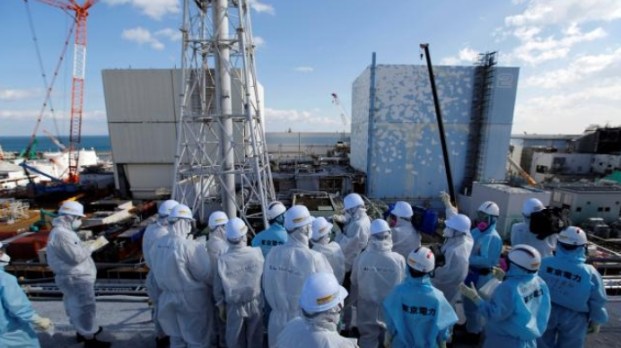
A bird’s eye view of Units 1 and 2 from the hill
On December 15, 2016, the newly elected Kashiwazaki mayor, Mayor Masahiro Sakurai, who has called for a conditional restart of the Kashiwazaki-Kariwa nuclear power plant, one of the world’ largest nuclear plants, when he was elected mayor of this coastal city in Niigata Prefecture, northwestern Japan on Nov. 20, visited the Fukushima daiichi nuclear plant.
TEPCO, operator of the crippled Fukushima No. 1 nuclear plant, eager to restart reactors at the Kashiwazaki-Kariwa plant, invited him to tour the Fukushima Daiichi Nuclear plant, so as to show him that they fully control the situation there.
During the election campaign, Masahiro Sakurai said he would “approve a restart of the halted nuclear plant if safety is confirmed and certain conditions are fulfilled.”
One condition is the construction of a road that residents can use for evacuation in case of an emergency at the nuclear plant. Masahiro Sakurai also promised to start decommissioning older reactors at the plant.
Tepco made Mayor Sakurai visit the Fukushima Daiichi plant site, some of its buildings, its central control rooms 1 and 2, and the land side frozen by the impermeable ice wall.
On the same day, Tepco released 6 photos of Mayor Sakurai’s visit. One of the pictures was taken while Sakurai viewed Units 1 and 2 from the hill, it shows a new platform erected by Tepco around unit 2. This new platform with extensive stairwells and levels running the length of the building, might be part of some work to remove the refueling floor so as to replace it with a defueling building.
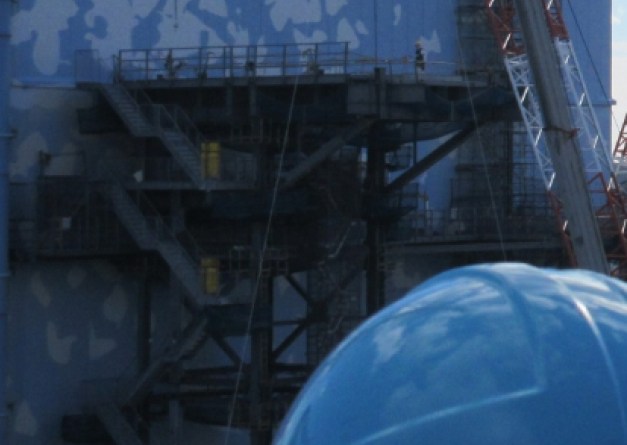
No information was yet provided by Tepco regarding that platform purpose.
Source : http://photo.tepco.co.jp/date/2016/201612-j/161215-01j.html
Taro Yamamoto Defends Fukushima Victims’ Rights
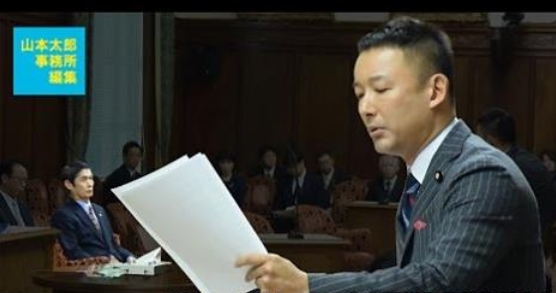
Taro Yamamoto of the Liberal Party is a member of the Chamber of Deputies. He is one of the few parliamentary members defending the rights of victims of the TEPCO Fukushima Daiichi nuclear power plant disaster.
The Association Nos Voisins Lointains 3-11 translated the questions of Taro Yamamoto to the Chamber of Deputies’ Special Commission on Reconstruction on 18 November 2016*. The content of his questions reveals the inhuman situation faced by the victims in the framework of the Japanese government’s return policy .
Taro Yamamoto’s questions (video in Japanese)
● Taro Yamamoto
Thank you. I am Taro Yamamoto from the Liberal Party. I would like to ask questions as the representative of a parliamentary group.
Declared on 11 March 2011, the state of nuclear emergency has not yet been lifted to date, 5 years and 8 months after the accident at the TEPCO Fukushima Daiichi nuclear power plant. Today, I will address a subject that is well known by the members here present.
I will start with the subject of the radioactivity controlled area. This is a demarcated area frequented by workers with professional knowledge who are exposed to the risks associated with ionizing radiation, such as an X-ray room, a research laboratory, a nuclear power plant and so on.
Here is my question. There are rules that apply to controlled areas of radioactivity, are not they? Can we eat and drink in such a controlled area?
● Government expert (Seiji Tanaka)
Here is the answer. According to the Ordinance on the Prevention of Risks from Ionizing Radiation**, eating and drinking are prohibited in workplaces where there is a risk of ingesting radioactive substances orally.
● Taro Yamamoto
Of course, it is forbidden to drink or eat there. So it’s obvious that it’s not possible to spend the night there, is it? Even adults cannot stay for more than 10 hours.
You are well aware of the existence of this Ordinance. This is a rule that must be respected in order to protect workers exposed to risks related to ionizing radiation in establishments such as hospitals, research laboratories and nuclear power plants, isn’t it?
It contains the definition of a radioactivity controlled area. This is Article 3 of the Ordinance in File No. 1. It states that if the situation corresponds to the definition described in Article 3/1 or to that specified in Article 3/2, the zone shall be considered as a controlled area and a sign shall be posted there. I will read parts 1 and 2 of this article.
1: The area in which the total effective dose due to external radiation and that due to radioactive substances in the air is likely to exceed 1.3mSv per quarter – over a period of three months! When the dose reaches 1.3mSv over a period of three months, a zone is called “controlled radioactivity zone”.
Part 3/2 refers to the surface density in the attached table.
Here is File No. 2. What will it be if we do the conversion of the density of the surface per m2?
● Government expert (Seiji Tanaka)
The conversion gives 40,000Bq/m2
● Taro Yamamoto
Thus, with 40 000Bq / m2, the zone is classified as a “controlled zone of radioactivity”. It is therefore necessary to monitor not only radioactivity in the air but also the surface contamination, ie the ground dose of radioactive substances, ie other elements in the environment, and to manage the area in order to protect workers from radiation-related risks, isn’t it?
A radioactivity controlled area is defined both by the dose rate of the ambient radioactivity and by the surface density of the radioactive substances. The point is that the risk in a situation where the radioactive substances are dispersed is quite different from that in the situation where the radiation sources are well identified and managed.
At present, the evacuation order applied to the evacuation zones following the nuclear power plant accident is lifted when the ambient radioactivity dose rate becomes less than 20mSv / year.
Here is my question. Concerning contamination, apart from the dose rate of ambient radioactivity, are there any conditions to take into account in order to lift the evacuation order? Please answer yes or no.
● Government expert (Takeo Hoshino)
Here is the answer.
Concerning the conditions necessary for the lifting of the evacuation order, as far as the radioactivity measurements are concerned, it is only the certainty that the annual cumulative dose rate of ambient radioactivity is less than 20 mSv.
● Taro Yamamoto
You did not understand. I asked you to answer yes or no. Are there any other conditions other than the dose rate of ambient radioactivity? To lift the order of evacuation below 20mSv / year, what are the conditions regarding the contamination?
The fact is that regarding contamination, there are no other conditions than the dose rate of the radioactivity in the air. This is abnormal. You, who belong to this Commission, certainly understand to what extent this situation is abnormal.
In the definition of a radioactivity controlled zone, apart from the dose rate of radioactivity in the air, account is taken of the substances dispersed and then deposited, that is to say contamination in the soil etc., which means a criterion of 40 000Bq / m2 is established for surface contamination.
However, in the return policy to return populations to territories where the annual cumulative dose rate is less than 20mSv / year, the condition of soil contamination is not considered necessary.
The latter is not an evaluation criterion, the only criterion used is the dose rate of the ambient radioactivity. Politicians and officials who consider this to be a regular situation do not deserve to receive wages paid from tax revenues.
Our job is to protect the life and property of the people. Now, you lighten those conditions. You create, at your discretion, a rule that is less stringent than that applied to workers with a professional knowledge of radioactivity. What are you doing !
Following the Chernobyl accident, laws have been established in Russia, Belarus and Ukraine, measuring both the dose rate of radioactivity in the air and the contamination of the soil. Why ?
That goes without saying. This is because it is difficult to grasp the amount of irradiation suffered by the population only with measurements of ambient radioactivity. In Ukraine, with 5mSv / yr, a measure corresponding to that of the controlled radioactivity zone, the population is evacuated, and even with 1mSv / year which corresponds to the limit of the average dose rate for the public, ‘they have the right to move out. This law known as the Chernobyl law is still in force.
On the other hand, what is the situation in Japan? According to the Cabinet decision of June 2015, the evacuation order is lifted if the dose rate in the air is less than 20mSv / year. There is no problem ! For example, if you stay 24 hours in a controlled area of radioactivity, you are exposed to a dose of 5.2mSv / year.
However, the criterion for the lifting of the order and the return of the population is 20mSv / year or less. The zoning is determined by a dose 4 times that of a controlled zone of radioactivity.
Go back, live there, continue your life, rebuild, what is this! I can find no other expression than “completely twisted”.
Can we still call it the State? I think it’s better to call it the mafia. It’s so inhuman!
The government appears to have adopted dose limits of 20 to 100mSv as recommended by the ICRP*** on radiation exposure limits after an accident. However, when considering the health effects on the population, the most reasonable would be to adopt 1mSv, the lowest dose measurement for radiation limit for public health, according to the global consensus.
The right to evacuate must be granted to the population until the dose rate falls below 1mSv / year. The right to decide when to return belongs to the victims. Why do you determine zoning as you wish? The State must make every effort to reduce the dose as close as possible to 1mSv / year, maximum dose in a normal situation. Then the State, the administration should warn the people, and let them make their own decisions. That would be the fairest way. The State should behave like this.
Who is responsible for this accident? It is TEPCO. Who supported it? It is the State. It is clear who the perpetrators of the crime are. And yet, only the charges of the criminals are being relieved. If it is permissible to develop zoning and associated rights to the convenience of the criminals, this world is a hell then.
In the town of Minamisoma in the coastal region of Fukushima Prefecture, three types of evacuation zone were established after the earthquake. In July 2016, the evacuation order was lifted in the “evacuation order lifting preparation area” and in the “restriction of housing” area. There is only one home with two people remaining in the “area where the return is difficult”.
According to the State, 90% of the territories of Minamisoma are safe.
There is a group called “The Measurement of Environmental Radioactivity Around the Fukushima Daiichi Nuclear Power Plant”**** composed mainly of residents of Minamisoma. Since 2012, its members are taking measurements of soil contamination in the vicinity of the neighborhoods of the members and in residential areas. They provided the information. Please look at File No. 3. You see a colored map ( Note from the translator: see the map here, https://dunrenard.wordpress.com/2016/11/12/the-minamisoma-whistleblowers-fukushima/ )
This is the map of soil measurements collected and measured in the territories where the decontamination works have been completed. The colors show the levels of contamination. The blue colored area indicates where the contamination measurements are below 40 000Bq / m2, ie below than the level of a radioactivity controlled zone. There is only one, at the right bottom. Apart from this one, at all other places, the colors show corresponding measurements above the measurements of a controlled zone of radioactivity. There is even a colored place in gray where the measurements exceed 1 000 000Bq / m2. There are people living there!
Compared to the extraordinary ambient radioactivity dose rate observed immediately after the accident, the dose rate of radioactivity in the air decreased considerably. It is not the same order of magnitude. However, according to the inhabitants, even with 0.1μSv / hr of ambient radioactivity dose rate, soil measurements may still be equivalent to those of a radioactivity-controlled zone.
It is senseless that only the dose rate of ambient radioactivity should be taken into account as a condition for lifting the evacuation order. It is so irresponsible and neglectful. It is exactly the opposite of protecting the life and property of the people. People do not live floating in the air at 1 meter above the ground*****. They sit down, lie on the ground, they stop to chat, standing or sitting. Children do not play on asphalted roads only. They can venture into the bushes. Children play freely. There are some who put soil in their mouth. Remember how you were when you were still a child. Gutters where contamination is concentrated provide one of the favorite playgrounds for children.
Mr. Masuchika Kono, a member of the above-mentioned project group, who was with the Engineering Department of Kyoto University, a specialist in nuclear engineering, a graduate of radiation manipulation, collected soil at the Minamisoma Michi-no-eki roadside (service and parking area), and passed it through a sieve of about 100 microns.
The measurements showed 11 410Bq / kg of Cs. These dust rises with the winds and the passages of the vehicles. In daily life, dust is inhaled by the people. You do not take internal radiation into account, do you? You calculate the amount of internal radiation by applying just a coefficient, but do not include internal radiation in real life.
Some people self-evacuated from areas outside the evacuation areas under evacuation order, as they consider that the State policies do not protect the children, their lives. To these persons, within the framework of the Disaster Relief and Disaster Relief Act******, dwellings – “temporary accommodation”******* – were made available.
However, in March 2017, next year, the free housing provision will be suspended. You are telling them that there is no more problem; Why then stay evacuated? That’s it, isn’t it? Those displaced from areas outside evacuation areas under evacuation order fled because their home and living environment are contaminated as a result of the TEPCO nuclear accident.
However, since their homes are located at some distance from the nuclear power plant, they were not included in the evacuation zones that the state established unilaterally. As a result, these displaced persons receive no public support except the provision of free housing. And even this aid will stop in March 2017.
It’s incredible to stop helping them. Moreover, what does it mean to stop the provision of free housing in March? It is the season when mobility is at its highest in the year. You expel them, force them to relocate at the time of the year when rents and costs become more expensive! You have no compassion. You are ruthless!
“I am afraid of the investigators of the Tokyo Metropolitan Prefecture visiting door to door. I hide under the cover for fear of hearing the ringing at the door. When I opened the door, the investigator stuck his foot into the door so that I could not close it. With a loud voice so that all the neighbors could hear, he shouted at me “you know very well that you can only live here until March”. I know, but I cannot move. “
The next person. “The Tokyo Metropolitan Prefecture demands that we move out in a fierce and haughty manner. We had to leave our home because of the accident at the nuclear power plant. I do not understand why they are expelling us again. I gave in to the pressure, and I filled up the Tokyo Metropolitan Prefecture housing application, but it was against my will. Psychologically, I can not accept the fact, and it causes me pain. They are forcing me to move into a prefecture owned housing where no one from Fukushima lives close by. It’s like abandoning the elderly in a mountain. “
The following testimony. It is a home where just a mother and her young children live. The other members of the family remained in Fukushima. They lead a double life. “If there is no more free housing provided, there is no resource to pay the rent. The only dream left to my child is his piano lesson. Do not take away that dream. “
The next person. “The deadline has not arrived …”
(Note from the translator : Taro Yamamoto can no longer hold his tears) Who does something like that? I beg your pardon. Who orders such a thing? It may be admitted that the State would ask local governments to carry out polite negotiations with the displaced. No, it is nothing but expulsion. Does not the State intend to stop such a situation? I do not allow you to say that you did not know. You see the problem before you now!
“Constant phone calls, visits without notice, and they shout at me asking what my intention is. They send documents to file, and leave passing notices in the mailbox. I am completely exhausted, physically and psychologically. “ This is understandable. They continue to live like that since the explosions of the nuclear power plant, and 5 years and 8 months later they are tracked down in a similar situation. To what extent do you want to tear the hearts of the victims? It is enough for the State to take a decision. This person says that the metropolitan prefecture of Tokyo has asked him to leave the housing, because the prefecture must return that housing for civil servants in March. It is monstrous that the State asks the Tokyo Metropolitan Prefecture to evict the evacuees and restore the house in proper condition.
These were testimonies of displaced people.
According to my research, to date there are 9327 vacancies among the housings for civil servants in the region of Kanto, including the Tokyo Metropolitan Prefecture and 6 other prefectures. It is enough for the State to take a decision, it can solve the problem, at least partially. Why should the inhabitants be expelled? Is it because, if there are tenants, those buildings could not sold during the financial bubble of the Olympic Games? It’s too cruel.
On April 4 last year, according to the newspaper Mainichi shinbun, the state does not request reimbursement from TEPCO for the rents of dwellings “considered as temporary housings”. Commission member Iwabuchi mentioned earlier that the government will oblige TEPCO to pay for the costs of the decontamination work. Why don’t you ask TEPCO to pay the rents? These people are the victims!
Finally, I would like to ask to the Minister. I would like you to answer two questions.
1st: You said that this is what the Fukushima prefecture wants. However, you are in a position to make suggestions to the Fukushima Prefecture. Please talk it over again. This situation is really irregular.
2nd: Please listen to the voices of the displaced. I think you have almost no opportunity to hear the voices of self-evacuees coming from locations outside the evacuation areas. Until then, you were too busy. Perhaps the people around you got acquainted with their testimonies. Please listen to them yourself. Today, too, they are here. There’s a break after this session. Could you give them 5 minutes? If you give us just 5 minutes today during the break, you can talk with the self-evacuees.
I would ask you to answer these two questions.
Secretary of State (Masahiro Imamura)
As I have already said, I am willing to consult with the prefecture of Fukushima, and I would like to ensure that the people concerned are not hurt. I will see to its smooth progress.
You said that self-evacuated people are here. I also have a plenary session after and I do not have time, but I will listen to them.
President (Mitsuru Sakurai)
Mr. Yamamoto, you have exhausted your time.
Taro Yamamoto
Thank you.
Please keep your promise. Thank you very much.
Credits to Kurumi Sugita from the Nos Voisins Lointains 3.11 Association for the japanese to french translation (http://nosvoisins311.wixsite.com/voisins311-france)
French to english translation by Hervé Courtois (Dun renard) from the Fukushima 311 Watchdogs (https://dunrenard.wordpress.com/)
* Source : Site web de Taro Yamamoto
** Ordinance on Prevention of Ionizing Radiation Hazards, Ministry of Labour Ordinance No. 41 of September 30, 1972, Latest Amendments: Ministry of Health, Labour and Welfare Ordinance No. 172 of July 16, 2001
*** International Commission on Radiological Protection
**** Fukuichi shûhen kankyôhôshasen monitoring project
***** The measurements of ambiant radioactivity are taken at 1 meter above the ground.
****** Saigai kyûjohô, Law of assistance in case of disaster , laws N°118 of octobre 18, 1947
******* Minashi kasetsu jyûtaku. Rental housing managed by private agencies inhabited by evacuees whose rent is borne by the central government or local governments.
Nuke crisis compensation costs tacked onto power bills to face 4 tril. yen cap

The Economy, Trade and Industry Ministry is set to limit the amount of additional costs of compensating those affected by the Fukushima nuclear crisis, tacked onto “wheeling charges” that power companies pay to use power lines, to 2.4 trillion yen, sources close to the ministry said.
The amount would eventually be added to power charges that consumers pay. Moreover, the ministry admitted that the total amount to deal with the aftermath of the nuclear disaster, which it estimates at 21.5 trillion yen, will certainly increase further.
The ministry made the disclosure at a meeting of the ruling Liberal Democratic Party (LDP) panel on the issue on Dec. 12 in response to concerns expressed by LDP legislators that the cost of dealing with the crisis could rise.
The estimated total amount of compensation for the Fukushima crisis, which had been estimated at approximately 5.4 trillion yen in 2013, has grown to about 7.9 trillion yen.
Following the outbreak of the nuclear crisis, a system has been established under which Tokyo Electric Power Co. (TEPCO), operator of the crippled Fukushima No. 1 Nuclear Power Plant, and other major power companies contribute funds for compensation payments in proportion to the outputs of their nuclear plants.
In order to secure funds to cover an increase in the total compensation cost from 5.4 trillion yen, the ministry has proposed to a panel of experts on decommissioning of the Fukushima plant and compensation payments that the additional cost be added to wheeling charges. Not only major power companies but new market entrants would be required to foot the bill, which would eventually be added to power charges paid by consumers.
The ministry explains that it aims to require market newcomers to foot part of the compensation cost in order to “prevent consumers who have benefited from nuclear power by major power companies from switching to new power companies to avoid footing the compensation cost.”
However, some experts have pointed out that such a move would run counter to the liberalization of the power market designed to spur new market entries.
Moreover, since the industry ministry is authorized to set the amount of wheeling charges at its own discretion without going through Diet deliberations, some members of the experts’ panel and the LDP have voiced concerns that the amount of compensation costs passed onto consumers could unlimitedly snowball.
In response to such concerns, the ministry is considering obligating power companies to clearly show the amount of compensation cost each consumer is required to shoulder in detailed statements on power charges. Moreover, if the amount of compensation were to increase further, the ministry would consider other measures to cover the additional cost, which could also increase the burden on consumers.
The industry ministry has also disclosed that the estimated cost of dealing with the accident, which it released on Dec. 9, does not include the expense of creating hubs for reconstructing affected areas where residents are unlikely to be able to return in the foreseeable future and that of disposing waste to be generated when fuel debris is removed from the crippled reactors.
Therefore, the estimated total cost of dealing with the aftermath of the disaster, which has almost doubled from 11 trillion yen as of 2013 to 21.5 trillion yen, will certainly increase further.
http://mainichi.jp/english/articles/20161213/p2a/00m/0na/012000c
An Option Discussed For Fukushima Contaminated Water: Evaporation
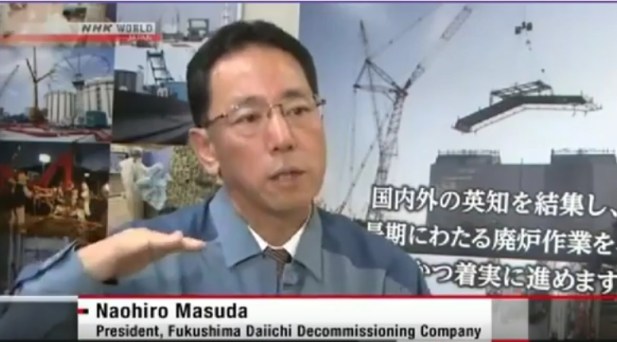
The person in charge of decommissioning the Fukushima Daiichi nuclear power plant has revealed a possible new way to deal with the radioactive water stored there: just let it evaporate.
“The amount of radioactive water at the plant continues to increase. We need to find a way to reduce it,” says Naohiro Masuda, president of the Fukushima Daiichi Decommissioning Company.
Masuda and his team of 6,000 workers have struggled with the problem of contaminated water. Workers must constantly inject water into the crippled reactors to cool molten debris and then pump it out. Groundwater flowing into the reactor buildings adds to the problem.
Executives with the plant’s operator, TEPCO, have said they will continue storing the water on site. Masuda says evaporation is one of the options being discussed.
“Diluting the contaminated water and discharging it into the ocean has been discussed. But another option is evaporating the water. This method was used following the Three Mile Island nuclear accident in the US,” he says.
Masuda says the task force of the government is discussing the methods. Masuda’s engineers and workers use purification equipment to remove most of the radioactive substance, but they can’t remove it all. Local fishermen strongly oppose releasing water directly into the ocean. The evaporation method could be an acceptable alternative for them, although some experts say its environmental consequences are unclear.
Handling contaminated water is just one aspect of the highly complex decommissioning process. Masuda believes that he’ll need to rely on the international community for support.
“We’ll be cooperating mainly with the United States, Britain, France, and Russia. We’re already getting help from people at nuclear-related facilities in these counties. We’re learning how to decommission and shut down facilities and deal with contaminated soil,” he says.
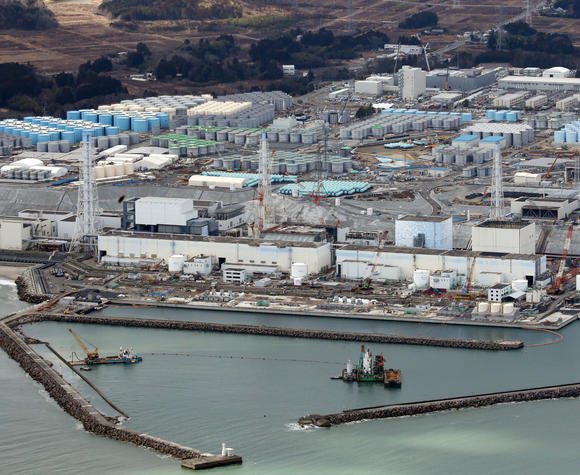
Fukushima Nuclear Disaster Bill to Double to $188 Billion
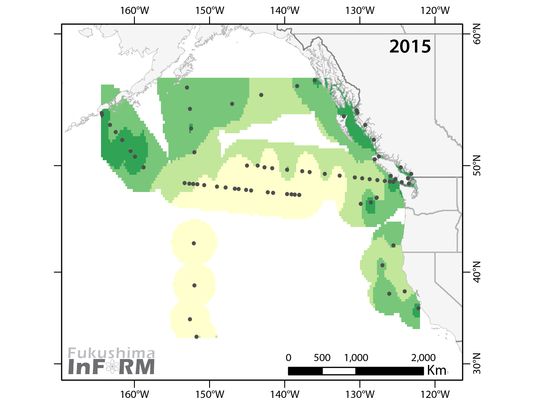
Fukushima radiation has reached U.S. shores

Loan ceiling for TEPCO to be raised

As Costs of Disaster Keep Rising, State Ownership of Tepco Continues
Tokyo says Tepco may stay nationalized to deal with massive cost of nuclear disaster
Faced with massive ongoing costs stemming from the 2011 nuclear crisis in Fukushima, Tokyo Electric Power Co. Holdings Inc. may remain under state control longer than initially planned, the government said Monday.
Under the current plan, the utility would gradually reduce government involvement in its management from April.
However, at a key panel meeting the government proposed a revised option in light of the huge compensation and decommissioning expenses that are involved.
The government leads the business operations of the utility, known as Tepco, acquiring 50.1 percent of its voting rights through the state-backed Nuclear Damage Compensation and Decommissioning Facilitation Corp.
Some ministry bureaucrats have also been dispatched to the utility.
It is understood the state-backed body will assess efforts to reform the company in late March and make a decision on whether to reduce state involvement.
“The direction of Tepco reform is coming into sight,” said Economy, Trade and Industry Minister Hiroshige Seko at the panel meeting. “We have to come up with a more detailed picture of the reform.”
The government is seeking to split the activities of the utility into “business operations,” including retail sales and power generation, and “Fukushima operations” related to decommissioning reactors at the disaster-hit Fukushima No. 1 nuclear plant and paying compensation, which would remain under public control.
As for Tepco’s business operations, the government plans to free them of state control at an early date, hoping to promote industry reorganization involving nuclear and energy distribution businesses.
The plan was revealed at the panel meeting at the trade ministry to study compensation and decommissioning issues facing the utility. The panel will compile proposals by the end of this year.
The government also seeks cooperation from other power companies in reactivating Tepco’s Kashiwazaki-Kariwa nuclear power plant in Niigata Prefecture, which would be the main source of its revenue.
With the involvement of other utilities, the government hopes to ease local distrust of Tepco’s nuclear plant operations. Two reactors at the Kashiwazaki-Kariwa plant are under prolonged safety examinations by nuclear regulators.
State ownership of TEPCO likely to continue as costs keep rising
The government will likely prolong its effective state ownership of Tokyo Electric Power Co. Holdings Inc. because the expected costs for decommissioning its ruined Fukushima No. 1 nuclear plant and paying compensation continue to soar.
The industry ministry mentioned the rising expenses at a meeting on Dec. 5 with scholars and others.
The ministry at the meeting showed a six-item report titled, “Tokyo Electric Power Co. and the state’s role.” One pillar of the report was that the state should urge TEPCO to perform its responsibilities.
However, one of the participants said, “The state should hold a certain ratio of (TEPCO) shares for a long period.”
The government-approved Nuclear Damage Compensation and Decommissioning Facilitation Corp. currently holds 50.1 percent of shares with voting rights of TEPCO.
The government planned to reduce the stake to less than 50 percent if it concluded at the end of this fiscal year that TEPCO could operate independently.
However, that scenario has collapsed.
Some sources now say total costs, including expenses for decommissioning and compensation, will probably exceed 20 trillion yen (about $176 billion).
TEPCO initially said that it would need a total of 11 trillion yen to resolve problems related to the plant that suffered a triple meltdown after being hit by the Great East Japan Earthquake and tsunami in March 2011.
That amount includes 2 trillion yen to decommission the reactors, 5.4 trillion yen to pay compensation to people affected by the disaster and 2.5 trillion yen to decontaminate areas polluted with nuclear substances.
However, an internal report worked out by the industry ministry in August showed that the costs for decommissioning would probably increase by 4 trillion yen and the compensation sum would likely rise by 3 trillion yen, making the total amount 18 trillion yen.
Human Error Stopped Reactor 3 Cooling System
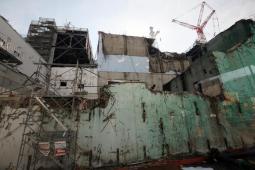
Cooling water briefly stopped at Fukushima plant
Injections of water to cool melted fuel in a reactor at the Fukushima Daiichi nuclear power plant stopped briefly due to human error on Monday.
The plant’s operator, Tokyo Electric Power Company, says an alarm system was activated at around 10 AM when a water pump at the No. 3 reactor shut down.
An internal investigation by the utility found that a worker had mistakenly hit the pump’s switch with his elbow while checking instruments. TEPCO resumed the water injections using a different pump about 1 hour later.
The utility notified local prefectural authorities and nearby areas of the problem just one minute before it resumed the water injections.
TEPCO officials say they detected no changes in the temperature at the bottom of the reactor or in radiation levels at monitoring posts around the plant.
Also on Sunday night, cooling operations temporarily stopped in the spent nuclear fuel pool at the plant’s numbers 1, 2 and 3 reactors when some valves inexplicably opened.
TEPCO says it takes these human errors seriously and will do it best to prevent recurrences.
http://www3.nhk.or.jp/nhkworld/en/news/20161205_27/
Fukushima reactor briefly loses cooling during inspection
One of the melted reactors at tsunami-hit Fukushima nuclear power plant had a temporary loss of cooling when a worker accidentally bumped a switch while passing through a narrow aisle of switch panels during an inspection and turned off the pumping system.
The plant operator, Tokyo Electric Power Co., said cooling for the No. 3 reactor, one of the three reactors that melted following the 2011 earthquake and tsunami, was out for nearly one hour Monday until a backup pump kicked in.
TEPCO said the reactor had enough water left inside and there was no temperature increase or radiation leak from the incident.
TEPCO acknowledged some other key switches are in similarly tight locations.
Anthropocene, Capitalocene, Chthulucene, staying with the trouble in Fukushima
In the space-time of environmental devastation announced by the Anthropocene, nuclear catastrophe is a type of “fuzzy boundaries trouble” that challenges our capacity for understanding. We know from Günther Anders that it operates in the supraliminary sphere, so large that it cannot be seen or imagined, which causes cognitive paralysis. By Ulrich Beck that produces an anthropological shock, the transformation of the consciousness of the subjects in relation to the experience of insecurity and uncertainty in the face of an invisible threat. By Svetlana Alexeivich that is characterized by vagueness and indefinition, which produces a war without enemies. And by Olga Kuchinskaya that generates a politics of invisibility regarding public knowledge of its consequences for life.
As Chernobyl before, the Fukushima disaster has reached the maximum level in the scale of accidents, when several nuclear reactors melted down 200 kilometers from the most populous metropolitan area of the planet. The dangerous radionuclides, once enclosed between concrete and steel walls, began to blend intimately with the biosphere. Before this mutant ecology, the artists have responded from the first moments. Through photography, guerrilla art, dance, video art or fiction narrative, this artistic response to the nuclear crisis has faced a double invisibility: the one of ionizing radiation and the institutional invisibility – the affirmation of the authorities that the problem “is under control”.
Taking as a theoretical framework the interdisciplinary discussion of the Anthropocene and its critical epistemologies, such Jason Moore’s Capitalocene and Donna Haraway’s Chthulucene, we investigate how artists are staying with the trouble in Fukushima. Recalibrating our sensory systems to adjust them to the contradiction and volatility of industrial advances, we explore the ability of art to construct an ontology complementary to hegemonic technoscience, one that allows us a more in-depth understanding of what nature and we humans has become in the Anthropocene.
Fukushima reactor N° 3 briefly loses cooling during inspection
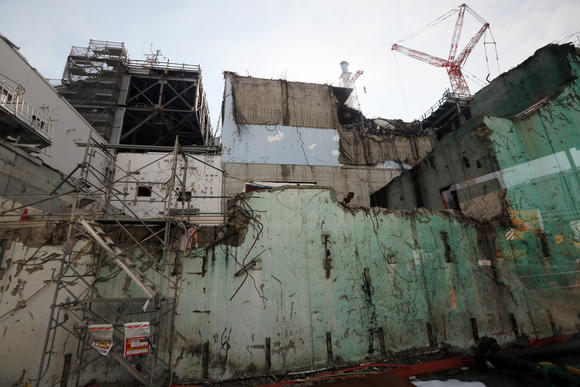
TOKYO — One of the melted reactors at the tsunami-hit Fukushima nuclear power plant had a temporary loss of cooling Monday when a worker accidentally bumped a switch while passing through a narrow isle of switch panels during an inspection and turned off the pumping system.
The plant’s operator, Tokyo Electric Power Co., said cooling for the No. 3 reactor, one of the three that melted following the 2011 earthquake and tsunami, was out for nearly an hour before a backup pump kicked in.
The reactor had enough water left inside and there was no temperature increase or radiation leak from the incident, TEPCO spokesman Yuichi Okamura said at a news conference.
Even though there was no radiation leak or overheating of the core, or any injuries, the incident was a reminder that Fukushima’s decommissioning work is running on a very fragile system.
The plant was largely running on makeshift pipes, wiring and other equipment in the first two to three years following the 2011 disasters, suffering a series of minor blackouts – including those caused by rats chewing cables – cooling stoppages and other problems.
The plant has since largely stabilized, but it remains vulnerable to unanticipated incidents as it continues to struggle with decommissioning work, which is expected to last decades.
Monday’s incident occurred when the worker was passing by a dimly lit isle that was only 85 centimeters (2.8 feet) wide, flanked by tall switch panels on both sides, Okamura said. With radiation levels still high, the worker was wearing a full-face mask and hazmat suit when he lost his balance while carrying equipment. His elbow jammed into the switch, breaking off its safety cover and inadvertently turning the lever to turn off the water injection pump to the No. 3 reactor.
Okamura acknowledged the lack of space at the site and said that the plant will seek ways to eliminate human errors like one on Monday.
Fukushima Daiichi to cost TEPCO $170 billion
Japan’s government estimates the crippled Fukushima Daiichi nuclear plant will end up costing its operator more than 170 billion dollars. The figure includes the costs of decommissioning the facility, as well as compensation and decontamination work.
Tokyo Electric Power Company has said it will secure about 17 billion dollars to decommission the plant’s reactors.
However, government officials now say the total cost will be more than 4 times higher. They estimate about 70 billion dollars will be required for the work, which includes removing melted nuclear fuel and dealing with radioactive wastewater.
The costs of decontamination work and constructing intermediate storage facilities for contaminated soil and waste materials are also likely to increase.
An additional 70 billion dollars will be needed to compensate farmers seeking damages.
The government will temporarily shoulder some of the compensation costs, and seek repayment from TEPCO at a later date. Other power companies are sharing some of the burden, which means higher electricity bills for consumers.
Japan’s industry ministry is currently working on a plan to reform TEPCO’s management and divert its profits to decommissioning work. But the ballooning costs are threatening this plan. The government aims to decide by the year-end how to share the financial burden, and how the work will be done.
Full-scale model used to test decommissioning for Fukushima reactor
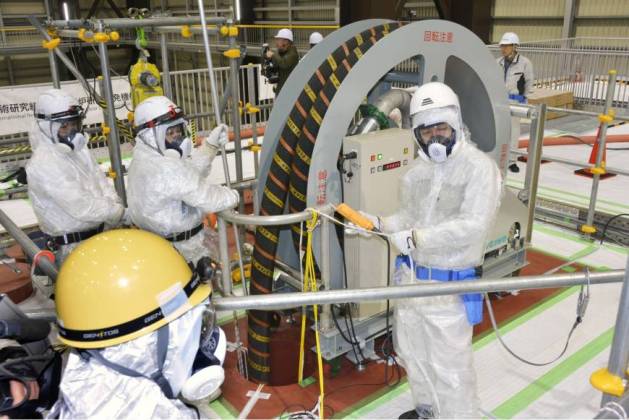
A test using a model of the No. 2 reactor’s suppression chamber and torus room at the Fukushima No. 1 plant is demonstrated for media in Naraha, Fukushima Prefecture, on Tuesday.
NARAHA, FUKUSHIMA PREF. – A research institute used a full-size mock-up of part of a nuclear reactor on Tuesday to conduct trial decommissioning experiments for use on the disaster-hit Fukushima No. 1 plant.
The International Research Institute for Nuclear Decommissioning (IRID) carried out the experiments using a 20-meter wide, 12-meter high model of the No. 2 reactor’s suppression chamber and torus room — areas located below the reactor’s containment vessel.
IRID was established in 2013 by nuclear plant makers, power firms and government organizations to develop technology needed for the decommissioning of the Fukushima plant, which was damaged by the March 3, 2011 earthquake and tsunami. After the disaster, three of the plant’s reactors suffered meltdowns in the world’s most severe nuclear crisis since the 1986 Chernobyl disaster.
The model is located at the Naraha Remote Technology Development Center, near the crippled Fukushima No. 1 plant.
“We would like to continue testing until next summer, approximately, and use (the outcomes) in deciding methods to retrieve fuel debris,” Atsufumi Yoshizawa, IRID executive director, said.
Removing nuclear fuel debris is perceived as one of the most difficult challenges in the decommissioning process.
With radiation emitting from the debris, a method is under consideration to fill containment vessels at the plant with water and remove debris from the top of the vessels, using the water to provide some protection from the harmful radiation.
Challenges in implementing this method include how to prevent contaminated water leaking from cracks in the vessels.
During Tuesday’s experiments, which were open to the media, workers wearing protective suits and masks attempted to insert a hose into the torus room mock-up while using remote cameras to observe their work.
A further experiment to stop water leaking from a suppression chamber is planned.
Fukushima costs to soar to $176 billion
Fukushima costs to soar to 20 trillion yen
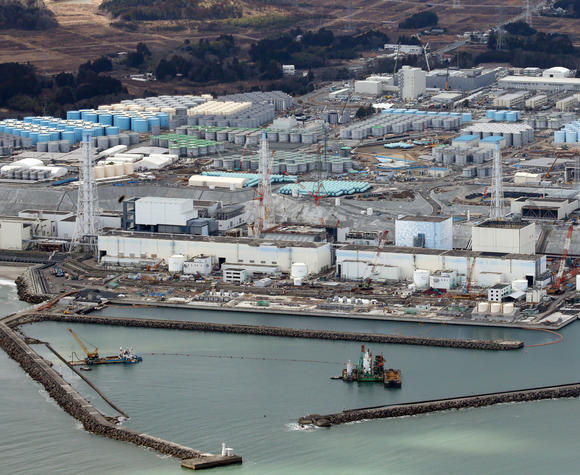
TOKYO — The combined costs of paying compensation for the Fukushima nuclear disaster and the decommissioning of the plant’s reactors may be double the initial estimate, rising to more than 20 trillion yen ($176 billion), according to estimates by the country’s industry ministry.
At the end of 2013, the Ministry of Economy, Trade and Industry calculated the cost at 11 trillion yen, which has since become the government’s official estimate.
As electric companies other than Tokyo Electric Power Co., the operator of the crippled plant, will also pass part of the cost on to consumers through higher rates, an increase in the public burden is unavoidable.
According to multiple sources, the ministry has already conveyed its new estimates to members of its expert panel, which is in discussions on reforming the management structure at Tepco and measures to secure funds.
The ministry aims to reach an agreement with the Ministry of Finance during planned discussions over the expansion of an interest-free loan program from 9 trillion yen to support Tepco.
The 11-trillion estimates foresaw 5.4 trillion yen for compensation payments; 2.5 trillion yen for decontamination work; 1.1 trillion yen for the construction of interim radioactive waste storage facilities; and 2 trillion yen secured by Tepco to scrap the reactors.
The new estimates see compensation payments costing 8 trillion yen and 4-5 trillion yen for decontamination.
The cost of decommissioning reactors — a process which will span at least 30-40 years — are projected to swell to hundreds of billions of yen a year from the current 80 billion. That would add several trillion yen to the overall cost.
Combined with the cost of building interim storage facilities, the total cost is forecast to exceed 20 trillion yen.
The snowballing costs are due mainly to the expansion of the number of people eligible for damages and the difficulty of conducting decontamination work, neither of which was fully understood when the initial estimates were made.
http://asia.nikkei.com/Politics-Economy/Economy/Fukushima-costs-to-soar-to-20-trillion-yen*
Cost of Fukushima disaster expected to soar to ¥20 trillion
The overall cost of wrapping up the Fukushima nuclear disaster is now estimated at more than ¥20 trillion, nearly double the previous estimate, sources familiar with the matter said Monday.
The Ministry of Economy, Trade and Industry, which previously put the overall cost at ¥11 trillion, is considering passing on a portion of the costs, including for compensation and the decommissioning of the Fukushima No. 1 nuclear plant, to consumers via higher electricity prices, the sources said.
The aged, six-reactor plant, operated by Tokyo Electric Power Co. Holdings Inc., was plunged into a blackout by the March 2011 earthquake and subsequent tsunami, leading to three core meltdowns and the worst nuclear disaster since Chernobyl in 1986.
According to the new estimate, Tepco’s compensation payments will rise to ¥8 trillion from ¥5.4 trillion and decontamination costs will double to around ¥5 trillion.
Trillions more will be needed to decommission the reactors and deal with radioactive water at the plant, on top of the ¥2 trillion earlier estimated, the sources said.
The ministry has been discussing reforming crisis-hit Tepco and is about to draft a plan for the utility based on the new estimate within this year.
Combined with the cost of building interim waste storage facilities, foreseen to remain at ¥1.1 trillion, the total cost is forecast to surpass ¥20 trillion, the sources said.
The government is studying the possibility of expanding a ¥9 trillion interest-free loan program for Tepco that was set up by issuing government bonds to cover compensation payments and decontamination costs in areas hit by the disaster.
It is expected to take up to 30 years to recover the ¥9 trillion through payments from Tepco and other big utilities.
The government also plans to recover the expected increase in compensation payments and decontamination expenses by raising charges for transmission line usage for new electricity retailers.
In principle, Tepco needs to secure funds on its own for decommissioning the plant. The government will manage the funds, which will be established using profits generated by the utility. But it is not clear if Tepco alone can shoulder the cost.
Fukushima nuclear decommission, compensation costs to almost double: media
Japan’s trade ministry has almost doubled the estimated cost of compensation for the 2011 Fukushima nuclear disaster and decommissioning of the damaged Fukushima-Daiichi nuclear plant to more than 20 trillion yen ($177.51 billion), the Nikkei business daily reported on Sunday.
The trade ministry at the end of 2013 calculated the cost at 11 trillion yen, which was comprised of 5.4 trillion yen for compensation, 2.5 trillion yen for decontamination, 1.1 trillion yen for an interim storage facility for contaminated soil, and 2 trillion yen for decommissioning, the report said.
The new estimate raised the cost of compensation to 8 trillion yen and decontamination to 4-5 trillion yen, the cost for an interim storage facility remained steady, and decommissioning will rise by several trillion yen, it added.
The part of the cost increase will be passed on in electricity fees, it added, citing multiple unnamed sources familiar with the matter.
The ministry could not provide immediate comment.
On March 11, 2011, a massive 9 magnitude earthquake, the strongest quake ever recorded in Japan, created three tsunamis that knocked out the Fukushima-Daiichi plant, causing the worst nuclear crisis since Chernobyl a quarter of a century earlier.
The Ministry of Economy, Trade and Industry will discuss with the Ministry of Finance a possible expansion of the interest-free loan program from 9 trillion yen, to help support the finances of the Fukushima plant operator Tokyo Electric Power Co’s, the report said.
The cost of cleaning up Tokyo Electric Power’s wrecked Fukushima-Daiichi nuclear plant may rise to several billion dollars a year, from less than $800 million per year now, the Japanese government said last month.
The Mainichi newspaper reported in October that Japan’s utilities lobby expects clean-up and compensation costs from the Fukushima disaster to overshoot previous estimates by 8.1 trillion yen.
http://www.reuters.com/article/us-tepco-outlook-idUSKBN13N03G
1 This Month

of the week – Shut Down Drone Warfare!


Tell the Ukrainian Government to Drop Prosecution of Peace Activist Yurii Sheliazhenko

Petition to revoke the licensing of the Near Surface Nuclear Disposal Facility (NSDF) at Chalk River. https://www.ourcommons.ca/petitions/en/Petition/Details?Petition=e-7247
To see nuclear-related stories in greater depth and intensity – go to https://nuclearinformation.wordpress.com
-
Archives
- April 2026 (114)
- March 2026 (251)
- February 2026 (268)
- January 2026 (308)
- December 2025 (358)
- November 2025 (359)
- October 2025 (376)
- September 2025 (257)
- August 2025 (319)
- July 2025 (230)
- June 2025 (348)
- May 2025 (261)
-
Categories
- 1
- 1 NUCLEAR ISSUES
- business and costs
- climate change
- culture and arts
- ENERGY
- environment
- health
- history
- indigenous issues
- Legal
- marketing of nuclear
- media
- opposition to nuclear
- PERSONAL STORIES
- politics
- politics international
- Religion and ethics
- safety
- secrets,lies and civil liberties
- spinbuster
- technology
- Uranium
- wastes
- weapons and war
- Women
- 2 WORLD
- ACTION
- AFRICA
- Atrocities
- AUSTRALIA
- Christina's notes
- Christina's themes
- culture and arts
- Events
- Fuk 2022
- Fuk 2023
- Fukushima 2017
- Fukushima 2018
- fukushima 2019
- Fukushima 2020
- Fukushima 2021
- general
- global warming
- Humour (God we need it)
- Nuclear
- RARE EARTHS
- Reference
- resources – print
- Resources -audiovicual
- Weekly Newsletter
- World
- World Nuclear
- YouTube
-
RSS
Entries RSS
Comments RSS
 nuclear-news