My respect to South Korea: the one and only country to protect its population from Japanese radiation contaminated products and to protest against japan’s plan to dump all the Fukushima radioactive water into our Pacific ocean. I would like to hear the countries protesting and our elected politicians have at heart to defend as well the health of their citizens!
South Korea to increase radiation testing of Japanese food
SEOUL (Reuters) – South Korea said on Wednesday it will double the radiation testing of some Japanese food exports due to potential contamination from the tsunami-damaged Fukushima nuclear plant.
Relations between the two U.S. allies are at their worst in years, with a trade row rooted in a decades-old dispute over compensation for South Koreans forced to work during Japan’s wartime occupation of the Korean Peninsula.
South Korea has stepped up demands this month for a Japanese response to concerns food produced in the Fukushima area and nearby sea could be contaminated by radiation from the Fukushima Daiichi nuclear power plant that was severely damaged by the 2011 tsunami.
South Korea’s Ministry of Food and Drug Safety (MFDS) said on Wednesday that it will double the frequency of testing of any food products with a history of being returned in the past five years after trace amounts of radiation were detected.
“As public concerns about radioactive contamination have been rising recently, we are planning a more thorough inspection starting August 23,” said Lee Seoung-yong, director-general at MFDS.
The affected food imports from Japan will be relatively minimal, as only about two tonnes are returned out of about 190,000 tonnes of total Japanese food imports annually, Lee said.
An official at Japan’s Ministry of Agriculture, Forestry and Fisheries said Japanese food products were safe and the increased radiation testing was unnecessary.
“Safety of Japanese food items has been secured and no additional restrictions are necessary. Many countries have agreed with this and got rid of import restrictions completely … It is very regrettable that these additional measures will be implemented,” the official told Reuters.
The 2020 Tokyo Olympics organizers said on Tuesday that South Korea’s National Olympic Committee had sent a letter expressing concern at the possibility of produce grown in Fukushima prefecture being served to athletes in the Olympic village.
South Korea’s Ministry of Foreign Affairs on Monday summoned the economy minister from the Japanese embassy in Seoul over media reports and international environmental groups’ claims that Japan plans to release contaminated water from the Fukushima plant into the ocean.
In April, South Korea won the bulk of its appeal in a dispute at the World Trade Organization over import bans and testing requirements it had imposed on Japanese seafood in the wake of the 2011 Fukushima disaster.
S.Korea to tighten checks on food from Japan
The South Korean government says it will tighten radiation checks on food products imported from Japan.
Following the Fukushima Daiichi nuclear plant accident in March 2011, South Korea banned imports of marine products from eight Japanese prefectures and farm products from 14 prefectures. Other food items are tested for radiation upon arrival in South Korea.
South Korea’s Food and Drug Safety Ministry announced on Wednesday that 17 food products that have tested positive for even minute amounts of radiation in the past will be screened twice, starting on Friday. The items include processed seafood, blueberries, tea and coffee.
South Korea’s government announced earlier this month that it is stepping up radiation checks on coal ash and three types of recyclable imports from Japan.
On Monday, South Korea’s Foreign Ministry summoned a senior Japanese Embassy official for an explanation of Japan’s plan to release into the ocean water containing radioactive substances generated at the Fukushima Daiichi plant.
August 22, 2019
Posted by dunrenard |
fukushima 2019 | Contaminated Products, Fukushima Daiichi, Fukushima Radiation, Japan Exports, Radioactive Water, Sea Dumping, South Korea |
Leave a comment
Radiation alert: Japan must not discharge water

By Mitch Shin
August 20, 2019
The relationship between Seoul and Tokyo has deteriorated rapidly since Japanese Prime Minister Shinzo Abe announced an economic retaliation against South Korea on July 1. Seoul has been responding to the Japanese government’s actions, and the South Korean people have been boycotting Japanese products as a countermeasure in the diplomatic war with Japan. However, there have been media reports recently that could strain the relationship even further. Outlets reported that there was a possibility that the Japanese government could discharge contaminated water from the Fukushima nuclear power plant into the Pacific Ocean.
If the Japanese government discharges 1.1 million metric tons of highly toxic radioactive water from the Fukushima nuclear power plant into the Pacific Ocean, it could flow into the East Sea – which the Japanese call the Sea of Japan – within a year. The South Korean government vowed to respond and a Foreign Ministry spokesman said it would ask Japan for information about the status of the polluted water at the Fukushima plant.
The Ministry of Foreign Affairs summoned a Japanese Embassy official on Monday and asked for a formal response from Tokyo regarding the Fukushima-contaminated water discharge plan. The Korean government should respond with finality to this issue. Just as the government has fundamentally prevented the import of Fukushima seafood by filing a complaint with the World Trade Organization, the government should take a hard line on this issue.
Shaun Burnie, a nuclear specialist at the Greenpeace Germany office who wrote a column in The Economist on the issue, says the Japanese government should put Fukushima’s polluted water in long-term storage. Burnie also emphasized that it should not be discharged into the Pacific Ocean. He highlighted the vulnerability of South Korea if Japan discharges polluted war into the Pacific Ocean. According to the UN Convention on Maritime Law, Seoul has the right to request explanations and information on the potential impact of the Fukushima crisis on its environment. Seoul is expected to demand answers at the Joint Conference of the International Maritime Organization’s London Convention and Protocol next month.
According to Greenpeace and Korean media reports, the Japanese government has stored about 110,000 tons of high-level radioactive contaminated water in storage tanks at Fukushima Daiichi Nuclear Power Plant since 2011. By temporarily storing contaminated water in tanks, the Japanese government is minimizing the possibility of damage caused by Fukushima’s contaminated water. However, groundwater introduced into the three reactors creates 1,497 tons of high-level radioactive contaminated water each week. An even more serious concern is the contaminated water in the reactor, which is 100 million times higher than the contaminated water stored in the tank after treatment. As of July, there are 18,000 tons of radioactive water in the reactor. The Japanese government has set a goal of reducing the polluted water in the reactor to 6,000 tons by 2021, but Burnie said it was a difficult goal to achieve.
Greenpeace researchers also found that the East Sea was contaminated when water containing cesium was discharged into the Pacific Ocean during the 2011 Fukushima nuclear accident. Pollution in the East Sea increased between 2012 and 2016, peaking in 2015. Knowing this, if the Japanese government releases polluted water into the Pacific Ocean ahead of the Tokyo Olympics, the Korean government should condemn its actions in every way possible. In addition, the international community should recognize the seriousness of this issue and seek cooperation from countries that may be affected by Fukushima’s contaminated water.
The Japanese government is expected to decide how to best treat Fukushima’s contaminated water, which will likely reach storage limits shortly before the Tokyo Olympics in August 2020. However, it only provides the international community with a fundamental answer to the problem but does not disclose specific solutions. It also announced that it would include ingredients from Fukushima in the Olympic team’s diet during the Tokyo Olympics. However, according to reports by JTBC, a South Korean broadcaster, radiation levels still reach dangerous levels throughout some Fukushima regions.
Recently, right-wing politicians in the Japanese government have made negative remarks about Korea indiscriminately in an effort to fuel the economic war with Japan. In recent months, the biggest issue in South Korea has been the Japanese government’s economic retaliation against trade regulations, not North Korea’s missile launch. And as the press reported that the possibility that the Fukushima contaminated water could cause affect Korea, the Korean people are once again preparing to address the Japanese government’s vicious behavior. It may be common sense to get along with neighboring countries, but one cannot expect the Korean people to be diplomatic under the circumstances. The Japanese government has certainly crossed the line.
Is it common sense that the Tokyo Olympics baseball games should be held at a venue where there is a high risk of exposure to radiation (one of the baseball fields is located near Fukushima)? During the 2011 earthquake in Japan, Korean people raised funds to support reconstruction. Is the Japanese government repaying the goodwill of the Korean people like this? Abe should consider how Germany asked forgiveness from other nations after World War II.
Enough is enough.
Mitch Shin is a student at the University of Utah Asia Campus, major in the Department of Communication. Shin is also a correspondent for The Daily Utah Chronicle, which is an independent student voice of the University of Utah.
https://www.asiatimes.com/2019/08/opinion/radiation-alert-japan-must-not-discharge-water/
August 22, 2019
Posted by dunrenard |
fukushima 2019 | Fukushima Daiichi, Radioactive Water, Sea Dumping, South Korea |
Leave a comment
No mistake, the Korean media, the Korea Times, calls it “the Fukushima radioactive water”, while the Japanese media, the Asahi Shimbun, calls it “the tainted water”…. The euphemism used by the Asahi Shimbun might be nicely poetic but it does not truthfully reflect the real dangerosity of that water for marine life!
Activists in Seoul protest in front of the Japanese Embassy in Seoul, Aug. 16, condemning the Japanese government for pushing ahead with promoting the 2020 Tokyo Summer Olympics while not clearly addressing the growing concerns over its possible plan to discharge contaminated water from Fukushima’s tsunami-devastated nuclear power plant into the Pacific Ocean.
Tokyo urged to address concerns over Fukushima radioactive water
Less than a year ahead of the 2020 Tokyo Summer Olympics scheduled to open July 24 next year, the Japanese government is faced with the challenge of dealing with growing concerns ― raised by international bodies and neighboring countries ― over contaminated water from Fukushima’s disabled nuclear power plant.
A recent announcement by the Fukushima nuclear plant utility operator Tokyo Electric Power that it would run out of space to store radioactive water with the current tanks expected to be full by the summer of 2022, has reignited public concerns. Greenpeace claimed that Tokyo is considering discharging 1.15 million tons of contaminated water into the Pacific Ocean.
Appearing at the foreign ministry headquarters on Monday, Tomofumi Nishinaga, a minister for economic affairs from the Japanese Embassy in Seoul told South Korean officials that such claims were different from his government’s official position. But concerns linger over Japan’s handling of the matter.
The Japanese government is being urged to give its official statement on the issue in the near future. Tokyo has been promoting next year’s Olympics as the “recovery Olympics” to convince the international community that Japan has fully overcome the impact of the 2011 disaster of Fukushima Daiichi nuclear meltdown.
Environmental activists have pointed out that radioactive contamination has still remained in the area as the Japanese government’s decontamination process was not about permanently getting rid of the pollutants but rather about moving the radioactive pollutants elsewhere.
For example, putting contaminated soil or debris into black plastic bags eventually meant scattering the pollutants back into the environment, because the vinyl bags have started to collapse with the gas of the rotten soil building up while plants also have grown inside the bags, tearing them open. This was mentioned in a March report by Maxime Polleri, a MacArthur Nuclear Security Pre-doctoral Fellow at the Center for International Security and Cooperation in Stanford University.
Polleri also said the atmospheric level of radiation in Fukushima prefecture stated in official documents by the Japanese government’s Reconstruction Agency was listed at about the same level as other major overseas cities like New York or Shanghai, but these figures of state-sponsored monitoring were highly misguided.
“The levels of radioactivity in places like New York are mostly the result of background radiation, which is naturally occurring radiation from the soil or sun. These are rays that pass through the body and leave. Fukushima, on the other hand, is dealing with the release of radionuclides, which are fission products from nuclear power plants. These radionuclides are not rays, but dust-like particles that can stick to the body and be inhaled or ingested,” he said.
Activists have called on the Japanese government to acknowledge the situation and make transparent announcements dealing with the matter, which would otherwise only lead to increased public fear.
Seoul demands answers over tainted water at Fukushima plant
SEOUL–South Korea wants to know what Japan plans to do about the enormous volume of processed but still contaminated water at the crippled Fukushima No. 1 nuclear power plant.
The country’s Foreign Ministry on Aug. 19 called for an official reply from Japan by summoning a Japanese diplomat.
The ministry handed a statement to Tomofumi Nishinaga, a minister at the Japanese Embassy in Seoul, urging Tokyo to confirm whether news reports, as well as claims by international environmental groups, were accurate regarding a plan to release treated water containing tritium, a radioactive substance, into the sea.
Nishinaga was also asked about the Japanese government’s plans for disposing of the massive amount of radioactive water stored at the nuclear complex, which suffered a triple meltdown in the Great East Japan Earthquake and tsunami in March 2011.
The statement read that Seoul “takes seriously the issue of polluted water, as it concerns the health and safety of the two countries and effects countries linked by the sea.”
It also said Seoul seeks to cooperate with Tokyo to limit adverse affects of the tainted water.
President Moon Jae-in’s Democratic Party and other parties are pushing for the question of the contaminated water at the Fukushima plant as a step to counter Japan’s recent strengthening of restrictions on exports to South Korea.
The same day, lawmakers with the opposition Party for Democracy and Peace announced that radioactive material had been detected on 35 occasions from about 17 tons of processed food imported from eight Japanese prefectures over the past five years, citing data from authorities overseeing food safety.
South Korea continues to prohibit imports of seafood from those prefectures, including Fukushima, Ibaraki and Chiba, on the grounds that they were severely affected by the Fukushima nuclear disaster.
The legislators called for an immediate ban on imports of processed food from these prefectures out of concern for the safety of people in South Korea.
The ministry’s inquiries follow reports earlier this month that Tokyo Electric Power Co., the operator of the Fukushima plant, estimates there will be no more room at the plant to house tanks storing the processed water by next summer.
The Japanese government believes that releasing some of the water after it is diluted is one possible option.
August 22, 2019
Posted by dunrenard |
fukushima 2019 | Fukushima Daiichi, Radioactive Water, Sea Dumping, South Korea |
Leave a comment
Tomofumi Nishinaga, a minister for economic affairs from the Japanese Embassy in Seoul, appears at the Ministry of Foreign Affairs building in central Seoul, Monday, summoned over Tokyo’s plan to deal with the contaminated water from Fukushima’s tsunami-devastated nuclear power plant.
S. Korea calls in Japanese diplomat amid fears over possible Fukushima plant water discharge
SEOUL, Aug. 19 (Yonhap) — South Korea called in a Japanese diplomat on Monday to demand Tokyo address growing public concern over its reported plan to release into the Pacific Ocean contaminated water from the 2011 Fukushima nuclear power plant meltdown.
The move came amid Seoul’s push to stop Tokyo’s recent export curbs through bilateral dialogue and pressure. Seoul sees the curbs as political retaliation for last year’s South Korean Supreme Court rulings against Japanese firms over wartime forced labor.
Last week, Seoul vowed to “actively” deal with the radioactive water issue as fears are growing that Tokyo could discharge it into the Pacific Ocean as storage space at the Fukushima plant is expected to run out around 2022.
After learning last August of Tokyo’s move to discharge the water, South Korea delivered to Japan in October a document detailing its concerns and related requests. It has since called for Tokyo to elucidate its handling of the issue during bilateral and multilateral forums.
Japan is reportedly exploring various options to dispose of the Fukushima plant water, including evaporating it and putting it deep underground. But discharging the treated water into the ocean is seen as the cheapest and quickest — thus tempting — disposal method.
Environmental groups and activists, such as Greenpeace, have opposed the discharge of the water containing radioactive tritium. In a January report, Greenpeace said that a Japanese government task force proposed the discharge plan and ignored alternative options that would avoid further contamination of the ocean.
S. Korea calls in Japanese diplomat over plans for Fukushima water
SEOUL (Kyodo) — South Korea’s Foreign Ministry on Monday summoned the economy minister from the Japanese embassy in Seoul to discuss a reported plan that would see water contaminated from the 2011 Fukushima nuclear power plant meltdown discharged into the Pacific Ocean.
Kwon Se Jung, the director general in charge of climate change and environmental affairs at the ministry, called in Tomofumi Nishinaga, a minister for economic affairs from the Japanese Embassy in Seoul, to address growing public concern over the plan.
In addition to the delivery of a note verbale, Kwon requested Japan’s official stance on how it plans to dispose of the water, the ministry said in a statement released after their meeting.
Nishinaga, in response, said he would deliver South Korea’s stance to Japan, and that his nation will give a transparent explanation on how the water discharge plan will be processed, not only to South Korea but also the international community.
Environmental groups and activists, such as Greenpeace, have warned about the danger posed by any discharge of the Fukushima water contaminated with tritium into the Pacific Ocean, underscoring the effect it would have on South Korea.
Last week, South Korea’s Foreign Ministry spokesman Kim In Cheol, in his regular briefing with reporters, said that the ministry would take active measures regarding the discharge plan.
Seoul summons Japanese diplomat over plans for Fukushima radioactive water
Seoul’s Ministry of Foreign Affairs summoned a Japanese diplomat on Monday to request Tokyo’s official answer for its possible plan to release the contaminated water from Fukushima’s tsunami-devastated nuclear power plant into the Pacific Ocean.
In the meantime, South Korea’s Foreign Minister Kang Kyung-wha and her Japanese counterpart Taro Kono will hold a meeting in Beijing, Wednesday, on the sidelines of the trilateral minister-level talks among South Korea, Japan and China, sources familiar with the issue said.
Kwon Sei-joong, the director-general for Climate Change, Energy, Environmental and Scientific Affairs at the Ministry of Foreign Affairs, met the economic minister Tomofumi Nishinaga from the Japanese embassy in Seoul to address growing public concerns over the radioactive water.
“Director Kwon proposed (to Minister Nishinaga) that South Korea and Japan should seek ways to treat the Fukushima nuclear-contaminated water so as not to affect citizens and the ecosystem of the neighboring countries,” the foreign ministry’s statement read.
Nishinaga said in reply that he would report back to Tokyo and the Japanese government would announce plans over the radioactive water to South Korea and the international community.
The Japanese government was mulling over the plan of controlled release of the radioactive water into the Pacific Ocean after the utility company Tokyo Electric Power which has been operating the Fukushima nuclear power plant said it would run out of space to store the contaminated water around 2022.
As international groups and activists including Greenpeace have warned of the side-effects that would also affect South Korea if the radioactive water is released into the Pacific Ocean, South Korea’s foreign ministry last week vowed to “actively” deal with the issue.
The issue of radioactive water came amid the ongoing trade row between Seoul and Tokyo.
Seoul has been making diplomatic efforts to bring Tokyo back to the negotiating table after President Moon Jae-in said Seoul will “gladly join hands” if Tokyo cooperates to resolve the friction through dialogue, delivering a speech last Thursday to mark the 74th anniversary of the Korean Peninsula’s liberation from Japanese colonial rule.
August 22, 2019
Posted by dunrenard |
fukushima 2019 | Fukushima Daiichi, Radioactive Water, Sea Dumping, South Korea |
Leave a comment
The worst nuclear accident in history
The three meltdowns and at least four big core explosions at the Fukushima nuclear-power plant’s six American-designed Daiichi reactors in March 2011 still constitute the world’s worst nuclear nightmare so far, surpassing even the Chernobyl #4 reactor’s explosion and meltdown of April 1986. While Chernobyl’s disaster was very quickly contained albeit at the cost of at least 30 human lives (according to Soviet sources)—by first having the stricken reactor completely buried in sand from the air and then immediately sealing it inside a sarcophagus of reinforced concrete, Fukushima’s tragedy has remained an open, festering wound to this day. A U.N. report issued in 2012 stated that at least six Fukushima workers had died since the meltdowns and the tsunami (according to a later report by the Japanese government, only one of these workers had died from radiation exposure).
The Japanese seem to have been reluctant to risk the lives of their more than 6,000 rescue workers pouring daily hundreds of tons of sea water over the fully destroyed reactors as well as the several partly damaged ones. Yet, as of 27 February 2017, the Fukushima prefecture government counted 2,129 “disaster-related deaths” in that prefecture alone. At least 1,368 among those deaths have been listed as directly “related to the nuclear power plant.” Predicted future cancer deaths due to accumulated radiation exposures in the population living near Fukushima are expected to run in the many hundreds, if not the thousands.
Obviously, the Japanese government’s wishful thinking is that the nuclear disaster would just go away if as few people as possible—both at home and especially abroad—knew about its true extent and actual severity. According to Harvey Wasserman (“14,000 Hiroshimas Still Swing in Fukushima’s Air,” The Free Press, October 9, 2013), the situation on the ground was still rather catastrophic more than two years after the disaster, because
“Massive quantities of heavily contaminated water are pouring into the Pacific Ocean, dousing workers along the way. Hundreds of huge, flimsy tanks are leaking untold tons of highly radioactive fluids. At Unit #4, more than 1300 fuel rods, with more than 400 tons of extremely radioactive material, containing potential cesium fallout comparable to 14,000 Hiroshima bombs, are stranded 100 feet in the air.”
Have we been witnessing a major local catastrophe with some perilous global repercussions that are still being concealed from the general public and the world under a veil of total government secrecy—“apparently to avoid causing ‘needless’ social panic,” in the words of Japanese research scientist Haruko Satoh (“Fukushima and the Future of Nuclear Energy in Japan: The Need for a Robust Social Contract,” ARI, June 29, 2011)? While the Russians had the excuse of having just one prior warning—namely that of the Three Mile Island’s much smaller nuclear mishap in the U.S. on March 28, 1979—the Japanese appear to have completely ignored Chernobyl’s tragic lessons while operating their Fukushima nuclear-power plant built in a highly vulnerable seismic zone in close proximity to the Pacific Ocean which is prone to massive earthquakes and tsunamis. Pointing out that
“…a vast area of land has been contaminated by radiation,” Haruko Satoh further writes that “…the nature of the on-going nuclear crisis is better understood as a man-made disaster resulting from the systemic failure of Japan’s nuclear energy regime for safety than an inevitable consequence of unforeseen forces of nature.”
In his considered opinion, Japan “has also failed to act speedily to remove and treat the accumulating contaminated soil and water” (ibid.).
As a result, according to The Guardian (“Plummeting Morale at Fukushima Daiichi as Nuclear Cleanup Takes Its Toll,” October 15, 2013), “the world’s most dangerous industrial cleanup” has been threatening not only Japan (long dubbed “America’s unsinkable aircraft carrier” in the western Pacific) but the rest of the planet as well. Will the international community finally wake up to this still on-going lethal danger that will persist for many years to come—at least until the afflicted nuclear reactors are finally cooled down? But it is not going to be an easy job since by Tokyo’s own estimates the full decommissioning of the wrecked nuclear site could take up to 40 years.
Could the 2020 Tokyo Olympics be canceled?
The Fukushima catastrophe released in the air many radioactive pollutants such as cesium-134, cesium-137, strontium-90, iodine-131, plutonium-238 and other so-called radionuclides that emit ionized (alpha and beta) particles. With lifespan exceeding hundreds of years, these radioactive pollutants will continue to pose a radiation threat for many decades to come. One eyewitness testifies about the failure of Japan’s decontamination measures (Maxime Polleri, “The Truth About Radiation in Fukushima: Despite Government Claims, Radiation From the 2011 Nuclear Disaster Is Not Gone,” The Diplomat, March 14, 2019):
“…mountains of black plastic bags, filled with contaminated soil or debris, can be seen in many parts of Fukushima…. As such, decontamination does not imply that radiation has vanished; it has simply been moved elsewhere. Yet in rural regions, where many of the bags are currently being disposed, far away from the eyes of urban dwellers, residents are still forced to live near the storage sites. Many rural residents have criticized the actual efficacy of the decontamination projects. For instance, vinyl bags are now starting to break down due to the build-up of gas released by rotten soil. Plants and flowers have also started to grow inside the bags, in the process tearing them apart. With weather factors, residual radioactivity inside the bags will eventually be scattered back into the environment.”
But with the upcoming 2020 Tokyo Olympics, it is doubtful that the secretive Japanese government will ever acknowledge this threatening reality. For example, the Japanese have been silent about the current extent of radiological contamination of the seas surrounding Japan—obviously for fear that the Tokyo Olympics scheduled to be held next year may be canceled.
In the past, the Tokyo Electric Power Company (Tepco), the crippled nuclear-power plant’s sole owner and operator,
“has all but admitted (that) Fukushima’s radiation leaks are spiraling out of control. In addition to the leaking water storage units that are unleashing hundred of tons of radioactive water each day, Tepco now says (that) 50% of its contaminated filtration capability has been taken offline due to corrosion. The result is that radiation leaks are escalating out of control and attempted remediation efforts are faltering” (“Fukushima in Free Fall,” NaturalNews.com, August 27, 2013).
The traditionally close-mouthed Japanese bureaucrats have been far less truthful and much more evasive about the gravity of the Fukushima nuclear crisis than the Russians ever were about their Chernobyl disaster. Only in June 2011—three whole months after the Fukushima nuclear accident—did Tokyo announce that meltdowns had actually occurred in three of the six reactors. “From day one,” the NaturalNew.com article continues,
“the Fukushima fiasco has been all about denial: Deny the leaks, shut off the radiation sensors, black out the news and fudge the science. Yet more than two years later, the denials are colliding with the laws of physics, and Tepco’s cover stories are increasingly being blown wide open.” (ibid.)
Buried under a virtual tsunami of compensation-seeking lawsuits, Tepco, “once a behemoth that virtually controlled Japan’s energy policy“ (Haruko Satoh, “Fukushima and the Future of Nuclear Energy in Japan: The Need for a Robust Social Contract,” ARI, June 29, 2011), has survived to this day as Japan’s biggest energy giant only thanks to the LDP government which seems to be more than willing and eager to bail it out. Despite the attempted cover-up by pro-nuclear Japanese cabinets and the Japanese news media alike, Japan’s own nuclear-safety watchdog—the Nuclear and Industrial Safety Agency (NISA)—gave Fukushima’s nuclear catastrophe the worst possible rating for radiological danger, Level 7 (“major accident”)—the same rating as the Chernobyl disaster—in accordance with the International Nuclear and Radiological Event Scale (INES) standards established by the International Atomic Energy Agency (IAEA) in 1990.
Showing how more than two years after the disaster the waters of the Pacific Ocean were actually “boiling” off the coast of Fukushima in what it called “a viral photo of the day,” Before It’s News (“’Boiling Sea’ Off Fukushima Viral Photo of the Day,” August 30, 2013) asked rhetorically, “…if this radiation keeps leaking, and there is no way to stop it, will boiling seas spread all the way across the Pacific Ocean to the West Coast of the United States? If so, what happens then?”
How was the critically important oceanic animal and plant life affected by the radioactive contamination? Tokyo has denied that due to higher radiation levels it is dangerous to eat any fish caught by Japanese fishermen, but the government has reinstated its earlier fishing ban. Could it be that all of Japan has been poisoned? Moreover, is the whole planet going to be eventually contaminated by Fukushima’s many tons of radioactive material released into the air and sea? Again according to Harvey Wasserman,
“A worst-case cloud would eventually make Japan an uninhabitable waste-land. What it could do to the Pacific Ocean and the rest of us downwind approaches the unthinkable” (“14,000 Hiroshimas Still Swing in Fukushima’s Air,” The Free Press, October 9, 2013).
The Fukushima nuclear accident and its tragic consequences have taken place at the worse possible time for Japan, given its huge national debt (which is more than twice the size of its annual GDP) and protracted economic slump lasting now for almost three decades. Japan’s economic downturn started with the bursting of Tokyo’s stock-market and real-estate “bubbles” in the 1990s and was gravely exacerbated by the global Great Recession of 2008-2009 sparked by America’s own banking and real-estate crises. The international community should have by now pressed the U.N. Security Council to consider and adopt a binding resolution to close down Japan’s hazardous nuclear-energy industry, given the major economic, public health and public safety risks involved.
Is Japan’s nuclear industry doomed?
But Japan’s nuclear power may already be doomed, with its nuclear units being gradually taken “offline” in the wake of the Fukushima fiasco (“After Fukushima, Does Nuclear Power Have a Future?” The New York Times, October 10, 2011). In September 2013, the new Liberal Democratic Party Prime Minister Shinzo Abe ordered the shutdown—supposedly for routine maintenance and safety checks—of its last nuclear reactor at Oi that was still working after all the other 53 operating reactors had been closed down for one reason or another. Facing pressure from the Japanese public which has turned decisively against nuclear energy, the previous Prime Minister, Yoshihiko Noda of the Democratic Party of Japan, had announced in September 2012 a major change in Japan’s energy policy, pledging to shut down all nuclear power for good by the 2030s, thus angering the all-powerful Japanese captains of industry.
In power since December 2012, Shinzo Abe’s LDP cabinet has been warning about the steep economic costs of pulling the plug on Japan’s nuclear energy, mainly in the form of escalating and very expensive energy imports, especially for a country which lacks fossil fuel reserves. Under tremendous pressure from the “iron triangle” community of electricity utilities, heavy industry, ministry bureaucrats and academic experts, known as the “nuclear village,” Prime Minister Shinzo has been trying to restart as many nuclear reactors as the still hostile domestic public opinion would permit him.
Following the Fukushima accident, as each Japanese nuclear reactor entered its scheduled maintenance and refueling outage, it was not returned to operation. Between September 2013 and August 2015, Japan’s entire reactor fleet was suspended from operation, leaving the country with no nuclear generation. But in 2018 Prime Minister Shinzo’s cabinet restarted five nuclear power reactors (U.S. Energy Information Administration, “Japan Has Restarted Five Nuclear Power Reactors in 2018,” November 28, 2018). He is facing a new and unexpected obstacle—the renewed and strengthened Nuclear Regulation Authority (NRA), which had been reformed and given more regulatory powers and administrative independence after Fukushima, especially since this now independent agency has to declare any nuclear plants safe before they could restart. There is also the implacable opposition of many prefectures, towns and villages which, under the law, have a say over the reopening of any local or nearby nuclear plants (“Electricity in Japan: Power Struggle,” The Economist, September 21, 2013). In spite of the determination of the ruling LDP to keep Japan’s ailing nuclear industry alive, its days may already be numbered (Sumiko Takeuchi, “Is There a Future For Nuclear Power in Japan?” Japan Times, July 16, 2019).
Rossen Vassilev Jr. is a journalism senior at the Ohio University in Athens, Ohio.
August 22, 2019
Posted by dunrenard |
fukushima 2019 | Fukushima Daiichi, Nuclear Disaster |
Leave a comment
The treatment of radioactive water stored in tanks in Fukushima has become the subject of intense international concern in recent months, including in South Korea, as reports say the Japanese government is considering releasing it into the Pacific Ocean.
And now, South Korea — one of Japan’s closest neighbors — says it will seek ways to deal with Tokyo’s planned discharge.
“We will work closely with institutions and countries in the Pacific Rim that will be affected and actively respond to any potential water discharge from the Fukushima plant.”
Tokyo Electric Power Corporation, which manages the storage of the toxic water, says it will run out of space in three years.
Greenpeace warned in a report earlier this year that South Korea will be among the nations most affected by any discharge.
And with the IAEA General Conference to be held in Vienna in September, and the South Korea-China-Japan Top Regulators’ Meeting on Nuclear Safety taking place in China in November, Seoul plans to raise the issue, and consider other concrete actions.
Asked about the possibility of South Korea boycotting the 2020 Tokyo Olympics over the matter, Seoul’s foreign affairs ministry did not provide a direct answer.
Citing the same problem, a number of U.S. media outlets, including the Washington Post, have raised concerns over the safety of American athletes heading to Tokyo next summer.
Since 2013, South Korea has blocked all seafood imports from eight Japanese prefectures near Fukushima after it was found that contaminated water was leaking into the ocean.
While Tokyo sought to challenge Seoul’s decision by lodging a complaint at the World Trade Organization, the WTO in April ruled in Seoul’s favor, saying the measures do not amount to unfair trade restrictions or arbitrary discrimination.
Lee Seung-jae, Arirang News.
August 16, 2019
Posted by dunrenard |
fukushima 2019 | Fukushima Daiichi, Radioactive Water, Sea Dumping, South Korea |
Leave a comment
“The idea of releasing the contaminated water before it has been entirely treated for radioactivity is completely unacceptable. For the Japanese government to make a unilateral decision about a multilateral matter that endangers the health of not only its own citizens but also the citizens of its neighbors is both irresponsible and immoral.”
The storage tanks for contaminated water from the 2011 Fukushima nuclear reactor meltdown
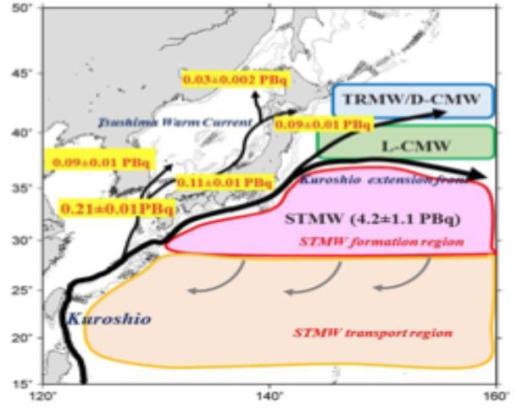
If Japan releases 1.1 million tons of water contaminated with high-level radioactivity from storage tanks at the Fukushima nuclear plant into the Pacific Ocean, that water could reach the east shore of South Korea within a year. That was the bottom line of a press conference held in South Korea on Aug. 14 by Shaun Burnie, a senior nuclear specialist with Greenpeace Germany.
The problem is that discharging the contaminated water isn’t some vague possibility, but the option favored by the Japanese government. Last October, Japan’s nuclear regulator said it would allow the water to be released, provided that it’s diluted first.
The idea of releasing the contaminated water before it has been entirely treated for radioactivity is completely unacceptable. For the Japanese government to make a unilateral decision about a multilateral matter that endangers the health of not only its own citizens but also the citizens of its neighbors is both irresponsible and immoral.
Shaun Burnie, a senior nuclear specialist with Greenpeace Germany, talks about the dangers of Japan’s decision to release radioactively contaminated water from the 2011 Fukushima disaster during a press conference in Seoul on Aug. 14.
It’s obvious that the contaminated water will be carried by sea currents to the East Sea, with harmful effect. A study has found that the levels of radiation in the East Sea more than doubled during the five years after contaminated water was released for a brief time in 2011, during the Fukushima nuclear disaster.
The main reason the Japanese government hopes to discharge the contaminated water is cost. The massive amount of radioactive water produced since the 2011 accident at Fukushima is being stored in the reactor’s water tanks; at the current rate, they will overflow by March 2021. Attempting to skimp on the cost of building more tanks by releasing the contaminated water is the worst possible option, as it would trigger another catastrophe. According to Shaun Burnie, the only option is to build more water tanks while focusing on developing techniques for treating the radioactive particles.
The route by which contaminated water discharged by Japan would eventually reach the eastern shores of Korea.
With the Tokyo Olympics just one year away, the Japanese government is working overtime to promote the claim that it’s moved beyond the Fukushima disaster. First it announced that dishes for athletes will be prepared with crops grown at Fukushima, and then it selected a spot just 20km away from the accident as the starting point for the Olympic torch. That has prompted not only leading global media outlets but even domestic ones to run multiple stories concluding that the Fukushima area isn’t safe from radioactive materials. Japan needs to call off this rash marketing campaign, which jeopardizes the safety of Olympic athletes and audiences.
The South Korean government has announced that it will respond proactively to the issue of contaminated water at Fukushima. Some see this as another way to pressure Japan in the two countries’ ongoing economic dispute. But the two are separate issues. We hope the government will deal with this issue with a firm, and consistent, attitude.
August 16, 2019
Posted by dunrenard |
fukushima 2019 | Fukushima Daiichi, Radioactive Water, Sea Dumping, South Korea |
1 Comment
They would love to get rid of all that accumulated radioactive water by dumping it into the sea before the venue of the 2020 Olympics. An ongoing media campaign pushing for it is relentlessly continuing….
August 13th, 2019
Storage space is running out for Fukushima
Beginning late next July, Tokyo and several other sites around Japan will welcome elite athletes from around the world for the 2020 Summer Games. One of the sites carries with it a stigma that organizers are hoping to help heal — Fukushima.
Some scheduled baseball and softball events will take place at Fukushima Azuma Baseball Stadium, located about 70 km northwest of the Fukushima Daiichi nuclear power plant. The site’s three reactors famously suffered a partial meltdown in the wake of the 2011’s Great East Japan Earthquake and the resulting 15-metre tsunami. The disaster was the second-worst since Chernobyl, leaving piles of melted radioactive fuel in the plant’s three reactors.
While it’s now estimated that 96 per cent of the power plant can be safely accessed without protective clothing, and no evacuation order has ever been in place for parts of the prefecture — including where the baseball stadium is located — the damage to the name has been done, according to locals.
“We are looked at like Chernobyl,” Saito Nobuyuki, who was born in Fukushima and now a sporting goods store there, told the New York Times. “It’s difficult to change.”
Yoshiro Mori, the 2020 organising committee president, hopes by hosting events at the site, that change can begin.
“By hosting Olympic baseball and softball events, Fukushima will have a great platform to show the world the extent of its recovery in the 10 years since the disaster,” Mori said, according to the Guardian.
There may be another hitch in the road to recovery, however, and it’s looming on the horizon for next year.
Tremendous amounts of water flooded the reactors in the wake of the disaster, both from the tsunami itself and from water added to cover the melted reactors and allow them to cool as part of the efforts to clean up the site and decommission the plant. Since then, groundwater has also infiltrated the site. All of this water has been contaminated by radioactive substances, like cesium and tritium. While the cesium can be removed via processing, tritium generally remains, meaning the still-contaminated water must be stored.
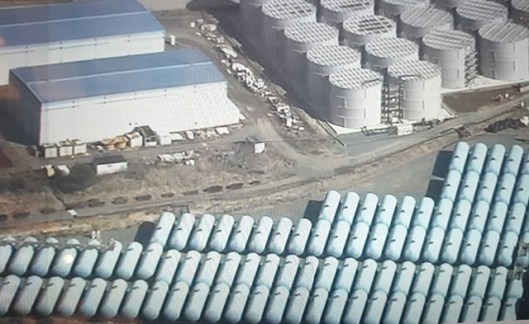
TEPCO, the utility which operated the reactor, has installed about 1,000 large storage tanks at the site to hold the contaminated water; currently, more than 1.05 million tons of radioactive water are being stored in the tanks, and roughly 150 tons are added every day.
TEPCO continues to install new tanks, but according to the Japanese newspaper Asahi Shimbun, “space limitations mean that by the end of 2020, a maximum storage capacity of about 1.34 million tons will be reached.” Officials have added that if the groundwater infiltration was decreased, it will be possible to stretch that date until summer 2022.
While more tanks can be installed, a long-term solution is still being sought and, so far, most of them aren’t going over well with the locals.
One suggestion before the central government is to dilute the water after processing and gradually release it into the Pacific. Another is to build a long-term storage facility near the plant site. Fukushima residents, and fishermen in particular, have expressed strong opposition to both ideas, not over fears of the wastewater itself but because of the negative publicity and continuing stigma that would damage their livelihoods.
Tritium — the contaminant left in the water after treatment — is a relatively weak source of radiation that doesn’t pose much threat to humans, though in extremely large quantities impacts to health are possible. It’s commonly used in glow-in-the-dark lighting and signs.
Setting a deadline on the current storage situation puts additional pressure on Japanese authorities and the public to reach a consensus.
“When we talk about Fukushima’s reconstruction, the question is if we should prioritize the decommissioning at the expense of Fukushima people’s lives,” Naoya Sekiya, a University of Tokyo professor of disaster social science, told the Associated Press. “The issue is not just about science.”
August 16, 2019
Posted by dunrenard |
fukushima 2019 | 2020 Olympics, Fukushima Daiichi, Radioactive Water, Sea Dumping |
Leave a comment
This photo, provided by Kyodo news agency on March 8, 2019, shows the storage tanks keeping radioactive water from the Fukushima meltdown, in Fukushima, Japan.
SEOUL, Aug. 13 (Yonhap) — South Korea will actively seek ways to deal with Japan’s planned discharge of water contaminated as a result of the 2011 Fukushima nuclear power plant meltdown, Seoul’s foreign ministry said Tuesday, amid concern storage space will soon run out.
The treatment of radioactive water stored in tanks in Fukushima has drawn international concern in recent months following reports that the Japanese government is considering releasing the water into the Pacific Ocean.
Tokyo Electric Power Co., the utility company managing the storage, has said it will run out of space to store the toxic water in three years. Greenpeace warned in a report early this year that South Korea will be among countries particularly affected by the discharge into the sea.
“Our government puts top priority on the health and safety of our citizens, and we plan to actively ask Japan to disclose information and to provide us with a concrete stance on the current management system and disposal plans,” ministry spokesman Kim In-chul told a regular press briefing.
Seoul has proposed that Tokyo hold bilateral and multilateral talks over the matter since the government became aware in August 2018 of a plan to discharge the water, Kim added.
Two months later, the government sent Tokyo an official statement detailing national concerns and requests in relation to the matter, and continued negotiations over the issue at various levels, bilaterally as well as through multilateral channels, according to the ministry.
The ministry said Japan has only maintained that the final decision for disposal of the radioactive water is still under review and that it will announce it to the international community when it’s ready.
“If it’s deemed necessary, we will also closely cooperate with our neighbors in the Pacific that are also feared to be affected, so as to actively cope with the problem of the discharge of contaminated water,” Kim said.
In that regard, the government is mulling over other concrete actions such as raising the matter at the IAEA General Conference to be held in Vienna next month and the South Korea-China-Japan Top Regulators’ Meeting on Nuclear Safety, which is to take place in China in November.
While there’s no other country yet to formally take issue with Japan’s reported move to release contaminated water, the environmental authorities of many Pacific nations are apparently keeping a close eye on it, a ministry official said later on background.
International environmental groups including Greenpeace are voicing concern about the issue as well, the official added.
Asked about the possibility of South Korea boycotting the 2020 Tokyo Olympics in connection with the matter, the ministry spokesman avoided a direct answer.
Seoul and Tokyo are locked in an escalating economic and political row stemming from the longstanding issue of compensation for wartime forced labor.
Since 2013, South Korea has banned all seafood imports from eight Japanese prefectures near Fukushima, after Japan announced a leak of contaminated water.
Tokyo sought to challenge Seoul’s decision by lodging a complaint at the World Trade Organization (WTO). In April this year, the WTO finalized the ruling in favor of Seoul, saying the measures do not amount to unfair trade restrictions or arbitrary discrimination. (Yonhap)
August 16, 2019
Posted by dunrenard |
fukushima 2019 | Fukushima Daiichi, Radioactive Water, Sea Dumping, South Korea |
Leave a comment
All part of the now massive media PR campaign to prepare the public opinion for the dumping of that accumulated radioactive water into the Pacific ocean. Let’s face it, for them to dump it into the sea is the quickest, cheapest conveniency. And they’d love to have it out of the way before the 2020 Olympics venue.
August 9, 2019
By the summer of 2022, storage tanks holding processed water on the grounds of the crippled Fukushima No. 1 nuclear power plant will become completely full, according to Tokyo Electric Power Co.
That marks the first timetable the utility has set on when capacity will be reached in the tanks holding the water processed to remove most radioactive substances.
Analysts said setting a deadline for the tank capacity allows TEPCO to push the central government and other entities to take action on the volume of contaminated water that continues to accumulate at a rate of about 150 tons a day.
TEPCO officials are expected to present their estimates at an Aug. 9 meeting of a subcommittee under the Ministry of Economy, Trade and Industry looking into dealing with the contaminated water.
The triple meltdown at the Fukushima No. 1 plant after the 2011 Great East Japan Earthquake and tsunami produced piles of melted nuclear fuel in three reactors at the plant.
The melted fuel continues to be cooled, but that results in the build-up of water contaminated with high levels of radioactive substances.
Groundwater has also seeped into the reactor buildings, increasing the high volume of contaminated water.
While most of the radioactive substances are being removed through processing equipment, tritium remains in the processed water, which must be stored.
Large storage tanks have been constructed on the grounds of the Fukushima No. 1 plant, which currently store about 1.05 million tons of processed water.
TEPCO continues to install new storage tanks, but space limitations mean that by the end of 2020, a maximum storage capacity of about 1.34 million tons will be reached.
Utility officials claim that even if groundwater volume was decreased, the storage tanks would become full of processed water by about summer 2022.
One option being considered by the central government is to dilute the processed water and gradually release the water into the ocean. But local fishermen are fiercely opposed on the grounds the negative publicity generated by that action would hurt their future sales.
Sources said the industry ministry was planning to present another option of storing the processed water for a long period outside the Fukushima plant site. Fukushima fishermen had requested that such an option be considered to avoid negative publicity that would hurt their livelihoods.
However, TEPCO officials have expressed doubts about whether that option will ever get off the table. For one thing, finding a community that would be willing to host such a storage site would be extremely difficult. TEPCO officials also said problems would arise in transporting the processed water from the Fukushima site to a new location, including the possibility that radiation could be released during the transportation process.
After the ministry subcommittee considers how to deal with the processed water, the central government will decide on a basic plan after coordinating with other relevant parties, including the local governments involved.
August 12, 2019
Posted by dunrenard |
fukushima 2019 | Fukushima Daiichi, Radioactive Water, Sea Dumping |
Leave a comment
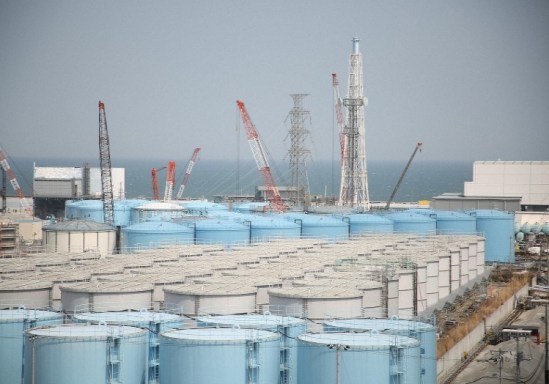
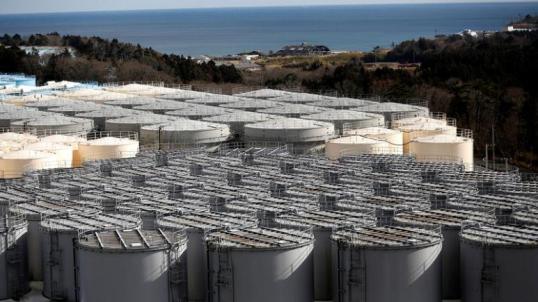
Storage tanks at Fukushima Daiichi nuclear plant hold more than 1 million tons of tainted water.
Fukushima’s contaminated water to run out of tanks in 2022
With Olympics approaching, Tokyo hesitant to release into ocean
TOKYO — Tanks containing runoff from the devastated Fukushima nuclear plant are likely reach capacity as early as the summer of 2022, a new forecast shows, putting pressure on Japan’s government to dispose of the wastewater.
The Fukushima Daiichi nuclear plant has leaked water laced with radioactive isotopes since its reactors suffered meltdowns after a crippling March 2011 tsunami.
Various solutions have been proposed, but one that a panel of experts called in 2016 the fastest and least costly — releasing water into the ocean — is opposed by locals who fear it will hurt the image of the region’s seafood.
The 960 tanks located at the site now hold roughly 1.15 million tons of water. Plant administrator Tokyo Electric Power Co. Holdings, or Tepco, expects to secure enough tanks to hold 1.37 million tons by the end of 2020.
An average 170 tons of contaminated water was produced each day during fiscal 2018, mostly as the result of groundwater flowing into the ruined plant.
Tepco, which counts a government-backed fund as its top shareholder following a 2012 bailout, aims to reduce the volume to 150 per day next year. Even at that reduced level, the tanks would reach full capacity in either the summer or fall of 2022, Tepco estimates.
This marks the first projection that storage at the plant will reach its limit. The findings will be presented at an expert panel meeting on Friday.
Tepco installed equipment to pump out and decontaminate the water. But the treated water still contains tritium, a radioactive hydrogen isotope that also occurs in minute amounts in nature.
The utility has been criticized for its handling of the plant after the disaster, with its so-called ice wall, a costly, complex technique of freezing the soil to keep the leaks from reaching the ocean, questioned over its effectiveness.
A panel commissioned by the Ministry of Economy, Trade and Industry considered a plan to dilute and release the water into the ocean. Toyoshi Fuketa, chairman of Japan’s Nuclear Regulation Authority, described the approach “most logical.”
But with the 2020 Summer Olympics in Tokyo approaching, the government is worried about a potential blow to its international reputation by releasing the water into the sea. It appears to be dragging its feet on a decision.
In his final pitch to secure the Games six years ago, Prime Minister Shinzo Abe had told the International Olympic Committee that the situation at Fukushima was “under control.”
A number of Japan’s trading partners banned imports of seafood from Fukushima and other areas after the nuclear disaster. These restrictions added to the economic pain for the region’s fisheries industry, which was recovering from the physical damage of the tsunami.
In this April 14, 2017 file photo, tanks storing radioactive contaminated water are seen at the crippled Fukushima Daiichi Nuclear Power Plant in Okuma, Fukushima Prefecture.
Tanks storing radioactive water in Fukushima to be full by 2022: TEPCO
TOKYO (Kyodo) — It is estimated tanks storing water contaminated with low-toxicity radioactive tritium at the crippled Fukushima nuclear plant will be full by the summer of 2022, the plant operator said Friday.
At a meeting of a government panel on the same day, Tokyo Electric Power Company Holdings Inc. was unsupportive of the idea to replace the existing tanks with larger vessels as a long-term storage solution for water that was contaminated when cooling the plant’s cores.
Local fishermen and residents support the storage solution, preferring it to any plan that would see the water released into the sea out of fear over the potential impact on fish stocks.
A nuclear expert from the International Atomic Energy Agency, however, said in 2018 that a controlled discharge of such contaminated water “is something which is applied in many nuclear facilities, so it is not something that is new.”
The treated water remains tainted with the low toxicity tritium as a result of cooling the plant’s reactors, which suffered core meltdowns following the 2011 earthquake-tsunami disaster. The water is regarded as relatively harmless to humans.
TEPCO also said storing the tanks outside the premises would present difficulties with transportation and getting approval from local governments. Moreover, the tanks would remain even when the decommissioning work was completed and would take up land required for storing debris, the company added.
Toxic water produced by cooling debris and other processes is purified using the Advanced Liquid Processing System, said to be capable of removing almost all radioactive materials except tritium.
As of late July, around 1.1 million tons of tritium-contaminated water was stored on the premises of the plant, according to TEPCO. The utility plans to raise storage capacity to 1.37 million tons by the end of 2020, but plans beyond that have yet to be decided.
The tanks currently fill at the rate of around 150 tons of water per day.
The government panel has looked into five options to dispose of the tainted water including discharging it into the sea and vaporization.
“It is unreasonable to store (the water) forever. The (storage) period and conditions should be established,” a member of the panel said.
Another member argued that the treated water should not be discharged into the ocean at any time soon, saying it is “illogical to sacrifice the livelihood of local residents to proceed with the decommissioning work.”
At the plant, an area of up to around 80,000 square meters, enough to accommodate tanks containing 380,000 tons of treated water, is required to store melted nuclear fuel and other debris that will be extracted in the future, according to TEPCO.
TEPCO also said at the panel meeting it is possible to expand the Fukushima plant by acquiring neighboring land used for interim storage of soil from decontamination work, but that the company hopes to carry out the decommissioning within the area of the existing premises.
August 12, 2019
Posted by dunrenard |
fukushima 2019 | Fukushima Daiichi, Radioactive Water, Storage Tanks |
Leave a comment
Storage tanks for radioactive water are seen at Tokyo Electric Power Co’s (TEPCO) tsunami-crippled Fukushima Daiichi nuclear power plant in Okuma town, Fukushima prefecture, Japan, in this picture taken on Feb. 18.
Greenpeace warns Korea of Japan’s radioactive water discharge
An international environment organization has said that Japan plans to discharge radioactive waste into the Pacific Ocean in the near future and Korea will fall particularly vulnerable.
Greenpeace Korea, the global NGO’s branch in Seoul, reposted on Facebook, Wednesday, a column by its nuclear specialist Shaun Burnie published in The Economist, saying Japan is planning to discharge more than 1 billion liters of contaminated water stored at the Fukushima nuclear plant since the massive earthquake and nuclear disaster of 2011.
Burnie wrote in his article that the Japanese government has decided recently to take the “cheapest and fastest” way to dispose wastewater, which is to discharge it into the Pacific Ocean.
The scientist added neighboring countries will be exposed to radiation as a result and Korea, in particular, will suffer the most from it.
He claimed that if 1 million tons of radioactive water is discharged into the ocean, it will take 17 years and 770 million tons of water to dilute it, adding it is impossible not to discharge it without contaminating the ocean, and countries in the Pacific region will be exposed to radiation.
Burnie continued that Tokyo Electric Power Company Holdings has tried to find ways to handle the contaminated water for the last eight years but failed. He pointed out that the Shinzo Abe administration never speaks about the risks of radioactive pollutant, and ignores unfavorable reports when they are released.
Chang Mari, a climate and energy campaigner at Greenpeace Korea, said the environmental organization has been watching the status of the nuclear plant in Fukushima, which was damaged by a massive earthquake and tsunami in March 2011.
“Japan’s Ministry of Economy, Trade and Industry has been conducting technical evaluations to discharge or manage the contaminated water between 2013 and 2016. The affiliated taskforce team dealing with titrated water under the ministry proposed five ways to dispose of the wastewater and it recommended discharging it into the ocean,” Chang told The Korea Times, Thursday.
“We have been issuing warnings to the Japanese government of possible consequences that could follow the pollutant discharge, but they all have been disregarded.”
The Korean government has been requesting the Japanese government share information on radioactivity levels in Fukushima for years but the latter has refused to do so, according to relevant Korean ministries.
“We have been holding meetings with Japan’s Ministry of Land, Infrastructure, Transport and Tourism every year and we asked them to share data on how Japan has been dealing with contaminated water, but they have kept avoiding answering,” an official at the Ministry of Oceans and Fisheries said.
“The radiation levels in the coastal areas here have shown no big changes so far since 2015.”
Gov’t Says It Will Closely Monitor Fukushima’s Radioactive Wastewater
South Korea’s Oceans Ministry said that it is closely watching how Japan will deal with radioactive wastewater from the Fukushima nuclear plant that melted down earlier this decade.
Following claims by global environmental watchdog Greenpeace that Japan plans to release more than one million tons of radioactive water into the ocean, a ministry official told KBS on Thursday that the government has been demanding that Tokyo disclose how it plans to deal with the problem.
According to the official, Seoul has in the past demanded Tokyo explain how it plans to deal with the contaminated water, but Tokyo has continuously stonewalled.
The ministry has been examining water near South Korea’s shores on a quarterly basis since 2015, and there has been no significant change so far, according to the official.
August 12, 2019
Posted by dunrenard |
fukushima 2019 | Fukushima Daiichi, Radioactive Water, Sea Dumping, South Korea |
2 Comments
Japanese Government, TEPCO and the Japanese media keep on bringing back this issue, the lack of space on site to keep the accumulating radioactive water, as a mean to force the public’s acceptance for its dumping into the Pacific ocean. The two radionuclide filtering systems are not fully performing, therefore that stored water is only partially decontaminated, and still radionuclides loaded.
Storage tanks for radioactive water are seen at Tokyo Electric Power Co’s (TEPCO) tsunami-crippled Fukushima Daiichi nuclear power plant in Okuma town, Fukushima prefecture, Japan February 18, 2019
TOKYO (Reuters) – Japan is resuming efforts to disperse a build-up of contaminated water at Tokyo Electric Power’s wrecked Fukushima nuclear plant that is stalling progress on cleaning up the site, the government said on Thursday.
A panel of experts will meet on Friday for the first time in eight months to consider options to get rid of the water, Japan’s government said in briefing documents it released.
The panel will consider strategies such as evaporation of the water and injection deep underground, in addition to a recommendation by Japan’s nuclear regulator to release the treated water into the ocean, a more conventional technique.
Regular meetings of the panel had stopped nearly three months after Tokyo Electric (Tepco) admitted it had not managed to completely remove potentially dangerous radioactive particles from treated water held in tanks.
The admission had been a setback for the company and the government, as the water hampered clean-up of the site where three reactors melted down after an earthquake and tsunami in 2011, the world’s worst nuclear disaster since Chernobyl in 1986.
In 2016, the Japanese government estimated that the total cost of plant dismantling, decontamination of affected areas, and compensation, would be 21.5 trillion yen (£166.6 billion), or about a fifth of the country’s annual budget.
Tokyo won the bid to host the 2020 Summer Olympics around six years ago, with Prime Minister Shinzo Abe declaring that Fukushima was “under control” in his final pitch to the International Olympic Committee.
At nuclear sites around the world, contaminated water is treated to remove all radioactive particles except tritium, a relatively harmless isotope of hydrogen hard to separate from water and released into the environment.
But because of missteps such as last year’s admission that it had not removed everything except tritium from the tanks, Tepco faces difficulties winning the trust of regional fisherman who oppose the water’s release into the ocean.
Some countries, including South Korea, still have restrictions on produce from areas around the Fukushima site.
Tepco has completed replacement of older tanks that had experienced leaks with stronger ones, the government said.
It is expected to run out of tank space by mid-2022, the government added, adding to the urgency to resolve the problem.
August 12, 2019
Posted by dunrenard |
fukushima 2019 | Fukushima Daiichi, Radioactive Water, Sea Dumping |
Leave a comment
Dismantling work begins Aug. 1 to slice a highly contaminated exhaust stack into parts at the stricken Fukushima No. 1 nuclear power plant complex.
A crane hoists a dismantling mechanism to the top of an exhaust stack at the Fukushima No. 1 nuclear power plant site.
Work begins Aug. 1 to dismantle an exhaust stack at the Fukushima No. 1 nuclear power plant site.
A crane lifts a dismantling mechanism toward the top of an exhaust chimney on the Fukushima No. 1 nuclear power plant site
Delicate work got under way Aug. 1 at the crippled Fukushima No. 1 nuclear power plant to dismantle an unstable exhaust stack that is so highly contaminated by radiation the task must be done by remote control.
Initial plans had called for the work to start in March, but the project was delayed by a failure among other things to confirm design plans that led operator Tokyo Electric Power Co. to deploy a crane that was not up to the task.
The exhaust stack, which is 120 meters tall and 3.2 meters in diameter, was used for the No. 1 and No. 2 reactors.
The work is regarded as a crucial phase in the decommissioning of the plant, a task that is projected to take decades and cost billions of yen.
When the nuclear disaster unfolded in March 2011, vapor containing highly radioactive substances was released through the stack. Metal poles used to support the chimney were found to have been damaged following a hydrogen explosion at the No. 1 reactor.
Radiation levels around the base of the stack are believed to be still too high for humans to work in, so the dismantling work must be done by remote control.
There are also concerns that the chimney could collapse. TEPCO plans to dismantle the upper half of the structure by the end of the current fiscal year.
A remote control room was set up in a large remodeled bus located about 200 meters from the site. Workers will operate the special cutting equipment while watching footage from 140 video cameras.
Immediately after the triple meltdown at the Fukushima No. 1 plant, radiation levels at the base of the chimney exceeded more than 10 sieverts per hour. In 2015, radiation levels still hovered at 2 sieverts per hour, the highest among all outdoor areas of the plant.
A 750-ton crane is being used to hoist the dismantling mechanism over the exhaust chimney.
The work was supposed to begin around 7:30 a.m. on Aug. 1 with the cutting of ladders and electric cables at the base of the chimney. But some of the equipment did not function properly because of problems with a telecommunications system.
Work finally started around noon.
From Aug. 2, the dismantling mechanism will be used to slice parts of the chimney from the top. The dismantled pieces will be stored in the grounds of the Fukushima No. 1 plant.
Although plans call for dismantling the upper part of the stack by the end of March 2020, strong winds and other weather conditions could cause delays.
The dismantling mechanism was developed and is being operated by construction company Able Co., based in Okuma, Fukushima Prefecture, where the Fukushima No. 1 plant is located.
It is unusual for a local company to be involved in such a key project on-site, but a company official said, “As a local company, we want to respond to the expectations of the local community by successfully completing the project without incident.”
August 3, 2019
Posted by dunrenard |
fukushima 2019 | Dismantling, Exhaust stack, Fukushima Daiichi |
Leave a comment
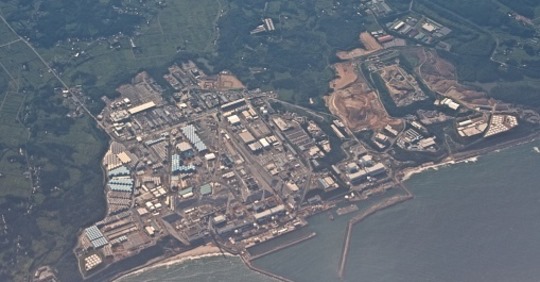
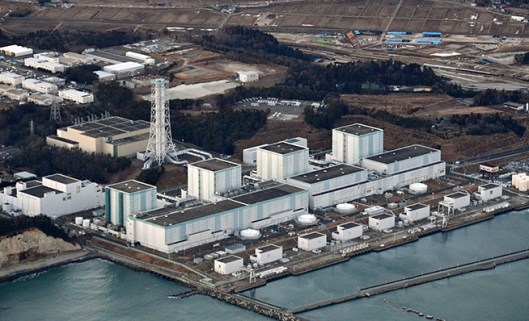
Tokyo Electric Power Co.’s Fukushima No. 2 nuclear power plant
Tokyo Electric Power Co. has announced that it will decommission all four reactors at its Fukushima No. 2 nuclear power plant.
The decision indicates the landscape of nuclear energy in Japan is entering an age of mass decommissioning.
TEPCO plans to work concurrently to scrap a total of 10 nuclear reactors, including all six at the Fukushima No. 1 nuclear power plant, the site of the 2011 disaster. The task will be almost unparalleled and unprecedented in the world in terms of its scale.
TEPCO should fulfill its momentous duties in undertaking the task to help rebuild disaster-stricken communities of Fukushima Prefecture.
It took TEPCO an entire year to make the latest decision after the utility said last year it would consider the decommissioning option. That is enough evidence there are high barriers to be surmounted.
One difficulty consists in ensuring the availability of workers.
A staff of 3,600 is currently working to scrap the Fukushima No. 1 nuclear plant, where four reactors went crippled. Work to grasp the full picture of the reactor interiors, where nuclear fuel melted down, remains in a trial-and-error stage and is facing extremely rough going.
The latest decision means the Fukushima No. 2 plant, a logistic support base for those efforts, will itself be an additional site of decommissioning work.
TEPCO officials said they have largely figured out how the work will be done. We are left to wonder, however, how they plan to get all the necessary, highly skilled workers.
The task should be undertaken cautiously and steadily so there will be no accidents.
While it is believed it takes about 30 years to decommission a typical nuclear reactor, TEPCO officials said it will likely take more than 40 years to scrap all the reactors at the Fukushima No. 2 plant because the work cannot be done on all four reactors there in one continuous period.
That is about the same span of time that someone spends working for a company from entrance as a new hire through retirement age. The efforts will straddle generations.
TEPCO will be required to keep its staff highly motivated and to overcome any difficulties responsibly during all that time.
While the scrapping work will only start after specific plans for it have been approved by the government’s Nuclear Regulation Authority, solutions have yet to be decided for many anticipated problems.
The four reactors of the Fukushima No. 2 plant contain about 10,000 spent nuclear fuel assemblies. TEPCO plans to have them stored temporarily on the grounds of the nuclear plant before having them taken out of Fukushima Prefecture.
But where exactly they will be taken “will be studied in the years to come,” said Tomoaki Kobayakawa, president of TEPCO Holdings Inc.
Some rules remain to be determined for the disposal of radioactive waste, of which more than 50,000 tons are expected to be produced.
Decommissioning of nuclear reactors is a challenge that faces all major electric utilities.
Decisions have been made to scrap 21 nuclear reactors in the wake of the Fukushima disaster, and more are expected over time.
The question of what to do with spent fuel and radioactive waste should not be put on the back burner. The government should work to solve it.
Rising costs due to tightened safety measures have given a push to utilities’ decisions to scrap their reactors. Only nine reactors have so far been brought back online following the Fukushima disaster.
Plans to build new nuclear plants and reactors are making little progress. As a matter of reality, nuclear energy is losing the status of a mainstay power source.
That notwithstanding, utilities still stick to their old stance of continued reliance on nuclear power, saying they want to utilize what they have.
TEPCO is no exception. The owner of seven reactors at the Kashiwazaki-Kariwa nuclear plant in Niigata Prefecture is hoping to reactivate the No. 6 and No. 7 reactors there for starters.
Major utilities, especially TEPCO, are required to face up to the tough reality and look at what lies beyond the age of mass decommissioning. They bear the social responsibility to assign ample human and financial resources for renewable energy sources, which will be a major pillar of power supply for the next generation, among other areas.
July 31, 2019
Posted by dunrenard |
fukushima 2019 | decommissioning, Fukushima Daiichi, Fukushima Daini, Responsibility, Tepco |
Leave a comment








 nuclear-news