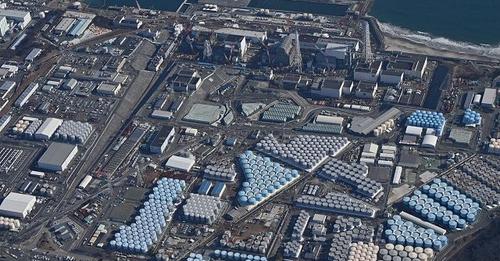
Part of the frozen soil barrier may have thawed at the Fukushima Daiichi Nuclear Power Plant. Steel pipes are being driven into the ground to stop groundwater flow.
Nov. 25, 2021
Tokyo Electric Power Company (TEPCO) announced on November 25 that it may have thawed part of the frozen soil barrier wall built around the No. 1 to No. 4 reactors at the Fukushima Daiichi Nuclear Power Plant (Okuma and Futaba towns, Fukushima Prefecture) to prevent the inflow of groundwater. The company has announced that it will try to stop the flow of water by driving several steel pipes into the wall. The project will start as early as early December, and if the temperature in the ground continues to rise, additional steel plates will be driven in.
According to TEPCO, a thermometer installed in the ground at the intersection of the southwest side of Unit 4 and the underground tunnel for drainage confirmed that the temperature exceeded zero degrees Celsius in late August. Since late September, the temperature has sometimes been above 10 degrees Celsius. A spokesperson explained at a press conference that the groundwater level outside the wall was high, and water pressure may have created a water path.
The steel pipe is 35 centimeters in diameter and up to six meters long. Nine of them will be driven into the ground outside the frozen soil wall, which may have thawed, to create a wall three to four meters wide.
The freezing wall, which has been in operation since 2017, was built to prevent groundwater from flowing into the reactor building, where melted nuclear fuel (debris) remains from the accident, and to reduce the amount of contaminated water generated. The wall is about 1.5 kilometers long. About 1,600 freezing pipes (30 meters long) were driven into the ground. The freezing pipes are about 1,600 tubes (30 meters long) driven into the ground and circulated with a cooling liquid of 30 degrees Celsius to freeze the surrounding soil. (Kenta Onozawa)
https://www.tokyo-np.co.jp/article/144800
The Japanese government and the Fukushima nuclear disaster – History repeating itself?
17 November 2021
Did you know that there are global agreements against the dumping of nuclear waste into the world’s oceans? They are called the London Convention and London Protocol (LC/LP) and the latest meeting of the government signatories and observers, including Greenpeace International, has just finished under the auspices of the United Nations International Maritime Organization (IMO). It was an uncomfortable experience for Japanese diplomats trying to defend the decision to dispose of nuclear waste from Fukushima Daiichi into the Pacific Ocean. But it also triggered memories of a different time and a different policy nearly three decades ago when Japan at the IMO took on the role of protecting the marine environment from radioactivity.
The LC/LP international conventions, which were established between the 1970’s and the 1990’s, only exist because of sustained public pressure against governments and the global nuclear industry which from 1946 had been dumping nuclear waste from ships into the world’s oceans. For countries such as the United Kingdom, United States, France, and Russia, military and commercial nuclear programs were producing enormous volumes of nuclear waste of many different types.
Faced with the rapidly growing stockpiles of wastes, from the 1950’s governments choose one of the least costly options for dealing with some of those wastes – dumping solid and liquid wastes directly into the ocean. The thinking was that the waste would be out of sight in the deep ocean and that radioactivity would dilute. Other countries also developing their commercial nuclear power programs, such as Germany and Japan, also supported nuclear waste dumping at sea. Seventy years of the commercial nuclear industry and the nuclear waste crisis has only got worse and still with no viable safe solution.

Fortunately, the last known deliberate nuclear waste dumping from a ship into the ocean was in October 1993 when the Russian navy dumped 900 tons of liquid and solid nuclear waste into the international waters off the coast of Vladivostok in the sea near Japan and Korea. The justifications offered by the government in Moscow were that the issue was urgent as storage space was running out, that the radioactive waste was not hazardous, and that the dumping was carried out according to international norms.
Sound familiar?
History on repeat
The Japanese government in April 2021 announced its decision to proceed with plans for the deliberate discharge of nuclear waste water from the Fukushima Daiichi plant. Even beyond the 900 tons of nuclear waste the Russian’s dumped in 1993, Japan plans for more than at least 1.2 million tons to be mixed with sea water and discharged via a sub-seabed pipeline into the Pacific Ocean. The discharges are scheduled to take 30 years, but are almost certainly going to last much longer.
In 1993, the Japanese government called the Russian dumping extremely regrettable. Now, the Japanese government justifies its plans to discharge over 1 million tons of radioactive waste water as “necessary” because storage space is not available, and that the water is not contaminated but “treated”. Nearly 30 years apart, the dezinformatsiya, perfected by the Soviet Union and Russia and used to justify waste dumping, is mirrored by the disinformation from Tokyo.
In early 1993, the International Atomic Energy Agency (IAEA), already knew of Russia’s plans to dump nuclear waste, but did not intervene and chose not to inform Tokyo. Today, the IAEA has formed a partnership with the Japanese government to provide cover for its plans and to ensure, as it states, that the discharges will be done safely and in line with international practice. It continues to play the same historical role as set down in its 1957 statute of supporting and promoting the interests of the nuclear industry, not protecting the environment or public health.

Since the 1970’s Greenpeace had been challenging nuclear sea dumping. After years of investigations and campaigning, the Russian navy’s secret operations to pump nuclear waste into the sea were challenged and filmed by the Nuclear Free Seas campaign team on board the Motor Vessel Greenpeace ship on 18 October 1993. While the MV Greenpeace sat off the Russian coast after the Russian military ship TNT27 and other navy vessels returned to port to pick up another cargo of nuclear waste, their nuclear dumping exposed to world attention, the Russian’ government announced on 22 October that it would halt further disposal plans. The TNT27 remained in port.
By the time the Greenpeace ship had docked in Japan, the government of Morihiro Hosokawa had announced a policy change. It would no longer advocate nuclear waste disposal at sea. Instead, it would support an amendment to the London Convention at the November 1993 meeting at the IMO that would prohibit all nuclear waste disposal at sea. Both then and now, Greenpeace International representatives were at the IMO meeting pushing for an end to radioactive pollution of the marine environment.
I played a very minor role at that time, chasing the then IAEA Director Hans Blix, from Seoul to Tokyo with a copy of a telex (it was three decades ago!) from the Russian government informing Blix of their plans for nuclear dumping. The IAEA for some reason had chosen not to inform the Japanese government. Travelling from South Korea to Japan, I still remember as if it was only yesterday how moved I was watching my Greenpeace colleagues John Sprange, Twilly Cannon, Dima Litvinov, Thomas Schultz, captain Pete Wilcox and the rest of the crew of the MV Greenpeace confronting the Russian navy on NHK TV .
One further result of Greenpeace International, Greenpeace Germany, and Greenpeace Japan’s exposé of Russian dumping was that the Japanese government took the decision to financially support the building of additional storage and processing facilities for nuclear waste in the Russian Far East. This was a point that Greenpeace International has emphasised over the years at IMO meetings and drew the parallels for the Fukushima water crisis.
Failed discussions and agreements
A principal objective of the London Convention and London Protocol is to protect the marine environment from pollution, including man-made radioactivity. However, the Japanese government contends that their plans for Fukushima contaminated water have nothing to do with the conventions. In fact, at the latest meeting on 26 October 2021, Japan tried to stop further discussion of the Fukushima water issue, arguing that the IAEA was the correct place to discuss such matters and it was not appropriate for governments to consider the issues at the LC/LP United Nations hosted meeting. This is an absurd and scientifically bankrupt position when radioactivity discharged from a pipeline poses potentially a greater coastal threat to the marine environment than deep sea dumping from a ship.

Japan failed to end discussion of the Fukushima contaminated water issue at the LC/LP. In Greenpeace International’s written submission, Greenpeace International proposed that a scientific working group be established under the LC/LP that would consider the alternatives to discharging the Fukushima waste into the Pacific. Greenpeace International argued, as in 1993, that there were alternatives to the Russian dumping, namely additional storage and applying best available processing technology, and that these should also be applied at Fukushima Daiichi.
In 1993, Russia accepted international assistance and the dumping stopped. However, Dr. David Santillo, Greenpeace International’s science representative reported that Japan refused to consider this option at the October 2021 IMO meeting, and its position was supported by the United States, France and the UK. The governments of South Korea, Chile, China, and the Pacific Island nations of Vanuatu and Palau all spoke in favour of reviewing alternatives to discharge in a technical working group. The meetings operate on consensus and with Japan’s objections, agreement to assess alternatives was impossible. Dr. David Santillo, challenged the IAEA over its role, and asked if it could be tasked with reporting on its discussions with Japan on the alternatives to discharges. The IAEA has agreed to report back in 2022.

There is a historical resonance and also a tragic irony with Japan’s attempts to remove discussion of its Fukushima nuclear waste crisis from international review at the LC/LP IMO meetings. The Russian dumping in 1993 caused public and political outrage in Japan. The Japanese government of Hosokawa subsequently played an important and critical role at the LC/LP meeting when it supported the prohibition of all nuclear waste ocean dumping. Nearly thirty years ago its position was no doubt informed by self-interest – protecting its coastal waters from radioactive pollution and the rights of its own citizens, especially the fishing communities that were at risk.
Back then, the position of the Japanese government was the right and just thing to do. Today, protecting the marine environment from deliberate radioactive pollution still remains the right and legal thing to do – except that’s not what’s happening.
Instead, the government of Prime Minister Kishida, like his predecessors Abe and Suga, are disregarding and disrespecting the views and rights of their own citizens and fishing communities along the Tohoku coast.
The decision to discharge violates an agreement to abide by the views of the Fukushima fishing federations. They are not acting to protect the marine environment from radioactive pollution but instead will be the source of pollution. The Japanese government is also seeking to avoid scrutiny of their plans and to dismiss the concerns and opposition of neighbours in the Asia Pacific region, near and far. And they clearly don’t want to explore any viable alternative options of storage and processing.
Continuing the fight
There are many technical and radiological reasons to be opposed to discharging Fukushima waste water into the Pacific Ocean. And Greenpeace East Asiahas reported on these and continues to investigate. But the decision also affects you on a fundamental level. It should rightly trigger an outrage. In the 21st century, when the world’s oceans are already under the most severe threats including the climate and biodiversity emergencies, a decision by any government to deliberately contaminate the Pacific with radioactivity because it’s the least cost/cheapest option when there are clear alternatives seems so perverse. That it is Japan, given its historical role in securing the prohibition on nuclear dumping in the London Convention and London Protocol, makes it all the more tragic.

There are numerous legal problems facing Japan’s plans – they have dismally failed to consult with affected coastal countries, including South Korea, China and northern Pacific Island States; they have failed to conduct an environmental impact assessment, and they have obligations not to allow pollution from their own waters to pollute international waters or the waters of other countries. This disregard for the human rights of both their own Japanese citizens, as well as those in the wider Asia Pacific region, including indigenous people’s has justifiably been challenged, not least by UN human rights Special Rapporteurs.
Japan is under international legal obligation to take all measures possible to avoid transboundary pollution from radioactivity, and its failure to develop the alternatives to dumping in the Pacific by continued storage (which it can certainly extend; it is a question of money) and treating the water to remove radioactive, including carbon-14 and tritium, (another question of money). But these are just reflections of the blazingly obvious: Japan is exporting its radioactive pollution by dumping it in the Pacific ocean.
However, there is time to stop the discharges which are due to begin in 2023, at the earliest. The governments attending the LC/LP, under the auspices of the United Nations IMO, together with Greenpeace International, will continue to question and challenge the Japanese government on the Fukushima nuclear waste water crisis. It’s only one of several international instruments that allow scrutiny of the Fukushima Daiichi plant and to directly challenge the plans to discharge. The articles of the UN Convention on the Law of the Sea (UNCLOS) have even greater relevance and application to Tokyo’s misguided plans. The new government of Kishida may yet find out, as the government of Boris Yeltsin did nearly three decades ago, that you may have plans for dumping radioactive waste into the sea, but it does not mean you will be able to.
Shaun Burnie is a Senior Nuclear Specialist at Greenpeace East Asia.
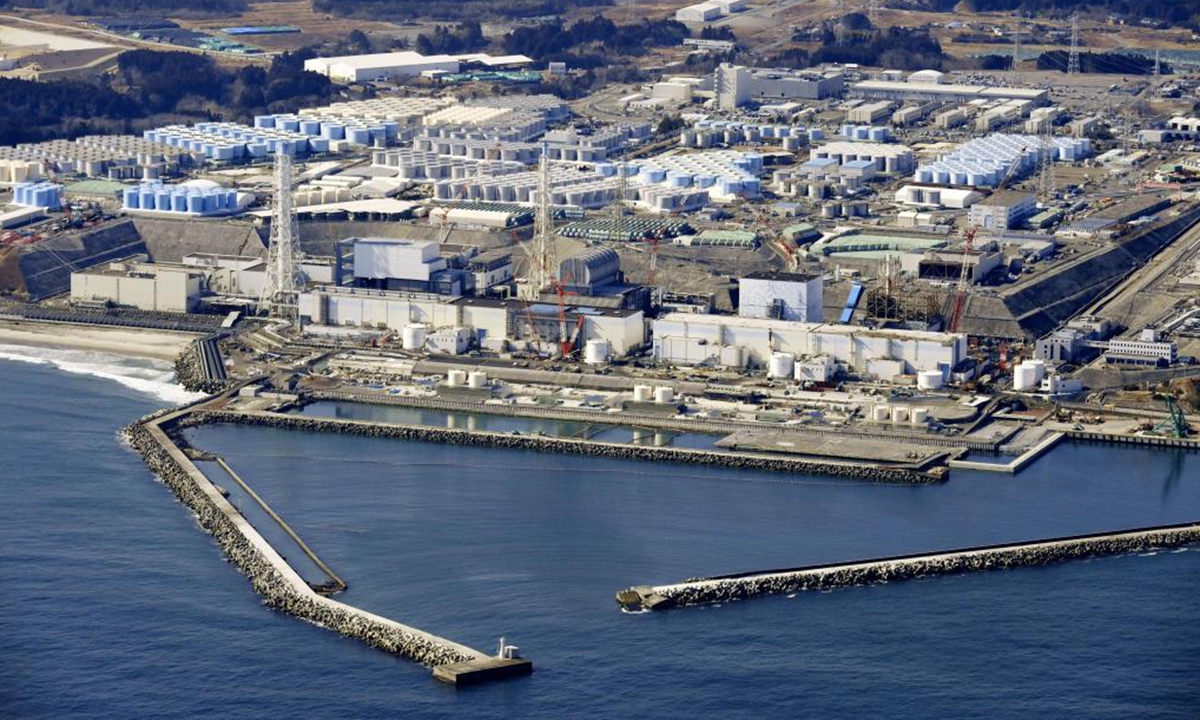
Chinese FM asks Japan why it won’t release Fukushima water into own lakes if it’s really harmless
Nov 19, 2021
After the Nuclear Safety and Security Commission of South Korea expressed regrets over Japan’s radiological impact assessment of the release of Fukushima wastewater into the ocean, the Chinese Foreign Ministry asked Japan why it would not release the nuclear-contaminated wastewater into its own lakes if it believes the water is harmless.
“Is the discharge of contaminated water from the Fukushima nuclear plant really inevitable, or is Japan just going its own way for its selfish interests? If the nuclear-contaminated water is harmless, why wouldn’t Japan release it into its own lakes? Japan, please answer the question,” Zhao Lijian, spokesperson of the Chinese Foreign Ministry, said at Friday’s media briefing.
Zhao’s remarks came after the operator of the Fukushima nuclear power plant said Wednesday that treated radioactive water would have an extremely small impact on the environment, marine life and humans when it is released to the sea, AP reported.
Since the Japanese government unilaterally decided to release contaminated wastewater into the sea in April, public questions and opposition from Asia-Pacific countries and within Japan has not stopped, but Japan has not given a convincing explanation on the decision’s rationality, necessity, and safety, Zhao said.
He said seven months after making the decision, Japan came up with an assessment report, which further showed that the decision made back in April was not scientific or rigorous, Zhao said.
Zhao said that Japan has turned a deaf ear to the legitimate concerns and appeals of the international community over the past seven months, and what the international community has seen is that the Japanese company in charge of the disposal of contaminated water in Fukushima has repeatedly tampered with data and concealed the truth.
Zhao reiterated that the disposal of contaminated wastewater in Fukushima is by no means a private matter for Japan. We must exercise extreme caution and carry out strict supervision. Japan should earnestly respond to the voices of neighboring countries and its own people, reverse its wrong decision and fulfill its due international obligations.
Japan should not let its “black swan” of nuclear leaks turn into an overwhelming “gray rhino” of nuclear contamination, Zhao said.
TEPCO ‘claims’ Fukushima water release impact to be minimal

November 19, 2021
Tokyo, Nov 19 (EFE).- TEPCO, the operator of the Fukushima Daiichi nuclear power plant, said on Friday that the release of treated radioactive water from the plant would be carried out under international security standard and its environmental impact would be minimal.
The power company released the results of an assessment that estimated the possible impact on humans, animals and plants, along with various simulations, of the discharge spreading in the sea close the plant, where the water will be released in 2023.
“According to the assessment’s results, we believe that the impact on humans and the environment would be minimal,” a TEPCO official told EFE in an off-the-record briefing.
In April the Japanese government had approved the release of the contaminated water from the accident-hit Fukushima nuclear power plant, once it is treated through the advance liquid processing system.
TEPCO said that after being treated by ALPS, the concentration of radioactive substances in the released water would be within the security standards set by the International Atomic Energy Agency and the International Commission on Radiological Protection.
“The annual amount of tritium discharged (to the sea) will be less than 22 TBq (terabecquerel), the discharge management target for the Fukushima Daiichi Nuclear Power Station (FDNPS) before the Accident,” TEPCO said in its assessment report.
According to the study, the water diluted through the ALPS system would be discharged deep inside the sea around 1 kilometer away from the coast and it estimated that the area with “higher tritium concentrations than the current surrounding area (…) will be limited to the area 2 to 3 kms from the station.”
As per the simulations, the biggest concentration of the radioactive element would be in some areas directly above the tunnel exit, but TEPCO insisted that the even here the tritium levels would be “significantly below the national regulatory standard and the WHO Guidelines for drinking-water quality.”
At present the contaminated water remains stored in over 1,000 tanks around the power station, having been used to cool the nucleus of the damaged reactors.
The water is treated through a process that removes most of the dangerous radioactive elements except tritium, an isotope which is dangerous in high concentrations.
Temperature of Fukushima Daiichi’s “frozen earth wall” rises again – TEPCO: “Function is being maintained.
Nov. 16
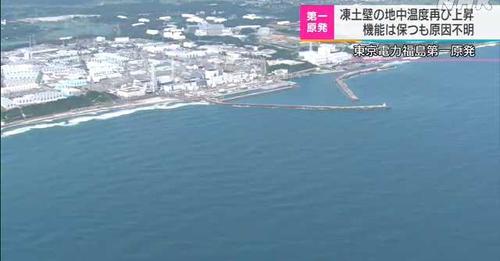
As a measure to reduce the amount of contaminated water from the Fukushima Daiichi Nuclear Power Plant, the temperature in the ground has been rising in a part of the “frozen soil wall” that freezes the ground around the buildings to prevent the inflow of underground water.
Tokyo Electric Power Company (TEPCO) has stated that the freezing wall is still functioning, but the cause of the problem is not known at this time.
The “frozen earth wall” is one of the measures to reduce the amount of contaminated water. Pipes are embedded around the buildings of the Fukushima Daiichi Nuclear Power Plant, and liquid at 30 degrees below zero is poured into the pipes and frozen, forming an “ice wall” that prevents underground water from flowing into the buildings.
TEPCO has installed thermometers in the “frozen earth wall” to measure the underground temperature, and it has been above 0 degrees Celsius in some areas on the mountain side of the Unit 4 reactor of the Fukushima Daiichi Nuclear Power Plant since mid-September, rising to 11.29 degrees Celsius on the 12th of last month.
After that, the temperature hovered around 5 degrees and dropped to 1.13 degrees on the 11th of this month, but it rose again to 8.88 degrees on the 14th, 9.65 degrees on the 15th, and 11.03 degrees on the 16th, exceeding 10 degrees for the first time in about a month.
The Tokyo Electric Power Company (TEPCO) investigated the inside of the frozen soil wall from the 10th to the 12th of this month, digging at a depth of about 2.8 meters where the temperature was rising, but could not find the cause.
The Tokyo Electric Power Company (TEPCO) has stated that “there has been no change in the level of groundwater and the function to control the inflow of water has been maintained.
Pacific concerns over plans to release contaminated water from Fukushima
9 nov. 2021
Pacific leaders are concerned over a plan to release contaminated water from the earthquake-damaged Fukushima nuclear power plant, into the ocean.
Lake Close to Fukushima Nuclear Disaster Could Stay Radioactive For Another 20 Years
The cleanup from the Fukushima nuclear accident in 2011 would cost hundreds of billions of dollars, but the environmental cost might be far greater, according to a research, with neighboring lakes polluted for another 20 years.

Nov 06, 2021
Lake Onuma’s Radioactivity Concentration
Lake Onuma on Mount Akagi might be polluted with radioactive cesium-137 (137CS) for up to 30 years after the unfortunate incident, according to a group of researchers led by those from the University of Tsukuba.
The fractional diffusional approach was utilized by the researchers to establish that radioactive concentration would occur for up to 10,000 days after the event.
The radiation concentration dropped very fast after the nuclear disaster, but the decline slowed dramatically in the months and years that followed.
Since Lake Onuma is a closed lake, it receives just a little quantity of inflow and runoff water. Professor Yuko Hatano, one of the study’s co-authors, said in a statement that previous research had utilized the two-component decay function model, which is the sum of two exponential functions, to match the detected 137Cs radioactive concentration.
Health Issues Caused by Exposure to Radioactive Isotope
Cesium-137 has a half-life of roughly 30 years, according to the Environmental Protection Agency. Exposure to the radioactive isotope may result in burns, radiation illness, and death, as well as boosting cancer risk.
The specialists utilized a fractional diffusion model to forecast the 137Cs content in both the lake water and the pond smelt, a common species of fish that dwells in the lake, over the long term.
The quantity of 137Cs in lake water and pond smelt was tested for 5.4 years after the event, according to the researchers. Experts anticipate that radioactive concentration will occur for up to 10,000 days after the catastrophe, based on the formula.
Researchers will be able to better comprehend the radioactive contamination of surrounding lakes that have been closed, as well as provide citizens a clearer sense of living conditions around the lakes, thanks to the formula.
Effects of Radioactive Contamination on the Ecosystem
A different set of researchers discovered last month that species in the region, particularly wild boar and rat snakes, are flourishing and have seen no substantial health consequences.
This is most likely due to the fact that cesium-134, one of the principal radioactive elements released during the accident, saw its levels in the region drop by about 90%, owing to its short half-life of just over two years.
Another study published in January 2020 revealed that more than 20 species, involving wild boar, macaques, and a raccoon dog, were flourishing in the ‘exclusion zone’ surrounding the Fukushima Daichii nuclear plant, which had been shut down.
Researchers found in July that the accident had resulted in a boar-pig hybrid, since both species in the vicinity had mated. The Fukushima tragedy ravaged Japan, irreversibly shifting huge portions of Honshu, the country’s main island, many feet to the east.
It triggered 130-foot-high tsunami waves that destroyed 450,000 people’s houses and melted six nuclear reactors at the Fukushima Daiichi Nuclear Power Plant. Thousands of people were forced to abandon their houses as a constant stream of deadly, radioactive pollutants were released into the atmosphere.
A Decade On, Fukushima Farmers Fear Nuclear-Tainted Water’s Impact on Business

Nov. 5, 2021
IWAKI, Japan (Reuters) – Fukushima farmers fear the Japanese government’s planned release of water from the crippled power plant could revive concerns about contamination and again hit the price of their produce, undoing a decade of slow recovery from nuclear disaster.
Japan plans to release https://www.reuters.com/article/us-disaster-fukushima-water-release-expl-idAFKBN2C003P more than 1 million tonnes of contaminated water from the plant in the country’s northeast into the sea after treating it, as the site reaches storage limits for the water. Although international authorities support the plan, it has sparked concern from neighbours China and South Korea and worried local fisherman and farmers.
“We’re just about seeing our prices go back to normal after a big drop following the disaster, but now we will have to deal with the potential reputational damage all over again because of the release of the water,” said Hiroaki Kusano, a pear farmer and vice-leader of the local agricultural co-operative.
The water is to be processed to remove radioactive contamination other than from tritium, which cannot be removed. Water with the radioactive isotope diluted to one-seventh of the World Health Organization’s guidelines for drinking water will be released into the Pacific a kilometre out from the plant around spring 2023, under a government plan.
Nuclear plants worldwide routinely release water containing tritium, considered the least-toxic byproduct of atomic power.
Last year, for the first time since the 2011 earthquake and tsunami devastated the northeast coast and triggered the nuclear disaster, the average price of Fukushima pears sold in Tokyo overtook those from some other prefectures, fetching 506 yen per kg ($2.00 per pound), data from the Tokyo Metropolitan Central Wholesale Market showed.
A year after the crisis, prices were at 184 yen per kg, 20% below the average of more than 230 yen for other prefectures.
Fukushima’s produce goes through multiple checks for radioactivity, with farmers screening before shipment, while the prefecture also tests regularly.
Over the last decade, local produce has gone through a “thorough testing process, consistently” said Kazuhiro Okazaki of Fukushima’s Agricultural Technology Centre, which has screened produce for radioactive cesium since June 2011.
Fukushima produced 13,000 tonnes of pears in 2020, making it Japan’s fourth-largest source of the popular fruit, official data showed.
DECOMMISSIONING
The Daiichi plant is being decomissioned as part of a clean-up by operator Tokyo Electric Power Company Holdings (Tepco) expected to take decades https://jp.reuters.com/article/japan-fukushima-anniversary-decommission-idINKBN2B40XF.
Some 1,000 tanks, each 12 metres (40 feet) tall, crowd the site and hold enough radioactive water to fill around 500 Olympic-sized swimming polls. The release of water that once passed through contaminated areas of the plant marks a milestone in decommissioning and will free up space for the clean-up.
Tepco will compensate for damages related to the water release, said Junichi Matsumoto, a company official overseeing decommissioning work. Tepco says it has so far paid out some 10.1 trillion yen ($89 billion) in damages from the crisis.
“The first step is to listen to the voices of those impacted adversely by the water release,” Matsumoto said.
There are additional concerns because the Fukushima water has been sitting around for years, said Toru Watanabe, a radioactivity researcher at the Fukushima Fisheries and Marine Science Research Center.
“The water has been in those tanks for a long time. The quality of that water needs to be thoroughly understood before it’s released,” he said.
Farmers say there isn’t much they can do once the water is released. They worry about their tough customers – Japanese shoppers are famously picky about produce and pay close attention to freshness and place of origin.
“All we can do is keep explaining all of the measures we have to ensure the safety of our produce,” said pear farmer Tomoichi Yoshioka. “The final decision lies with the consumer.”
($1 = 113.6700 yen)
Ex-TEPCO execs plead not guilty over Fukushima crisis in appeal trial

November 2, 2021
TOKYO (Kyodo) — Three former executives of Tokyo Electric Power Company Holdings Inc. pleaded not guilty Tuesday in an appeal trial for failing to prevent the 2011 Fukushima nuclear crisis, triggered by a devastating quake-tsunami disaster in northeastern Japan, according to their defense counsel.
The lawyers for former TEPCO Chairman Tsunehisa Katsumata, 81, and former vice presidents Ichiro Takekuro, 75, and Sakae Muto, 71, called for the Tokyo High Court to dismiss the appeal filed in 2019 by court-appointed lawyers acting as prosecutors on charges of professional negligence resulting in death and injury.
In September 2019, the Tokyo District Court acquitted the three former executives of the Fukushima plant operator on the charges, saying they could not have foreseen the massive tsunami that crippled the Fukushima Daiichi power plant and caused core meltdowns.
The court-appointed lawyers maintained the district court ruling contained factual errors.
Those acting as prosecutors had sought five-year prison terms for the executives, arguing they could have prevented the nuclear disaster if they had fulfilled their responsibility to collect information and put in place safety measures.
The appeal trial, which began at the high court Tuesday, is expected to again focus on whether the former executives could have predicted the tsunami following a magnitude-9.0 earthquake that hit northeastern Japan on March 11, 2011.
Katsumata did not make a court appearance Tuesday due to ill health.
In 2016, Katsumata and the two former vice presidents were indicted for failing to implement tsunami countermeasures leading to the deaths of 44 people, including patients forced to evacuate from a nearby hospital, as well as for injuries sustained by 13 people in hydrogen explosions at the Fukushima Daiichi plant.
TEPCO was informed in 2008 by one of its subsidiaries of the possibility that a tsunami as high as 15.7 meters could hit the Fukushima plant based on the government’s long-term evaluation in 2002 of quake risks.
The district court ruled in 2019 that “it would be impossible to operate a nuclear plant if operators were obliged to predict every possibility related to tsunami and take necessary measures.”
On March 11, 2011, the six-reactor plant on the Pacific coast was flooded by tsunami waves exceeding 10 meters triggered by the massive earthquake, causing the reactor cooling systems to lose their power supply.
The Nos. 1 to 3 reactors subsequently suffered core meltdowns, while hydrogen explosions damaged the buildings housing the Nos. 1, 3 and 4 units. Many people were forced to evacuate in what is known as the world’s worst nuclear crisis since the 1986 Chernobyl disaster.
Katsumata and the two former vice presidents were indicted by court-appointed lawyers in 2016 after an independent panel of citizens mandated indictment.
https://mainichi.jp/english/articles/20211102/p2g/00m/0bu/055000c
Fukushima Daiichi Nuclear Power Plant Judges Visit Site for First Time in TEPCO Shareholders’ Derivative Suit

Oct. 29, 2021
In a lawsuit filed by shareholders of Tokyo Electric Power Company (TEPCO) demanding compensation from the former management over the accident at the Fukushima Daiichi Nuclear Power Plant, judges from the Tokyo District Court visited Fukushima Prefecture on March 29 and inspected the site of the plant. This is the first time that judges have inspected the site after the nuclear power plant accident.
On the morning of the 29th, two judges including Yoshihide Asakura, Chief Judge of the Tokyo District Court, clerks, and lawyers for the plaintiffs and defendants took a bus from JR Ono Station in Okuma Town, Fukushima Prefecture, to the site of the Fukushima Daiichi Nuclear Power Plant.
The shareholders of Tokyo Electric Power Company (TEPCO) are demanding that the company compensate five former executives for the accident at the Fukushima Daiichi Nuclear Power Plant.
According to a lawyer for the shareholders, the inspection lasted for more than five hours, and they checked the condition of the buildings of Units 1 through 6, as well as the entrances and exits of buildings with important equipment, before and after the accident.
According to TEPCO, this is the first time that a judge has inspected the premises of the Fukushima Daiichi Nuclear Power Plant after the accident.
After the inspection, Hiroyuki Kawai, a lawyer for the shareholders, said, “The judges asked TEPCO many questions and looked around the site seriously. It was a very meaningful inspection, and we are hoping for a good verdict.
https://www3.nhk.or.jp/news/html/20211029/k10013327661000.html
Regulatory Commission visits Fukushima Daiichi Nuclear Power Plant over exhaust filter damage

Oct.28, 2021
On October 28, members of the Nuclear Regulation Authority (NRA) visited the Fukushima Daiichi Nuclear Power Plant and inspected the facilities where the problem was found, following a series of damages to the exhaust filters of the facilities that treat contaminated water at the Fukushima Daiichi Nuclear Power Plant of Tokyo Electric Power Company.
In September of this year at the Fukushima Daiichi Nuclear Power Plant, 32 of the 76 exhaust filters attached to the storage containers for radioactive waste from the ALPS system, which treats contaminated water, were found to be damaged.
The same exhaust filters were found to be damaged two years ago, but TEPCO replaced the filters and continued to operate the plant without analyzing the cause or taking countermeasures.
In response to these problems, Tomo Tanaka, Nobuhiko Ban, and other members of the Nuclear Regulation Authority inspected the Fukushima Daiichi Nuclear Power Plant on March 28.
Guided by TEPCO officials, the commission members entered the facility where the problematic exhaust filter was installed and confirmed the conditions at the time.
The Nuclear Regulation Authority (NRA) believes that there was a problem with TEPCO’s management system and will investigate in detail the cause and background of the repeated damage.
Also, on the 29th, they plan to check the temporary storage area for radioactive waste generated from decommissioning of the plant in response to the rapid increase in temporary storage of radioactive waste outside.
https://www3.nhk.or.jp/lnews/fukushima/20211028/6050016204.html
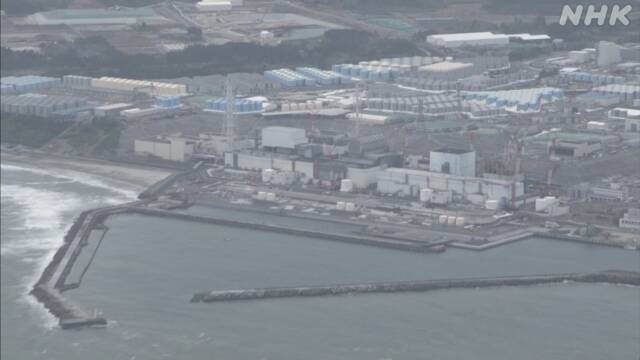
Temperature rises over 10 degrees Celsius in some parts of the “frozen earth wall” to reduce contaminated water at Fukushima Daiichi Nuclear Power Plant
October 28, 2021
As a countermeasure to reduce the amount of contaminated water from the Fukushima Daiichi Nuclear Power Plant, it was found that the temperature of the ground in some parts of the “frozen soil wall”, which freezes the ground around the buildings to prevent the inflow of underground water, has been rising above 0 degrees Celsius since the middle of last month, reaching a maximum of 10 degrees Celsius. The Tokyo Electric Power Company (TEPCO) is investigating the cause of the problem, saying that it does not affect the function of the wall to prevent the inflow of underground water.
The “frozen earth wall” is one of the measures to reduce the amount of contaminated water. Pipes are embedded around the buildings of the Fukushima Daiichi Nuclear Power Plant, and liquid at 30 degrees below zero is poured into the pipes and frozen, forming an “ice wall” that prevents groundwater from flowing into the buildings.
The Tokyo Electric Power Company (TEPCO) has installed thermometers in the “frozen earth wall” to measure the underground temperature, and in some areas located on the mountain side of the No. 4 reactor at the Fukushima Daiichi Nuclear Power Plant, the temperature, which is usually below freezing, has been rising and has been above zero since the middle of last month.
The temperature in the area where the increase was confirmed was between 1 meter and 4 meters deep, and the temperature exceeded 10 degrees Celsius on some days.
The freezing wall is about 10 meters thick, and TEPCO has stated that there is no significant difference in the water level between the inside and outside of the wall, so there is no impact on its ability to control the inflow of groundwater.
It is possible that water leaked from cracks in the drainage channel that intersects the frozen soil wall and seeped into the frozen area, causing the temperature to rise.
Freezing wall to be used for longer period than expected, “trump card” of countermeasure against contaminated water at Fukushima Daiichi Nuclear Power Plant, without sufficient verification
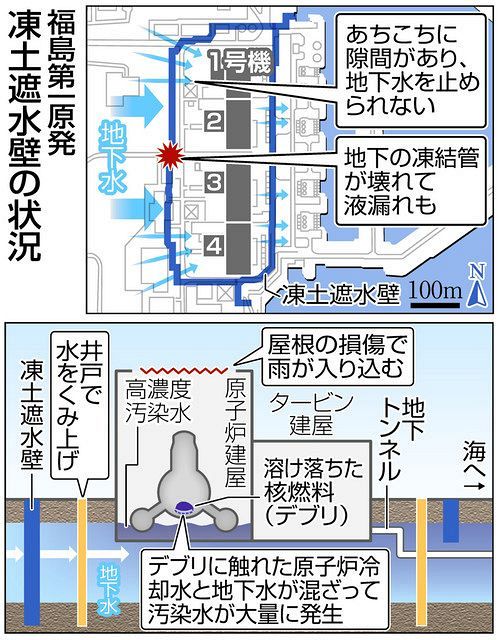
The frozen soil barrier wall at the Fukushima No. 1 Nuclear Power Plant of the Tokyo Electric Power Company (TEPCO) was built at a cost of 34.5 billion yen. Initially, TEPCO had planned to finish the work by 2021, but five years have passed since the freeze, and a large amount of contaminated water continues to be generated, with no prospect of even reaching zero. The ice wall, which will cost hundreds of millions of dollars to maintain every year, will enter long-term operation without sufficient verification. (Kenta Onozawa)
Freezing soil with cooling liquid, annual maintenance cost of billions of yen
The freezing wall was built to prevent groundwater from the mountains from entering the buildings where highly radioactive materials such as melted nuclear fuel (debris) remain after the accident. Freezing began in March 2004, and the entire area was frozen in nearly two years. The annual maintenance costs, including electricity for freezing, cost more than one billion yen when the system was first introduced, and TEPCO is bearing the cost.
From December 2007 to January 2009, there were a series of problems with cooling liquid leaking from a total of five frozen pipes. According to TEPCO, all of them are located under the road near the reactor building, and it is highly likely that the vibration of passing vehicles caused fatigue damage to the metal parts.
TEPCO, which had not envisioned long-term operation of the plant, had been repairing problems only after they occurred, but from this year, it has set a frequency for replacement of parts and will prepare replacement parts in advance. A spokesperson said, “The frozen earth wall is effective and will be used continuously. However, from this year, the frequency of replacement will be set and replacement parts will be prepared in advance.
Groundwater through gaps, limited effect
”In March 2006, TEPCO announced that it would build a freeze-earth wall at the Fukushima Daiichi Nuclear Power Plant.
In March 2006, TEPCO announced an estimate that the frozen soil wall prevented about 95 tons of groundwater per day from entering the buildings. Without the wall, the amount would have been 189 tons per day, and the company stressed that the amount had been halved.
However, there is a lack of evidence for the estimate, as it was based on an evaluation of the period when there was little rainfall, and it does not distinguish between the effects of other measures, such as the pumping up of groundwater by sub-drainage wells around the building. Toyoshi Sarada, chairman of the Nuclear Regulation Authority (NRA), has declared that “the main role of groundwater countermeasures is to pump up the sub-drainage.
At the press conference when the calculations were released, Naohiro Masuda, who was the chief decommissioning officer of TEPCO (now president of JNFL), stated clearly that “we will continue to verify” the effectiveness of the frost wall. However, the spokesman now avoids explaining, saying, “It is difficult to show the effects of individual measures.
Calls from the Regulatory Commission for an alternative plan
Initially, the government and TEPCO had set a goal of stopping the generation of contaminated water by around 2009. However, they still do not know where the groundwater is coming from.
The amount of contaminated water, which was 490 tons per day in FY2003, was reduced to about 140 tons in FY2008, but zero was not achieved, and the goal was set back to 100 tons in 2013. TEPCO said, “We will continue with the current measures until 2013. After that, we are still studying.
The cost of maintaining the frost wall will be covered by the electricity bills paid by consumers to TEPCO. In the regulatory commission’s study group, there is a strong opinion among experts that “from the viewpoint of cost-effectiveness, the frozen soil wall should be abandoned and steel plates or concrete walls should be embedded. In response to this opinion, TEPCO simply replied, “We are considering it,” and even 10 years after the accident, there is no end in sight to the contaminated water measures.
S. Korea to raise need for int’l discussions on Japan’s Fukushima plan in IMO meeting
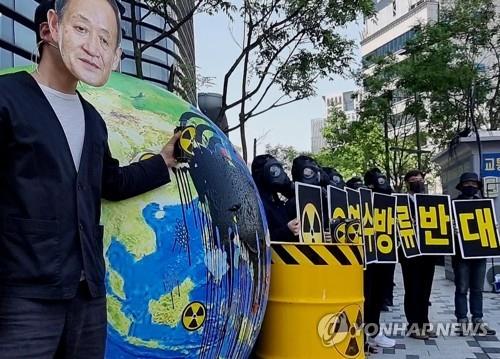
SEOUL, Oct. 25 (Yonhap) — South Korea will once again call for international discussions on Japan’s plan to discharge radioactive water from its crippled Fukushima nuclear power plant into the ocean at this week’s international maritime gathering, the oceans ministry said Monday.
During the London Convention and Protocol meeting set to begin on the day, the ministry will raise the need to discuss Japan’s planned disposal within the Protocol framework, and urge Japan to disclose related information in a full and transparent manner.
The meeting will be held via teleconferencing and continue through Friday.
“We will continue to bring up the issue to raise the awareness of the international community about its potential negative impacts on the maritime environment, and to seek ways to deal with the waste water safely,” a ministry official said.
Earlier this month, Japan finalized plans to start discharging the radioactive waste water stored in tanks at the Fukushima Daiichi Nuclear Power Plant into the Pacific Ocean in 2023. More than 1.2 million tons of tritium-laced water is expected to be disposed.
South Korea has urged Japan to have in-depth discussions with neighboring countries before pushing ahead with the plan, and has been working to garner international support for seeking alternatives.
In August, the Seoul government submitted a document to the London Protocol secretariat that suggests the formation of a task force in charge of the Fukushima issue.
Japan has insisted that the matter is not subject to discussions under the Protocol. But many nations and international organizations have voiced concerns.
The London Convention is meant to promote the effective control of all sources of marine pollution and to take steps to prevent marine pollution by human activities. South Korea joined the Convention in 1993, and a total of 87 nations are currently its members.
The London Protocol calls for banning all dumping, with some exceptions. It has 53 signatories, including South Korea which joined it in 2009.
China and 8 Asia-Pacific island countries raise joint objection against Fukushima wastewater disposal
22 oct. 2021
China and eight Asia Pacific island countries have raised a collective objection… against the disposal of wastewater from the Japan’s Fukushima nuclear power plant. China’s Foreign Affairs Ministry says the nine countries adopted a joint declaration,… following a meeting led by Beijing. The declaration urges for the country which governs the issue, to make a decision regarding the disposal carefully… and to cooperate with the international community. The declaration did not directly mention Japan,… but is largely seen a move to protest against Tokyo’s plan to release the contaminated water. Among the eight island countries are Kiribati, Fiji, and Papua New Guinea.
1 This Month

of the week – Shut Down Drone Warfare!


Tell the Ukrainian Government to Drop Prosecution of Peace Activist Yurii Sheliazhenko

Petition to revoke the licensing of the Near Surface Nuclear Disposal Facility (NSDF) at Chalk River. https://www.ourcommons.ca/petitions/en/Petition/Details?Petition=e-7247
To see nuclear-related stories in greater depth and intensity – go to https://nuclearinformation.wordpress.com
-
Archives
- April 2026 (34)
- March 2026 (251)
- February 2026 (268)
- January 2026 (308)
- December 2025 (358)
- November 2025 (359)
- October 2025 (376)
- September 2025 (257)
- August 2025 (319)
- July 2025 (230)
- June 2025 (348)
- May 2025 (261)
-
Categories
- 1
- 1 NUCLEAR ISSUES
- business and costs
- climate change
- culture and arts
- ENERGY
- environment
- health
- history
- indigenous issues
- Legal
- marketing of nuclear
- media
- opposition to nuclear
- PERSONAL STORIES
- politics
- politics international
- Religion and ethics
- safety
- secrets,lies and civil liberties
- spinbuster
- technology
- Uranium
- wastes
- weapons and war
- Women
- 2 WORLD
- ACTION
- AFRICA
- Atrocities
- AUSTRALIA
- Christina's notes
- Christina's themes
- culture and arts
- Events
- Fuk 2022
- Fuk 2023
- Fukushima 2017
- Fukushima 2018
- fukushima 2019
- Fukushima 2020
- Fukushima 2021
- general
- global warming
- Humour (God we need it)
- Nuclear
- RARE EARTHS
- Reference
- resources – print
- Resources -audiovicual
- Weekly Newsletter
- World
- World Nuclear
- YouTube
-
RSS
Entries RSS
Comments RSS
 nuclear-news