Japan’s Tepco hit by setback in clean-up of crippled Fukushima nuclear plant
Good faith does not exist in Tepco’s dictionary!
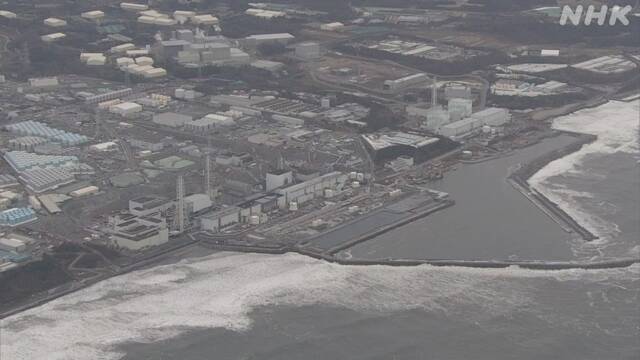
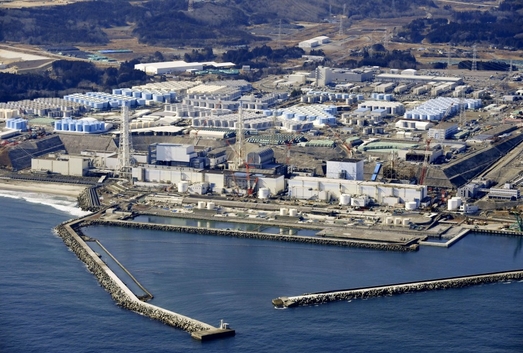
TOKYO, Jan 23 (Reuters) – The operator of Japan’s crippled Fukushima nuclear power plant has found that a coolant solution, used to create an ice wall halting the seepage of groundwater into reactor buildings, has leaked from two storage tanks.
The leakage has had no impact on the wall or environment, said Tokyo Electric Power Co Holdings Inc (Tepco) (9501.T).
Still, it underscores the unpredictable challenges in the clean-up of the site, nearly 11 year after an earthquake and tsunami ravaged Japan’s northeastern coast, causing the world’s worst nuclear disaster since Chernobyl, Ukraine, in 1986.
Only last year, Japan’s government approved the release of over 1 million tonnes of irradiated water from the site after treatment, starting around spring 2023. Tepco last month said it would build a tunnel reaching into the sea for the operation. read more
On Sunday, Tepco spokesperson Tsuyoshi Shiraishi said about four tonnes of a calcium chloride solution used to maintain the ice wall had leaked in what was the eighth such leakage.
“We’re now confirming the reason,” he said.
The last leak in December 2019 saw 16 tonnes spilled, likely due to metal fatigue resulting from vibrations caused by construction vehicles, Shiraishi said.
There was no immediate impact on the wall’s function as it takes several months for the wall to thaw in the absence of coolant, he said.
Separately, a group of six men and women is set to file on Jan. 27 a lawsuit against Tepco claiming they developed thyroid cancer due to exposure to radiation from the Fukushima disaster, the Mainichi newspaper reported.
The plaintiffs, who were minors living in Fukushima prefecture at the time of the 2011 disaster, are seeking 616 million yen ($5.42 million) in compensation from the electricity provider, the Mainichi said.
If the complaint was served, Tepco would respond in good faith after hearing the contents of the claims and arguments in detail, the firm said in a statement.
Leakage of 4 tons of liquid at minus 30 degrees Celsius at Fukushima Daiichi Nuclear Power Plant
The frozen wall was a temporary solution for maximum 7 years and the time has run out anyway.
January 23, 2022
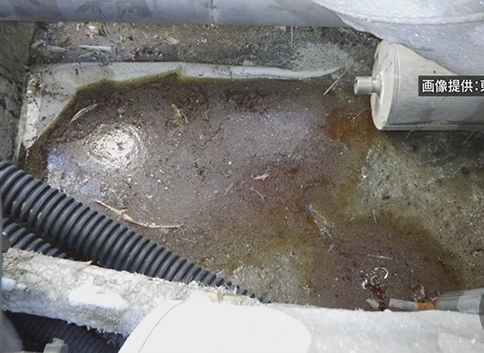
There was a problem at the Fukushima Daiichi Nuclear Power Plant where about 4 tons of liquid leaked out of a pipe that was injected into the ground to freeze the ground as part of the “frozen earth wall” that forms an “ice wall” around the buildings to prevent the inflow of underground water. Tokyo Electric Power Company (TEPCO) believes that a part of the pipe may have been damaged, and has decided to hurry to identify the location and repair it.
According to TEPCO, on January 16, the water level dropped in two of the four tanks that contain liquid at minus 30 degrees Celsius, which is used to freeze the ground around the buildings at the Fukushima Daiichi Nuclear Power Plant, and when they checked the area around the frost wall, they found a place where this liquid had accumulated.
The leaked liquid is a calcium chloride solution that acts as a “refrigerant” to freeze the ground, and it is estimated that about 4 tons of the liquid leaked from the water level of the tanks.
Even if the refrigerant leaks out, there is still a few months before the freezing wall itself starts to melt, so it is still functioning to prevent the inflow of groundwater, according to the report.
Tokyo Electric Power Company (TEPCO) believes that part of the pipe may have been damaged, and is hurrying to identify the location and repair it.
The freezing wall has been in operation since 2016, but last year some parts of the freezing wall experienced problems with the underground temperature remaining above 0 degrees Celsius, and TEPCO is investigating the cause and taking countermeasures.
https://www3.nhk.or.jp/news/html/20220123/k10013445291000.html?fbclid=IwAR06soHF-koVniJxnYVyMeADSSul3AXZTrGbMAW7folqVBtmfgk93cS5TLs
Robot for removing nuclear fuel debris at Fukushima Daiichi
19 janv. 2022
Footage of a robot developed to remove nuclear fuel debris from the No. 2 reactor at the Fukushima Daiichi nuclear power plant is released.
Fukushima Daiichi Hit By Tsunami
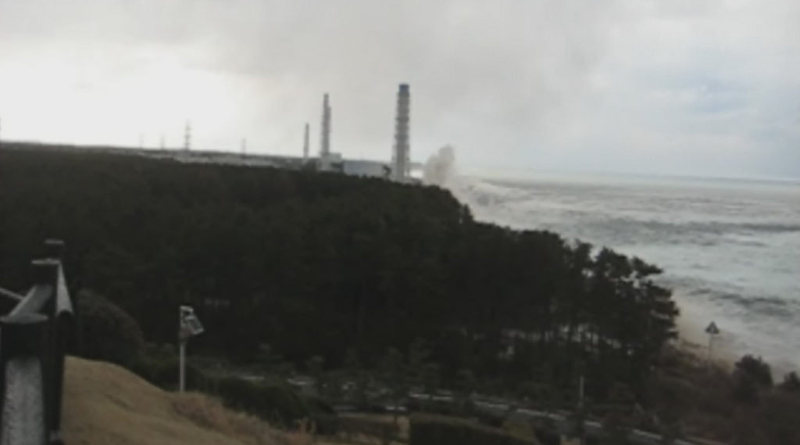
Japan has lifted all tsunami advisories and warnings.
Japan has reduced one of the tsunami warnings, left one in place, and left the alerts for the entire south and east coasts in force. The Japan Meteorological Agency told people to remain vigilant and not return to low coastal areas. The JMA representative mentioned they do not know the exact mechanism that created the tsunami waves and they don’t know if the danger has passed.
Japan’s nuclear regulator and TEPCO have not released any information about conditions at Daiichi or any of the other coastal nuclear power plants in Japan. Another relevant concern is the large piles of contaminated soil bags that have been stored along the Fukushima coast on beaches and along low-lying areas of river banks near the coast. The inundation levels could put these bags at risk of being swept out to sea.
NHK TV reported that Onahama Port, near Fukushima Daiichi received increasing tsunami waves from the Tonga volcano explosion.
The waves in some areas around the Fukushima coast and Tohoku region reached 1 meter in height while Onahama port were at 70cm and continued to increase.
The existing defenses at Daiichi should have been sufficient to handle the wave inundation but there was equipment in the port that remained unprotected and a few low lying sea front
areas that could have been vulnerable.
TEPCO on January 17 has released some initial reporting on damage at Fukushima Daiichi.
The seafront water intake equipment for units 5 & 6 remained functional as did some equipment related to the sub-drain sump pump system around units 1-4. Visual inspection of silt fences on the port openings indicated they were intact. Certain silt fences are now scheduled to be pulled up and inspected further. TEPCO noted that the MegaFloat that is still housed in the port was undamaged. This was relocated and tethered in a more sheltered portion of the port a few years ago when it was identified as a risk in the event of a tsunami. TEPCO did not mention the condition of a construction rig in the port conducting initial work for the contaminated water discharge pipe.
TEPCO typically releases information from an initial visual walk down after a major event. Subsequent reports may identify more damage as they look further.
TEPCO report in Japanese.
https://www.tepco.co.jp/decommission/information/newsrelease/reference/pdf/2022/1h/rf_20220117_4.pdf
Robotic failure: “We don’t know the cause, and the outlook is unclear…” High barrier to internal investigation of high radiation dose at Fukushima Daiichi Nuclear Power Plant Unit 1
January 15, 2022
Due to a robot malfunction, an internal inspection of the Unit 1 reactor at TEPCO’s Fukushima Daiichi Nuclear Power Plant (located in the towns of Okuma and Futaba in Fukushima Prefecture) has not been able to begin. The radiation level inside the containment vessel, where melted nuclear fuel (debris) remains, is too high for people to approach. The work, which requires remote control, has had a series of problems. As the eleventh anniversary of the accident approaches, a high wall continues to block the way. (Kenta Onozawa)
Advance preparations were too lax.
We didn’t know the cause of the accident. We don’t know the cause, we don’t know the prospects for countermeasures, and we haven’t decided when to resume the investigation.
At a press conference on March 13, a TEPCO spokesman gave a vague answer. The internal investigation of the Unit 1 reactor, which was delayed for more than two years from the original plan, was supposed to start on the 12th, but it stalled right from the start.
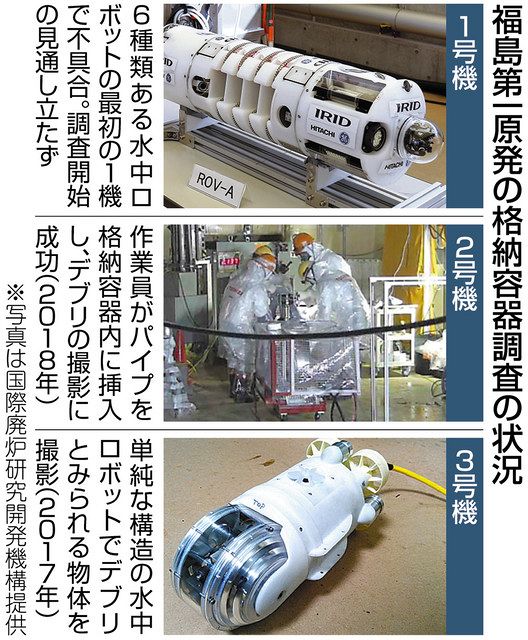
Of the three reactors that suffered meltdowns, Unit 1 is the only one where no debris has been found. The survey this time has been planned with a lot of effort to make up for the delay, including the use of six different types of robots with multiple functions, and the survey will take about seven months.
The first underwater robot (25 centimeters in diameter and 111 centimeters in length) will be used to create a survey route. A 30-centimeter-diameter guide ring will be attached to the robot so that subsequent robots can pass through it to prevent cables from getting tangled, which the spokesperson stresses is essential for the survey.
However, the preparations in advance were lax. The preliminary tests were limited to confirming the operation of each piece of equipment, and the team was unable to immediately respond to problems with the dosimeters that occurred when they were operated simultaneously.
In the past, there have been cases of “leaving things behind.
It is expected to take some time to identify the cause of the problem. If similar problems occur with other robots, plans to take images of the inside of the containment vessel, grasp its three-dimensional structure, and collect sand-like deposits in the water will not be able to proceed and may be abandoned.
We know from previous studies that complex devices are less effective, such as the underwater robot that photographed debris deposits inside the containment vessel of Unit 3 in 2017. The underwater robot that photographed the debris in the containment vessel of the Unit 3 reactor in 2017 was about a quarter of the length and had a simpler structure. It also focused on photographing as its main purpose.
In the 2006 survey that succeeded in photographing the debris in the Unit 2 reactor, a worker inserted a pipe (13 meters long) with a camera attached to the end, rather than a robot. In the previous year, a camera-equipped pipe was inserted. In the previous year, a camera-equipped robot called a “scorpion” was deployed, but it climbed up on the sediment and could not be retrieved, remaining in the reactor.
Although “human power” can be used to deal with the problem outdoors…
Remote-controlled operations are always fraught with difficulties, even outside the building where the reactor is located.
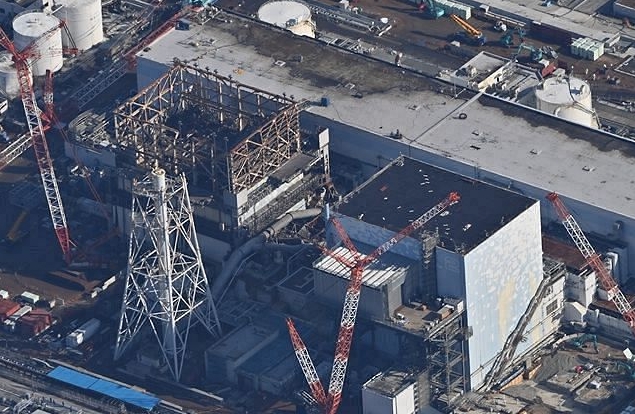
The exhaust stack near the Unit 1 and 2 buildings, which was in danger of collapsing due to the earthquake and was highly contaminated, was cut down to about 60 meters, half the height of the original stack (1 In one case, the saw blade of a cutting device lifted by a large crane got stuck in the cylinders and could not be moved. At that time, a worker climbed up to the cutting device installed at the top of the 110-meter-high cylinder with a crane and cut it with a power tool.
In late January, they plan to cut the contaminated pipes leading to this exhaust stack. The project was originally supposed to start four months ago, but there was a problem with the remote-controlled cutting device and the crane broke down, delaying the plan.
Debris collection is planned for Unit 2 by the end of the year. If a problem occurs in the reactor, we cannot rely on human power.
https://www.tokyo-np.co.jp/article/154269?fbclid=IwAR2E55S3DYLr7KiroYjxza6u_MX67pvMdrWioFykfOwgoxBdOlqhOraX9WI
Translated with http://www.DeepL.com/Translator (free version)
Survey at Fukushima No. 1 reactor container halted.
Jan 12, 2022
Tokyo Electric Power Company Holdings Inc. halted its investigation of the inside of the containment vessel of the No. 1 reactor at its stricken Fukushima No. 1 nuclear power plant on Wednesday.
The move came after an issue was found during preparation work for the display of data such as radiation levels from dosimeters inside underwater robots to be used in the survey. The preparations began at noon the same day and were halted around two hours later.
Tepco said that it will resume the survey once measures to resolve the issue are taken.
In the survey, which will continue until around August, Tepco aims to take pictures of melted nuclear fuel debris and other deposits using six types of underwater robots to record their locations and thickness in water that has accumulated at the bottom of the containment vessel.
It will also try to collect deposit samples and take pictures of the inside of the base that supports the reactor pressure vessel. The information obtained in the survey will be used for studies on ways to remove the debris.
The nuclear fuel at the No. 1 reactor’s core is believed to have melted and mostly fallen inside the containment vessel during the triple meltdown disaster at the plant, which was hit by a huge earthquake and tsunami on March 11, 2011.
In its survey of March 2017, Tepco failed to find nuclear fuel debris at the No. 1 reactor, leaving the reactor’s detailed situation unknown, in contrast to the No. 2 and No. 3 reactors, where melted fuel debris was successfully photographed.
https://www.japantimes.co.jp/news/2022/01/12/national/tepco-fukushima-survey-halted/
Fukushima Takes a Turn for the Worse.

January 10, 2022by Robert Hunziker
Tokyo Electric Power Company-TEPCO- has been attempting to decommission three nuclear meltdowns in reactors No. 1 No. 2, and No. 3 for 11 years now. Over time, impossible issues grow and glow, putting one assertion after another into the anti-nuke coffers.
The problems, issues, enormous danger, and ill timing of deconstruction of a nuclear disaster is always unexpectedly complicated by something new. That’s the nature of nuclear meltdowns, aka: China Syndrome debacles.
As of today, TEPCO is suffering some very serious setbacks that have “impossible to deal with” written all over the issues.
Making all matters nuclear even worse, which applies to the current mess at Fukushima’s highly toxic scenario, Gordon Edwards’ following statement becomes more and more embedded in nuclear lore: “It’s impossible to dispose of nuclear waste.” (Gordon Edwards in The Age of Nuclear Waste From Fukushima to Indian Point)
Disposing of nuclear waste is like “running in place” to complete a marathon. There’s no end in sight.
As a quickie aside from the horrendous details of the current TEPCO debacle, news from Europe brings forth the issue of nuclear power emboldened as somehow suitable to help the EU transition to “cleaner power,” as described by EU sources. France supports the crazed nuke proposal but Germany is holding its nose. According to German Environment Minister Steffi Lemke: “Nuclear energy could lead to environmental disasters and large amounts of nuclear waste. (Source: EU Plans to Label Gas and Nuclear Energy ‘Green’ Prompts Row, BBC News, Jan. 2, 2022) Duh!
Minister Lemke nailed it. And, TEPCO is living proof (barely) of the unthinkable becoming thinkable and disastrous for humanity. Of course, meltdowns are never supposed to happen, but they do.
One meltdown is like thousands of industrial accidents in succession over generations of lifetimes. What a mess to leave for children’s children’s children over several generations. They’ll hate you for this!
In Fukushima’s case, regarding three nuclear power plants that melted all-the-way (China Syndrome), TEPCO still does not know how to handle the enormously radioactive nuclear fuel debris, or corium, sizzling hot radioactive lumps of melted fuel rods and container material in No. 1, No 2 and No.3, They’re not even 100% sure where all of the corium is and whether it’s getting into underground water resources. What a disaster that would be… what if it is already… Never mind.
The newest wrinkle at TEPCO involves the continuous flow of water necessary to keep the destroyed reactors’ hot stuff from exposure to air, thus spreading explosively red-hot radioactivity across the countryside. That constant flow of water is an absolute necessity to prevent an explosion of all explosions, likely emptying the streets of Tokyo in a mass of screaming, kicking, and trampling event to “get out of town” ASAP, commonly known as “mass evacuation.”
The cooling water continuously poured over the creakily dilapidated ruins itself turns radioactive, almost instantaneously, and must be processed via an Advanced Liquid Processing System (ALPS) to remove most radioactive materials (???) housed in a 17-meter (56 feet) tall building on the grounds of the disaster zone.
Here’s the new big danger, as it processes radioactive contaminated water, it flushes out “slurry” of highly concentrated radioactive material that has to go somewhere. But where to put it?
How to handle and dispose of the radioactive slurry from the ALPS is almost, and in fact may be, an impossible quagmire. It’s a big one as the storage containers for the tainted slurry quickly degrade because of the high concentration of radioactive slurry. These storage containers of highly radioactive slurry, in turn, have to be constantly replaced as the radioactivity slurry eats away at the containers’ liners.
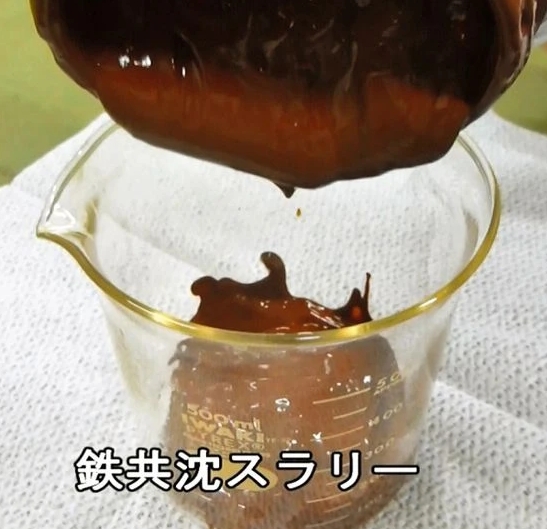
Radioactive slurry is muddy and resembles a shampoo in appearance, and it contains highly radioactive Strontium readings that reach tens of millions of Becquerel’s per cubic centimeter. Whereas, according to the EPA, 148 Becquerel’s per cubic meter, not centimeter, is the safe level for human exposure. Thus, tens of millions per cubic centimeter is “off the charts” dangerous! Instant death, as one cubic meter equals one million cubic centimeters. Ahem!
Since March 2013, TEPCO has accumulated 3,373 special vessels that hold these highly toxic radioactive slurry concentrations. But, because the integrity of the vessels deteriorates so quickly, the durability of the containers reaches a limit, meaning the vessels will need replacement by mid-2025.
Making matters ever worse, if that is possible, the NRA has actually accused TEPCO of “underestimating the impact issue of the radioactivity on the containers linings,” claiming TEPCO improperly measured the slurry density when conducting dose evaluations. Whereas, the density level is always highest at the bottom, not the top where TEPCO did the evaluations, thus failing to measure and report the most radioactive of the slurry. Not a small error.
As of June 2021, NRA’s own assessment of the containers concluded that 31 radioactive super hot containers had already reached the end of operating life. And, another 56 would need replacement within the next 2 years.
Transferring slurry is a time-consuming highly dangerous horrific job, which exposes yet a second issue of unacceptable risks of radioactive substances released into the air during transfer of slurry. TEPCO expects to open and close the transfers remotely (no surprise there). But, TEPCO, as of January 2, 2022, has not yet revealed acceptable plans for dealing with the necessary transfer of slurry from weakening, almost deteriorated containers, into fresh, new containers. (Source: TEPCO Slow to Respond to Growing Crisis at Fukushima Plant, The Asahi Shimbun, January 2, 2022)
Meanwhile, additional batches of a massive succession of containers that must be transferred to new containers will be reaching the end of shelf life, shortly.
Another nightmarish problem has surfaced for TEPCO. Yes, another one. In the aftermath of the 2011 blowup, TEPCO stored radioactive water in underground spaces below two buildings near reactor No.4. Bags of a mineral known as zeolite were placed to absorb cesium. Twenty-six tons (52,000 lbs.) of bags are still immersed with radiation readings of 4 Sieverts per hour, enough to kill half of all workers in the immediate vicinity within one hour. The bags need to be removed.
TEPCO intends to robotically start removing the highly radioactive bags, starting in 2023, but does not know where the bags should be stored. Where do you store radioactive bags containing enough radioactive power to kill someone within one hour of exposure?
Additionally (there’s more) the amount of radioactive rubble, soil, and felled trees at the plant site totals 480,000 cubic meters, as of 2021. TEPCO is setting up a special incinerator to dispose of this. Where to dispose of the incinerated waste is unknown. This is one more add-on to the horrors of what to do with radioactive material that stays hot for centuries upon centuries. Where to put it?
Where to put it? Which is the bane of the nuclear power industry. For example, America’s nuke plants are full of huge open pools of water containing tons of spent nuclear fuel rods. If exposed to open air, spent fuel rods erupt into a sizzling zirconium fire followed by massive radiation bursts of the most toxic material known to humanity. It can upend an entire countryside and force evacuation of major cities.
According to the widely recognized nuclear expert Paul Blanch: “Continual storage in spent fuel pools is the most unsafe thing you could do.” (see- Nuclear Fuel Buried 108 Feet from the Sea, March 19, 2021)
It’s not just Fukushima that rattles the nerves of people who understand the high-risk game of nuclear power. America is loaded with nuclear power plants with open pools of water that hold highly radioactive spent fuel rods.
What to do with it?
Candidates, tell us your stances on Fukushima water release

Jan.7,2022
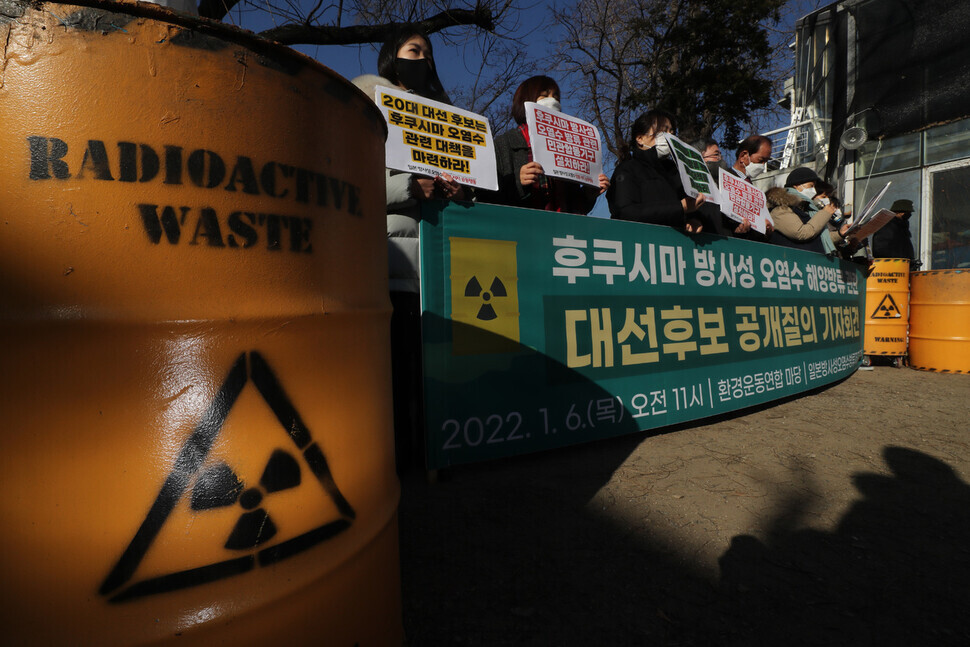
Environmental groups in South Korea are calling on presidential candidates to make public their stances on Japan’s plans to dump contaminated water from the Fukushima nuclear site, and to come up with courses of action. Groups including the Korean Federation for Environmental Movement (KFEM), Nuclear Safety and Future, and Korea Radiation Watch convened for a press conference on Thursday morning in front of KFEM’s offices in Jongno District, Seoul. The groups criticized the government’s response thus far as “timid,” saying that since Japan had announced its intentions to release the radioactive water in April of last year, the government had only gone so far as to express protest to the Japanese Embassy and send a letter of protest to Japan. The groups called on presidential candidates to come up with concrete, practical plans for dealing with the issue.


TEPCO to begin robot probe of Fukushima reactor
Jan. 6, 2022
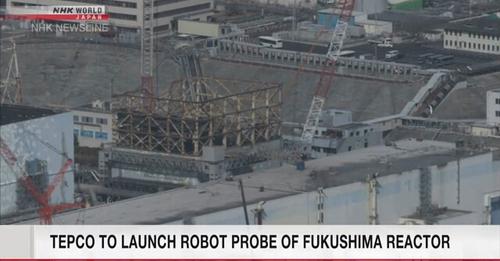
The operator of the crippled Fukushima Daiichi Nuclear Power Station says it will launch a probe of the inside of the No.1 reactor on Wednesday using robots. The firm is seeking to clear debris from the reactor interior as part of the decommissioning process.
Tokyo Electric Power Company, or TEPCO, says the probe will involve six types of robots, each with a different function.
It says the survey will continue for more than six months. It will use ultrasonic devices to locate and measure the thickness of debris believed to be submerged under water inside the reactor containment vessel.
The utility says it also hopes to collect small samples of the debris.
TEPCO says it will use a robot to install a cover on a path for the survey machines to move smoothly under water.
The No.1, 2 and 3 reactors of the plant suffered meltdowns in the massive earthquake and tsunami of 2011.
TEPCO confirmed the existence of what is believed to be solid fuel debris inside the No.2 and 3 reactors, but not inside the No.1 reactor. The debris consists of molten nuclear fuel and metal parts.
Fukushima Daiichi Decontamination & Decommissioning Engineering Company, which was established by TEPCO, said on Thursday it will use the robots to gather information before considering how to remove the debris.
TEPCO slow to respond to growing crisis at Fukushima plant
January 2, 2022
Radioactive waste generated from treating highly contaminated water used to cool crippled reactors at the Fukushima No. 1 nuclear power plant has thrown up yet new nightmarish challenges in decommissioning the facility, a project that is supposed to be completed in 30 years but which looks increasingly doubtful.
The continuous accumulation of radioactive slurry and other nasty substances, coupled with the problem of finding a safe way to dispose of melted nuclear fuel debris at reactors No. 1, No. 2 and No. 3, has plant operator Tokyo Electric Power Co. frantically scratching around for ideas.
One problem is that storage containers for the tainted slurry degrade quickly, meaning that they constantly have to be replaced. Despite the urgency of the situation, little has been done to resolve the matter.
Fuel debris, a solidified mixture of nuclear fuel and structures inside the reactors melted as a consequence of the triple meltdown triggered by the 2011 earthquake and tsunami disaster has to be constantly cooled with water, which mixes with groundwater and rainwater rainwater that seep into the reactor buildings, producing more new radioactive water.
The contaminated water that accumulates is processed via an Advanced Liquid Processing System to remove most of radioactive materials. The ALPS is housed in a 17-meter-tall building situated close to the center of the plant site.
Reporters from the Japan National Press Club were granted a rare opportunity in late November to visit the crippled facility to observe the process.
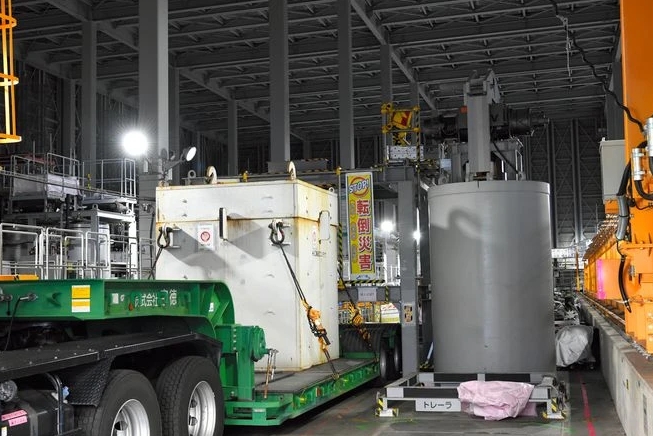
The building houses a large grayish drum-like container designed especially to store radioactive slurry. The interior of each vessel is lined with polyethylene, while its double-walled exterior is reinforced with stainless steel.
ALARMING DEVELOPMENTS
The use of chemical agents to reduce radioactive substances from the contaminated water in the sedimentation process produces a muddy material resembling shampoo. Strontium readings of the generated slurry sometimes reach tens of millions of becquerels per cubic centimeter.
TEPCO started keeping slurry in special vessels in March 2013. As of November, it had 3,373 of the containers.
Because the integrity of the vessels deteriorates quickly due to exposure to radiation from slurry, TEPCO and the Nuclear Regulation Authority (NRA) predict that durability of the containers will reach the limit after exposure to an accumulated total of 5,000 kilograys of radiation–a level equivalent to 5 million sieverts.
Based on that grim forecast, TEPCO speculated the vessels will need replacement from July 2025.
But the NRA accused TEPCO of underestimating the impact of the radiation problem. It blasted the operator for measuring slurry density 20 centimeters above the base of the container when making its dose evaluation.
“As slurry forms deposits, the density level is always highest at the bottom,” a representative of the nuclear watchdog body pointed out.
The NRA carried out its own assessment in June 2021 and told TEPCO that 31 containers had already reached the end of their operating lives. Its findings also showed an additional 56 would need replacing within two years.
The NRA told TEPCO to wake up and “understand how urgent the issue is since transferring slurry will take time.”
In August, TEPCO conducted a test where slurry with relatively low radiation readings was moved from one container to another. The work took more than a month to complete due to mechanical troubles and other reasons.
An analysis of the radioactive materials’ density data collected during the transfer procedure also turned up another challenge to be overcome. The NRA in October said there was an unacceptable risk of radioactive substances being released into the air during the process and insisted that the refilling method be radically reviewed and changed.
TEPCO is currently considering what steps to take, including covering the workspace with plastic sheets.
Slurry in some containers in need of replacement have strontium levels of more than 1,000 times that of the one in the August test.
TEPCO says that the “container covers will be opened and closed remotely.” But it has not revealed how it plans to safely deal with such readings to carry out the vital work.
It was envisioned that equipment to dehydrate hazardous materials to prevent radiation leakage could be built, but as yet there is no finished design for the device.
With no drastic solutions in sight, a succession of containers will reach the end of their shelf lives shortly.
ANOTHER NIGHTMARE PROBLEM
Radioactive slurry is not the only stumbling block for decommissioning.
In the immediate aftermath of the 2011 disaster, TEPCO stored contaminated water in the underground spaces below two buildings near the No. 4 reactor. In doing so, bags full of a mineral known as zeolite were placed in the temporary storage pools to absorb cesium so as to reduce the amount of radioactive substances.
Twenty-six tons of the stuff are still immersed in the dirty water on the floors under the buildings. Radiation readings of 4 sieverts per hour were detected on their surfaces in fiscal 2019, enough to kill half of all the people in the immediate vicinity within an hour.
TEPCO plans to introduce a remotely controlled underwater robot to recover the bags, starting no earlier than from fiscal 2023, However, it has not determined how long this will take or where to store the bags once they are retrieved.
In addition, radioactive rubble, soil and felled trees at the plant site totaled 480,000 cubic meters as of March 2021, leading TEPCO to set up a special incinerator. The total volume is expected to top 790,000 cubic meters in 10 years, but where to dispose of the incinerated waste remains unclear.
TEPCO is in a race against time. That’s the view of Satoshi Yanagihara, a specially appointed professor of nuclear engineering at the University of Fukui who has specialist knowledge on processes to abandon reactors.
“Now, only 30 years remain before the target date of the end of decommissioning set by the government and TEPCO,” said Yanagihara.
As decommissioning work is due to shortly enter a crucial stage, such as recovering nuclear fuel debris on a trial basis from as early as 2022, Yanagihara noted the need for careful arrangements before forging ahead with important procedures.
“The government and TEPCO need to grasp an overall picture of the massive task ahead and discuss how to treat, keep and discard collected nuclear debris and the leftover radioactive waste with local residents and other relevant parties,” he said.
(This article was written by Yu Fujinami and Tsuyoshi Kawamura.)
Robots to probe inside Fukushima reactor
Jan. 2, 2022
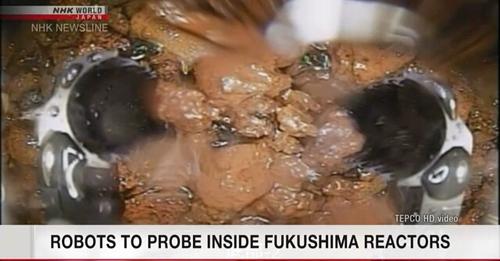
The operator of the crippled Fukushima Daiichi nuclear power plant is planning to conduct robotic probes and collect samples from damaged reactors this year.
The work will be a key step in the effort to decommission the plant.
The No.1, 2 and 3 reactors suffered meltdowns following a major earthquake and tsunami in 2011.
Nuclear fuel melted and collapsed into the reactors’ containment vessels. It mixed with surrounding metal parts and formed solid fuel debris.
Tokyo Electric Power Company plans to begin a robotic survey of the No.1 reactor in mid-January. The survey is expected to take about six months.
The robots will use ultrasonic devices to locate and measure the thickness of the deposits.
Utility officials say they also hope to collect samples.
Preparation to retrieve fuel debris from the No.2 reactor is underway with a robotic device that was developed in the UK.
It is now undergoing performance tests in Japan.
Tokyo Electric Power Company is planning to collect a few grams of debris with the robot by the end of this year. It hopes to gradually increase the amount to be retrieved.
Removal and safe storage of the extremely radioactive debris is thought to be one of the biggest challenges in the decommissioning process.
Japan to implement compensation rules for losses by Fukushima rumors
Yeah, radiation is just a very harmful rumor….
Dec 28, 2021
The Japanese government on Tuesday decided to set, within a year, standards for compensating businesses that suffer losses due to rumors that may emerge when Japan starts discharging treated radioactive water from the crippled Fukushima nuclear plant into the sea.
As neighboring countries such as China and South Korea have expressed worries over the release of the treated water from the Fukushima Daiichi power plant slated for spring of 2023, the action plan includes having the International Atomic Energy Agency evaluate the safety of the water to secure transparency.
The government will also set up a fund using 30 billion yen ($261 million) earmarked in the fiscal 2021 supplementary budget to purchase seafood products when demand falls and promote online sales of products by fishery groups.
During a Cabinet meeting on the topic, Chief Cabinet Secretary Hirokazu Matsuno called on members to “implement the measures swiftly and steadily and have as many consumers as possible be aware of the safety (of the processed water) to create an environment in which people in communities can continue operating and expand their businesses.”
The action plan was formed as the government decided in April to allow Tokyo Electric Power Company Holdings Inc. to release significantly diluted contaminated water into the sea in a step-by-step operation.
More than 1 million tons of the treated water has accumulated on the plant’s premises after a massive earthquake and tsunami triggered a triple meltdown at the Fukushima Daiichi plant in March 2011.
The water is treated using an advanced liquid processing system. The process removes most radioactive material except for tritium, which is said to pose few health risks.
Under the action plan, the government will set compensation plans for each industry such as fisheries, agriculture, commerce and tourism and decide which period to compare when calculating losses before the Fukushima plant operator, TEPCO, creates standards for compensation.
The IAEA will dispatch a survey team to the Fukushima Daiichi power plant to compile its mid-term safety evaluation report within 2022 and will have long-term involvement with the release of the water, according to the plan.
The plan also includes holding online surveys targeting consumers in South Korea, Taiwan, Hong Kong, and elsewhere from January to understand their perceptions of the treated water and food products from Fukushima Prefecture.
Japan maps out plan for disposing of treated radioactive water from Fukushima plant
Under the government program, Japan aims to set standards for compensation for damage caused by what it described as harmful rumors about local industries such as fishing, tourism and agriculture, while reinforcing monitoring capability and transparency to avoid reputational damage.

Dec 28, 2021
The government on Tuesday outlined a plan for releasing treated radioactive water from the crippled Fukushima nuclear plant into the sea, including compensation standards for local industry and the compilation of a safety assessment report.
Japan said in April it would discharge more than 1 million metric tons of contaminated water in stages after treatment and dilution, starting around spring 2023. The announcement provoked concern from local fishermen and objections from neighboring China and South Korea.
Earlier this month, the plant’s operator, Tokyo Electric Power Company Holdings Inc., outlined detailed plans for the disposal, including building an undersea tunnel to release the water.
Under the government program, Japan aims to set standards for compensation for damage caused by what it described as harmful rumors about local industries such as fishing, tourism and agriculture, while reinforcing monitoring capability and transparency to avoid reputational damage.
Under the plan, the industry ministry and the Reconstruction Agency will work together from next month to start publicizing in Japan and abroad the safety of the water, and conduct a consumer opinion survey on the issue through next March.
The government will also create a fund to support the temporary purchase and storage of freezable seafood in case producers are hit by reputational damage. For the fund, the government has secured ¥30 billion under its fiscal 2021 supplementary budget.
Japan also expects the International Atomic Energy Agency (IAEA) to compile an interim safety assessment next year, based on its review over the safety of the treated water, competence of local analytical laboratories and regulatory frameworks, it said.
In an effort to improve transparency to gain the trust of the international community, Japan asked the IAEA in April to conduct a review to assess and advise on the handling of the water.
A decade after a massive earthquake and tsunami ravaged the country’s northeastern coast, disabling the plant and causing the world’s worst nuclear disaster since Chernobyl, nearly 1.3 million metric tons of contaminated water has accumulated at the site.
The water, enough to fill about 500 Olympic-sized swimming pools, is stored in huge tanks at an annual cost of about ¥100 billion ($870 million), and space is running out.
Japan has argued the release is necessary to press ahead with the complex decommissioning of the plant. It says similarly filtered water is routinely released from nuclear plants around the world.
Despite widespread opposition, Japan plans to dump water from Fukushima plant into the Pacific Ocean.
A million tons of contaminated water will be released in two years’ time

People in coastal communities in Japan, joined by voices from around the world, denounced a new governmental plan to dump contaminated water from the site of the Fukushima nuclear disaster into the Pacific Ocean. Local communities and other nations in the Pacific Ocean fear the dumping will poison the environment and cripple local fishing and tourism industries that have struggled to recover from the March 2011 nuclear accident on Japan’s northeast coast for over a decade.
According to a government plan released on December 28, 2021, Tokyo Electric Power Company (TEPCO) will start releasing 1 million metric tonnes of radioactive water from the Fukushima plant into the Pacific Ocean in 2023. The plan, which is still being developed over the coming months, states that an undersea tunnel will be built to pump the water out to the sea. Funds have also been reserved to compensate local fishing and tourism industries for potential “reputational damage.”
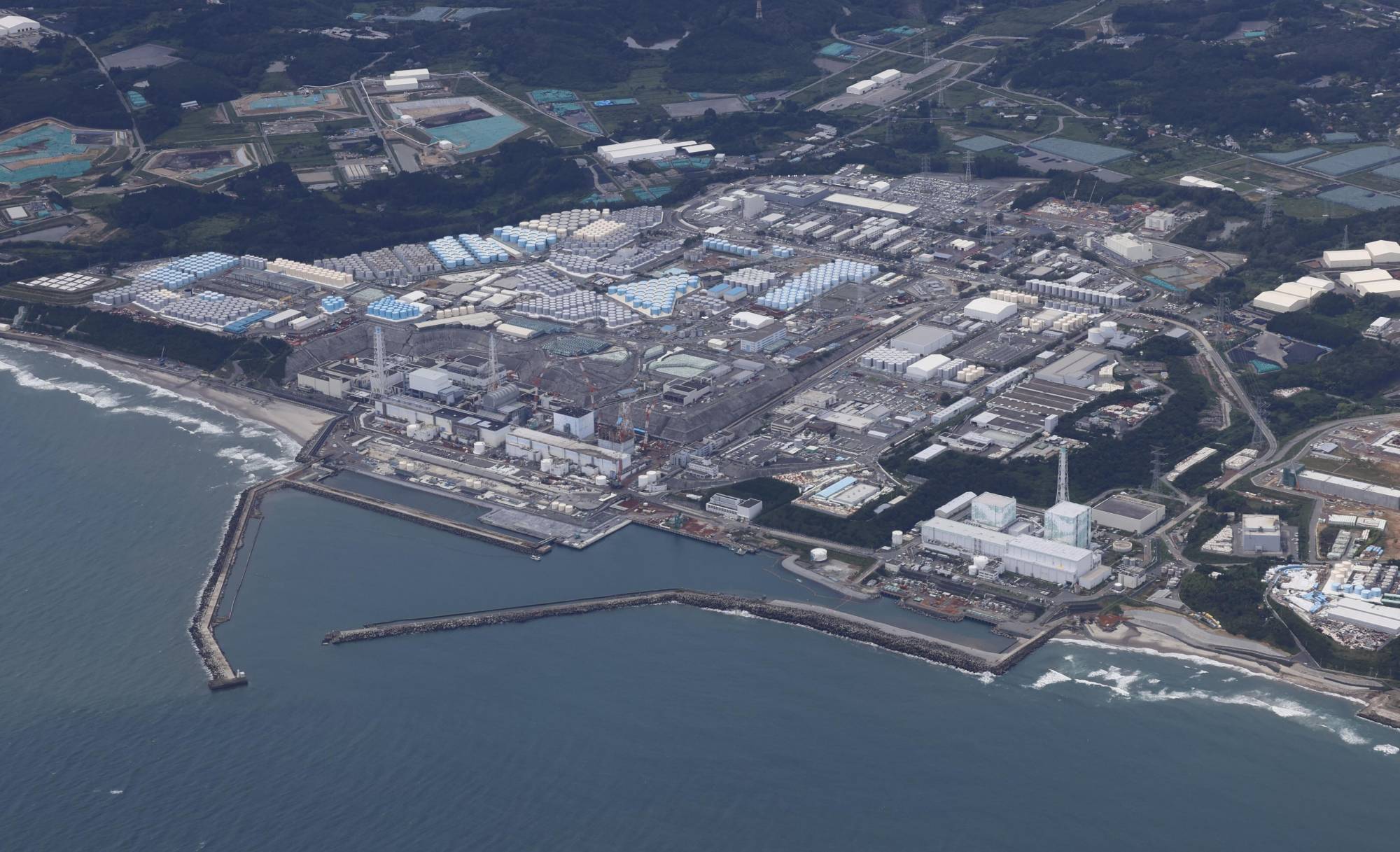
In March 2011 an earthquake and tsunami caused three nuclear reactors operated by TEPCO in Fukushima to meltdown. Over the years, groundwater flowing through the plants was contaminated with radioactive content. In order to prevent this water from reaching the ocean, it was pumped from the reactor buildings into large tanks that now dominate the reactor installation.
As of December 2021, at least 1 million tonnes of contaminated water are stored in the tanks inside the Fukushima Daiichi Nuclear Power Station.
While highly radioactive contaminants are removed, the stored water that the Japanese government is planning to pump out to sea still contains significant amounts of tritium, a radioactive element that some experts say is harmless when diluted in seawater.
The Japanese government’s plan to pump the contaminated water has been in the works since 2020. Greenpeace said in April 2021 that it collected 183,000 signatures opposing the plan to discharge water from the Fukushima plant.
Also in April 2021, South Korean civil society groups issued a statement condemning TEPCO’s plan, noting, “even if diluted the total amount of radioactive material thrown into the sea remains unchanged. If the radioactive wastewater is discharged, it will be an irrevocable disaster not only for marine ecosystem but for the human.”
The issue was tackled during the Pacific Islands Forum Foreign Ministers Meeting in July 2021, and the body made the following declaration:
Forum Foreign Ministers noted the concerns surrounding the seriousness of this issue in relation to the potential threat of further nuclear contamination of our Blue Pacific and the potential adverse and transboundary impacts to the health and security of the Blue Pacific Continent, and its peoples over both the short and long term.
In November 2021, TEPCO said its radiological impact assessment showed minimal impact on the environment:
The assessment found that effects of the discharge of ALPS (Advanced Liquid Process System) treated water into the sea on the public and the environment is minimal as calculated doses were significantly less than the dose limits, dose targets, and the values specified by international organizations for each species.
TEPCO assured the public that it is continually updating its scientific studies regarding the plan to release processed water into the Pacific. But doubts remain about their reports, mostly because there still are few concrete plans about how and where the contaminated water will be dumped, making it difficult for outside observers to assess the risk.
The Pacific Collective on Nuclear Issues, which represents civil society organizations based in Oceania, refutes the veracity of these studies. It also has a message for TEPCO and the Japanese government:
The Pacific is not and must not become the dumping ground for nuclear wastes.
The Collective considers that TEPCO, and the relevant Japanese Government agencies, have wrongly prioritised convenience and costs over the short term and long term environmental and human cost of their planned actions.
Japanese residents have also consistently expressed concern about TEPCO’s plan.
Greenpeace interviewed fisherman Ono Haruo from the township of Shinchi in Fukushima, who echoed the sentiments of the local population:
Fish are finally starting to return after ten years, but if they now pour tritium into the water, no matter how much they dilute it, who’s going to buy those fish? Who wants to eat poisoned fish?
The ocean is our place of work. Can you imagine what it feels like for that to be intentionally polluted?
It’ll be 30 or 40 years before we see the effects. The causal relationship will have become unclear and it’ll be impossible to prove anything. What’s going to happen to the future of our children, our grandchildren? It’s not even clear who will take responsibility.
A group of mothers in Iwaki city, Fukushima, participated in a protest in November 2021 opposing the plan to dump contaminated water into the ocean. The townships of Okuma and Futaba, which host the stricken Fukushima Daiichi complex, have experienced almost complete depopulation over the past decade.
In spring 2022, the International Atomic Energy Agency will evaluate and report on plans has on the Fukushima water treatment, while stakeholders will continue to engage authorities about the controversial plan of TEPCO.
Fukushima Daiichi Unit 2 Spent Fuel Removal Process
December 23, 2021
TEPCO has been progressing with the preparation work for the eventual removal of the spent fuel from unit 2 at Fukushima Daiichi. New details of the fuel removal process have also been released.
Spent fuel removal is scheduled to begin in 2024 and be completed by 2026. Further decontamination work inside is underway as is work outside the building to remove debris and prepare the ground for the spent fuel removal building. The control room on the refueling floor is slated for removal to make way for the opening between the refueling floor and the new spent fuel removal building to be constructed.

Decontamination work on the refueling floor is underway. Starting in January 2022 shielding materials will be installed on the refueling floor.

Shielding appears to be slated to go along certain walls and over the reactor well area. The existing spent fuel crane will be moved over the reactor well to make room for the new fuel handling crane.

Spent fuel removal building progress as of December 2021

The floorplan (below) shows a tall shielding system to be installed around the spent fuel pool area, isolating it from the reactor well. This will act as a shielded access hallway for workers to enter the area. The floorplan also shows the spent fuel removal building where it will be installed adjacent to the spent fuel pool.

The shielding locations are shown in green in the diagram (below).

Ground foundation work is underway near unit 2 for the spent fuel removal building. This work is being done with remote equipment due to the radiation levels between units 2 and 3. The levels are still considered too hazardous for human workers a decade after the initial disaster.

The original TEPCO report in Japanese can be found here.
All original images credit, TEPCO.
1 This Month


18 March Webinar @ 1 PM EST: An Assessment of SMR Projects: The Case of Canada
register for the zoom:
https://us02web.zoom.us/webinar/register/WN_o8BIIOUvQ2ONJR1nta65DQ#/registration


of the week – STOP SMALL MODULAR REACTORS IN CANADA
To see nuclear-related stories in greater depth and intensity – go to https://nuclearinformation.wordpress.com
-
Archives
- March 2026 (138)
- February 2026 (268)
- January 2026 (308)
- December 2025 (358)
- November 2025 (359)
- October 2025 (376)
- September 2025 (258)
- August 2025 (319)
- July 2025 (230)
- June 2025 (348)
- May 2025 (261)
- April 2025 (305)
-
Categories
- 1
- 1 NUCLEAR ISSUES
- business and costs
- climate change
- culture and arts
- ENERGY
- environment
- health
- history
- indigenous issues
- Legal
- marketing of nuclear
- media
- opposition to nuclear
- PERSONAL STORIES
- politics
- politics international
- Religion and ethics
- safety
- secrets,lies and civil liberties
- spinbuster
- technology
- Uranium
- wastes
- weapons and war
- Women
- 2 WORLD
- ACTION
- AFRICA
- Atrocities
- AUSTRALIA
- Christina's notes
- Christina's themes
- culture and arts
- Events
- Fuk 2022
- Fuk 2023
- Fukushima 2017
- Fukushima 2018
- fukushima 2019
- Fukushima 2020
- Fukushima 2021
- general
- global warming
- Humour (God we need it)
- Nuclear
- RARE EARTHS
- Reference
- resources – print
- Resources -audiovicual
- Weekly Newsletter
- World
- World Nuclear
- YouTube
-
RSS
Entries RSS
Comments RSS
 nuclear-news