Delayed robot probe of Fukushima reactor begins

Feb. 8, 2022
The operator of the damaged Fukushima Daiichi nuclear power plant has begun its delayed robot probe of the inside of the facility’s No.1 reactor.
Tokyo Electric Power Company, or TEPCO, had planned to start the survey of the reactor’s containment vessel on January 12, but postponed it due to mechanical trouble.
Engineers noticed during preparations that data from radiation-measuring equipment installed in a robot was not shown correctly.
The engineers later found out that electromagnetic waves emitted from the robot’s device for extending and winding up cables had affected its radiometers. They solved the problem, and confirmed that the data was then shown accurately.
TEPCO started the survey on Tuesday morning. Officials of the utility say they initially planned to end the probe by August, but that the schedule will be moved back due to the delay.
The probe is part of efforts to remove molten fuel debris from inside the reactor.
Fukushima Operators Send Robot Into Worst-Hit Melted Reactor

Feb. 8, 2022
By MARI YAMAGUCHI, Associated Press
TOKYO (AP) — A remote-controlled robot on Tuesday was used to probe the hardest-hit nuclear reactor at Japan’s wrecked Fukushima plant, as officials push forward with clean-up operations that have been mired in delays and controversy.
An earthquake and tsunami in 2011 unleashed a disastrous meltdown at Fukushima Daiichi’s three reactors that partly sunk their radioactive cores into the plant’s concrete foundations, making removal extremely difficult.
The plant’s operator, Tokyo Electric Power Company Holdings, said the submersible robot was sent into Unit 1’s primary containment vessel to install a guiding path for five subsequent robots, which will attempt to asses and take samples of the melted fuel that emits fatally high radiation.
Tuesday’s probe followed five years after the operators sent another robot into the same and badly-damaged reactor, but failed to get any images of the melted fuel.
The robot-led work, which was postponed from mid-January due to mechanical glitches, is expected to last for a few days before full-fledged probes begin.
Earlier probes showed that the fuel at Unit 1 is submerged by highly radioactive water as deep as 2 meters (6.5 feet).
Five other robots, co-developed by Hitachi-GE Nuclear Energy and the International Research Institute for Nuclear Decommissioning, a government-funded consortium, will be separately sent in for the investigation over the next several months.
The probe at Unit 1 aims to measure the melted fuel mounds, map them in three dimensions, analyze isotopes and their radioactivity, and collect samples, Tokyo Electric officials said.
Those are key to developing equipment and a strategy for a safe and efficient melted fuel removal.
About 900 tons of melted nuclear fuel remain inside the plant’s three reactors, including about 280 tons in Unit 1, and its removal is a daunting task that officials say will take 30-40 years. Critics say that’s overly optimistic.
Remote-controlled robots with cameras have provided only a limited view of the melted fuel in areas too dangerous for humans to reach. In 2017, super-high levels of radiation and structural damage hampered investigating Unit 1.
Details of how the highly radioactive material can be safely removed, stored and disposed at the end of the cleanup have not been decided.
Tokyo Electric hopes to use a robotic arm to remove a first scoop of melted fuel later this year from Unit 2, where internal robotic probes have made the most progress.
Fisherman and residents of Fukushima’s outlying areas have protested the operator’s plans to discharge into the nearby sea radioactive waters from the reactors, after treating and diluting them to safely releasable levels.
“We don’t know if it’s debris.” Bumpy deposits at the bottom of the reactor.
February 9, 2022
On February 9, Tokyo Electric Power Company (TEPCO) released a video of the bottom of the containment vessel of the Unit 1 reactor at the Fukushima Daiichi Nuclear Power Plant (Okuma and Futaba towns, Fukushima Prefecture) taken by an underwater robot during an internal investigation. From the images, it was confirmed that orangeish bumpy deposits were spreading and adhering to the structure inside the vessel. It is possible that it is nuclear fuel (debris) that melted down during the accident. We don’t know if it is debris at this stage,” said Kenichi Takahara, a spokesman, at a press conference.

A video of the bottom of the containment vessel of the Unit 1 reactor shows a bumpy deposit spreading from the bottom center to the right side of the vessel at TEPCO’s Fukushima Daiichi Nuclear Power Plant (Courtesy of TEPCO)
According to TEPCO, it is unclear how high the confirmed deposit is; a survey in March 2017 confirmed a deposit of 90 centimeters high near this location. According to TEPCO, the height of the debris is unknown.

A part of the piping that was cut off for the introduction of the robots has sunk to the bottom of the containment vessel of the Unit 1 reactor (Courtesy of TEPCO)
By around 1:50 p.m. on the 9th, the underwater robot that was deployed on the afternoon of the 8th had moved through the water inside the containment vessel and attached four guide rings with a diameter of 30 centimeters at intervals to the structure inside the vessel. The purpose of these rings was to prevent cables from getting tangled in the structure when the robot, which will be used in the future, moves around, and we were finally ready for a full-scale investigation.

In the containment vessel of the Unit 1 reactor, an underwater robot moves through the vessel while attaching rings to the structure (TEPCO)

Oil-like suspended matter was observed on the water surface inside the containment vessel of the Unit 1 reactor. The yellow glow in the center is a pipe illuminated by a light (TEPCO)
The radiation level in the water was 1 to 2 sievert per hour. The radiation level in the water was 1 to 2 sievert per hour. The exposure limit for workers at the nuclear power plant is 50 millisieverts per year, and even if one were to enter the water, it would take only 1 to 3 minutes to reach the exposure limit, so people are not allowed to go near the water.

A worker opens a valve leading to the containment vessel of the Unit 1 reactor to insert a robot (Courtesy of TEPCO)

Workers insert an underwater robot outside the containment vessel of the Unit 1 reactor (Courtesy of TEPCO)
Of the three reactors that suffered core meltdowns in the March 2011 accident, video footage shows deposits of what appears to be debris in Units 2 and 3, but no debris was found in Unit 1 during the 2005 survey.
Removing the debris is the most difficult task, and it is estimated that a total of 880 tons has melted down in Units 1-3. TEPCO is aiming to collect a few grams of debris from the Unit 2 reactor by the end of this year. (Shinichi Ogawa, Kenta Onozawa)
https://www.tokyo-np.co.jp/article/159265?fbclid=IwAR08nc1U0duYKVLHyBgjGnoRnhVI944BMtWrN-6F8HNVGUlKXTpkkFAItm4
Fukushima Unit 1: First internal investigation in 5 years

2022/02/08
The Tokyo Electric Power Company (TEPCO) began an internal investigation of the containment vessel at the Unit 1 reactor of the Fukushima Daiichi Nuclear Power Plant on February 8. An underwater robot was used to collect information on the sediment accumulating at the bottom of the vessel and the molten nuclear fuel (debris) underneath. This is the first time in about five years since March 2017.
According to the images taken by the camera mounted on the robot, the bottom of the containment vessel was bumpy, as if something had accumulated there. A TEPCO official said, “We don’t know yet whether it is a deposit or not, and we will proceed with the investigation.
The investigation was scheduled to start on January 12, but was postponed due to problems during the preparation work. TEPCO is now reconsidering the process, which was set to last until August.
https://www.minpo.jp/globalnews/moredetail/2022020801001260?fbclid=IwAR0YiLHqKhJNuprOuxehkLnPzsAYBMFHgQ_0hcLHnWwpllUn9CFD2zSjR10
IAEA team to visit Fukushima next week to review water release plan

February 7, 2022
TOKYO (Kyodo) — A team of International Atomic Energy Agency experts will visit the crippled Fukushima Daiichi nuclear power plant next week to review Japan’s plan to discharge treated radioactive water into the sea, the government said Monday.
During their stay in the country from Feb. 14 to 18, the experts will evaluate the safety of releasing the treated water, with their visit to the Fukushima plant slated for Feb. 15, according to Japan’s foreign and industry ministries.
The planned release, slated to begin in the spring of 2023, has been opposed by China and South Korea, as well as local fishing communities.
The on-site assessment by the experts led by Gustavo Caruso, director and coordinator of the IAEA’s Department of Nuclear Safety and Security, was initially scheduled for mid-December but postponed due to the rapid spread of the highly contagious Omicron variant of the coronavirus.
The team will also exchange views with the Japanese government and Tokyo Electric Power Company Holdings Inc., the operator of the Fukushima plant, on cooperation in dealing with the treated water, the industry ministry said, adding the IAEA will hold an online press conference on Feb. 18.
Water pumped in to cool melted fuel at the plant, crippled by the 2011 massive earthquake and tsunami in northeast Japan, has been accumulating at the complex. It has mixed with rain and groundwater at the site, becoming contaminated.
The water is treated using an advanced liquid processing system. The process removes most radioactive material except for tritium, which is said to pose few health risks. Tokyo decided in April last year to release the treated water into the Pacific Ocean.
To improve the transparency of the water discharge project, Japan’s industry ministry and the IAEA have agreed that the international body will compile an interim safety evaluation report in 2022.
Experts to visit Fukushima plant to check water release plan

By MARI YAMAGUCHI February 7, 2022
TOKYO (AP) — A team of experts from the International Atomic Energy Agency will visit Japan’s wrecked Fukushima nuclear power plant next week to review plans to begin releasing more than a million tons of treated radioactive water into the sea, a mission the government hopes will assure people of the plans’ safety.
The team of about 15 experts will meet with government and utility officials during their Feb. 14-18 mission, which includes a visit to the Fukushima Daiichi plant, industry ministry officials said Monday.
The government and Tokyo Electric Power Company Holdings announced plans last year to begin gradually releasing the still-contaminated water in spring 2023 after further treatment and dilution. The water is being stored in about 1,000 tanks at the plant which need to be removed to allow for the wrecked plant’s decades-long decommissioning. The tanks are expected to reach their capacity of 1.37 million tons later this year.
The plan has been fiercely opposed by fishermen, local residents and Japan’s neighbors, including China and South Korea.
Japan has sought IAEA’s assistance to ensure the release meets international safety standards and gain the understanding of other countries. The team is expected to include several IAEA officials and an expert from each of 11 countries including South Korea and China, officials said.
A massive earthquake and tsunami in 2011 destroyed the Fukushima plant’s cooling systems, triggering the meltdown of three reactors and the release of large amounts of radiation, and causing more than 160,000 people to evacuate. Water used to cool the highly radioactive reactor cores has since leaked extensively, mixing with groundwater seeping into reactor buildings.
Japanese officials say the only realistic option is to slowly release the contaminated water, diluted with sea water, into the ocean. The discharge is expected to take decades to finish.
Officials say all isotopes selected for treatment can be reduced to low levels except for tritium, which is inseparable from the water but is harmless in small amounts.
The IAEA mission was originally scheduled for December but was delayed due to the global surge of the omicron coronavirus variant. Japan’s industry ministry and the IAEA have agreed to compile an interim report on the water discharge plan in 2022.
Officials say it is now safe to live in most areas around the plant except for its immediate surroundings after extensive decontamination work. They blame “reputational damage,” or incorrect information about the impact of radiation, for delaying the recovery of Fukushima’s agricultural and fisheries industries.
Six people recently filed a lawsuit seeking compensation from TEPCO for thyroid cancers that they believe were caused by radiation from the accident. About 300 people who were children at the time have since developed the illness.
On Jan. 27, five former Japanese prime ministers issued a joint statement urging the European Commission to reverse its decision to include nuclear power as an “environmentally sustainable economic activity” under EU taxonomy, noting the Fukushima tragedy and thyroid cancer in many children there.
Government officials have repeatedly denied links between thyroid cancer in Fukushima and the accident and accused the former leaders of spreading “false information and wrongful discrimination and prejudice.”
Fukushima Daiichi Nuclear Power Plant “debris” storage method to be reconsidered – Chairman of the Regulatory Commission, Mr. Sarada
February 2, 2022
The chairman of the Nuclear Regulation Authority (NRA), Mr. Toyoshi Sarada, has asked Tokyo Electric Power Company (TEPCO) to reconsider the storage method of concrete debris with a very small amount of radioactive materials from the Fukushima Daiichi Nuclear Power Plant, with a view to temporarily burying it underground.
It has been 11 years since the accident at the Fukushima Daiichi Nuclear Power Plant occurred in March 2011. The decommissioning of the nuclear power plant involves the removal of nuclear fuel that has cooled down after melting down. The biggest challenge is to remove the fuel debris. On the other hand, the disposal of low-level radioactive waste, which is generated in large quantities every day at the decommissioning site, is also a major issue.
As a result of the hydrogen explosions in the three reactor buildings, concrete fragments were scattered.
At a meeting of the Nuclear Regulation Authority held on the 2nd, Mr. Sarada said, “Even if we assume that the waste will be transferred in the future, there are some areas where it would be much more advantageous to bury and store the waste,” and expressed his desire to ask TEPCO to reconsider the storage method with a view to temporarily burying it underground.
The amount of waste from the decommissioning of the nuclear power plant is increasing, but the management at the site is not up to the task, so a realistic storage method must be considered with an eye to the future, he said.
A Step Toward Fuel Debris Removal: Robotic Arm Arrives at TEPCO’s Fukushima Daiichi Nuclear Power Plant

January 31, 2022
Akira Onoda: “The robot arm, which weighs 4.6 tons, is about 8 meters long when folded, but when a device is attached to the end, it can extend up to 22 meters. It can extend up to 22 meters.
On the morning of March 31, the robot arm was brought to Naraha Machi. The development of the arm in the UK was delayed for a year due to the new corona, but the final test will be conducted at the facility in Naraha Machi.
Akira Onoda: “The robotic arm will be placed in the upper part of the facility that mimics the interior of Unit 2 here, and will pass through a hole 55 centimeters in diameter to enter the pedestal where the debris is located.”
<(Image)
First, the telescopic arm is extended to enter the containment vessel. It is assumed that the tip of the arm, which is equipped with a device for extraction, will be used to access the bottom where the debris is located. The final test will be conducted over a period of six months from mid-February using a full-scale model.
Tomoki Kamigaki, chief engineer of MHI’s Decommissioning Project Office: “One important thing is that the device works exactly as we intend it to, so we think it is important to make sure that both the device and the operating system are working properly.
The only thing we know about the fuel debris is that even in Unit 2, the most advanced reactor in the study, it is possible to grab and lift some of it. The only thing we know about the fuel debris is that it can be grabbed and lifted, even in the Unit 2 reactor, which is the most advanced.
Akira Ono, President of TEPCO’s Fukushima Daiichi Nuclear Decommissioning Promotion Company: “I think we will start with a small amount of fuel debris, maybe one or two grains. I think we will be able to understand what the fuel debris is through analysis. I think this is the first step.
TEPCO plans to start removing fuel debris from the Unit 2 reactor by the end of 2022.
Fukushima TV
Japan’s Bid to Dump Tons of Radioactive Water From Fukushima Into Sea Hits Snag
‘most contaminants’? Not all radionuclides were filtered successfully, the ALPS filtering system failing to remove fully the radionuclides, not only tritium!

January 31, 2022
Japan’s controversial plan to dump a large amount of radioactive water from the damaged Fukushima nuclear power plant into the Pacific Ocean could be forced into a delay due to a series of recent roadblocks.
Japanese officials doubt that millions of tons of the contaminated water will begin to be dumped into the ocean as planned in spring 2023, according to a Monday report from The Asahi Shimbun. The digging of special ditches intended to hold the water just before it is released into the ocean began this month. However, the digging of a critical undersea tunnel, which was also expected to start this month, has been delayed until June.
The water has been treated to remove most contaminants before being stored in 1,061 holding tanks. Environmental concerns about the project have remained significant since the treatment process cannot filter out the radioactive hydrogen isotope tritium, a contaminant that experts say could be harmful in large amounts.
The effort to get rid of the water is an essential precursor to the decommissioning of the Fukushima plant, which experienced a triple meltdown in 2011 following a tsunami triggered by a massive Pacific Ocean earthquake.
Despite opposition from environmentalists, the fishing industry, local residents and neighboring countries, Japanese Prime Minister Fumio Kishida insisted that the water dumping plan “should not be pushed back” after touring the damaged power plant last October.
The amount of contaminated water at the plant continues to increase due to rainwater and groundwater entering the facilities and mixing with radioactive cooling water. Last year, an average of 150 tons of new contaminated water accumulated each day. Storage tanks were reportedly at 94 percent capacity as of January 20.
The plan could also be postponed due to the delay of a planned inspection by experts from the International Atomic Energy Agency. The Japanese government has invited the agency’s researchers to determine the safety of the treated water.
A visit from the researchers that had been expected to take place in December was canceled due to the recent Omicron-fueled surge of COVID-19. The Japanese government is reportedly in negotiations to reschedule the inspection for spring but no new date has been announced.
The water is expected to be released into the ocean gradually, with the entire process taking decades to complete. The plant’s operator, Tokyo Electric Power Company Holdings, has argued that the environmental impact will be minimal due to contaminated water being treated and heavily diluted in seawater. A simulation that the company released in November found that radiation levels would temporarily increase in the ocean before quickly returning to normal levels.
Safety assurances from the power company and the Japanese government have done little to change the opinions of people opposed to the water dump. Those in the fishing industry have been particularly outspoken in opposing the plan, since any contamination of the waters they fish could be disastrous to their livelihoods in addition to the environment.
“If you insist on the safety of treated water, why don’t you spray it in your garden or dump it in a river flowing into Tokyo Bay?” local fisherman Toru Takahashi told officials during a recent government question-and-answer session, according to The Asahi Shimbun. “I will never ever drop my opposition.”
https://www.newsweek.com/japans-bid-dump-tons-radioactive-water-fukushima-sea-hits-snag-1674774
Doubts grow on water-release schedule at Fukushima plant

January 31, 2022
Shovel loaders digging pits at the Fukushima No. 1 nuclear power plant on Jan. 17 were a rare sign of progress in the government’s contentious water-discharge plan at the stricken site.
Under the plan, millions of tons of treated but still contaminated water stored at the plant will be released into the sea over decades starting in spring 2023.
However, opposition to the plan remains fierce among local residents, the fishing industry and even overseas governments.
The pits being dug will temporarily hold radioactive water right before the release. But other preparatory work has already been stalled.
The government plans to create an undersea tunnel through which the treated and diluted radioactive water will be released into the sea about 1 kilometer from the plant.
Drilling work for the tunnel was initially scheduled to start early this year, but it was delayed to June.
Some government officials now doubt that the tunnel can be completed in time for the planned water release.
“It would be impossible to construct the underwater tunnel in less than a year,” one official said.
The government in April last year decided to discharge the contaminated water stored at the plant to move forward the decades-long process of decommissioning of the plant.
The accumulation of highly contaminated water has been a serious problem for the government and plant operator Tokyo Electric Power Co. since the Great East Japan Earthquake and tsunami in March 2011 caused the triple meltdown there.
An average of 150 tons of such water was produced each day last year as rainwater and groundwater keeps flowing into the damaged reactor buildings and mixing with water used to cool the melted nuclear fuel.
The contaminated water is treated by a multi-nuclide removal facility, known as ALPS, and stored in tanks. ALPS, however, cannot remove tritium, a beta-emitting radioactive isotope of hydrogen, and others.
The pits are being built to ensure that tritium levels in the treated water after dilution with a large amount of seawater are low enough to be sent to the planned tunnel for discharge into the sea.
Disposal of the contaminated water has become an urgent matter.
TEPCO said the existing 1,061 tanks at the plant are capable of holding a total of 1.37 million tons of water and would be full by around spring next year.
As of Jan. 20, the plant had reached 94 percent of capacity.
The government fears that continuing to add more storage tanks at the plant could jeopardize the overall decommissioning work.
EFFORTS TO EASE CONCERNS DELAYED
The government asked the International Atomic Energy Agency to send an inspection team to examine the safety of the treated radioactive water.
A seal of approval from a credible international body could go a long way in easing domestic and international opposition about the water release plan.
The IAEA team of researchers from 11 countries, including China and South Korea, which are opposed to the water release, was expected to visit Japan in December to begin its on-site inspection.
But that trip was scrapped after a new wave of novel coronavirus infections hit the global community.
Government officials are negotiating with the IAEA for a visit in spring by the team. But it remains unclear when the trip will finally materialize.
The government and TEPCO have also made little progress in gaining support from fishermen and the public, despite holding numerous briefings about the water release plan.
Distrust of the government and the utility remain high in Fukushima Prefecture over their series of mishandling of the nuclear disaster.
Fishermen, in particular, are adamantly opposed to the release of the water into areas where they make their living.
“If you insist on the safety of treated water, why don’t you spray it in your garden or dump it in a river flowing into Tokyo Bay?” Toru Takahashi, a fisherman in Soma, asked government officials at a recent briefing session.
The officials brought with them a huge stack of documents to emphasize the safety of the treated water.
But they lowered their eyes and clammed up when Takahashi and other opponents challenged their view.
“I will never ever drop my opposition,” Takahashi said.
Such opposition has created a headache for leaders of the towns hosting the plant.
They are eager to see progress in the decommissioning work, and getting rid of the huge amount of contaminated water at the plant would be a big step toward rebuilding their affected communities.
After the government’s decision to release the water, Shiro Izawa, mayor of Futaba, a town that co-hosts the plant along with Okuma, called on then industry minister Hiroshi Kajiyama to gain support for the water discharge plan from the public and fisheries to advance the decommissioning process.
Futaba, a town with a population of nearly 7,000 before the nuclear disaster, is the only municipality in Fukushima Prefecture that remains entirely under an evacuation order.
In 2015, Futaba grudgingly became the storage site of contaminated soil and debris gathered in the cleanup of municipalities in the prefecture on the pretext of “moving forward rebuilding.”
If the planned water release is further delayed because of opposition from other municipalities, the future of rebuilding Futaba will remain in doubt.
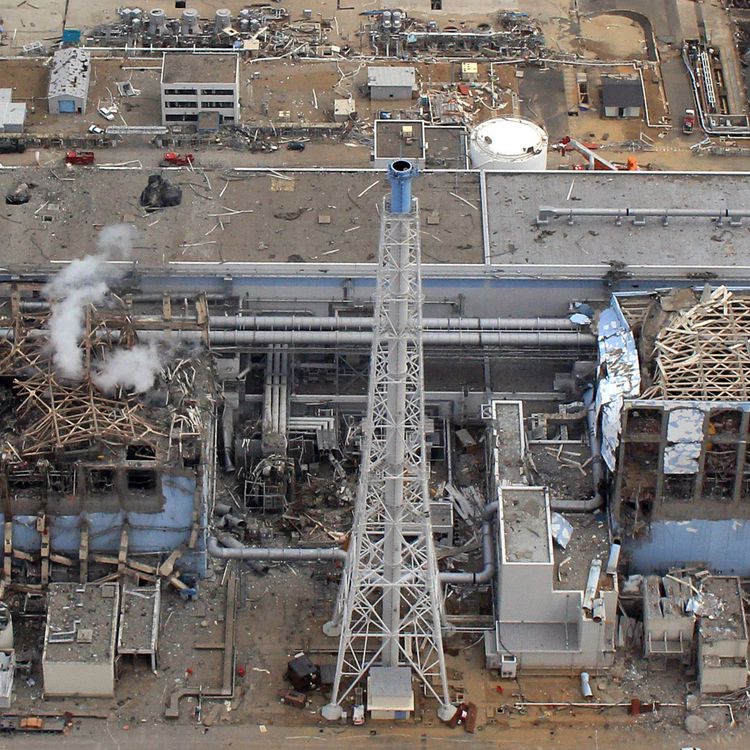
Can reactor fuel debris be safely removed from Fukushima Daiichi?
January 25, 2022
Source: University of Helsinki
Decommissioning and clean-up are ongoing at the Fukushima Daiichi Nuclear Power Plant (FDNPP); however, many difficult problems remain unaddressed. Chief amongst these problems is the retrieval and management of fuel debris.
Decommissioning and clean-up are ongoing at the Fukushima Daiichi Nuclear Power Plant (FDNPP); however, many difficult problems remain unaddressed. Chief amongst these problems is the retrieval and management of fuel debris. Fuel debris is the name given to the solidified mixture of melted nuclear fuel and other materials that now lie at the base of each of the damaged reactors (reactor Units 1 — 3). This material is highly radioactive and it has potential to generate enough neutrons to trigger successive nuclear fission reactions (uranium-235 breaks into two elements after capturing neutrons, emitting enormous amounts of energy, radiation, and more neutrons). Successive fission reactions would present a serious safety and material management risk.
One of the materials in nuclear reactors that can lower the number of neutrons interacting with uranium-235 is boron carbide (B4C). This was used as the control rod material in the FDNPP reactors, and it may now remain within the fuel debris. If so, it may limit fission events within the fuel debris.
Can the fuel debris be safely removed?
On March 11th 2011, the control rods were inserted into the FDNPP reactors to stop the fission reactions immediately after the earthquake, but the later tsunami destroyed the reactor cooling systems. Fuel temperatures soon became high enough (>2000 °C) to cause reactor meltdowns. Currently, the fuel debris material from each reactor is cooled and stable; however, careful assessment of these materials, including not only their inventories of radioactive elements but as well their boron content, a neutron absorber, is needed to ascertain if successive fission reactions and associated neutron flux could occur in the fuel debris during its removal. Many important questions remain: was boron from the control rods lost at high temperature during the meltdown? If so, does enough boron remain in the fuel debris to limit successive fission reactions within this material? These questions must be answered to support safe decommissioning.
Study shows direct evidence of volatilization of control rods during the accident.
Despite the importance of this topic, the state and stability of the FDNPP control rod material has remained unknown until now. However, work just published in the Journal of Hazardous Materials now provides vital evidence that indicates that most of the control rod boron remains in at least two of the damaged FDNPP reactors (Units 2 and/or 3).
The study was an international effort involving scientists from Japan, Finland, France, and the USA. Dr. Satoshi Utsunomiya and graduate student Kazuki Fueda of Kyushu University led the study. Using electron microscopy and secondary ion mass spectrometry (SIMS), the team has been able to report the first-ever measurements of boron and lithium chemistry from radioactive Cs-rich microparticles (CsMPs). CsMPs formed inside FDNPP reactor units 2 and/or 3 during the meltdowns. These microscopic particles were then emitted into the environment, and the particles hold vital clues about the extent and types of meltdown processes. The team’s new results on boron-11/boron-10 isotopic ratios (~4.2) clearly indicate that most of the boron inside the CsMPs is derived from the FDNPP control rods and not from other sources (e.g., boron from the seawater that was used to cool the reactors). Dr Utsunomiya states that the presence of boron in the CsMPs “provides direct evidence of volatilization of the control rods, indicating that they were severely damaged during the meltdowns.”
Ample boron likely remains in the reactors, but more research is needed
In the study the team also combined their new data with past knowledge on CsMP emissions. From this, they have been able to estimate the total amount of boron released from the FDNPP reactors was likely very small: 0.024-62 g.
Prof. Gareth Law, a co-author from the University of Helsinki emphasized that this “is a tiny fraction of the reactor’s overall boron inventory, and this may mean that essentially all of the control rod boron remains inside the reactors.” The team hopes that this should prevent excessive fission reactions in the fuel debris. Utsunomiya stresses that “FDNPP decommissioning, and specifically fuel debris removal must be planned so that the extensive fission reactions do not occur. Our international team has successfully provided the first direct evidence of volatilization of B4C during the FDNPP meltdowns, but critically, our new data indicated that large quantities of boron, which adsorbs neutrons, likely remains within the fuel debris.”
Prof. Rod Ewing, a co-author from Stanford University acknowledged the importance of these new findings but highlighted that the team’s measurements now need to be “extended in follow-up studies, where the occurrence and distribution of boron species should be characterized across a wide range of debris fragments.”
Prof. emeritus Bernd Grambow, a study co-author from SUBATECH, Nantes, France,highlights that the work “paves the way for improving the safety assessment of debris retrieval during decommissioning at FDNPP,” with the team’s methods “providing a template for further studies.” Utsunomiya concludes that “it is nearly 11 years since the FDNPP disaster. In addition to tireless efforts from engineers at the FDNPP, scientific contributions are becoming more and more important as tools to address the major difficulties that will be faced during decommissioning.”
Journal Reference:
- Kazuki Fueda, Ryu Takami, Kenta Minomo, Kazuya Morooka, Kenji Horie, Mami Takehara, Shinya Yamasaki, Takumi Saito, Hiroyuki Shiotsu, Toshihiko Ohnuki, Gareth T.W. Law, Bernd Grambow, Rodney C. Ewing, Satoshi Utsunomiya. Volatilization of B4C control rods in Fukushima Daiichi nuclear reactors during meltdown: B–Li isotopic signatures in cesium-rich microparticles. Journal of Hazardous Materials, 2022; 428: 128214 DOI: 10.1016/j.jhazmat.2022.128214
University of Helsinki. “Can reactor fuel debris be safely removed from Fukushima Daiichi?.” ScienceDaily. ScienceDaily, 25 January 2022. www.sciencedaily.com/releases/2022/01/220125093041.htm.
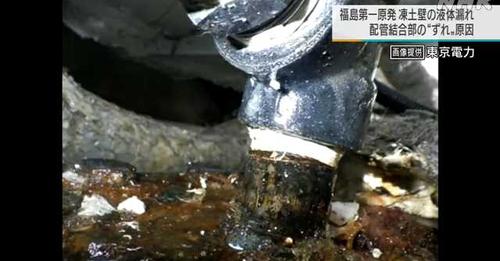
Leakage of liquid from frozen soil wall caused by misalignment of pipe joints TEPCO
January 25, 2022
Leakage of liquid from frozen soil wall caused by misalignment of pipe joints TEPCO
As part of the measures to deal with contaminated water at the Fukushima Daiichi Nuclear Power Plant, liquid used to freeze the ground leaked from the “frozen earth wall” that was installed to prevent underground water from flowing into the buildings. The Tokyo Electric Power Company (TEPCO) is investigating the cause of the damage and replacing the pipes.
On the 16th of this month at the Fukushima Daiichi Nuclear Power Plant, an estimated 4 tons of liquid at minus 30 degrees Celsius, which is used as a “refrigerant” to build a “frozen earth wall” to freeze the ground around the buildings, leaked. The leakage was estimated to be about 4 tons.
Tokyo Electric Power Company (TEPCO) investigated the leak and found that the joints between the pipes that feed the refrigerant and the underground pipes used to freeze the ground had shifted.
The parts of the joint were replaced by the 22nd of this month. The parts of other pipes will be replaced in the future and the cause of the shift of the joint is still being investigated.
https://www3.nhk.or.jp/lnews/fukushima/20220125/6050017050.html?fbclid=IwAR2oxPXF79fFf2r3EpIMvW7CLRrpys6OdsKPbPJuOeGf0_344tVeP6VBaxo
Fukushima Daiichi Nuclear Power Plant Incineration Facility to Start Operations in March, TEPCO Aims to Eliminate Outdoor Storage of Waste from Decommissioning Work, Including Logging / Fukushima

January 22, 2022
An incineration facility is expected to start full-scale operations in March to burn trees and other materials cut down to secure land for storage tanks for contaminated and treated water at TEPCO’s Fukushima Daiichi Nuclear Power Plant. The amount of waste from the decommissioning of the plant continues to increase, and much of it is being stored outdoors. TEPCO hopes to reduce the amount of waste by incineration and eliminate outdoor storage by FY2028.
The facility is a five-story building. It will incinerate wood, paper and other combustible materials contained in debris, as well as waste oil, and will process up to 95 tons per day.
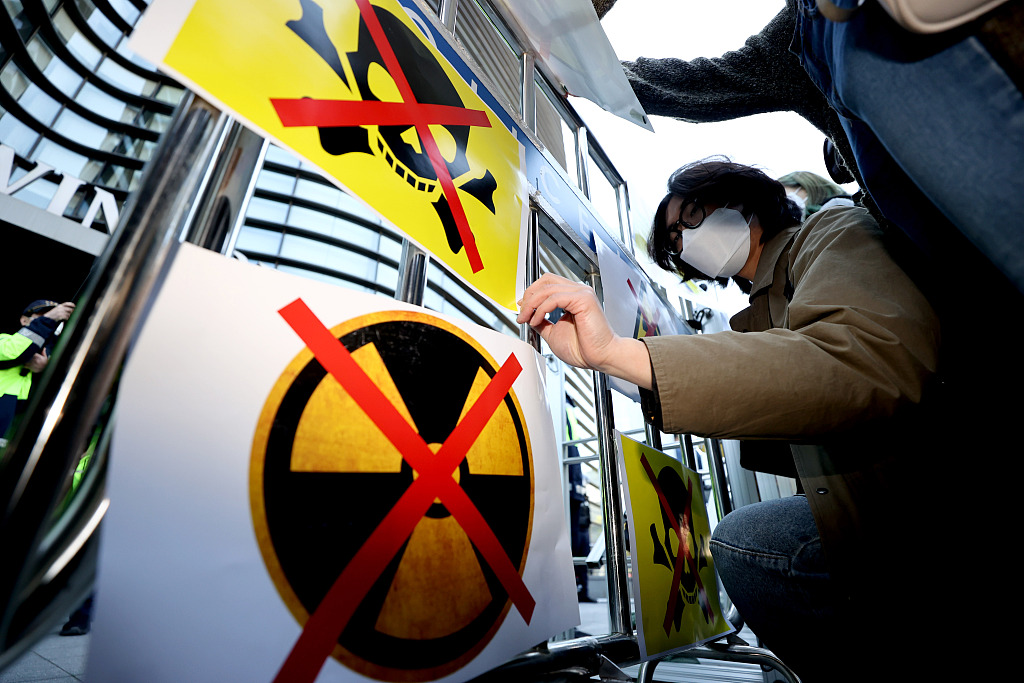
TEPCO reports coolant solution leakage at Fukushima nuclear plant
23-Jan-2022
Tokyo Electric Power Company (TEPCO), the operator of Japan’s crippled Fukushima nuclear power plant, has discovered that a coolant solution used to create an ice wall halting groundwater seepage into the reactor buildings has leaked from two storage tanks, Reuters reported on Sunday.
The company claims that there has been no impact on the wall or the environment, according to the report.
Still, it underscores the unpredictable challenges in the clean-up of the site, nearly 11 years after an earthquake and tsunami ravaged Japan’s northeastern coast, causing the world’s worst nuclear disaster since the Chernobyl accident in 1986.
On Sunday, TEPCO spokesperson Tsuyoshi Shiraishi said about four tonnes of a calcium chloride solution used to maintain the ice wall had leaked for the eighth time.
In the last such accident in December 2019, 16 tonnes spilled, likely due to metal fatigue resulting from vibrations caused by construction vehicles, Shiraishi said, adding that TEPCO is “now confirming the reason.”
There was no immediate impact on the wall’s function as it takes several months for the wall to thaw in the absence of coolant, he said.
Work on the underground frozen wall around unit 1-4began in June 2014 to block the flow of groundwater into the plant’s basements, according to China Media Group.
The 1.5-kilometer wall, which became operational in 2017, is made up of 1,568 pipes filled with a refrigerant and inserted 30 meters underground, turning the soil into a solid mass.
Only last year, Japan’s government approved the release of over 1 million tonnes of irradiated water from the site after treatment, starting around spring 2023. TEPCO last month said it would build a tunnel reaching into the sea for the operation.
Separately, a group of six men and women is set to file on January 27 a lawsuit against TEPCO claiming they developed thyroid cancer due to exposure to radiation from the Fukushima disaster, the Mainichi newspaper reported.
Coolant solution leaks at Fukushima Daiichi plant
The frozen wall was a temporary solution for maximum 7 years and the time has run out anyway.
Jan. 22, 2022
The operator of the crippled Fukushima Daiichi nuclear power plant says coolant solution used to create a frozen soil wall around reactor buildings has leaked.
The underground barrier is meant to block groundwater from flowing into the reactor buildings that were damaged as a result of the 2011 earthquake and tsunami.
Tokyo Electric Power Company has been using a calcium chloride solution to maintain the barrier. The firm has been storing the liquid at minus 30 degrees Celsius in four tanks.
TEPCO says liquid levels in two of the tanks dropped on January 16. It says its workers found a pool of the solution near the wall and estimated roughly 4 tons of it had leaked.
The utility says the wall remains capable of keeping groundwater out as it takes several months before the barrier begins to thaw. It adds that the solution does not harm the environment.
TEPCO says the pipe circulating the solution may have been partially damaged. It says it will pinpoint the damaged section and fix it as soon as possible.
1 This Month

of the week – Shut Down Drone Warfare!


Tell the Ukrainian Government to Drop Prosecution of Peace Activist Yurii Sheliazhenko

Petition to revoke the licensing of the Near Surface Nuclear Disposal Facility (NSDF) at Chalk River. https://www.ourcommons.ca/petitions/en/Petition/Details?Petition=e-7247
To see nuclear-related stories in greater depth and intensity – go to https://nuclearinformation.wordpress.com
-
Archives
- April 2026 (34)
- March 2026 (251)
- February 2026 (268)
- January 2026 (308)
- December 2025 (358)
- November 2025 (359)
- October 2025 (376)
- September 2025 (257)
- August 2025 (319)
- July 2025 (230)
- June 2025 (348)
- May 2025 (261)
-
Categories
- 1
- 1 NUCLEAR ISSUES
- business and costs
- climate change
- culture and arts
- ENERGY
- environment
- health
- history
- indigenous issues
- Legal
- marketing of nuclear
- media
- opposition to nuclear
- PERSONAL STORIES
- politics
- politics international
- Religion and ethics
- safety
- secrets,lies and civil liberties
- spinbuster
- technology
- Uranium
- wastes
- weapons and war
- Women
- 2 WORLD
- ACTION
- AFRICA
- Atrocities
- AUSTRALIA
- Christina's notes
- Christina's themes
- culture and arts
- Events
- Fuk 2022
- Fuk 2023
- Fukushima 2017
- Fukushima 2018
- fukushima 2019
- Fukushima 2020
- Fukushima 2021
- general
- global warming
- Humour (God we need it)
- Nuclear
- RARE EARTHS
- Reference
- resources – print
- Resources -audiovicual
- Weekly Newsletter
- World
- World Nuclear
- YouTube
-
RSS
Entries RSS
Comments RSS
 nuclear-news