The central government is covering the demolition costs for disaster-hit homes in Fukushima Prefecture, but 70 percent of the razing requests have not been completed.
The Environment Ministry plans to revise the procedures for handling demolition requests because the situation could further prevent residents from returning to the radiation-tainted areas.
As of Jan. 8, 5,780 applications — or over 70 percent of the 7,670 demolition requests — had not been processed.
Minamisoma aims to have the central government lift evacuation orders in most of the city this spring. But only 30 percent of the 2,600 houses earmarked for demolition have been razed, leaving 1,780 to go.
The town of Kawamata and the village of Katsurao also want evacuation orders lifted from April, but the razing is only 17 percent complete in Kawamata and 6 percent in Katsurao. Tamura and the village of Kawauchi have meanwhile torn down all homes earmarked for demolition.
The ministry says the time-consuming nature of the work is one reason for the backlog, since it involves confirming ownership, inspecting properties and calculating costs.
The central government has expanded the program to cover not only houses damaged by the quake and tsunami, but also those damaged by leaky roofs during the prolonged evacuation. This raised applications to a level officials can’t keep up with, the ministry said.
Evacuees are calling for speedier action. Tomoya Suzuki, 67, who fled the Odaka district of Minamisoma to the town of Shinchi further north, applied to have his house demolished last August. His application is still pending.
“I would like to go back to Odaka as soon as the evacuation orders are lifted, but I can’t rebuild my house unless it’s demolished,” he said.
The government has said it will lift evacuation orders in Minamisoma by March 2017.
“The central government has decided to lift evacuation orders when the living environment for the residents is not prepared yet,” he said. “I find that contradictory.”
The ministry says it cannot drastically increase manpower, and will deal with the glut by giving priority to those who wish to return.
“All publicity is good publicity.” Nowhere does this specious PR maxim ring more hollow than in Fukushima Prefecture. As if the horrors of the 2011 Great East Japan Earthquake and the meltdown at the Fukushima No. 1 nuclear plant weren’t traumatic enough, the region’s economic and agricultural recovery has been severely hampered by the reputational damage it has suffered since 3/11. If you think that’s difficult, try farming organically in Fukushima.
Falling prices and an aging agrarian population have made things tough for farmers all over Japan, but the presence of the word “Fukushima” on a supermarket label is often enough to discourage shoppers from buying produce, organic or not, grown in the area. Regardless of how far from contaminated areas it was grown — Fukushima is Japan’s third-largest prefecture — the region’s produce can’t easily shake the stigma of radiation.
An important hub in the network of NGOs, government bodies and corporate benefactors trying to change the prefecture’s image has been Orgando, a cafe and mini-market in Tokyo’s Shimokitazawa neighborhood, run with the backing of the Fukushima Organic Agriculture Network. For the past three years, Orgando has built a devoted following by serving Tokyo residents the best of Fukushima’s seasonal organic produce, in particular the crops that Fukushima is perhaps most known for: peaches, apples and rice. The menu changes daily, making creative use of the ingredients that come in, and the walls are proudly decorated with profiles of the 30 or so farmers who have grown the food. Sadly, as with many post-3/11 schemes, Orgando was only guaranteed official financial support until the five-year post-disaster milestone and is set to close March 20.
Orgando has played a valuable role in forging links between local producers and urban consumers, and dispelling the idea that all the region’s produce is dangerously contaminated — fruit and vegetables sold in the store are clearly labeled to show the levels of cesium isotopes they contain. Official food-safety guidelines stipulate 100 becquerels of radioactive isotopes per kilogram as the acceptable limit for adults, with 50 becquerels/kg for dairy produce and infant food, and 10 becquerels/kg for drinking water. The daikon, carrots and strawberries on offer this week contain no detectable cesium, while, according to their labels, bags of beans contained 6 becquerels/kg, a negligible dose of radiation compared to our daily exposure from soil and cosmic rays.
Allaying fears about contamination was one of the themes discussed during a February event in Tokyo focused on the role organic agriculture could play in Fukushima’s recovery, organized by Ryo Suzuki of Japan Civil Network.
“People mistakenly think that everything from Fukushima is dangerous,” Norio Honda of Genki ni Narou Fukushima — an NPO promoting local revival — said at the event.
Setsuko Maeda, of agricultural collective Tanemaki Project Network agrees.
“Fukushima isn’t only about radiation,” she says. “Our farming and fisheries are full of vitality, and it’s important not to forget that.”
The event gathered representatives from organizations such as Oxfam Japan, A Seed Japan and travel agency JTB, to speak about the challenges facing organic producers in the prefecture, along with some of the major success stories. The atmosphere was convivial, and the presentations were interspersed with opportunities to sample Fukushima produce, including octopus, meat, potatoes, peaches and apple juice, and high-grade junmai sake made from local organic rice, fittingly named Kiseki or “miracle.”
Another major theme was bioremediation, the use of crops to cleanse contaminated soil of radioactive isotopes. One plant that has previously been used to reduce levels of cesium and strontium isotopes in soils around Chernobyl is rapeseed. The Green Oil Project aims to re-create these results in the Futaba district around the Fukushima No. 1 nuclear plant. Water-soluble cesium isotopes are sequestered in the plant’s tissues, which are fermented to produce biogas methane. The canola oil extracted from the seeds has a cesium content below the detectable limit of 0.03 becquerels/kg. To promote the initiative, local high school students created Yuna-chan, a cute mascot whose name combines the kanji for oil and rapeseed to market the organic oil. U.K. cosmetics company Lush, a keen supporter of organic produce, has also agreed to take a portion of the oil for use in its beauty products.
Ultimately, though, human connections were seen as most crucial to giving Fukushima produce the audience it deserves, and to generating an interest in farming among young people.
“It’s about exchange,” says Akihiro Asami, secretary general of the Fukushima Organic Agriculture Network. “Producers can come to Tokyo, but I want consumers to visit Fukushima, and not just meet selected farmers but ordinary residents, too. If they sample rural life there, they’ll want to get more involved to support those communities.”
Event-organizer Suzuki is positive about what the future holds: “By 2020, I really think the knowledge accumulated through the activities of farmers and NPOs in Fukushima will be ready to benefit sustainability and rural development not just in Japan, but around the world.”
I don’t think that what may be good for flowers is also good for vegetables which are to go into the stomach of people…
Farmer Yukichi Takahashi, 76, checks anthurium flowers grown in “soil” made up of polyester fibers in Kawamata, Fukushima Prefecture.
KAWAMATA, Fukushima Prefecture–Farmers here have started growing flowers using polyester “soil” in the hope that the cultivation method will dispel concerns among consumers about radioactive contamination from the nuclear disaster.
The farmers are being helped by a team from Kinki University’s Faculty of Agriculture in Higashi-Osaka, Osaka Prefecture, and have started cultivating anthurium ornamental plants utilizing the soil, which is made up of filamentous polyester fabrics.
“This cultivation method allows us to grow plants without concern over the negative impact of the nuclear accident,” said Yukichi Takahashi, a 76-year-old farmer who is a key member of the project. “My dream is that our flowers will be used in bouquets to be presented to athletes on the podium during the 2020 Tokyo Olympics.”
In a test run, 2,000 anthurium plants, known for their colorful, heart-shaped flowers, were grown in a 30-meter-long greenhouse in the Ojima district of Kawamata, located about 50 kilometers northwest of the crippled Fukushima No. 1 nuclear power plant.
Local farmers who participate in the project will set up an agricultural corporation later this year with the aim of eventually starting full-fledged farming and shipment.
The project began in spring 2014 after the university researchers learned about the plight of local farmers when they visited to measure radiation levels in the town, which is located on a high plateau surrounded by mountains.
“By using polyester fabrics as a cultivation medium instead of ground soil, this new method will help protect Fukushima farmers from harmful rumors that may stem from consumers’ concerns over soil contamination,” said project leader Takahiro Hayashi, a professor of horticulture at the university, which is known for its advanced aquafarming and agricultural programs.
Kawamata once prospered through livestock and tobacco farming, but the nuclear disaster, triggered by the Great East Japan Earthquake and tsunami on March 11, 2011, dealt a heavy blow to the area’s agricultural industry by spreading a large amount of radioactive fallout.
A southeastern strip of the town is still designated as a “zone being prepared for the lifting of the evacuation order,” and local residents remain evacuated from the district in temporary housing and elsewhere.
While radiation levels in the town’s agricultural produce have passed safety tests, consumers’ lingering concerns over possible contamination have undercut market competitiveness.
Biologist Timothy Mousseau has spent years collecting mutant bugs, birds and mice around Chernobyl and Fukushima. In a DW interview, he shares some surprising insights into the effects of nuclear accidents on wildlife.
DW: Professor Timothy Mousseau, did you collect these mutant firebugs [pictured at the top of the page]?
Timothy Mousseau: Yes, the firebugs are really an eye-opener. My research partner Anders Moller and I were visiting Chernobyl on April 26, 2011. We were wandering around Pripyat collecting flowers, to study their pollen, when Anders reached down to the ground and pulled up this little bug with red and black markings. He said: “Tim, look, it’s a mutant – it’s missing an eye spot!”
From then on we started collecting these little bugs in each place we visited, from the most contaminated parts of the Red Forest to relatively clean areas in abandoned villages. Eventually we had several hundred of these little critters. It was very obvious that deformed patterns were much more prevalent in areas of high contamination.
This is just one of many similar anecdotes about the deformed critters of Chernobyl. Literally every rock we turn over, we find a signal of the mutagenic properties of the radiation in the region.
A pair of great tit birds collected near Chernobyl – left is normal, the individual on the right has a facial tumor
Is there a threshold of radiation below which there’s no effect?
The impact of radiation on rates of mutation, cancer and mortality varies a good deal by species. But statistically, there’s a simple relationship with dose. Small dose, small effect; big dose, big effect. There doesn’t appear to be a threshold below which there’s no effect.
Interestingly, organisms living in nature are much more sensitive to radiation than lab animals – comparing mice raised in labs and mice in the wild, exposed to identical levels of ionizing radiation, the mortality rate among wild mice is eight or 10 times that of lab mice. It’s because lab animals are protected from most stressors – like cold or hunger.
Are plants and trees affected too?
Yes, we’ve collected a lot of deformed pollen. Seen a lot of deformed trees, too. Pines often show growth-form abnormalities, even in normal areas with no radionucleotide contamination. Sometimes it’s an insect infestation, sometimes a hard freeze at the wrong time – you can find such anomalies anywhere.
But in contaminated areas of Ukraine, we have a correlation between frequency of abnormality and the Chernobyl event. It’s pretty strong evidence. There was a recent paper showing a very similar phenomenon in Fukushima. The trees there are very young, but will likely also be twisted up in knots 30 years from now!
Mousseau’s field crew collecting pollen and insect samples on the left, with the Chernobyl reactor in the distance. Right, a mutant pine tree at Chernobyl
What are the long-term effects of radiation on animal or plant species in contaminated areas? They’ve had their genomes altered. Will mutants persist?
Well, in the long run, no. The thing is, some background rate of mutations happens constantly in every species, even in uncontaminated areas – albeit at a much lower rate than in areas contaminated by nuclear accidents. So most genetic variants have been tried already. The great majority are either neutral or slightly deleterious. If a mutation had any benefit to offer, it would already be there in the population.
So the long-term effect of nuclear accidents on biodiversity is … none?
Yes, that’s right. Over evolutionary time, we expect that populations will return to normal after the mutagen disappears. Radionucleotides decay, hot sites eventually cool down, mutations become less frequent again, and healthy animal and plant populations recolonize the sites. So the genetic status quo ante returns – except if mutations have occurred that permanently enhance fitness, but that’s very rare.
Mousseau (left) and colleague Anders Moller recording measurements in the field at Chernobyl
Some mutations might persist for a while if they’re adaptive during the hot phase. For example, there’s selection for animals whose cells produce a higher antioxidant load, which makes them more resistant to the effects of ionizing radiation. But that protection comes at a metabolic cost. After radiation levels die down, those variants will be selected back out of the population.
Where things get complicated is when the harmful mutations are recessive, that is, when it takes two copies [one for each chromosome] for the expression of the mutation. Many mutations fall into this category. They can accumulate in populations because they’re not expressed until two copies come into the same individual [one from the mother, the other from the father].
Because of this, populations can be affected by such mutations for many generations even after the mutagen is removed, and also, via dispersal, in populations that were never affected by the mutagen.
How can radioactive contamination interact with other problems that affect ecosystems, like habitat loss or climate change?
Certainly climate change is an additional stressor that is likely to interact with radiation to affect populations. We have demonstrated that while swallows in most places have moved their breeding dates forward in response to warming, in the Chernobyl area they are actually delayed. We hypothesize that this is due to the stress from the radioactive contaminants.
The Red Forest near Chernobyl in Ukraine presents a high risk of fire, as a lack of bacteria prevents the trees from decaying
The biggest fear at present is related to the observation of hotter and drier summers in Ukraine, and the resulting increase in number and size of forest fires. Last summer there were three large fires, and one of them burned through some very contaminated areas.
We have predicted that such events could pose a significant threat to both human populations and the environment via re-suspension and deposition of radionuclides in the leaf litter and plant biomass.
In addition to the threat of catastrophic wildfire spreading nuclear contamination, birds and mammals also move around. Do they absorb radioactive elements in their food and water in contaminated sites, carry them elsewhere, thus dispersing the contamination more widely?
Do animals move radionuclides? Yes! I did a study years ago that showed very significant amounts of radionuclides are exported every year by birds. But it seems unlikely that the amount is enough to cause measurable health effects – unless you’re eating the birds. It is known that some people living outside the Chernobyl Exclusion Zone are getting very significant doses from hunting the contaminated wild boar that leave the zone.
Mouse with cataract collected near Chernobyl – the more radioactive the site, the higher the frequency of defects
This year marks five years since the Fukushima accident, and 30 years since Chernobyl. How long will the contaminated zones around Chernobyl and Fukushima be mutagenic and dangerous?
Chernobyl was a nuclear fire and ongoing fission event for 10 days, with strontium, uranium and plutonium isotopes strewn into the landscape. They have long half-lives, so many areas will remain hazardous for centuries, even thousands of years.
Fukushima was largely a cesium event, and cesium radionucleotides have a relatively short half-life. The area will mostly naturally decontaminate itself within decades, at most within a couple hundred years.
Timothy Mousseau is a professor of biological sciences at the University of South Carolina in Columbia, South Carolina. He is one of the world’s leading experts on the effects of radionucleotide contamination from nuclear accidents on wild bird, insect, rodent, and plant populations.
Judge Hideki Kanazawa, third from right in the front row, walks through an area evacuated due to radiation while wearing protective clothing, near the homes of plaintiffs in a lawsuit over the nuclear disaster, in Futaba, Fukushima Prefecture, on March 17, 2016.
FUKUSHIMA–Fukushima District Court judges inspected the houses of three evacuated plaintiffs on March 17 in connection with a lawsuit filed against the government and Tokyo Electric Power Co. over the nuclear disaster.
It marked the first visit by judges to evacuation zones regarding litigation concerning the accident at the Fukushima No. 1 nuclear power plant, which was caused by the Great East Japan Earthquake and tsunami in March 2011.
Called “Nariwai Sosho” (livelihood suit), the lawsuit has about 4,000 plaintiffs seeking consolation money and the restoration of their former lives that were lost because of the nuclear accident.
What was gleaned from the on-site inspections will be used as evidence in the trial.
The plaintiffs had called for the judges to visit the affected sites and hear their explanations to assess the scope of damage of the nuclear disaster.
The inspections involving about 50 people, which were closed to the media, started at 10:45 a.m. and ended around 4:30 p.m.
Three judges, including Presiding Judge Hideki Kanazawa, first visited the home of Sadatoshi Sato, a 68-year-old who raised livestock before the disaster, in Namie.
Other plaintiffs, government officials and TEPCO representatives accompanied the judges. All participants wore white protective suits and masks.
At Sato’s home, the judges viewed empty cattle sheds. Sato had been raising about 150 cattle when the nuclear accident unfolded, but most of them starved to death while he was evacuating. Sato also took the judges to the site where the dead cattle were buried.
“I want the judges to give a thoughtful ruling so that the dead cattle would rest in peace,” Sato told reporters after the inspection.
The judges also visited the homes of 67-year-old Yuji Fukuda in Futaba and a woman in Tomioka who had been operating a piano school out of her house before the nuclear accident.
Fukuda’s house is in a difficult-to-return zone about 4 kilometers from the Fukushima No. 1 nuclear plant. He showed the judges his once-thriving garden. He also told them about a local store that is now desolate.
“I told the judges from the bottom of my heart that I am not the only one who has suffered,” Fukuda said. “I had wanted the judges to come sooner. But my hope has finally come true.”
Judges clad in protective gear visit Fukushima in class action suit
FUKUSHIMA — Judges from the Fukushima District Court donned protective gear to make an on-site visit on March 17 to towns evacuated due to high radiation levels, as they deliberate a class action lawsuit over the Fukushima nuclear disaster.
Some 3,900 people who lived in Fukushima Prefecture and adjacent prefectures at the time of the meltdowns at the Fukushima No. 1 nuclear plant have sued the government and plant operator Tokyo Electric Power Co. for compensation and a restoration of their hometowns to their pre-disaster state. According to lawyers for the plaintiffs, the March 17 visit is the first time that a court handling a lawsuit over the Fukushima disaster has made an on-site visit.
The visit consisted of around 50 people, including three judges and lawyers for both the plaintiffs and the defendants. They went to three evacuated towns, Futaba, Namie and Tomioka, where they looked inside the homes of plaintiffs, thrown into disorder by scavenging animals and full of strewn furniture and bad odors. They also walked by JR Futaba Station, now unmanned and silent.
Plaintiff Yuji Fukuda, 67, who evacuated from Futaba and is now living in the city of Iwaki, said after the visit, “The judges understood that we are continuing to suffer from being driven from our towns and having to leave our homes and properties unattended.”
At his cow barn, Sadatoshi Sato, 68, livestock farmer and plaintiff from Namie, explained to the judges how most of the around 150 cattle he kept had died from starvation after the town was evacuated.
The plaintiffs in the case are seeking 20 million yen in compensation each for 40 people who lived in areas that are under evacuation order. They are also seeking a reduction in radiation doses to pre-disaster levels, and payment of 50,000 yen per month to each plaintiff for the duration until this happens.
A vice foreign minister apologized after an exhibition in Ethiopia about the Fukushima nuclear disaster was scrapped following complaints from the Japanese Embassy that the content was “inappropriate.”
The exhibition, planned by volunteers of the Japan International Cooperation Agency (JICA), was supposed to be part of the Japan Festival held in the Ethiopian capital of Addis Ababa on Oct. 31, 2015.
The festival, jointly hosted by the Japanese Embassy, JICA and other entities to promote a better understanding of Japan, went off as scheduled in the east African nation. But the exhibition about the accident at the Fukushima No. 1 nuclear power plant was called off after the embassy warned that it might withdraw its participation in the event.
Vice Foreign Minister Seiji Kihara on March 16 apologized for having completely shut the door on the Fukushima exhibition.
“It is important to make known the actual situation in the disaster-hit areas, including Fukushima, so we should have continued our discussions with the aim of holding the exhibition,” Kihara said at a meeting of the Lower House Committee on Foreign Affairs.
JICA’s volunteers, including members of the Japan Overseas Cooperation Volunteers, conceived the idea for the Fukushima exhibition.
An official of the Japanese Embassy, however, criticized the content, telling the volunteers, “It is inappropriate at a time when the central government is working hard to dispel groundless rumors regarding the disaster.”
JICA also said it received an e-mail from the embassy that said, “If the exhibition is one that runs counter to the policies of the central government, such as by taking an ‘anti-nuclear’ stance, it would be difficult for us to jointly host the event.”
After the e-mail was received, JICA’s local office agreed to cancel the exhibition, JICA said.
For sure such gibberish pseudo-scientific study, totally biased, must have been financed by the nuclear lobby to completely whitewash the Japanese Government failure to take the necessary real measures to adequately and effectively protect the eastern Japan population ( 50 millions people) from the effects of the March 2011 Fukushima explosions’ radioactive plumes, then from the radionuclides loaded gases released by Fukushima Daiichi for the past 5 years continuously contaminating the people, their living environment, plus their food and water supply.
Furthermore it chooses deliberately to ignore all the scientific studies made in the past 50 years about the harmful effects of radiation on various living species.
At the time on March 2011, the US Embassy in Tokyo had advised the Japanese Government to evacuate all the population within a 50-mile radius zone. To not avail as the Japanese Government chose to evacuate only within a 12 to 19-mile radius zone , evacuating in the end only 160,000 residents instead of the 2 millions residents as advised by the US Embassy.
A gate is shut at the evacuation zone in Namie, Fukushima Prefecture, on Feb. 14. In such places, the scars are still obvious and many evacuees who fled are unwilling to return.
Fukushima evacuations were not worth the money, study says
LONDON – The costs of evacuating residents from near the Fukushima No. 1 plant and the dislocation the people experienced were greater than their expected gain in longevity, a British study has found.
The researchers found that at best evacuees could expect to live eight months longer, but that some might gain only one extra day of life. They said this does not warrant ripping people from their homes and communities.
The team of experts from four British universities developed a series of tests to examine the relocations after the Fukushima crisis and earlier Chernobyl disaster in 1986.
After a three-year study, the academics have concluded that Japan “overreacted” by relocating 160,000 residents of Fukushima Prefecture, even though radioactive material fell on more than 30,000 sq. km of territory.
“We judged that no one should have been relocated in Fukushima, and it could be argued this was a knee-jerk reaction,” said Philip Thomas, a professor of risk management at Bristol University. “It did more harm than good. An awful lot of disruption has been caused However, this is with hindsight and we are not blaming the authorities.”
The team used a wide range of economic and actuarial data, as well as information from the United Nations and the Japanese government.
In one test, an assessment of judgment value, the researchers calculated how many days of life expectancy were saved by relocating residents away from areas affected by radiation.
They compared this with the cost of relocation and how much this expenditure would impact the quality of people’s lives in the future.
From this information, they were able to work out the optimal or rational level of spending and make a judgment on the best measures to mitigate the effects of a nuclear accident.
Depending on how close people were to the radiation, the team calculated that the relocations added a period of between one day to 21 days to the evacuees’ lives.
But when this was compared with the vast amounts of money spent, the academics came to the conclusion that it was unjustified in all cases.
In some areas, they calculated that 150 times more money was being spent than was judged rational.
Thomas adds, the tests do not take into account the physical and psychological effects of relocating, which have been shown to have led to more than 1,000 deaths among elderly evacuees.
Other studies have also found that once people have lived away for a certain period of time it can become increasingly difficult to persuade them to return.
After Chernobyl, the world’s worst nuclear disaster, around 116,000 people were initially relocated away from the disaster zone.
Looking back on the incident, the team judged it was only worthwhile to relocate 31,000 people because they would have lost in excess of 8.7 months in life expectancy had they remained.
However, for the rest of the 116,000 people, it would have been a more rational decision to keep them where they were, given that their average loss of life was put at three months.
Four years later, a further 220,000 people were relocated from areas close to Chernobyl. Researchers found this unjustified.
Thomas says the loss in life expectancy following a nuclear accident has to be put into context alongside other threats all people face.
For example, it has been claimed that the average Londoner will lose about 4½ months in life expectancy due to high pollution levels.
Thomas concludes governments should carry out a more careful assessment before mounting a relocation operation of at least a year. A temporary evacuation could be a good idea while authorities work out the risk from radiation, he said.
In the future, Thomas would like to see more real-time information made available to the public on radiation levels in order to avoid hysteria and bad planning.
On a plus note, the team found that other remedial measures — decontaminating homes, deep ploughing of soil and bans on the sales of certain food products — were far more effective.
Thomas has already discussed his findings with colleagues at the University of Tokyo and he is keen that his findings can help better quantify the risks from radioactive leaks.
The project was sponsored by the Engineering and Physical Sciences Research Council, Britain’s main agency for funding research in engineering and the physical sciences. It was intended to give advice for nuclear planners both in Britain and India.
The research team comprised specialists from City University in London, Manchester University, the Open University and Warwick University.
Merchandise remains strewn on the floor of a convenience store in Okuma, Fukushima Prefecture, after the Great East Japan Earthquake shook the town on March 11, 2011
Fukushima towns co-hosting nuclear plant frozen in time
In Okuma, Fukushima Prefecture, a peek inside a convenience store revealed merchandise strewn all over the floor, with the large clock in the back frozen at 2:46 p.m., when a magnitude-9.0 temblor struck five years ago.
Inside the newsstand placed at the entrance of the store, located along the prefectural road, was the March 11, 2011, edition of newspapers, which were discolored.
No signs of people were seen in Okuma and Futaba, the towns co-hosting the crippled Fukushima No. 1 nuclear power plant on March 12, the fifth anniversary of the first hydrogen explosion that occurred at the nuclear complex.
The only movement that could be glimpsed was the occasional passing of vehicles to and from the plant, which is preparing for decommissioning work.
Okuma and Futaba have been evacuated since the onset of the nuclear crisis following the Great East Japan Earthquake and tsunami on March 11, 2011.
Residents have no idea if and when they can ever return to live in their homes since the municipalities are designated in the off-limits zone due to high radiation levels.
Remnants of the disaster still loom over the towns five years later.
In Okuma, pieces of broken walls and window glass were scattered on the street near JR Ono Station, which used to be the busiest area of the town, although the street was cleared to some extent to let vehicles pass through.
The only sound that could be heard was one that a zinc sign made as it swung in the occasional breeze.
Neighboring Futaba was also like a ghost town. Laundry was seen through the window still hanging inside one of the damaged structures in the center of Futaba, five years after it was set out to dry.
In full protective gear, members of a Ground Self-Defense Force unit in Koriyama, Fukushima Prefecture, are seen before they began trying to contain the crisis unfolding at the Fukushima No. 1 nuclear power plant on March 12, 2011.
Government reluctant to specify SDF role in nuclear crisis
When the specter of meltdowns loomed at the Fukushima No. 1 nuclear power plant in March 2011, the legal responsibility fell to Tokyo Electric Power Co., the operator, to contain the crisis.
But as TEPCO employees became overwhelmed, Self-Defense Forces members and Tokyo firefighters were quickly sent to the site at the “request” of the prime minister.
Five years later, there is still no clear delineation of responsibility for the SDF and firefighters to be dispatched or to the extent of their involvement in the event of a nuclear emergency.
The government, the secretariat of the Nuclear Regulation Authority, which crafted new regulations for nuclear plants after the Fukushima disaster, the SDF and the Fire and Disaster Management Agency, which oversees corps of firefighters across the nation, each has differing views.
“Our understanding is that operators of nuclear power plants are presumably prepared (to tackle a nuclear emergency) in line with the world’s most stringent regulations,” said a Defense Ministry official, referring to the nation’s new regulations. “We do not believe that SDF members will be able to do what goes beyond the capability of nuclear power plant operators.”
On March 11, the fifth anniversary of the Great East Japan Earthquake and tsunami, the government declared in a report after a meeting of Cabinet members related to nuclear energy that it will “bear the responsibility for dealing with” a nuclear accident.
The report mentioned the use of “tactical squads” such as the SDF and fire departments to address the situation.
However, what were described as their operation to contain an emergency in the report was “transportation of materials” and other efforts. It has yet to be determined as to what extent the SDF, fire departments and other squads should be prepared to help contain a nuclear contingency in terms of equipment and operations.
When the crisis unfolded at the Fukushima No. 1 nuclear plant following the magnitude-9.0 quake and tsunami, a team of five Ground Self-Defense Force members in Koriyama, Fukushima Prefecture, was tasked with sending cooling water to the overheating No. 1 reactor on March 12, 2011.
The troops had to work amid rising radiation levels at the site, which was a quagmire from the mountain of wreckage left by the quake and tsunami. After the work was forced to be temporarily halted by the hydrogen explosion at the No. 1 reactor that day, the team had to return to work to inject cooling water into the reactor.
When it became obvious that TEPCO could no longer handle such a severe accident on its own, firefighters and police were also deployed to the plant to keep sending water into the reactors.
While the SDF sprayed water from above, firefighters, police and the SDF worked together to direct a spray from the ground.
The law on special measures concerning nuclear emergency preparedness, established in 1999, stipulates the responsibility for containing an emergency lies with the operator of a nuclear facility.
Under the current setup, even if an SDF unit or firefighters are deployed to the site, their activities are to be limited to offering “assistance” to workers grappling with the accident.
In April, the exposure limit to radiation of workers responding to a nuclear emergency will be raised to 250 millisieverts from 100 millisieverts, in light of the Fukushima disaster.
But the cap will only be applied to workers at a nuclear power plant as well as inspectors from the secretariat of the Nuclear Regulation Authority, not SDF members or firefighters.
According to the Defense Ministry, it does not envisage an operation to address a nuclear accident under its directives on responding to a nuclear disaster.
SDF members, in fact, have not conducted drills to deal with such an accident since the SDF’s fleet does not include a nuclear-powered aircraft carrier or similarly powered submarine. Japan does not possess nuclear weapons, either.
The government’s Fire and Disaster Management Agency, too, is reluctant to take on the responsibility.
The new regulations concerning nuclear facilities, which took effect in 2013, require plant operators to have in place a number of fire trucks tasked with sending water to reactors in the event of an accident.
“It is clear that plant operators are now capable of carrying out the kind of work that firefighters were involved in the Fukushima accident,” said an agency official.
In the Fukushima disaster, the deployment of SDF members and firefighters was based on the request from the prime minister, who heads a task force on responding to a nuclear disaster.
Although the Defense Ministry and Fire and Disaster Management Agency keeps a distance from a deployment of their members in the event of a future nuclear accident, the NRA’s secretariat does not.
“If a contingency gets out of the control of the operator, the government might be forced to get involved to contain the accident,” said an official with the NRA secretariat.
17,000 items wait for owners in Fukushima lost and found center
NAMIE, Fukushima Prefecture–In a former gift shop along National Route 6, more than 17,000 items are housed here in a lost and found facility, including disfigured school backpacks, discolored stuffed animals and stained photos.
They are belongings found in the aftermath of the Great East Japan Earthquake and tsunami and waiting to be returned to their rightful owners.
On March 11, the fifth anniversary of the twin disasters, a 26-year-old man and his family stopped by on their way back from a visit to the family grave.
The man picked up a photo holder and carefully sifted through the pictures.
“I am looking for photos from my childhood,” said the man, who has been evacuating in Iwaki, in the prefecture, after his house in Namie was swept away by the tsunami.
The lost and found center, called “The center to display mementoes,” was converted from the former gift facility.
In addition to photos and school backpacks, it houses toys and decorative articles, items that were not broken.
People cleaned them and stored each article with a note mentioning the date and location of the discovery.
While similar lost and found facilities were set up in Miyagi and Iwate, the two other prefectures hardest hit by the 2011 quake and tsunami, shortly after the disaster, the one in Namie just opened in summer 2014.
It was because work to retrieve what was left under debris had been delayed due to the fallout from the disaster at the nearby Fukushima No. 1 nuclear power plant. Evacuees in the town with a population of about 19,000 remain displaced today.
Visitors to the lost and found facility numbered about 3,200 and about 1,600 pieces have been returned to their owner.
Noboru Kawaguchi, 66, who serves as a guide at the facility, is one of those who were reunited with pieces they treasured.
Kawaguchi, who commutes from Soma, a city 30 kilometers north of Namie, had discovered his photos there.
“I have lost everything in the tsunami,” he said, referring to the loss of his parents and his house. “I am always so touched by a visitor discovering something here, as it happened to me.”
Although many similar facilities in Iwate and Miyagi prefectures have closed over time, the center in Namie will remain open at least through spring next year.
Five years ago an earthquake off the coast of Japan triggered a tsunami and a series of meltdowns at the Fukushima nuclear plant. Kaori Suzuki’s home is nearby – determined to stay, but worried about her children’s health, she and some other mothers set up a laboratory to measure radiation.
A woman in a white lab coat puts some yellow organic material on a slide, while grey liquid bubbles in vials behind her. Other women, one of them heavily pregnant, discuss some data on a computer screen. A courier delivers a small parcel which is opened and its contents catalogued.
But this is no ordinary laboratory. None of these women trained as scientists. One used to be a beautician, another was a hairdresser, yet another used to work in an office. Together they set up a non-profit organisation – Tarachine – to measure radiation in the city of Iwaki, 50km (30 miles) down the coast from the Fukushima nuclear plant.
Kaori Suzuki, the lab’s director, shows me a list of results. “This is the level of strontium 90 in Niboshi, dried small sardines, from the prefecture of Chiba,” she says.
“What about this food?” I ask, pointing out a high number.
“Mushrooms have higher levels [of radiation]. The government has forbidden people from eating wild mushrooms, but many people don’t care, they take them and eat,” she says.
The lab mainly measures the radioactive isotopes caesium 134 and 137, and collects data on gamma radiation. Strontium 90 and tritium were only added to the list in April last year. “Since they emit beta rays we weren’t able to detect them until recently. Specific tools were necessary and we couldn’t afford them,” says Suzuki. Thanks to a generous donation, they now have the right equipment.
Five years ago, Suzuki knew nothing about radiation. She spent her time looking after her two children and teaching yoga. The earthquake on 11 March 2011 changed everything.
“I’ve never experienced so much shaking before and I was very scared. Right from the moment it started I had a feeling that something might have happened to the nuclear plant,” she says. “The first thing I did was to fill up my car with petrol. I vividly remember that moment.”
The authorities evacuated the area around the nuclear plant – everyone within a 20km (12-mile) radius was told to leave, and those who lived up to 30km (18 miles) away were instructed to stay indoors. Despite living outside the exclusion zone, Suzuki and her family fled and drove south. The roads were congested with cars and petrol stations ran dry.
“We didn’t come back home until the middle of April and even then we wondered if it was safe to stay,” says Suzuki. “But my husband has his own business with 70 employees, so we felt we couldn’t leave.”
Although radiation levels in Iwaki were officially quite low, the “invisible enemy” was all people could talk about. Conversations with friends changed abruptly from being about children, food and fashion, to one topic only: radiation. “You can’t see, smell or feel it, so it is something people are afraid of,” says Suzuki.
Above all, people didn’t know what was safe to eat.
“It was a matter of life and death,” she says.
Fukushima is farming country and many people grow their own vegetables. “People here love to eat home-grown food and there’s a strong sense of community with people offering food to their friends and neighbours,” says Suzuki. This caused a lot of anxiety. “A difficult situation would arise where grandparents would be growing food, but younger mothers would be worried about giving it to their children.”
Suzuki formed the group “Iwaki Action Mama” together with other mothers in the area. At first they organised demonstrations against nuclear power, but then they decided on a new tactic – they would learn how to measure radiation themselves.
They saved and collected $600 (£420) to buy their first Geiger counter online, but when it arrived the instructions were written in English, which none of them understood. But they persevered and with the help of experts and university professors, organised training workshops. Soon they knew all about becquerels, a unit used to measure radiation, and sieverts, a measure of radiation dose. They would meet at restaurants and cafes to compare readings.
Becquerels and Sieverts
•A becquerel (Bq), named after French physicist Henri Becquerel, is a measure of radioactivity
•A quantity of radioactive material has an activity of 1Bq if one nucleus decays per second – and 1kBq if 1,000 nuclei decay per second
•A sievert (Sv) is a measure of radiation absorbed by a person, named after Swedish medical physicist Rolf Sievert
In November 2011 the women decided to get serious and set up a laboratory. They raised money and managed to buy their first instrument designed specifically to measure food contamination – it cost 3 million yen (£18,500, or $26,400).
They named the laboratory Tarachine, after a strong female character in Japanese theatre who speaks the language of Samurai warriors. “We felt as though we were on the front line of a battlefield,” says Suzuki. “When you’re at war you do what you have to do, and measuring was the thing we felt we had to do.”
Today Tarachine has 12 employees, and more work than it can handle. People bring in food, earth, grass and leaves from their backyards for testing. The results are published for everyone to see. At first the lab was able to provide results after three or four days, but its service has become so popular it can’t keep up. “We have so many requests now that it can take three months,” says Prof Hikaru Amano, the lab’s technical manager.
Amano confesses he was surprised that a group of amateurs could learn to do this job so accurately, but says it is important work.
People began to mistrust the nuclear contamination data provided by the government and by the Tokyo Electric Power Company (Tepco), which manages the nuclear plant, he says.
About 100 so-called “citizen laboratories” have since sprung up, but Tarachine is unusual because it monitors both gamma and beta rays – most can only measure gamma rays – and because it tests whatever people want, whether it’s a home-grown carrot or the dust from their vacuum-cleaner.
The government does take regular readings from fixed points in Fukushima prefecture. It also check harvests and foods destined for the market – for example, all Fukushima-grown rice is required to undergo radiation checks before shipping.
But “if you want to know the level of strontium and tritium in your garden, the government won’t do this measurement,” says Suzuki. “If you decide to measure it yourself, you’ll need 200,000-250,000 yen (£1,535, or $2,200) for the tests, and ordinary people can’t afford to pay these costs. We have to keep doing this job so that people can have the measurements they want.” Tarachine only charges a small fee – less than 2,000 yen (£12, or $17).
Mother of two Kaori Suzuki now spends much of her time at the laboratory
Tarachine also provides training and equipment to anyone who wants to do their own measurements. “Some of the mothers measure soil samples in their schools. It’s fantastic, they really have become quite skilled at doing this,” says Suzuki.
And the group keeps an eye on children’s health. It runs a small clinic where doctors from all over Japan periodically come to provide free thyroid cancer check-ups for local children. Since screening began, six months after the meltdown, 166 children in Fukushima prefecture have been diagnosed with – or are suspected of having – thyroid cancer. This is a far higher rate than in the rest of the country, although some experts say that’s due to over-diagnosis.
And for parents who want to give their children a break from the local environment, Tarachine even organises summer trips to the south of the country.
Suzuki’s own life has changed dramatically since 2011. “I was just a simple mother, enjoying her life. But ever since I started this, I’ve been spending most of my time here, from morning to night,” she says. “I must admit, sometimes I think it would be really nice to have a break, but what we are doing is too important. We’re providing a vital service.
“If you want to have peace of mind after an accident like the Fukushima one, then I believe you need to do what we’re doing.”
An addition to this article, thanks to Beverly Findlay-Kaneko:
The article missed an important point that has news value. Tarachine is trying to expand their health clinic to include more services, including cataract screening for children. This video is in Japanese, but you can see what the inside of their operation looks like.
Christopher Busby is an expert on the health effects of ionizing radiation. He qualified in Chemical Physics at the Universities of London and Kent, and worked on the molecular physical chemistry of living cells for the Wellcome Foundation. Professor Busby is the Scientific Secretary of the European Committee on Radiation Risk based in Brussels and has edited many of its publications since its founding in 1998. He has held a number of honorary University positions, including Visiting Professor in the Faculty of Health of the University of Ulster. Busby currently lives in Riga, Latvia. See also: http://www.chrisbusbyexposed.org, http://www.greenaudit.org and http://www.llrc.org.
On the 5th Anniversary of the catastrophe, Prof Geraldine Thomas, the nuclear industry’s new public relations star, walked through the abandoned town of Ohkuma inside the Fukushima exclusion zone with BBC reporter Rupert Wingfield-Hayes.
Thomas was described as “one of Britain’s leading experts on the health effects of radiation”. She is of the opinion that there is no danger and the Japanese refugees can come back and live there in the “zone”. Her main concern seemed to be how untidy it all was: “Left to rack and ruin,” she complained, sadly.
At one point, Rupert pulled out his Geiger counter and read the dose: 3 microSieverts per hour. “How much radiation would it give in a year to people who came back here,” he asked. Thomas replied: “About an extra milliSievert a year, which is not much considering you get 2mSv a year from natural background”.
“The long term impact on your health would be absolutely nothing.”
Now anyone with a calculator can easily multiply 3 microSieverts (3 x 10⁻⁶ Sv) by 24 hours and 365 days. The answer comes out to be 26 mSv (0.026Sv), not “about 1mSv” as the “leading expert on the health effects of radiation” reported.
I must personally ask if Gerry Thomas is a reliable expert; her CV shows she has published almost nothing in the way of original research, so we must ask how it is the BBC has taken her seriously.
This recalled the day the first reactor exploded in 2011. I was in London, and the BBC asked me to come into the studio and comment. Also present was a nuclear industry apologist, Dr Ian Fells. Like Geraldine Thomas he seemed unconcerned about the radiation: the main problem for him was that the lifts would not work. People would have to climb stairs, he complained.
I said then on that first day that this was a serious accident like Chernobyl, but he and everybody who followed him told the viewers that it was no problem, nothing like Chernobyl.
Some months later, looking back, it became clear I was correct on every point, but I never was invited back to the BBC. I visited Japan, took sophisticated measuring equipment, obtained vehicle air filters, spoke to the Japanese people and advised them to take Calcium tablets to block the Strontium-90.
My vehicle air filter measurements showed clearly that large areas of north east Japan were seriously contaminated – including Tokyo. This was too much for the nuclear industry: I was attacked in the Guardian newspaper by pro-nuclear George Monbiot in an attempt to destroy my credibility. One other attacker was Geraldine Thomas. What she said then was as madly incorrect then as what she is saying now. But the Guardian would not let me respond.
The important evidence for me in the recent BBC clip is the measurement of dose given by Rupert’s Geiger counter: 3microSieverts per hour (3Sv/h). Normal background in Japan (I know, I measured it there) is about 0.1Sv/h. So in terms of external radiation, Ruperts’s measurement gave 30 times normal background.
Is this a problem for human health? You bet it is. The question no-one asked is what is causing the excess dose? The answer is easy: radioactive contamination, principally of Caesium-137. On the basis of well-known physics relationships we can say that 3Sv/h at 1m above ground represents a surface contamination of about 900,000Bq per square metre of Cs-137. That is, 900,000 disintegrations per second in one square metre of surface: and note that they were standing on a tarmac road which appeared to be clean. And this is 5 years after the explosions. The material is everywhere, and it is in the form of dust particles which can be inhaled; invisible sparkling fairy-dust that kills hang in the air above such measurements.
The particles are not just of Caesium-137. They contain other long lived radioactivity, Strontium-90, Plutonium 239, Uranium-235, Uranium 238, Radium-226, Polonium-210, Lead-210, Tritium, isotopes of Rhodium, Ruthenium, Iodine, Cerium, Cobalt 60. The list is long.
The UN definition of ‘radioactively contaminated land’ is 37,000Bq/square meter, and so, on the basis of the measurement made by the BBC reporter, the town of Ohkuma in the Fukushima zone (and we assume everywhere else in the zone) is still, five years after the incident, more than 20 times the level where the UN would, and the Soviets did, step in and control the population.
But the Japanese government wants to send the people back there. It is bribing them with money and housing assistance. It is saying, like Gerry Thomas, there is no danger. And the BBC is giving this misdirection a credible platform. The argument is based on the current radiation risk model of the International Commission on Radiological Protection the ICRP.
Last month, my German colleagues and I published a scientific paper [2] in the peer reviewed journal Environmental Health and Toxicology. It uses real-world data from those exposed to the same substances that were released by Fukushima to show that the ICRP model is wrong by 1,000 times or more. This is a game-changing piece of research. But were we asked to appear on the BBC, or anywhere else? No. What do our findings and calculations suggest will have happened in the five years since the explosions and into the future? Let’s take a look at what has happened since 2011.
The reactors are still uncontrolled five years after the explosions and continue to release their radioactive contents to the environment despite all attempts to prevent this. Concerning the melted fuel, there is no way to assess the condition or specific whereabouts of the fuel though it is clearly out of the box and in the ground.
Meanwhile, robots fail at the extremely high radiation levels found; ground water flowing through the plant is becoming contaminated and is being pumped into storage tanks for treatment; high radiation levels and debris have delayed the removal of spent fuel from numbers 1, 2 and 3 reactor buildings. TEPCO plans to remove debris from reactor 3 and this work has begun. Then they are hoping to remove the fuel rods out of reactors 1 and 2 by 2020 and the work on removing debris from these 2 reactors has not begun yet.
Much of the radioactivity goes into the sea, where it travels several hundreds of km. up and down the coast, destroying sea life and contaminating intertidal sediment. The radionuclides bind to fine sediment and concentrate in river estuaries and tidal areas like Tokyo Bay. Here the particles are re-suspended and brought ashore to be inhaled by those living within 1km of the coast.
From work done by my group for the Irish government on the contaminated Irish Sea we know that this exposure will increase the rate of cancer in the coastal inhabitants by about 30 percent.
The releases have not been stopped despite huge amounts of work, thought and action. The treated water is still highly radioactive and cannot yet be released.
That is a real problem on site with three heavy spent fuel pools still full and largely inaccessible. Collapse of the buildings would lead to coolant loss and a fire or even an explosion releasing huge amounts of radioactivity. So this is one nightmare scenario: Son of Fukushima. A solid wall at the port side may have slowed the water down but diverting the water may cause problems with the ground water pressure on site and thus also threaten subsidence. Space for storing the radioactive water is running out and it seems likely that this will have to be eventually spilled into the Pacific.
Only 10 percent of the plant has been cleaned up although there are 8,000 workers on site at any one time, mostly dealing with the contaminated water. Run-off from storms brings more contamination down the rivers from the mountains.
There are millions of 1-ton container bags full of radioactive debris and other waste which has been collected in decontamination efforts outside the plant and many of these bags are only likely to last a handful of years before degrading and spilling their contents. Typhoons will spread this highly contaminated contents far and wide.
Let’s look at the only real health data which has emerged to see if it gives any support to my original estimate of 400,000 extra cancers in the 200km radius. Prof Tsuda has recently published a paper in the peer review literature identifying 116 thyroid cancers detected over 3 years by ultrasound scanning of 380,000 0-18 year olds.
The background rate is about 0.3 per 100,000 per year, so in three years we can expect 3.42 thyroid cancers. But 116 were found, an excess of about 112 cases. Geraldine says that these were all found because they looked: but Tsuda’s paper reports that an ultrasound study in Nagasaki (no exposures) found zero cases, and also an early ultrasound study also found zero cases. So she is wrong. The thyroid doses were reported to be about 10mSv. On the basis of the ICRP model, that gives an error of about 2000 times.
From the results of our new genetic paper we can safely predict a 100 percent increase in congenital malformations in the population up to 200km radius.
In an advanced technological country like Japan these will be picked up early by ultrasound and aborted, so we will not actually see them, even if there were data we could trust. What we will see is a fall in the birth rate and an increase in the death rate because we know what has been happening and what will happen; we have seen it before in Chernobyl. And just like Chernobyl, the (Western) authorities are influenced by or take their lead from the nuclear industry: the ICRP and the International Atomic Energy Agency, (IAEA) which since 1959 has taken over from the World Health Organization as the responsible authority for radiation and health (Yes!).
They keep the lid on the truth using ill-informed individuals like Geraldine Thomas and, by analogy with New Labour: New BBC. Increasingly I could say “New Britain” as opposed the Great Britain of my childhood, a country I was proud of where you could trust the BBC. I wonder how the reporters like Rupert can live with themselves presenting such misguided information.
Fukushima is far from being over, and the deaths have only just begun.
Tokiko Onoda speaks about her house in Fukushima from her apartment
in Tokyo on Feb. 9.
They feel like refugees, although they live in one of the world’s richest and most peaceful nations.
Five years ago, these people fled their homes, grabbing what they could, as a nearby nuclear plant melted down after being hit by tsunami, spewing radiation. All told, the disaster in Fukushima displaced 150,000 by the government’s count.
About 100,000 are still scattered around the nation, some in barrack-like temporary housing units and others in government-allocated apartment buildings hundreds of kilometers away.
Although authorities have started to open up areas near the damaged reactors that were previously off limits, only a fraction of residents have returned. For example, in the town of Naraha, where evacuation orders were lifted in September, 459 people, or 6 percent of the pre-disaster population, have gone back.
Most say they don’t want to return for fear of lingering radiation. Some don’t want the upheaval of moving again after trying to start their lives over elsewhere.
With government housing aid set to end next year, many feel pressured to move back.
Tokiko Onoda, 80, lives with her husband in a cramped, cluttered apartment on the 21st floor of a high-rise in the edge of Tokyo where about 1,000 people displaced by the disaster live in rent-free housing.
Several Fukushima towns that were deserted are now urging residents to return, saying it is safe to live in certain areas. An ambitious effort to decontaminate vast swaths of land by removing topsoil and razing shrubbery has turned farmland and coastlines into stretches of dirt with rows upon rows of black garbage bags filled with grass, soil and debris.
When housing aid ends in April 2017, people in apartments under the government program will have to start paying rent or move out. Those whose homes in Fukushima that are in areas still off-limits for living will continue to receive the aid.
Onoda fears hers will be cut off because her home is in Namie, where evacuation orders are gradually being lifted in parts of the town.
She doesn’t believe it’s safe to go back. She feels duped because she had believed that nuclear power was safe.
Onoda angrily talks about how authorities are treating people like her. Why didn’t the government give her land elsewhere to build a new home?
When she lived in Fukushima, she had a big house with a garden where she grew vegetables and peonies. She picked mushrooms and ferns in the hills.
“We worked so hard to build that house,” she said, often stopping to wipe away tears. “We had no worries in the world except to plan vacation trips to the hot springs.”
That home is now in shambles. Although it survived the magnitude-9.0 quake on March 11, 2011, burglars have ransacked it and rats have chewed the walls. The last time she visited, the dosimeter ticked at 4 microsieverts an hour, more than 100 times the average monitored in-air radiation in Tokyo. That’s not immediately life-threatening but it makes Onoda feel uncomfortable because of worries that cancer or other sicknesses may surface years later.
Before the disaster, the government had set the safe annual radiation dosage level at 1 millisievert. Afterward, it has adopted the 20 millisievert recommendation of the International Commission on Radiation Protection set for emergencies, and 1 millisievert became a long-term goal.
Onoda says she has done her best to cope. She has made friends. She keeps busy with tea parties, art classes and a sewing circle.
And now they want her to go back, after all she has gone through?
“Only someone who has gone through this evacuation can understand,” she said.
Ryuichi Kino, a journalist who wrote, edited and compiled the 2015 book, “The White Paper on Nuclear Evacuees,” believes people like Onoda have been treated like kimin, which means “people who have been discarded” because they have been forgotten or abandoned by society.
“We don’t even know their real numbers,” he said, noting the government lacks a clear definition for “evacuees,” and bases its figures on tallies of those receiving aid. A recent count in Fukushima and a neighboring prefecture found the total number may be as high as 200,000, Kino said.
“Evacuation is a term that assumes the situation is temporary, and there is a place to go back,” said Kino.
The government is spending about ¥40 billion ($400 million) a year on housing aid for those displaced by the disaster. It’s also financially backing Tokyo Electric Power Co., operator of the damaged Fukushima No. 1 nuclear plant, to make monthly compensation payments, now at a cumulative ¥5.9 trillion ($59 billion) and rising.
Tests with volunteers who wore dosimeters for two weeks in the town of Naraha found average radiation exposure to be at a rate of 1.12 millsieverts a year.
Government official Yuji Ishizaki, who is overseeing the lifting of evacuation orders, says he is merely following policy.
“There is no clear boundary for what is safe or not safe for radiation,” he said. “Even 1 millisievert might not be absolutely safe.”
Fukushima Medical University, the main academic body studying the health effects of the nuclear disaster, says no sickness linked to radiation has been detected so far, although sickness from lack of exercise, poor diet and mental stress has been observed.
The more than 100 cases of thyroid cancer found among the 370,000 people 18 years old and younger at the time of the disaster the university calls “a screening effect,” or a result of more rigorous testing.
Some scientists say that is unusually high, given that thyroid cancer among children is rare at 2 or 3 in 1 million. Thyroid cancers among the young surged in the Ukraine and Belarus after the 1986 Chernobyl catastrophe.
Seiichi Nakate is relatively content in his new life with his wife and two children, 13 and 11, in Sapporo, 600 km from Fukushima. There, some 1,500 people from Fukushima have formed a support network, often getting together for drinks and helping each other find jobs.
Nakate recently bought a house and started a company that refers professional helpers to disabled people, and has hired former Fukushima residents. He vows to never return to Fukushima because of the radiation danger.
He believes that from the beginning, authorities underplayed those risks. He doesn’t trust them.
After the disaster, he immediately sent his wife and children to a relatives’ home in southern Japan. The family started living together in Sapporo a year later.
The end of government housing support makes people feel pressure to return, he says.
“The government abandoned the people of Fukushima, even the children. Now the policy is to push us to go back,” he said. “It’s a policy that forces radiation upon people.”
Megumi Okada, a mother of four, is fighting hard to keep her housing aid in Tokyo, getting people to sign petitions and meeting with government officials.
She scoffs at how officials keep saying that people are living “as normal” in much of Fukushima. She doesn’t want her children eating the food or breathing the air. They get periodic blood tests to make sure they are healthy.
Her husband has found a job as a construction worker in Tokyo. Their apartment is just two rooms and a kitchen, but the rent is covered. Okada wants to work, but publicly funded child care is scarce in Japan, and private ones are costly.
“Nothing has progressed in five years,” she said. “We have the right to stay evacuated.”
Okada says she wants to apply for U.N. refugee status and move to Europe with her family, if she could.
“I know Japanese can’t become refugees now. But I wish we could,” she said. “It is about our staying alive.”
Since it began March 11, 2011, thousands of freelancers have reported on the Fukushima-Daiichi triple reactor meltdowns and radiation gusher, the deluge of accidents, leaks, faulty cleanup efforts, the widespread contamination of workers, citizens, soil, food and water, and the long series of cancer studies, lawsuits, and ever-changing clean-up and decommissioning plans. As Japan Times reports last October, “Extremely high radiation levels and the inability to grasp the details about melted nuclear fuel make it impossible for [Tokyo Electric Power Co.] to chart the course of its planned decommissioning of the reactors.”
The journalism is partly a response to the lack of mainstream US news coverage, and partly a warning against similar radiation disasters risked in the United States every day by the operation of 23 identical GE reactors (Fukushima clones) in this country.
Japanese media coverage of the catastrophe in English, along with analysis by independent scientists, researchers, and institutes is mostly available online and much of it is reliable.
Five years into the crisis, officials from Tepco have said leaks from the wreckage with “at least” two trillion Becquerels of radioactivity entered the Pacific between August 2013 and May 2014. “At least” is vague enough to beg the question: Is the actual total 5 trillion; 25; 50? Relentless drainage of contaminated water from the site is estimated to be about 300 tons a day and has continued for 60 months. “We should be carefully monitoring the oceans after what is the largest accidental release of radioactive contaminants to the oceans in history,” researcher Ken Buesseler, of the Woods Hole Oceanographic Institute said last September.
However, Japan isn’t even monitoring seawater near Fukushima, according to TheEcologist.
Greenpeace launches study of 300-year effect on oceans
On Feb. 26, Greenpeace International launched a major investigation into the gusher’s effects on the Pacific Ocean near the wrecked Fukushima complex in Northeast Japan. The group said in a press release that its investigation will employ an underwater vehicle with a sensitive gamma radiation “Spectrometer,” and a sediment sampler.
Greenpeace noted that, “In addition to the initial release of liquid nuclear waste during the first weeks of the accident, and the daily releases ever since, contamination has also flowed from the land itself, particularly nearby forests and mountains of Fukushima, and are expected to continue to contaminate the Pacific Ocean for at least the next 300 years.”
Former Japanese Prime Minister Naoto Kan, who headed the government in 2011, joined the Greenpeace crew aboard the Rainbow Warrior on the opening day of its study, and Kan used the occasion to call for a Germany-like total phase-out of nuclear power.
“I once believed Japan’s advanced technology would prevent a nuclear accident like Chernobyl from happening in Japan,” Kan said. “But it did not, and I was faced with the very real crisis of having to evacuate 50 million people… Instead, we should shift to safer and cheaper renewable energy.”
Shaun Burnie, Senior Nuclear Specialist with Greenpeace Germany said, “There is an urgent need to understand the impact this contamination is having on the ocean — how radioactivity is both dispersing and concentrating — and its implications.”
“Tepco failed to prevent a multiple reactor meltdown and five years later it’s still an ongoing disaster. It has no credible solution to the water crisis they created and is failing to prevent further contamination of the Pacific Ocean,” Burnie said.
Criminal charges leveled against reactor execs
The first criminal charges against executives of Tepco were filed Feb. 29 alleging that three officials refused to take precautionary measures that could have prevented the loss of off-site power (known as “station blackout”), and the resulting complete meltdown, or melt-through, of reactor fuel in three units. Specifically, the three are accused of negligence resulting in death and injury, having ignored explicit professional warnings about the inadequate height of the seawall, and about the improper placement (in basements) of emergency diesel generators which were destroyed by tsunami. Many of the 14,000 Japanese citizens who signed on to the lawsuit said their action was taken partly to force disclosure at trial of important information still kept secret by Tepco.
Starting from scratch with no textbook
Last October, four-½ years into the unprecedented self-destruction of three-reactors in one place, Japan’s Atomic Energy Agency opened an institute “to develop” techniques to inspect and eventually decommission the three leaky ruins. Because of the vast, daunting and novel complexity of three melted reactors, the new “Remote Technology Development Center” is starting from scratch. That’s right: No one now knows how to disassemble and safely containerize the ferociously radioactive wreckage — times three.
Naohiro Masuda, Tepco’s chief of decontamination and decommissioning, told the AP Dec. 18, “This is something that’s never been experienced. A textbook doesn’t exist for something like this.” Radiation levels inside the cores are too high for even for robots to make useful inspections.
The ultimate goal of dismantling work is to remove the melted uranium fuel. Researchers don’t yet know how to patch massive quake-caused cracks in chambers under the failed reactors, which release tons of highly contaminated water every day. The new institute is tasked with inventing a first-ever technique to find and plug the leaks. The chambers must be made watertight, because removal of the melted fuel has to be done remotely and under water.
Planners must also invent a system of possible routes by which to remove the hundreds of tons of still-unseen melted fuel, and they’ve been told to find new ways of reducing radiation doses to workers conducting the mission.
Two mayors agree to host waste dumpsites
After first opposing the government’s plans, two towns in Fukushima Prefecture have agreed to Tokyo’s proposal for using them for “permanent” radioactive waste disposal. The sites, one at an existing private facility in Tomioka, and another at Naraha, have been chosen for disposal of “designated waste” in exchange for bribes, including the construction of an industrial park and subsidies worth about $81 million.
“Designated waste” is rubbish with between 8,000 and 100,000 Becquerels of radioactivity per kilogram. Confusingly, the Japan Times called this deadly refuse “low-level nuclear waste,” while the Asahi Shimbun called it “highly radioactive.”
The Tomioka facility, now run by Ecotech Clean Center, will be nationalized and will then bury some 650,000 cubic meters of designated waste which is mostly incinerator ash, sewage sludge and rice straw. It is a small fraction of the estimated 22 million cubic meters of waste that’s been collected in large black bags and stored outdoors at thousands of sites in 11 prefectures.
Waste with higher radiation levels is to be kept at temporary facilities being built near the doomed reactor complex.
Another proposal from the Ministry of Industry is to bury high-level radioactive waste under the seabed. Experts who made the idea public said such waste could be transported by ship, but this raised alarms about transfer mishaps, transport accidents, groundings, breakups, and sinkings of cargo ships.
Pollution solution: Declare safe today what was unsafe yesterday
Following the start of the ongoing disaster, the government’s official allowable public external radiation exposure was arbitrarily raised. One milliSievert (mSv) per year was raised to 20 mSv for residents in areas affected with radioactive fallout. For radiation workers in the nuclear industry the annual limit was raised from 100 mSv to 250 mSv. This had the double effect of both saving the industry billions in cleanup costs, and increasing radiation-induced health effects — especially in women, fetuses, infants, and children.
Robert Hunzinker reported in CounterPunch Dec. 14 that Physicians for Social Responsibility has warned that the new “allowable dose” means there’s a 1 in 200 risk of children getting cancer in the first year; and over two years the risk increases to 1 in 100.
Sea wall making matters worse
In October, Tepco completed a deep seawall dug into the shore between the ocean and the wrecked reactors. Intended to halt the flow of contaminated groundwater to the Pacific, the dam has cause groundwater levels to rise behind the wall. Now, in an attempt to fix the problem caused by the wall, Tepco dug new wells to pump backed-up groundwater, planning to dump less-contaminated groundwater from new wells into the sea. But the water is so heavily poisoned with tritium that sea dumping was not allowed. Now the company is pumping and dumping the fast rising groundwater into severely radioactive reactor buildings — where the water will become even more contaminated by passing over the mass of hot melted fuel inside. It’s not really a comedy of errors, but a calamity of terrors.
Toshiaki Endo, center, minister in charge of the 2020 Tokyo Olympics
TOKYO – Japan’s Olympics minister says he hopes Fukushima prefecture can host preliminary rounds of baseball and softball at the 2020 Games.
Toshiaki Endo made the comments Friday on the fifth anniversary of a magnitude 9.0-earthquake that struck offshore and triggered a devastating tsunami, killing more than 18,000 people.
The Fukushima nuclear power plant spewed radiation after being hit by the tsunami. About 180,000 people in the northeastern region of Japan remain displaced because of the disaster.
Local organizers have recommended to the International Olympic Committee that baseball and softball be added to the program for the 2020 Games, allowing areas outside Tokyo to host events.
Other prefectures in the region will host games at the Rugby World Cup in 2019 and first-round soccer matches at the 2020 Olympics.
The onset of the Fukushima nuclear disaster on March 11, 2011 set off a new round of anti-nuclear protest across the world so large even the U.S. NRC was forced to take notice.
About 300 people gathered in the Diet Offices to commemorate the Tohoku earthquake, tsunami and Tepco’s meltdowns. Hosted by Friends of the Earth Japan and a large network of NGOs in Japan working on every nuclear concern, including continued aid and support to Chernobyl victims, this was a national-scale event. At 2:46 we paused to silently mark the time of the quake.
A number of people I have met previously on this tour are here. It feels good to have new friends here.
What follows is a piece I wrote in anticipation for this day. I know it is long. I hope some will read it through. It is Mary’s Manifesto on radiation, but I feel with some certainty that Rosalie Bertell would support it!
The Nuclear Dose Emperors Have No Clothes
It is now five years since three reactors melted down (and out of containment). Arnie Gundersen does not know where the melted fuel is, but he is pretty confident that it has now been cooled, and continues to be cooled to the point where it is not melting any more. He thinks maybe it is through all the metal containment, but still in the concrete of the reactor building floor. Huge amounts of radioactivity are still there, on-site, but huge amounts are distributed to the land, ground and surface waters, plants, animals children and to the men and women of Japan. And then there is the Pacific Ocean…
Interesting that the paper reports the UN Agency as saying the doses from 2012 on will not cause health problems… Does that mean they are admitting that the doses from 2011 definitely will?
The various official bodies really do not know how to think about radioactivity in an environment where people of all ages are living. Their thinking has been formed by the atomic workers of the world (all adult males) and the Hibakusha of Hiroshima and Nagasaki and a few other cases. The A-Bomb study was of a single acute dose of external radiation, much more like X-rays than like living in a “hot zone.”
We now have confirmation from Richardson, et all that many small radiation exposures over an extended time that add up deliver the same level of harm to a body as did the A-Bomb.
Citation: Risk of cancer from occupational exposure to ionizing radiation: retrospective cohort study of workers in France, the United Kingdom, and the United States (INWORKS). David B Richardson, et al. BMJ 2015;351:h5359 doi: 10.1136/bmj.h5359
Today, Lakota children in the Black Hills of the Dakotas and other uranium contaminated areas; children in Kazakhstan, Marshall Islands, Utah and other nuclear weapons test areas, children still living in contaminated areas of Ukraine and Belarus, and those living here in Japan are all effectively “swimming in radioactive “soup.” More exposure one day, less another but breathing, drinking, eating radioactivity across their lives. Here is the fundamental point that is missing from the regulator’s thinking: every adult was a child. From 2011 on, here in Japan, all children in contaminated areas (some far beyond Fukushima) are impacted to one degree or another.
Any calculation that assumes that exposure began after adulthood was attained applies only to the adults of 2011 and before. The adults that emerge from the children of Daiichi are different. They will likely continue to be exposed as adults, but the deal is done: any radiological damage in childhood will dominate. The cancers will likely come in adulthood, but not primarily from exposure as adults. This will continue. All the projections on health consequences imagine that for the rest of time there will be adults who were not exposed as children. This is magical thinking for these hot zones.
We can hope that people will leave. We know some people are paid to come in. But we cannot really imagine a real estate boon in Fukushima Prefecture. The deal is done.
Mary Olson speaks at a Fukushima anniversary event in Japan’s Diet Building,
March 11, 2016.
Another way to speak of childhood exposure to radiation is that it is an “opportunity cost” in terms of an individual who has been exposed as a child ever fitting the assumptions the regulators use about adults. Regulators tag age groups in a large hypothetical population. They do not assume that their “adults” were exposed from birth on. People growing up in contaminated areas do become adults. They do continue to be exposed, but their exposures as children make them a different category of adult when it comes to “risk.” Most regulators do not consider this. No regulation factors the gender difference.
Radiation regulators exercise powers of life and death and like that story of an Emperor who thinks he is wearing magical cloth, it is time, once again to to point and say “Look! You are naked!” These emperors of radiation regulation are clothed in mumbo jumbo of “dose” and “risk” and “keep the people confused.” None of this is real.
Japan Diary 4 tells the story of age and gender as factors in radiation harm. We can no longer say that “a millirem is a millirem.” It matters WHO is getting that exposure. What age? What gender? Likely we will someday learn about other important factors.
We could hypothetically make new units (infant-female millirem vs elderly-woman millirem vs Reference-Man millirem) but the concept of DOSE itself is beginning to fall apart in other ways. Following is a short peak at some of the fabric of evidence that our regulators (emperors) do not consider. Together these are why I join others who question the very basis of current radiation regulation. If enough people get these points, we will all point and say “you are naked!”
Point 1: It matters WHO gets exposed;
Point 2: “Dose” is an idea from chemistry and does not fit radiation harm;
My good friend Dennis Nelson points out that damage to cells from radiation is primarily physical, from energetic particles and waves. Dennis posits that “dose” is deeply rooted in chemistry where a substance can be either “safe” or “poisonous” and the difference depends on the mass of the substance that is introduced into the body. In this case, of poison, there is some level that is safe. In radiation exposure there is no level that is safe, just a higher statistical probability of disease or death when impacted by a larger number of particle or ray emissions. (See: www.serv.org) As I first read in Dr Helen Caldicott’s Nuclear Madness (updated in 1992), it takes only one living cell and a single radioactive emission in order to have the potential for a fatal cancer. It is this fact which should remove radiation from any concept of “dose.”
It is true that elements like uranium and plutonium area also toxic (poisonous). Here I am focusing on radiological impacts only, but those who live with uranium and plutonium contamination need to know there is a “double-header” of both!
Point 3: Radioactive decay makes a different kind of chaos in our biochemistry
In 1984 I had a job as Assistant in Research in a lab at Yale. I got contaminated with a radioactive element common in biological research: Phosphorus-32 (P32). Some of the exposure was internal. Like all radioactive elements, the body responds to the chemical characteristics: cesium is similar to potassium so it tracks to muscle; strontium is similar to calcium so it finds its way to bones, teeth and Mother’s milk; phosphorus has many routes in the body—in the lab we used it to track neural activity, but also tracks to the DNA itself. Sort of like giving the bank-robber a bank-guard uniform.
P32 has a 2 week half-life, making it pretty highly radioactive. When the radioactive decay step happens, the atom is no longer phosphorus, but becomes the stable atom, Sulphur32. Here is the rub: if the body has incorporated the phosphorus into a molecule, suddenly the molecule (with no warning) now has a Sulphur atom where it thought it had a phosphorus; particularly troubling inside a DNA strand.
Other radionuclides create similar chaos as they decay.
Point 4: Invisible bullets is the best way to describe impact of ionizing radiation and there is a much wider range of harm than only “ionization;”
I don’t want to get too far into the weeds here. My readers are not generally chemists or biophysicists, but suffice it to say, industrial fission is less than 100 years old. Regulation of radiation exposure is only a little older than fission, and came soon after the concentration of radium by Marie Curie and her cadre of researchers. Doctors quickly adopted radiation because it was observed to kill growths (tumors) of various kinds. (For a great read on this history, find Catherine Caulfield’s Multiple Exposures, 1989, now available on books.google.com)
Nonetheless, anyone can follow this: It is true that a radioactive wave or particle does knock an electron off of another atom (likely in a molecule). When the electron is knocked off, the remaining configuration now has a “charge” because the electron (minus) is gone. All of radiation regulation is based on measuring the production of ions in living tissue in response to X-rays. The details of other radioactive events (decay via emission of alpha, beta and neutrons) are mixed in, but the fundamental concept of “dose” comes from the simple measurement of ions generated by exposure.
While it is true that these ions can be very damaging to the cell, and even neighboring cells, there is no similar evaluation for direct physical damage to cell structures (much greater impacts than knocking off an electron). This includes:
Damage to cell membranes
Chromosomal breaks and other deformations
Mitochondrial damage
Primary germ cell damage
This list of types of cellular damage are more likely from internalized alpha particles and beta particles. For years the radiation regulators have ignored internal exposure, and attributed zero-dose to alpha particles since they bounce off the skin. Inside the body (inhaled, ingested or injected) they are many times (some estimates as high as 1000 times) more harmful than an X-ray/gamma ray.
Here are simple reasons why this makes sense. The alpha particle (an energetic bundle of 2 protons and 2 neutrons) is enormous compared to the wave of energy (no mass) and even compared to the beta (electron-sized). Does a cannon ball do more damage than a BB?
Where internal exposure has been considered a really bizarre concept of “effective dose equivalent” is used by the emperors of radiation. While there are mitigating parameters, such as inclusion of weighting factors derived from organ-doses studies (from equally inhuman experimentation in the U.S.), the whole approach exceeds credibility: the regulators decide how much ionization the internalized radionuclide is likely causing and then they distribute those ionizations as if they were to the whole body. Averaging the high local dose across the entire body mass–with no recognition that the energy to break a chromosome is local–that the concept of “dose” from external exposures includes distance from the source as a factor. When the source is internal, distance for the immediate tissues drops to zero. This is a quantum change, not a simple matter of degree.
Let’s get to it: dose is irrelevant in this picture.
Final Point 5: No two radiation exposures result in the same harm; every is unique.
Dr. Donnell Boardman was a physician in Massachusetts who treated some of the first nuclear power workers. Donnell told me (he was retired when I met him) that no two radiation exposures, including to the same person, are ever identical. Donnell liken radioactivity’s impact on living tissue to car collisions. We do not expect to find any two accidents that are identical. Donnell saw hundreds of nuclear workers and he said that nearly every story and the problems the individuals faced were unique.
Radiation is a physical event, but it depends as much on the body and the unique chain of events at the cellular level to determine the outcome. The broad-brush dose-response work done on adults is important, but the projections based on it just do not hold water.

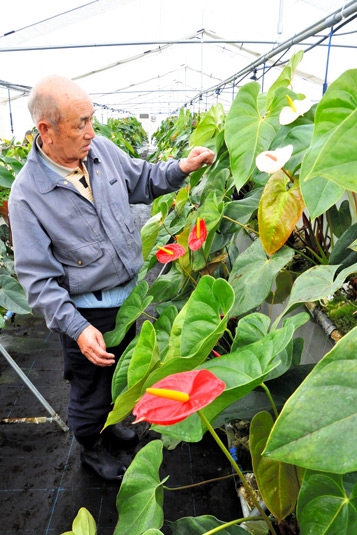



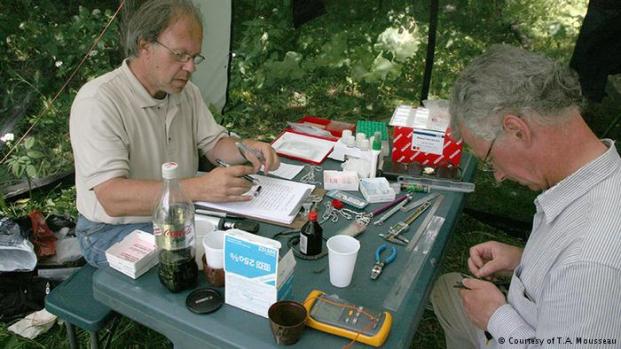
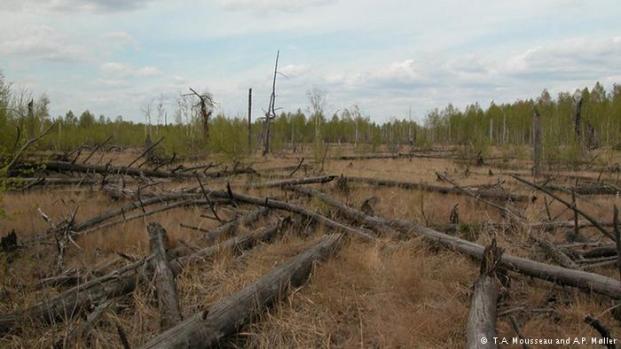
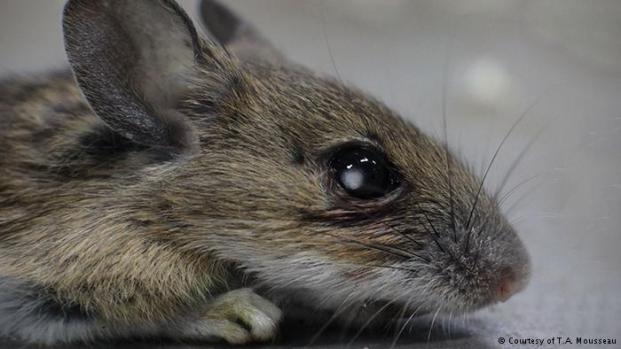

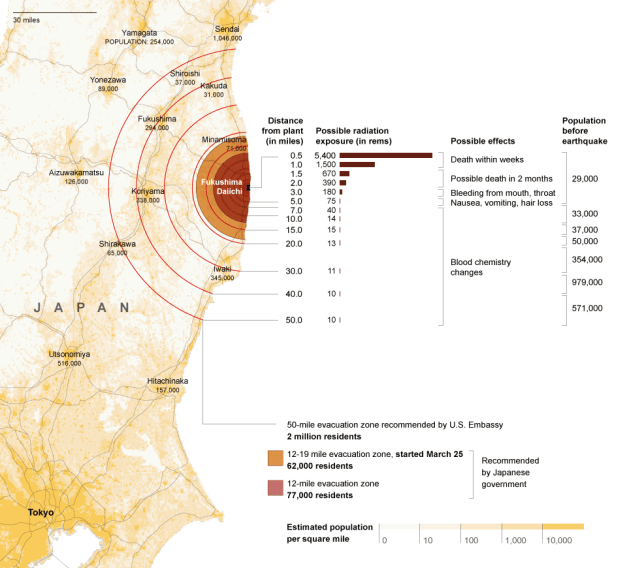
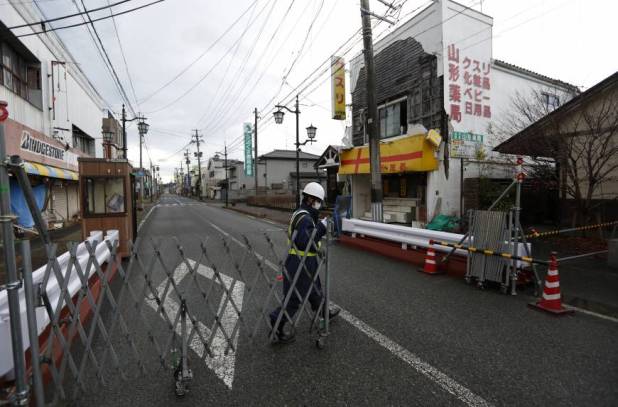
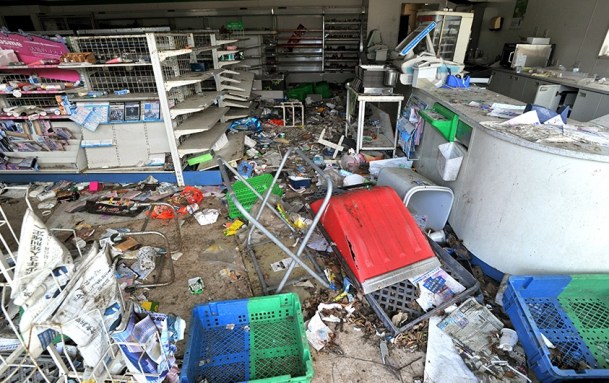


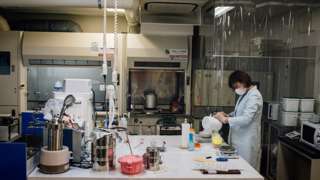
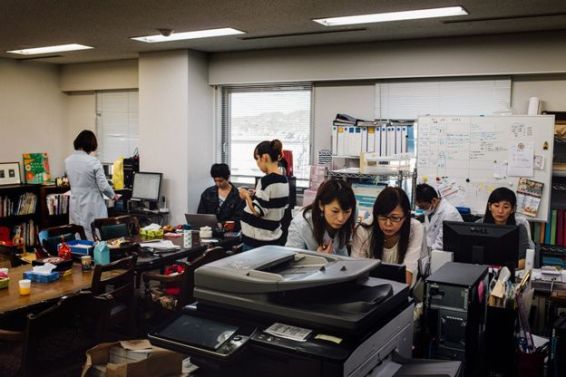

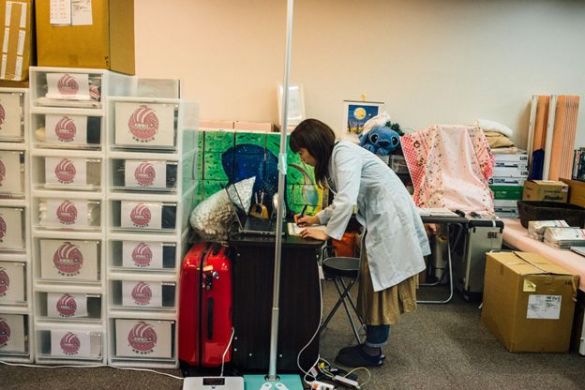


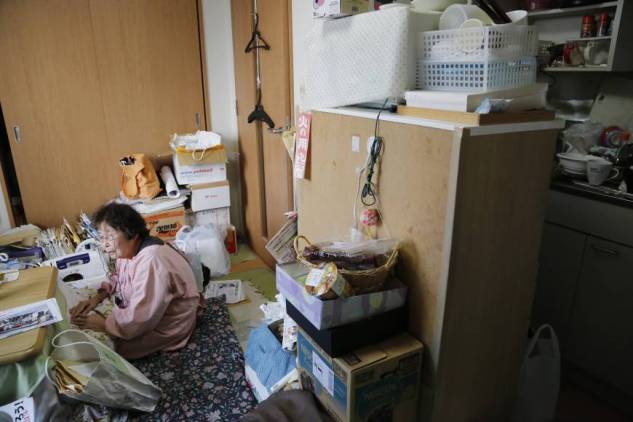

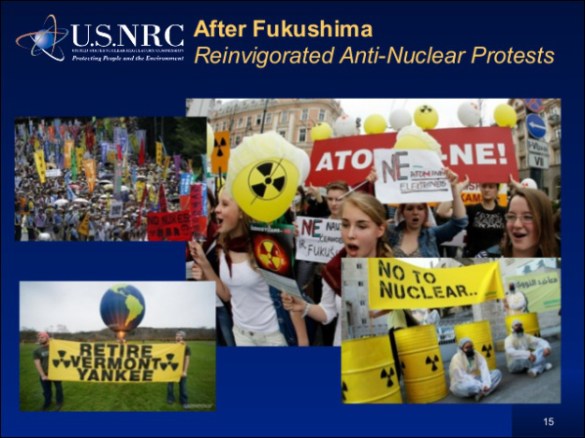
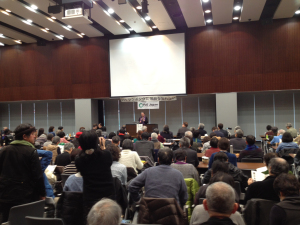
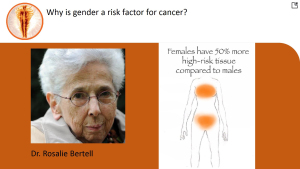




 nuclear-news